Royal Navy Cruisers: Danae class
HMS Danae (D44), HMS Dauntless (D45), HMS Dragon (D46), HMS Delhi (D47), HMS Dunedin (D93), HMS Durban (D99), HMS Despatch (D30), HMS Diomede (D92)
The Danae or D class consisted of eight light cruisers built for the Royal Navy at the end of the First World War which also saw service in the Second World War. (Wikipedia)
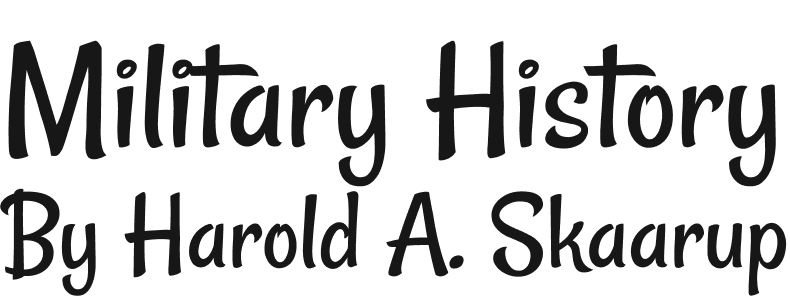
HMS Danae (D44)
.jpg)
(IWM Photo, FL 791)
HMS Danae (D44). Mobilized in July 1939, she was attached to the 9th Cruiser Squadron, initially operating in the South Atlantic and then the Indian Ocean from October. On 23 March 1940 she was attached to the Malaya Force, and took part in various patrols in the area of the Dutch East Indies and Singapore. On 20 January she was attached to the China Force, and started to escort convoys in the Yellow Sea and between the Dutch Indies and Ceylon, together with the cruisers Durban, Dauntless, Cornwall and the Australian HMAS Canberra. On 24 February she arrived in Batavia and then went on to Colombo, from where she was withdrawn to Cape Town for refurbishment.
She returned to active service in July 1943, after 11 months in the shipyard. In March 1944 she returned to Great Britain and was attached to the 1st Cruiser Squadron. During the Invasion of Normandy, she performed ground support missions in the Sword Beach sector. In July the squadron moved to the area of Port en Bessin and Ouistreham, and returned to Great Britain in August. Danae was then withdrawn from active service, and used as a hulk in the port of Plymouth. After the loss of her sister ship ORP Dragon, on 4 October Danae was leased to the Polish Navy.

(Royal Navy Photo)
HMS Danae enters Grand Harbour, Malta – circa 1930. The battleships HMS Ramillies, HMS Resolution, and HMS Royal Oak standing to outside the breakwaters.
HMS Dauntless (D45)
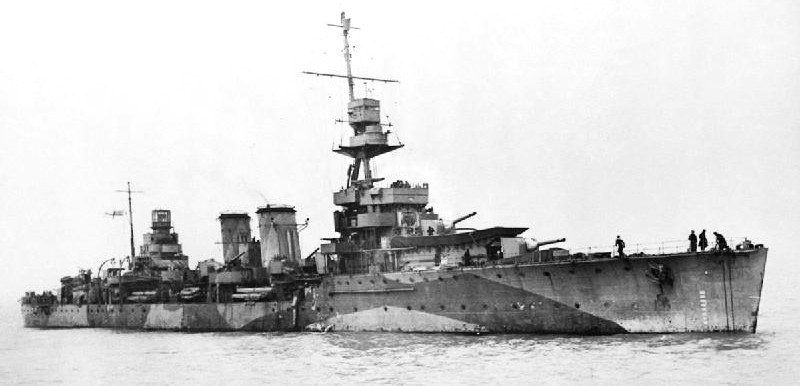
(IWM Photo, FL 5375)
HMS Dauntless (D45). On the outbreak of the Second World War, Dauntless was recommissioned and joined the 9th Cruiser Squadron with the South Atlantic Command. In December, the squadron, including Dauntless, was transferred to the China Station, and in March 1940 Dauntless operated as a unit of the British Malaya Force while in the Indian Ocean. She operated mainly off Batavia, keeping watch on German merchant ships in the Dutch East Indies harbours. On 15 June 1941 she collided with the cruiser Emerald off Malacca and had to put into Singapore for repairs, that were eventually completed on 15 August. In February 1942 Dauntless returned to Britain, and underwent a refit at Portsmouth. Following this, she was transferred to the Eastern Fleet, and in November was docked in the Selborne dry dock at Simonstown, South Africa, until January 1943. She was then used as a training ship, and in February 1945 was again reduced to the reserve. She was sold to be broken up for scrap on 13 February 1946.
HMS Dragon (D46)
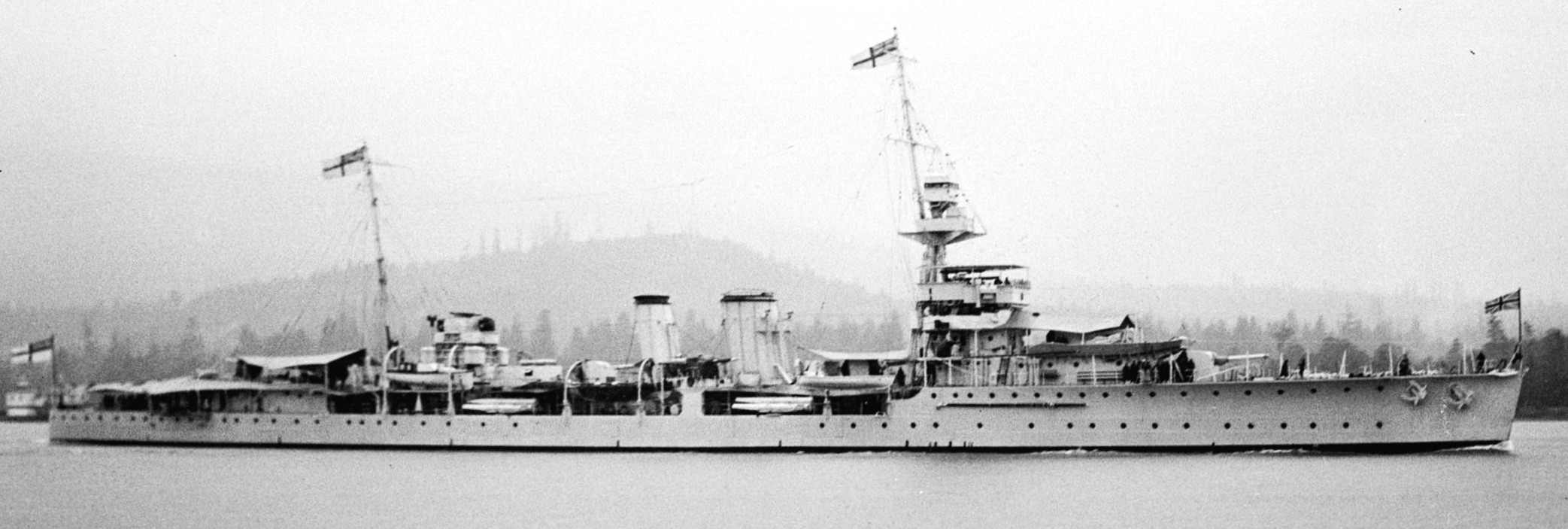
(City of Vancouver Archives Photo, 1933)
HMS Dragon (D46). On 7 July 1944 Dragon was on station in the area off Caen, where she was to take part in the final artillery preparations for capturing the city after a month-long siege. At 5:40 am the following day, while waiting for the order to open fire at 49°22′N 0°21′W, the Dragon was hit by a German Neger manned torpedo, piloted by Midshipman Potthast, and 26 men were lost.
The explosion caused a fire in the 3rd magazine, which had to be filled with water, and the 3rd engine was also hit. The ship started to sink on her port side and the angle of list reached 9°, but the situation was stabilized by the captain, who ordered all the turrets to train their barrels to starboard. Although an additional 11 sailors died of wounds, the situation was stabilized and the ship was moved to shallows, where she was to await the ebb tide. After the water was pumped out of the flooded engine room, it was discovered that the hull was pierced across two sections and the hole was approximately 5 metres (16 ft) by 15 metres (49 ft). Although still afloat and repairable, it was decided that the ship be abandoned. On 10 July, USS LST-494 aided Dragon by transporting 17 of her officers and 320 of her enlisted men from Normandy to England. Until 15 July the remaining rump crew dismantled the armament. An additional two bodies were found in the ship, and the dead were buried at sea. On 16 July she was decommissioned and then towed to Mulberry “B”, where on 20 July she was scuttled to form part of the artificial breakwater near Courseulles. On 4 October 1944, she was replaced in Polish service with ORP Conrad, formerly HMS Dragon‘ sister ship HMS Danae.
HMS Delhi (D47)
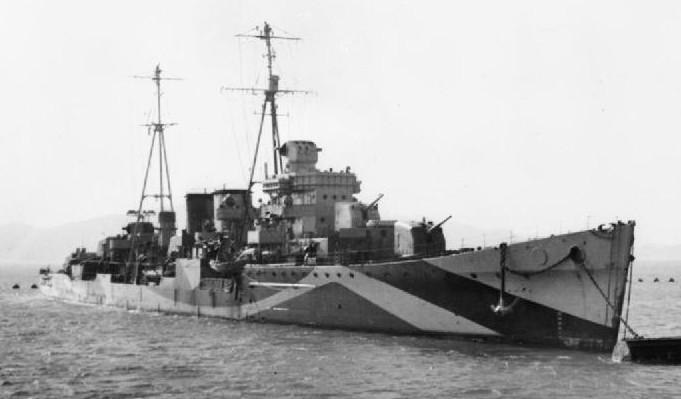 (IWM Photo, FL 11132)
HMS Delhi (D47), serving until decommissioning in mid-1945 due to extensive battle damage, and was to be scrapped in 1948 after lengthy war and peacetime service around the world. Deployed to the Mediterranean in March 1940, Delhi undertook extensive operations as part of Force H against Vichy and Italian forces in Italy and North Africa. After five months service in the Mediterranean, she joined Force M at Freetown, operating off West Africa and in the South Atlantic. Delhi and her sister ship Dragon participated in Operation Menace, the Battle of Dakar, and then continued in the trade protection role in the South Atlantic.
From May to December, 1941 Delhi was refitted as an anti-aircraft cruiser at the Brooklyn Navy Yard. This refit included 5-inch/38 calibre guns originally intended for the US destroyer USS Edison, and were hand-picked by Edison’s commanding officer, but were transferred to Delhi on the direct instructions President Roosevelt.[5] With her new dual purpose main armament, she provided shore bombardment and AA support for a number of Allied landings in the Mediterranean, (Algiers, Sicily, Salerno and the Anzio Landings). On 20 November 1942 Delhi was damaged by enemy action in Algiers Bay when her stern was blown open by a bomb dropped by Italian aircraft. Two crewmen were killed in the attack.[6] She returned to Britain and was under repair until April 1943.
On 3 September 1943, six days before the Landings at Salerno, she collided with the cruiser Uganda in the Straits of Messina whilst laying a smokescreen. She was repaired at sea and remained in service for the landings where she provided shore bombardment and AA support. Continuing to serve through the rest of the war, Delhi took part in Operation Dragoon, a follow-up to D-Day in the South of France to utilise Free French troops and to open new supply routes to Allied forces in Europe.On 12 February 1945 she was attacked by German explosive motorboats in the harbour at Split, Croatia, where she had, three months beforehand, hosted the German surrender. The attack missed Delhi and struck LCF-8, a Landing Craft Flak. The force of the resulting explosion damaged Delhi’s rudder and a propeller shaft bracket.
HMS Delhi returned to Britain and was laid up after the war. She was assessed as uneconomic to fully repair as an aged design in a rapidly downsizing Royal Navy, and was instead sold on 22 January 1948 to be broken up.
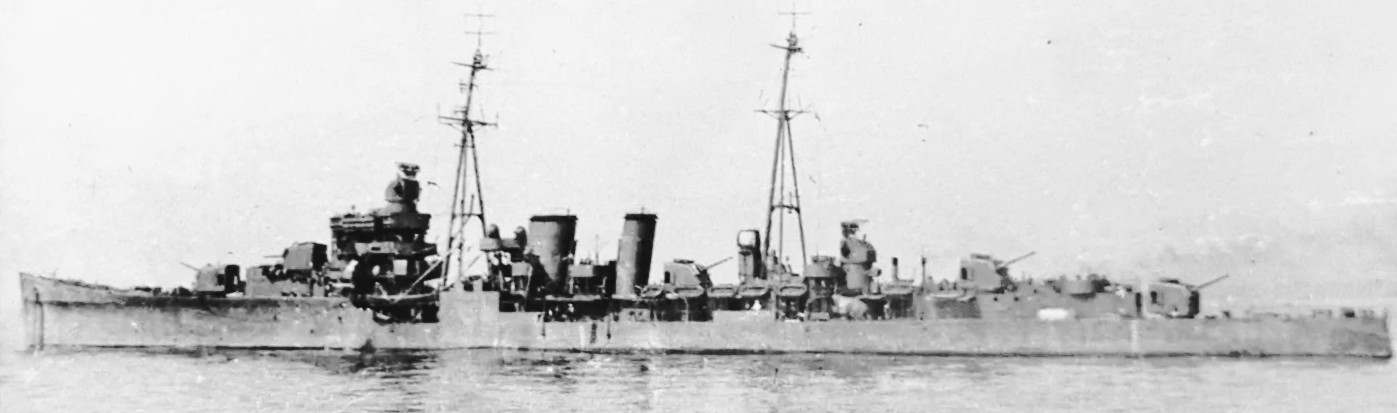
(USN Photo)
HMS Delhi (D47), after her refit and re-arming in the USA. She is equipped with US 5″ DP guns and US gun directors. 1943.
HMS Dunedin (D93)
_at_Honolulu_on_11_February_1927.jpg)
(USN Photo)
HMS Dunedin (D93) at Honolulu, Oahu, Territory of Hawaii, on 11 February 1927. Early in the Second World War, Dunedin was involved in the hunt for the German battleships Scharnhorst and Gneisenau after the sinking of the armed merchant cruiser Rawalpindi. In early 1940 Dunedin was operating in the Caribbean Sea, and there she intercepted the German merchant ship Heidelberg west of the Windward Passage. Heidelberg‘s crew scuttled the ship before Dunedin could take her. A few days later, Dunedin, in company with the Canadian destroyer HMCS Assiniboine, intercepted and captured the German merchant ship Hannover near Jamaica. Hannover later became the first British escort carrier, Audacity. Between July and November, HMS Dunedin, together with the cruiser HMS Trinidad, maintained a blockade off Martinique, in part to bottle up three French warships, including the aircraft carrier Béarn.On 15 June 1941, Dunedin captured the German tanker Lothringen and gathered some highly classified Enigma cipher machines that she carried. The Royal Navy reused Lothringen as the fleet oiler Empire Salvage. Dunedin went on to capture three Vichy French vessels, Ville de Rouen off Natal, the merchant ship Ville de Tamatave east of the Saint Paul’s Rocks, and finally, D’Entrecasteaux.
Dunedin was part of the escort of Convoy WS 5A when it was attacked by the German heavy cruiser Admiral Hipper on 25 December 1940. The attack was repulsed by other ships of the escort, without losses to the convoy. Dunedin was still steaming in the Central Atlantic Ocean, just east of the St. Paul’s Rocks, north east of Recife, Brazil, when on 24 November 1941, at 1526 hours, two torpedoes from the German submarine U-124 sank her. Only four officers and 63 men survived out of Dunedin‘s crew of 486 officers and men.
HMS Durban (D99)
.jpg)
(IWM Photo, FL 8998)
HMS Durban (D99). On the outbreak of the Second World War in September 1939, Durban was recommissioned and assigned to the 9th Cruiser Squadron under the Commander-in-Chief, South Atlantic. In March 1940 she was operating in the Indian Ocean and was then transferred to the Eastern Fleet based at Singapore. Here she became a unit of the British Malaysian Force with her two sister ships, Danae and Dauntless. The unit kept watch on German merchant ships in the Dutch East Indies harbours, with Durban’s patrol area being off Padang. On 10 November 1940 the Norwegian tanker Ole Jacob reported being attacked by the German raider Atlantis between Ceylon, and the north end of Sumatra. A force was hastily assembled, comprising Durban, the cruiser Capetown and the Australian cruiser Canberra and armed merchant cruiser Westralia to hunt for Atlantis. The task force was however unable to locate the raider.
In 1941 Durban, with her sister Dragon, was escorting convoys between Singapore and the Sunda Strait. In February, she escorted the ocean liner Queen Mary, then carrying Second Australian Imperial Force troops for Malaya, into Singapore, arriving on 18 February. In November, she escorted the troopship Zealandia into Singapore, after relieving the Australian cruiser Sydney which had escorted Zealandia from Fremantle, Western Australia.
In February 1942 Durban moved with the rest of the Eastern Fleet to Java, after the Japanese started their attack on Singapore. Durban was damaged by bombing before she could leave, but on 12 February she and the anti-submarine vessel Kedah escorted the merchant ships Empire Star and Gorgon out of Singapore, repelling successive Japanese air attacks for four hours.[3] The next day the convoy, carrying thousands of evacuees from Singapore, reached Tandjong Priok, the port for Batavia. Durban, with Admiral Thomas C. Hart as a passenger, departed 16 February escorting Plancius carrying refugees to Colombo.[4] There Durban underwent temporary repairs. She then travelled to New York, arriving in April, where full repairs were completed. Durban then returned to Britain, where further modifications were made in Portsmouth between June and August. She then escorted convoys from Britain to South Africa.
On 8 December 1942 the ship grounded in the entrance to Mombasa harbour. After refloating she was drydocked in Bombay. In February 1943 Durban was again in New York for repairs, and by June had returned to South Africa, docking at Simonstown, before rejoining the Eastern Fleet. In November, she once again returned to Britain to be paid off into the reserve. She was then one of the ships selected to be scuttled to form a breakwater for the Mulberry harbours that would be used to support the Battle of Normandy. Subsequently, on 9 June 1944 Durban was scuttled to form part of the Gooseberry 5 breakwater for protecting the artificial harbour off Ouistreham in the Seine Bay. The wreck currently lies in 11 metres (36 ft) of water.
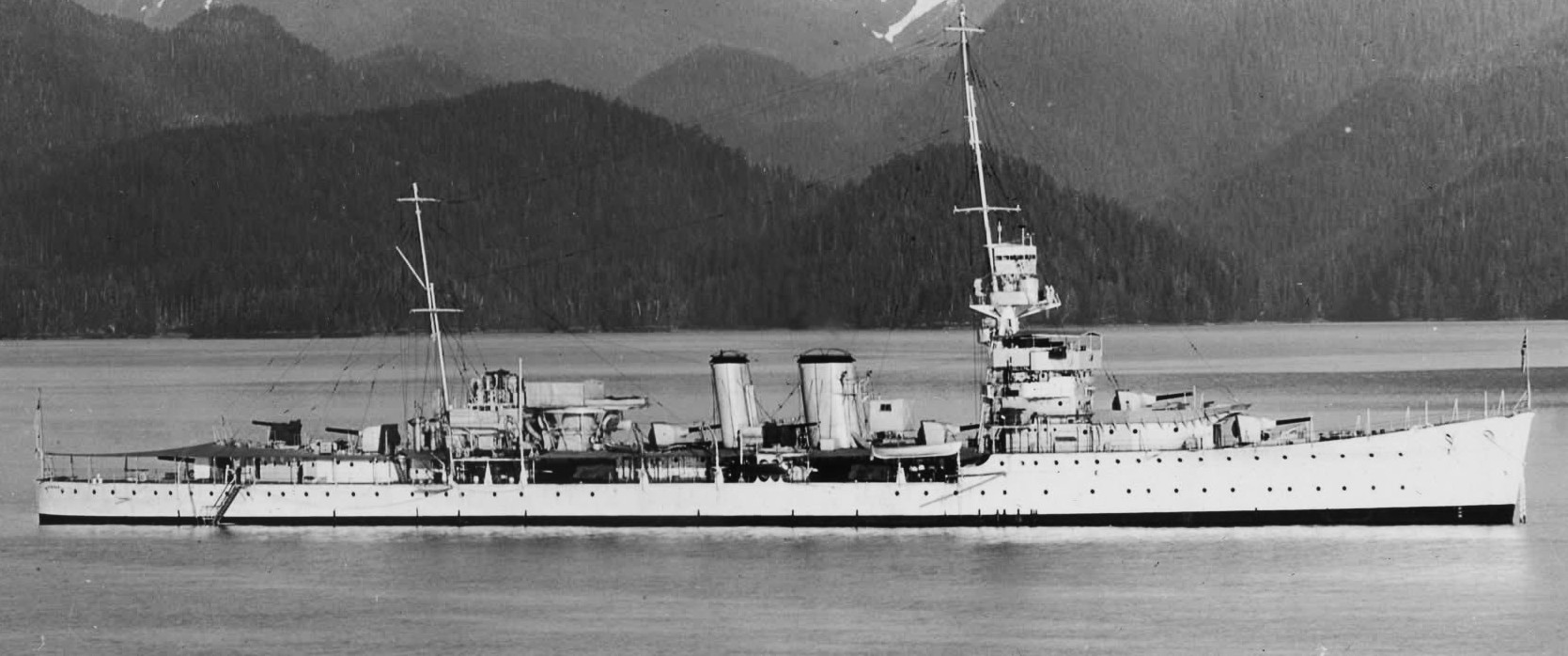
(RN Photo)
HMS Durban (D99) in Resurrection Bay Alaska in 1928. At the time Durban was part of the North America and West Indies Station.
HMS Despatch (D30)
_underway_off_the_Panama_canal_zone_on_31_October_1939.jpg)
(USN Photo)
HMS Despatch (D30), shown here underway off the Panama canal zone on 31 October 1939. She was operating in the South Atlantic for the early part of the war, where she captured the German freighter SS Düsseldorf and intercepted the German merchant ship Troja. The crew of Troja scuttled her, however, before the ship could be captured. She was in the Mediterranean, escorting convoys in late 1940, and became involved in Operation White and the Battle of Cape Spartivento. By the battle of Cape Spartivento as part of Force “B”, a sub-unit of Force “H”, Gibraltar. 18.2.43. – At 13.45hrs HMS Despatch intercepted Spanish ship Monte Naranco in position 14-42N, 23-01W and placed an armed guard aboard and ordered the Greek destroyer HHelMS Adrias to escort her for one day towards Gibraltar. Despatch was present at the Normandy landings in June 1944. She was the headquarters ship for the Mulberry harbours. Whilst at Mulberry ‘B’ Despatch was present for the visit of H.M. King George VI. For her HQ Ship role, Despatch had had all her original guns removed and replaced with 16 Bofors 40 mm Anti-Aircraft guns manned by army gunners from 127th (Queen’s) Light Anti-Aircraft Regiment, Royal Artillery, to support her role as “Traffic Control” in building the Mulberry Harbour at Arromanches. Her captain, Commander R.T. White DSO, was allocated landing pass “number one” for Arromanches. Despatch was reduced to reserve in January 1945, and sold on 5 April 1946 for scrapping.
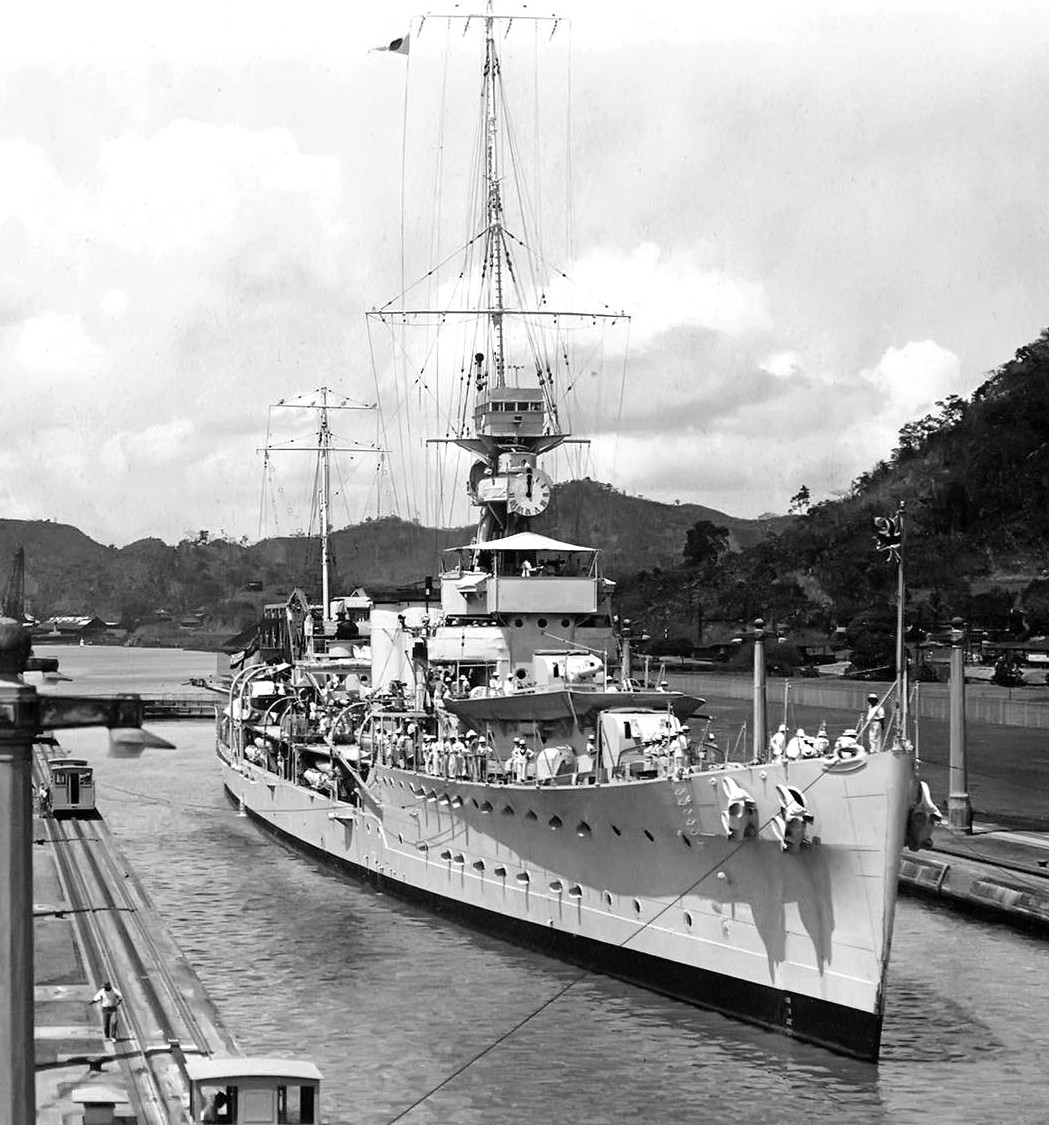
(RN Photo)
Flagship of the America and West Indies Station the Danae-class light cruiser HMS Despatch (D30) transiting the Panama Canal on her way to Valparaíso, 7 Feb 1928. It has the of the second batch of the D class, with the raised so-called ‘trawler bow’ for improved sea-keeping.
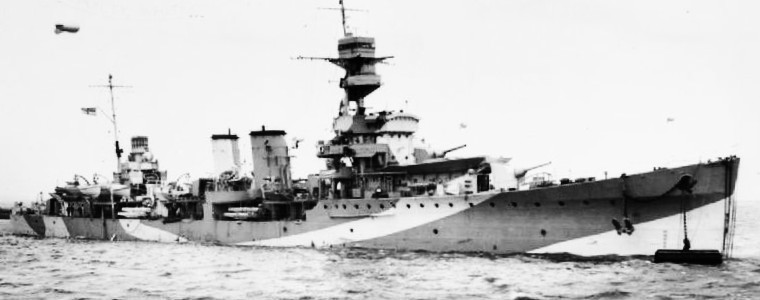
(IWM Photo, FL 9749)
HMS Despatch (D30), 22 July 1942.
HMS Diomede (D92)
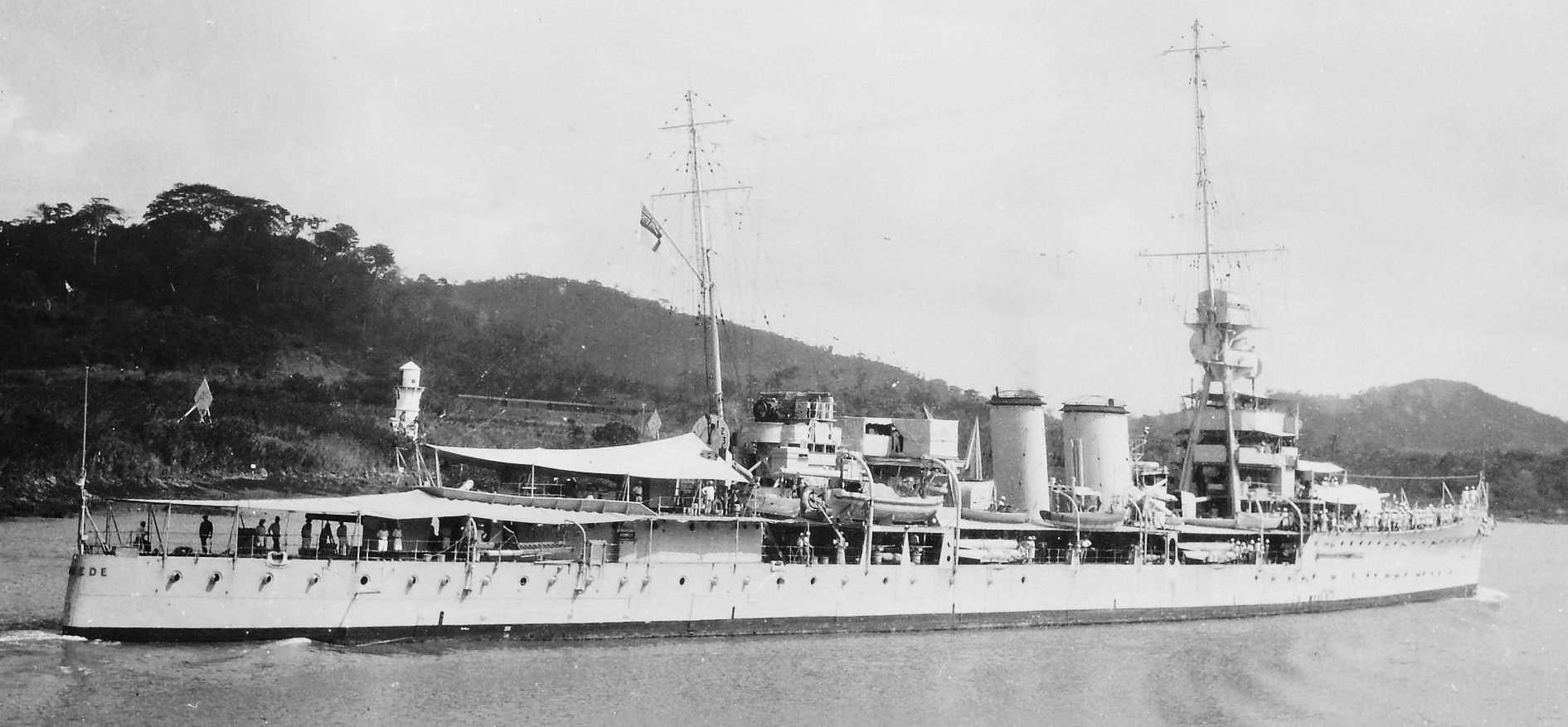
(ETH-Bibliothek Photo)
HMS Diomede (D92), shown here in Panama in 1925. During the Second World War, she captured the crew of the German blockade runner Idarwald after she had chased that ship and when the crew scuttled Idarwald. Between 22 July 1942 and 24 September 1943 she was converted to a training ship at Rosyth Dockyard. In 1945 she was placed in reserve and scrapped a year later.
All comments are subject to our Comment Policy. You must be at least 18 years old to comment.
See a comment that violates our guidelines? Report it here.