
RCN Minesweepers (Bangor class): HMCS Milltown (J317), HMCS Minas (J165), HMCS Miramichi (J169), HMCS Mulgrave (J313)
HMCS Milltown (J317)
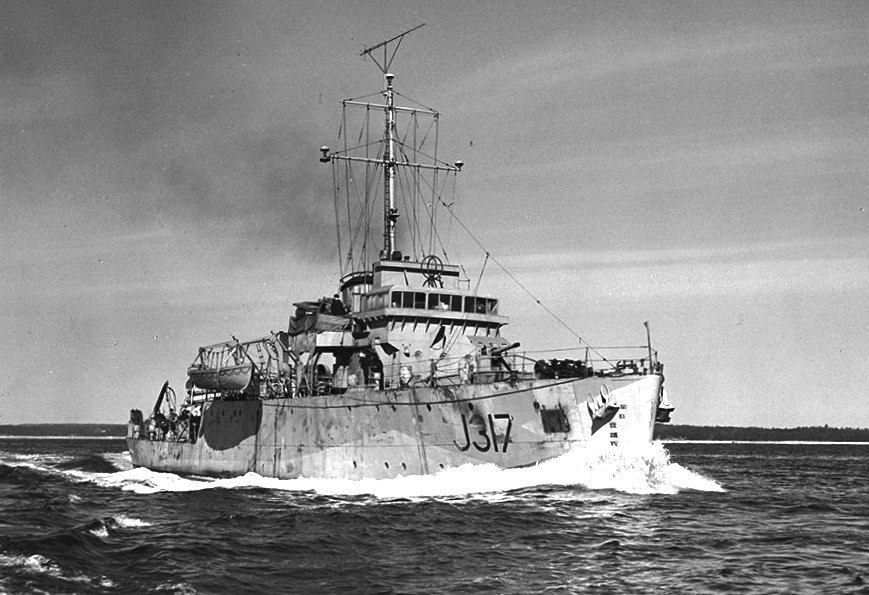 (DND Photo)
HMCS Milltown (J317) (Bangor-class). Commissioned on 18 Sep 1942 at Port Arthur, HMCS Milltown arrived at Halifax on 27 Oct 1942 and, after working up, joined Halifax Force in Dec 1942. In March 1943, she transferred to WLEF and in Jun 1943, to Gaspé Force. In Nov 1943, she returned to Halifax Force until 20 Feb 1944, when, with HMCS Blairmore, HMCS Fort William and HMCS Minas, she sailed via the Azores for Plymouth, arriving on 8 Mar 1944. She was present on D-Day with the 31st Minesweeping Flotilla. She returned to Canada to refit at Saint John, NB, from Mar to Jun 1945, leaving Halifax 23 Jun 1945 for Plymouth via the Azores. She left Plymouth for home on 21 Sep 1945 and was paid off on 16 Oct 1945 at Sydney and laid up at Shelburne. HMCS Milltown was placed in strategic reserve at Sorel in 1946, but re-acquired by the RCN in 1952 (194) and kept in reserve at Sydney until Feb 1959, when she was sold for scrap.
HMCS Minas (J165)
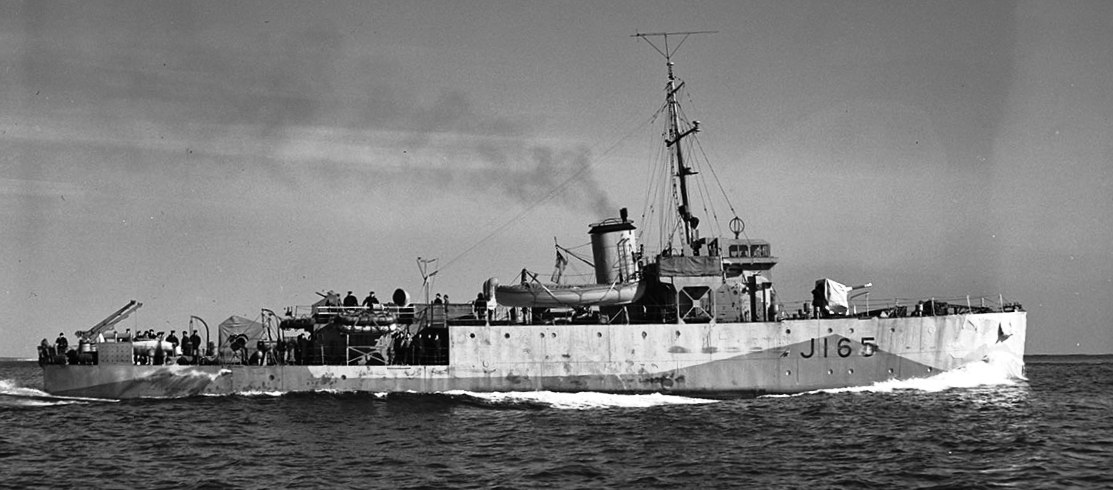
(DND Photo)
HMCS Minas (J165) (Bangor-class). Named for Minas Basin in the Bay of Fundy, she was built at Vancouver and commissioned there on 2 Aug 1941. She sailed for Halifax on 13 Sep 1941, arriving on 19 Oct 1941. After brief service with Sydney Force, she was assigned in Jan 1942, to Newfoundland Force. In Nov 1942 she transferred to WLEF, and when WLEF was divided into escort groups in Jun 1943, she became a member of EG W-7. That December she was re-assigned to W-4. On 1 Feb 1943, she collided with HMS Liscomb outside Halifax, necessitating a month’s repairs. HMCS Minas left Halifax for the UK on 20 Feb 1944, with HMCS Blairmore, HMCS Fort William and HMCS Milltown, via the Azores. On arrival in the UK on 8 Mar 1944, she was assigned to the 31st Minesweeping Flotilla for invasion duties, and was on hand on D-Day. In Sep 1944 she proceeded to Canada to refit at Dartmouth, NS, returning to Plymouth in Jan 1945. There she rejoined the 31st Flotilla until she sailed again for Canada on 4 Sep 1945. She was paid off into reserve at Shelburne on 6 Oct 1945, and later moved to Sorel, but was re-acquired by the RCN in 1952 and re-commissioned (189) on 15 Mar 1955 for training on the west coast. Paid off on 7 Nov 1955, she was sold in Aug 1958, and broken up at Seattle in 1959.
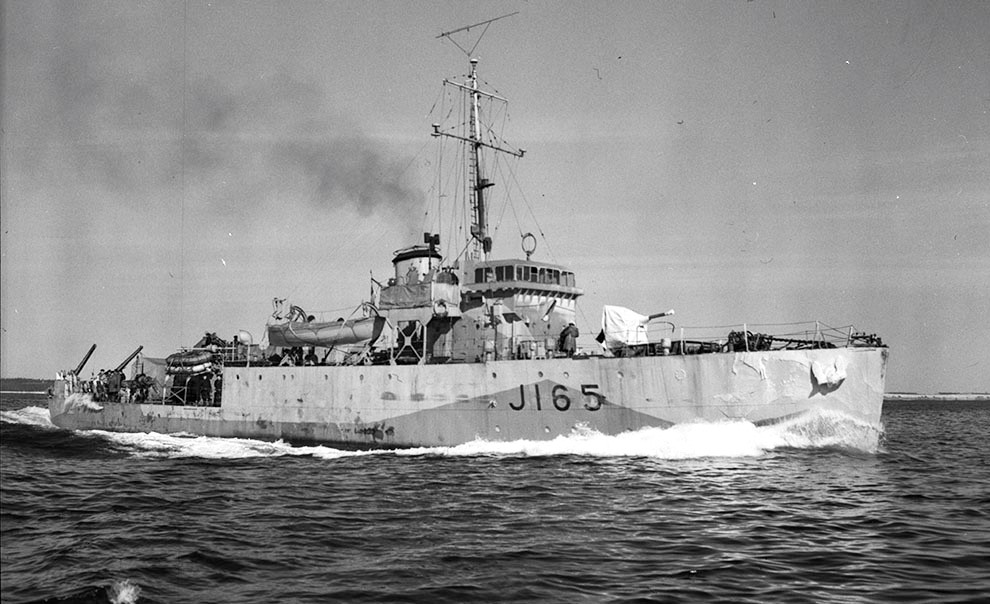
(Library and Archives Canada Photo, MIKAN No. 3205375)
HMCS Minas (J165) (Bangor-class), March 1944.
HMCS Miramichi (J169)
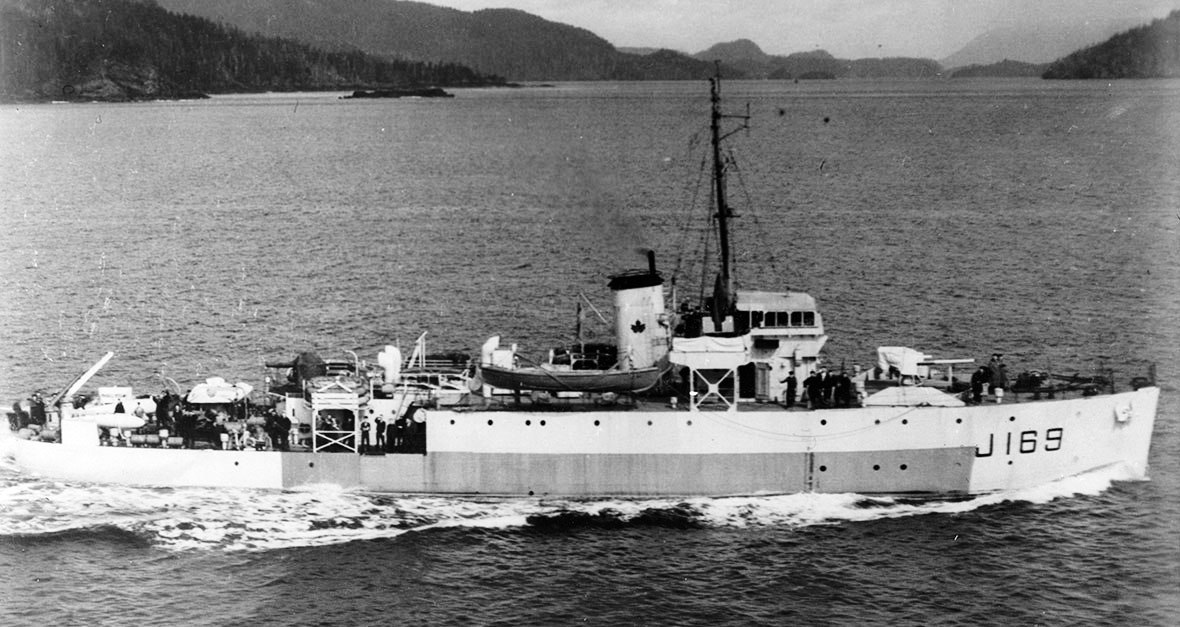
(DND Photo)
HMCS Miramichi (J169) (Bangor-class). Commissioned at Vancouver on 26 Nov 1941, HMCS Miramichi spent her entire service career on the west coast, alternating between Esquimalt Force and Prince Rupert Force. In the summer and fall of 1943, while serving with Esquimalt Force, she was used occasionally for training purposes. She was paid off at Esquimalt on 24 Oct 1945, and is thought to have been broken up at Vancouver in 1949, having been purchased in 1946 by the Union Steamship Co. for conversion that was never proceeded with.
HMCS Mulgrave (J313)
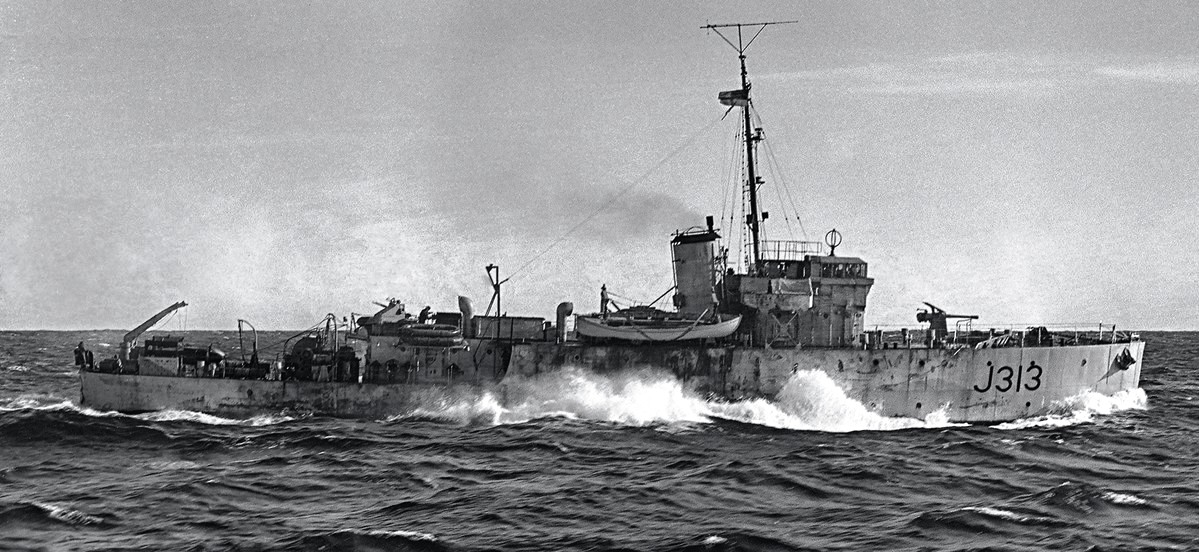
(DND Photo)
HMCS Mulgrave (J313) (Bangor-class). Built at Port Arthur, Ont., she was commissioned there on 4 Nov 1942. She arrived at Halifax on 30 Nov 1942 and was assigned to Halifax Force for the first quarter of 1943. She then transferred to WLEF, becoming a member of newly created EG W-2 in Jun 1943. On 18 Feb 1944, with HMCS Bayfield, HMCS Georgian and HMCS Thunder, she left Halifax for Plymouth via the Azores . On 29 Feb 1944, when entering Horta, HMCS Mulgrave suffered grounding damage and had to be towed to Greenock, Scotland. After repairs at Ardrossan she finally made Plymouth on 24 Apr 1944 to commence training and exercises. She was temporarily assigned to the 32nd Minesweeping Flotilla, then in Jun 1944 to the 31st, with which she was present on D-Day. On 8 Oct 1944, the unlucky HMCS Mulgrave was damaged by a ground mine near le Havre and had to be beached. On 3 Nov 1944 she left Le Havre in tow for Portsmouth, where she was declared a constructive total loss. Placed in reserve at Falmouth in Jan 1945, with a reduced complement, she was formally paid off on 7 Jun 1945 and scrapped at Llanelly, Wales, two years later.
All comments are subject to our Comment Policy. You must be at least 18 years old to comment.
See a comment that violates our guidelines? Report it here.