
RCN Minesweepers (Bangor Class): HMCS Burlington (J250), HMCS Canso (J21), HMCS Caraquet (J38), HMCS Chedabucto (J168)
HMCS Burlington (J250)
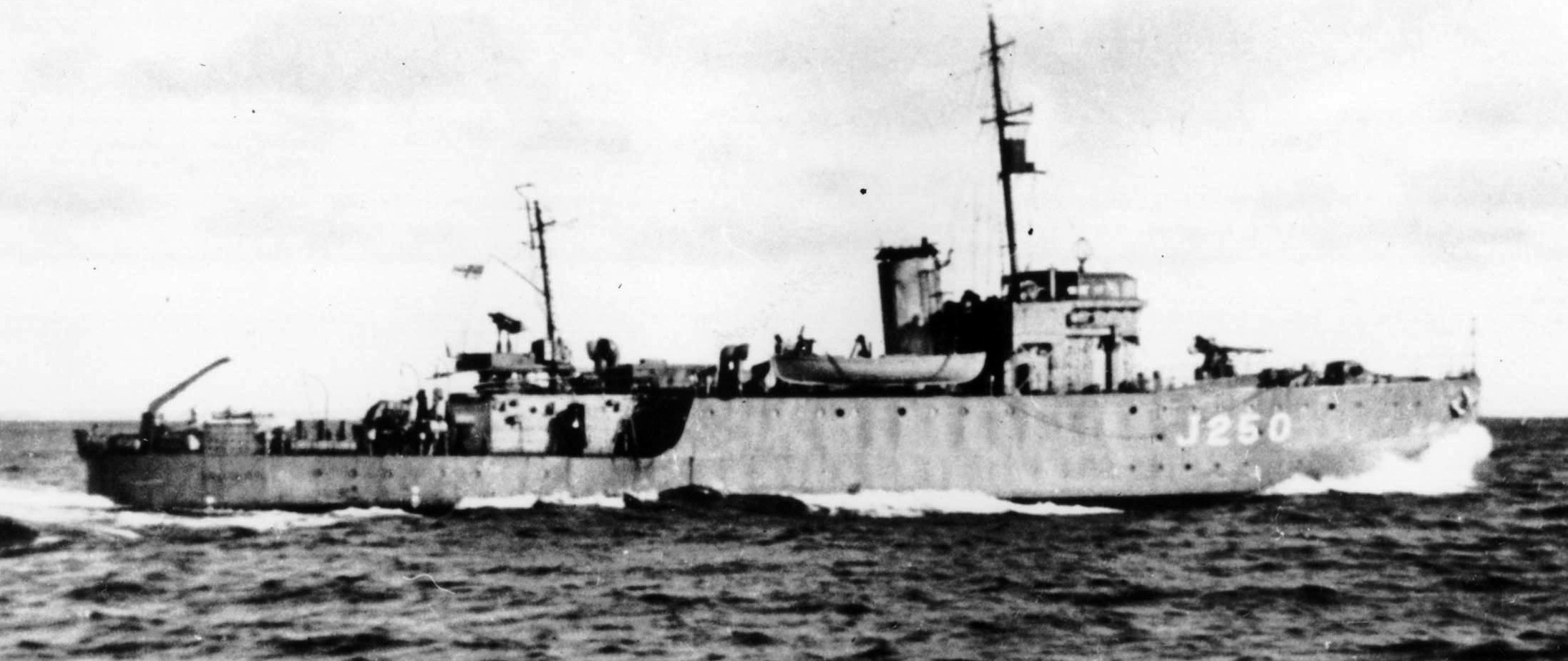
(Library and Archives Canada Photo, MIKAN No. 4090375)
HMCS Burlington (J250). Built by Dufferin Shipbuilding Co., Toronto, Ontario, she was commissioned at Toronto on 6 Sep 1941, and arrived at Halifax on 30 Sep 1941. After working up, she made Halifax her base, and in Mar 1942, was assigned to WLEF, transferring in May to Gulf Escort Force. Late in Dec 1942 she commenced refitting progressively at Halifax, Lunenburg and Dartmouth. Following completion of the work in May 1943, she worked up at Pictou and was assigned in June to EG W-9 of WLEF. In Feb 1944, she was transferred to Halifax Local Defence Force, and in Sep 1944 sent to Bermuda for a month’s workup. On her return she joined Newfoundland Force, based at St. John’s and served there until the Command was disbanded. On 4 Jan 1945, U-1232, commanded by Kapt. Kurt Dobratz, attacked convoy SH-194 off (what is today) Egg Island bell buoy. After torpedoing several ships, the convoy’s escort, aided by ships from Halifax, including HMCS Burlington, searched for the U-boat. During the search, HMCS Burlington and ML Q116 collided – holing the Burlington’s hull and severely damaging Q116s bow. Following repairs in Halifax, HMCS Burlington continued to be employed on convoy escort duties. She engaged in a hunt for another submarine in early March. On 22 Apr 1945 she once again went for a short refit. By the time it was finished the war with Germany had ended. She then engaged in miscellaneous duties until she was paid off on 30 Oct 1945, and was sold in 1946 to T. Harris of New Jersey in 1946. She was later broken up.
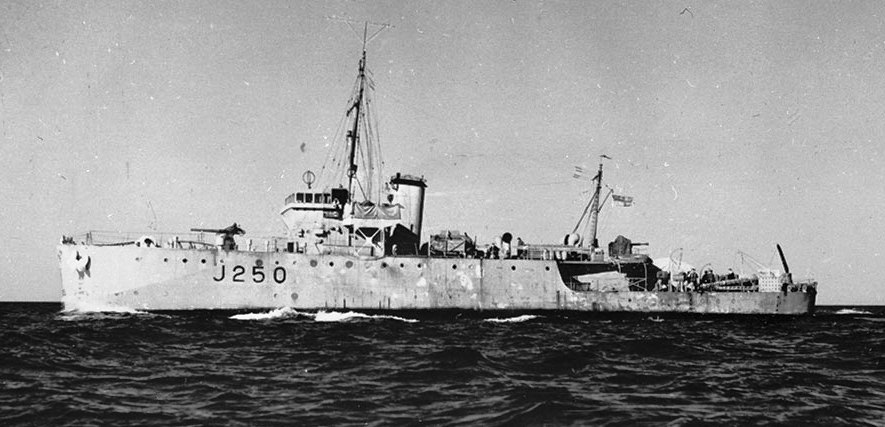
(DND Photo)
HMCS Burlington (J250).
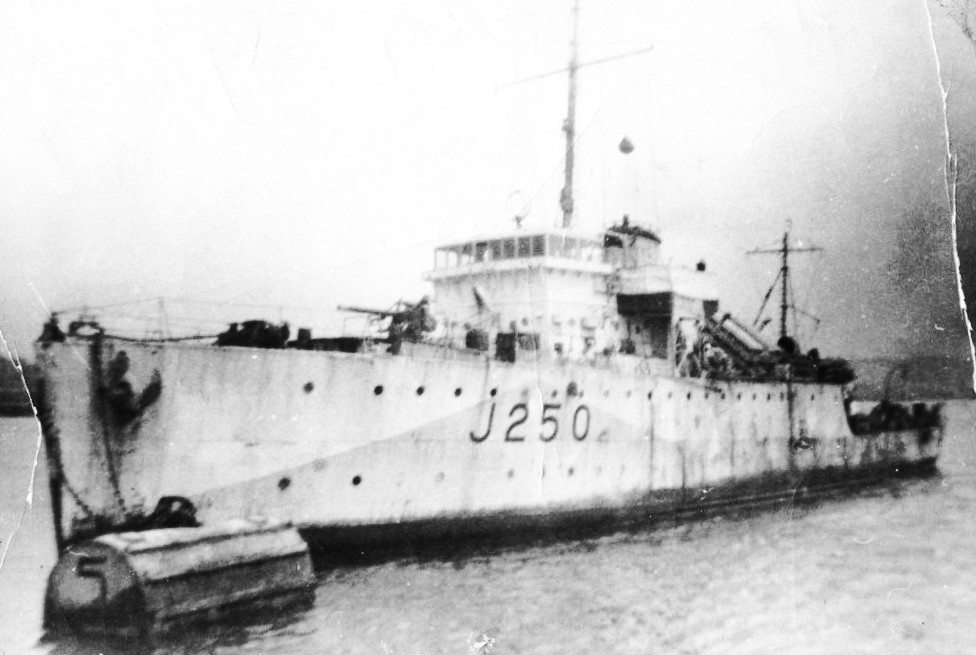
(Eileen Madden Photo)
HMCS Burlington (J250).
HMCS Canso (J21)
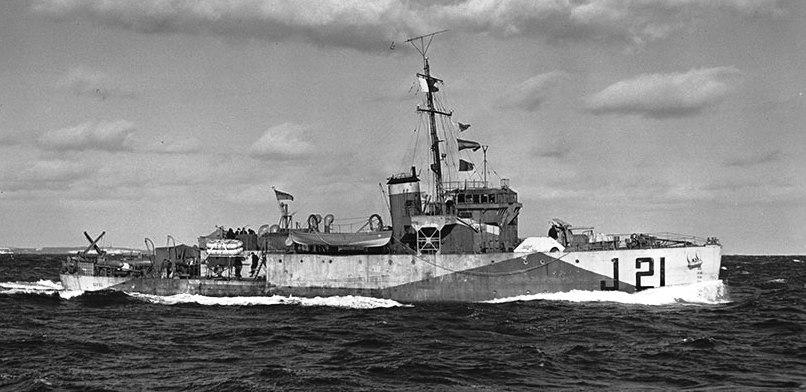
(DND Photo)
HMCS Canso (J21) (Bangor-class). Built for the RN at North Vancouver, she was laid down and launched as HMS Canso. Transferred to the RCN on completion, she was commissioned at Vancouver on 6 Mar 1942 as HMCS Canso. After working up, she was assigned to Esquimalt Force from May 1942 to Jul 1943, when nominated for service in the Atlantic. She left Esquimalt on 8 Jul 1943, arriving at Halifax on 19 Aug 1943, and was allocated to Halifax Force. On 21 Feb 1944, with HMCS Guysborough, HMCS Kenora, and HMCS Wasaga, she sailed from Halifax via the Azores for Plymouth, arriving on 8 Mar 1944. She was allocated in turn to the 32nd, 16th and 31st Minesweeping Flotillas, and was on hand on D-Day as part of the 16th. In Aug 1944 she returned briefly to Canada for a refit at Saint John, NB, and in November resumed her task of clearing German Minefields. She was paid off on 24 Sep 1945, and returned to the RN at Sheerness, to be broken up at Sunderland in 1948.
HMCS Caraquet (J38)
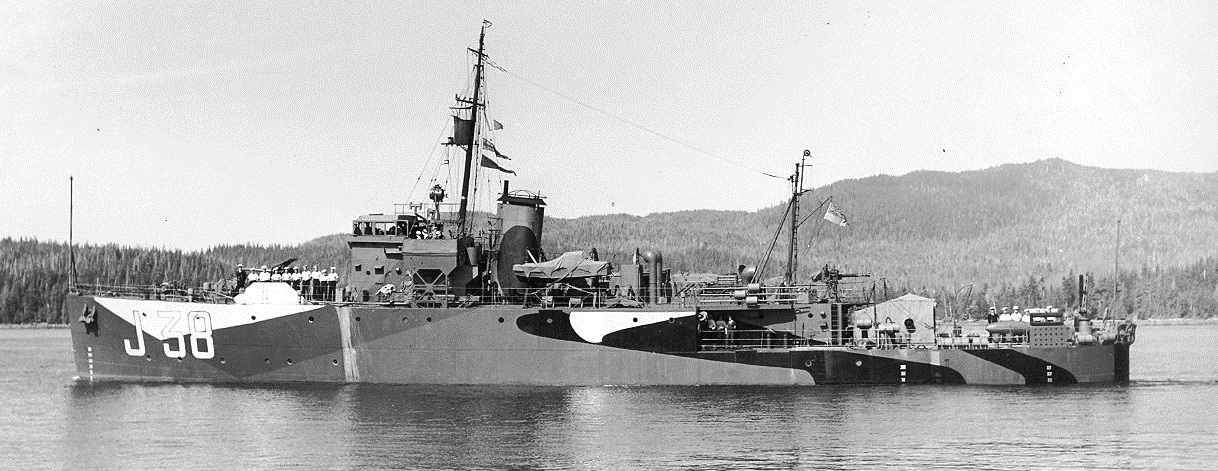
(CFB Esquimalt Naval and Military Museum Photo)
HMCS Caraquet (J38) (Bangor-class). Named for a New Brunswick bay, she was built for the RN but transferred to the RCN for manning and commissioned on 2 Apr 1942, at Vancouver. In May 1942 she joined Esquimalt Force and in Sep 1942 was transferred to Prince Rupert Force, but she returned to Esquimalt in Mar 1943, with order to proceed to the east coast. She left Esquimalt for Halifax on 17 Mar 1943 arriving on 2 May 1943 and was allocated to WLEF, transferring in Jul 1943 to Halifax Force and in Dec 1943 to Newfoundland Force. During this period she underwent a six-week refit at Baltimore, MD, from mid-Jul 1943. On 19 Feb 1944, with HMCS Cowichan, HMCS Malpeque and HMCS Vegreville, she left for Plymouth via the Azores, arriving on 13 Mar 1944. She was assigned to the 31st Minesweeping Flotilla for invasion duties and was present on D-Day. HMCS Caraquet proceeded to Canada at the end of Sep 1944 to refit at Lunenburg, returning to Plymouth in Mar 1945, for further mine-clearance work. She was paid off on 26 Sep 1945 and returned to the RN at Sheerness. In 1946 she was sold to the Portuguese Navy and renamed Almirante Lacerda. In 1975 she was sold to the navy of the Republic of Mozambique and remained in service till 1984.
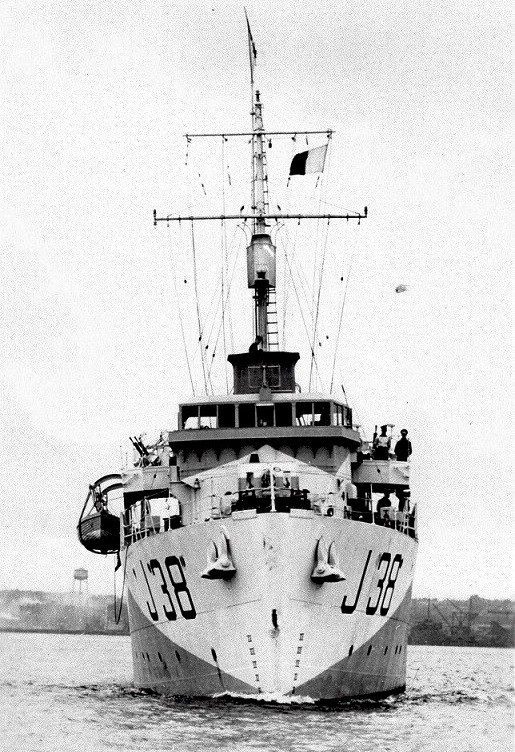
(Dennis Cardy Photo)
HMCS Caraquet (J38) (Bangor-class).
HMCS Chedabucto (J168)
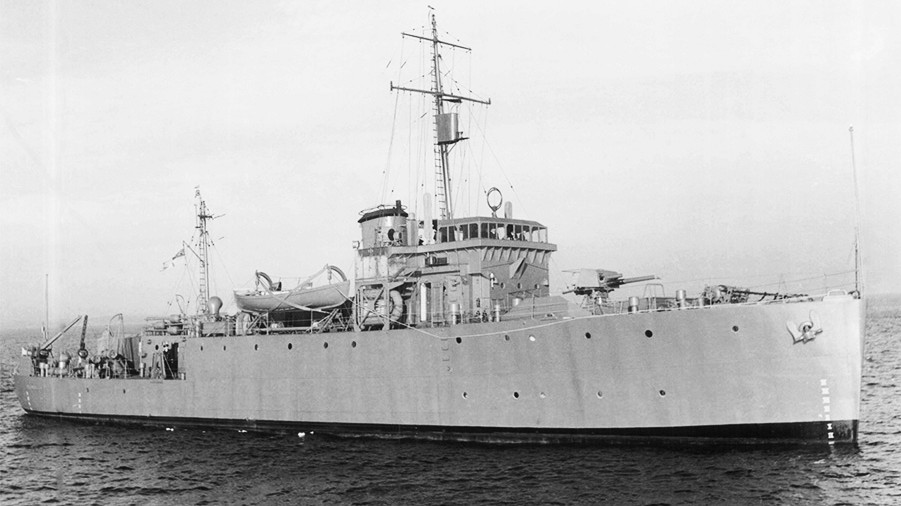
(DND Photo)
HMCS Chedabucto (J168) (Bangor-class). Built at Vancouver and commissioned there on 27 Sep 1941, HMCS Chedabucto left Esquimalt for the Atlantic on 11 Nov 1941, arriving at Halifax with a cargo of explosives. Assigned briefly to WLEF, on 10 Apr 1942, HMCS Chedabucto J168, sank SS Trongate, whic was on fire, loaded with explosives, off Halifax. She transferred in Jun 1942 to Gulf Escort Force, escorting convoys between Quebec City and Sydney. In Sep 1942, she was assigned to Sydney Force and then, in Jan 1943, reassigned to WLEF. Soon afterward she underwent a lengthy refit at Lunenburg and Halifax, on completion of which in Jun 1943, she worked up at Pictou and was allocated to Gaspé Force. On 31 Oct 1943, Chedabucto was involved in a night collision with the cable vessel Lord Kelvin, and sank 30 miles from Rimouski with the loss of one officer.
All comments are subject to our Comment Policy. You must be at least 18 years old to comment.
See a comment that violates our guidelines? Report it here.