RCN Flower class Corvettes: HMCS Quesnel (K133), HMCS West York (K369), HMCS Wetaskiwin (K175), HMCS Weyburn (K173)
HMCS Quesnel (K133)
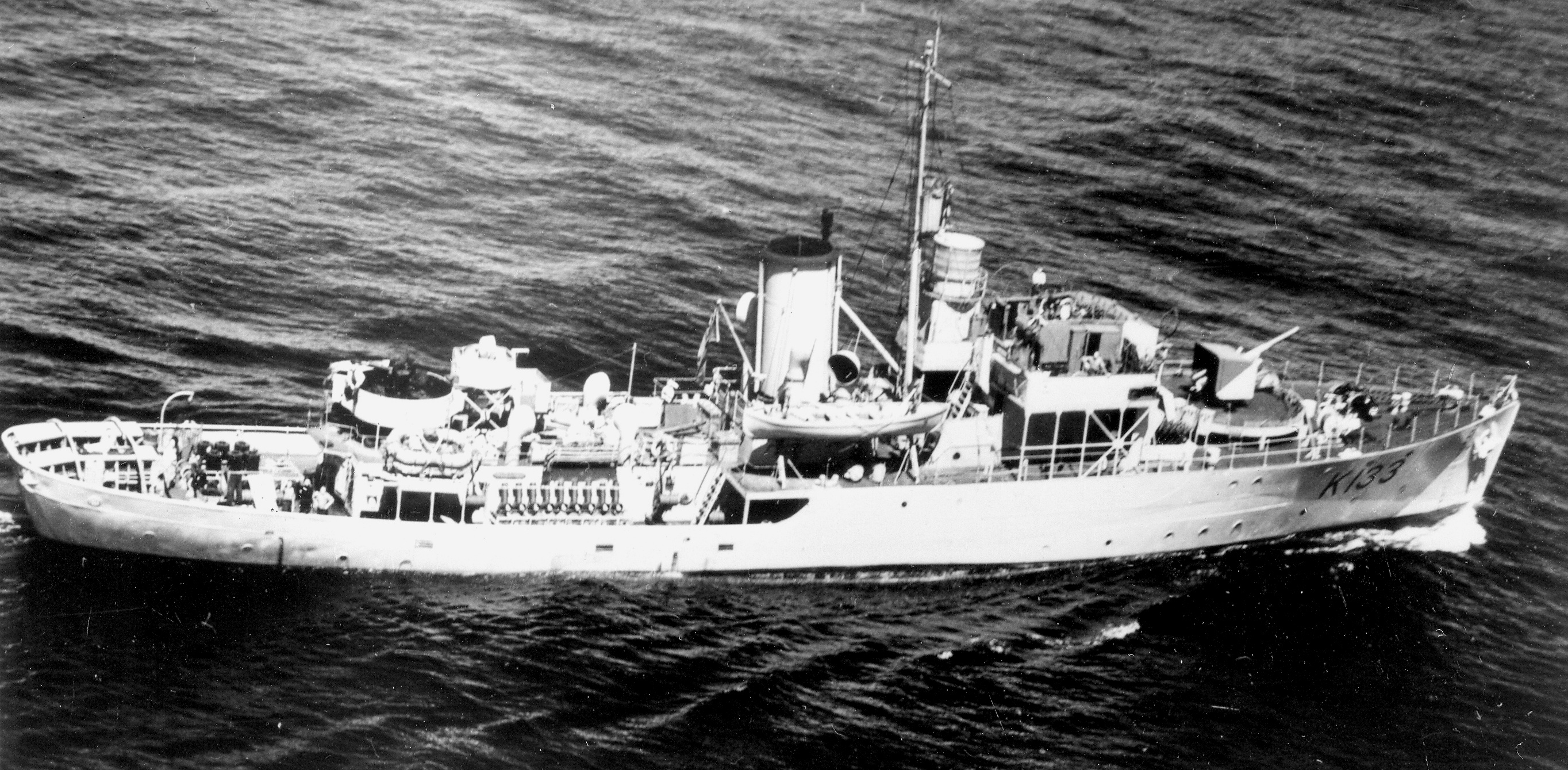
(DND Photo)
HMCS Quesnel (K133) Flower class Corvette. Named for the town of Quesnel, BC, she was built by Victoria Machinery Deport Co., Ltd, Victoria, BC and commissioned on 23 May 1941 at Esquimalt. She displaced 950 tons with a draught of 8’3″ forward and 13′ 5″ aft when fully loaded. Her overall length was 205 feet with a beam of 33 feet. Her single steam reciprocating engine gave her a maximum speed of 16 knots. After her “shake down” cruise to Prince Rupert in June 1941, the remainder of the year was spent performing various duties such as ASW training, towing gunnery targets and providing sea training to junior officers from Royal Roads. Shortly after the attack on Pearl Harbor, HMCS Quesnel was part of the rounding up of Japanese fishing vessels on the west coast of Vancouver Island. She also acted as a tender to the Battleship HMS Warspite when she was working up in the strait of Juan De Fuca and Nanoose Bay. In the spring of 1942, HMCS Quesnel carried out A/S patrols in the Strait of George and in Queen Charlotte and Millbank Sounds. She also provided protection to individual ships from US ports to Alaska. During this time HMCS Quesnel provided a screen to RMS Queen Elizabeth while she waited off Esquimalt for ideal tidal conditions to be dry docked in Feb 1942. In June 1942 HMCS Quesnel provided escort to the US tanker Lombardi, arriving in Kodiak, Alaska on 16 Jun 1942. En route back to Esquimalt, on 20 Jun 1942, she intercepted a message intended for HMCS Edmundston, requiring immediate assistance for the Fort Camosun, torpedoed by a Japanese submarine, position 47 22 N 125 30 W, approx 70 miles south west of cape Flattery. Several Canadian and US ships responded but HMCS Quesnel was first on the scene. On approaching the Fort Camosun HMCS Quesnel picked up a contact and delivered a depth charge attack. Visible results were negative and contact was not regained.
The entire crew of Fort Camosun, 51 men, were rescued by HMCS Quesnel. With the assistance of HMCS Edmundston, HMCS Vancouver and tugs, the Fort Camosun was brought to anchor in Neah Bay for pumping out before eventually making to to Esquimalt for repairs. The balance of the summer of 1942 was spent on A/S patrol and intercepting unidentified ships in BC waters. On 13 Sep 1942, HMCS Quesnel, in company with HMCS Timmins, HMCS Dundas, HMCS Edmundston and HMCS New Westminster departed Esquimalt for Halifax via the Panama Canal. She arrived in Halifax on 13 Oct 1942 and was assigned to Western Local Escort Force until Jun 1944. On 11 and 12 May 1943, while escorting convoy ON-180, HMCS Quesnel gained a contact. A depth charge attack was made but no further contact was made. With the division of the force into escort groups in Jun 1943, she became a member of EG W-1. During this period she underwent a refit, including fo’c’s’le extension, from early Sep to 23 Dec 1943, at Pictou. This refit was followed by workups in St. Margaret’s Bay and Bermuda. In Jun 1944 Quesnel joined Quebec Force and spent five months escorting Labrador-Quebec convoys. In Nov 1944 she was transferred to Halifax Force, going to Sydney for refit and, on completion late in Jan 1945, to Bermuda for workups. She resumed escort duty late in Mar 1945, temporarily attached to EG W-5 and W-8 of WLEF until the end of the war. While escorting her final convoy, HX-335, HMCS Quesnel rescued 17 of the crew from the damaged Esso Pitsburg on 12 May 1945, arriving at Halifax on 25 May 1945. On 7 Jun 1945, she landed her ammunition at Shelburne, NS, and two days later arrived at Sydney, NS, to de-store. HMCS Quesnel then proceeded to Sorel, Quebec where she was paid off on 3 Jul 1945. She was sold on 5 Oct 1945 to the United Steel and Metal Company, Hamilton, Ontario, and was broken up there in 1946. During her time escorting convoys in the Atlantic, HMCS Quesnel participated in 48 convoys and made ports of call at Goose Bay, Labrador; St. John’s, Nfld; Sydney, NS; Halifax, NS; Saint John, NB; Boston, MA; New York, NY; and several ports in Quebec.
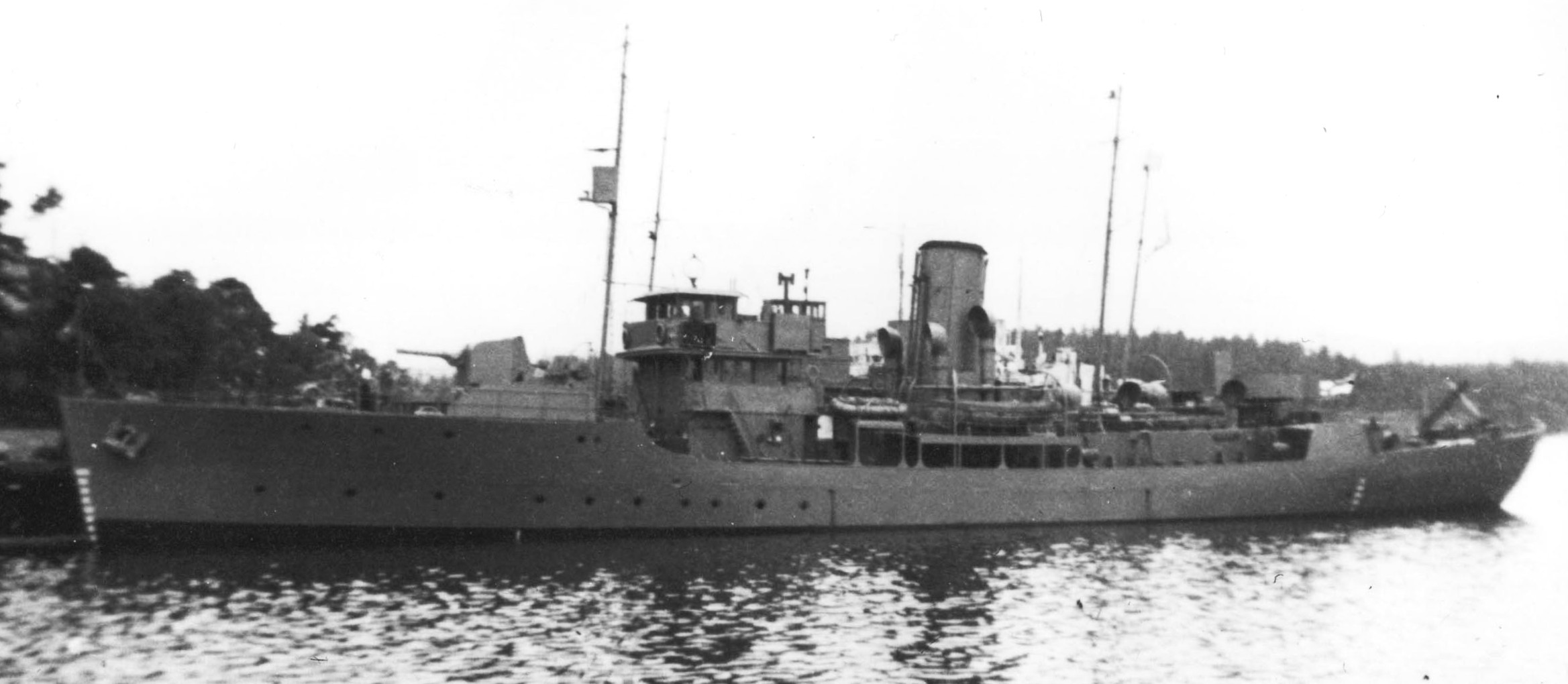
(RCN Photo)
HMCS Quesnel (K133) Flower class Corvette.
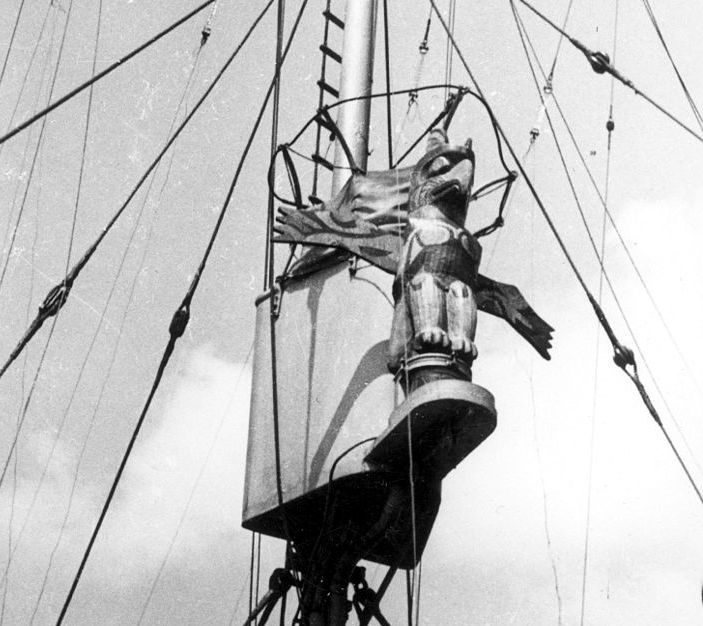
(Bev Lundahl Photo)
HMCS Quesnel (K133) Flower class Corvette, Thunderbird totem.
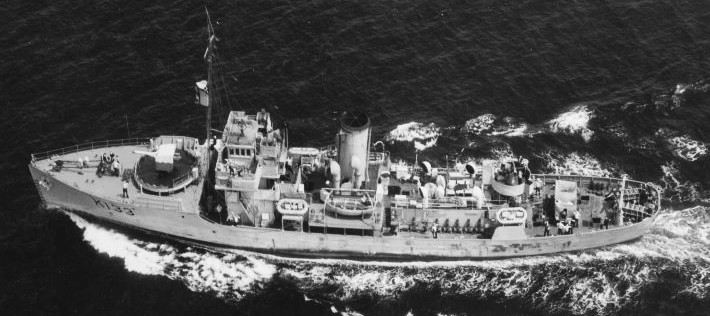
(USN Naval History and Heritage Photo, 80-G-450189)
HMCS Quesnel (K133) Flower class Corvette, 7 June 1943.
HMCS West York (K369)
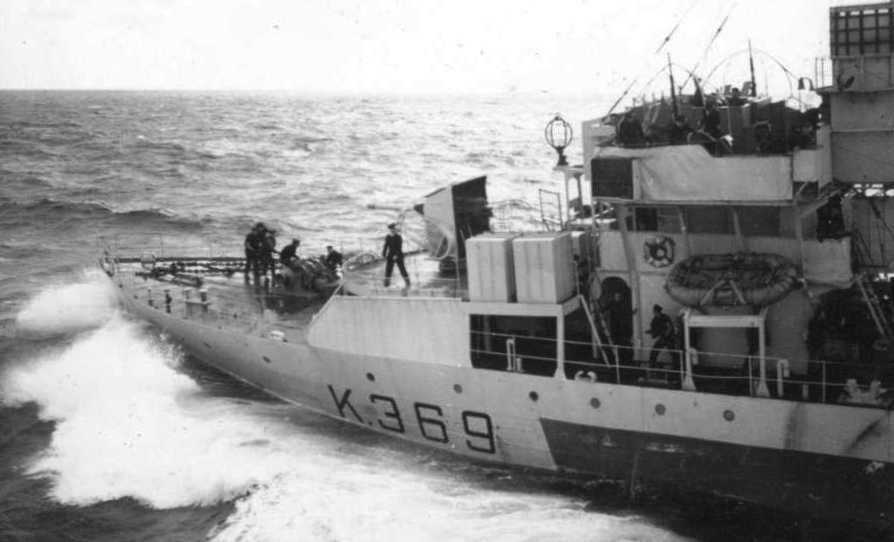
(DND Photo)
HMCS West York (K369) Flower-class Corvette. Built by Midland Shipyards, Ltd., Midland, Ontario, she was commissioned at Collingwood, Ontario, on 6 Oct 1944. HMCS West York arrived at Halifax in mid-Nov 1944 and left a month later for Bermuda to work up. In Feb 1945, she joined EG C-5 at St. John’s, leaving 16 Feb 1945 to rendezvous with her maiden convoy, HX.338. She made three round trips across the Atlantic before the end of her career, the last one as escort to ON.305, which she joined from Londonderry at the end of May 1945. Paid off on 9 Jul 1945, and laid up at Sorel, she was sold later that year for commercial use. As SS West York, she was towing the decommissioned HMCS Assiniboine when the towline parted and the destroyer was wrecked on Prince Edward Island, 7 Nov 1945. The former West York sailed under a variety of names and flags, returning to Canadian registry in 1960 as Federal Express. On 5 May 1960 she was rammed by Polaris (Swedish vessel) while moored at Montreal. She broke free from her moorings and rammed into Thorshope (Norwegian vessel) and sank within 30 minutes. Later partly raised and scrapped.
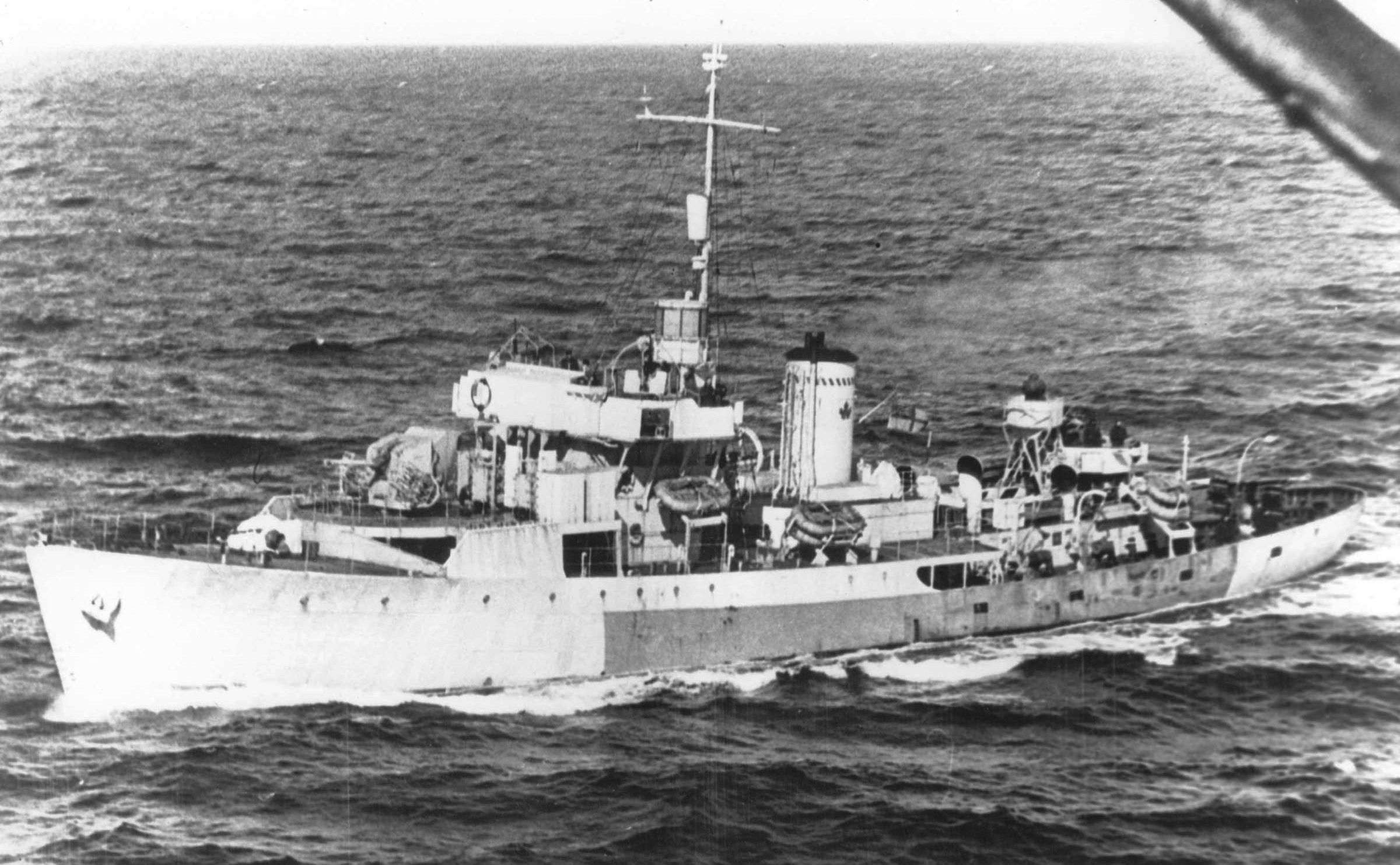
(RCN Photo)
HMCS West York (K369) Flower class Corvette.
HMCS Wetaskiwin (K175)
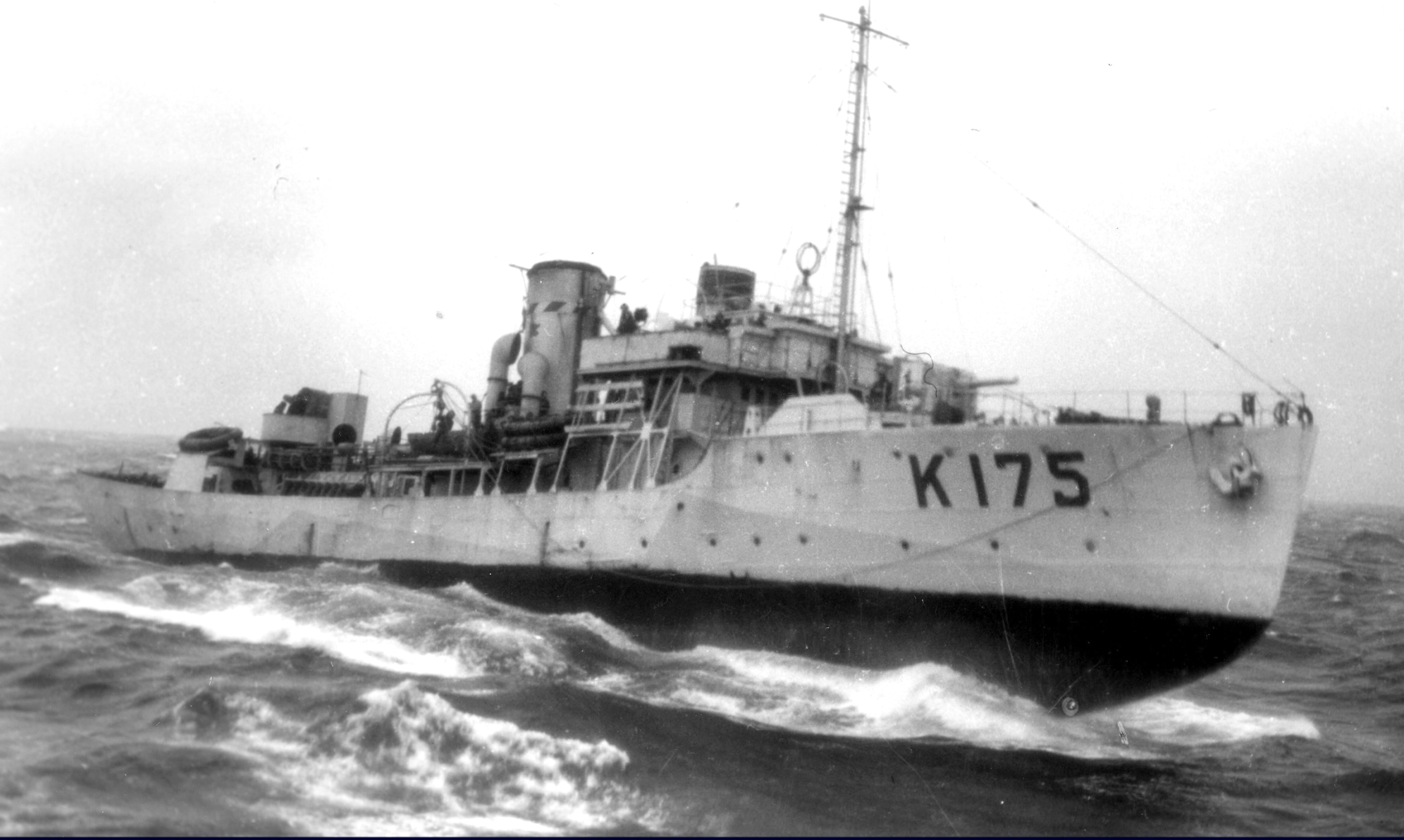
(Ken Macpherson, Naval Museum of Alberta Photo)
HMCS Wetaskiwin (K175) Flower class Corvette. Laid down as HMCS Banff, she was renamed HMCS Wetaskiwin during construction. Commissioned at Esquimalt on 17 Dec 1940 as HMCS Wetaskiwin K175, she was the first west coast-built corvette to enter service. She patrolled out of Esquimalt until 17 Mar 1941 when HMCS Alberni, HMCS Agassiz and HMCS Wetaskiwin departed Esquimalt for Halifax. Enroute they stopped at San Pedro, California for fuel, where a party for the crew, hosted by actress Mary Pickford and her husband Douglas Fairbanks, was held for them. They arrived at Halifax on 13 Apr 1941. On 23 May 1941, HMCS Alberni, HMCS Agassiz and HMCS Wetaskiwin left Halifax for St. John’s to join the recently formed NEF. In Jun 1941 she escorted her first convoy, HX.130, to Iceland, and during the next eight months made six round trips there with eastbound convoys. She returned to Halifax on 24 Jan 1942, and in Feb 1942 commenced a major refit at Liverpool, NS. After working up in May 1942 she joined EG C-3, arriving in Londonderry on 5 Jun 1942 for the first time from convoy HX.191. During this period Wetaskiwin participated in two major convoy actions: SC.42 (Sep 1941); and SC.48 (Oct 1941). On 31 July 1942, while escorting ON.115, she shared with HMCS Skeena the sinking of U-588. In mid-Jan 1943 she arrived at Liverpool, NS, for refit, which was completed on 9 Mar 1943 and followed by further repairs at Halifax. In May 1943, she joined EG C-5, and that Dec 1943 went to Galveston, Texas, for a long refit, including extension of her fo’c’s’le. Following its completion on 6 Mar 1944, she returned briefly to Halifax before proceeding to Bermuda for work-ups late in Apr 1944. Returning northward, she re-joined C-5, leaving Londonderry on 23 Sep 1944 for the last time to join EG W-7, WLEF, for the remainder of the war. She was paid off at Sorel on 19 Jun 1945, and sold in 1946 to the Venezuelan Navy, which re-named her Victoria. She was discarded in 1962.
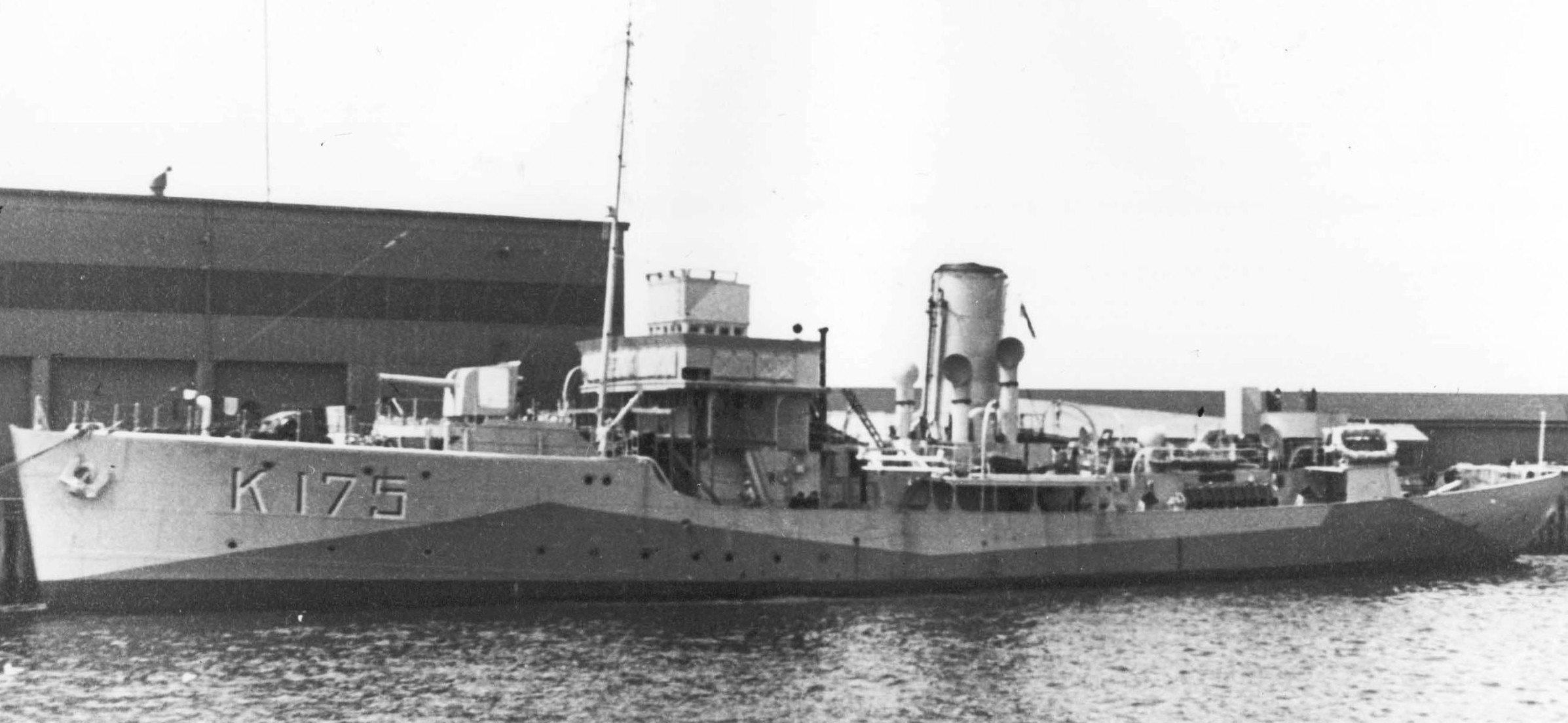
(RCN Photo)
HMCS Wetaskiwin (K175) Flower class Corvette.
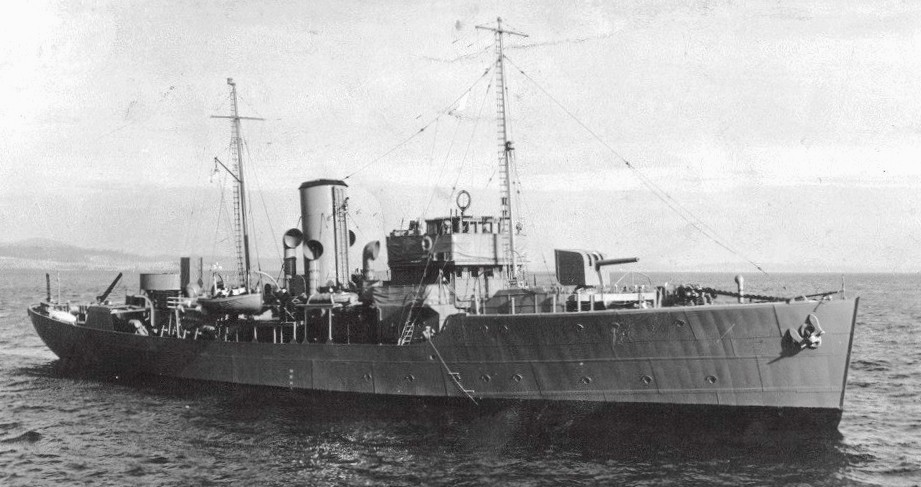
(DND Photo)
HMCS Wetaskiwin (K175) Flower class Corvette.
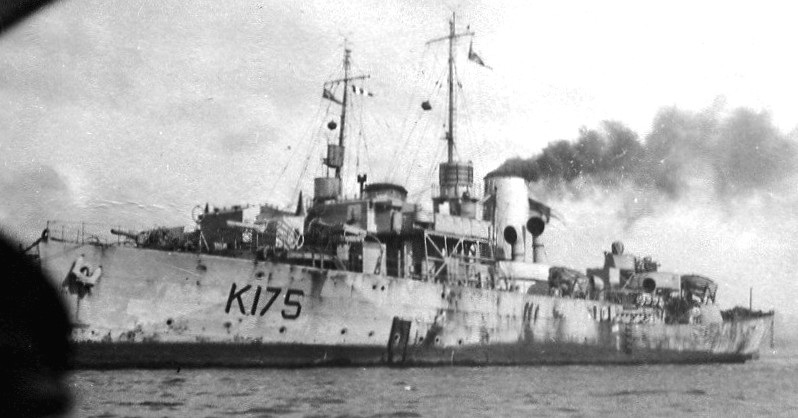
(Marlene Hill Photo)
HMCS Wetaskiwin (K175) Flower class Corvette.
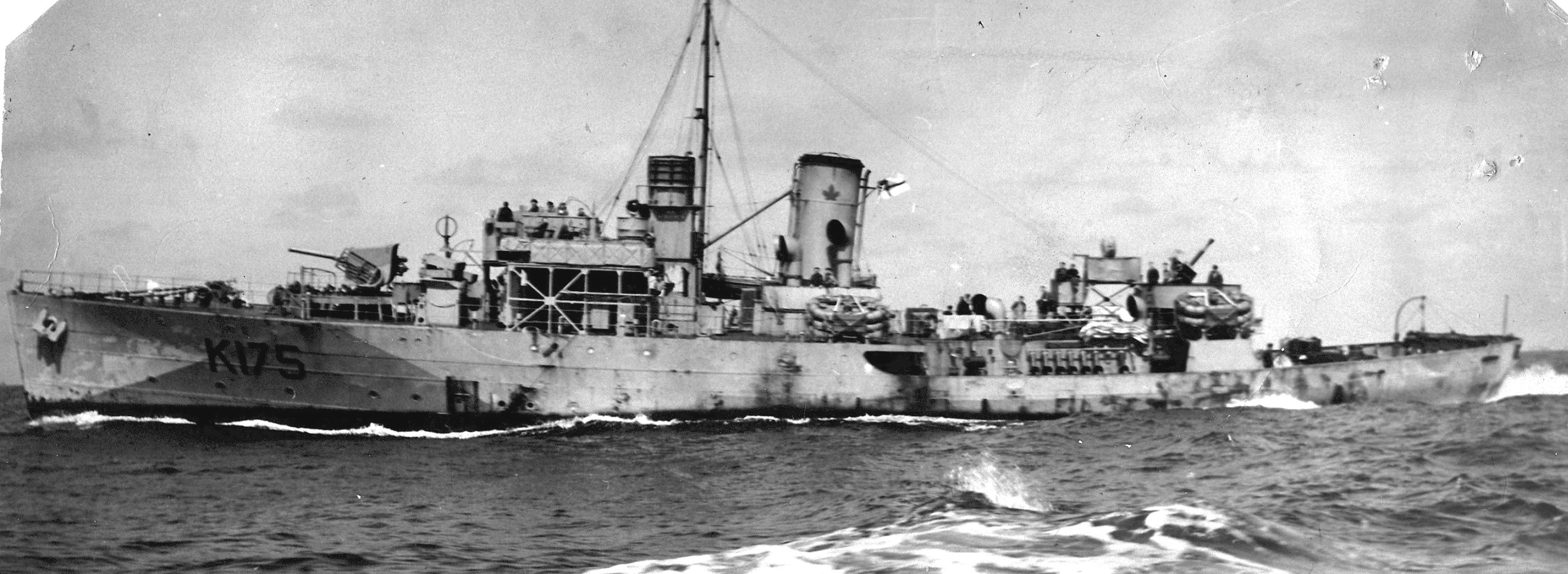
(Marlene Hill Photo)
HMCS Wetaskiwin (K175) Flower class Corvette.
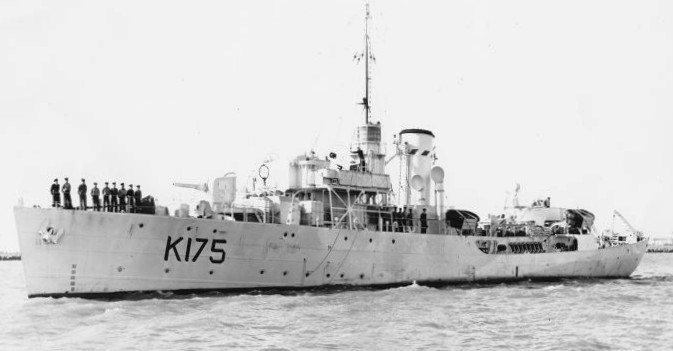
(US Naval History and Heritage Photo, 19-LCM)
HMCS Wetaskiwin (K175) Flower class Corvette, cMarch 1944, Galveston, Texas.
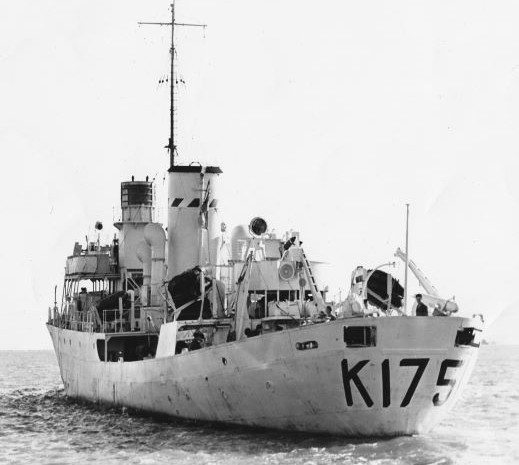
(US Naval History and Heritage Photo, 19-LCM)
HMCS Wetaskiwin (K175) Flower class Corvette, cMarch 1944, Galveston, Texas.
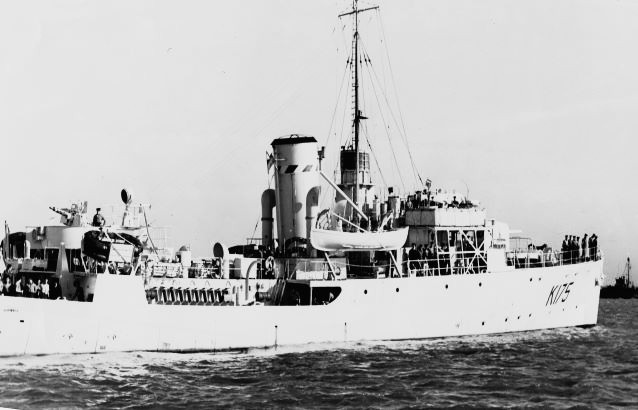
(US Naval History and Heritage Photo, 19-LCM)
HMCS Wetaskiwin (K175) Flower class Corvette, cMarch 1944, Galveston, Texas.
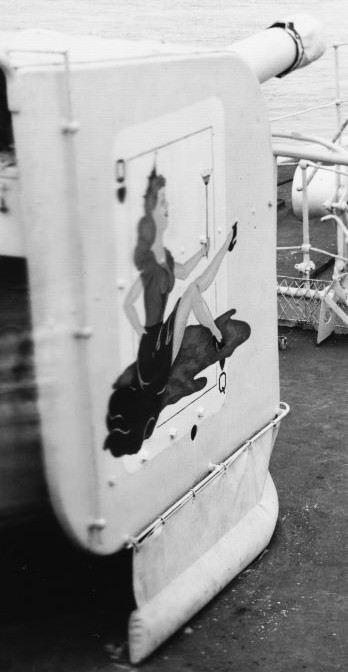
(US Naval History and Heritage Photo)
HMCS Wetaskiwin (K175) Flower class Corvette.
HMCS Weyburn (K173)
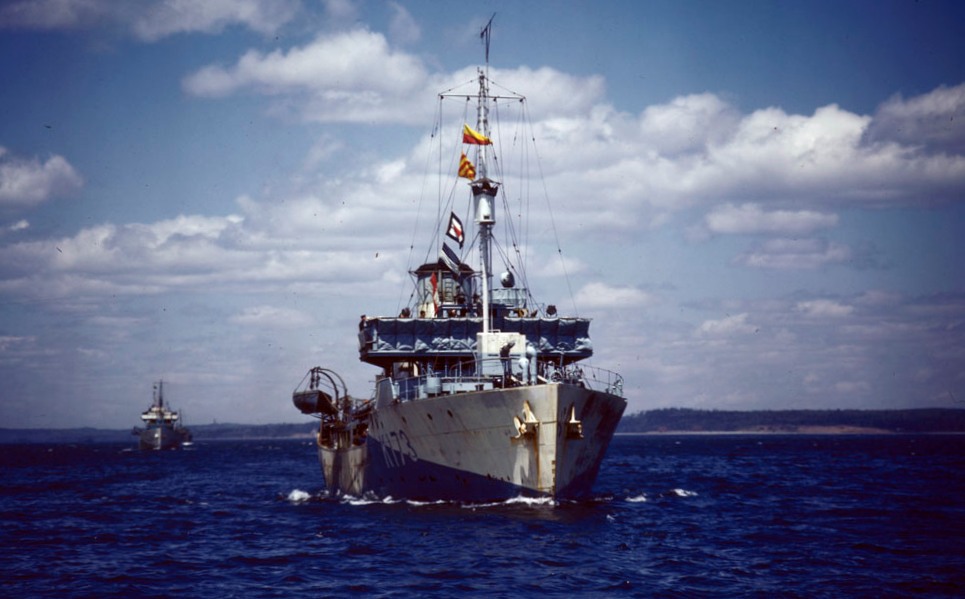
(Library and Archives Canada Photo, MIKAN No. 4950904)
HMCS Weyburn (K173) Flower class Corvette. Commissioned at Montreal on 26 Nov 1941, she arrived at Halifax on 06 Dec 1941 and joined Halifax Force for local escort work, but was soon in need of repairs. These were carried out at Halifax during Mar and Apr 1942, following which she joined WLEF. In Jul 1942 she transferred to Gulf Escort Force for Quebec City-Sydney convoys but in Sep 1942 was allocated to duties in connection with Operation “Torch.” She arrived at Londonderry on 27 Sep 1942 from convoy SC.100, and at Liverpool on 02 Oct 1942 for fitting of Oerlikon A/A guns. The work was completed on 21 Oct 1942 and in Nov 1942, HMCS Weyburn began four months’ employment as escort to UK-Mediterranean convoys. On 22 Feb 1943 HMCS Weyburn was mined off Cape Espartel east of Gibraltar in position 35º46’N, 06º02’W. Twelve members of her crew including her commanding officer were lost with the ship. The mine had been laid by U-118 on 1 Feb 1943.
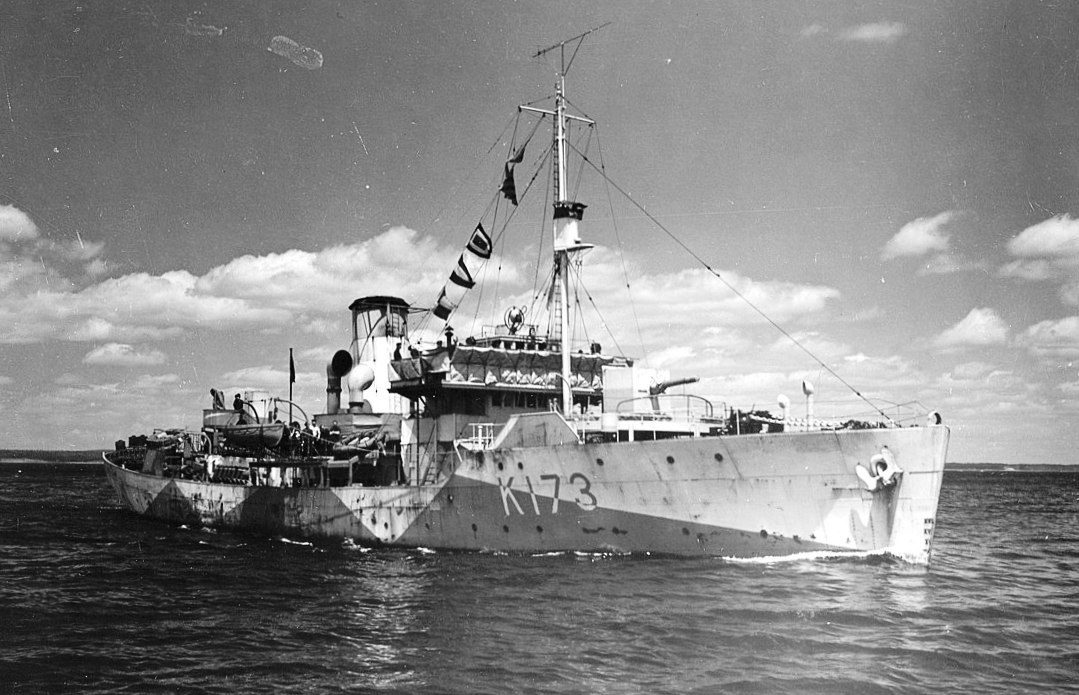
(DND Photo, NP-1012)
HMCS Weyburn (K173) Flower class Corvette.
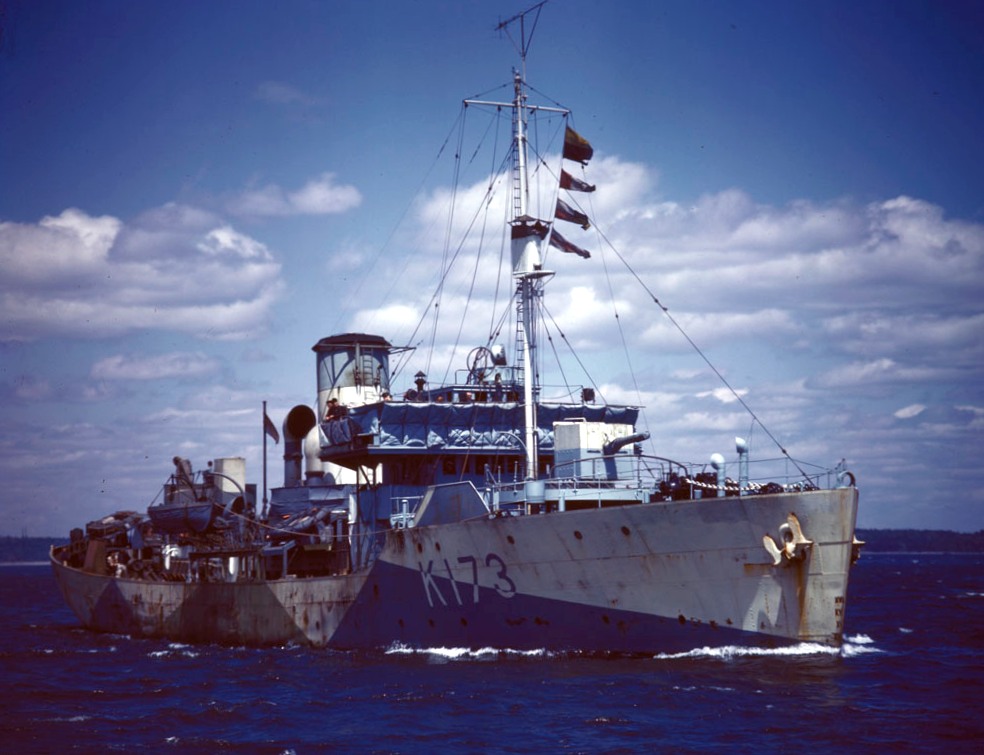
(Library and Archives Canada Photo, MIKAN No.4950903)
HMCS Weyburn (K173) Flower class Corvette.
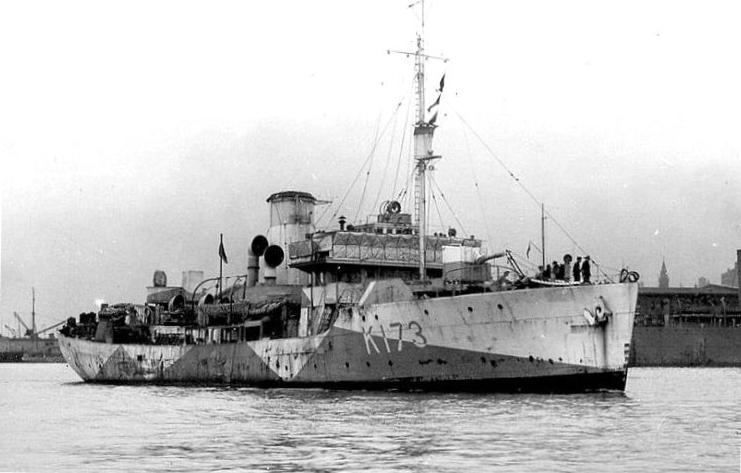
(DND Photo)
HMCS Weyburn (K173) Flower class Corvette.
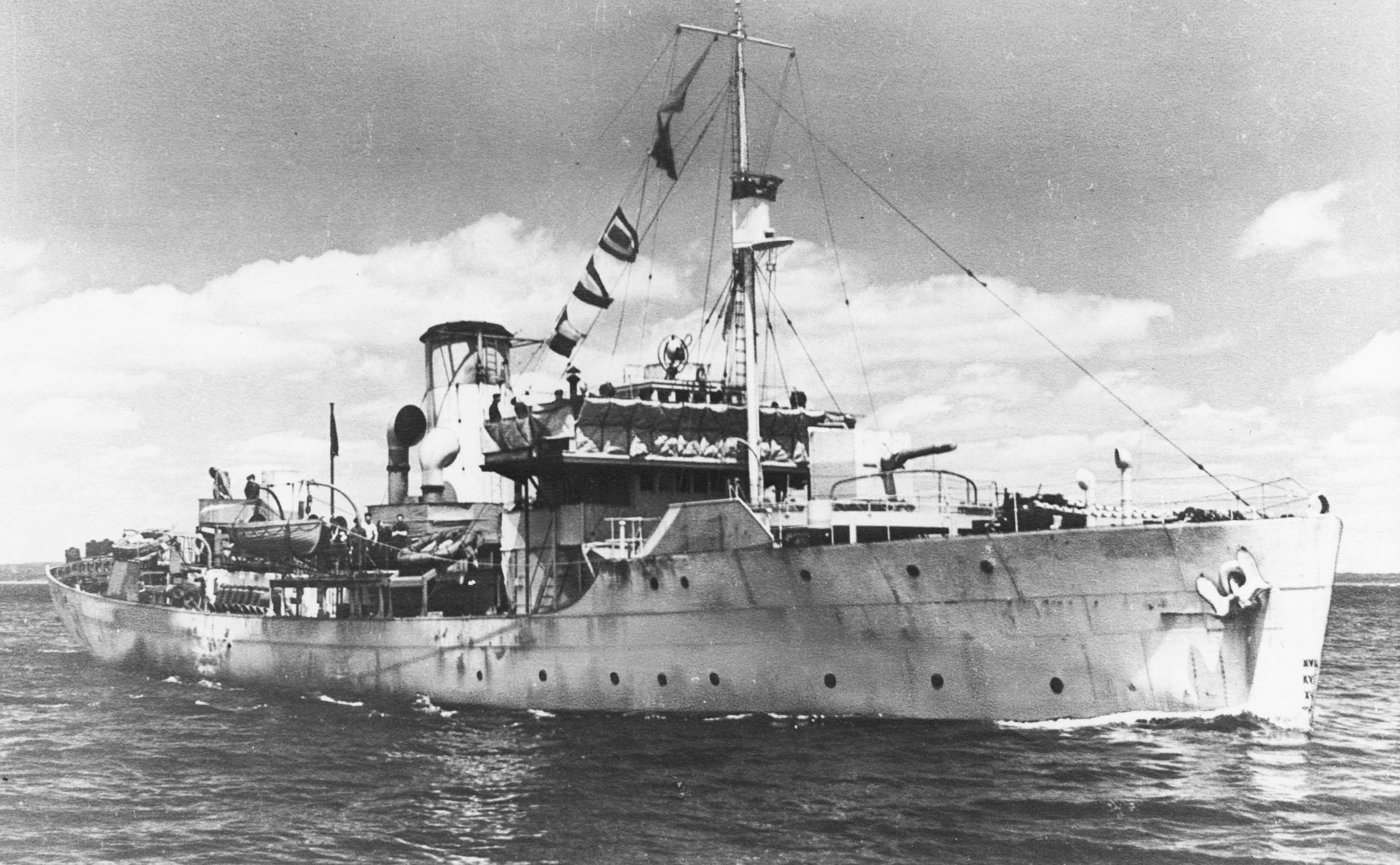
(DND Photo)
HMCS Weyburn (K173) Flower class Corvette.
All comments are subject to our Comment Policy. You must be at least 18 years old to comment.
See a comment that violates our guidelines? Report it here.