RCN Flower class Corvettes: HMCS Peterborough (K342), HMCS Pictou (K146), HMCS Port Arthur (K233), HMCS Prescott (K161)
HMCS Peterborough (K342)
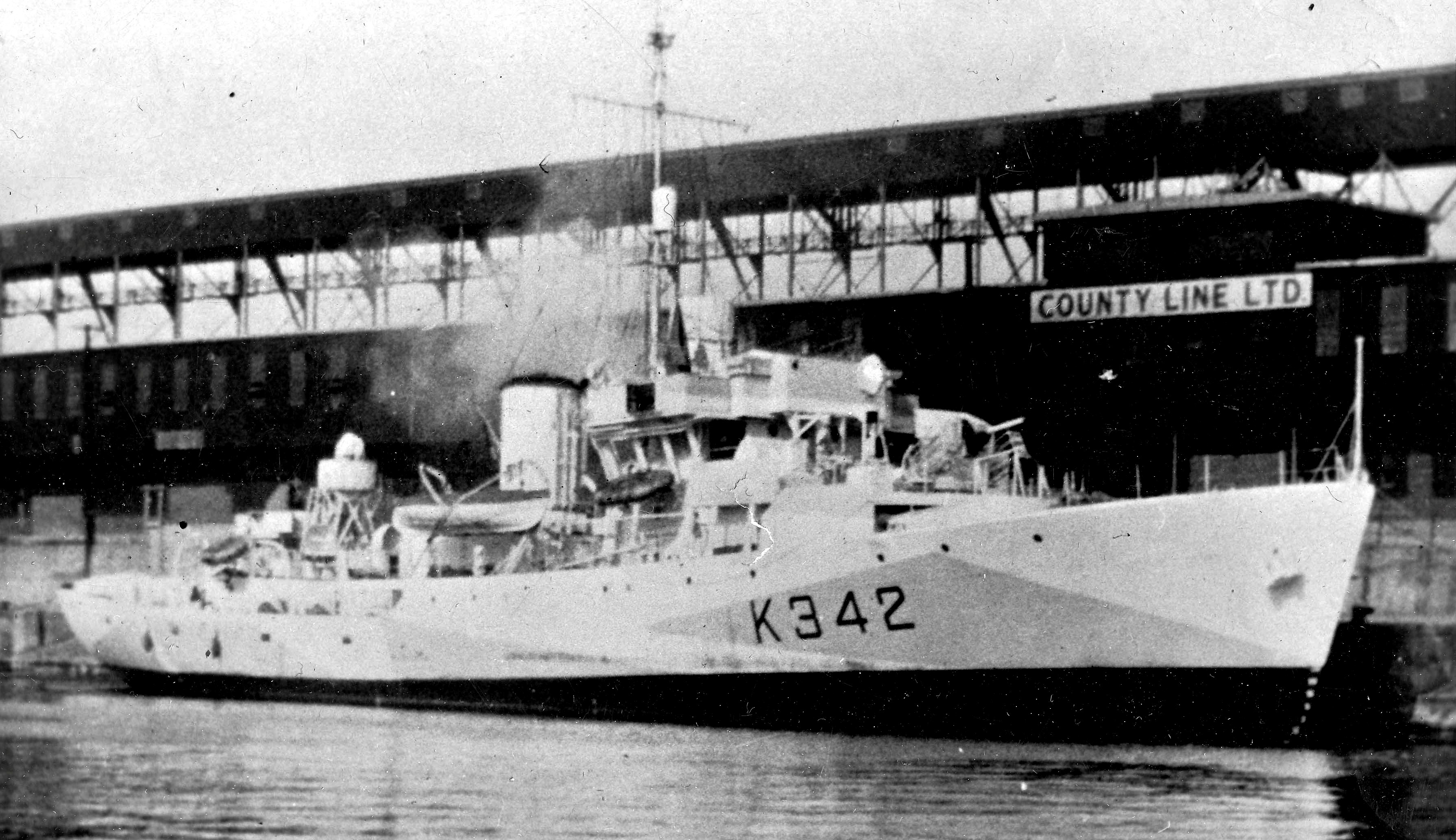
(DND Photo)
HMCS Peterborough (K342) Flower class Corvette. Commissioned at Kingston on 01 Jun 1944, she arrived at Halifax on 26 Jun 1944 and in Bermuda on 17 Jul 1944 to work up. HMCS Peterborough left Bermuda on 07 Aug 1944 for St. John’s, where, in Sep 1944, she joined EG C-6 and sailed for her first convoy, HXF.308, on 18 Sep 1944. Continuously employed as a mid-ocean escort for the rest of her career, she left St. John’s on 27 May 1945, to join convoy HX.358, the last HX convoy of the war. In mid-Jun 1945 she left Londonderry for home, where she was paid off on 19 Jul 1945 and laid up at Sorel. She was sold to the Dominican republic in 1947 and renamed Gerardo Jansen, serving until disposed of for scrap in 1972.
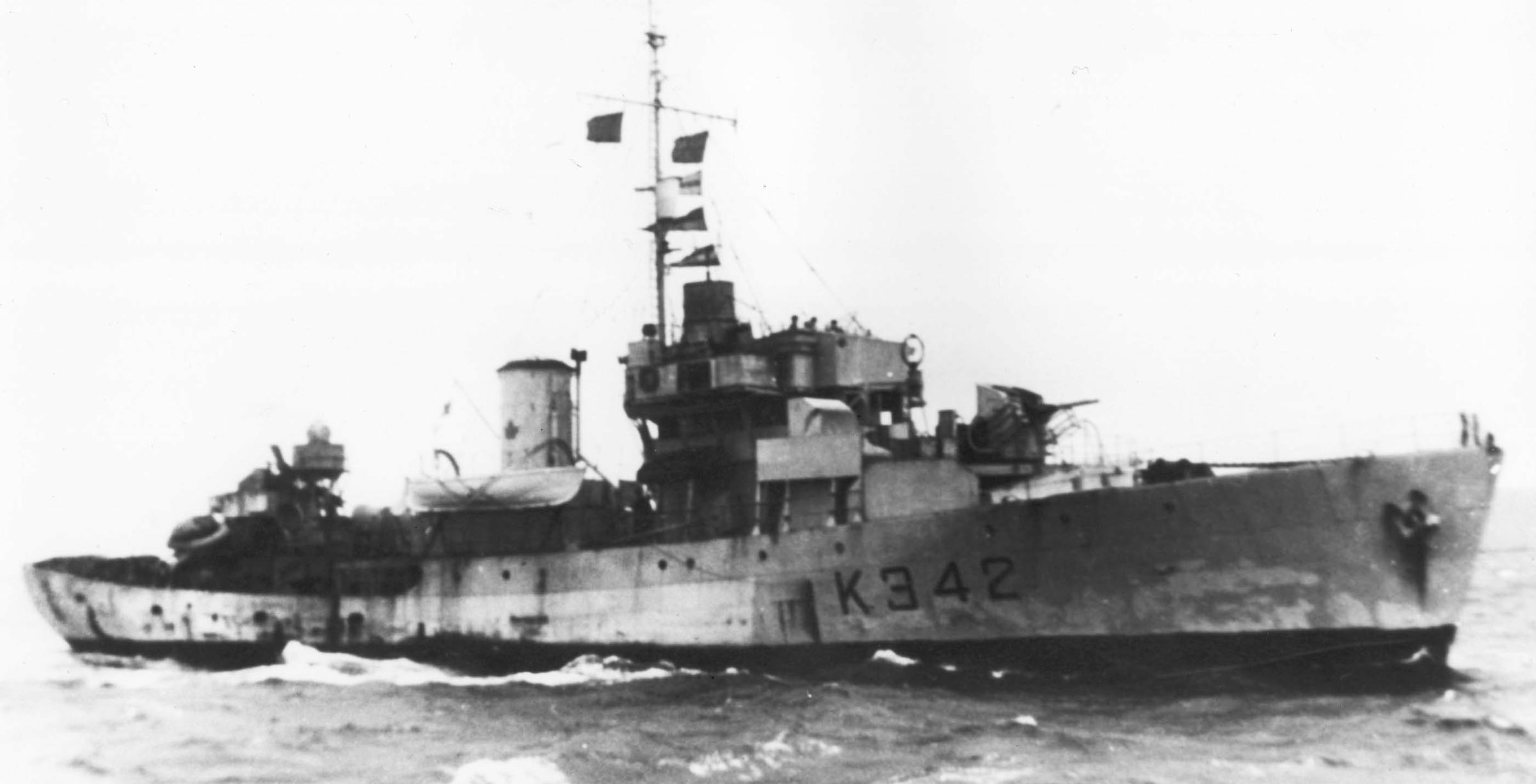
(DND Photo)
HMCS Peterborough (K342) Flower class Corvette.
HMCS Pictou (K146)
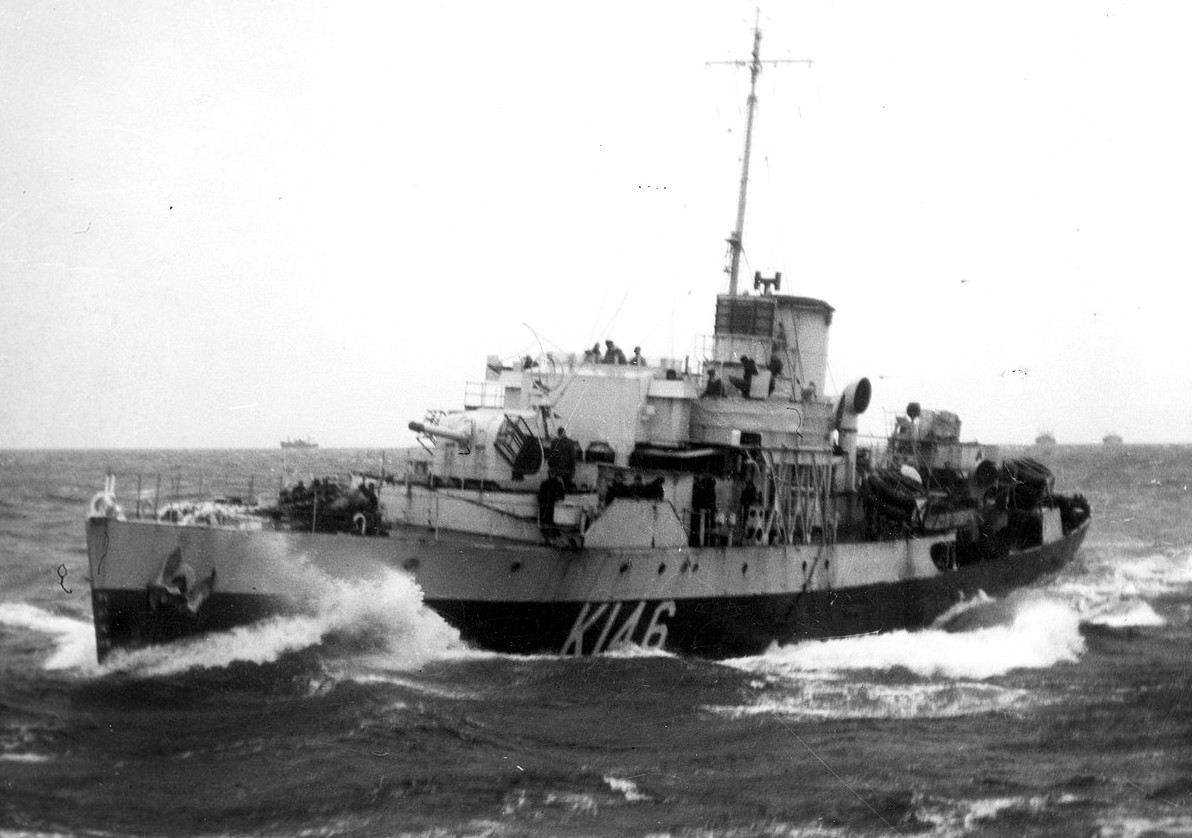
(RCN Photo)
HMCS Pictou (K146) Flower class Corvette. Commissioned at Quebec City on 29 Apr 1941, HMCS Pictou arrived at Halifax on 12 May 1941. She joined Newfoundland Command and left St. John’s on 06 Jun 1941 with HX.131 for Iceland, one of the first two corvettes to escort an HX convoy. She remained on the St. John’s-Iceland run for the rest of the year. After brief repairs at Halifax she returned to St. John’s, where breakdowns forced her to turn back from three successive convoys. She finally crossed with H.180 in Mar 1942, to Londonderry, carried out further repairs at Liverpool and, on completion early in Jun 1942, join EG C-4. On 5 Aug 1942, while escorting convoy ON.116, she was rammed in a fog near St. John’s by the Norwegian SS Hindanger, suffering severe damage to her stern. After completing repairs at Halifax on 20 Sep 1942, she joined EG C-2. On her return from the UK with ON.149 in Dec 1942, she required further repairs at Halifax, followed immediately by refit at Liverpool, NS. In May 1943, she joined EG C-3, and on 17 Dec 1943 left Londonderry for the last time. From early Jan to 31 Mar 1944, she was refitting at New York, incidentally receiving her extended fo’c’s’le. She then proceeded to Bermuda for three weeks’ working-up, returning in mid-Jun 1944 to join EG W-5, Western Escort Force. Paid off on 12 Jul 1945, at Sorel, she was sold for conversion to a whale-catcher, entering service in 1950 as the Honduran-flag Olympic Chaser. Again sold in 1956, she served as the Otori Maru No. 7 until converted to a barge in 1962.
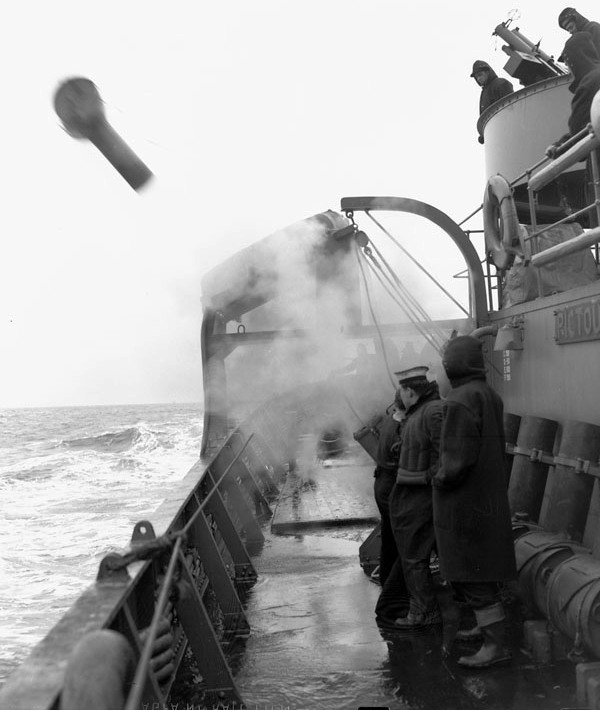
(Library and Archives Canada Photo, MIKAN No. 3393539)
HMCS Pictou (K146) Flower class Corvette, firing a depth charge, March 1942.
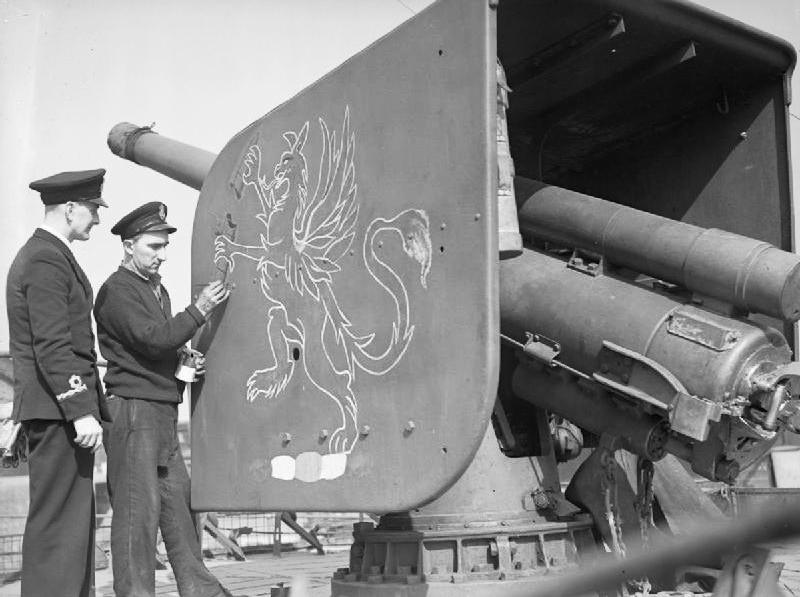
(IWM Photo, A8327)
Battle Crest Carried by HMCS Pictou (K146) Flower class Corvette, Liverpool, 15 April 1942. Petty Officer painting a crest on the ship’s gun shield to commemorate the destruction of a German U-boat.
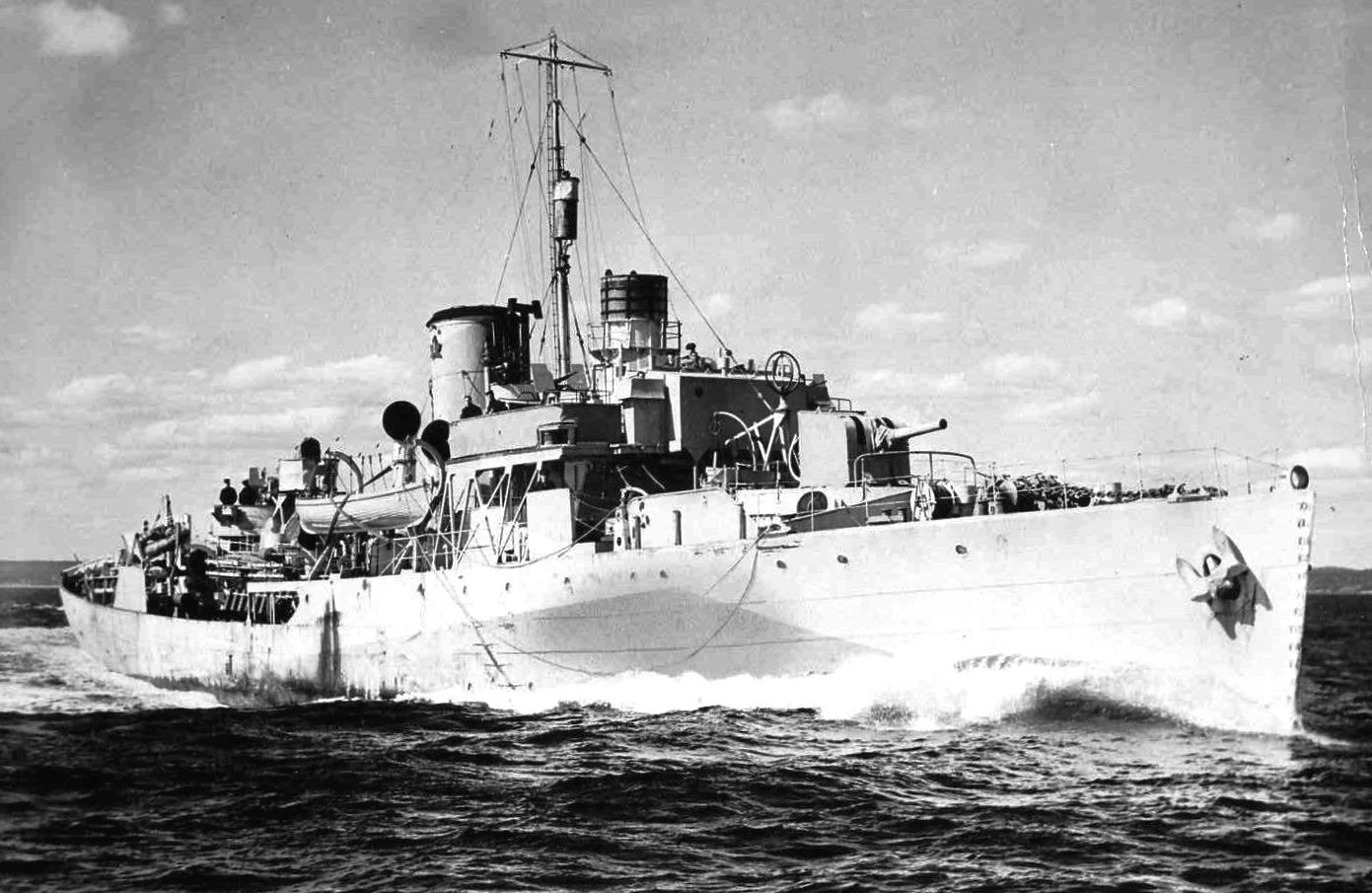
(RCN Photo)
HMCS Pictou (K146) Flower class Corvette.
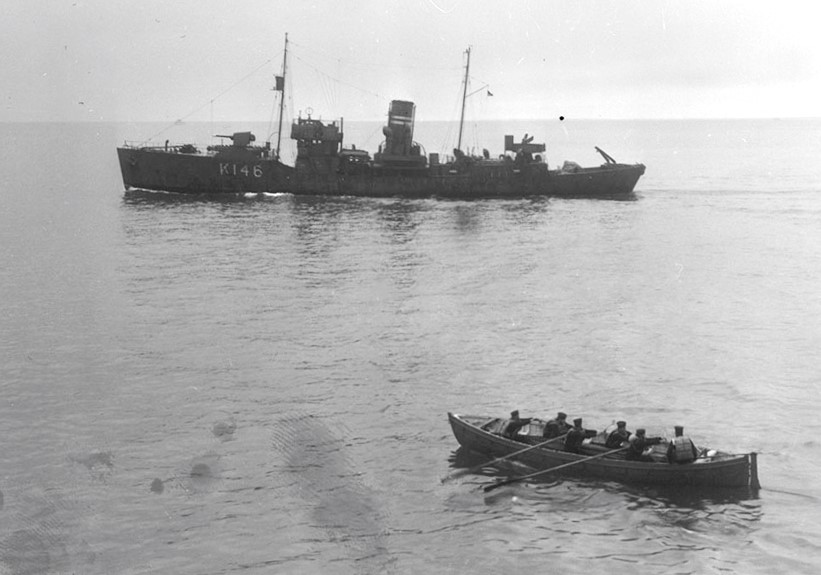
(Library and Archives Canada Photo, MIKAN No. 3571793)
HMCS Pictou (K146) Flower class Corvette, January 1942.
HMCS Port Arthur (K233)
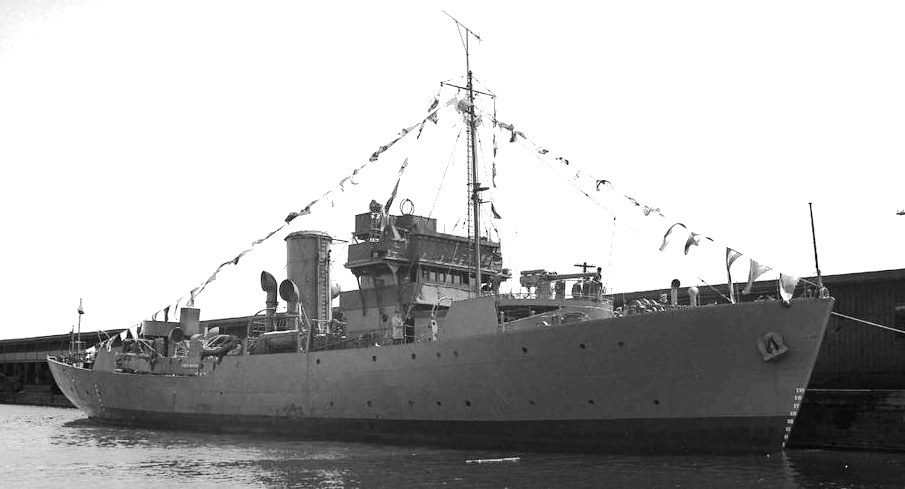
(DND Photo)
HMCS Port Arthur (K233) Flower class Corvette. Built by the Port Arthur Shipbuilding Co. Ltd., Port Arthur, Ontario, she was commissioned on 26 May 1942 at Montreal. She arrived at Halifax on 10 Jun 1942 and was allocated to WLEF at the end of Jul 1942. In Sep 1942 she was appointed to Operation “Torch” duties, arriving at Londonderry on 01 Nov 1942 from convoy SC.105, and during the next four months escorted UK-Mediterranean convoys. On 19 Jan 1943, while so employed, HMCS Port Arthur sank the Italian submarine Tritone off Bougie, Algeria. She arrived at Halifax on 23 Mar 1943, and, after brief repairs there, joined Western Support Force at St. John’s. On 1 May 1943, her CO, Lt E.T. Simmons, was awarded the DSO. Early in Aug 1943 she began a major refit at Liverpool, NS, completing on 31 Dec 1943. After working up at Halifax, she joined EG W-9, WEF. In Apr 1944, she was assigned to Western Approaches Command for invasion duties and left St. John’s on 24 Apr 1944 for Londonderry. During the following four months she was occupied as a convoy escort in support of the invasion, and in September joined Portsmouth Command. In Feb 1945, she returned to Canada, where VE-Day found her still under refit at Liverpool, NS. She was paid off 11 Jul 1945 at Sorel and broken up at Hamilton in 1948.
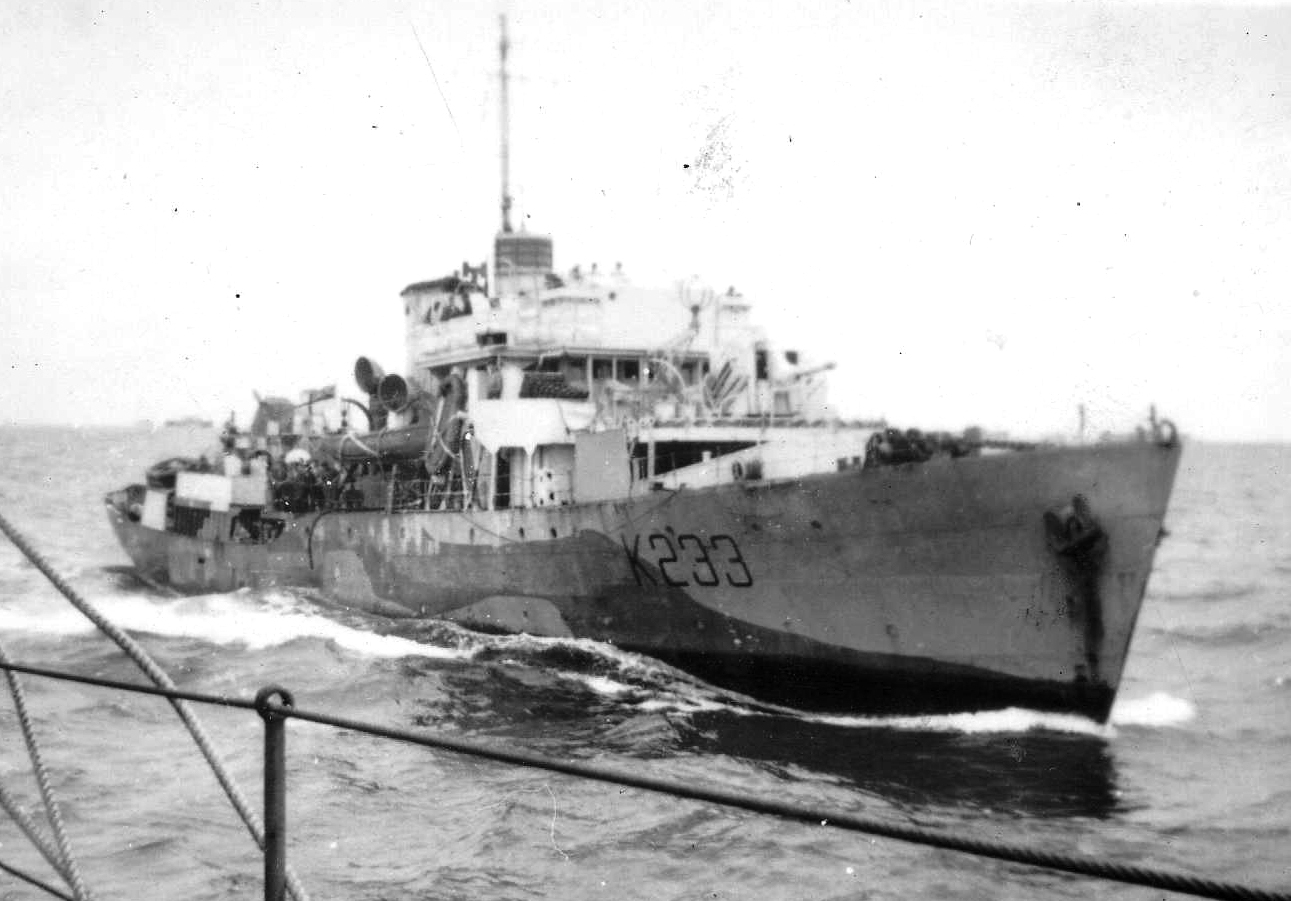
(RCN Photo)
HMCS Port Arthur (K233) Flower class Corvette, clearing Port Arthur Harbour for overseas service, 16 May 1942.
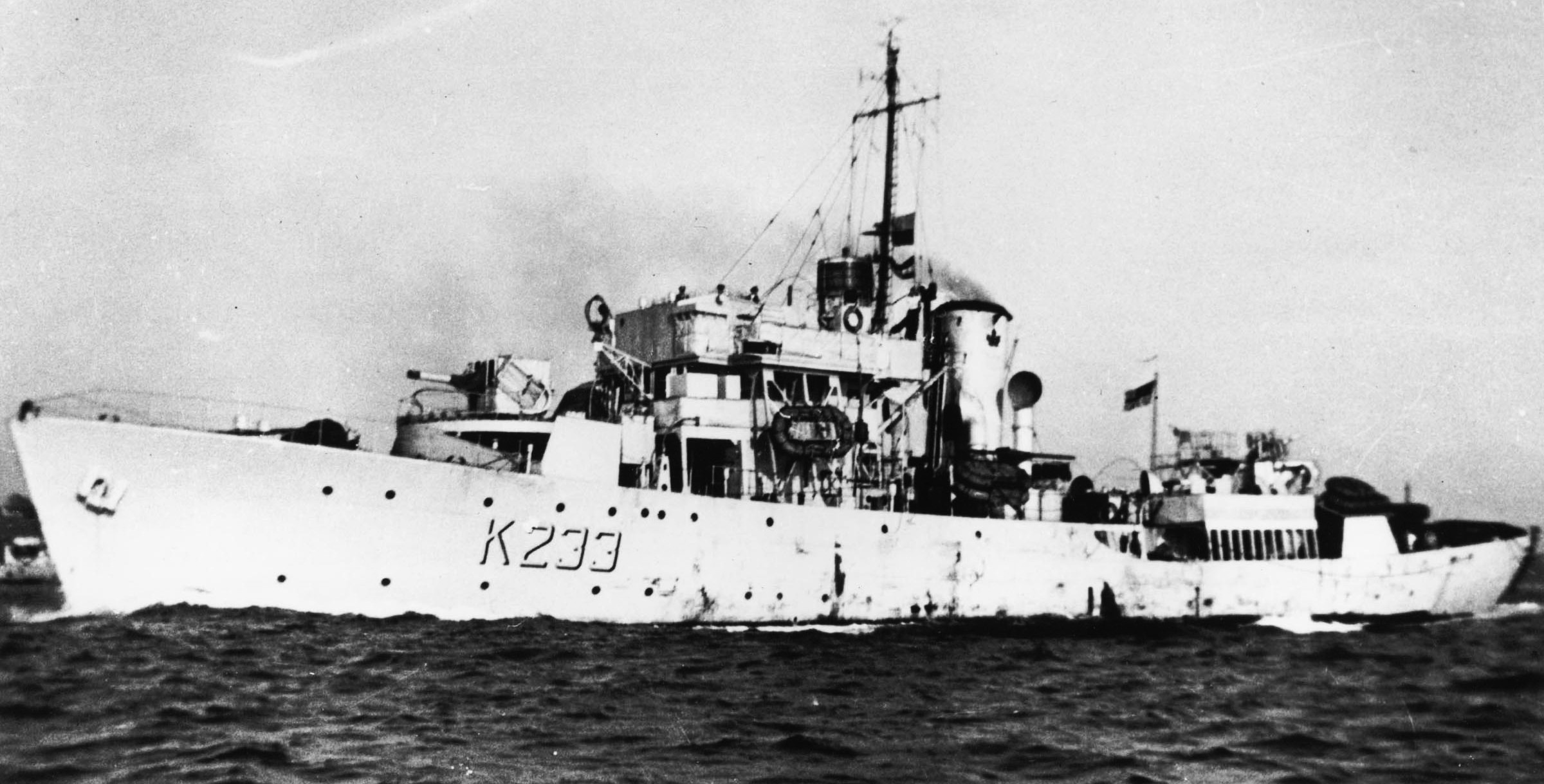
(RCN Photo)
HMCS Port Arthur (K233) Flower class Corvette.
HMCS Prescott (K161)
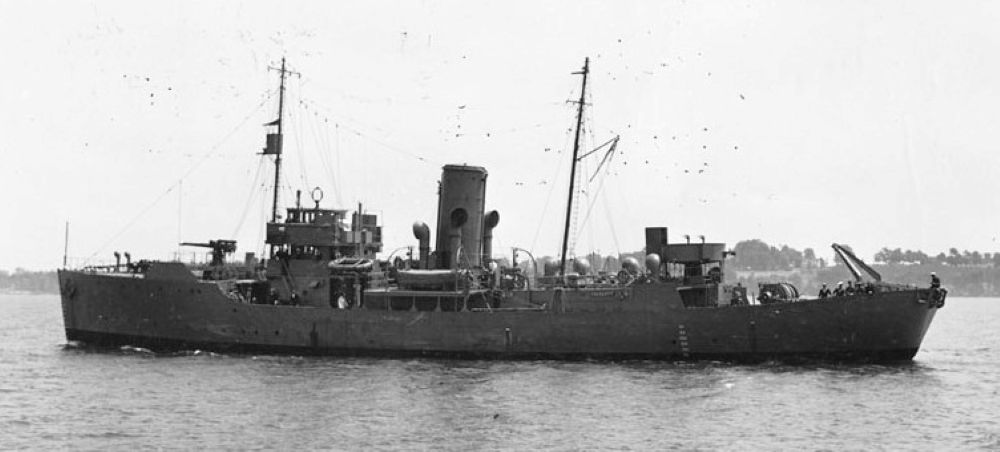
(Library and Archives Canada Photo, MIKAN No. 3604328)
HMCS Prescott (K161) Flower class Corvette. Commissioned at Montreal on 26 Jun 1941, HMCS Prescott arrived at Halifax on 04 Jul 1941 and was attached briefly to Halifax Force before arriving at St. John’s on 31 Aug 1941 to join Newfoundland Command. She spent the rest of the year escorting convoys between St. John’s and Iceland, but early in 1942 experienced mechanical difficulties requiring two months’ repairs at Liverpool, NS. Resuming her mid-ocean duties on 21 Apr 1942, she made two round trips to Londonderry before being transferred to WLEF in July. In Sep 1942 she was assigned to duties in connection with Operation “Torch”, returning to Canada on 04 Apr 1943. Late that month she began a six-month refit at Liverpool, NS, including extension of her fo’c’s’le. After work-ups at Pictou she sailed from St. John’s on 19 Dec 1943 for the UK to join EG 6, Londonderry. She served with the group, principally as escort to UK- Gibraltar/Freetown convoys, until Apr 1944, when its corvettes were replaced with frigates, then joined Western Approaches Command, Greenock, for invasion duties. In Sep 1944 she returned to Liverpool, NS, for another refit and, after working up, went back to the UK to serve with Nore Command until the end of the war. Returning to Halifax late in May 1945, she was paid off at Sorel 20 Jul 1945 and broken up in 1951 at Hamilton.
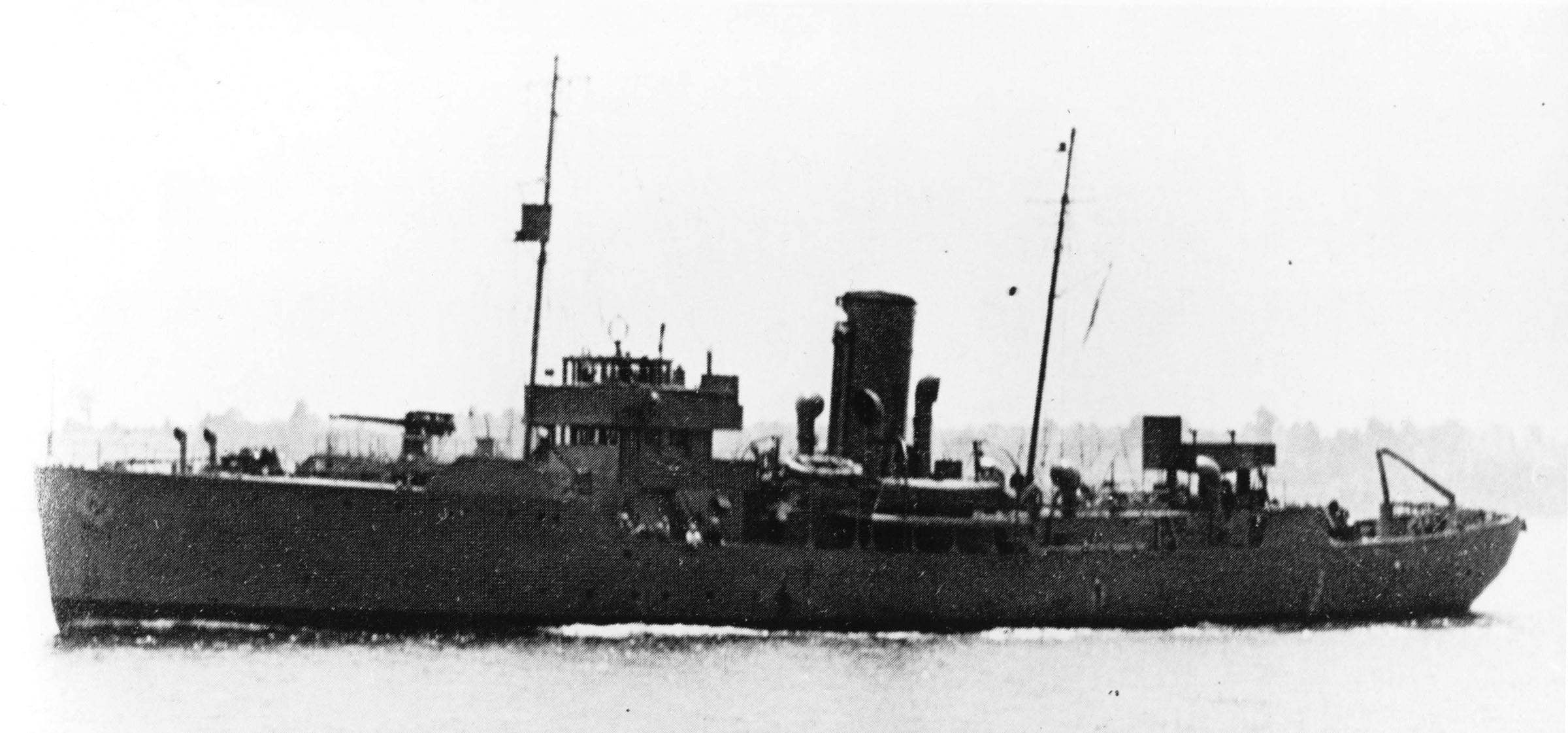
(RCN Photo)
HMCS Prescott (K161) Flower class Corvette.
All comments are subject to our Comment Policy. You must be at least 18 years old to comment.
See a comment that violates our guidelines? Report it here.