RCN Flower class Corvettes: HMCS Nanaimo (K101), HMCS Napanee (K118), HMCS New Westminster (K228), HMCS Norsyd (K520)
HMCS Nanaimo (K101)
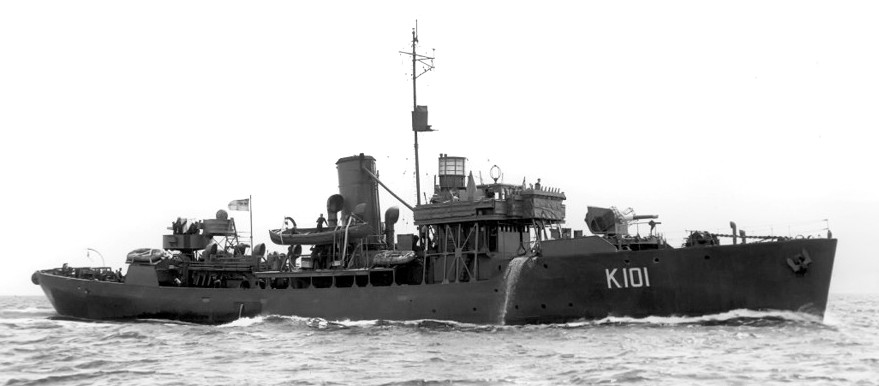
(RCN Photo)
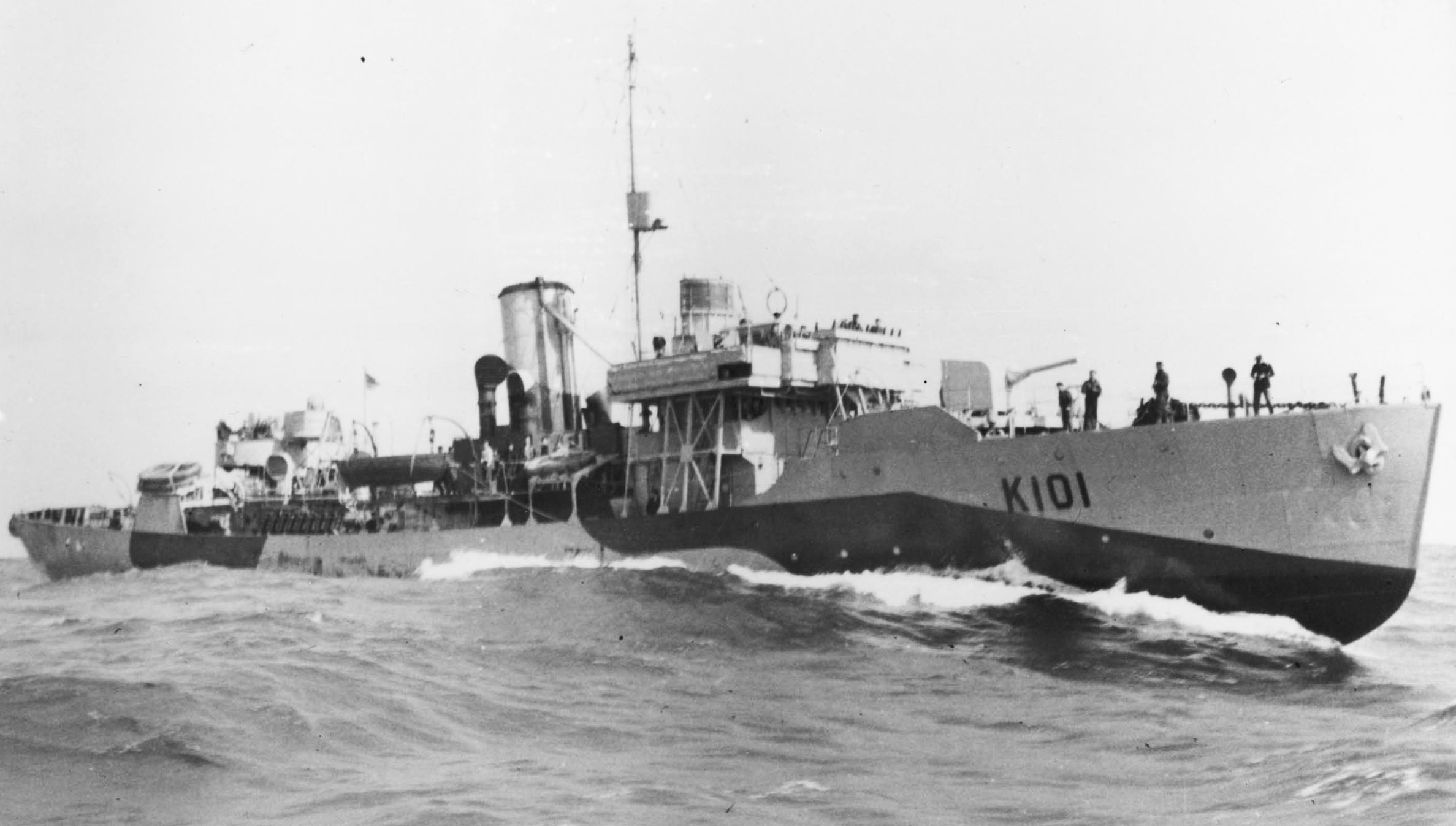
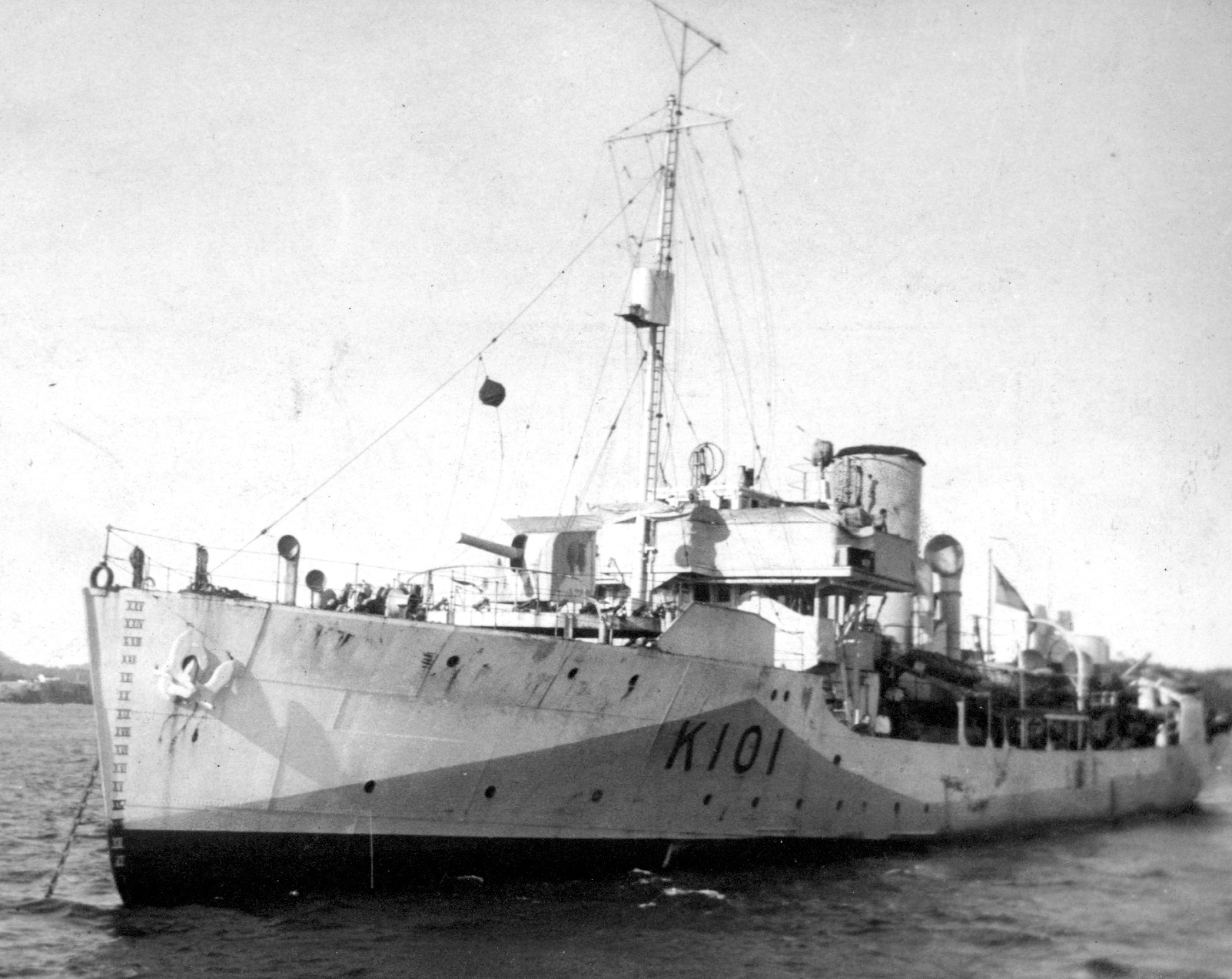
HMCS Nanaimo (K101) Flower class Corvette. Commissioned at Esquimalt on 26 Apr 1941, HMCS Nanaimo arrived at Halifax on 27 Jun 1941 and for the next three months carried out local duties. In Oct 1941 she was assigned to Newfoundland Command, leaving Halifax on 11 Oct 1941 to join convoy SC.49 for Iceland, her first trip as an ocean escort. After three round trips to Iceland, she escorted SC.68 to Londonderry in Feb 1942. Her return trip with ON.68 was to be her last Atlantic crossing, for in Mar 1942 she was reassigned to WLEF.
On 16 Jun 1942, the SS Port Nicholson was sunk by U-87. The Port Nicholson formed part of convoy XB 25, one of the coastal convoy routes between Halifax Harbour and Boston. She was under the command of her master, Harold Charles Jeffrey, and was carrying a cargo of 1,600 tons of automobile parts and 4,000 tons of military stores. The convoy was tracked by the German submarine U-87, commanded by Joachim Berger. At 4.17 hours on the morning of 16 June 1942 he fired a torpedo at the convoy, which was then 100 miles (160 km) off Portland, Maine. He fired a second torpedo a minute later, but the gale conditions at the time prevented him from observing the results accurately, and he recorded that while one torpedo had hit a ship, the other seemed to have missed. In fact, both torpedoes struck the Port Nicholson, the first in the engine room, the second in the stern. Two men in the engine room were killed immediately, and as the Port Nicholson began to settle by the stern, the remaining crew abandoned ship and were picked up by HMCS Nanaimo. The Port Nicholson did not sink immediately, and by dawn was still afloat. Her master returned to the ship, accompanied by the chief engineer, and Lieutenant John Molson Walkley and three ratings from HMCS Nanaimo, to see if the ship could be salvaged. While they were aboard, worsening weather caused the ship to suddenly start to sink. The party abandoned her, but their boat was overturned in the suction as Port Nicholson went down, drowning Jeffrey, Walkley, the chief engineer and a rating. The two surviving ratings were rescued by HMCS Nanaimo, which landed the survivors from Port Nicholson at Boston.
With the formation of escort groups in Jun 1943, HMCS Nanaimo became a member of EG W-9, transferring to W-7 in Apr 1944. In Nov 1944, she was allocated to Pacific Coast Command, arriving at Esquimalt on 07 Dec 1944. There she underwent a refit that lasted until 21 Feb 1945 but left her one of the few corvettes to survive the war with a short fo’c’s’le. She was paid off for disposal at Esquimalt on 28 Sep 1945, and subsequently sold for mercantile use. Converted to a whale-catcher at Kiel in 1953, she entered service as the Dutch-flag Rene W. Vinke, finally being broken up in South Africa in 1966.
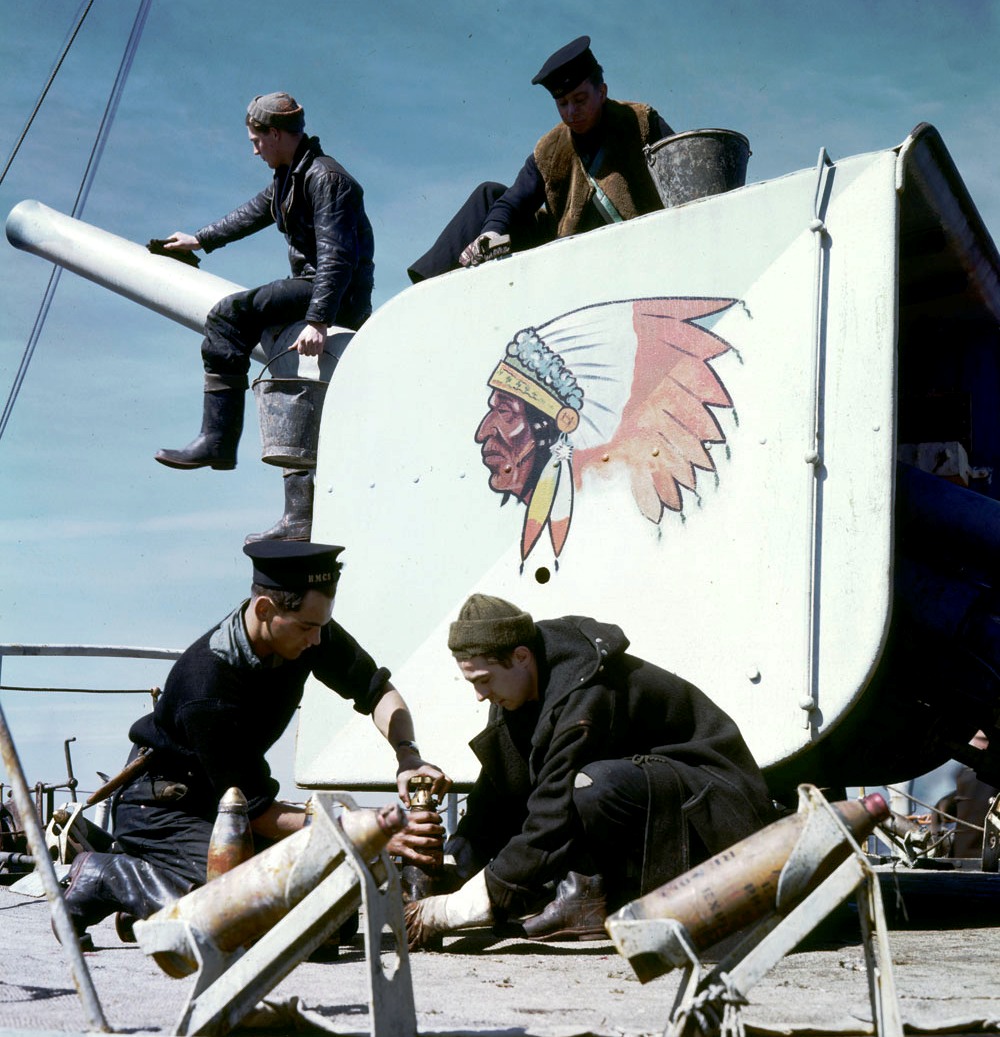
(Library and Archives Canada Photo, MIKAN No. 4821017)
HMCS Nanaimo (K101) Flower class Corvette, 4-inch Mk. IX Gun, ca 1945.
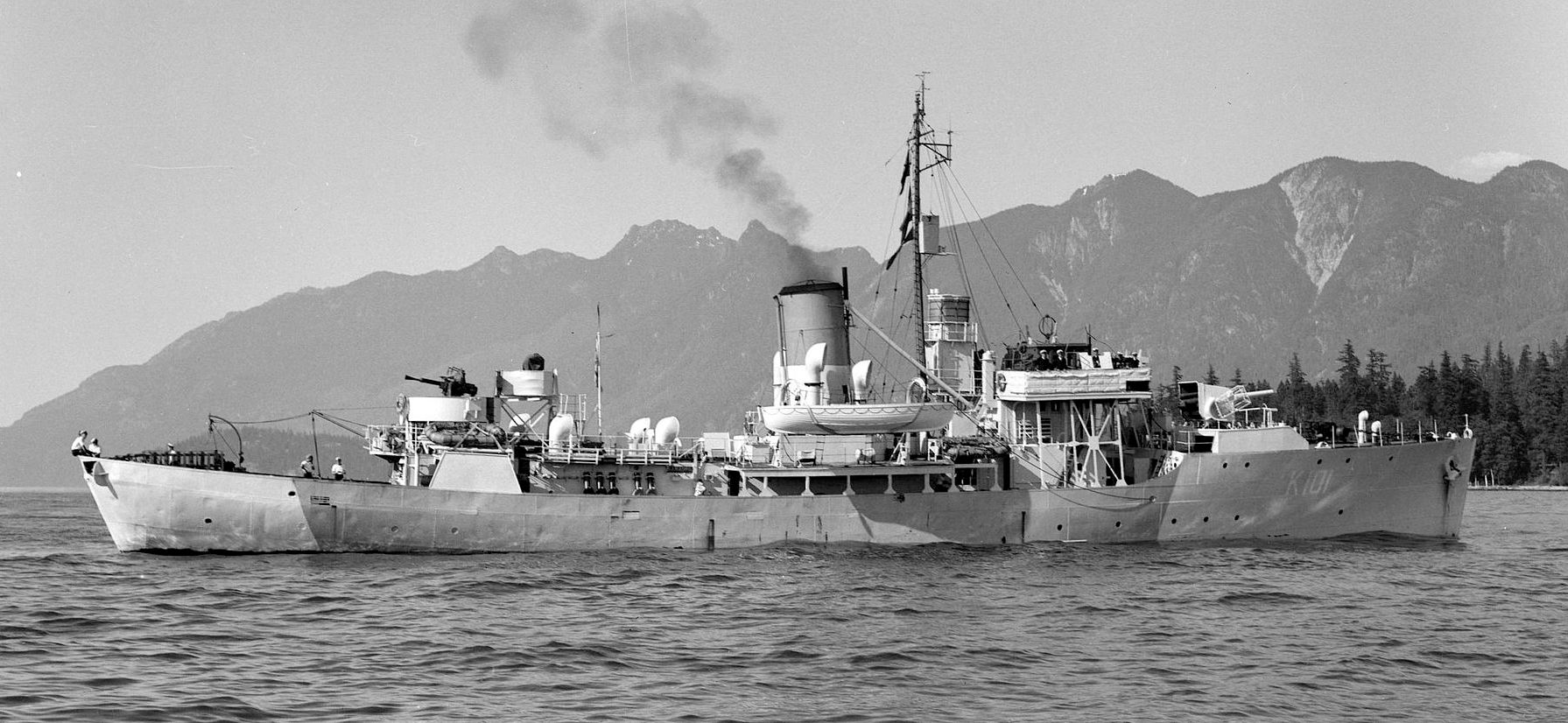
(City of Vancouver Archives CVA 1184-3365)
HMCS Nanaimo (K101) Flower class Corvette, Vancouver, ca 1945.
(RCN Photo)
HMCS Nanaimo (K101) Flower class Corvette, Vancouver, ca 1943.
(RCN Photo)
HMCS Nanaimo (K101) Flower class Corvette.
HMCS Napanee (K118)
(DND Photo)
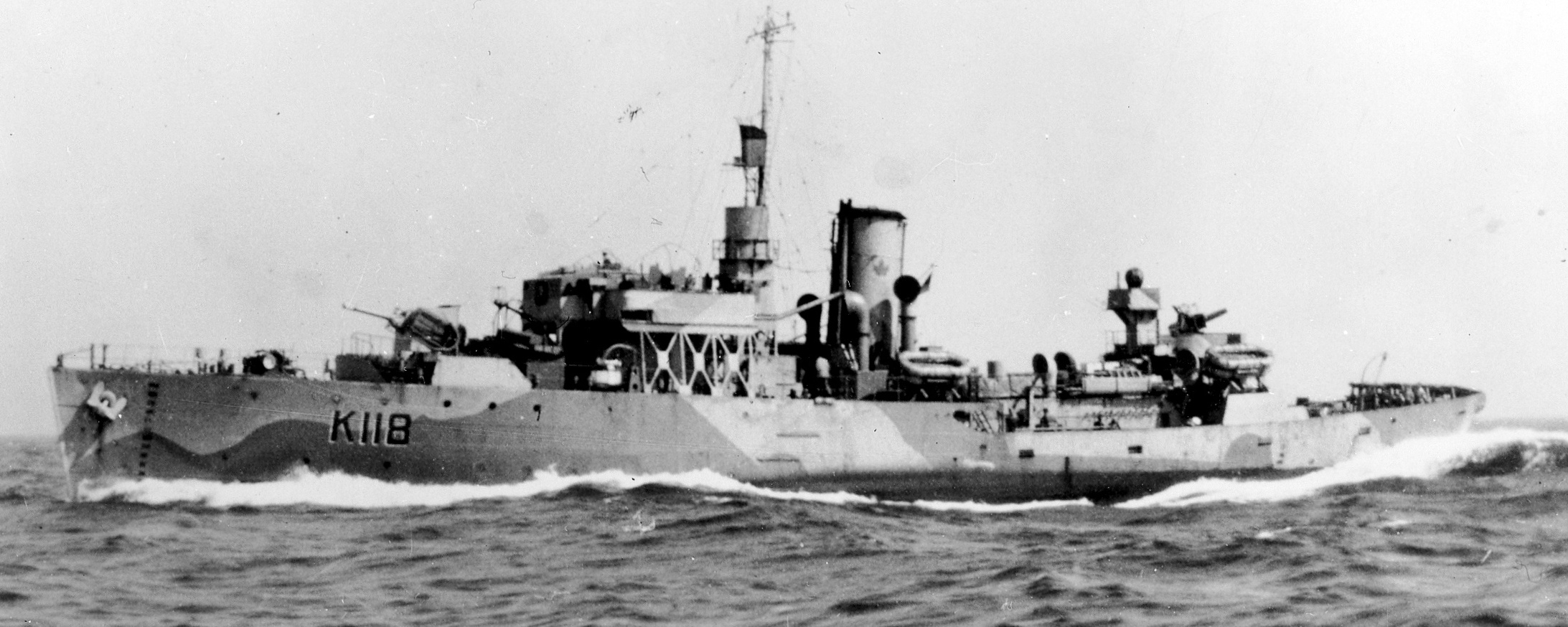
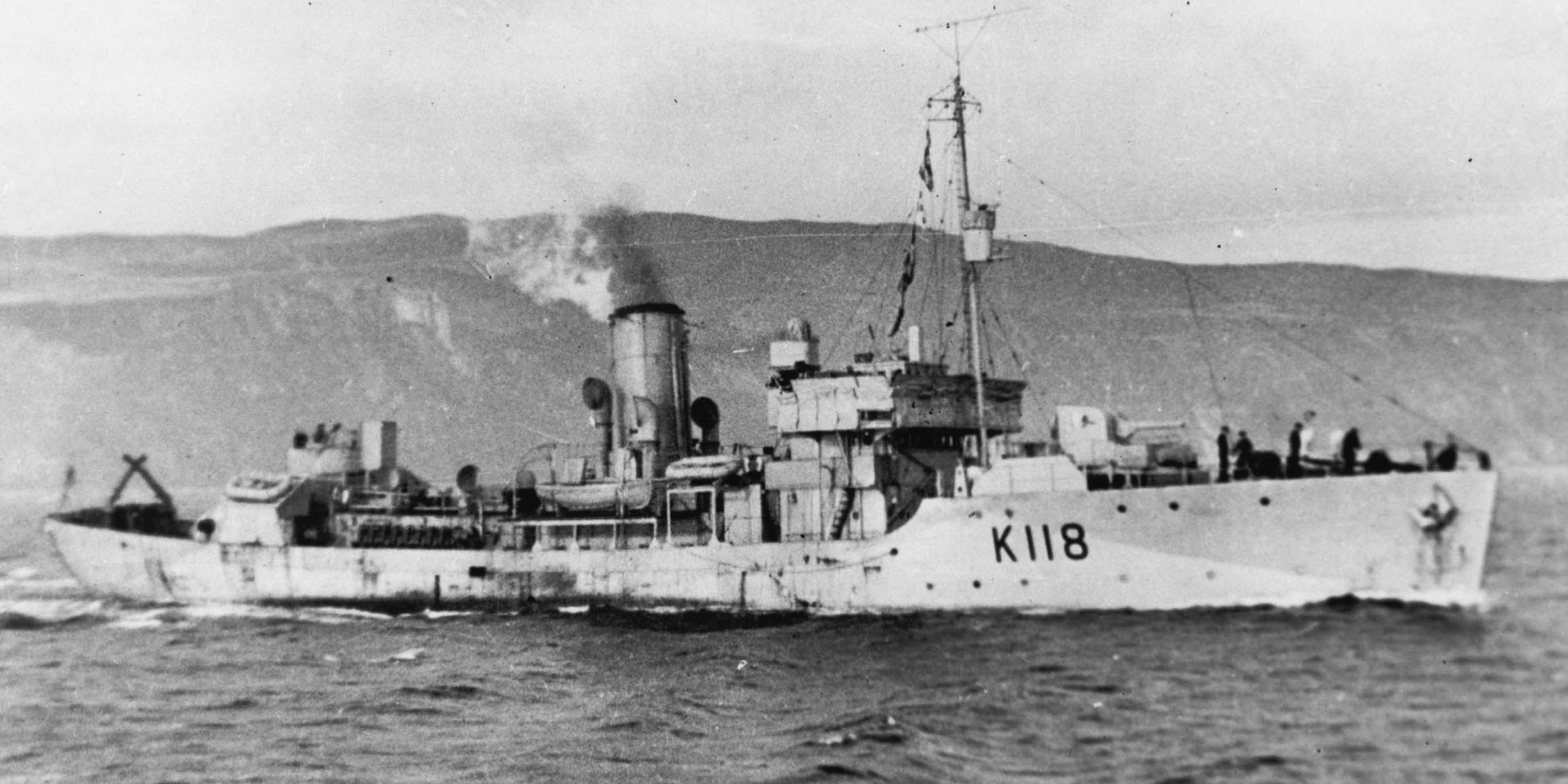
HMCS Napanee (K118) Flower class Corvette. Commissioned at Montreal on 12 May 1941, HMCS Napanee arrived at Halifax on 17 May 1941. She was assigned initially to Sydney Force but transferred in Sep 1941 to Newfoundland Command, leaving Sydney for Iceland with convoy SC.47 on 29 Sep 1941. She served on that route until Jan 1942, when she sailed with SC.65, the first of many “Newfie-Derry” convoys she would escort until Aug 1944. The worst of them was ON.154, which lost 14 ships in Dec 1942, but HMCS Napanee assisted in sinking one of its attackers, U-356, on 27 Dec 1942. In Mar 1943, she made a side trip to Gibraltar with EG C-1, which she had joined in Sep 1942. She arrived at Montreal 22 May 1943, for a five-month refit, including fo’c’s’le extension, afterward working up at Pictou and joining EG C-3. She left ‘Derry for the last time on 3 Aug 1944, refitted again at Pictou, then carried out three weeks’ workup in Bermuda. On her return she joined EG W-2, on the “triangle run” until the end of the war. She was paid off on 12 Jul 1945, at Sorel, and was broken up at Hamilton in 1946.
(DND Photo)
HMCS Napanee (K118) Flower class Corvette.
HMCS New Westminster (K228)
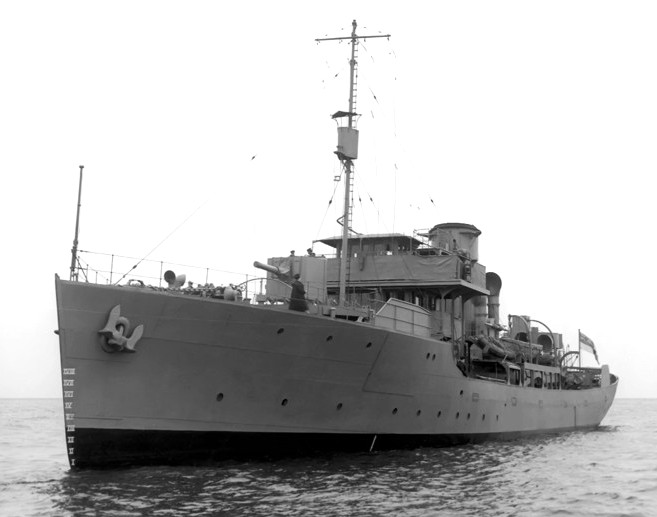
(DND Photo)
HMCS New Westminster (K228) Flower class Corvette. Built at Victoria, she was commissioned there on 31 Jan 1942, and assigned to Esquimalt Force until the threat of Japanese invasion had abated. Ordered to Halifax to release an east-coast corvette for Operation “Torch” service, she arrived there on 13 Oct 1942, a month after leaving Esquimalt. Assigned to WLEF, she operated on the “triangle run” until May 1943, when she began a major refit at Sydney. This refit included fo’c’s’le extension and was not completed until 10 Dec 1943. The ship was then made a part of EG C-5, and in Jul 1944, sailed with HXS.300, the largest convoy of the war. She left Londonderry on 14 Dec 1944, for the last time, returning home to refit at Saint John until early Mar 1945. Allocated to Sydney Force until the end of hostilities, she was paid off at Sorel on 21 Jun 1945, and in 1947 sold for commercial purposes. She became the mercantile Elisa in 1950; Portoviejo in 1952 and Azura in 1954. Sold in 1966 for breaking up at Tampa, Florida.
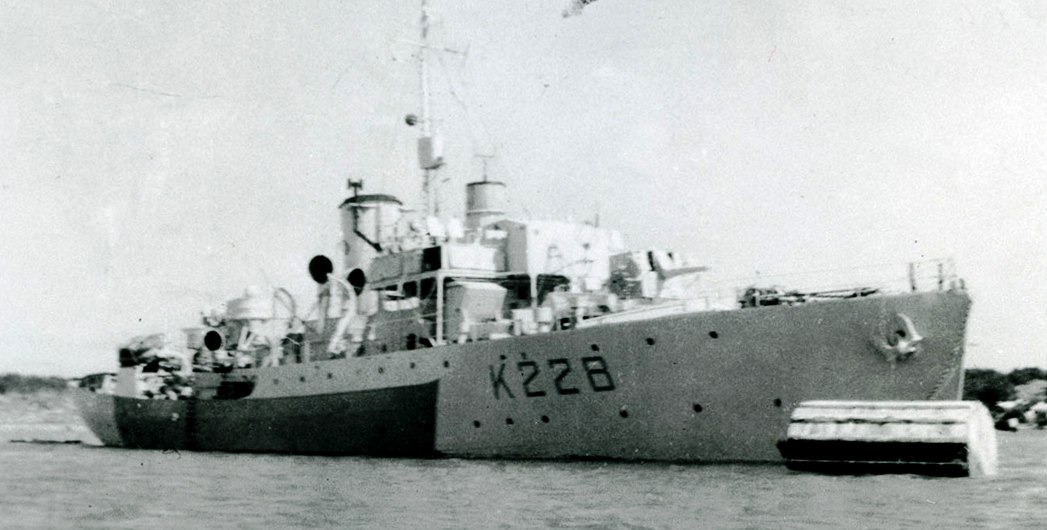
(DND Photo)
HMCS New Westminster (K228) Flower class Corvette.
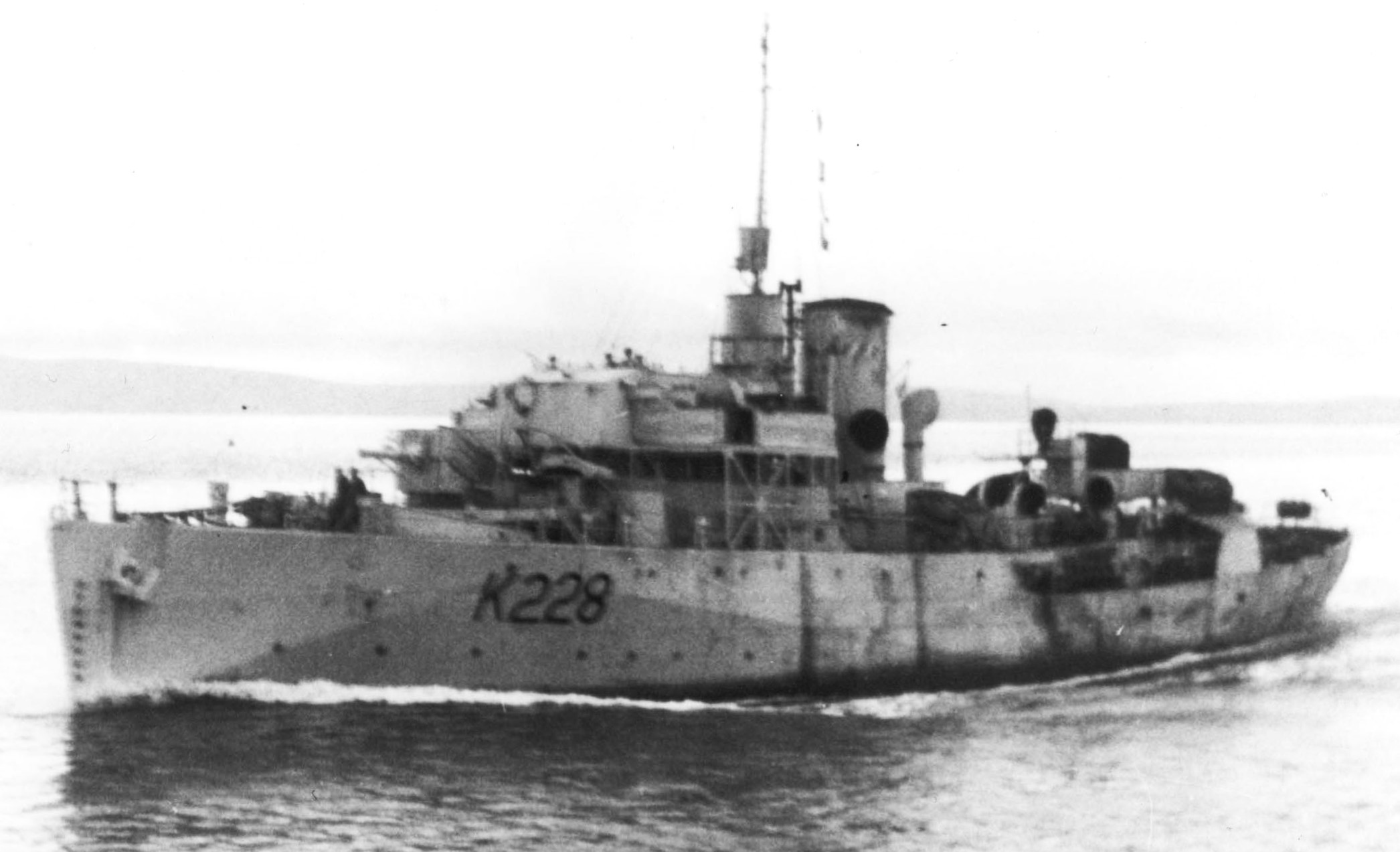
(DND Photo)
HMCS New Westminster (K228) Flower class Corvette.
HMCS Norsyd (K520)
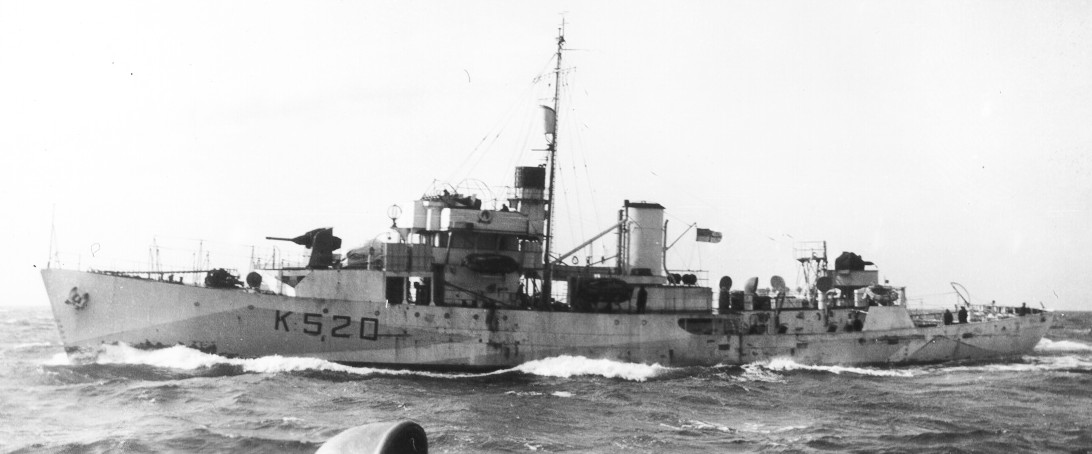
(DND Photo)
HMCS Norsyd (K520) Flower class Corvette. The name is a contraction of North Sydney. HMCS Norsyd was commissioned at Quebec City on 22 Dec 1943 and, en route to Halifax, was diverted to Indiantown, NB, for fitting-out that was not completed until mid-Mar 1944. She arrived in Bermuda later that month to work up, and on her return was assigned to EG W-7, escorting local convoys, until Nov 1944, when she was transferred to EG C-2, St. John’s, taking her first convoy, HX.323, eastward early in Dec 1944. On 27 May 1945, she began a refit at Halifax and soon after its completion, on 25 Jun 1945 was paid off and laid up at Sorel. She was sold into mercantile service in 1948 as Balboa. In 1946 she was purchased by the Mossad Le Aliya bet (The Institute for Immigration B.) the ship was called “Hagana” (Defence), and it sailed to Palestine in the end of Jul 1946 from Yugoslavia. It was caught by HMS Venus several days later, boarded and brought to Haifa, were it’s occupants were interned in Palestine. After the Declaration of Israel’s Independence, it was converted back to its Corvette configuration and commissioned on 18 Jul 1948 as INS Haganah. She served until she was broken up in 1956.
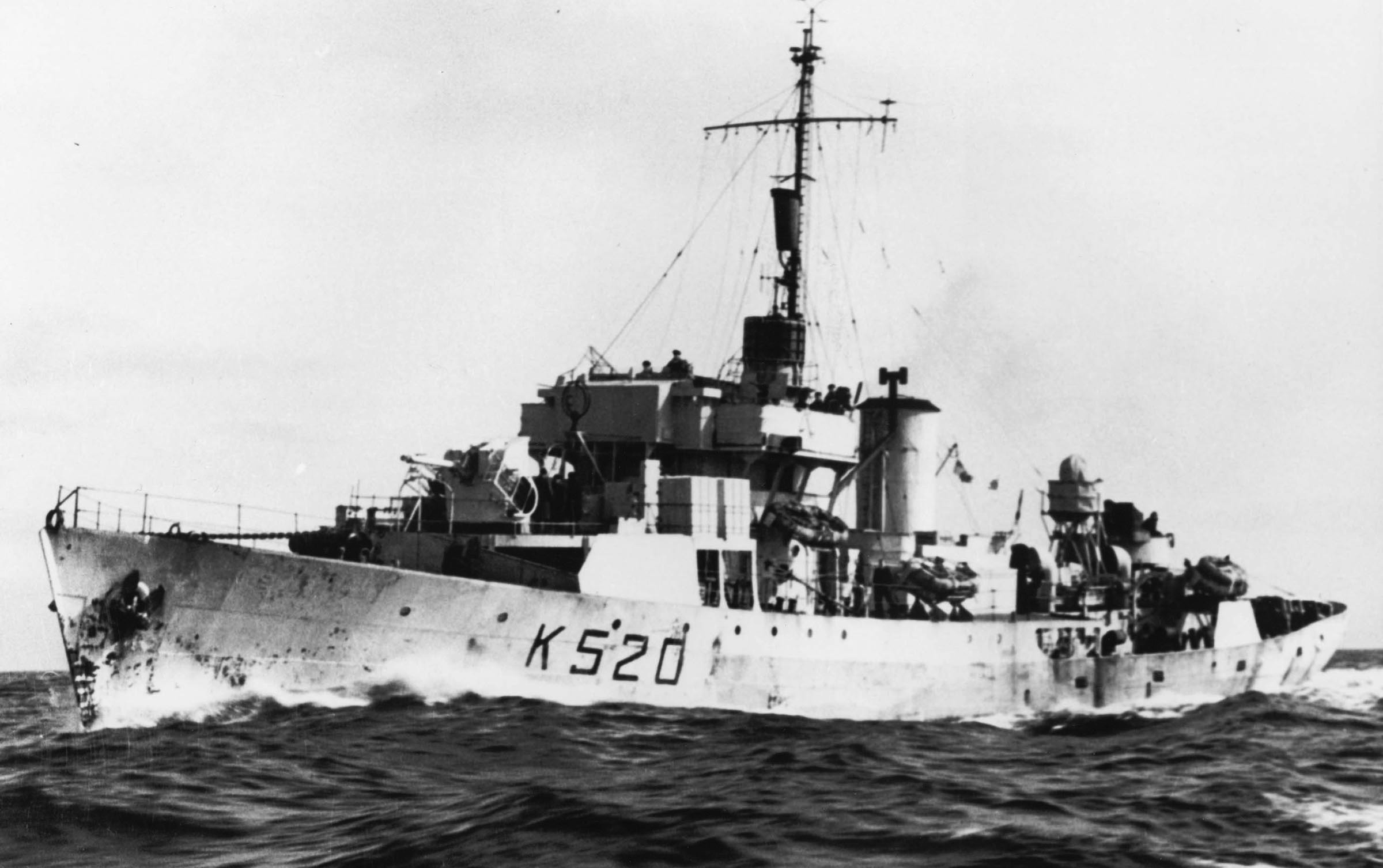
(RCN Photo)
HMCS Norsyd (K520) Flower class Corvette.
All comments are subject to our Comment Policy. You must be at least 18 years old to comment.
See a comment that violates our guidelines? Report it here.