
Marine nationale Courbet-class battleships
Marine nationale battleship Courbet
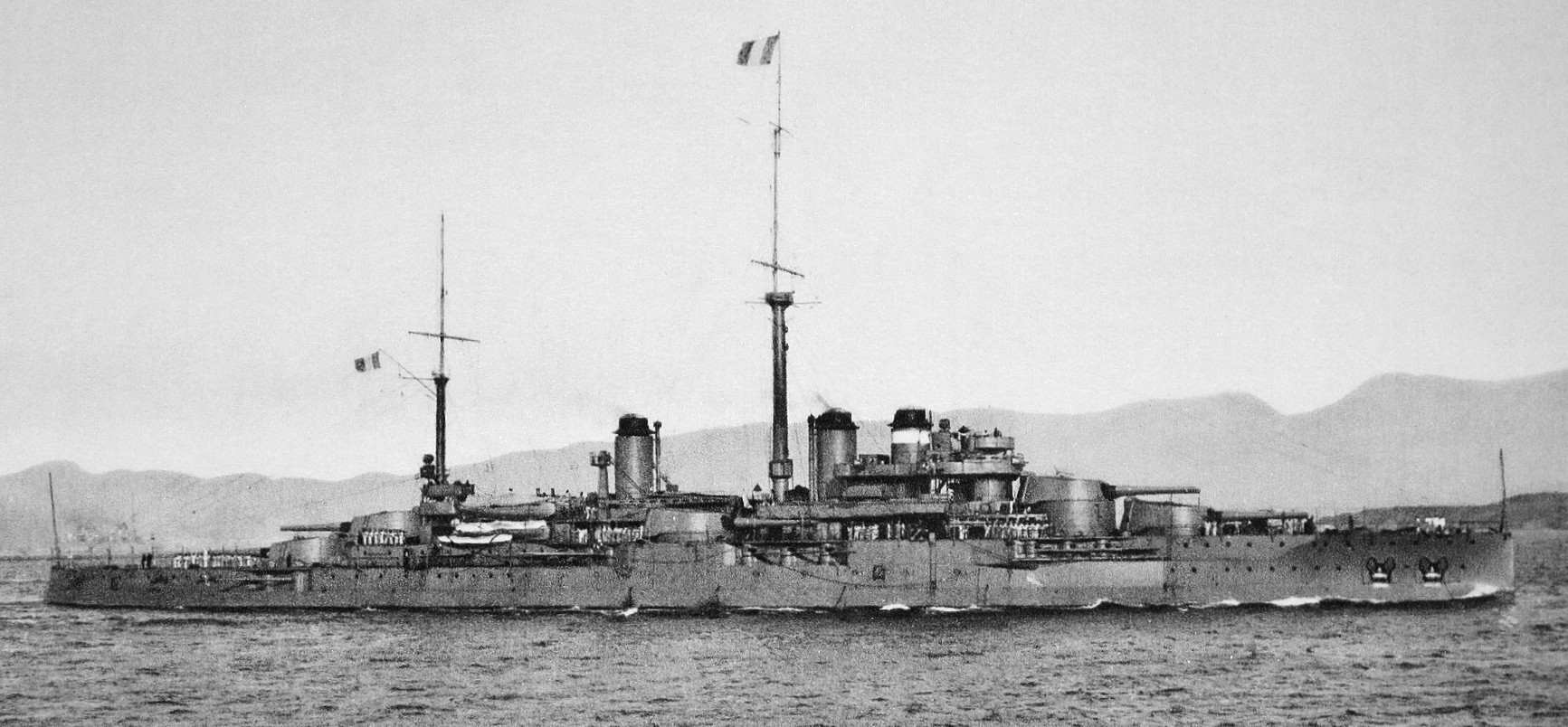
(Histoire de la Marine française illustrée, Larousse, 1934)
Marine nationale battleship Courbet was the lead ship of her class of four dreadnought battleships, the first ones built for the Marine nationale. She was completed shortly before the start of the First World War in August 1914. She spent the war in the Mediterranean, where she helped to sink an Austro-Hungarian cruiser, covered the Otranto Barrage that blockaded the Austro-Hungarian Navy in the Adriatic Sea, and often served as a flagship. Although upgraded several times before the Second World War, she was not considered to be a first-line battleship by the 1930s and spent much of that decade as a gunnery training ship.
A few weeks after the German invasion of France on 10 May 1940, Courbet was hastily reactivated. She supported Allied troops in the defence of Cherbourg in mid-June, taking refuge in England shortly afterwards. As part of Operation Catapult, the ship was seized in Portsmouth by British forces on 3 July and was turned over to the Free French a week later. She was used as a stationary anti-aircraft battery and as an accommodation ship there. Courbet was disarmed in early 1941 and was used as a target ship during 1943. Her engines and boilers were removed in 1944 to prepare her for use as a breakwater during the Normandy landings (Operation Neptune) in June 1944. She was scrapped in situ after the war. (Wikipedia)
Marine nationale battleship Jean Bart
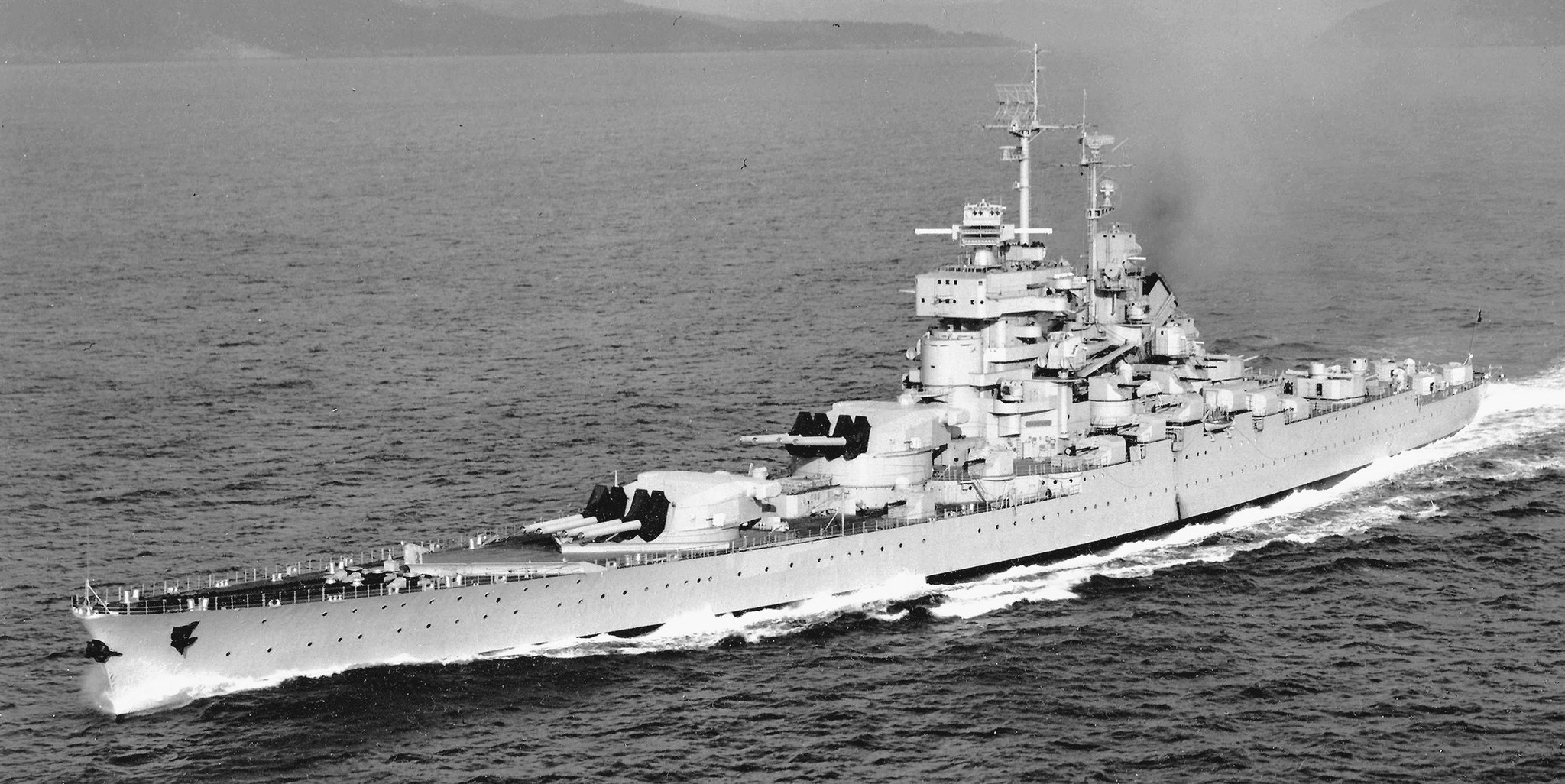
(Marine nationale Photo)
Marine national battleship Jean Bart was the second of four Courbet-class battleships, the first dreadnoughts built for the French Navy. She was completed before the First World War as part of the 1910 naval building programme. She spent the war in the Mediterranean and helped to sink the Austro-Hungarian protected cruiser Zenta on 16 August 1914. She was torpedoed by an Austro-Hungarian submarine in December and steamed to Malta for repairs that required three and a half months. She spent the rest of the war providing cover for the Otranto Barrage that blockaded the Austro-Hungarian Navy in the Adriatic Sea and sometimes served as a flagship.After the war, she and her sister ship France participated in the occupation of Constantinople and were then sent to the Black Sea in 1919 to support Allied troops in the Southern Russia Intervention. Jean Bart‘s war-weary crew briefly mutinied, but it was easily put down and she returned to France mid-year. She was partially modernised twice during the 1920s, but was deemed to be in too poor condition to be refitted again in the 1930s. Therefore, she became a training ship in 1934 and was then disarmed and hulked as an accommodation ship in 1935–1936 in Toulon. The Germans captured her intact when they occupied Toulon in 1942 and used her for testing large shaped charge warheads. She was sunk by Allied bombing in 1944, and after the war ended, was refloated and scrapped beginning in late 1945. (Wikipedia)
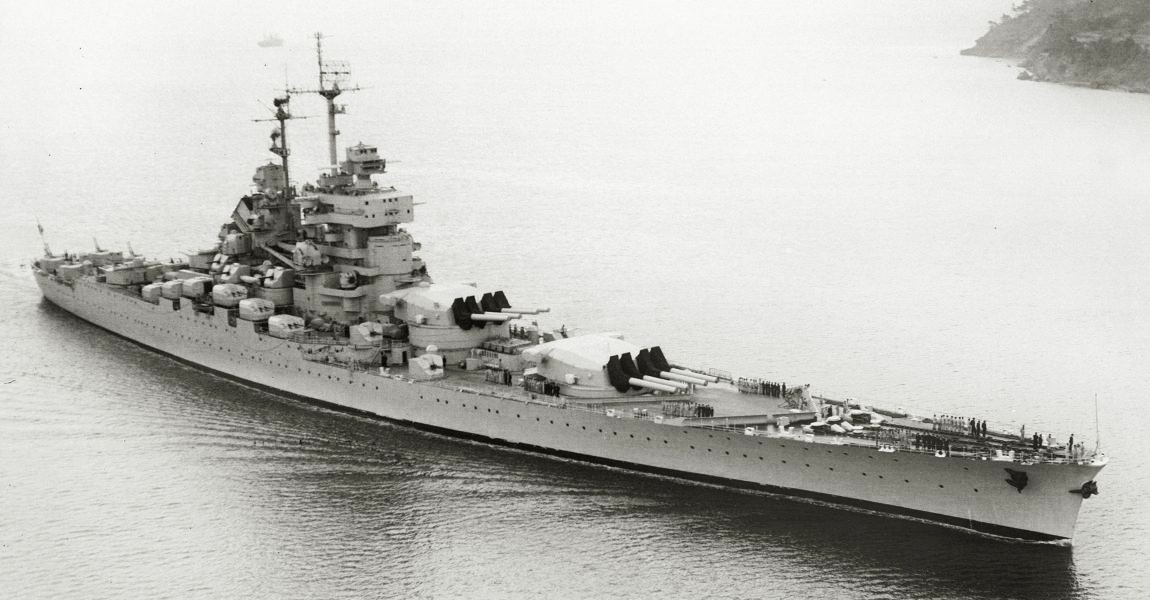
(Marine nationale Photo)
Marine nationale battleship Jean Bart.
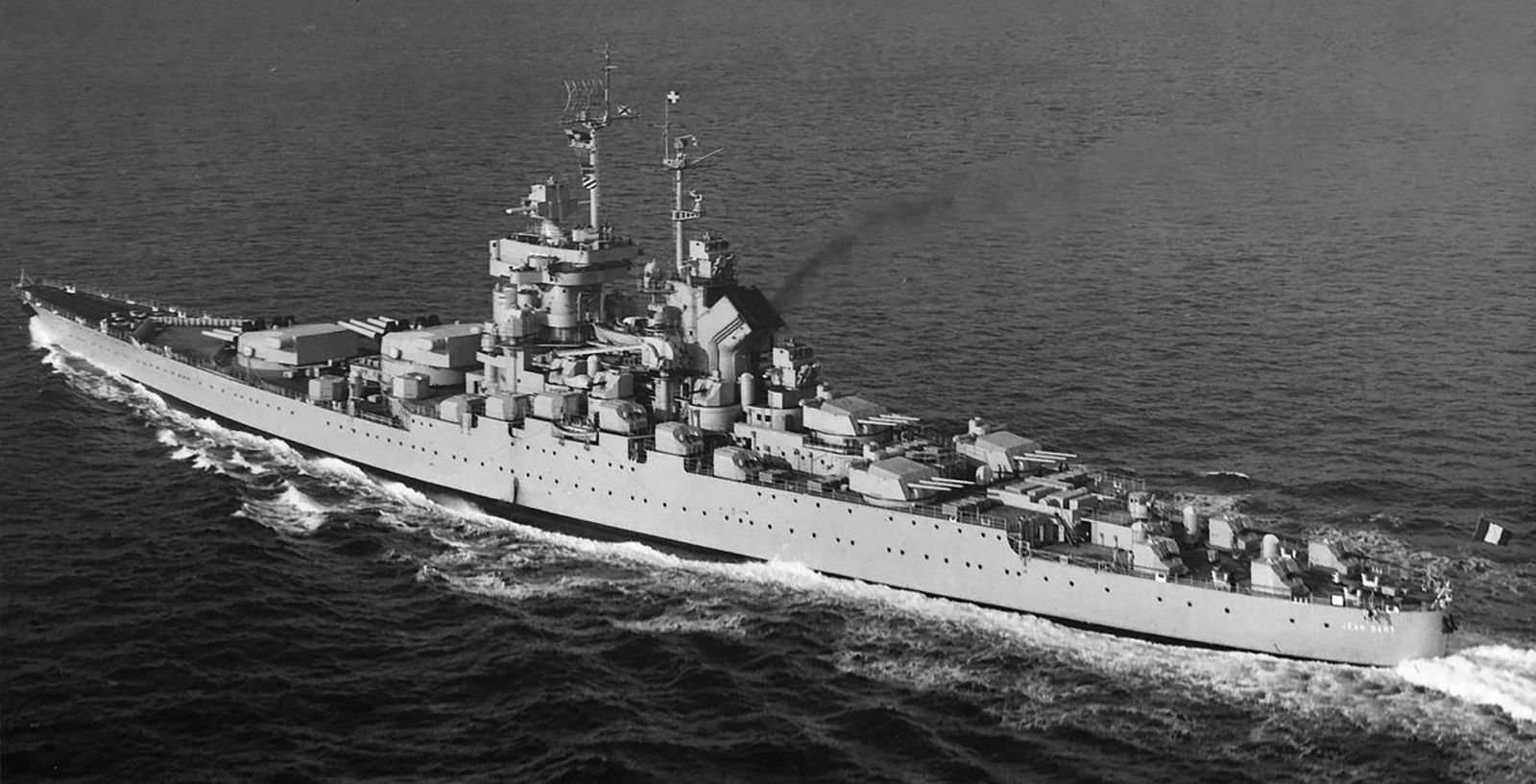
(Marine Nationale Photo)
Marine nationale battleship Jean Bart.
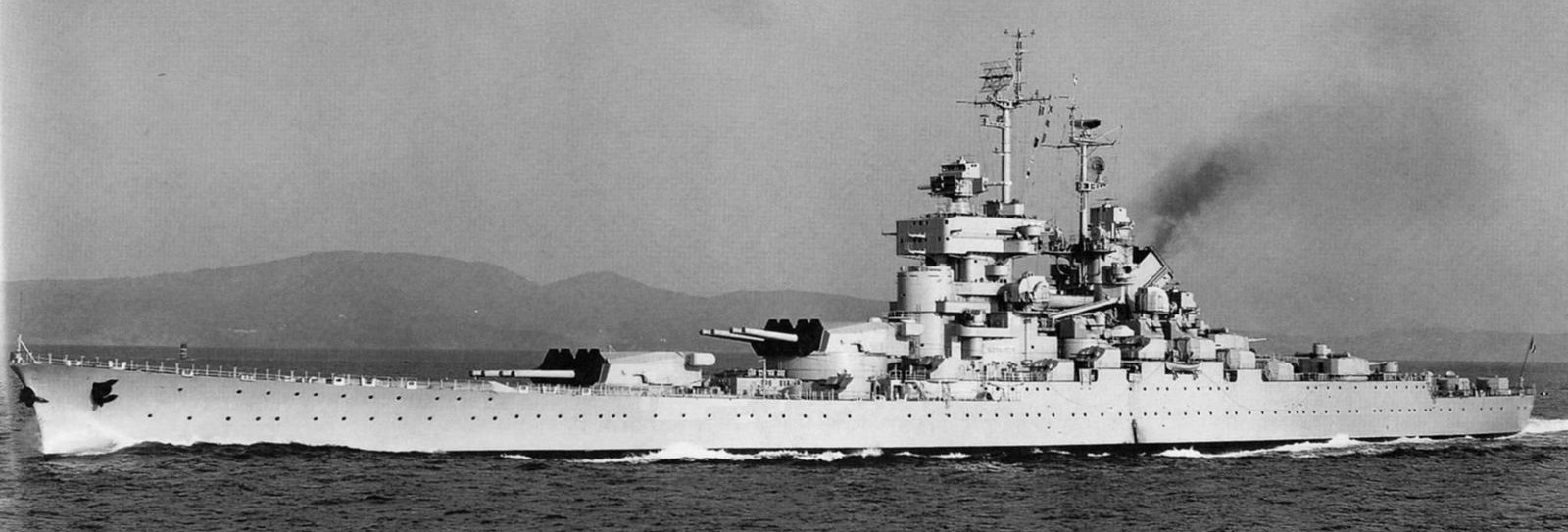
(Marine nationale Photo)
Marine nationale battleship Jean Bart.
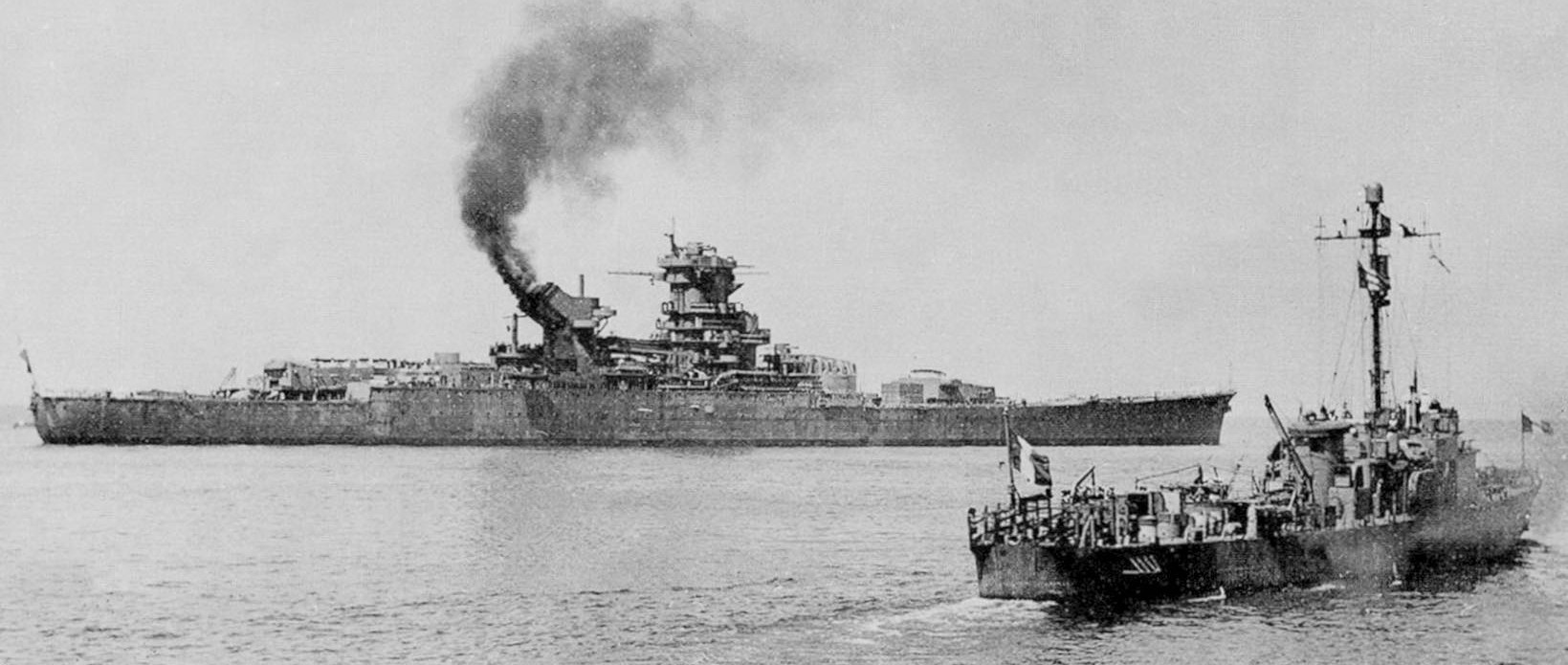
(Marine nationale Photo)
Marine nationale battleship Jean Bart, Saint-Nazaire, France, 19 June 1940. The incomplete battleship departing the Ateliers et Chantiers de la Loire shipyard for Casablanca, French Morocco, to escape from advancing German troops. She was formally completed 15 years later.
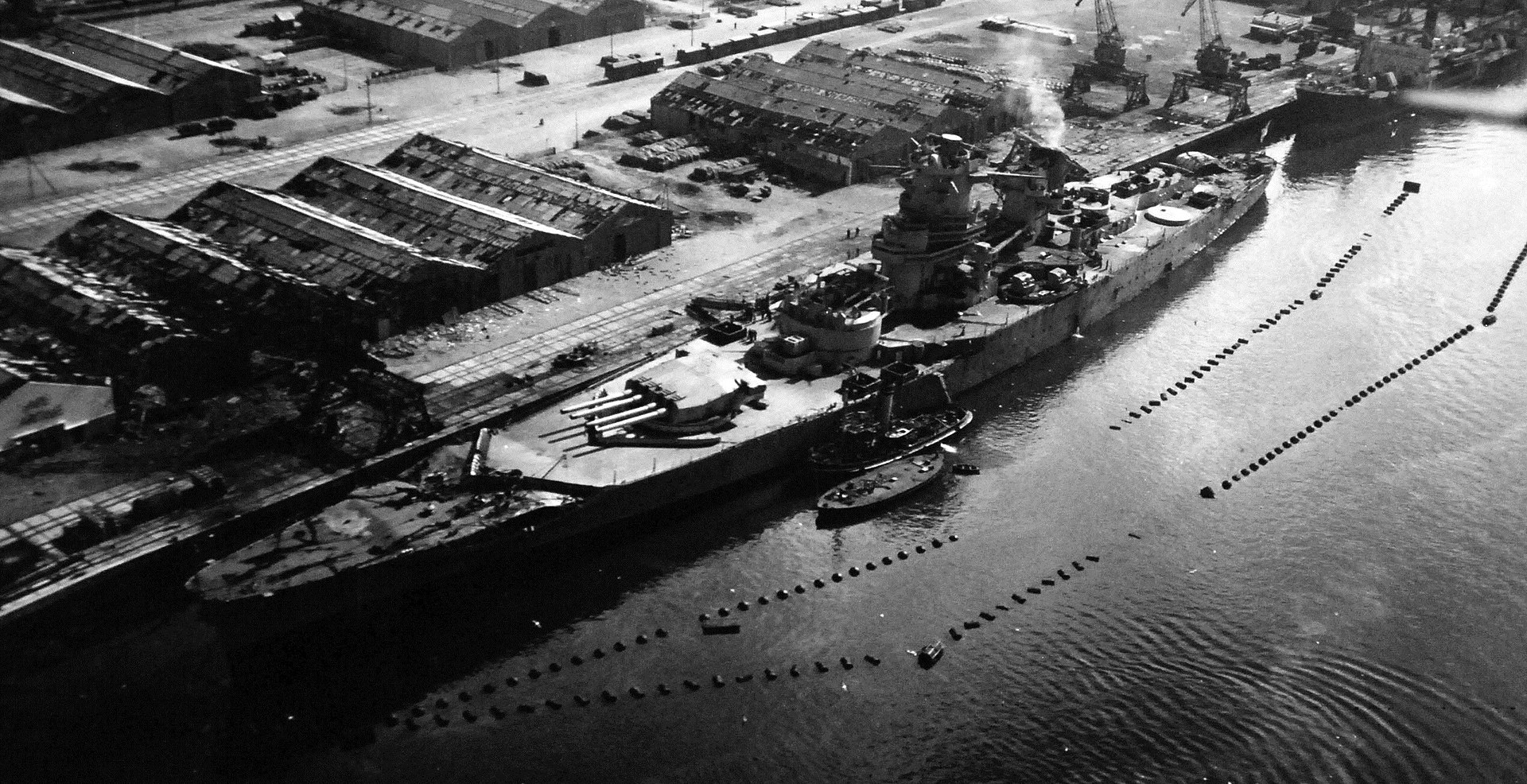
(USN Photo)
Marine nationale battleship Jean Bart.
Marine nationale battleship Jean Bart was a fast battleship, the second and final member of the Richelieu class. Built as a response to the Italian Littorio class, the Richelieus were based on their immediate predecessors of the Dunkerque class with the same unconventional arrangement that grouped their main battery forward in two quadruple gun turrets. They were scaled up to accommodate a much more powerful main battery of eight 380 mm (15 in) guns (compared to the 330 mm (13 in) guns of the Dunkerques), with increased armour to protect them from guns of the same caliber.
Jean Bart was laid down in 1936 and was launched in 1940, following the outbreak of the Second World War in Europe. The ship was not complete by the time Germany won the Battle of France, and Jean Bart was rushed to Casablanca to escape advancing German troops. She had only one of her main turrets installed, along with a handful of anti-aircraft guns.
While in Casablanca, the French attempted to prepare the ship for action as much as was possible in light of limited infrastructure and the necessary parts to complete the vessel. Her anti-aircraft armament was slowly strengthened as guns became available and a search radar was fitted in 1942. In November, American and British forces invaded French North Africa in Operation Torch; Jean Bart initially helped to resist the attack, engaging in a gunnery duel with the battleship USS Massachusetts before being badly damaged by American dive bombers.
Following the defection of French forces in the region to the Allied side, the French attempted to have the ship completed in the United States, but the requests came to nothing as the US Navy had no interest in the project. Jean Bart was accordingly repaired as much as possible in Casablanca, thereafter spending the rest of the war as a training ship there.
In 1945, discussions as to the fate of the ship considered converting her into an aircraft carrier, finishing her as a battleship, or discarding her altogether. The decision was ultimately made to finish her as a battleship, a process that took several years. Most work on the ship was completed by 1955, when she formally entered active service, and she conducted two overseas cruises to visit Denmark and the United States shortly thereafter. For the only time, Richelieu and Jean Bart cruised together on 30 January 1956. Jean Bart took part in the French intervention in the Suez Crisis in November 1956, including a brief four-shot bombardment of Port Said. Reduced to reserve in August 1957, she was used as a barracks ship until 1961. She remained, unused, in the French Navy’s inventory until 1970 when she was struck from the naval register and sold for scrap. (Wikipedia)
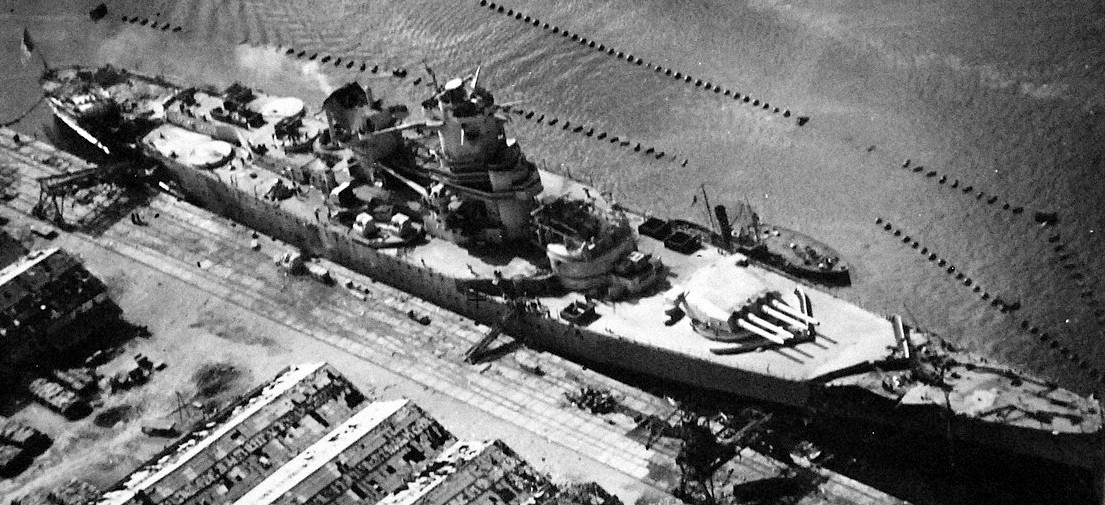
(USN Photo)
Marine nationale battleship Jean Bart, photographed from an aircraft of the USS Ranger.
Marine nationale battleship Paris
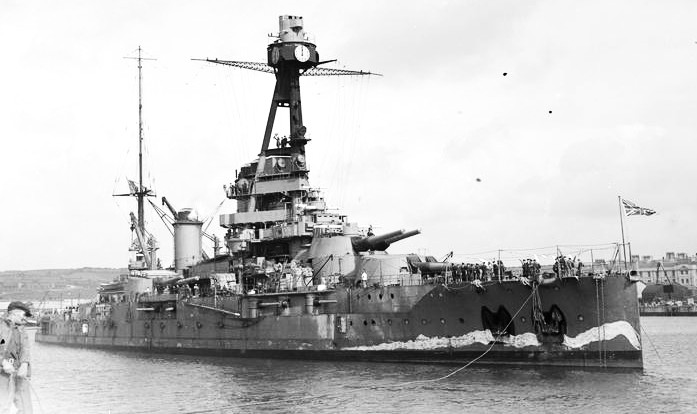
(IWM Photo, A 777)
Marine nationale battleship Paris leaving Devonport. Paris was the third ship of four Courbet-class battleships, the first dreadnoughts built for the French Navy. She was completed before the First World War as part of the 1911 naval building programme. She spent the war in the Mediterranean, spending most of 1914 providing gunfire support for the Montenegrin Army until her sister ship Jean Bart was torpedoed by the submarine U-12 on 21 December.
She spent the rest of the war providing cover for the Otranto Barrage that blockaded the Austro-Hungarian Navy in the Adriatic Sea.Paris supported French and Spanish troops in 1925 during the Third Rif War before becoming a school ship in 1931. She was modernized in three separate refits between the wars even though she was not deemed to be a first-class battleship. She remained in that role until the Battle of France, which began on 10 May 1940, after which she was hastily rearmed. She supported Allied troops in the defence of Le Havre during June until she was damaged by a German bomb, but she took refuge later that month in England. As part of Operation Catapult, she was seized in Plymouth by British forces on 3 July. She was used as a depot ship and barracks ship there by the Royal and Polish Navies for the rest of the war. Returned to the French in July 1945 she was towed to Brest the following month and used as a depot ship until she was stricken on 21 December 1955. (Wikipedia)
Marine nationale battleship France
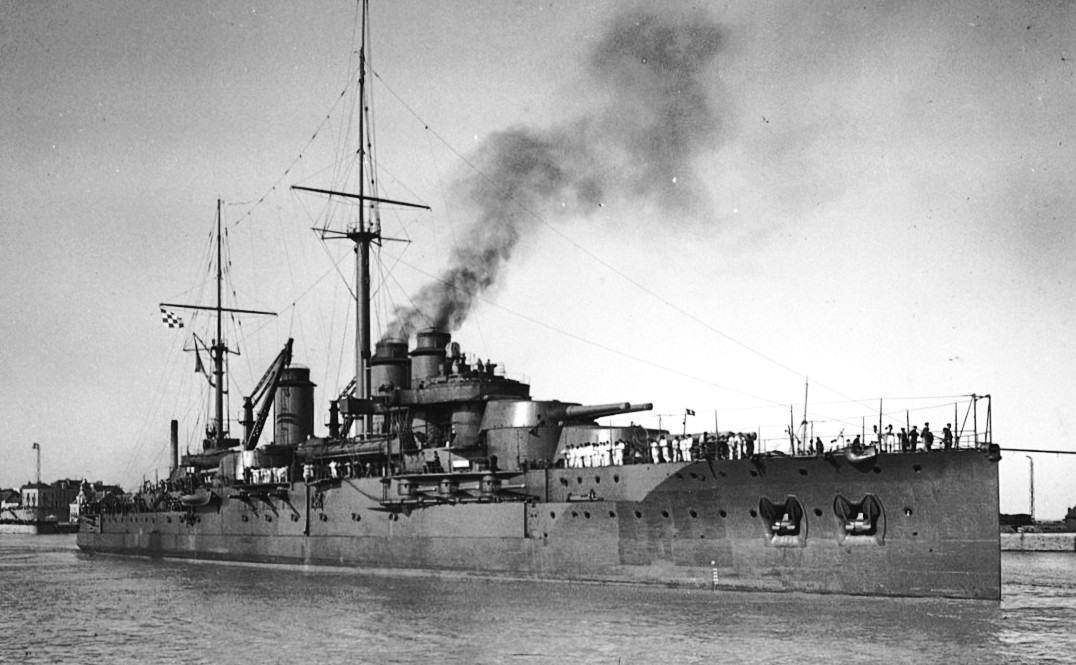
(Agence Rol Photo)
Marine nationale battleship France was the last of four Courbet-class battleships, the first dreadnoughts built for the French Navy. The ship was completed just before the start of the First World War in August 1914. Even though France was not officially completed, she ferried the President of France to Russia during the July Crisis for consultations. She spent the war providing cover for the Otranto Barrage that blockaded the Austro-Hungarian Navy in the Adriatic Sea and sometimes served as a flagship. After the war France and her sister ship Jean Bart participated in the occupation of Constantinople and were then sent to the Black Sea in 1919 to support Allied troops in the Southern Russia Intervention. The war-weary crews of both ships briefly mutinied, but it was easily put down and she returned to France mid-year. Striking an uncharted rock off the French coast in 1922, she foundered four hours later. (Wikipedia)
Bretagne-class battleships
Marine nationale battleship Bretagne
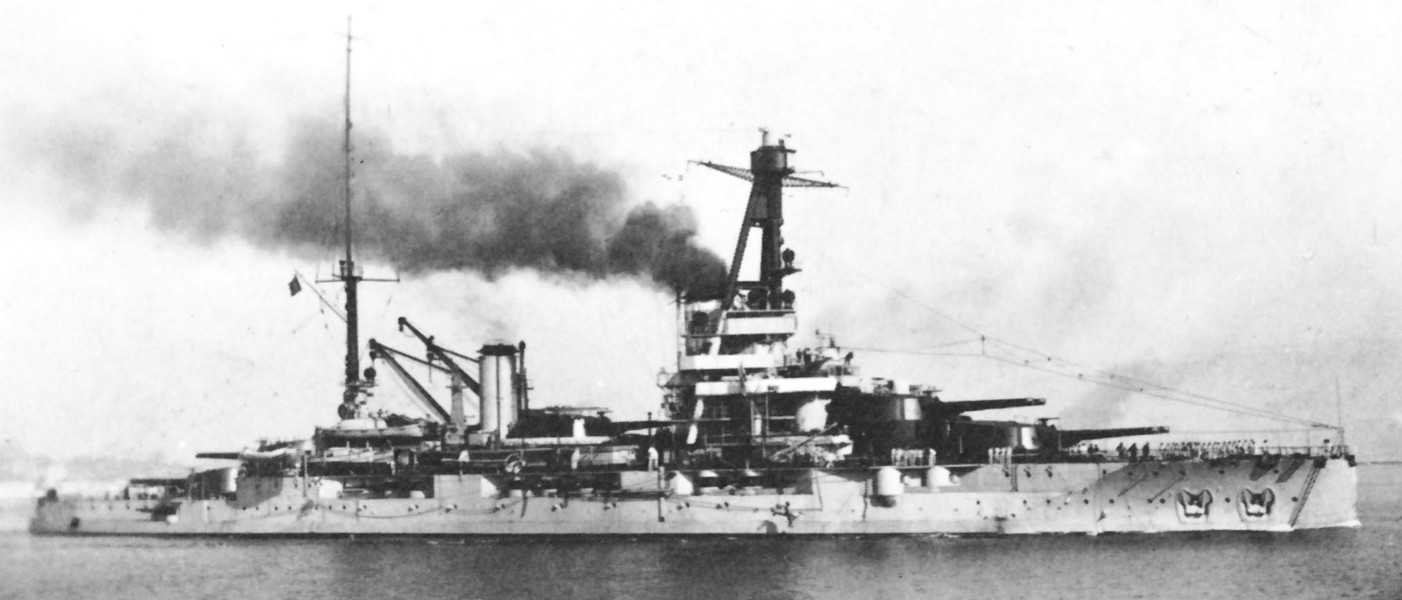
(Le Navire du Guerre Francais Photo)
Marine nationale battleship Bretagne was the lead ship of her class of three dreadnought battleships built in the 1910s for the French Navy. Bretagne entered service in February 1916, after the start of the First World War. She spent the bulk of her nearly 25-year-long career with the Mediterranean Squadron and sometimes served as its flagship. During the First World War she provided cover for the Otranto Barrage that blockaded the Austro-Hungarian Navy in the Adriatic Sea, but saw no action.
The ship was significantly modernised in the interwar period, and when she was on active duty, conducted normal peacetime cruises and training manoeuvres in the Mediterranean and the Atlantic Ocean. After the Second World War broke out in September 1939, Bretagne escorted troop convoys and was briefly deployed to the Atlantic in search of German blockade runners and commerce raiders. Germany invaded France on 10 May 1940 and the French surrendered only six weeks later, at which time the battleship was stationed in Mers-el-Kébir, French Algeria. Fearful that the Germans would seize the French Navy, the British attacked the ships there on 3 July 1940 after the French refused to surrender or demilitarise the fleet; Bretagne was hit four times and exploded, killing the majority of her crew. Her wreck was salvaged in 1952 and broken up for scrap. (Wikipedia)
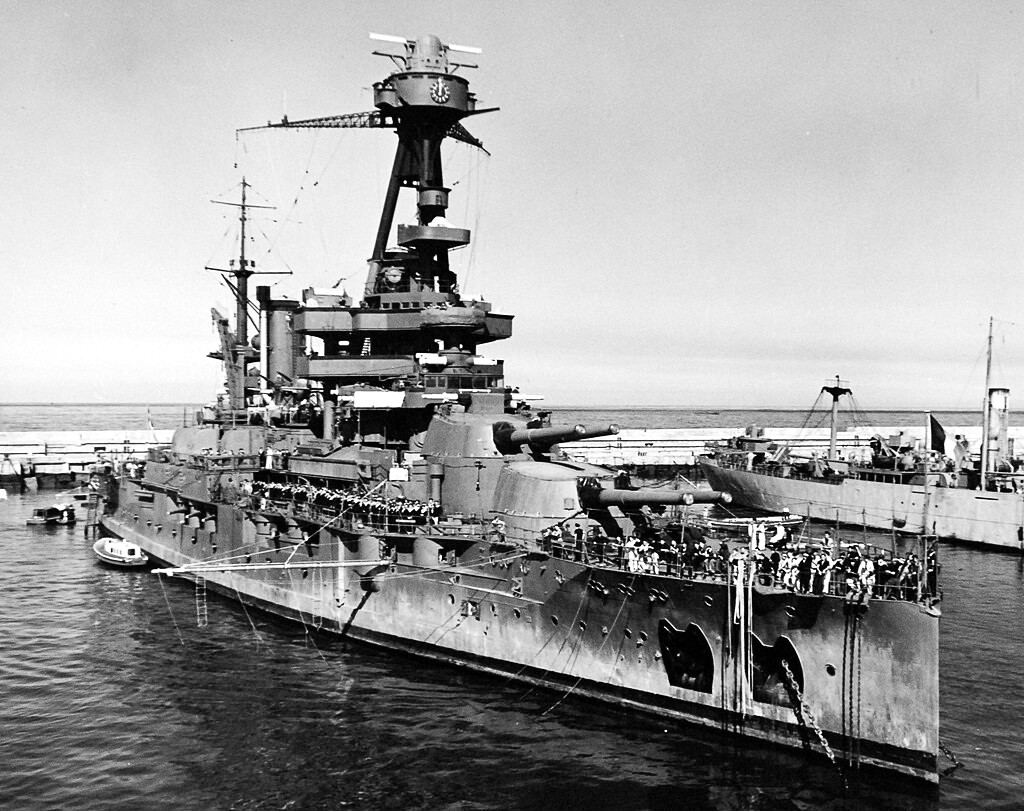
Marine nationale battleship Lorraine.
(USN Photo)
Marine nationale battleship Lorraine.
Marine nationale battleship Lorraine was built in the 1910s, named in honour of the region of Lorraine in France. She was a member of the Bretagne class, alongside her two sister ships, Bretagne and Provence. Lorraine was laid down in August 1912 at the Chantiers de Penhoët shipyard, launched in September 1913, and commissioned into the fleet in March 1916, after the outbreak of the First World War. She was armed with a main battery of ten 340 mm (13.4 in) guns and had a top speed of 20 knots (37 km/h; 23 mph).Lorraine spent the bulk of her career in the French Mediterranean Squadron. During the First World War, she was stationed at Corfu to prevent the Austro-Hungarian fleet from leaving the Adriatic Sea, but she saw no action. She was modernized significantly in the 1920s and 1930s, and in 1935 her amidships 340 mm gun turret was removed and aircraft facilities were installed in its place.
After the outbreak of the Second World War, Lorraine carried a shipment of gold from the French treasury to Bermuda before returning to operate in the Mediterranean. At the French surrender in July 1940, Lorraine was moored in Alexandria, where she was disarmed by the Royal Navy. After joining the Free French Naval Forces in December 1942, Lorraine was refitted for active service. She provided gunfire support for the landings in Operation Dragoon in August–September 1944 and bombarded German positions around La Rochelle in April 1945. After the end of the war, Lorraine was used as a gunnery training ship and then a barracks ship until late 1953, when she was stricken and sold to shipbreakers. (Wikipedia)
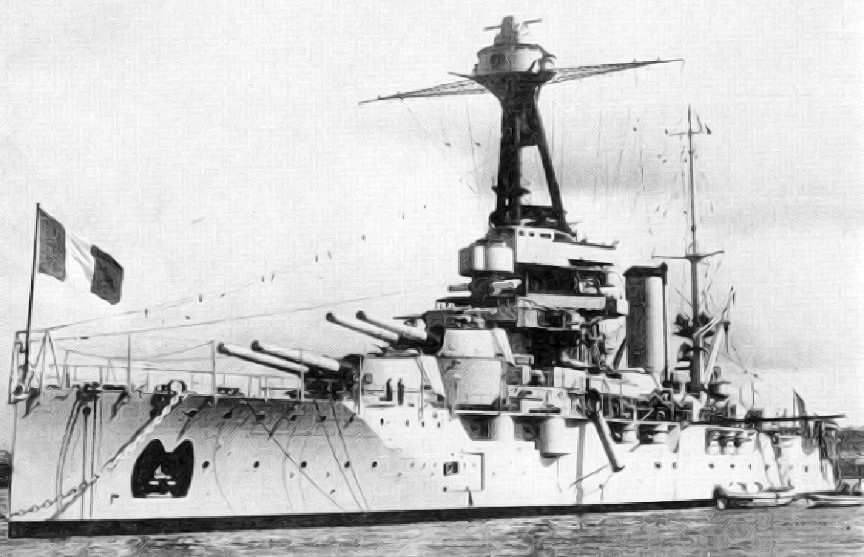
Marine nationale battleship Provence
(USN Photo)
Marine nationale battleship Provence.
Marine nationale battleship Provence was one of three Bretagne-class battleships built for the Marine nationale in the 1910s, named in honor of the French region of Provence; she had two sister ships, Bretagne and Lorraine. Provence entered service in March 1916, after the outbreak of the First World War. She was armed with a main battery of ten 340 mm (13.4 in) guns and had a top speed of 20 knots (37 km/h; 23 mph).Provence spent the bulk of her career in the French Mediterranean Squadron, where she served as the fleet flagship. During the First World War, she was stationed at Corfu to prevent the Austro-Hungarian fleet from leaving the Adriatic Sea, but she saw no action. She was modernized significantly in the 1920s and 1930s, and conducted normal peacetime cruises and training maneuvers in the Mediterranean and Atlantic Ocean. She participated in non-intervention patrols during the Spanish Civil War.
In the early days of the Second World War, Provence conducted patrols and sweeps into the Atlantic to search for German surface raiders. She was stationed in Mers-el-Kébir when France surrendered on 22 June 1940. Fearful that the Germans would seize the French Navy, the British Royal Navy attacked the ships at Mers-el-Kébir. Provence was damaged and sank in the harbour, though she was refloated and moved to Toulon, where she became the flagship of the training fleet there. In late November 1942, the Germans occupied Toulon and, to prevent them from seizing the fleet, the French scuttled their ships, including Provence. She was raised in July 1943, and some of her guns were used for coastal defense in the area; the Germans scuttled her a second time in Toulon as a blockship in 1944. Provence was ultimately raised in April 1949 and sold to ship breakers. (Wikipedia)
Dunkerque-class battleships
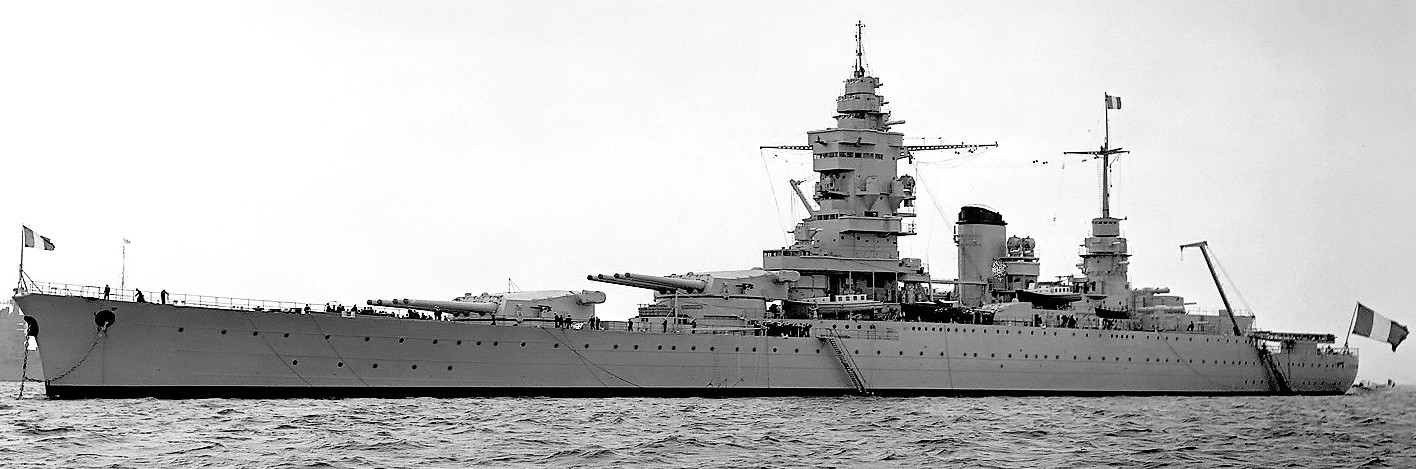
Marine national battleship Dunkerque
(Marine nationale Photo)
Marine nationale battleship Dunkerque.
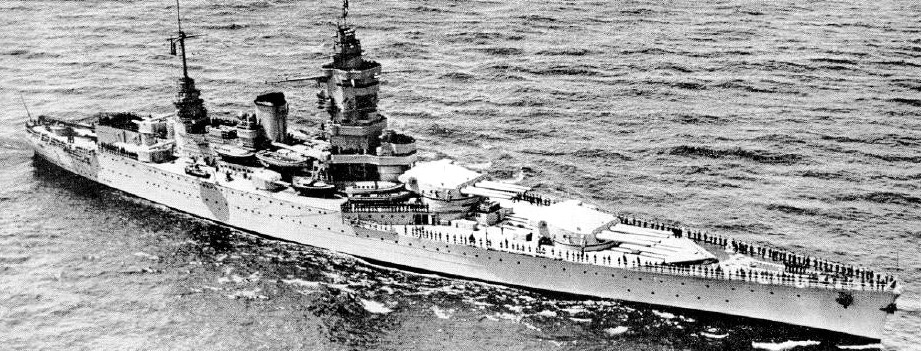
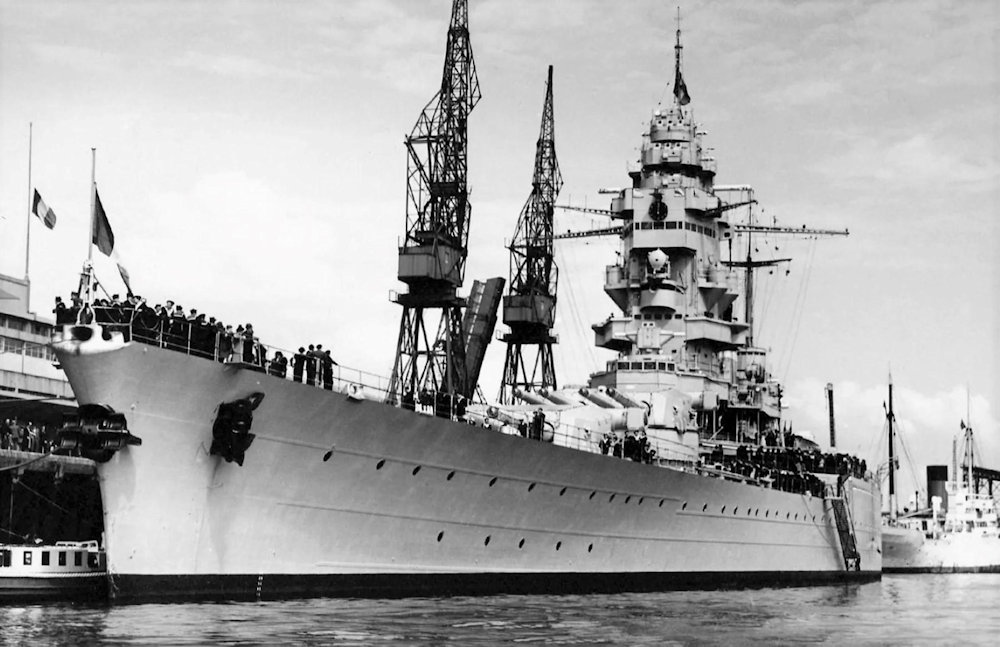
The Dunkerque class was a pair of fast battleships built for the Marine nationale in the 1930s, the Dunkerque and the Strasbourg. They were the first French battleships built since the Bretagne class of pre-First World War vintage, and they were heavily influenced by the Washington Treaty system that limited naval construction in the 1920s and 1930s. French battleship studies initially focused on countering fast Italian heavy cruisers, leading to early designs for small, relatively lightly protected capital ships. But the advent of the powerful German Deutschland-class cruisers proved to be more threatening to French interests, prompting the need for larger and more heavily armed and armoured vessels. The final design, completed by 1932, produced a small battleship armed with eight 330 mm (13 in) guns that were concentrated in two quadruple gun turrets forward, with armour sufficient to defeat the Deutschlands’ 283 mm (11.1 in) guns.
Strasbourg was completed to a slightly modified design, receiving somewhat heavier armour in response to new Italian Littorio-class battleships. Smaller and less heavily armed and armoured than all other treaty battleships, the Dunkerques have sometimes been referred to as battlecruisers. The two ships had relatively short careers. Completed just before the outbreak of the Second World War, they served briefly with the Atlantic Squadron in the late 1930s. Dunkerque made several visits abroad, including to French West Africa in 1938 and visits to Britain in 1937 and 1939. With war looming in August 1939, the French created the Force de Raid (Raiding Force), centred on the two Dunkerques, which was tasked with hunting down the Deutschlands that were expected to operate in the Atlantic as commerce raiders. The French never caught the German cruisers, and instead the vessels were sent to Mers-el-Kébir to deter Italy from entering the war against France.
After Germany defeated France in the Battle of France in June 1940, the French were forced to neutralise their fleet, and the two Dunkerques were to remain inactive at Mers-el-Kébir. Unaware that Germany had no intention of seizing the ships, the British sent Force H to sink the ships; Dunkerque was damaged in the Attack on Mers-el-Kébir in July, but Strasbourg escaped to Toulon, where she became the flagship of the Forces de haute mer (High Seas Forces).
Dunkerque was badly damaged in another attack but was temporarily repaired and eventually returned to Toulon for permanent repairs. Strasbourg saw little activity during this period, as the armistice with Germany limited training operations. Dunkerque was still in drydock when the Germans launched Case Anton, occupying the rest of France in November 1942. To prevent the Germans from seizing the ships, the French Navy scuttled the fleet in Toulon. Both ships were badly damaged and were handed over to Italian control, where they were partially broken up. Their hulks, which were bombed by American aircraft in 1944, were eventually sold for scrap in the 1950s. (Wikipedia)
(Marine nationale Photo)
Marine nationale battleship Dunkerque.
(Marine nationale Photo)
Marine nationale battleship Dunkerque.
Marine nationale battleship Strasbourg
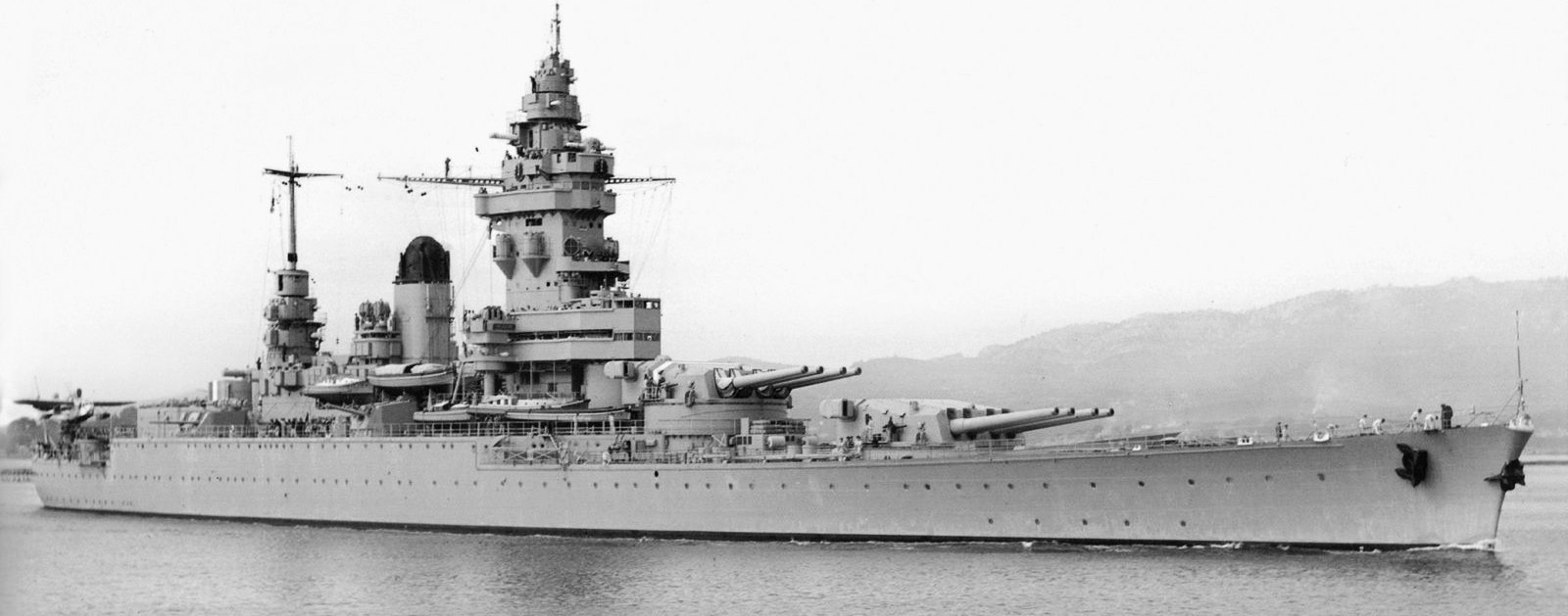
(USN Photo)
Marine nationale battleship Strasbourg.
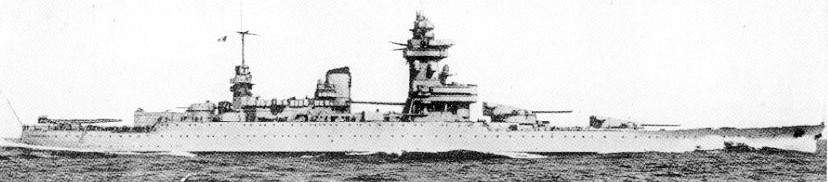
(USN Photo)
Marine nationale battleship Strasbourg.
Richelieu-class battleships
The Richelieu class were fast battleships built for the Marine nationale between the 1930s and 1950s. Initially two ships were ordered in 1935 in response to Italian orders for the Littorio-class battleships the previous year. The Richelieus were based on the preceding Dunkerque class, but scaled up to accommodate more powerful 380 mm (15 in) guns and armour to protect them from guns of the same caliber. To keep the ships within the displacement limits imposed by the Washington Naval Treaty, they featured the same concentrated arrangement as the Dunkerques for the main battery: two quadruple gun turrets placed forward. They also incorporated new, more compact boilers that allowed for a shorter hull (which required less heavy armour) for the desired top speed. After Germany ordered two Bismarck-class battleships, France responded with another pair of Richelieus, to be built to modified designs. The first, Clemenceau, would have received modified secondary and anti-aircraft batteries, while Gascogne would have had had her superfiring main battery turret shifted aft, along with other changes. Clemenceau was never completed, and Gascogne was never laid down. The Richelieus were the last battleships built for the French Navy.
Neither of the two completed members of the class had been completed by the outbreak of the Second World War. Richelieu was finished shortly before the French defeat in the Battle of France, while Jean Bart was hurriedly prepared to be ready to go to sea during the campaign. Both vessels fled to French colonies in Africa: Richelieu steamed to Dakar and Jean Bart went to Casablanca. Work on Clemenceau and Gascogne stopped after the Germans occupied France. In mid-1940, Richelieu was attacked twice and damaged by British forces attempting to coerce the crew to defect to Free France, while Jean Bart was badly damaged by American forces during Operation Torch in November 1942. After the French African colonies shifted to Free French control, Richelieu was taken to the United States to be repaired and modernized, while Jean Bart was not completed. Richelieu saw active service with the British Home Fleet in early 1944 before being transferred to the Eastern Fleet later that year. There, she took part in numerous operations against Japanese forces in the Indian Ocean. She was present for the Japanese surrender of Singapore at the end of the war.
After the war, Richelieu took part in the initial campaign to restore control of French Indochina before returning to France, where she saw limited activity into the early 1950s. During this period, the Marine nationale discussed proposals to complete Jean Bart or convert her into an aircraft carrier, ultimately settling on the former. Jean Bart was finally commissioned in 1955, thereafter taking part in the French intervention in the Suez Crisis in November 1956. Her career proved to be a short one, and she was placed in reserve in 1957. Both vessels were used as training and barracks ships into the 1960s; Richelieu was sold to ship breakers in 1968 and Jean Bart followed her in 1970. (Wikipedia)
Marine nationale battleship Richelieu
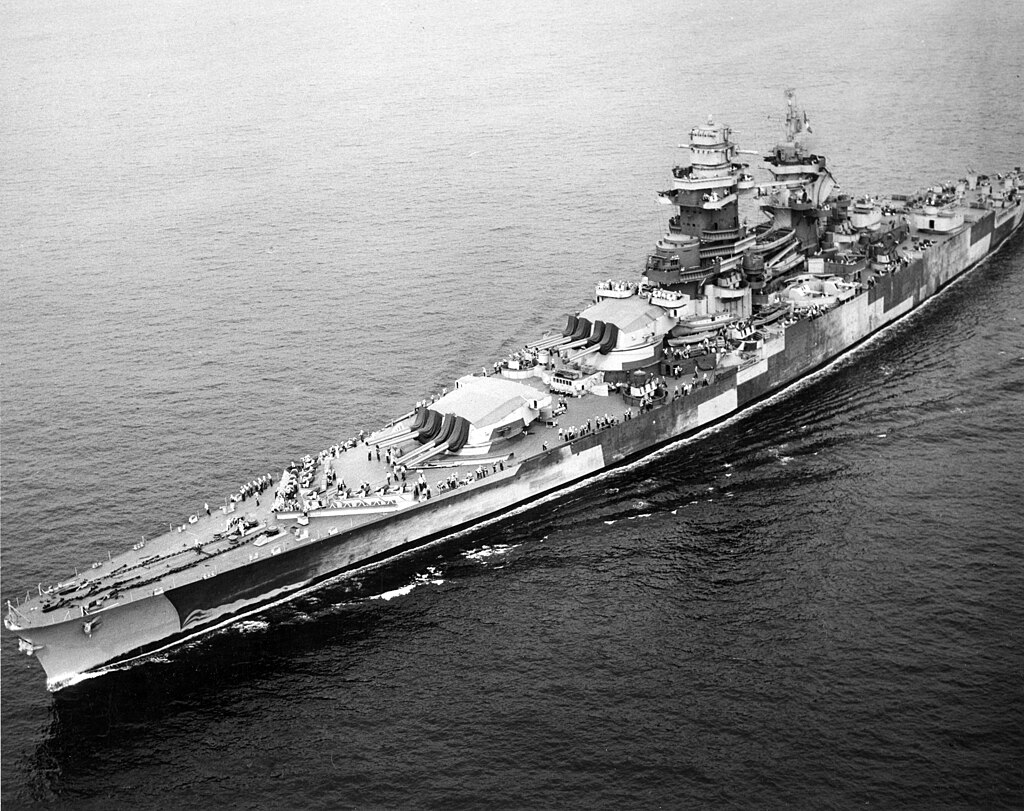
(Marine nationale Photo)
Marine nationale battleship Richelieu.
Marine nationale battleship Richelieu was a French fast battleship, the lead ship of the Richelieu class. Built as a response to the Italian Littorio class, Richelieu and her sister ship Jean Bart were based on their immediate predecessors of the Dunkerque class: they used the same unconventional arrangement that grouped their main battery forward in two quadruple gun turrets. They were scaled up to accommodate a much more powerful main battery of eight 380 mm (15 in) guns (compared to the 330 mm (13 in) guns of the Dunkerques), with increased armor to protect them from guns of the same caliber.
Richelieu was laid down in 1935 and was launched in 1939, just before the outbreak of the Second World War in Europe. As war with Germany became increasingly likely, work on the ship was rushed to prepare her for commissioning in April 1940. Completed just days before the Germans won the Battle of France in June, Richelieu fled to Dakar in French West Africa to keep her under French control. There, she came under repeated British attacks that had been intended to either compel the battleship to join the Free French Naval Forces or sink her; these included during Operation Catapult in July 1940 and the Battle of Dakar in September.Damaged in both attacks, the ship was slowly repaired before eventually being turned over to Free French control after the Allied invasion of North Africa in November 1942. After being sent to the United States for repairs and an extensive modernization, the ship served with the British Home Fleet in early 1944 before being deployed to the Eastern Fleet for operations against the Japanese in the Indian Ocean. These included several bombardment operations and in May 1945 she was present during the Battle of the Malacca Strait, though she was too far away to engage the Japanese force.Richelieu was part of the force that liberated Singapore after the Japanese surrender in September, and she later operated in French Indochina as part of the initial effort to restore French colonial rule.
Recalled to France in December 1945, she was repaired and modernized slightly in 1946. The ship saw relatively limited training in the immediate postwar years and, in 1952, she was removed from active service for use as a gunnery training ship. In 1956, she was placed in reserve and was thereafter used as a stationary training vessel and barracks ship until 1967, when the French Navy decided to discard her. She was sold for scrap in 1968, and broken up in Italy from 1968 to 1969. (Wikipedia)
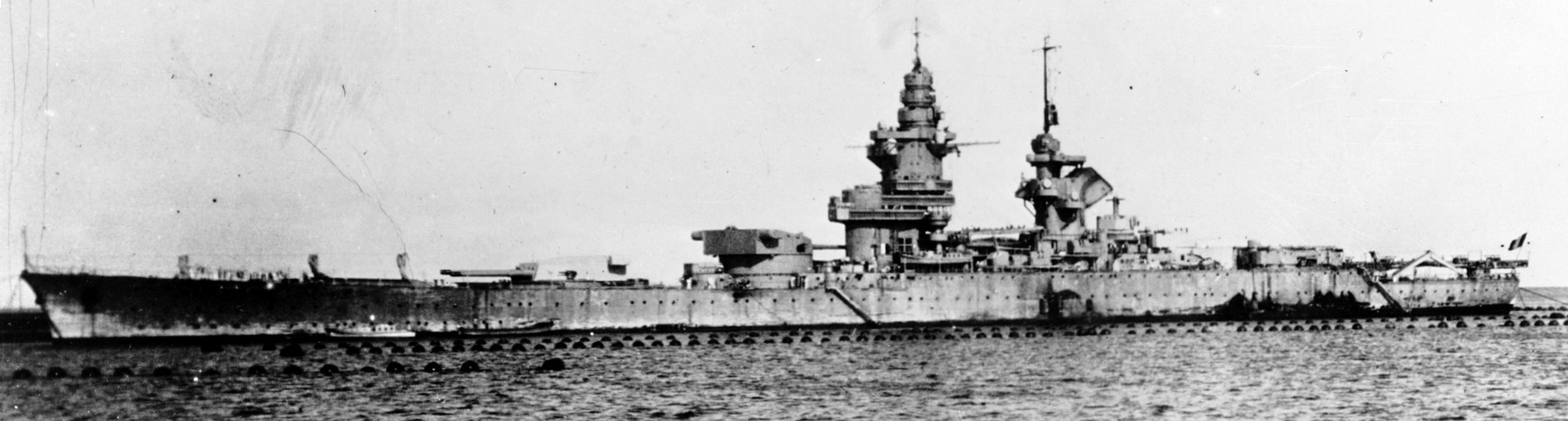
(Marine Nationale Photo)
Marine nationale battleship Richelieu.
(USN Photo)
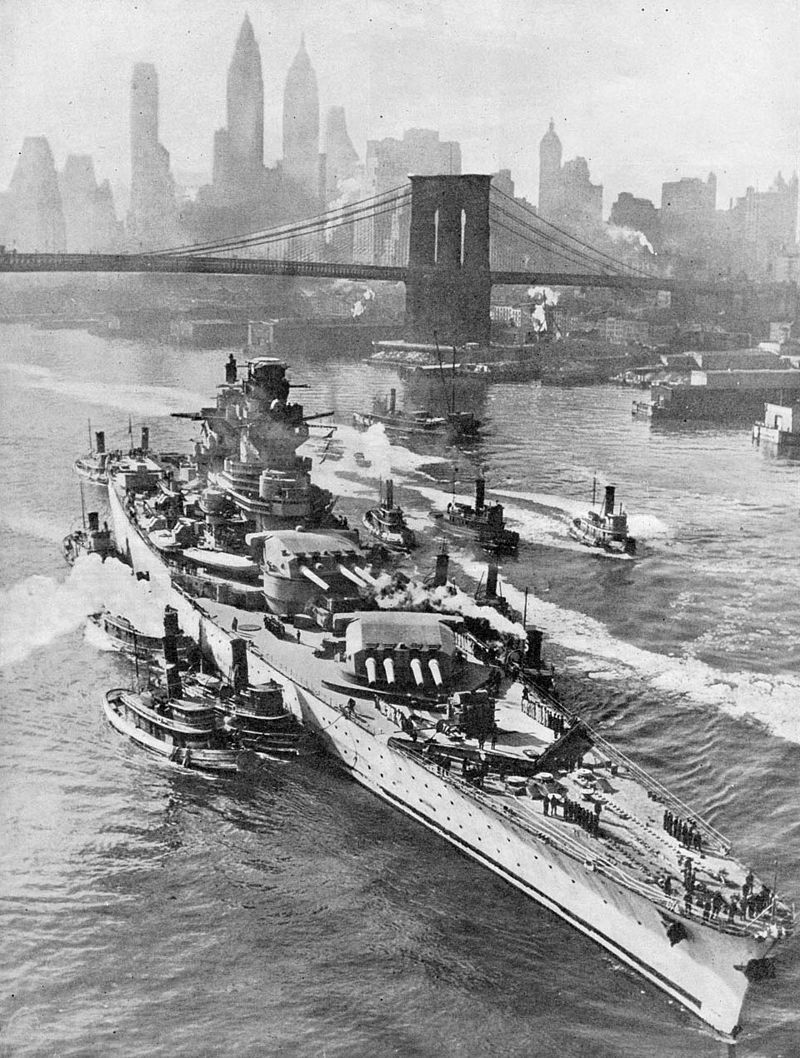
Marine nationale battleship Richelieu, in New York on its way to a U.S. Navy yard to be repaired and refitted.
(Marine nationale Photo)
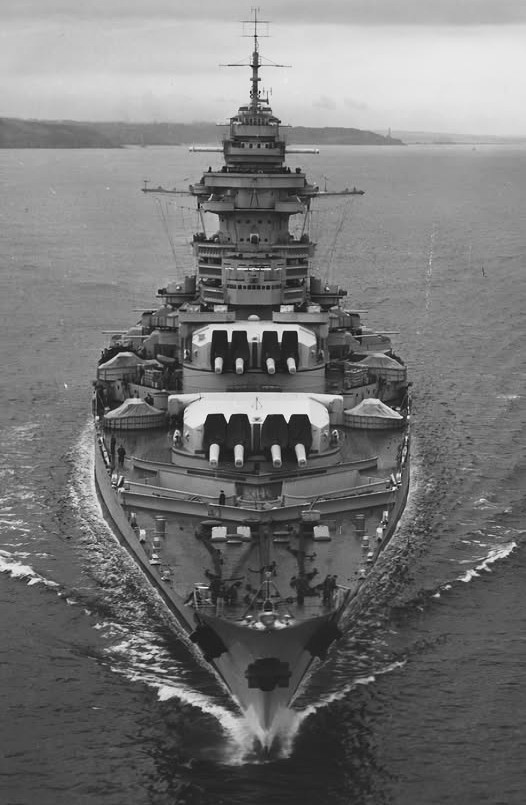
Last cruise of the Marine nationale battleship Richelieu arriving at Brest to enter the reserve and eventually becoming a stationary school ship for reserve officers, 21 February 1956.
All comments are subject to our Comment Policy. You must be at least 18 years old to comment.
See a comment that violates our guidelines? Report it here.