
Royal Navy pre-dreadnought battleships: HMS Magnificent, HMS Majestic, HMS Victorious, HMS Prince George, HMS Jupiter, HMS Mars, HMS Caesar, HMS Hannibal, HMS Illustrious
Majestic class
Intended for the 1892 programme, what was initially to have been a class of three ships was delayed to the following year as the new 12-inch gun they were designed to carry had not completed testing. The design, also prepared by White, incorporated the same advances first seen with Renown in a larger first-class battleship (though White had in fact designed Majestic first). Due to public criticism, John Spencer, the First Lord of the Admiralty, ordered a total of nine new battleships as part of the so-called Spencer Programme to allay concerns that the Royal Navy had fallen in strength relative to France and Russia. The Majestics became a benchmark of battleship design, and they were widely copied, both generally with characteristics like the calibre of the main battery, and literally in that the Japanese Shikishima class and the battleship Mikasa were little more than minor improvements on the Majestics.
Most of the class joined the Channel Fleet on entering service and HMS Magnificent became the fleet flagship. HMS Caesar, HMS Illustrious, and HMS Victorious instead went to the Mediterranean Fleet upon their commissioning. Caesar and Illustrious joined the rest of the class in the Channel Fleet in 1903 and 1904 respectively, while Victorious was transferred to the China Station from 1898 to 1900, before returning to the Mediterranean until 1904, when she, too, joined the Channel Fleet. In 1906, the ships were reduced to the reserve, assigned to the Nore, Portsmouth, and Devonport Divisions, seeing little activity until the First World War, when they were mobilised. They served in a variety of roles through the first year of the war, including escorting the British Expeditionary Force to France in 1914, and as part of the force waging the Dardanelles campaign. There, Majestic was sunk by U-21 in May 1915. By that time, the ships of the class began to be withdrawn from service, disarmed, and reduced to subsidiary roles, including as depot ships, ammunition ships, and repair ships. Caesar, as a depot ship, was the last British pre-dreadnought to be used overseas when she supported the Allied intervention in the Russian Civil War in 1919. With no further use for the obsolete vessels, the Royal Navy sold the Majestics for scrap in the early 1920s. (Wikipedia)
HMS Magnificent

(IWM Photo, Q 39473, 1899)
HMS Magnificent was one of the nine Majestic-class pre-dreadnought battleships of the Royal Navy. She entered service in late 1895 with the Channel Fleet, remaining with the fleet through its subsequent reorganisation into the Atlantic Fleet. In 1905, an explosion caused the deaths of 18 men but she remained in service until 1906, after which she underwent a refit. She served with the Home Fleet for most of her pre-war service.
Among the oldest of Britain’s battleships at the time, Magnificent was a guard ship on the Humber when the First World War broke out. She was then, together with her sister ship Hannibal, assigned to Scapa Flow as a guard ship. In 1915, she was stripped of her main armament, and later in that year was converted to a troopship for use in the Dardanelles Campaign. Returning to England in 1916, she was inactive until late 1917, at which time she was converted to an ammunition ship. She continued to serve in this role until 1921, at which time she was decommissioned before being scrapped the following year. (Wikipedia)
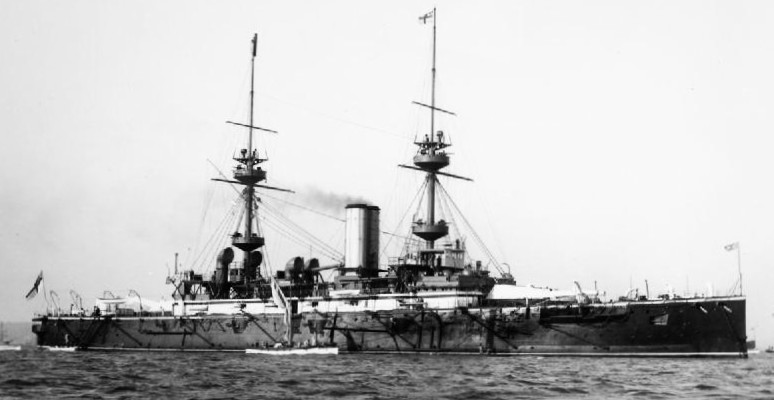
(IWM Photo, Q 39478)
HMS Magnificent at Spithead, 1899.
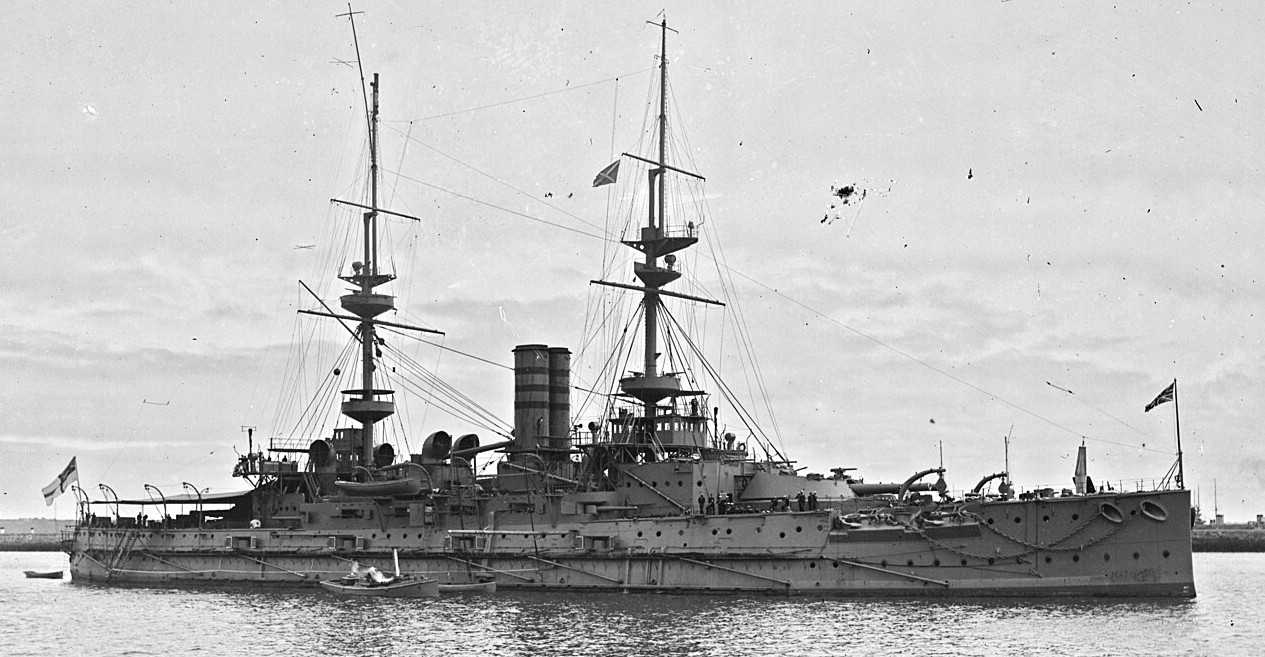
(Agence Rol Photo)
HMS Magnificent visiting Brest, France, 10 July 1905.
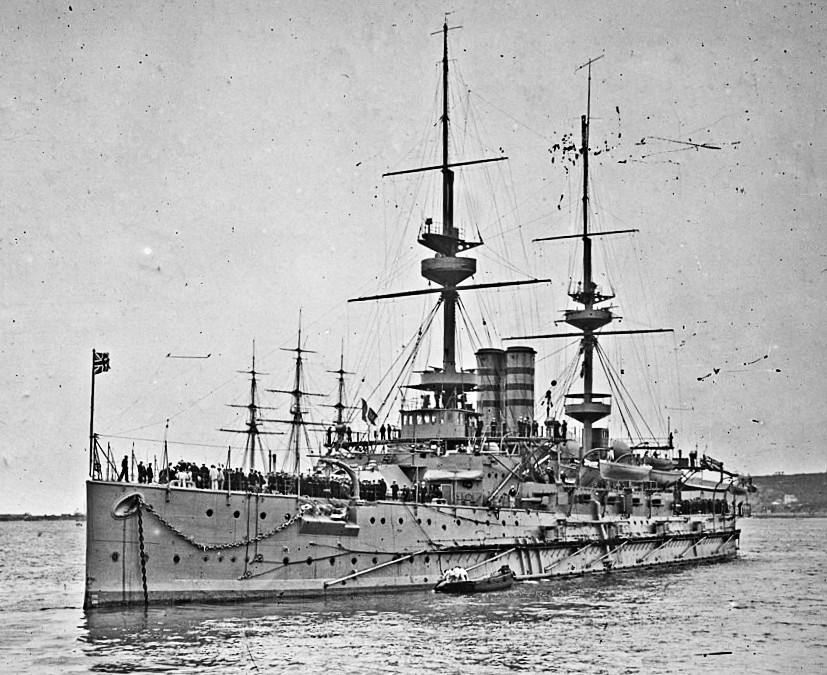
(Agence Rol Photo)
HMS Magnificent visiting Brest, France, 10 July 1905.
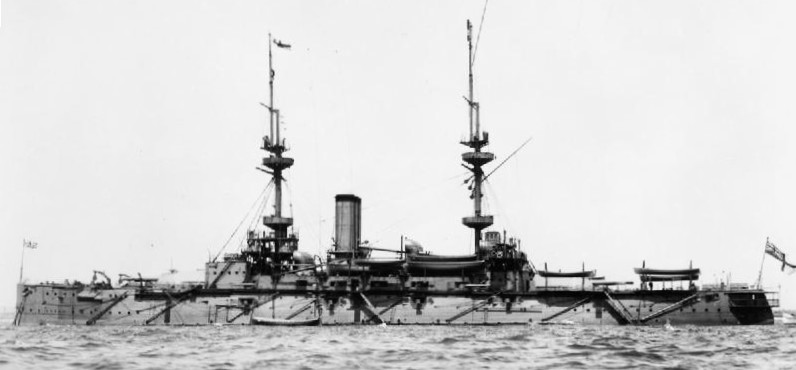
(IWM Photo, Q 39466)
HMS Magnificent, 1903.
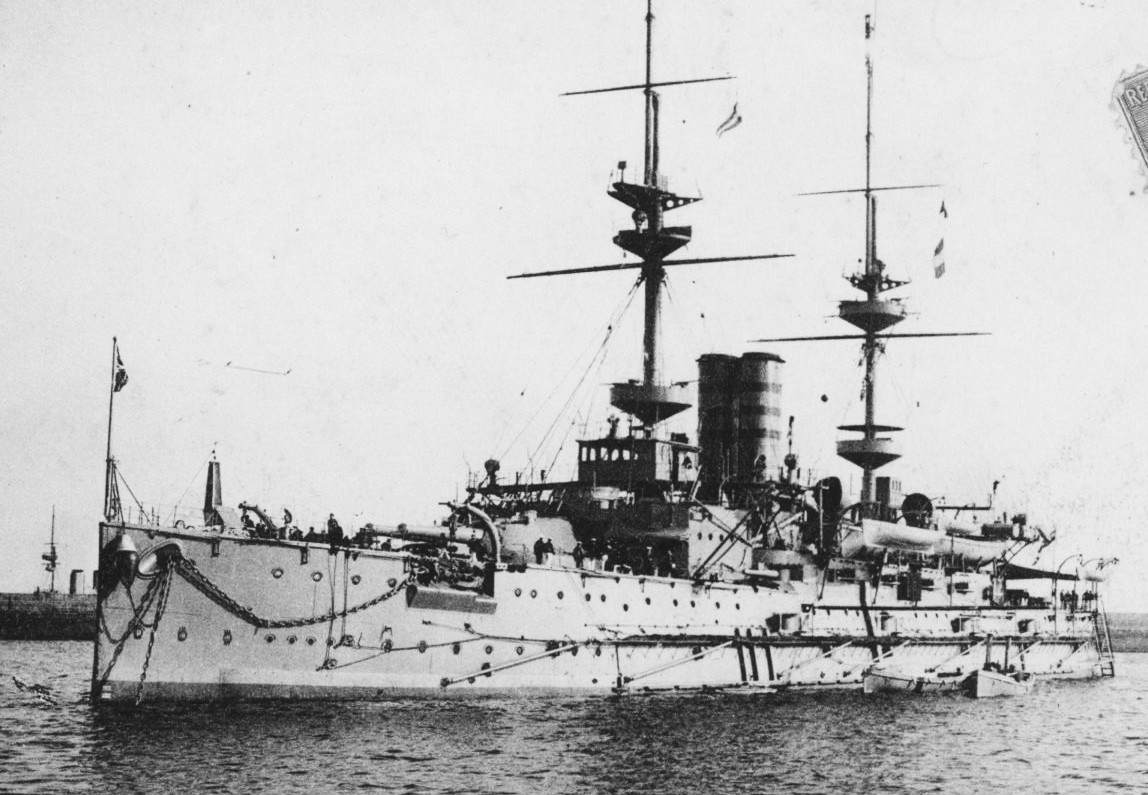
(Agence Rol Photo)
HMS Magnificent visiting Brest, France, 10 July 1905.
HMS Majestic

(IWM Photo, Q 21480)
HMS Majestic was commissioned in 1895, she was the largest pre-dreadnought launched at the time. She served with the Channel Fleet until 1904, following which she was assigned to the Atlantic Fleet. In 1907, she was part of the Home Fleet, firstly assigned to the Nore Division and then with the Devonport Division. From 1912, she was part of the 7th Battle Squadron.
When the First World War broke out Majestic, together with the rest of the squadron, was attached to the Channel Fleet during the early stages of the war before being detached for escort duties with Canadian troop convoys. She then had spells as a guard ship at the Nore and the Humber. In early 1915, she was dispatched to the Mediterranean for service in the Dardanelles Campaign. She participated in bombardments of Turkish forts and supported the Allied landings at Gallipoli. On 27 May 1915, she was torpedoed by a U-boat at Cape Helles, sinking with the loss of 49 men. (Wikipedia)
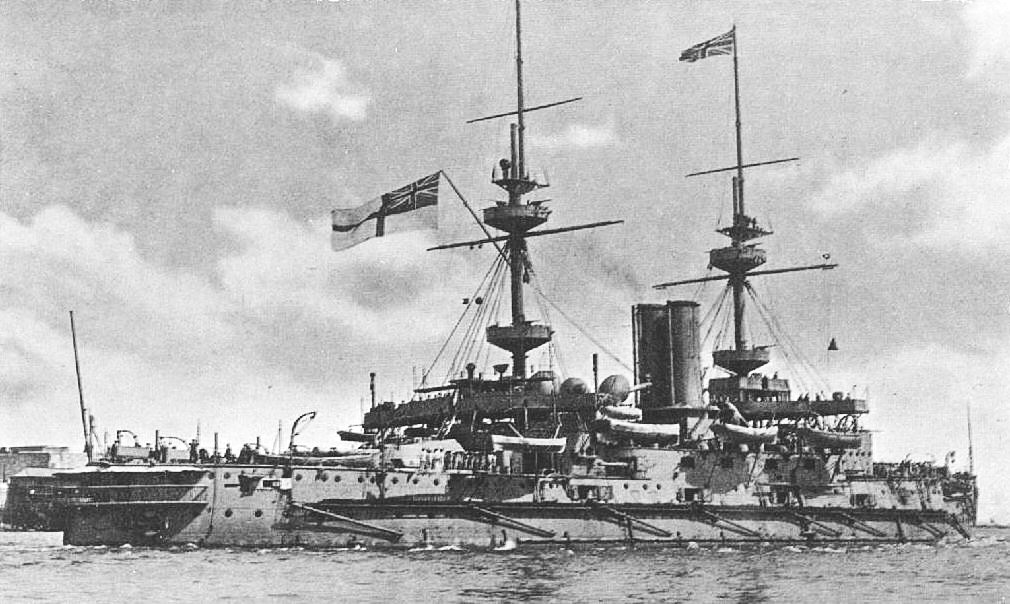
(Royal Navy Photo)
HMS Majestic, 1915.
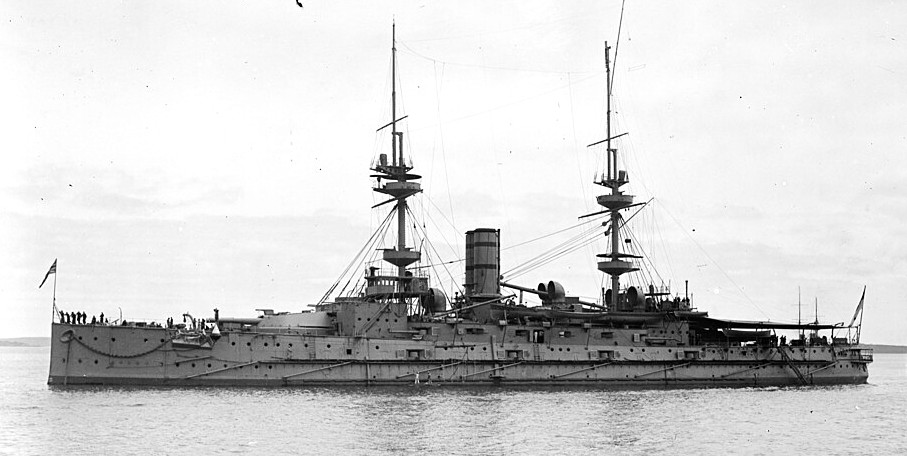
(Agence Rol Photo)
HMS Majestic, 10 July 1905.
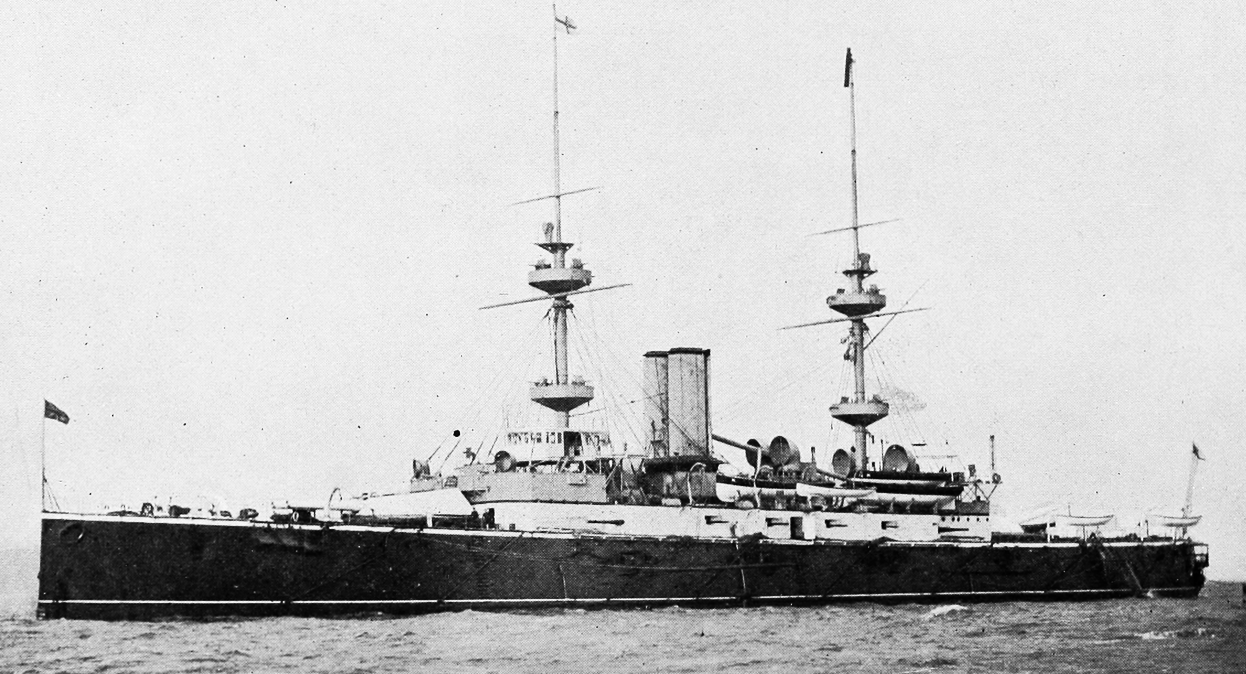
(Cassier’s Magazine Photo)
HMS Majestic, August 1897.
HMS Victorious
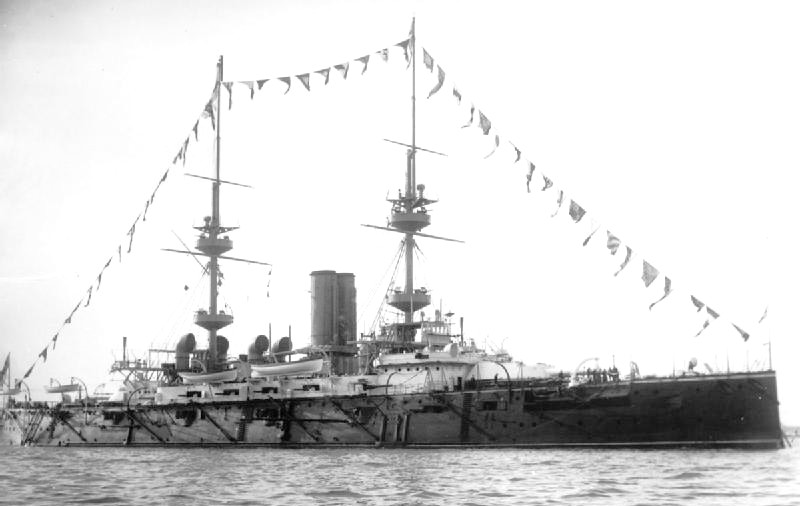
(IWM Photo, Q 40505, 1898)
HMS Victorious was one of nine Majestic-class pre-dreadnought battleships of the British Royal Navy. She was armed with a main battery of four 12-inch (305 mm) guns in two twin turrets, and was capable of a top speed of 16 knots (30 km/h; 18 mph). She served primarily on home waters, and participated in the Fleet Review for the Diamond Jubilee for Queen Victoria in 1897. She served briefly in the Mediterranean in 1898 before being transferred to the China Station later that year; Victorious remained in East Asian waters until 1900, when she returned to the Mediterranean.
After returning to the United Kingdom in 1904, Victorious served as the second flagship of the Channel Fleet. She remained in active service with the fleet in various units until 1908, when she was modernized and then placed in reserve. At the outbreak of the First World War in August 1914 she was mobilized with three of her sister ships into the 9th Battle Squadron, though by January 1915 she was again withdrawn from front-line service. In September her main guns were removed to arm a pair of monitors. Victorious was subsequently used as a repair ship. After the end of the war she was renamed Indus II; plans to use her as a harbor ship were cancelled and, in April 1923, she was sold for scrap. (Wikipedia)
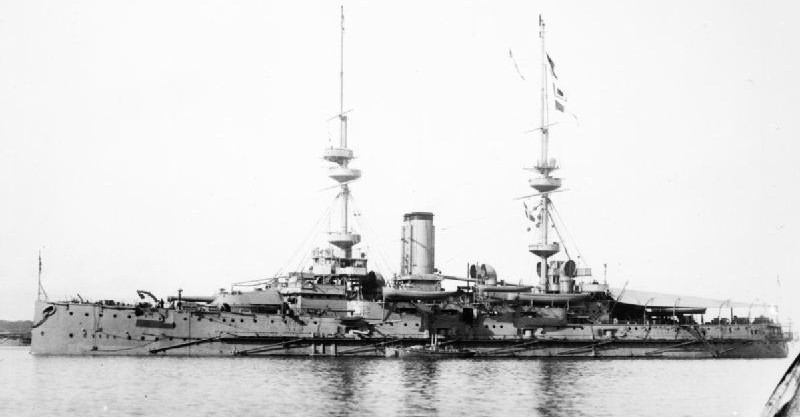
(IWM Photo, Q 41583)
HMS Victorious, 1903.
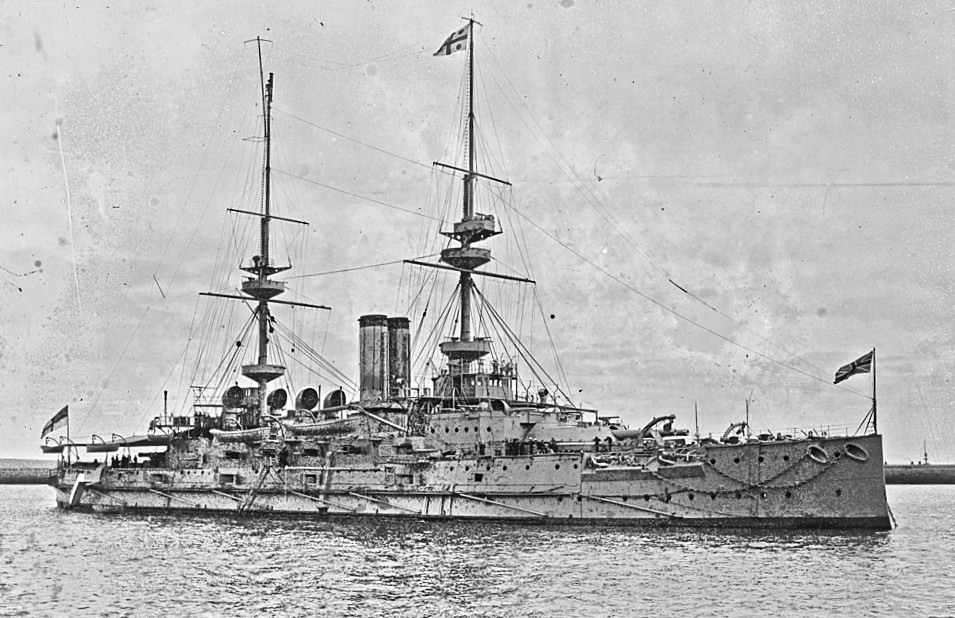
(Agence Rol Photo)
HMS Victorious visiting Brest, France, 10 July 1905.
HMS Prince George
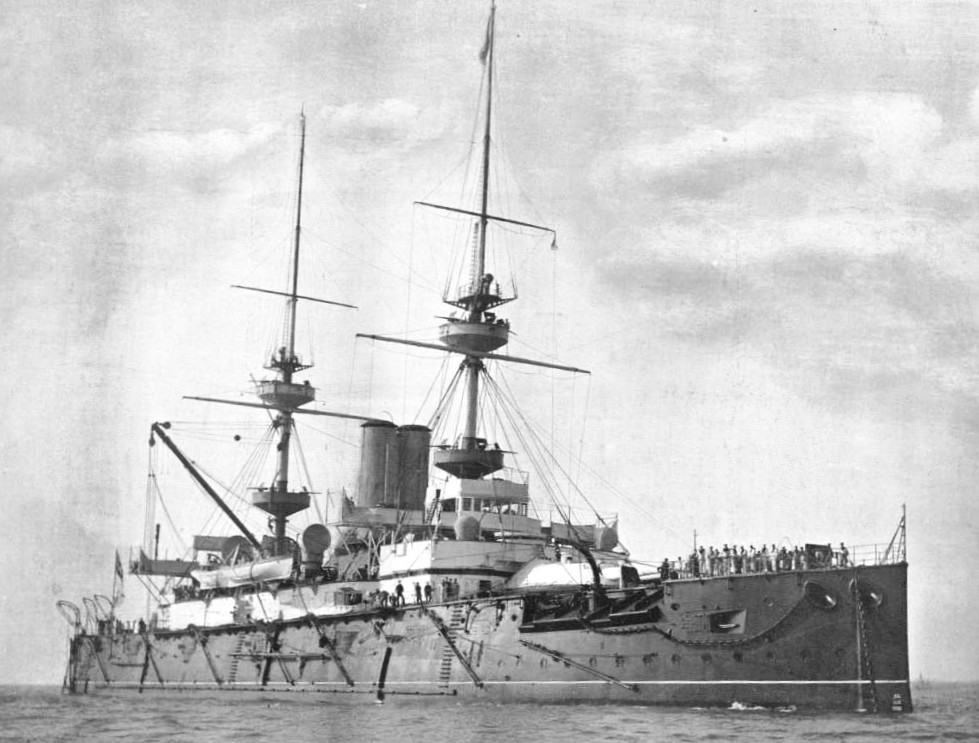
(Royal Navy Photo, 1895)
HMS Prince George was a Majestic-class pre-dreadnought battleship launched in 1895. She was named after the future George V of the United Kingdom and was the fourth and final ship to bear that name. Commissioned in 1896, she initially served with the Channel Fleet until 1904. She was involved in a collision with her sister ship, Hannibal, and the resulting damage meant that much of the latter part of 1903 was spent being repaired. After a refit in 1904, she was assigned to the Atlantic Fleet and then from 1907, she was part of the Home Fleet. In 1912, she was assigned to the 7th Battle Squadron.
When the First World War broke out Prince George, together with the rest of the squadron, was attached to the Channel Fleet during the early stages of the war. In early 1915, she was dispatched to the Mediterranean for service in the Dardanelles Campaign. She participated in bombardments of Turkish forts and supported the Allied operations at Gallipoli, including the evacuation from the peninsula late in 1915. She spent the remainder of the war back in the United Kingdom, initially as an accommodation ship before being converted to a depot ship for destroyers in 1918 and stationed at Scapa Flow. For this latter role, she was renamed Victorious II before reverting to her original name in 1919. Decommissioned in 1920, she was sold for scrapping to a German company but sank off the Netherlands during transit to Germany. (Wikipedia)
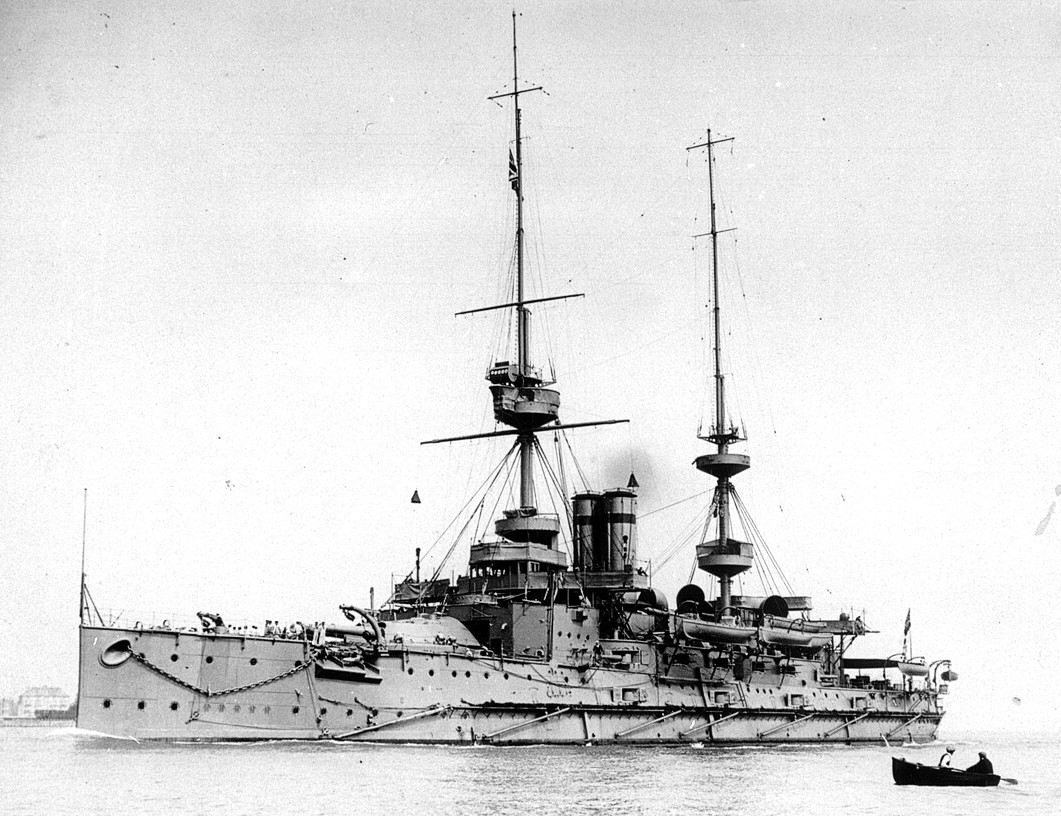
(Fotoafdrukken Koninklijke Marin Photo)
HMS Prince George after her 1904 refit.
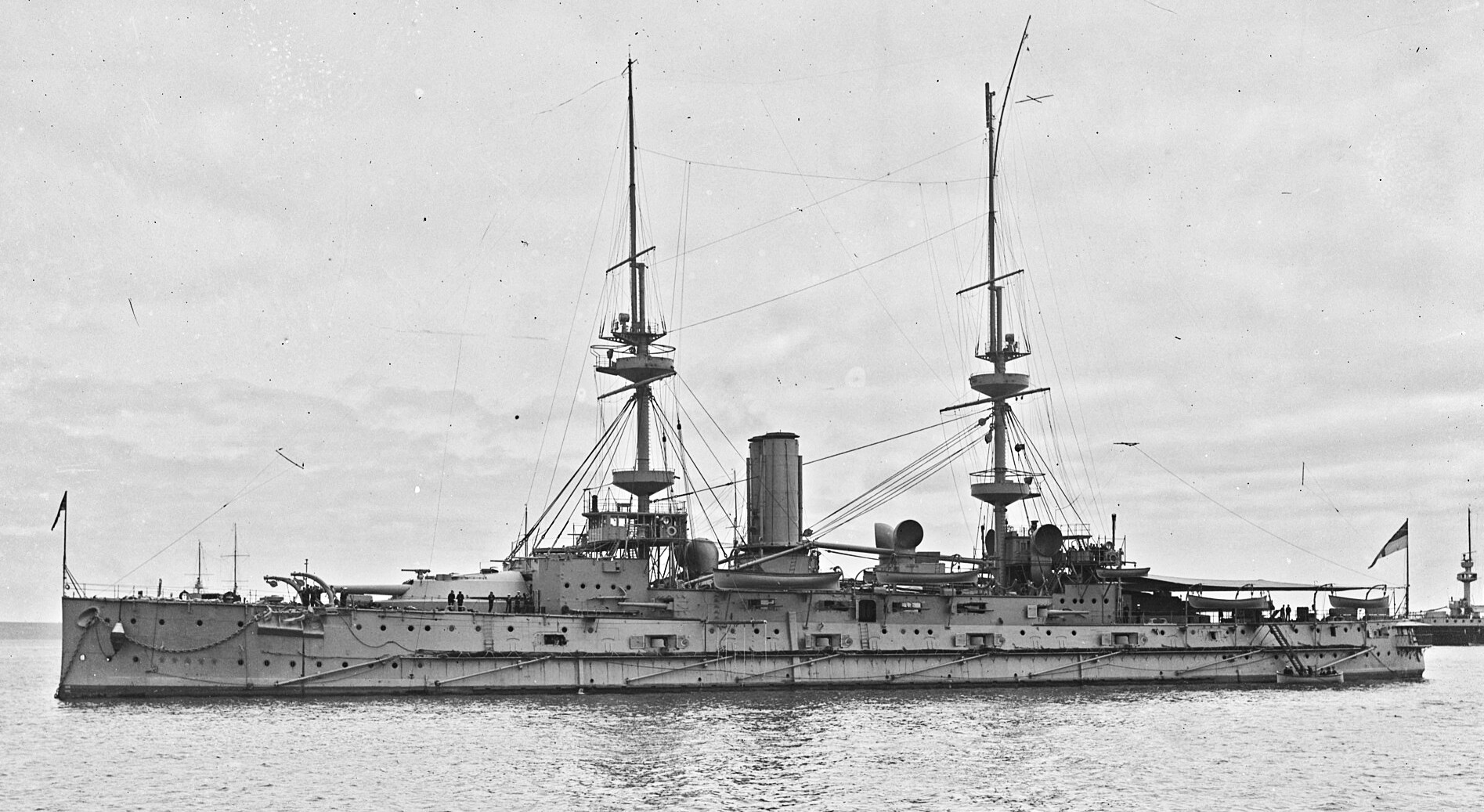
(Agence Rol Photo)
HMS Prince George visiting Brest, France, 10 July 1905.

(IWM Photo, Q 39850)
HMS Prince George underway in 1905.

(IWM Photo, Q 39852)
HMS Prince George, 1898.
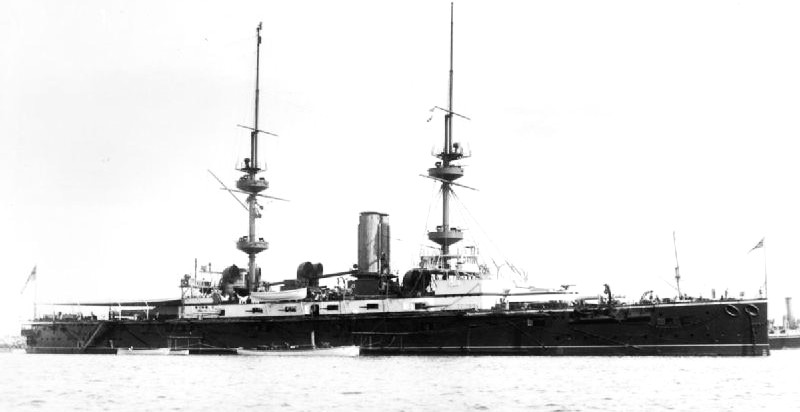
(IWM Photo, Q 39857)
HMS Prince George, 1898.
HMS Jupiter
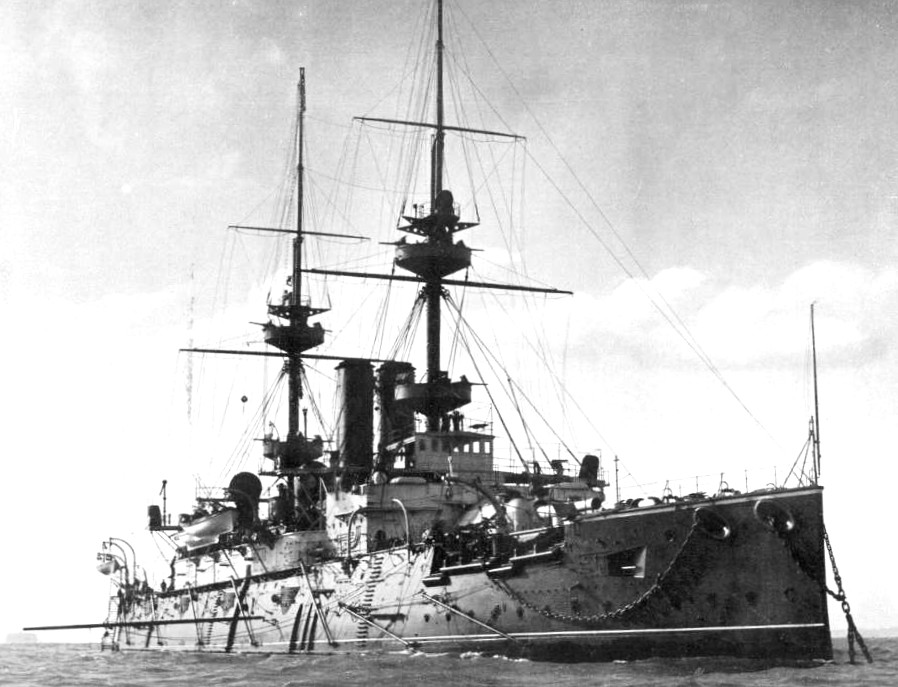
(Royal Navy Photo, 1895)
HMS Jupiter was a Majestic-class pre-dreadnought battleship of the Royal Navy. Commissioned in 1897, she was assigned to the Channel Fleet until 1905. After a refit, she was temporarily put in reserve before returning to service with the Channel Fleet in September 1905. In 1908 and rendered obsolete by the emergence of the dreadnought type of battleships, she once again returned to the reserve, this time with the Home Fleet. After another refit, she had a spell as a gunnery training ship in 1912.
Following the outbreak of the First World War, Jupiter served with the Channel Fleet and then as a guard ship on the River Tyne. She was dispatched to Russia in February 1915 to serve as an icebreaker, clearing a route to Arkhangelsk while the regular icebreaker was undergoing a refit. She underwent her own refit later in 1915 and once completed, was transferred to the Suez Canal Patrol. She returned to England late 1916, and spent the remainder of the war based at Devonport. She was scrapped in 1920. (Wikipedia)
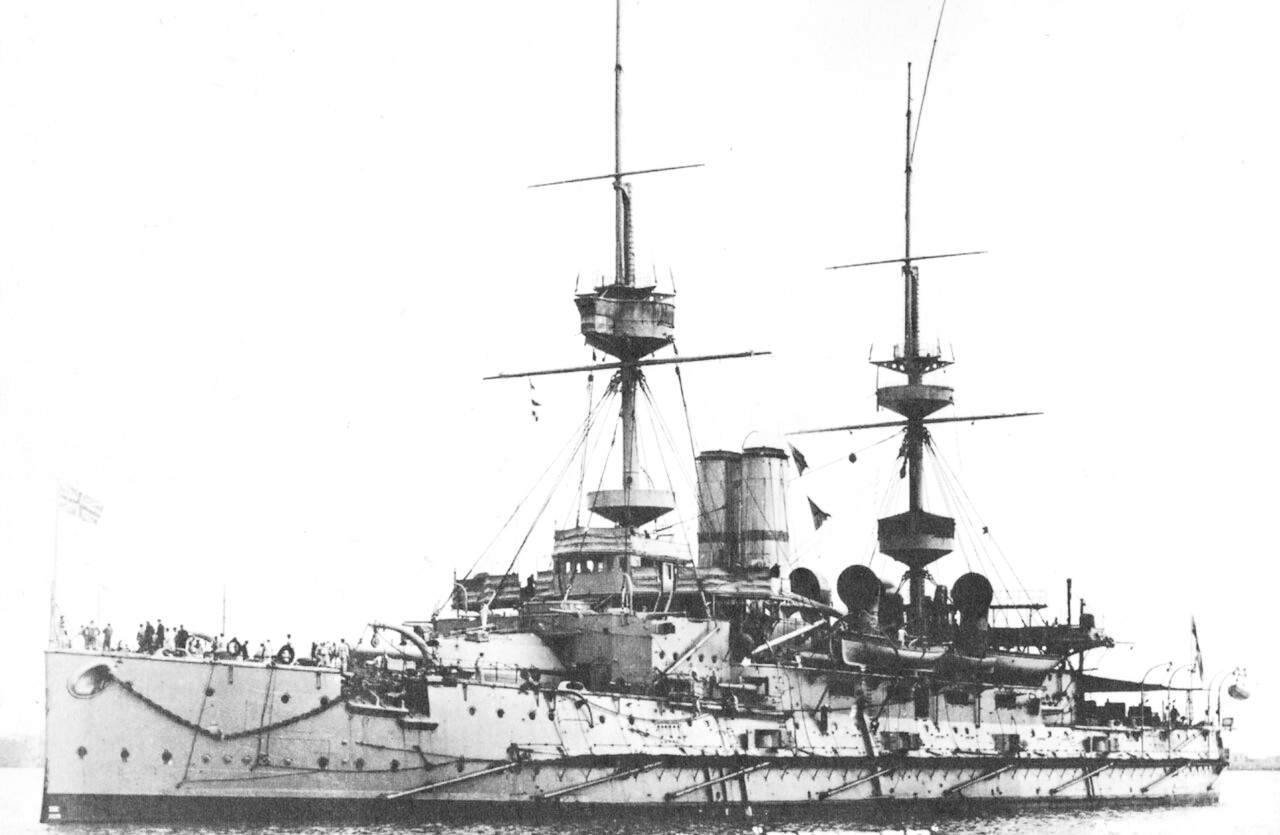
(Royal Navy Photo)
HMS Jupiter 1895.
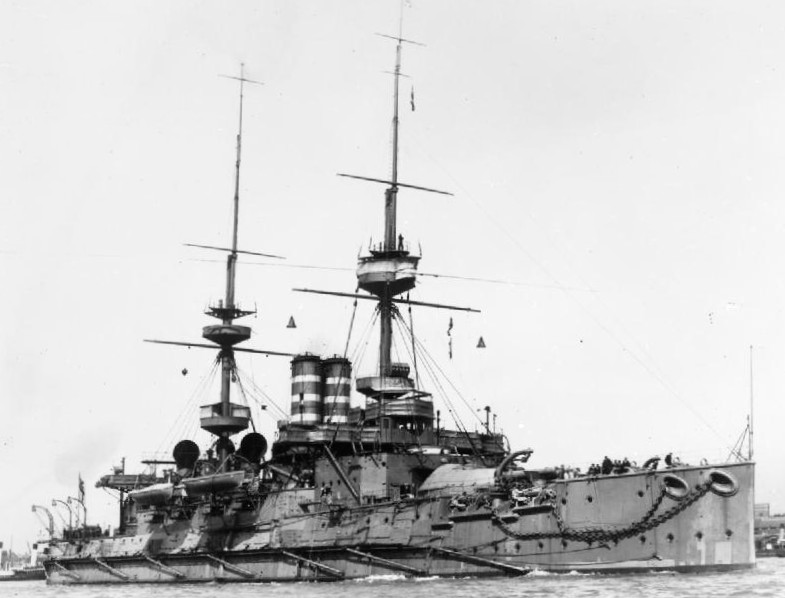
(IWM Photo, Q 21409)
HMS Jupiter 1911.
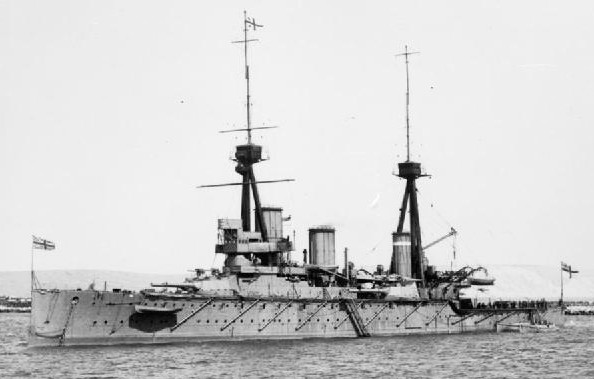
(IWM Photo, Q 39224)
HMS Jupiter at anchor at Spithead, 1899.
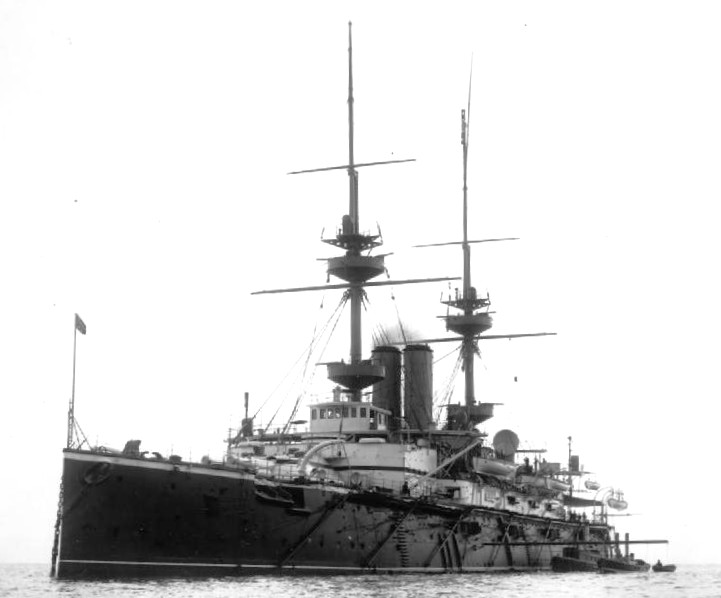
(IWM Photo, Q 39336)
HMS Jupiter at anchor at Spithead, 1899.
HMS Mars
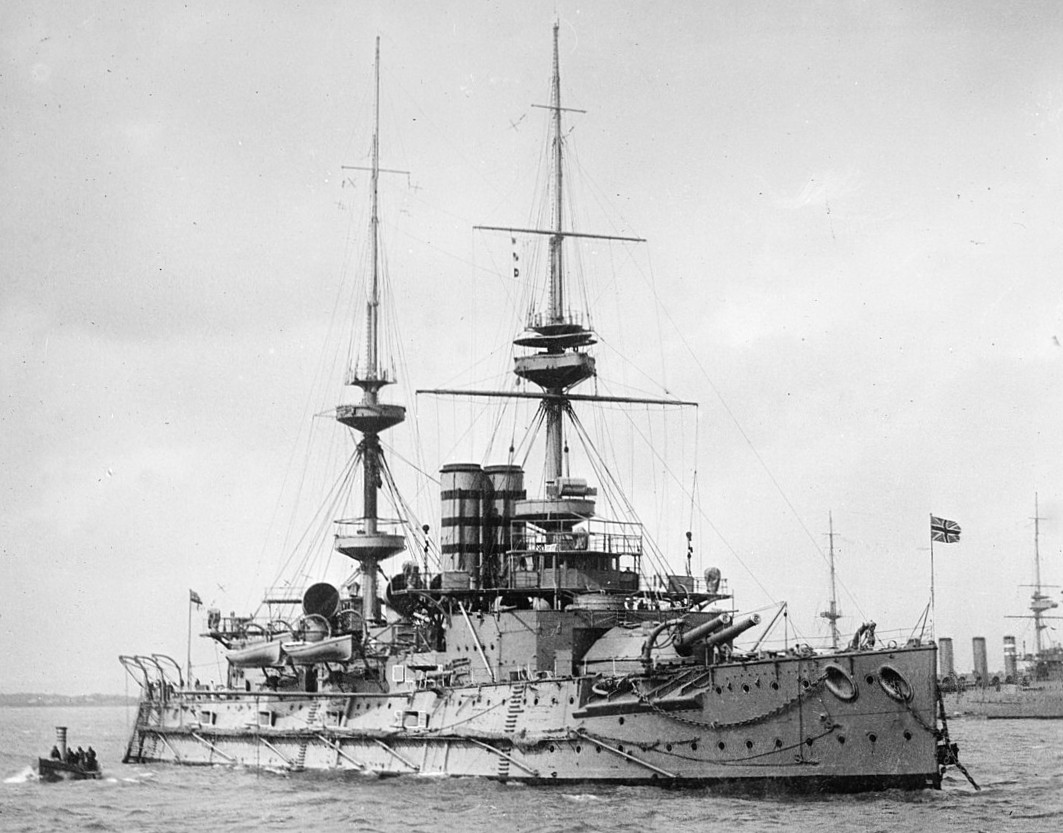
(Library of Congress Photo, 1896)
HMS Mars was a Royal Navy pre-dreadnought battleship of the Majestic class, the seventh member of a class of nine ships. The ship was laid down in the Laird Brothers shipyard in June 1894, she was launched in March 1896, and she was commissioned into the fleet in June 1897. She was armed with a main battery of four 12-inch (305 mm) guns and a secondary battery of twelve 6-inch (152 mm) guns. The ship had a top speed of 16 knots (30 km/h; 18 mph).
Mars served in the Channel Fleet after her commissioning and was present at the Coronation Fleet Review for Edward VII in 1902. She was reduced temporarily to the Reserve in March 1906 before returning to service with the Channel Fleet in October. The following March she was reassigned to the Home Fleet. As tensions in Europe rose dramatically in late July 1914, Mars was mobilized with her sister ships into the 9th Battle Squadron, based as a guard ship in the Humber. In December, she was transferred to the Dover Patrol, though in February 1915, she was decommissioned in Belfast and disarmed. Mars served as a troop ship during the Dardanelles Campaign before being converted into a depot ship. She remained in service until July 1920; the old ship was sold for scrap in May 1921 and broken up in November. (Wikipedia)
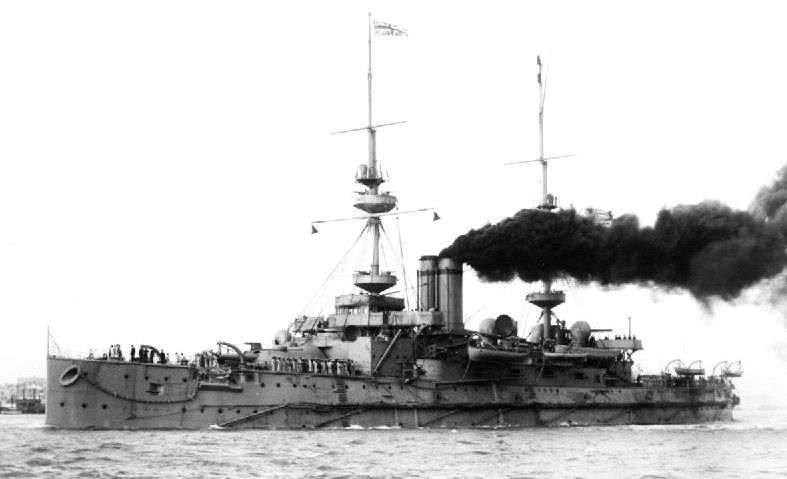
(IWM Photo, Q 39518)
HMS Mars under way leaving Portsmouth, 1901.
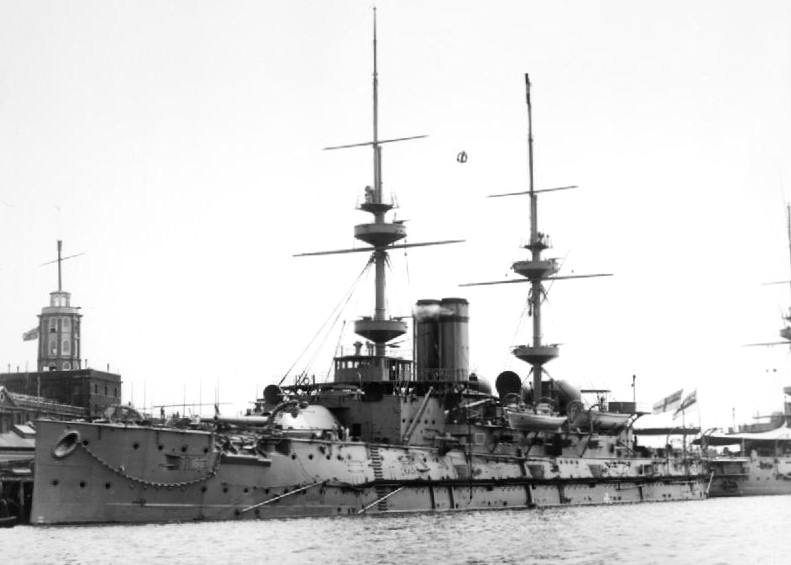
(IWM Photo, Q 39519)
HMS Mars alongside at Portsmouth, 1901.
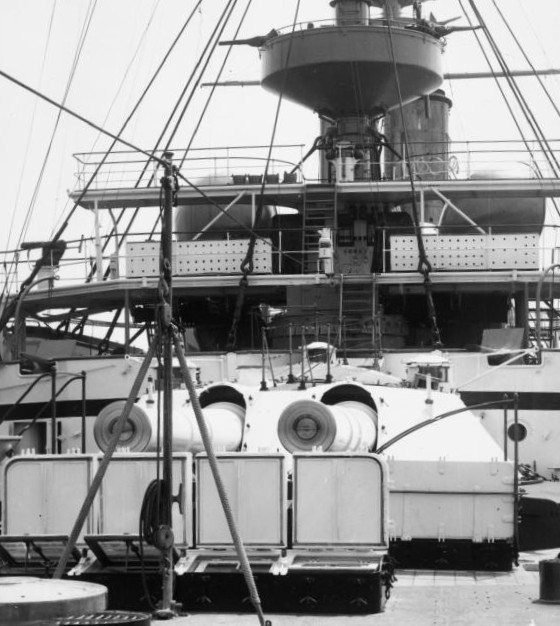
(IWM Photo, Q 39515)
HMS Mars, “A” 12-inch gun turret and bridge.
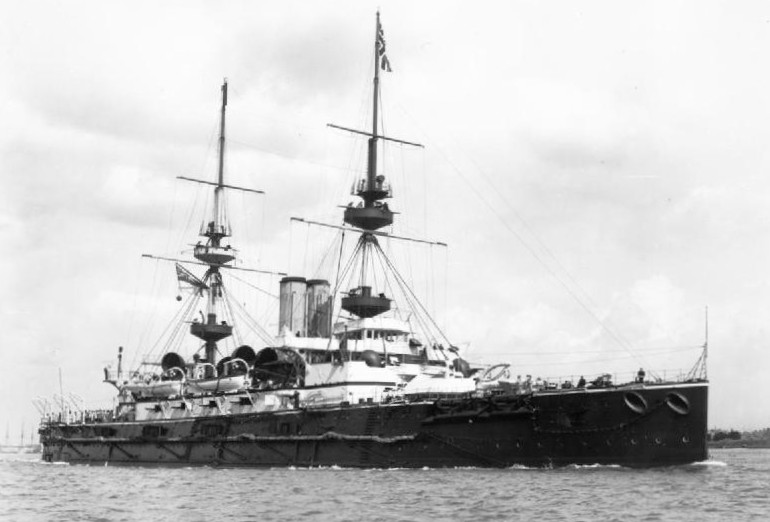
(IWM Photo, Q 39516)
HMS Mars c1898.
HMS Caesar
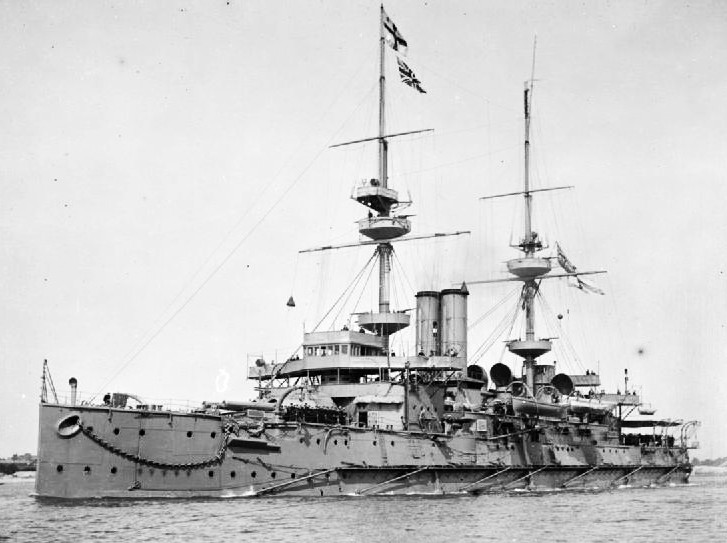
(IWM Photo, Q 38388)
HMS Caesar (at the time written Cæsar) was a Majestic-class pre-dreadnought battleship of the Royal Navy, named after the Roman military and political leader Julius Caesar. The ship was built at the Portsmouth Dockyard, starting with her keel laying in March 1895. She was launched in September 1896 and was commissioned into the fleet in January 1898. She was armed with a main battery of four 12-inch (305 mm) guns and a secondary battery of twelve 6-inch (152 mm) guns. The ship had a top speed of 16 knots (30 km/h; 18 mph).
Caesar served with the Mediterranean Fleet after a brief stint in the Channel Fleet. In 1905, she resumed service with a now re-organised Channel Fleet and was also part of the Atlantic Fleet for a time. In the service of the Home Fleet from 1907, she was placed in reserve in 1912. Following the outbreak of the First World War, Caesar returned to the Channel Fleet before being transferred to the North America and West Indies Station in 1915 after a brief spell as a guard ship at Gibraltar. From 1918 to 1919 she served as a depot ship, firstly in the Mediterranean and Aegean Seas and then the Black Sea, in support of naval operations against the Bolsheviks. In this latter role, she was the last of the pre-dreadnought battleships to see service outside the United Kingdom. Returning to England in 1920, she was decommissioned and sold for scrap in 1921. (Wikipedia)
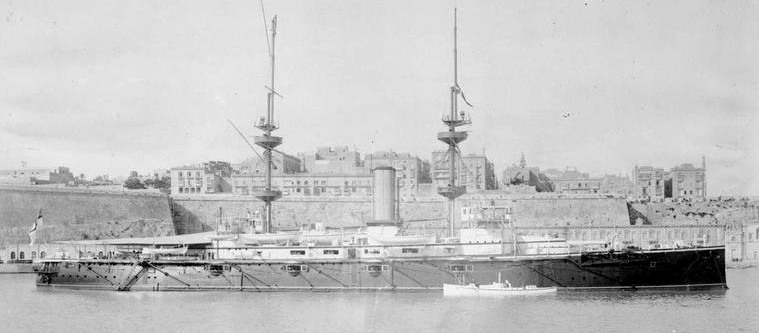
(IWM Photo, Q 65816)
HMS Caesar at Malta.
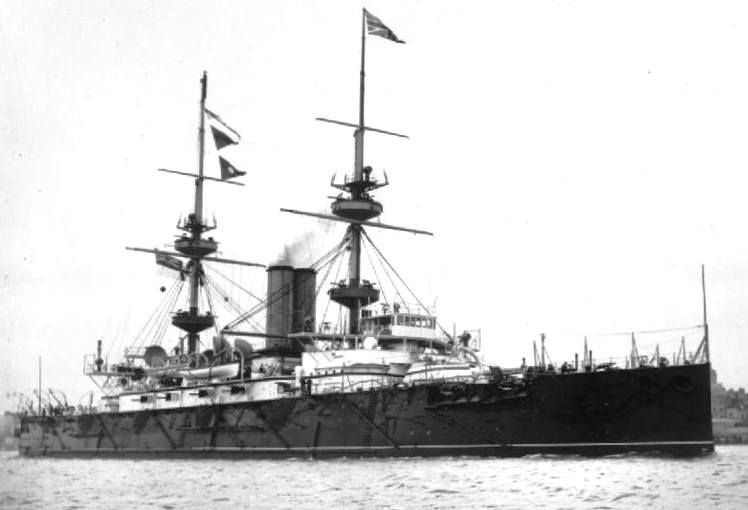
(IWM Photo, Q 38384)
HMS Caesar 1898.
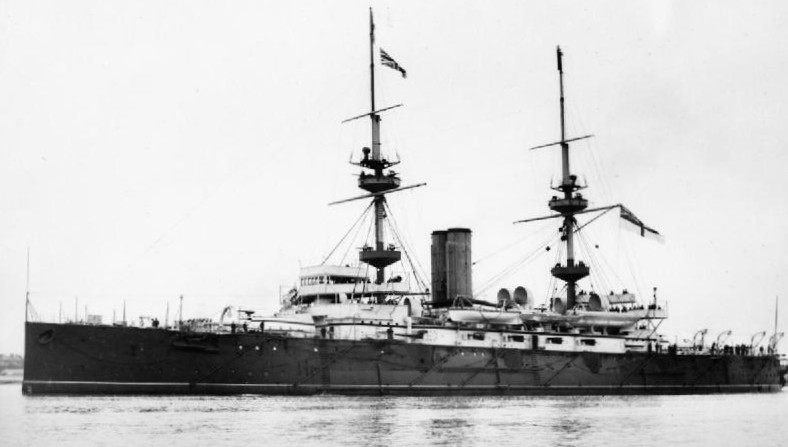
(IWM Photo, Q 21053)
HMS Caesar 1898.
HMS Hannibal
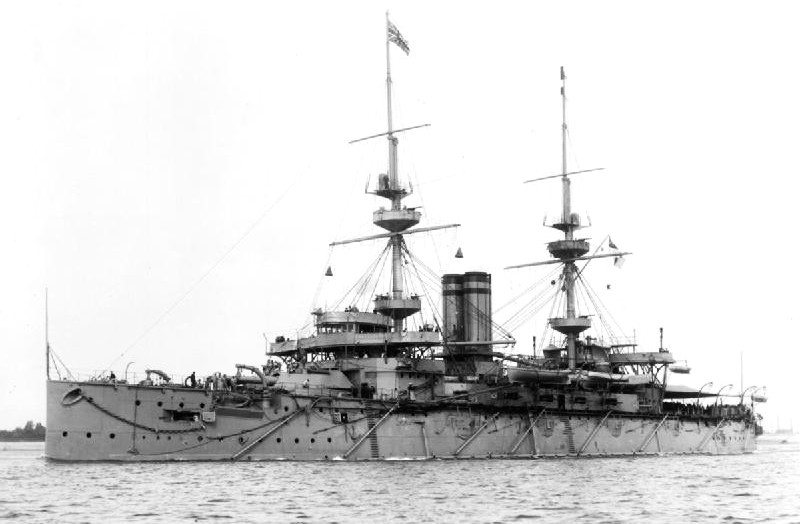
(IWM Photo, Q 39016)
HMS Hannibal was a Majestic-class pre-dreadnought battleship built for the Royal Navy, and the sixth ship to bear the name HMS Hannibal. The ship was laid down at the Pembroke Dock in May 1894, she was launched in April 1896, and commissioned into the fleet in April 1898. She was armed with a main battery of four 12-inch (305 mm) guns and a secondary battery of twelve 6-inch (152 mm) guns. The ship had a top speed of 16 knots (30 km/h; 18 mph).
Hannibal served with the Channel Fleet (later reorganised to the Atlantic Fleet) after commissioning in 1898. In 1906 she underwent a refit, which included a conversion from a coal burner to using oil. She was placed in reserve from 1907, only to be mobilised in July 1914 as a precautionary measure prior to the outbreak of the First World War. From August 1914 to February 1915 Hannibal was a guard ship at Scapa Flow. Later that year, her main armament was removed and she was converted to a troopship, serving in this capacity during the Dardanelles campaign. From November 1915 to the end of the war, she served as a depot ship based in Alexandria, Egypt. She was disposed of in 1920 and scrapped later that year. (Wikipedia)
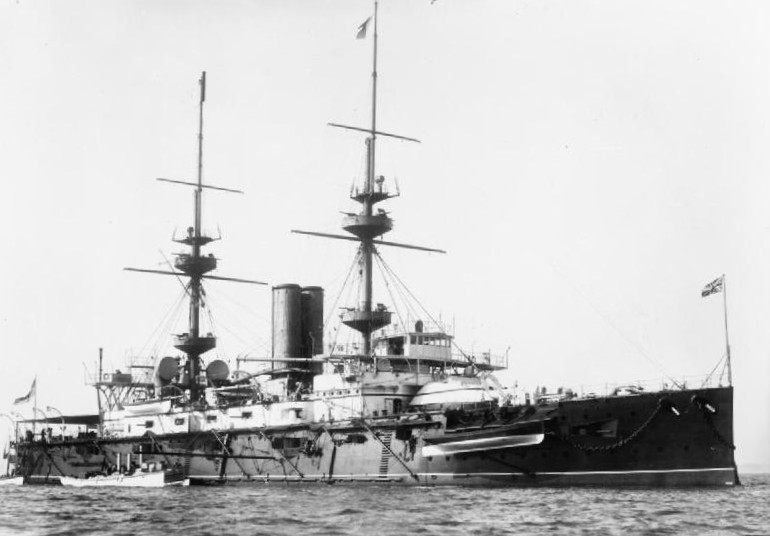
(IWM Photo, Q 39010)
HMS Hannibal at anchor at Spithead, 1898.
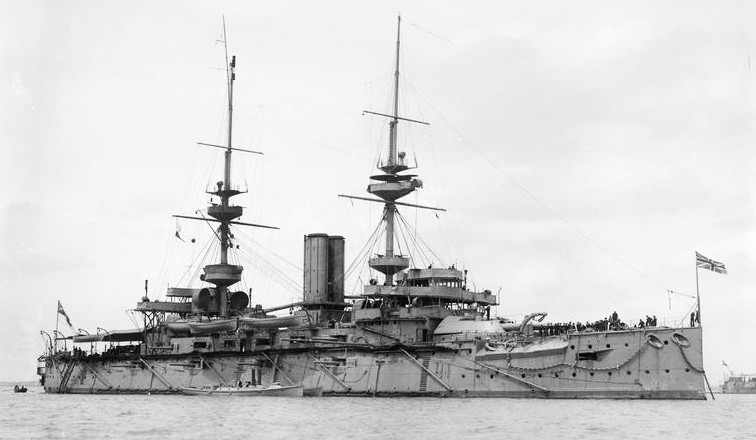
(IWM Photo, Q 21313)
HMS Hannibal.
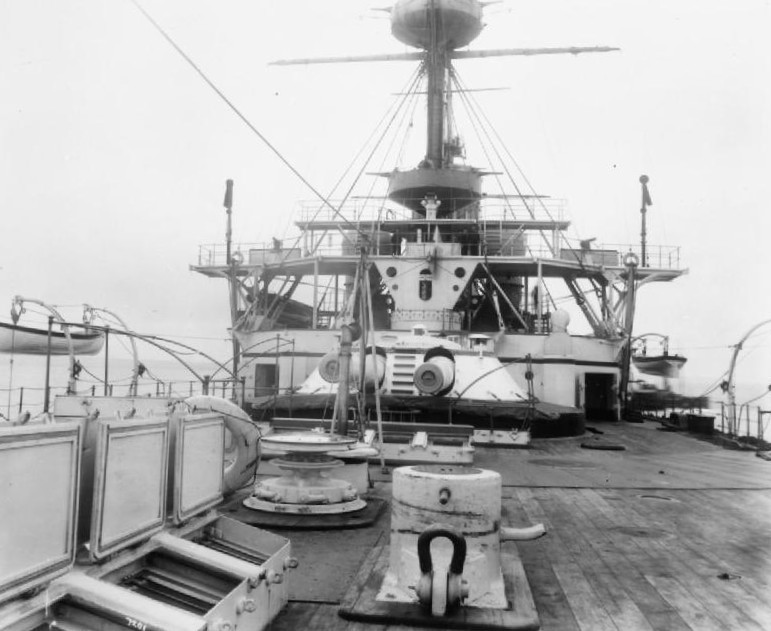
(IWM Photo, Q 39023)
View of ‘Y’ turret (12 inch Mk VIII guns) and after superstructure from the quarter-deck of HMS Hannibal.
HMS Illustrious
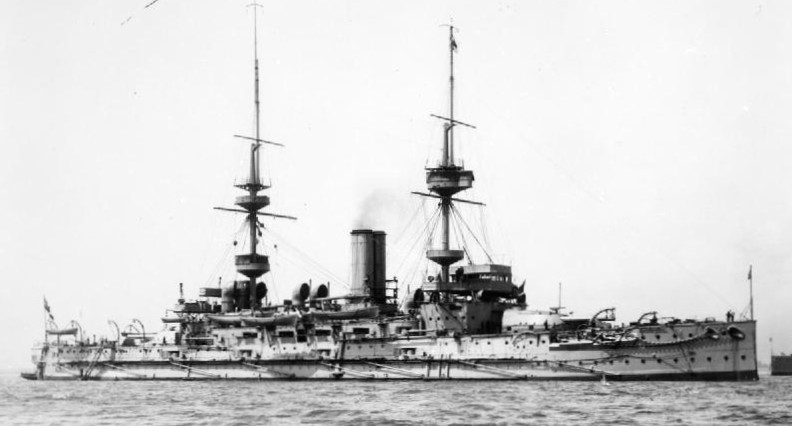
(IWM Photo, Q 39165, 1905)
The third HMS Illustrious of the British Royal Navy was a Majestic-class pre-dreadnought battleship. The ship was built at the Chatham Dockyard; her keel was laid down in March 1895, her completed hull was launched in September 1896, and she was commissioned into the fleet in April 1898. She was armed with a main battery of four 12-inch (305 mm) guns and a secondary battery of twelve 6-inch (152 mm) guns. The ship had a top speed of 16 knots (30 km/h; 18 mph).
Illustrious was assigned to the Mediterranean Fleet until 1904. Transferred to the Channel Fleet (which was subsequently reorganised to the Atlantic Fleet) she underwent a refit which was duly completed in early 1906. Rendered obsolete by the emergence of the new dreadnoughts, she served with the Home Fleet from 1908. One of the oldest battleships in the Royal Navy when the First World War broke out, she served as a guard ship at various regions around Northern England until late 1915. Her main armament was removed and she then served as a store ship for the remainder of the war. She was decommissioned in 1919 and scrapped the following year. (Wikipedia)
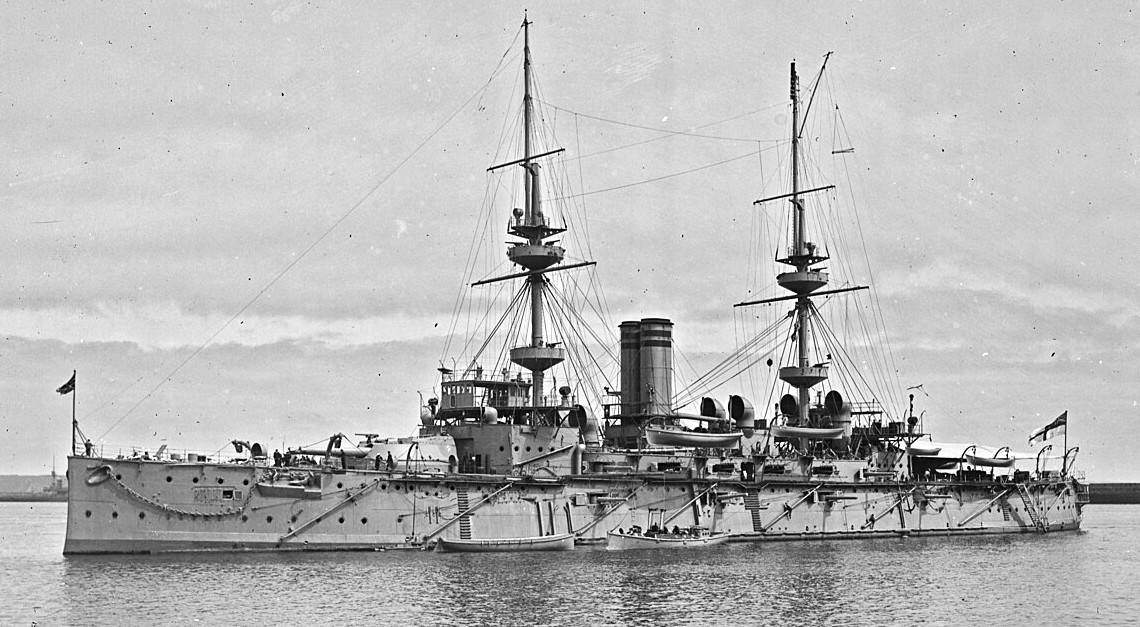
(Agence Rol Photo)
HMS Illustrious visiting Brest, France, 10 July 1895.
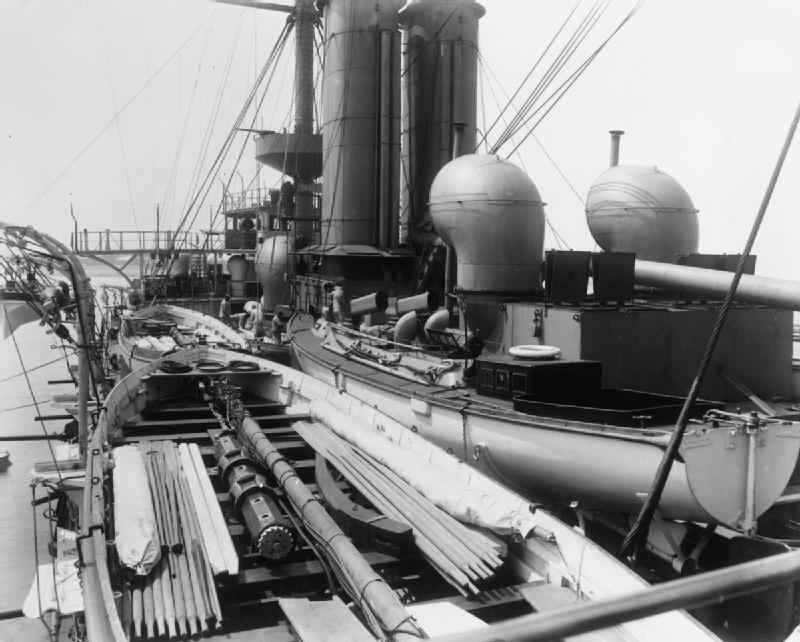
(IWM Photo, Q 39169)
Hms Illustrious View of port side of boat deck looking forward, 1898.
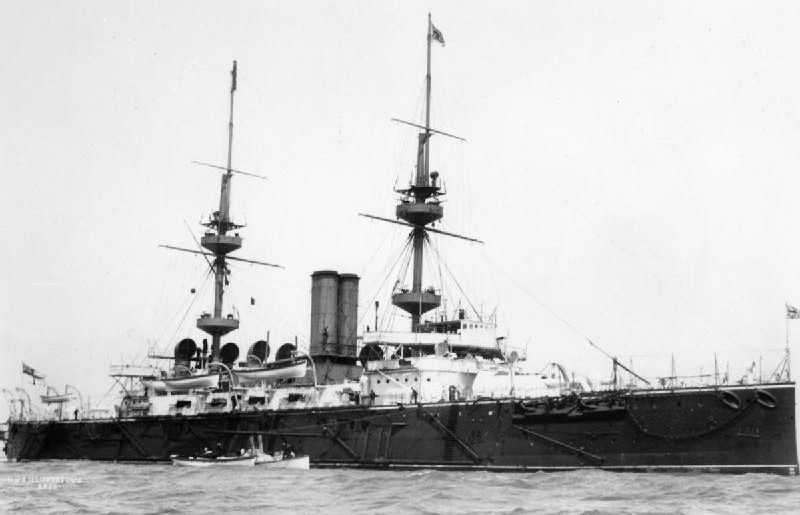
(IWM Photo, Q 39168)
HMS Illustrious at Spithead, 1898.
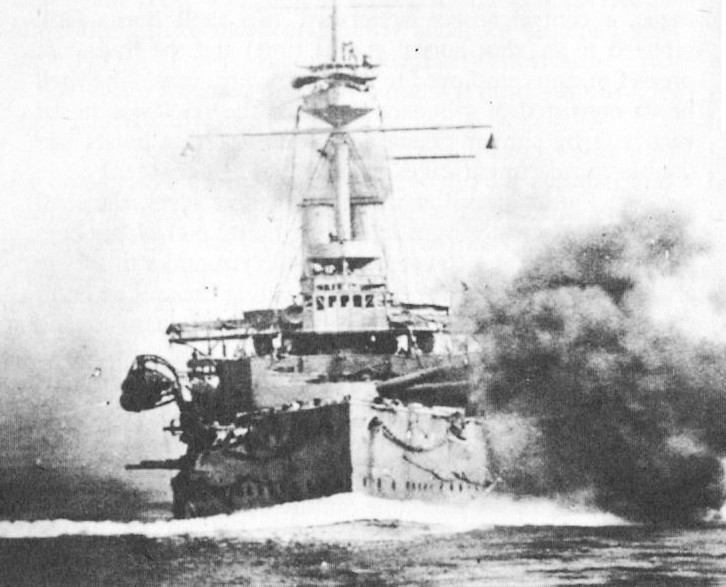
(Royal Navy Photo)
HMS Illustrious firing her Mk. VIII guns during gunnery practice, c1896.