
Imperial Japanese Navy light cruisers (Kei jun’yōkan): Tatsuta, Kuma, Tama, Kiso, Kitakami, Ōi, Nagara, Natori, Kinu, Yura, Isuzu, Abukuma, Sendai, Jintsu, Naka, Yūbari, Katori, Kashima, Kashii, Agano, Noshiro, Yahagi, Sakawa, Ōyodo, Ioshima, Yasoshima
Imperial Japanese Navy light cruiser Tatsuta
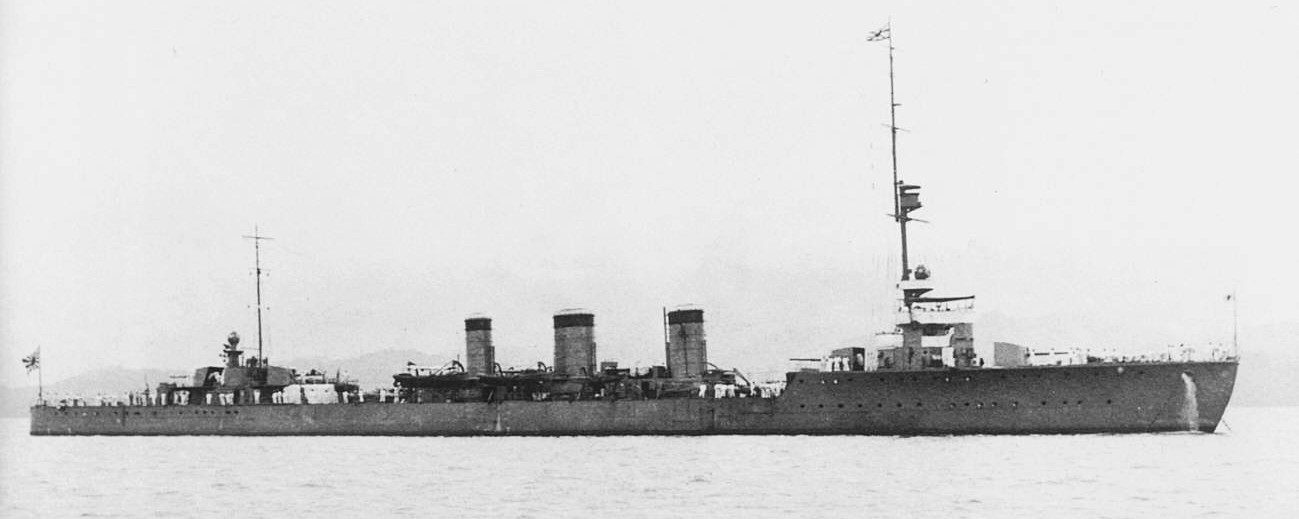
(IJN Photo, 1919)
Tatsuta. Sasebo Navy Yard Tenryū-class light cruiser 3,948, 31 May 1919, 13 March 1944; Sunk by USS Sand Lance east of Hachijojima.
Tatsuta (龍田) was the second ship in the two ship Tenryū class of light cruisers in the Imperial Japanese Navy (IJN). She was named after the Tatsuta River in Nara Prefecture, Japan. (Wikipedia)
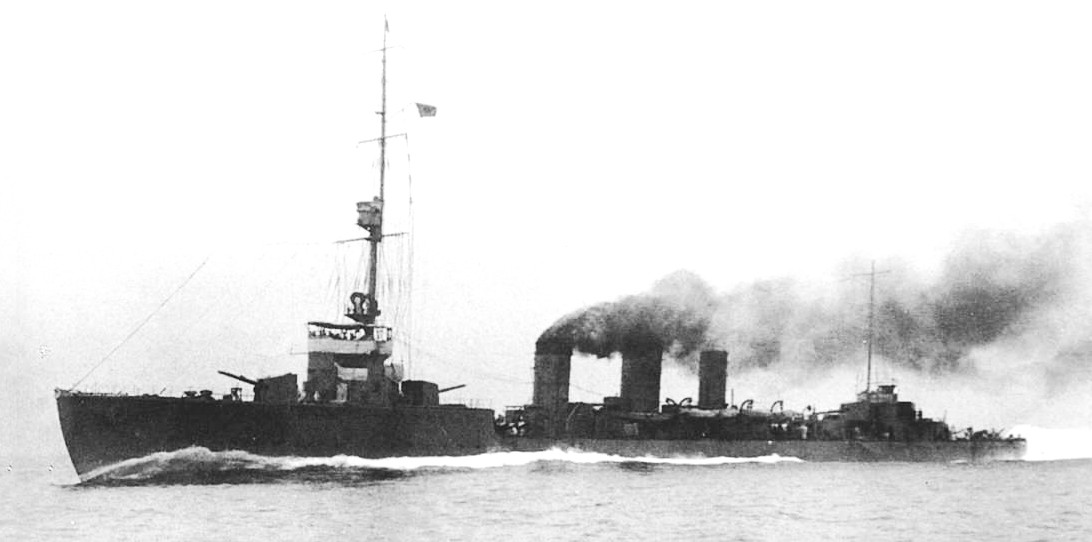
(IJN Photo)
Tatsuta, 1919.
Imperial Japanese Navy light cruiser Tenryū
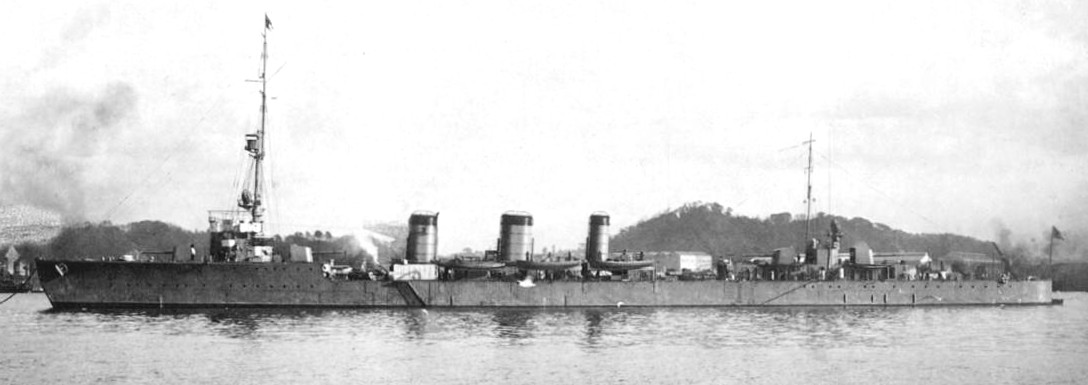
(IJN Photo, Yokosuka, 1919)
Tenryū. Yokosuka Naval Arsenal Tenryū-class light cruiser 3,948, 20 November 1919, 18 December 1942; Sunk by USS Albacore E of Madang.
Tenryū (天龍; Heavenly Dragon) was the lead ship in the two-ship Tenryū class of light cruisers of the Imperial Japanese Navy. Tenryū was named after the Tenryū River in Nagano and Shizuoka prefectures. (Wikipedia)
Imperial Japanese Navy light cruiser Kuma
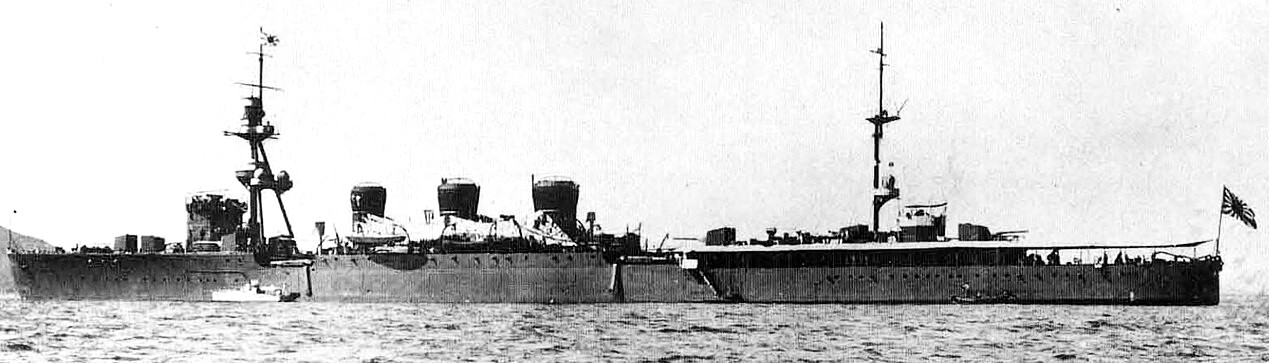
(Mikasa Memorial Museum, IJN Photo)
Japanese light cruiser Kuma on patrol off of Tsingtao, 1930.
Kuma. Sasebo Navy Yard Kuma-class light cruiser 5,100, 31 August 1920, 10 March 1944; Sunk by HMS Tally-Ho west of Penang.
Kuma (球磨) was a Kuma-class light cruiser in the Imperial Japanese Navy.[2] The lead vessel of the five ship class, she was named after the Kuma River in Kumamoto prefecture, Japan. (Wikipedia)
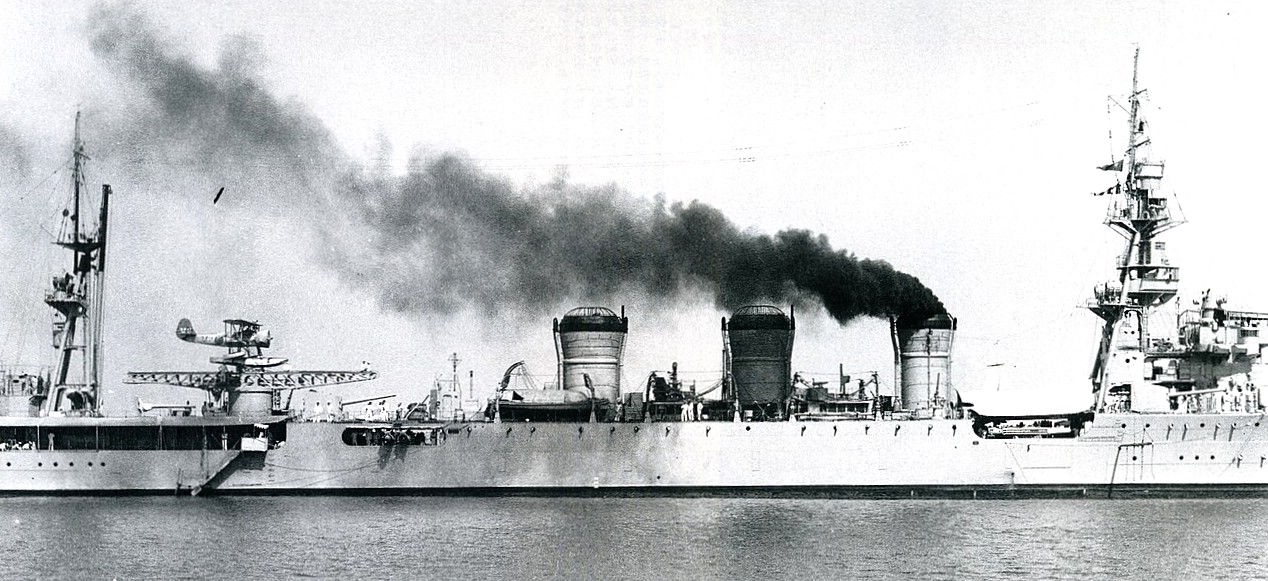
(IJN Photo)
Japanese light cruiser Kuma on patrol off of Tsingtao, 1935
Imperial Japanese Navy light cruiser Tama
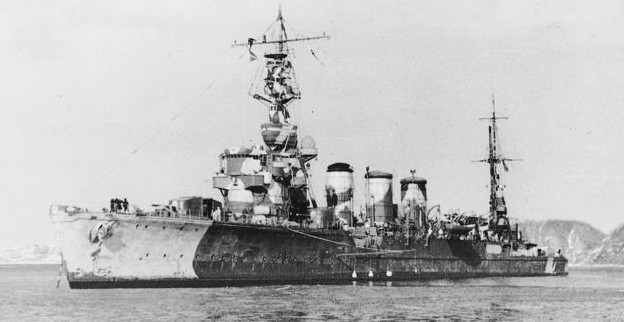
(IJN Photo)
Japanese light cruiser Tama showing arctic camouflage during the Aleutians Campaign, 1942.
Tama. Sasebo Navy Yard Kuma-class light cruiser 5,100, 29 January 1921, 25 October 1944; Sunk by USS Jallao northeast of Luzon.
Tama (多摩) was the second of the five Kuma-class light cruisers in the Imperial Japanese Navy, which played an active role in the Second World War. Tama was named after the Tama River in Kantō region of Japan. (Wikipedia)
Imperial Japanese Navy light cruiser Kiso
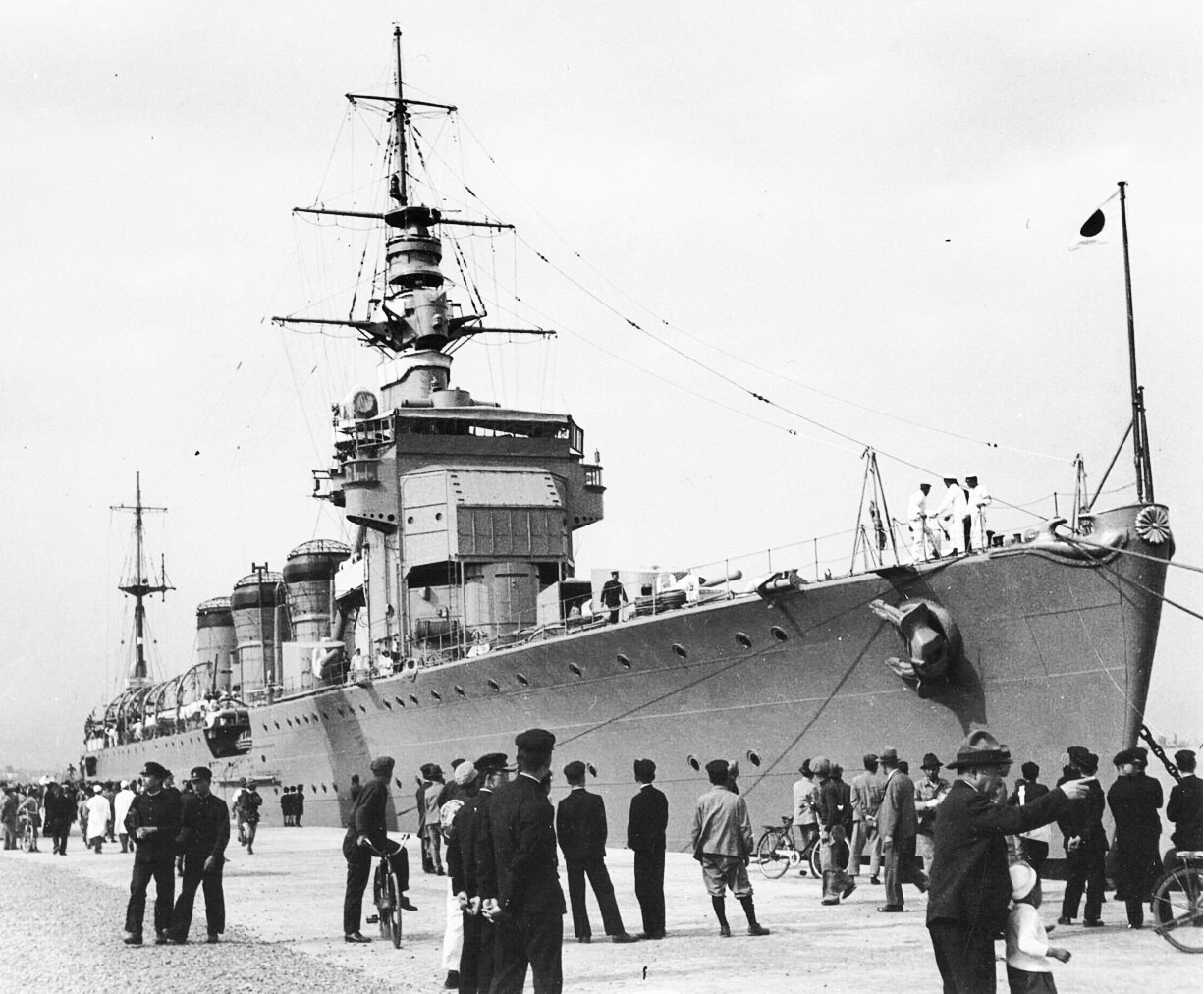
(IJN Photo)
Kiso at Shibura, 1937.
Kiso. Mitsubishi, Nagasaki Kuma-class light cruiser 5,100, 29 January 1921, 20 March 1944; Sunk by USN aircraft west of Cavite.
Kiso (木曾) was the fifth and last of the five Kuma-class light cruisers, which served with the Imperial Japanese Navy during the Second World War. She was named after the Kiso River in central Honshū, Japan. (Wikipedia)
Imperial Japanese Navy light cruiser Kitakami
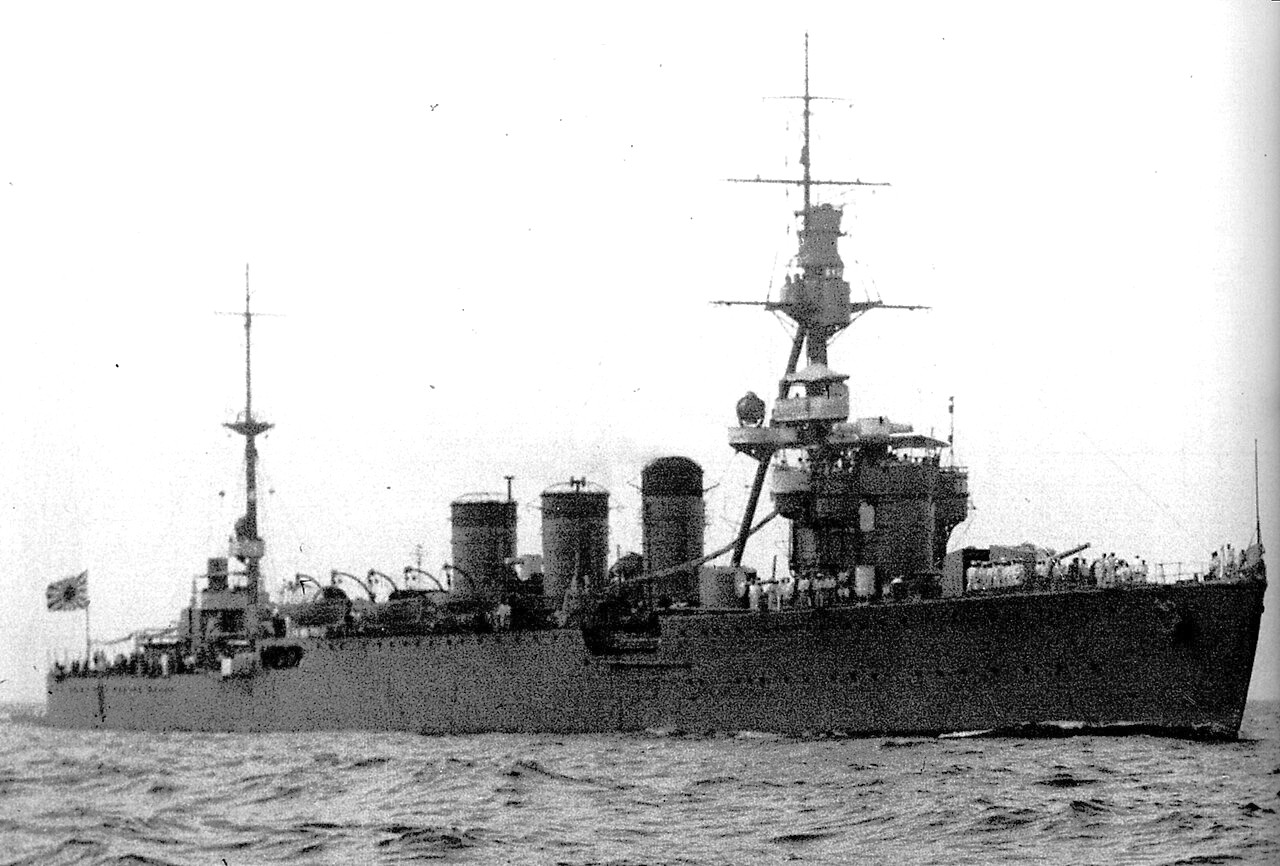
(IJN Photo)
Japanese light cruiser Kitakami off of Sasebo in 1935.
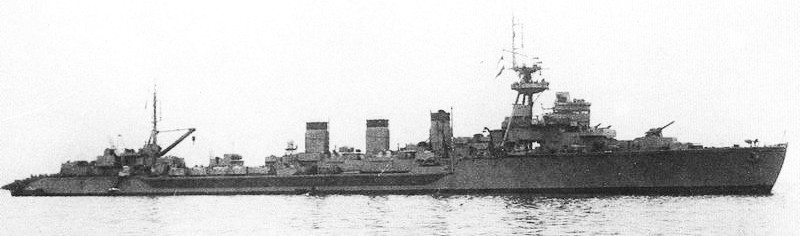
Kitakami. Sasebo Navy Yard Kuma-class light cruiser 5,100, 15 April 1921, 30 November 1945; scrapped 10 August 1946 – 31 March 1947.
Kitakami (北上) was a Kuma-class cruiser in the Imperial Japanese Navy, named after the Kitakami River in Iwate Prefecture, Japan.
(IJN Photo)
IJN cruiser Kitakami, 1945
Imperial Japanese Navy light cruiser Ōi
(IJN Photo)
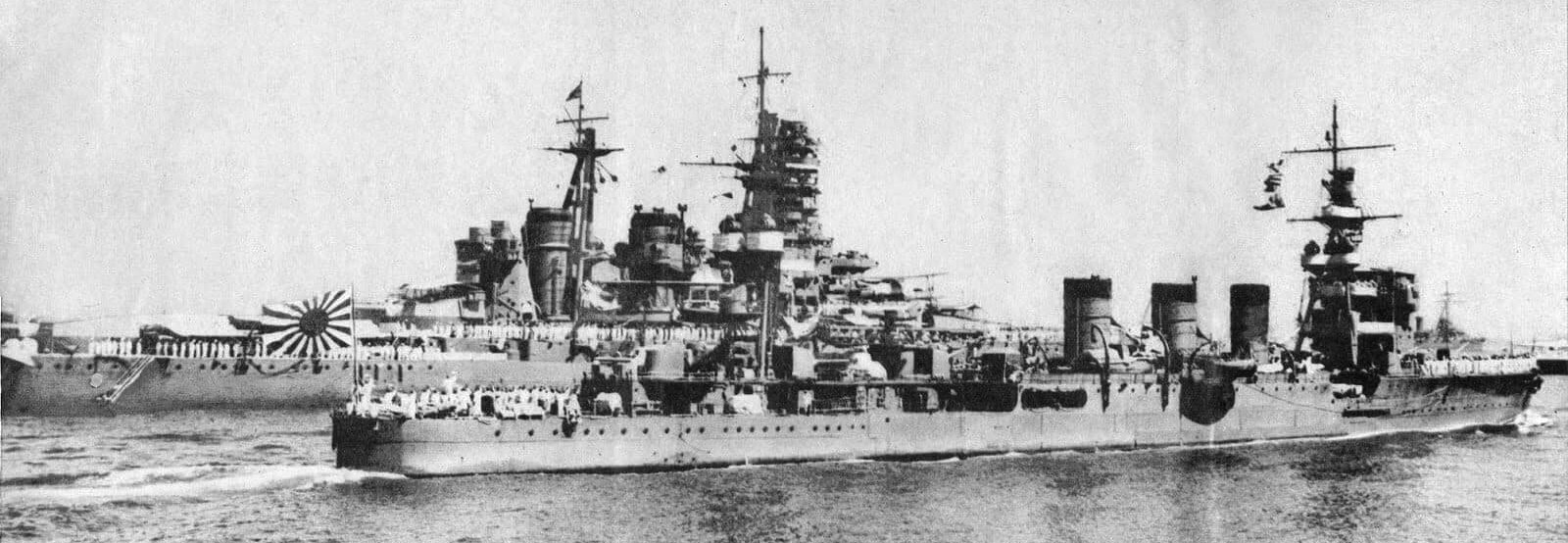
The Imperial Japanese Navy battleship Kongo and the light cruiser Oi departing Sasebo for the east China coast, 13 Aug 1937.
Ōi. Kawasaki, Kobe Kuma-class light cruiser 5,100, 10 October 1921, 19 July 1944; Sunk by USS Flasher south of Hong Kong.
Ōi (大井) was the fourth of five Kuma-class light cruiser, which served in the Imperial Japanese Navy during World War II. She was named after the Ōi River in Shizuoka prefecture, Japan. Designed as a command vessel for a destroyer squadron, she was converted into a torpedo cruiser with forty torpedo launch tubes in a plan abandoned by the Japanese Navy in 1942. During most of the Pacific War, she was used primarily as a fast troop transport and was sunk by a United States Navy submarine in 1944. (Wikipedia)
Imperial Japanese Navy light cruiser Nagara
(IJN Photo)
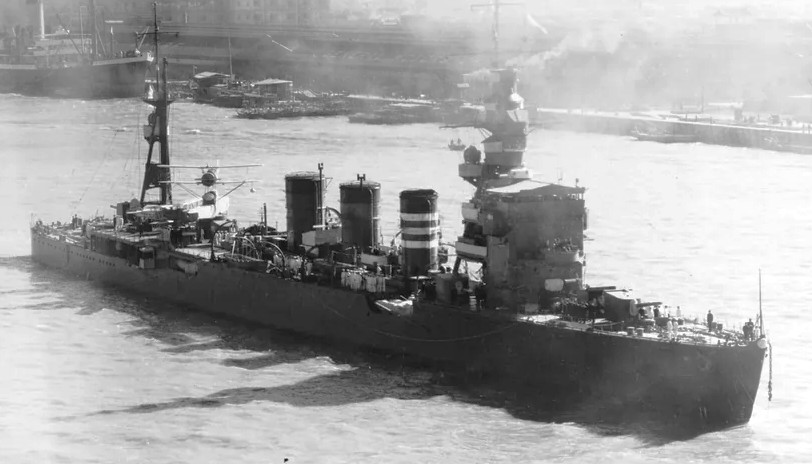
Nagara at Shanghai, 1936.
Nagara. Sasebo Navy Yard Nagara-class light cruiser 5,832, 21 April 1922, 7 August 1944; Sunk by USS Croaker off Amakusa.
Imperial Japanese Navy light cruiser Natori
(Mikasa Memorial Museum, IJN Photo)
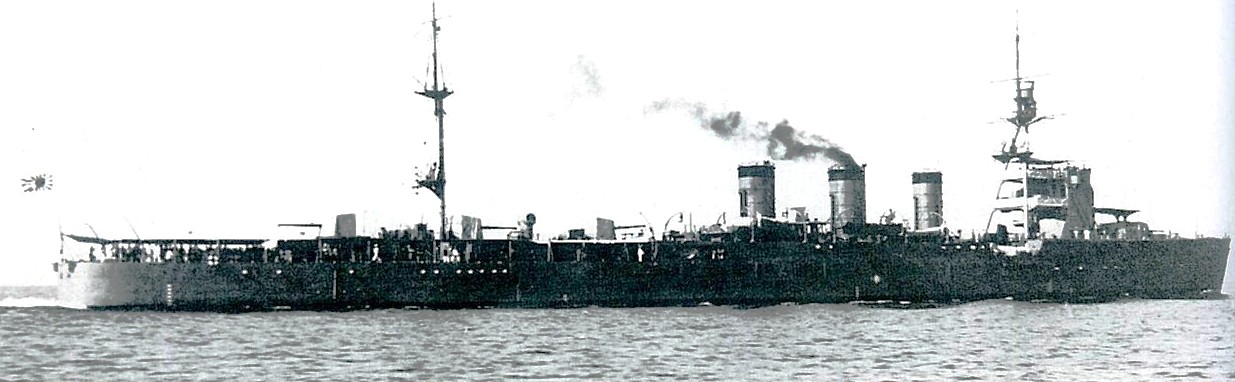
Imperial Japanese Navy light cruiser Natori off Nagasaki in 1922.
Natori. Mitsubishi, Nagasaki Nagara-class light cruiser 5,832, 15 September 1922, 18 August 1944; Sunk by USS Hardhead east of Samar.
Natori (名取) was a Nagara-class light cruiser in the Imperial Japanese Navy. The ship was named after the Natori River in Miyagi prefecture, Japan. Natori was the third vessel completed in the Nagara class of light cruisers. Like other vessels of her class, she was intended for use as the flagship of a destroyer flotilla. (Wikipedia)
Imperial Japanese Navy light cruiser Kinu
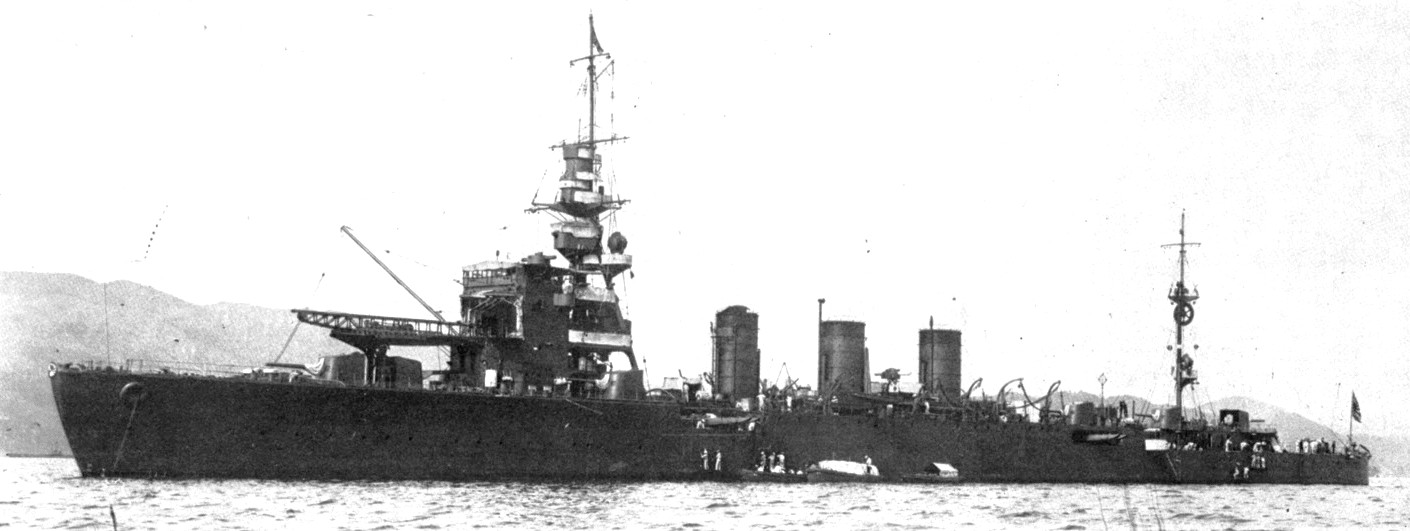
(Mikasa Memorial Museum, IJN Photo)
Kinu off Kyushu in 1931.
Kinu. Kawasaki, Kobe Nagara-class light cruiser 5,832, 10 November 1922, 26 October 1944; Sunk by USN aircraft in Sibuyan Sea.
Kinu (鬼怒) was the fifth of the six ships completed Nagara-class light cruiser in the Imperial Japanese Navy, named after the Kinu River in Tochigi prefecture Japan. She was active in the Second World War in various campaigns in Malaya, the Dutch East Indies and New Guinea before being sunk by United States Navy carrier-based aircraft in the Philippines in 1944. (Wikipedia)
Imperial Japanese Navy light cruiser Yura
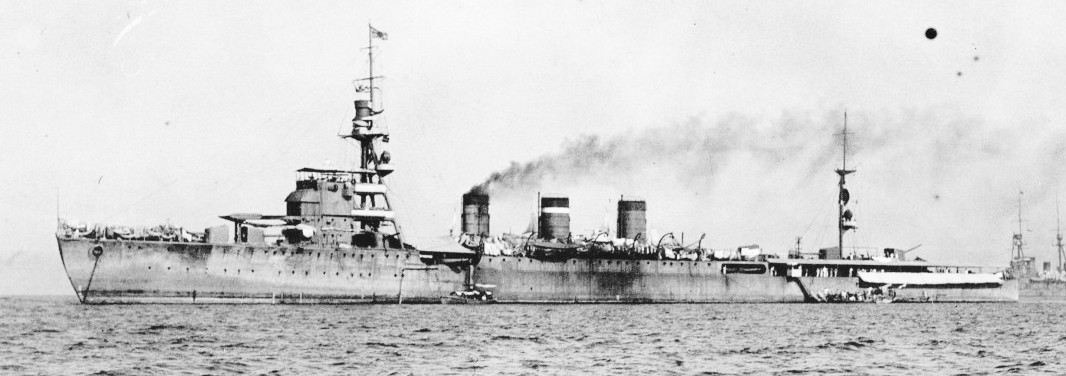
(IJN Photo)
Yura anchored in Tateyama Bay in early August 1923
Yura. Sasebo Navy Yard Nagara-class light cruiser 5,832, 20 March 1923, 25 October 1942; Scuttled off Savo Island after bombing by USAAF.
Yura (由良) was the fourth of the six ships completed in the Nagara class of light cruisers for the Imperial Japanese Navy (IJN), and like other vessels of her class, she was intended for use as the flagship of a destroyer flotilla. She served in the early stages of the Second World War.
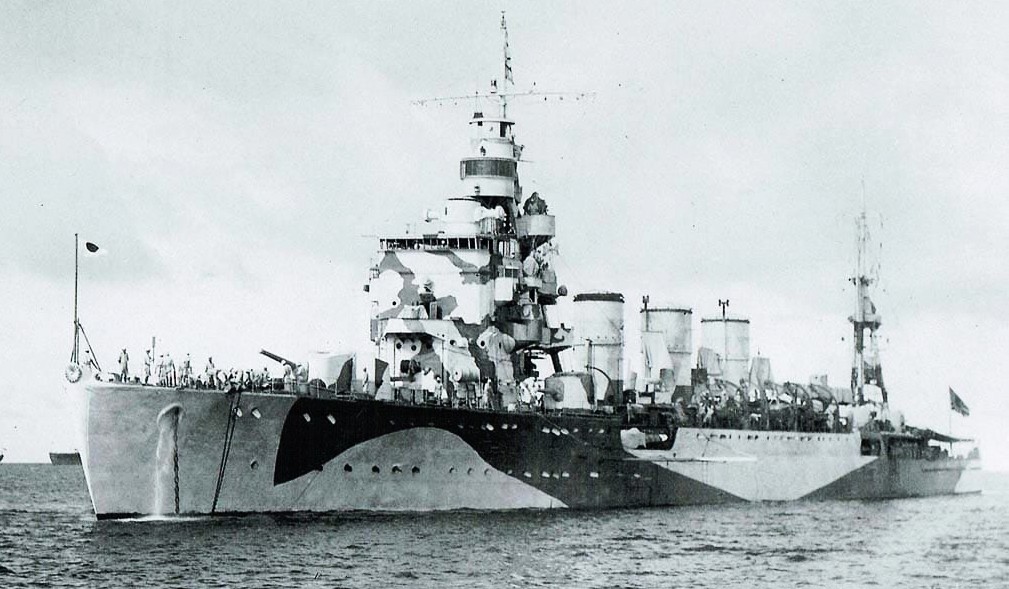
(IJN Photo)
Yura at anchor, 1942.
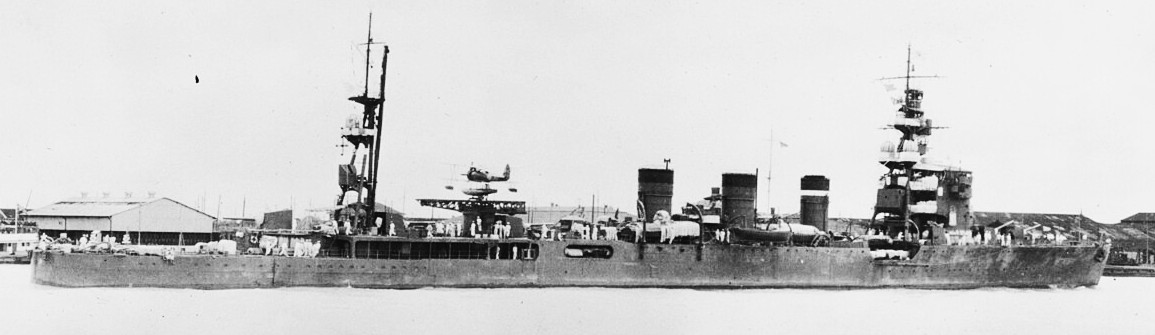
(IJN Photo)
Yura, 18 August 1932.
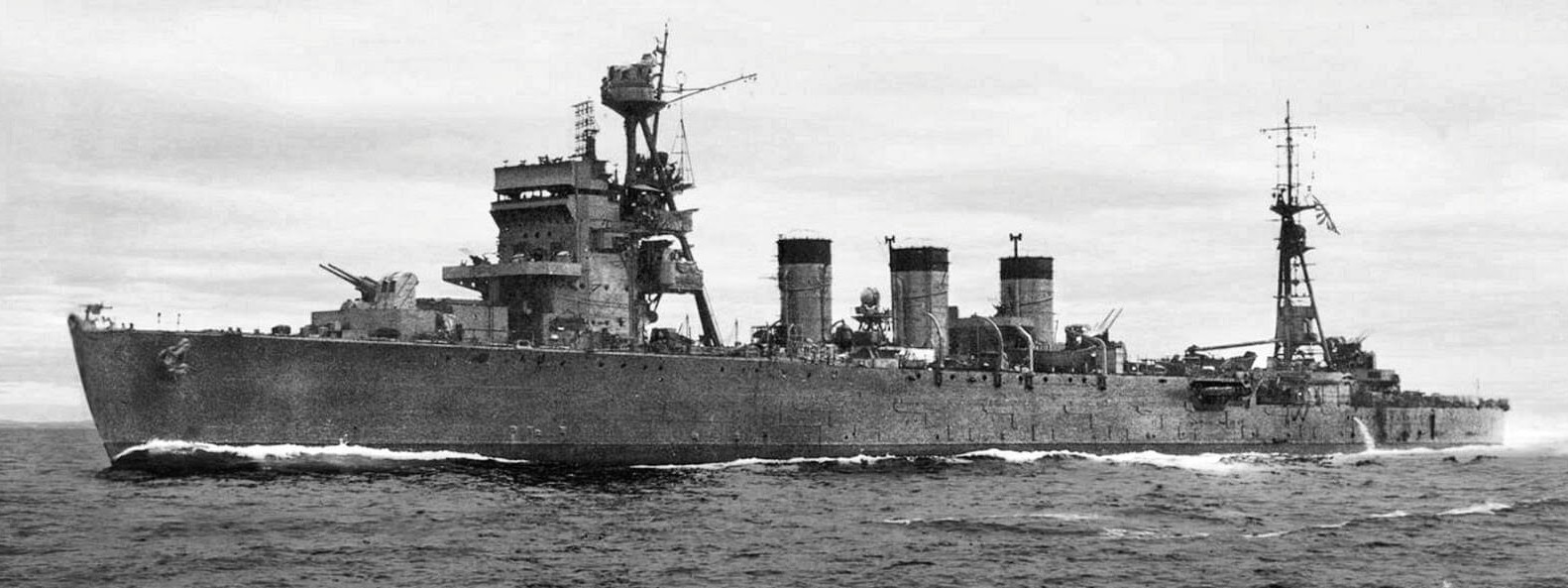
Imperial Japanese Navy light cruiser Isuzu
(IJN Photo)
Isuzu after modification at Mitsubishi Yokohama in 1944.
Isuzu. Uraga Dock Company Nagara-class light cruiser 5,832, 15 August 1923, 7 April 1945; Sunk by USN submarines off Sumbawa.
Isuzu (五十鈴) was the second of six vessels in the Nagara class of light cruisers, and like other vessels of her class, she was intended for use as the flagship of a destroyer flotilla. She was named after the Isuzu River, near Ise Shrine in the Chūbu region of Japan. She saw action during the Second World War in the Battle of Hong Kong and in the Solomon Islands campaign, and the Battle of Leyte Gulf before being sunk by American submarines in the Netherlands East Indies in April 1945. (Wikipedia)
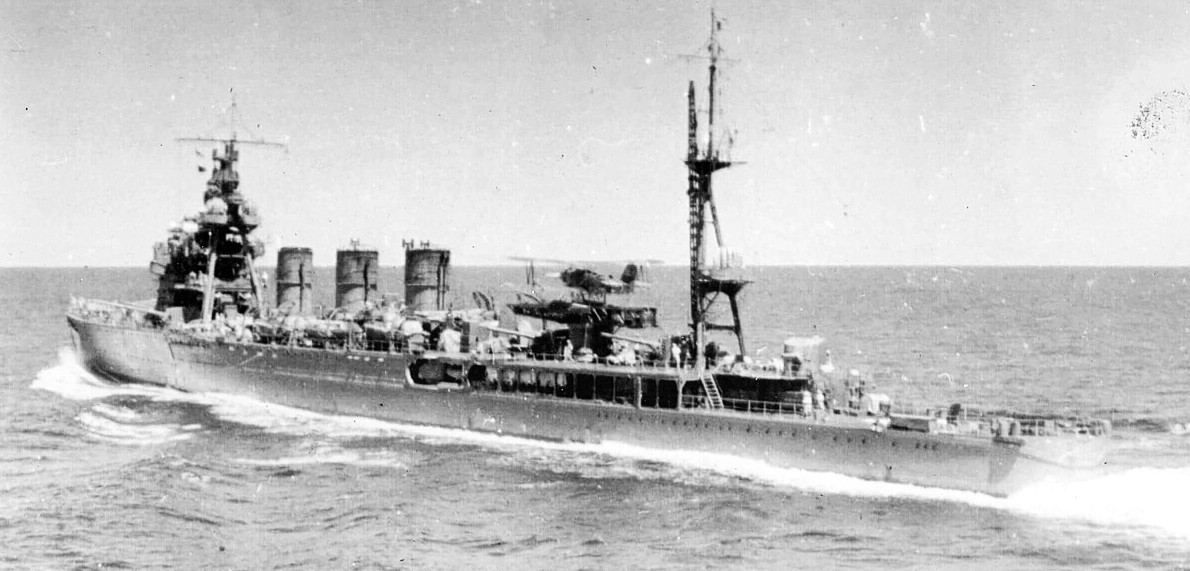
Imperial Japanese Navy light cruiser Abukuma
(Imperial Japanese Navy Photo)
IJN Abukuma in 1941, shortly before sailing on the Pearl Harbor raid. This photo clearly shows the seaplane catapult with E7K (“Alf”) floatplane mounted and ready to launch
Abukuma. Uraga Dock Company Nagara-class light cruiser 5,832 26 May 192526 October 1944; Sunk by USAAF aircraft off Negros Island. Abukuma (阿武隈) was the sixth and last of the Nagara class of light cruisers completed for the Imperial Japanese Navy (IJN), and like other vessels of her class, she was intended for use as the flagship of a destroyer flotilla. She was named after the Abukuma River in the Tōhoku region of Japan. She saw action during the Second World War in the Attack on Pearl Harbor and in the Pacific, before being disabled in the Battle of Surigao Strait in October 1944, then bombed and sunk by the United States Army Air Forces (USAAF) off the coast of the Philippines. (Wikipedia)
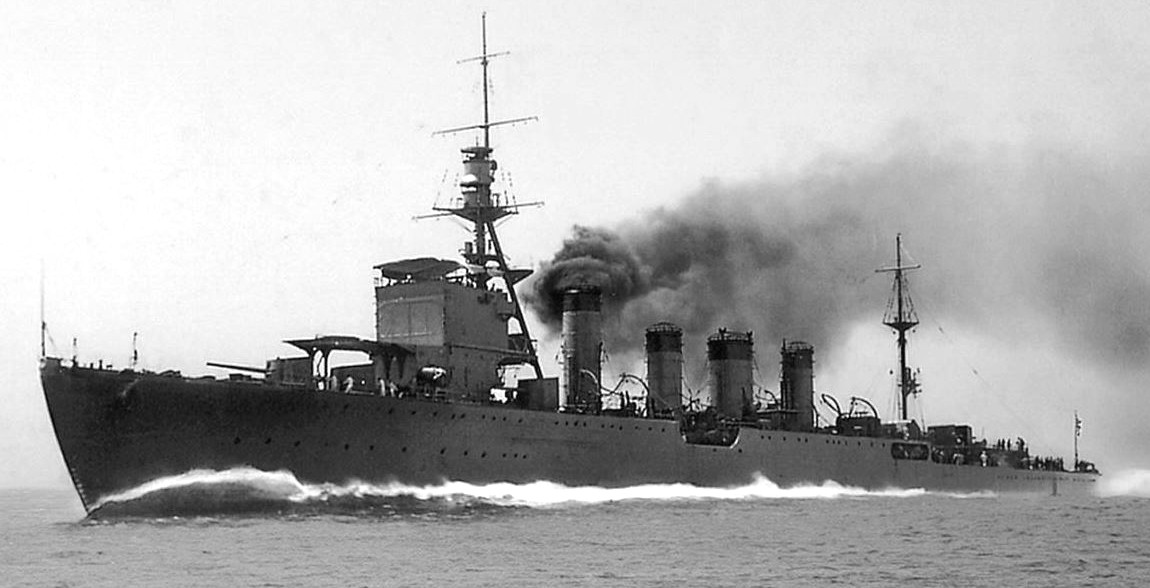
Imperial Japanese Navy light cruiser Sendai
(IJN Photo)
Sendai. Mitsubishi, Nagasaki Sendai-class light cruiser 5,195, 29 April 1924, 3 November 1943; Sunk by USN cruisers at Empress Augusta Bay.
Sendai (川内 軽巡洋艦, Sendai keijun’yōkan) was a Sendai-class light cruiser in the Imperial Japanese Navy. She was named after the Sendai River in southern Kyūshū. Sendai was the lead ship of the three vessels completed in her class of light cruisers, and like other vessels of her class, she was intended for use as the flagship of a destroyer flotilla. (Wikipedia)
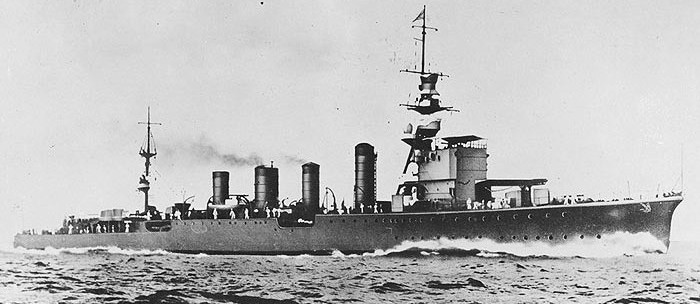
Imperial Japanese Navy light cruiser Jintsu
(IJN Photo)
Jintsu underway.
Jintsu. Kawasaki, Kobe Sendai-class light cruiser 5,195, 31 July 1925, 13 July 1943; Sunk by USN cruisers off Kolombangara.
Jintsū (神通) was the second vessel completed in the three-ship Sendai-class light cruiser in the Imperial Japanese Navy (IJN), named after the Jinzū River in the Gifu and Toyama prefectures of central Japan.[2] She was active in the Second World War in various campaigns including the Japanese invasion of the Philippines, the Battle of the Java Sea, and Battle of Midway. On 13 July 1943 in the Battle of Kolombangara, she was discovered during a night attack by American ships and sunk in combat. (Wikipedia)
Imperial Japanese Navy light cruiser Naka
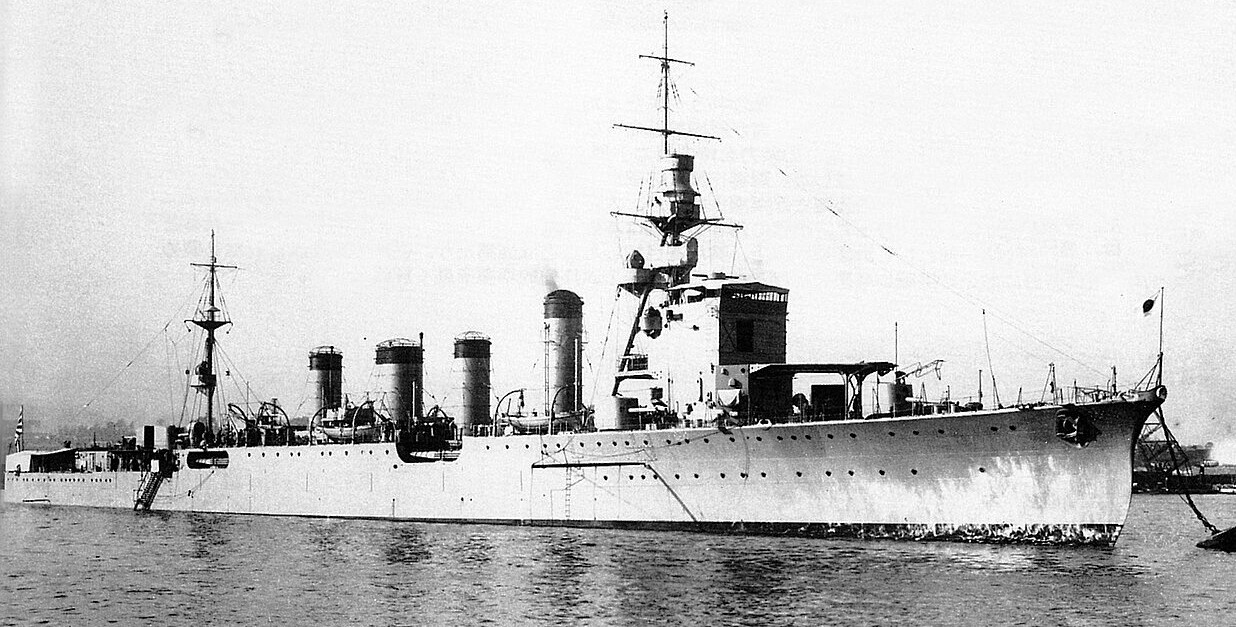
(IJN Photo)
Naka prior to commissioning at Yokohama, November 1925.
Naka. Sasebo Navy Yard Sendai-class light cruiser 5,195, 30 November 1925, 18 February 1944; Sunk by USN aircraft off Truk.
Naka (那珂) was a Sendai-class light cruiser in the Imperial Japanese Navy (IJN), named after the Naka River in the Tochigi and Ibaraki prefectures of eastern Japan. Naka was the third (and final) vessel completed in the Sendai class of light cruisers, and like other vessels of her class, she was intended for use as the flagship of a destroyer flotilla.
Imperial Japanese Navy light cruiser Yūbari
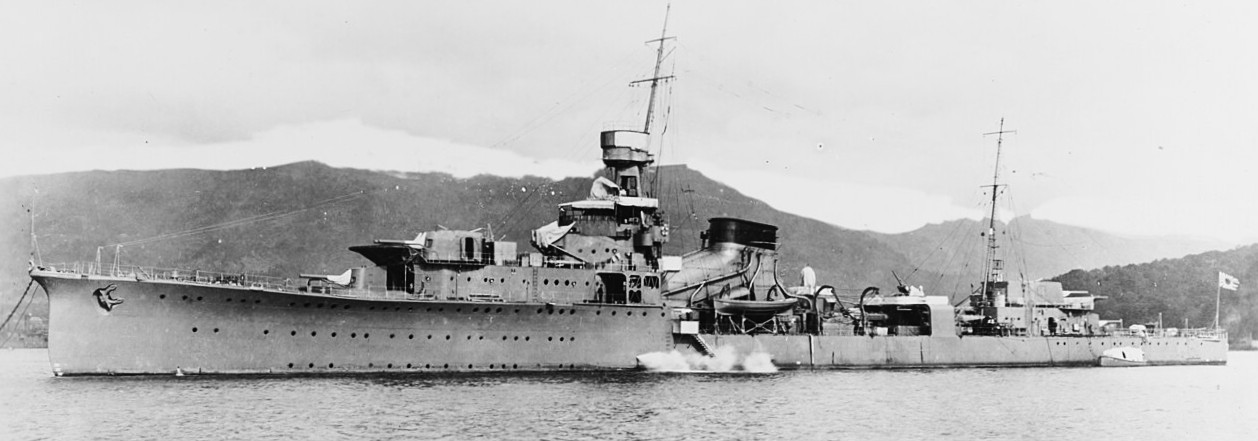
(National Archives Photo)
Yūbari, 15 November 1924.
Yūbari. Sasebo Navy Yard Yūbari-class light cruiser 2,840, 23 July 1923, 28 April 1944; Sunk by USS Bluegill off Palau.
Yūbari (夕張) was an experimental light cruiser built during the early 1920s for the Imperial Japanese Navy (IJN) to test new concepts for reducing the hull’s weight while strengthening it. Designs pioneered on Yūbari had a major impact on future Japanese warship designs. Completed in 1923, the ship was generally used as the flagship for destroyer squadrons. She spent large portions of her peacetime career in reserve or used as a training ship. The ship participated in the First Shanghai Incident in 1932 and the Second Sino-Japanese War in 1937 before the Second World War. During the war Yūbari was the flagship of the forces involved in the Battle of Wake Island and was then sent south to support the invasion of Rabaul in early 1942. She played a small role during the Battle of the Coral Sea as the flagship of the forces intended to invade Port Moresby, New Guinea. At the beginning of the Solomon Islands campaign, Yūbari escorted the forces that made the initial landings on the island of Guadalcanal in July. A few days after the Americans attacked the island in August, the ship participated in the Battle of Savo Island where she crippled an American heavy cruiser and a destroyer.
Yūbari spent the rest of the year on escort duties and she played a small role in the Battle of New Georgia in mid-1943 as she bombarded Allied forces a few days after they landed on the island. The ship struck a mine on the return journey and had to return to Japan for repairs that lasted for several months. After her return to the Guadalcanal area in November, she made several Tokyo Express runs to deliver reinforcements and supplies. Yūbari was damaged by several American airstrikes at Rabaul later that month and had to return again to Japan for repairs that lasted until March 1944. The ship was tasked to deliver supplies and troops to Japanese outposts in April and was sunk by an American submarine later that month. (Wikipedia)
Imperial Japanese Navy light cruiser Katori
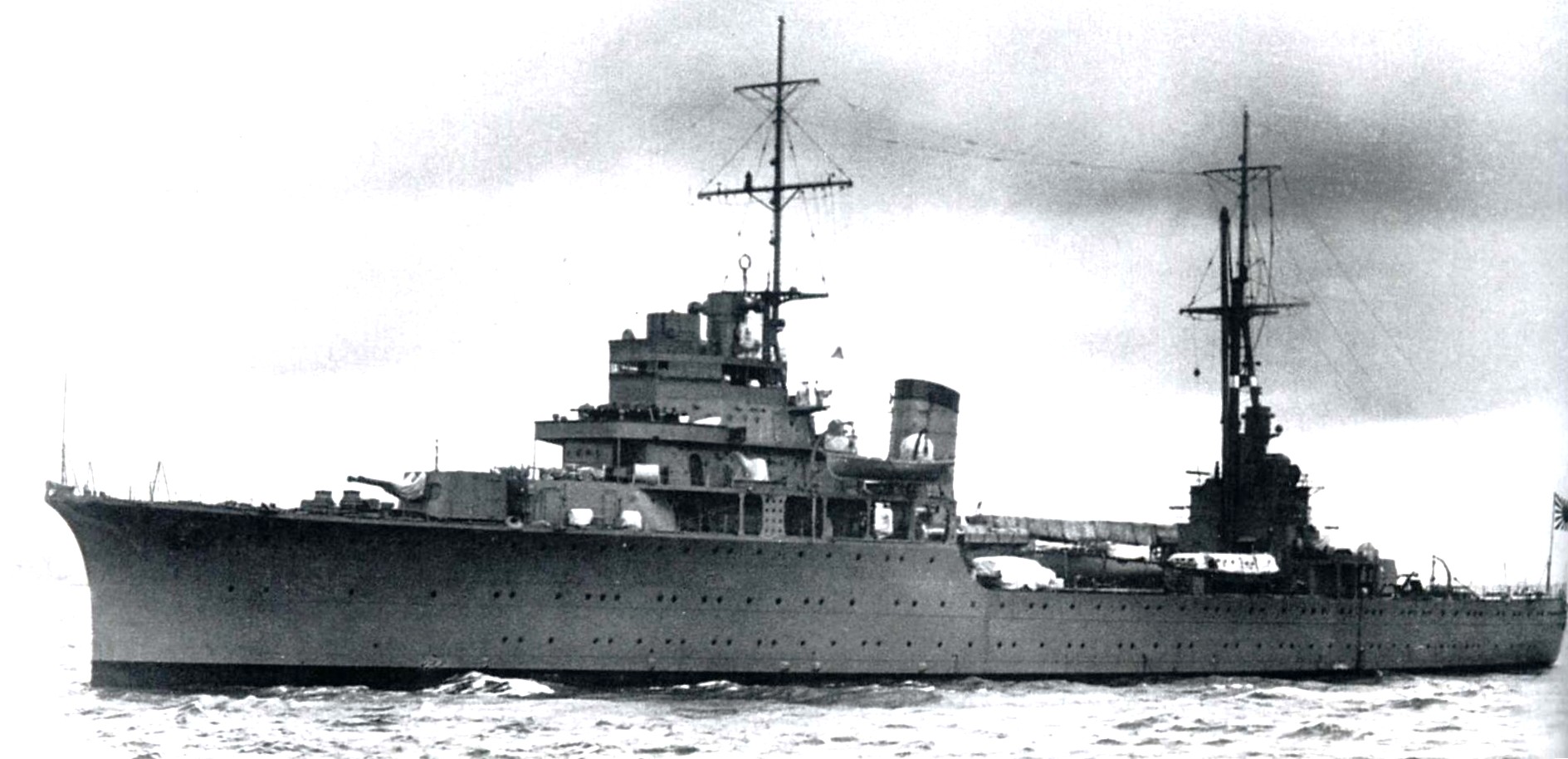
(IJN Photo)
Katori commissioning at Yokohama, 20 April 1940.
Katori. Mitsubishi, Yokohama Katori-class training cruiser 5,890, 20 April 1940. 18 February 1944; Sunk by USS Iowa off Truk.
Katori (香取) was the lead ship of the Katori class of three light cruisers which served with the Imperial Japanese Navy during the Second World War. The ship was named after the noted Shinto Katori Shrine in Chiba prefecture, Japan. (Wikipedia)
Imperial Japanese Navy light cruiser Kashima
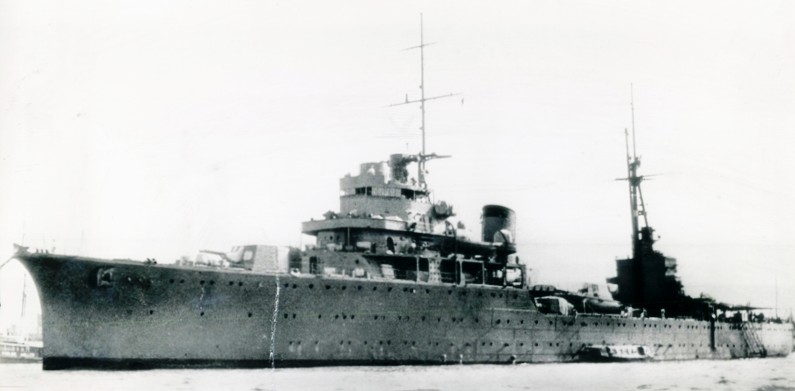
(IJN Photo)
Kashima. Mitsubishi, Yokohama Katori-class training cruiser 5,890, 31 May1940 5 October 1945; scrapped.
Kashima (鹿島 練習巡洋艦, Kashima renshūjunyōkan) was the second vessel completed of the three light cruisers in the Katori class, which served with the Imperial Japanese Navy during the Second World War. The ship was named after the noted Shinto shrine Kashima Jingu in Ibaraki prefecture, Japan. (Wikipedia)
Imperial Japanese Navy light cruiser Kashii
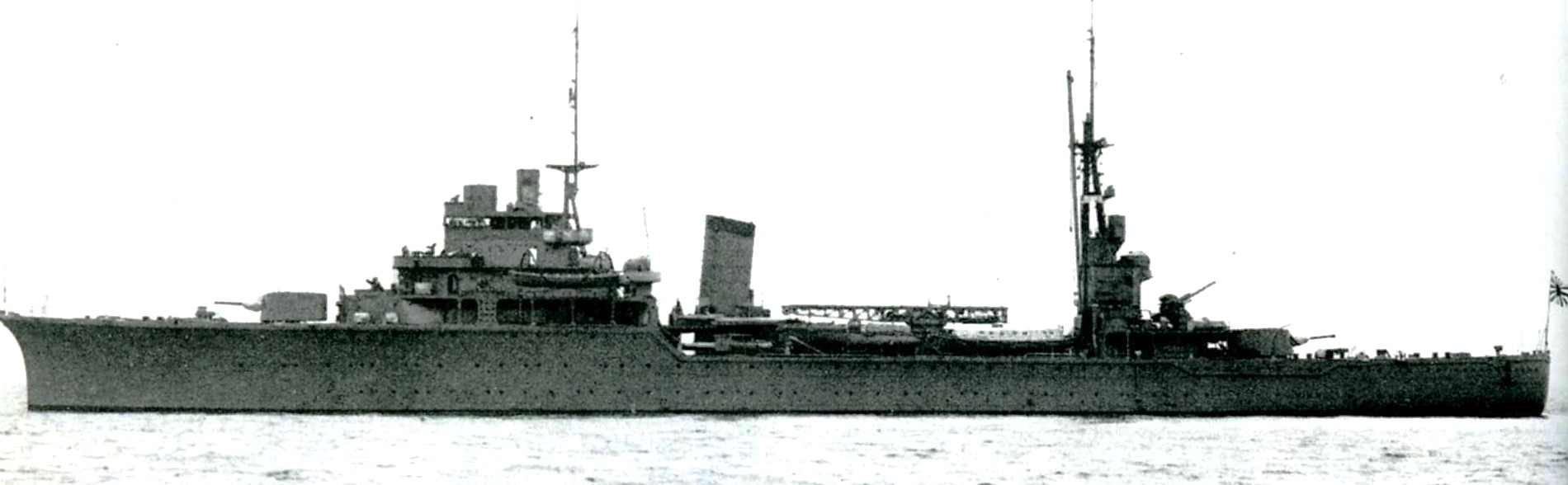
(IJN Photo)
Kashii commissioning at Yokohama, 15 July 1941.
Kashii. Mitsubishi, Yokohama Katori-class training cruiser 5,890 15 July 1941, 20 March 1945; Sunk by USN aircraft, South China Sea.
Kashii (香椎 練習巡洋艦, Kashii renshūjunyōkan; “Kashii training cruiser”) was the third and last Katori-class cruiser completed for the Imperial Japanese Navy (IJN) during the Second World War. The ship was named after Kashii-gū, a Shinto shrine in Fukuoka, Japan. (Wikipedia)
Imperial Japanese Navy light cruiser Agano
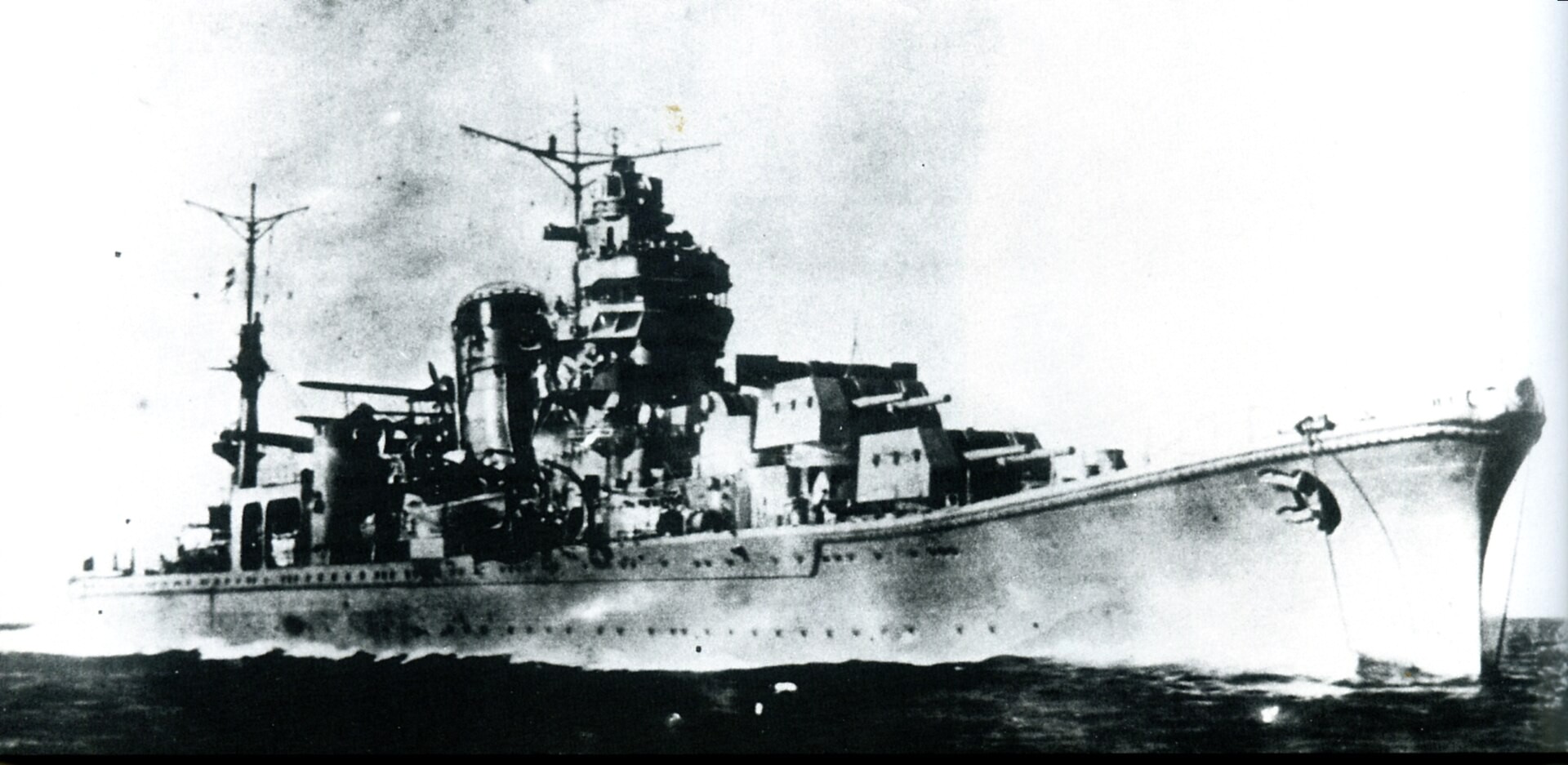
(IJN Photo)
Agano off Sasebo in October 1942.
Agano. Sasebo Navy Yard Agano-class light cruiser 6,650, 31 October 1942, 15 February 1944; Sunk by USS Skate north of Truk.
Agano (阿賀野) was the lead ship of her class of four light cruisers built for the Imperial Japanese Navy (IJN) during World War II. Completed in 1942, she escorted a troop convoy to New Guinea in December. In early 1943 the ship participated in Operation Ke, the evacuation of Japanese troops from Guadalcanal. Six months later Agano transported troops and supplies to New Guinea and she played a role in the Battle of Empress Augusta Bay in early November where she damaged the destroyer USS Spence. A few weeks later, the ship was badly damaged by American airstrikes and she sailed for Truk under her own power the following day. While en route, Agano was torpedoed by an American submarine and had to be towed to her destination. After several months of repairs, she left for Japan, but was intercepted and sunk by another American submarine in February 1944. Most of her crew was rescued by her escorting destroyer, but that ship was sunk with the loss of most of her crew and all of Agano’s survivors by an American airstrike the following day. (Wikipedia)
Imperial Japanese Navy light cruiser Noshiro
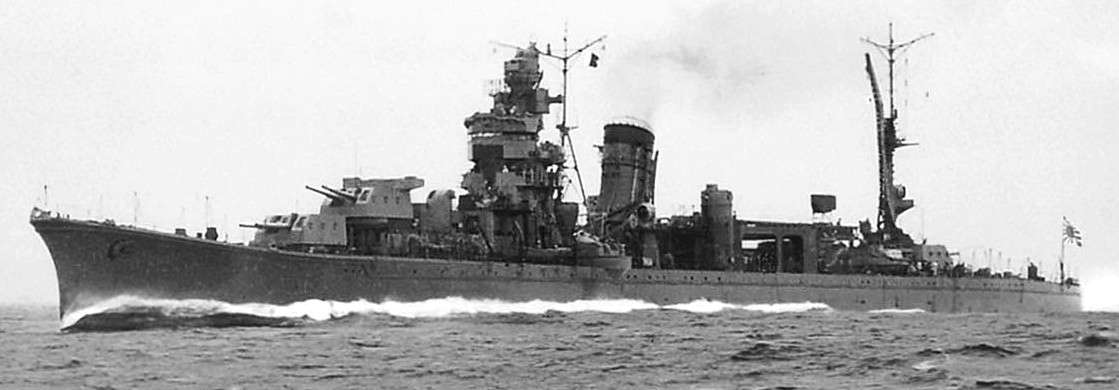
(IJN Photo)
Noshiro. Mitsubishi, Nagasaki Agano-class light cruiser 6,652, 30 June 1943, 26 October 1944; Sunk by USN aircraft south of Mindoro.
The Japanese light cruiser Noshiro in Tokyo Bay in July 1943. Commissioned on June 30th 1943. She was sunk October 26th 1944 south of Mindoro Sulu Sea. Although attacked by Grumman TBF Avengers from the aircraft carriers USS Wasp and Cowpens and badly damaged, she finished off by Avengers and 3 Helldiver dive bombers from the USS Hornet.
Noshiro participated in the sinking of the carrier USS Gambier Bay which was one of two cases of an aircraft carrier being sunk solely by naval gunfire the other being HMS Glorious by the Kriegsmarine battleship Scharnhorst. Saying that the Japanese light aircraft carrier Chiyoda was finished off by gunfire from four cruisers, USS Santa Fe, USS Mobile, USS Wichita and USS New Orleans, along with nine destroyers.
Imperial Japanese Navy light cruiser Yahagi
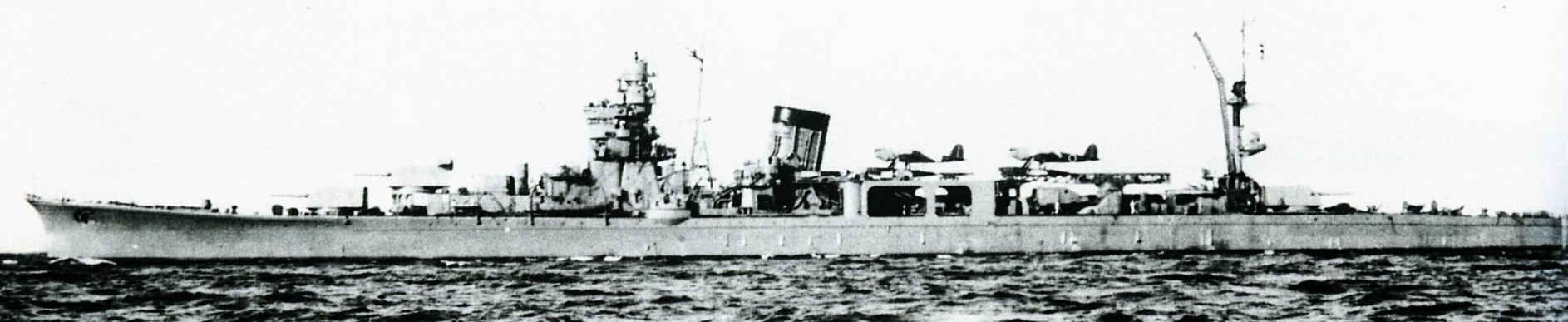
(Mikasa Memorial Museum, IJN Photo)
Yahagi underway off Sasebo, Japan, in December 1943.
Yahagi. Sasebo Navy Yard Agano-class light cruiser 6,650, 29 December1943, 7 April 1945; Sunk by USN aircraft south of Kagoshima.
Yahagi (矢矧) was an Agano-class cruiser which served with the Imperial Japanese Navy (IJN) during World War II. Yahagi served a short but notable career, escorting aircraft carriers at the battle of the Philippine Sea in June 1944, before serving in the battle of Leyte Gulf later that October where she helped to sink the destroyer USS Johnston.
In April 1945, Yahagi served as the largest escort to the Yamato – the largest and most powerful battleship ever constructed – during her doomed final mission. Ultimately, the formation was attacked by nearly 400 American carrier aircraft, and Yahagi was sunk to 12 bombs and 7 torpedoes, joining Yamato and four destroyers. Captain Tameichi Hara survived Yahagi’s sinking and detailed her final mission in his autobiography “Japanese Destroyer Captain”. (Wikipedia)
Built at Sasebo Naval Arsenal, Yahagi was laid down on 11 November 1941, launched on 25 October 1942 and completed on 29 December 1943. On completion, she was assigned as Vice Admiral Ozawa Jisaburō’s flagship of Destroyer Squadron 10 of the IJN 3rd Fleet. From 1-5 January 1944, Yahagi conducted battle exercises before being dry-docked in Sasebo, where she was refitted with type 21 surface-search radar, before spending the rest of January transiting between Japanese home ports. From February to May, she was dispatched to Singapore for training and for patrols of the Lingga Islands.
On 11 May, Yahagi departed Lingga for Tawi Tawi as part of Admiral Jisaburo Ozawa’s “First Carrier Striking Force” to oppose the American Fifth Fleet in a “decisive battle” off Saipan. Yahagi was command ship for DesDiv 10’s Asagumo, DesDiv 17’s Urakaze, Isokaze and Tanikaze, and DesDiv 61’s Wakatsuki, Hatsuzuki, Akizuki and Shimotsuki, screening the aircraft carriers. On the 15th, Yahagi conducted training exercises and remained on Tawi Tawi for the rest of the month, eventually being resupplied by the store ship Kitakami Maru on 8 June.
On the 13th, the order from Tokyo was sent to begin Operation A-GO, where Japan’s aircraft carrier fleet would protect the Marianas from allied invasion in what would hopefully enact Japan’s Kantai Kessen engagement which had been planned since the start of the Pacific War. Thus, Yahagi finally departed Tawi Tawi as an escort to the aircraft carriers Hiyō and Junyō and the light carrier Ryūhō. On that same day, the fleet was spotted by the submarine USS Redfin, alerting the allies to their operation. The fleet stopped at the Guimaras for refueling the next day, before sailing for Saipan the day after. The Battle of the Philippine Sea finally began on 19 June 1944, but not by carrier action. Instead, a Wolfpack of submarines attacked the Japanese fleet and downed two of their best aircraft carriers; USS Albacore sinking the new armored aircraft carrier Taihō and USS Cavalla sinking the veteran aircraft carrier Shōkaku. Yahagi rescued 100 survivors from both carriers before the battle continued. The next day, American carrier aircraft decimated the fleet. Alongside destroying over 400 Japanese warplanes, torpedo bombers from the light carrier USS Belleau Wood sank the Hiyō, while dive bombers from the aircraft carrier USS Wasp sank the oil tankers Seiyo Maru and Genyo Maru, ending the battle of the Philippine Sea in a crushing Japanese defeat. On 20 June, Yahagi joined the rest of the fleet in retreat, refueling at Okinawa before anchoring at Hashirajima on the 24th.
Yahagi spent the rest of June to early July dry-docked in Kure and was fitted with two additional triple-mount Type 96 25 mm AT/AA Gun mounts amidships and type 13 air-search and type 22 surface-search radar sets. On 8 July, Yahagi departed Kure with troops, and numerous battleships, cruisers and destroyers. They briefly stopped at Okinawa, Manila, and Singapore before finally arriving at Lingga on the 20th, where Yahagi embarked on training duties until 16 August. Yahagi was dry docked in Singapore the next day until the 28th for upkeep, and returned to Linga the day after that where she remained for the following months, being restocked by Kitakami Maru on 30 September.
Yahagi anchored in Brunei, 21 October 1944. The destroyer Nowaki is moored ahead of her, and the light cruiser Noshiro and several Yūgumo class destroyers are seen in the distance
On 18 October, Yahagi finally departed Lingga with the rest of the Japanese fleet for Brunei, arriving on the 20th, in preparation for Operation Sho-Go, later known as the battle of Leyte Gulf. The allies were enacting a massive invasion of the Philippines, which acted as a crucial supply lane in-between mainland Japan and the oil fields of the Dutch East Indies, and a US recapture would cripple Japan’s war effort. Because of this, Yahagi was assigned to a massive surface fleet commanded by Vice Admiral Kurita to hunt down and destroy the allied invasion convoys destined for the Philippines while the depleted Japanese aircraft carrier fleet lured out and distracted allied carrier task forces as a decoy group. The fleet consisted of 5 battleships – including the Yamato and Musashi, the largest and most powerful battleships in the world – 10 heavy cruisers, 2 light cruisers, and 15 destroyers. The force departed Brunei on the 22nd, where Yahagi was assigned to the second ring consisting of the Musashi, the older but still capable battleships Kongō and Haruna, and 4 heavy cruisers. Yahagi was responsible for leading 6 destroyers, the Urakaze, Isokaze, Hamakaze, Yukikaze, Nowaki, and Kiyoshimo.
In the morning of the 23rd, the force was spotted by American submarines which took out three heavy cruisers; USS Darter sank Atago and crippled Takao while USS Dace sank Maya. This alerted the aircraft carriers of Task Force 38 to the Japanese fleet. At 7:30 and 8:00 the next morning, Yahagi launched her floatplanes no 1 and 2 in search for enemy aircraft carriers, but at 10:30 the fleet came under attack by aircraft from TF-38. In turn, at 11:40 the floatplanes successfully discovered a division of American warships from TF-38.4 but mistakenly concluded the presence of enemy battleships. Floatplane no 1 was promptly shot down by American fighter aircraft while no 2 escaped. In exchange, American aircraft damaged several Japanese warships but scored few sinking. Yahagi was attacked by a fight of aircraft from USS Lexington at 13:30 and was hit by two bombs, one smashing into her aft crew spaces and the other starting a small fire in her chain locker that opened a small hole below the waterline on her starboard side, temporarily cutting her speed to 22 knots. However, this was because the majority of attacks were focused on the Musashi, which over a period of nine hours was hit by 17 bombs and 19-20 torpedoes and sank with the loss of 1,023 men. Furthermore, Hamakaze and Kiyoshimo were both damaged during the air raids and forced out of the battle, so Yahagi led her four remaining destroyers with the rest of the diminished task force through the San Bernardino Strait. A false retreat successfully fooled American forces before turning right back towards Leyte 2 hours later.
Likewise in the Battle off Samar on 25 October 1944, Yahagi fought her way through the battle without damage. On 26 October 1944, Force A was attacked by 80 carrier aircraft off Panay, followed by 30 USAAF B-24 Liberator heavy bombers and an additional 60 carrier-based aircraft. Throughout these attacks Yahagi was not hit and returned to Brunei safely.
On 16 November 1944, DesRon 10 was deactivated and Yahagi was assigned as the flagship of Rear Admiral Keizō Komura’s new DesRon 2. Yahagi was ordered back to Japan on the same day for refit, returning safely to Sasebo on 24 November. She remained in Japanese home waters until March 1945.
On 6 April 1945, Yahagi received orders for “Operation Ten-Go”, to attack the American invasion force off Okinawa. Yahagi was ordered to accompany Yamato on its final suicide mission against the American fleet. The operation also included the destroyers Isokaze, Hamakaze, Yukikaze, Kasumi, Hatsushimo, Asashimo, Fuyutsuki and Suzutsuki.
At 1220 on 7 April 1945 the Yamato force was attacked by waves of 386 aircraft (180 fighters, 75 bombers, 131 torpedo planes) from Task Force 58.
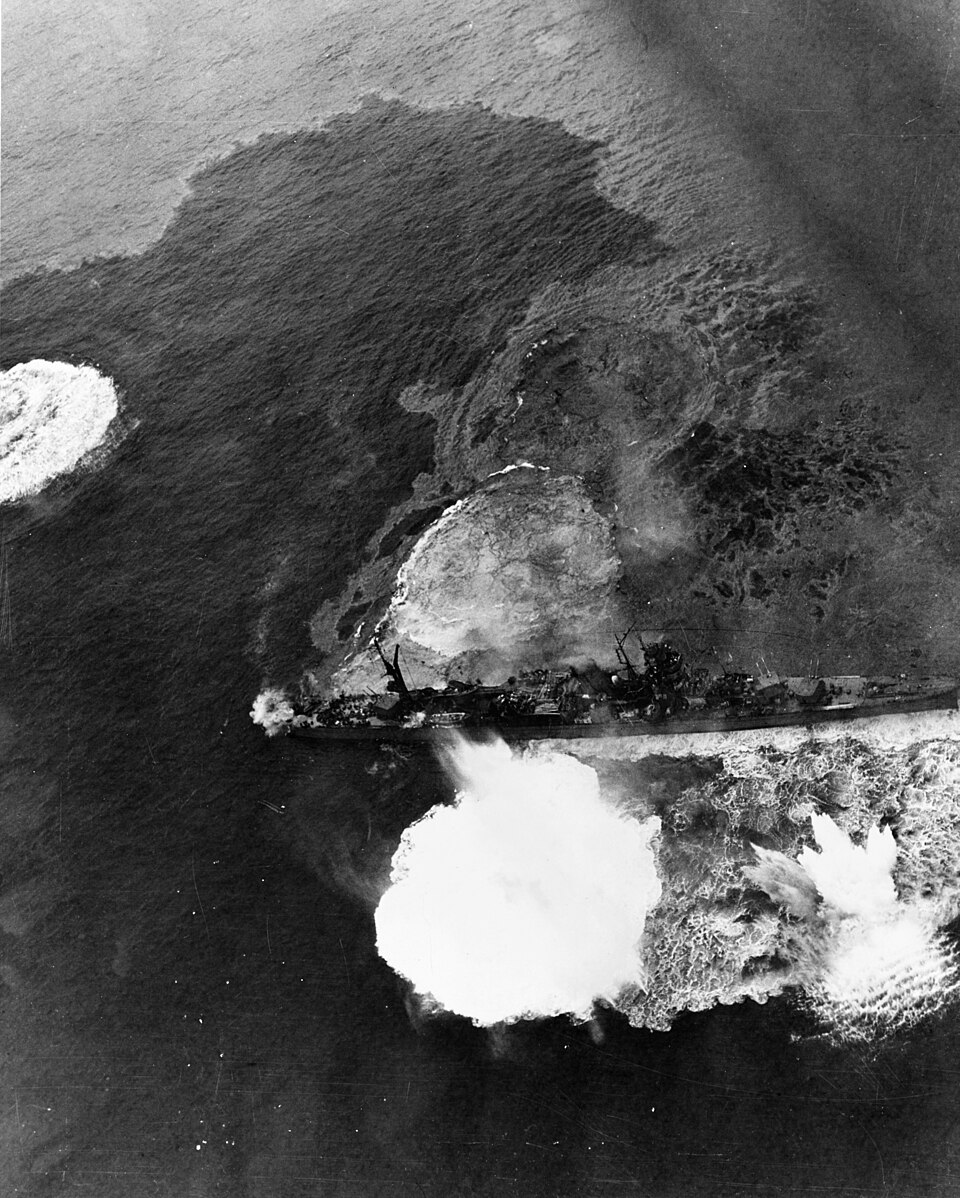
At 12:46, during the first wave, a torpedo hit Yahagi directly in her engine room, killing the entire engineering room crew and bringing her to a complete stop. Dead in the water, Yahagi was hit by at least six more torpedoes and 12 bombs by succeeding waves of air attacks. Isokaze attempted to come to Yahagi’s aid but was attacked, heavily damaged, and sank sometime later. Yahagi capsized towards her starboard side, and sank at 14:05 at 30°47′N 128°08′E taking 445 crewmen with her. Rear Admiral Komura and Captain Tameichi Hara were among the survivors rescued by Hatsushimo and Yukikaze. Her survivors could see Yamato in the distance, still steaming south as U.S. aircraft continued their attacks. However, in reality, Yamato was only minutes away from sinking. Yahagi was removed from the navy list on 20 June 1945. (Wikipedia)
(USN Photo)
Operation “Ten-Go”, 7 April 1945: The Japanese light cruiser Yahagi under attack by U.S. planes. At 1246 hrs, during the first wave, a torpedo hit Yahagi directly in her engine room, killing the entire engine room crew and bringing her to a complete stop. One direct hit can be seen bursting on the fantail, as near-misses straddle her. The photo was taken before turret No. 2 was hit by a bomb.
Imperial Japanese Navy light cruiser Sakawa
(Mikasa Memorial Museum, IJN Photo)
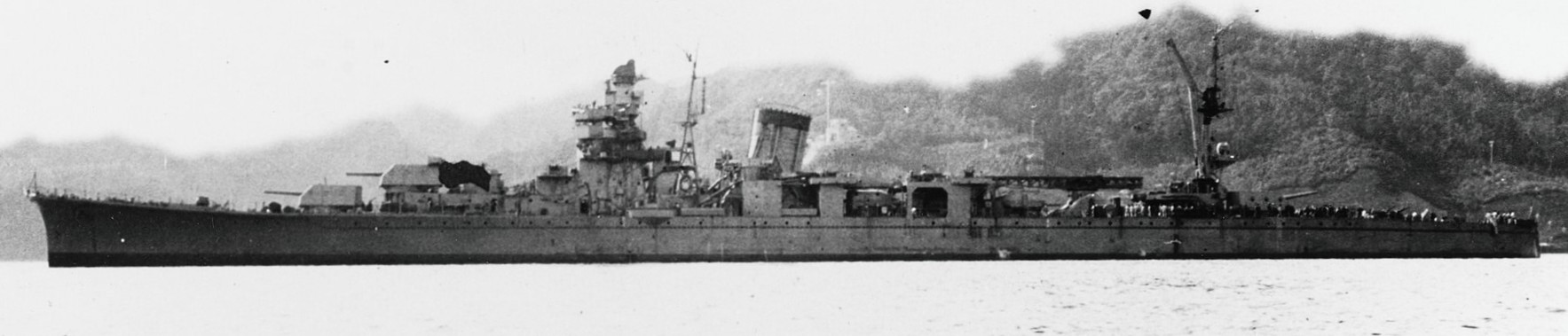
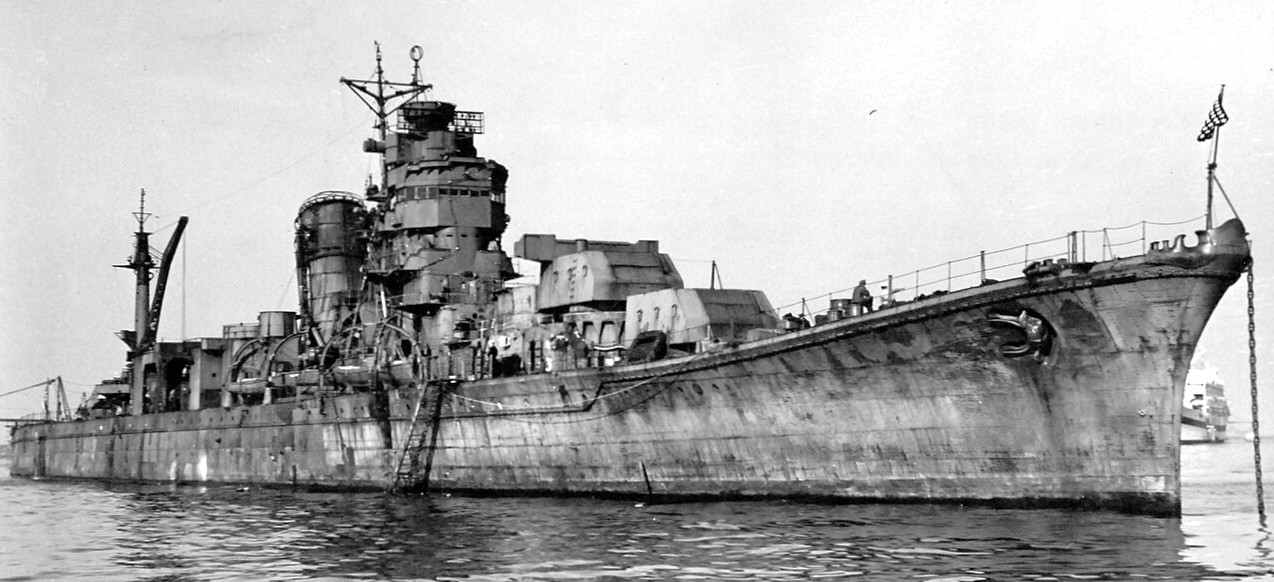
Sakawa. Sasebo Navy Yard Agano-class light cruiser 6,652, 30 November 1944, 10 October 1945; war prize to USA, expended at atomic bomb test at Bikini Atoll on 2 July 1946.
Sakawa (酒匂) was the last of four Agano-class light cruisers built for the Imperial Japanese Navy (IJN) during the Second World War. Fuel shortages crippled the IJN’s operations by the time the ship was completed in late 1944 and she never left Japanese waters. After the war, Sakawa was used to ferry Japanese troops home until she was selected in early 1946 to be expended for nuclear weapon tests during Operation Crossroads. The ship was used as a target during the first bomb test on 1 July and sank the following day. (Wikipedia)
(USN Photo)
Imperial Japanese Navy light cruiser Ōyodo
(IJN Photo)
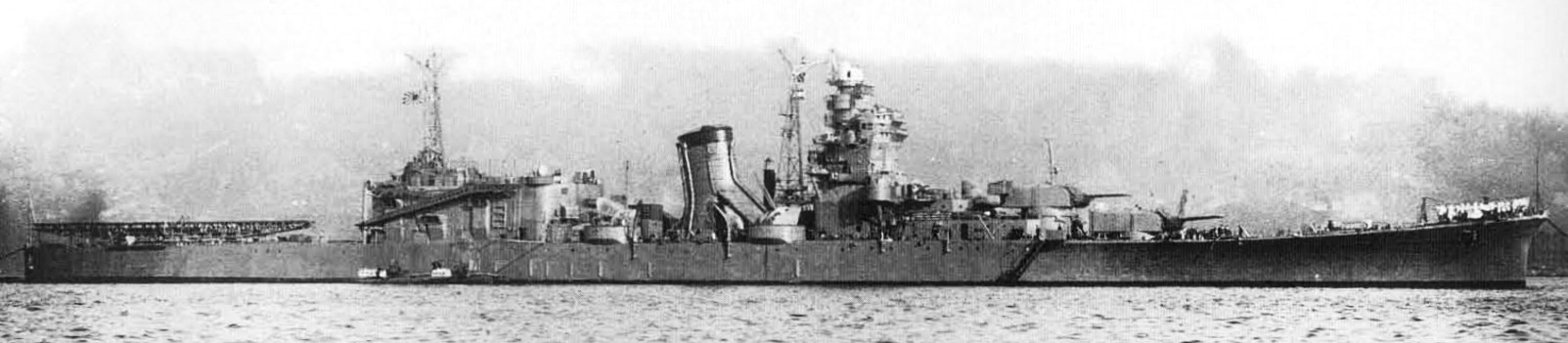
Ōyodo. Kure Naval Arsenal Ōyodo-class light cruiser 8,164, 28 February 1943, 25 July 1945; Sunk by USN aircraft at Kure.
Ōyodo (大淀) was a light cruiser built for the Imperial Japanese Navy (IJN) during World War II, and was the only ship of her class completed before the end of the war. Designed to command submarine operations, she was obsolete upon completion in 1943. The ship was used as a transport and to escort the navy’s capital ships for the rest of the year. Ōyodo was lightly damaged by American aircraft in early January 1944 during one transport mission and returned home several months later to begin conversion to serve as the flagship of the Combined Fleet.
The ship reverted to her previous roles when the headquarters of the Combined Fleet was moved ashore in September. The following month, she participated in the Battle off Cape Engaño, where she escorted the Japanese carriers attempting to decoy the American carrier fleet supporting the invasion of Leyte away from the landing beaches. Afterwards, the ship was transferred to Southeast Asia and engaged American forces in the Philippines in December where she was slightly damaged by American bombers. In early 1945, Ōyodo participated in Operation Kita, during which she transported aviation gasoline and other strategic materials back to Japan. The ship was damaged by American carrier aircraft in March and repairs were completed two months later. She was sunk with the loss of about 300 men during American airstrikes in July. After the war, Ōyodo was salvaged and scrapped in 1947–1948. (Wikipedia)
Imperial Japanese Navy light cruiser Ioshima
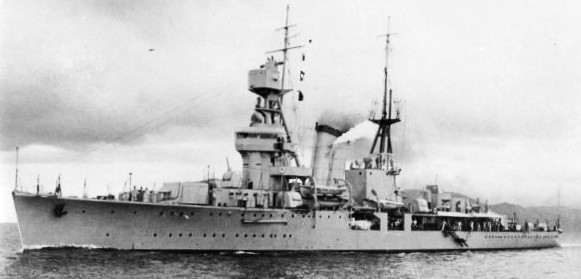
(日本海軍艦艇写真集 巡洋艦 Photo)
Chinese cruiser Ning-Hai on a trial run off Harima Shipbuildings, Japan in 1932. She was caught in 1938 and renamed to Ioshima in 1944 by the Imperial Japanese Navy.
Ioshima. Harima Shipyards Ioshima-class light cruiser 2,526, 28 June 1944, 19 September 1944; Sunk by USS Shad south of Cape Omaezaki.
Ning Hai (Chinese: 甯海; lit. ‘Peaceful Seas’) was a light cruiser in the Republic of China Navy (ROCN) before the Second World War and the lead ship of her class. She was sunk in the early days of the Second Sino-Japanese War by aircraft from the Imperial Japanese Navy, and her wreck was raised and repaired by the Japanese, re-entering service with the Japanese Navy in the Pacific War as the escort vessel Ioshima (五百島). She was sunk again in September 1944 by a USN submarine. (Wikipedia)
Imperial Japanese Navy light cruiser Yasoshima
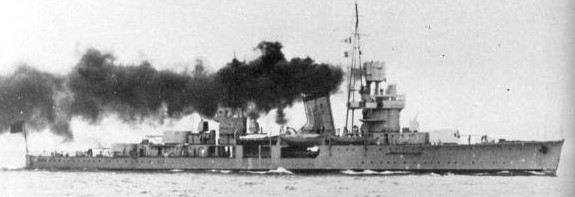
(日本海軍艦艇写真集 巡洋艦 Photo)
Chinese cuiser Ping-Hai on trial run at Setouchi-Sea, Japan. She was caught in 1938 and renamed Yasoshima in 1944 by the Imperial Japanese Navy.
Yasoshima. Kiangnan Dockyard, China Ioshima-class light cruiser 2,448, 25 September 1944, 25 November 1944; Sunk by USN aircraft west of Luzon.
Ping Hai (Chinese: 平海; lit. ‘Peaceful Seas’) was a light cruiser in the Chinese fleet before World War II and the second ship of the Ning Hai class. The ship was laid down in China to the specifications supplied by the Japanese, and Japanese advisors were hired to oversee the construction. Compared to its sister ship Ning Hai, it had a lower-output powerplant and lacked seaplane facilities. Its anti-aircraft armament was also different from that of its sister.
The progress of its construction was affected by the Mukden Incident (18 September 1931) and the January 28 Incident (28 January – 3 March 1932). Disruption of parts supply and non-cooperation of Japanese advisors delayed its launch date from the originally planned 10 October 1933 to 28 September 1935. Blocked delivery of originally-specified anti-aircraft weapons meant that equivalent replacements of those weapons had to be bought via Germany. When it was completed in 1936, official outbreak of war was barely a year away.
Ping Hai served as the flagship of the Republic of China Navy (ROCN) since April 1937.
As one of the most powerful surface combatants within the ROCN, Ping Hai was subjected to aerial attacks by the Imperial Japanese Navy since the Battle of Shanghai, but she was not until 23 September, during the Japanese assault on the Kiangyin Fortress (which guarded the segment of Yangtze River near Nanking), for Ping Hai to finally succumb with her sister ship to airstrikes launched from both the aircraft carrier Kaga and airfields around occupied Shanghai.
She was then re-floated by the Japanese in 1938 as sunken ships would not be as badly corroded by river water as they would be by sea water. Originally the ship was to be transferred to the Collaborationist navy under Wang Jing-Wei, but the Japanese elected to seize her instead and had Ping Hai towed to Sasebo, outfitted first as a barracks hulk Mishima (見島) and ultimately as the escort ship Yasoshima on 10 June 1944. She was re-rated first as a coastal defense ship and then as an escort vessel. The ship lost all cruiser armaments but received radar sets as well as standard Japanese dual-purpose and anti-aircraft weapons.
Yasoshima was deployed for combat operations on 25 September 1944, participating in the Battle of Leyte Gulf and escorting troop convoys. Aircraft from the carriers USS Ticonderoga and Langley caught her escorting two merchantmen west of Luzon and sank all three on 25 November 1944. (Wikipedia)