US Navy Heavy and Light Cruisers: USS Brooklyn (CL-40), USS Philadelphia (CL-41), USS Savannah (CL-42), USS Nashville (CL-43), USS Vincennes (CL-44), USS Wichita (CA-45), USS Phoenix (CL-46), USS Boise (CL-47), USS Honolulu (CL-48), USS St. Louis (CL-49), USS Helena (CL-50)
London Naval Treaty
The terms of the 1930 London Naval Treaty motivated the signatories to de-emphasize heavy cruiser construction in favor of light cruisers. The resultant nine ship Brooklyn-class of light cruisers had a strong influence on US cruiser design. Nearly all subsequent US cruisers, heavy and light, were directly or indirectly based on them, including the unique heavy cruiser Wichita. (Wikipedia)
Brooklyn class
(CL-40) Brooklyn (1937) – WW2: 4 battle stars, later Chilean O’Higgins.
(CL-41) Philadelphia (1937) – WW2: 5 battle stars, later Brazilian Barroso.
(CL-42) Savannah (1938) – WW2: 3 battle stars.
(CL-43) Nashville (1938) – WW2: 10 battle stars, later Chilean Capitan Prat.
New Orleans class
(CA-44) Vincennes (1937) – WW2: 2 battle stars, sunk by gunfire and torpedoes 9 August 1942, 332 killed.
Wichita class
(CA-45) Wichita (1939) – WW2: 13 battle stars.
Brooklyn class
(CL-46) Phoenix (1938) – WW2: 11 battle stars, later ARA General Belgrano.
(CL-47) Boise (1938) – WW2: 11 battle stars, later ARA Nueve de Julio.
(CL-48) Honolulu (1938) – WW2: 8 battle stars.
Brooklyn class (St. Louis subclass)
(CL-49) St. Louis (1939) – WW2: 11 battle stars, later Brazilian Almirante Tamandaré.
(CL-50) Helena (1939) – WW2: 7 battle stars, war loss 6 July 1943, 168 killed.
USS Brooklyn (CL-40)
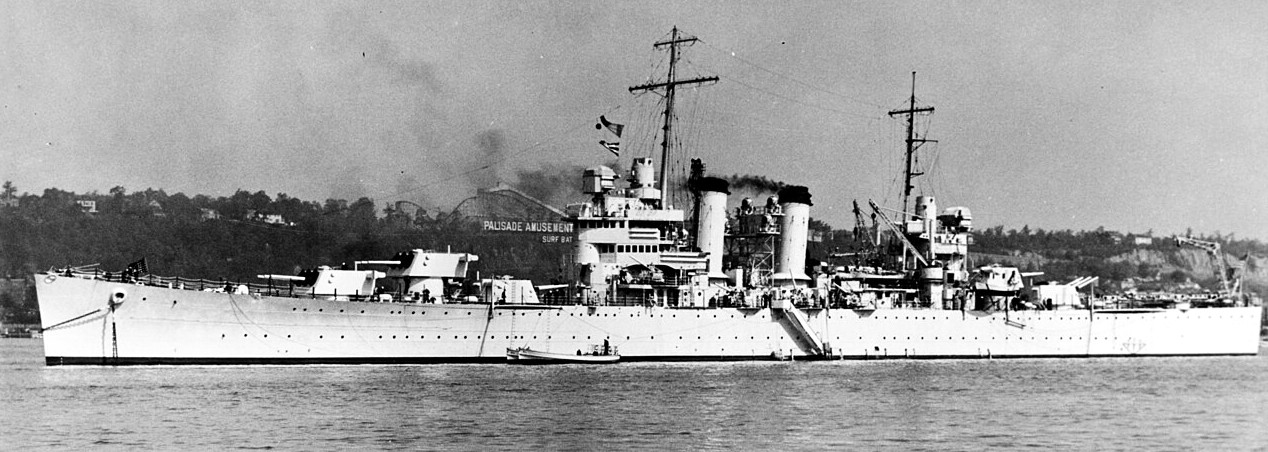
(USN Photo)
USS Brooklyn (CL-40) in the Hudson River, off New York City, in 1939.
USS Brooklyn (CL-40) was a light cruiser, the lead ship of her class of nine, and the third United States Navy ship to bear its name. Commissioned in 1937, she served in the Atlantic during the Second World War, as a convoy escort and as fire support for amphibious landings. Decommissioned in 1947, she was transferred to the Chilean Navy in 1951, where she served for another 40 years. She sank under tow to a scrapyard in 1992. (Wikipedia)
USS Philadelphia (CL-41)
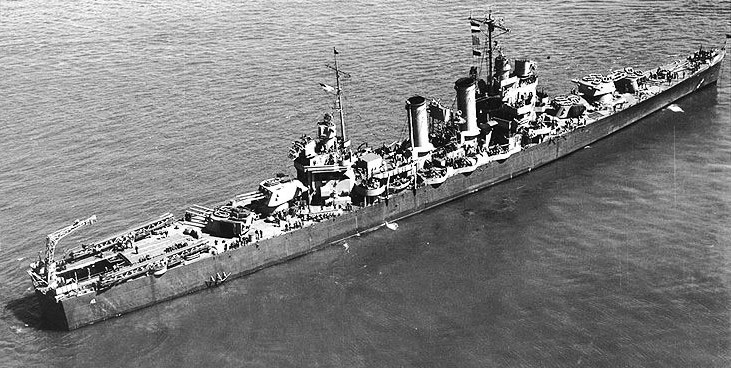
(USN Photo)
USS Philadelphia (CL-41) off New York City on 26 April 1943.
USS Philadelphia (CL-41) was a Brooklyn-class light cruiser of the United States Navy. She was the fifth ship named for Philadelphia, Pennsylvania. In 1951, she was sold to Brazil and commissioned into the Brazilian Navy as Almirante Barroso.
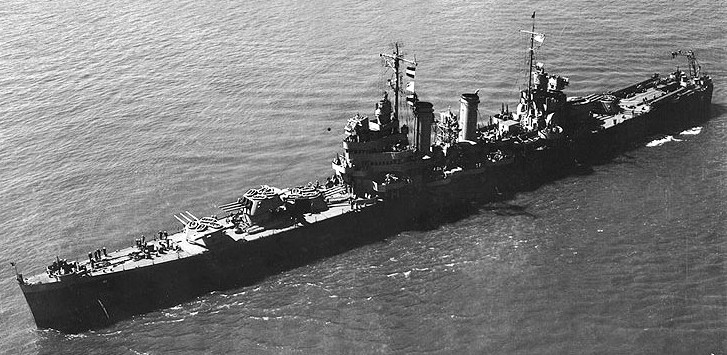
(USN Photo)
USS Philadelphia (CL-41) in New York Harbor (USA), 26 April 1943.
USS Savannah (CL-42)
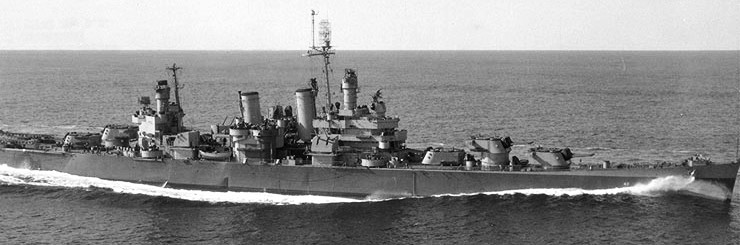
(USN Photo)
USS Savannah (CL-42) photographed from a blimp of squadron ZP-11, underway off the New England coast on 30 October 1944.
USS Savannah (CL-42) was a light cruiser of the Brooklyn-class that served in the Second World War in the Atlantic and Mediterranean theatres of operation. Savannah conducted Neutrality Patrols (1941) and wartime patrols in the Atlantic and Caribbean (1942), and supported the invasion of French North Africa in Operation Torch (November 1942). She sought German-supporting blockade runners off the east coast of South America (1943), and supported the Allied landings on Sicily and at Salerno (1943). Off Salerno on 11 September 1943, a German radio-controlled Fritz X glide-bomb caused extensive casualties aboard and serious damage to Savannah, requiring emergency repairs in Malta and permanent repairs at the Philadelphia Naval Shipyard. After repairs and upgrades, she served in the task force that carried President Roosevelt to the Yalta Conference in early 1945. (Wikipedia)
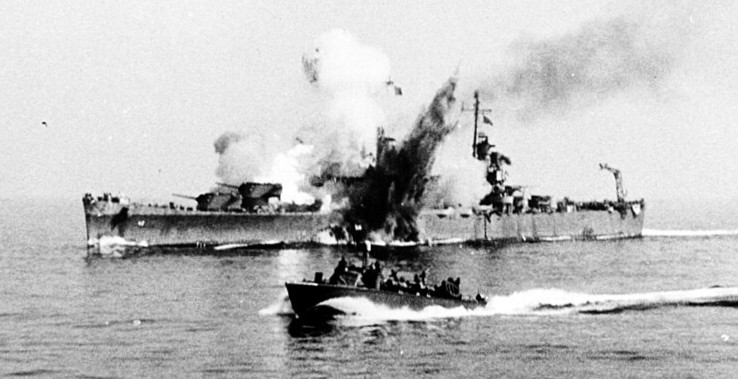
(USN Photo)
USS Savannah (CL-42) is hit by a German radio-controlled glide bomb, while supporting Allied forces ashore during the Salerno operation, 11 September 1943. The bomb hit the top of the ship’s number three 6″/47 gun turret and penetrated deep into her hull before exploding. The photograph shows the explosion venting through the top of the turret and also through Savannah’s hull below the waterline. A motor torpedo boat (PT) is passing by in the foreground.
USS Nashville (CL-43)
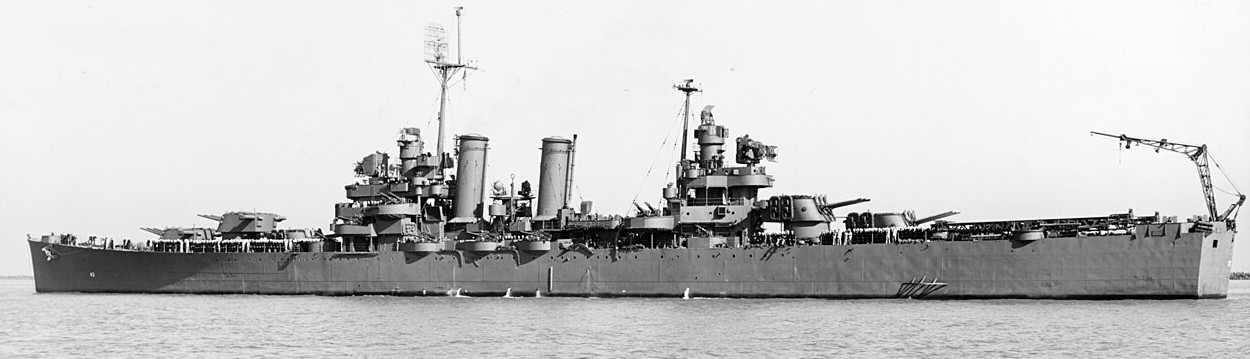
(USN Photo)
USS Nashville (CL-43) off the Mare Island Naval Shipyard, California, on 4 August 1943.
USS Nashville (CL-43) was a Brooklyn-class cruiser. She was laid down on 24 January 1935 by New York Shipbuilding Corporation, Camden, New Jersey. She was launched on 2 October 1937, sponsored by Misses Ann and Mildred Stahlman and commissioned on 6 June 1938.
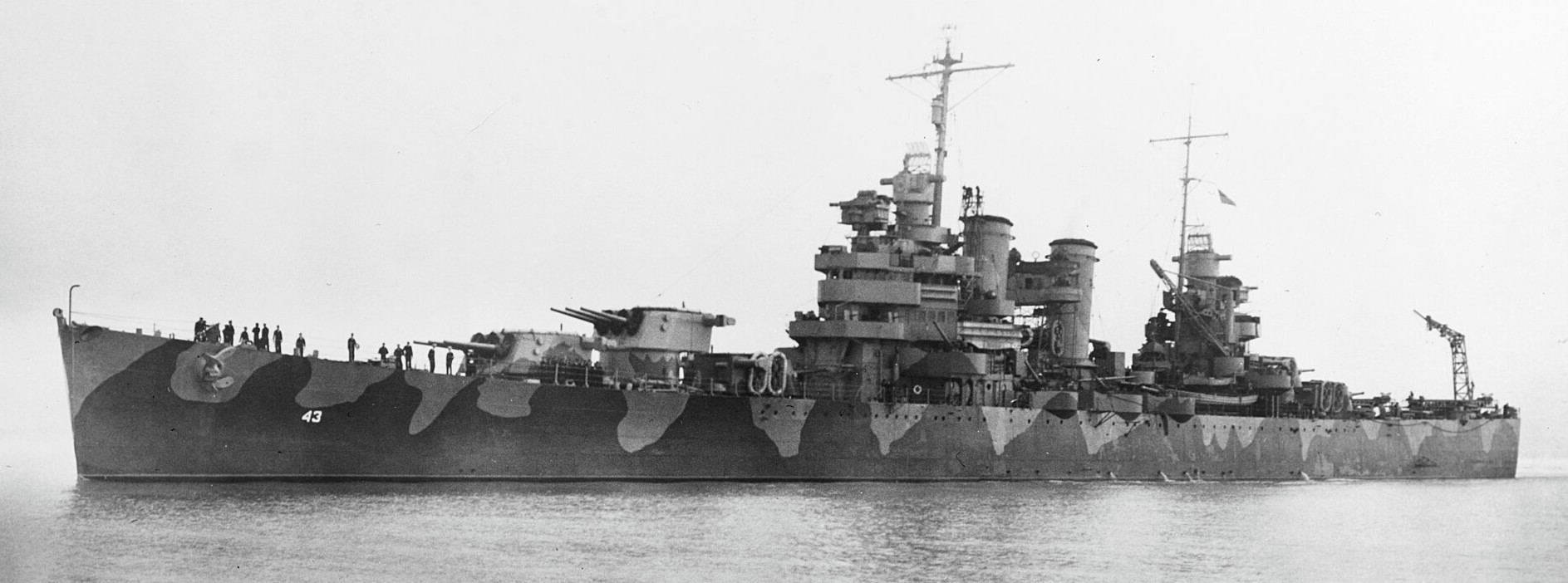
(USN Photo)
USS Nashville (CL-43) off the Mare Island Navy Yard, California, on 1 April 1942. She is wearing Measure 12 (Modified) camouflage.
(USN Photo)
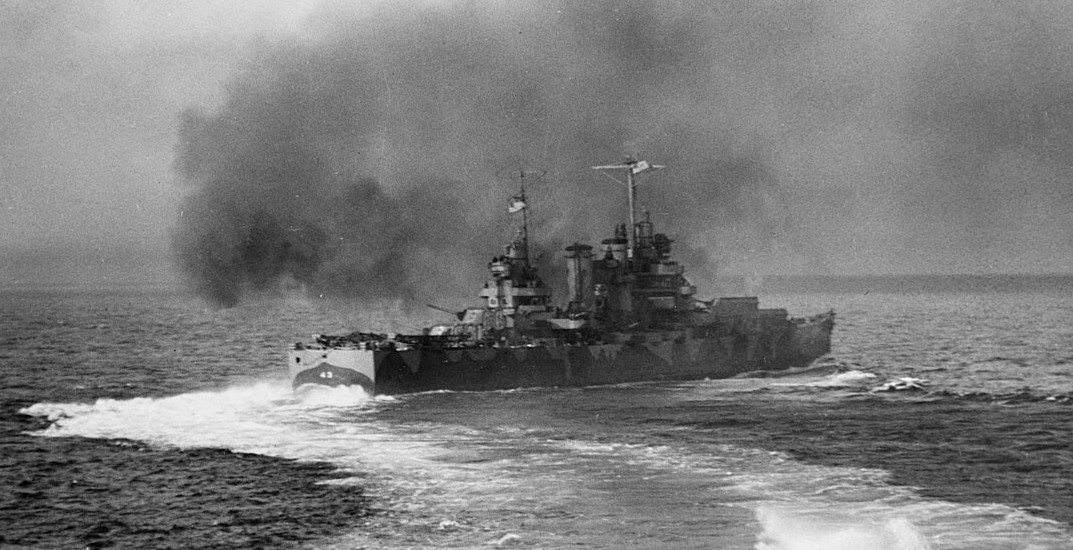
USS Nashville (CL-43) bombarding Kiska Island, Aleutians (USA), on 8 August 1942. Note the unusual placement of her hull number on the stern.
(USN Photo)
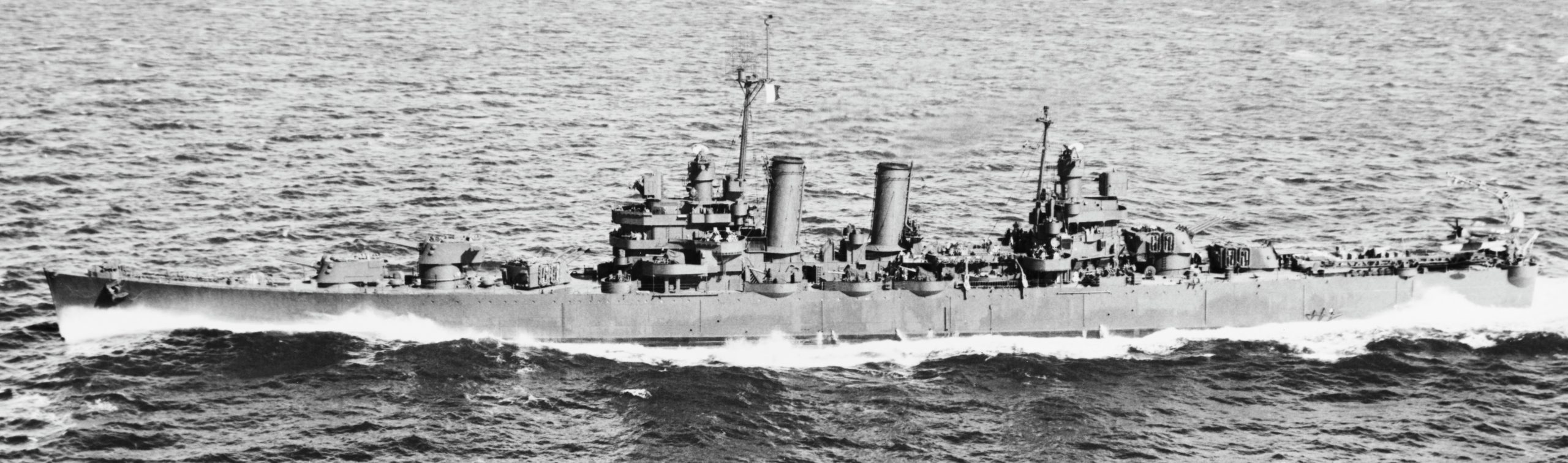
USS Nashville (CL-43) underway in Puget Sound, Washington, on 25 March 1945.
USS Vincennes (CL-44)
(USN Photo)
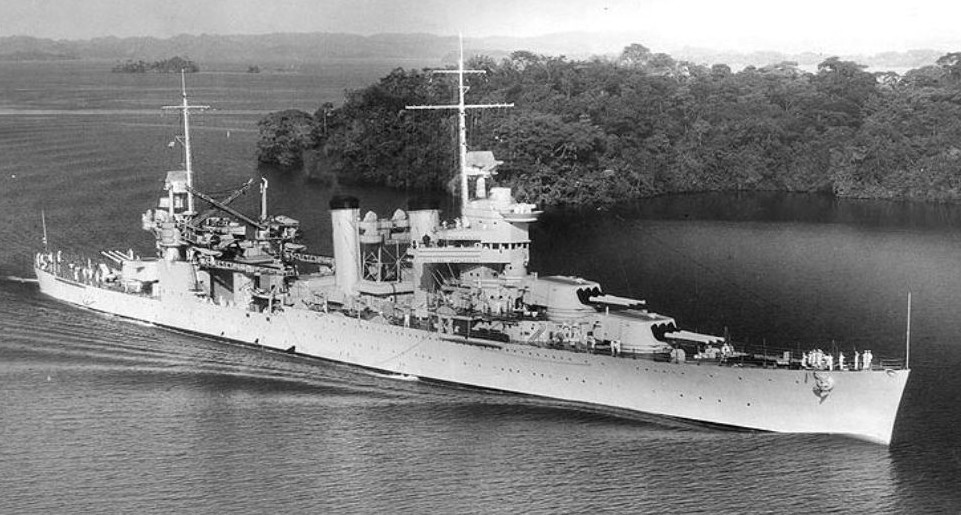
USS Vincennes (CA-44) passing through the Panama Canal on 6 January 1938, while en route to join the U.S. Pacific Fleet. Note the crewmen on her deck, watching the airplane from which the photograph was taken.
USS Vincennes (CL/CA-44) was a United States Navy New Orleans-class cruiser, sunk at the Battle of Savo Island in 1942. She was the second ship to bear the name. She was laid down on 2 January 1934 at Quincy, Massachusetts, by the Bethlehem Shipbuilding Company’s Fore River plant, launched on 21 May 1936, sponsored by Miss Harriet Virginia Kimmell (daughter of Joseph Kimmell, mayor of Vincennes, Indiana), and commissioned on 24 February 1937, Captain Burton H. Green in command.
The New Orleans-class cruisers were the last U.S. cruisers built to the specifications and standards of the Washington Naval Treaty of 1922. Such ships, with a limit of 10,000 tons standard displacement and 8-inch caliber main guns may be referred to as “treaty cruisers.” Originally classified a light cruiser when she was authorized, because of her thin armor, Vincennes was reclassified a heavy cruiser, because of her 8-inch guns. The term “heavy cruiser” was not defined until the London Naval Treaty in 1930. This ship and Quincy were a slightly improved version of the New Orleans-class design. (Wikipedia)
(USN Photo)
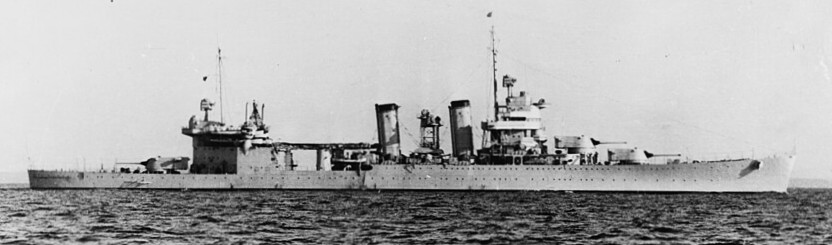
USS Vincennes (CA-44) during trials off Rockland, Maine, 12 January 1937.
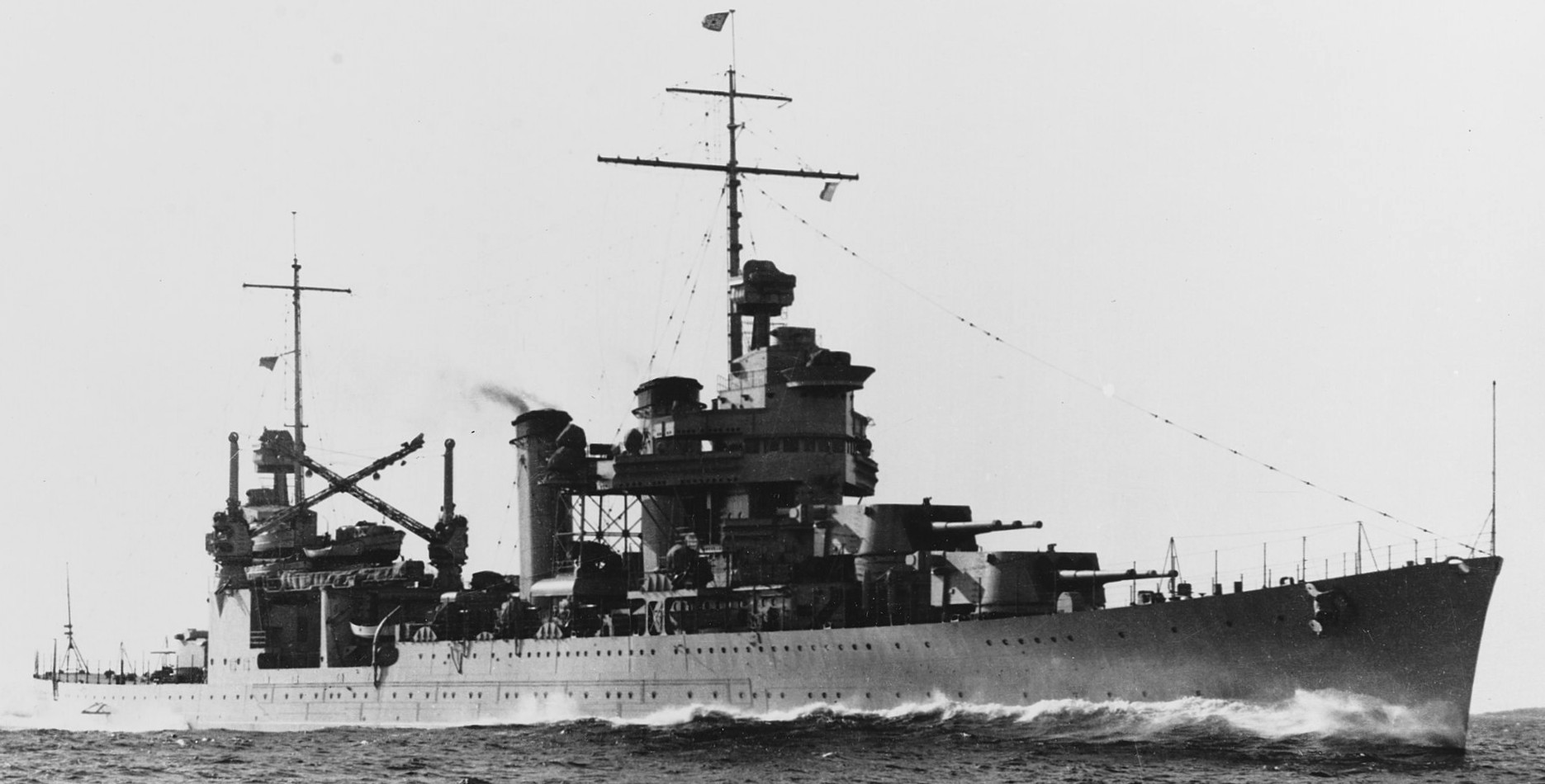
(USN Photo)
USS Vincennes on her trials, off Rockland, Maine, on 13 January 1937.
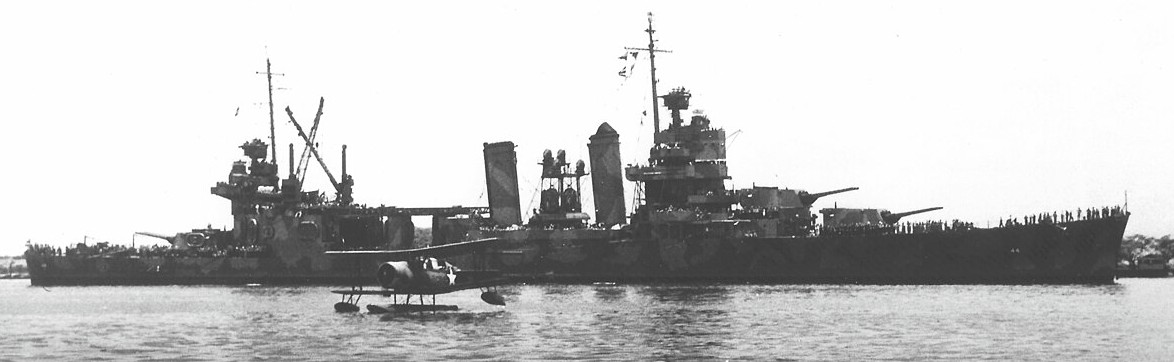
(USN Photo)
USS Vincennes (CA-44) at Pearl Harbor, circa 26-28 May 1942, prior to departing to take part in the Battle of Midway. A Curtiss SOC Seagull floatplane is in the left foreground.
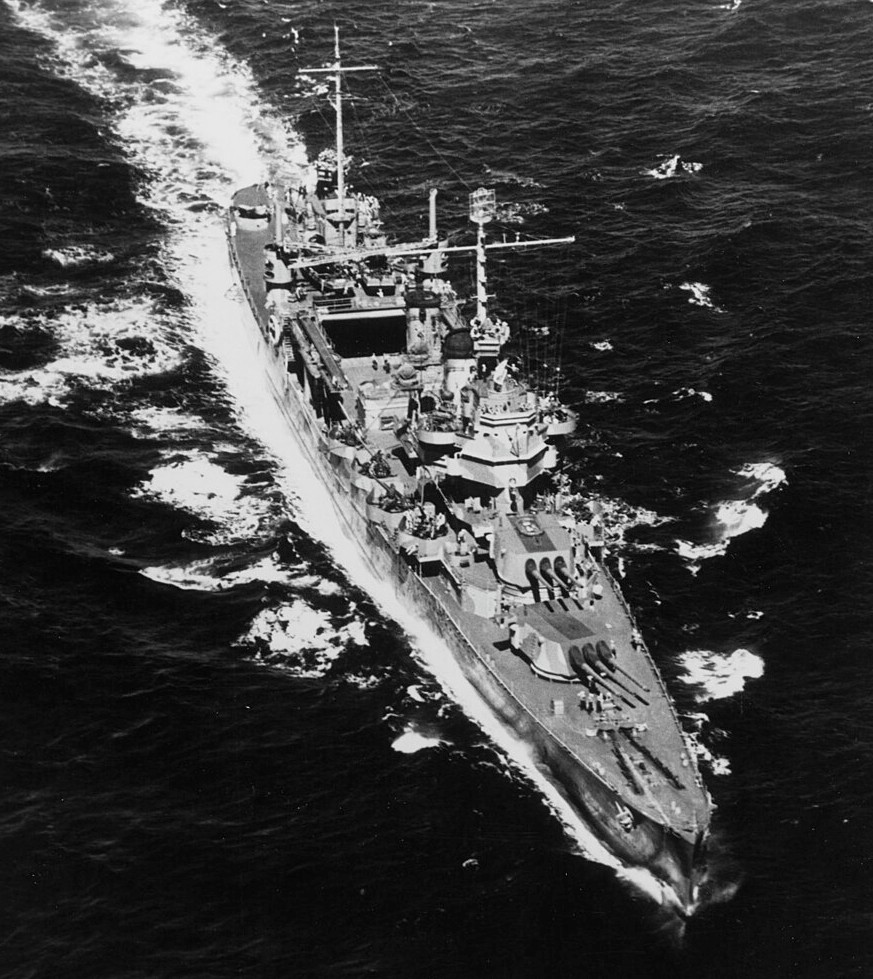
(USN Photo)
USS Vincennes (CA-44) underway during tactical exercises in Hawaiian waters, 8 July 1942.
USS Wichita (CA-45)
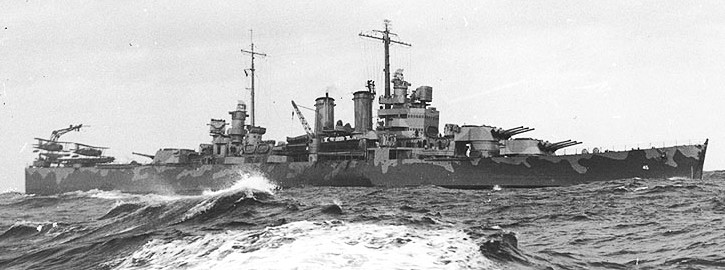
(USN Photo)
USS Wichita (CA-45) operating with the British Home Fleet, in the vicinity of Scapa Flow, Scotland (UK), 22 April 1942.
USS Wichita (CA-45) was a unique heavy cruiser of the United States Navy built in the 1930s. The last American cruiser designed to meet the limits of the London Naval Treaty, she was originally intended to be a New Orleans-class heavy cruiser, accordingly with the maximum main armament of three triple 8-inch (203 mm) gun turrets. These were instead placed on an improved hull derived from the Brooklyn-class light cruisers, with increased armor. This design would go on to form the basis for the later World War II–era heavy cruisers such as the Baltimore class. The ship was authorized by the 1929 Cruiser Act, laid down at the Philadelphia Naval Shipyard in October 1935, launched in November 1937, and commissioned into the US Navy in February 1939.
Following her commissioning, Wichita was assigned to neutrality patrols in the Atlantic. After the United States entered World War II, the ship saw heavy service throughout the conflict. She was first assigned to convoy escort duty on the Murmansk Run in early 1942, and supported amphibious landings during Operation Torch in November 1942. During the Naval Battle of Casablanca, Wichita engaged several French coastal batteries and warships, including the battleship Jean Bart. In 1943, Wichita was transferred to the Pacific Theater, where she remained for the rest of the war. She frequently provided antiaircraft defense for the Fast Carrier Task Force during operations in the central Pacific, including the Battles of the Philippine Sea and Leyte Gulf in 1944. During the latter engagement, Wichita assisted in the sinking of the Japanese aircraft carrier Chiyoda.
Wichita was heavily engaged during the invasion of Okinawa, where she provided heavy gunfire support to ground troops ashore. After the Japanese surrender, the ship served as part of the occupation force in Japan and assisted in the repatriation of American military personnel under Operation Magic Carpet. After returning to the United States, she was decommissioned and placed in the “mothball” fleet in 1947. She remained in reserve until 1959, when she was stricken from the Naval Vessel Register and sold for scrapping in August 1959. (Wikipedia)
(USN Photo)
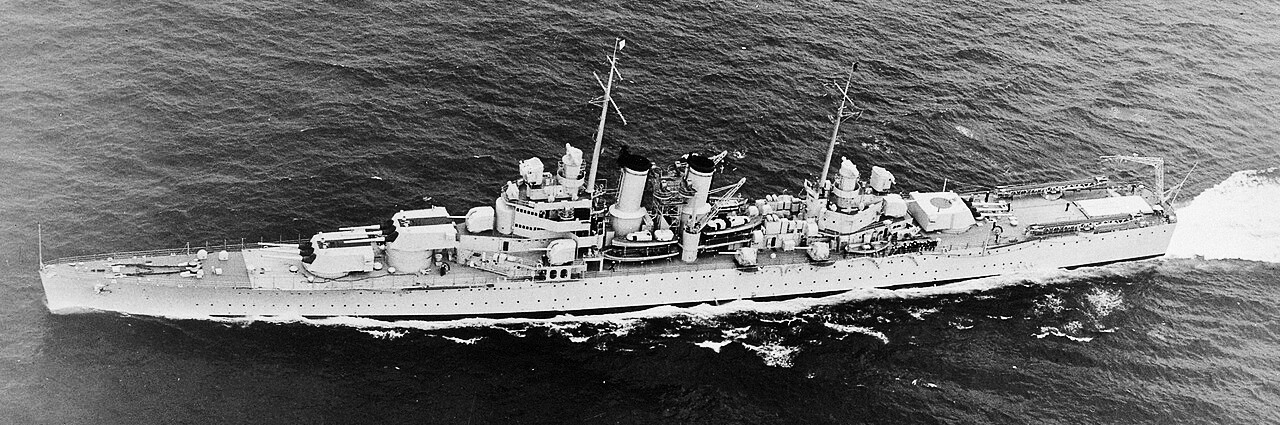
USS Wichita (CA-45) operating in the Atlantic Ocean, out of Norfolk, Virginia (USA), on 1 May 1940. Note the markings on her turret tops (bars on the forward turrets, a circle on the after turret). These scheme was used on several other heavy cruisers in 1939-40.
(USN Photo)
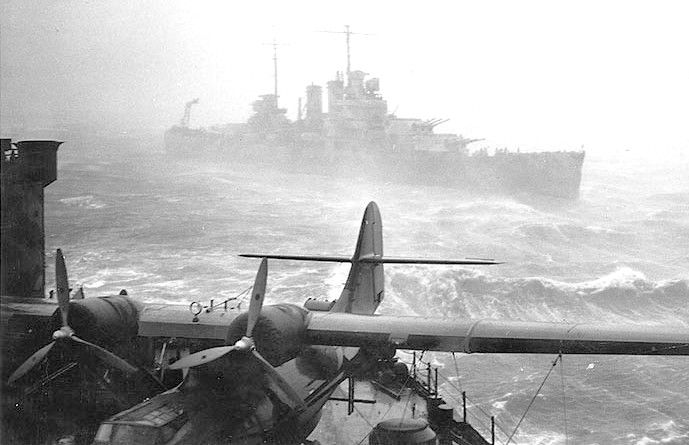
USS Wichita (CA-45) rides out a winter storm off Iceland in mid-January 1942. Note the Consolidated PBY Catalina patrol plane on the deck of the seaplane tender from which the photograph was taken. The ship in the foreground may be USS Albemarle (AV-5).
(USN Photo)
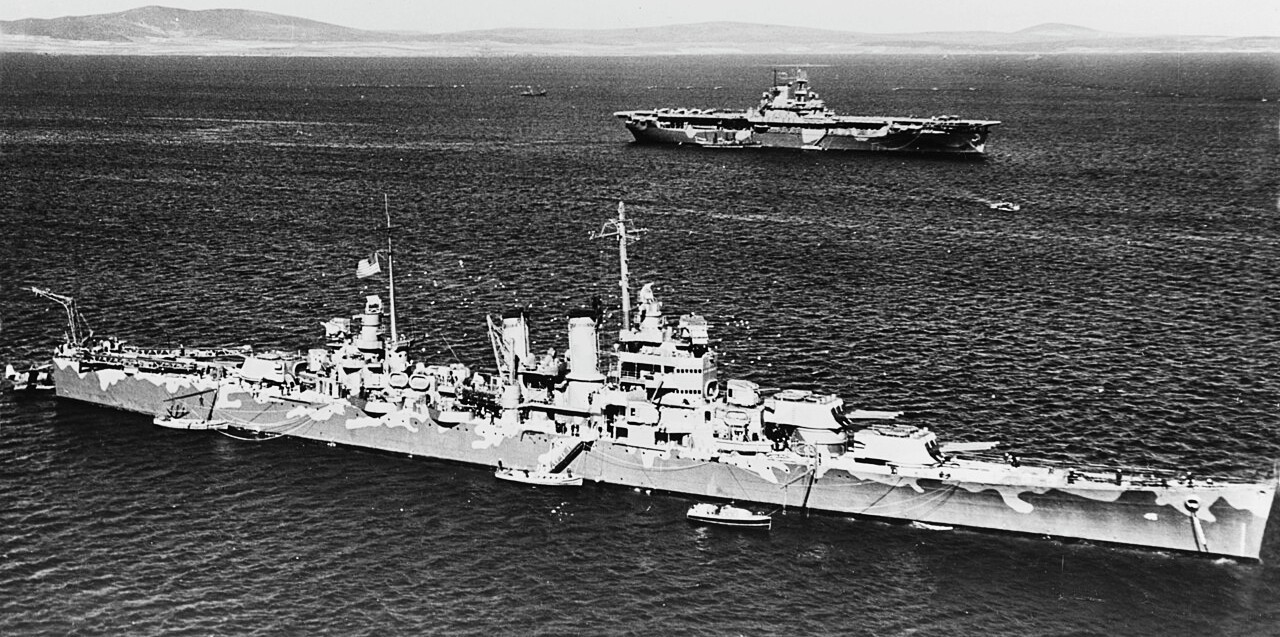
USS Wichita (CA-45) at anchor in Scapa Flow, Scotland (UK), in April 1942. The aircraft carrier USS Wasp (CV-7) is in the background.

(USN Photo)
USS Wichita (CA-45).
USS Phoenix (CL-46)
(USN Photo)
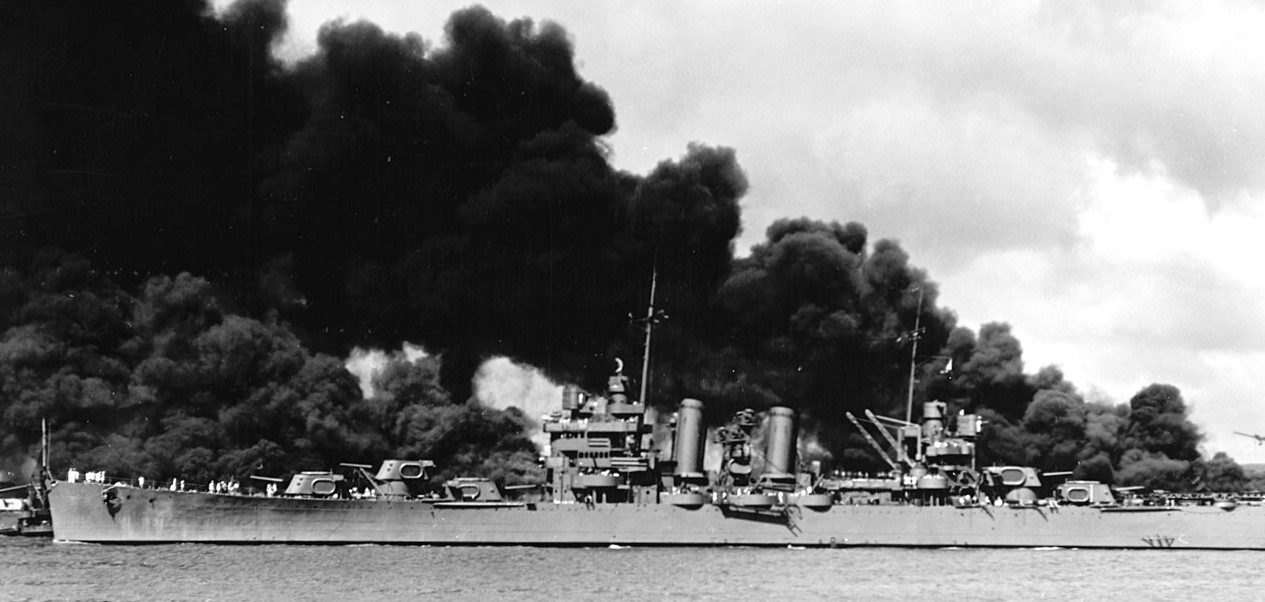
USS Phoenix (CL-46) steams down the channel at Pearl Harbor, Hawaii, off Ford Island’s Battleship Row, past the sunken and burning battleships USS West Virginia (BB-48), at left, and USS Arizona (BB-39), at right, 7 December 1941.
USS Phoenix (CL-46) was a light cruiser of the Brooklyn class. She was the third Phoenix of the United States Navy. After the Second War the ship was transferred to Argentina in 1951 and was named General Belgrano in 1956. General Belgrano was sunk during the Falklands War in 1982 by the British submarine HMS Conqueror.
She was laid down on 15 April 1935 by the New York Shipbuilding Corporation, Camden, New Jersey; launched on 13 March 1938; sponsored by Mrs. Dorothea Kays Moonan; and commissioned at Philadelphia Navy Yard on 3 October 1938. Her name was in honour of the capital city of the state of Arizona. (Wikipedia)
USS Boise (CL-47)
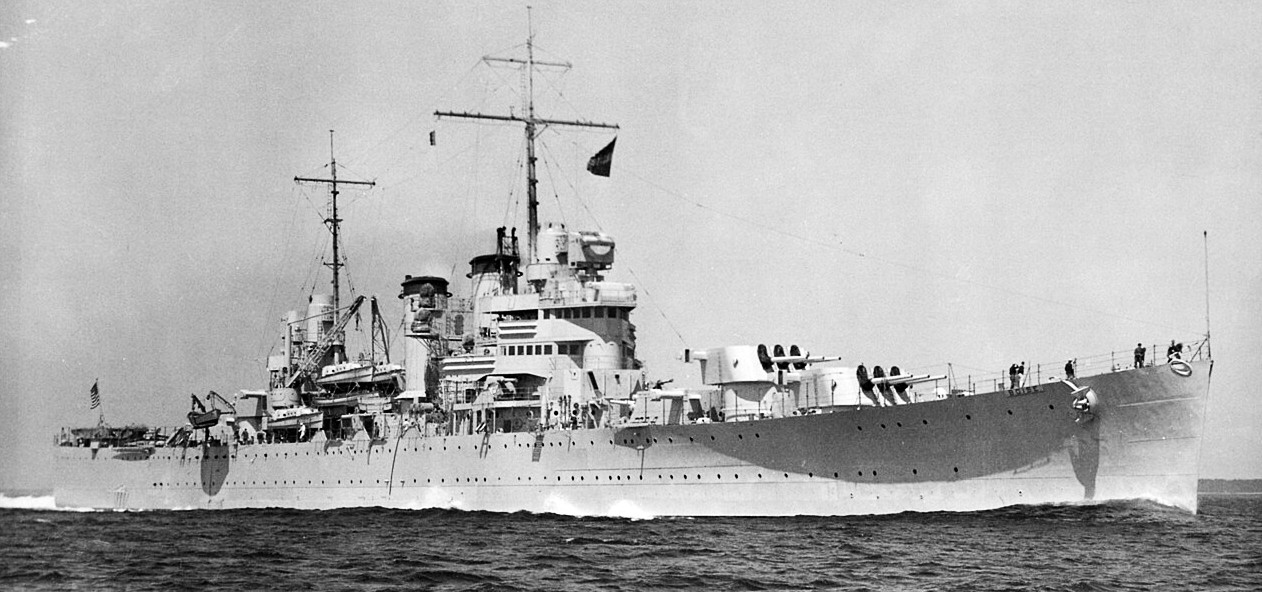
(USN Photo)
USS Boise (CL-47) underway during trials in 1938.
USS Boise (CL-47) was a light cruiser of the Brooklyn class in the United States Navy. The cruiser was named for Boise, the capital city of the state of Idaho. Commissioned in 1938, she saw extensive service during the Second World War, taking part in fighting in the Mediterranean and Pacific theaters. Following the war the ship was decommissioned in 1946 and lay idle until sold to Argentina in 1951. Renamed ARA Nueve de Julio, the ship remained in service with the Argentinian Navy until 1978, after which she was taken to Brownsville, Texas and scrapped in 1983. (Wikipedia)
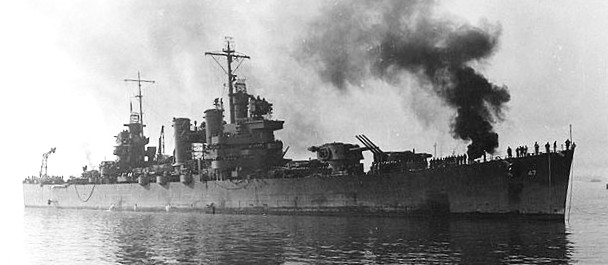
(USN Photo)
USS Boise (CL-47) arrives at the Philadelphia Naval Shipyard, Pennsylvania (USA), in November 1942 for repair of battle damage received during the 11-12 October Battle of Cape Esperance. Note the forward 6″/47 triple gun turret trained to starboard. It was jammed in this position during the action, when a Japanese 8″ shell hit the armored barbette just below the turret.
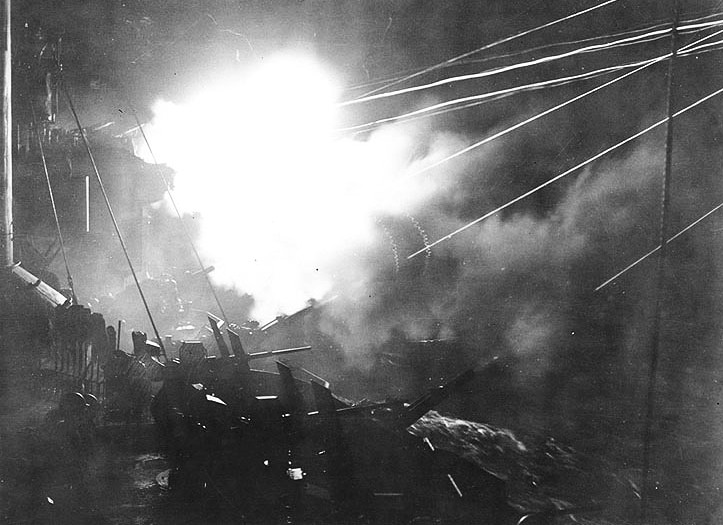
(USN Photo)
USS Boise (CL-47) shelling the coast of New Guinea in early 1944. The photo is dated 10 February 1944, but may have been taken during the Madang-Alexishafen bombardment of 25-26 January 1944. This view looks forward on the starboard side from the midships 20mm gun gallery. Note tracers, which appear several feet in front of gun muzzles. Those from the four starboard side 5/25 guns have a higher trajectory than the tracers fired from the forward 6/47 gun turrets. Tracers from the 6-inch guns appear to wobble slightly.
USS Honolulu (CL-48)
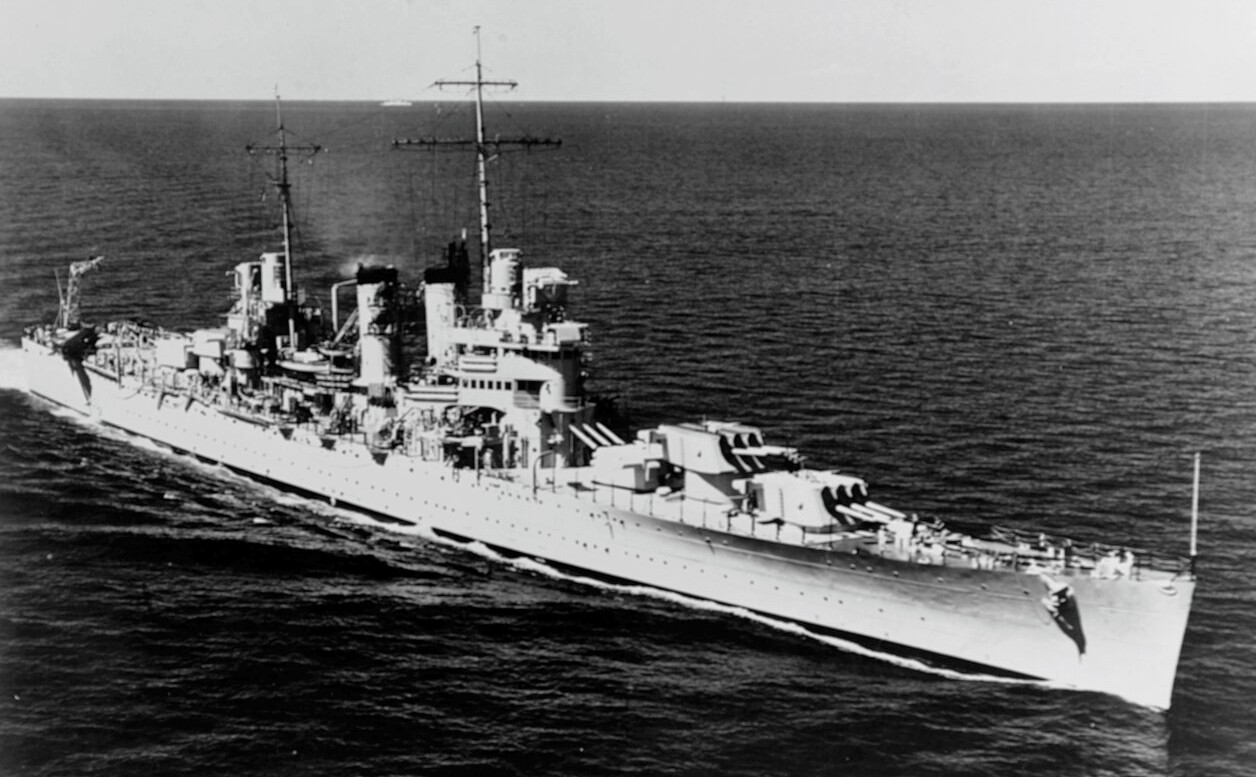
(USN Photo)
USS Honolulu (CL-48) underway at sea on 9 February 1939.
USS Honolulu (CL-48) of the United States Navy was a Brooklyn-class light cruiser active in the Pacific War. Honolulu was launched in 1937 and commissioned in 1938. She was the only cruiser to survive the Battle of Tassafaronga undamaged. Honolulu later served in the Battle of Kula Gulf, where she wrecked the destroyer Nagatsuki and helped to sink the destroyer Niizuki, and the Battle of Kolombangara where she helped to sink the light cruiser Jintsū but was crippled by a torpedo which blew off her bow. She then bombarded shores during the Battle of Peleliu. She was taken out of action by serious torpedo damage just before the Battle of Leyte Gulf. She was repaired, but not in time to rejoin the war. She was decommissioned in 1947 and was held in reserve until she was scrapped in 1959. (Wikipedia)
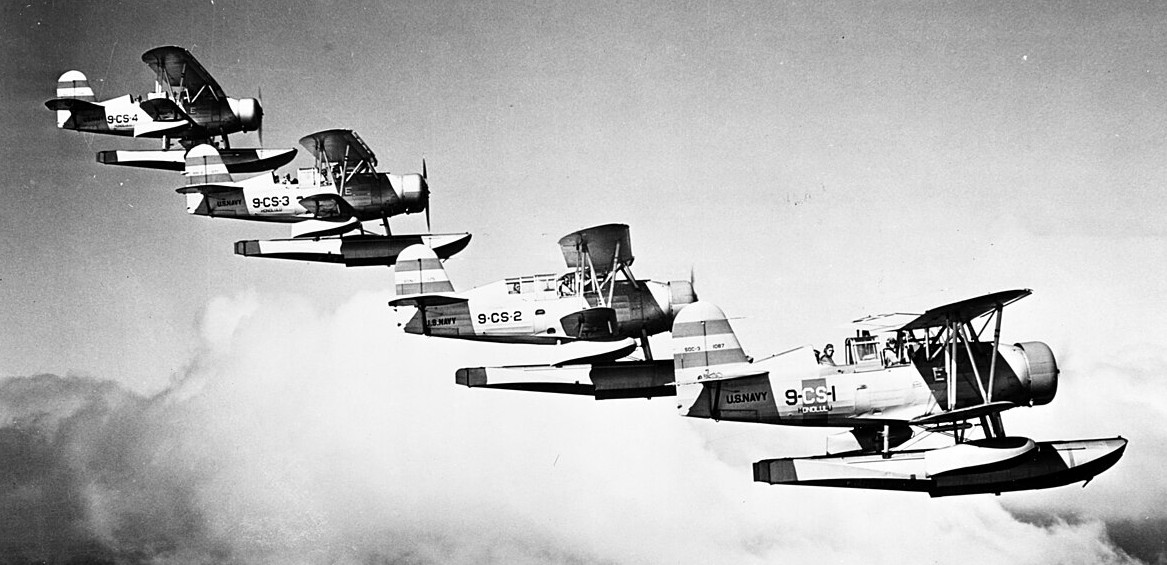
(USN Photo)
Four U.S. Navy Curtiss SOC-3 Seagull scout-observation floatplanes, from the light cruiser USS Honolulu (CL-48) fly in formation, circa 1938-39. They are part of Cruiser Scouting Squadron 9 (VCS-9). The planes’ BuNos are (from left to right): unidentified; 1073; 1175 (a SON-1 variant of the SOC-3); and 1087.
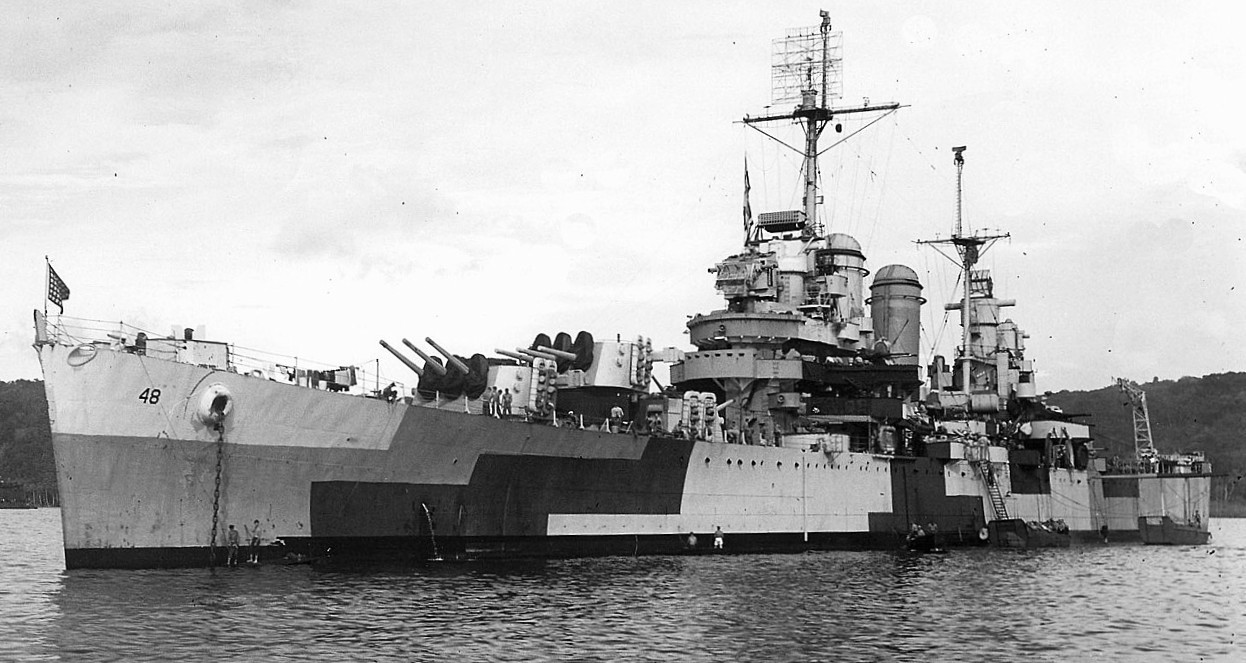
(USN Photo)
USS Honolulu (CL-48) at anchor in the Pacific. Her camouflage is Measure 32, Design 2c.
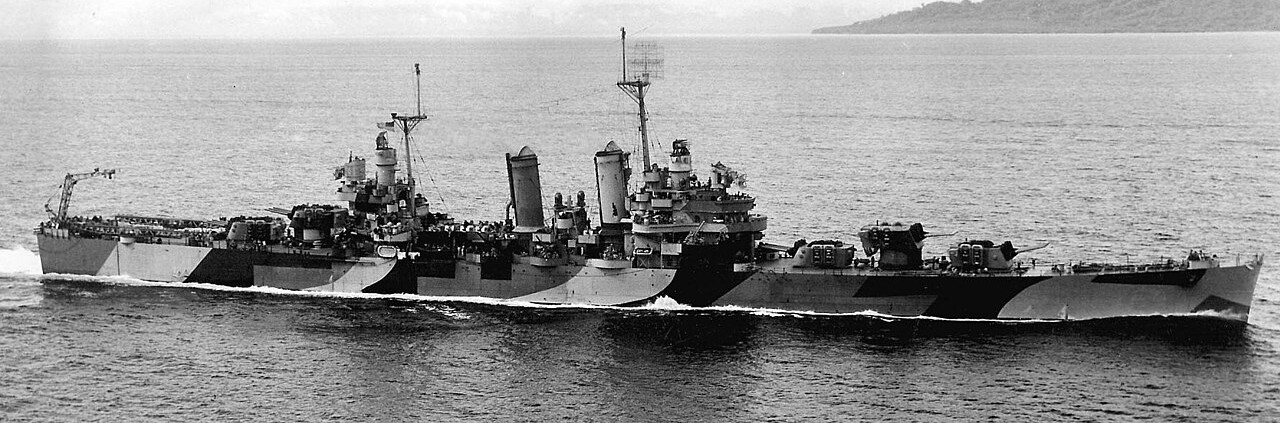
(USN Photo)
USS Honolulu (CL-48) underway in the Pacific. Her camouflage is Measure 32, Design 2c.
USS St. Louis (CL-49)
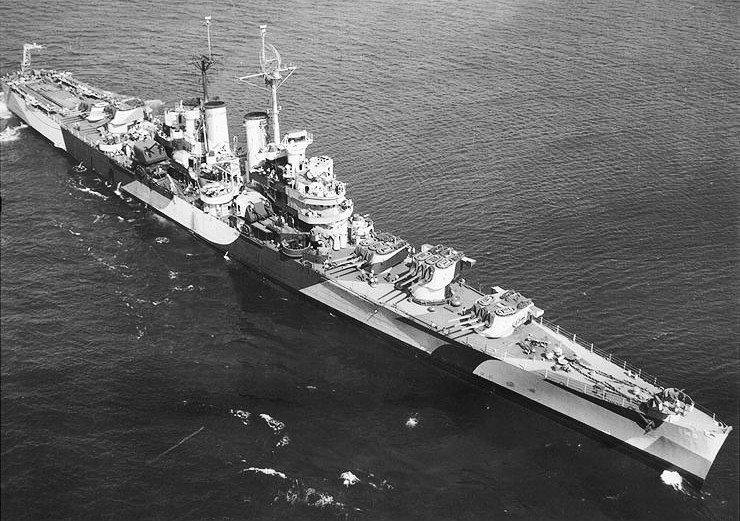
(USN Photo)
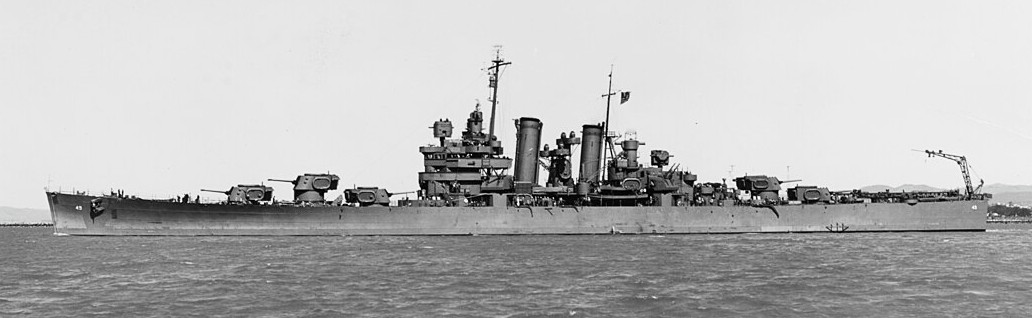
USS St. Louis (CL-49) off San Pedro, California, on 5 October 1944. Her camouflage is Measure 32, Design 2c.
USS St. Louis, eighth of nine Brooklyn-class light cruisers, was the fifth ship of the United States Navy named after the city of St. Louis, Missouri. Commissioned in 1939, she was very active in the Pacific during the Second World War, earning eleven battle stars.
She was deactivated shortly after the war, but was recommissioned into the Brazilian Navy as Almirante Tamandaré in 1951. She served until 1976, and sank under tow to the scrappers in 1980. (Wikipedia)
(USN Photo)
USS St. Louis (CL-49) off the Mare Island Navy Yard, California (USA), on 6 March 1942.
(USN Photo)
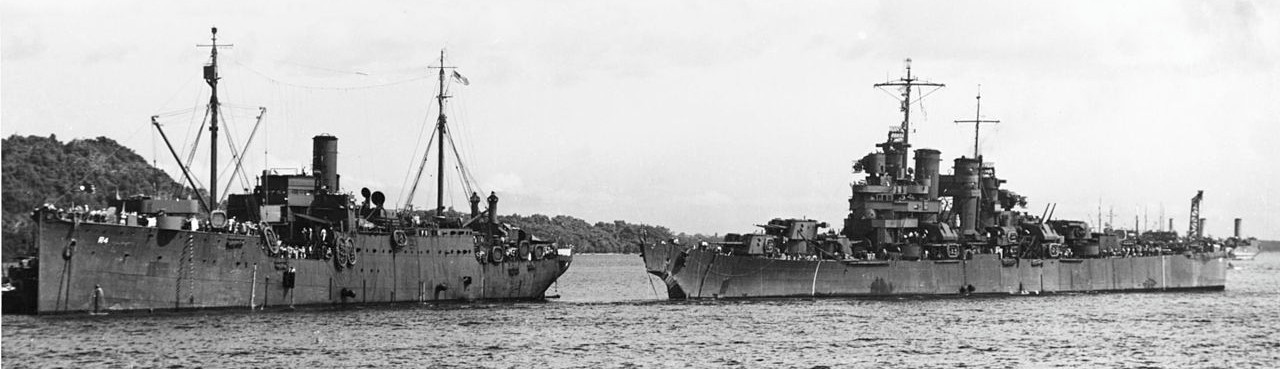
USS St. Louis (CL-49) comes alongside the repair ship USS Vestal (AR-4) for initial repair of torpedo damage received in the Battle of Kolombangara, 13 July 1943. Photographed at Tulagi, Solomon Islands, about 20 July 1943.
USS Helena (CL-50)
(USN Photo)
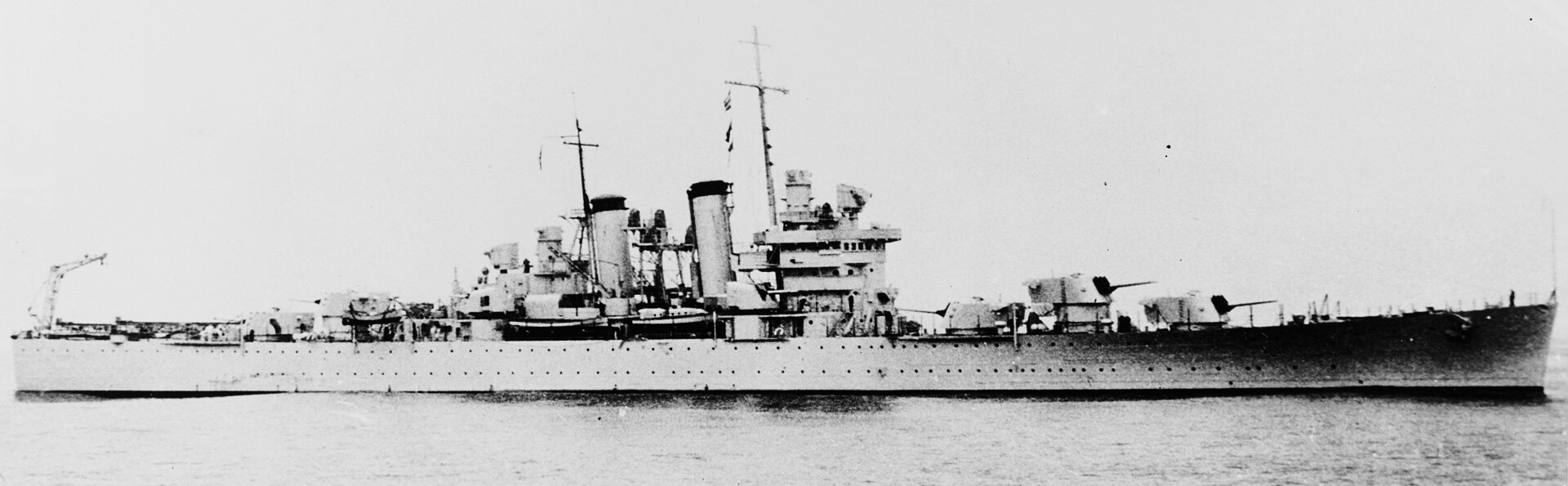
USS Helena (CL-50), c. 1940.
USS Helena was a Brooklyn-class light cruiser built for the United States Navy in the late 1930s, the ninth and final member of the class. The Brooklyns were the first modern light cruisers built by the US Navy under the limitations of the London Naval Treaty, and they were intended to counter the Japanese Mogami class; as such, they carried a battery of fifteen 6-inch (150 mm) guns, the same gun armament carried by the Mogamis. Helena and her sister St. Louis were built to a slightly modified design with a unit system of machinery and an improved anti-aircraft battery. Completed in 1939, Helena spent the first two years of her career in peacetime training that accelerated as tensions between the United States and Japan increased through 1941. She was torpedoed at the attack on Pearl Harbor in December 1941 and was repaired and modernized in early 1942.
After returning to service, Helena was assigned to the forces participating in the Guadalcanal campaign in the south Pacific. There, she took part in two major night battles with Japanese vessels in October and November 1942. The first, the Battle of Cape Esperance on the night of 11–12 October, resulted in a Japanese defeat, with Helena’s rapid-fire 6-inch battery helping to sink a heavy cruiser and a destroyer. The second, the first night of the Naval Battle of Guadalcanal in the early hours of 13 November, saw a similar defeat imposed on the Japanese; again, Helena’s fast shooting helped to overwhelm a Japanese task force that included two fast battleships, one of which was disabled by heavy American fire and sank the next day. Helena sank a destroyer and damaged several others in the action while emerging relatively unscathed. During her tour in the south Pacific, she also escorted convoys carrying supplies and reinforcements to the Marines fighting on Guadalcanal and bombarded Japanese positions on the island and elsewhere in the Solomons.
Following the American victory on Guadalcanal in early 1943, Allied forces began preparations to advance along the Solomon chain, first targeting New Georgia. Helena took part in a series of preparatory attacks on the island through mid-1943, culminating in an amphibious assault in the Kula Gulf on 5 July. The next night, while attempting to intercept a Japanese reinforcement squadron, Helena was torpedoed and sunk in the Battle of Kula Gulf. Most of her crew were picked up by a pair of destroyers and one group landed on New Georgia where they were evacuated the next day, but more than a hundred remained at sea for two days, ultimately making land on Japanese-occupied Vella Lavella. There, they were hidden from Japanese patrols by Solomon Islanders and a coastwatcher detachment before being evacuated on the night of 15–16 July. Helena’s wreck was located in 2018 by Paul Allen. (Wikipedia)
(USN Photo)
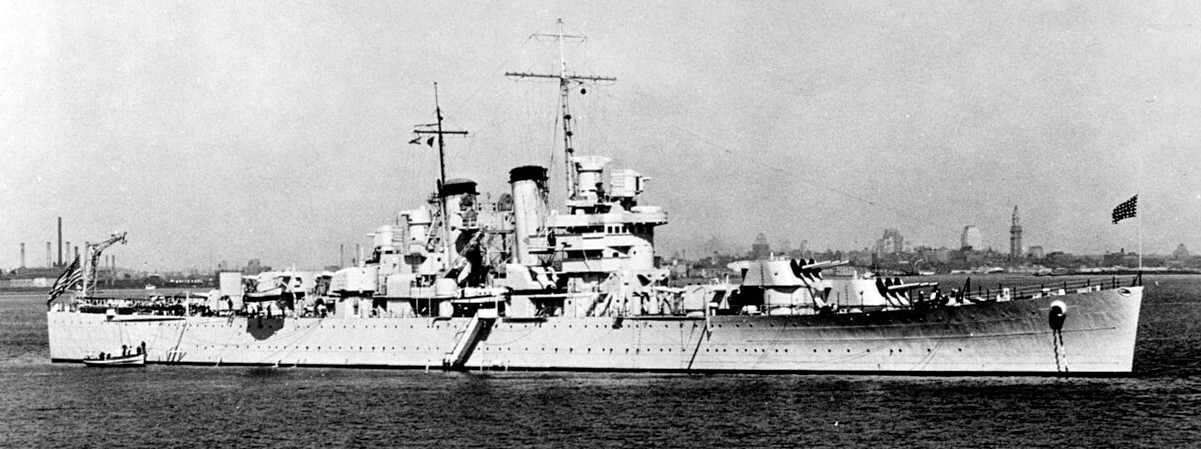
USS Helena (CL-50) anchored in President Roads, Boston, Massachusetts, 15 June 1940.
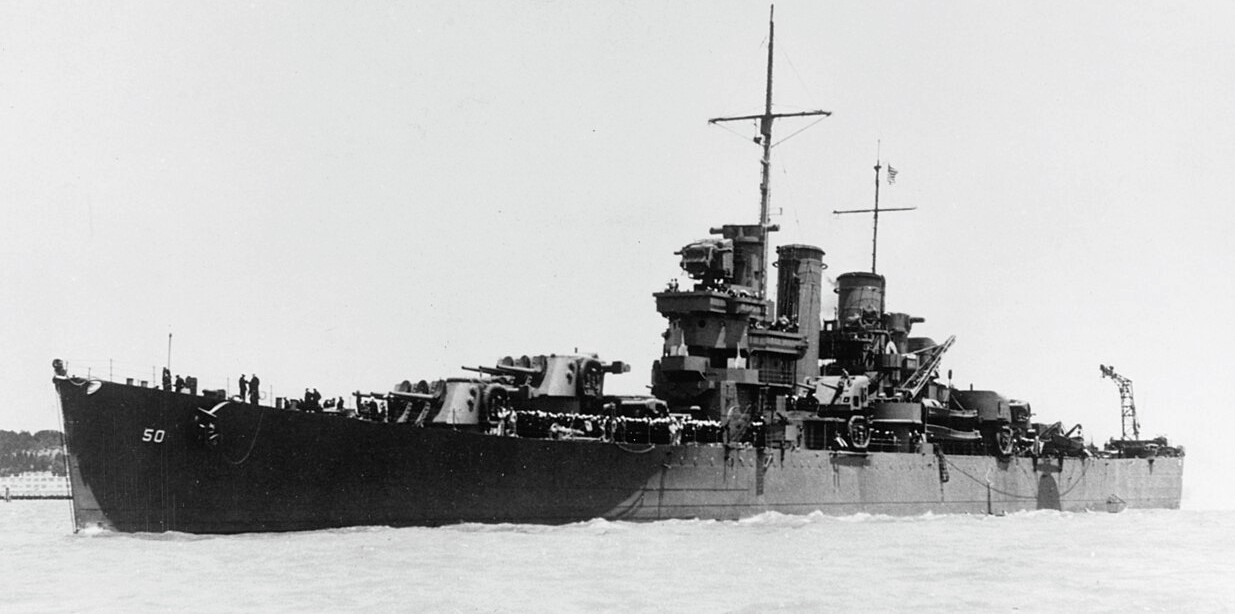
(USN Photo)
USS Helena (CL-50) off the Mare Island Naval Shipyard, California (USA), following battle damage repairs and overhaul, 1 July 1942. This image has been retouched to censor radar antennas from the gun directors and masts.
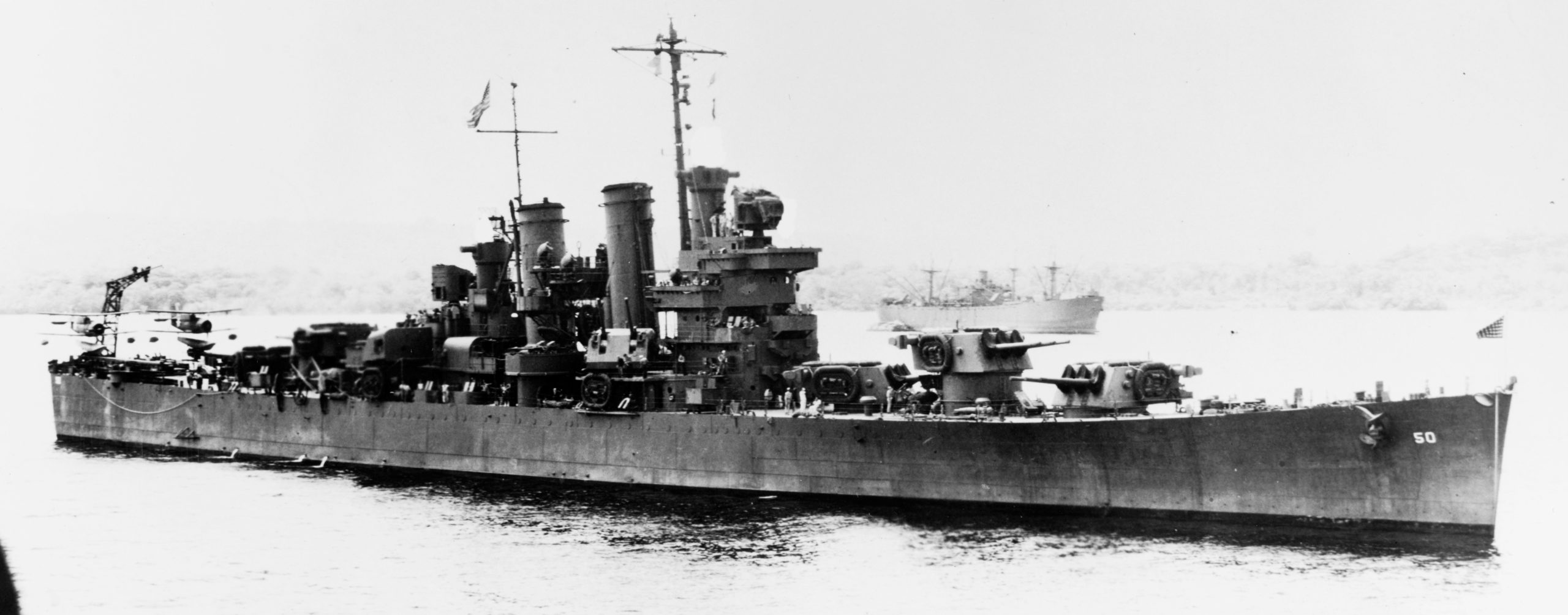
(USN Photo)
USS Helena (CL-50) at a South Pacific base, between battles, circa in 1943. This image has been retouched to remove radar antennas from the gun directors and masts.

(USN Photo)
USS Helena (CL-50) (right), USS Honolulu (CL-48), center distance, behind Helena, and USS St. Louis (CL-49) left, maneuvering off Espiritu Santo, New Hebrides, during exercises on 20 June 1943, ten days before the invasion of New Georgia.