
Kaiserliche Marine Dreadnought battleships: König class (1913): SMS König, SMS Grosser Kurfürst, SMS Markgraf, SMS Kronprinz.
SMS König
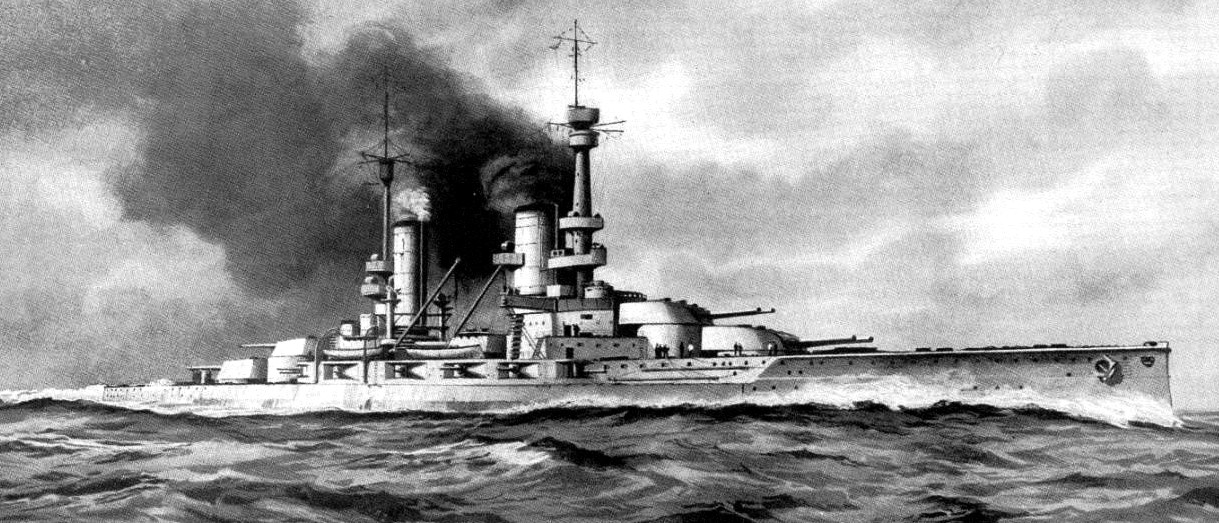
(British Naval Intelligence drawing)
A recognition drawing of the German battleship König prepared by the Royal Navy’s Intelligence department that was distributed to the fleet in 1918.
SMS König was the first of four König-class dreadnought battleships of the Imperial German Navy (Kaiserliche Marine) during the First World War. König (English: King) was named in honor of King William II of Württemberg. The battleship was armed with ten 30.5-centimeter (12 in) guns in five twin turrets and could steam at a top speed of 21 knots (39 km/h; 24 mph). Laid down in October 1911, the ship was launched on 1 March 1913. The construction of König was completed shortly after the outbreak of World War I; she was commissioned into the High Seas Fleet on 9 August 1914.
Along with her three sister ships, Grosser Kurfürst, Markgraf, and Kronprinz, König took part in most of the fleet actions during the war. As the leading ship in the German line on 31 May 1916 in the Battle of Jutland, König was heavily engaged by several British battleships and suffered ten large-caliber shell hits. In October 1917, she forced the Russian pre-dreadnought battleship Slava to scuttle herself in the Battle of Moon Sound, which followed Germany’s successful Operation Albion.
König was interned, along with the majority of the High Seas Fleet, at Scapa Flow in November 1918 following the Armistice. On 21 June 1919, Rear Admiral Ludwig von Reuter gave the order to scuttle the fleet, including König, while the British guard ships were out of the harbour on exercises. Unlike most of the scuttled ships, König was never raised for scrapping; the wreck is still on the bottom of the bay. (Wikipedia)
SMS Grosser Kurfürst
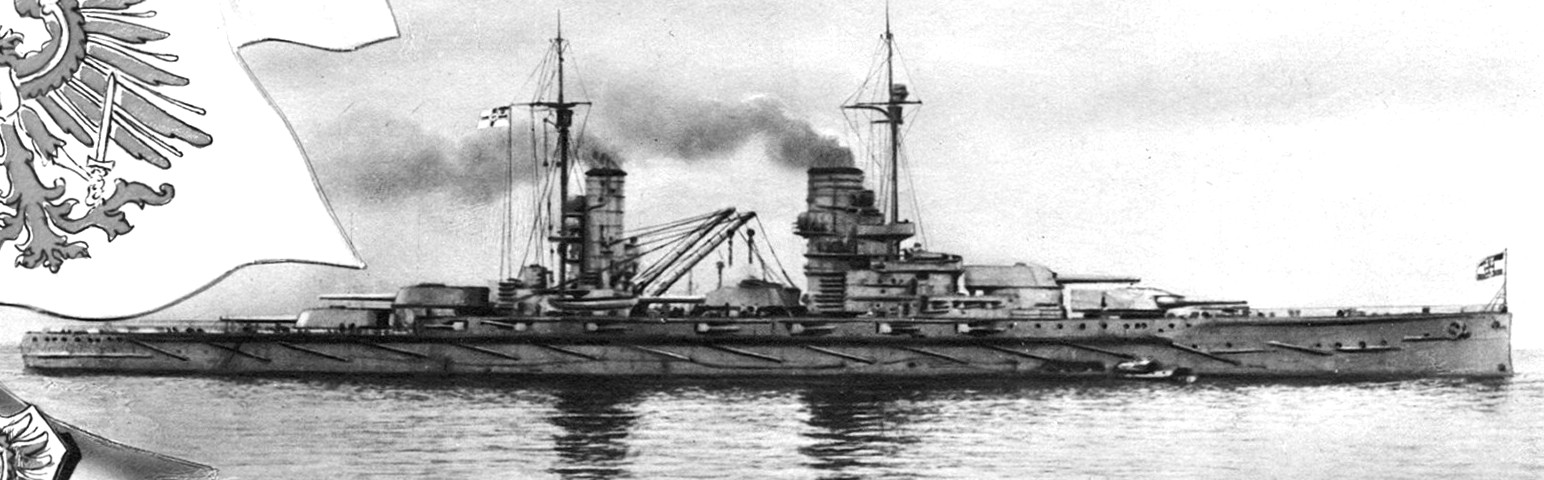
(Kaiserliche Marine Photo, c1910)
SMS Grosser Kurfürst was the second dreadnought battleship of the four-ship König class. Grosser Kurfürst (or Großer Kurfürst) served in the Imperial German Navy during the First World War. The battleship was laid down in October 1911 and launched on 5 May 1913. She was formally commissioned into the Imperial Navy on 30 July 1914, days before the outbreak of war between Germany and the United Kingdom. Her name means Great Elector, and refers to Frederick William I, the Prince-elector of Brandenburg. Grosser Kurfürst was armed with ten 30.5-centimeter (12 in) guns in five twin turrets and could steam at a top speed of 21 knots (39 km/h; 24 mph).
Along with her three sister ships, König, Markgraf, and Kronprinz, Grosser Kurfürst took part in most of the fleet actions during the war, including the Battle of Jutland on 31 May and 1 June 1916. The ship was subjected to heavy fire at Jutland, but was not seriously damaged. She shelled Russian positions during Operation Albion in September and October 1917. Grosser Kurfürst was involved in a number of accidents during her service career; she collided with König and Kronprinz, grounded several times, was torpedoed once, and hit a mine.
After Germany’s defeat and the signing of the Armistice in November 1918, Grosser Kurfürst and most of the capital ships of the High Seas Fleet were interned by the Royal Navy in Scapa Flow. The ships were disarmed and limited to skeleton crews while the Allied powers negotiated the final version of the Treaty of Versailles. On 21 June 1919, days before the treaty was signed, the commander of the interned fleet, Rear Admiral Ludwig von Reuter, ordered the fleet to be scuttled to ensure that the British would not be able to seize the ships. Unlike her sister ships, Grosser Kurfürst was raised in 1938 for scrapping and subsequently broken up in Rosyth. (Wikipedia)
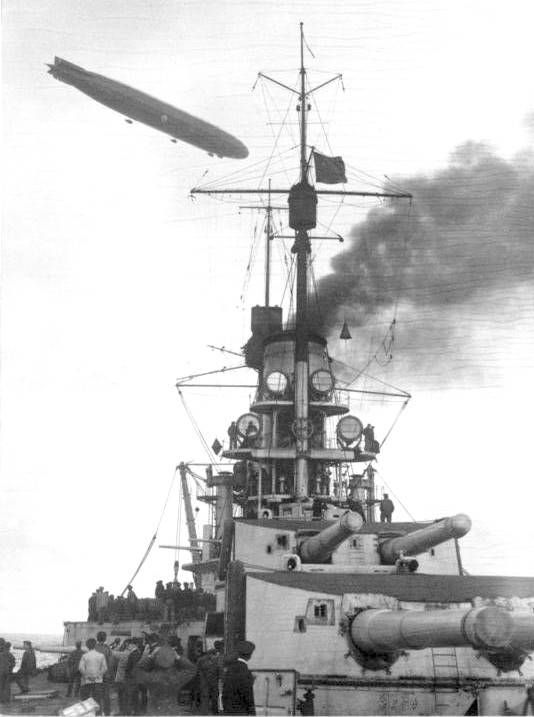
(Bundesarchiv, Bild 146-1971-017-32 / Unknown / CC-BY-SA 3.0)
SMS Großer Kurfürst with a Zeppelin overhead, taken during Operation Albion in October 1917.
SMS Markgraf
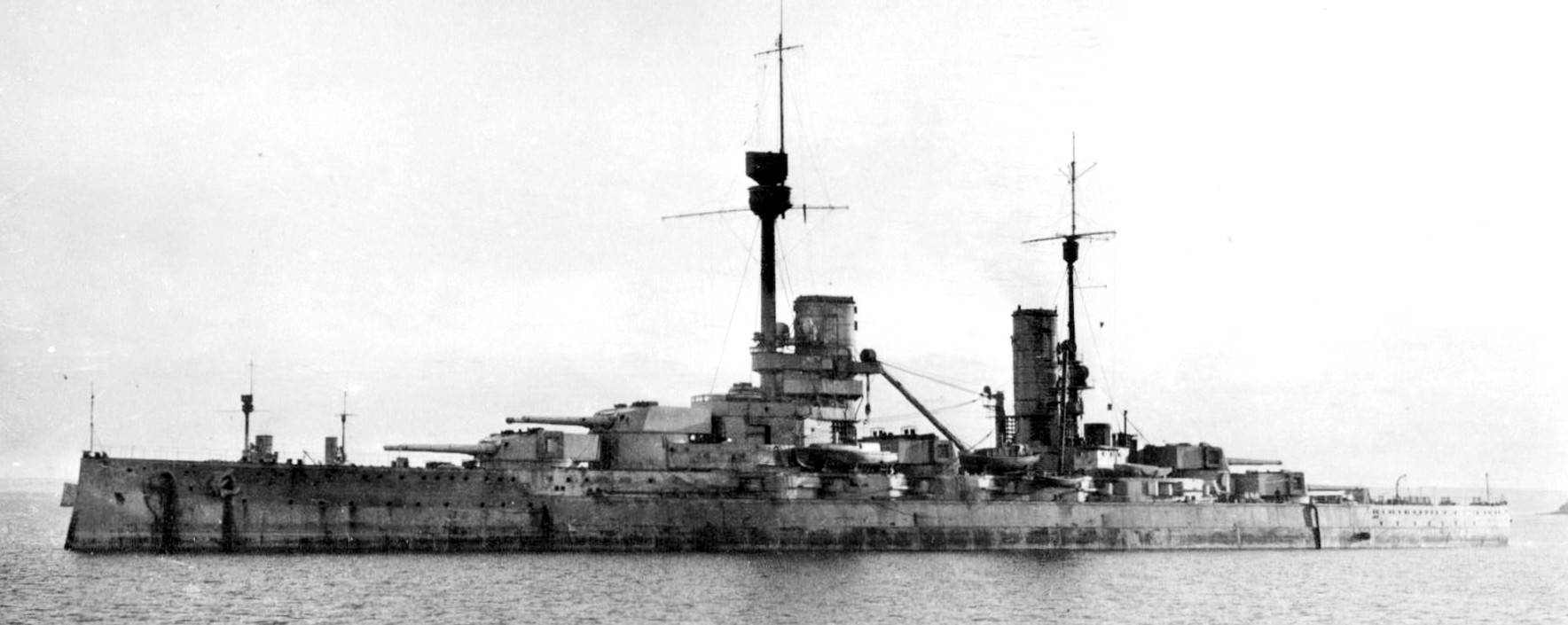
(Kaiserliche Marine Photo)
SMS Markgraf was the third dreadnought battleship of the four-ship König class. She served in the Imperial German Navy during the First World War. The battleship was laid down in November 1911 and launched on 4 June 1913. She was formally commissioned into the Imperial Navy on 1 October 1914, just over two months after the outbreak of war in Europe. Markgraf was armed with ten 30.5-centimeter (12 in) guns in five twin turrets and could steam at a top speed of 21 knots (39 km/h; 24 mph). Markgraf was named in honor of the royal family of Baden. The name Markgraf is a rank of German nobility and is equivalent to the English Margrave, or Marquess.
Along with her three sister ships, König, Grosser Kurfürst, and Kronprinz, Markgraf took part in most of the fleet actions during the war, including the Battle of Jutland on 31 May and 1 June 1916. At Jutland, Markgraf was the third ship in the German line and heavily engaged by the opposing British Grand Fleet; she sustained five large-caliber hits and her crew suffered 23 casualties. Markgraf also participated in Operation Albion, the conquest of the Gulf of Riga, in late 1917. The ship was damaged by a mine while en route to Germany following the successful conclusion of the operation.
After Germany’s defeat in the war and the signing of the Armistice in November 1918, Markgraf and most of the capital ships of the High Seas Fleet were interned by the Royal Navy in Scapa Flow. The ships were disarmed and reduced to skeleton crews while the Allied powers negotiated the final version of the Treaty of Versailles. On 21 June 1919, days before the treaty was signed, the commander of the interned fleet, Rear Admiral Ludwig von Reuter, ordered the fleet to be scuttled to ensure that the British would not be able to seize the ships. Unlike most of the scuttled ships, Markgraf was never raised for scrapping; the wreck is still sitting on the bottom of the bay. (Wikipedia)
SMS Kronprinz
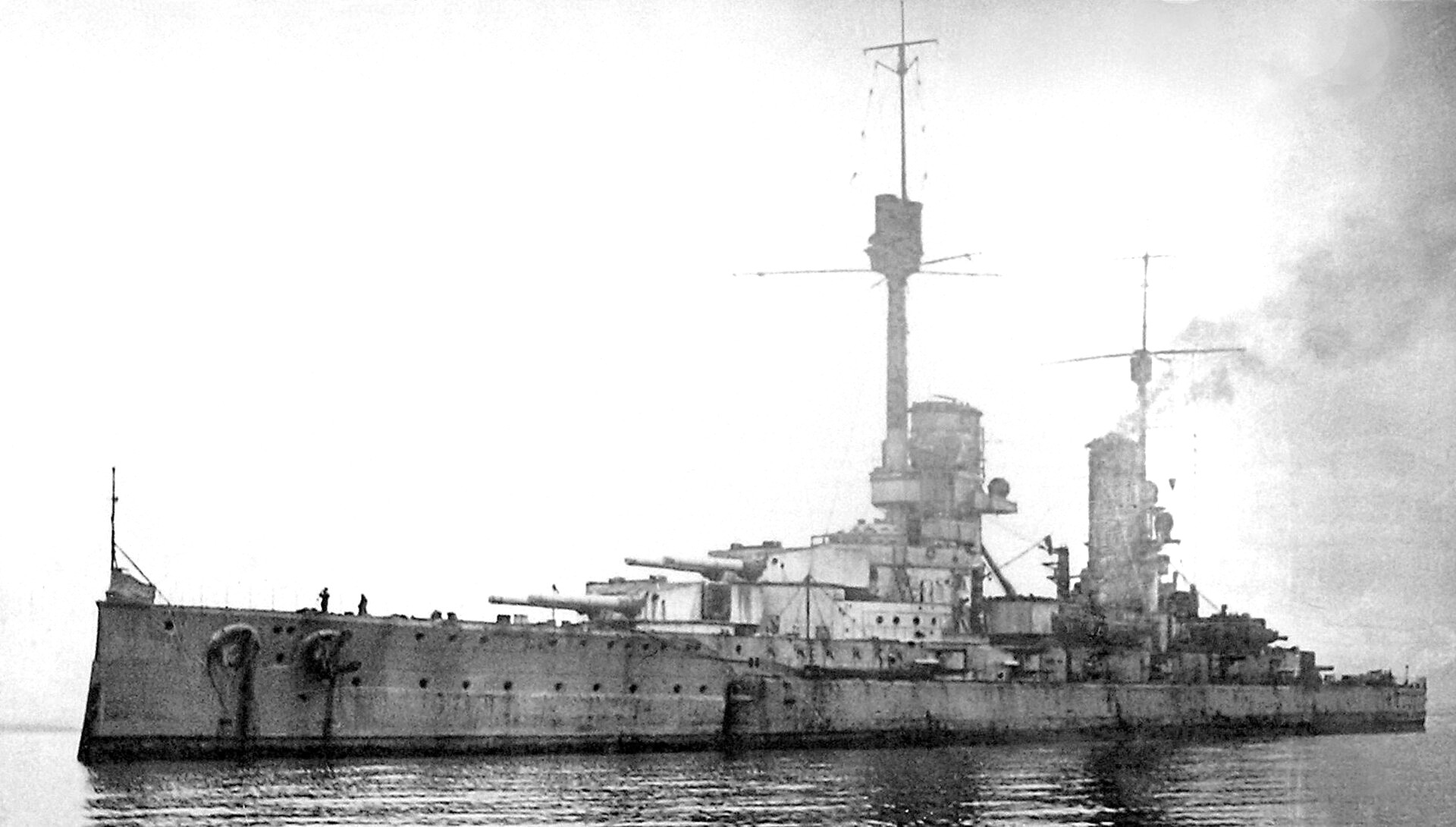
(PD-UKGOV Photo, 1919)
SMS Kronprinz was the last dreadnought battleship of the four-ship König class of the German Imperial Navy. The battleship was laid down in November 1911 and launched on 21 February 1914. She was formally commissioned into the Imperial Navy on 8 November 1914, just over 3 months after the start of the First World War. The name Kronprinz (“Crown Prince”) refers to Crown Prince Wilhelm, and in June 1918, the ship was renamed Kronprinz Wilhelm in his honor. The battleship was armed with ten 30.5-centimeter (12 in) guns in five twin turrets and could steam at a top speed of 21 knots (39 km/h; 24 mph).
Along with her three sister ships, König, Grosser Kurfürst and Markgraf, Kronprinz took part in most of the fleet actions during the war, including the Battle of Jutland on 31 May and 1 June 1916. Although near the front of the German line, she emerged from the battle unscathed. She was torpedoed by the British submarine HMS J1 on 5 November 1916 during an operation off the Danish coast. Following repairs, she participated in Operation Albion, an amphibious assault in the Baltic, in October 1917. During the operation Kronprinz engaged the Russian battleship Tsesarevich and forced her to retreat.
After Germany’s defeat in the war and the signing of the Armistice in November 1918, Kronprinz Wilhelm and most of the capital ships of the High Seas Fleet were interned by the Royal Navy in Scapa Flow. The ships were disarmed and reduced to skeleton crews while the Allied powers negotiated the final version of the Treaty of Versailles. On 21 June 1919, days before the treaty was signed, the commander of the interned fleet, Rear Admiral Ludwig von Reuter, ordered the fleet to be scuttled to ensure that the British would not be able to seize the ships. Unlike most of the other scuttled ships, Kronprinz Wilhelm was never raised for scrapping; the wreck is still on the bottom of the harbour. (Wikipedia)