
Kaiserliche Marine (Imperial German Navy) pre-Dreadnought battleships: SMS Brandenburg, SMS Wörth, SMS Weissenburg, SMS Kurfürst Friedrich Wilhelm
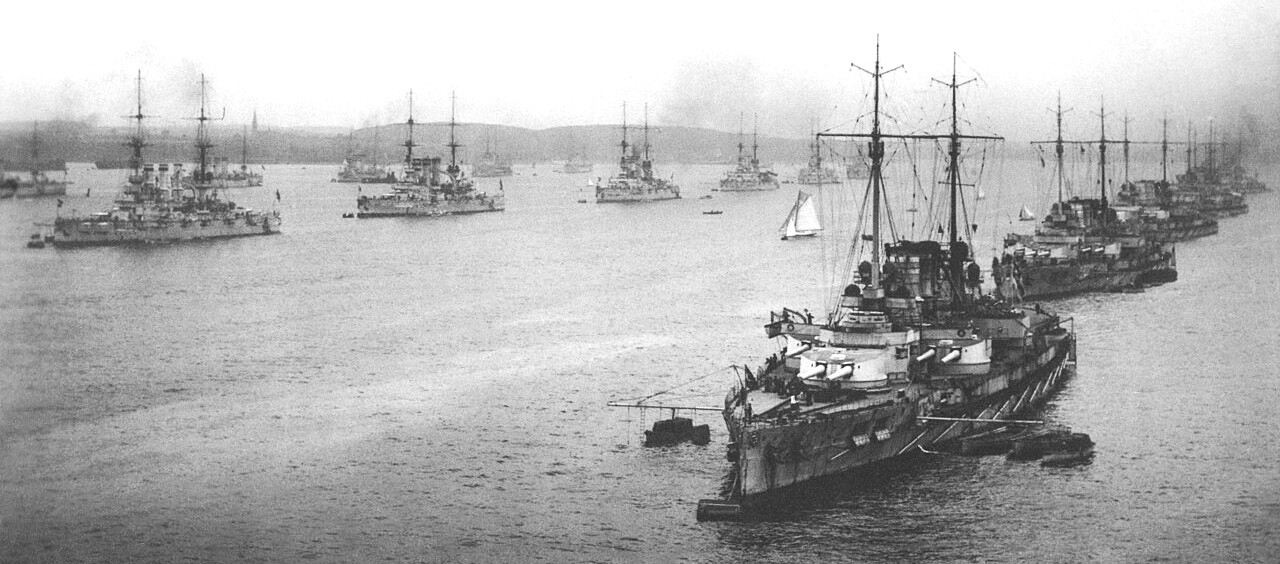
(U.S. National Archives Photo)
First and second battleship squadrons and small cruiser of the Kaiserliche Marine (Imperial German Navy) in Kiel Harbour, Germany, circa 1911-14.
The Imperial German Navy or the Kaiserliche Marine (Imperial Navy) was the navy of the German Empire, which existed between 1871 and 1919. It grew out of the small Prussian Navy (from 1867 the North German Federal Navy), which was mainly for coast defence. Kaiser Wilhelm II greatly expanded the navy. The key leader was Admiral Alfred von Tirpitz, who greatly expanded the size and quality of the navy, while adopting the sea power theories of American strategist Alfred Thayer Mahan. The result was a naval arms race with Britain, as the German navy grew to become one of the greatest maritime forces in the world, second only to the Royal Navy.
The German surface navy proved ineffective during the First World War; its only major engagement, the Battle of Jutland, was a draw, but it kept the surface fleet largely in port for the rest of the war. The submarine fleet was greatly expanded and threatened the British supply system during the U-boat campaign. As part of the Armistice, the Imperial Navy’s main ships were ordered to be turned over to the Allies but they were instead scuttled by their own crews. All ships of the Imperial Navy bore the prefix SMS, for Seiner Majestät Schiff (His Majesty’s Ship). (Wikipedia)
By the start of the First World War, the German Imperial Navy possessed 22 pre-Dreadnoughts, 14 dreadnought battleships and 4 battle-cruisers. A further three ships of the König class were completed between August and November 1914, and two Bayern-class battleships entered service in 1916. The battlecruisers Derfflinger, Lützow, and Hindenburg were completed in September 1914, March 1916, and May 1917, respectively. All but the latest pre-Dreadnoughts were soon decommissioned, so that their crews could be transferred to more useful vessels. The main fighting forces of the navy were to become the High Seas Fleet and the U-boat fleet. Smaller fleets were deployed to the German overseas protectorates, the most prominent being assigned to the East Asia Squadron at Qingdao. The German Navy’s U-boats were also instrumental in the sinking of the passenger liner and auxiliary cruiser, the RMS Lusitania on 7 May 1915, which was one of the main events that led to the USA joining the war two years later in 1917. (Wikipedia)
After the end of the First World War, the bulk of the navy’s modern ships (74 in all) were interned at Scapa Flow (November 1918), where the entire fleet (with a few exceptions) was scuttled by its crews on 21 June 1919 on orders from its commander, Rear Admiral Ludwig von Reuter. Ernest Cox subsequently salvaged many of the Scapa Flow ships. The surviving ships of the Imperial Navy became the basis for the Reichsmarine of the Weimar Republic.
The Brandenburg class consisted of four pre-dreadnought battleships built for the German Kaiserliche Marine (Imperial Navy), the first modern battleships of the fleet. The four ships of the class—Brandenburg, Wörth, Weissenburg, and Kurfürst Friedrich Wilhelm—were the first ocean-going capital ships built for the German fleet in nearly two decades, owing to reluctance in the Reichstag (Imperial Diet) to fund large projects. They followed a series of small coastal defense ships, and though in retrospect they anticipated the buildup that created the High Seas Fleet, they were ordered as part of a construction program that reflected the strategic and tactical confusion that affected many navies in the 1880s. The design process that resulted in the Brandenburg class was very lengthy, with proposals that ranged from outdated casemate ships to versions with two twin-gun turrets placed side by side. The designers ultimately settled on ships that were armed with an unusual main battery of six 28 cm (11 in) guns at a time when all foreign battleships were built with four or fewer heavy guns.
All four ships served with I Squadron of the German fleet for the first several years of their careers, with Kurfürst Friedrich Wilhelm the squadron flagship. During this period, they conducted routine training exercises and visited foreign countries, frequently in company with Kaiser Wilhelm II aboard his yacht. In 1900, they were deployed to China to help combat the Boxer Uprising, but they arrived after the bulk of the fighting was over and thus saw little action there. After returning to Germany they were modernized beginning in 1902, thereafter resuming their peacetime activities. Brandenburg and Wörth remained in service with the German fleet until 1912, when they were laid up. In 1910, Kurfürst Friedrich Wilhelm and Weissenburg were sold to the Ottoman Navy and were renamed Barbaros Hayreddin and Turgut Reis. The now-Ottoman ships saw extensive service during the First Balkan War, providing fire support to Ottoman ground forces fighting in Thrace, as well as engaging the Greek fleet at the Battles of Elli and Lemnos in December 1912 and January 1913, respectively.
Following the outbreak of the First World War, the German ships were reactivated for use as guard ships protecting the German North Sea coast. The Ottoman vessels meanwhile were used to support the fortresses guarding the Dardanelles during the Dardanelles campaign against British and French forces. Barbaros Hayreddin was torpedoed and sunk by the British submarine HMS E11 in April 1915, though the other members of the class survived the war. Brandenburg and Wörth were disarmed and reduced to secondary duties, eventually being broken up in 1919, while Turgut Reis lingered on as a training ship until 1933. She became a barracks ship until 1950 when she was sold for scrap, and was slowly dismantled over the following decade.
SMS Brandenburg
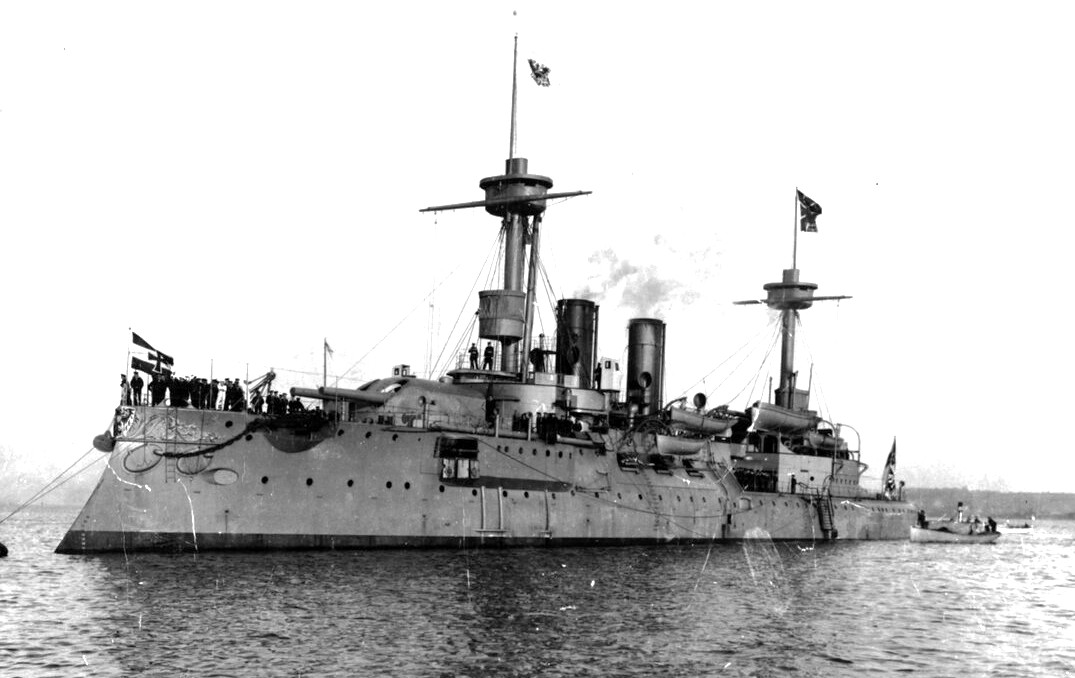
(Kaiserliche Marine Photo)
SMS Brandenburg was the lead ship of the Brandenburg-class pre-dreadnought battleships, which included Kurfürst Friedrich Wilhelm, Weissenburg, and Wörth, built for the German Kaiserliche Marine (Imperial Navy) in the early 1890s. She was the first pre-dreadnought built for the German Navy; earlier, the navy had only built coastal defense ships and armored frigates. The ship was laid down at the AG Vulcan dockyard in 1890, launched on 21 September 1891, and commissioned into the German Navy on 19 November 1893. Brandenburg and her three sisters were unique for their time in that they carried six heavy guns instead of the four that were standard in other navies. She was named after the Province of Brandenburg.
Brandenburg served with I Division during the first decade of her service with the fleet. This period was generally limited to training exercises and goodwill visits to foreign ports. These training maneuvers were nevertheless very important to developing German naval tactical doctrine in the two decades before World War I, especially under the direction of Alfred von Tirpitz. The ship saw her first major deployment in 1900, when she and her three sister ships were deployed to China to suppress the Boxer Uprising. In the early 1900s, all four ships were heavily rebuilt. She was obsolete by the start of World War I and only served in a limited capacity, initially as a coastal defense ship. In December 1915, she was withdrawn from active service and converted into a barracks ship. Brandenburg was scrapped in Danzig (now Gdańsk, after the war, in 1920. (Wikipedia)
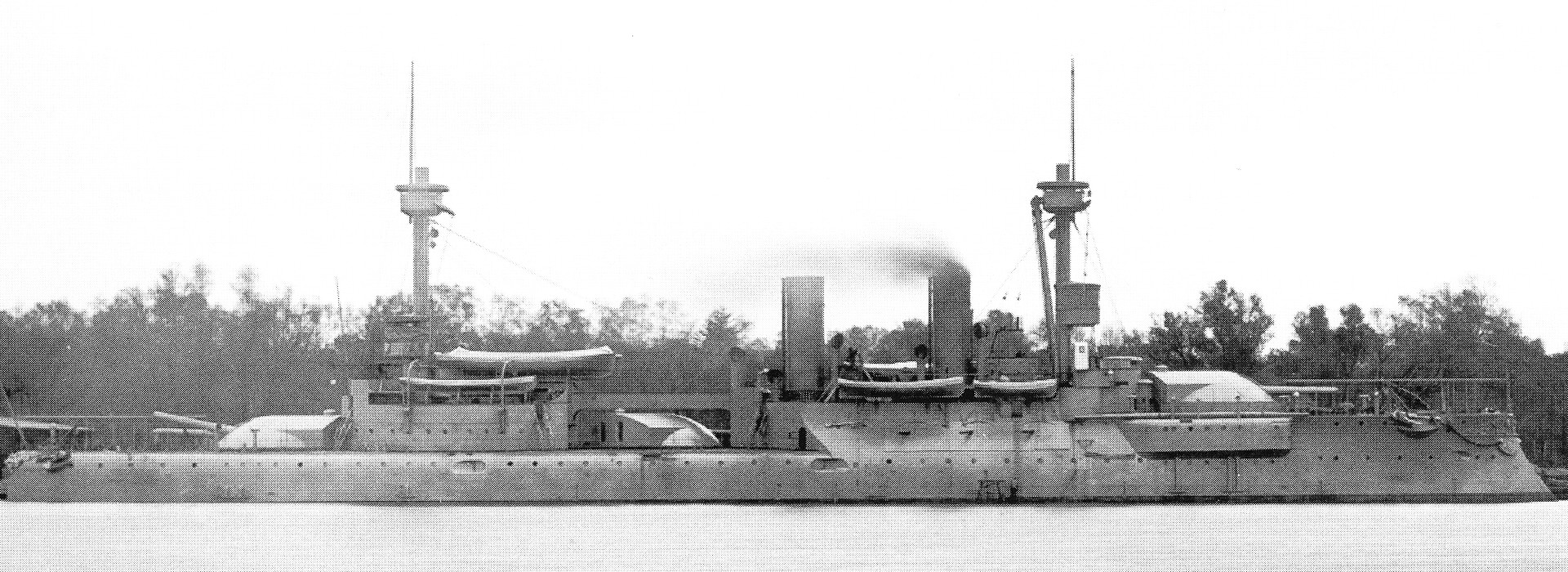
(Kaiserliche Marine Photo)
SMS Brandenburg, 1893.
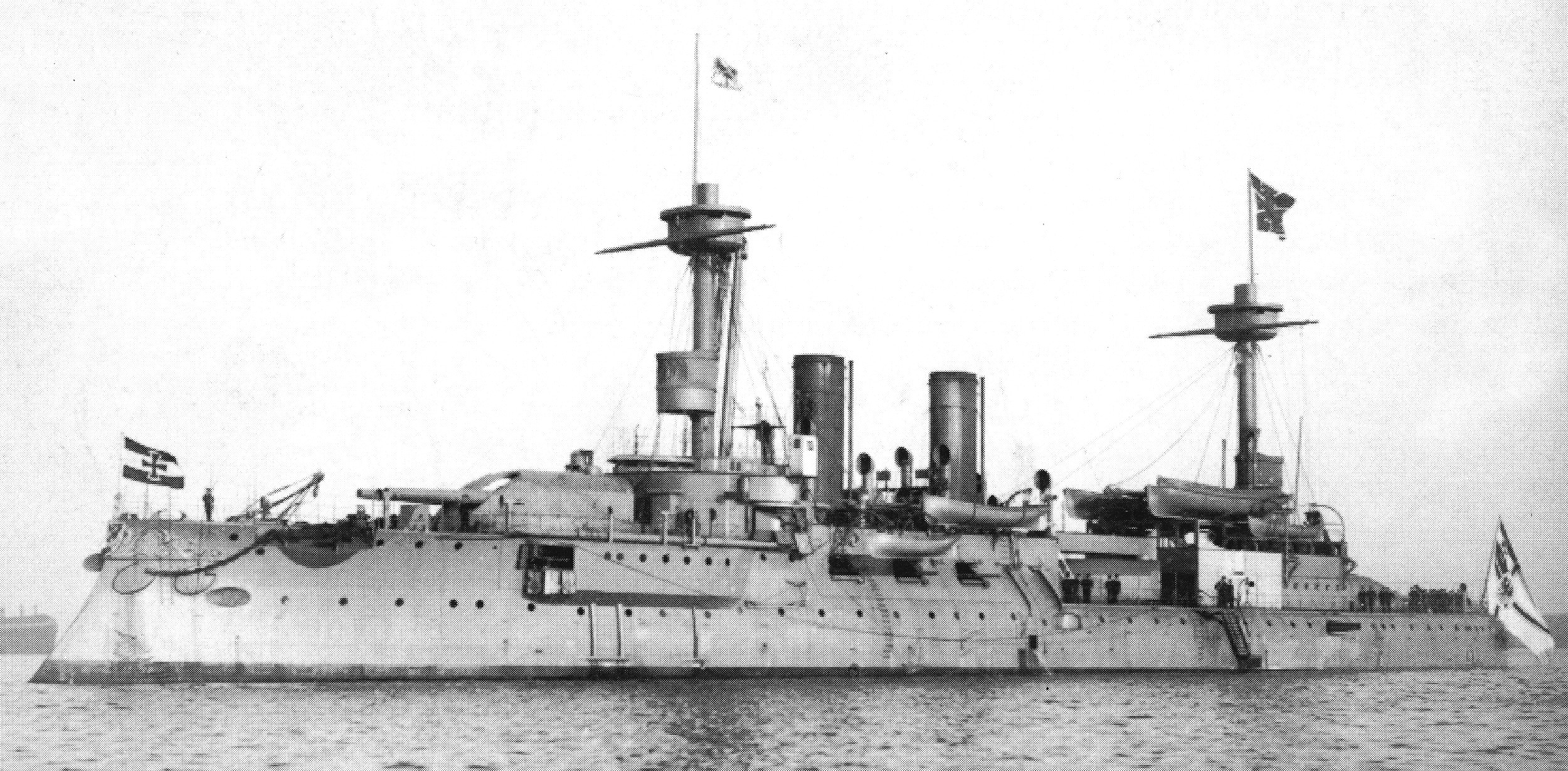
(Kaiserliche Marine Photo)
SMS Brandenburg, 1893.
(Kaiserliche Marine Photo)
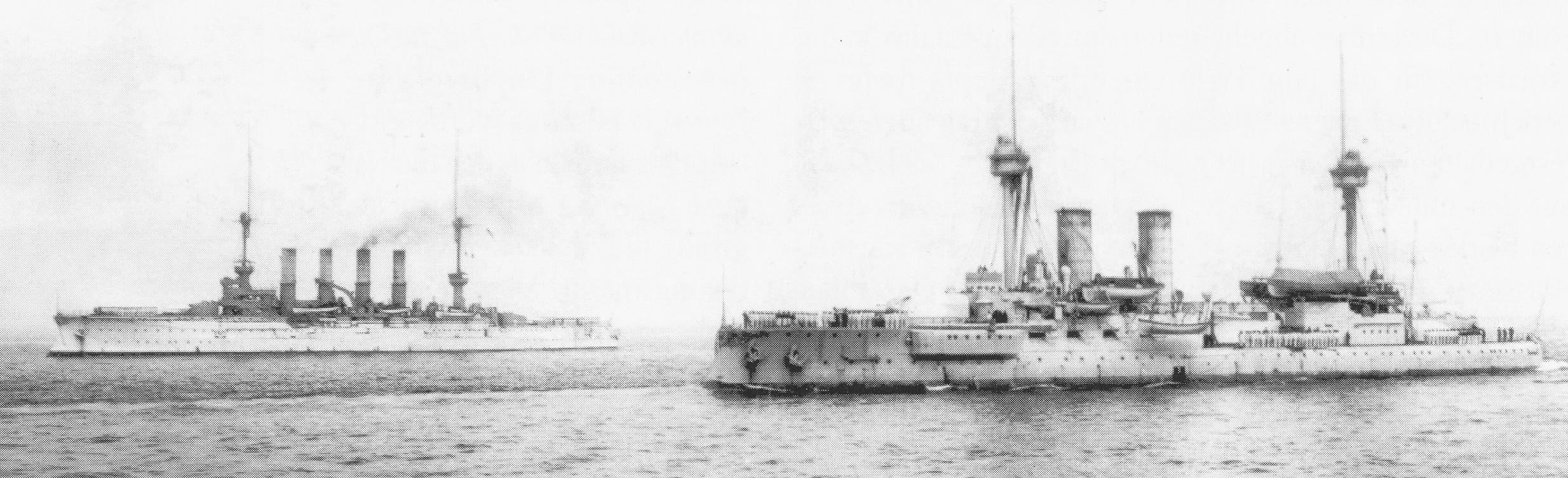
SMS Brandenburg and the German cruiser SMS Roon in 1906.
(Kaiserliche Marine Photo)
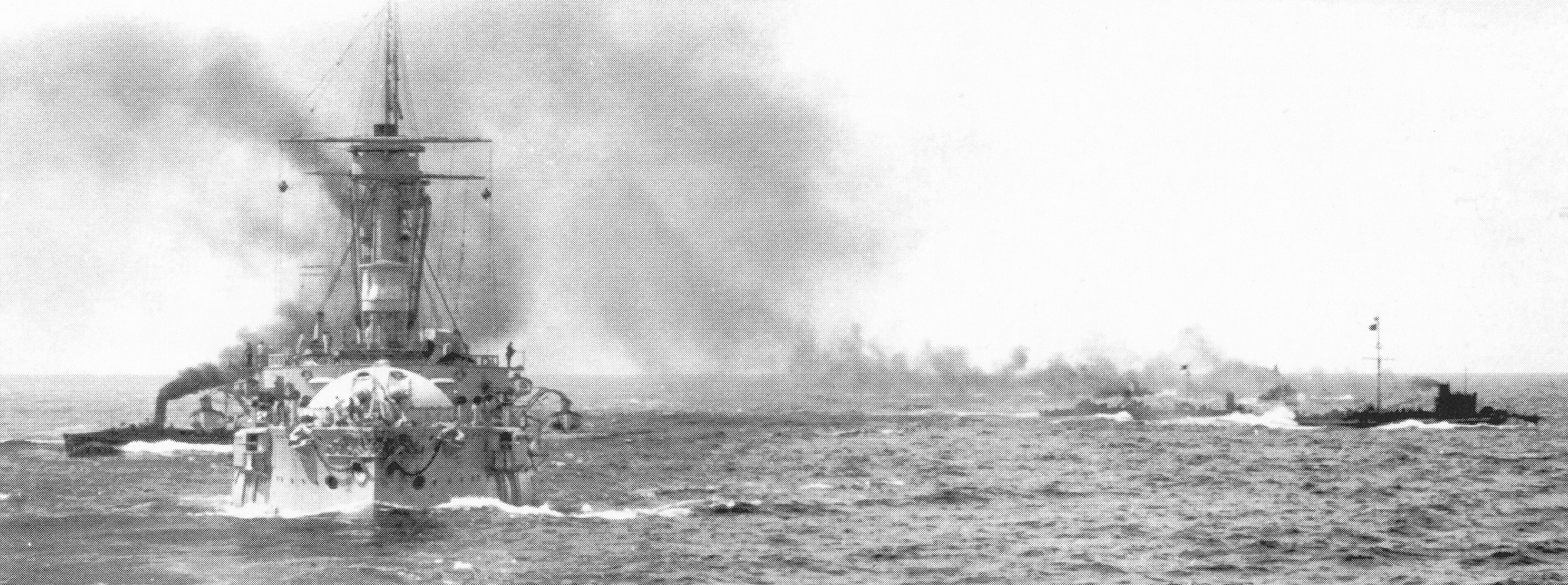
SMS Brandenburg and torpedo boats in 1898.
SMS Wörth
(Kaiserliche Marine Photo, c1899)
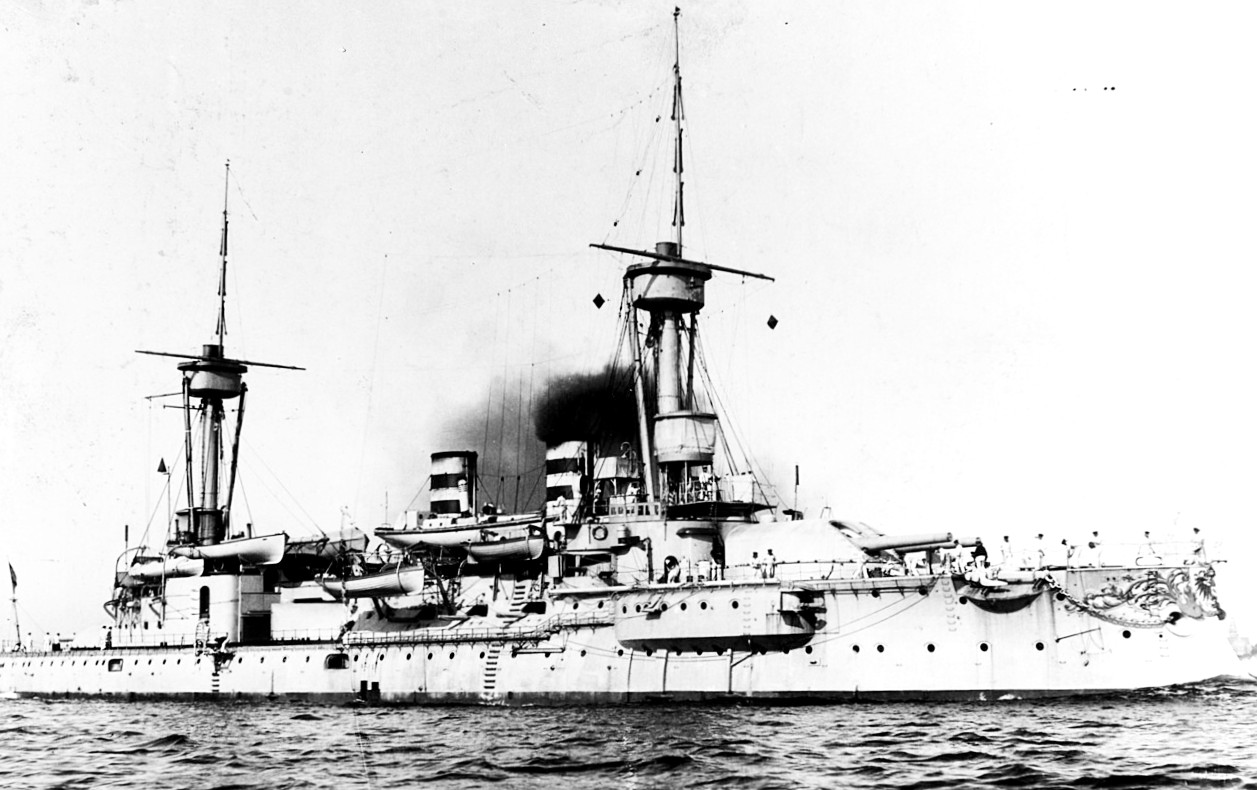
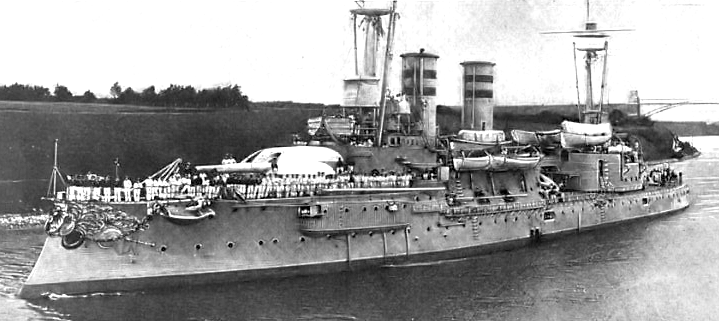
SMS Wörth (“His Majesty’s Ship Wörth”) was one of four German pre-dreadnought battleships of the Brandenburg class, built in the early 1890s. The class also included Brandenburg, Kurfürst Friedrich Wilhelm, and Weissenburg. The ships were the first ocean-going battleships built for the Kaiserliche Marine (Imperial Navy). Wörth was laid down at the Germaniawerft dockyard in Kiel in May 1890. The ship was launched on 6 August 1892 and commissioned into the fleet on 31 October 1893. Wörth and her three sisters carried six heavy guns rather than four, as was standard for most other navies’ battleships. She was named for the Battle of Wörth fought during the Franco-Prussian War of 1870–1871.
Wörth served in the German fleet for the first decade of her career, participating in the normal peacetime routine of training cruises and exercises. She took part in the German naval expedition to China in 1900 to suppress the Boxer Uprising; by the time the fleet arrived the siege of Peking had already been lifted, and Wörth saw little direct action in China. She was placed in reserve in 1906 as newer, more powerful vessels had supplanted the Brandenburg class as front-line battleships. Obsolete by the start of the Fiurst World War, Wörth and Brandenburg served in a limited capacity in the Imperial German Navy as coastal defense ships for the first two years of the war; they did not see action. By 1916, Wörth was reduced to a barracks ship, a role in which she served until the end of hostilities. Despite plans to convert her into a freighter after the war, Wörth was scrapped in Danzig in 1919. (Wikipedia)
(Kaiserliche Marine Photo)
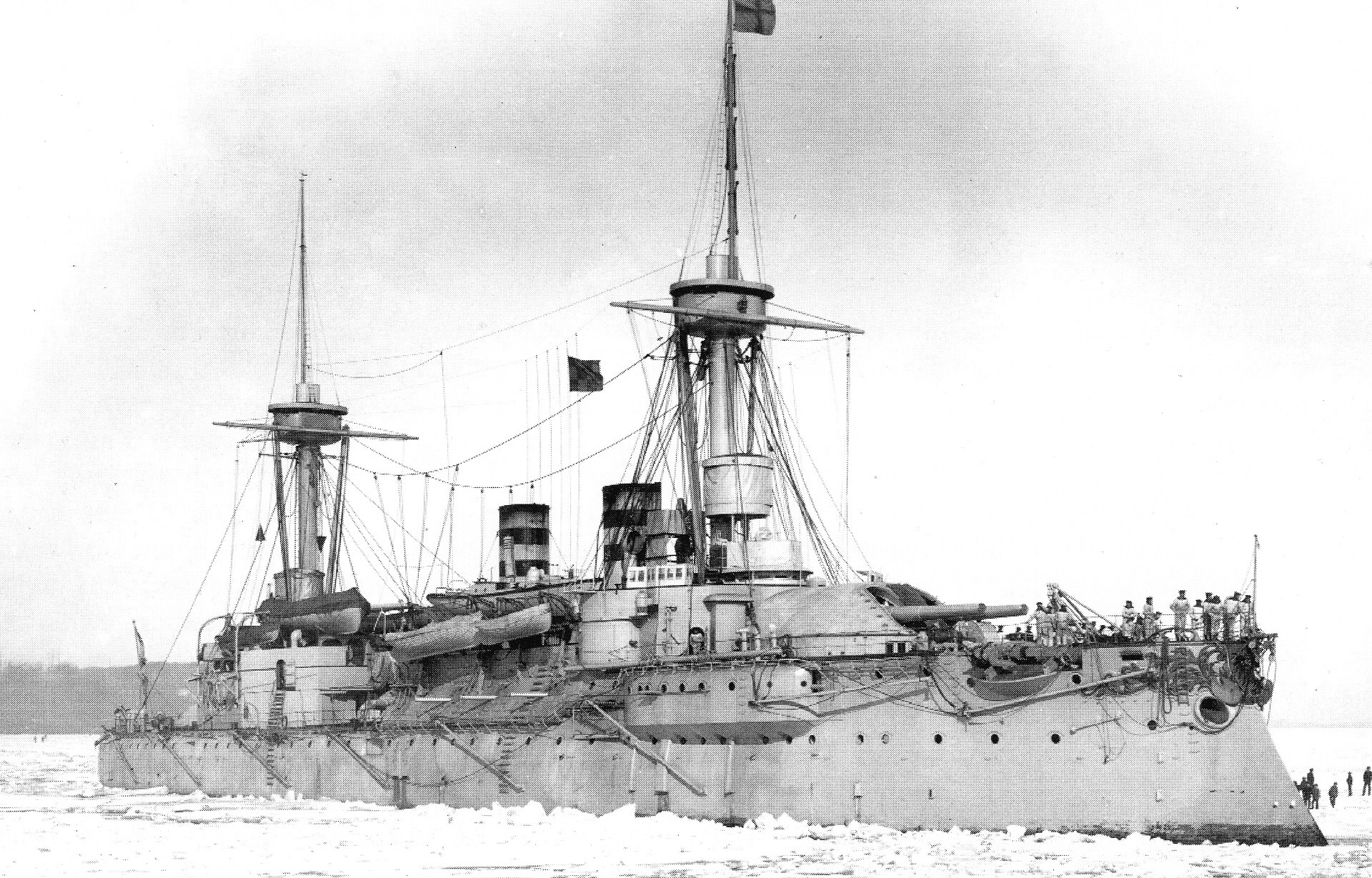
SMS Wörth.
(Kaiserliche Marine Photo)
SMS Wörth steaming through the Kiel Canal before 1901.
SMS Weissenburg
(Kaiserliche Marine Photo)
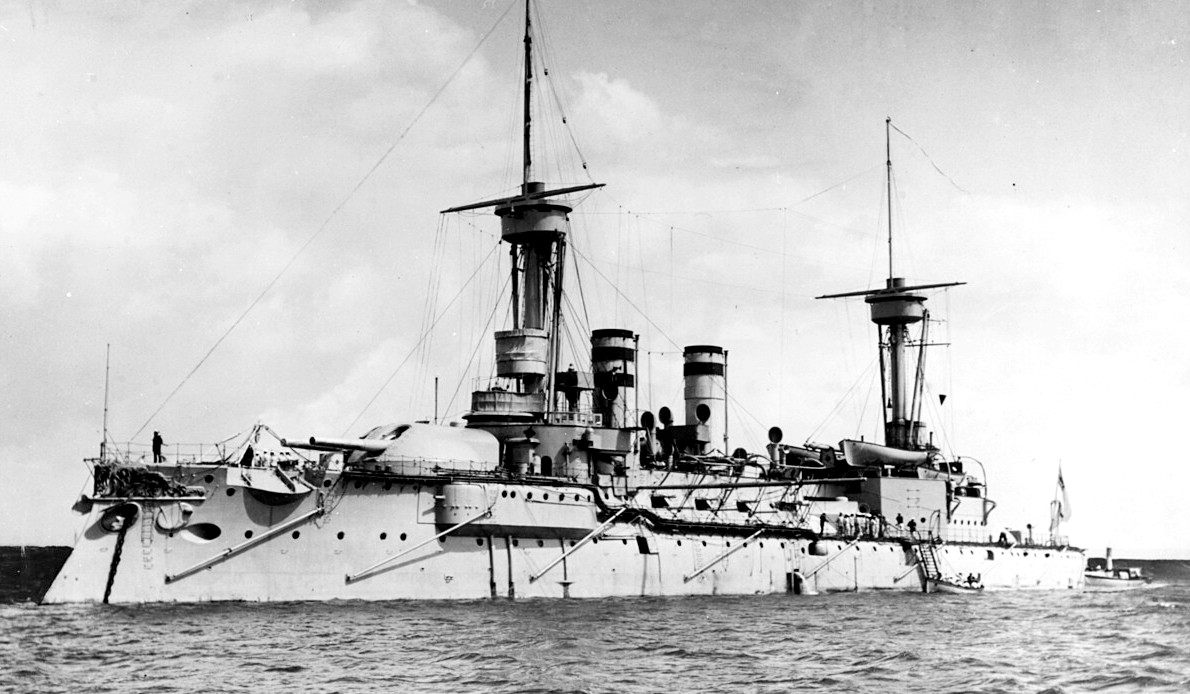
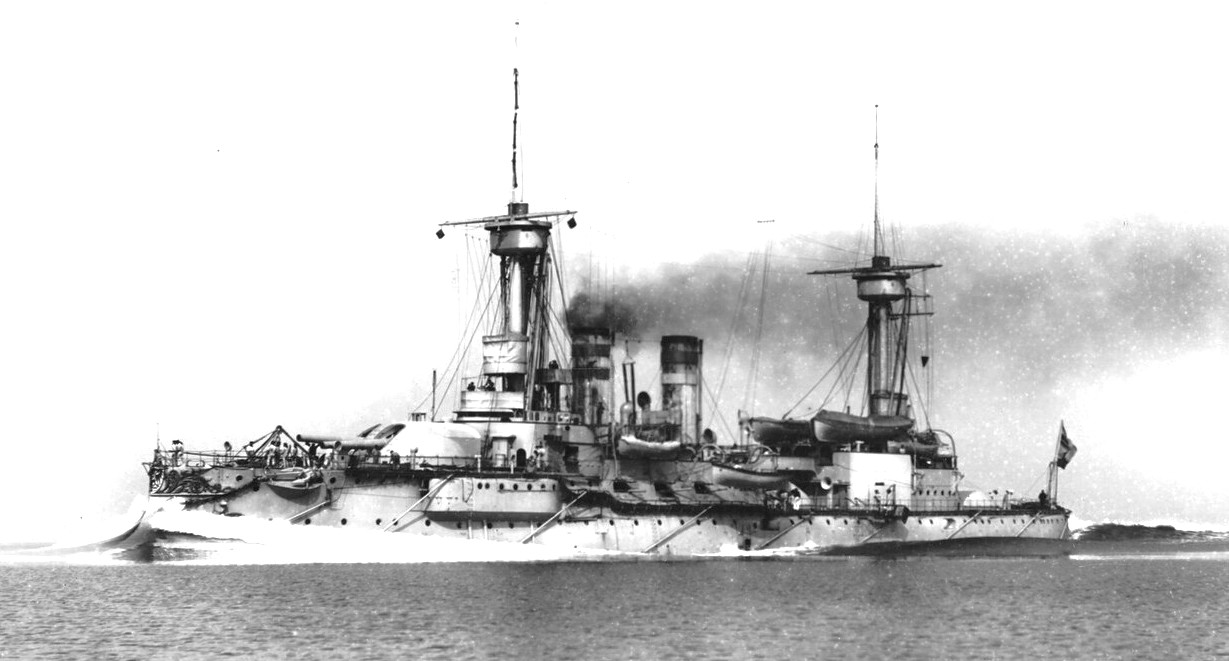
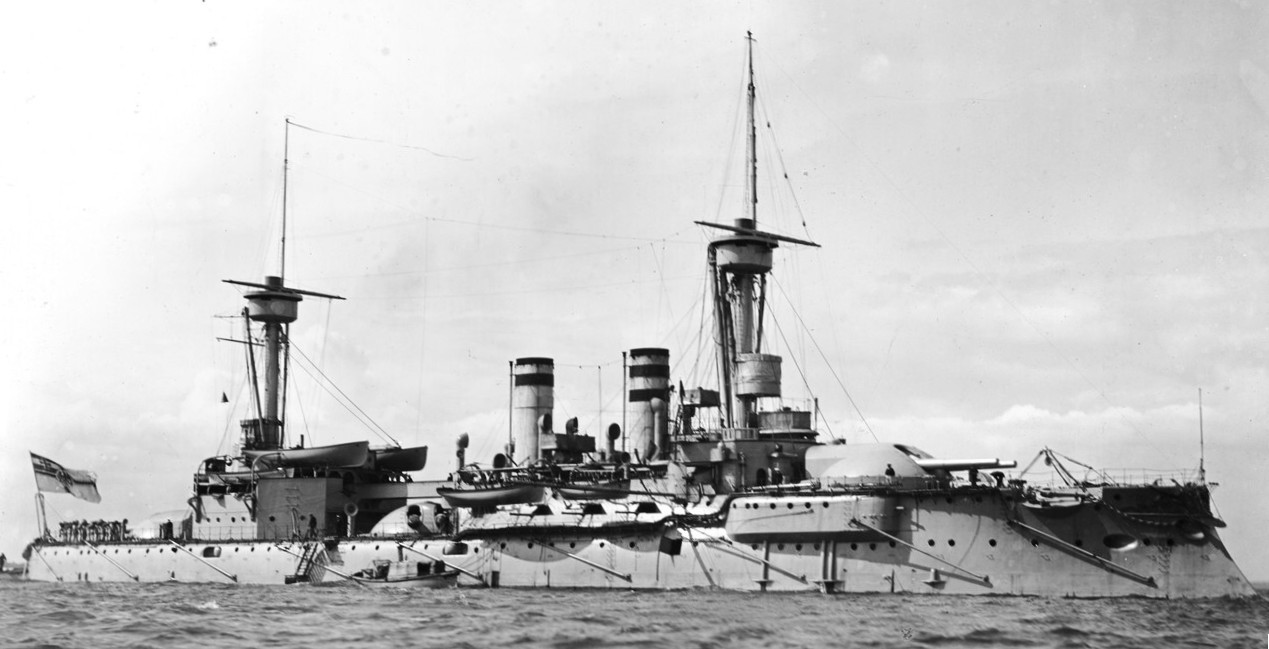
SMS Weissenburg was one of the first ocean-going battleships of the Imperial German Navy. She was the third pre-dreadnought of the Brandenburg class, which also included her sister ships Brandenburg, Wörth, and Kurfürst Friedrich Wilhelm. Weissenburg was laid down in 1890 in the AG Vulcan dockyard in Stettin, launched in 1891, and completed in 1894. The Brandenburg-class battleships were unique for their era in that they carried six large-caliber guns in three twin turrets, as opposed to four guns in two turrets, as was the standard in other navies.
Weissenburg served with I Division during the first decade of her service with the fleet. This period was generally limited to training exercises and goodwill visits to foreign ports. These training maneuvers were nevertheless very important to developing German naval tactical doctrine in the two decades before the First World War, especially under the direction of Alfred von Tirpitz. Weissenburg, along with her three sisters, saw only one major overseas deployment during this period, to China in 1900–1901, during the Boxer Uprising. The ship underwent a major modernization in 1904–1905.
In 1910, Weissenburg was sold to the Ottoman Empire and renamed Turgut Reis, after the famous 16th century Turkish admiral. The ship saw heavy service during the Balkan Wars, primarily providing artillery support to Ottoman ground forces. She also took part in two naval engagements with the Greek Navy—the Battle of Elli in December 1912, and the Battle of Lemnos the following month. Both battles were defeats for the Ottoman Navy. After the Ottoman Empire entered World War I, she supported the fortresses protecting the Dardanelles through mid-1915, and was decommissioned from August 1915 to the end of the war. She served as a training ship from 1924 to 1933, and a barracks ship until 1950, when she was broken up. (Wikipedia)
(Kaiserliche Marine Photo)
SMS Weissenburg, at high speed, possibly during her trials in 1894.
(Kaiserliche Marine Photo)
SMS Weissenburg.
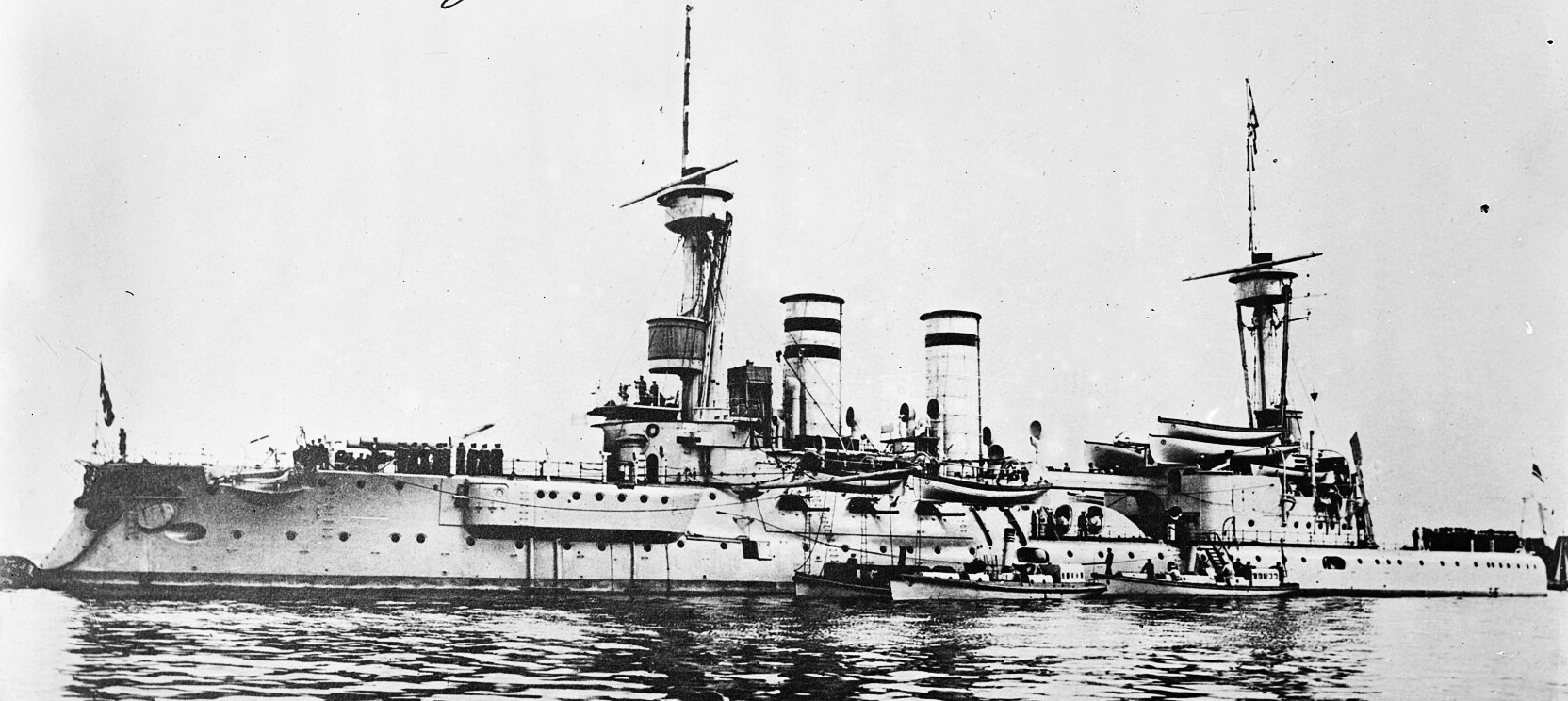
(Kaiserliche Marine Photo)
SMS Weissenburg.
SMS Kurfürst Friedrich Wilhelm
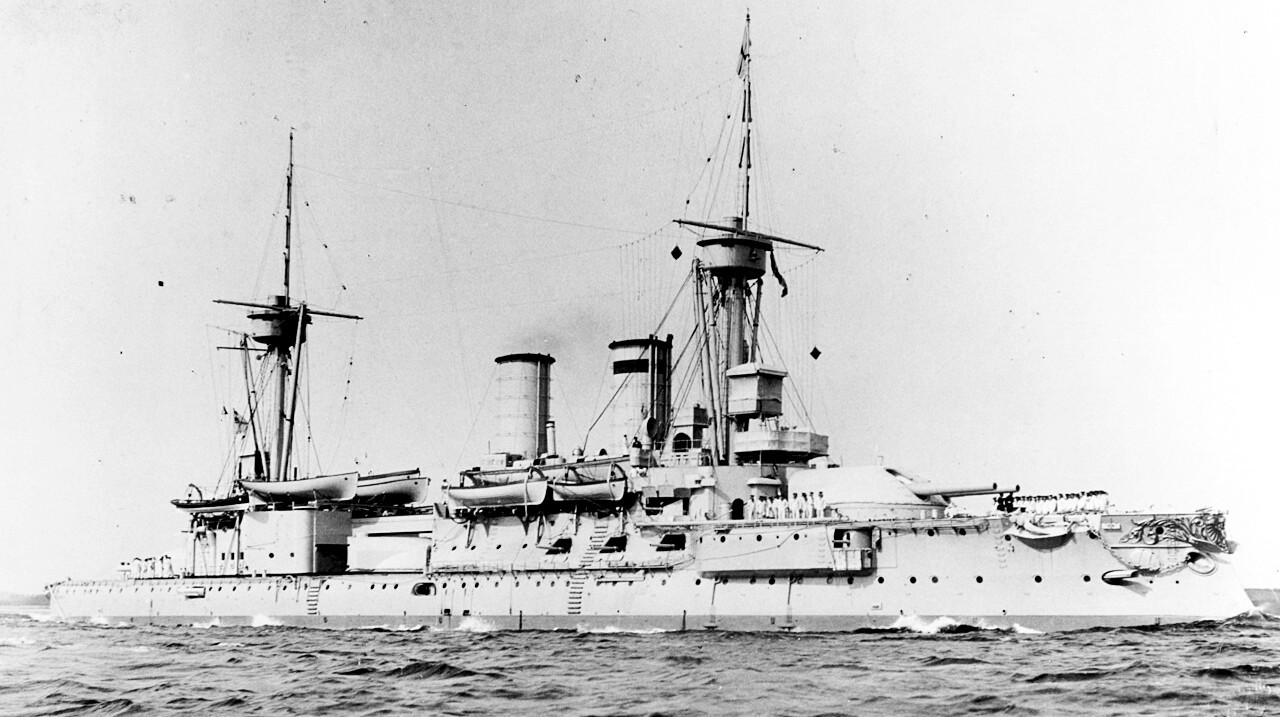
(Kaiserliche Marine Photo, c1899)
SMS Kurfürst Friedrich Wilhelm (“His Majesty’s Ship Prince-elector Friedrich Wilhelm”) was one of the first ocean-going battleships of the German Kaiserliche Marine (Imperial Navy). The ship was named for Prince-elector (Kurfürst) Friedrich Wilhelm, 17th-century Duke of Prussia and Margrave of Brandenburg. She was the fourth pre-dreadnought of the Brandenburg class, along with her sister ships Brandenburg, Weissenburg, and Wörth. She was laid down in 1890 in the Imperial Dockyard in Wilhelmshaven, launched in 1891, and completed in 1893. The Brandenburg-class battleships carried six large-caliber guns in three twin turrets, as opposed to four guns in two turrets, as was the standard in other navies.
Kurfürst Friedrich Wilhelm served as the flagship of the Imperial fleet from her commissioning in 1894 until 1900. She saw limited active duty during her service career with the German fleet due to the relatively peaceful nature of the late 19th and early 20th centuries. As a result, her career focused on training exercises and goodwill visits to foreign ports. These training maneuvers were nevertheless very important to developing German naval tactical doctrine in the two decades before World War I, especially under the direction of Alfred von Tirpitz. She, along with her three sisters, saw only one major overseas deployment, to China in 1900–1901, during the Boxer Uprising. The ship underwent a major modernization in 1904–1905.
In 1910, Kurfürst Friedrich Wilhelm was sold to the Ottoman Empire and renamed Barbaros Hayreddin. She saw heavy service during the Balkan Wars, primarily providing artillery support to Ottoman ground forces in Thrace. She also took part in two naval engagements with the Greek Navy—the Battle of Elli in December 1912, and the Battle of Lemnos the following month. Both battles were defeats for the Ottoman Navy. In a state of severe disrepair, the old battleship was partially disarmed after the Ottoman Empire joined the Central Powers early in the First World War. On 8 August 1915 the ship was torpedoed and sunk off the Dardanelles by the British submarine HMS E11 with heavy loss of life.
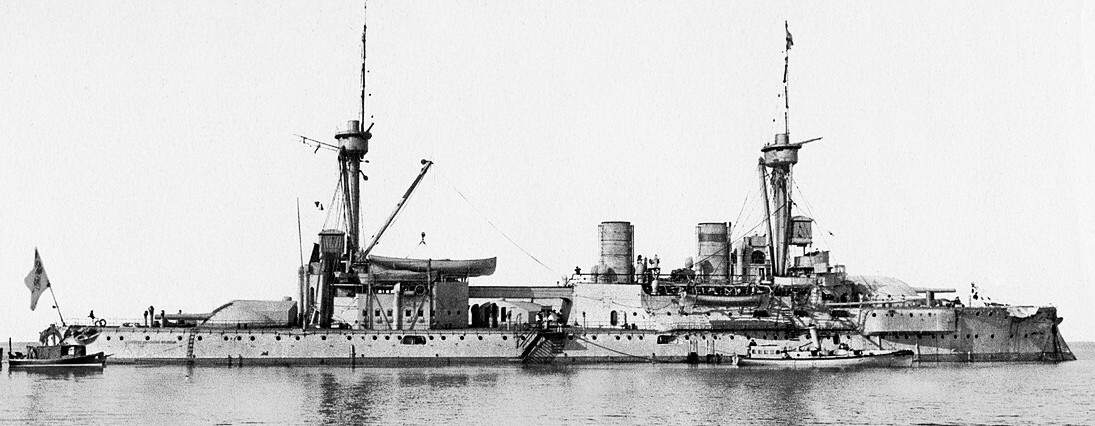
(Kaiserliche Marine Photo)
SMS Kurfürst Friedrich Wilhelm, c1902.
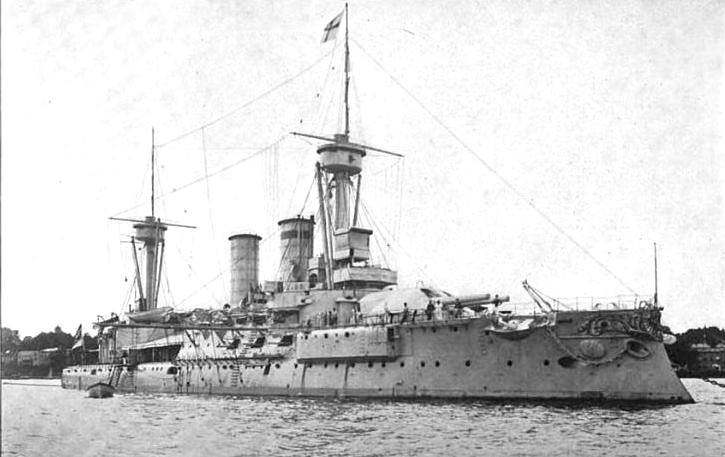
(Kaiserliche Marine Photo)
SMS Kurfürst Friedrich Wilhelm, c1903.
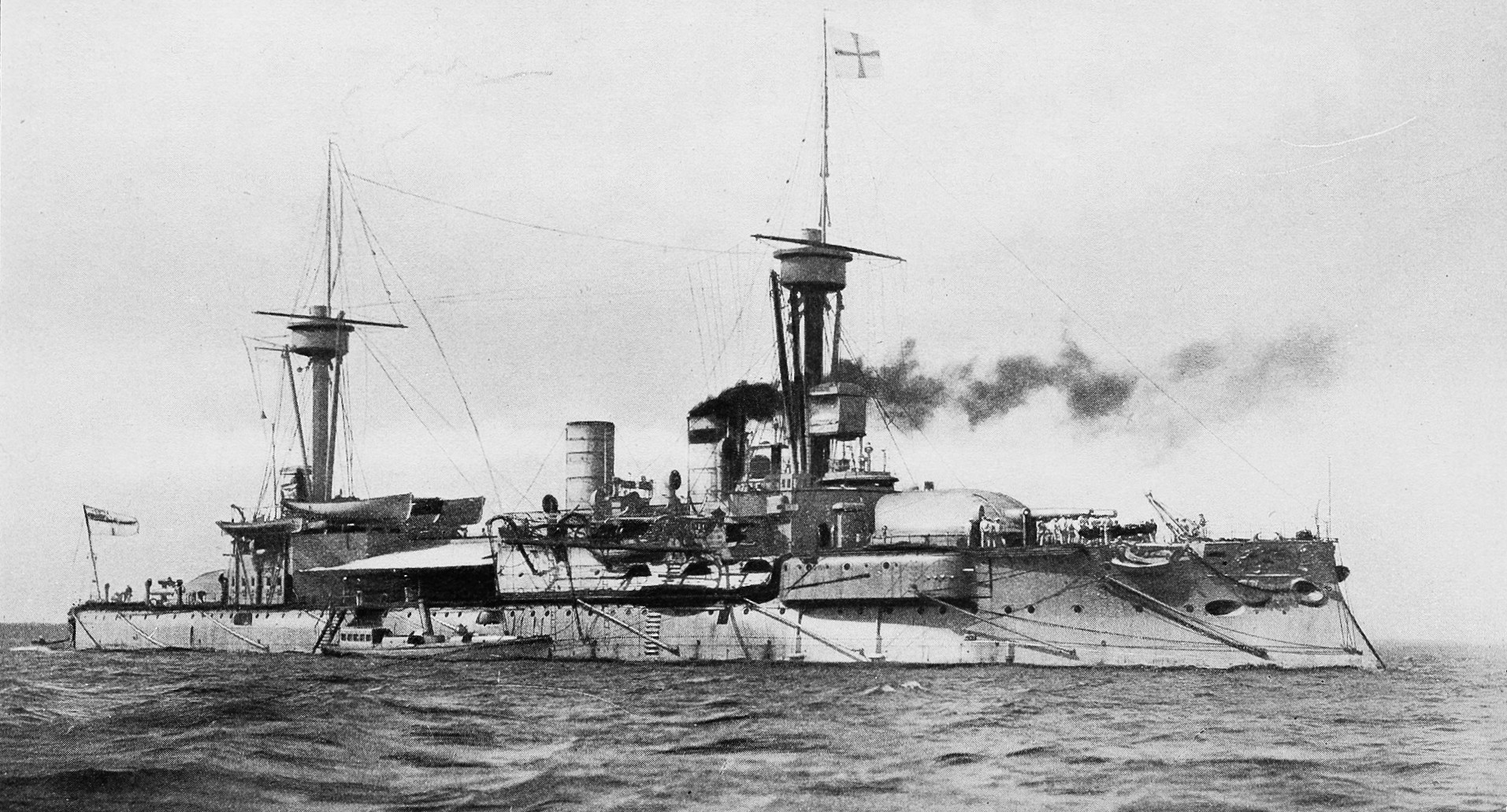
(Kaiserliche Marine Photo)
SMS Kurfürst Friedrich Wilhelm, c1899.
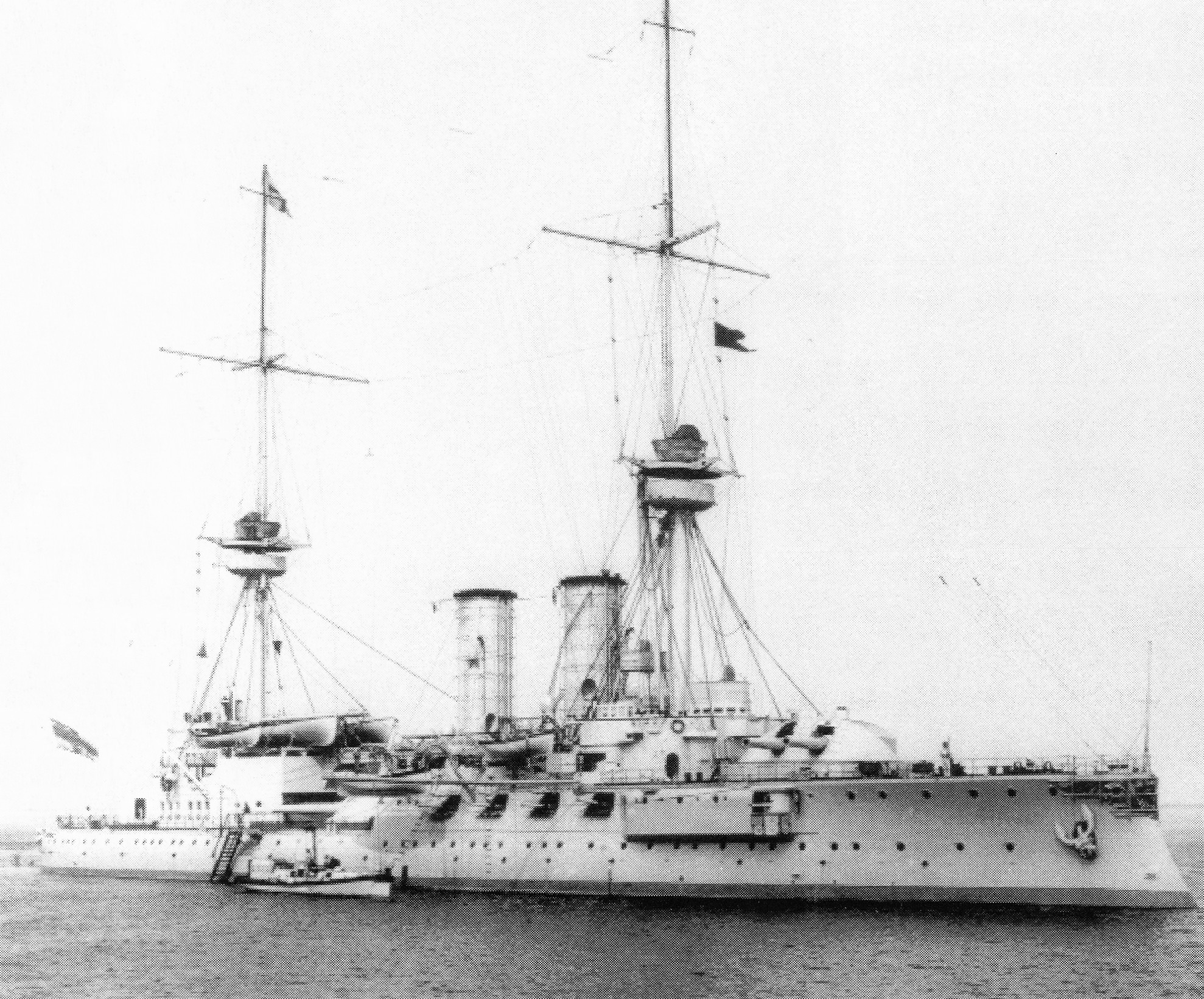
(Kaiserliche Marine Photo)
SMS Kurfürst Friedrich Wilhelm, 1910.