
Royal Navy (RN), His Majesty’s Ships (HMS) in Canadian ports at the turn of the century
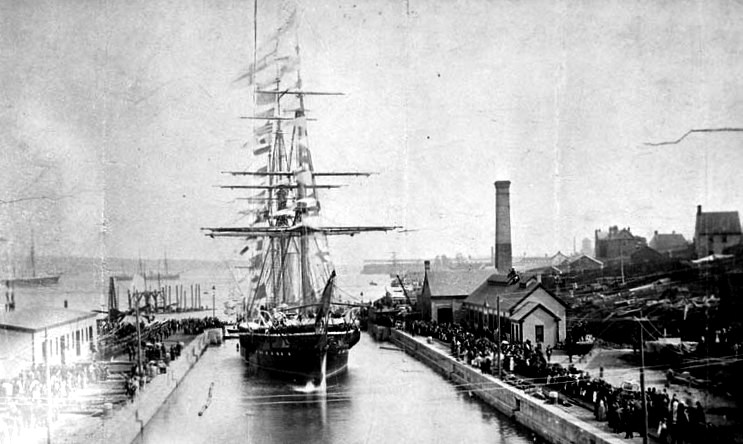
(Library and Archives Canada Photo, MIKAN No. 3192245)
HMS Canada, North America and West Indies Squadron in drydock, Halifax, NS, 20 Sep 1889.
Four ships of the Royal Navy have been named HMS Canada:
HMS Canada (1765), a 74-gun third rate ship of the line launched in 1765. She became a prison ship in 1810, and was sold broken up in 1834.
HMS Canada was to have been a 112-gun first rate ship of the line. She was laid down in 1814, but cancelled in 1832 and broken up on the stocks.
HMS Canada (1881) was a screw corvette launched in 1881 and sold in 1897.
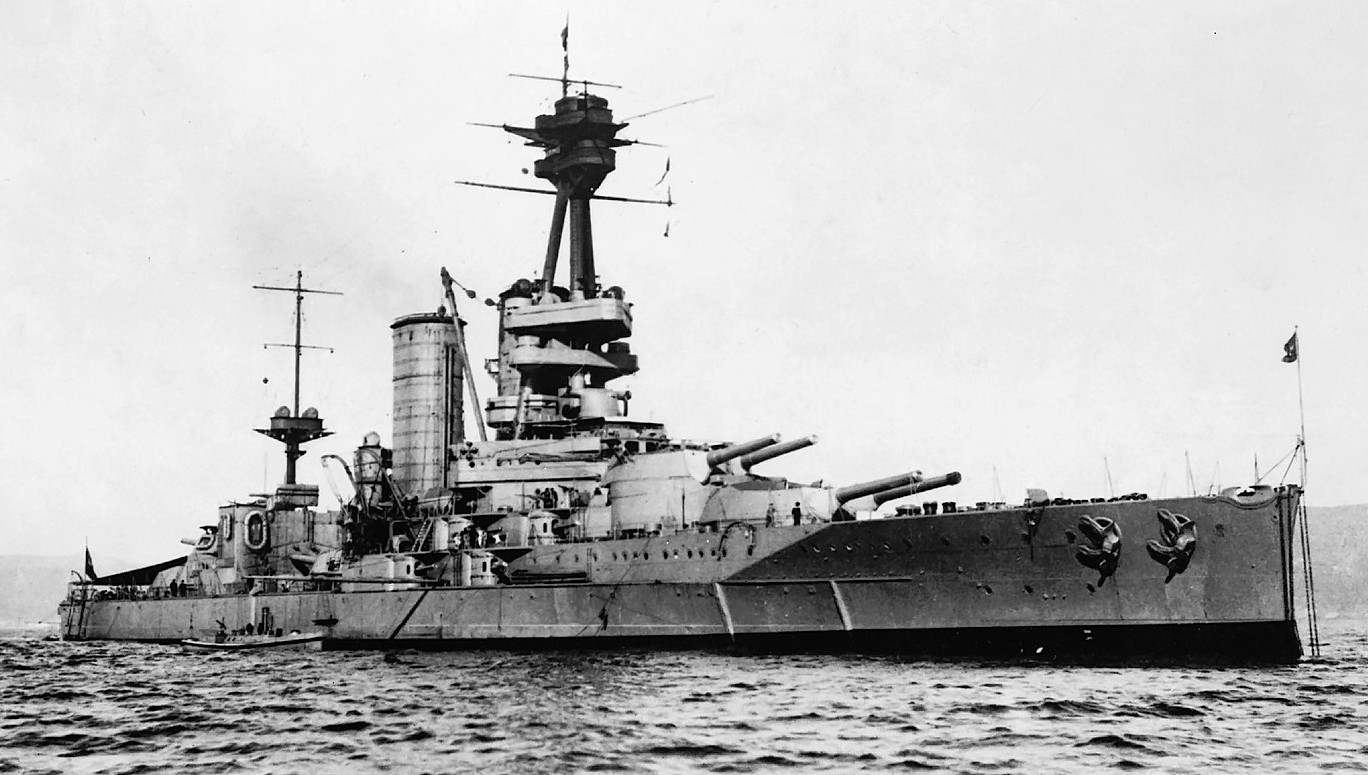
(Chilean Navy Photo)
HMS Canada (1913) was a battleship that the Chilean navy had ordered as Almirante Latorre. She was launched in 1913, but the British government purchased her in 1914 after the outbreak of the First World War. The British government resold her to Chile in 1920, and as Almirante Latorre (shown in service on 24 Dec 1921), she served the Chilean Navy until she was broken up in Japan after 1959.
Almirante Latorre, named after Juan José Latorre, was a super-dreadnought battleship built for the Chilean Navy (Armada de Chile). It was the first of a planned two-ship class that would respond to earlier warship purchases by other South American countries. Construction began at Elswick, Newcastle upon Tyne soon after the ship was ordered in November 1911, and was approaching completion when it was bought by the United Kingdom’s Royal Navy for use in the First World War. Commissioned in September 1915, it served in the Grand Fleet as HMS Canada for the duration of the war and saw action during the Battle of Jutland.
Chile repurchased HMS Canada in 1920 and renamed it Almirante Latorre. The ship was designated as Chile’s flagship, and frequently served as a presidential transport. She underwent a thorough modernization in the United Kingdom in 1929–1931. In September 1931, crewmen aboard Almirante Latorre instigated a mutiny, which the majority of the Chilean fleet quickly joined. After divisions developed between the mutineers, the rebellion fell apart and the ships returned to government control. Almirante Latorre was placed in reserve for a time in the 1930s because of the Great Depression, but it was in good enough condition to receive interest from the United States after the attack on Pearl Harbor. The Chilean government declined the overture and the ship spent most of the Second World War on patrol for Chile. Almirante Latorre was scrapped in Japan beginning in 1959. Wikipedia. Burt, R. A. British Battleships of World War One. (Annapolis, MD: Naval Institute Press, 1986), and Scheina, Robert L. Latin America: A Naval History 1810–1987. (Annapolis, MD: Naval Institute Press, 1987).
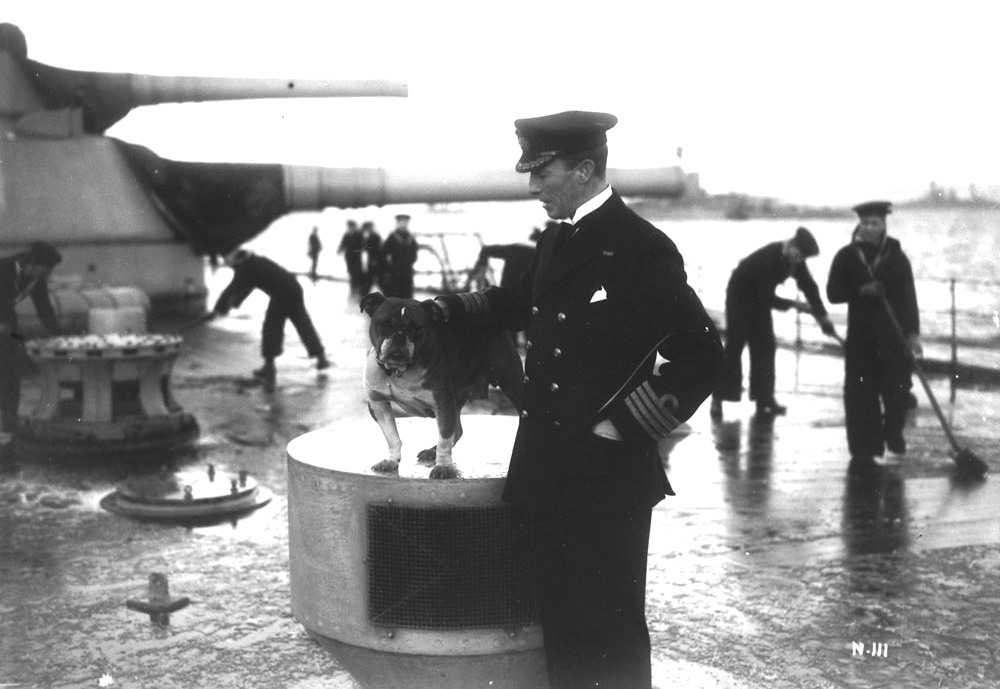
(Library and Archives Canada Photo, MIKAN No. 3398281)
Captain Ley commanding HMS Canada, persuades the ship’s mascot to pose for a portrait. The ship’s aft 14-inch guns are in background trained to starboard.
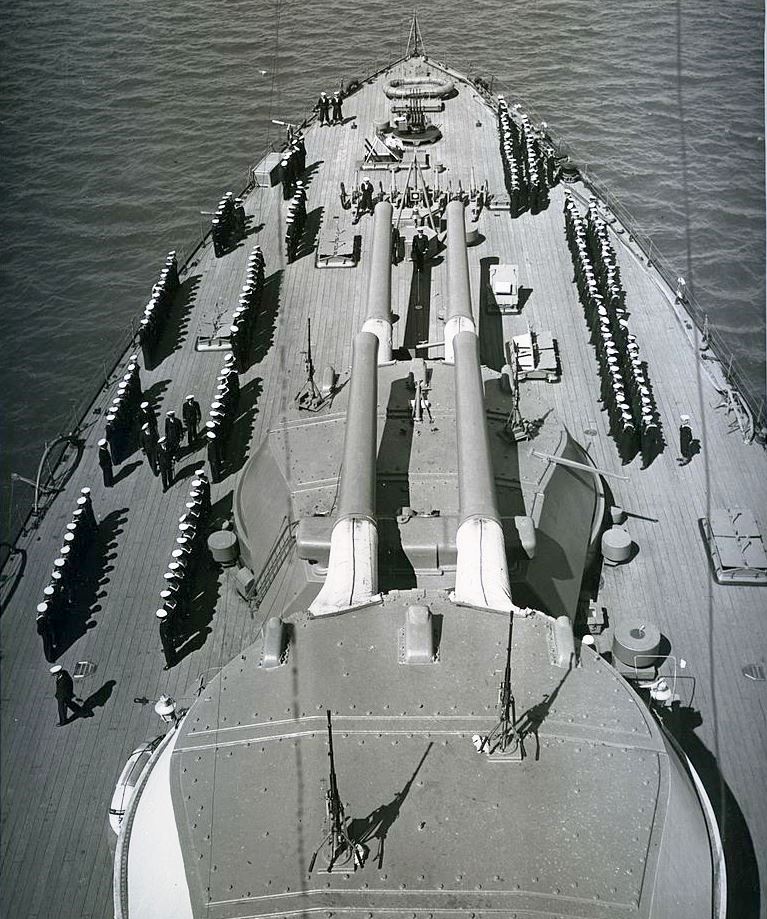
(US National Archives and Records Administration Photo)
Review aboard the Chilean battleship Almirante Latorre, sailors on the bow of the ship.
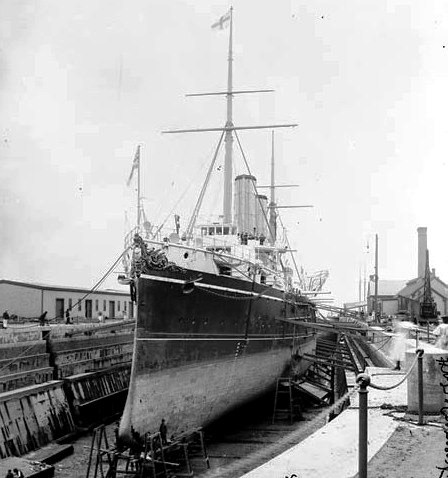
(Library and Archives Canada Photo, MIKAN No. 3332850)
HMS Crescent, Flagship of the North America and West Indies Squadron, Halifax, NS, 1900. The Imperial navy base in Halifax was known as the “Warden of the North”.
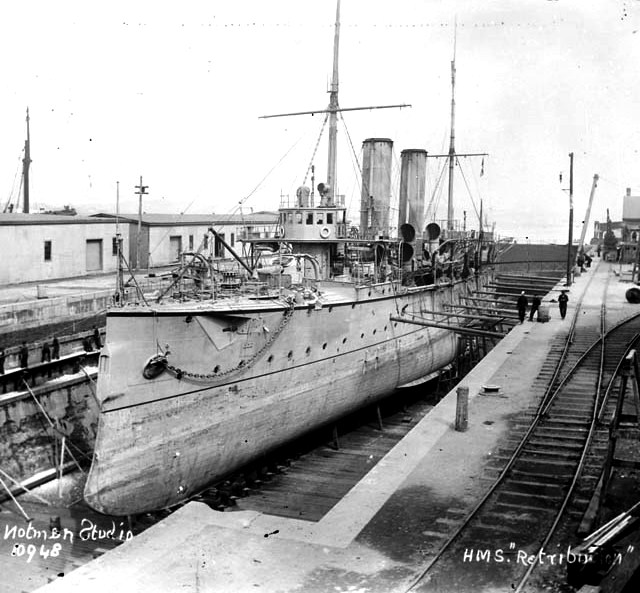
(Library and Archives Canada Photo, MIKAN No. 3332915)
HMS Retribution, North America and West Indies Squadron in drydock, Halifax, NS, 1903.
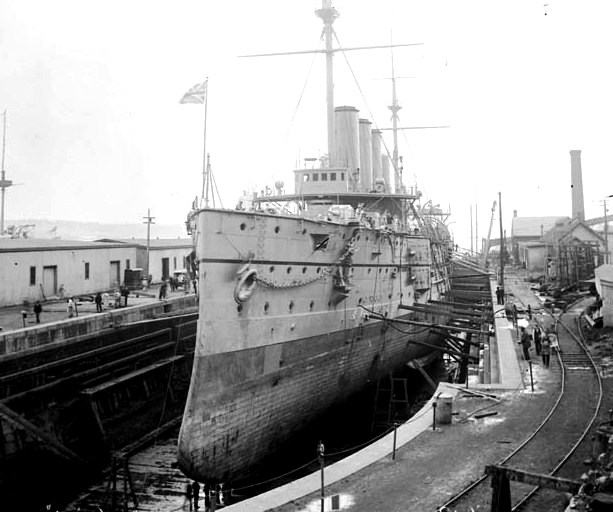
(Library and Archives Canada Photo, MIKAN No. 3332917)
HMS Ariadne, North America and West Indies Squadron in drydock, Halifax, NS, 1903.
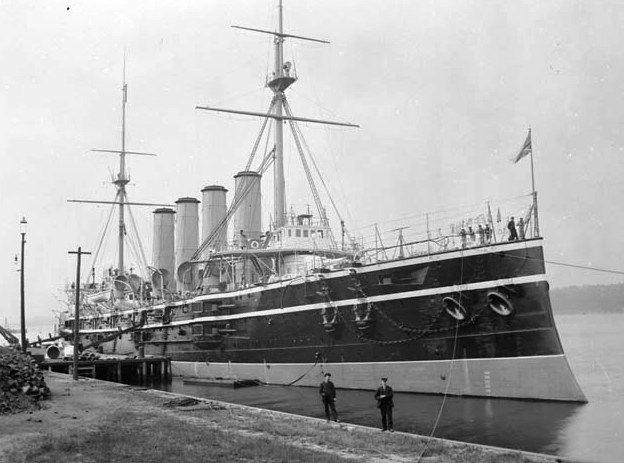
(Library and Archives Canada Photo, MIKAN No. 3332926)
HMS Ariadne, North America and West Indies Squadron in drydock, Halifax, NS, 1903.
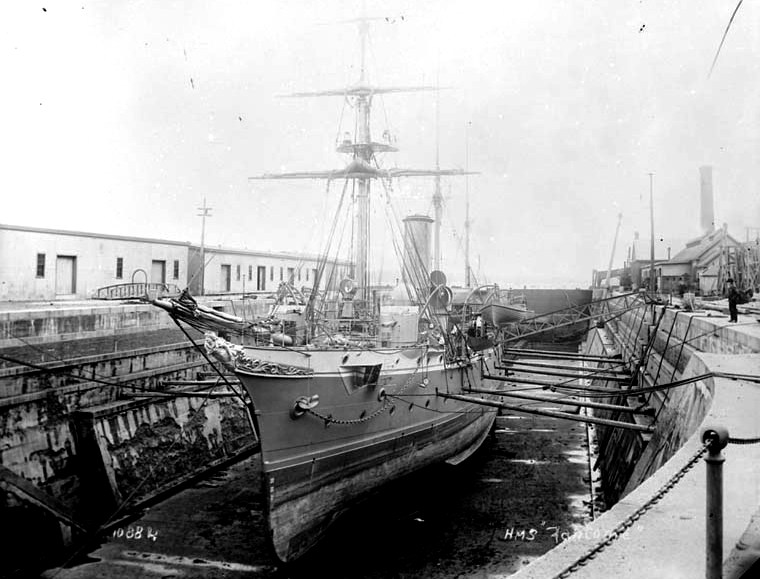
(Library and Archives Canada Photo, MIKAN No. 3332914)
HMS Fantome, North America and West Indies Squadron, Halifax, NS, 1903.