Royal Navy Dido class Cruisers
HMS Bonaventure (31), HMS Dido (37), HMS Hermione (74), HMS Naiad (93), HMS Phoebe (43), HMS Euryalus (42), HMS Sirius (82), HMS Charybdis (88), HMS Cleopatra (33), HMS Scylla (98), HMS Argonaut (61), HMS Bellona (63), HMS Black Prince (81), HMS Diadem (84), HMS Royalist (89), HMS Spartan (95)
Cruisers of the Royal Navy of the United Kingdom have existed since 1877 (when the category was created by amalgamating the two previous categories of frigate and corvette) until the last cruiser was decommissioned more than a century later. No cruisers are currently in service with the Royal Navy.
Armoured cruisers were protected by a belt of side armour and an armoured deck. In the Royal Navy this classification was not actually used, the term first class cruiser being used instead for both armoured cruisers and large protected cruisers. Thus, the first class cruisers built between the Orlando class (1886) and the Cressy class (1897) were, strictly speaking, protected cruisers as they lacked an armoured belt. The first class cruiser was succeeded by the battlecruiser in the Royal Navy.
Protected cruisers were so-called because their vital machinery spaces were protected by an armoured deck and the arrangement of coal bunkers. The ships below are all protected cruisers, but were rated as second and third class cruisers by the Royal Navy. The third class cruiser was not expected to operate with the fleet, was substantially smaller than the second class and lacked the watertight double-bottom of the latter. With the advent of turbine machinery, oil firing and better armour plate the protected cruiser became obsolete and was succeeded by the light cruiser.
The scout cruiser was a smaller, faster, more lightly armed and armoured cruiser than the protected cruiser, intended for fleet scouting duties and acting as a flotilla leader. Essentially there were two distinct groups – the eight vessels all ordered under the 1903 Programme, and the seven later vessels ordered under the 1907-1910 Programmes. The advent of better machinery and larger, faster destroyers and light cruisers effectively made them obsolete.
The light armoured cruiser – light cruiser – succeeded the protected cruiser; improvements in machinery and armour rendering the latter obsolete. The Town class of 1910 were rated as second-class protected cruisers, but were effectively light armoured cruisers with mixed coal and oil firing. The Arethusa class of 1913 were the first oil-only fired class. This meant that the arrangement of coal bunkers in the hull could no longer be relied upon as protection and the adoption of destroyer-type machinery resulted in a higher speed. This makes the Arethusas the first “true example” of the warship that came to be recognised as the light cruiser. In the London Naval Treaty of 1930, light cruisers were officially defined as cruisers having guns of 6.1 inches (155 mm) calibre or less, with a displacement not exceeding 10,000 tons.
The heavy cruiser was defined in the London Naval Treaty of 1930 as a cruiser with a main gun calibre more than 6 inches but not exceeding 8 inches. The earlier Hawkins class were therefore retrospectively classified as such, although they had been initially built as “improved light cruisers”. The County were built as light cruisers with most of them in service at the time of the Treaty of London, after which they were also redesignated as heavy cruisers. A further three Countys were cancelled. The York class was a reduced version of the County to build more ships within tonnage limits.
The “large light cruisers” were a pet project of Admiral Fisher to operate in shallow Baltic Sea waters and they are often classed as a form of battlecruiser.
Minelaying cruisers were the only purpose-built oceangoing minelayers of the Royal Navy. The Abdiel class could reach 38 knots and in practice were used as fast transports to supply isolated garrisons, such as those at Malta and Tobruk. (Wikipedia)
Dido class cruisers
The Dido class consisted of sixteen light cruisers built for the Royal Navy during the Second World War. The first group of three ships were commissioned in 1940; the second group of six ships and third group of two were commissioned between 1941 and 1942. A fourth group, also described as the Improved Dido or Bellona class (five ships) were commissioned between 1943 and 1944. Most members of the class were given names drawn from classical history and legend. The groups differed in armament, and for the Bellonas, in function. The Dido class were designed to replace the C-class and D-class cruisers as small fleet cruisers and flotilla leaders for the destroyer screen. As designed, they mounted five twin 5.25-inch high-angle gun turrets on the centreline providing dual-purpose anti-air and anti-surface capacity; the complex new turrets were unreliable when introduced, and somewhat unsatisfactory at a time when the UK faced a fight for survival.
During the war, the original 1939–42 ships required extensive refit work to increase electrical generating capacity for additional wartime systems (notably radar and gun direction equipment) and in the final Bellona, HMS Diadem, fully-electric turrets. While some damage was experienced initially in extreme North Atlantic weather, changes to gun handling and drill partially mitigated the problems. The fitting of the three forward turrets in the double-superfiring A-B-C arrangement (although in Royal Navy classification, fifth turrets were called “Q”, not “C”) relied upon the heavy use of aluminium in the ships’ superstructure, and the lack of aluminium after the evacuation of the British Army from France was one of the primary reasons for the first group only receiving four turrets, while the third group received four twin 4.5-inch mounts and no 5.25-inch guns at all. The Bellonas were designed from the start with four radar-directed 5.25-inch gun turrets with full Remote Power Control and an expanded light anti-aircraft battery, substantially increasing their efficiency as AA platforms.
From the initial trials of the lead ship Bonaventure, the new light cruisers were considered a significant advancement and were surprisingly effective in later actions in the Mediterranean Sea, such as protecting convoys to Malta, seeing off far larger ships of the Italian Royal Navy. The 5.25-inch (133 mm) gun was primarily an anti-surface weapon but designed to fire the heaviest shell suitable for manual loading for use in anti-aircraft defence, and accounted for around 23 aircraft and deterred far more[citation needed]. Both the Didos and Bellonas were dogged by roller path jams in the rail track upon which the turret gunhouses rotated. These issues regularly put turrets out of action from their initial sea trials until the last operational service of Euryalus and Cleopatra with the RN in 1953–54 and were the bane of the three Bellonas operated postwar by the RNZN. The original Dido-class ships HMS Bonaventure, HMS Charybdis, HMS Hermione and HMS Naiad were lost in the war. The survivor, name ship HMS Dido, was put into reserve in 1947 and decommissioned ten years later. HMS Euryalus was the last of the original class to see service, being decommissioned in 1954 and scrapped in 1959.
The Bellona class (as well as four rebuilt Didos) were mainly intended as picket ships for amphibious warfare operations in support of aircraft carriers of the Royal Navy and United States Navy in the Pacific. HMS Spartan was the only ship of the sub-class to be sunk, struck by a German Fritz X glide bomb while supporting the landings of the Battle of Anzio. Two ships were to be modified to be command ships of aircraft carrier and cruiser groups, intended for action against planned German battlecruisers. Originally these were to be Scylla and Charybdis of the third group, but the 1943 loss of Charybdis saw Royalist of the fourth (Bellona) group selected instead; these were also known as the Modified Dido.
Postwar modernisation proposals were limited by the tight war emergency design. There was insufficient space and weight for the fire control and magazines of four or five modern twin 3-inch turrets, combined with the fact that the 5.25-inch shells had a much larger bursting charge than the smaller 4.5-inch guns in service postwar, making them more effective high-altitude AA weapons. HMS Royalist was rebuilt for potential action alongside the battleship HMS Vanguard against the post-war Soviet Sverdlov-class cruisers and Stalingrad-class battlecruisers and was loaned to the Royal New Zealand Navy (RNZN) from 1956 to 1966. (Wikipedia)
Dido group
HMS Bonaventure (31)
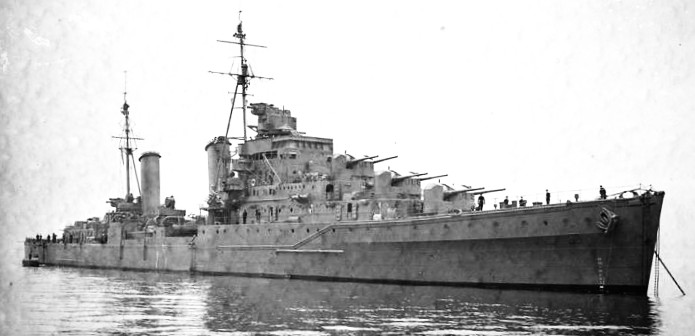
(IWM Photo, A 1732)
HMS Bonaventure (31). HMS Bonaventure was the lead ship of the Dido-class light cruisers built for the Royal Navy (RN) during the 1930s and during the Second World War. Completed in 1940, Bonaventure was assigned to the Home Fleet and participated in Operation Fish, the evacuation of British wealth from the UK to Canada in July. The ship made one short patrol in August into the North Atlantic to search for German blockade runners and followed that up by escorting an aircraft carrier as it conducted air strikes in Southern Norway in September. The next month she was tasked to provide cover for anti-shipping raids off the Norwegian coast. Bonaventure participated in the unsuccessful search for the German commerce raider Admiral Scheer in November and sustained weather damage that caused her to spend time in a dockyard for repairs. She was part of the escort force for Convoy WS 5A in December and helped to drive off another German commerce raider. While searching for stragglers from the convoy, the cruiser sank a German blockade runner.
Bonaventure was one of the escorts for Operation Excess, a convoy bound for Malta in January 1941 and helped to sink an Italian torpedo boat as the convoy approached Malta; she was transferred to the Mediterranean Fleet afterwards for operations in the Eastern Mediterranean. The ship spent the next several months either escorting convoys or providing cover for them. She did play a small role in Operation Abstention, an unsuccessful invasion of an Italian island in the Dodecanese off the Turkish coast in February. Bonaventure escorted several convoys from British Egypt to Greece in early March and then escorted one to Malta. After her return to Egypt, the ship escorted a convoy returning from Greece and was sunk by an Italian submarine on 31 March; 138 men died during the sinking. (Wikipedia)
HMS Dido (37)
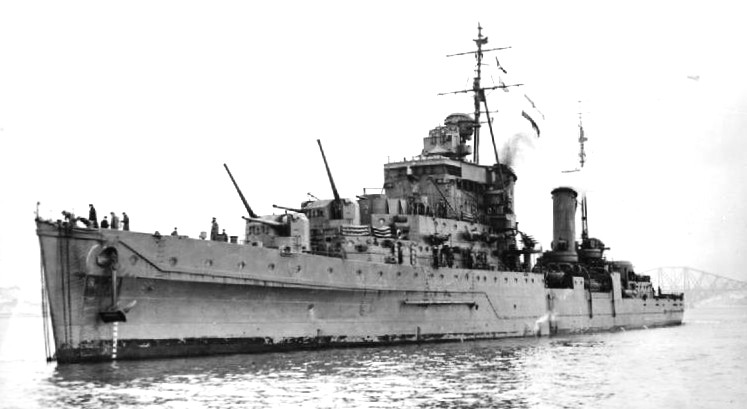
(IWM Photo, FL 24425)
HMS Dido (37). HMS Dido was the name ship of her class of light cruisers for the Royal Navy. Constructed by Cammell Laird Shipyard of Birkenhead, United Kingdom, she entered service in 1940 during the Second World War. The cruiser took part in several battles in the Mediterranean and Arctic theatres of war. Following the war, the ship performed ceremonial functions before being sold for scrapping in 1957. (Wikipedia)
HMS Hermione (74)
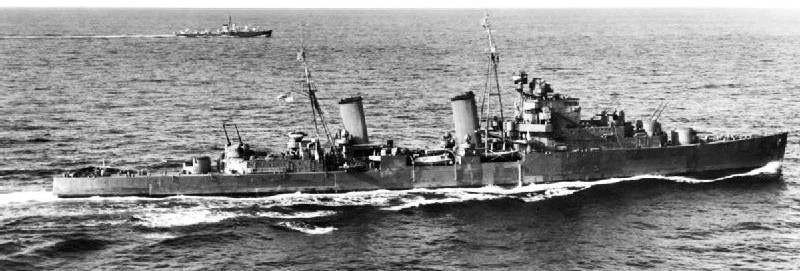
(IWM Photo, A 7736)
HMS Hermione (74). She was built by Alexander Stephen and Sons (Glasgow, Scotland), with the keel laid down on 6 October 1937. She was launched on 18 May 1939 and commissioned 25 March 1941. On 16 June 1942, Hermione was torpedoed and sunk by the German submarine U-205 in the Mediterranean. Eighty-eight crewmembers were killed.
HMS Naiad (93)
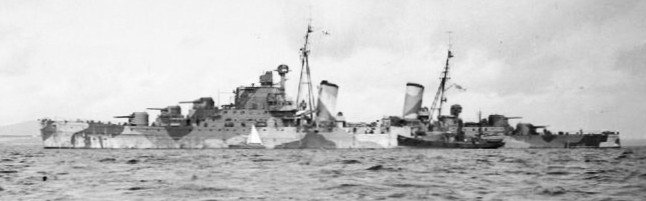
(IWM Photo, A 447)
HMS Naiad (93). She was launched on 3 February 1939, and commissioned 24 July 1940.She initially joined the Home Fleet and was used for ocean trade protection duties. As part of the 15th Cruiser Squadron she took part in operations against German raiders following the sinking of the armed merchant cruiser Jervis Bay in November 1940. During that month she was involved in the destruction of the German weather ship Hinrich Freese off Jan Mayen. In December and January she escorted convoys to Freetown in Sierra Leone, but at the end of January 1941 was back in northern waters where she briefly sighted the German battleships Scharnhorst and Gneisenau south of Iceland as they were about to break out into the Atlantic (Operation Berlin). By May 1941 Naiad was with Force H in the Mediterranean on Malta convoy operations, and flagship of the 15th Cruiser Squadron. Naiad participated in the Crete operations, where she was badly damaged by German aircraft. She subsequently operated against Vichy French forces in Syria, where, together with the cruiser Leander, she engaged the French destroyer Guépard. For the remainder of her service, she was in the Mediterranean, mostly connected with the continual attempts to resupply Malta. In March 1942 she sailed from Alexandria to attack an Italian cruiser that had been reported damaged. This report was false, and on the return, on 11 March 1942, Naiad was sunk by the German submarine U-565 south of Crete. 77 of her ship’s company were lost. (Wikipedia)
HMS Phoebe (43)
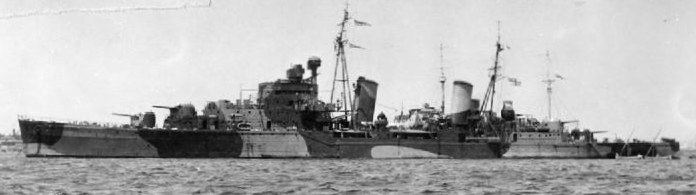
(IWM Photo, FL 271)
HMS Phoebe (43). She was launched on 25 March 1939, and commissioned on 30 September 1940. She took part in numerous operations and survived the war.
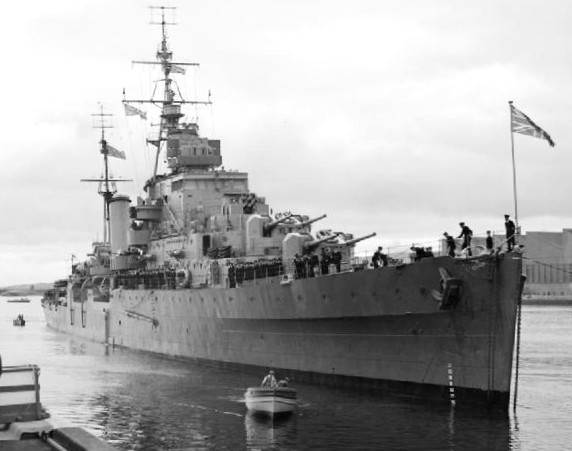
(IWM Photo, A 10039)
HMS Phoebe (43).
HMS Euryalus (42)
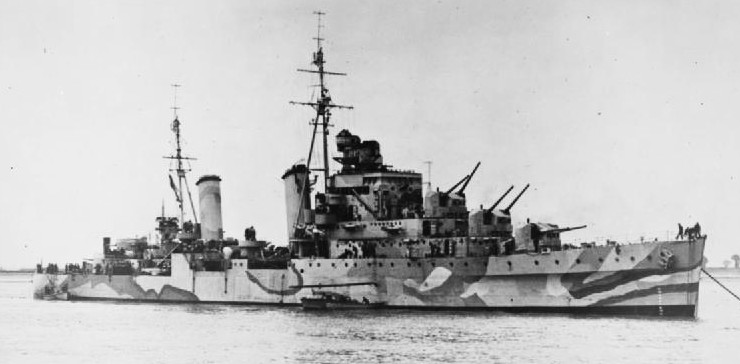
(IWM Photo, FL 5242)
HMS Euryalus (42). She was launched on 6 June 1939, and commissioned 30 June 1941. Euryalus was the last cruiser built at the dockyard. She survived many operations during the war. Euryalus was the last original Dido operational in Royal Navy, until 1954.
HMS Sirius (82)
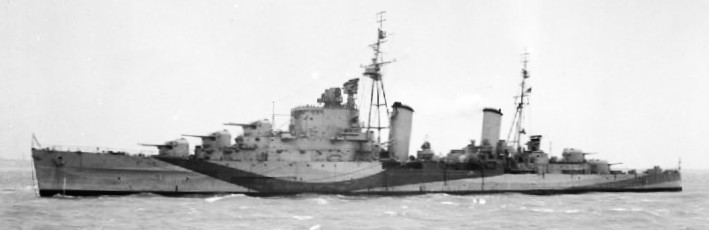
(IWM Photo, FL 5263)
HMS Sirius (82). She was launched on 18 September 1940, and commissioned 6 May 1942. She survived many operations during the war. She was paid off in 1949 and was put up for disposal in 1956.
HMS Charybdis (88)
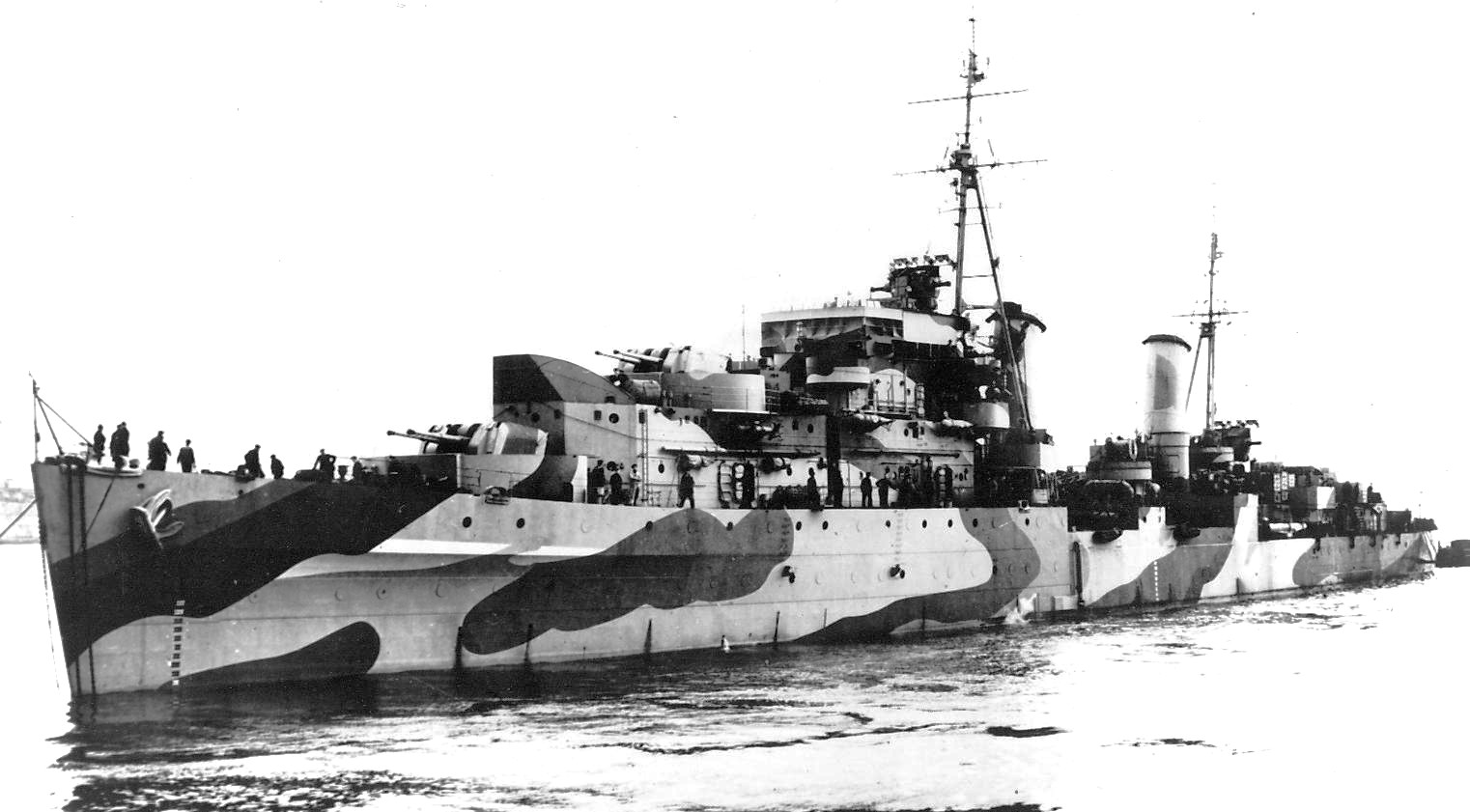
RN Photo)
HMS Charybdis (88). She was sunk with heavy loss of life by German torpedo boats in an action in the English Channel in October 1943. In late 1943, the British authorities were aware of the approach of the German blockade runner Münsterland, which was carrying an important cargo of latex and strategic metals. The Germans had a well-rehearsed procedure for escorting such vessels. The British reacted by executing “Operation Tunnel”, a standard operation whereby available ships would attempt to intercept. Of the planning of this operation Lieutenant-Commander Roger Hill voiced his reservations to senior staff, but his advice was not heeded.[15] Charybdis was assigned to the operation on 20 October, and on 22 October the British force put to sea. With Charybdis were the fleet destroyers HMS Grenville and Rocket, and four Hunt-class destroyers: Limbourne, Wensleydale, Talybont and Stevenstone. Münsterland’s escorts consisted of five Type 39 torpedo boats of the 4th Torpedo Boat Flotilla, commanded by Franz Kohlauf.
HMS Charybdis picked up the convoy on her radar at a range of 7 nautical miles (13 km; 8.1 mi), but did not intercept radio transmissions, Limbourne heard radio transmissions but could not pick up the ships on radar as Charybdis was blocking her view. At 1:38am the German torpedo boat T23, under the command of Friedrich-Karl Paul, spotted Charybdis, which was hit on the port side by two torpedoes out of a salvo of six fired by T23 and T27. Limbourne was also hit during this action and was later scuttled by HMS Rocket. The German force escaped unharmed. Charybdis sank within half an hour, in position 48°59′N 3°39′W, with the loss of over 400 men including her captain George Voelcker. Four officers and 103 ratings survived. Münsterland was eventually forced ashore and destroyed west of Cap Blanc-Nez on 21 January 1944 by fire from British coastal artillery after she ran aground. (Wikipedia)
HMS Cleopatra (33)
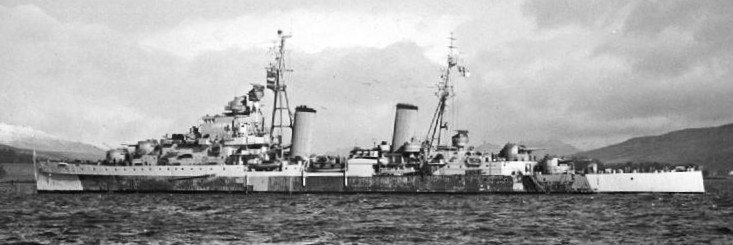
(IWM Photo, FL 5210)
HMS Cleopatra (33). She was launched on 27 March 1940, and commissioned on 5 December 1941. She took part in numerous operations during the war. From late 1953 to 1956 Cleopatra was flagship of the reserve squadron. On 15 December 1958, she arrived at the Newport yard of John Cashmore Ltd for breaking up.
HMS Scylla (98)
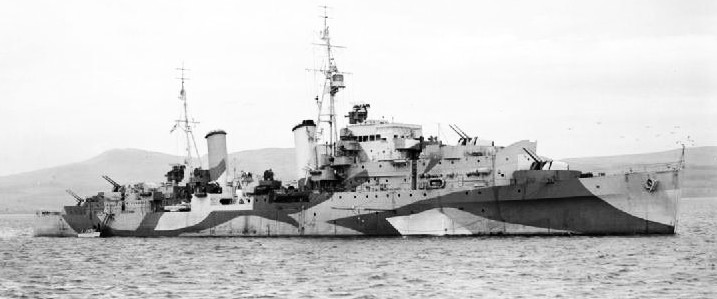
(IWM Photo, FL 2932)
HMS Scylla (98). She was launched on 24 July 1940, and commissioned 12 June 1942. On 23 June 1944 Scylla was badly damaged by a mine and written off. Although towed to Portsmouth, she was not disposed of until 1950, after use as a target between 1948 and 1950.
HMS Argonaut (61)
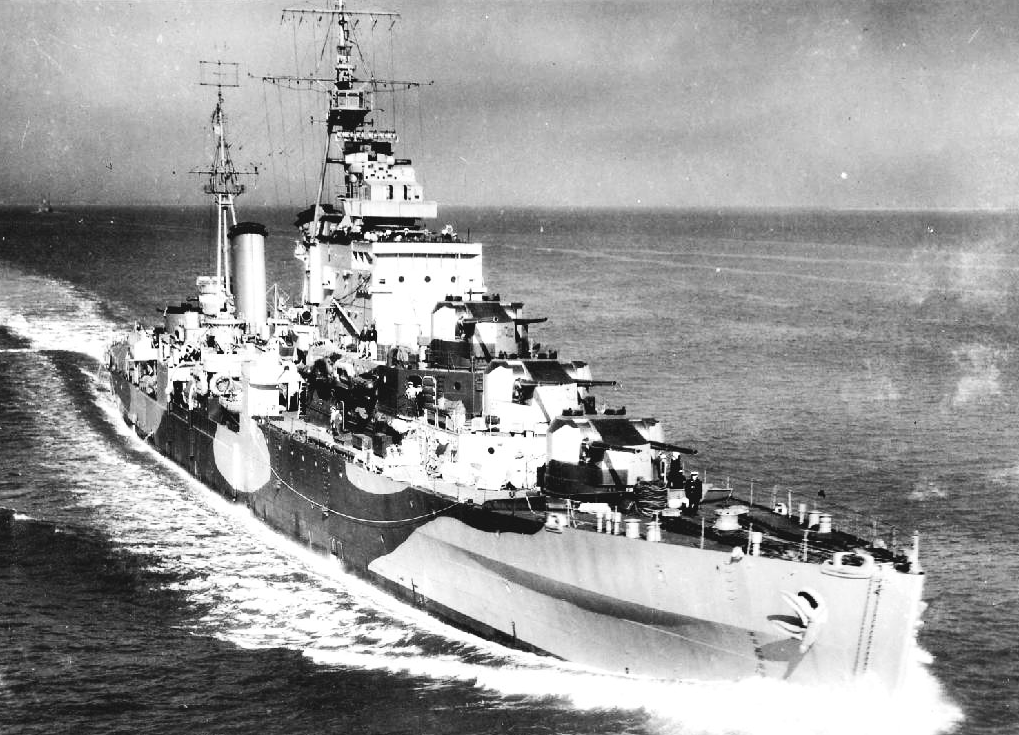
(RN Photo, 1943)
HMS Argonaut (61). She was laid down in 1939, launched in September 1941, and formally commissioned into service on 8 August 1942. She saw service in the Mediterranean in 1942, and was badly damaged on 14 December. After being repaired she took part in Operation Overlord, the Normandy Landings, and Operation Dragoon, the invasion of Southern France, before serving as an escort carrier group flagship. After the war she was laid up and scrapped in 1955.
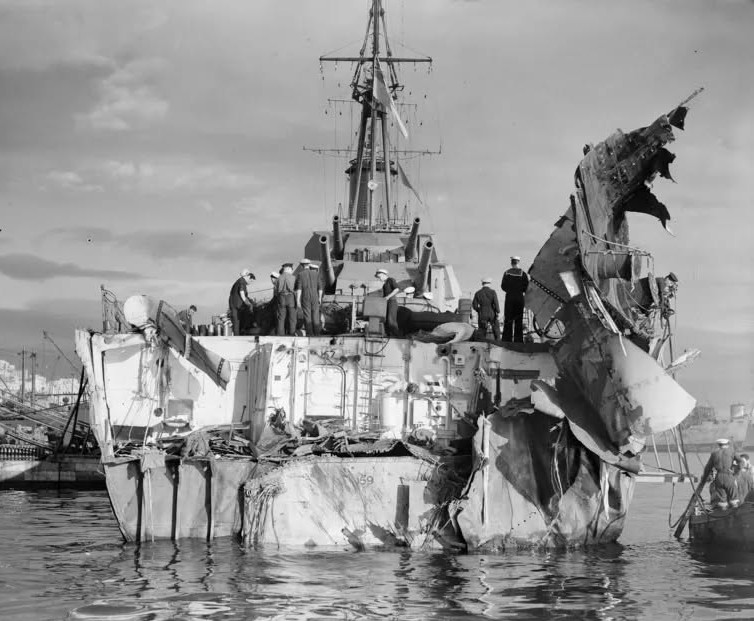
(IWM Photo)
Damage to HMS Argonaut (61).
Jeff Hancock wrote: 14 December 1942, after a sweep for another convoy which proved fruitless, Argonaut was hit by 2 torpedoes, fired by the Italian sub Mocenigo. The torpedoes hit fore and aft, removed the rudder, 2 propellers and 180ft of her 512ft hull. Amazingly, only three crewmen lost their lives in the explosions. Argonaut managed to get to Gibraltar where a temporary bow was fitted. Provisional repairs proved to be precarious, and on 4 April 1943 she set sail to Philadelphia.
She was in a pitiful state about to enter U-boat infested waters which was a hazardous crossing at the best of times for a fully fit ship. Setting off with her escort the destroyer HMS Hero. She was commanded by Capt Haynes who had taken damaged ships across the Atlantic before and his apparent calm demeanor had a very positive effect on the crew. The trip to the Azores took 3 days and on arrival Argonaut and Hero were greeted with the site of a German U-Boat in port at Porta Delgado undergoing repairs. The Bow had creaked and groaned the whole 3 days and had finally split and a serious hole had opened up and speed reduced to 5 knots. Repairs to the Bow meant that the U-Boat left first on the 9th April. Argonaut with a further patched up bow left 2-3 hours later with Hero in the lead. Hero was supposed to escort Argonaut all the way to Philadelphia however on 9 December she had engine troubles and was detached by the Admiralty for repairs, Argonaut was on her own.
The Admiralty also advised Argonaut that there was U-boat activity in the Azores which left the crew feeling very nervous. 4 days later on 13 April she was sighted by the American destroyer USS Butler, and was escorted by her to Bermuda, where some additional repairs were done. The cruise to Bermuda was 2000 miles and Argonaut arrived on 17 April having averaged just under 9 knots for the whole crossing. Escorted by the American minesweepers USS Tumult and USS Pioneer, she reached Philadelphia on 27 April after an Epic 3900 mile journey. The Germans mistakenly believed the Argonaut had been sunk.
Bellona group
HMS Bellona (63)
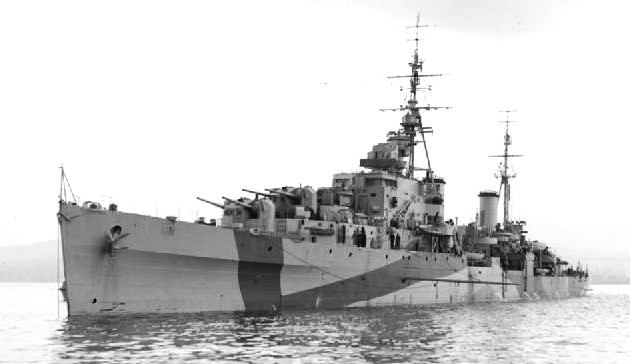
(IWM Photo, A 19851)
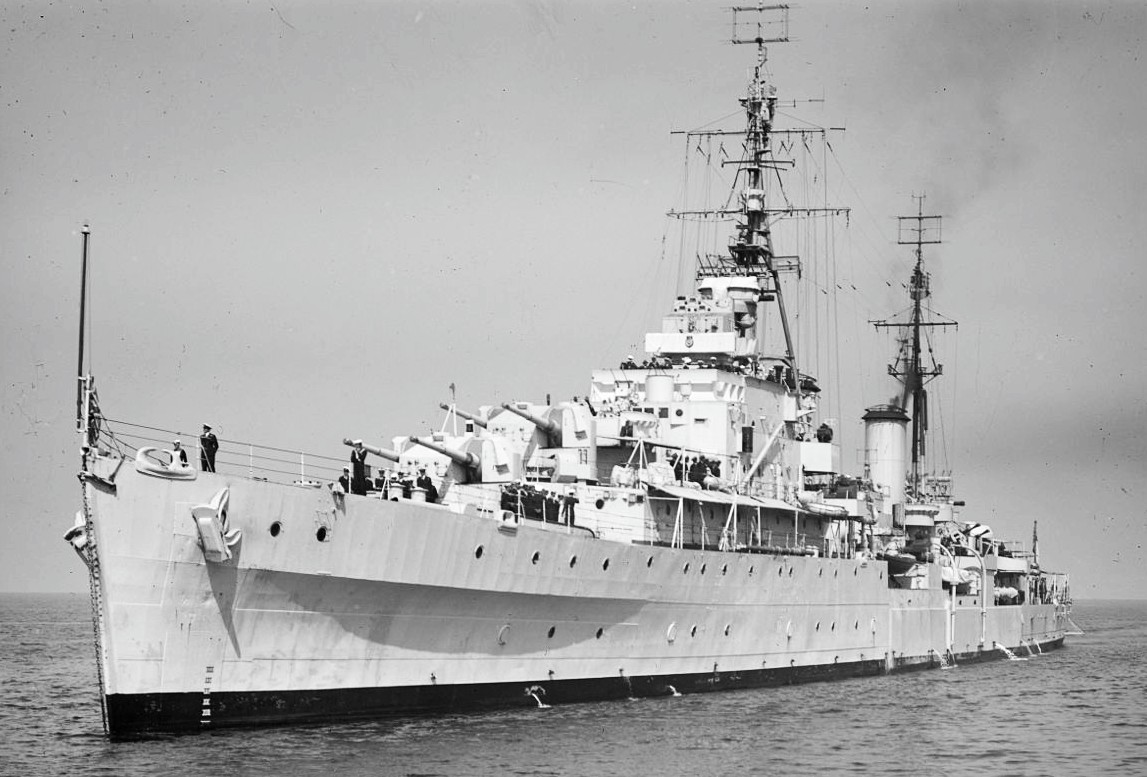
HMS Bellona (63). Built to a modified design (“Improved Dido”) with only four twin 5.25-inch turrets, but with remote power control for quicker elevation and training, combined with improved handling and storage of the ammunition. The light AA was improved over earlier Dido cruisers, with six twin 20mm Oerlikons and three quadruple 40mm “pom pom”. Entering service in late 1943, the cruiser operated during World War II as an escort for the Arctic convoys, and as a jamming ship to prevent the use of radio-controlled bombs and in support of the Omaha Beach landings. In 1946 the cruiser was loaned to the Royal New Zealand Navy. Bellona was returned to the Royal Navy in 1956. She did not re-enter service and was scrapped two years later. (Wikipedia)
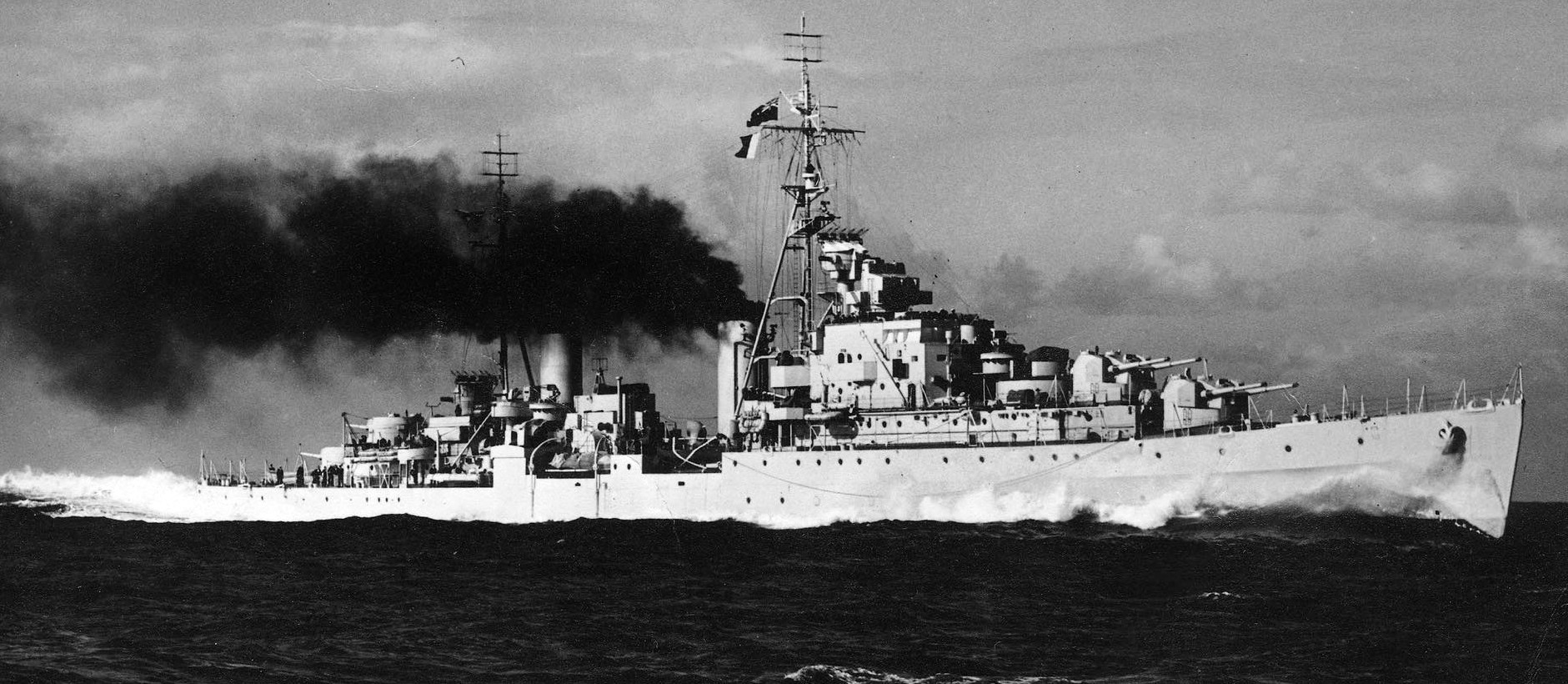
(RN Photo)
HMNZS Bellona ex HMS Bellona (63) at speed. Bellona was commissioned into the Royal New Zealand Navy on April 17th 1946 and reverted to Royal Navy control after the transfer of the cruiser Royalist in 1956.
(State Library of Victoria Photo)
HMS Bellona (63) in 1947.
HMS Black Prince (81)
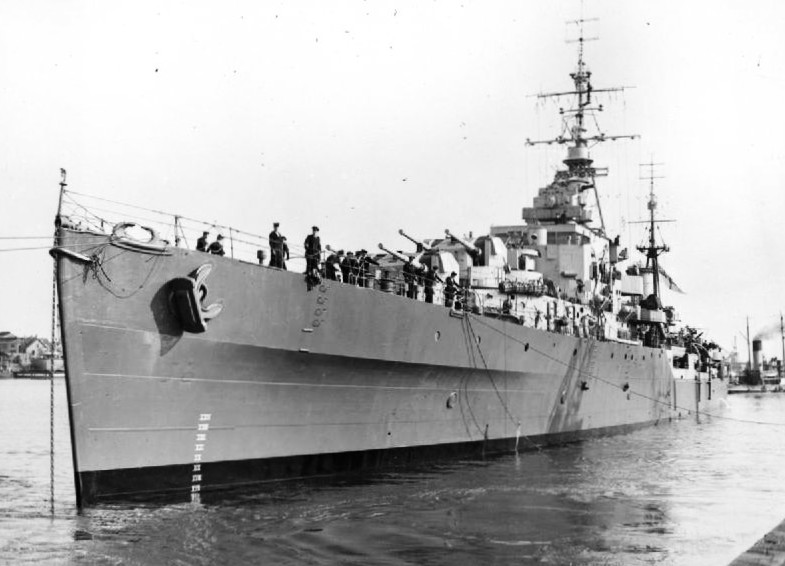
(IWM Photo, FL 2239)
HMS Black Prince (81). The cruiser was commissioned in 1943, and served during the Second World War on the Arctic convoys, during the Normandy landings, and as part of the British Pacific Fleet. In 1946, the cruiser was loaned to the Royal New Zealand Navy, becoming HMNZS Black Prince. The cruiser was docked for modernisation in 1947, but in April, her sailors walked off the ship as part of a series of mutinies in the RNZN. The shortage of manpower resulting from these mutinies meant that the modernisation had to be cancelled, and Black Prince was placed in reserve until 1953. She returned to service after refitting with simplified secondary armament with a single quad “pom pom” in Q position and eight Mk3 40mm Bofors guns. The ship was decommissioned again two years later, and returned to the Royal Navy in 1961. Black Prince did not re-enter service, and was towed from Auckland to Osaka for scrapping in 1962.
HMS Diadem (84)
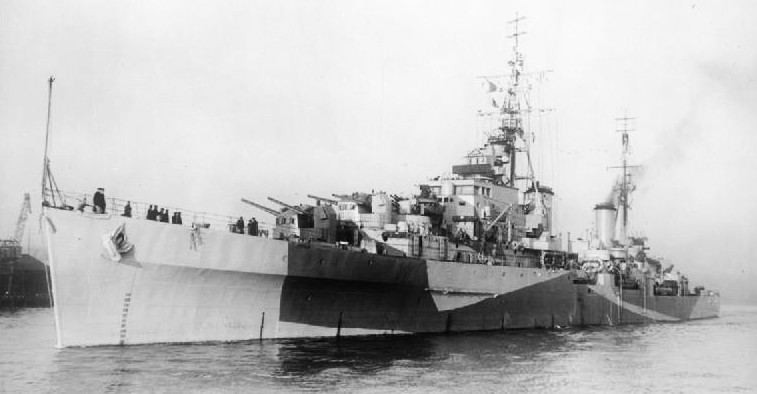
(IWM Photo, FL 9948)
HMS Diadem (84). She was a modified Dido design with only four turrets but improved anti-aircraft armament – also known as Dido Group 2. She was built by Hawthorn Leslie and Company at Hebburn-on-Tyne, UK, with the keel being laid down on 15 December 1939. She was launched on 26 August 1942, and completed on 6 January 1944.Diadem served on the Arctic convoys and covered carrier raids against the German battleship Tirpitz in the early months of 1944, then became part of Force G off Juno Beach during the invasion of Normandy in June. After the landings she carried out offensive patrols against German shipping around the Brittany coast, sinking, with destroyers, Sperrbrecher 7 off La Rochelle on 12 August. She returned to northern waters in September, where she covered Russian convoys and carrier raids against German shipping routes along the Norwegian coast, as well as making offensive sweeps herself. In the course of one such sweep, accompanied by HMS Mauritius on 28 January 1945, the cruiser engaged three German destroyers, damaging Z31.
HMS Diadem remained with the 10th Cruiser Squadron until after the war, and served in the Home Fleet until 1950. She was placed in reserve between 1950 and 1956.[citation needed] A more extensive modernisation than HMS Royalist’s 1953-6 refit with new boilers and anti-nuclear washdown for Diadem as NATO flagship and AA/AD escort was canceled in 1954 on grounds of cost, the manual hand loaded armament requiring lifting 82lb shells, lack of space for crew and the non military functions of a cruiser, entertaing potential friends of Britain and carrying disaster relief resources. The transfer of Diademto Pakistan was on the pretext the ship would serve as a training ship, but in fact was a RN move, to balance the INS purchase of HMS Nigeria as arranged by First Lord Mountbatten in 1955. She was sold to the Pakistan Navy (announced) 29 February 1956 and refitted at Portsmouth Dockyard before being handed over to the Pakistan Navy as Babur on 5 July 1957. (Wikipedia)
HMS Royalist (89)
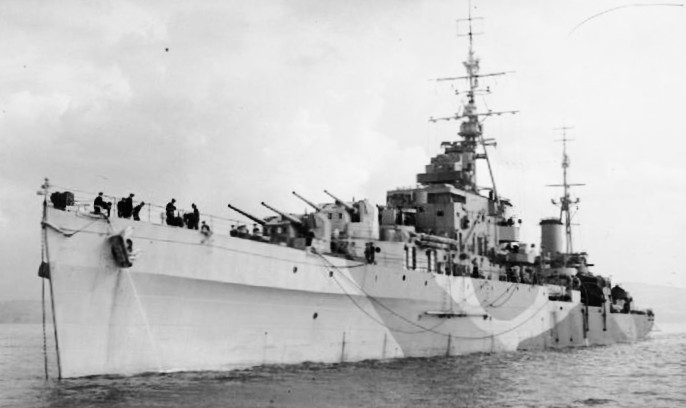
(IWM Photo, A 19015)
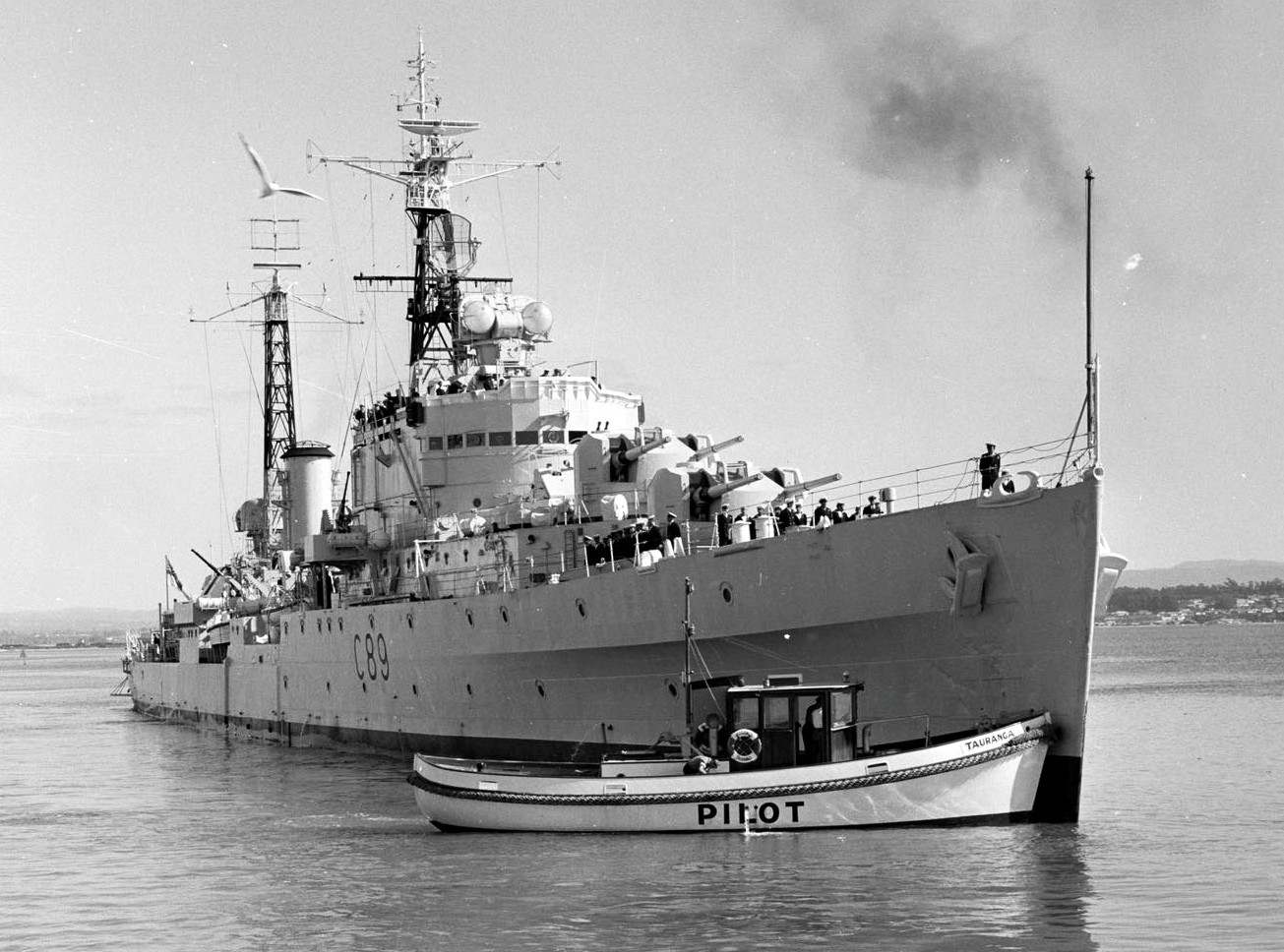
HMS Royalist (89). She was a Bellona-class (improved Dido-class) light cruiser of the Royal Navy (RN) and Royal New Zealand Navy (RNZN) during the Second World War and early Cold War. After her commissioning in 1943, Royalist was modified with extra facilities and crew for operating as a flagship in aircraft carrier operations. Initially, she operated in the North Sea before transferring to the Mediterranean for the invasion of southern France. Royalist remained in the Aegean Sea until the end of 1944 before sailing to the Far East in 1945 where the ship served until the end of the war. Royalist was then put into reserve until 1953, when the Navy decided to proceed with plans to refit the ship. The high cost of reconstruction and new governmental policy forced the RN to transfer the vessel to the Royal New Zealand Navy (RNZN) in 1956. In return, New Zealand covered the reconstruction costs of Royalist. After ten years of service with the RNZN, which included involvement in the Suez Crisis and the Indonesia–Malaysia confrontation, she was scrapped in 1967. (Wikipedia)
(RNZN Photo via Bill Cox)
HMNZS Royalist being nudged by a Tauranga Harbour Board pilot launch, 8 April 1960.
HMS Spartan (95)
(IWM Photo, FL 3094)
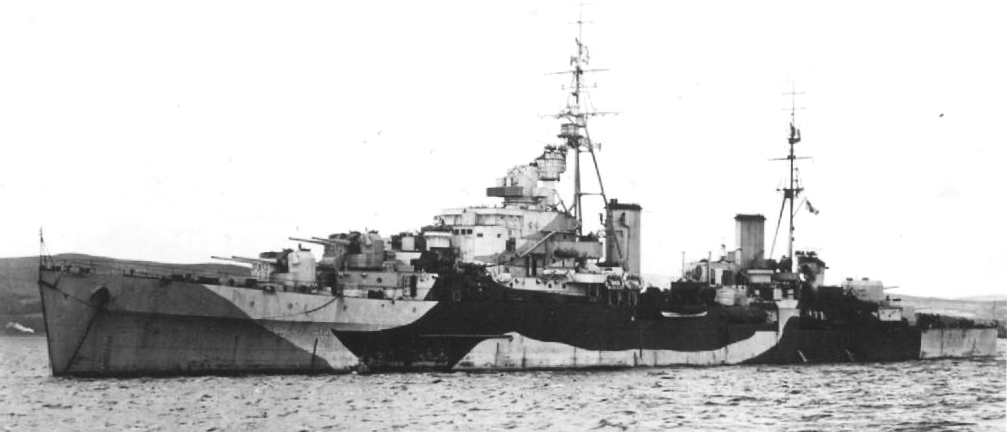
HMS Spartan (95). She was a modified Dido design with only four turrets but improved anti-aircraft armament – also known as Dido Group 2. Commissioned with a Devonport crew under the command of Captain P.V. McLaughlin, Royal Navy, Spartan was originally intended for service with the Eastern Fleet, but after a couple of months with the Home Fleet, spent mainly working-up at Scapa Flow, on 17 October 1943 she left Plymouth Sound for the Mediterranean, sailing by way of Gibraltar and Algiers, she arrived at Malta on 28 October 1943 to be temporarily attached to the Mediterranean Fleet. She went on to Taranto to join the 15th Cruiser Squadron on 8 November.
On the night of 18–19 January 1944 Spartan carried out a diversionary bombardment in the Terracina area, and—with the cruiser Orion and four destroyers—provided useful supporting fire during the Garigliano River Operations. There was only minor opposition from shore batteries, and during the bombardment Spartan alone fired 900 rounds.Operation Shingle—the landing of troops at Anzio—began on 22 January 1944, and Orion and Spartan were detailed to provide gun support. There was little opposition, and Spartan returned to Naples to remain available at short notice.On 27 January she was ordered to report to CTF 81 for anti-aircraft protection duties off Anzio. At sunset on 29 January the Luftwaffe began a glide bomb attack on the ships in Anzio Bay. At the time of the attack Spartan was anchored. Smoke had been ordered in the anchorage but was not fully effective owing to the short time it was in operation and the strong breeze. Spartan was making smoke from stem to stern but was not herself covered.About 18 aircraft approached from the north and circling over land, delivered a beam attack against the ships that were silhouetted against the afterglow. Due to the timing of the attack the aircraft were seen only by very few, and radar was ineffective owing to land echoes.
By the time the warning had been received and the ships had opened fire in the general direction of the attack, six bombs were already approaching the anchorage, most of them falling into the water. But at about 18:00 a radio-controlled Henschel Hs 293 glide bomb hit Spartan just aft of the after funnel and detonated high up in the compartments abreast the port side of the after boiler room, blowing a large hole in the upper deck.The main mast collapsed and boiler rooms were flooded. Steam and electrical power failed, a serious fire developed and the ship heeled over to port. About an hour after being hit, Spartan had to be abandoned, and 10 minutes later she settled on her beam ends in about 25–30 ft (7.6–9.1 m) of water.Five officers and 41 ratings were posted killed or missing presumed killed, and 42 ratings were wounded. (Wikipedia)