
Royal Navy HMS Audacious-class aircraft carriers
The Audacious-class aircraft carriers were a class of aircraft carriers proposed by the British government in the 1930s – 1940s and completed after the Second World War. The two ships built were heavily modified and diverged over their service lives. They were in operation from 1951 until 1979.
HMS Eagle (R05)
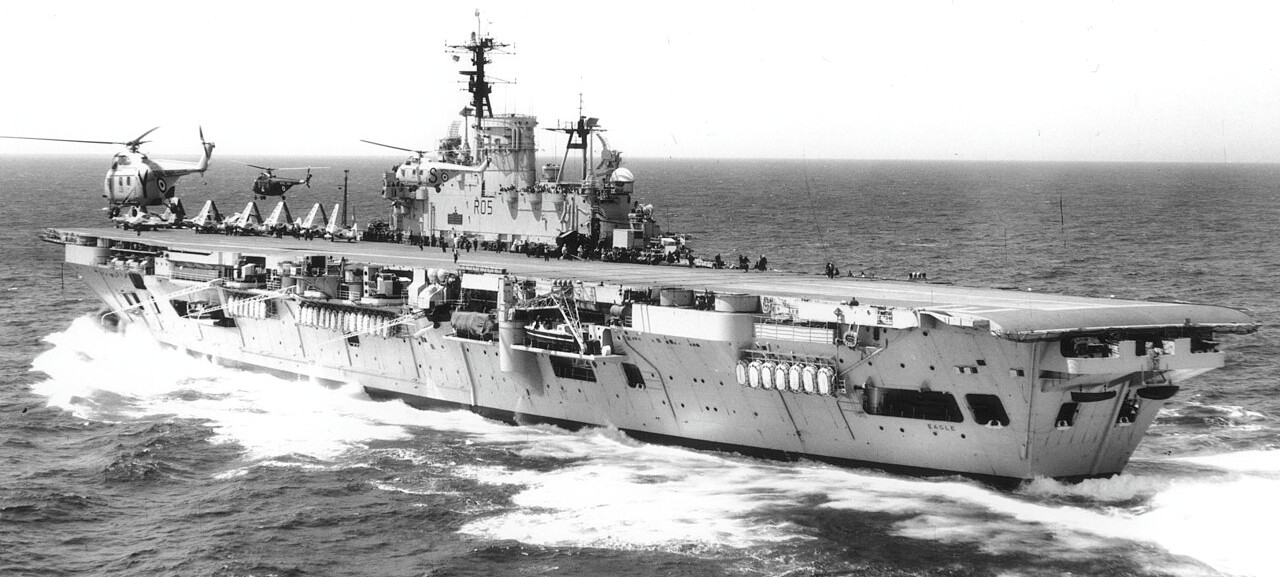
(UK MOD Photo)
HMS Eagle, in the late 1950s, at speed with her Westland Whirlwind helicopters airborne for rescue standby during flying operations. HMS Eagle served until 1972 when she was laid up in reserve, before being sold for scrap in 1978.
HMS Eagle (R05) was an Audacious-class aircraft carrier of the Royal Navy, in service 1951–1972. Until the arrival of the Queen Elizabeth-class aircraft carriers in the 21st century, she and her sister Ark Royal were the two largest Royal Navy aircraft carriers ever built. She was laid down on 24 October 1942 at Harland and Wolff shipyard in Belfast as one of four ships of the Audacious class. These were laid down during the Second World War as part of the British naval buildup during that conflict. Two were cancelled at the end of hostilities, and the remaining two were suspended. Originally called Audacious, she was renamed Eagle (the fifteenth Royal Navy ship to receive this name), taking the name of the cancelled third ship of the class on 21 January 1946. She was finally launched by Princess Elizabeth on 19 March 1946. Although Eagle was completed in October 1951 without an angled flight deck, one was added three years later. In 1952 she took part in the first large NATO naval exercise, Exercise Mainbrace. (Wikipedia)
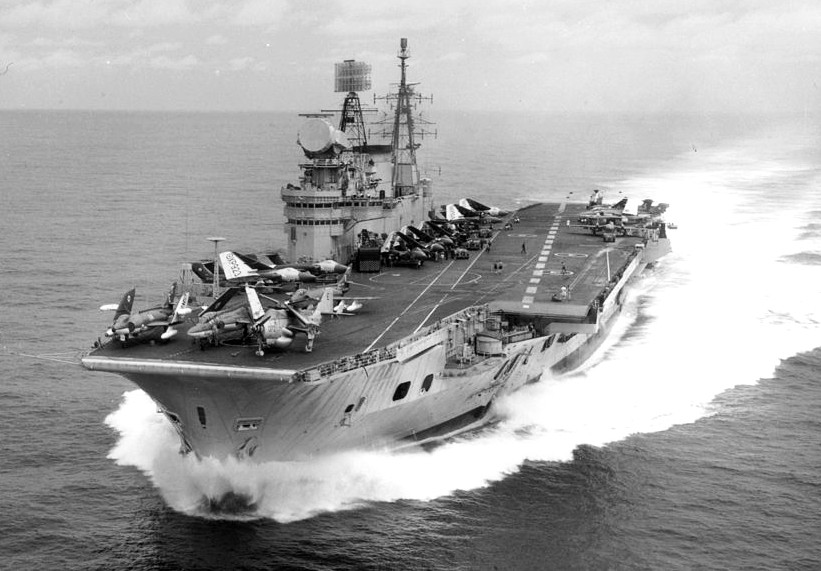
(UK MOD Photo)
HMS Eagle (R05) underway in the mid 1960s. Eagle is easily identifiable by her Type 984 radar and the tail code “E” on her aircraft (Ark Royal did not carry the Type 984 radar and had the tail code “R”). Visible on deck are Supermarine Scimitar F.1s tanker aircraft of 803 Naval Air Squadron, which relinquished their last frontline Scimitars in October 1966.
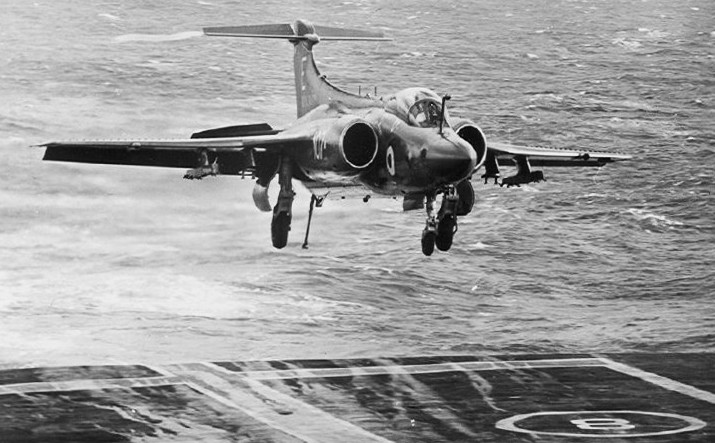
(greenacre8 Photo)
Blackburn Buccaneer landing on HMS Eagle, c1971.
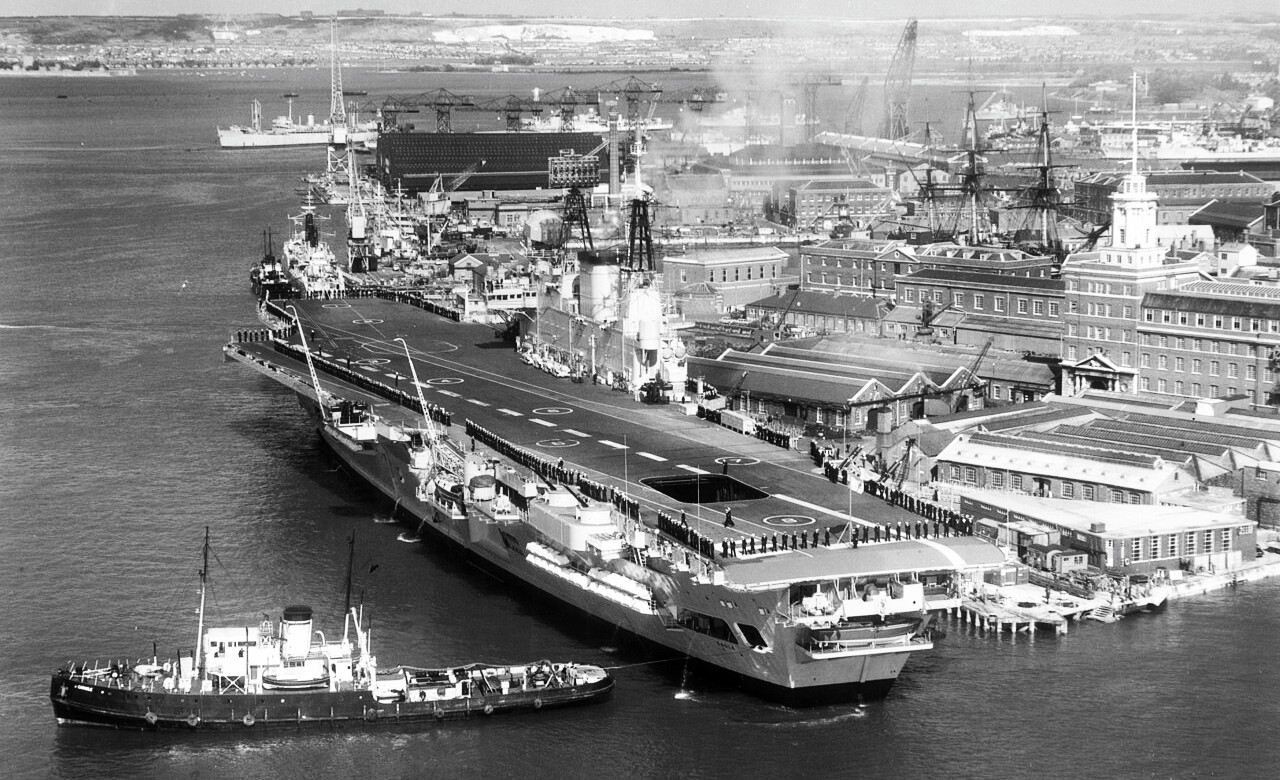
(UK MOD Photo)
HMS Eagle underwent a major modernisation between 1959 and 1964 at Devonport. This picture was taken after that modernisation, and shows her berthed at Portsmouth’s South Railway Jetty.
HMS Ark Royal (R09)
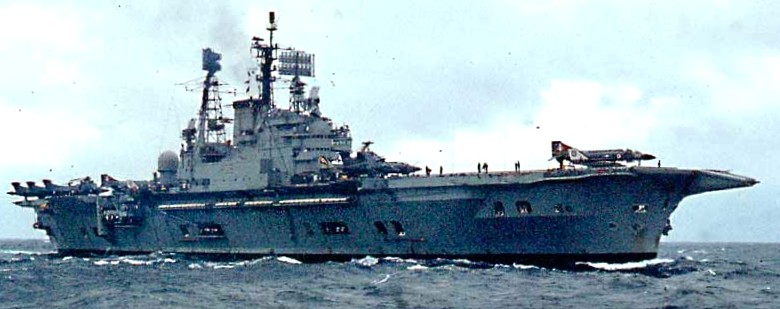
(Isaac Newton Photo)
HMS Ark Royal (R09) was an Audacious-class aircraft carrier of the Royal Navy and, when she was decommissioned in 1979, was the Royal Navy’s last remaining conventional catapult and arrested-landing aircraft carrier. She was the first aircraft carrier to be equipped with an angled flight deck at its commissioning; her sister ship, HMS Eagle, was the Royal Navy’s first angle-decked aircraft carrier after modification in 1954. Ark Royal was the only non-United States vessel to operate the McDonnell Douglas Phantom at sea. (Wikipedia)
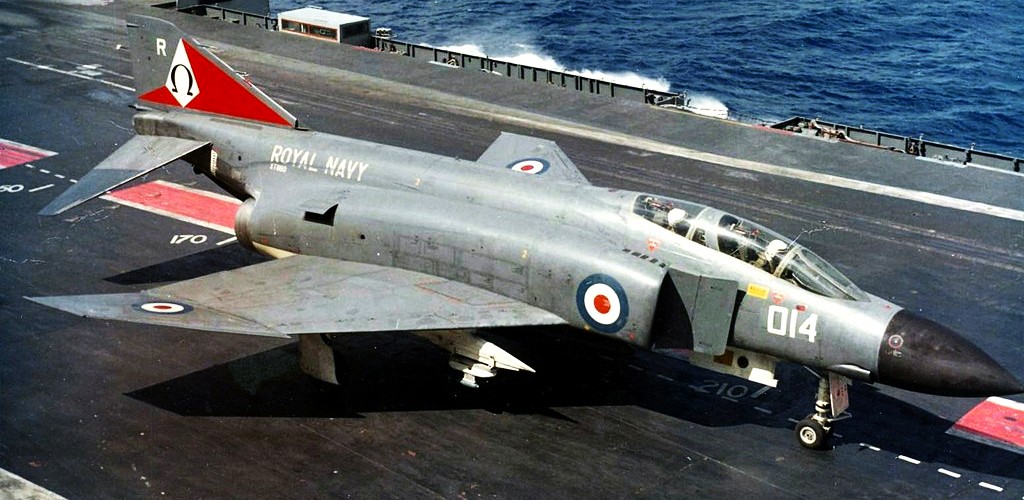
(USN Photo)
A Royal Navy McDonnell Douglas Phantom FG.1 from No. 892 Naval Air Squadron aboard the aircraft carrier HMS Ark Royal (R09). 2 March 1972.
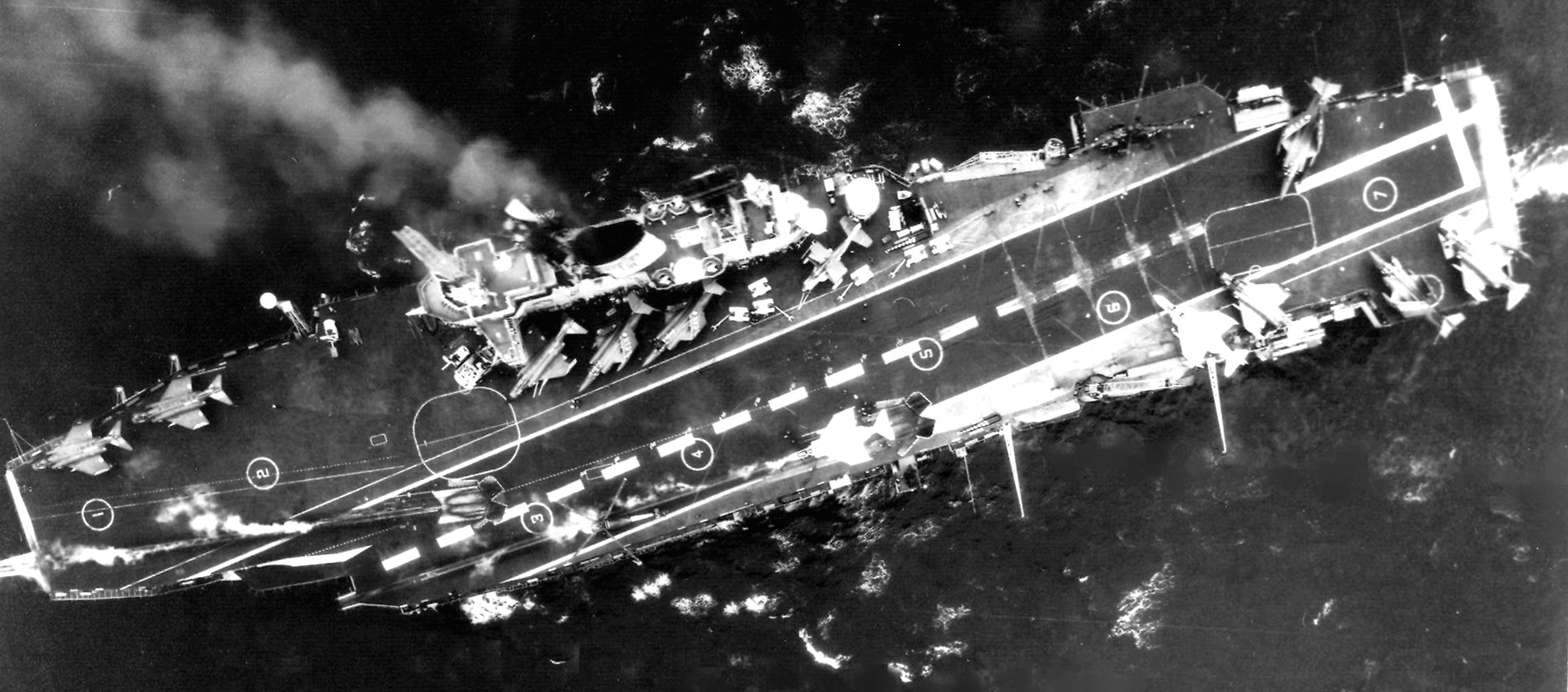
(USN Photo)
Royal Navy aircraft carrier HMS Ark Royal (R09), taken from an aircraft from the U.S. Navy carrier USS Independence (CVA-62) during cross-deck operations in 1971. Note the two light coloured U.S. Navy McDonnell Douglas F-4J Phantom II fighters on the flight deck. Both ships formed Task Force 401 and participated in NATO exercise “Royal Knight” in the North Atlantic.
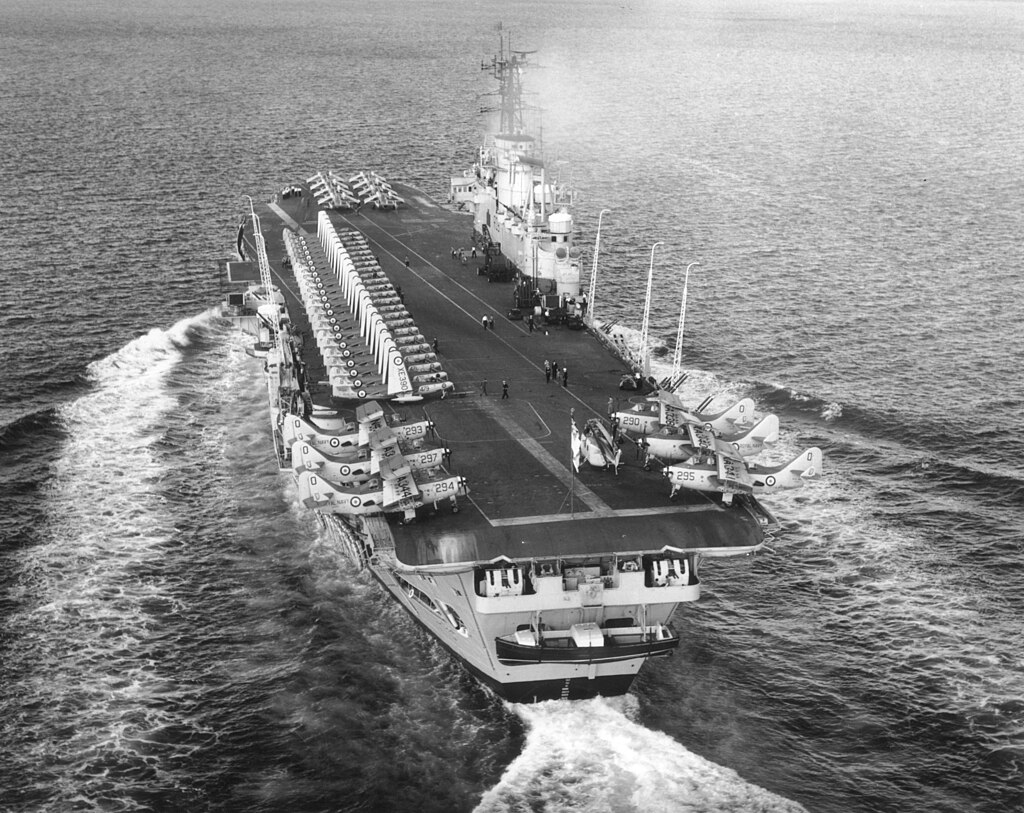
(UK MOD Photo)
HMS Ark Royal seen entering Lisbon on October 23, 1957, showing her appearance as completed by Cammell Laird, Birkenhead, in 1955. She served in the Mediterranean, East of Suez and Home waters until 1979 and in the following year was sold for scrap.