
RCN River class Frigates: HMCS St. Catharines (K325), HMCS Saint John (K456), HMCS St. Pierre (K680), HMCS St. Stephen (K454)
HMCS St. Catharines (K325)
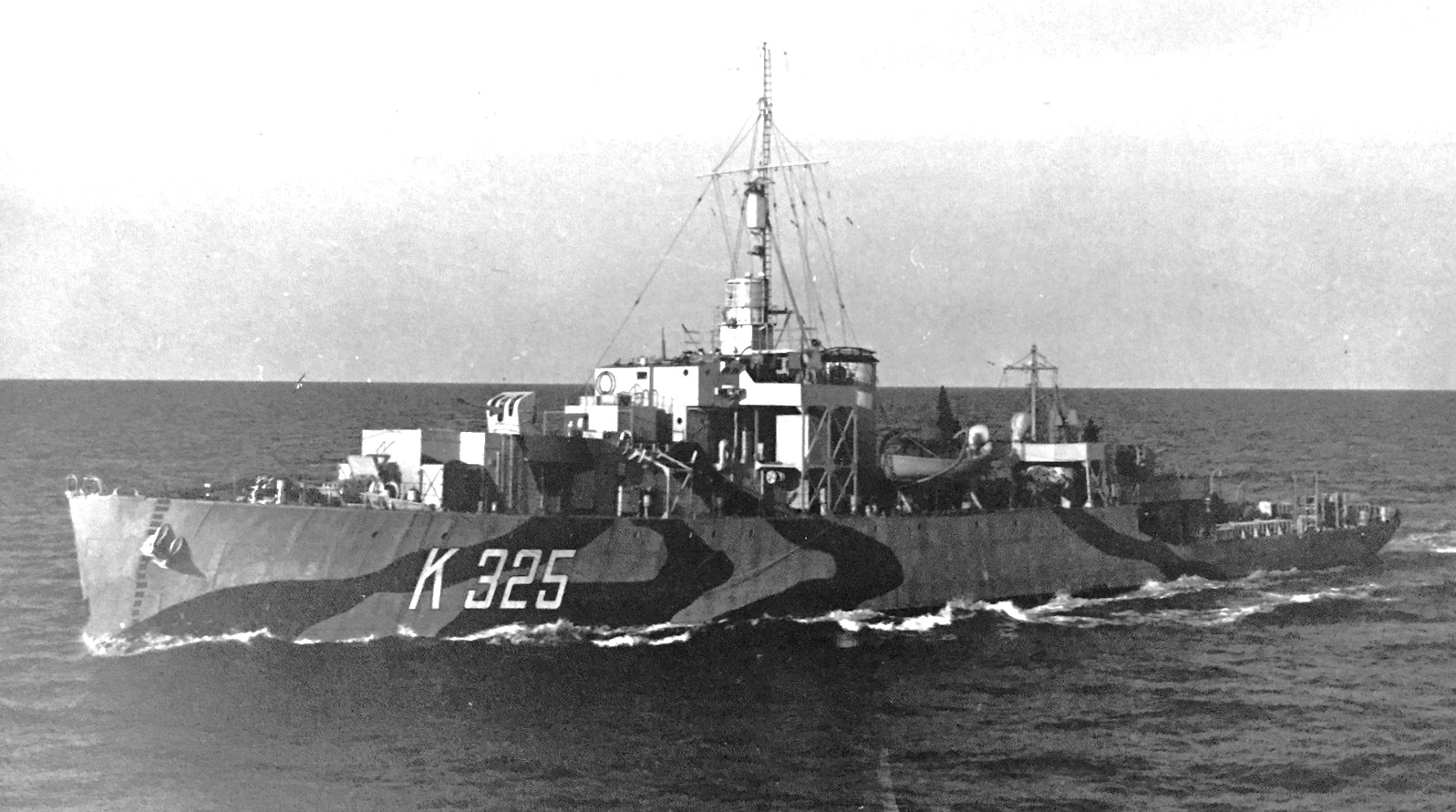
Steve Epp Photo)
HMCS St. Catharines (K325) River class Frigate. Built by Yarrows Ltd., Esquimalt, BC, she was commissioned on 31 Jul 1943, at Esquimalt. Departing Esquimalt soon after, she arrived at Halifax on 4 Oct 1943 and in Nov 1943 sailed for the UK as a member of EG C-2. She was continuously employed on convoy duty until Oct 1944, and from Feb to Sep 1944 she was Senior Officer’s ship. With six other escorts of convoy HX.280, she took part in the destruction of U-744 on 6 Mar 1944. After refitting at Shelburne from Oct to Dec 1944, she went to Bermuda to work up and, on her return to Halifax, commenced tropicalization refit there. By the time this was completed in Aug 1945, the war was over and the ship was paid off on 18 Nov 1945. In 1947 she was sold to Marine Industries Ltd. and laid up at Sorel. Later re-sold to Morton Engineering & Drydock Co., Quebec City, she was re-acquired in 1950 and converted to a weather ship. Transferred to the Department of Transport, she was taken round to the west coast to be stationed in the North Pacific as of July, 1952. Replaced in March, 1967, by CGS Vancouver, she was broken Japan in 1968.
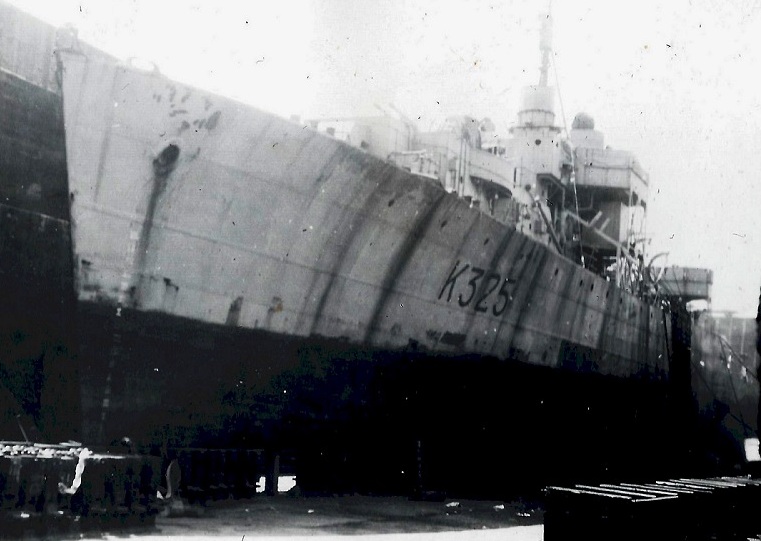
(Dave Chamberlain Photo)
HMCS St. Catharines (K325) River class Frigate in drydock, Saint John, New Brunswick, ca spring 1945.
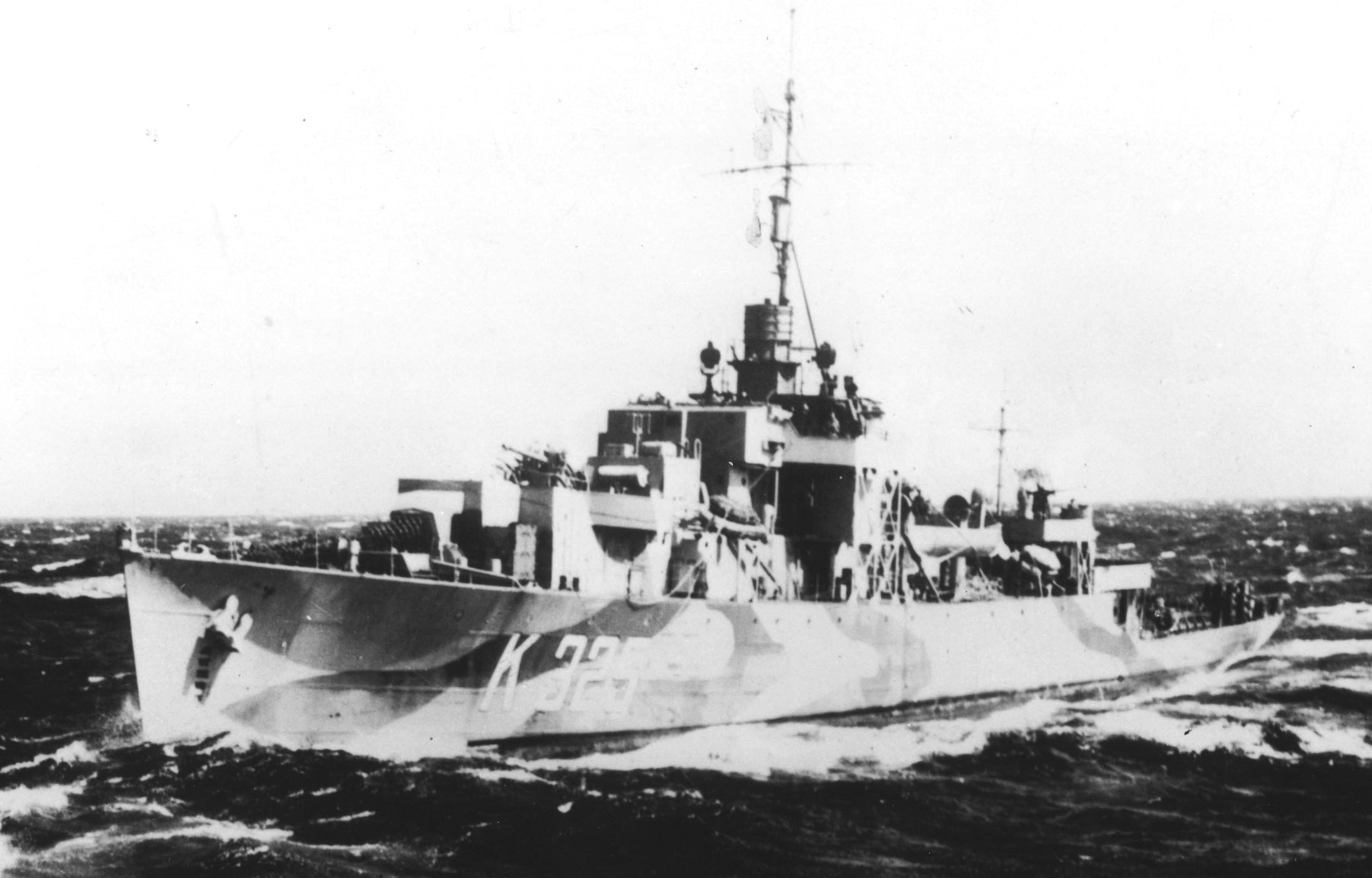
(RCN Photo)
HMCS St. Catharines (K325) River class Frigate.
HMCS Saint John (K456)
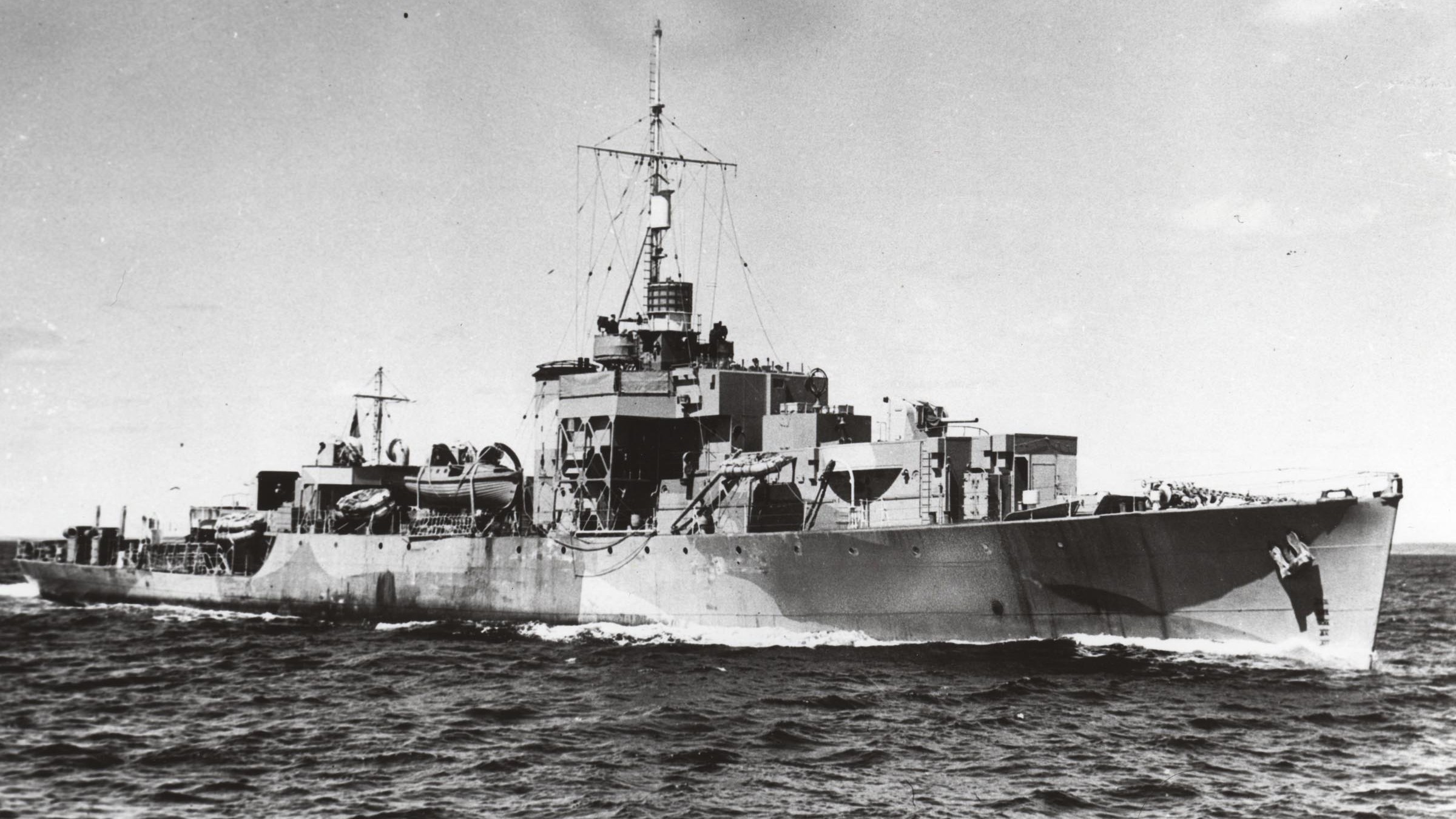
(RCN Photo)
HMCS Saint John (K456) River class Frigate. Built by Canadian Vickers Ltd., Montreal, Quebec, she was commissioned on 13 Dec 1943, at Montreal. She arrived at Halifax on 20 Dec 1943 and in Jan 1944, was sent to Bermuda to work up. On her return in Feb 1944 she was based for a short time at Halifax, but in Apr 1944 she was assigned to EG 9 in Londonderry. She departed Halifax on 28/29 Apr 1944 and joined C 3 as escort for convoy HX 289 for her transit to Londonderry, joining EG 9 on her arrival on 12 May 1944. She was present on D-Day. On 1 Sep 1944, she and HMCS Swansea sank U-247 off Land’s End, and on 16 Feb 1945, HMCS Saint John destroyed U-309 in Moray Firth. In Dec 1944, she escorted convoys JW.62 and RA.62 on the North Russia run, to and from Kola Inlet. She arrived at Cardiff for repairs on 27 Feb 1945, and, when these were completed in Apr 1945, proceeded home for tropicalization refit at Saint John, NB, from May to Oct 1945. She was paid off 27 Nov 1945, at Halifax and placed in reserve in Bedford Basin until sold and broken up at Sydney, Nova Scotia in 1947.
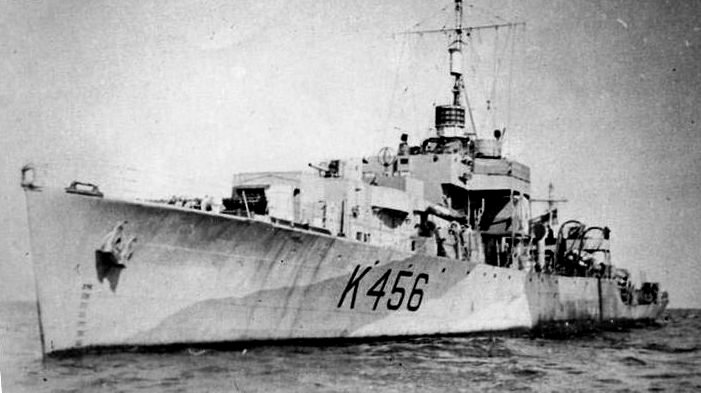
(LCdr Stacy Photo)
HMCS Saint John (K456) River class Frigate.
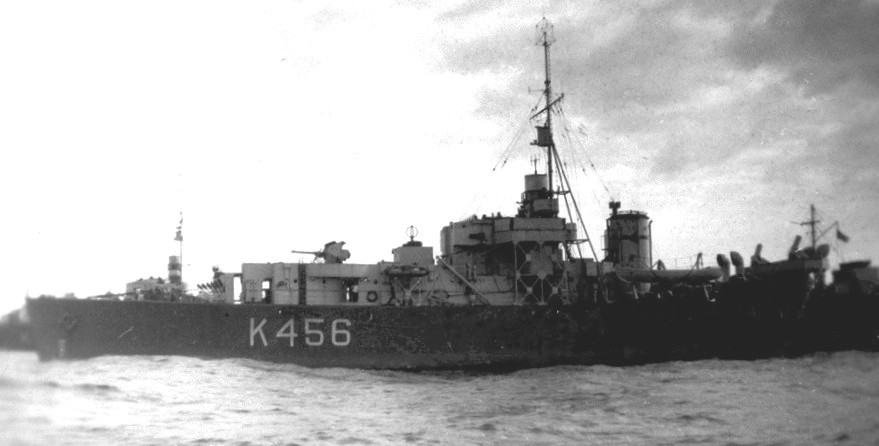
(Harold Colgan Photo)
HMCS Saint John (K456) River class Frigate.
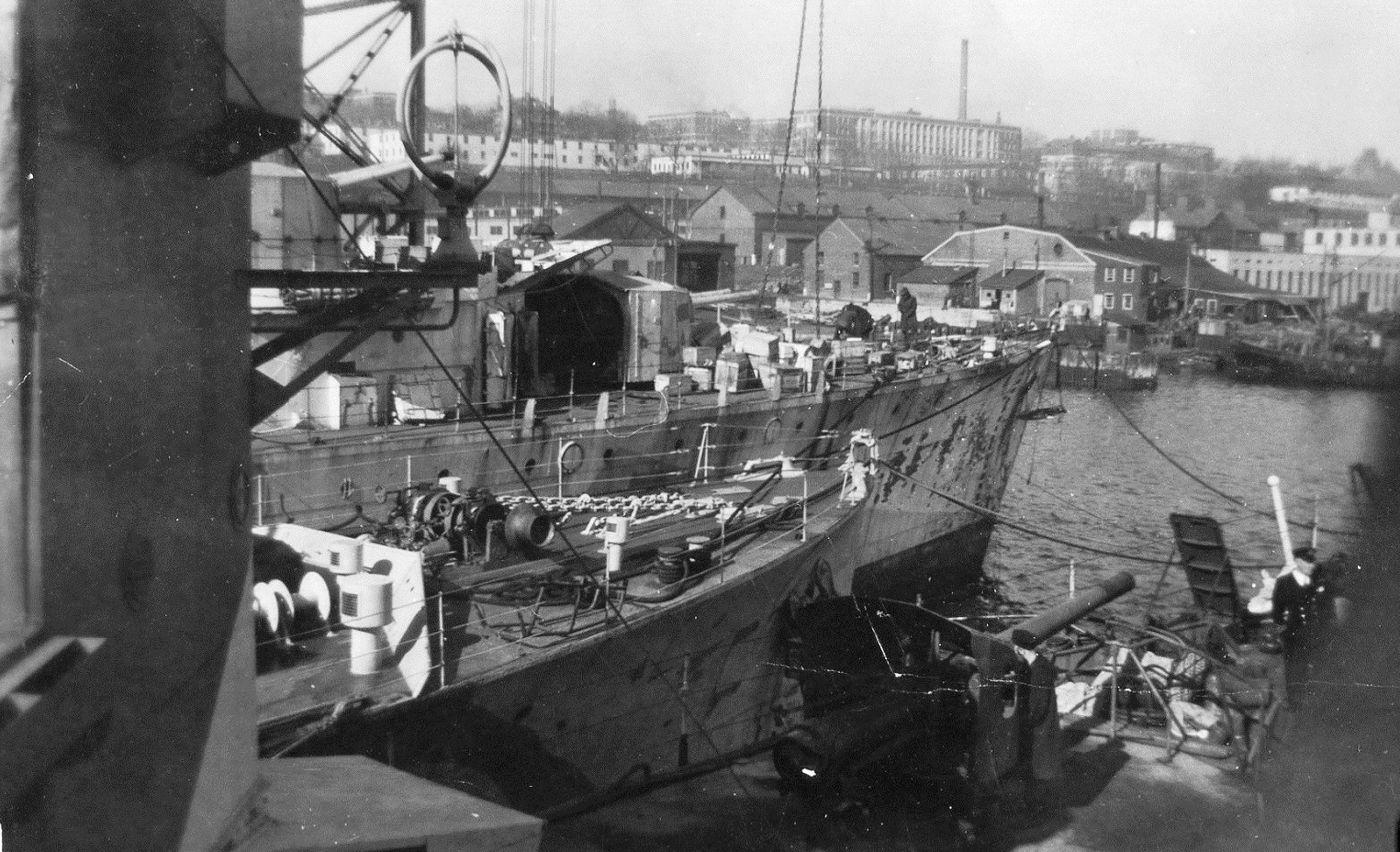
(Lana James Photo)
HMCS Saint John (K456) River class Frigate, Halifax, Nova Scotia.
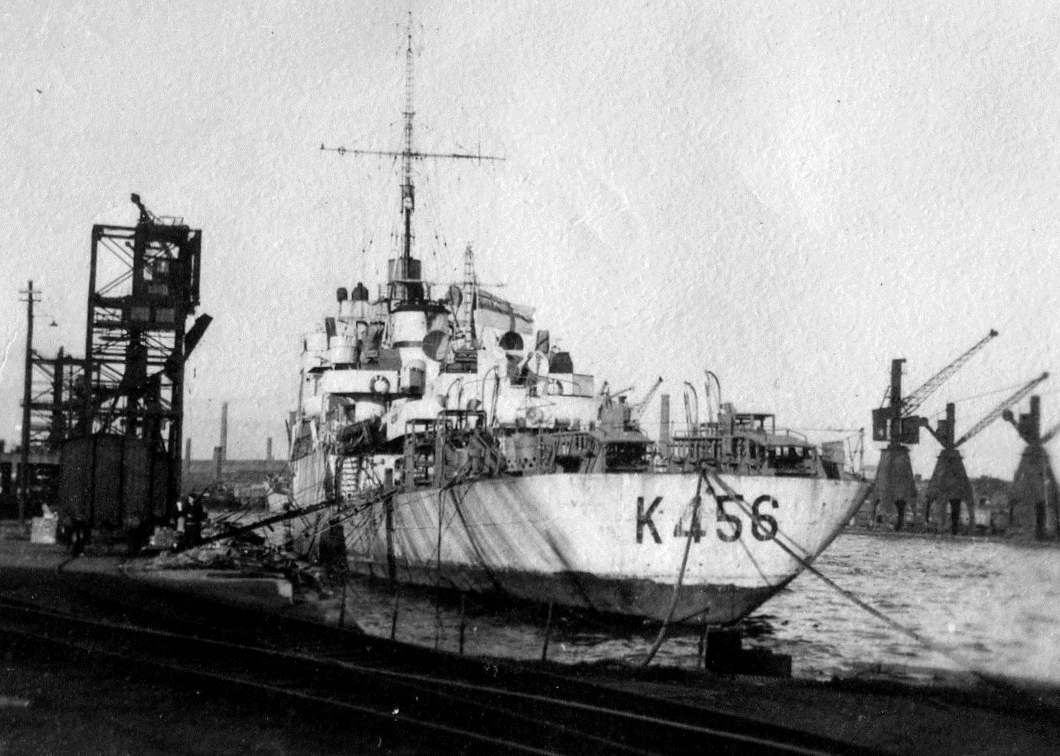
(Lana James Photo)
HMCS Saint John (K456) River class Frigate.
HMCS St. Pierre (K680)
(DND Photo)
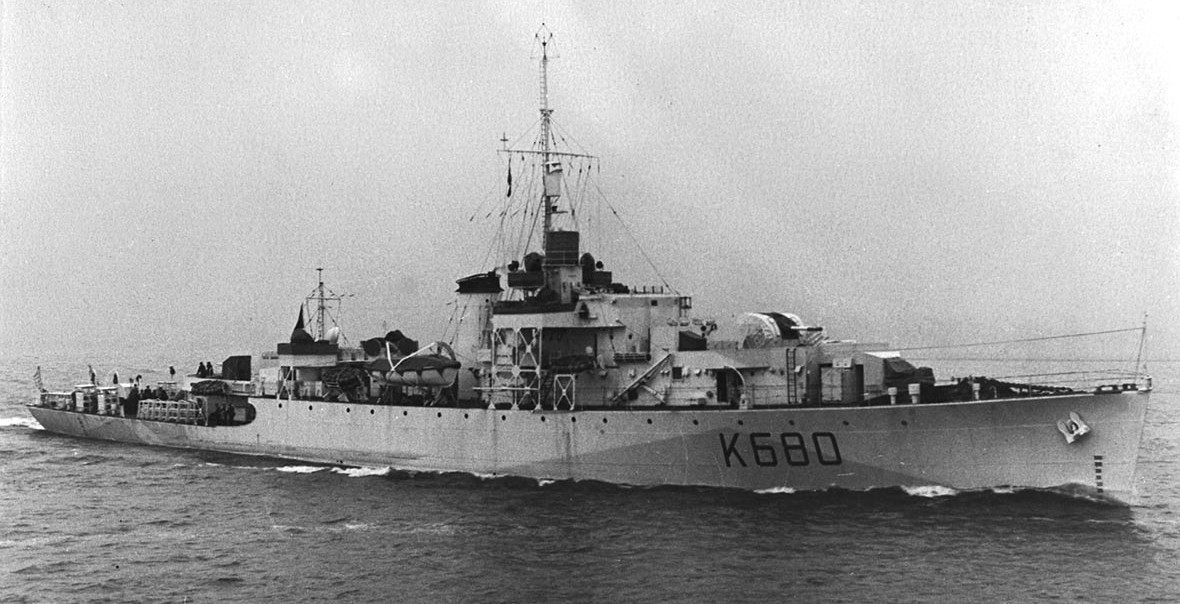
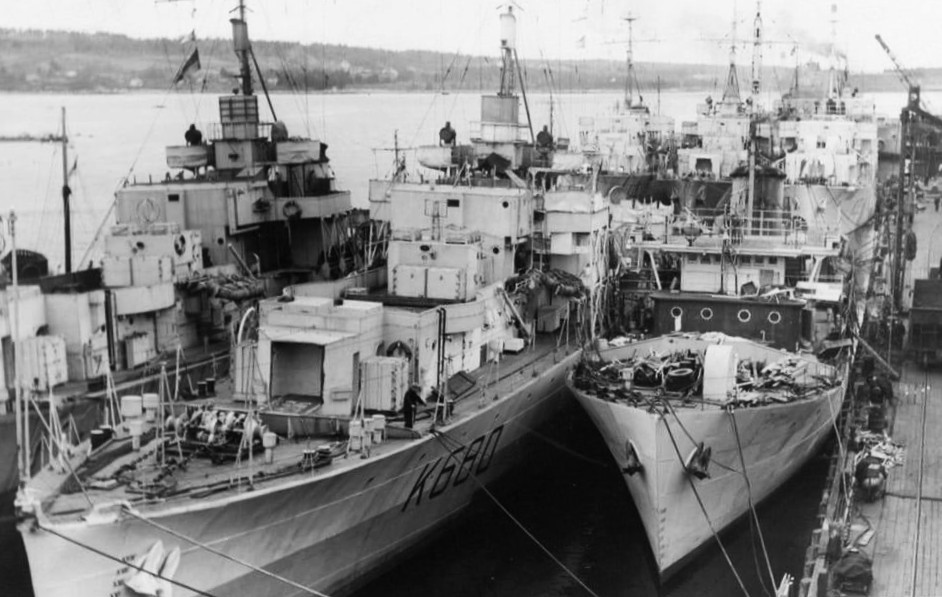
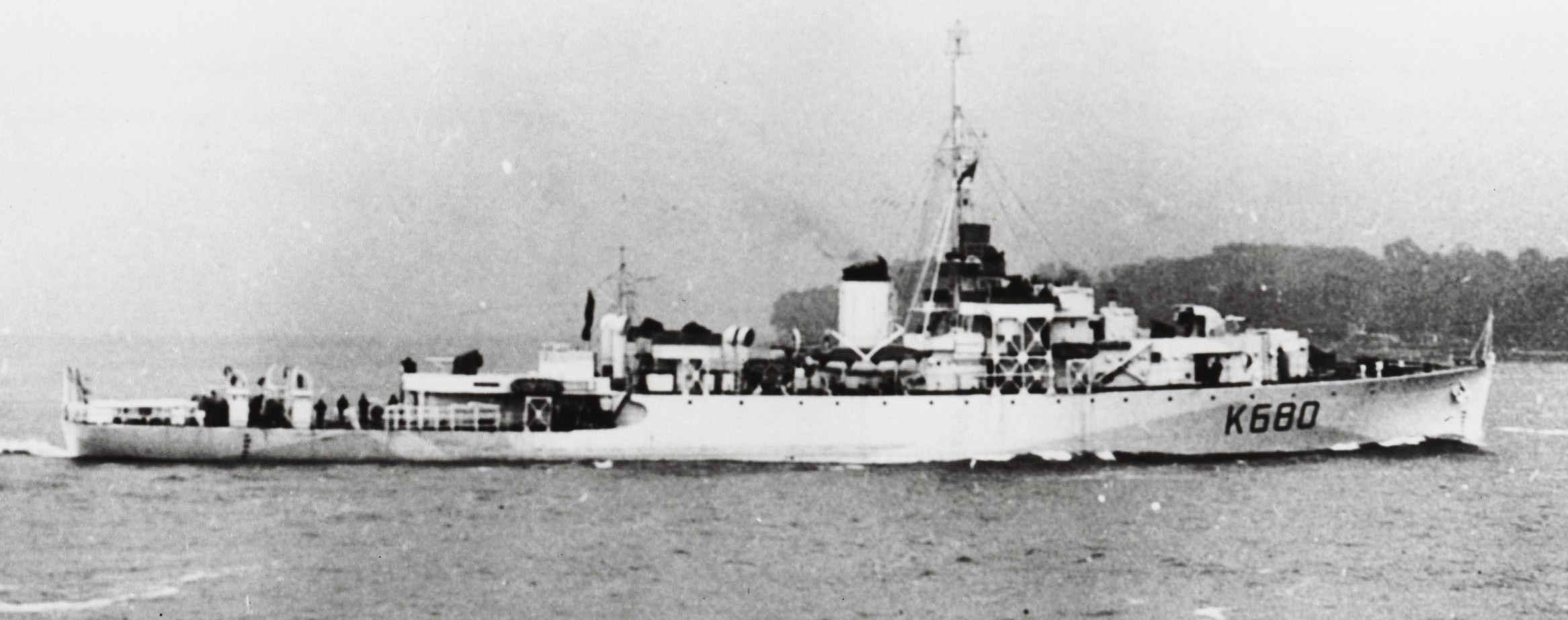
HMCS St. Pierre (K680) River class Frigate. Built at Lauzon, Quebec, by Davie Shipbuilding & Repairing Co. Ltd., she was commissioned on 22 Aug 1944, at Quebec City. She arrived at Halifax in Oct 1944 and spent more than four months under repair . She carried out workups in Bermuda in Mar 1945 and on 5 Apr 1945 left for Londonderry via the Azores, having been assigned to EG 9. From Horta she picked up convoy SC.172, arriving at `Derry on 21 Apr 1945. On 12 May 1945 she left Greenock to escort JW.67 to North Russia, but was detached the next day to accompany a number of surrendered U-boats bound from Trondheim to Loch Eriboll. She left the UK late that month for Canada, and on 4 June 1945 commenced tropicalization refit at Lauzon. The job was called off on 20 Aug 1945 and the ship paid off 22 Nov 1945 at Sydney, to be placed in reserve at Shelburne. In 1947 she was sold to the Peruvian Navy and renamed Teniente Palacios, shortened to Palacios in 1953. She was broken up in 1966.
(Tim McDonald Photo)
HMCS St. Pierre (K680) River class Frigate.
(RCN Photo)
HMCS St. Pierre (K680) River class Frigate.
HMCS St. Stephen (K454)
(DND Photo)
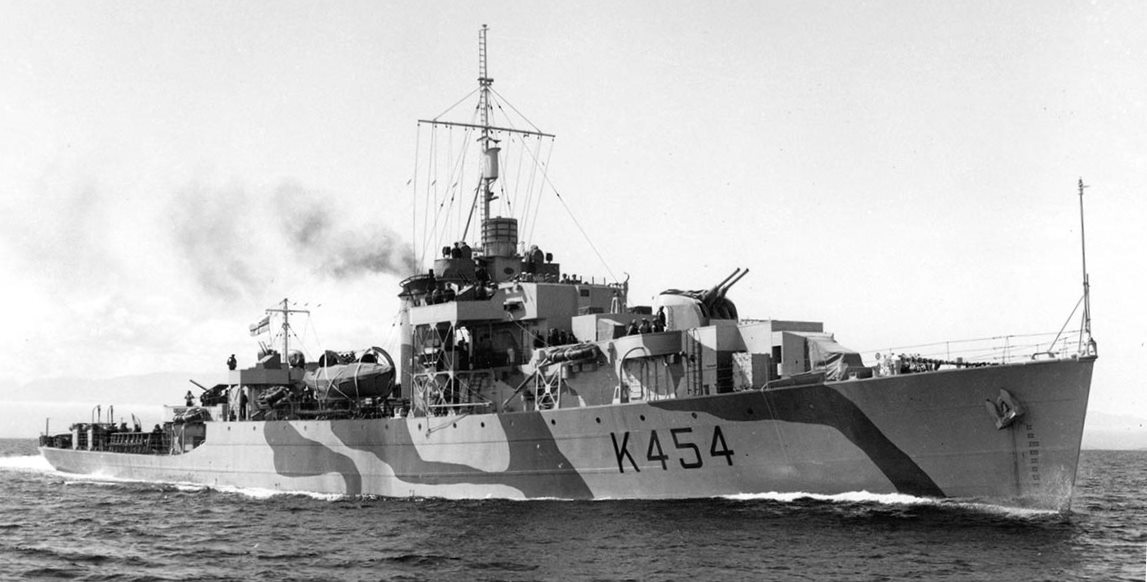
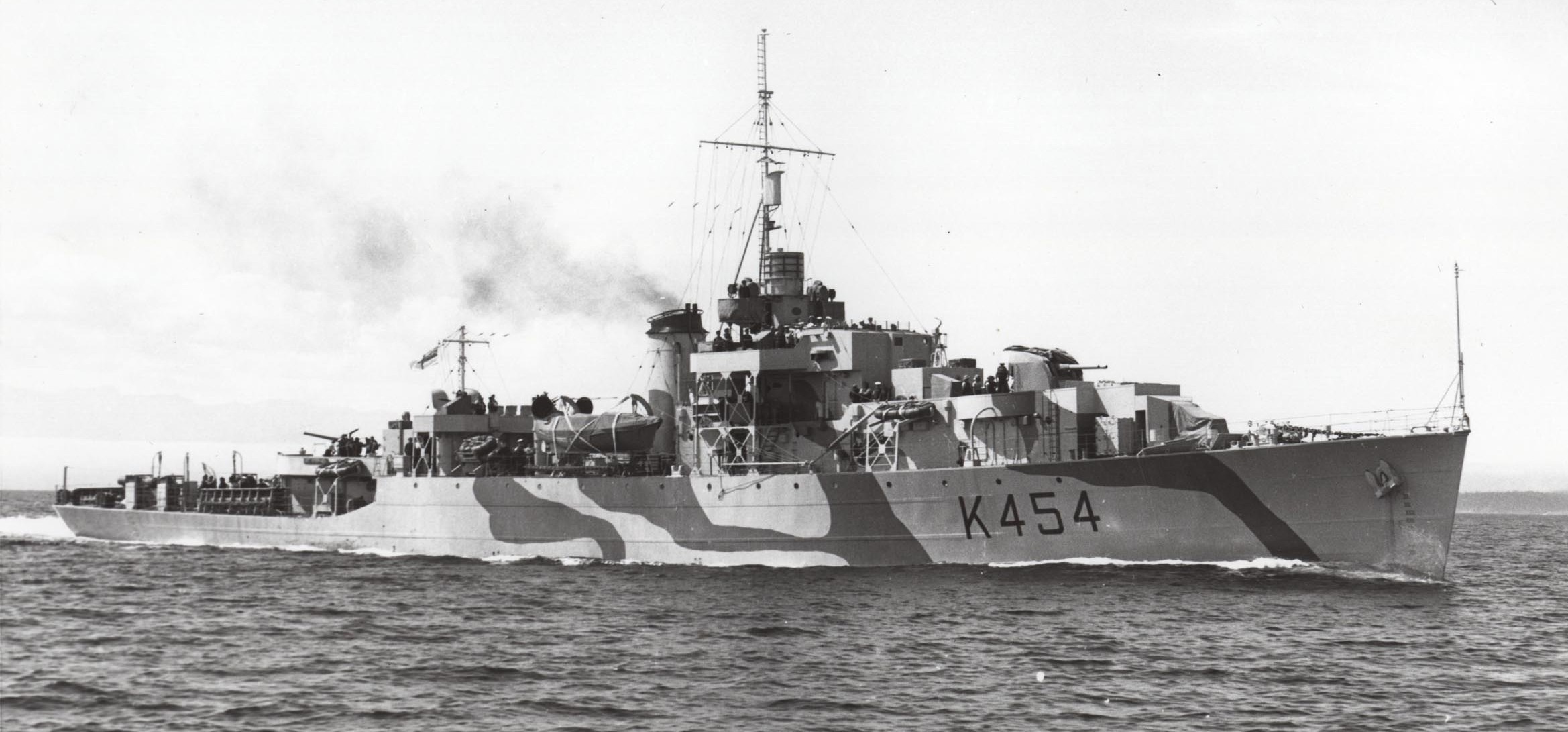
HMCS St. Stephen (K454) River class Frigate. Commissioned on 28 Jul 1944, at Esquimalt, HMCS St. Stephen arrived at Halifax on 28 Sep 1944 and in Oct 1944 proceeded to Bermuda to work up. Returning in mid-Nov 1944, she joined EG C-5 and spent the balance of the war as a mid-ocean escort. She left Barry, Wales, on 27 May 1945, to take passage home with convoy ON.305, and early in Jun 1945 began tropicalization refit at Dartmouth, NS. This was cancelled in Aug 1945 and on 30 Jan 1946, the ship was paid off at Halifax and laid up in Bedford Basin. On 27 Sep 1947, she was re-commissioned, having undergone alterations to fit her as a weather ship. She was stationed between Labrador and Greenland until Aug 1950, when she sailed to Esquimalt to be paid off on 31 Aug 1950 and lent to the Department of Transport. Retained primarily as a “spare” in the event of a mishap to HMCS St. Catharines or HMCS Stone Town, she was purchased by the Department in 1958. Ten year later she was sold to a Vancouver buyer, purportedly for conversion to a fish factory ship.
(DND Photo)
HMCS St. Stephen (K454) River class Frigate.
(Maritime Museum of British Columbia Photo)
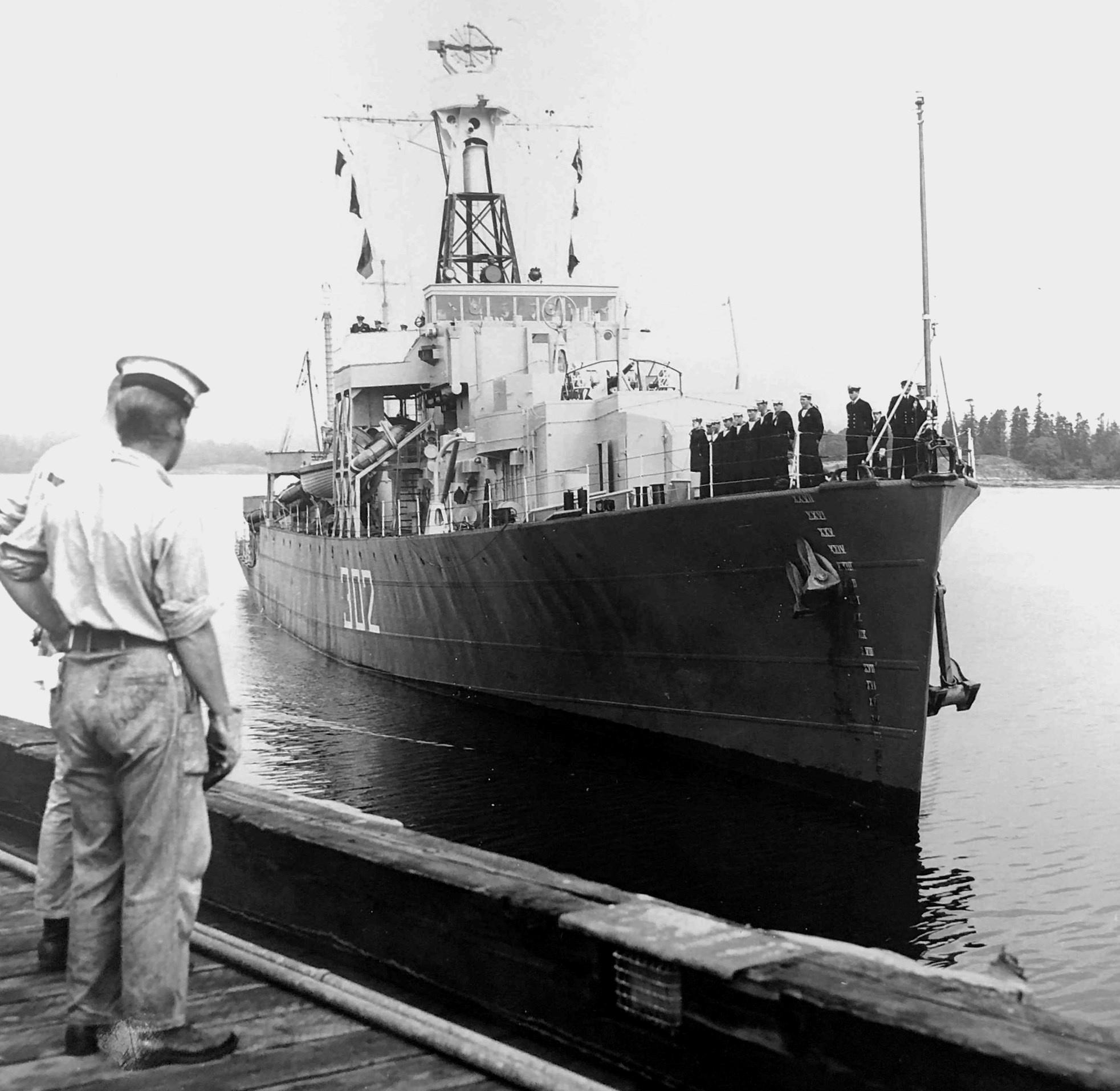
HMCS St. Stephen (K454) River class Frigate, as weathership 302. Three of the River Class Frigates were taken over by the Department of Transport, (DOT) extensively modified and crewed by D.O.T. personnel to serve as weatherships. One Frigate was HMCS St. Stephen, a three-year veteran of station ‘B’. The other two were HMCS St. Catharines and HMCS Stonetown.
After the three ships were taken over by the Department of Transport (DOT) they became Canadian Government Ships (CGS) St. Catharines, CGS Stonetown and CGS St. Stephen. All the DOT ships, the buoy vessels, icebreakers and so on were known as CGS. They had civilian crews, were members of the DOT and operated as merchant ships. The personnel consisted of: Masters, Mates, Engineers, Chief Stewards, Radio Officers, Electricians, Weather Observers and any other trade that was needed to get the job done. Radio operators were required to have their commercial deep sea radio certificate in order to work for the Department of Transport.
The government of Prime Minister John Diefenbaker decided to consolidate the duties of the Marine Service of the Department of Transport and on 28 Jan 1962 the Canadian Coast Guard was formed as a subsidiary of DOT. As a result, the three weather ships became Canadian Coast Guard Ships along with the rest of the DOT fleet.