RCN River class Frigates: HMCS Coaticook (K410), HMCS Dunver (K03), HMCS Eastview (K665), HMCS Ettrick (K254), HMCS Fort Erie (K670)
HMCS Coaticook (K410)
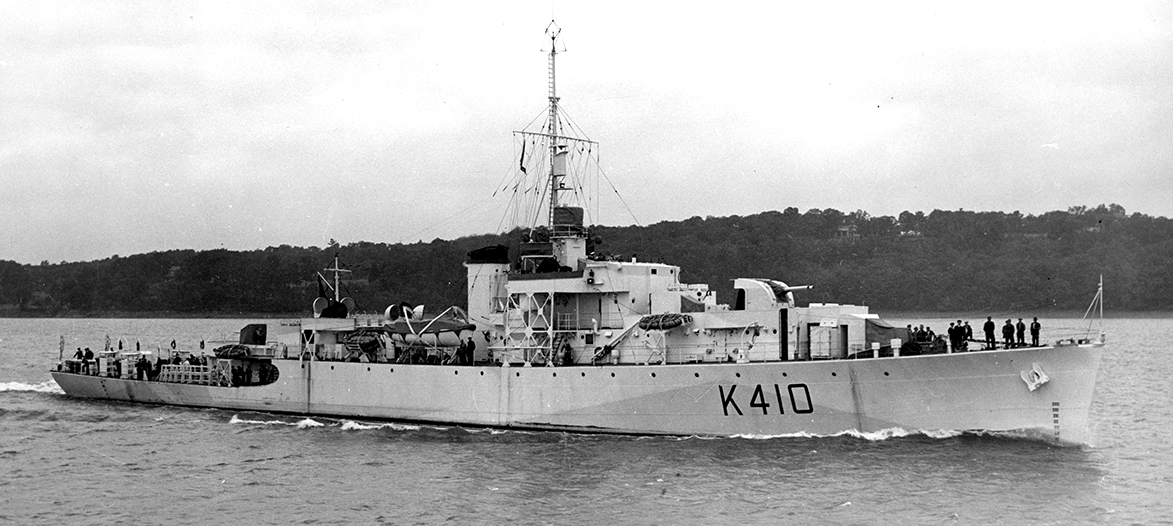
(Library and Archives Canada Photo, MIKAN No. 3554611)
HMCS Coaticook (K410) River class Frigate. Built at Lauzon by Davie Shipbuilding & Repairing Co. Ltd., she was commissioned on 25 July 1944, at Quebec City. HMCS Coaticook proceeded to Bermuda in mid-Sep 1944 for three weeks’ working up. She was then assigned to EG 27 with which she served on A/S and support duties out of Halifax for the balance of the war. In Jun 1945, Coaticook sailed to Esquimalt, where she was paid off into reserved on 29 Nov 1945. In 1949 her stripped hull was sunk for a breakwater at Powell River but was re-floated in 1961. While in tow for Victoria to be broken up, the hull was found to be structurally unsound and instead scuttled off Race Rock.
(DND Photo)
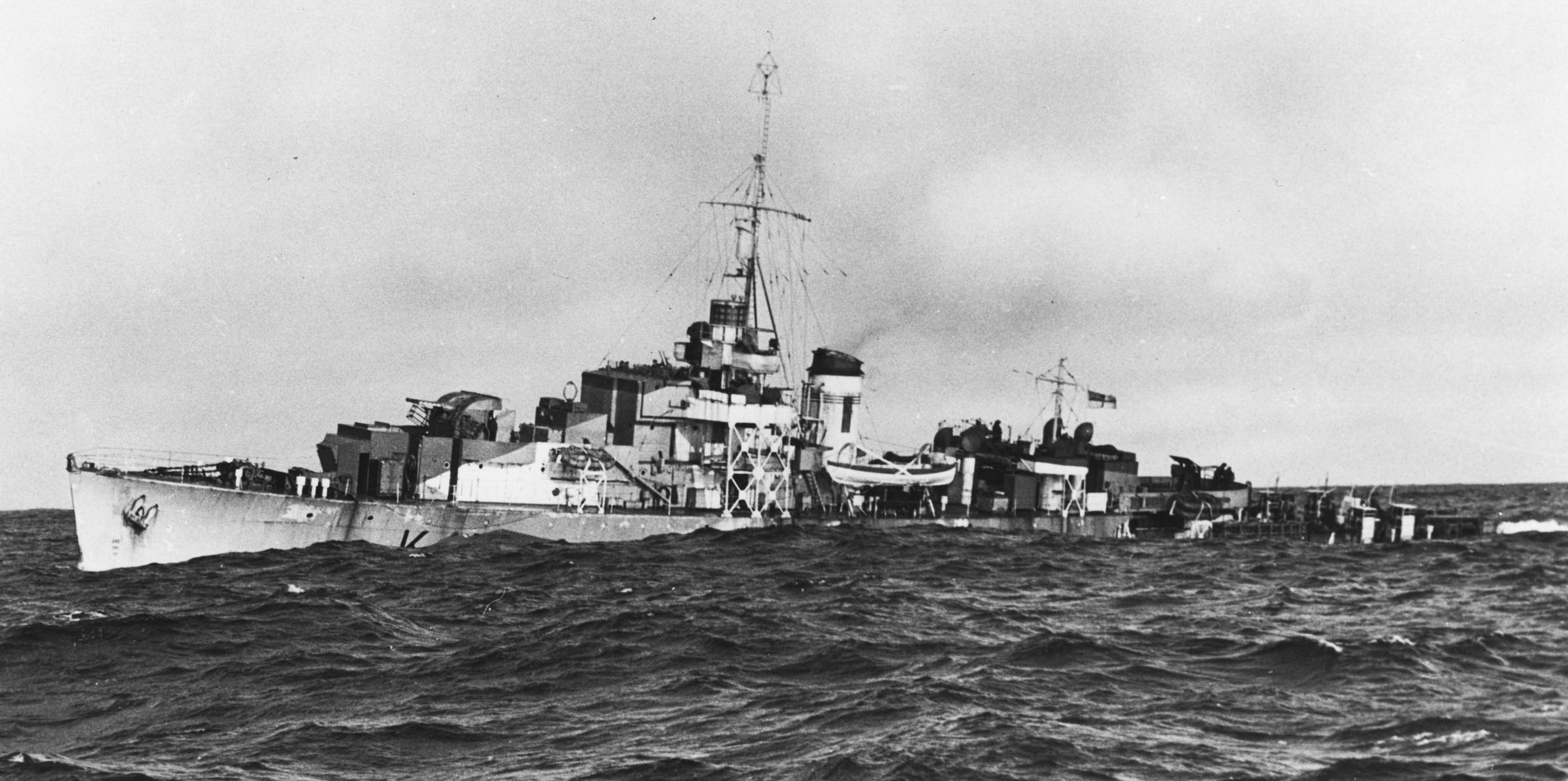
HMCS Coaticook (K410) River class Frigate.
HMCS Dunver (K03)
(DND Photo)
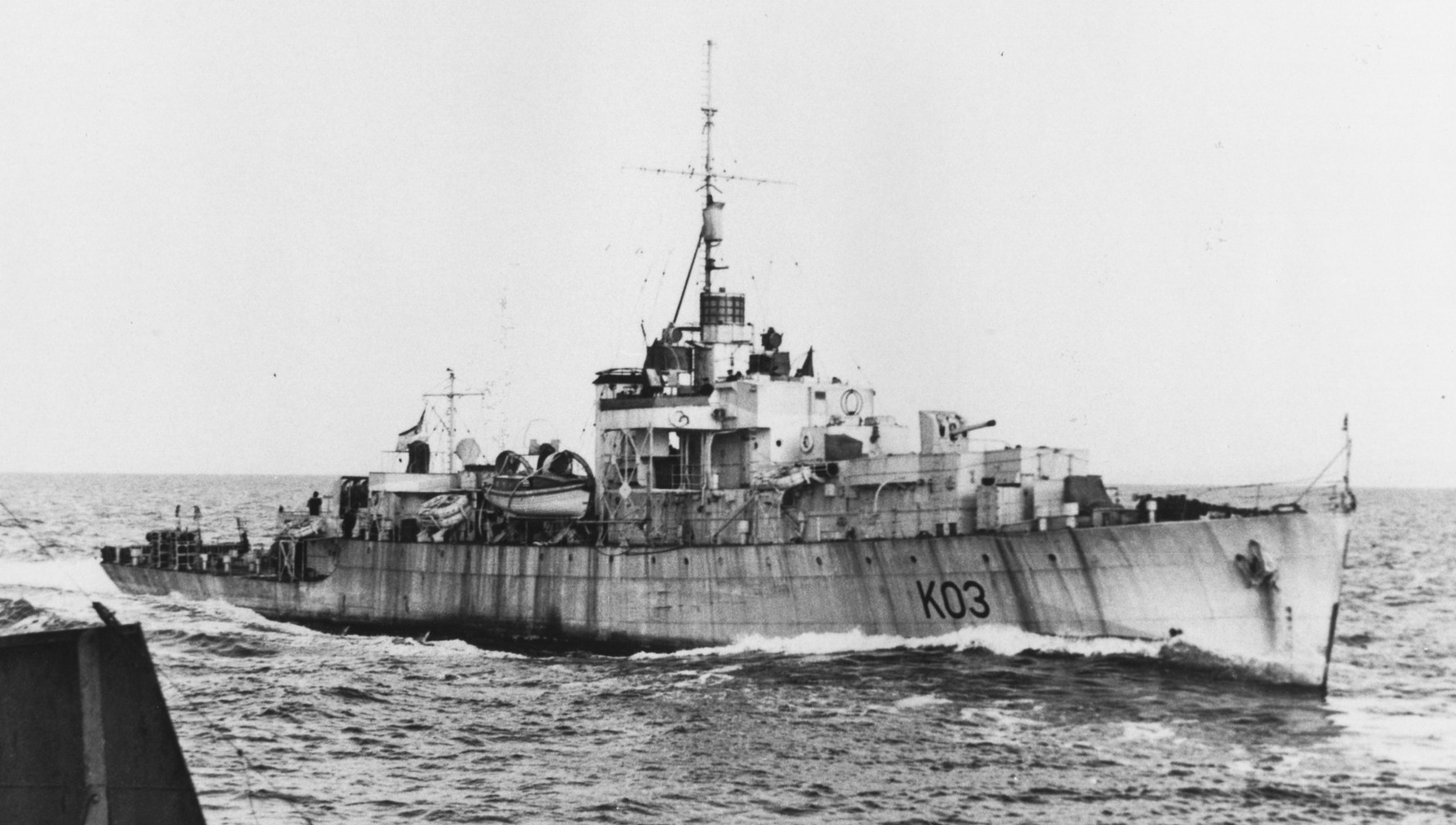
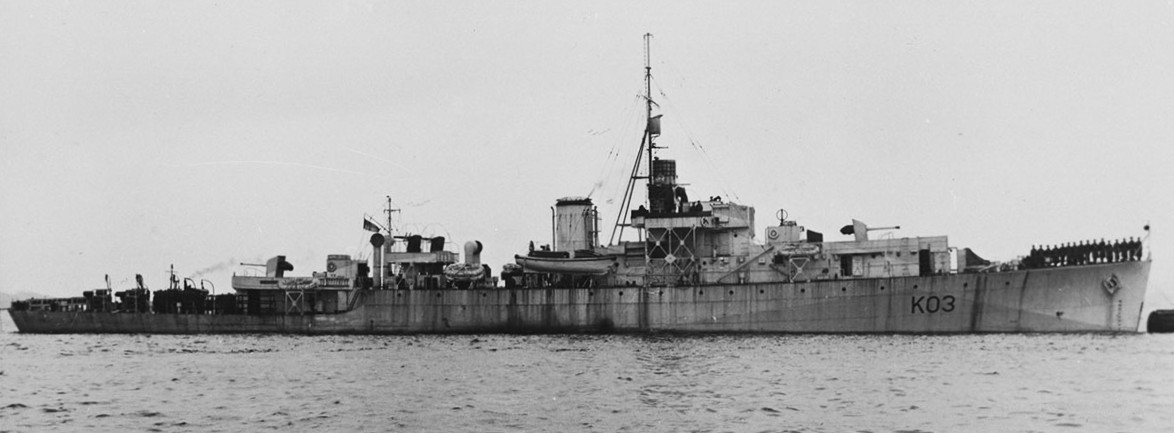
HMCS Dunver (K03) River class Frigate. Laid down as HMCS Verdun, in honour of Verdun, Quebec, her name was changed to HMCS Dunver to avoid confusion with HMS Verdun, already in commission. She was the first frigate launched for the RCN, and was commissioned at Quebec City on 11 Sep 1943. She arrived at Halifax on 3 Oct 1943, having escorted a Sydney-Halifax convoy en route. After working up at Pictou, NS, she was allocated to EG C-5, and served continuously on North Atlantic convoys until Oct 1944. In July 1944 she had been the Senior Officer’s ship while escorting HXS.300, the largest convoy of the war with 167 merchant ships. In Oct 1944, she commenced refit at Pictou, completing on 27 Dec 1944, and in Apr 1945, joined EG 27, based at Halifax, for the rest of the European war. In Jun 1945 she went to the west coast for tropicalization, but this was discontinued in Aug 1945 and she was laid up at Esquimalt. She was paid off on 23 Jan 1946. HMCS Dunver was sold and her hull expended as part of a breakwater at Royston, BC, in 1948. HMCS Hespeler and HMCS Dunver were credited with the sinking of U-484. However, post war analysis credits the sinking of U-484 to HMS Portchester Castle and HMS Helmsdale.
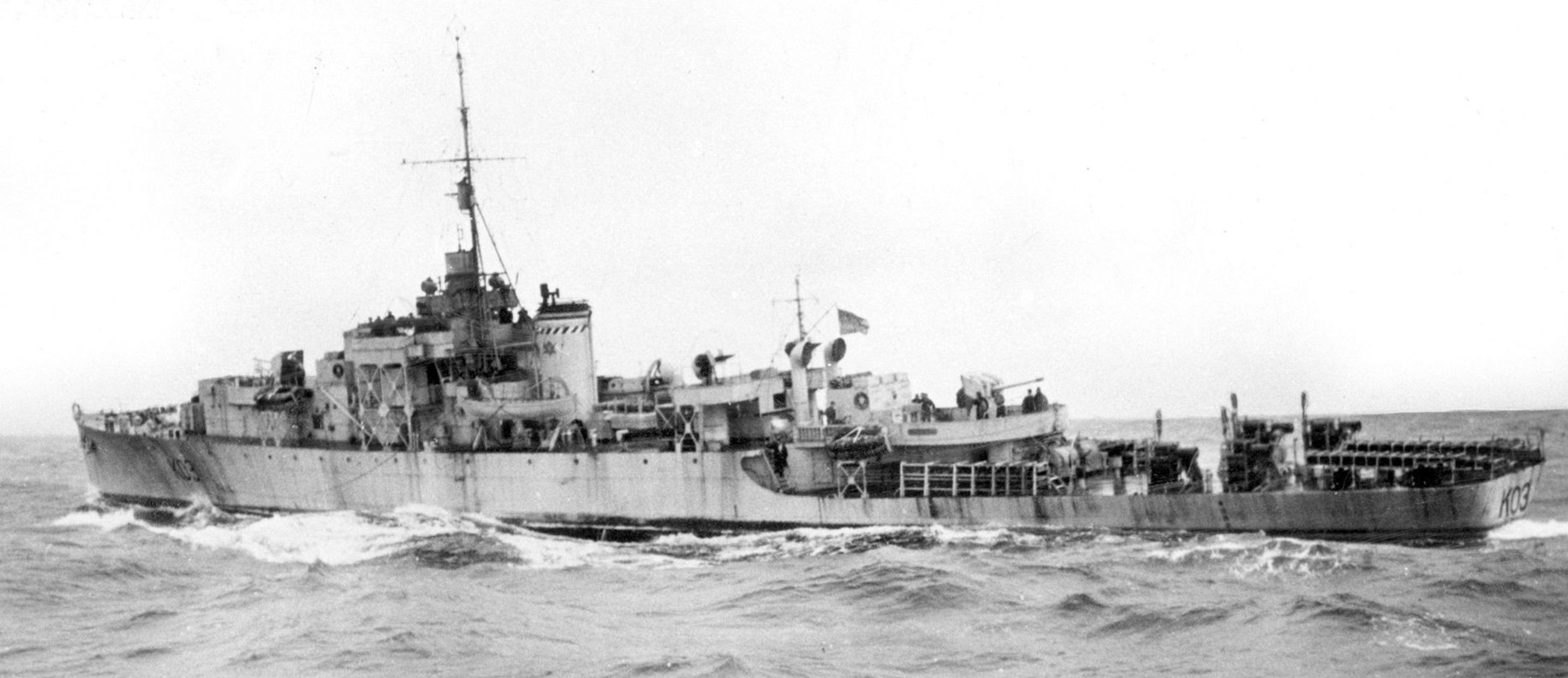
(Marlene Hill Photo)
HMCS Dunver (K03) River class Frigate.
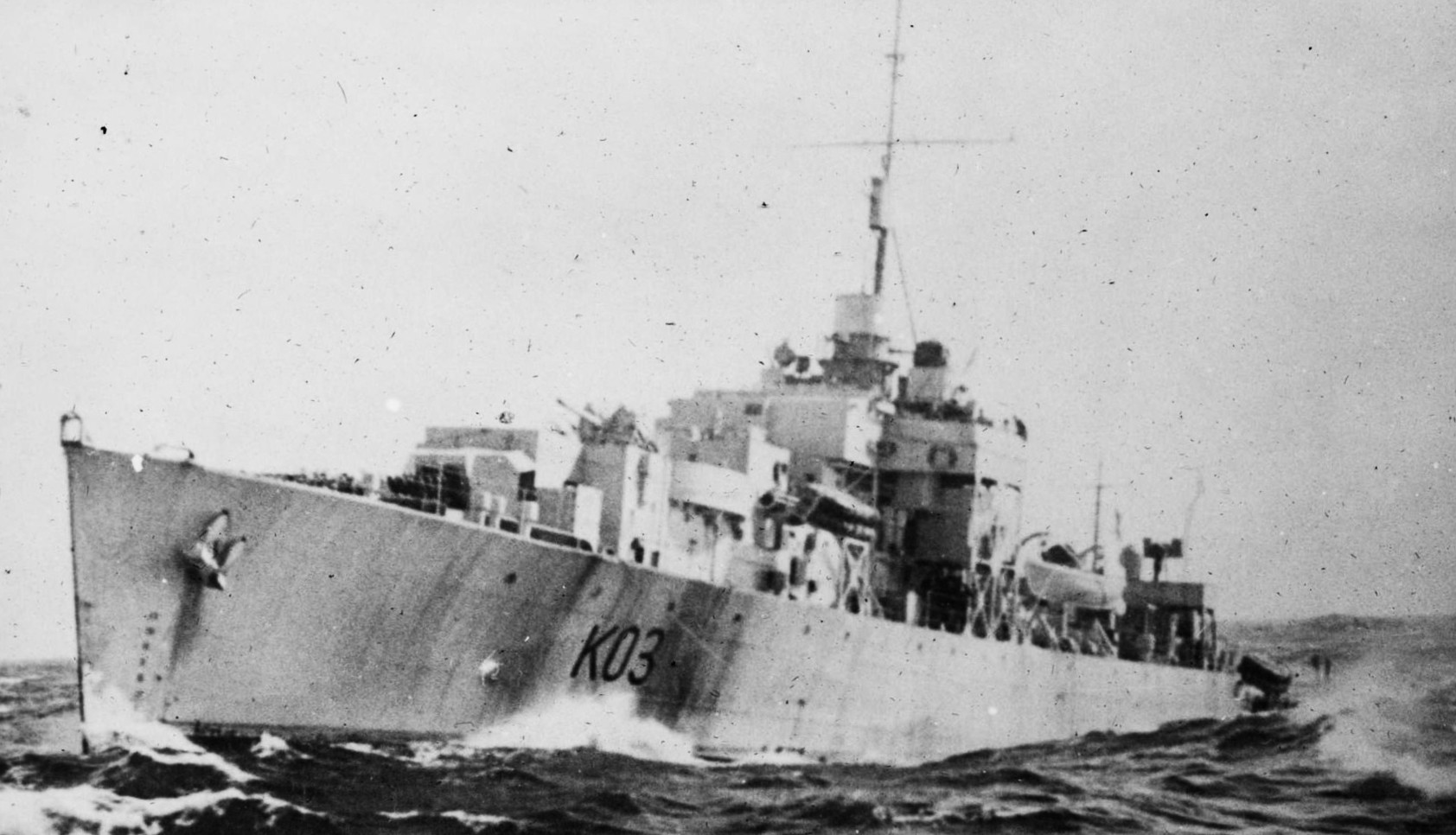
(Canadian Virtual Military Museum Photo)
HMCS Dunver (K03) River class Frigate.
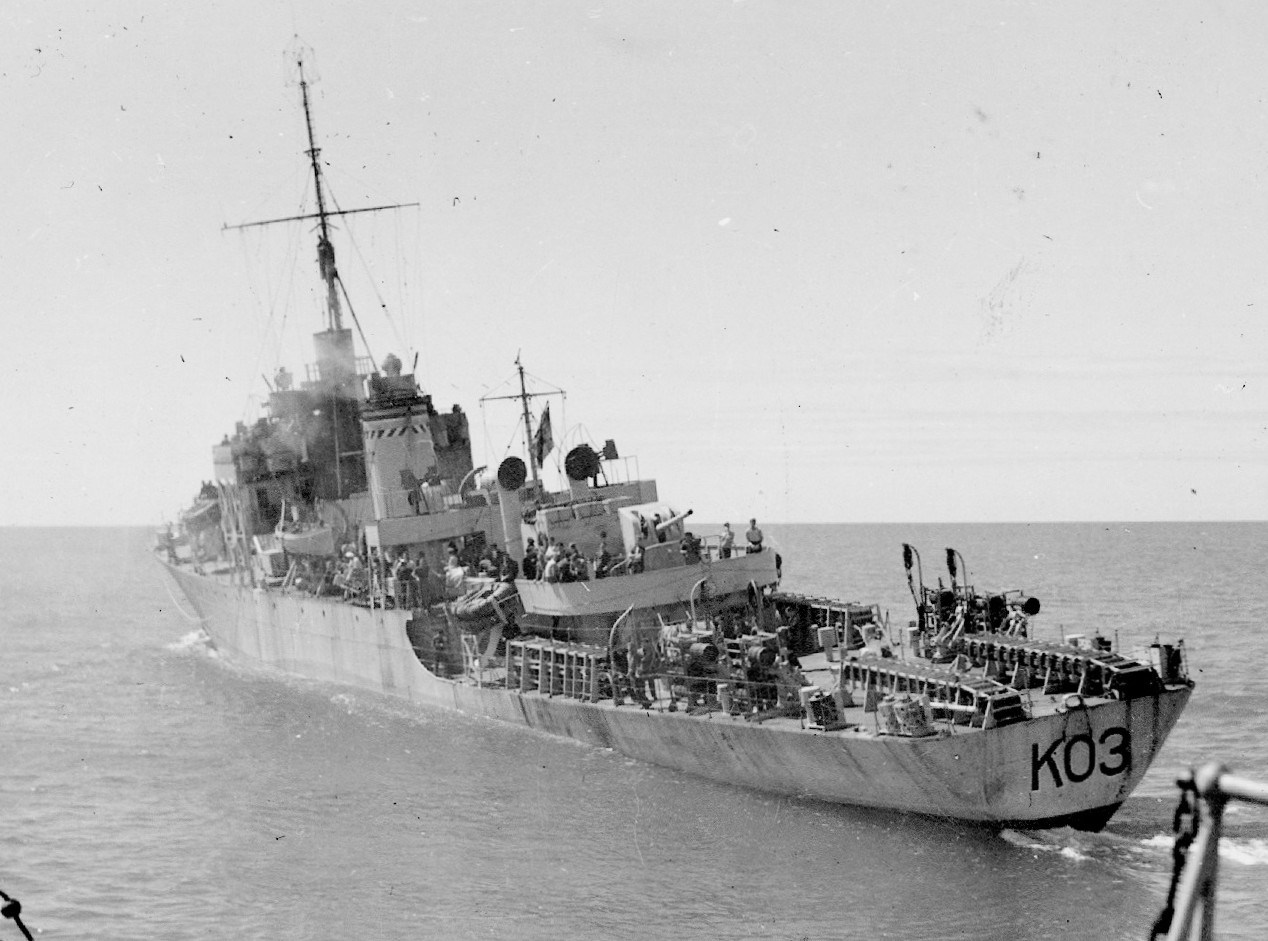
(Grant Dougall family Photo)
HMCS Dunver (K03) River class Frigate, pulling away after a light line transfer ca 1944.
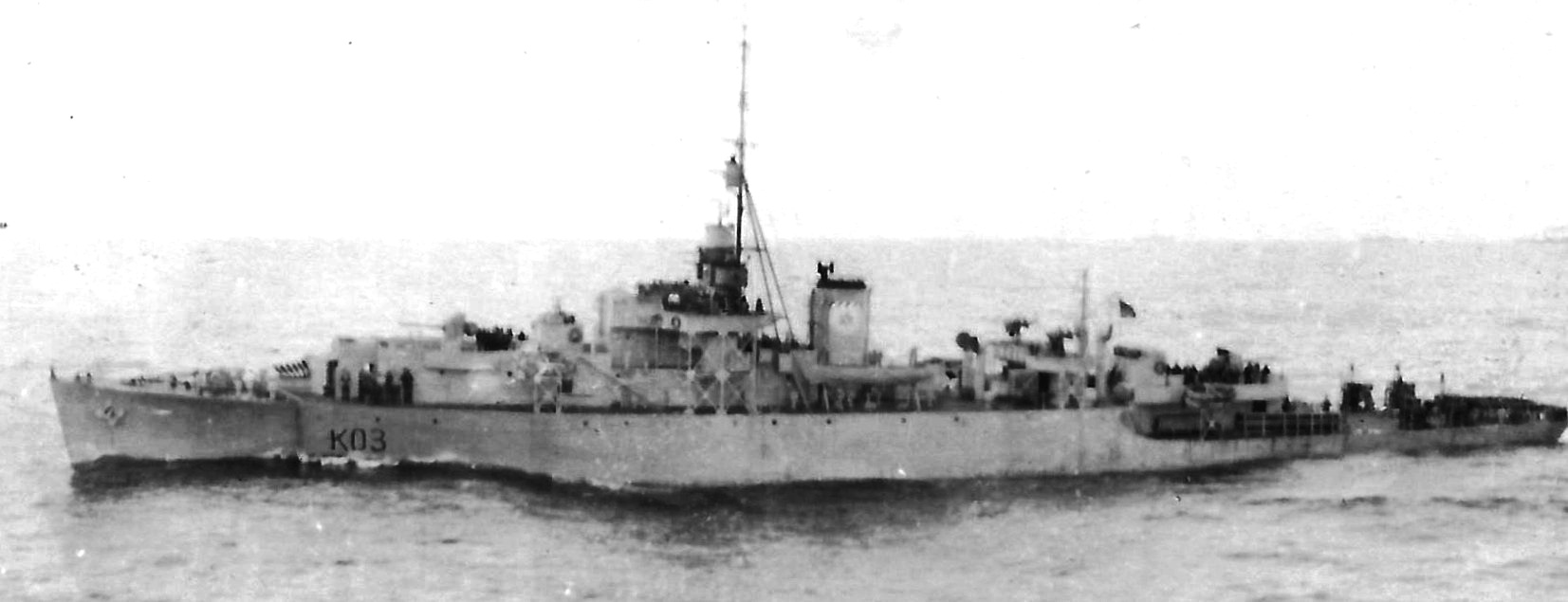
(Diana Brown Photo)
HMCS Dunver (K03) River class Frigate.
(DND Photo)
HMCS Dunver (K03) River class Frigate.
HMCS Eastview (K665)
(DND Photo)
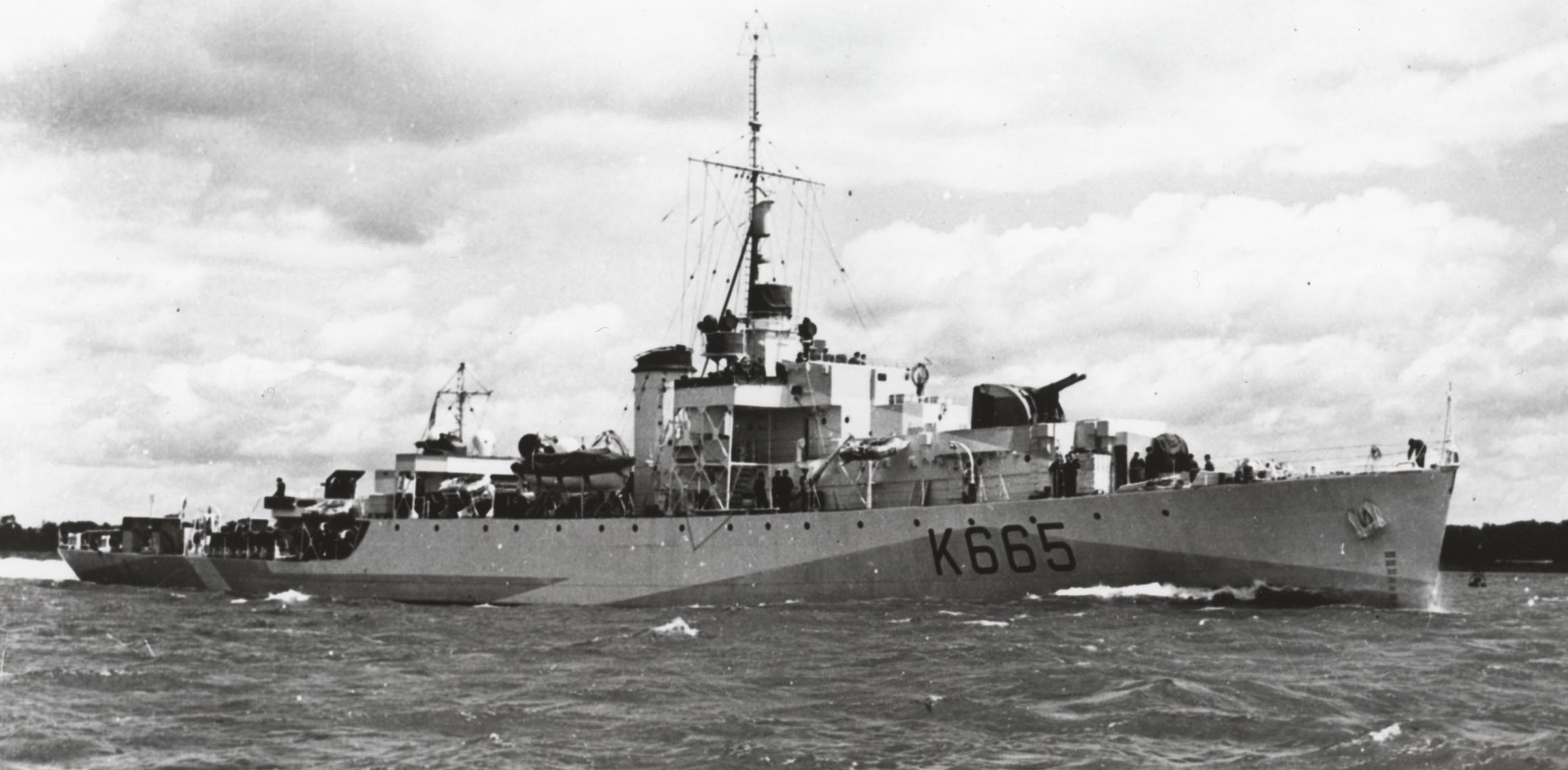
HMCS Eastview (K665) River class Frigate. Commissioned at Montreal on 3 Jun 1944, HMCS Eastview arrived at Halifax on 26 Jun 1944 and proceeded to Bermuda to work up. On her return in Aug 1944 she was attached to EG C-6 as Senior Officer’s ship, and on 18 Sep 1944 left St. John’s, Newfoundland, with her first convoy, HXF.308. For the balance of the European war she was continuously on Atlantic convoy duty, and was one of the escorts of HX.358, the last HX convoy of the war, leaving St. John’s 27 May 1945. That Jul 1945 she went to the west coast and had barely commenced tropicalization refit when work was stopped and the ship laid up in reserve at Esquimalt. She was paid off on 17 Jan 1946, and sold in 1947, and her hull made part of a breakwater at Oyster Bay, BC, the following year.
HMCS Ettrick (K254)
(RVN Photo)
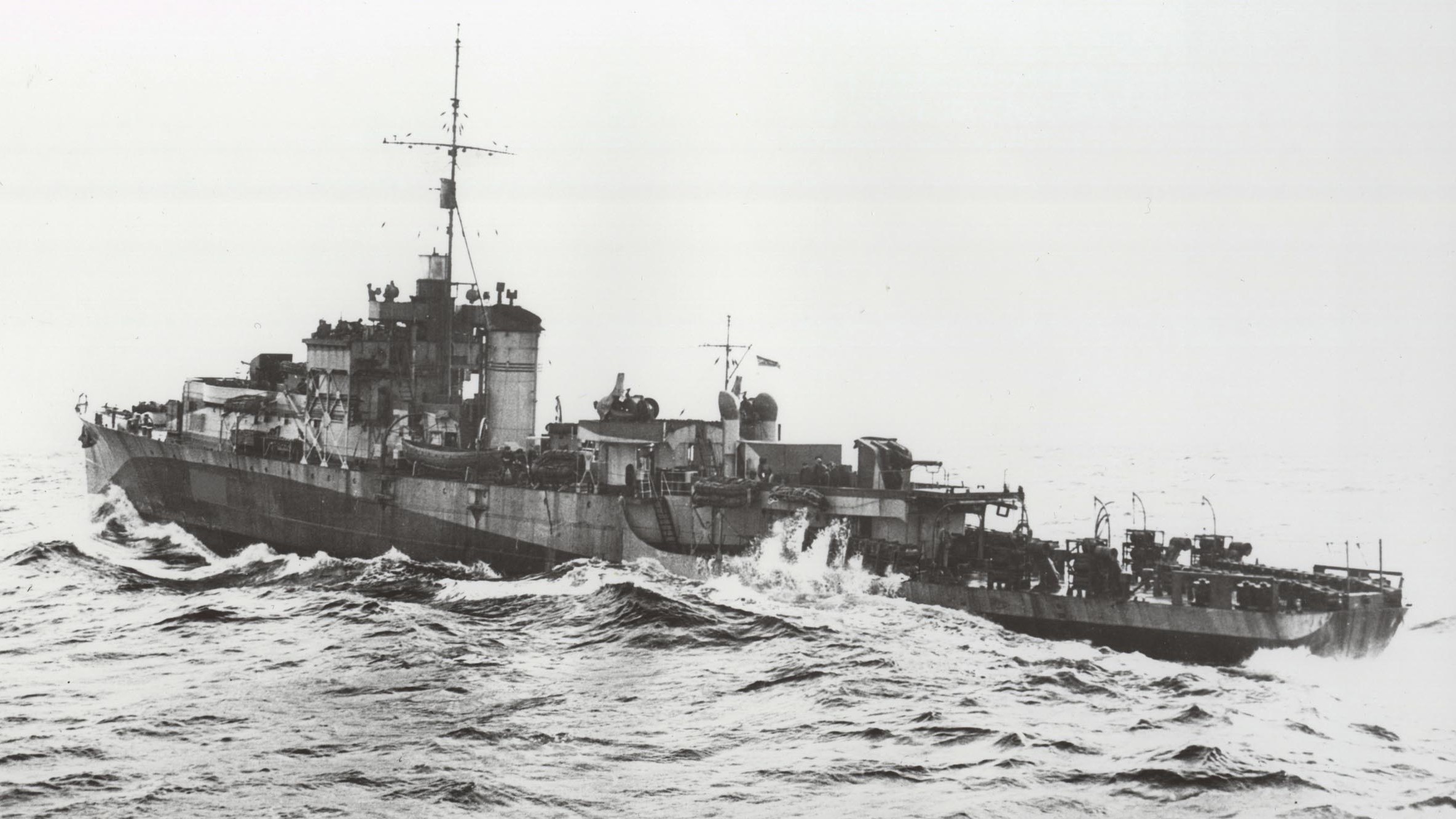
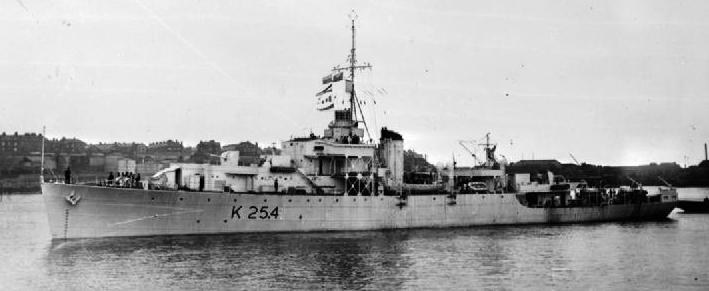
HMCS Ettrick (K254) River class Frigate, as HMS Ettrick, 1944. She was one of the only six frigates of this Class to be fitted with steam turbine main propulsion engines instead of reciprocating machinery. Named after a river in Scotland, HMS Ettrick was commissioned on 11 Jul 1943, as an RN ship and assigned to EG C-1, a Canadian escort group. On 29 Jan 1944, while undergoing a refit in Halifax, she was transferred to the RCN, and on completion of the refit on 6 May 1944 she was assigned to EG C-3. She arrived in Bermuda on 30 Sep 1944 for a month’s working-up, and on her return made two round trips to Londonderry with EG C-3, before being transferred in October to EG 27, Halifax. She was employed locally until VE-Day, and on 30 May 1945, returned to the RN at Southampton. She was then converted to a combined operations HQ ship, though never employed as such, and in Apr 1946, was laid up at Harwich. In 1953 she was broken up at Grays, Essex.
(IWM Photo, FL 11755)
HMCS Ettrick (K254) River class Frigate, as HMS Ettrick, 1944.
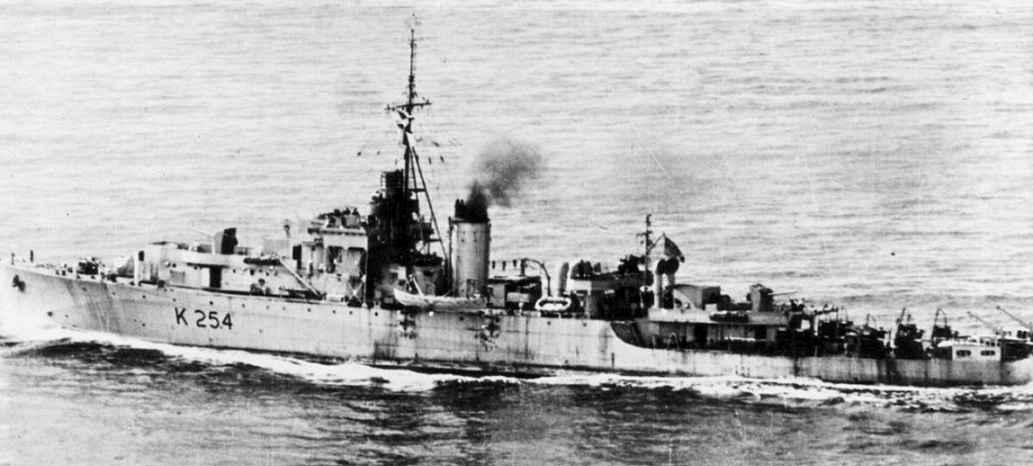
(Bob Hanley Photo)
HMCS Ettrick (K254) River class Frigate.
HMCS Fort Erie (K670)
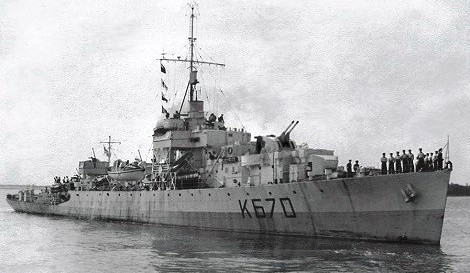
(Chris Carnall Photo)
HMCS Fort Erie (K670) River class Frigate. Built by George T. Davie & Sons Lts., at Lauzon, Quebec, she was laid down as HMCS La Tuque, but was renamed HMCS Fort Erie in Mar 1944. Commissioned at Quebec City on 27 Oct 1944, she did not arrive at Halifax until Dec 1944. She worked up in Bermuda in mid-Jan 1945 and, on her return to Halifax, was assigned to EG 28, an RCN support group based on Halifax, for the duration of the European war. Tropicalization refit, begun 2 Jun 1945, at Pictou, NS, was cancelled on 20 Aug 1945 and HMCS Fort Erie was paid off on 22 Nov 1945, to be laid up at Shelburne, NS. She was sold in 1946 to Marine Industries Ltd., but re-acquired by the RCN and rebuilt in 1954 and 1955 as a Prestonian class ocean escort (312). Re-commissioned 17 Apr1956, she was generally in service as a training ship. On 13 Feb 1959, HMCS Fort Erie, HMCS Buckingham, HMCS Swansea and HMCS La Hulloise returned to Halifax after a 5 week exercise in southern waters that included a port visit to Kingston, Jamaica. HMCS Fort Erie was paid off on 26 Mar 1965 at Halifax. She was broken up at La Spezia, Italy, in 1966.
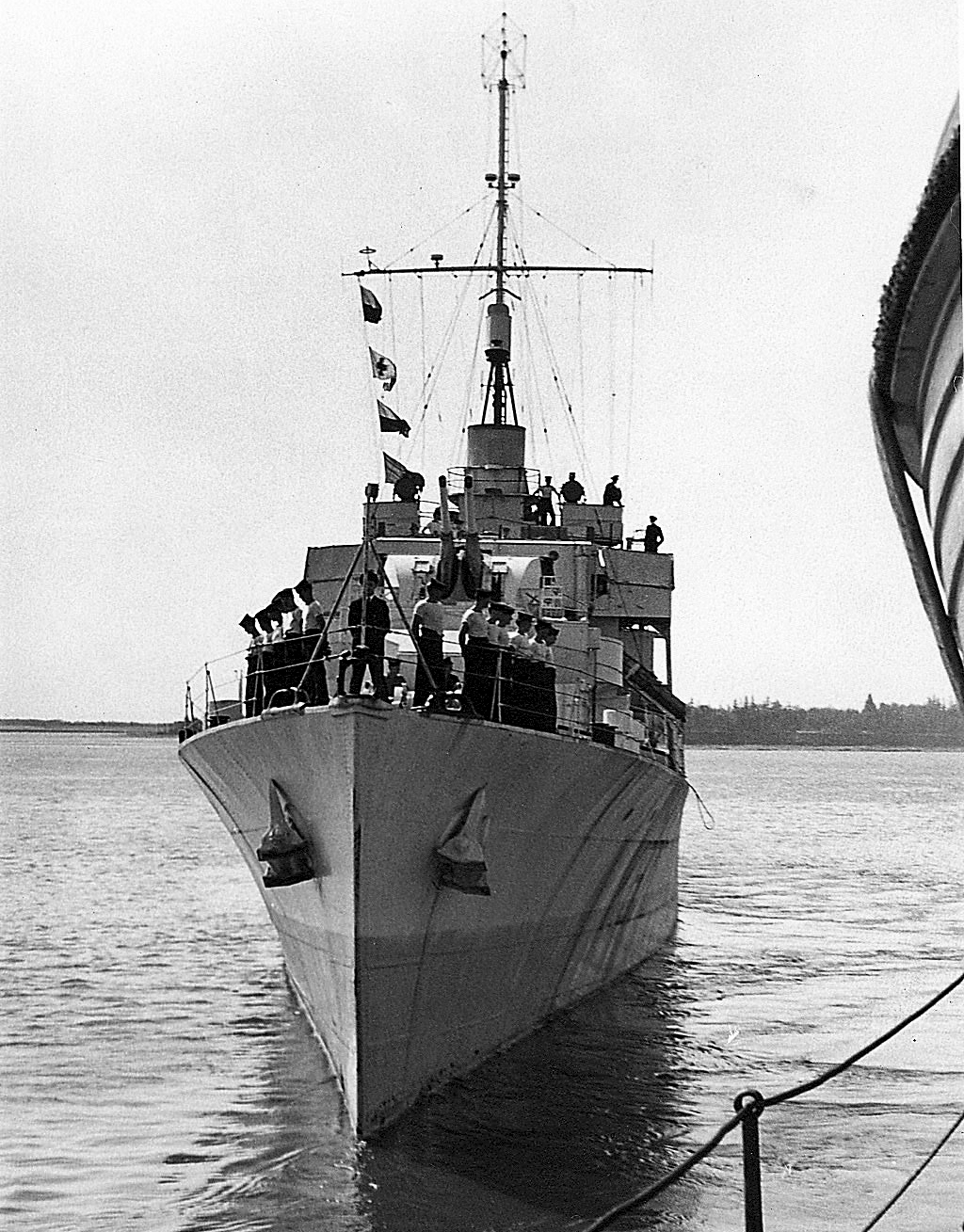
(Rob Stevens Photo)
HMCS Fort Erie (K670) River class Frigate.