
RCN Destroyers (C class): HMCS Crescent (R16) (226), HMCS Crusader (R20)
The C class was a class of 32 destroyers of the Royal Navy that were launched from 1943 to 1945. The class was built in four flotillas of 8 vessels, the “Ca”, “Ch”, “Co” and “Cr” groups or sub-classes, ordered as the 11th, 12th, 13th and 14th Emergency Flotillas respectively. The sub-class names are derived from the initial 2 letters of the member ships’ names, although the “Ca” class were originally ordered with a heterogeneous mix of traditional destroyer names. A fifth flotilla, the “Ce” or 15th Emergency Flotilla, was planned but were cancelled in favour of the Weapon-class destroyers after only the first two ships had been ordered. The pennant numbers were all altered from “R” superior to “D” superior at the close of the Second World War; this involved some renumbering to avoid duplications.
HMCS Crescent (R16) (226)
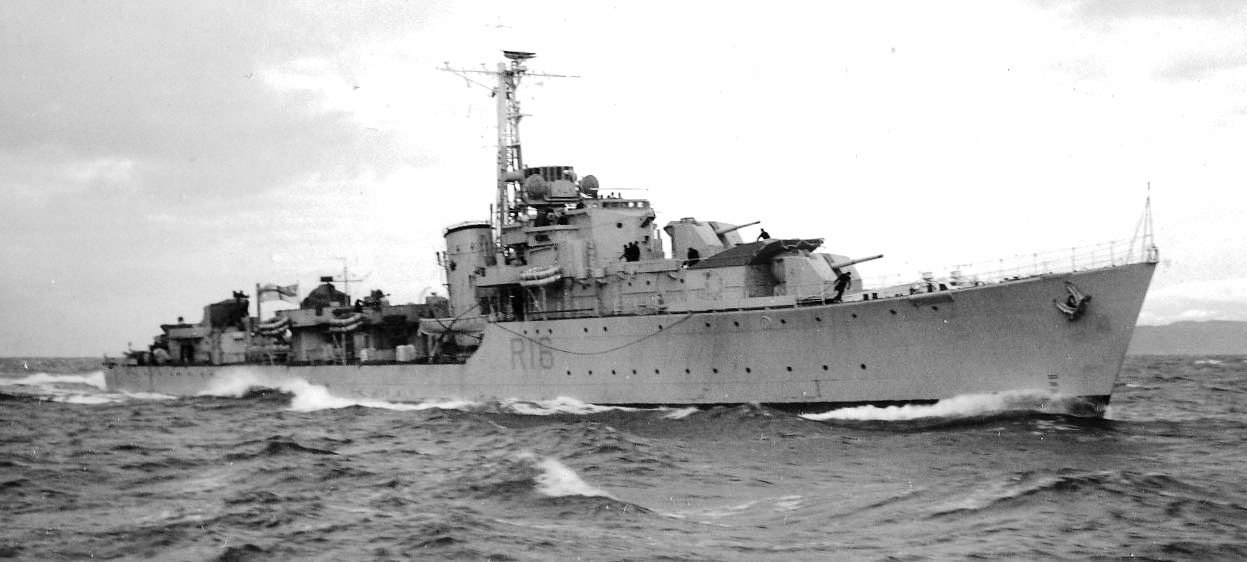
(RCSCC Bowmanville Photo)
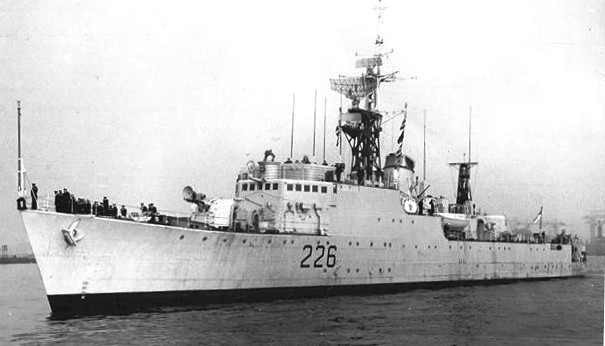
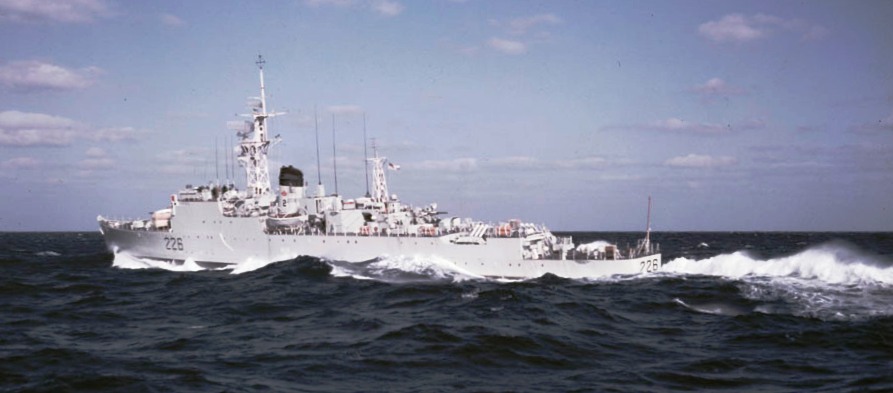
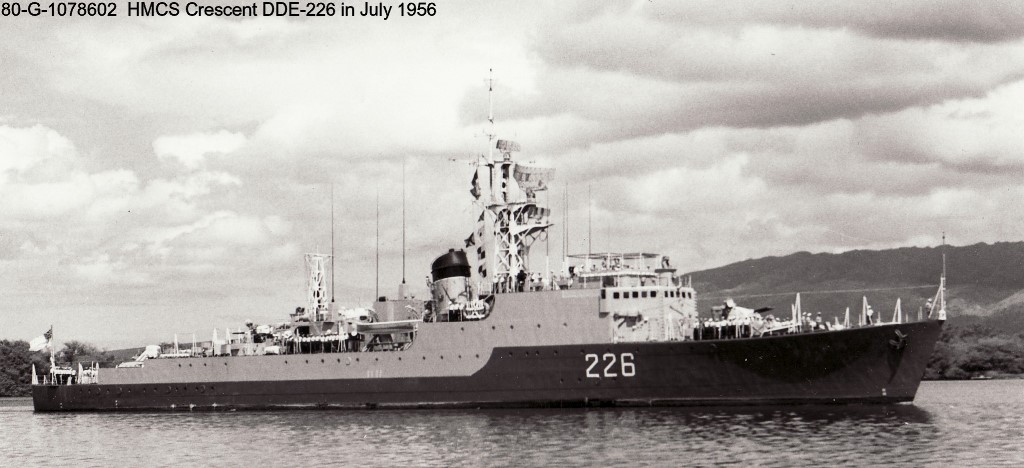
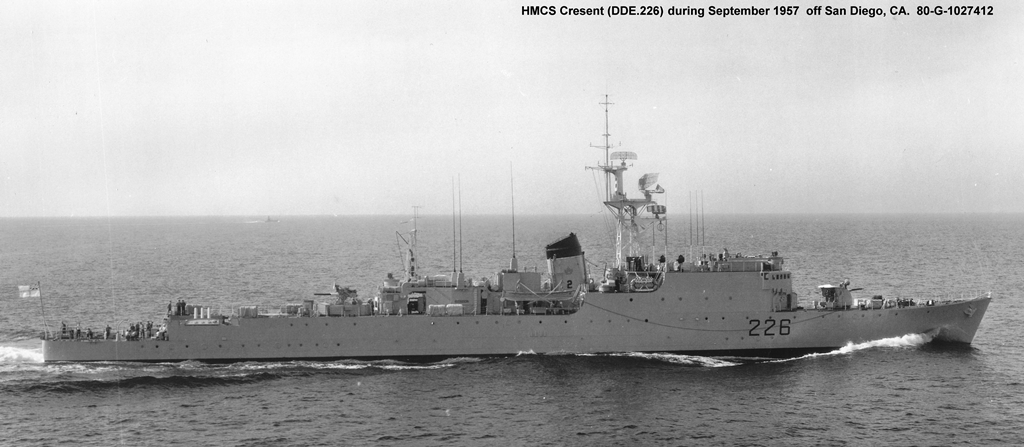
HMCS Crescent (R16). In Jan 1945, after a year’s discussion, the British Admiralty agreed to lend the RCN a flotilla of “C” Class destroyers for use against the Japanese. The Pacific war ended, however, before any of the eight ships had been completed, and only two were transferred. The previous ships to bear their names, HMCS Crescent and HMCS Crusader, had been lost during the war as HMCS Fraser and HMCS Ottawa. This time they retained their names although the transfer was made permanent in 1951. HMCS Crescent and HMCS Crusader were virtually identical to HMCS Algonquin and HMCS Sioux, differing principally in having only one set of torpedo tubes and in being armed with 4.5-inch guns instead of 4.7-inch guns. Both ships were commissioned on the Clyde in 1945, HMCS Crescent on 10 Sep 1945 and HMCS Crusader on 15 Nov 1945. HMCS Crescent arrived at Esquimalt in Nov 1945, having made the journey via the Azores and the West Indies.
In Feb 1949 HMCS Crescent was sent to China to safeguard Canadian interests during the Chinese Civil War. She arrived at Shanghai on 26 February, and then on 11 Mar 1949, entered Chinese waters and sailed to Nanjing via the Yangtze River, arriving at Nanjing on 20 Mar 1949. HMCS Crescent remained on station until 23 Mar 1949 when she was relieved at Nanjing by HMS Consort. She then sailed for Hong Kong and remained in the area until May 1949 when she returned to Esquimalt. About a month after her arrival on station 85 ratings staged a mutiny where they locked themselves in the mess decks and refused to turn to until the Captain heard their grievances.
HMCS Crescent carried out training duties until taken in hand for a major conversion in 1953. She emerged in 1956 as a “fast A/S frigate,” following an RN pattern which entailed stripping her to deck level, extending the fo’c’s’le right aft, erecting new superstructure, and fitting completely new armament. She was now a near-sister to HMCS Algonquin, which had undergone similar transformation earlier. On 15 Jan 1958 HMCS Cayuga 218, HMCS Crescent 226, HMCS Fraser 233, HMCS Margaree 230, and HMCS Skeena 207, departed Esquimalt, BC, for a Far Eastern Training cruise. In Feb 1959, HMCS Crescent and HMCS Assiniboine met at San Diego and exchanged crews. HMCS Crescent was paid off at Esquimalt on 1 Apr 1970. She left Victoria with HMCS Algonquin on 21 Apr 1971, for Taiwan, to be broken up. She arrived at Taiwan on 15 May 1971.
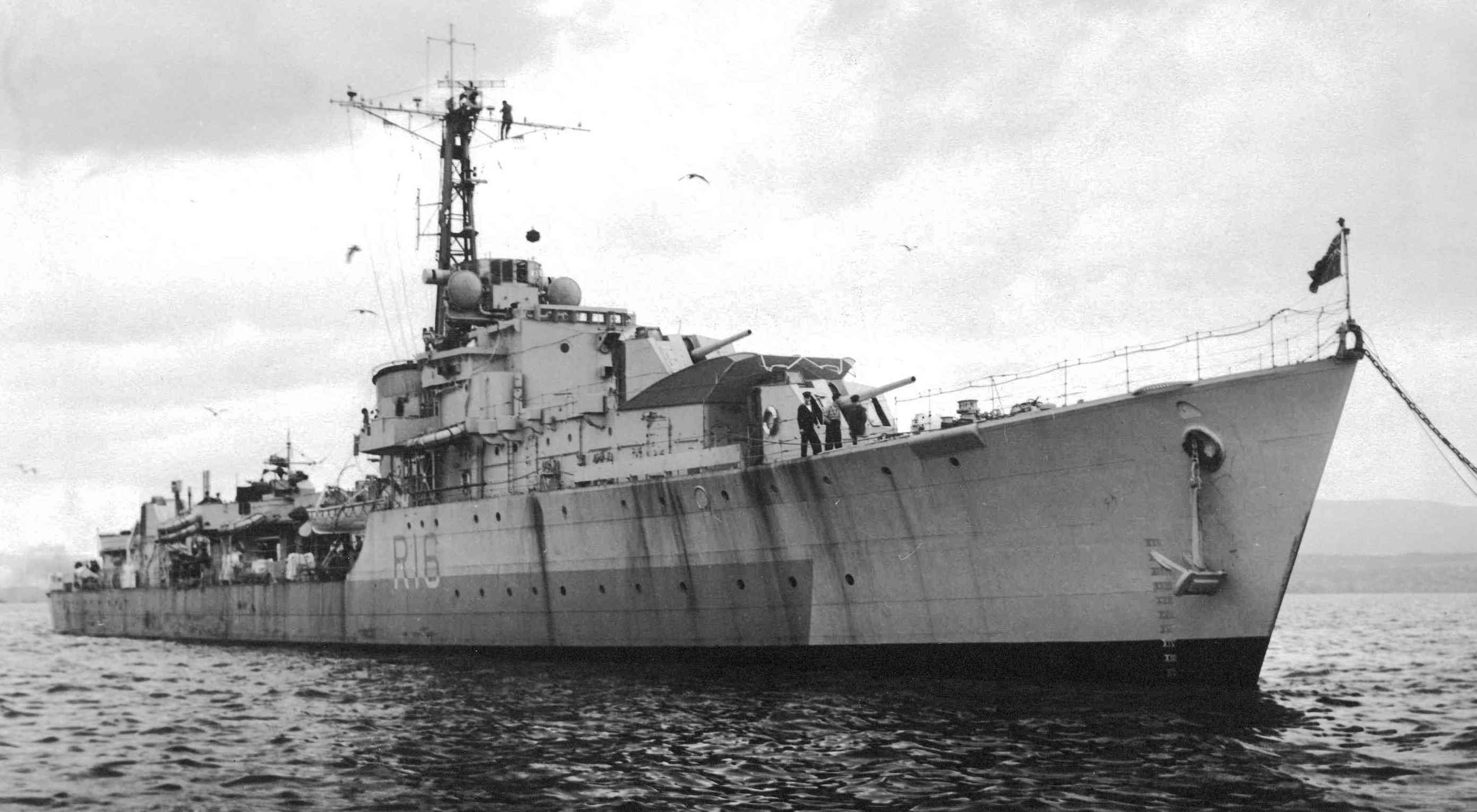
(RCN Photo via the CFB Esquimalt Naval Military Museum)
HMCS Crescent (R16).
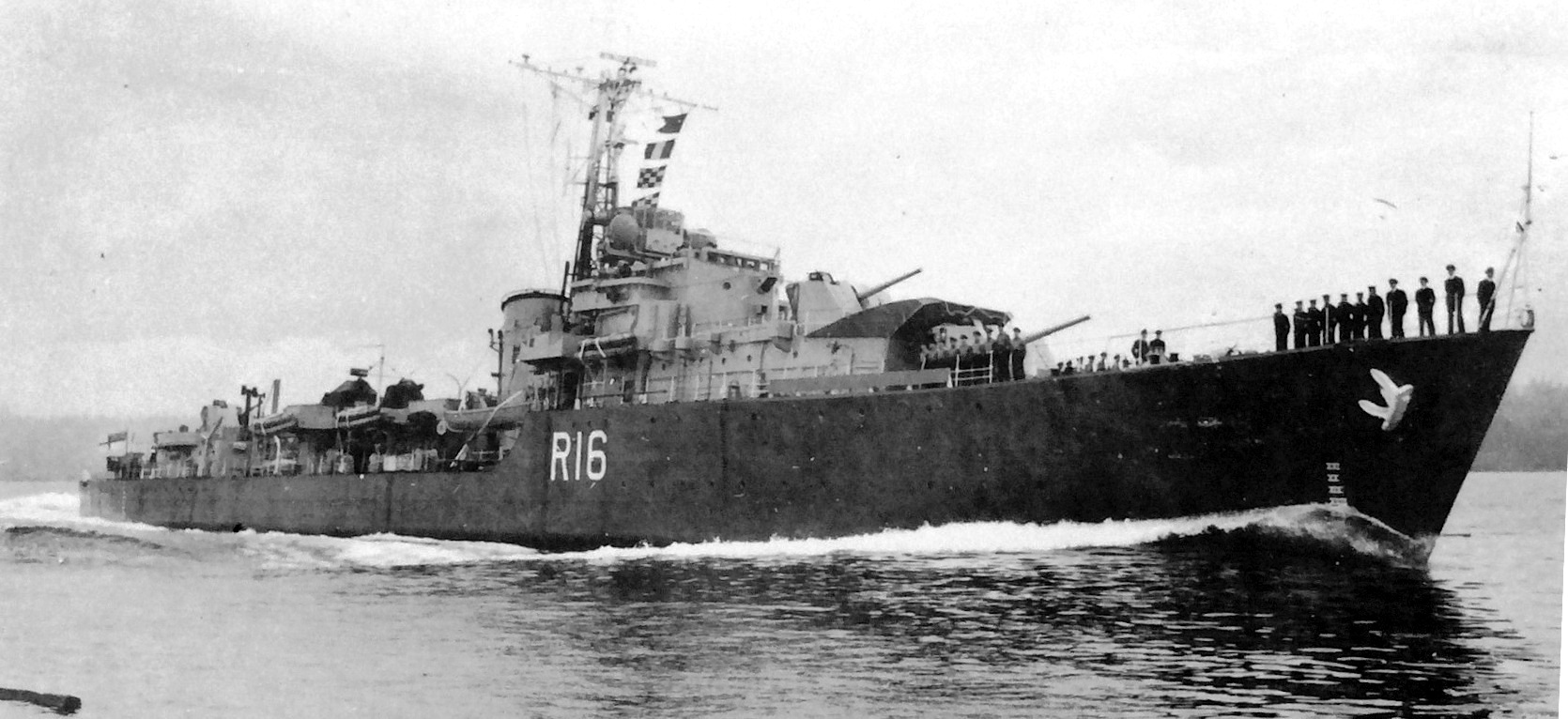
(Sam Seright Photo)
HMCS Crescent (R16).
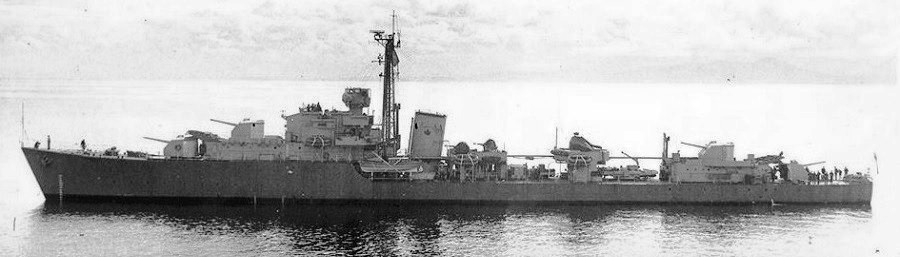
(Daniel Miller Photo)
HMCS Crescent (R16).
(RCN Photo)
HMCS Crescent (R16).
(Allan Briscoe Photo)
HMCS Crescent (226).
(Library and Archives Canada Photo, MIKAN No. 4951251)
HMCS Crescent (226).
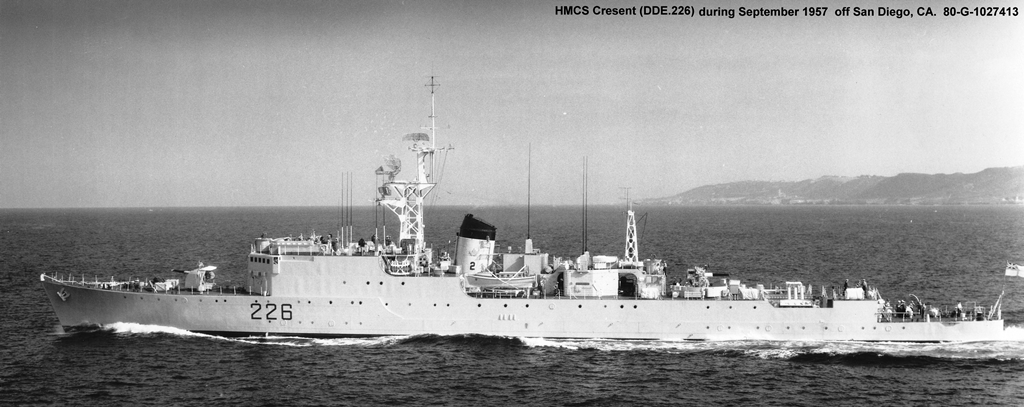
(USN Official Naval Archives Photos)
HMCS Crescent (226)
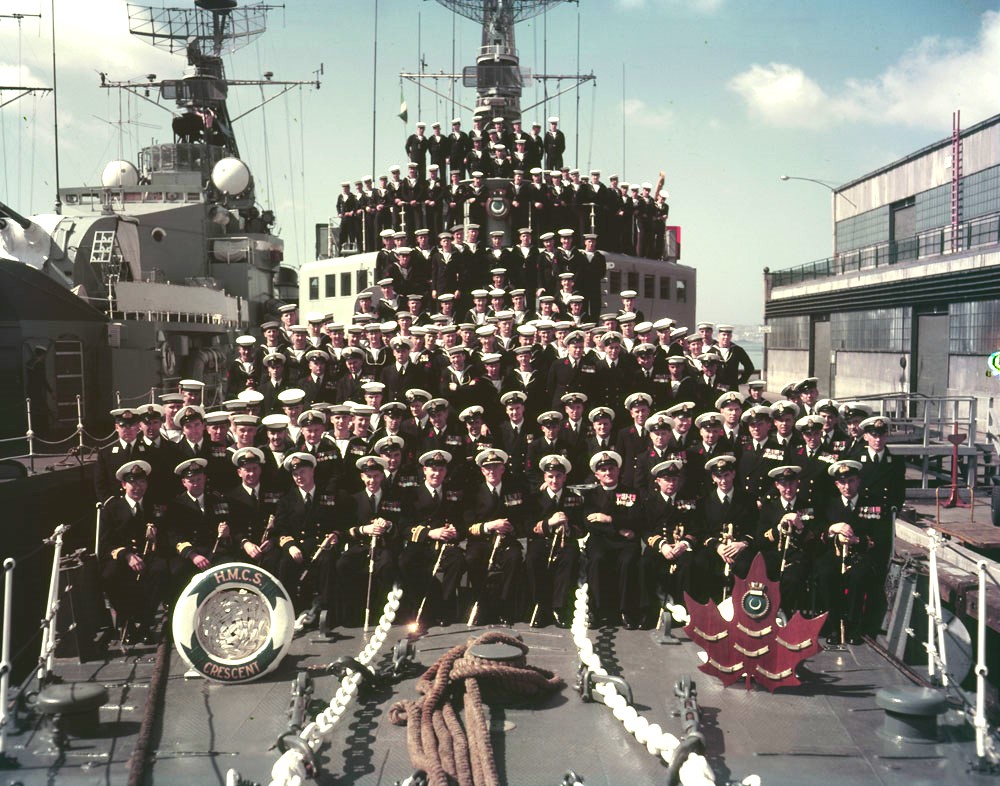
(Library and Archives Canada Photo, MIKAN No. 4951331)
HMCS Crescent crew, 1957.
HMCS Crusader (R20) (228)
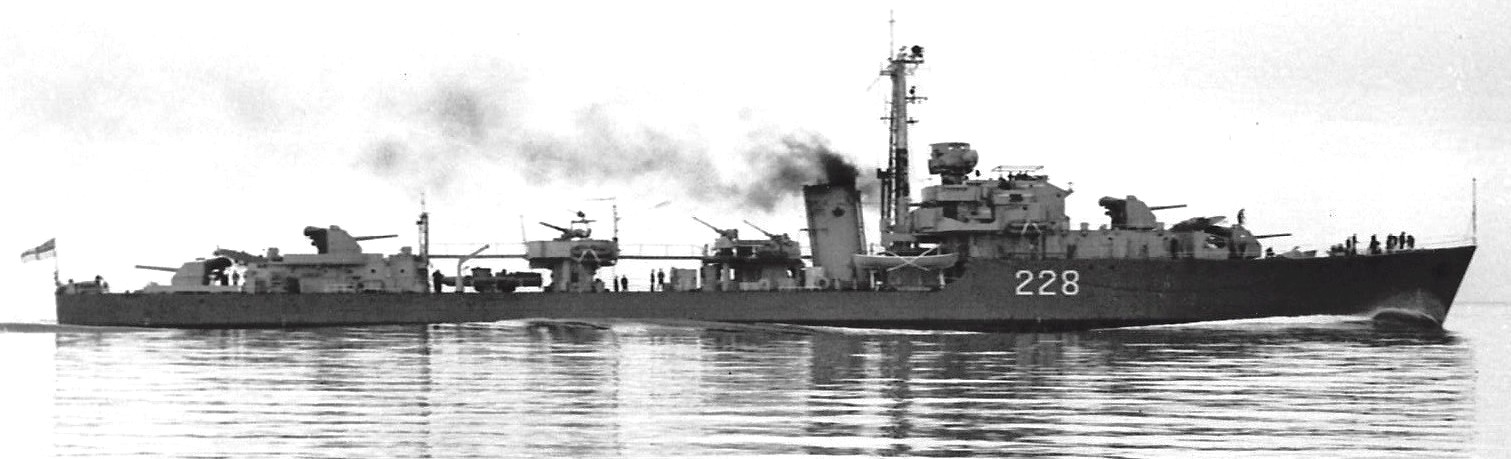
(Steve Hlasny Photo)
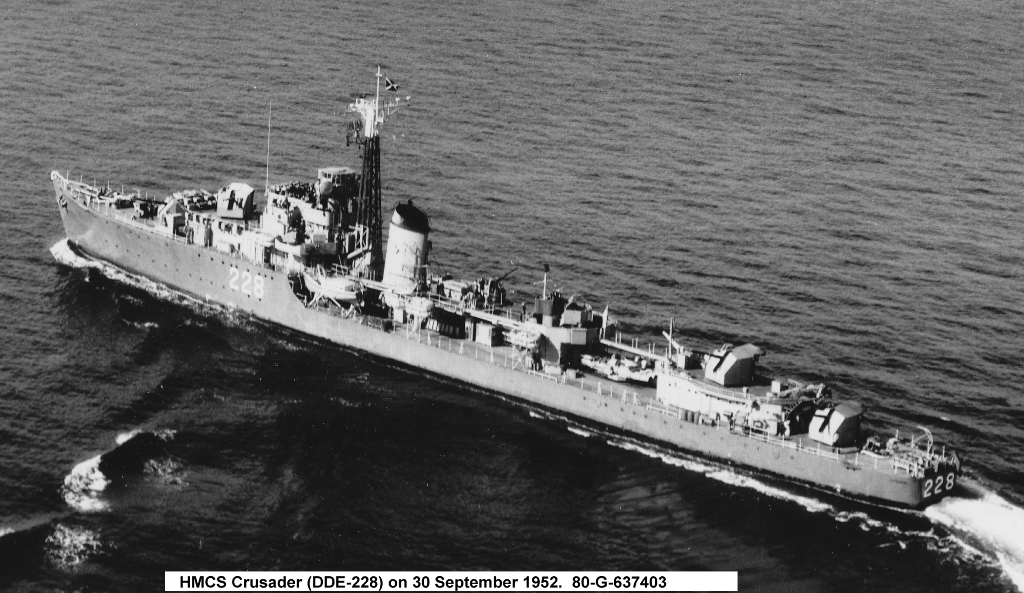
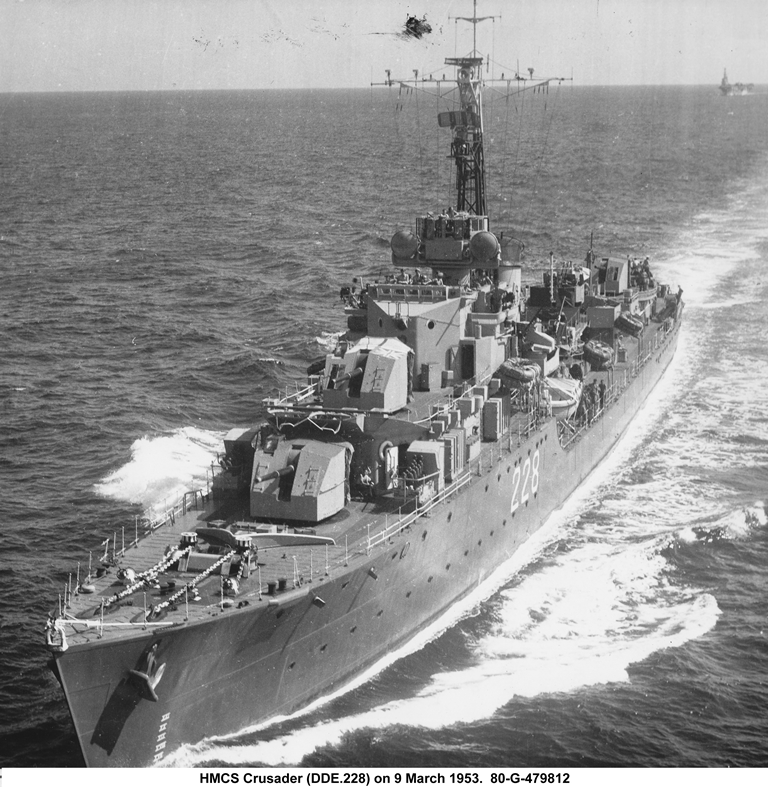
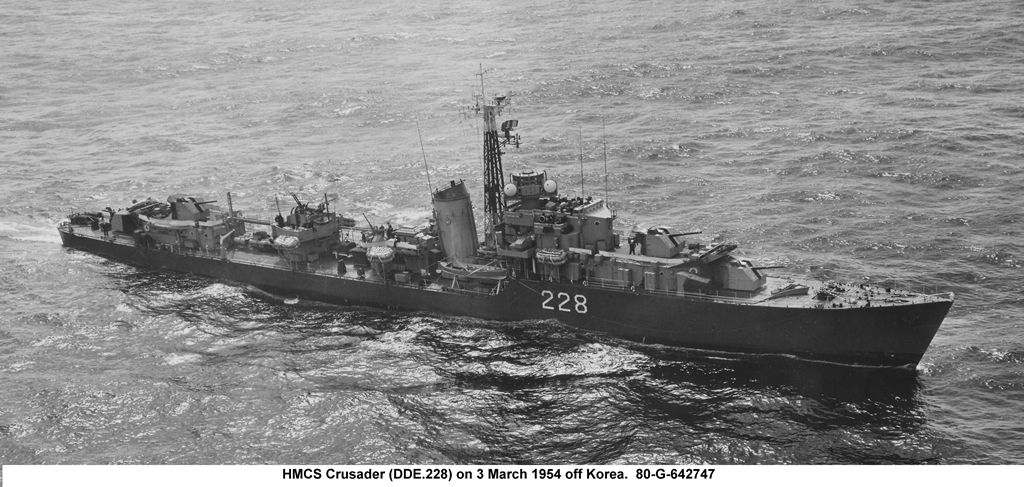
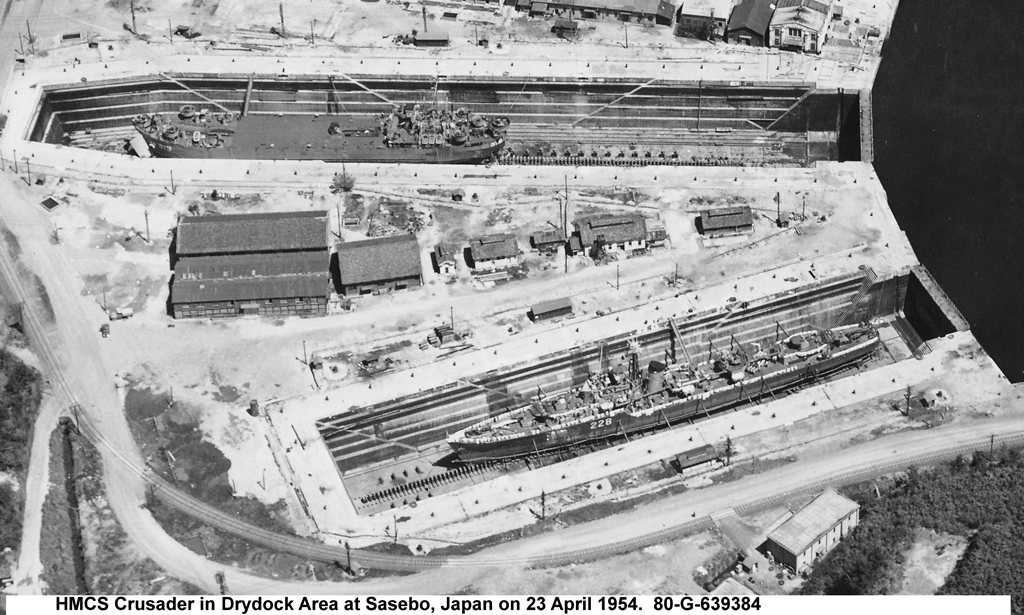
HMCS Crescent (228). In Jan 1945, after a year’s discussion, the British Admiralty agreed to lend the RCN a flotilla of “C” Class destroyers for use against the Japanese. The Pacific war ended, however, before any of the eight ships had been completed, and only two were transferred. The previous ships to bear their names, HMCS Crescent and HMCS Crusader, had been lost during the war as HMCS Fraser and HMCS Ottawa. This time they retained their names although the transfer was made permanent in 1951. HMCS Crescent and HMCS Crusader were virtually identical to HMCS Algonquin and HMCS Sioux, differing principally in having only one set of torpedo tubes and in being armed with 4.5-inch guns instead of 4.7-inch guns. Both ships were commissioned on the Clyde in 1945, HMCS Crescent on 10 Sep 1945 and HMCS Crusader on 15 Nov 1945. HMCS Crusader arrived at Esquimalt in Jan 1946, having made the journey via the Azores and the West Indies and was almost immediately paid off into reserve, a state in which she was to spend several years. After being brought out of reserve, HMCS Crusader carried out two tours of duty in the Korean theatre, the first between Jun 1952 and Jun 1953, the second after the armistice, from Nov 1953 to Aug 1954. Reverting then to her former training role, she was paid off on 16 Jan 1960, at Halifax. She had earlier served as a test vehicle for a prototype VDS (variable depth sonar) outfit, a more permanent installation of which was made in HMCS Crescent in 1960. HMCS Crusader was sold for scrapping in 1963.
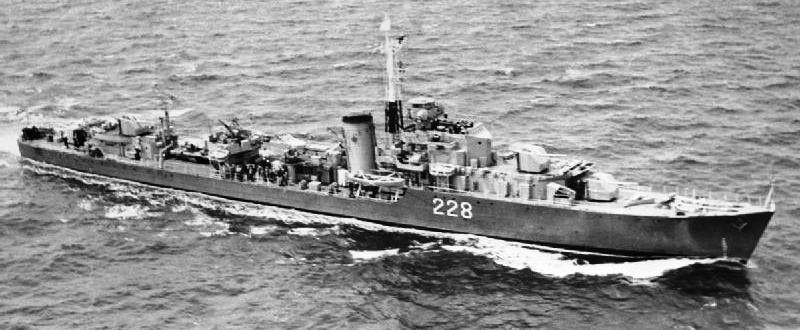
(IWM Photo, FL 10052)
HMCS Crusader (228), ca. 1946 after the transfer to the RCN. HMCS Crusader had been commissioned in 1945 as HMS Crusader (R20). She was later converted to an anti-submarine frigate (DDE 228) and scrapped in 1964.
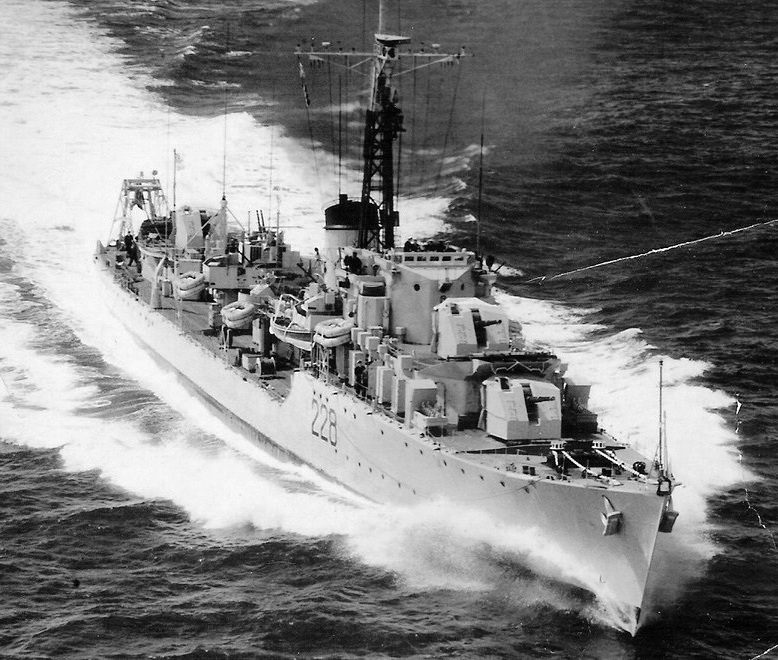
(Don Gorham Photo)
HMCS Crusader (228).
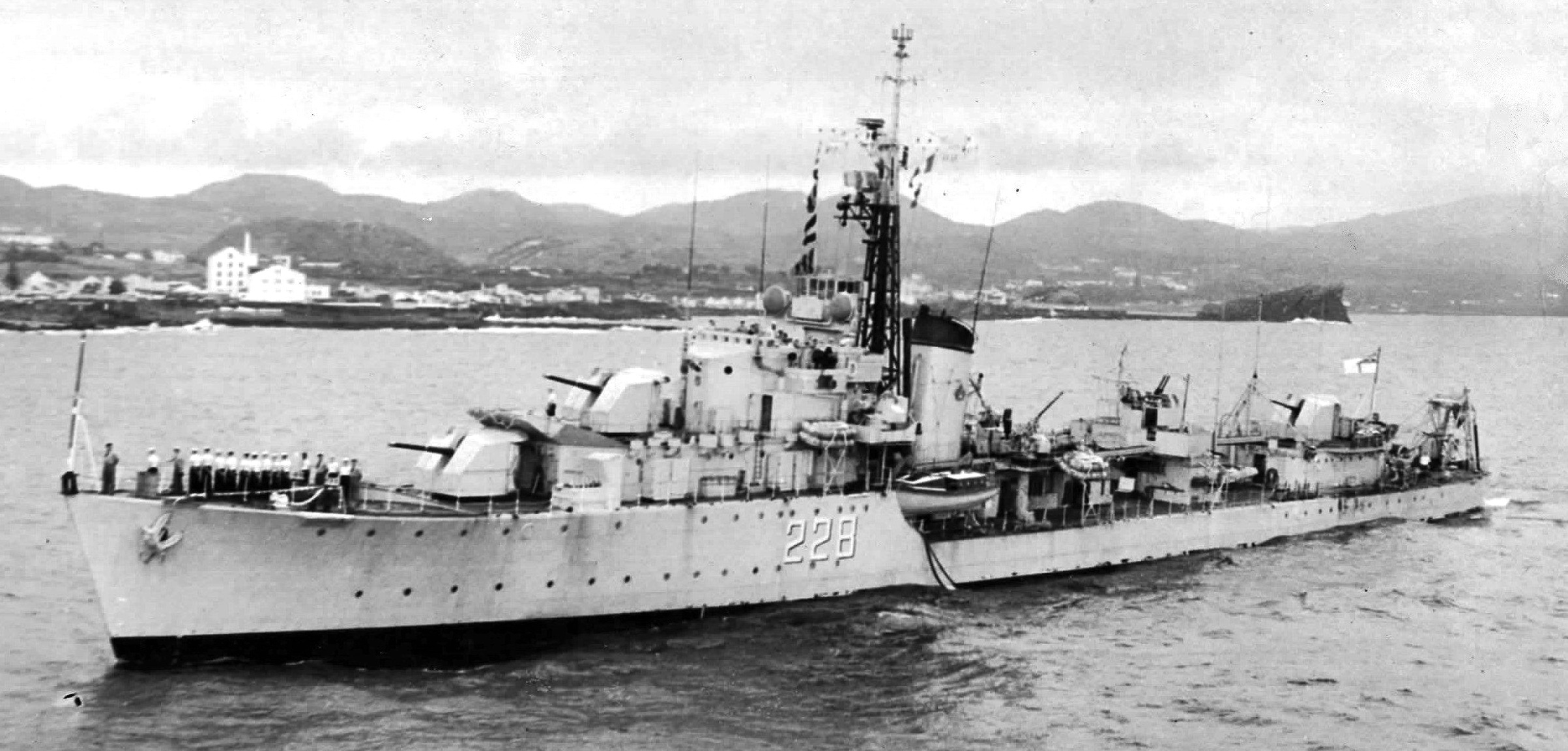
(Mike O’Keefe Photo)
HMCS Crusader (228).
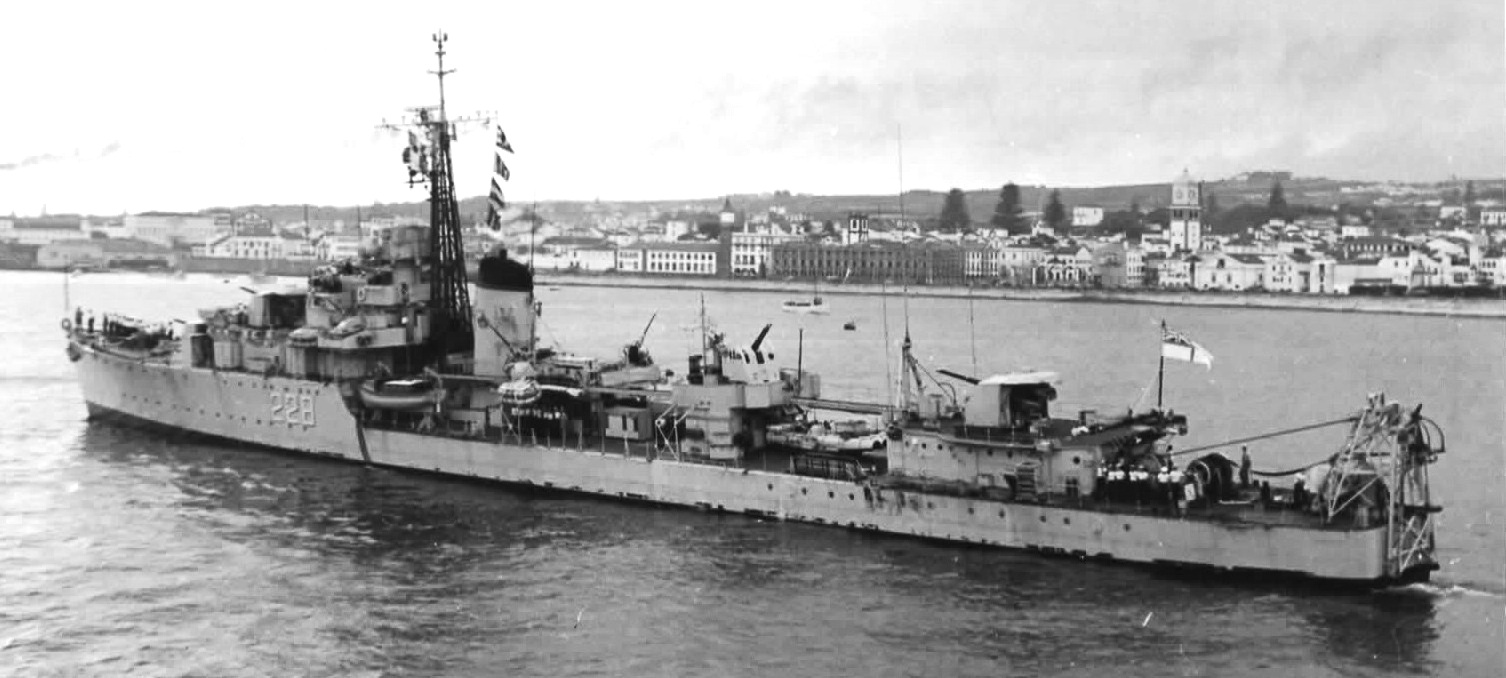
(Mike O’Keefe Photo)
HMCS Crusader (228).
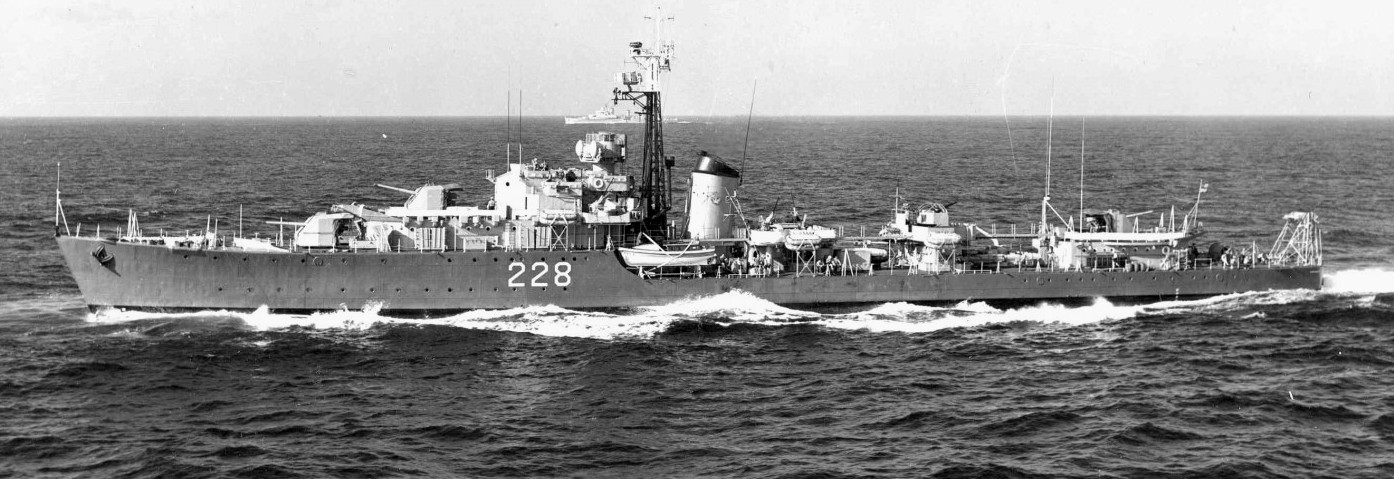
(DND Photo via the CFB Esquimalt Naval Museum)
HMCS Crusader (228).
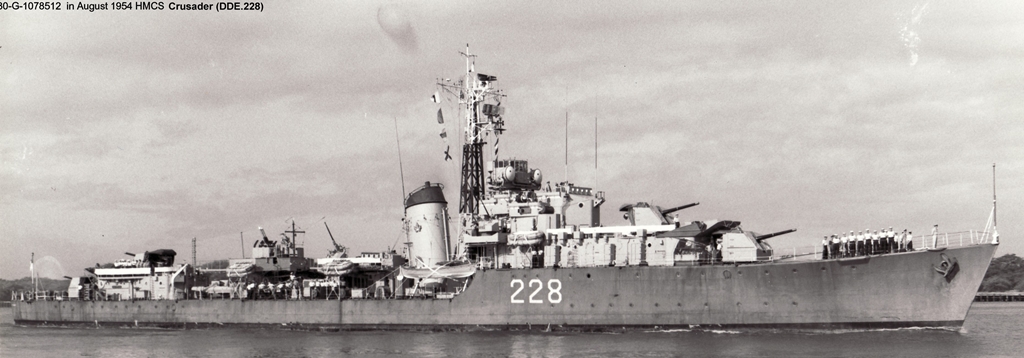
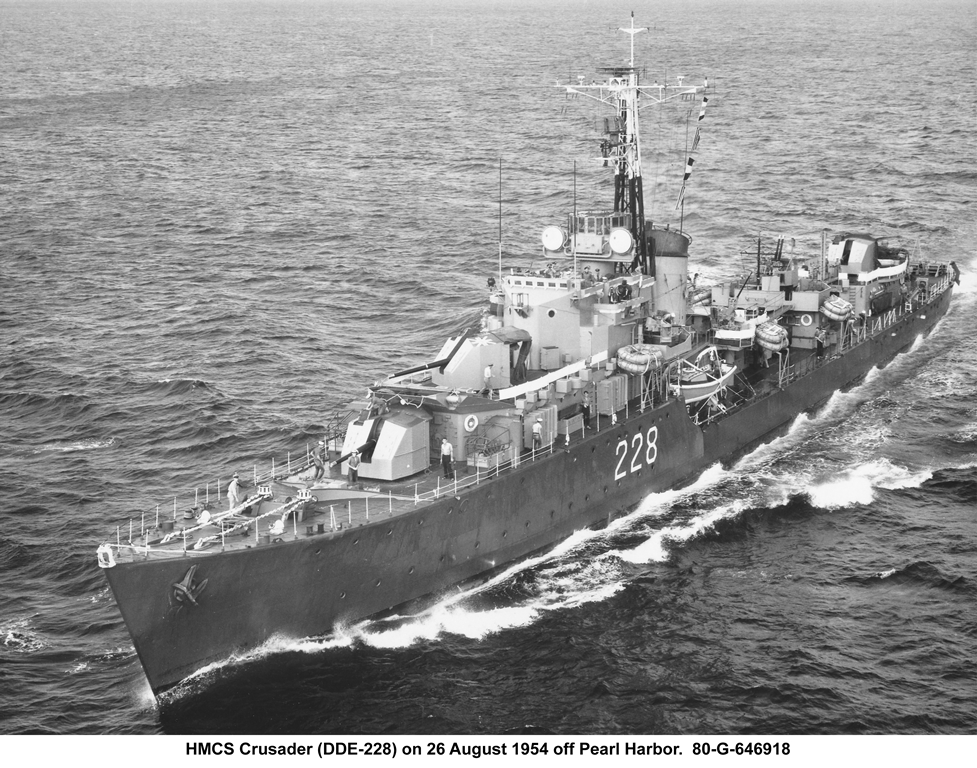
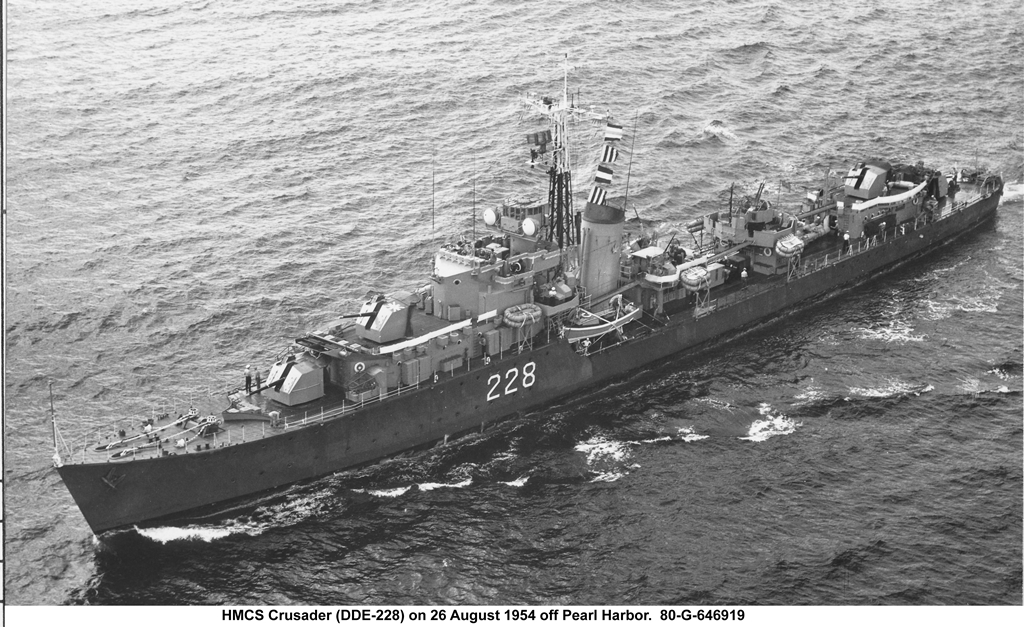
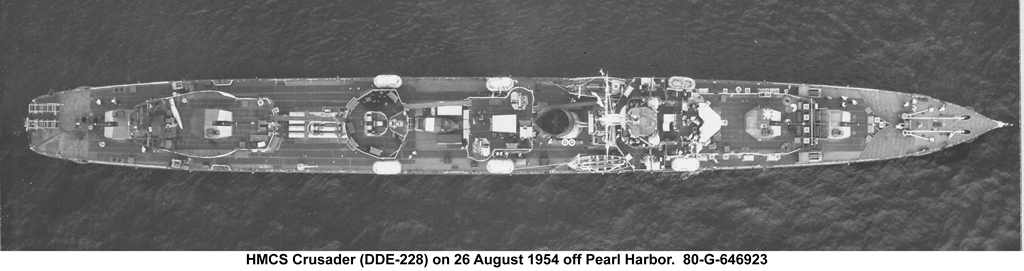
(USN Official Naval Archives Photos)
HMCS Crusader (228).
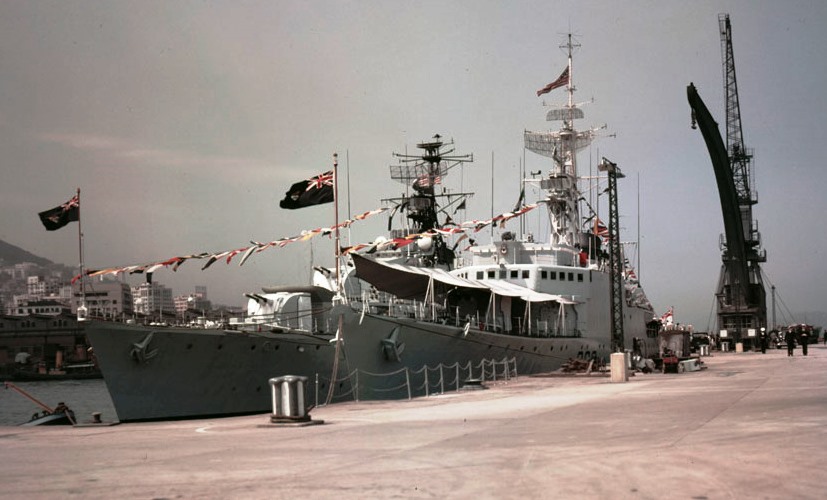
(Library and Archives Canada Photo, MIKAN No. 4821386)
HMCS Crescent (226), with Canadian pattern Type 15 conversion, can be positively identified by her 4-inch Mk. XIX gun at A position, covered by a canvas awning, closest to the dock. The destroyer alongside her to the left is a Tribal Class DDE, identified by the 4-inch Mk. XIX guns at A & B positions. The ships are berthed in Hong Kong at the inner side of the breakwater arm of the tidal basin at HMS Tamar. The photo was likely taken in the late 1950’s to early 1960’s but no later than 1963. The dockside cranes were removed in very early 1960’s. The Hong Hong City Hall building is not yet there. The last Tribal was decommissioned circa 1964. All point data points to that period. (LCol Alfred C.W. Lai)
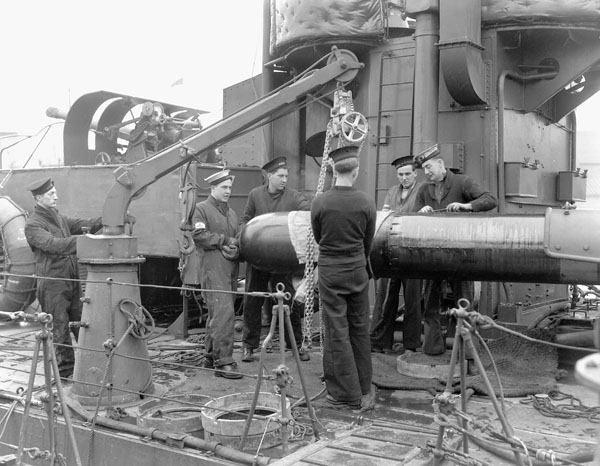
(Library and Archives Canada Photo, MIKAN No. 3567270)
Torpedo handling on an RCN Destroyer, Halifax, March 1941.