RCN Flower class Corvettes: HMCS North Bay (K339), HMCS Oakville (K178), HMCS Orillia (K119), HMCS Owen Sound (K340)
HMCS North Bay (K339)
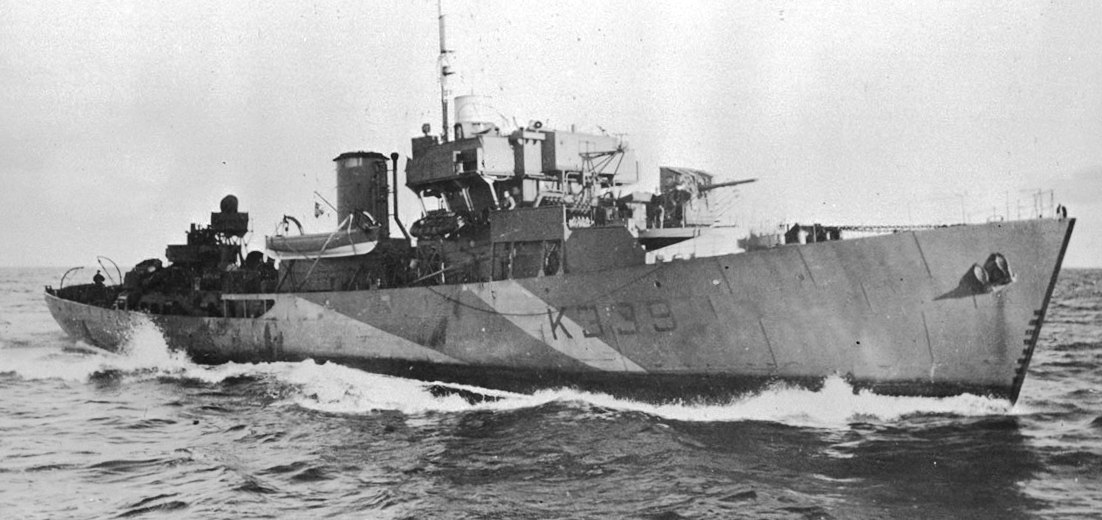
(RCN Photo)
HMCS North Bay (K339) Flower class Corvette. Built at Collingwood, Ontario, she was commissioned there on 25 Oct 1943. HMCS North Bay arrived at Halifax on 29 Nov 1943, and in Dec 1943 carried out workups in St. Margaret’s Bay. On completion of these she was assigned to EG 9, Londonderry, making her passage there as escort to convoy SC.154 early in Mar 1944. When EG 9 became a frigates-only group, HMCS North Bay returned to St. John’s in Apr 1944 and became a member of EG C-4. From 11 Dec 1944 to mid-Feb 1945, she underwent a refit at Sydney and proceeded to Bermuda to work up. On completing this exercise she sailed directly to St. John’s to join EG C-2, but later in Apr 1945 she was transferred to C-3 and, on 30 Apr 1945, left St. John’s to join convoy SC.174 for a final trip to Londonderry. She returned in May 1945 with ON.304 and was paid off on 01 Jul 1945 and laid up at Sorel. In 1946 she was sold for merchant service and became the Bahamian Kent County II; renamed Galloway Kent in 1950; renamed Bedford II in 1951.
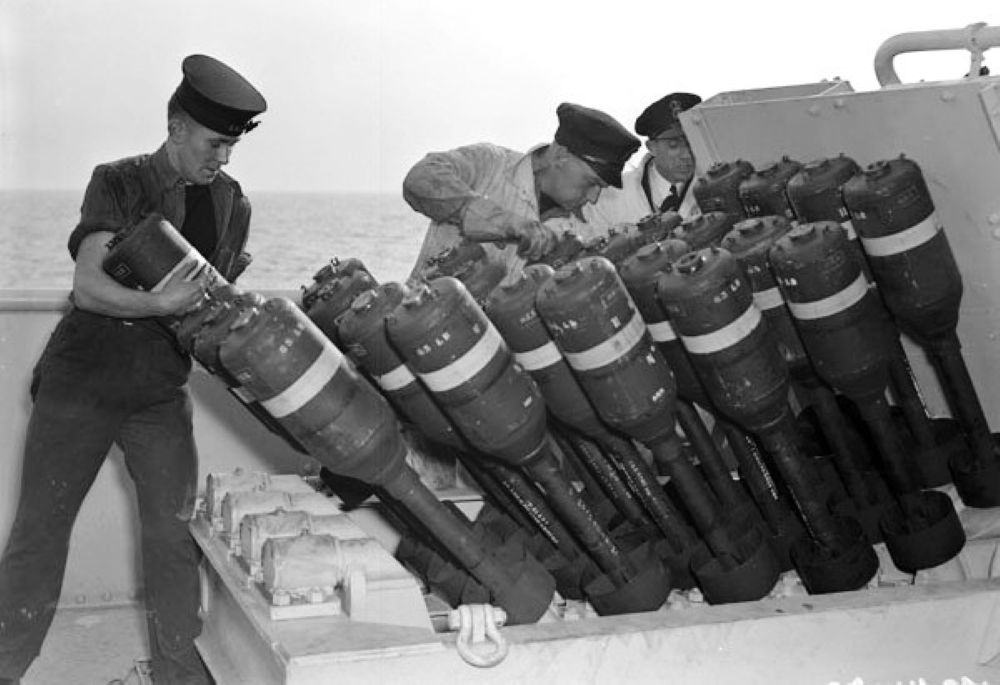
(Library and Archives Canada Photo, MIKAN No. 3394476)
HMCS North Bay (K339) (Flower class Corvette, Hedgehog array, Oct 1943.
The Hedgehog (also known as an Anti-Submarine Projector) was a forward-throwing anti-submarine weapon that was used primarily during the Second World War. The device, which was developed by the Royal Navy, fired up to 24 spigot mortars ahead of a ship when attacking a U-boat. It was deployed on convoy escort warships such as destroyers and corvettes to supplement the depth charges. As the mortar projectiles employed contact fuzes rather than time or bathymetric (depth) fuzes, detonation occurred directly against a hard surface such as the hull of a submarine, making it more deadly than depth charges, which relied on damage caused byhydrostatic shockwaves. During the Second World War out of 5,174 British depth charge attacks there were 85.5 kills, a ratio of 60.5 to 1. In comparison, the Hedgehog made 268 attacks for 47 kills, a ratio of 5.7 to 1. (Wikipedia)
HMCS Oakville (K178)
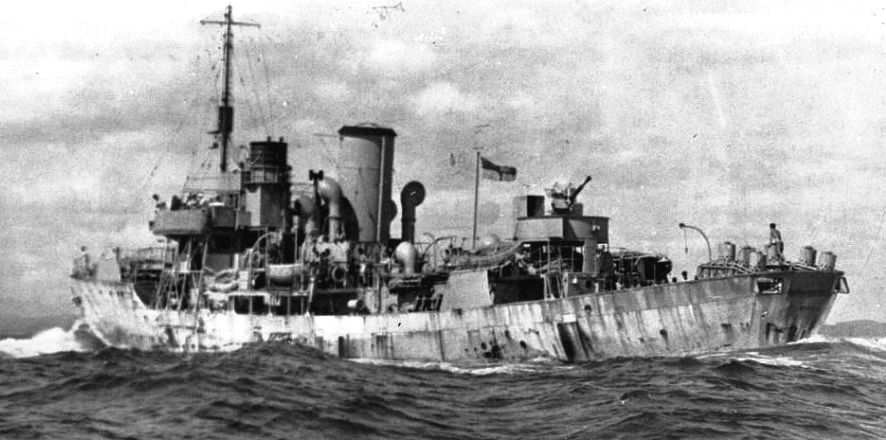
(Naval Museum of Alberta Photo)
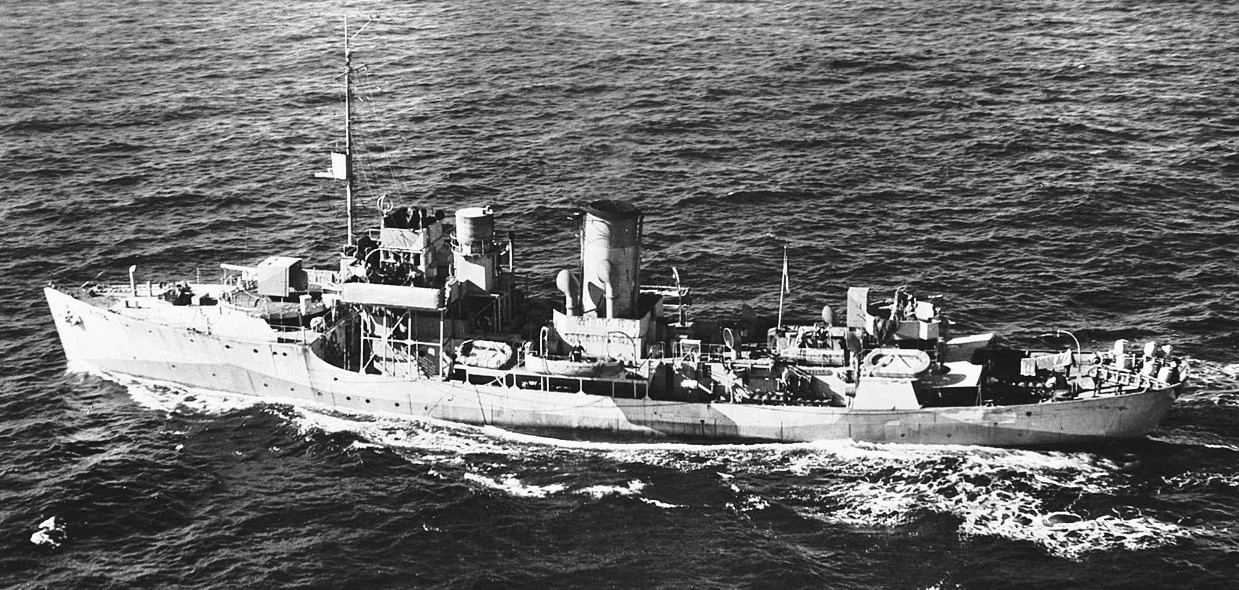
HMCS Oakville (K178) Flower class Corvette. Built at Port Arthur, Ontario, she was commissioned at Montreal on 18 Nov 1941. She arrived at Halifax ten days later and joined Halifax Force on her arrival. On its formation in Mar 1942, she transferred to WLEF. In Jul 1942 she returned to Halifax Force to escort Halifax-Aruba convoys and, on her second arrival at Aruba late in Aug 1942, was diverted to reinforce convoy TAW.15 (Aruba-Key West section). The convoy was attacked 28 Aug 1942 in the Windward Passage, losing four ships, but HMCS Oakville sank the seasoned U-94, in part by ramming. After temporary repairs at Guantanamo she arrived at Halifax on 16 Sep 1942 and there completed repairs on 01 Dec 1942. She then joined the US Eastern Sea Frontier Command to escort New York-Guantanamo convoys until 22 Mar 1943, when she arrived at Halifax to join WLEF. She served with three of its escort groups: W-7 from Jun 1943; W-8 from Dec 1943; and W-6 from Apr 1944. After minor repairs at Halifax, she proceeded to Bermuda for workups in May 1944, thereafter returning to her duties with EG W-6. A refit begun at Lunenburg early in Apr 1945, was discontinued in Jun 1945 and the ship was paid off at Sorel on 20 Jul 1945. She was sold to the Venezuelan Navy in 1946. On 10 Jan 1946, Venezuelan vessel Oakville, former HMCS Oakville K178, arrived at New York city with a skeleton crew: Frank Peter Hindley, Gerald James Ryan and Frederick Jackson. Renamed Patria, she served in the Venezuelan Navy until 1962.
(DND Photo)
HMCS Oakville (K178) Flower class Corvette.
HMCS Orillia (K119)
(RCN Photo)
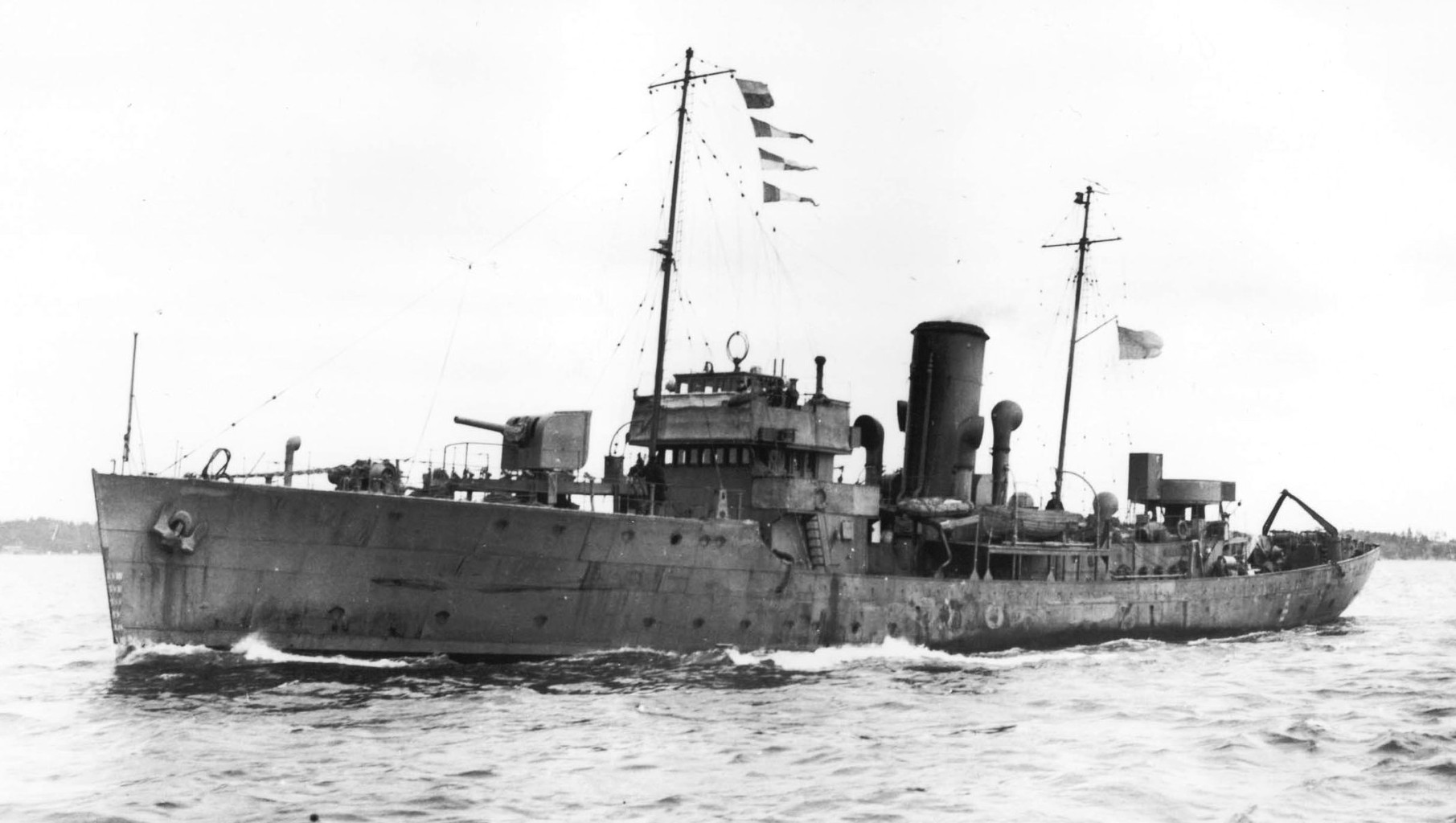
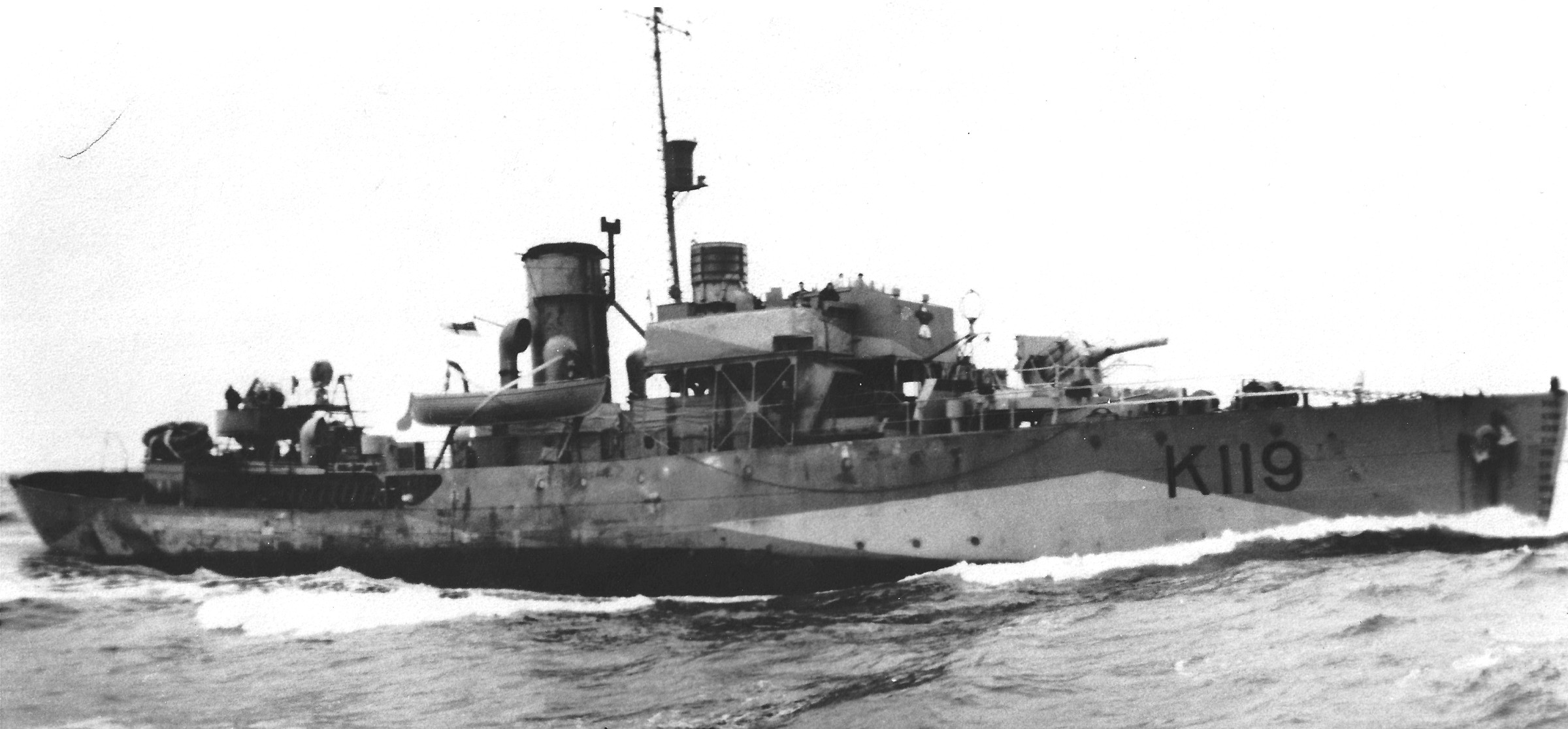
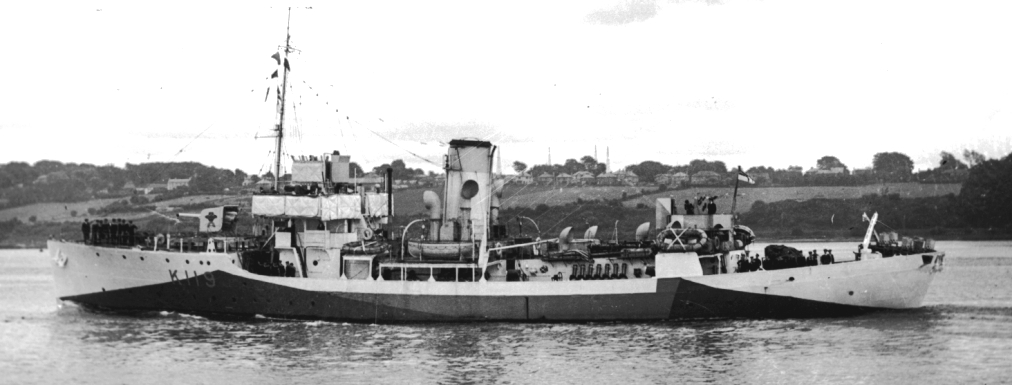
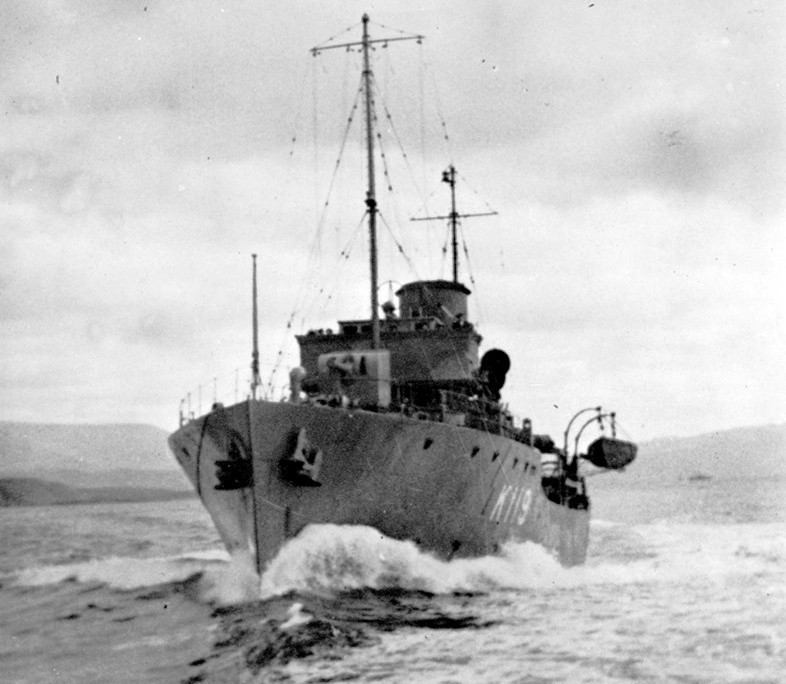
HMCS Orillia (K119) Flower class Corvette. Commissioned 25 Nov 1940, at Collingwood, she arrived at Halifax on 11 Dec 1940 for completion and was assigned to Halifax Local Defence Force until 23 May 1941. HMCS Orillia sailed that day for St. John’s to become one of the seven charter members of the NEF, and for the balance of the year escorted convoys between St. John’s and Iceland. In Sep 1941, she was escort to convoy SC.42, which lost 18 ships. She arrived at Halifax 24 Dec 1941 for a refit, upon completion of which on 22 Mar 1942, she joined EG C-1, leaving St. John’s 02 Apr 1942 with SC.77 for Londonderry. On her arrival she was sent to Tobermory for three weeks’ workups, then returned to the “Newfie-Derry” run until Jan 1944. Orillia took part in major battles around convoys SC.94, which lost 11 ships in Aug 1942 and ON.137 in Oct 1942, which lost only 2 ships despite being heavily attacked. She was a member of EG C-2 from Nov 1942 to May 1944, when she joined EG C-4 following two months’ refit at Liverpool, NS. She left Londonderry for the last time on 16 Jan 1944, to commence a long refit, again at Liverpool, which included the lengthening of her fo’c’s’le. This refit was completed on 3 May 1944, but further repairs were completed at Halifax late in Jun 1944. She arrived in Bermuda on 29 Jun 1944 for three weeks’ workups, on her return joining EG W-2, Western Escort Force, for the duration of the war. Paid off on 02 Jul 1945, at Sorel, she was broken up at Steel Co. of Canada, Hamilton, Ontario, in Jan 1951.
(DND Photo)
HMCS Orillia (K119) Flower class Corvette.
(DND Photo)
HMCS Orillia (K119) Flower class Corvette.
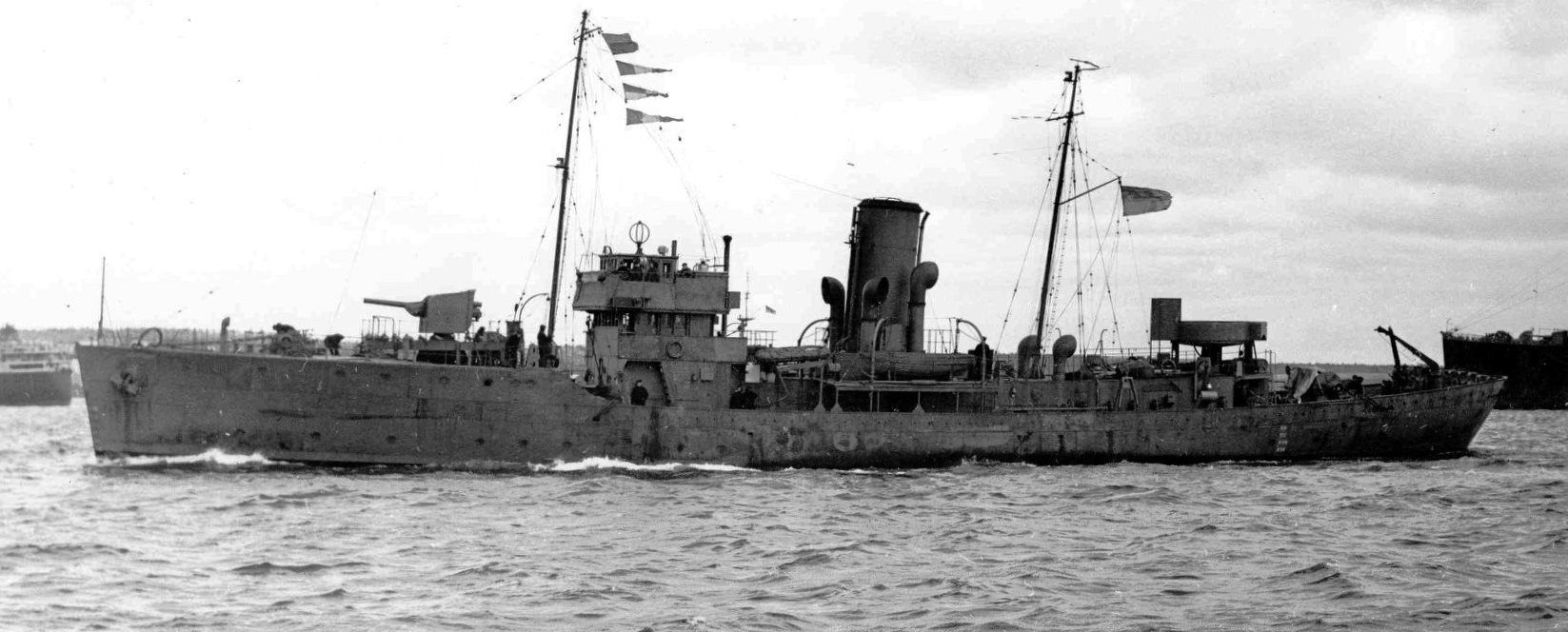
(CFB Esquimalt Military Museum Photo)
HMCS Orillia (K119) Flower class Corvette.
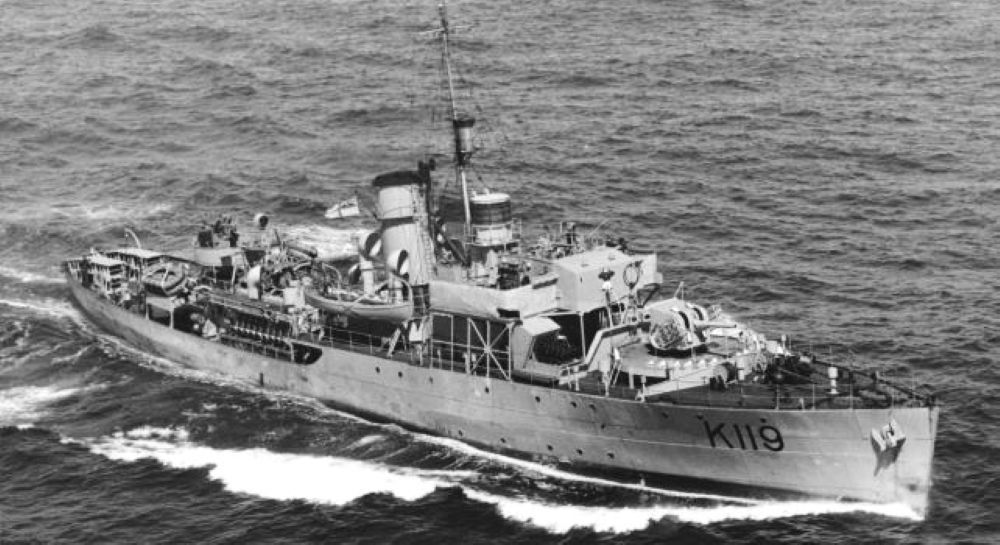
(USN Naval History and Heritage Photo)
HMCS Orillia (K119) Flower class Corvette, 9 Aug 1944.
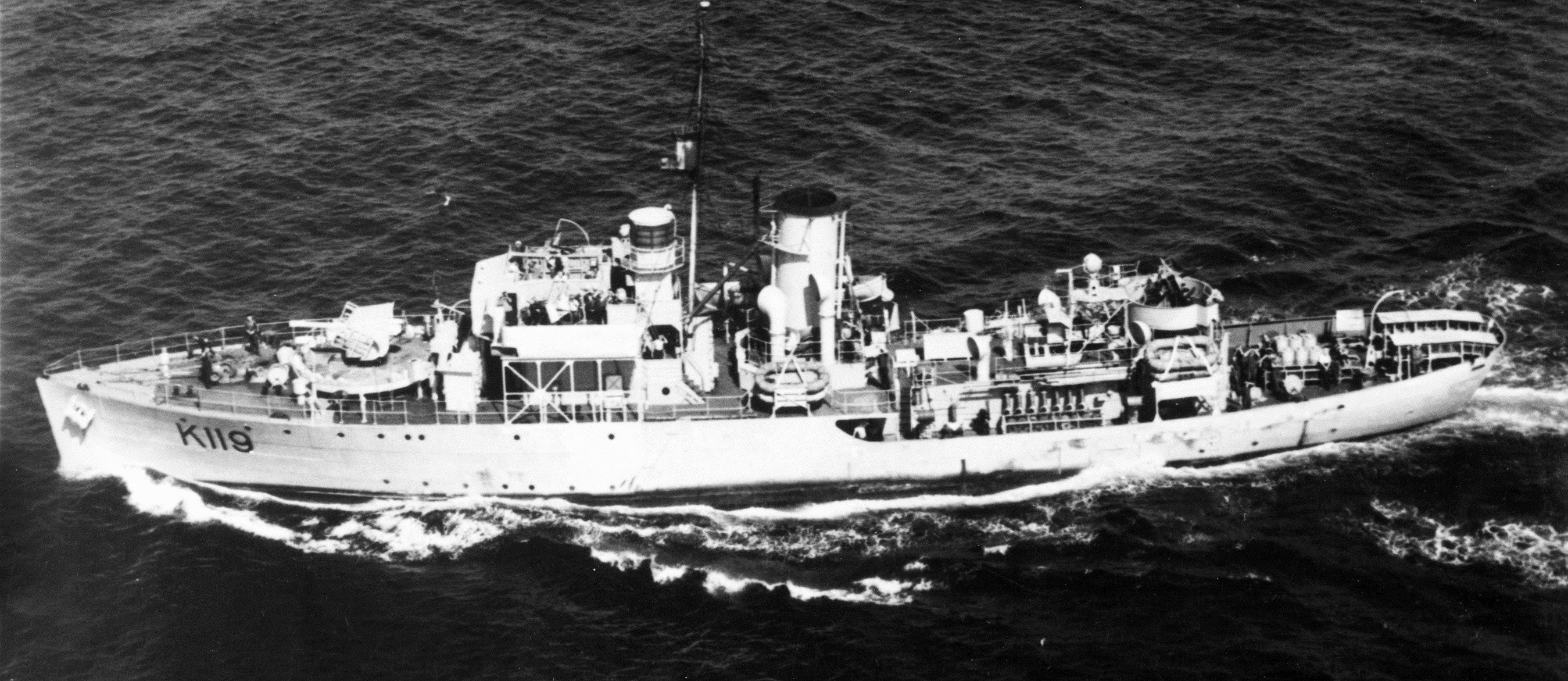
(USN Naval History and Heritage Photo)
HMCS Orillia (K119) Flower class Corvette.
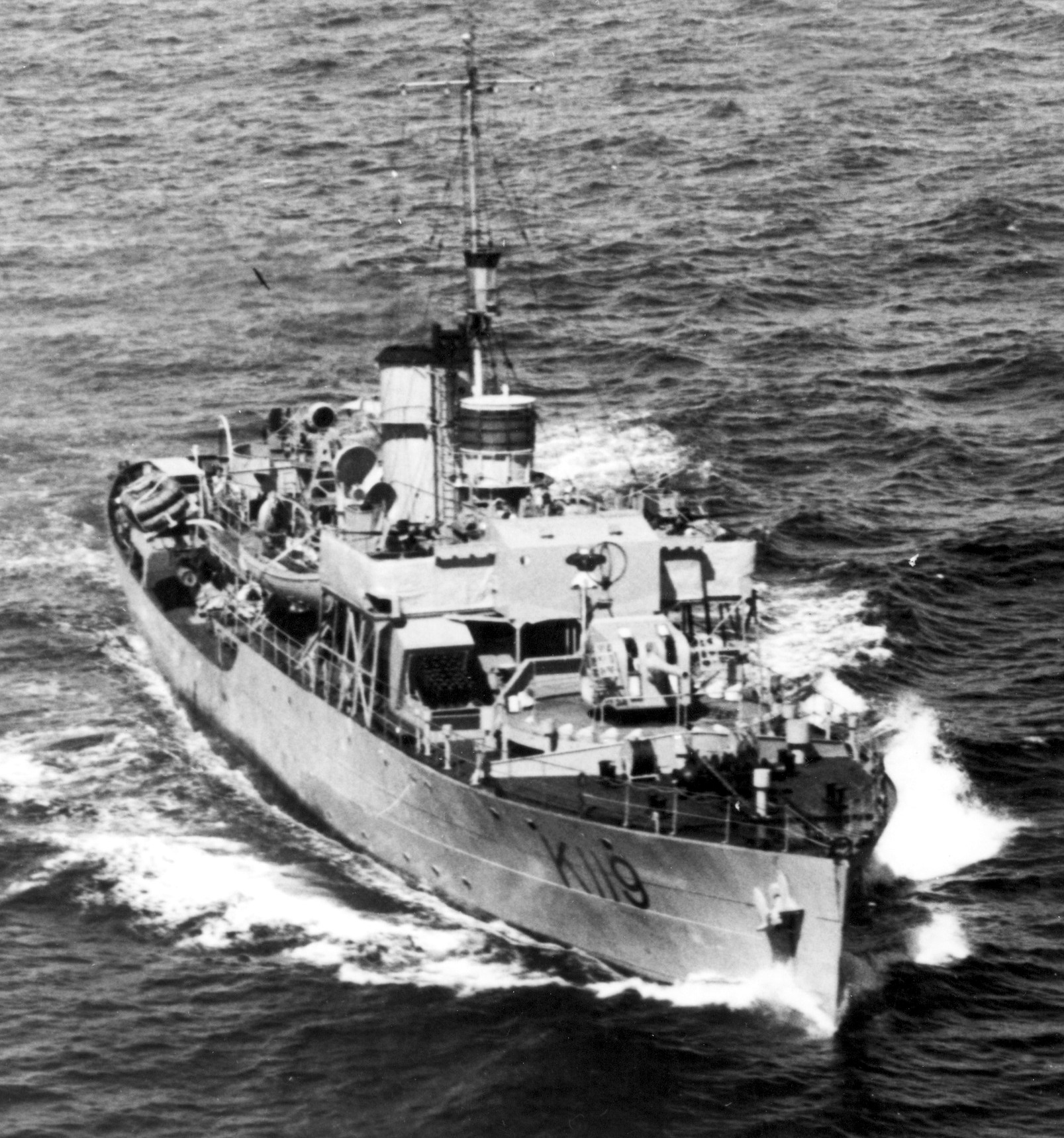
(RCN Photo)
HMCS Orillia (K119) Flower class Corvette.
(David Rose Photo)
HMCS Orillia (K119) Flower class Corvette.
HMCS Owen Sound (K340)
(Dan Dunbar Photo)
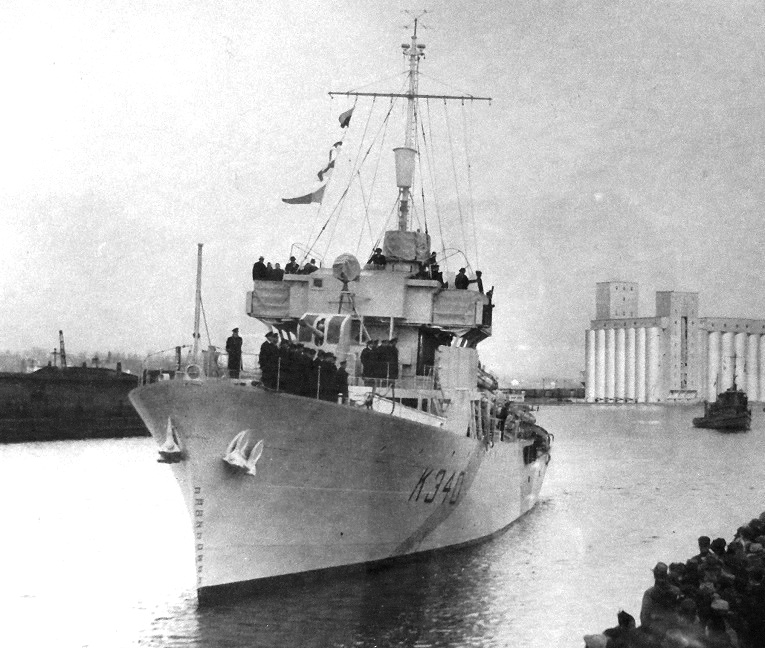
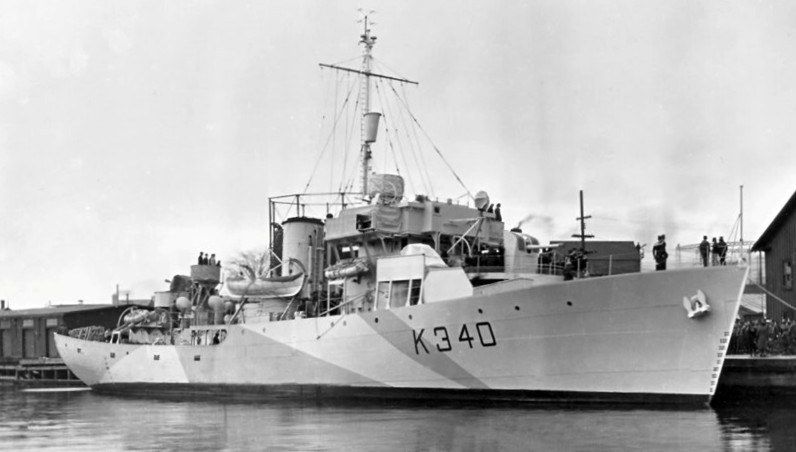
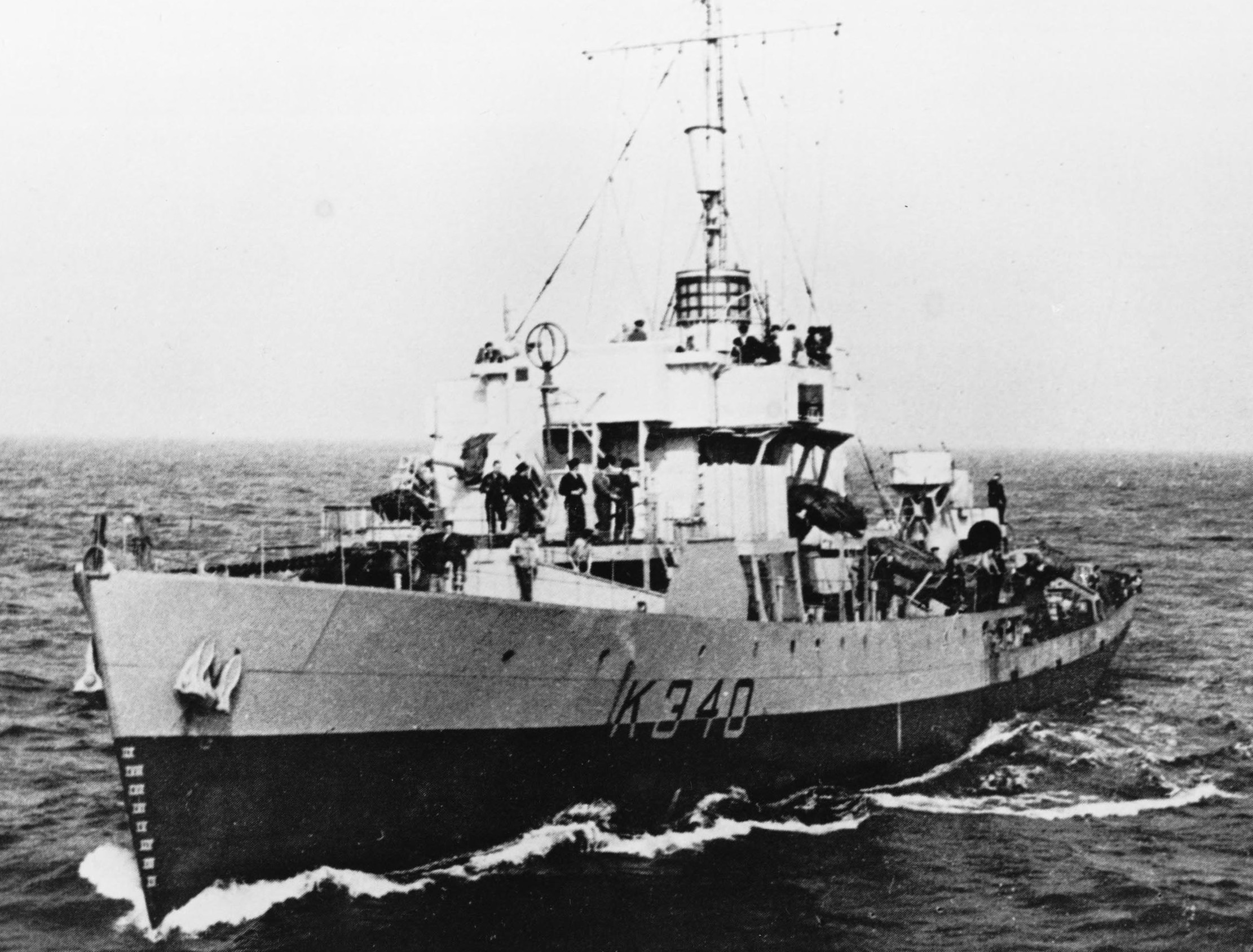
HMCS Owen Sound (K340) Flower class Corvette. Built at Collingwood, Ontario, she was commissioned there on 17 Nov 1943. HMCS Owen Sound arrived at Halifax on 13 Dec 1944, and in Feb 1944 was assigned to EG 9, Londonderry. On 10 Mar 1944, while acting as escort to convoy SC.157, she assisted HMCS St. Laurent and HMS Forester in the destruction of U-845. In May 1944 she transferred to EG C-2 at Londonderry and, in Oct 1944, to newly formed C-7. She left ‘Derry 6 Feb 1945 for her last westward trip, as escort on On.283 and, on arrival at Halifax, commenced refit. On completion of the refit in mid-May 1945 she sailed for Bermuda for three weeks’ working up and on her return was paid off on 19 Jul 1945 and placed in reserve at Sorel. Later that year she was sold to the United Ship Corp. of New York, to become the Greek-flag merchant ship Cadio, last appearing in Lloyd’s list for 1967-68.
(DND Photo)
HMCS Owen Sound (K340) Flower class Corvette.
(DND Photo)
HMCS Owen Sound (K340) Flower class Corvette.