RCN Flower class Corvettes: HMCS Guelph (K687), HMCS Trillium (K172), HMCS Vancouver (K240), HMCS Ville de Québec (K242)
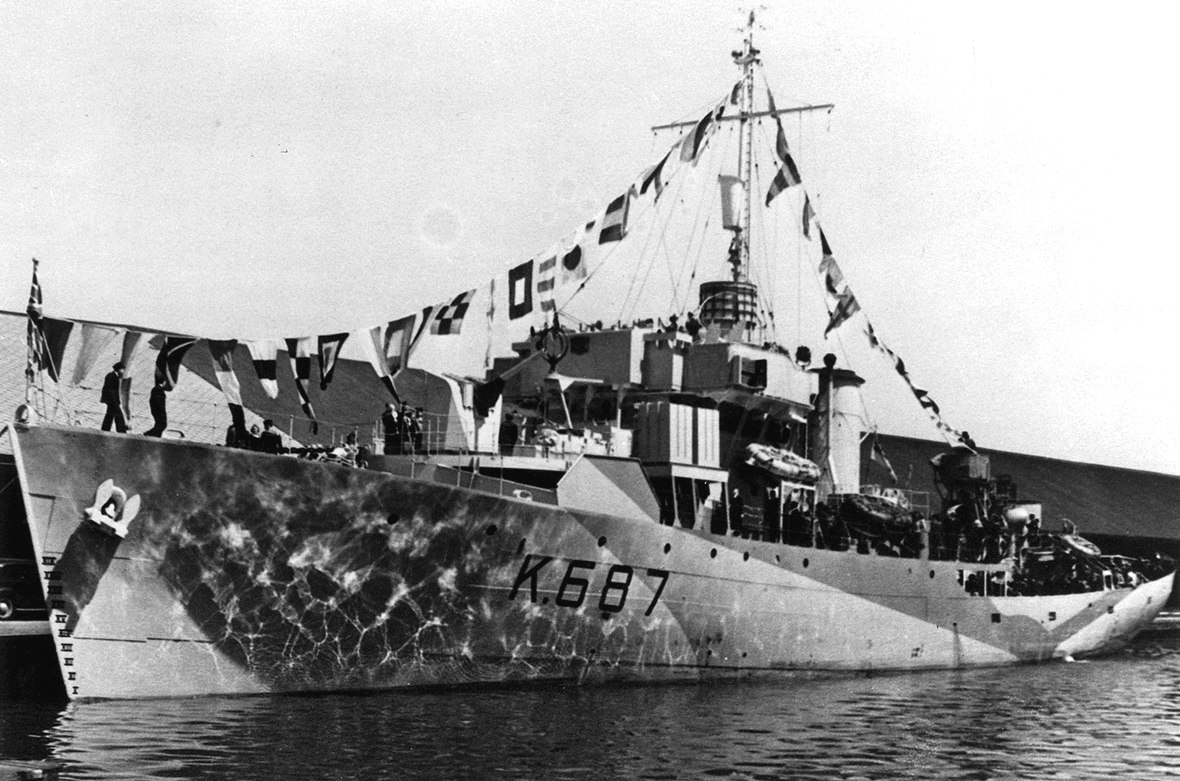
HMCS Guelph (K687)
(DND Photo)
HMCS Guelph (K687) Flower class Corvette. Laid down as HMCS Sea Cliff K687 on 29 May 1943, she was built by the Collingwood Shipyards, Collingwood, Ontario. Renamed HMCS Guelph K687 on 15 Jul 1943, she was launched on 20 Dec 1943. HMCS Guelph was commissioned at Toronto on 09 May 1944. She was presented with a black Cocker Spaniel from a local Guelph, Ontario breeder. Their Mascot was named Rags. HMCS Guelph arrived at Halifax early in Jun 1944 and left on 2 Jul 1944 escorting RN submarines P.553 and P.554 to Philadelphia. She then proceeded to Bermuda for workups, leaving there on 2 Aug 1944, for New York, where she joined EG W-3. She served with this group as a local escort until late Sep 1944 when she was transferred to EG C-8 which, although forming in Londonderry, was to be based at St. John’s. She made her passage eastward as escort to convoy HFX.310. On her final transatlantic trip she left Belfast on 9 Apr 1945 to be based at Halifax until paid off on 27 Jun 1945 at Sorel. On 2 Oct 1945 she was sold to a New York buyer; retaining her name under Panamanian flag. She was last noted in Lloyd’s Register for 1964-65 as Burfin, a name she had borne since 1956.
HMCS Trillium (K172)
(Library and Archives Canada/DND Photo)
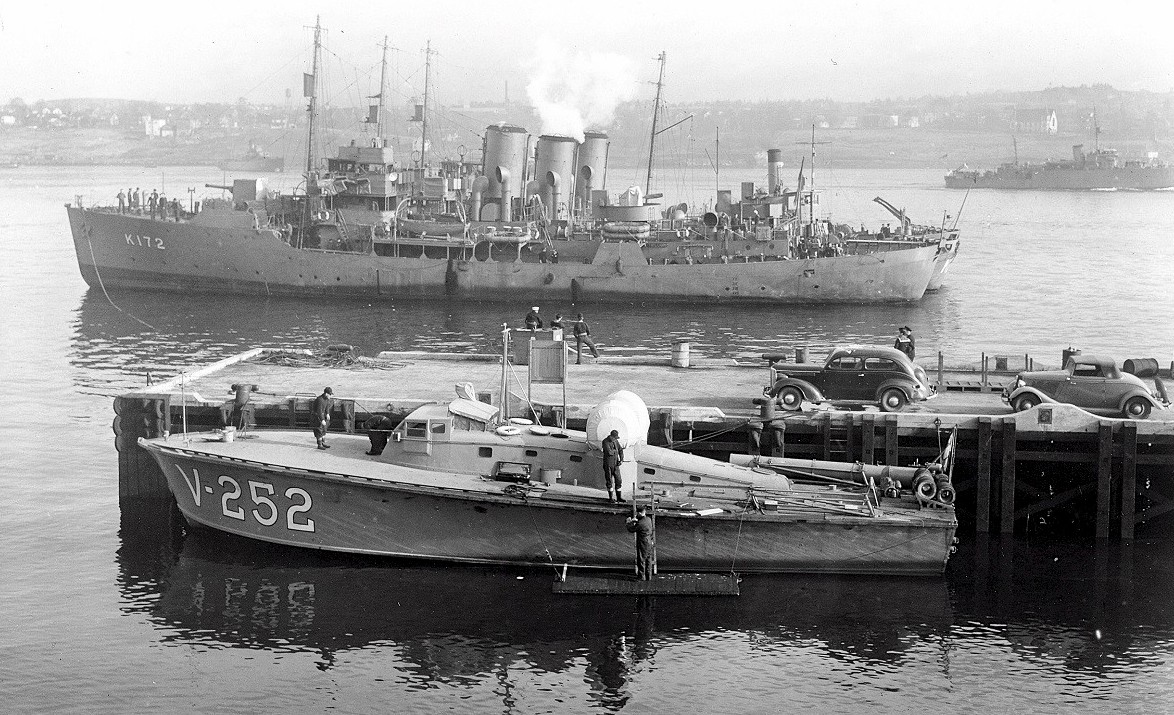
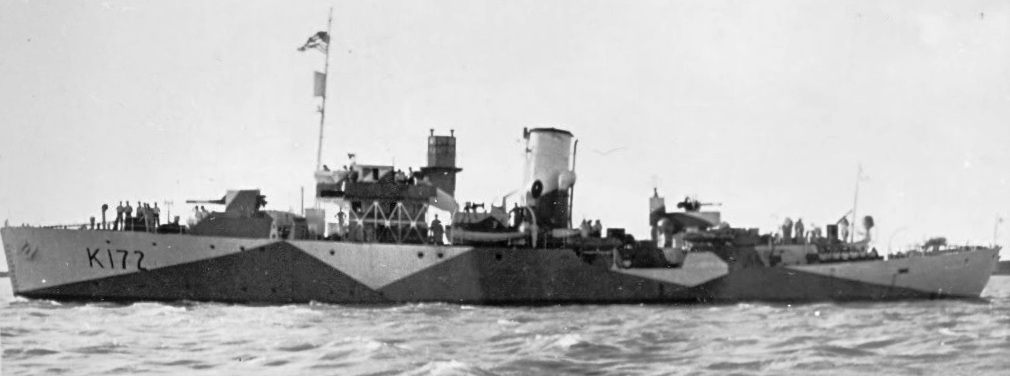
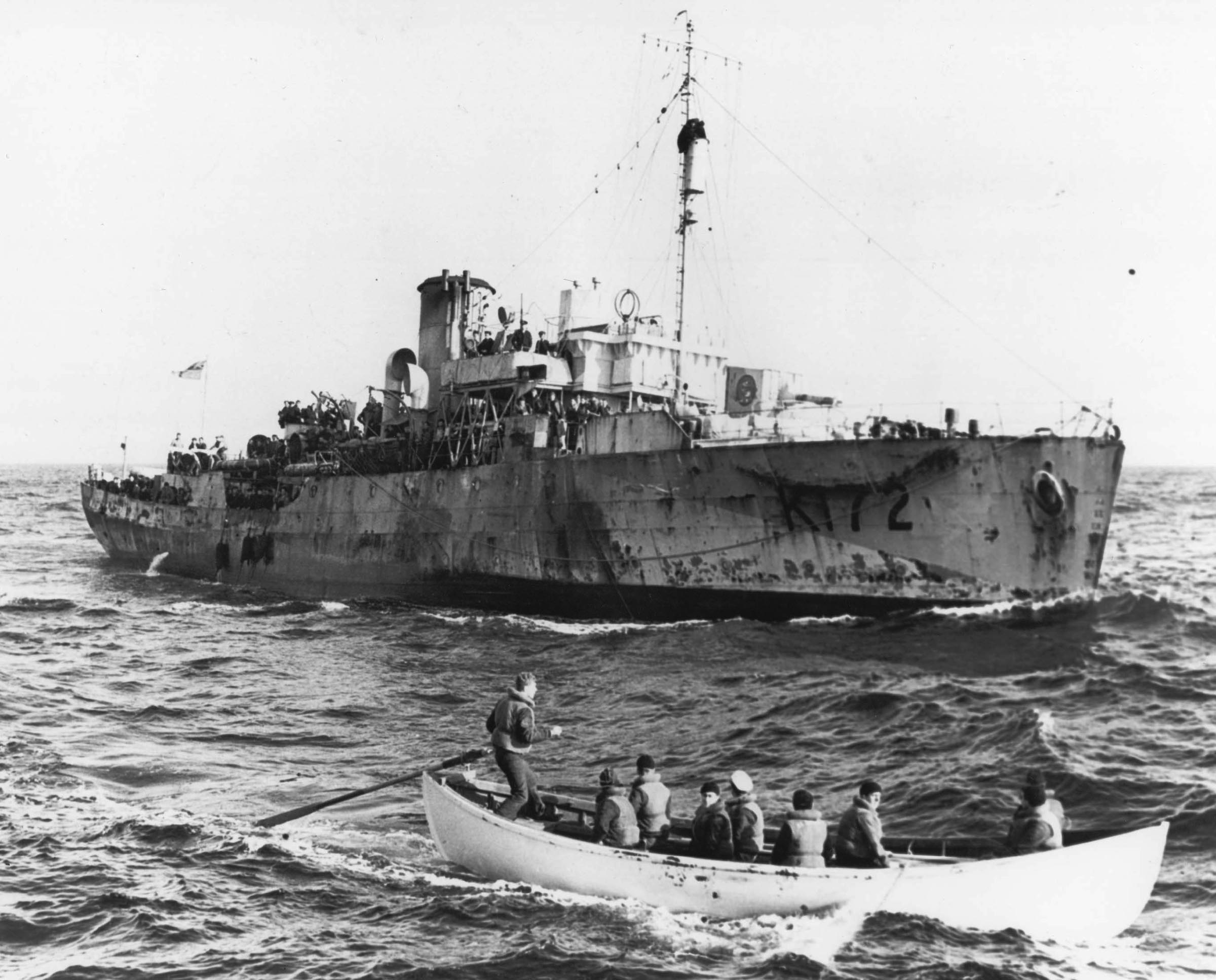
HMCS Trillium (K172) Flower class Corvette, and MTB V-252, at Jetty No. 5 on Halifax side of the Narrows. Built at Montreal for the RN, she was commissioned at there on 31 Oct 1940 as HMS Trillium. She arrived at Halifax on 14 Nov 1940 and in the Clyde on 20 Dec 1940 for final fitting out at Greenock, which was completed on 3 Mar 1941. In Apr 1941, after three weeks’ workups at Tobermory, she joined EG 4 (RN), Greenock, for outbound North American convoys. On 15 May 1941, HMS Trillium was transferred to the RCN and commissioned as HMCS Trillium. She left Aultbea on 10 Jun 1941 with OB.332 for St. John’s to join Newfoundland Command. After two round trips to Iceland she arrived at Halifax on 28 Aug 1941 for three months’ refit there and at Lunenburg. On completion of the refit in Dec 1941 she made one further round trip to Iceland and, on 20 Jan 1942, left St. John’s for convoy SC.65 to Londonderry. After two return trips on the “Newfie-Derry” run she went to Galveston, Texas, for refit from 16 Apr to 23 Jun 1942. Following workups at Pictou, she resumed mid-ocean service with EG A-3 from Aug 1942 until Apr 1943, when she arrived at Boston for a refit that included the extension of her fo’c’s’le. This was completed on 27 Jun 1943, after which she worked up at Pictou before joining EG C-4. Late in Apr 1944 she returned to Pictou for a two-month refit, followed by additional repairs at Halifax, and early in Aug 1944 went to Bermuda to work up. She arrived at St. John’s 2 Sep 1944, to join EG C-3. On 14 Jan 1945, while escorting the Milford Haven section of ON.278, she sank a coaster in a collision and required five weeks’ repairs, afterward resuming mid-ocean service until the end of the war. HMCS Trillium was unique in that she spent her entire career as a mid-ocean escort, participating in three major convoy battles: SC.100 (Sep 1942); ON.166 (Feb 1943); and SC.121 (Mar 1943). She left St. John’s on 27 May 1945, for the UK, where she was returned to the RN at Milford Haven on 27 Jun 1945. Sold in 1947 for conversion to a whale-catcher, she entered service as the Honduran-registered Olympic Runner in 1950, Otori Maru No. 10 in 1956 and Kyo Maru No. 16 in 1959. Last in Lloyd’s Register for 1972/1973.
V-252 was one of 12 Canadian Motor Torpedo Boats built by Canadian Power Boat Co, a subsidiary of British Power Boat Co, at Montreal.
(DND Photo)
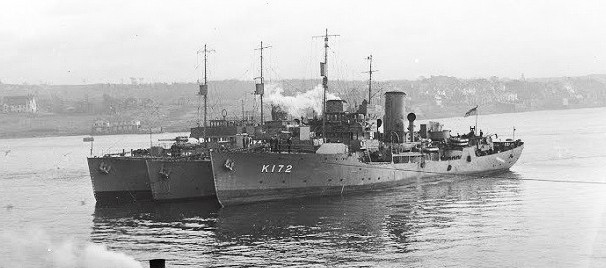
HMCS Trillium (K172) Flower class Corvette.
(DND Photo)
HMCS Trillium (K172) Flower class Corvette.
(DND Photo)
HMCS Trillium (K172) Flower class Corvette.
HMCS Vancouver (K240)
(DND Photo)
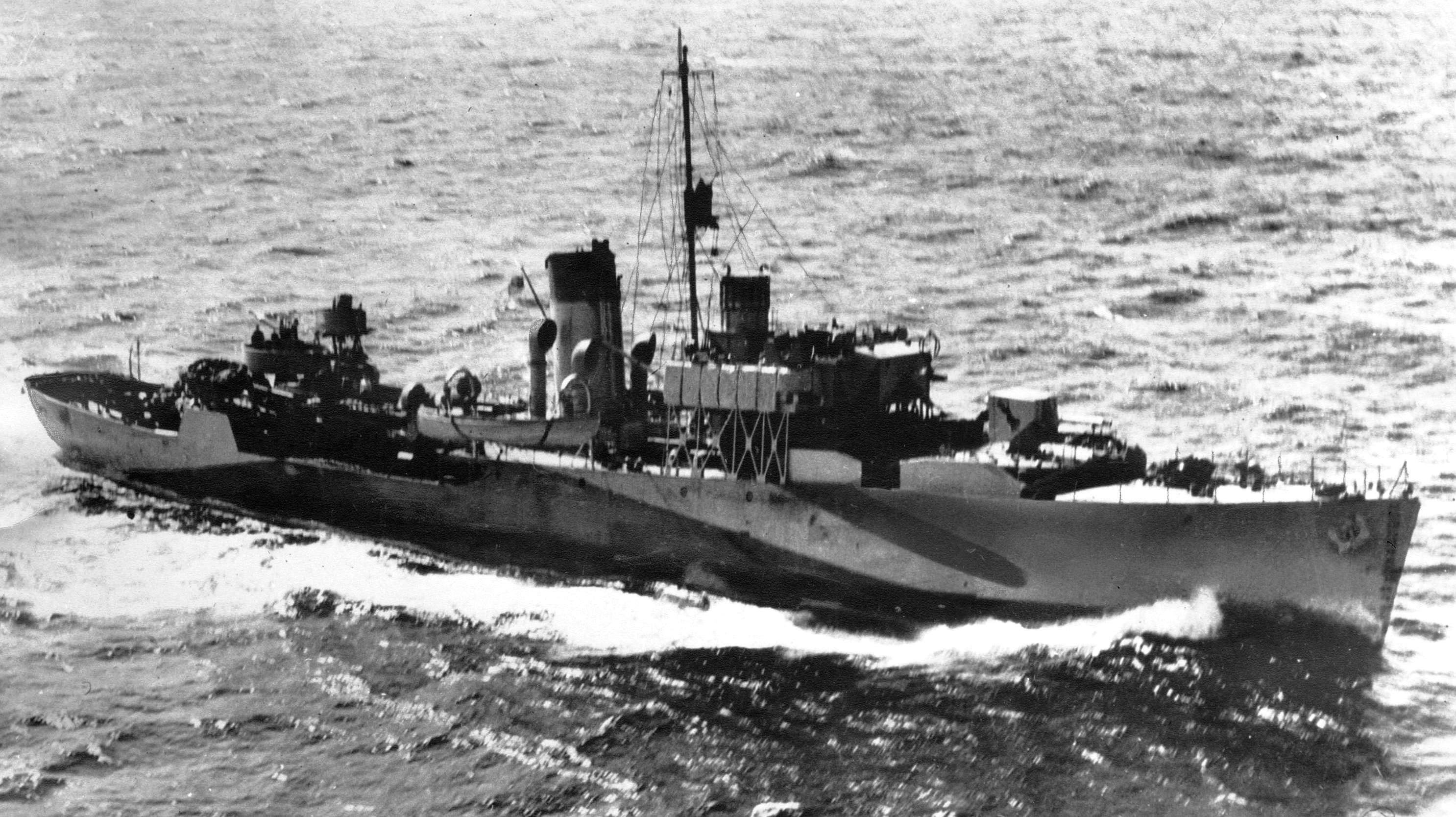
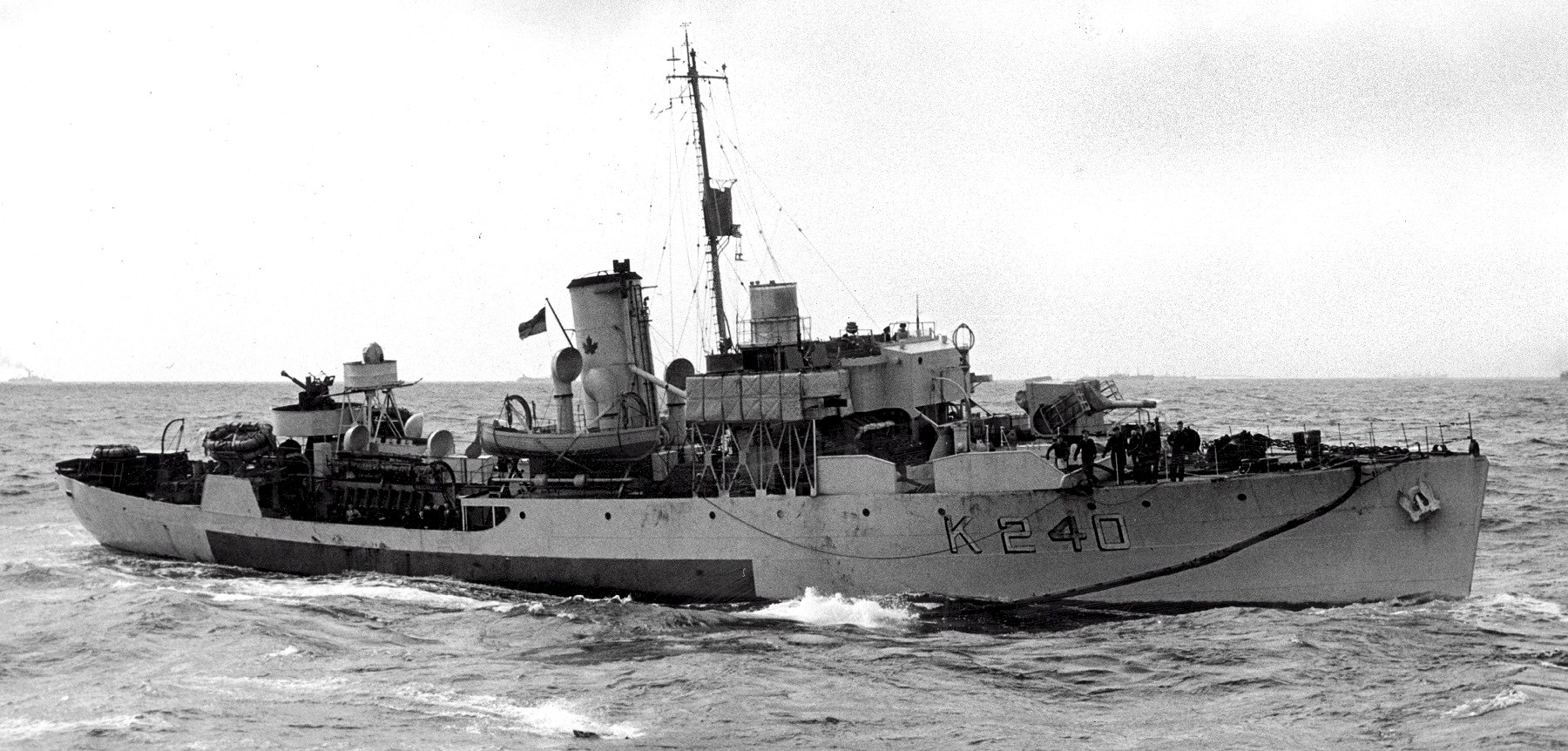
HMCS Vancouver (K240) Flower class Corvette. Laid down and launched as HMCS Kitchener (K240), she was renamed HMCS Vancouver (K240) in Nov 1941. Commissioned at Esquimalt on 20 Mar 1942, she joined Esquimalt Force and, on 20 Jun 1942 escorted the torpedo-damaged SS Fort Camosun to Victoria. In Aug 1942 she left for Kodiak, Alaska, to perform escort service for several weeks in support of the Aleutian campaign. On 24 Feb 1943, she again arrived at Kodiak to serve under US control until the end of May 1943. In mid-Sep 1943 she emerged from three months’ refit at Vancouver with an extended fo’c’s’le. Reassigned in Feb 1944, to WLEF, she arrived at Halifax on 25 Mar 1944. After serving briefly with escort groups W-3 and W-1, she was transferred in Jun 1944 to Quebec Force as escort to Quebec City-Goose Bay convoys for three months. Late in Nov 1944, after a month’s refit at Charlottetown, PEI, she proceeded to Bermuda to work up, and on her return rejoined W-1 for the balance of hostilities. She was paid off on 26 Jun 1945, at Sorel, she was sold on 5 Oct 1945 and broken up at Hamilton, Ontario, in 1946.
(Ron Bell Photo)
HMCS Vancouver (K240) Flower class Corvette. It appears to have a fueling hose for the astern (of the tanker) method of refueling at sea, rather than the more usual abeam procedure.
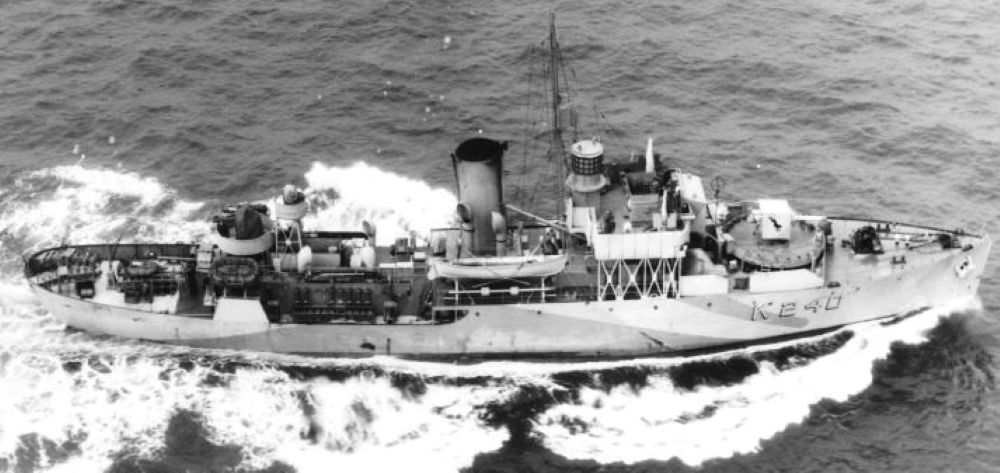
(US Naval History and Heritage Photo 80-G-222627))
HMCS Vancouver (K240) Flower class Corvette.
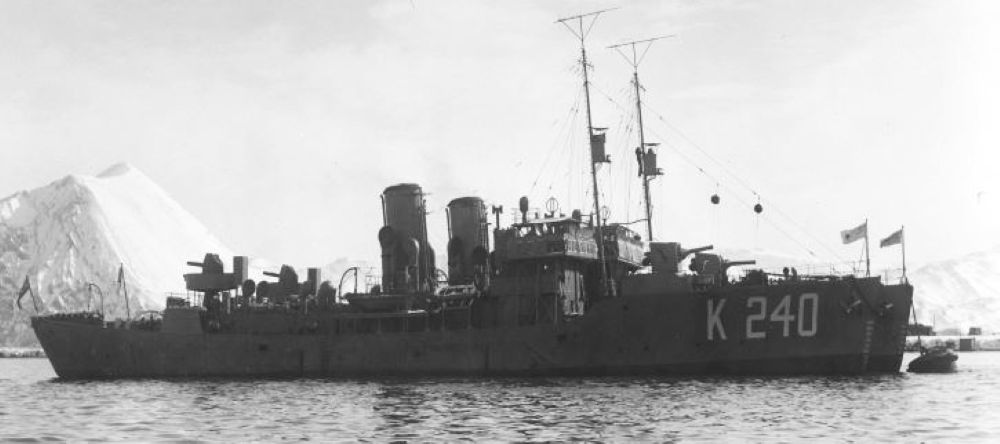
(US Naval History and Heritage Photo 80-G-72701)
HMCS Vancouver (K240) Flower class Corvette, Dutch Harbor, Alaska, August 1943.
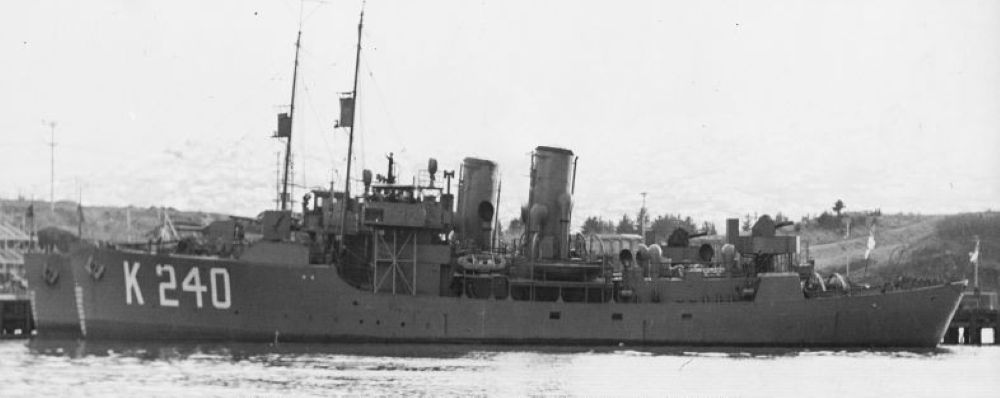
(US Naval History and Heritage Photo, 80-G-79609)
HMCS Vancouver (K240) Flower class Corvette, Kodiak, Alaska, 23 Feb 1943.
HMCS Ville de Québec (K242)
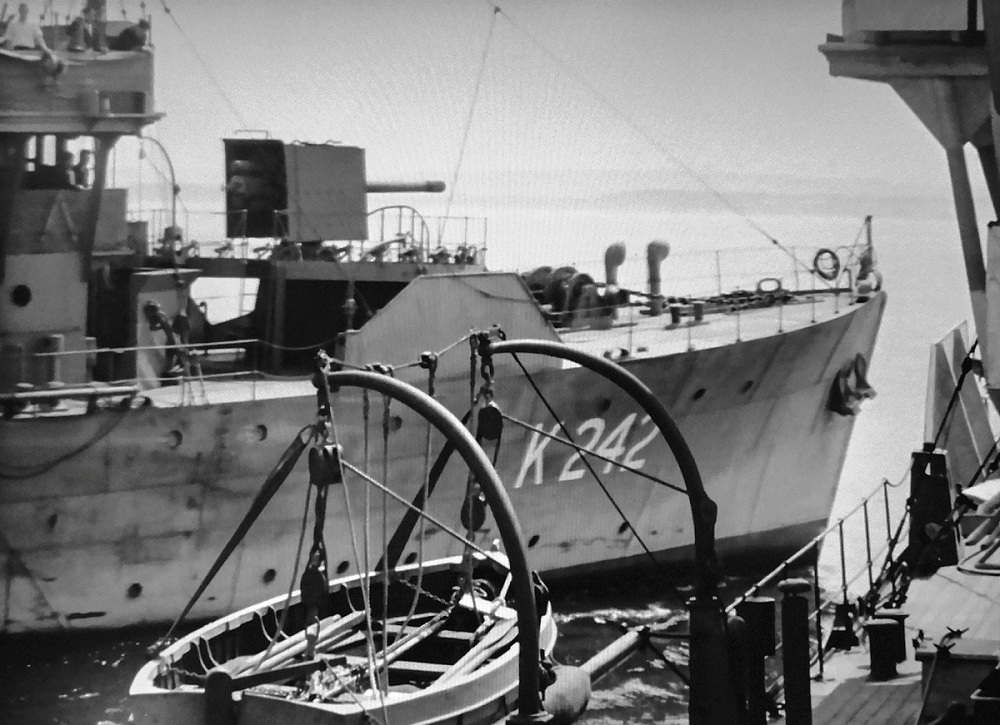
(DND Photo)
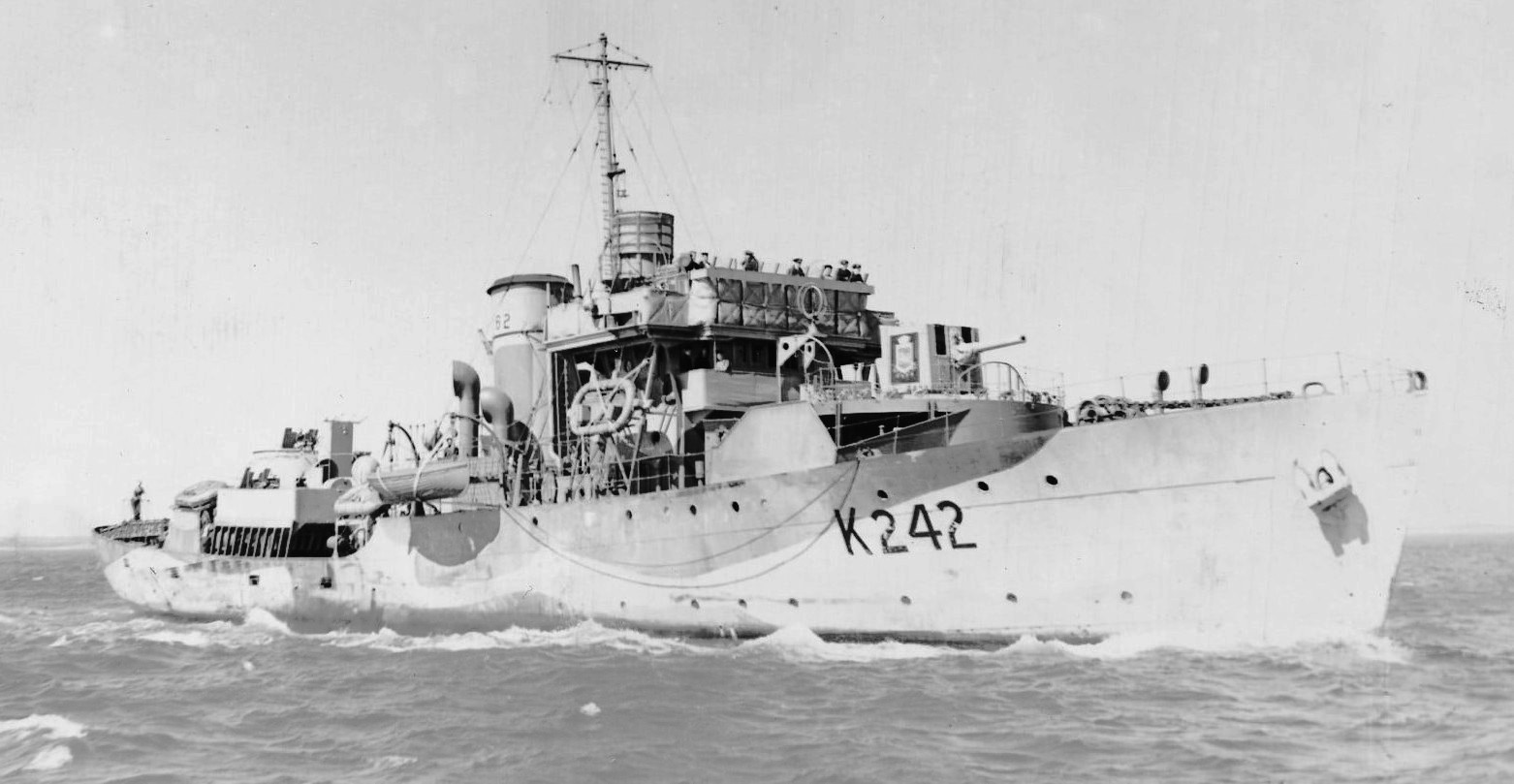
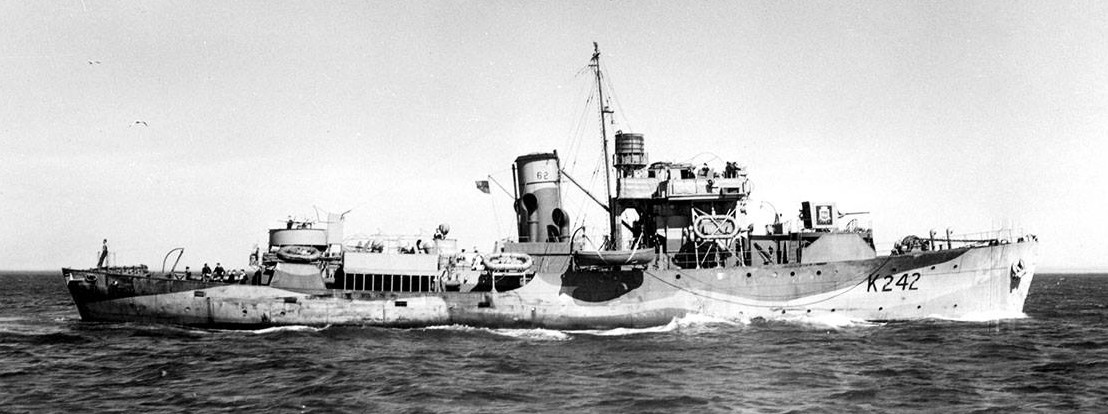
HMCS Ville de Québec (K242) Flower class Corvette. Built by Morton Engineering & Dry Dock Co., Quebec City, Quebec, she was laid down on 7 Jun 1941 as HMCS Quebec. Renamed in Apr 1942, she was commissioned on 24 May 1942, at Quebec City as HMCS Ville de Quebec K242. She sailed for Halifax on 06 Jun 1942, and arrived there on 12 Jun 1942 having escorted Quebec-Sydney convoy QS.7 en route. After a brief period for final fitting of equipment, she sailed on her first operation cruise on 06 Jul 1942. Late in Jul 1942, after working up at Pictou, she was assigned to WLEF and used almost exclusively as an escort to convoys between Boston and Halifax. In Sep 1942, HMCS Ville de Québec was allocated to Operation “Torch.” For her Atlantic crossing she was assigned as escort to Convoy HX-212. Not being a regular member of the escort group, she was assigned to pick up survivors. When she arrived in Liverpool on 21 Sep 1942, she landed 172 merchant seamen from some of the six ships that had been torpedoed and sunk. She arrived at Londonderry on 10 Nov 1942, sailing again on 26 Nov 1942 as escort to convoy KMS.4G to Bone, North Africa. For the succeeding four months was employed on UK-Mediterranean convoys. On 13 Jan 1943, she sank U-224 west of Algiers. She made one attack with depth-charges and, as she was turning to make another, saw the U-boat break surface in the middle of the depth-charge pattern. HMCS Ville de Quebec turned and rammed the U-boat, sinking it. She returned to Canada in Apr 1943, carried out brief repairs at Halifax, then arrived at Gaspé on 12 May 1943 to join Quebec Force, escorting Quebec-Sydney and Quebec-Labrador convoys. In Sep 1943 she returned to Halifax and later that month joined EG W-2, WLEF. In mid-Jan 1944, she began an extensive refit at Liverpool, NS, completing early in May 1944, and on 22 May 1944 left for a month’s workups in Bermuda. On her return she joined EG C-4 for one round trip to Londonderry, transferring in Sept 1944 to EG 41, Plymouth. Based at Milford Haven, she served with that group for the balance of the war. On 22 Apr 1945, HMCS Ville de Quebec K242 returned to Halifax with convoy ONS.2, and was later paid off on 06 Jul 1945 at Sorel. Sold for mercantile use in 1946 and renamed Dispina; Dorothea Paxos in 1947; Tanya in 1948; and Medex in 1949. She was listed on Lloyd’s Register until 1952.
(RCN Photo)
HMCS Ville de Québec (K242) Flower class Corvette.
(RCN Photo)
HMCS Ville de Québec (K242) Flower class Corvette.