
RCN Flower class Corvettes: HMCS Drumheller (K167), HMCS Dundas (K229), HMCS Dunvegan (K177), HMCS Regina (K234)
âHMCS Drumheller (K167)
(DND Photo)
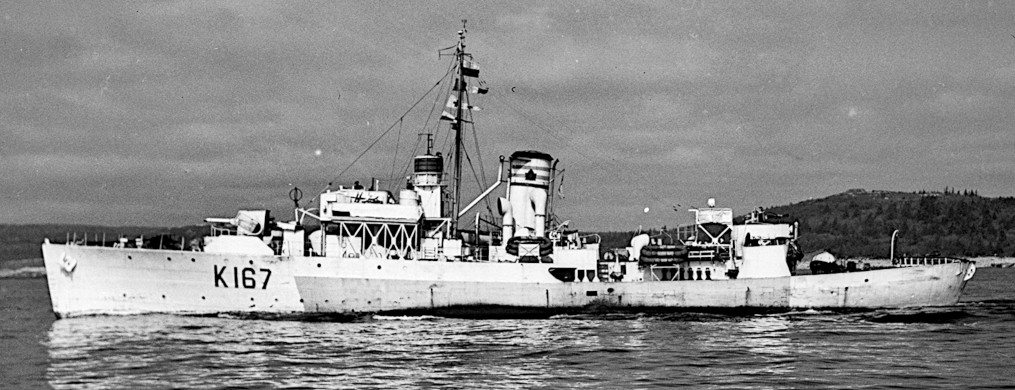
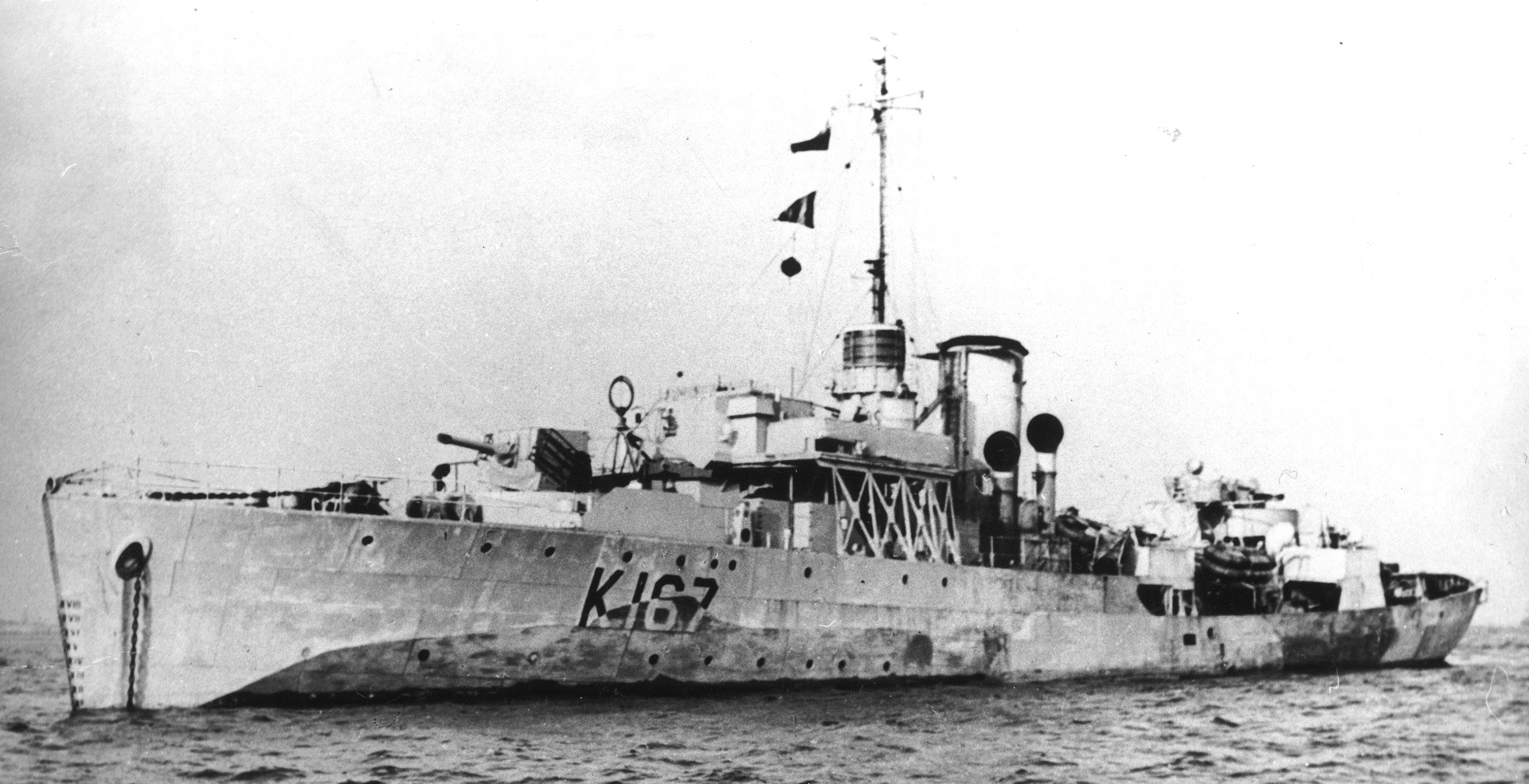
HMCS Drumheller (K167) Flower class Corvette. Built at Collingwood, Ontario, she was commissioned at Montreal on 13 Sep 1941. HMCS Drumheller arrived at Halifax on 25 Sep 1941. She joined Sydney Force in Nov 1941 after completing workups, but soon afterward transferred to Newfoundland Command, and left St. John’s on 11 Dec 1941 to join her first convoy, SC.59, for Iceland. HMCS Drumheller was employed for two months on that convoy run, but on 06 Feb 1942, arrived at Londonderry – one of the first Canadian ships to do so. She left for St. John’s the following week, but developed mechanical defects en route and returned to the UK to refit at Southampton. On completion of the repairs she arrived at Tobermory on 22 Mar 1942 to work up, resuming ocean escort service at the end of Apr 1942 as a member of EG C-2. She served with the group until Apr 1944, with respite only from mid-Nov 1943 to 15 Jan 1944, while undergoing a refit, including fo’c’s’le extension, at New York City. Her most hectic convoy was the combined ON.202/ONS.18 of Sep 1943, which lost six merchant vessels and three escorts. On 13 May 1943, while escorting HX.237 she, HMS Lagan, and a Sunderland aircraft collaborated in sinking U-456. In Apr 1944 HMCS Drumheller was allocated to Western Approaches Command, Greenock, for invasion duties, transferring in September to Portsmouth Command . She served with the latter until the end of the war, escorting convoys in UK coastal waters, and returned to Canada in mid-May, 1945. Paid off on 11 Jul 1945, at Sydney, she was broken up in 1949 at Hamilton, Ontario.
(RCN Photo)
HMCS Drumheller (K167) Flower class Corvette.
HMCS Dundas (K229)
(Jeff Simpson Photo)
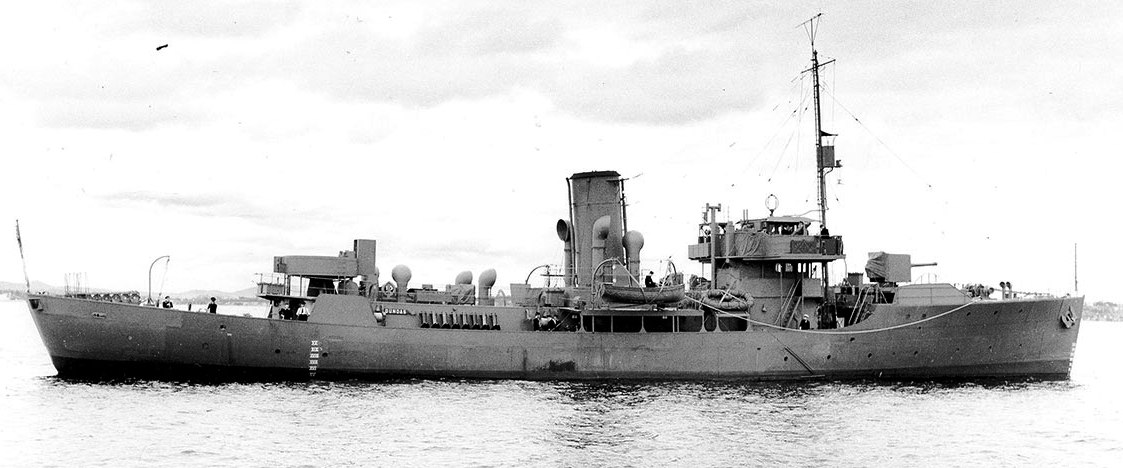
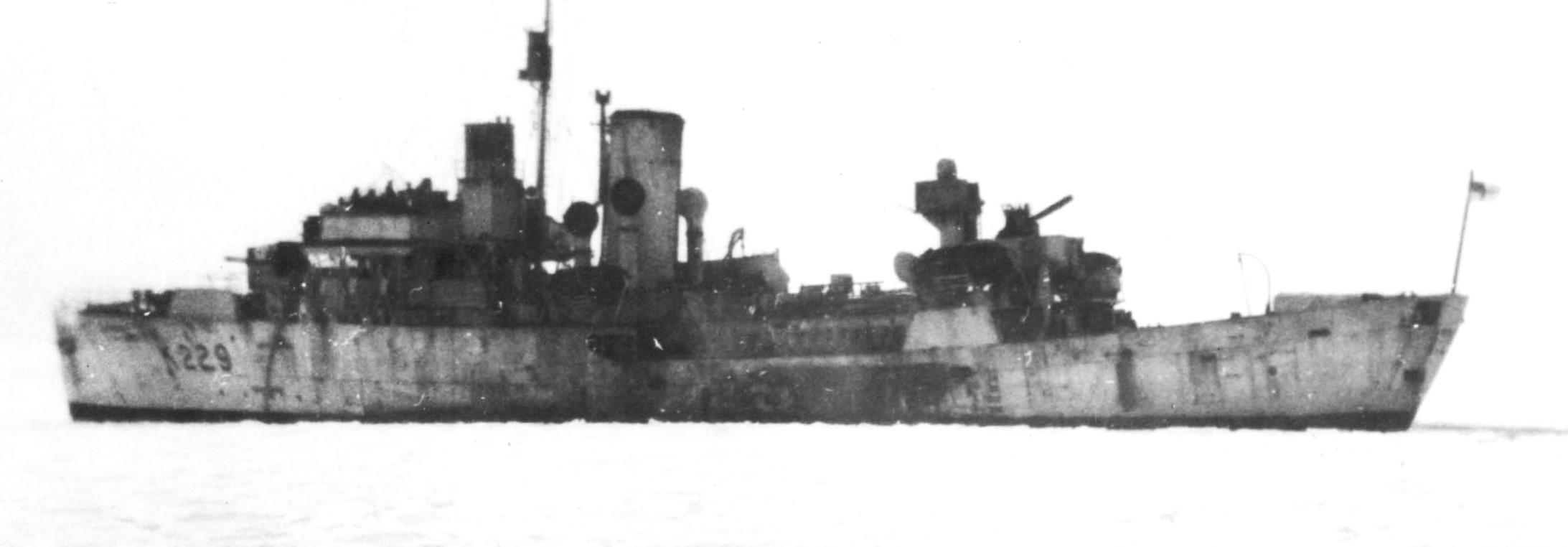
HMCS Dundas (K229) Flower class Corvette, 25 July 1941. Built at Victoria and commissioned on 1 Apr 1942, she joined Esquimalt Force after working up, and in Aug 1942 made a round trip as convoy escort to Kodiak, Alaska, in support of the Aleutian campaign. On 13 Sep 1942 she sailed for the east coast to replace an Operation “Torch” nominee, joining WLEF upon arrival at Halifax on 13 Oct 1942. She served with EG W-7 from Jun 1943, with W-5 from Sep 1943, and with W-4 from Apr 1944. In the course of a major refit at Montreal from 13 Jun to 19 Nov 1943, HMCS Dundas acquired her extended fo’c’s’le. She commenced another long refit early in Jan 1945, at Liverpool, NS, resuming service in Apr 1945. Paid off on 17 Jul 1945 at Sorel, she was sold later that year and broken up in 1946 at Hamilton, Ontario.
(RCN Photo)
HMCS Dundas (K229) (Flower class Corvette.
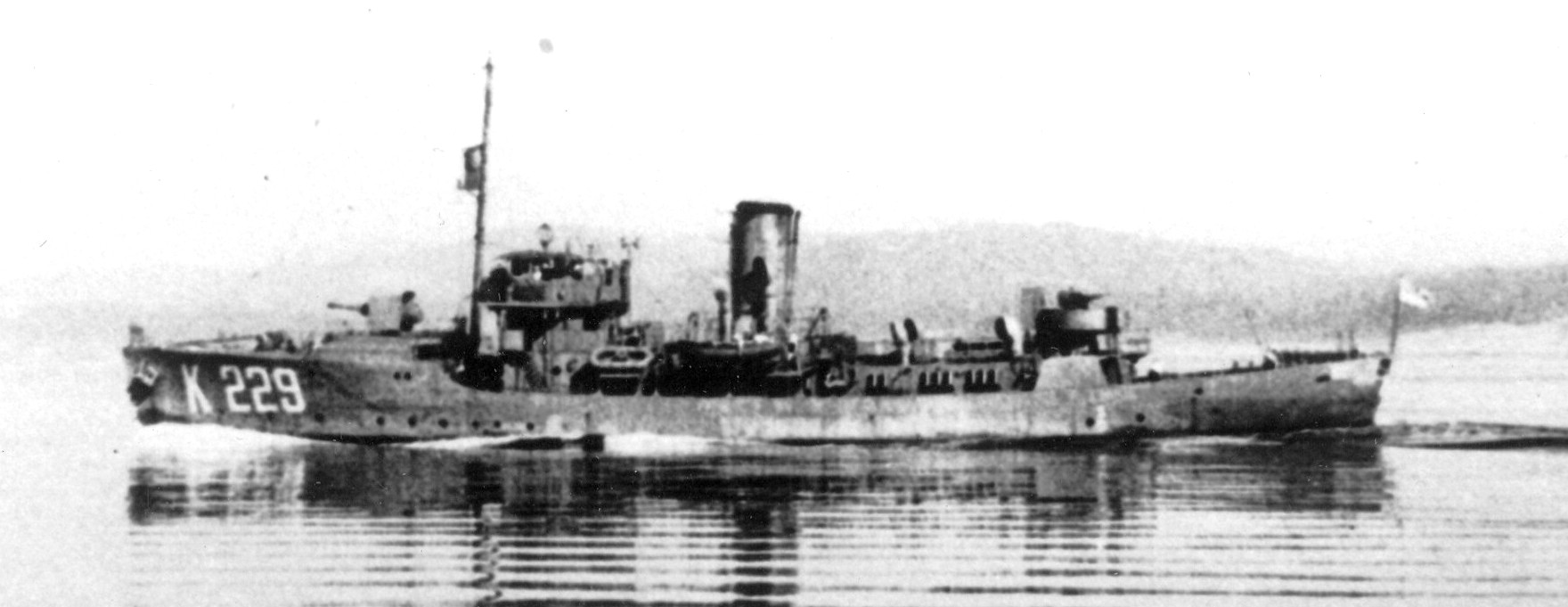
(RCN Photo)
HMCS Dundas (K229) (Flower class Corvette.
HMCS Dunvegan (K177)
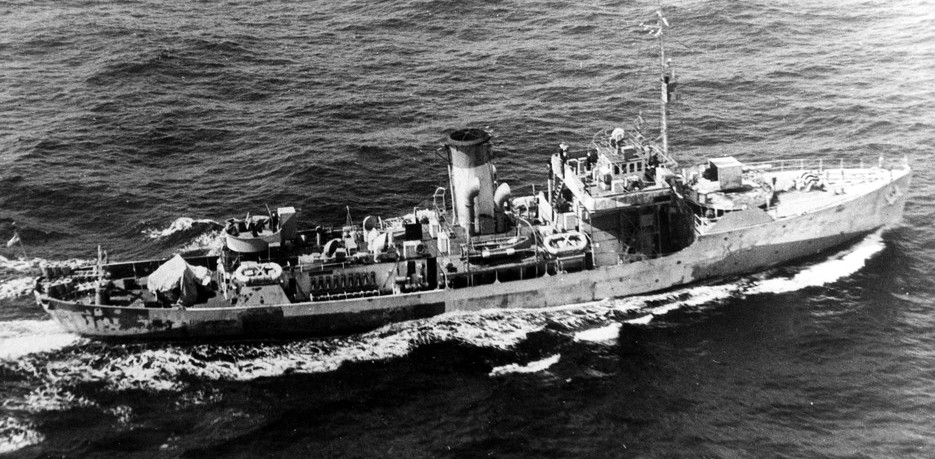
(Ken Macpherson, Naval Museum of Alberta Photo)
HMCS Dunvegan (K177) Flower class Corvette. Named after a village in Nova Scotia, HMCS Dunvegan was commissioned at Sorel on 9 Sep 1941, and arrived at Halifax a week later. She joined Sydney Force after working up, but in mid-Nov 1941 was transferred to Newfoundland Command, leaving St. John’s on 18 Nov 1941 as ocean escort to convoy SC.55 as far as Iceland. On her return she underwent repairs at Halifax, and on their completion in Jan 1942, was assigned briefly to WLEF. On 27 Jan 1942, while escorting convoy HX.172, both engines of HMCS Annapolis stopped because of water in the oil fuel. HMCS Dunvegan came to her aid. While trying to pass a line for a tow, HMCS Dunvegan fouled the line in her own propeller. With rapidly deteriorating weather, HMCS Annapolis drifted into HMCS Dunvegan and sustained damage to her own propellers and substructure. As a result of the collision, the two ships limped into Halifax Harbour with HMCS Annapolis towing her would-be rescuer. Resuming her duties as ocean escort with Newfoundland Command, she arrived at Londonderry on 10 Mar 1942. In succeeding weeks she made two more round trips to ‘Derry, leaving that port for the last time in mid-Jun 1942. On reaching Halifax, she was assigned to WLEF and, in Jun 1943, to its EG W-8. In Oct 1943, she proceeded to Baltimore, MD, for a refit which included fo’c’s’le extension and lasted until the end of the year. She then carried out workups off Norfolk, VA, completing the process in Bermuda after some repairs at Halifax. On her return she resumed her duties with WLEF, from Apr 1944 onward as a member of EG W-6. On 7 May 1945, she left Halifax as local escort to convoy SC.175, but was detached on 10 May 1945 to act, with HMCS Rockcliffe, as escort to the surrendered U-889. She was paid off on 3 Jul 1945, at Sydney, and sold in 1946 to the Venezuelan Navy, serving as Indepencia until broken up in 1953.
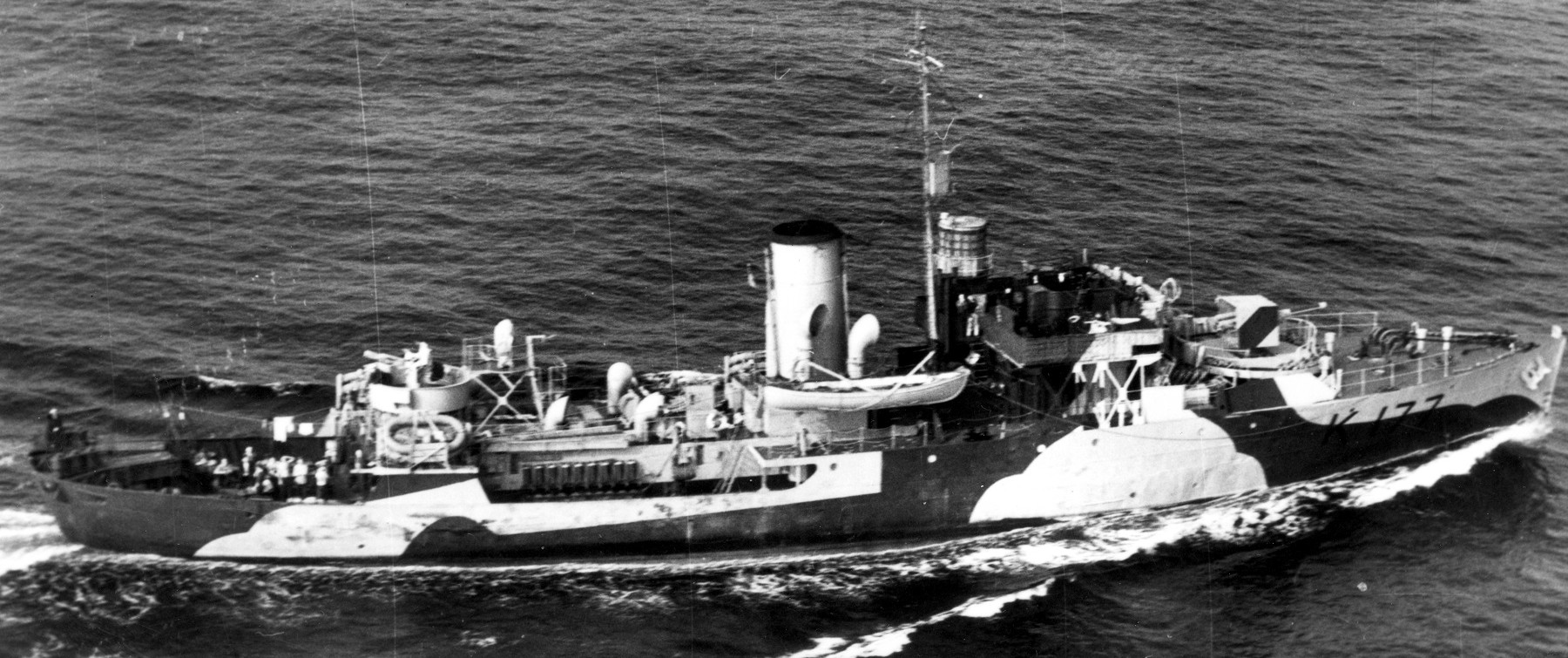
(DND Photo)
HMCS Dunvegan (K177) Flower class Corvette.
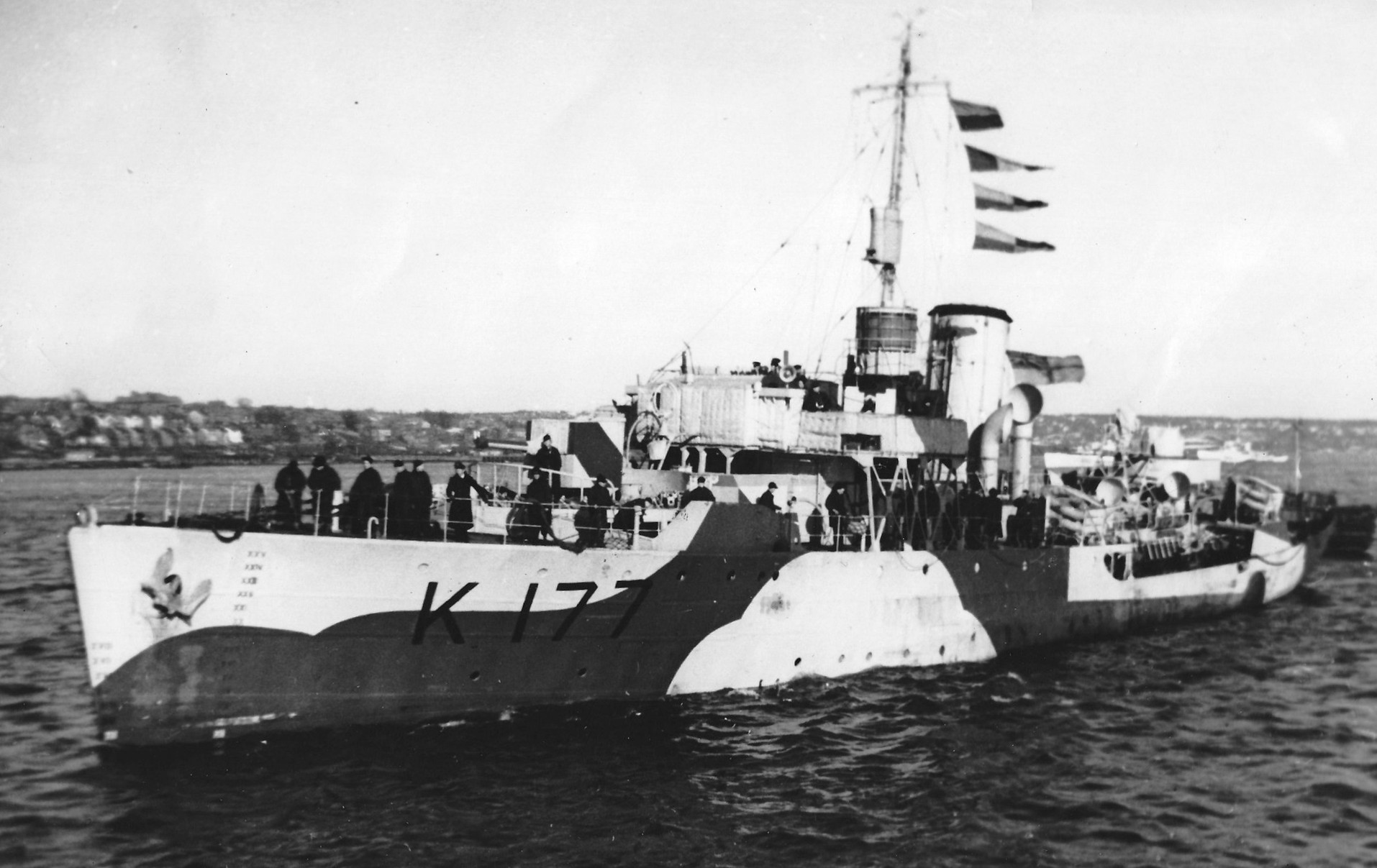
(DND Photo)
HMCS Dunvegan (K177) Flower class Corvette.
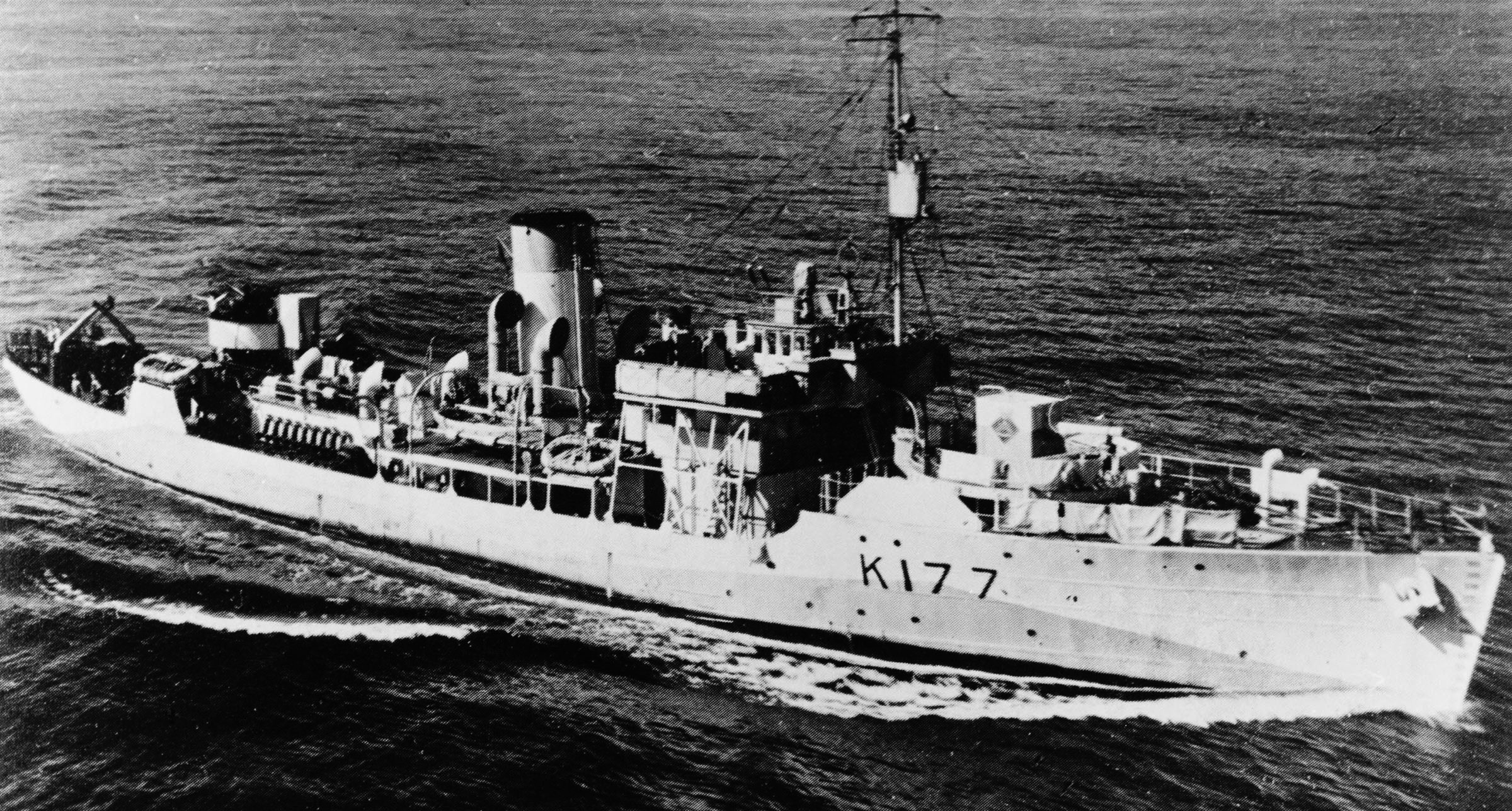
(DND Photo)
HMCS Dunvegan (K177) Flower class Corvette.
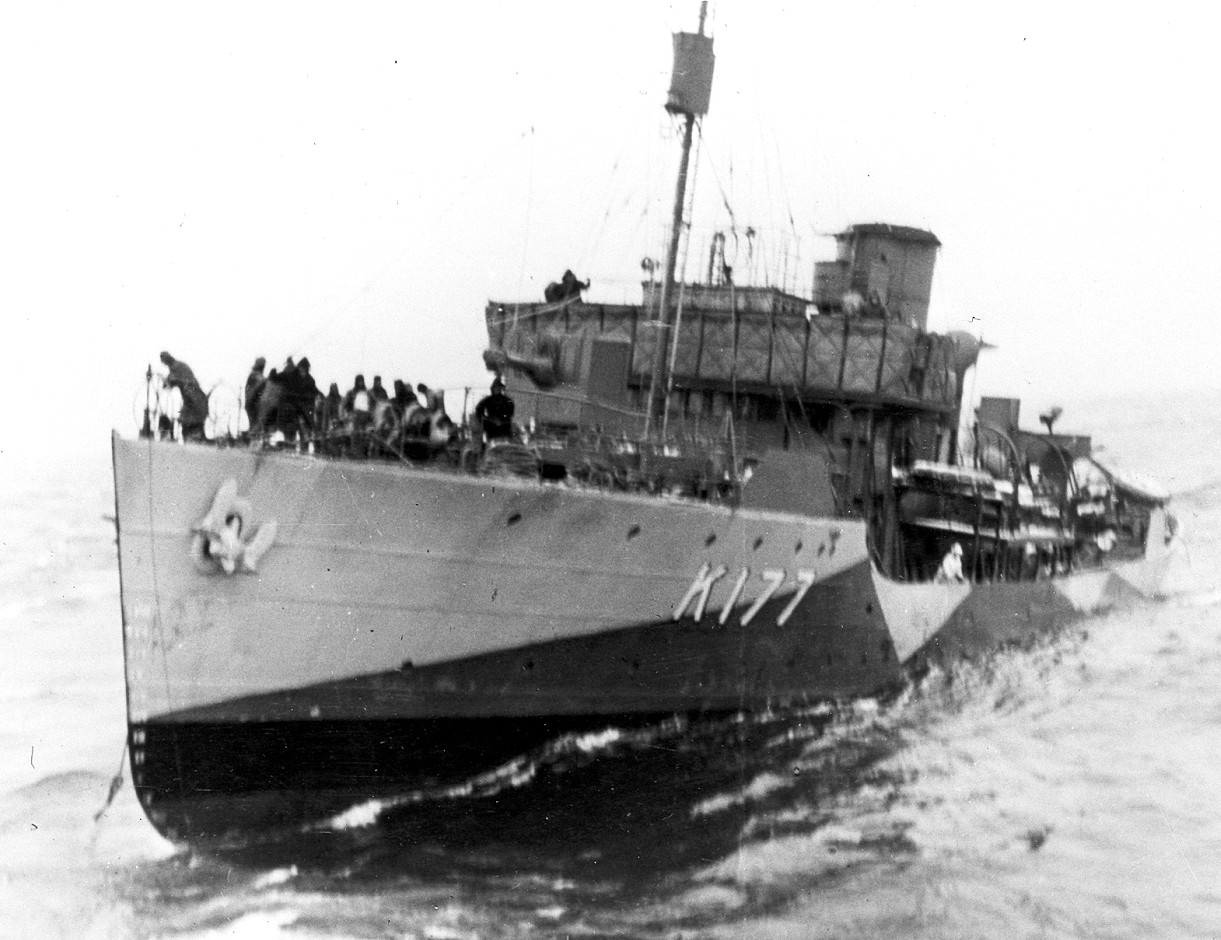
(Ron Bell Photo)
HMCS Dunvegan (K177) Flower class Corvette.
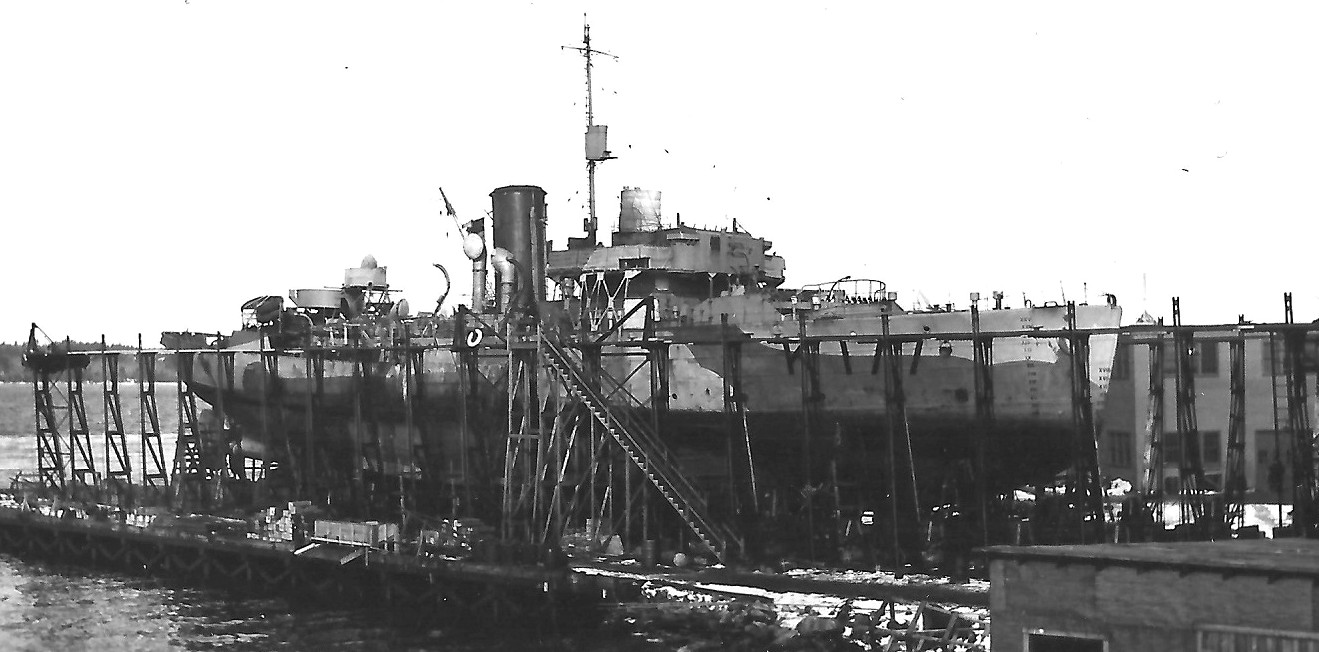
(Sean Cox family Photo)
HMCS Dunvegan (K177) Flower class Corvette. on the slips in refit, c1943.
HMCS Regina (K234)
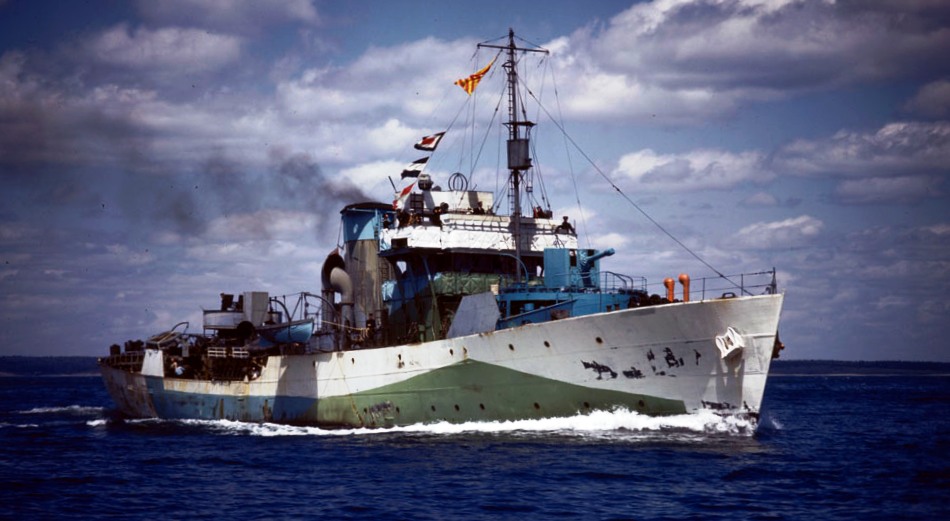
(Library and Archives Canada Photo, MIKAN No. 4950906)
HMCS Regina (K234) Flower class Corvette. Built at Sorel Quebec, HMCS Regina arrived at Halifax on 6 Jan 1942, and was commissioned on 22 Jan 1942. She served with WLEF from mid-Mar 1942 until Sep 1942, when she was reassigned to Operation “Torch.” Crossing as escort to convoy SC.108, she arrived at Belfast on 22 Nov 1942 for refit, following which she was employed as escort to UK-Mediterranean convoys. While thus engaged on 8 Feb 1943, she sank the Italian submarine Avorio in the western Mediterranean, north of Phillipville, Algeria. Returning to Canada late in Mar 1943, she briefly rejoined WLEF before commencing a refit at Sydney on 9 Jun 1943. The work was completed at Pictou in mid-Dec 1943 and workups carried out there, followed by further repairs at Halifax and Shelburne. HMCS Regina joined EG C-1 in Feb 1944, and at the beginning of Mar 1944 left Argentia to escort SC.154 to the UK, but was detached in mid-ocean with HMCS Valleyfield to escort an RN tug towing the convoy rescue ship Dundee toward Horta. She left Horta on 14 Mar 1944, this time escorting the damaged HMCS Mulgrave, under tow for the Clyde. Arriving at Londonderry toward the end of Mar 1944, HMCS Regina was assigned to Western Approaches Command for invasion duties. She was employed as an escort to Channel and coastal convoys until 8 Aug 1944, when she was torpedoed and sunk off Trevose Head, Cornwall, by U-667. Thirty of her ship’s company were lost.
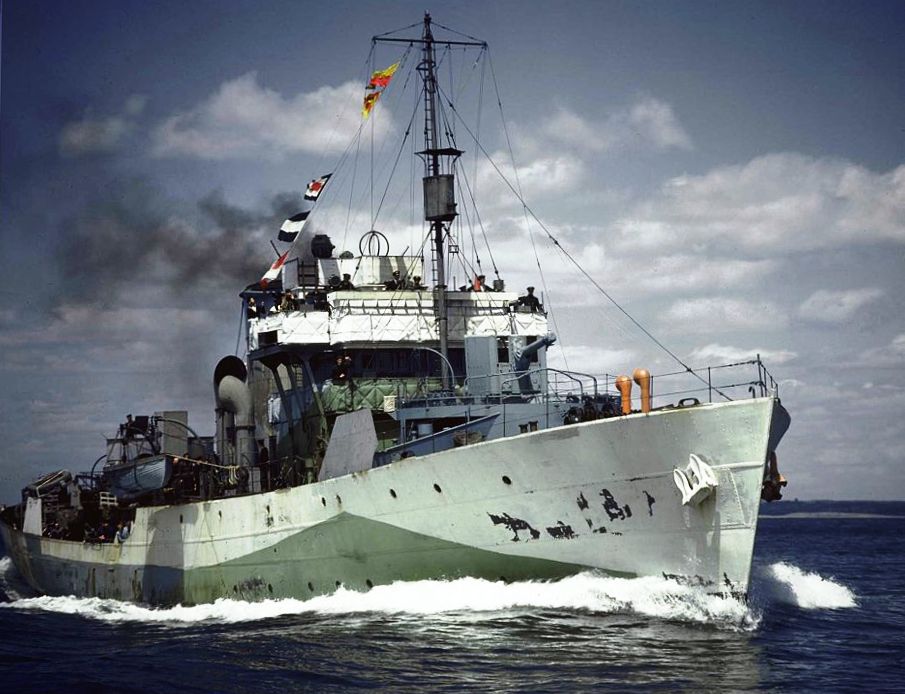
(Library and Archives Canada Photo, MIKAN No. 4950907)
HMCS Regina (K234) Flower class Corvette, June 1942.
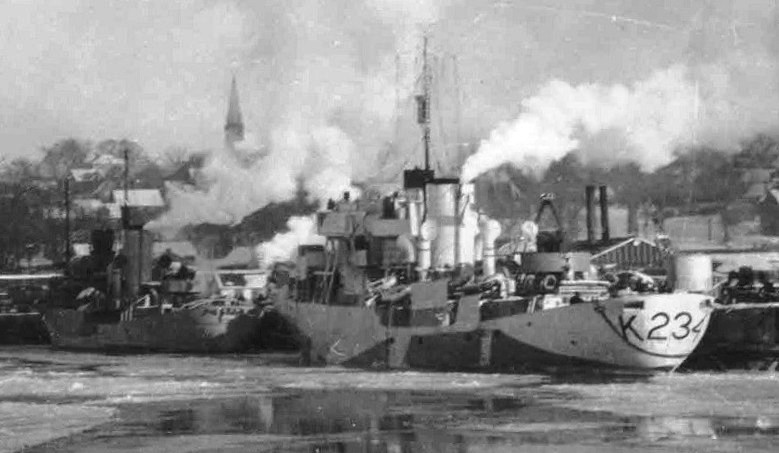
(Gary Medford Photo)
HMCS Regina (K234) Flower class Corvette, Pictou, Nova Scotia.
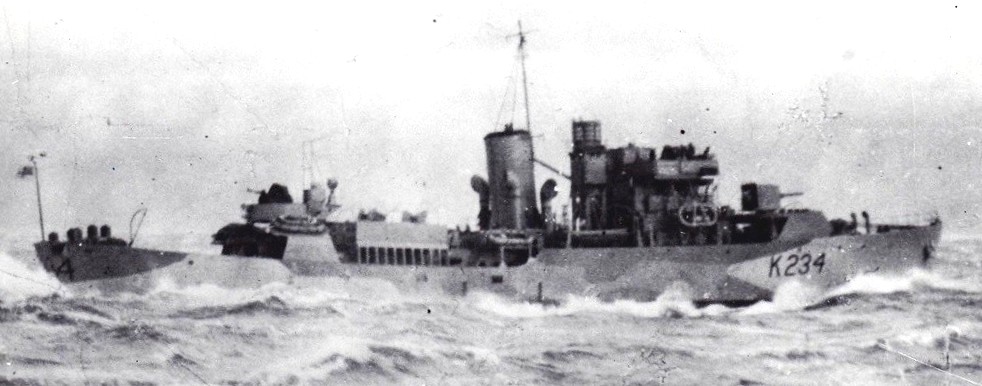
(John Hawley Photo)
HMCS Regina (K234) Flower class Corvette.
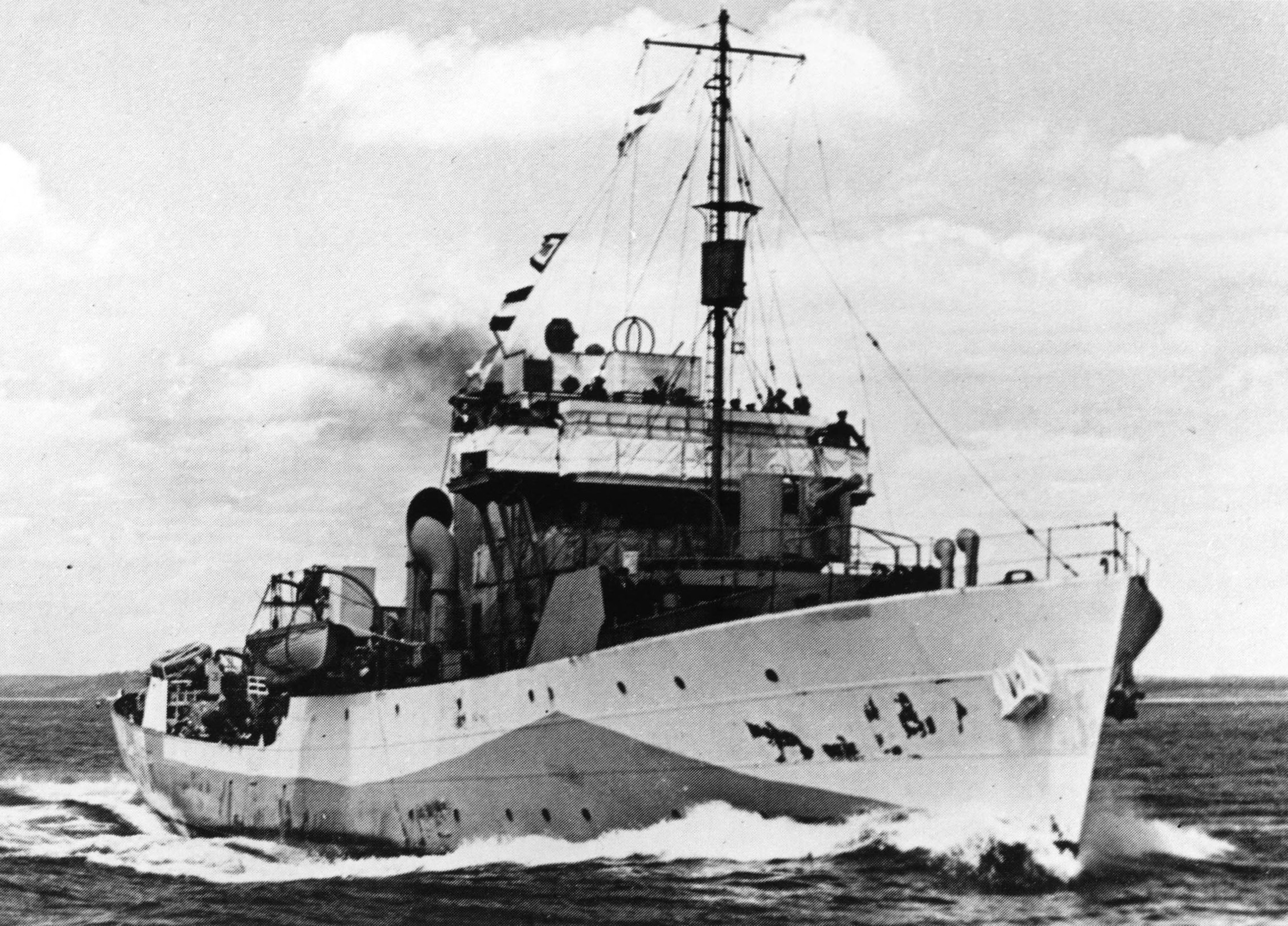
(RCN Photo)
HMCS Regina (K234) Flower class Corvette.
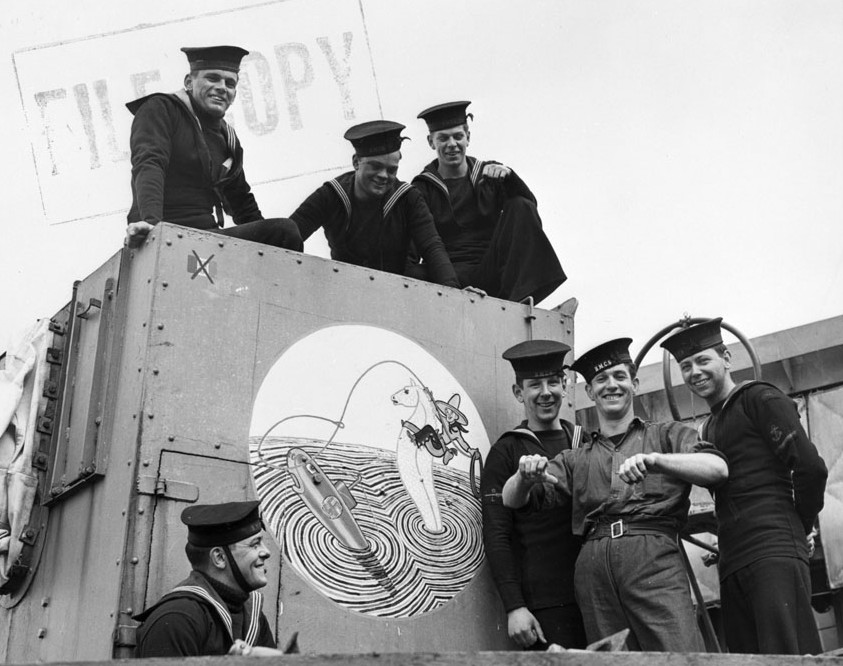
(Library and Archives Canada Photo, MIKAN No. 5671807)
HMCS Regina (K234) Flower class Corvette gunshield art, ‘Thumbs down“.