Cruisers
Heavy cruisers
Duquesne-class cruisers
The Duquesne-class cruiser was a group of two heavy cruisers built for the Marine nationale in the mid 1920s, the first such vessels built for the French fleet. The two ships in the class were the Duquesne and Tourville.
With the ratification of the Washington Naval Treaty of 1922, France could not ignore the ramifications of the cruiser article. To maintain her position of a major naval power she would have to follow the other four major naval powers with her own 10,000-ton, 8-inch gun cruiser. The only modern cruiser design the Service techniques des constructions navales (STNC – Constructor’s Department) had to draw on was the recently designed 8,000-ton Duguay-Trouin-class design. The cruiser design authorized under the 1924 build program would sacrifice protection for speed while maintaining the 10,000-ton displacement restriction while mounting 8 inch guns. Two vessels would be authorized and would be known as the Duquesne-class cruiser.
Initially classed as a light cruiser, both ships were reclassified on 1 July 1931 as first class cruisers. The Marine nationale did not have a vessel classification of heavy cruiser, and instead used the terms armoured cruiser and light cruiser prior to the London Naval Treaty, then first class cruiser and second class cruiser afterwards. (Wikipedia)
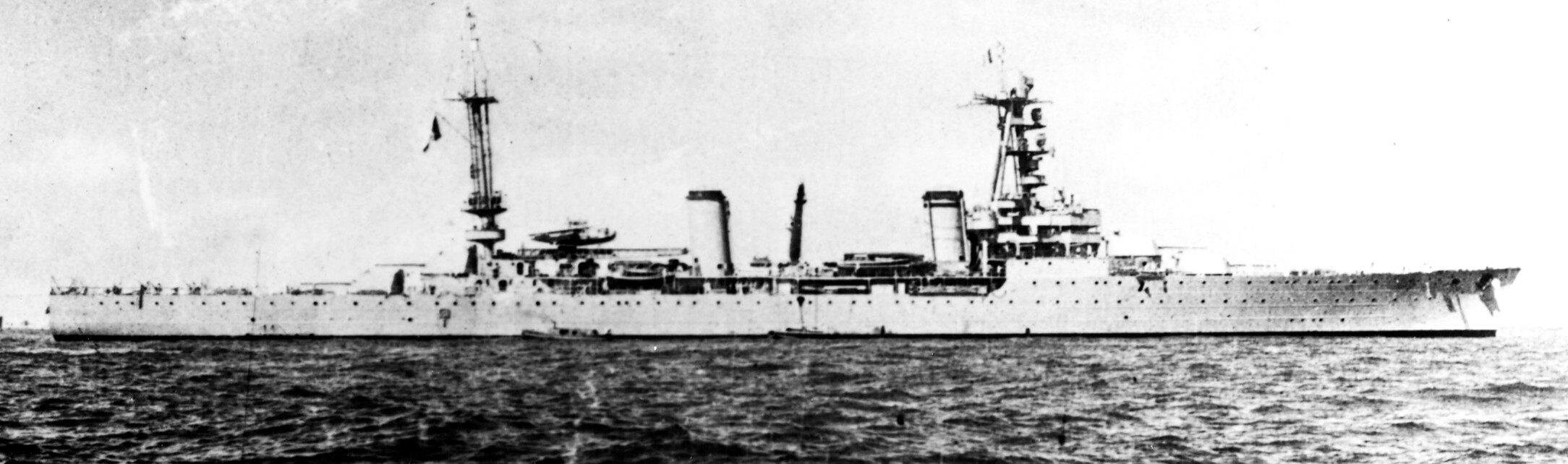
Marine nationale cruiser Duquesne
(USN Photo)
Marine nationale cruiser Duquesne, 1943.
Marine nationale cruiser Duquesne was the first of two Duquesne class cruisers built for the French Navy. During the interwar period she served in the Mediterranean while taking periodic cruises to show the Flag. During the war she was on blockade duty in the mid Atlantic then the Mediterranean. She was interned for three years at Alexandria, rejoining the war effort in 1943. Again assigned to blockade duty in the Mid Atlantic at Dakar. Post war she aided in the restoration of French Colonial rule in French Indochina until placed in reserve in 1947. She remained in reserve until condemned for disposal in 1955.
She was named to honour Abraham Duquesne, Marquis du Bouchet (c. 1610 – 1688) who distinguished himself during the Third Dutch War. She was the seventh ship to bear this name since being introduced in 1787 for a 74-gun ship captured by the British on 25 July 1803.
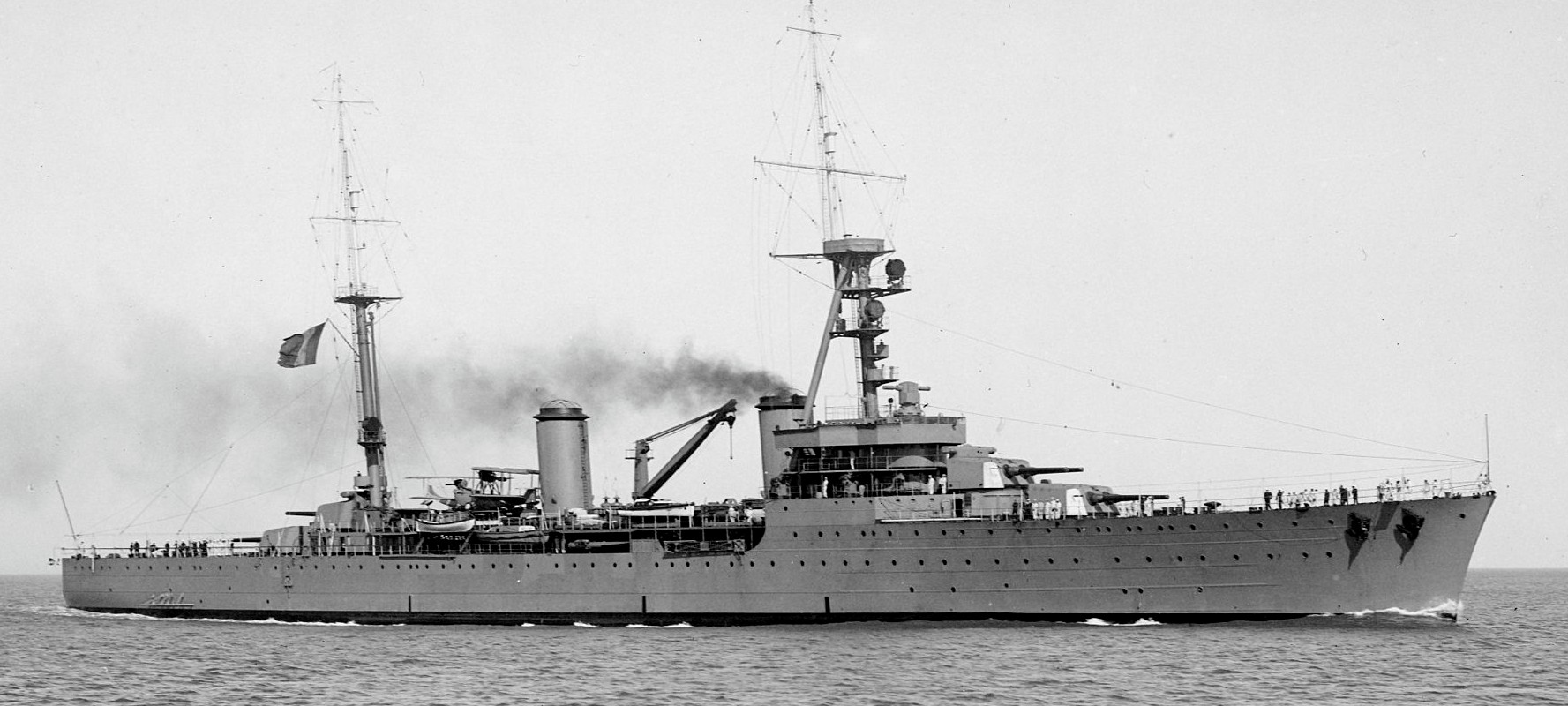
Marine nationale cruiser Tourville
(State Library of Victoria Photo)
Marine nationale cruiser Tourville was the second ship of the Duquesne class cruisers of the Marine nationaley. During the interwar period she served in the Mediterranean while taking periodic cruises to show the Flag. During the war she was on blockade duty in the mid Atlantic then the Mediterranean. She was interned for three years at Alexandria, rejoining the war effort in 1943. Again assigned to blockade duty in the Mid Atlantic at Dakar. Post war she aided in the restoration of French Colonial rule in French Indochina until placed in reserve in 1947. She remained in reserve until condemned for disposal in 1962.
She was named to honour Anne-Hilarion de Costentien, comte de Tourville (1642 – 1701) who served with distinction under King Louis XIV. He fought against the British and Dutch at the battles of Beachy Head (French: Beveziers) and Barfluer. On 27 June 1693, he defeated an English convoy commanded by George Rooke at Cape St Vincent and as a reward, he was made Marshall of France. (Wikipedia)
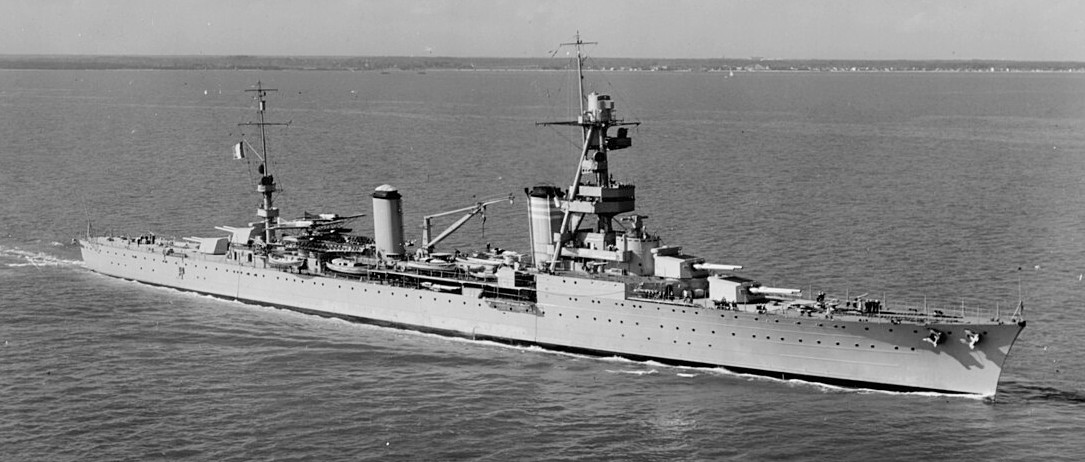
Marine nationale Suffren-class cruisers
(USN Photo)
Marine nationale Suffren, Hampton Roads, Virginia, to attend the sesqui-centennial of the Battle of Yorktown, on 15 October 1931.
The Suffren class was an interwar treaty cruiser built by France for the Marine nationale. The design was based on the preceding Duquesne-class cruiser and traded speed for protection while retaining the same armament. The first ship, Suffren, was completed based on this design. The following ships, Colbert, Foch, and Dupleix, were completed to a modified design with heavier secondary armament and rearranged topside. The ships entered service from 1930 to 1933, with Suffren being the sole survivor of the Second World War.
Prior to the London Naval Treaty, the French Navy classified cruisers as armoured (croiseur cuirasse) or light (croiseurs legers); afterwards cruisers were divided between first class (croiseur de 1ere classe) and second class (croiseur de 2e classe). The Suffren was initially classified as a light cruiser, and then as a first class cruiser on 1 July 1931. (Wikipedia)
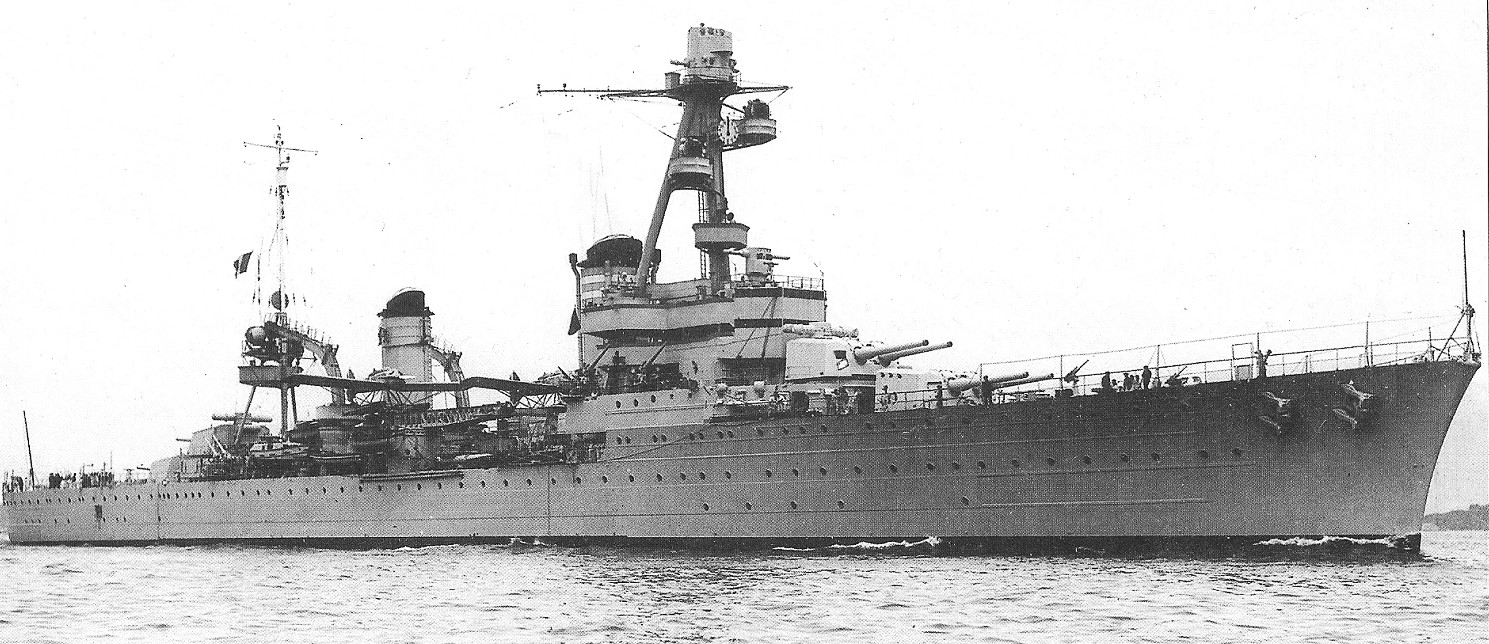
(Marine nationale Photo)
Marine nationale cruiser Colbert.
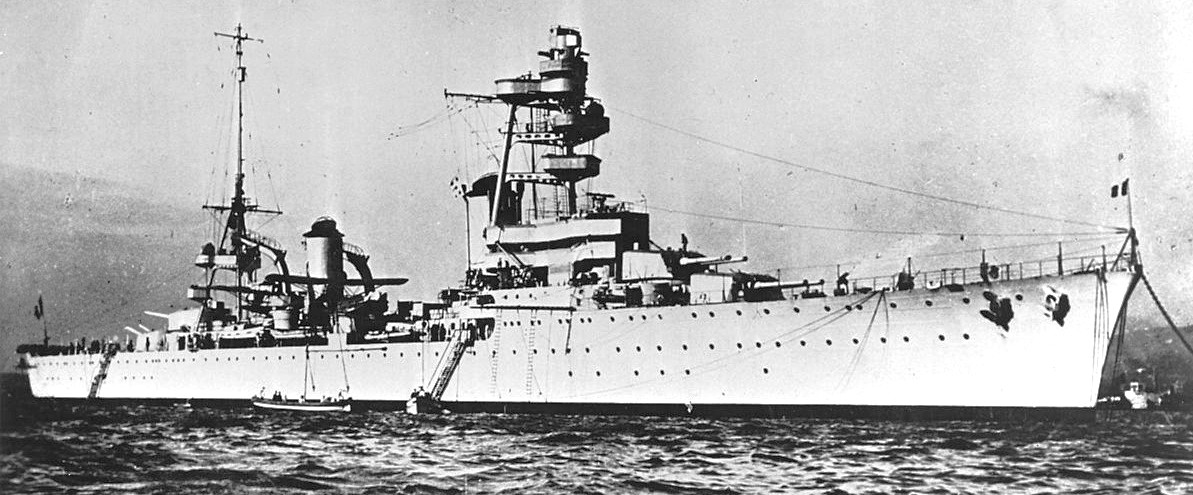
(Marine nationale Photo)
Marine nationale cruiser Foch
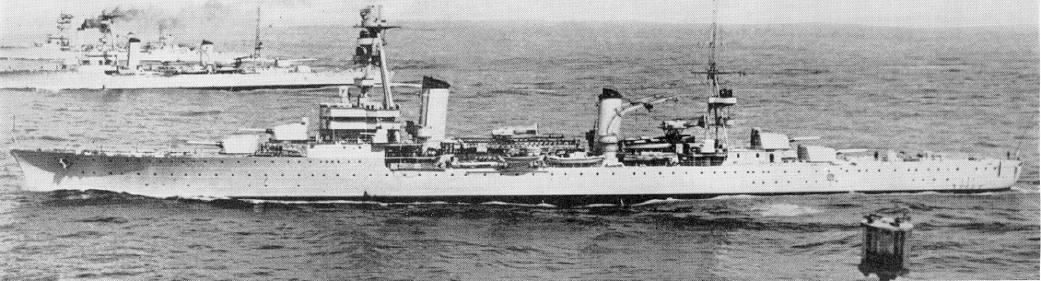
(Marine nationale Photo)
Marine nationale cruiser Dupleix.
Marine nationale cruiser Algérie
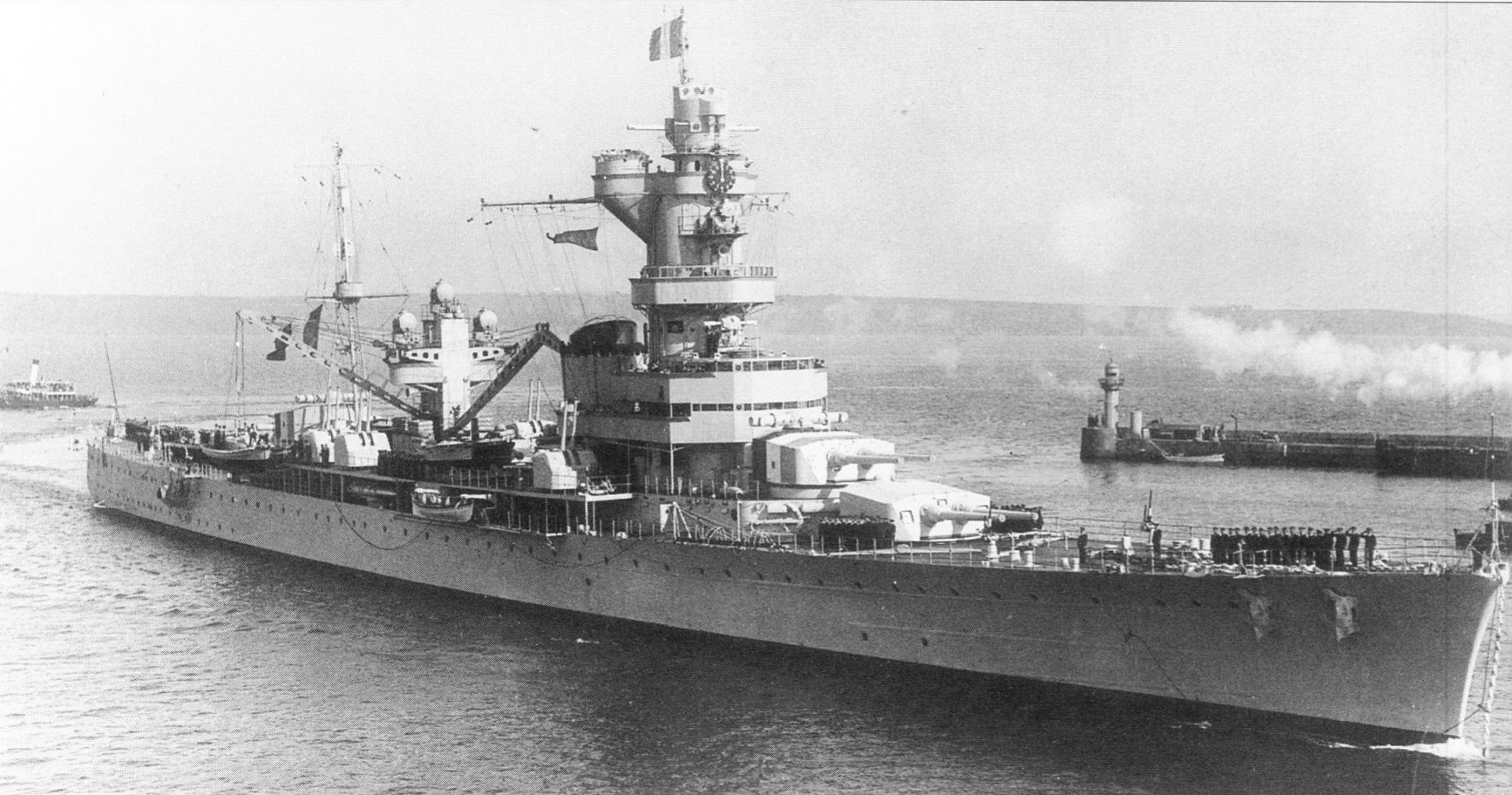
(Marine Nationale Photo)
Marine nationale cruiser Algérie was the last treaty cruiser constructed for the Marine nationale. Designed and built in response to the Italian’s Zara class of 8-inch gun cruisers, she was a totally new design and not based on the previous ships. The armoured caisson system used in Foch and Dupleix was abandoned in favour of a full armoured belt enclosing both the magazines and machinery spaces. She abandoned the unit propulsion system used previously and grouped her boilers forward leading to the reduction to a single funnel. She was one of the first vessels to utilize super heating boilers. Welding was used primarily in place of the normal rivetting in previous vessels. She maintained the same main armament but her secondary guns were increased to 100 mm guns. She served in the Mediterranean Sea after entering service then searched for German surface raiders at the beginning of the war. She was at Toulon, France, at the time of the Armistice and remained there until scuttled in November 1942. Normally major ships of the Marine Nationale were named after famous people or statesmen but instead she was named to honour the 100 years of French colonial rule of Algeria. (Wikipedia)
Marine nationale light cruisers
Duguay-Trouin-class cruiser
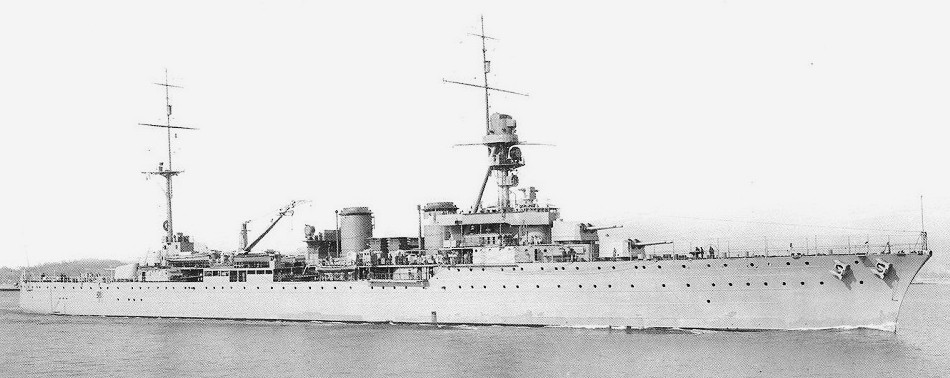
(Marine Nationale Photo)
Marine Nationale Duguay-Trouin.
The Duguay-Trouin class were the first major Marine nationale warships built after the First World War. They were excellent steamers and proved successful and seaworthy over a quarter century of service. All three, Duguay-Trouin, Lamotte-Picquet, and Primauguet, achieved 33 knots (61 km/h; 38 mph) on trials and could easily maintain 30 knots (56 km/h; 35 mph) in service. Twenty-year-old Duguay-Trouin could still maintain 27.7 knots (51.3 km/h; 31.9 mph) at her post-war displacement of 10,900 tons. They were fast and economical, although with a limited range.[2] The fate of these three ships after the French surrender illustrates the dichotomy within the French armed forces at the time: one ship was interned, then joined the Free French, another twice resisted Allied bombardment and was destroyed, and the third was disarmed at a French colonial port and subsequently sunk. (Wikipedia)
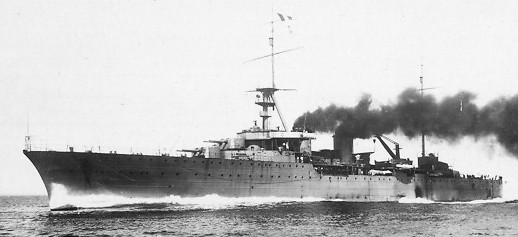
(Marine nationale Photo)
Marine nationale Lamotte-Picquet.
Marine national light cruiser Primauguet
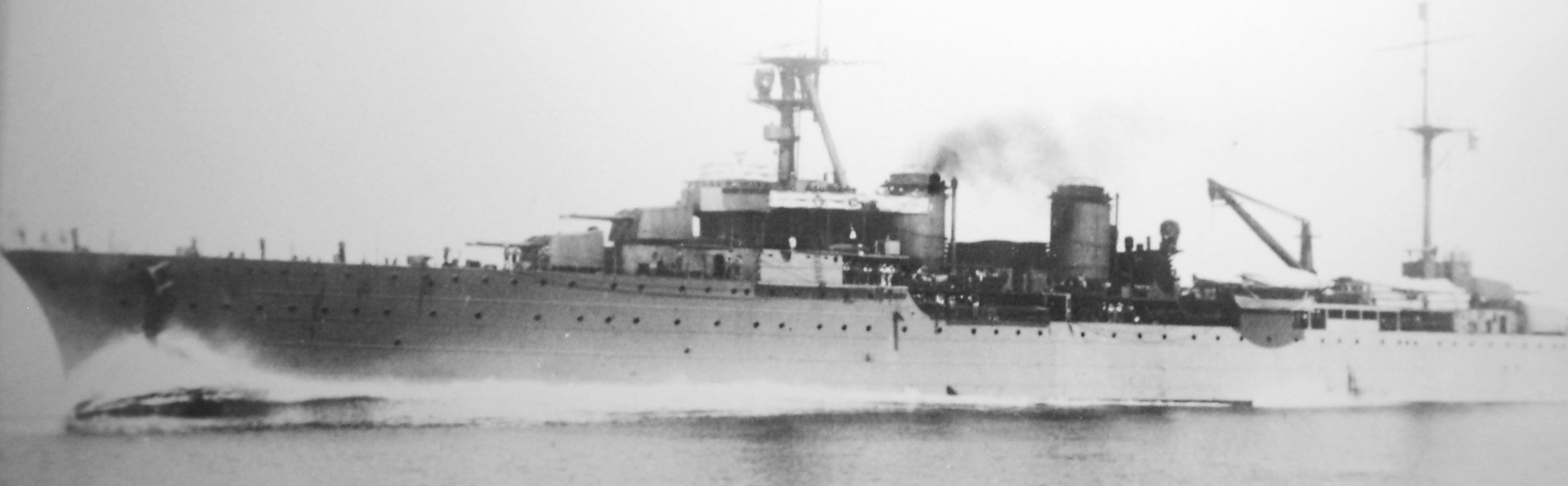
(Marine nationale Photo)
Marine national light cruiser Primauguet.
Marine nationale cruiser Jeanne d’Arc
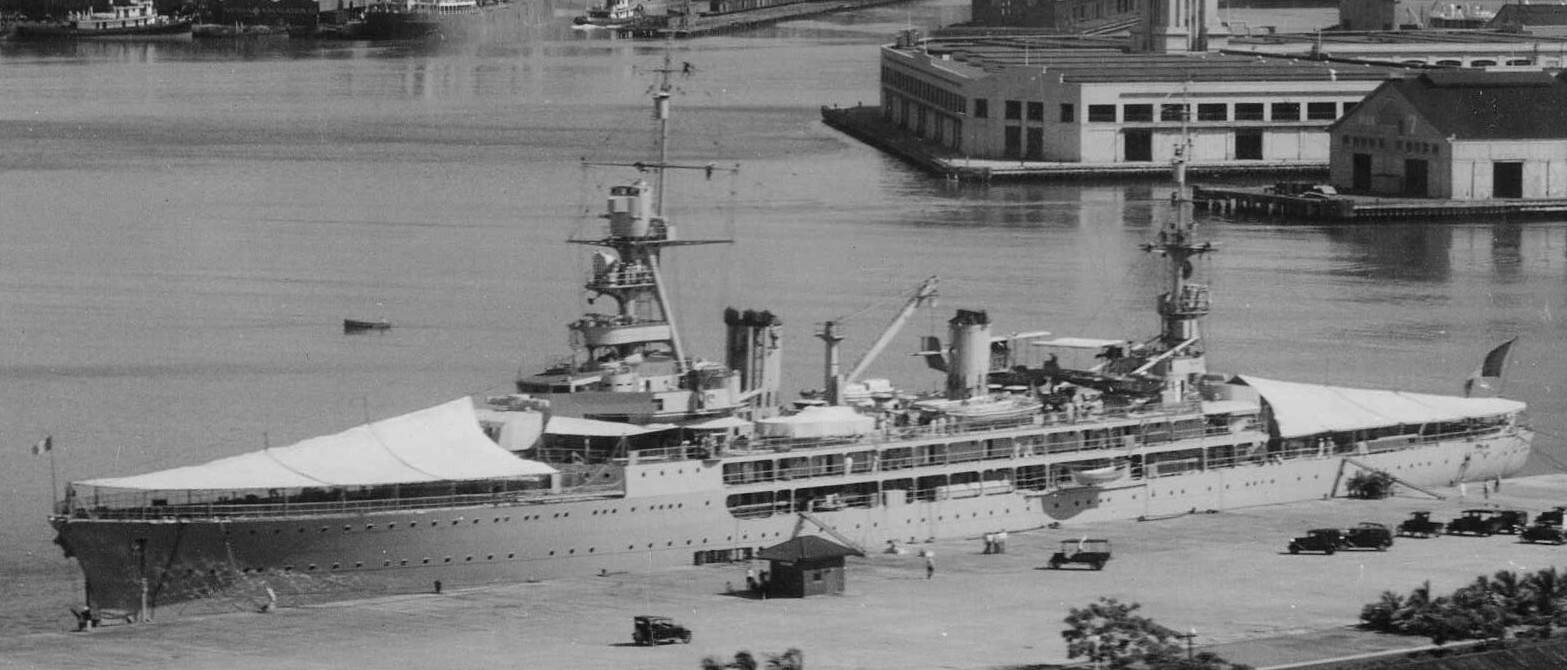
(USN Photo)
Marine nationale cruiser Jeanne d’Arc was a training cruiser built for the Marine nationale during the late 1920s. She was designed both as a school ship and a fully capable warship. She saw service through the Second World War, escaping to Halifax, Nova Scotia, after the fall of France and eventually joining the Free French forces before the end of the war. Post war, the cruiser resumed her duties as a training ship, being retired in 1964.
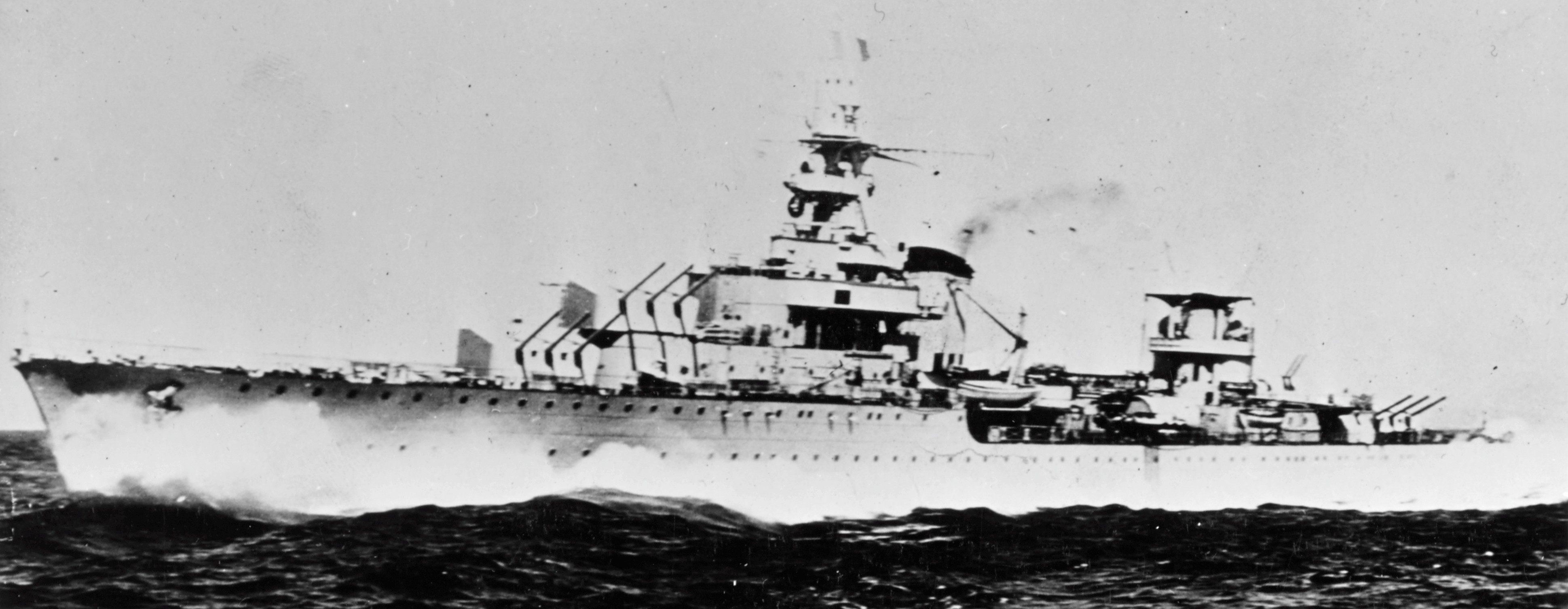
Marine nationale cruiser Émile Bertin
(USN Photo)
Marin nationale Émile Bertin was a fast light cruiser named after Louis-Émile Bertin, a 19th-century naval architect. She was designed to operate both as a minelayer and as a destroyer flotilla leader. The design was the basis for later light and heavy French cruisers, particularly the slightly larger La Galissonnière class of cruisers. This was the first French warship to use triple mountings for guns. Before the Second World War, Émile Bertin served as flagship for a flotilla of 12 large destroyers of the Le Fantasque and Vauquelin classes in the Atlantic. At the start of 1939, she was transferred to Toulon.
In secrecy, she arrived in Lebanon on 23 September 1939, loaded with 57 tons of gold – the Polish state gold reserves – and returned to Toulon on 27 September. In January 1940, after a refit at Toulon, she carried out surveillance around the Canary Islands to ensure that there were no German forces there. After further dockyard work at Brest, in early April 1940, she became the flagship of Group Z, the French squadron supporting the Allied Norwegian campaign, with Admiral Edmond Derrien in command. (Wikipedia)
Marine nationale La Galissonnière-class cruiser
The La Galissonnière-class cruisers were commissioned by the Marine nationale in the 1930s. They were the last French cruisers completed after 1935, until the completion of De Grasse in 1956. They are considered fast, reliable and successful light cruisers. Two cruisers of this class, Georges Leygues and Montcalm, took part in the defence of Dakar in late September 1940 during the Second World War. With the cruiser Gloire, they joined the Allied forces after the successful Allied landings in North Africa in November 1942. The three other cruisers of the La Galissonière class, held under Vichy control at Toulon, were scuttled on 27 November 1942.
After refitting, Georges Leygues, Montcalm and Gloire took part in various Allied operations, including the Normandy landings in 1944. Postwar, several of the class acted as the flagship of the French Mediterranean Squadron, and carried out operations off Indo-China until 1954, and afterwards were deployed during the Suez Crisis and operations off Algeria. They were scrapped between 1958 and 1970. (Wikipedia)
(USN Photo)
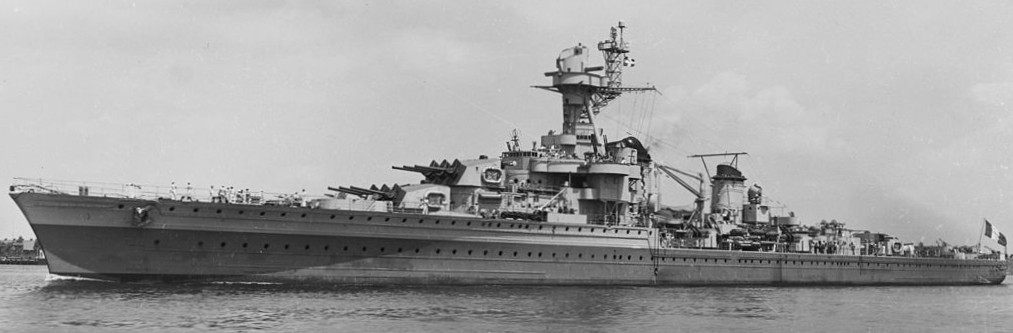
Marine nationale cruiser Montcalm was a French La Galissonnière-class cruiser, named in honour of Louis-Joseph de Montcalm. She was the lead ship of her class of six light cruisers built for the Marine Nationale during the 1930s. During the Second World War, she served with both Vichy France and the Allies. It was commissioned in 1937, decommissioned in 1957, and finally scrapped in 1970.
Marine nationale cruiser Georges Leygues was a light cruiser of the La Galissonnière class. During the Second World War, she served with both Vichy France and the Allies. She was named for the prominent 19th and 20th-century French politician Georges Leygues.
Marine nationale cruiser Jean de Vienne was a French light cruiser of the La Galissonnière class. During the Second World War, she remained with Vichy France. She was named for Jean de Vienne, a 14th-century French knight, general and admiral during the Hundred Years’ War.
(Marine nationale Photo)
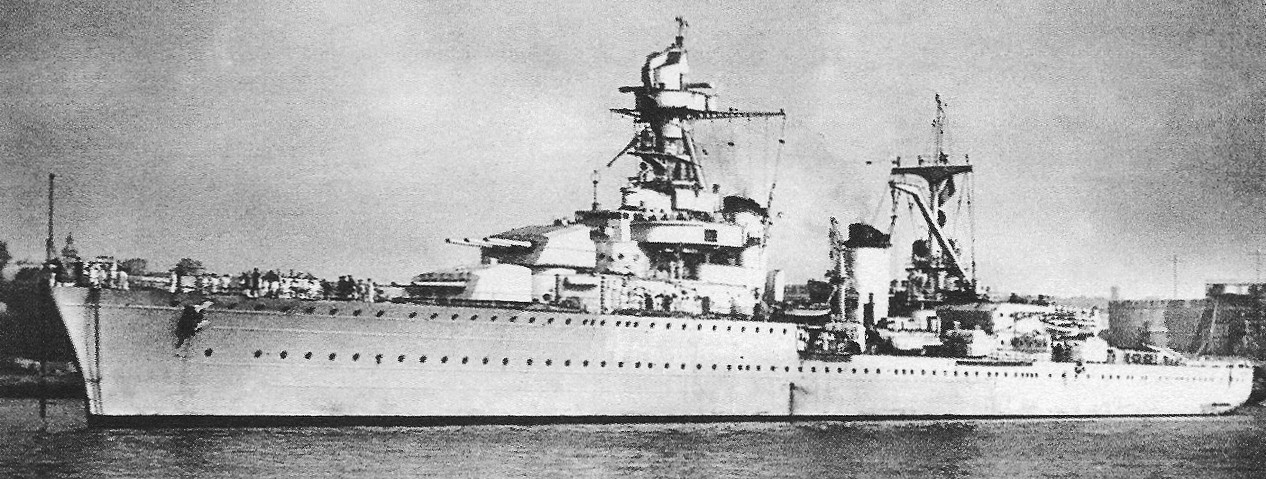
Marine nationale cruiser Marseillaise was a French light cruiser of the La Galissonnière class. During the Second World War, she remained with Vichy France.
(Marius Bar Photo)
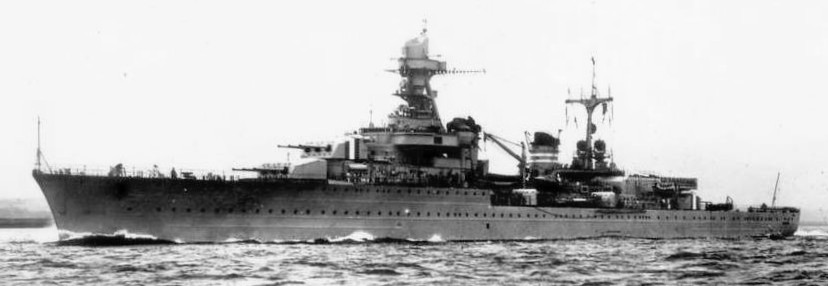
Marine nationale cruiser Gloire was a French light cruiser of the La Galissonnière class. The La Galissonnière class was designed as an enlarged and improved version of the preceding Emile Bertin class. The ships had an overall length of 179.5 meters (588 ft 11 in), a beam of 17.48 meters (57 ft 4 in), and a draft of 5.28 meters (17 ft 4 in). They displaced 7,722 metric tons (7,600 long tons) at standard load and 9,460 t (9,310 long tons) at deep load. Their crew consisted of 557 men in peacetime and 612 in wartime.
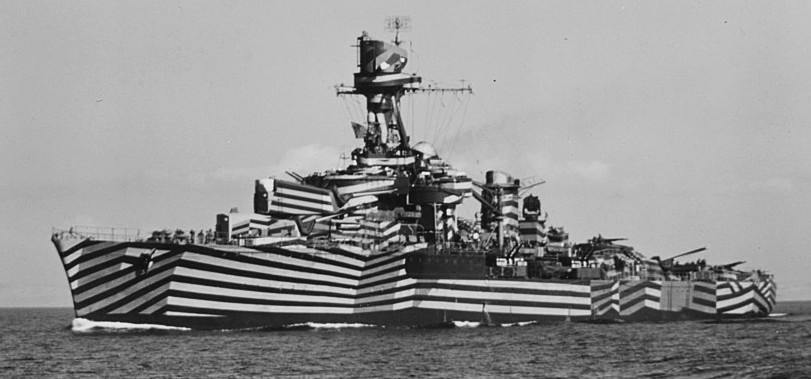
(USN Photo)
Marine nationale light cruiser Gloire (1935-58) firiing her 6 guns during exercises off the north African coast, late 1943 or early 1944.
Minelaying cruisers
French cruiser Pluton
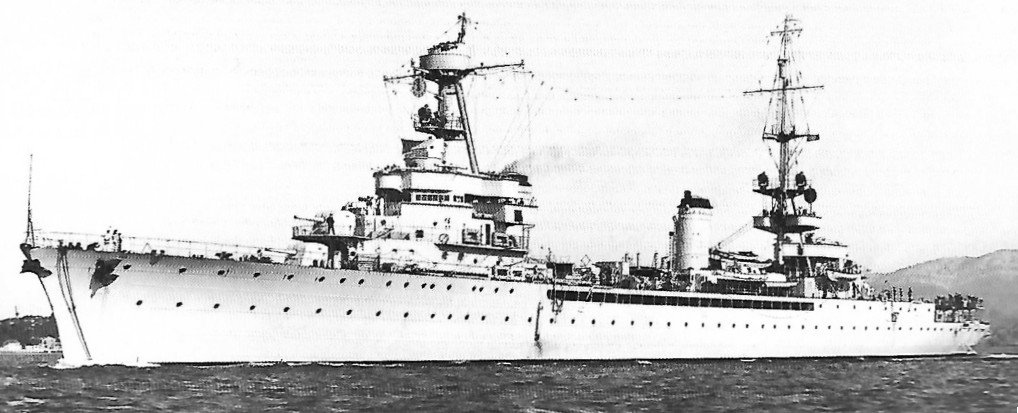
(Marine nationale Photo)
Marine nationale Pluton, c 1936.
Marine nationale Pluton was a fast minelaying cruiser built in the late 1920s. She was also able to carry 1,000 troops on her mine deck as a fast troop transport. Shortly after completion she was modified and became a gunnery training ship, replacing the elderly armoured cruiser Gueydon. Shortly before the beginning of the Second World War, she reverted to her original role and most of the gunnery training equipment was removed. She was sent to Casablanca, in French Morocco, when the war began to lay a minefield, but the order was cancelled a day later and she was ordered to disembark her naval mines. She exploded while landing her still-fuzed mines on 13 September 1939. (Wikipedia)
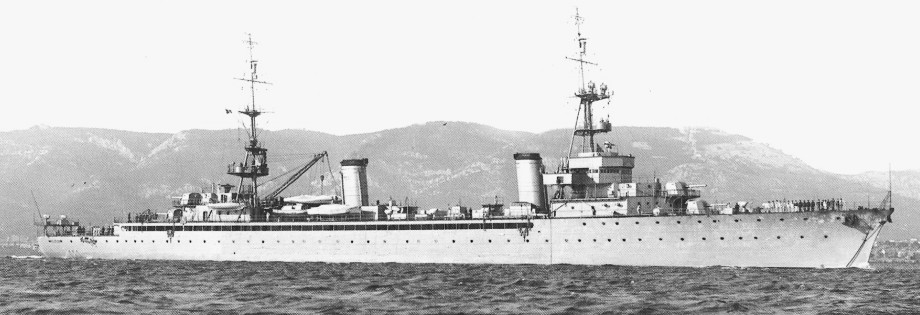
(Marine nationale Photo)
Marine nationale Pluton of the coast of Toulon, 1932.
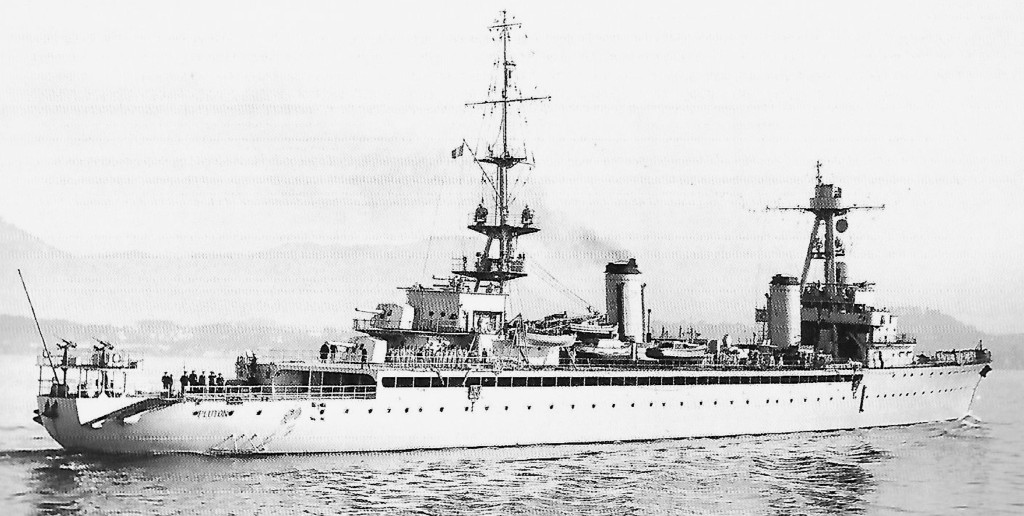
(Marine nationale Photo)
Marine nationale Pluton, 1934.
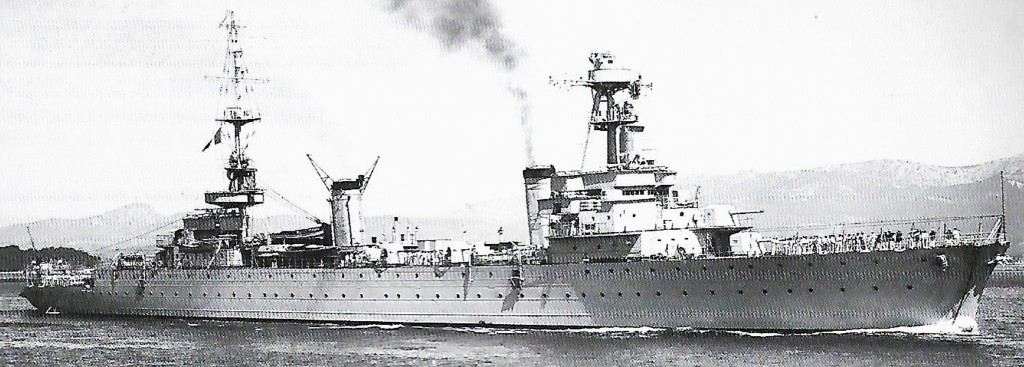
(Marine nationale Photo)
Marine nationale Pluton, 14 June 1939.
Marine nationale destroyers
Large destroyers
Chacal-class destroyer- FTR, VF and FF
Guépard-class destroyer- FTR and VF
Aigle-class destroyer-FTR and VF
Vauquelin-class destroyer- FTR and VF
Le Fantasque-class destroyer- FTR, VF and FF
Mogador-class destroyer- FTR and VF
Small destroyers
Bourrasque-class destroyer- FTR, VF and FF
L’Adroit-class destroyer- FTR, VF and FF
Le Hardi-class destroyer- FTR and VF
La Melpomène-class torpedo boat- FTR, VF and FF
French destroyer La Combattante (British Hunt Class destroyer)-FF
Marine nationale Submarines
Sirène-class submarine (1925)- FTR and VF
Ariane-class submarine- FTR and VF
Circé-class submarine (1925)- FTR and VF
Argonaute-class submarine- FTR, VF and FF
Orion-class submarine- FTR and FF
Diane-class submarine (1930)- FTR and VF
Saphir-class submarine (1928)- FTR, VF and FF
Requin-class submarine- FTR, VF and FF
Redoutable-class submarine (1928)- FTR, VF and FF
French submarine Surcouf[1]- FTR and FF
Minerve-class submarine- FTR, VF and FF
Aurore-class submarine- FTR and VF
French submarine Curie (P67)(British U-class submarine)- FF
French submarine Narval (T4)(Captured Italian Acciaio-class submarine)- FF
Marine nationale Avisos/sloops
Arabis-class sloop- FTR
French ship Ville d’Ys- FTR and VF
Arras-class aviso-FTR, VF and FF
Bougainville-class aviso- FTR, VF and FF
Élan-class sloop- FTR, VF and FF
Chamois-class minesweeping sloop- FTR, VF and FF
Marine nationale Escorteurs/Escorts
Flower-class corvette- FF
River-class frigate- FF
PC-461-class submarine chaser- FF
Cannon-class destroyer escort- FF