
Artillery in Nova Scotia, City of Halifax
The aim of this website is to locate, identify and document every historical piece of artillery preserved in Canada. Many contributors have assisted in the hunt for these guns to provide and update the data found on these web pages. Photos are by the author unless otherwise credited. Any errors found here are by the author, and any additions, corrections or amendments to this list of Guns and Artillery in Canada would be most welcome and may be e-mailed to the author at hskaarup@rogers.com.
MARCOM HQ, CFB Halifax
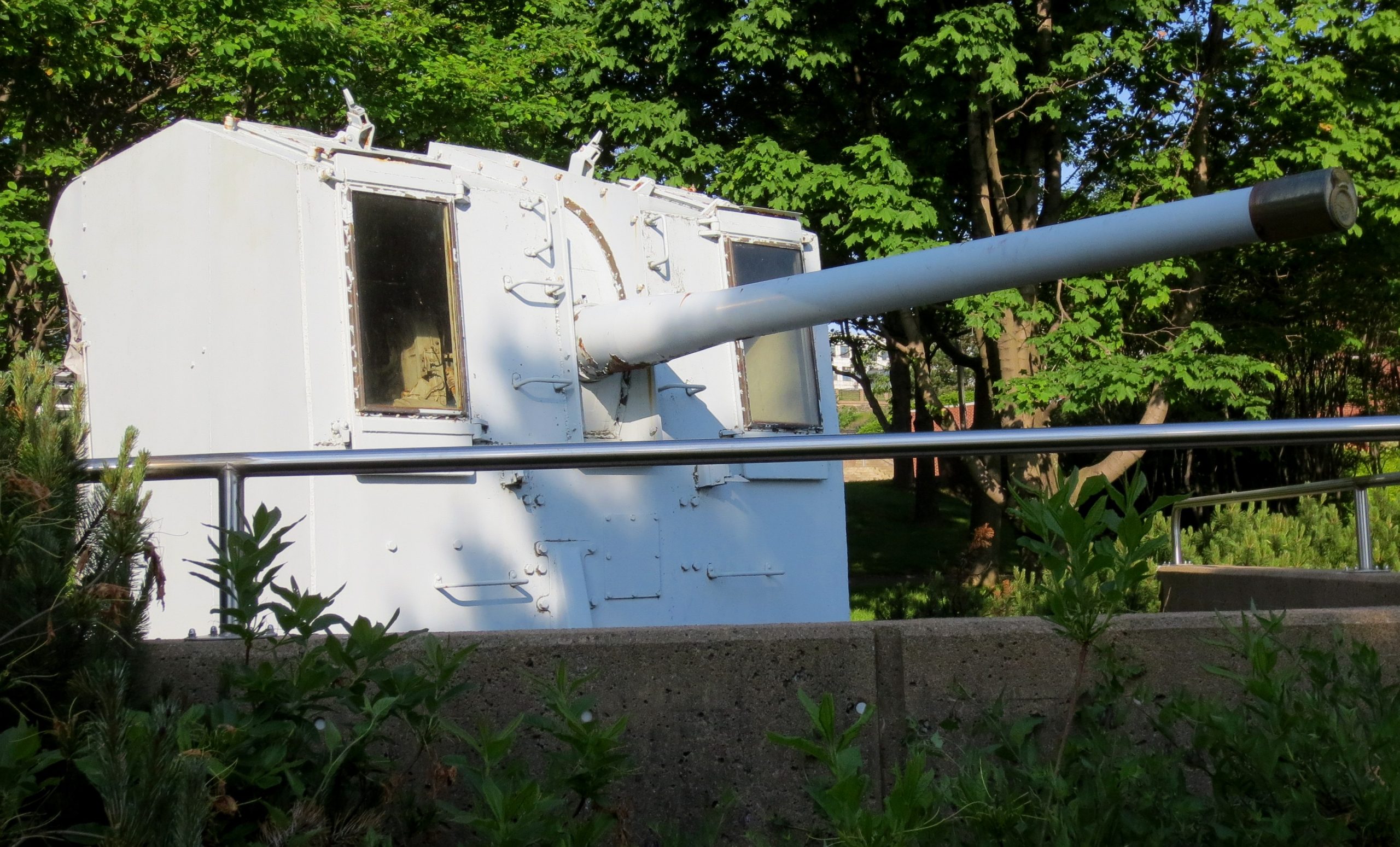
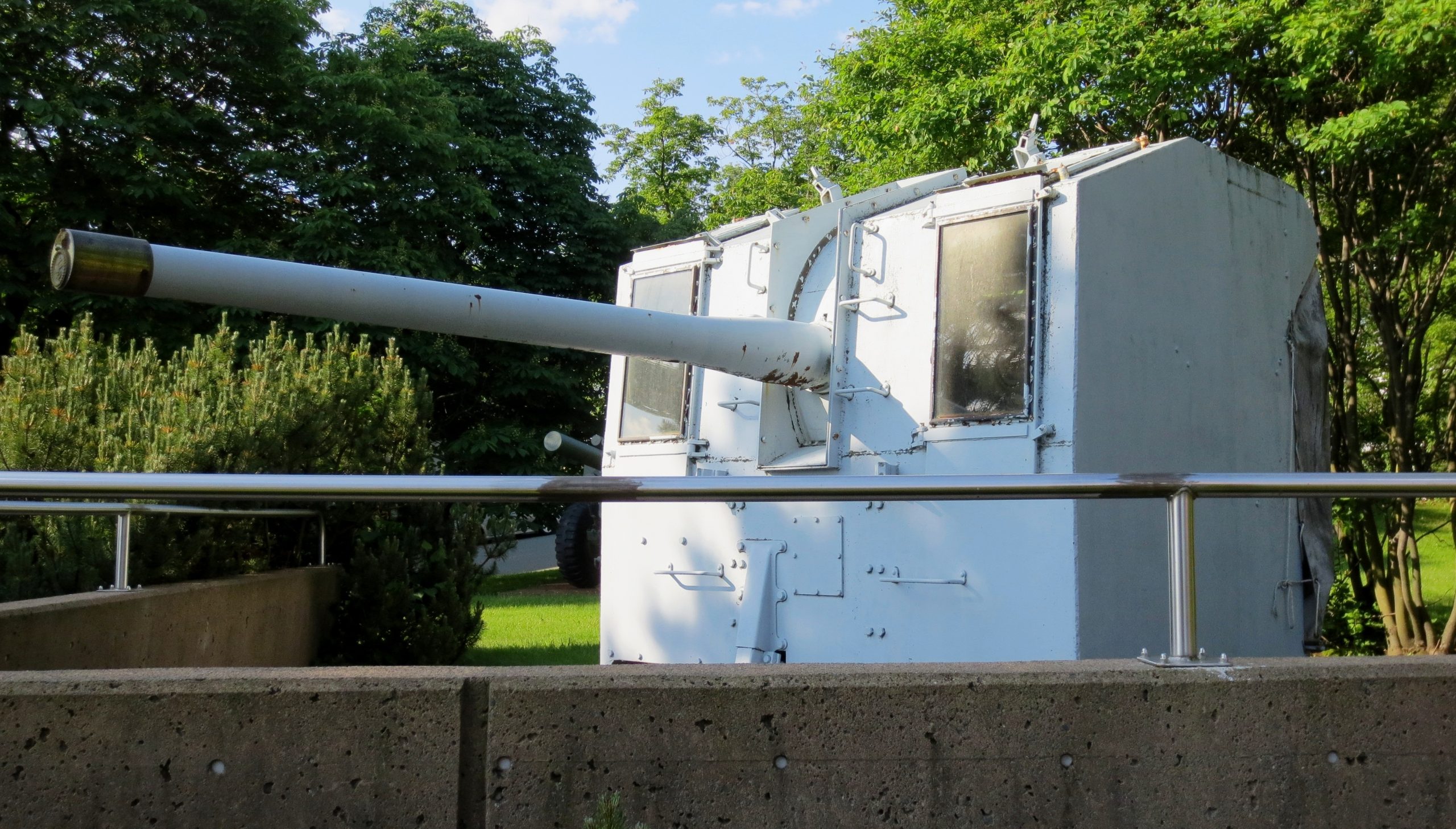
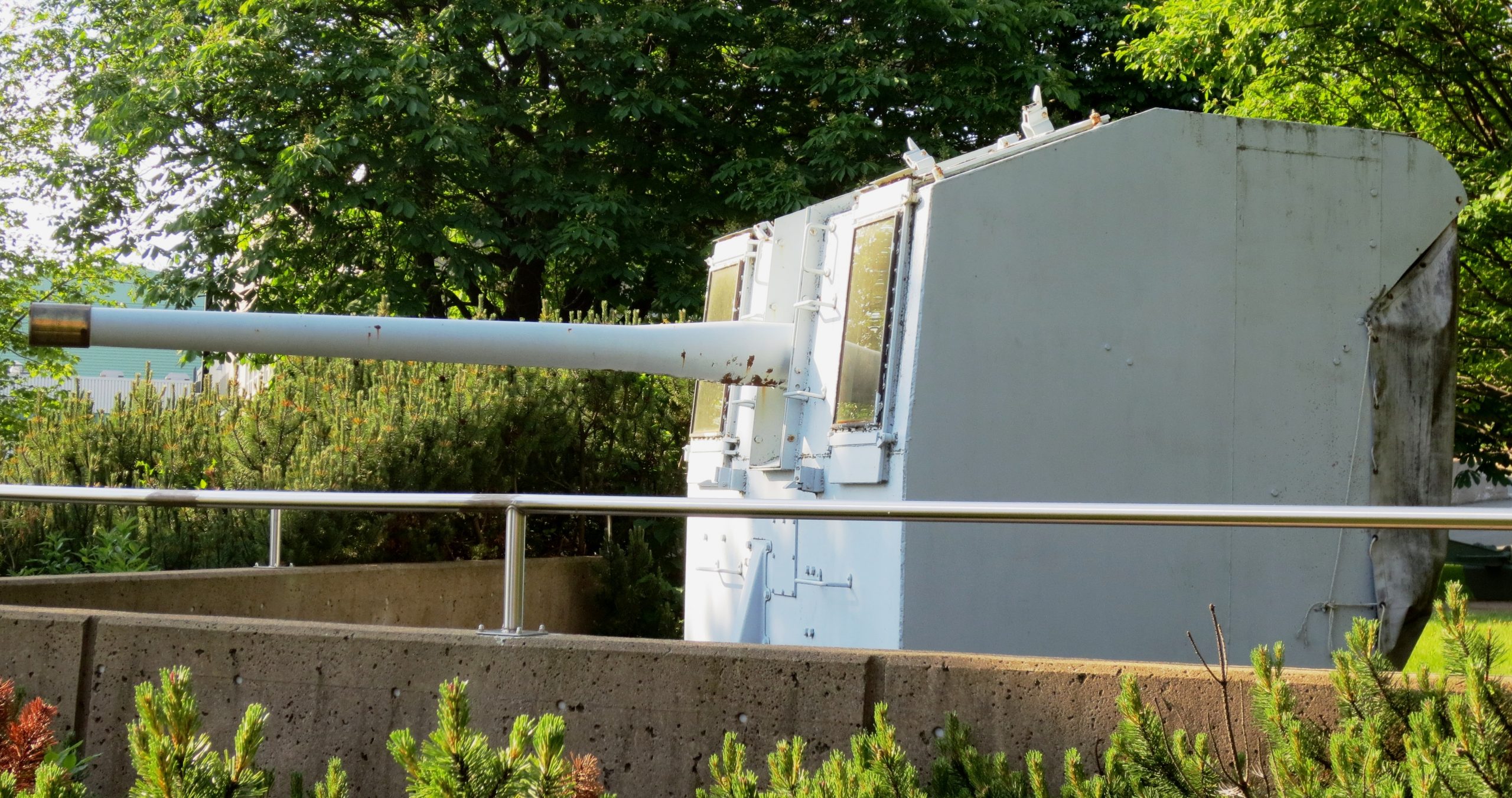
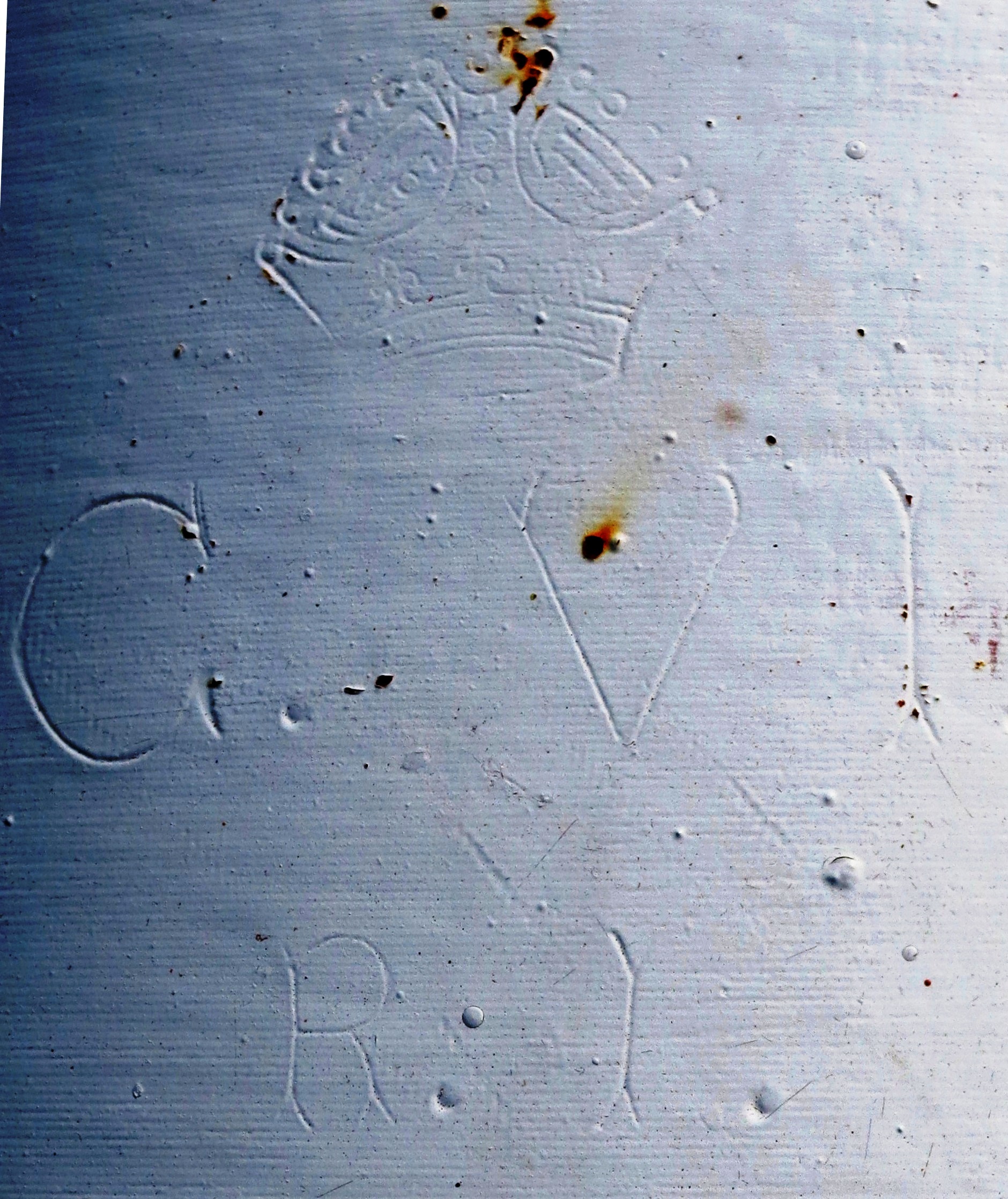
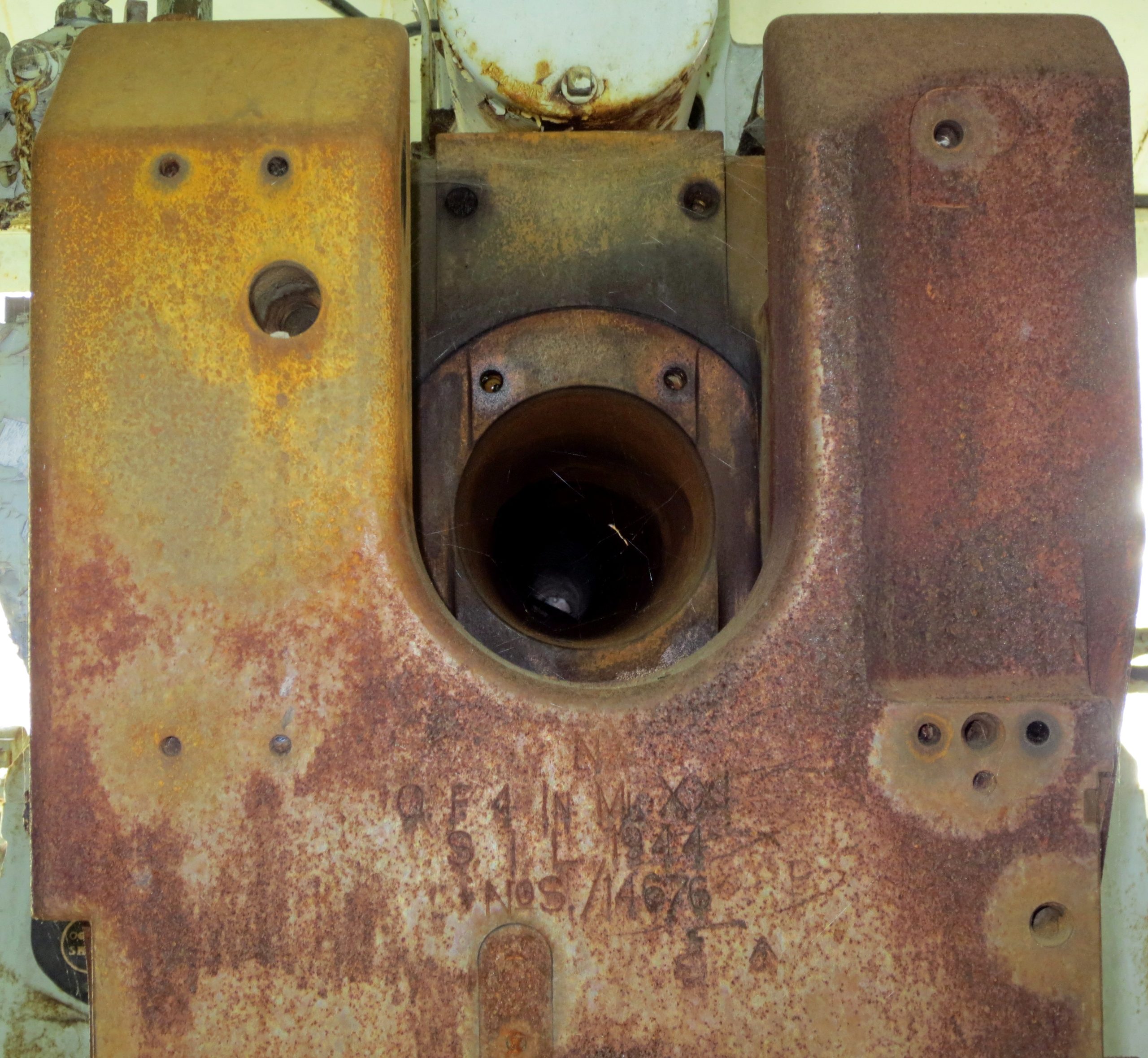
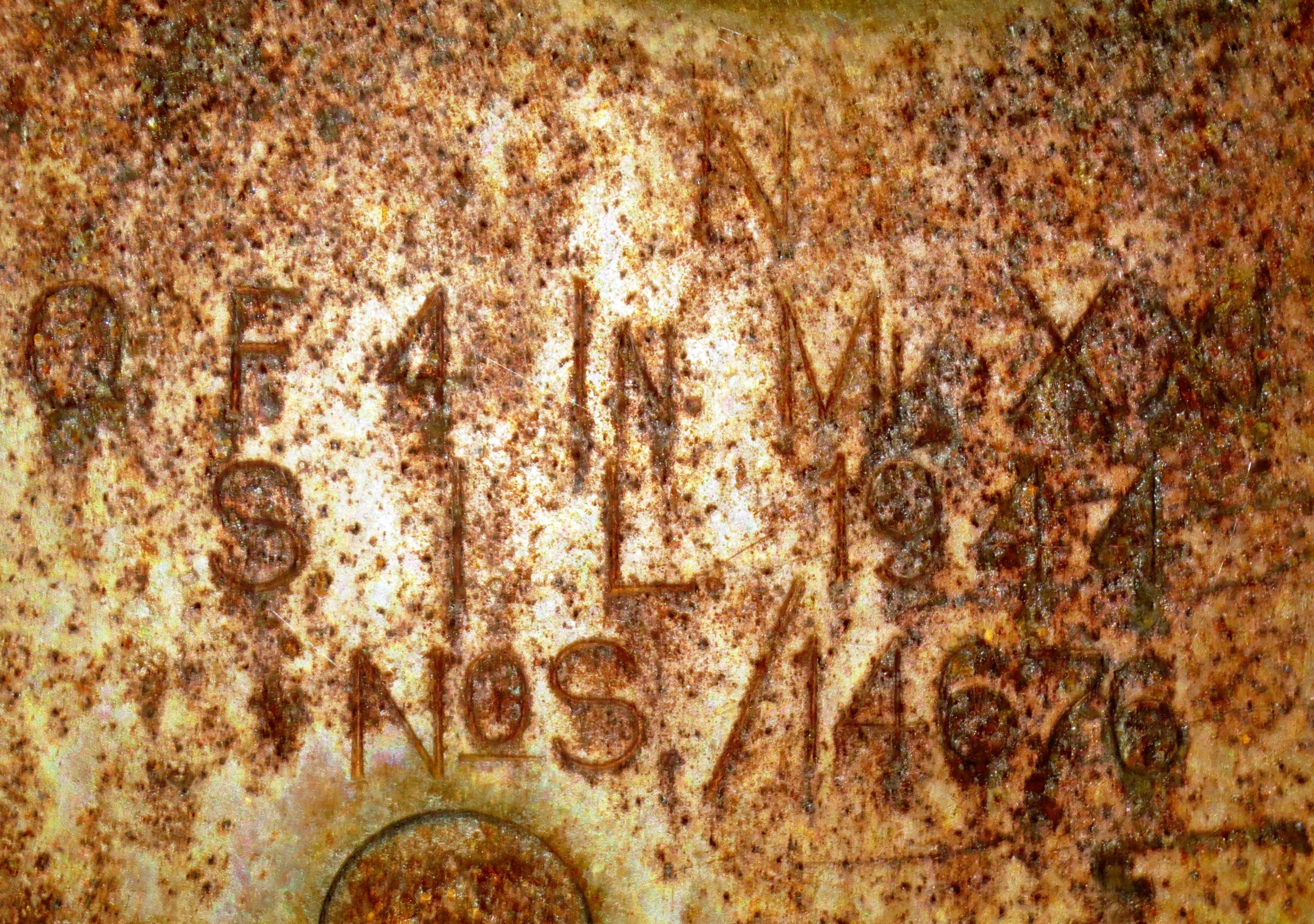
QF 4-inch/40 Mk. XXI Gun on the High Angle Single Mk. XXIV Mounting, SIL 1944, (Serial No. S/14676), King George VI cypher, mounted in a deck gun turret. This naval gun is located beside the MARCOM HQ below the McDonald Bridge in the Halifax Dockyard.
Halifax, HMC Dockyard, CFB Halifax
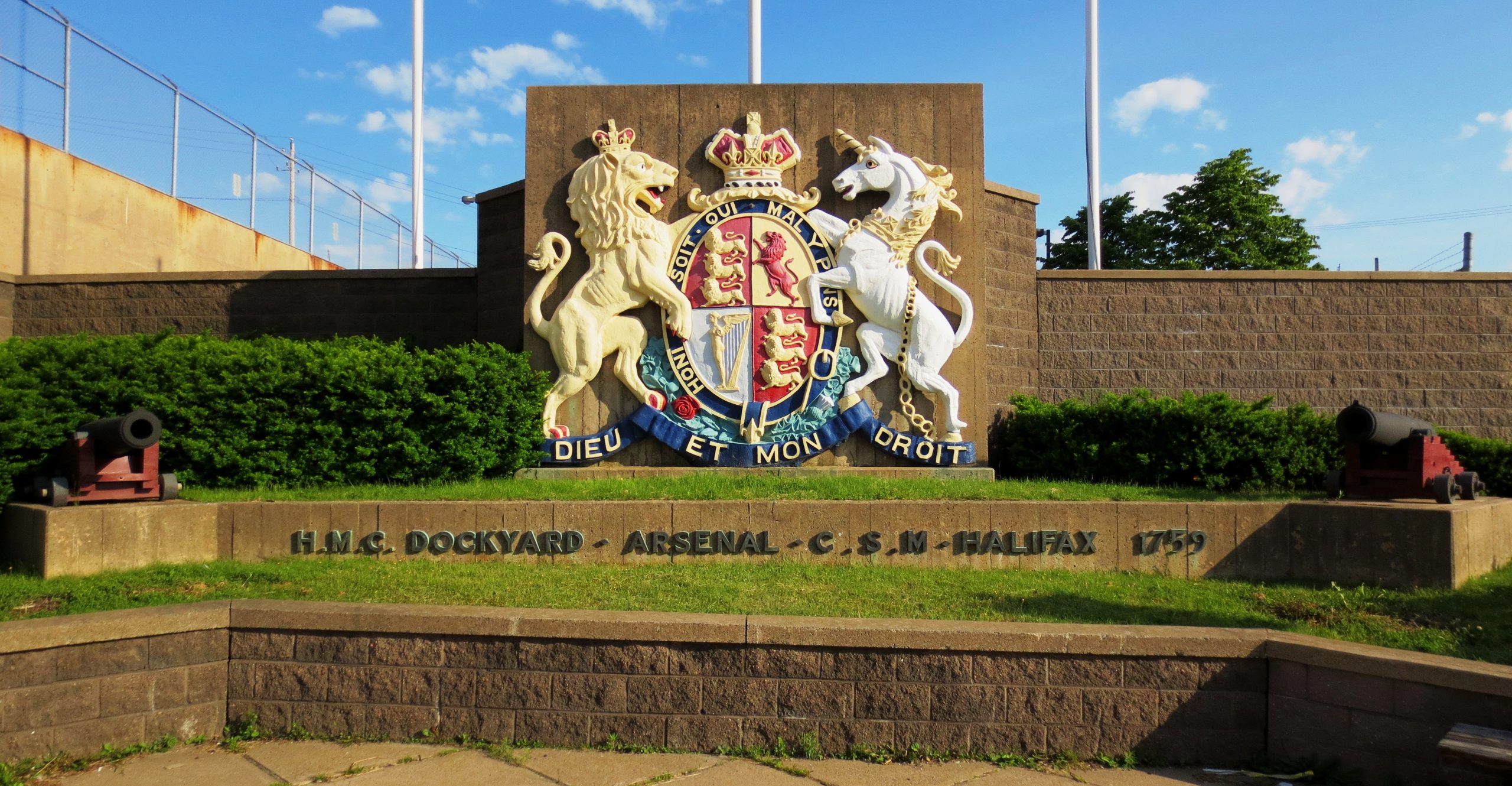
Her Majesty’s Canadian Dockyard – L’arsenal – canadien de Sa Majesté CSM Halifax, 1759, Coat of Arms flanked by a pair of cast iron smoothbore muzzle-loading guns mounted on naval carriages.
HMC Dockyard was established as the Royal Naval Dockyard in 1759 during the French and Indian War (aka Seven Years War). It served as the RN’s North American station until 1818 when it became the summer base for the squadron. It is one of the oldest military establishments in Canada and was designated a National Historic Site in 1923.
The Dockyard played a major role in supporting RCN and Allied ships during the First World War and in the pivotal Battle of the Atlantic during the Second World War. Today, HMC Dockyard is home port for the Royal Canadian Navy’s Atlantic fleet and includes MARLANT and Joint Task Force Atlantic HQ, maintenance, training and supply facilities and the Joint Rescue Coordination Centre.
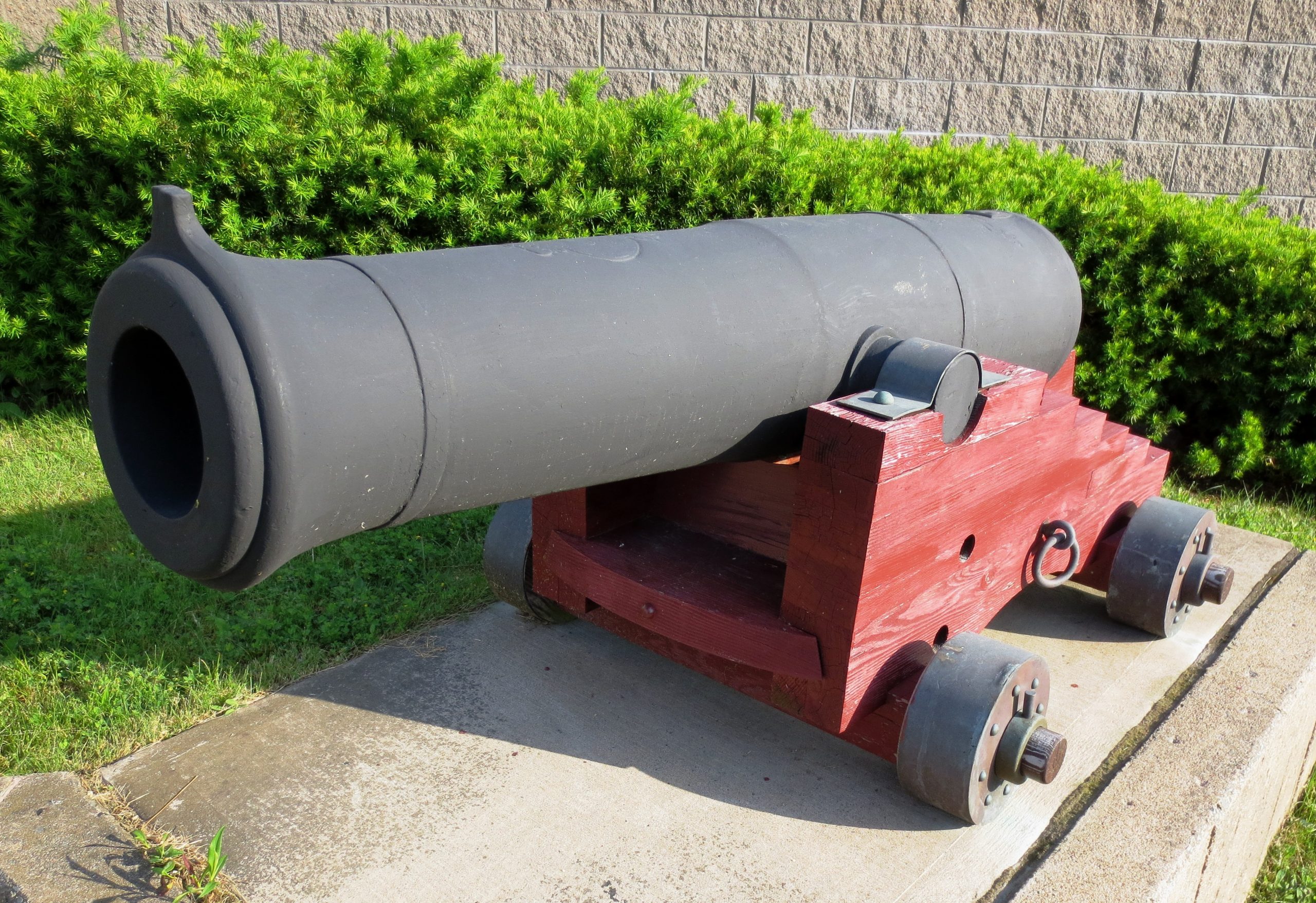
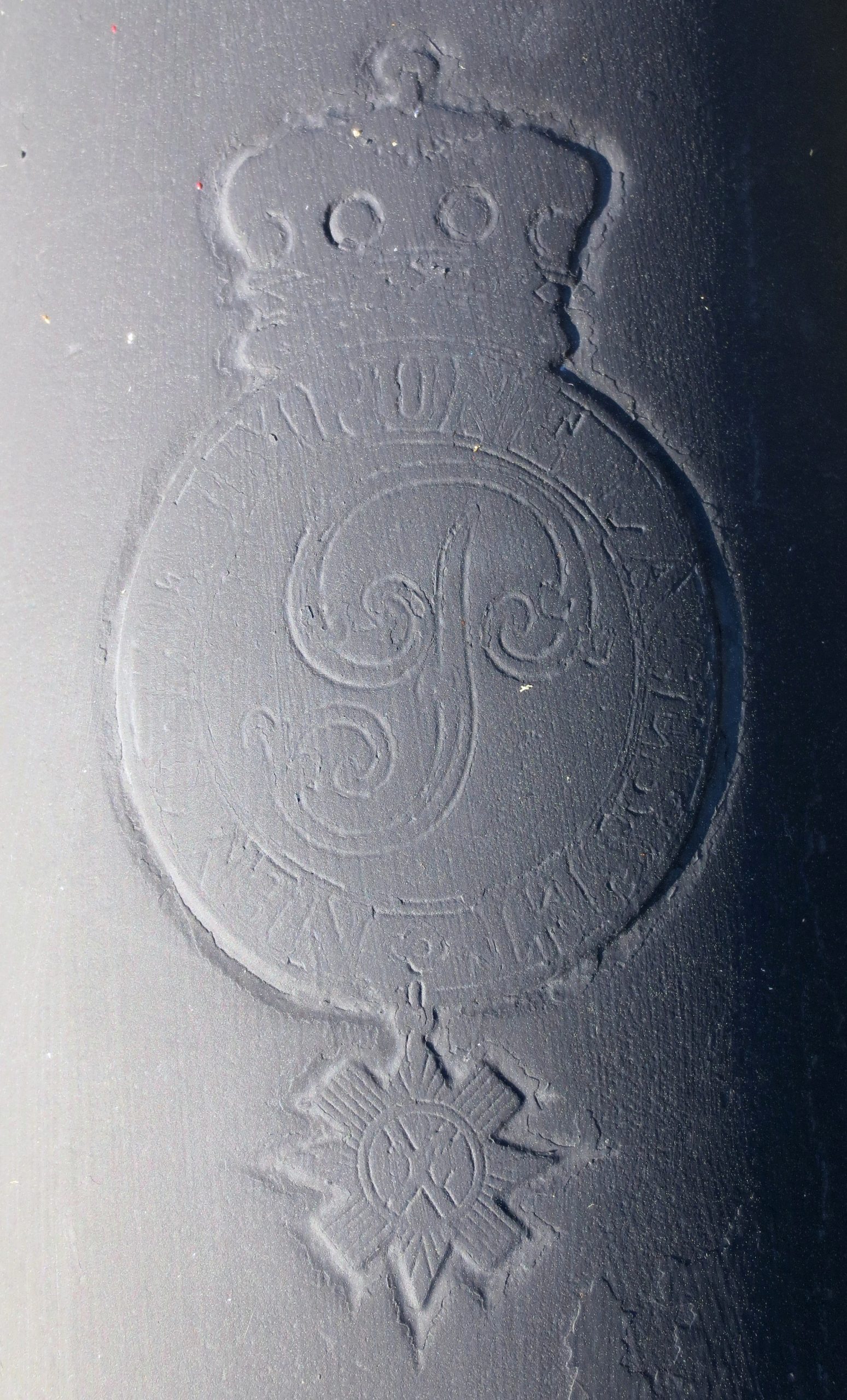
Blomefield Cast Iron Smoothbore Muzzleloading Gun, 3-inch bore, (Serial No. 3905), broad arrow mark, Queen Victoria cypher and the cypher for the Master General of the Ordnance (Fox Maule-Ramsay, 11th Earl of Dalhousie, KT, GCB, PC, 22 April 1801 – 6 July 1874), mounted on a wood naval gun carriage. No. 1 beside the main entrance to HMC Dockyard.
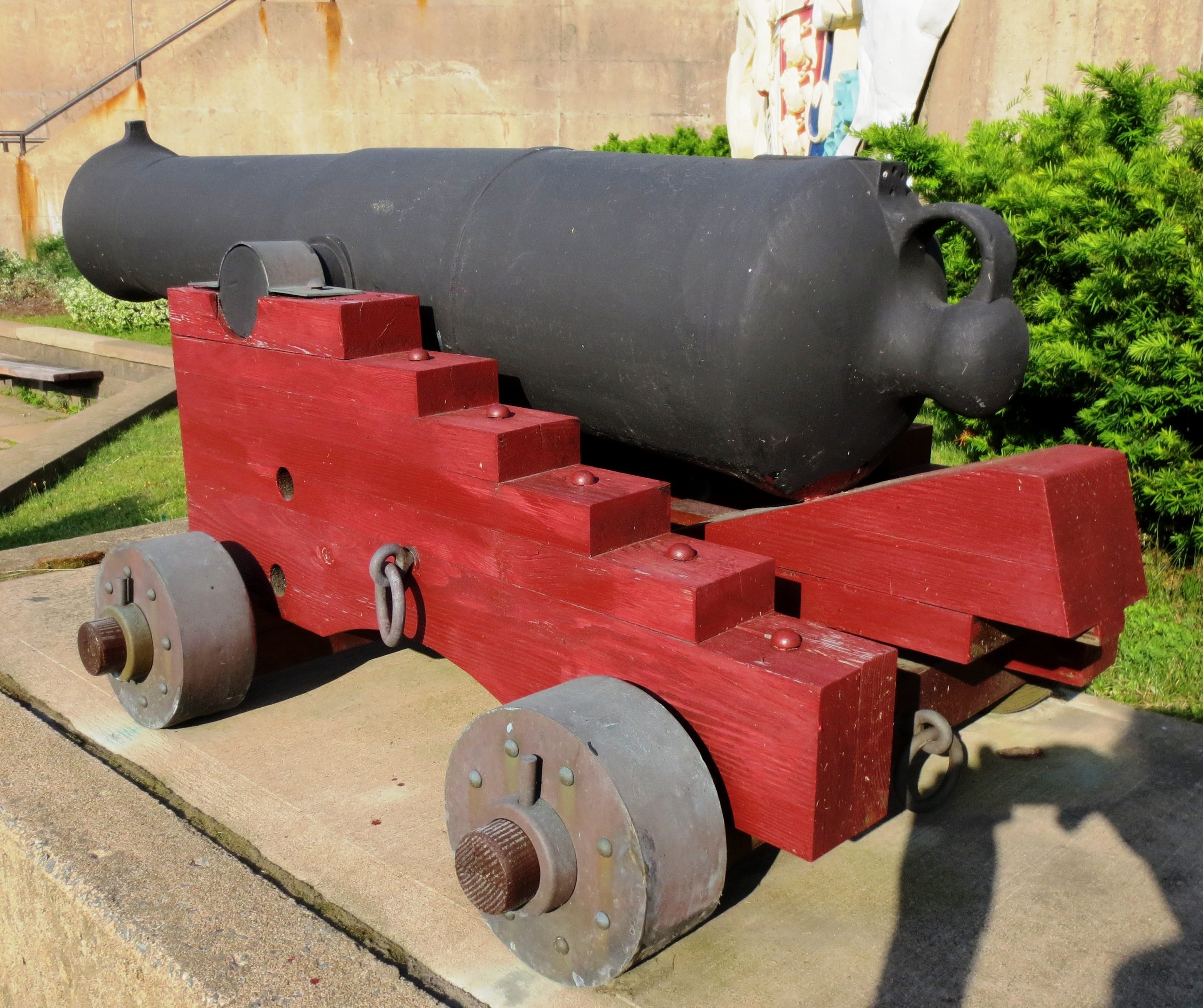
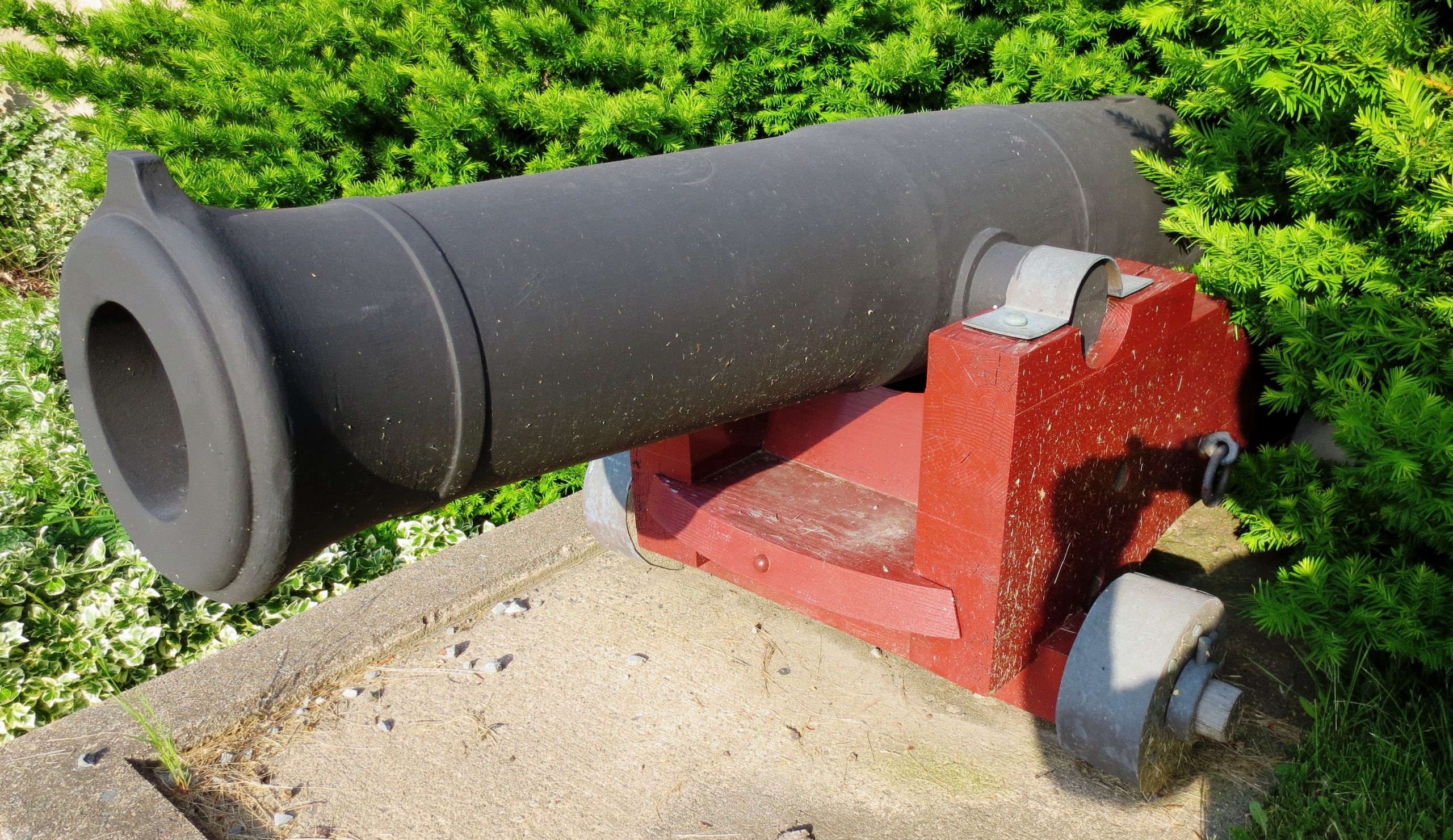
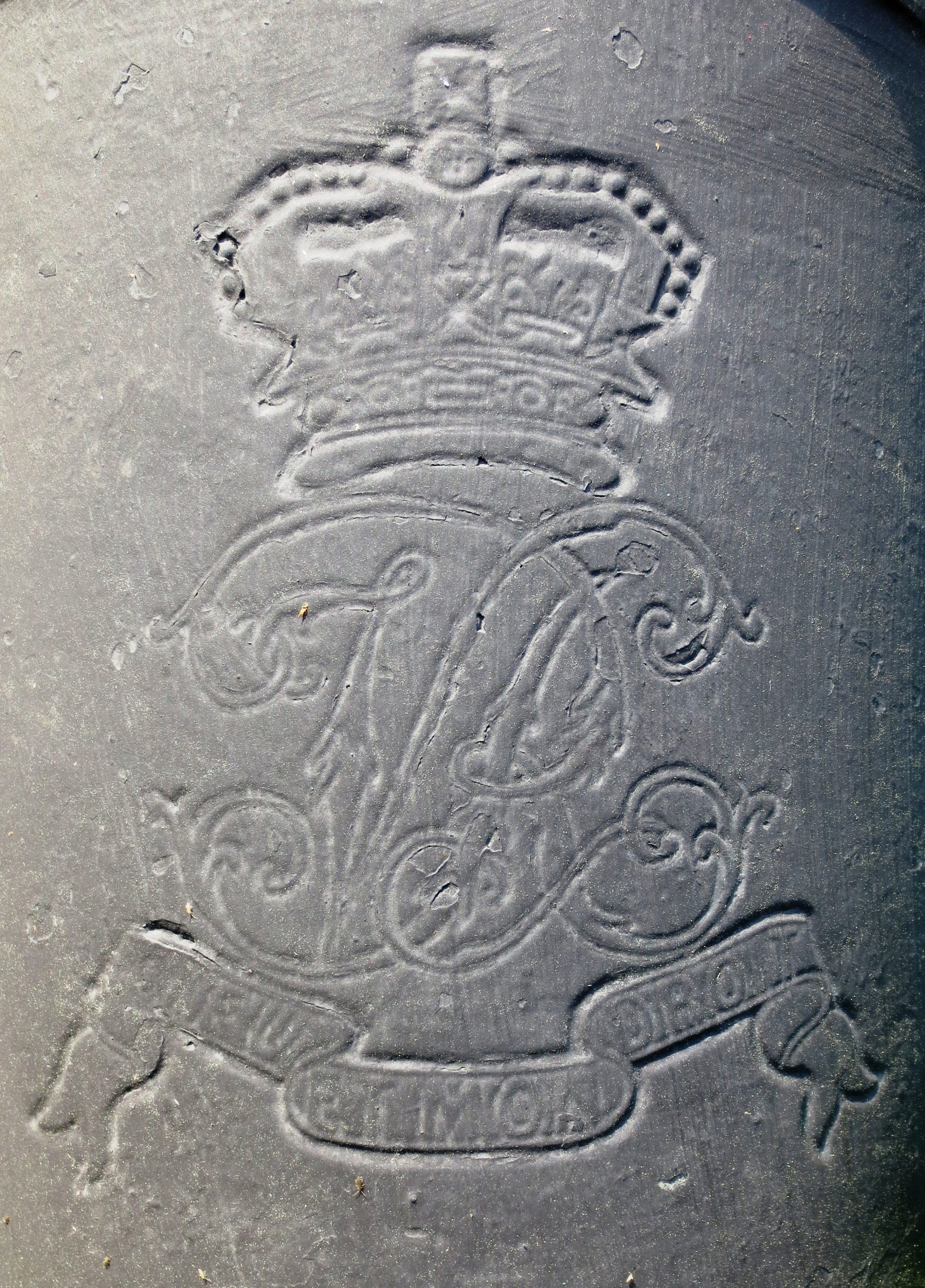
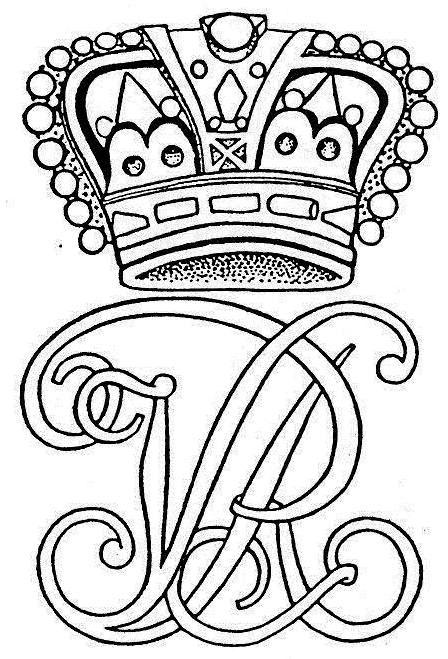

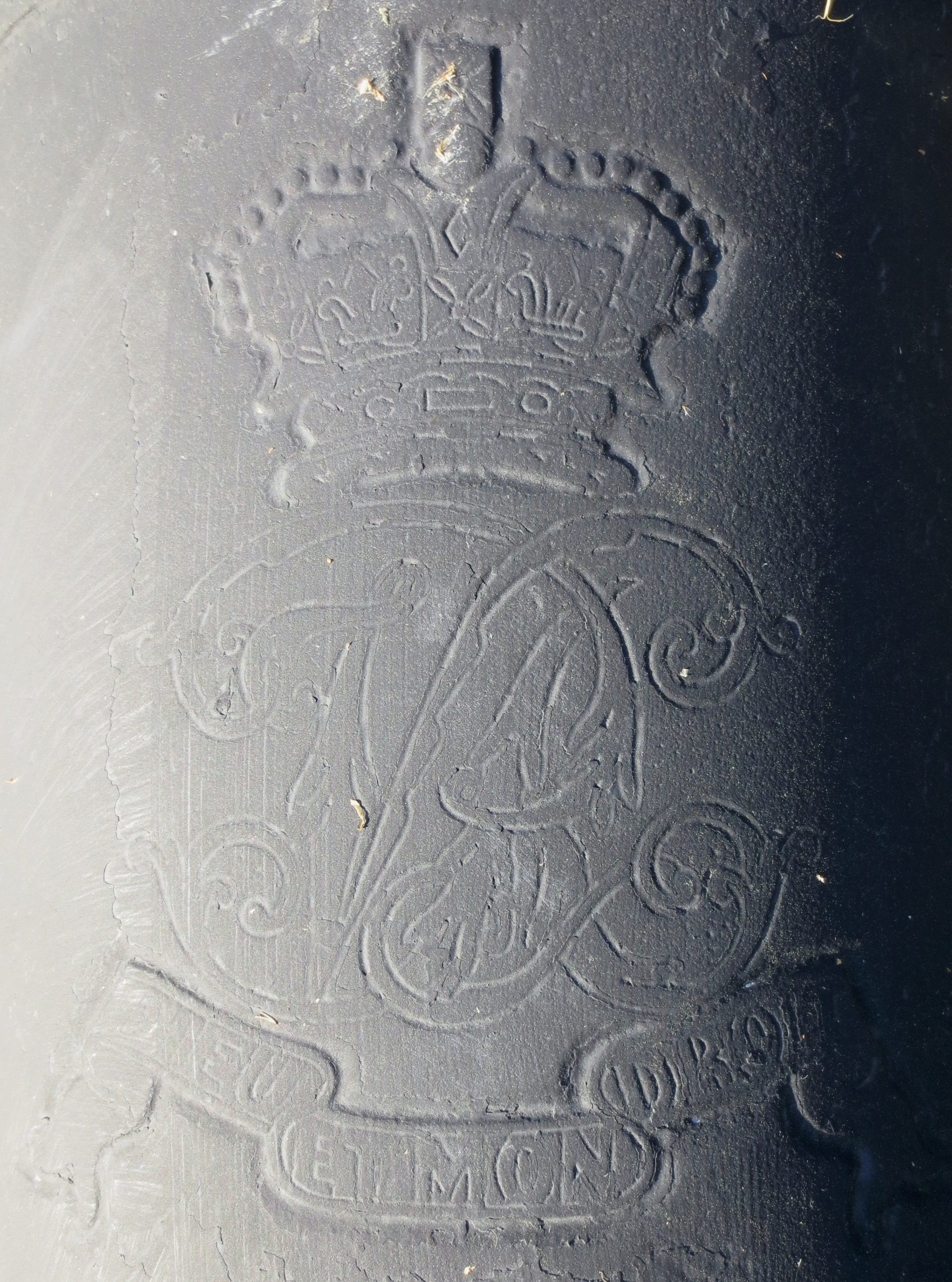
Blomefield Cast Iron Smoothbore Muzzleloading Gun, 3-inch bore, broad arrow mark, Queen Victoria cypher and the cypher for the Master General of the Ordnance (Major General Jonathan Peel, 12 October 1799 – 13 February 1879), mounted on a wood naval gun carriage. No. 2 beside the main entrance to HMC Dockyard.
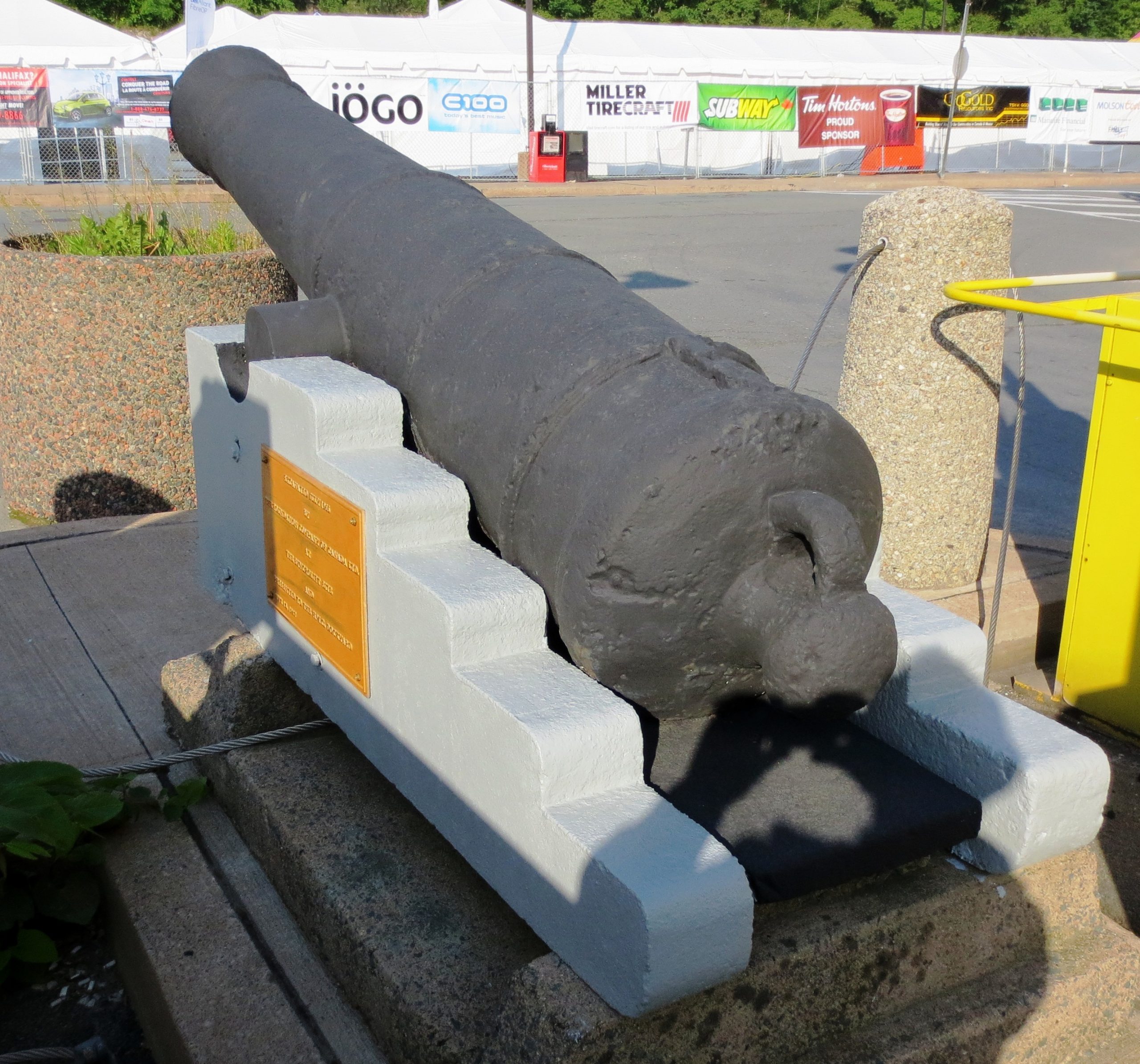
(Author Photo)
Blomefield Cast Iron 32-pounder 56-cwt Smoothbore Muzzleloading Gun (TBC), 5-½ inch bore, heavily corroded, King George III cypher, recovered from Halifax harbour. Mounted on a wood naval gun carriage, located in front of the central entrance to the Halifax Dockyard.
Halifax, Fleet Diving Unit Atlantic, CFB Shearwater
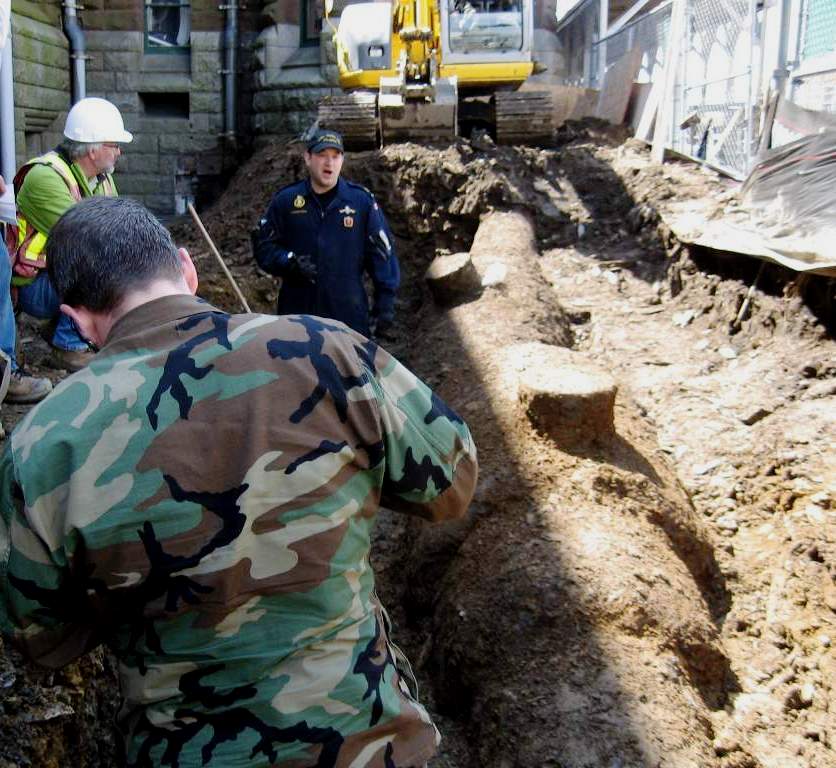
(Photos courtesy of Chris Hollet)
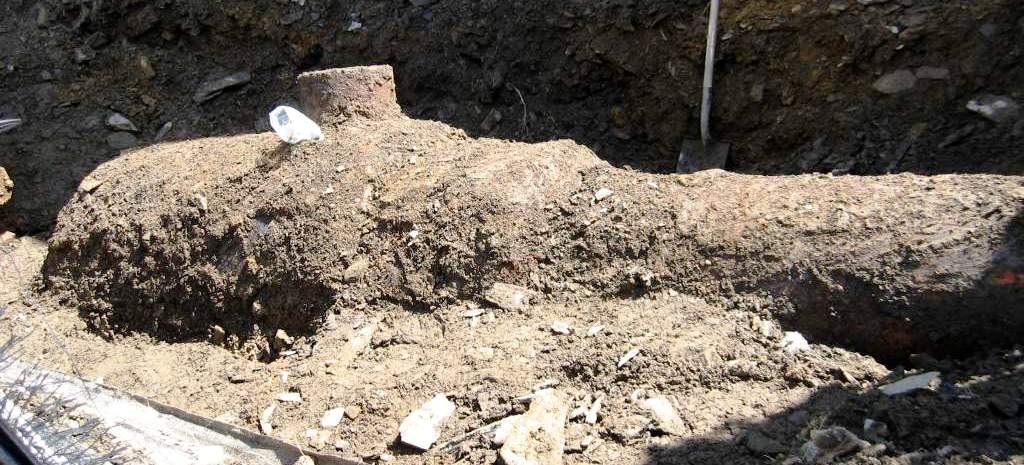
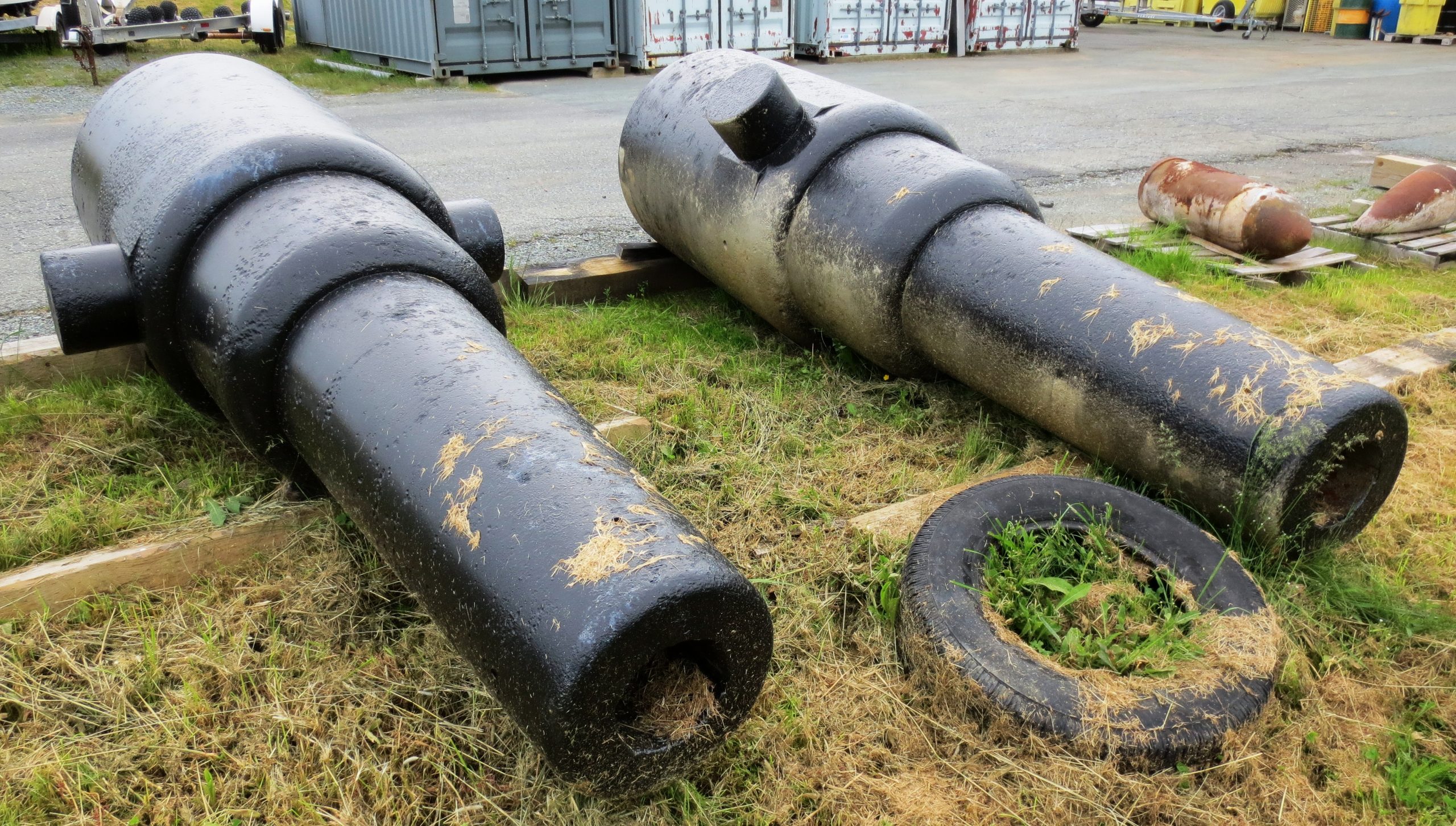
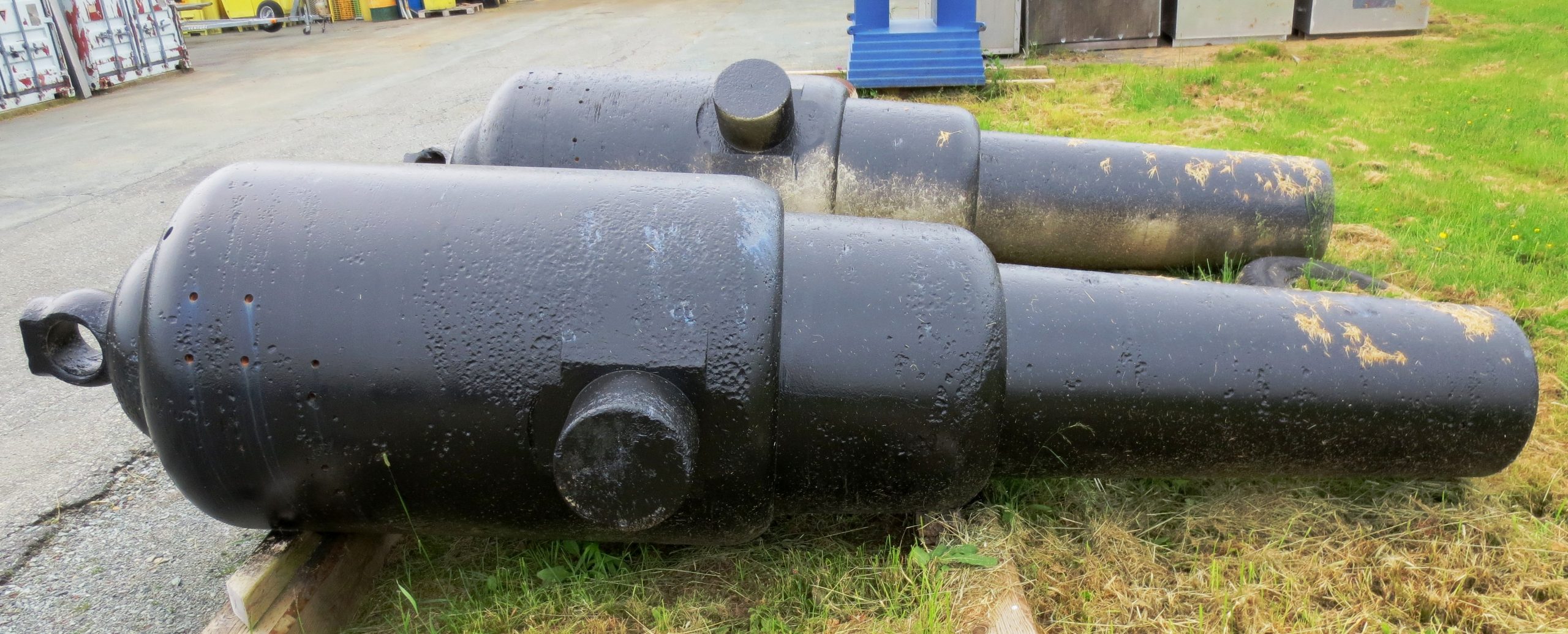
9-inch 12-ton Mk. I Muzzleloading Rifle with Millar pattern breeching ring, No. 1, on wood blocks on the ground. This gun is one of four recovered from a burial site in front of the Halifax Armoury, restored by the Fleet Diving Unit, Atlantic. It is planned for it to be on display with the FDU (A).
Construction Engineers were digging around the Armoury in Halifax and discovered four 9-inch 12-ton Mk. I Muzzleloading Rifles with Millar pattern breeching rings in the summer of 2011 in a burial site in front of the Halifax Armoury. All four were recovered and restored by the Fleet Diving Unit. The Explosive Ordnance Disposal (EOD) Section was called in to render the area safe. Following examination, the guns were moved to a storage site at FDUA. These guns were part of the original 38 Guns installed in the Citadel. The unit cleaned the guns up and they are being relocated for display.
(Author Photos)
9-inch 12-ton Mk. I Muzzleloading Rifle with Millar pattern breeching ring, No. 1, on wood blocks on the ground. This gun is now on display in front of the 1st (Halifax-Dartmouth) Field Artillery Regiment (RCA) armoury.
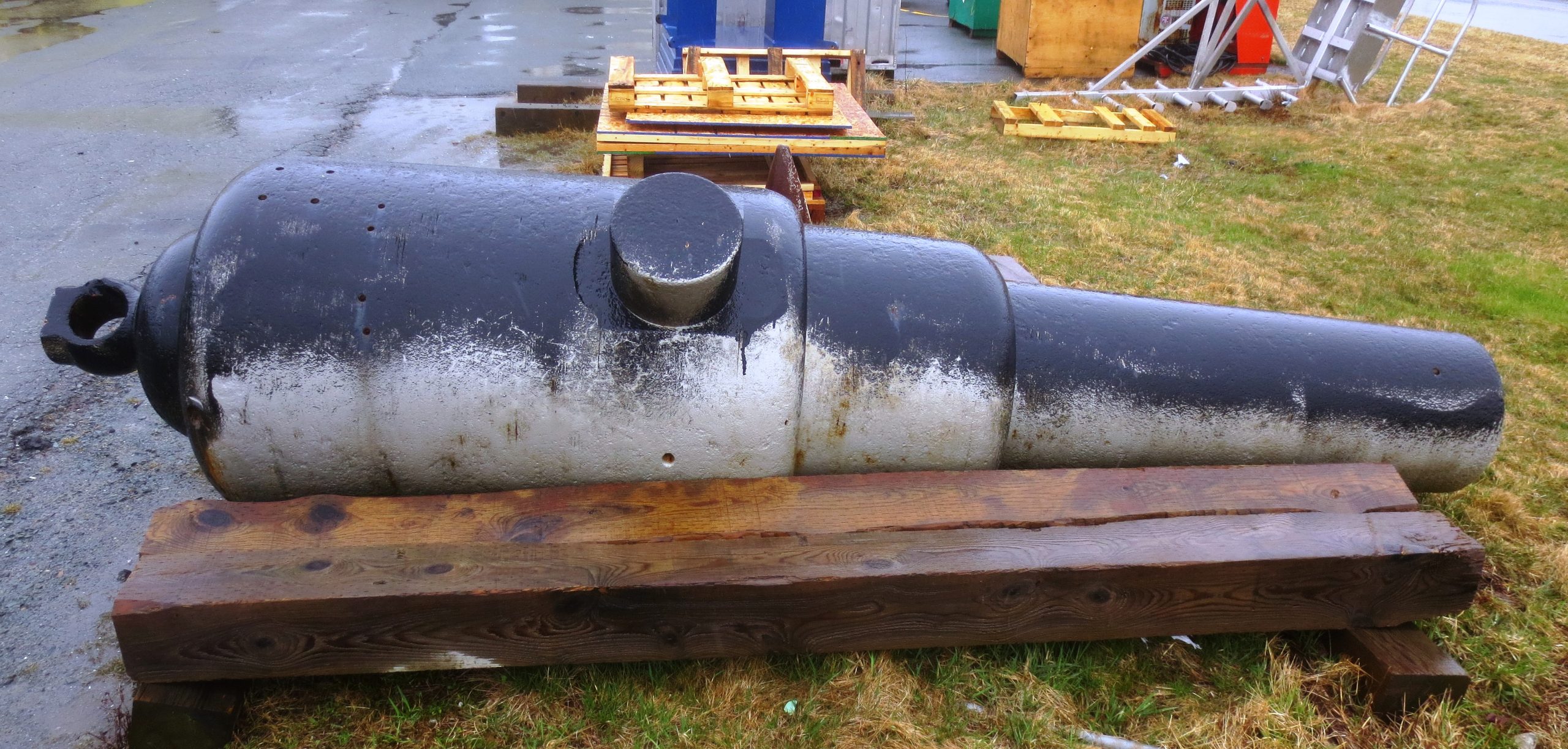
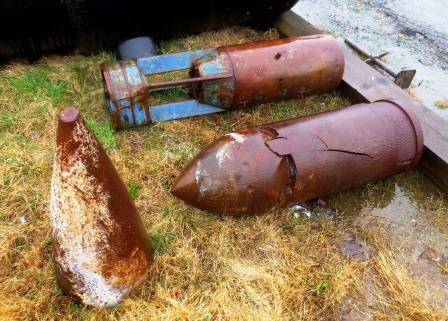
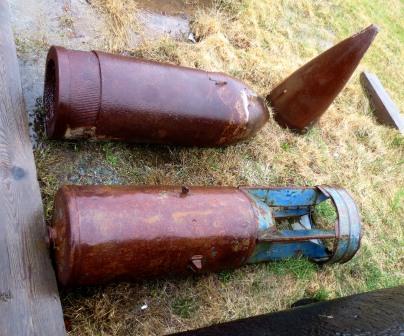
(Author Photos)
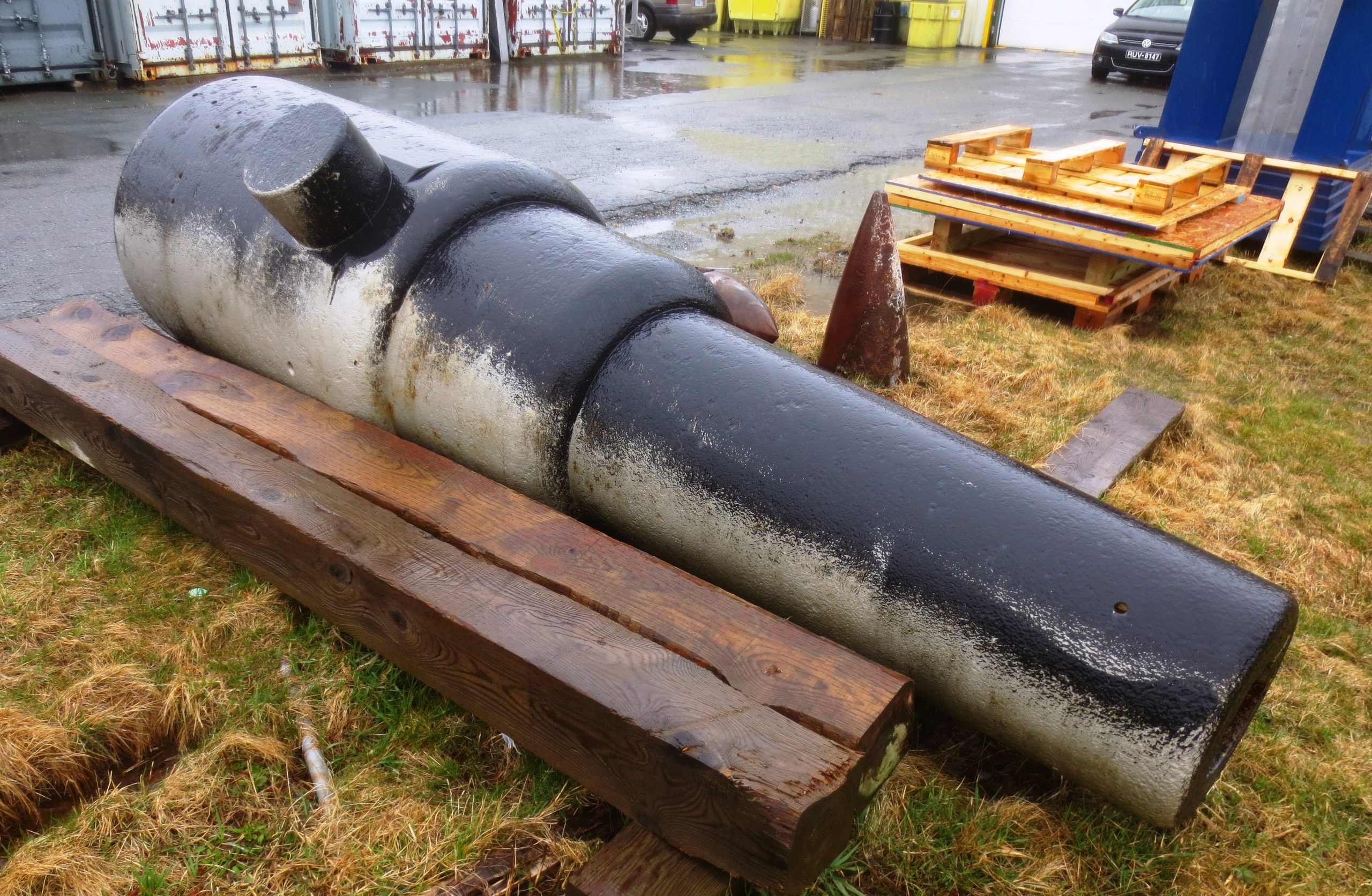
No. 2 of the four guns will be on display with the Fleet Diving Unit, Atlantic. The ordnance on the ground beside it remains to be identified.
No. 3 of the four guns is now on display in the Royal Artillery Park in Halifax, mounted on iron posts.
No. 4 of the four guns is on display at the Maritime Command Museum at Stadacona, mounted on iron posts.
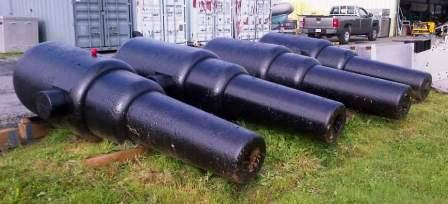
(Chris Hollet Photo)
Halifax, HMCS Scotian
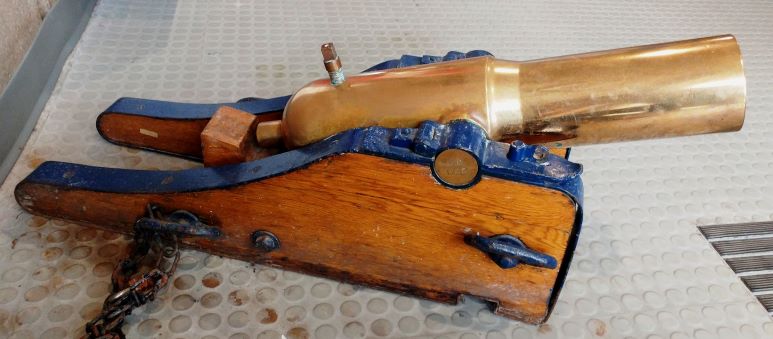
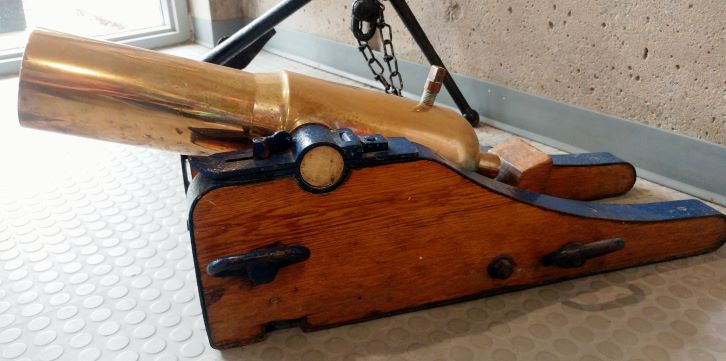
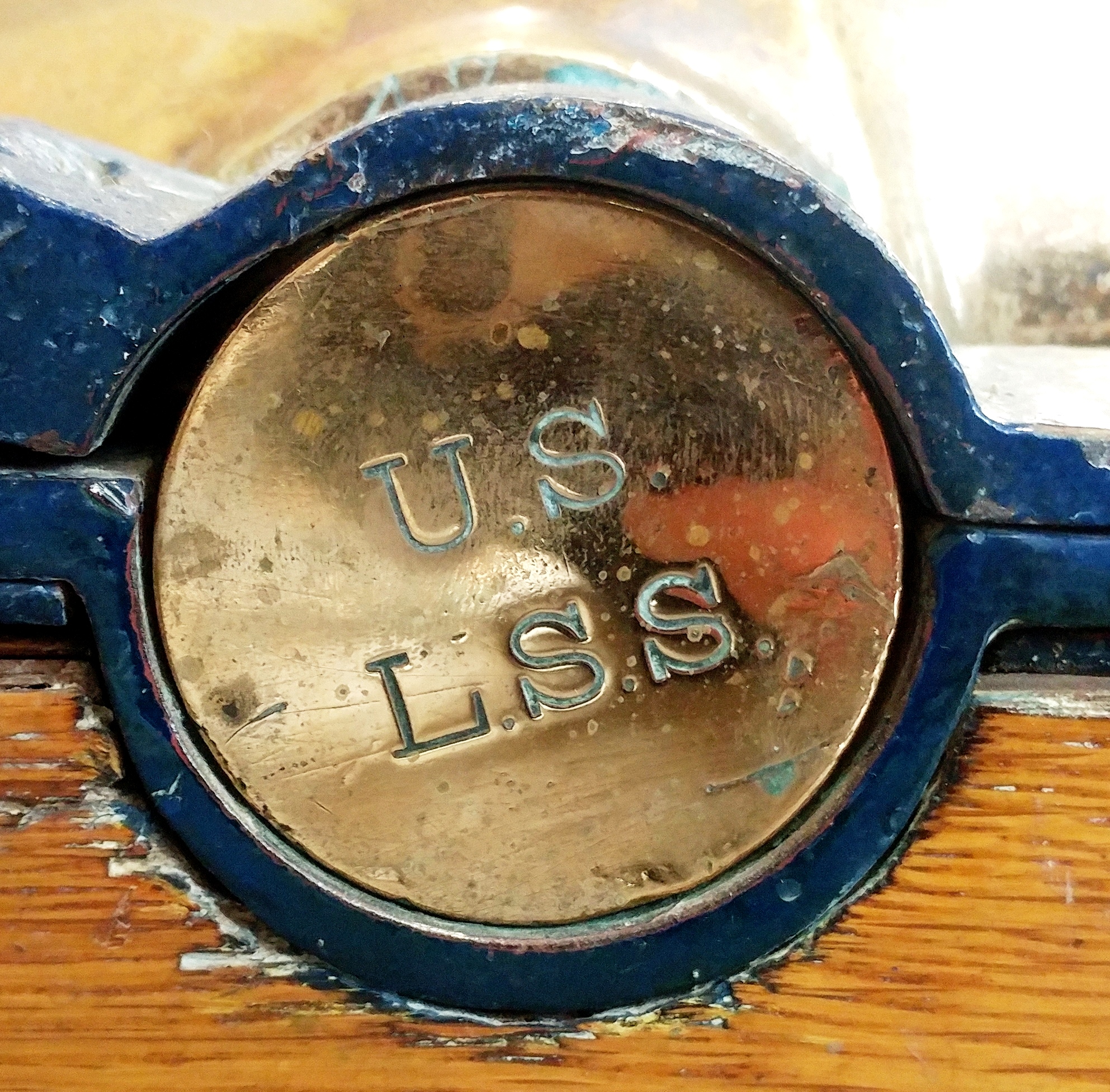
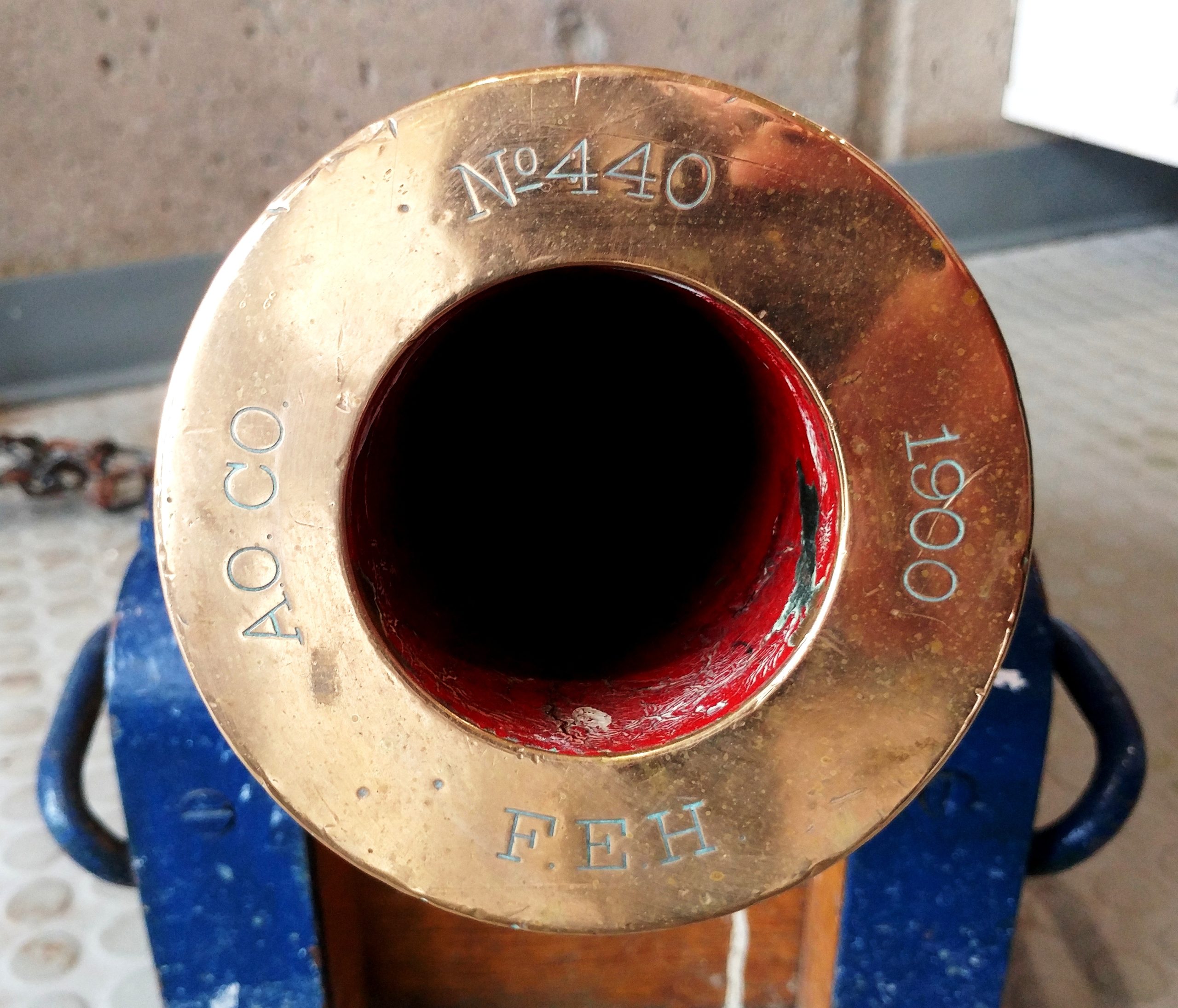
(Author Photos, 11 Sep 2018)
Bronze Lyle Smoothbore Muzzleloading Gun (2.5-inch bore), AO CO, No. 440, 190, FEH on the muzzle, blank on the left trunnion, US LSS on the right trunnion.
This Lyle type gun was used to fire life lines from ship or shore. Light-weight rope was shot out to a wreck after it had been carefully wound on a rope-board so it would uncoil without snagging. The crews would then use this rope to haul out the heavier lines which actually carried the breeches buoy. The survivors would brought ashore or to the tugboat in a breeches buoy, which was a pair of canvas pants sewed onto a life-preserver. These line guns are used primarily for shore based rescue operations. The shooter would fire, aiming over the victims head and then pull the line within reach of the victim. They are also useful for rescuing victims that have fallen through the ice, or are stranded on a cliff or burning building. Boats in distress need larger lines. Lyle guns were designed to throw projectiles weighing approximately 15 pounds, carrying heavier rope over 1000 feet. Getting this equipment close to a wreck would have been difficult, given the likelihood the conditions that caused the wreck would still have been present. It is mounted on a wood naval gun carriage, inside the ship.
Halifax, Stadacona, Juno Towers, WO’s Mess, 2648 Lorne Terrace, 2640 Admirals Way.
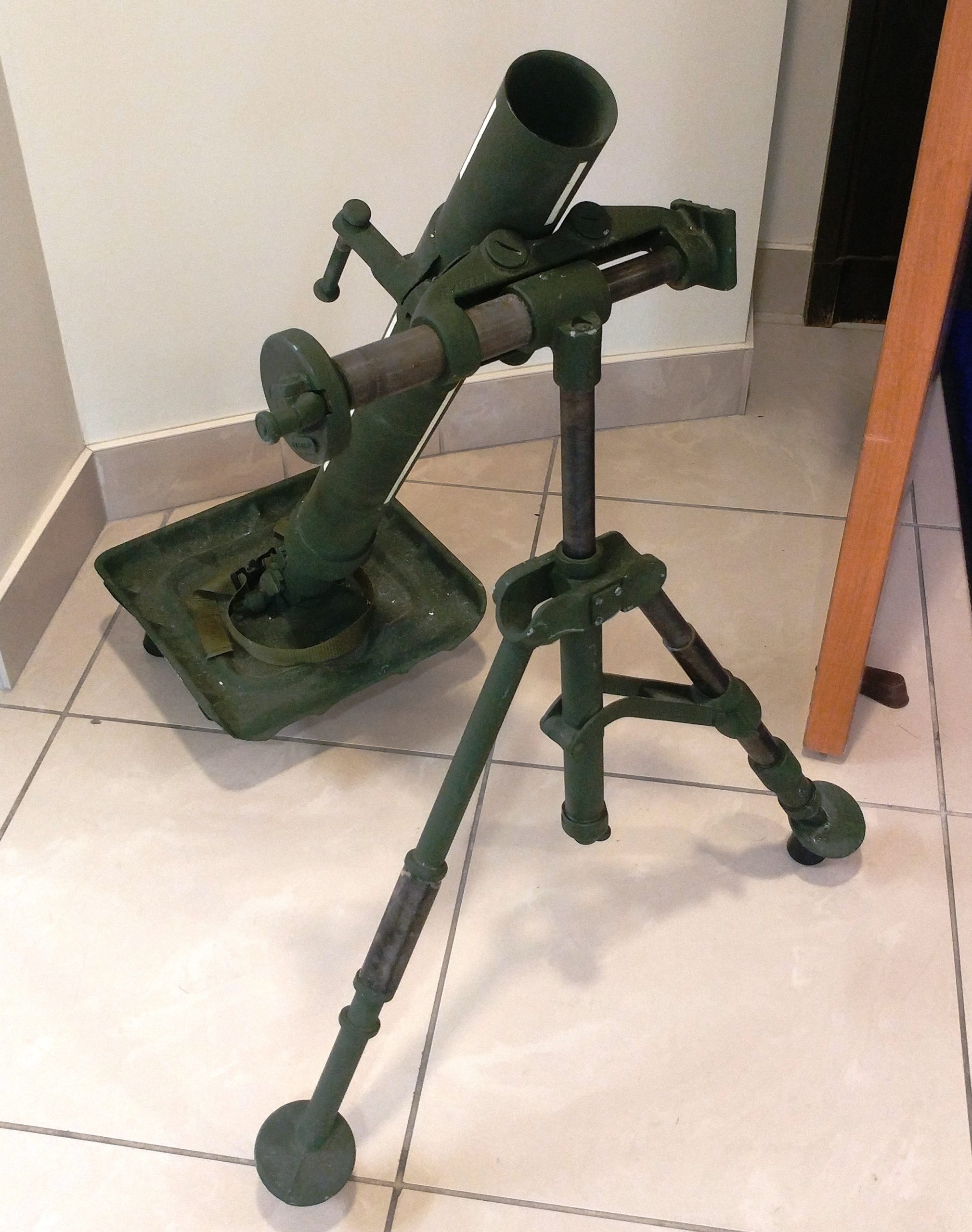
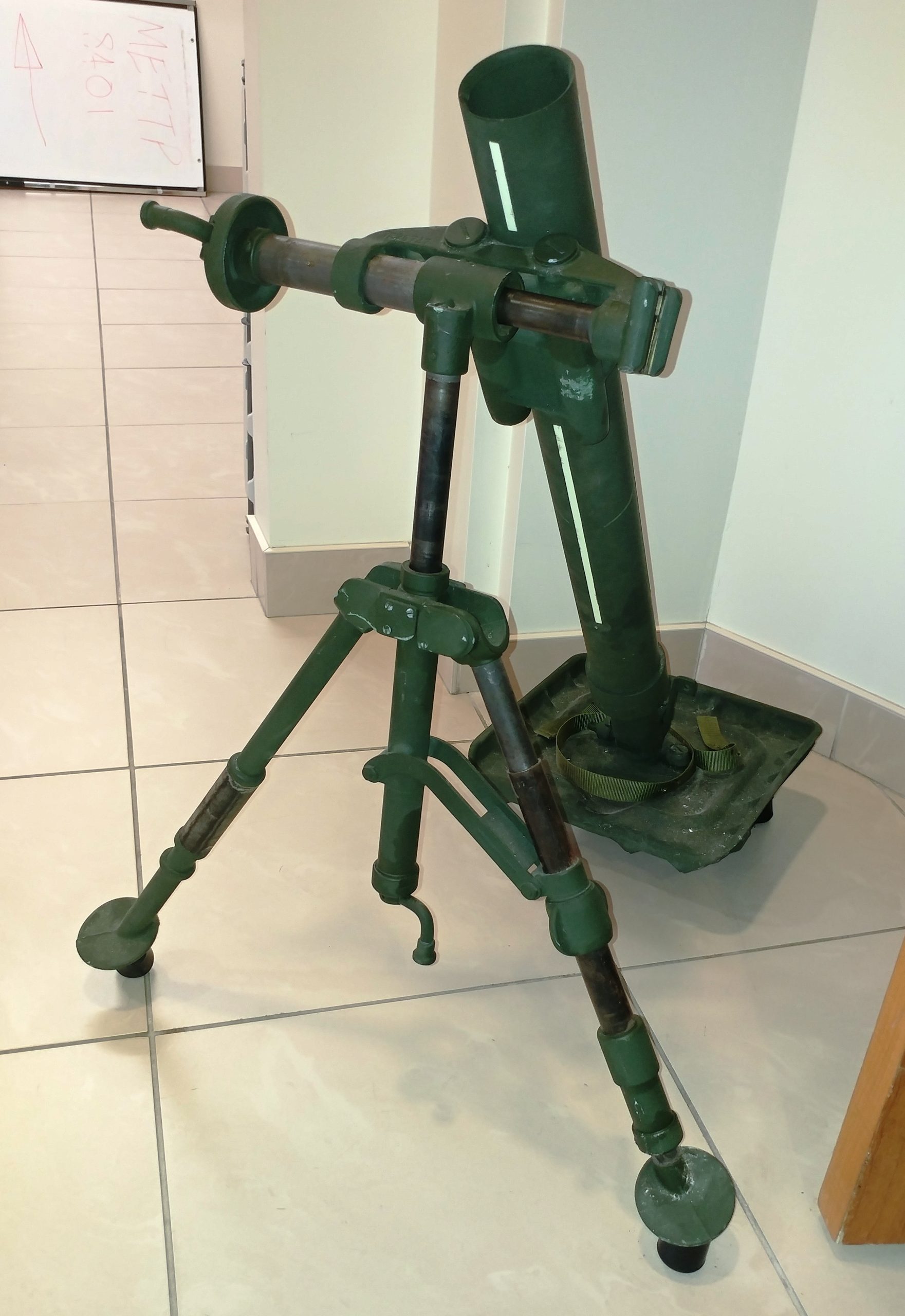
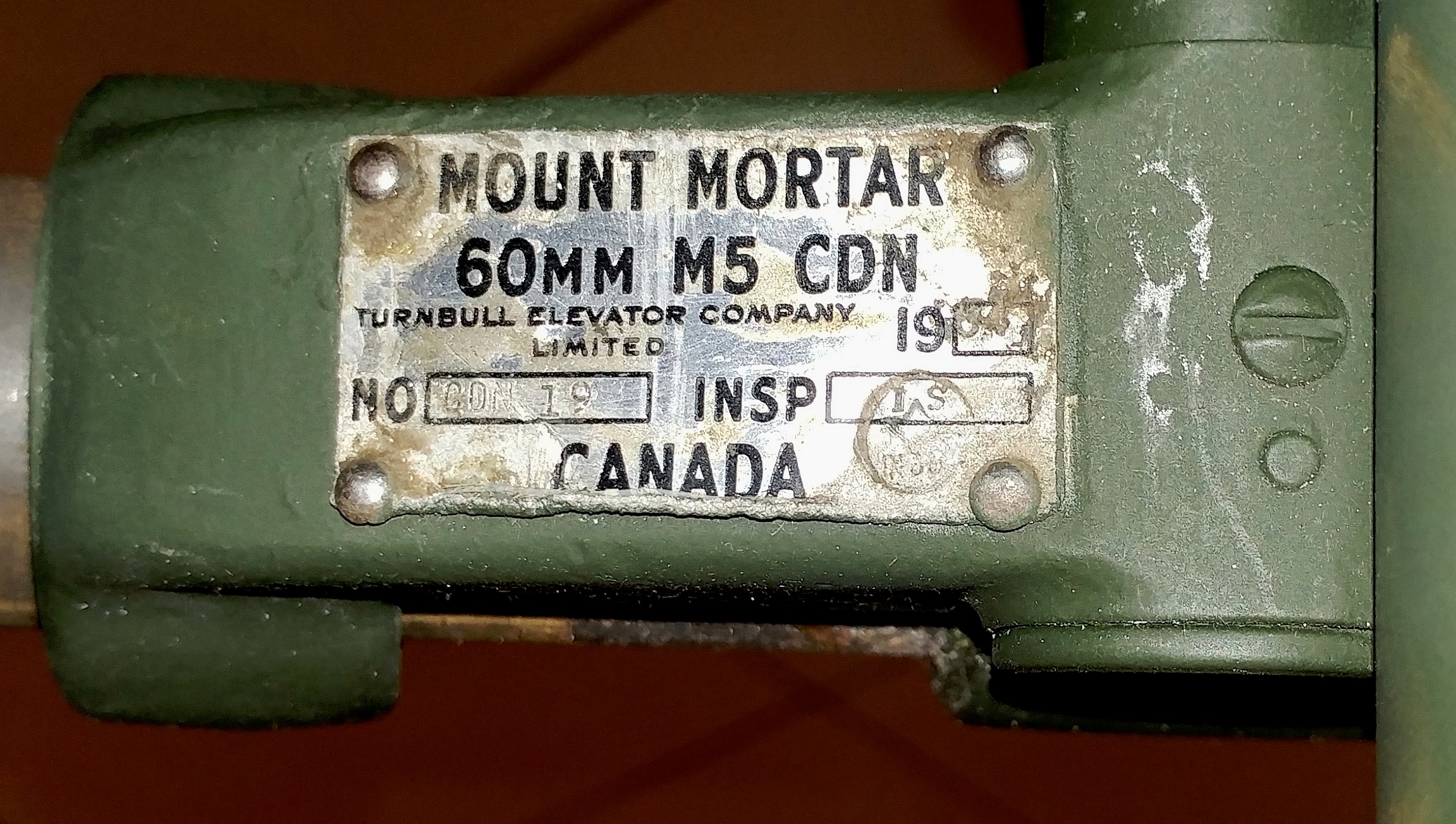
(Author Photos)
60-mm M5 CDN Mortar, No. 19, 1954. Standing inside the building at the entrance to the Mess.
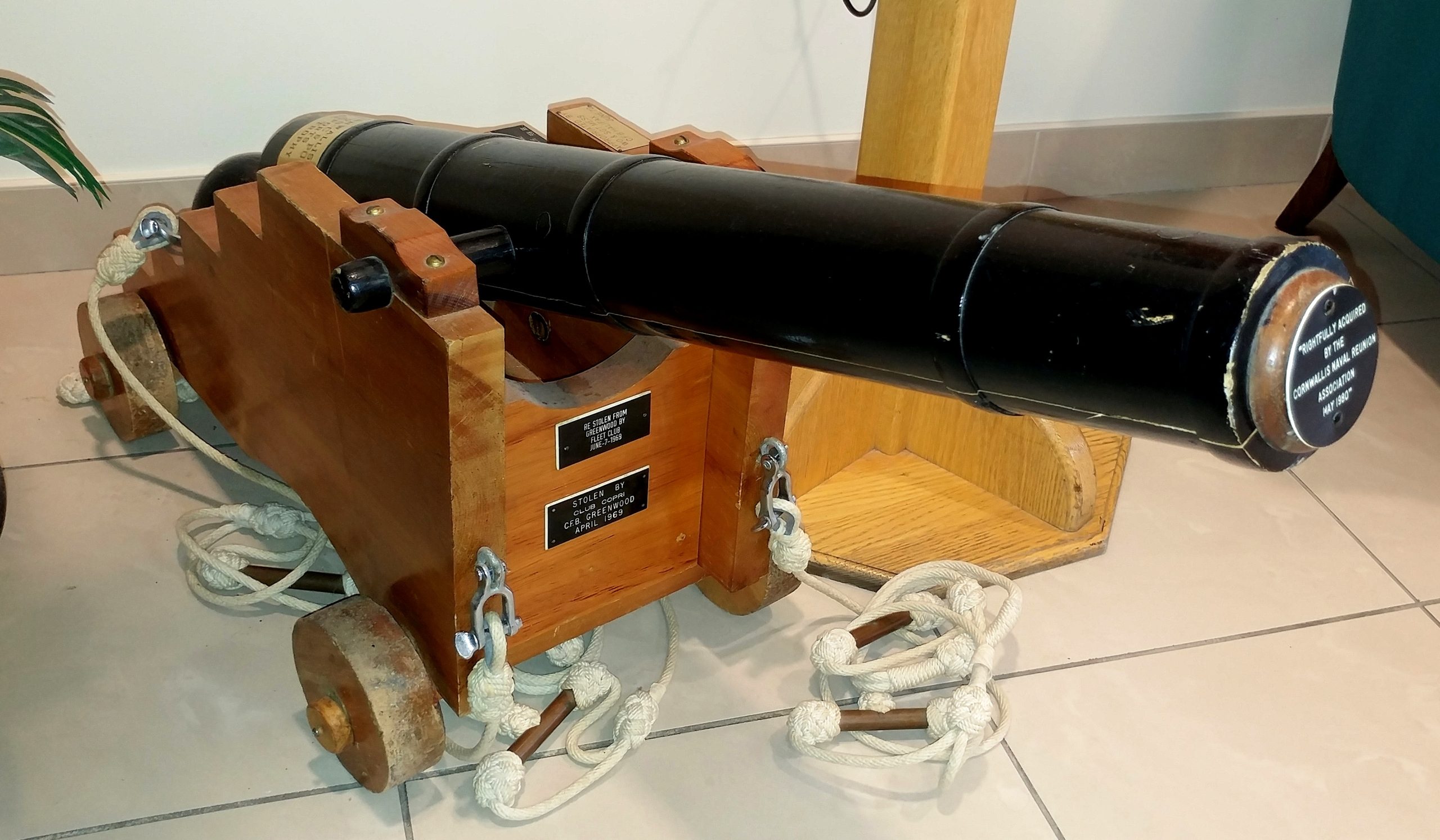
(Author Photo)
Replica gun, standing inside the building at the entrance to the Mess.
(Author Photos)
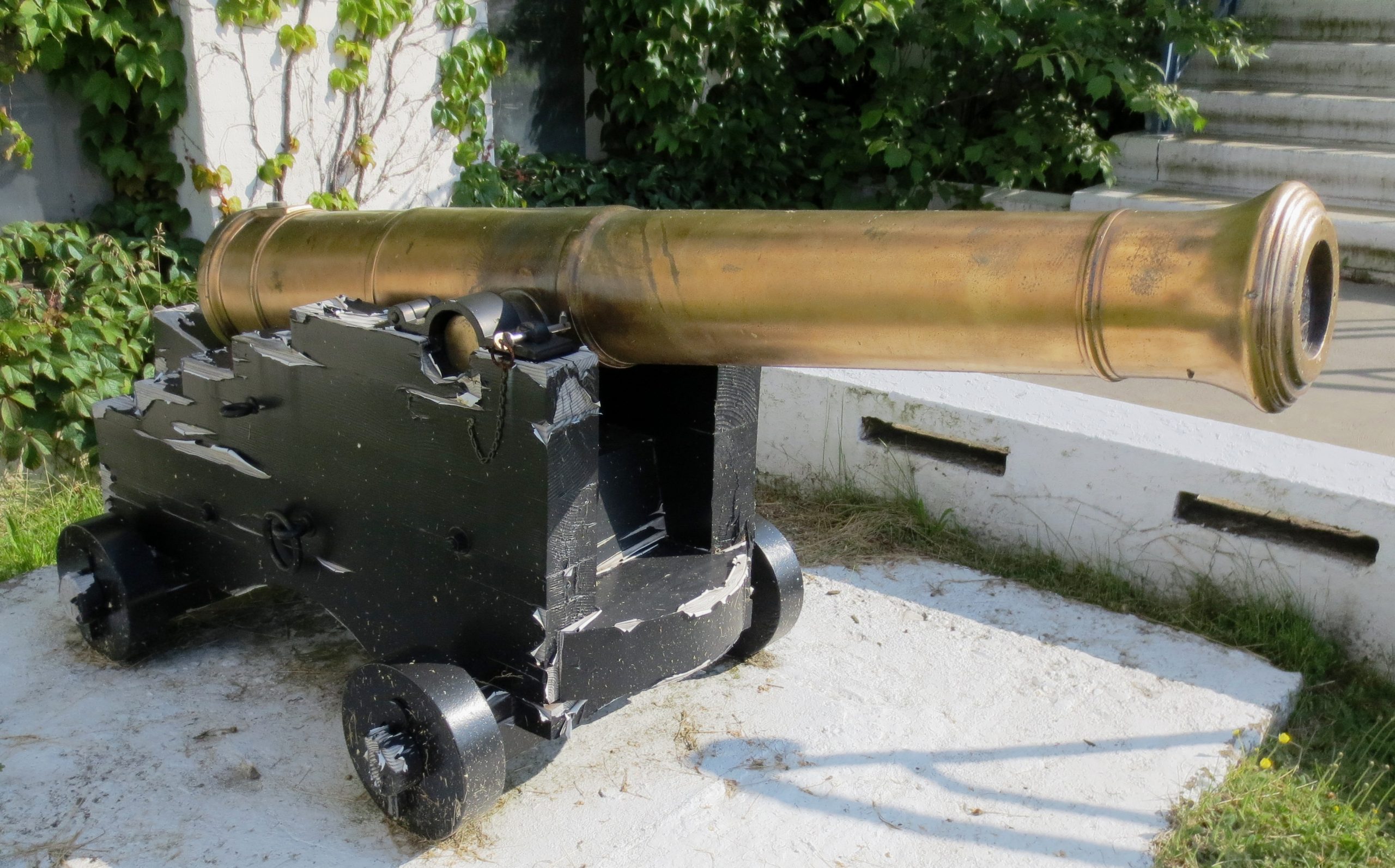
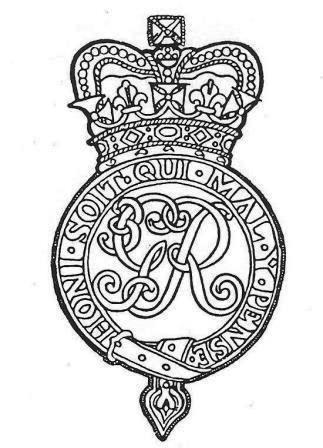
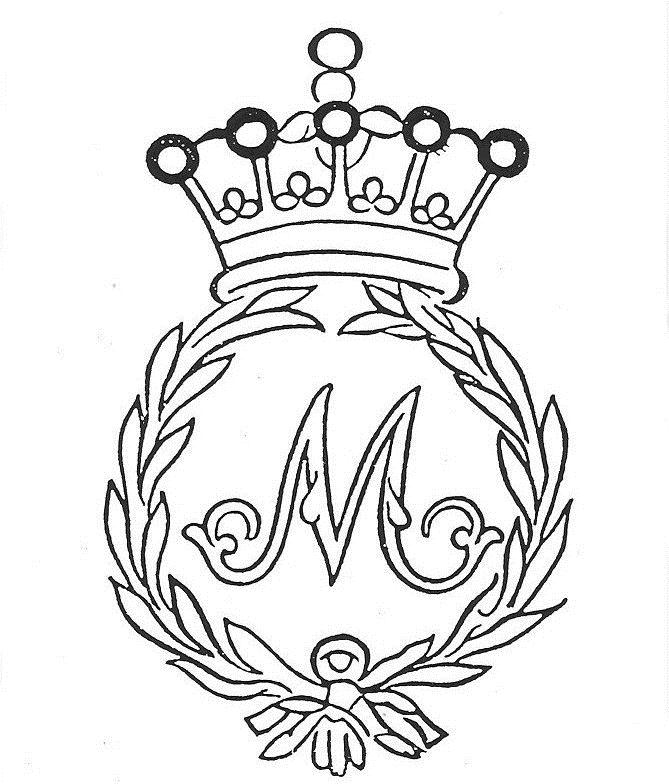
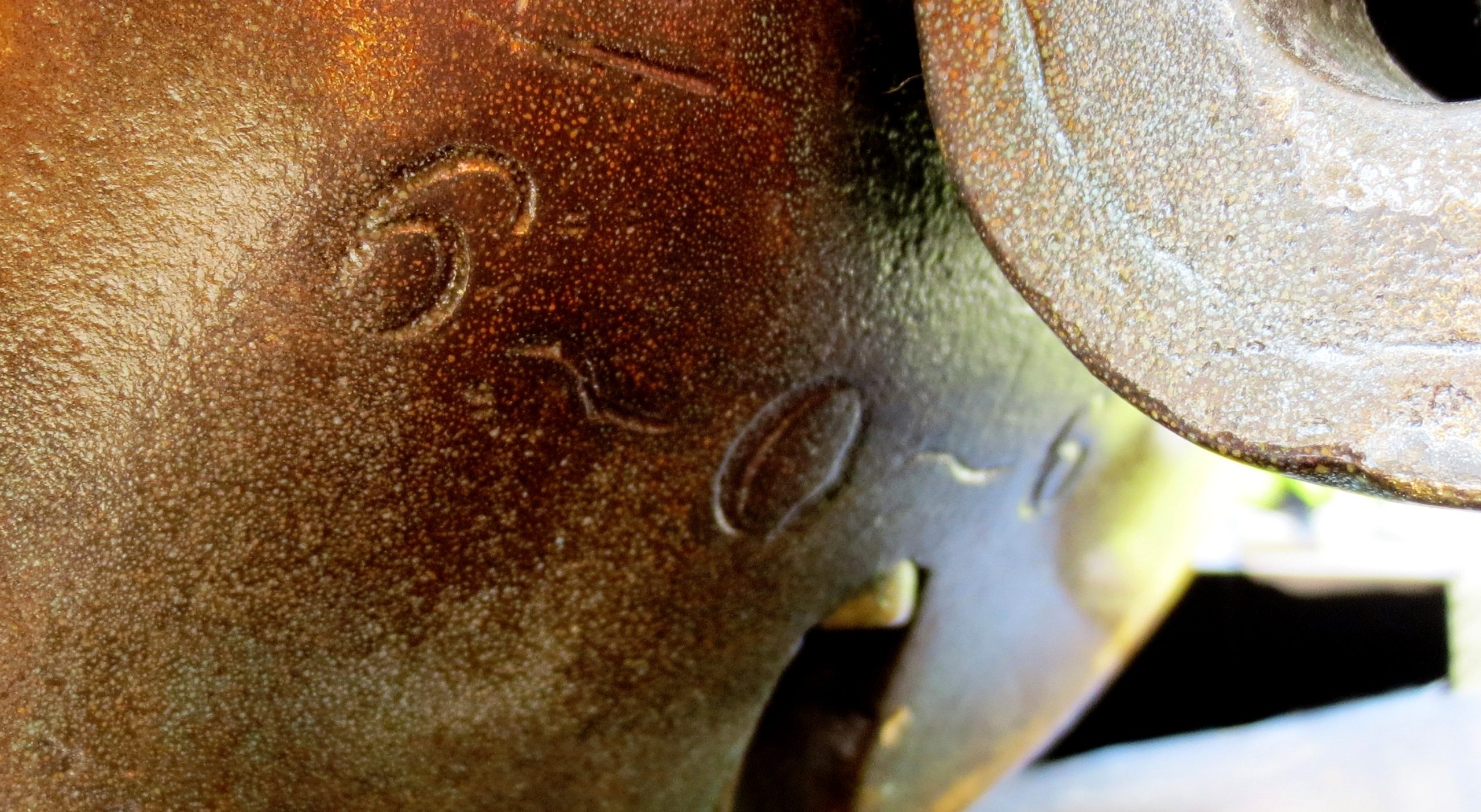
Bronze 6-pounder 6-cwt Smoothbore Gun, 6-0-6 (678 lbs), mounted on a wood naval gun carriage, 3-¾ inch bore. King George III cypher and Master General of the Ordnance, Francis Rawdon-Hastings,1st Marquess of Hastings cypher. This gun was one of three guns located in front of the Naval Gunnery School. It has been moved to the outdoor patio beside the WO’s Mess at Juno Towers.
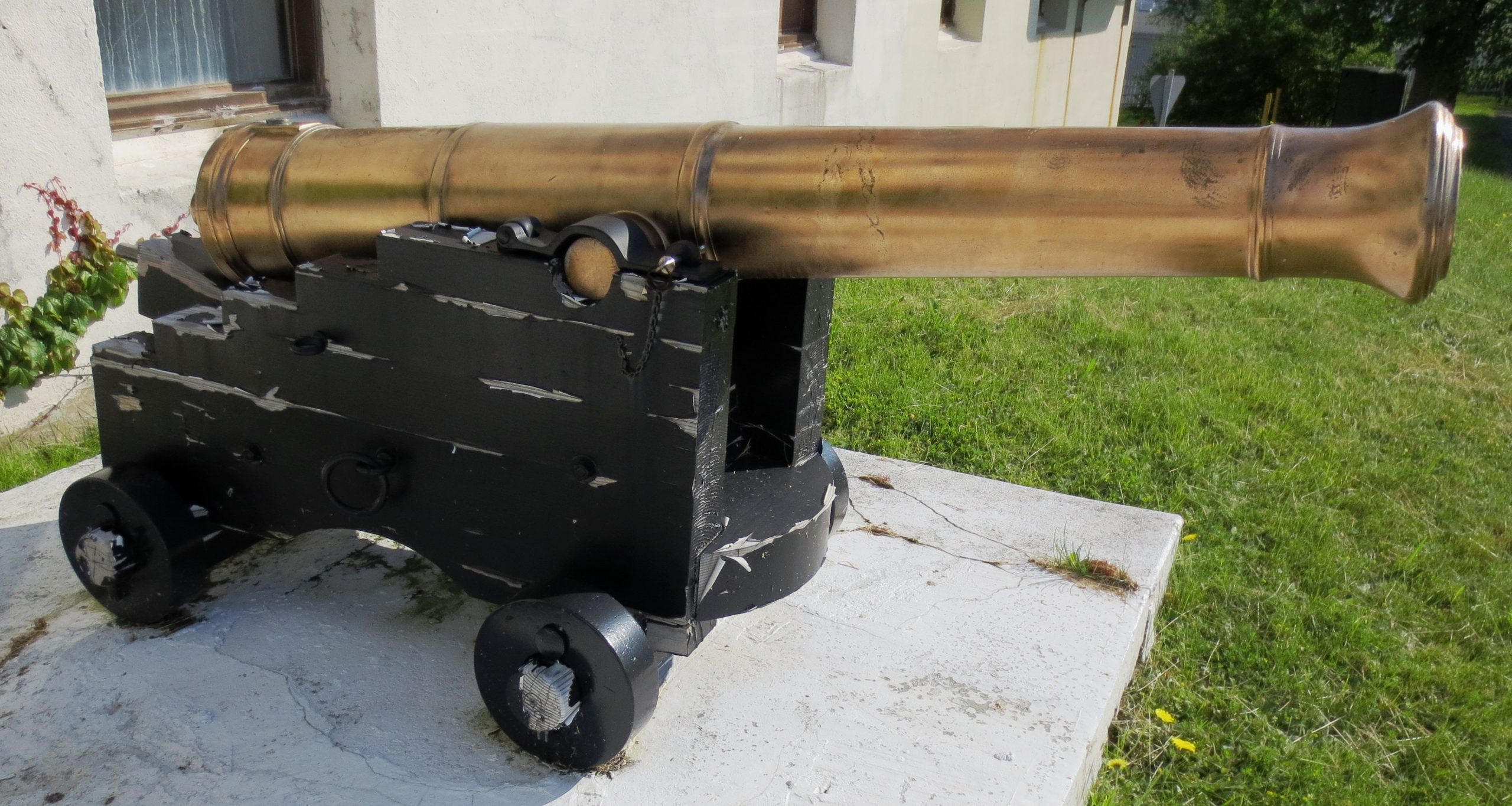
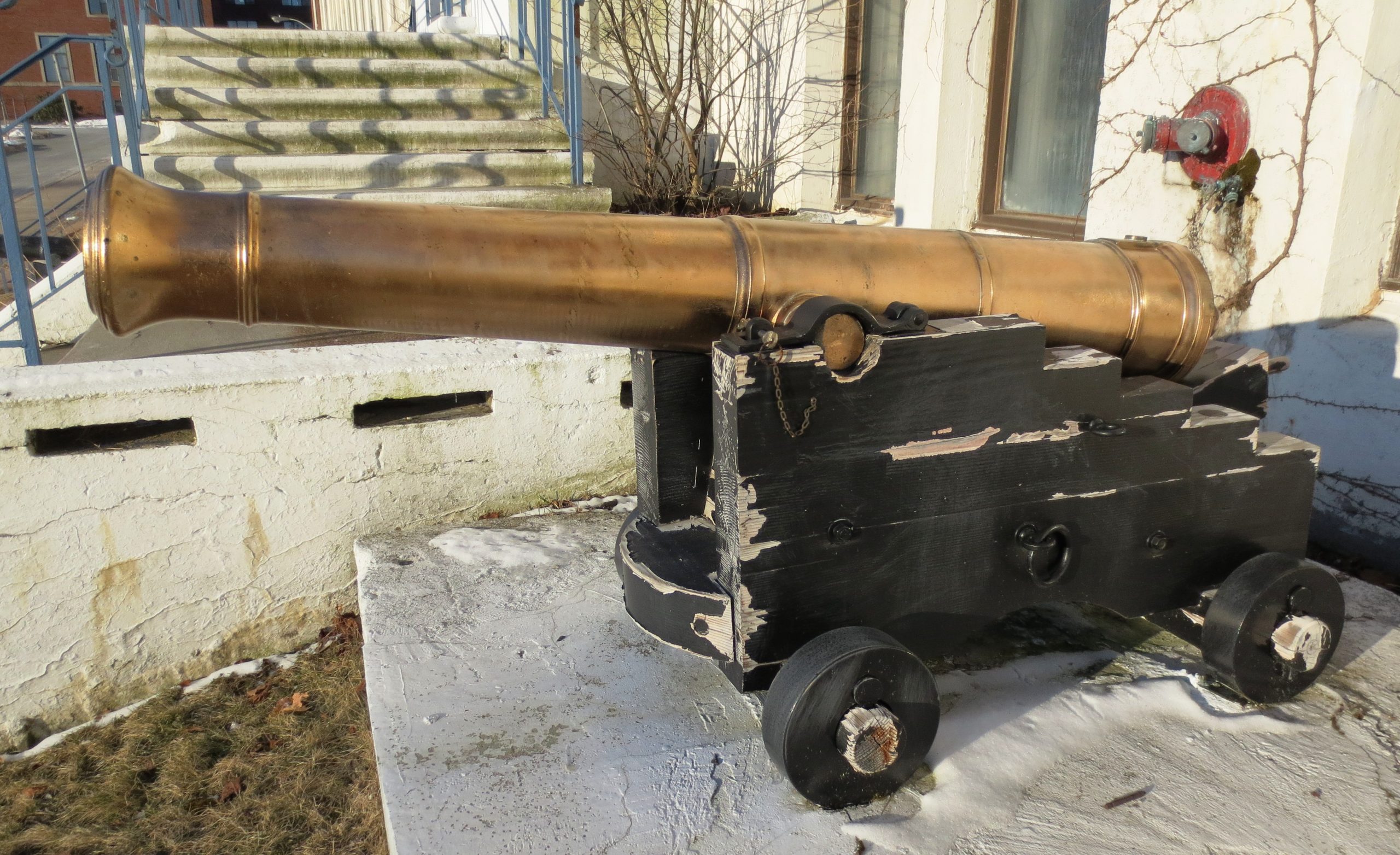
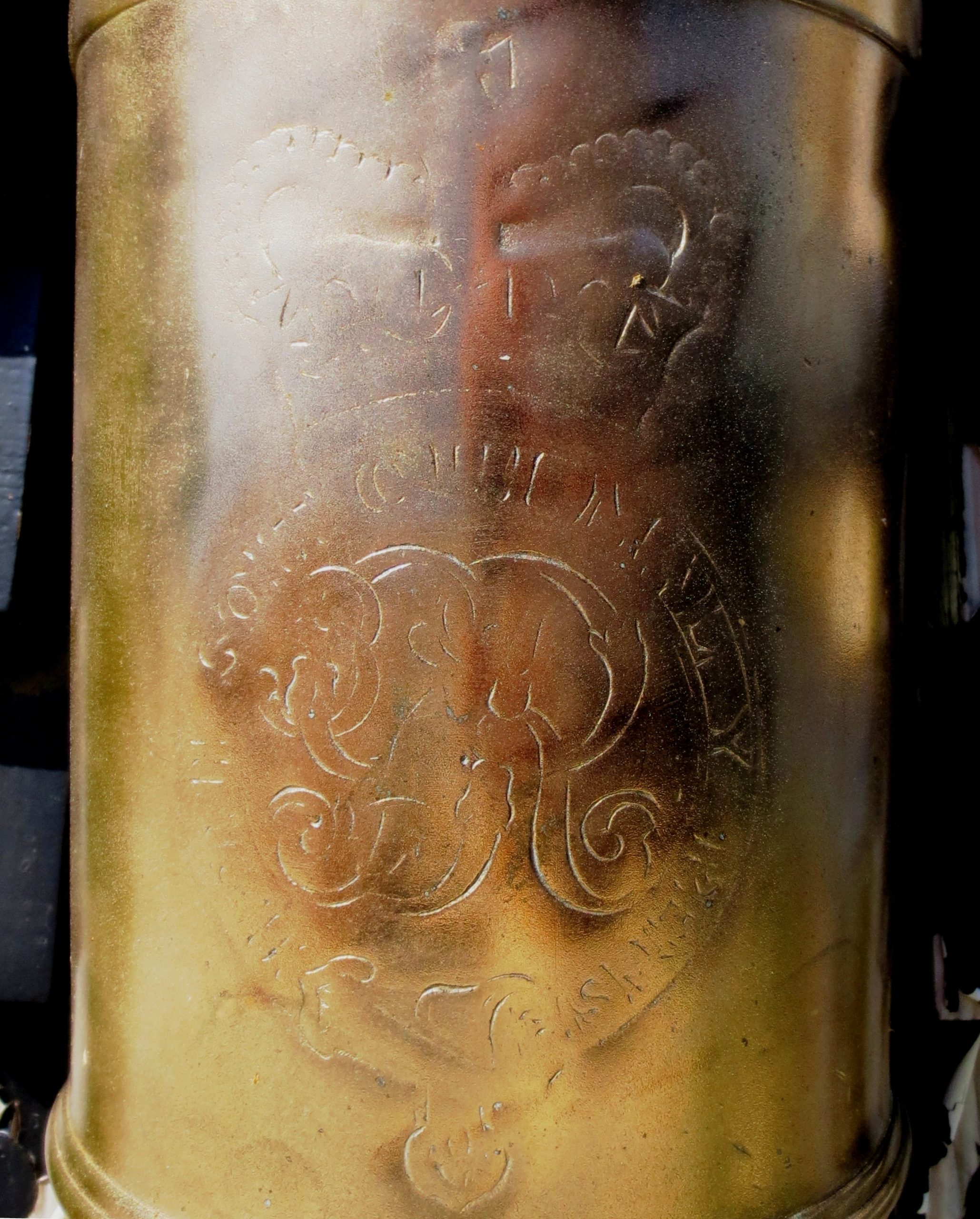
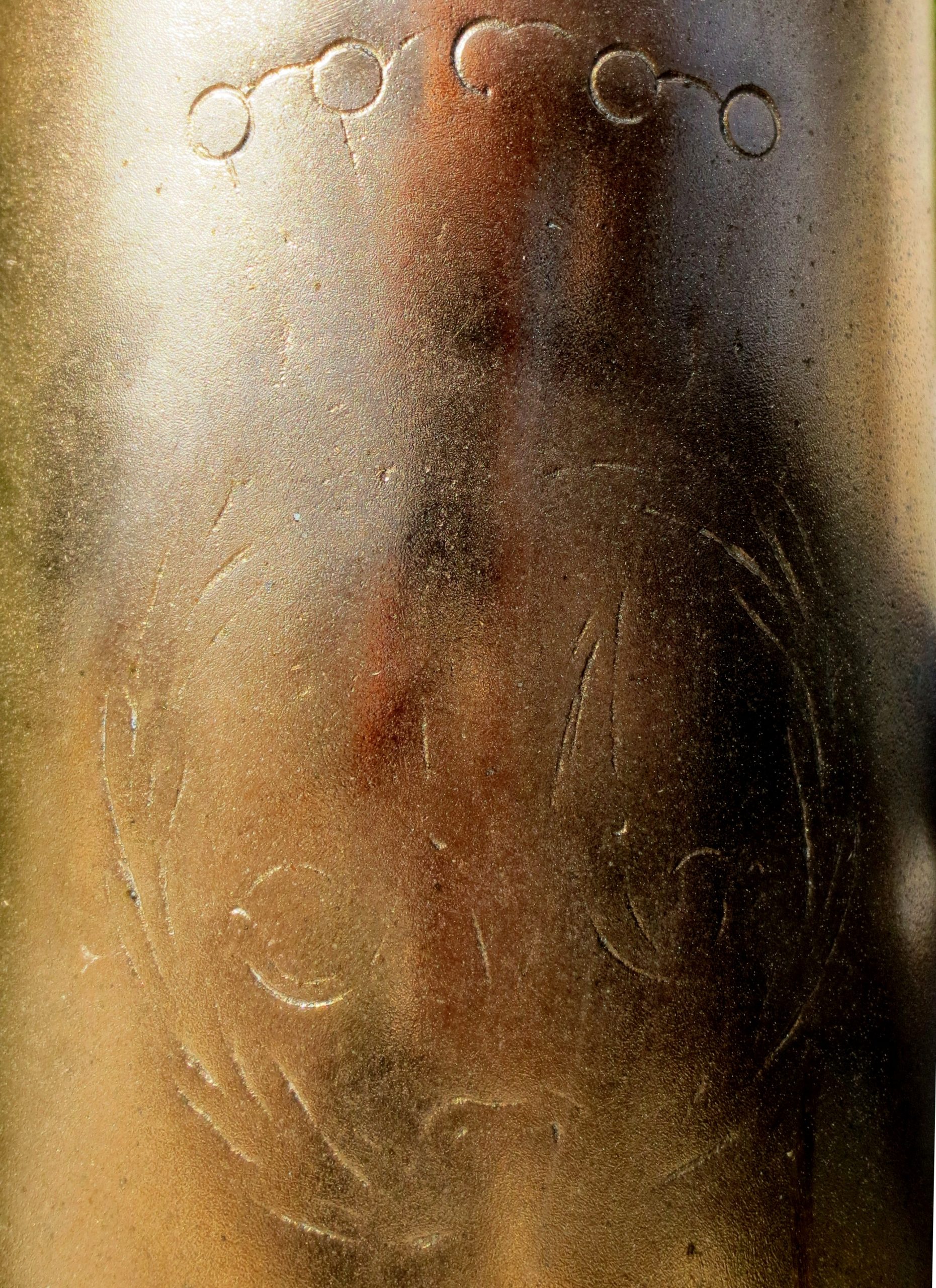
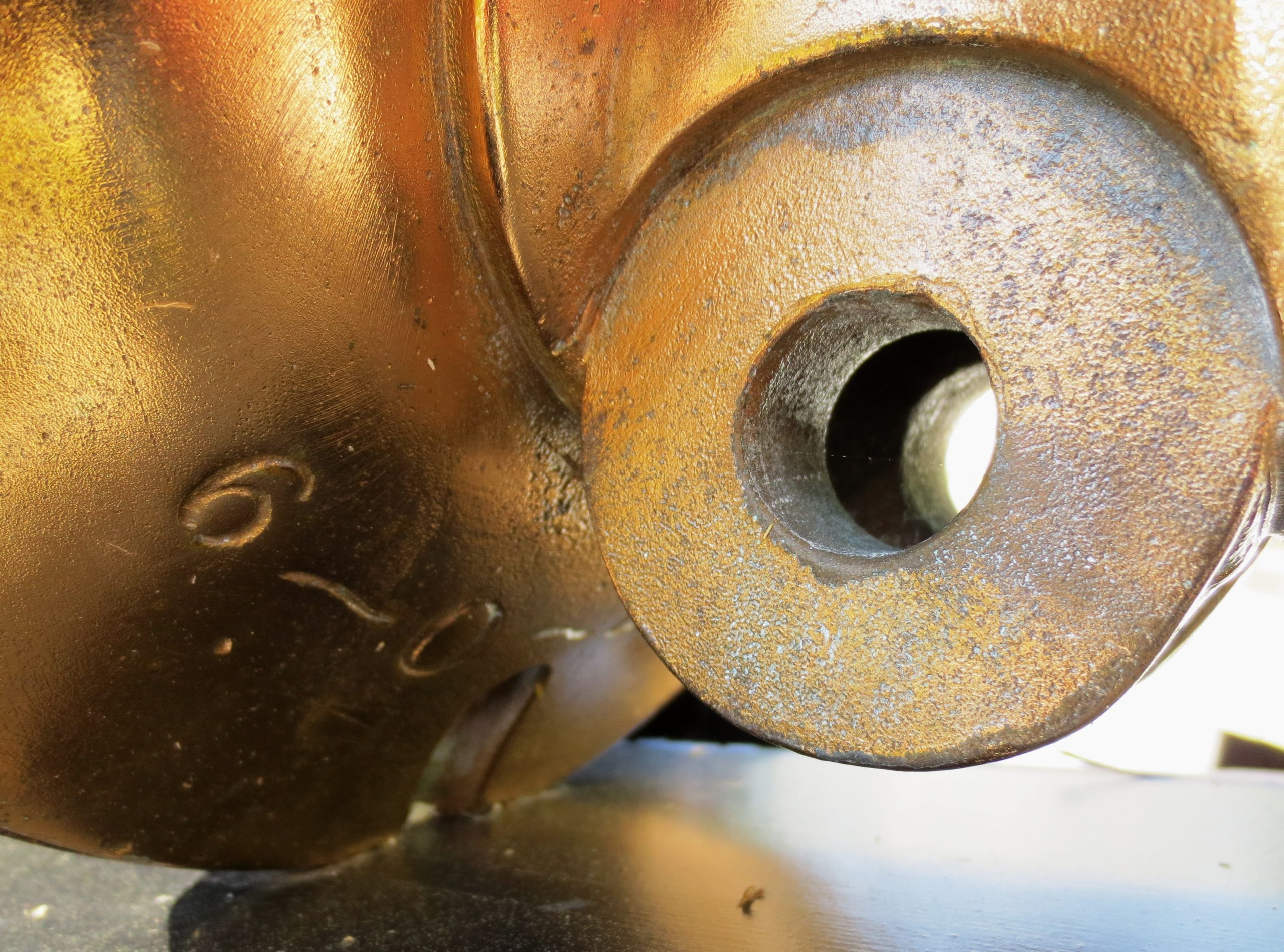
Bronze 6-pounder 6-cwt Smoothbore Gun, 6-0-4 (676 lbs), mounted on a wood naval gun carriage, 3-¾ inch bore. King George III cypher and Master General of the Ordnance, Francis Rawdon-Hastings,1st Marquess of Hastings cypher. This gun was one of three guns located in front of the Naval Gunnery School. It has been moved to the outdoor patio beside the WO’s Mess at Juno Towers.
Maritime Museum of the Atlantic, 1675 Lower Water Street. – Listed on a separate web page.
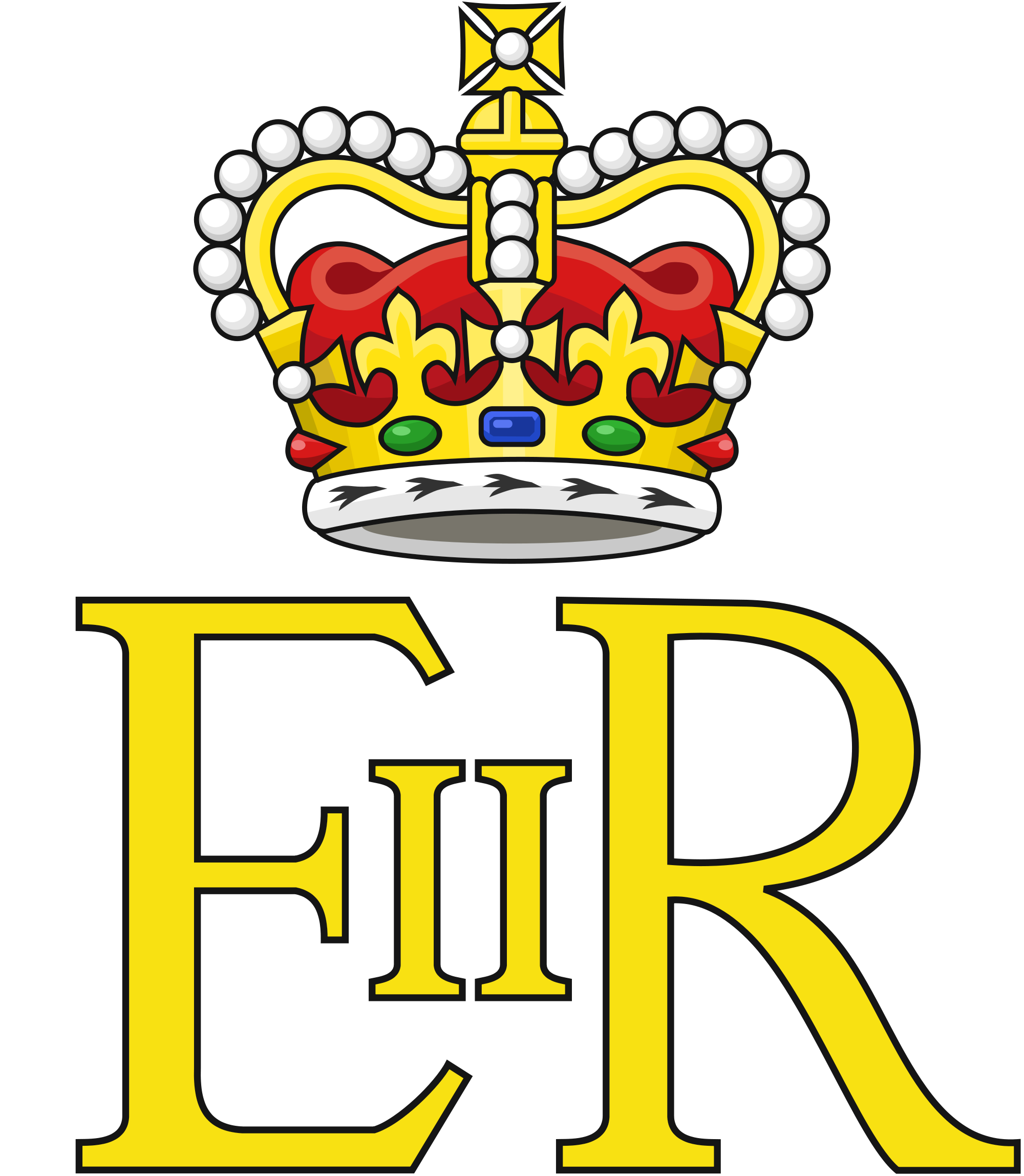
Queen Elizabeth II Royal cypher.
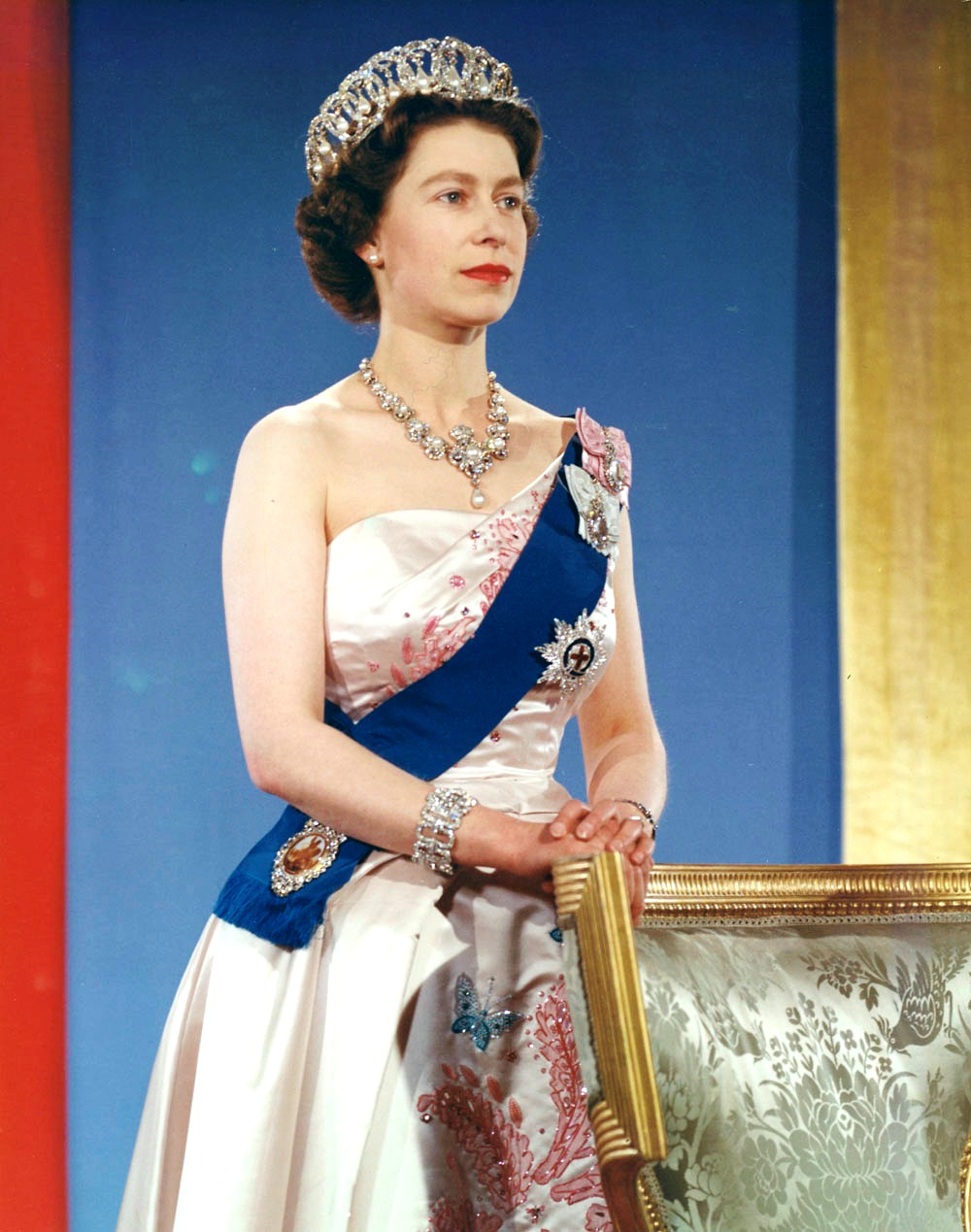
Queen Elizabeth II wearing the Vladimir Tiara, the Queen Victoria Jubilee Necklace, the blue Garter Riband, Badge and Garter Star and the Royal Family Orders of King George V and King George VI, photo taken in 1959. She has reigned from 6 Feb 1952 to the present day. (Library and Archives Canada Photo, MIKAN No. 4314245)
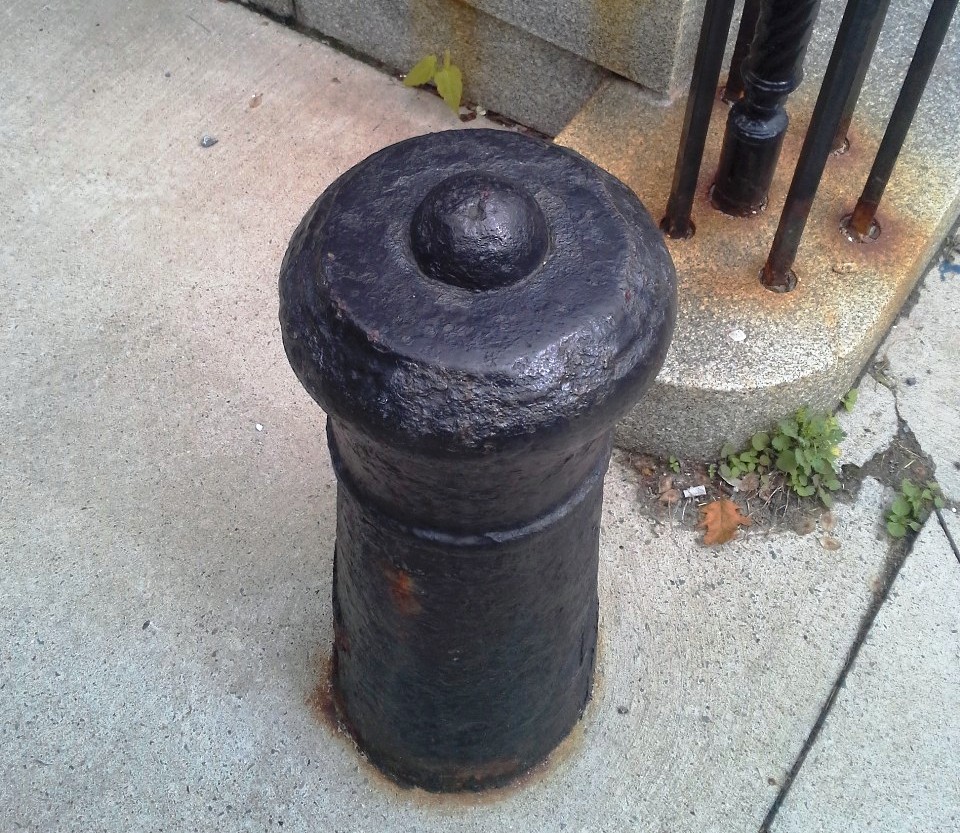
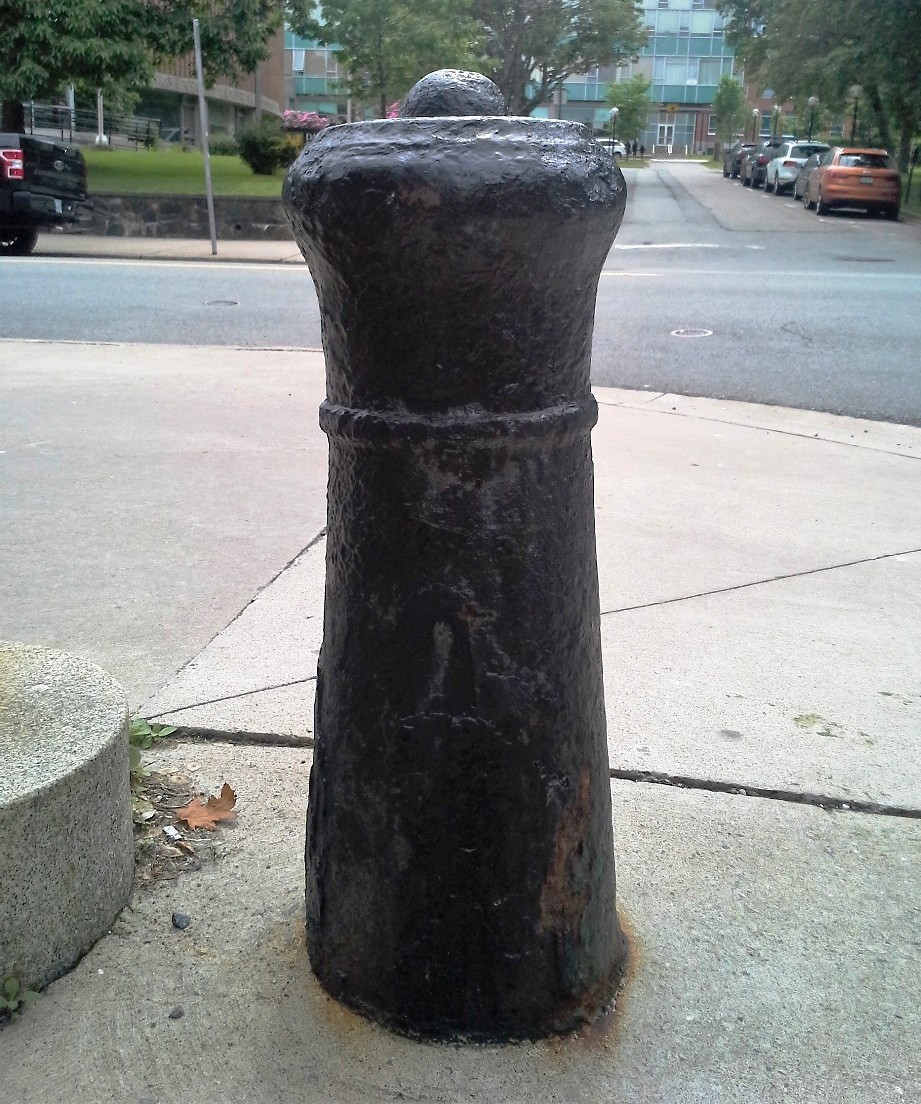
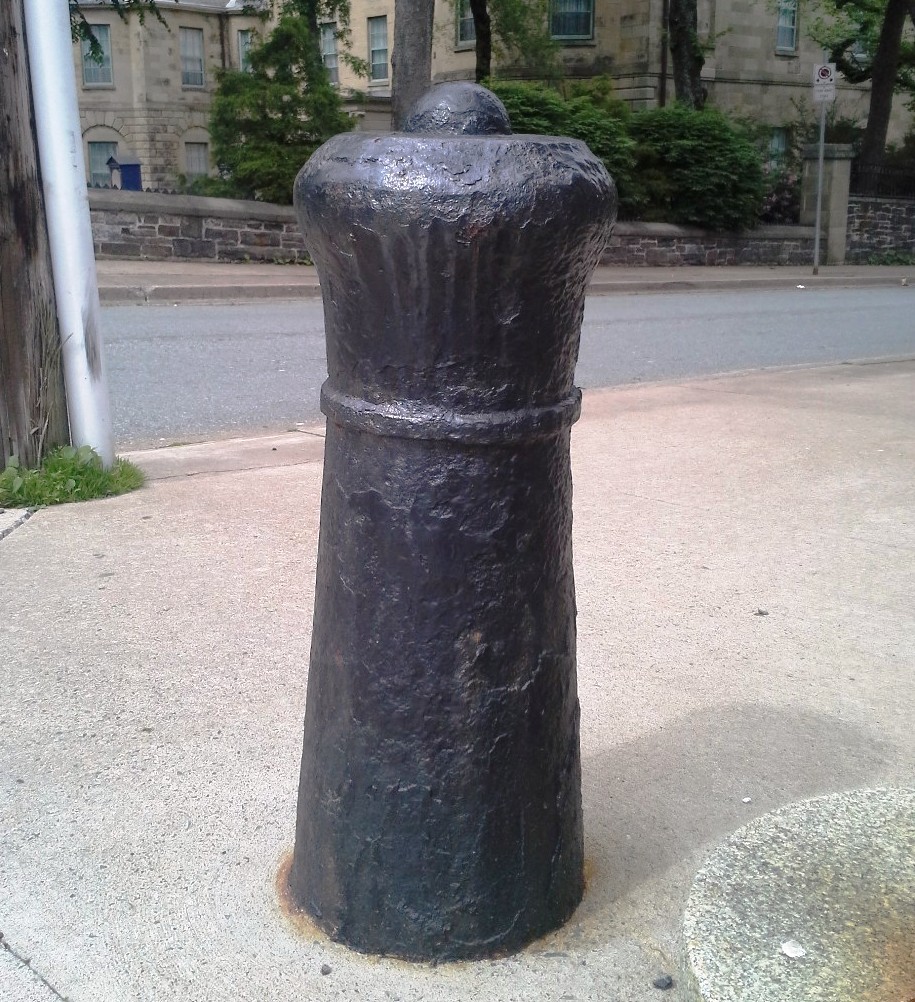
(Patrick Connor Photos)
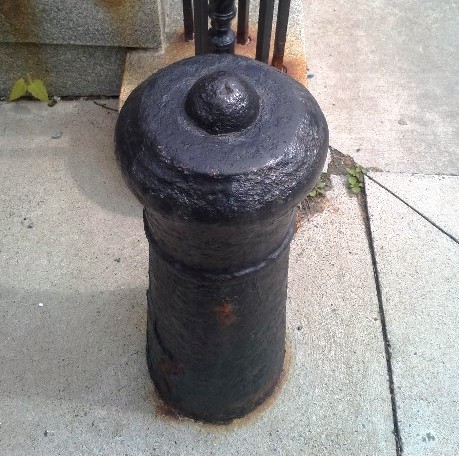
Cast Iron (possibly 12-pounder) Smoothbore Muzzleloading Gun, embedded in the ground with the barrel up, heavily corroded, no markings visible, SE corner of Barrington Street and Bishop Street. There are six known surviving corner cannons in Halifax and Dartmouth, this one by Government House on Barrington Street, one in Historic Properties, one in the Halifax Shipyard, one in the Naval Dockyard, two in Historic Properties, and one in Dartmouth.