
4 Canadian Mechanized Brigade Group, Canadian Forces Europe, 1968-1993, Major Combat units
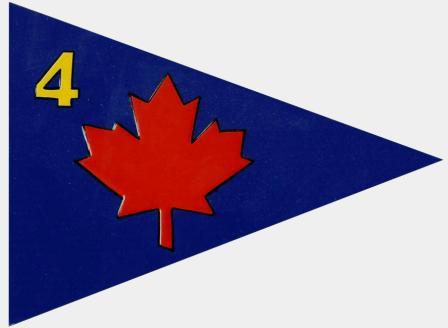
4 Canadian Mechanized Brigade Group
4 Canadian Mechanized Brigade Group (4 CMBG) was a formation of the Canadian Army, and from 1968, Force Mobile Command (FMC) of the unified Canadian Forces (CF). It was part of the European formation known as Canadian Forces Europe (CFE). The formation served as the main forward deployed land element of Canada’s armed forces, and was stationed in West Germany from 1957 until it was disbanded in 1993.
The presence of the three mechanized infantry battalions led Canada’s brigade in Germany to be renamed as 4 Canadian Mechanized Brigade Group (4 CMBG) on 1 May 1968, three months after Canada’s three separate armed forces were unified into the single Canadian Forces. Around the same time, a review of Canada’s foreign policy was announced by the Prime Minister, Pierre Trudeau, part of which involved an investigation into the role of 4 CMBG, which was the Canadian military’s main overseas asset. The ultimate result of the investigation was the announcement by the Prime Minister, as part of an overall cut in defence spending, to reduce the Canadian military commitment in Europe by half. 4 CMBG was re-roled, and rather than having its attachment as an active part of the British Army of the Rhine (BAOR), it become a reserve force attached to either the VII (US) Corps or II (GE) Corps, and relocated to Lahr in Southern Germany. Most notably, this downsizing and re-roling led to the withdrawal of the tactical nuclear weapons capability. 4 CMBG remained in place as part of NATO’s forces throughout the Cold War until the final drawdown of Canada’s military presence in Europe when it was disbanded in 1993.
The history of 27 Canadian Infantry Brigade (27 CIBG), and 4 Canadian Infantry Brigade (4 CIBG) can be viewed on a separate page on this website.
Major combat units of the CF that served in 4 CMBG:
Armour
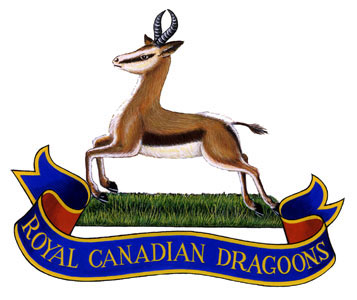
The Royal Canadian Dragoons – 1957-1959, 1970-1987
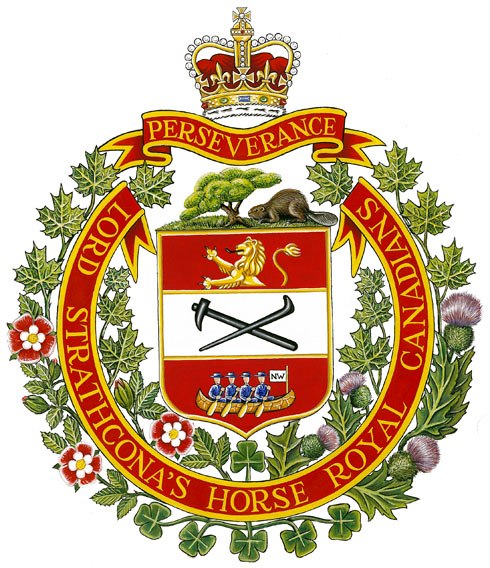
Lord Strathcona’s Horse (Royal Canadians) – 1966-1970
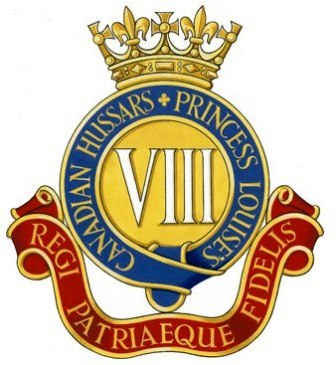
8th Canadian Hussars (Princess Louise’s) – 1960-1964, 1987-1993
The Fort Garry Horse – 1962-1966
Infantry
The Black Watch (1st Bn), Royal Highland Regiment of Canada – 1959-1962

1st Battalion, Canadian Guards – 1959-1962
2nd Battalion, Canadian Guards – 1957-1959
1st Battalion, The Royal Canadian Regiment – 1962-1965
2nd Battalion, The Royal Canadian Regiment – 1965-1969
3rd Battalion, The Royal Canadian Regiment – 1977-1984, 1988-1993

1st Battalion, Princess Patricia’s Canadian Light Infantry – 1964-1967
2nd Battalion, Princess Patricia’s Canadian Light Infantry – 1966-1970, 1984-1988
1er Bataillon, Royal 22e Régiment – 1967-1993
2e Bataillon, Royal 22e Régiment – 1965-1969
1st Battalion, The Queen’s Own Rifles of Canada – 1960-1964
2nd Battalion, The Queen’s Own Rifles of Canada – 1957-1959
2nd Battalion, The Black Watch (Royal Highland Regiment) of Canada – 1962-1965
3rd Mechanized Commando, The Canadian Airborne Regiment – 1970-1977
Artillery
1st Regiment, Royal Canadian Horse Artillery – 1957-1960, 1967-1993
2nd Regiment, Royal Canadian Horse Artillery – 1964-1967
3rd Regiment, Royal Canadian Horse Artillery – 1960-1964

4 Field Squadron, Royal Canadian Engineers
444 Combat Support Squadron

4 CMBG HQ and Signals Squadron
4 CMBG HQ and Signals Squadron, G2 Intelligence Section
4 Service Battalion was created at CFB Soest in 1968 and moved to CFB Lahr in 1970 in support of 4 CMBG until the close out of Canada’s NATO commitment there in 1993.
4 Combat Medical Support Unit
4 Military Police Platoon
4 Canadian Military Support Unit
Ancillary supporting signal and service units in Soest, Werl, Iserlohn, and Hemer included the following units from 1957 to 1959:
- 1 Transport Company
- 1 Field Ambulance
- 4 Field Park Company
- 4 Ordnance Field Park
- 1 Canadian Base Ordnance Unit
- 4 Field Workshop RCEME
- 4 CIBG Light Aid Detachment
- 1 Field Detention Barracks
- 1 Cdn Base Medical Unit
- 4 Provost Platoon
- PPCLI Band
On 1 February 1968 the Canadian Army merged with the Royal Canadian Air Force (RCAF) and the Royal Canadian Navy (RCN) to form the unified Canadian Forces (CF). RCAF Station Baden-Soellingen was renamed Canadian Forces Base Baden-Soellingen, or CFB Baden-Soellingen.
Canadian Forces Europe
Canadian Forces Europe (CFE) was the Canadian Forces military formation in Europe during the Cold War. The CF assisted other NATO allies in being prepared to counter the military activities of Warsaw Pact and the Soviet Union.
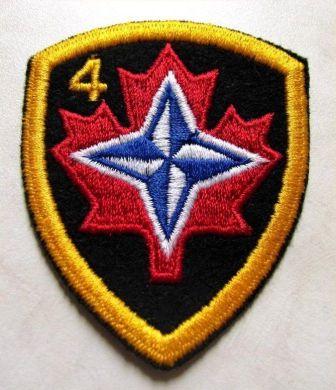
Canadian Forces Europe (CFE) consisted of two formations in what was known as West Germany before the Berlin Wall fell in November 1990. These formations included Canadian Forces Base (CFB) Lahr with 4 Canadian Mechanized Brigade Group (1957-1993), and No. 1 Canadian Air Division (1 CAD), RCAF, at CFB Base Baden-Soellingen and CFB Base Lahr, which later became No. 1 Canadian Air Group (1 CAG). Both formations were closed in 1993 with the end of the Cold War.

1 Canadian Air Group crest.
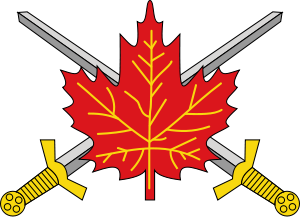
Canadian Army elements in CFE
Canada had maintained a presence in Europe as part of the NATO forces since 1951, when 27 Canadian Infantry Brigade was initially deployed to Hannover, Germany, attached to the British Army of the Rhine (BAOR). This formation, which was formed primarily with Militia units, eventually moved to a permanent base at Soest, Germany, in 1953. Initially, it was intended to rotate brigades to Germany – 27 CIB was replaced by 1 Canadian Infantry Brigade Group in October 1953, which in turn was replaced by 2 Canadian Infantry Brigade Group in 1955, and then 4 Canadian Infantry Brigade Group in 1957.
4 CMBG 1958 – 1993
Further defence cuts and consolidation saw the Canadian Army renamed Force Mobile Command FMC, with units of 4 Canadian Mechanized Brigade Group based in the Soest area of northern West Germany moved to Canadian Forces Base Lahr. However, a mechanized infantry battalion was stationed alongside the RCAF fighter squadrons based at Baden-Soellingen. These units included:
1970-1977: 3rd Mechanized Commando, The Canadian Airborne Regiment
1977-1984: 3rd Battalion, The Royal Canadian Regiment
1984-1988: 2nd Battalion, Princess Patricia’s Canadian Light Infantry
1988-1993: 3rd Battalion, The Royal Canadian Regiment
In addition, there was also a communications squadron, and after 1987, an air defence battery.
The ramp-up in defence spending during renewed Cold War tensions in the late 1970s and 1980s saw CFB Baden-Soellingen receive much-needed new infrastructure, including updated living quarters for its personnel and their dependents.
In October 1989 the Berlin Wall came down and by the end of 1990 Germany had reunited, thawing Cold War tensions and removing the role for Canada’s active units stationed in Western Europe under NATO command.
In September 1990 it was announced that an infantry company from the 3rd Battalion, The Royal Canadian Regiment, would deploy from CFB Baden-Soellingen to a base in Qatar as part of Operation Desert Shield along with some airfield security personnel.
The last major deployment from CFB Baden Soellingen occurred in April 1992, when infantry soldiers from November Company of The Royal Canadian Regiment were deployed on a United Nations peacekeeping mission to the disintegrating country of Yugoslavia. November Company’s deployment was the first of many that the Canadian Forces would undertake to that nation under the banner of the United Nations Protection Force (UNPROFOR). On the first night in Sira, Croatia, November Company came under indirect mortar fire and was hit by 10-25 shells. In July 1992, the company was re-located to Sector Sarajevo, and came under the command of Brigadier General Lewis MacKenzie. November Company was ordered to break through to and seize Sarajevo International Airport for UNPROFOR to use for transporting food and supplies to civilians in the city.
The post-Cold War defence cuts of the early 1990s identified both CFB Baden-Soellingen and CFB Lahr for closure by 1994. With the end of the Cold War, the Canadian government opted to withdraw its forces stationed in Europe.
The airfield at CFB Baden Soellingen closed on 31 March 1993. By summer 1993 most personnel had vacated CFB Baden-Soellingen with the base becoming a detachment of CFB Lahr, whose personnel had also largely vacated by 31 August 1993. During the final months, Baden-Soellingen operated largely as a detachment of CFB Lahr and was permanently closed on 31 December 1993. CFB Lahr would continue on until being officially closed 8 months later on 31 August 1994. The Baden Airpark GmbH took over the area in 1995 and commercial flights from the former Canadian airfield began in 1997.
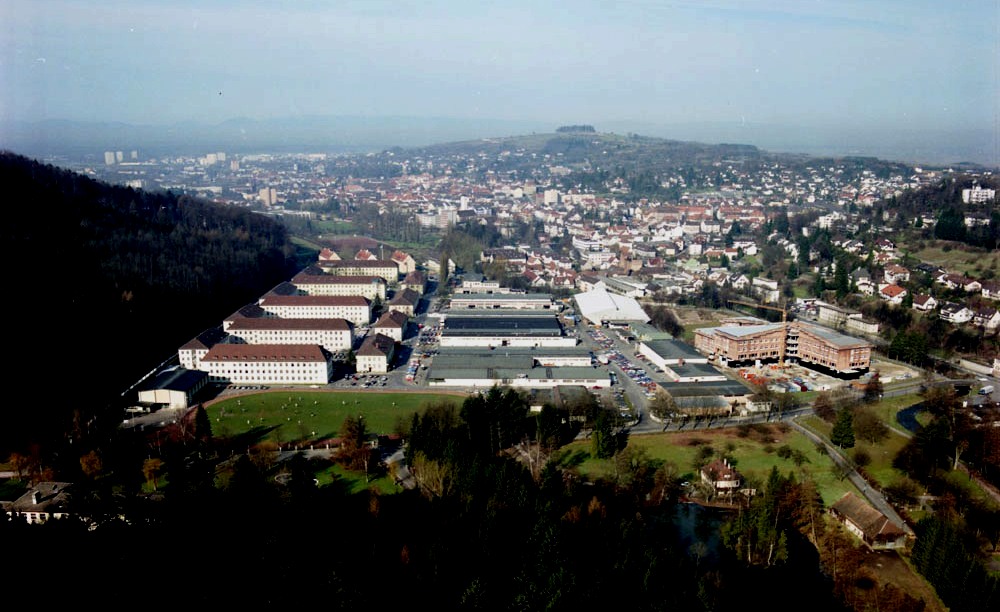
(Library and Archives Canada Photo, MIKAN No. 4221659)
Lahr Kaserne, HQ 4 CMBG and HQ CFE, aerial view looking West, ca 1990, with the Schutterlindenberg Hill visible on the horizon, and the then new Hospital on the right.
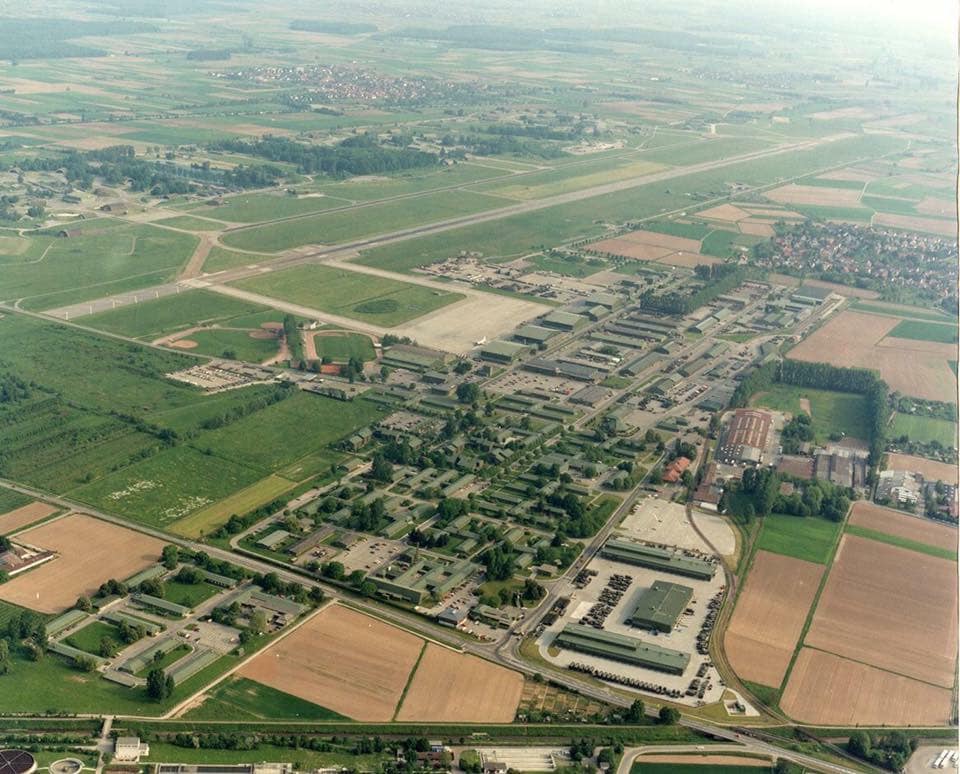
Aerial view of the airfield at CFB Lahr.