
Avro Lancaster, in service with the RCAF during the Cold War
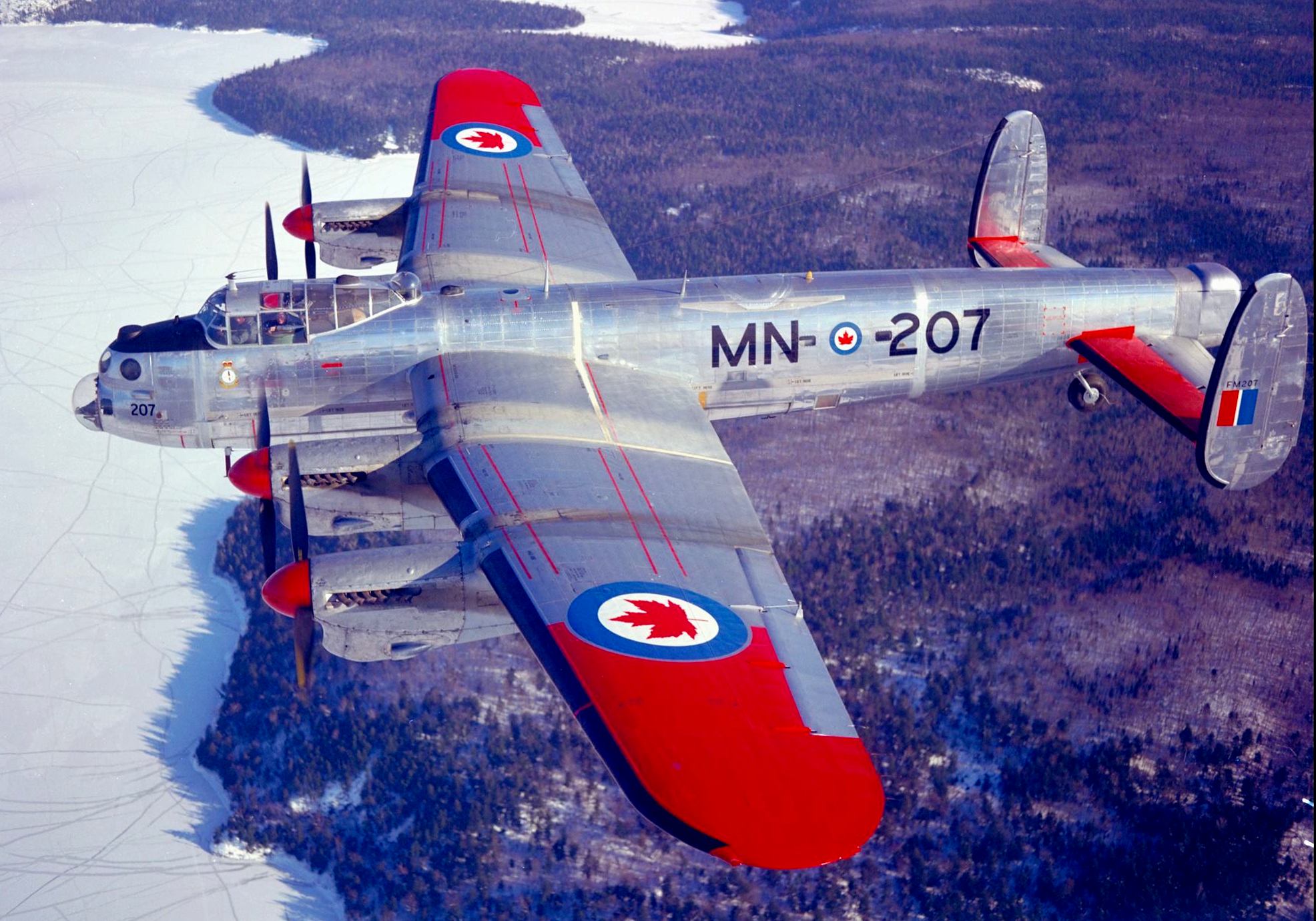
(RCAF Photo via Mark Allen)
Avro Lancaster Mk. 10, RCAF (Serial No. FM207), coded MN, in flight, post war. Built by Victory Aircraft Ltd. in July 1945; Flown to England on 22 Aug 1945; the last Lancaster manufactured in Canada delivered overseas; returned to Canada on 19 Nov 1945; placed in storage until June 1949. Avro (Canada) converted it to Mk. 10P standard, the seventh conversion, for use with No. 413 (P) Squadron, No. 9 (T) Group. On the formation of No. 408 (P) Squadron, it was reissued, (Serial No. MN207); also (Serial No. AK207); SOC 26 Sep 1962; used as spares.
The Canadian built Avro Lancasters were powered by four Packard Merlin 224 engines with 1,640 hp each. These aircraft had a maximum speed of 442 kmh (275 mph), a cruising speed of 337 kmh ((210 mph), a service ceiling of 7,833 m (25,700 ft) and a range of 4,071 km (2,530 miles). Thousands of Canadian airmen and ground crew served with RCAF and RAF Lancaster squadrons in England, during the Second World War. By late 1944, Canada’s No. 6 Group, Bomber Command operated thirteen squadrons of Lancasters carrying the war to Germany. At home, thousands more Canadians worked at Victory Aircraft in Malton (Toronto), Ontario to produce 430 Lancaster Mk. 10s, between 1943 and 1945. Their role in the war from 1942 to 1945 is covered on a separate page on this website.
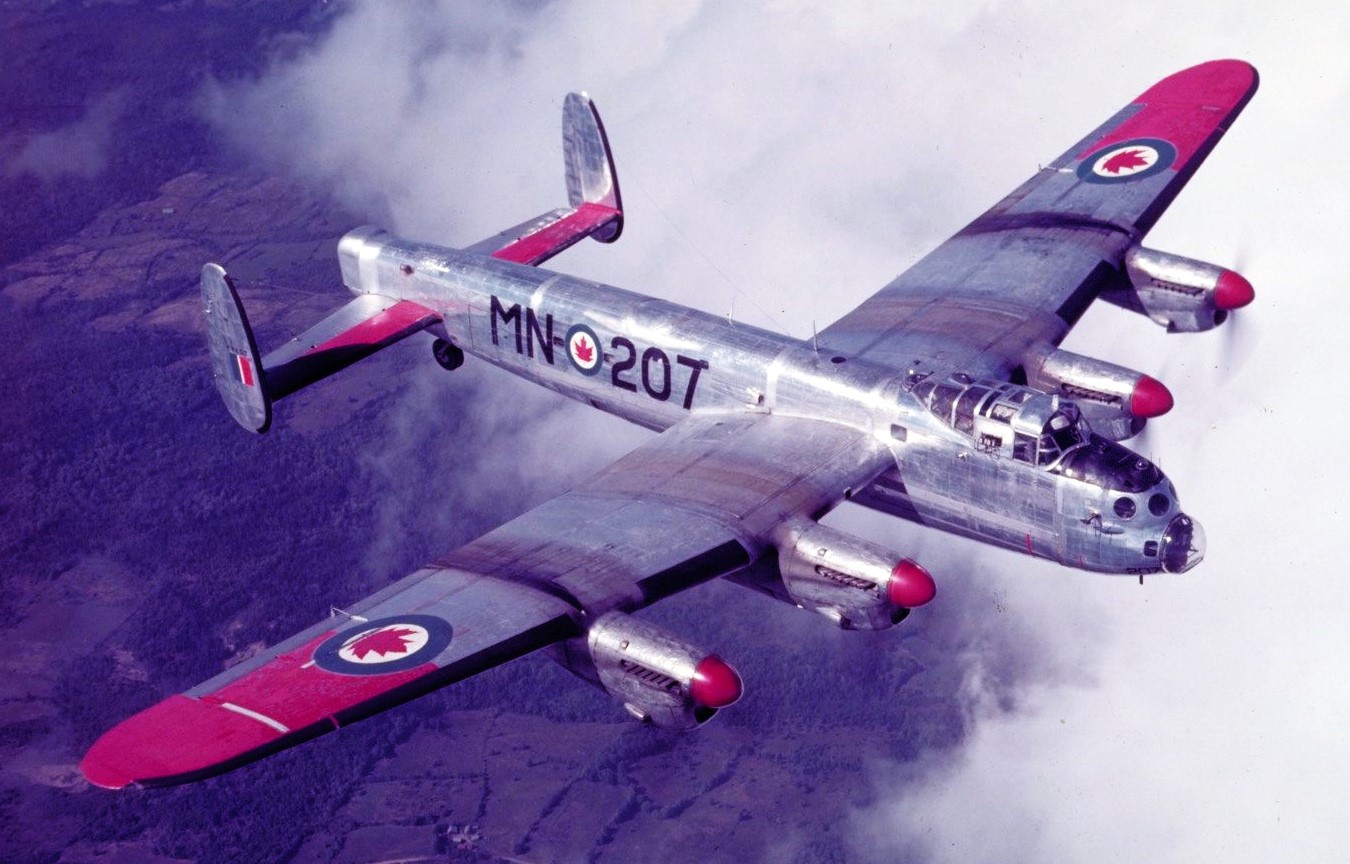
(RCAF Photo via The Aviation Titan)
Avro Lancaster Mk. 10, RCAF (Serial No. FM207), coded MN, in flight, post war.
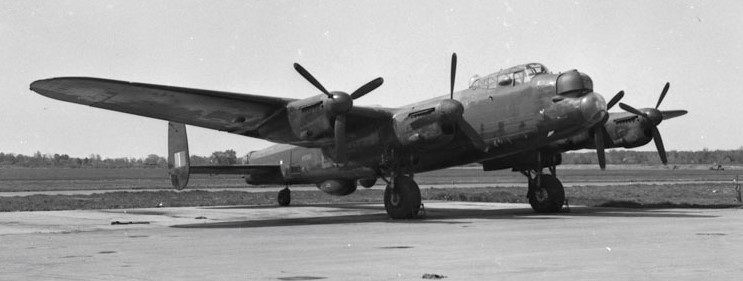
(Library and Archives Canada Photo, MIKAN No. 3584031)
No. 405 ‘Vancouver’ (B) Squadron Lancaster B. Mk. X, RCAF (Serial No. KB961), coded LQ-A. KB961 repatriated back to Canada on 17 June 1945. All of the squadron’s Lancasters were dropped off at No. 1 Maintenance Wing H.Q. Scoudouc, New Brunswick.
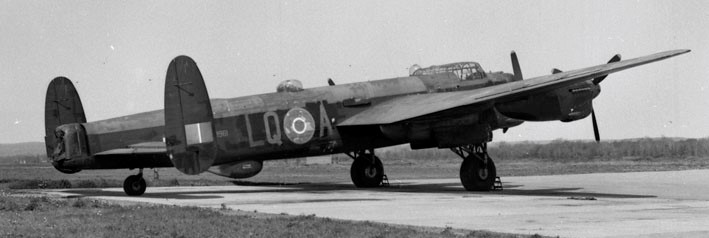
(Library and Archives Canada Photo, MIKAN No. 3584030)
No. 405 ‘Vancouver’ (B) Squadron Lancaster B. Mk. X, RCAF (Serial No. KB961), coded LQ-A. KB961, 1946.
Following the end of the Second World War, 288 Lancasters served with the RCAF in several roles including Arctic reconnaissance, maritime patrol, and as a bomber. Beginning in 1946, Avro Lancaster Mk. 10s were modified in Canada for service with the post-war RCAF. Fourteen aircraft were modified to perform aerial and photo-reconnaissance missions; these would go on to perform much of the mapping of northern Canada until as late as 1962. Throughout the 1950s, the RCAF operated seventy modified Lancasters, designated Lancaster 10MR/MPs, as Maritime Reconnaissance and Patrol aircraft in an anti-submarine role. Modifications involved the installation of radar and sonobuoy operators’ positions, removal of the rear and mid-upper gun turrets, installation of a 400-gallon fuel tank in the bomb bay to increase the patrol range, upgraded electronics, radar, and instrumentation, and a cooking stove in the centre section. These Lancasters served throughout the 1950s, when they were replaced by the Lockheed Neptune and the Canadair Argus.
Modified lancasters were designated Mk. 10S (Standard), Mk. 10 AR (Area Reconnaissance), Mk. 10MR (Maritime Reconnaissance), 75 made. More than half of these modifications were sub-contracted to de Havilland in Ontario. Fairey Aviation in Nova Scotia modified the remaining Mk. 10 MR aircraft.
The Lancaster was officially retired from the RCAF at Downsview (Toronto), Ontario, in April 1964.
Avro Lancasters flown by the RCAF post-war had the following unit codes:
AF, No. 404 Maritime Reconnaissance (MR) Squadron.
AG and VN, No. 405 Maritime Reconnaissance (MR) Squadron.
AJ and RX, No. 407 Maritime Reconnaissance (MR) Squadron.
AK and MN, No. 408 Photographic (P) Squadron.
AP, No. 413 Photographic (P) Squadron.
CH and FH, No. 103 Rescue Unit (RU).
CJ and FH, No. 123 Rescue Unit (RU).
CQ, Central Navigation School (CNS).
CX, No. 107 Rescue Unit (RU).
DD, Central Flying School (CFS).
DH, Central Navigation School (CNS).
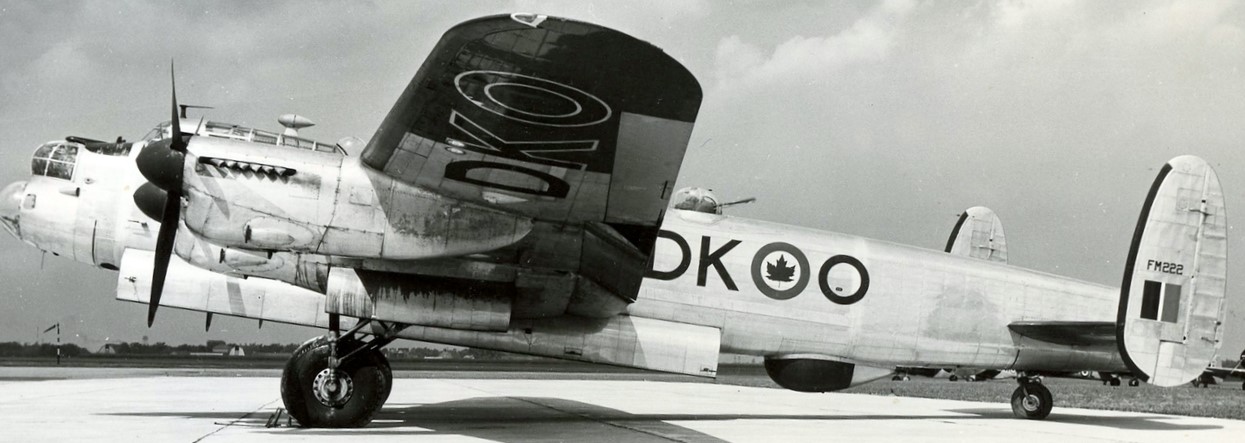
DK, Air Armament School (AAS).
FC and PX, Central Experimental Proving Estabishment (CEPE) and Winter Experimental Establishment (WEE).
GS, No. 1 Air Navigation School (1 ANS).
HW, No. 2 Air Navigation School (2 ANS).
XV, (Maritime) Operational Training Unit (OTU).
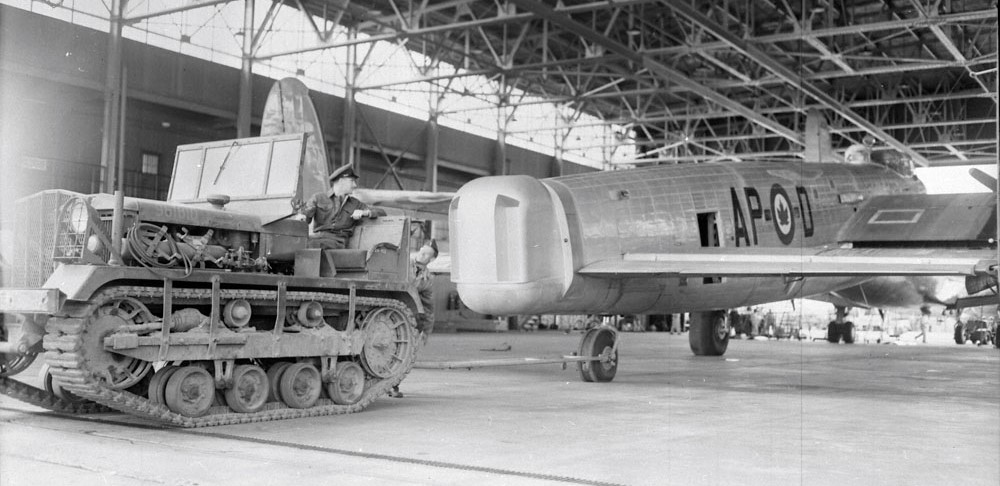
(Library and Archives Canada Photo, MIKAN No. 3586149)
Avro Lancaster, coded AP-D, being towed by a Cletrac M2 High Speed Tractor, No. 8 Detachment, 16 November 1948. Avro Lancaster Mk. 10P, coded AP-D flew with No. 413 ‘Tusker’ (P) Squadron. The photo was likely taken at RCAF Station Rockcliffe, Ontario. Note the North Star in front. The squadron’s association with the Lancaster was very short-lived. They operated the type from January, 1948 to April, 1948.
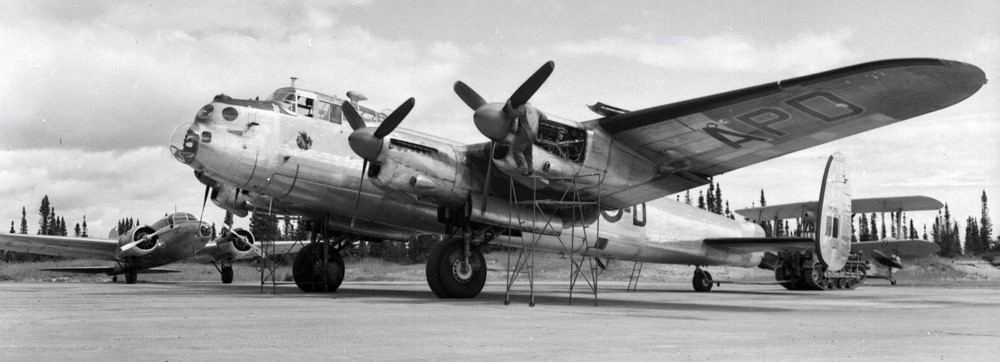
(Library and Archives Canada Photo, MIKAN No. 3586154)
Avro Lancaster Mk. 10P, coded AP-D, No. 8 Detachment, 16 November 1948.
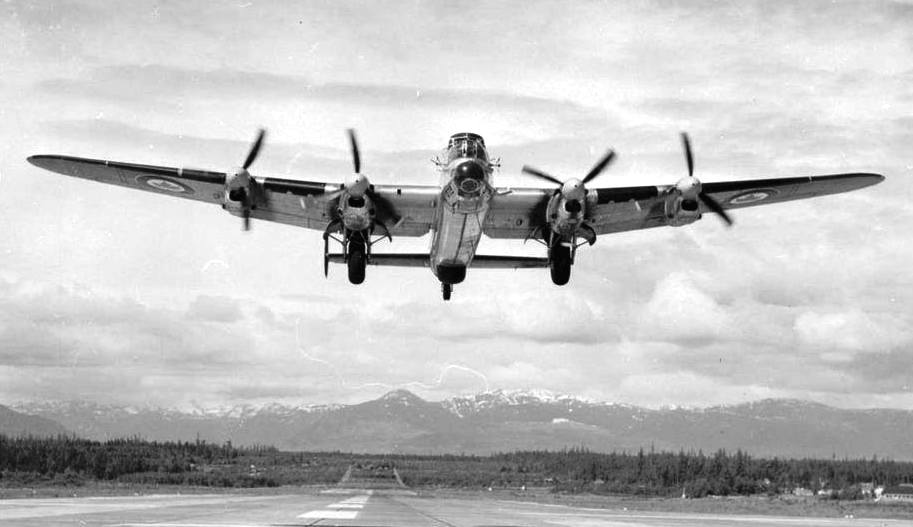
(British Columbia Archives Photo)
Avro Lancaster Mk. 10, taking off at RCAF Station Comox, British Columbia, ca 1950s.
The Canadian-built Lancaster B Mk. X was produced in significant numbers. A total of 430 of this type were built, earlier examples differing little from their British-built predecessors, except for using Packard-built Merlin engines and American-style instruments and electronics.
Postwar, the Lancaster was supplanted as the main strategic bomber of the RAF by the Avro Lincoln, a larger version of the Lancaster (three were built in Canada and flown by the RCAF). The Lancaster took on the role of long range anti-submarine patrol aircraft and air-sea rescue. It was also used for photo-reconnaissance and aerial mapping.
Beginning in 1946, Lancaster Mk. Xs were modified for service with the RCAF. Fourteen aircraft were modified to perform aerial and photo-reconnaissance missions; these would go on to perform much of the mapping of northern Canada until as late as 1962. Throughout the 1950s, the RCAF operated seventy modified Lancasters, designated Lancaster 10MR/MPs, as Maritime Reconnaissance and Patrol aircraft in an anti-submarine role. Modifications involved the installation of radar and sonobuoy operators’ positions, removal of the rear and mid-upper gun turrets, installation of a 400-gallon fuel tank in the bomb bay to increase the patrol range, upgraded electronics, radar, and instrumentation, and a cooking stove in the centre section. They served throughout the 1950s, when they were replaced by the Lockheed Neptune and Canadair Argus.
The B.X was a Canadian-built B.III with Canadian and US-made instruments and electrics. On later batches the heavier Martin 250CE was substituted for the Nash & Thomson FN-50 mid-upper turret, mounted further forward to maintain centre of gravity balance. Canada was a long term operator of the Lancaster, using modified aircraft after the war for maritime patrol, search and rescue and photo-reconnaissance until 1964. The last flight by the RCAF was by F/L Lynn Garrison in (Serial No. KB-976), on 4 July 1964 at the Calgary International Air Show.
Postwar the RCAF modified the B X (as the Lancaster Mk 10) to fill a variety of roles, with specific designations for each role. These included:
10AR: Area Reconnaissance – three aircraft modified for surveillance operations over the Arctic. Fitted with lengthened nose (40 inches (100 cm) longer) and carrying cameras and ELINT equipment. These remained in service until 1964.
10BR: Bomber Reconnaissance. Minimally modified variant with additional windows for observers in rear fuselage. 13 converted.
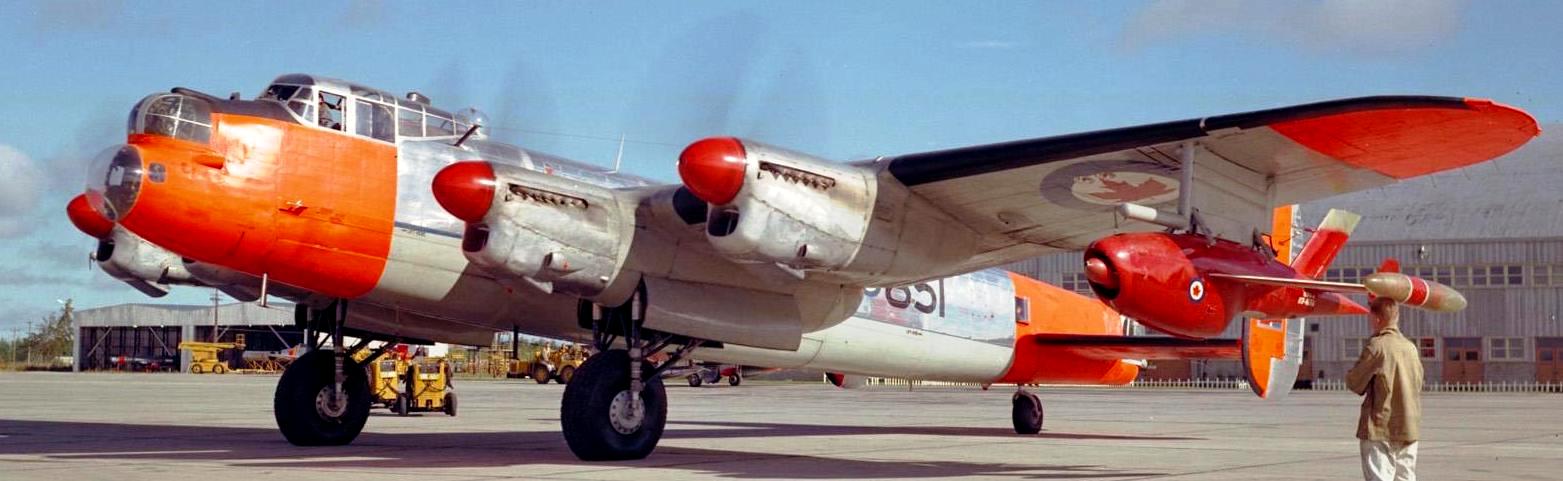
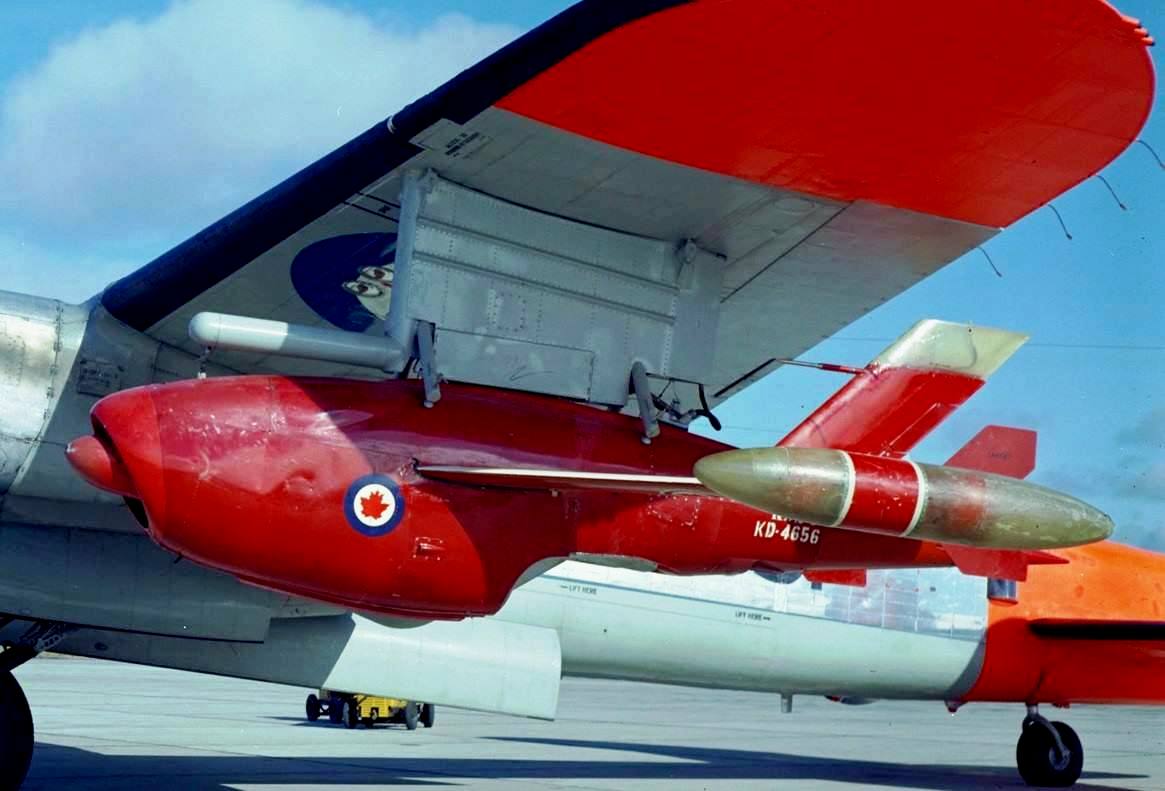
10DC: Drone controller with Ryan Firebee drones – two modified in 1957 and operational until 1961.
10MR (later 10MP): Maritime Reconnaissance or Maritime Patrol anti-submarine warfare (ASW) aircraft, based on BR with mid-upper turret removed. 70–75 converted. In service from 1950 to 1955.
10N: Navigational trainer. Five converted.
10O: Orenda jet engine testbed for the engine used in the Avro CF-100 Canuck.
10P: Photo reconnaissance mapping duties. 11 converted 1948–1950. Retired 1964.
10S&R: Interim search-and-rescue aircraft, minimally modified 10S. Replaced by disarmed 10BR and 10MRs.
10S : Standard – designation applied to baseline standard, with Merlin 224 engines, Marin mid-upper turret and H2S radar, for aircraft retained postwar for future use. Sometimes referred to by unofficial designation 10U.
B.XV: As per Lancaster B.IV/Lincoln B.1 but built in Canada and renamed Avro Lincoln XV. Three were built before order was cancelled when war ended.
Of the 17 surviving and largely intact Lancasters known to exist, two are airworthy; one, called Vera (Serial No. FM213), coded VR-A, is in Canada, operated by the Canadian Warplane Heritage Museum in Mount Hope, a suburb of Hamilton, Ontario, and the other, (Serial No. PA474), is based in Coningsby, in the UK, operated by The Battle of Britain Memorial Flight. In 2014, “Vera” toured the UK in a series of joint displays with the BBMF aircraft. For the 2018 flying season, to commemorate the 75th anniversary of Operation Chastise, the Canadian Warplane Heritage Lancaster is painted in the markings of Guy Gibson’s 617 Squadron aircraft (Serial No. ED932), coded AJ-G, when he commanded the “Dambusters” raids.
Another Lancaster, Just Jane, based in East Kirkby Lincolnshire Aviation Heritage Centre is able to taxi but is not currently airworthy, though there are plans to return her to flight in the future. The fourth Lancaster with working engines and able to taxi is “Bazalgette” (Serial No. FM159), based at the Bomber Command Museum of Canada in Nanton, Alberta. It has been carefully restored from a vandalised state and is now a major tourist attraction.
Post war RCAF Lancasters by Unit
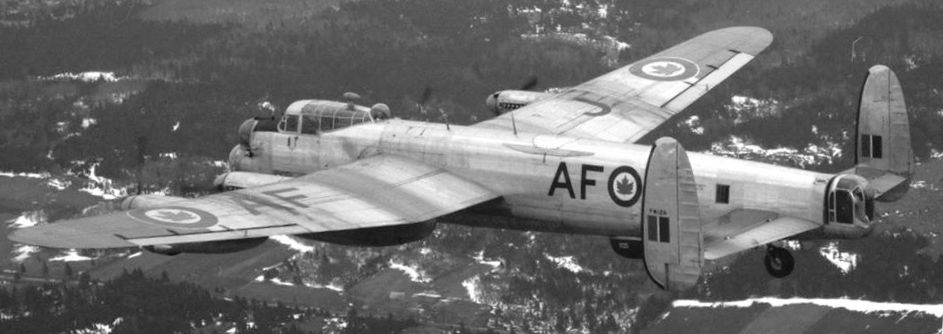
No. 404 Maritime Reconnaissance (MR) Squadron, aircraft coded AF, was reformed on 30 April 1951, at RCAF Station Greenwood, Nova Scotia. On 17 July 1956, No. 404 Squadron was redesignated as a Maritime Patrol squadron, and when the Lockheed CP-140 Aurora came into service the title was changed again to No. 404 Maritime Patrol and Training Squadron. The current title is No. 404 Long Range Patrol and Training (LRP&T) Squadron.
(DND Photo, PL53537 via Fred Paradie)
Avro Lancaster Mk. 10, RCAF (Serial No. FM126), coded AF-J, No. 404 Squadron, Maritime Lancaster. Arrived at No. 419 (B) Squadron at Middleton St George, Durham, England by May 1945; not on operations; flown back to Canada as a spare; placed in storage for a short while then transferred to Camp Borden, Ontario, on 19 Mar 1947 as Ground Instruction Machine No. 551B, used for Engine run-ups; SOC 5 Mar 1954.
Avro Lancaster Mark variations include 10 AR (Aerial Reconnaissance/Arctic Reconnaissance), 10BR (Bomber Reconnaissance), 10C (Chinook engine test bed), 10MR (Maritime Reconnaissance), 10MP (Maritme Patrol/Maritime Photographic), 10SR (Search and Rescue), 10 DC (Drone Carrying/Controler/Carrier), 10O (Orenda jet engine development), 10P (Photographic Reconnaissance/Photographic Survey), 10N (Navigation Trainer), 10S (Standard/unmodified).
(RCAF Photo via Mike Maehler)
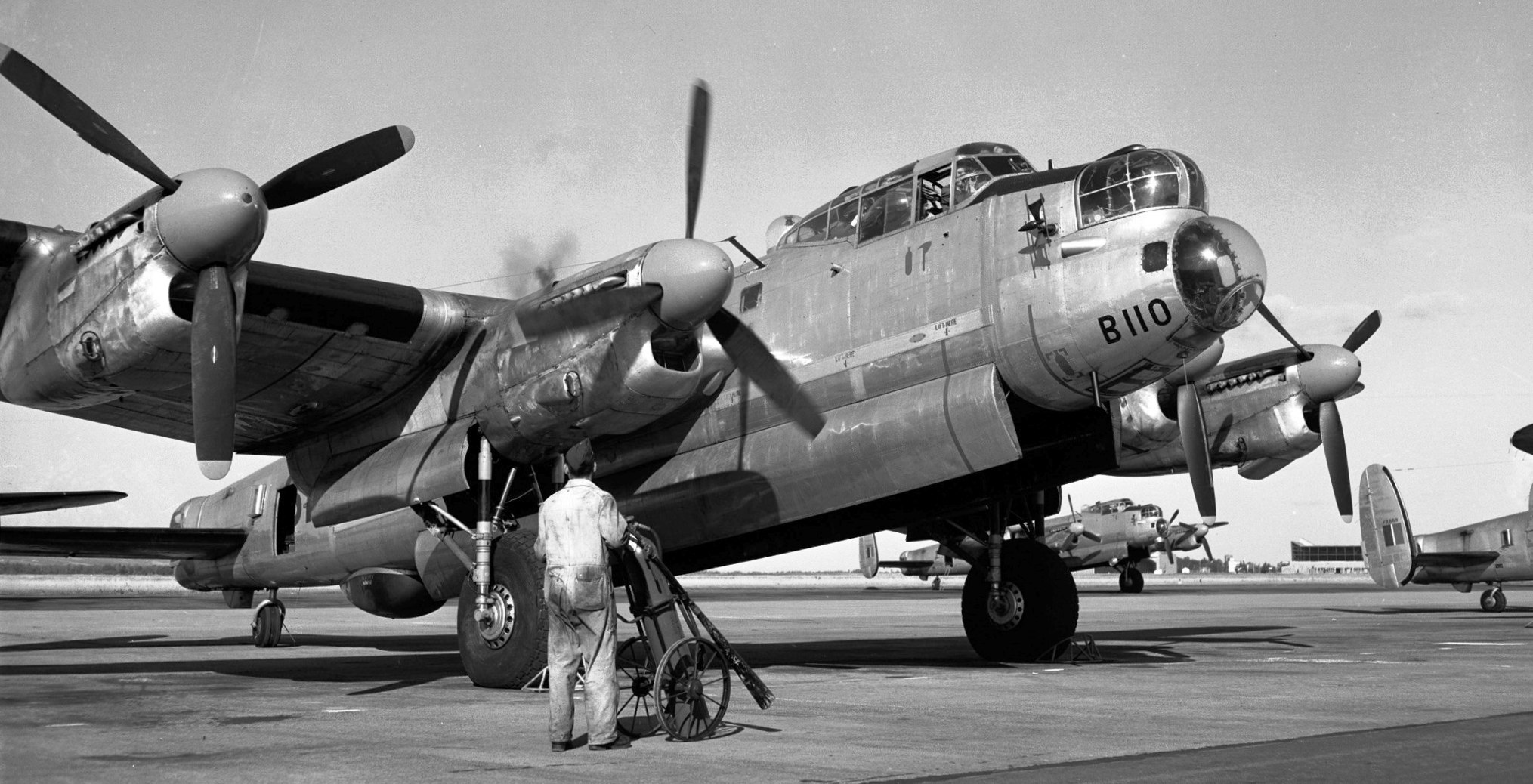
Avro Lancaster Mk. 10, RCAF (Serial No. FM110), painted B110 on the nose, No. 404 Squadron, starting engine No. 3 at RCAF Station Greenwood, Nova Scotia with the fire guard standing by and the back door still open. Flown to England and issued to No. 405 (B) Squadron in May 1945 at Linton-on-Ouse, Yorks; returned to Canada on 17 June 1945 for use with Tiger Force, No. 664 (HB) Wing, RCAF Station Greenwood, Nova Scotia; to Avro Canada converted to Mk. 10MR in 1950; issued to No. 2 OTU; SOC 23 Jan 1955; scrapped.
(Library and Archives Canada Photo, MIKAN No. 3586684)
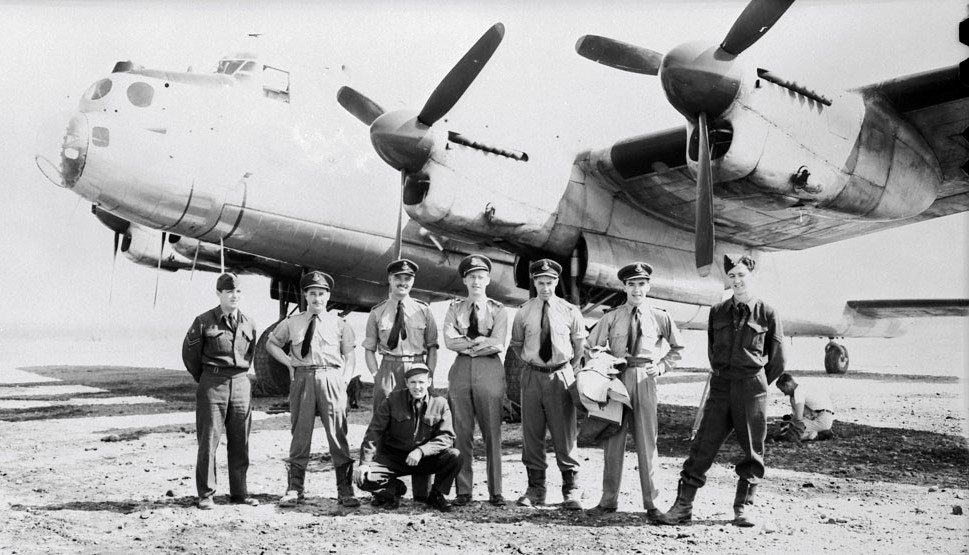
Avro Lancaster with aircrew, 27 Sep 1950.
(DND Photo via Chris Charland)
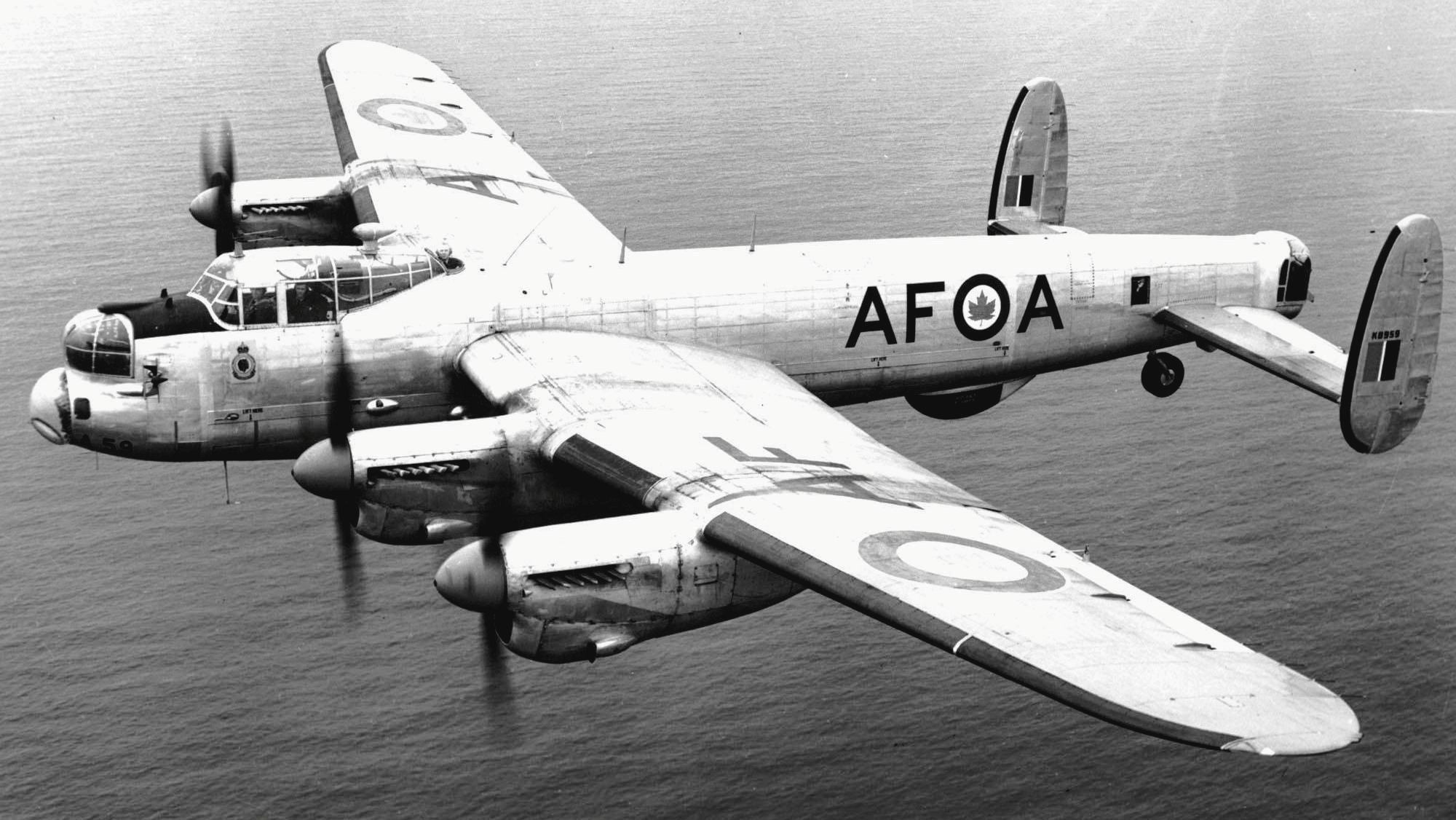
Avro Lancaster Mk. 10MP (Serial No. KB959), coded AF-A, No. 404 “Buffalo” (MR) Squadron, RCAF Station Greenwood, Nova Scotia. Flown to England; issued to No. 405 (B) Squaron, coded LQ-Y; too late for operations; returned to Canada on 17 Jun 1945; attached to No. 664 Wing, Tiger Force, RCAF Station Greenwood, Nova Scotia; converted to Mk. 10MP; issued to No. 404 (MR), coded VC-AFA; in service until SOC 17 May 1963
Lancaster KB959 was used in the flypast over the Canadian Parliament buildings during the coronation of Queen Elizabeth II on 2 June 1953. F/O M.J. Piercy, was navigator and Wing Commander D.E. Galloway was pilot. (Brent Piercy)
No. 405 Maritime Reconnaissance (MR) Squadron, aircraft coded AG and VN, was reformed on 1 April 1947 as No. 405 Bomber Reconnaissance Squadron at RCAF Station Greenwood, Nova Scotia. It was later redesignated No. 405 Maritime Reconnaissance Squadron and then No. 405 Maritime Patrol Squadron. In April 1950, as a Maritime Patrol Squadron, the squadron was equipped with modified Mk. X Lancasters. These were replaced in mid-1955 by the Lockheed P2V7 Neptune, giving the squadron a much greater anti-submarine capability. In Apr 1958 the squadron was the first to fly the Canadair CP-107 Argus. The squadron made its last flight in the Argus on 10 November 1980 before it was replaced by the Lockheed CP-140. Though No. 405 Squadron’s primary combat functions are anti-submarine warfare (ASW) and anti-surface warfare (ASUW), most of its time is spent fulfilling a variety of non-combat roles. These include search and rescue, counter-drug operations with the RCMP, and anti-pollution and fisheries patrols. It flew operations in the Arabian Sea after the 11 Sep 2001 terrorist attacks.
(USN Photo)
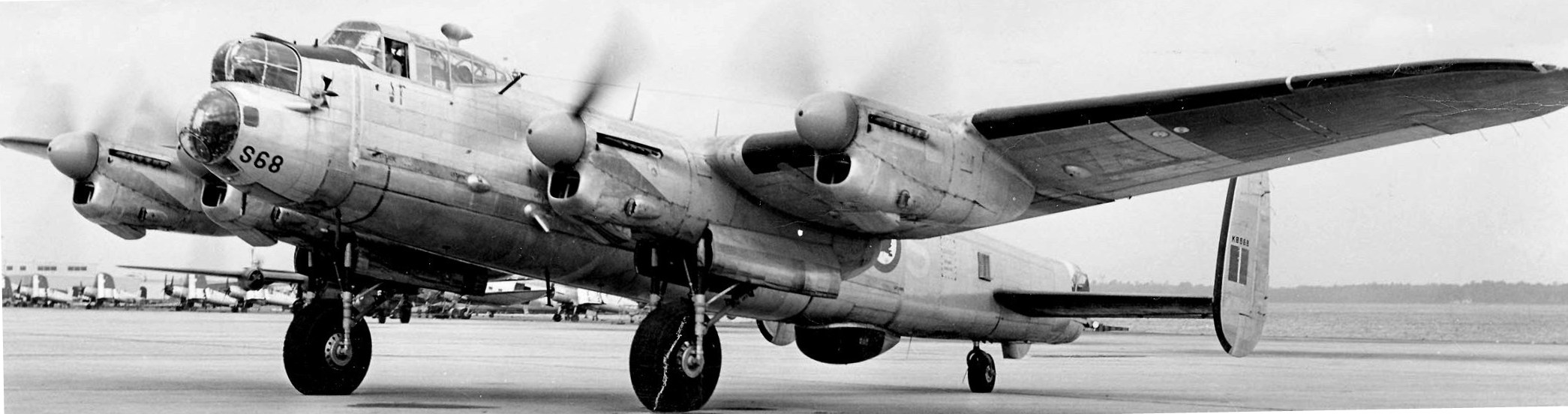
Avro Lancaster Mk. 10MP, RCAF (Serial No. KB868), No. 405 (MP) Squadron, running up at NAS Jacksonville, Florida, Feb 1955.
KB 868 was built by Victory Aircraft in Malton, Ontario. It was flown to England in Jan 1945 and issued to No. 431 Squadron, RCAF, in Mar 1945. It returned to Canada on 5 Jun 1945 with No. 431 Squadron, coded SE-E, for use with the “Tiger Force”, No. 662 (HB) Wing, Dartmouth, Nova Scotia. It was later converted to a Mk. 10MP maritime patrol aircraft and issued to No. 405 (MP) Squadron in 1952, coded VC-AGS. It was retired on 23 Jun 1955. No. 405 Squadron had been reactivated on 31 Mar 1950 as No. 405 (Eagle) Squadron, as a maritime patrol squadron based at RCAF Station Greenwood, Nova Scotia.
(DND Photo via James Craik)
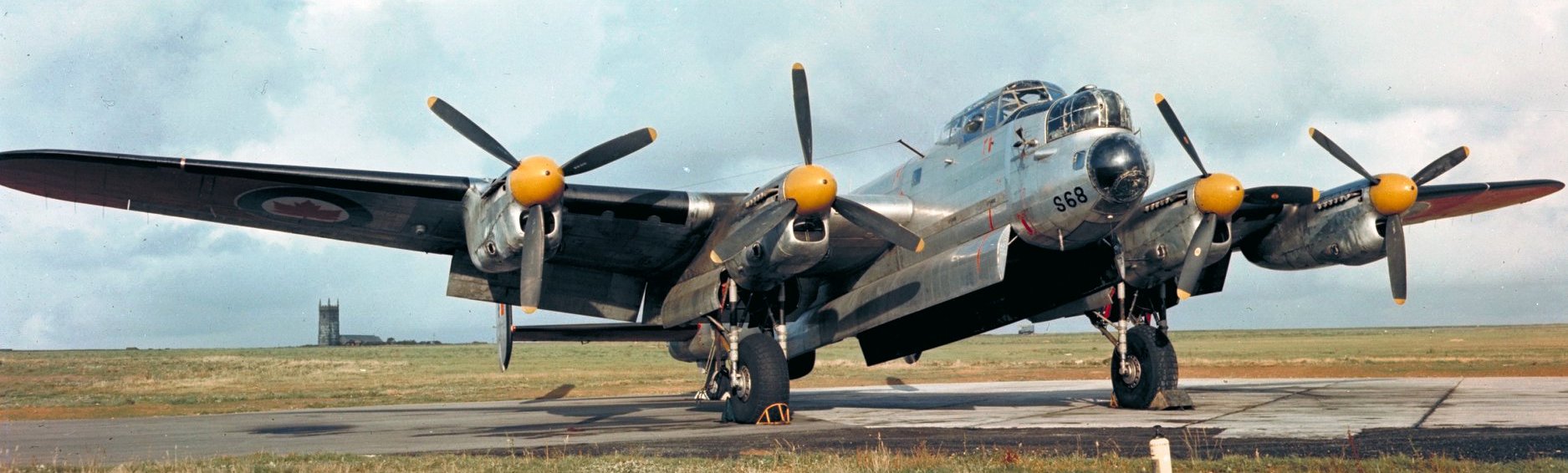
Avro Lancaster Mk. 10MP, RCAF (Serial No. KB868), No. 405 Squadron. KB868 previously served with No. 431 Squadron (SE-E) until Mar 1945. It was flown back to Canada in June 1945, modified to Mk. 10MP and eventually scrapped in June 1955.
(USN – NAS Jacksonville Photo)
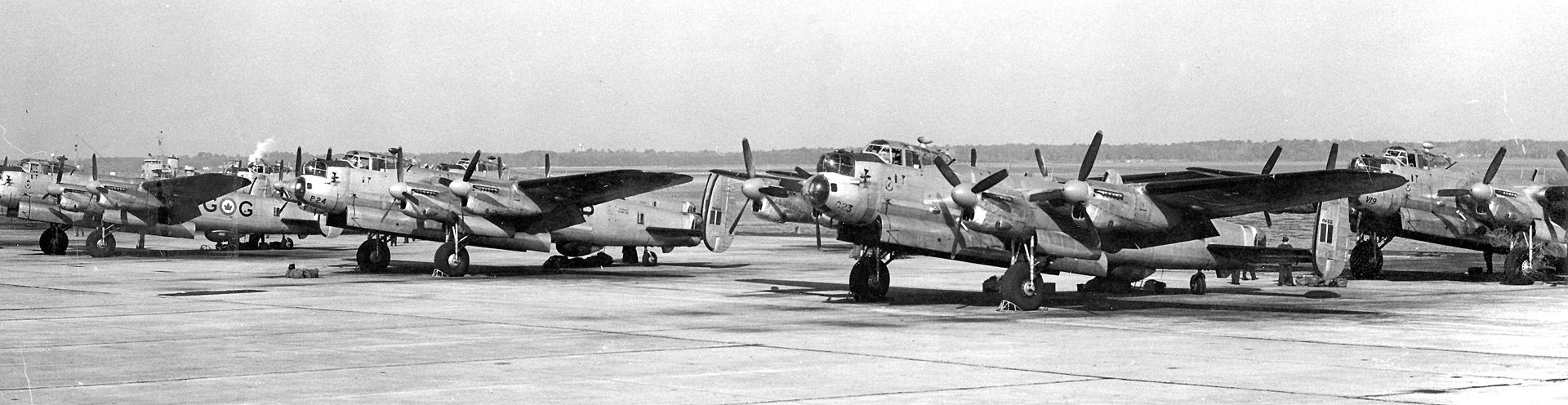
Avro Lancaster Mk. 10MP of No. 405 Squadron, RCAF, at Naval Air Station (NAS) Jacksonville, Florida, in February 1955. No. 405 Squadron had been reactivated on 31 Mar 1950 as No. 405 (Eagle) Squadron, as a maritime patrol squadron based at Greenwood, Nova Scotia.
No. 407 Maritime Reconnaissance (MR) Squadron, aircraft coded AJ and RX, was reactivated on 1 July 1952 at RCAF Station Comox, British Columbia flying the Avro Lancaster. On 17 July 1956 it was redesignated as a Maritime Patrol Squadron. The squadron has served continuously at Comox since 1952.
(RCAF Photo)
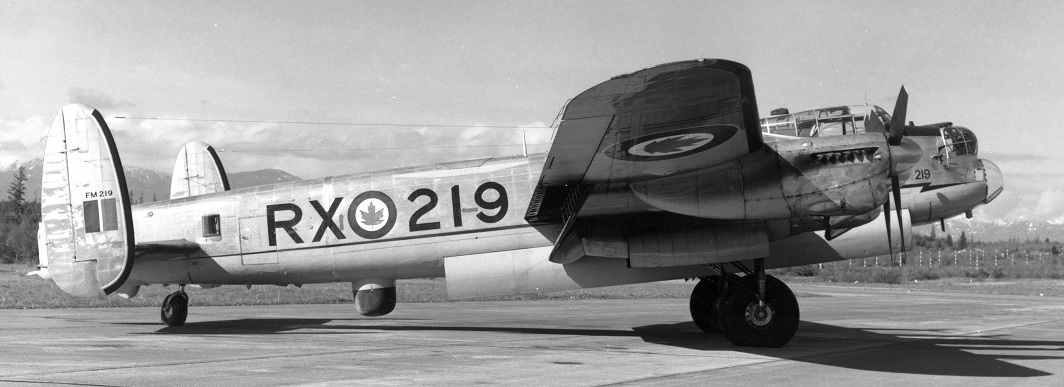
Avro Lancaster Mk. 10, RCAF (Serial No. FM 219), coded RX, No. 407 Squadron, RCAF Station Comox, British Columbia. TOS 21 Aug 1946; converted to Mk. 10MP; issued to No. 407 (MR) Squadron as RX219; arrived at Comox on 9 Mar 1955 as the first squadron aircraft equipped with APS-33 radar system; F/Sgt. Sid Skinner flew it on its last mission on 12 May 1959 with No. 407 (MR) Squadron, with a crew that had all served in Lancaster bombers during the Second World War.
(DND Photo via Mike Kaehler)
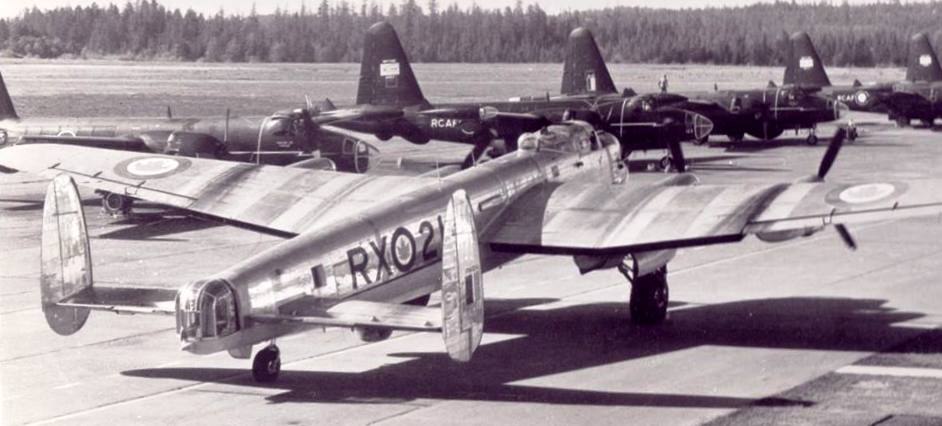
Avro Lancaster Mk. 10 (Serial No. FM219), coded RX, No. 407 Squadron, along with a line-up of 407 Squadron Lockheed Neptunes at RCAF Station Comox, British Columbia.
(DND Photo)
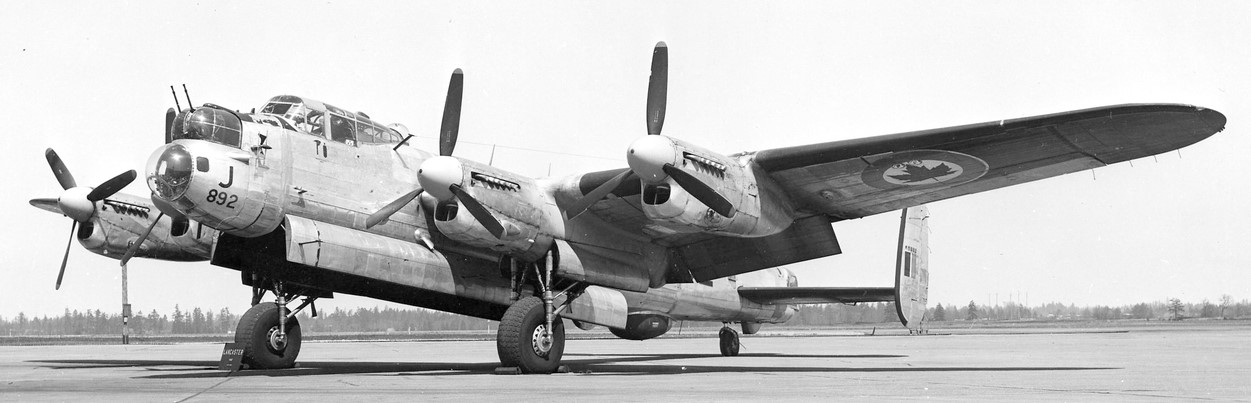
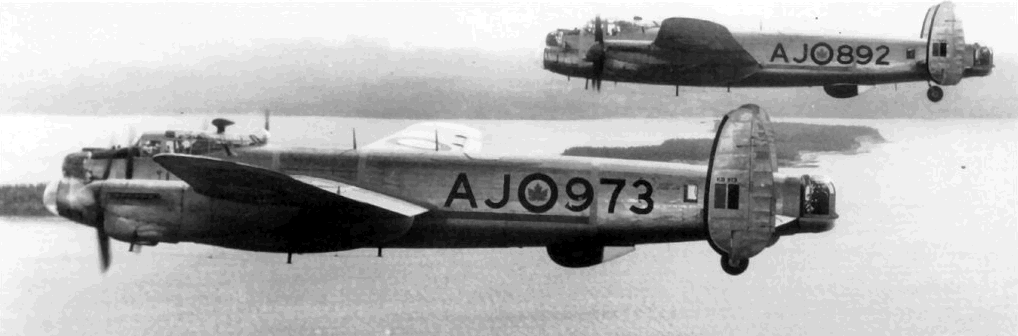
Avro Lancaster Mk. 10N, RCAF (Serial No. KB892), coded AJ, No. 407 (MR) Squadron. Issued to No. 419 (B) Squadron on 29 Mar 1945; not on operations; Returned to Canada with No. 419 Squadron, coded VR-P for use with Tiger Force, No. 661(HB) Wing, Yarmouth, Nova Scotia. Stored; then converted to Mk. 10MP in 1951; issued to No. 407 (MR) c1952, coded RX892; converted to Mk. 10MP in 1956 with an armoured nose turret and the letter J; SOC 2 Jun 1960.
(RCAF Photo via Mike Kaehler)
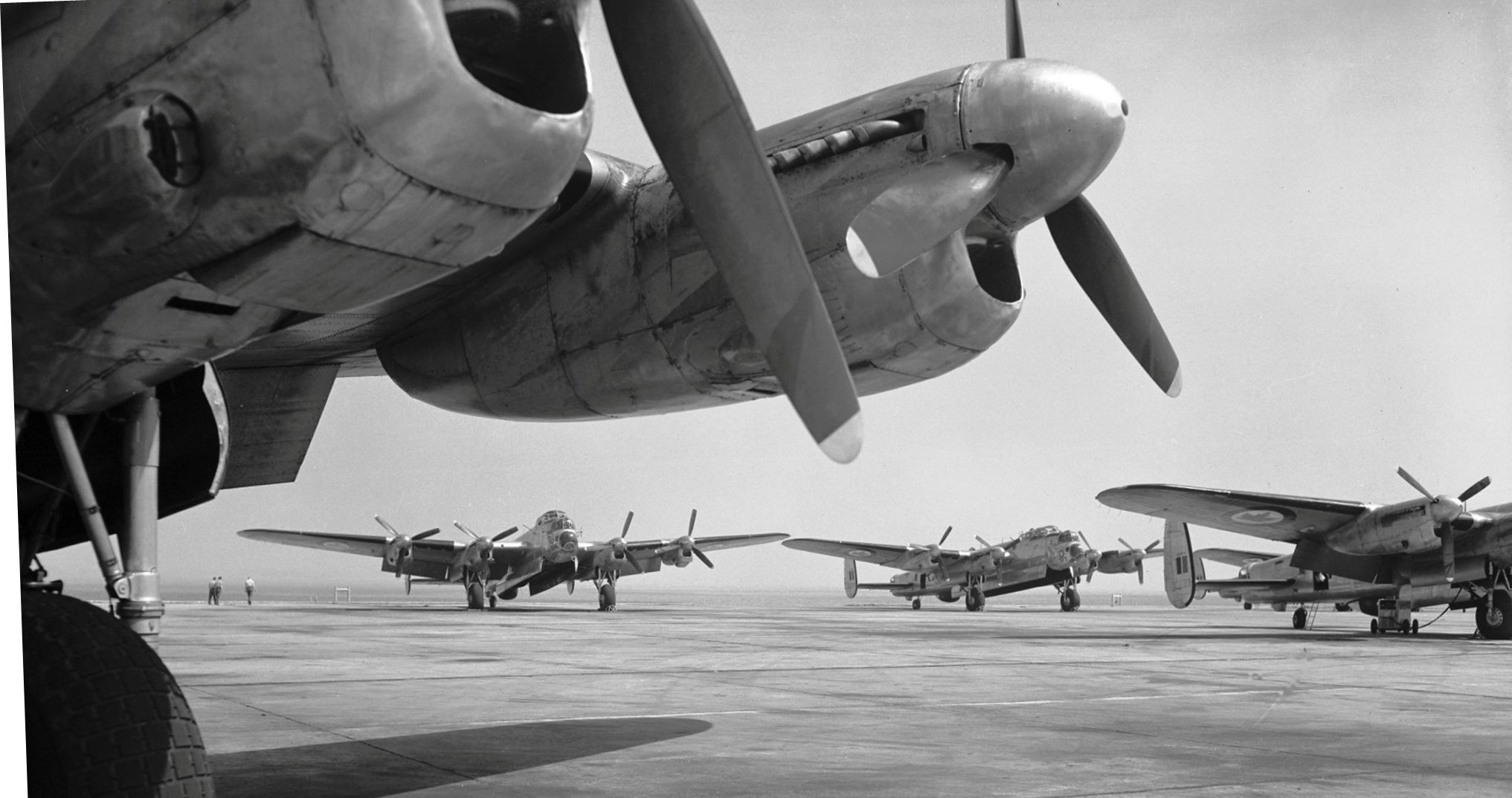
Avro Lancasters on the line with No. 407 Squadron, RCAF Station Comox, British Columbia.
(RCAF Photo)
Avro Lancaster Mk. 10N, RCAF (Serial Nos. KB973 and KB892), coded AJ, No. 407 (MR) Squadron.
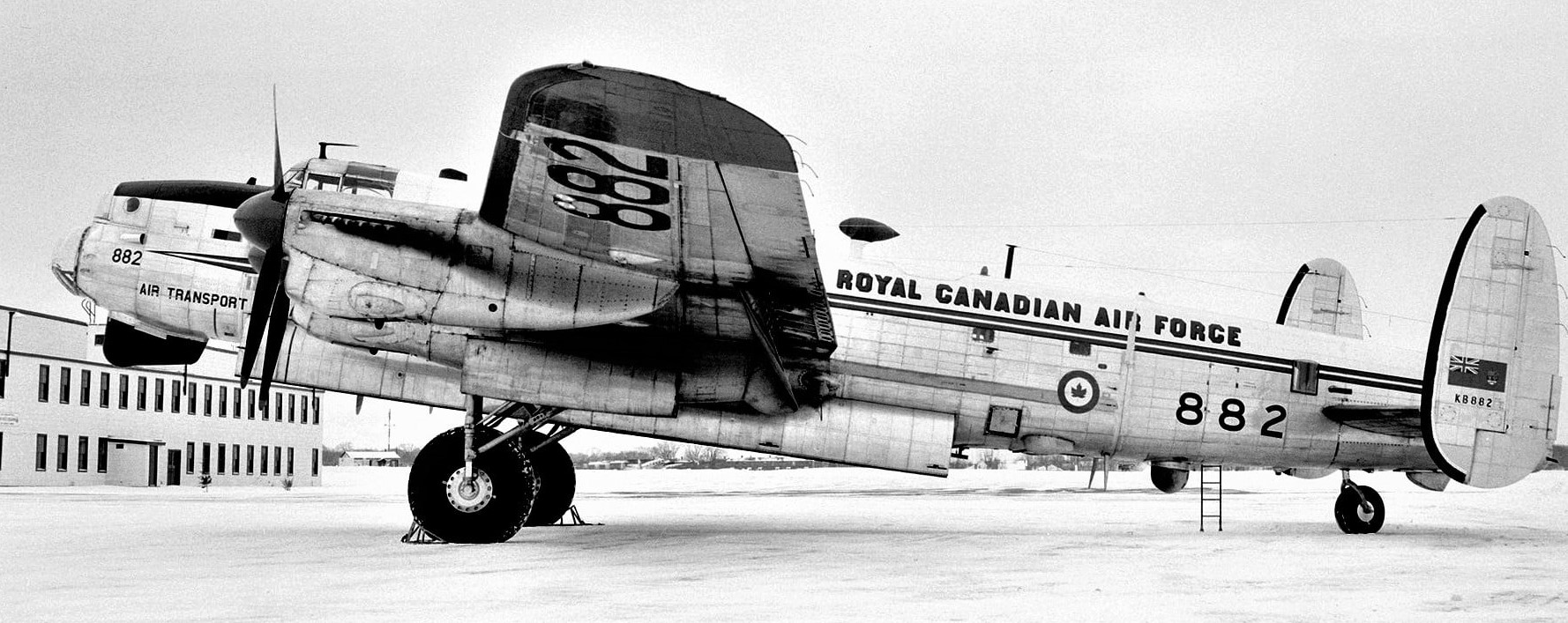
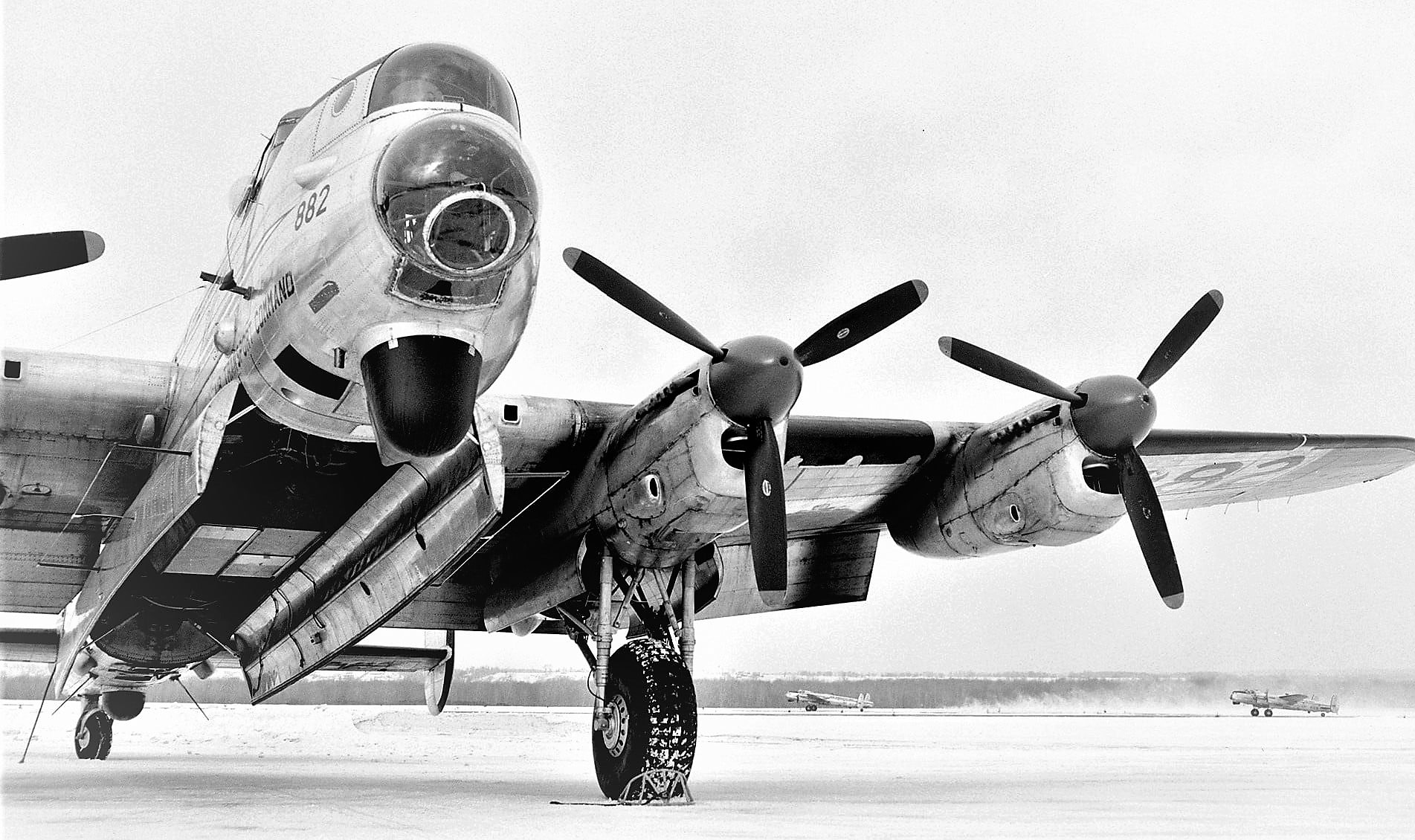
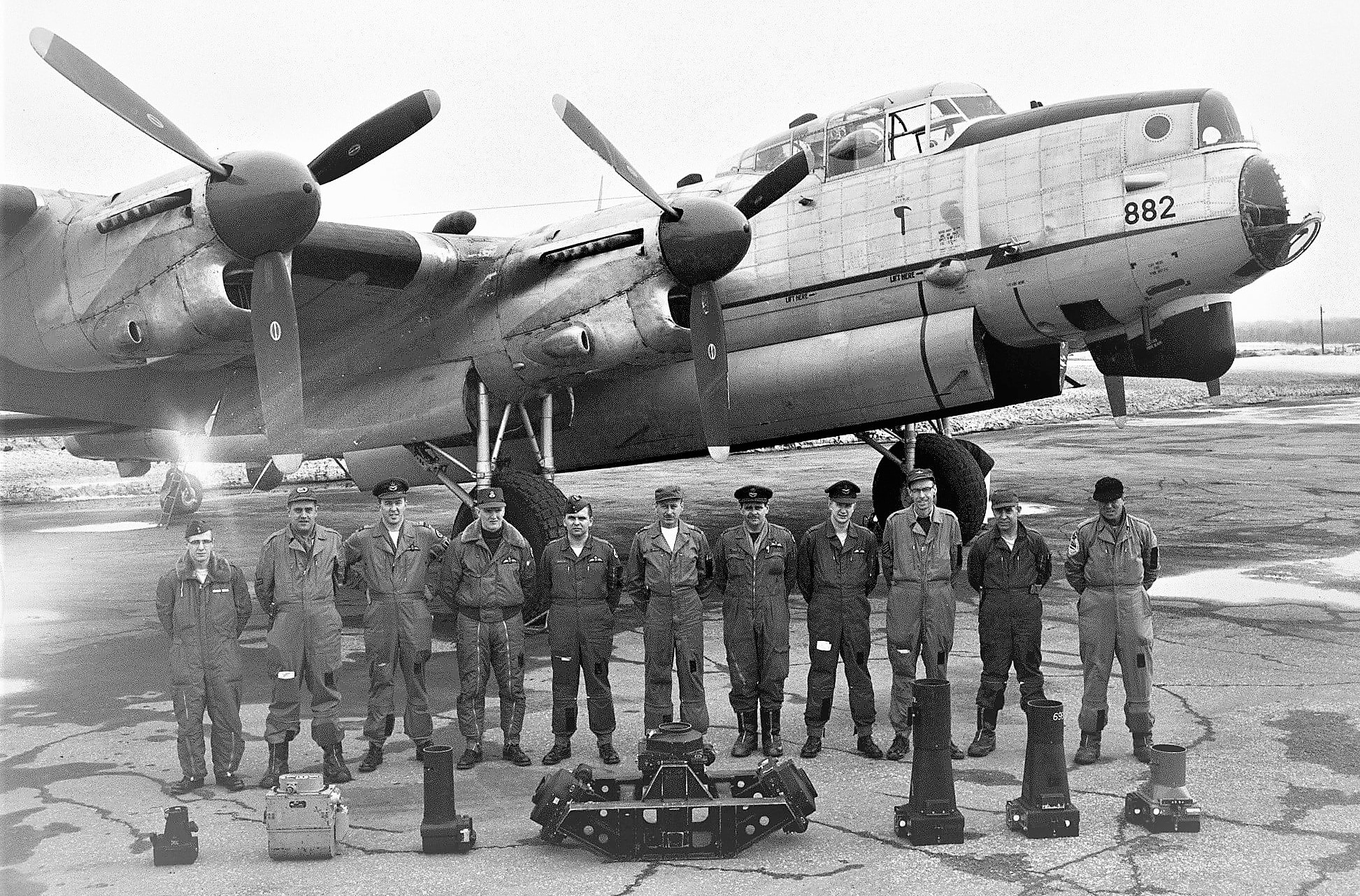
AK and MN, No. 408 Photographic (P) Squadron, aircraft coded AK and MN, was reformed on 10 Jan 1949 at RCAF Station Rockcliffe, Ontario. Equipped with eight Avro Lancaster Mk. X photographic aircraft, it was tasked with the mapping of Canada, specifically the far North. In 1962, the squadron formed a flight of Canadair CT-133 Silver Star aircraft and was given the additional task of photo reconnaissance missions in support of Army exercises. The Lancasters were retired on 29 Feb 1964, and replaced with Douglas CC-129 Dakotas. The “Goose” Squadron moved to Rivers, Manitoba, and was re-designated as a transport support and area reconnaissance squadron.
On 1 May 1964, RCAF Station Rivers Transport Support Flight with its Fairchild C-119 Flying Boxcars, was transferred into No. 408 Squadron. In 1965, the Boxcars were replaced by Lockheed CC-130 Hercules aircraft. As the decade drew to a close, No. 408 Squadron was once again redesignated. On 1 Oct 1968, it started its long history with No. 10 Tactical Air Group as a “Tactical Fighter Squadron”. During this post-war era, the squadron flew seven different aircraft: the Avro Lancaster, Cansos, Norseman, Dakotas, Boxcars, CT-33s, and Hercules. Late in 1970, the squadron was once more disbanded. On 1 Jan 1971, No. 408 Squadron was once again re-activated at Namao in Edmonton, Alberta, as a tactical helicopter squadron (THS) and equipped with Bell CH-135 Twin Huey and Bell CH-136 Kiowa helicopters.
(Library and Archives Canada Photo, MIKAN No. 3643745)
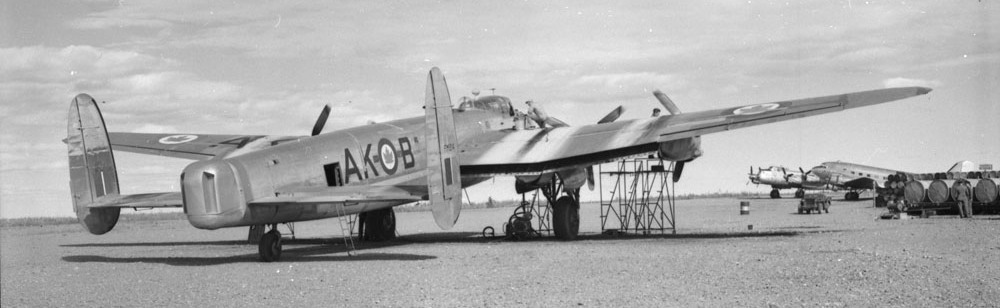
Avro Lancaster Mk. 10P, RCAF (Serial No. FM214), coded AK-B, No. 408 Squadron, Aug 1949.
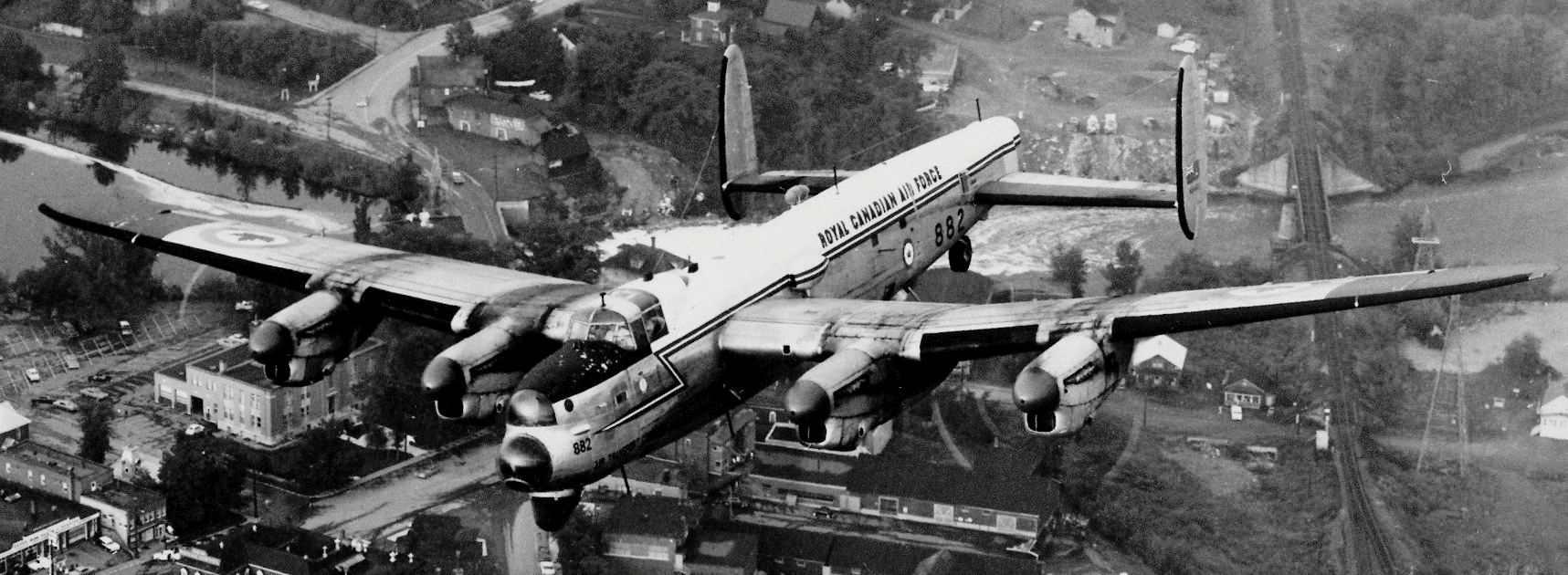
(RCAF Photo)
Avro Lancaster Mk. 10, RCAF (Serial No. KB882), coded MN, No. 408 (P) Squadron, over Edmundston, New Brunswick in the late 1940s.
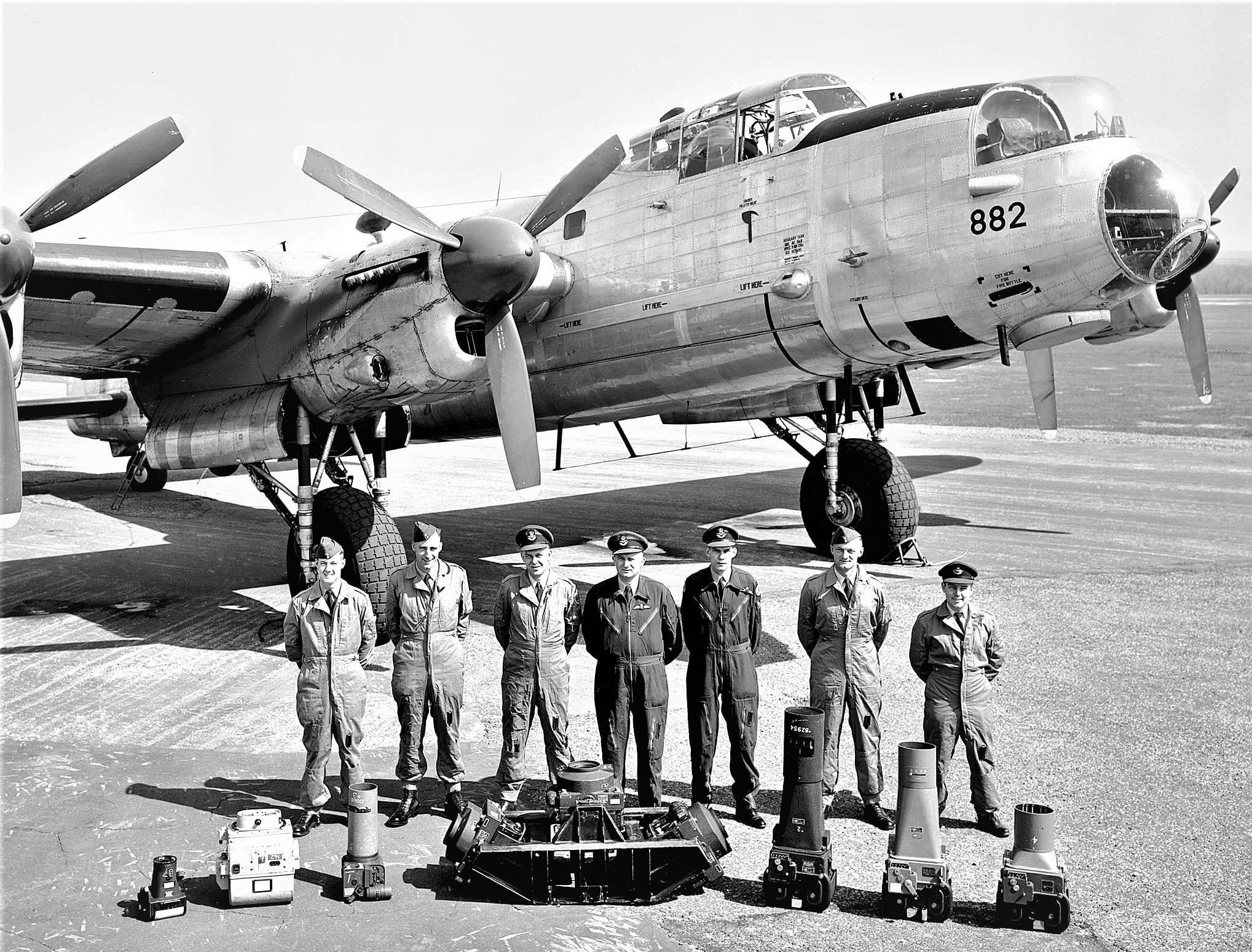
(RCAF Photo)
Avro Lancaster Mk. 10, RCAF (Serial No. KB882), coded MN, No. 408 (P) Squadron.
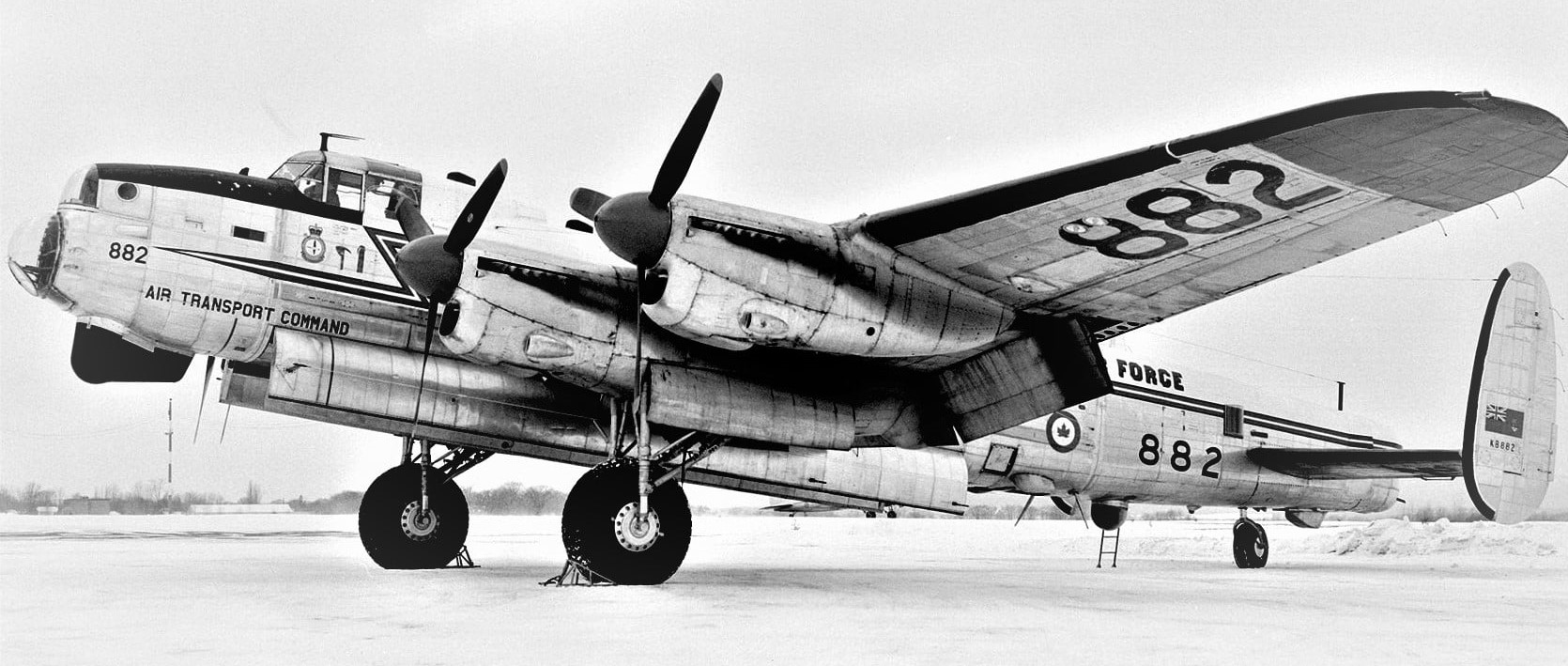
(RCAF Photo)
Avro Lancaster Mk. 10, RCAF (Serial No. KB882), coded MN, No. 408 (P) Squadron.
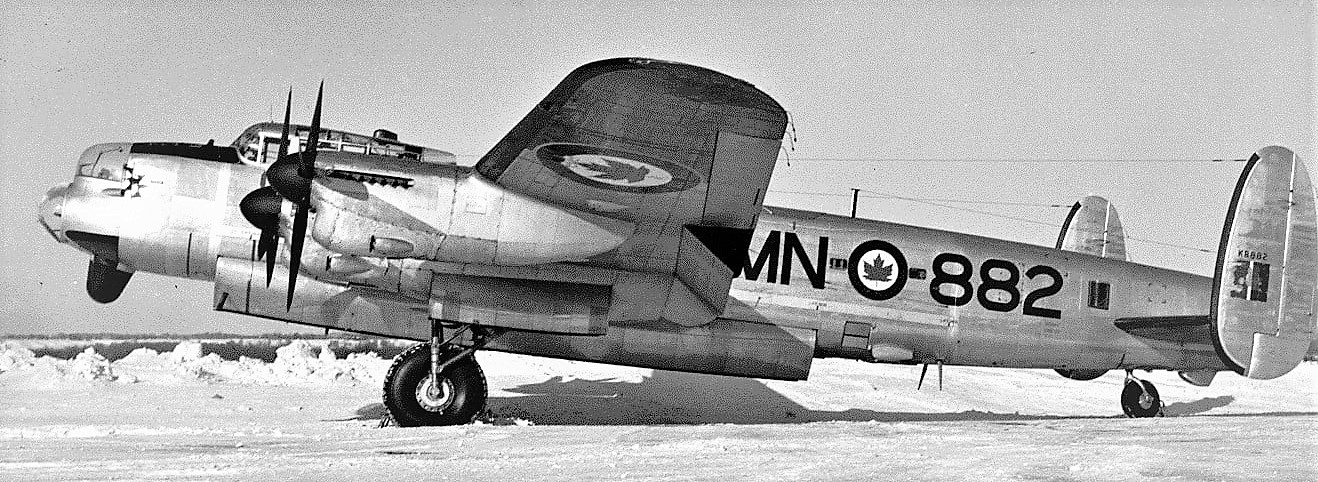
(RCAF Photo)
Avro Lancaster Mk. 10, RCAF (Serial No. KB882), coded MN, No. 408 (P) Squadron.
(RCAF Photo)
Avro Lancaster Mk. 10, RCAF (Serial No. KB882), coded MN, No. 408 (P) Squadron.
(RCAF Photo)
Avro Lancaster Mk. 10, RCAF (Serial No. KB882), coded MN, No. 408 (P) Squadron.
(RCAF Photo)
Avro Lancaster Mk. 10, RCAF (Serial No. KB882), coded MN, No. 408 (P) Squadron.
(RCAF Photo via Chris Charland)
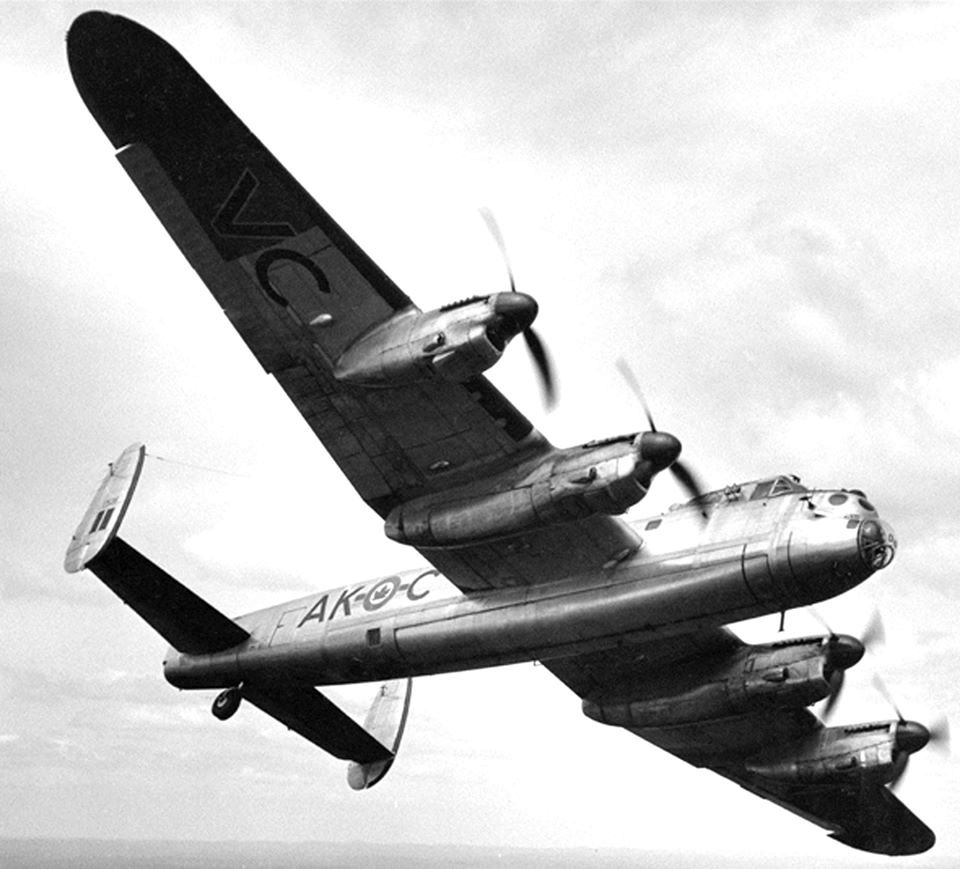
Avro Lancaster Mk. 10P (Serial No. FM215), coded AK-C, No. 408 “Goose” (P) Squadron, RCAF Station Rockcliffe, Ontario.
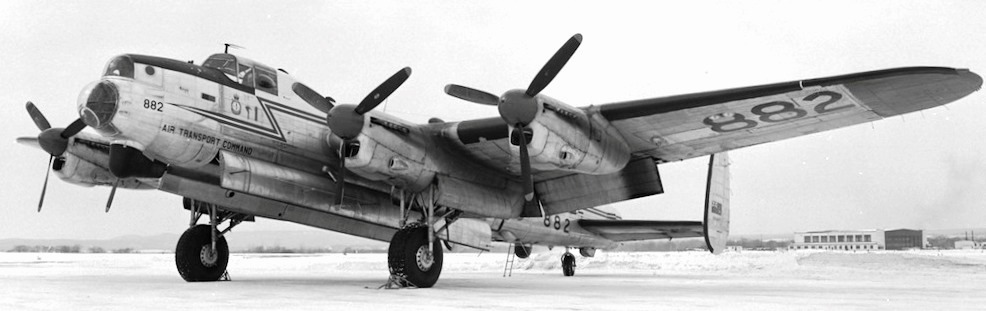
(RCAF Photo via Fred Paradie)
Avro Lancaster (Serial No. KB882), coded MN, post-war with No. 408 Squadron, RCAF.
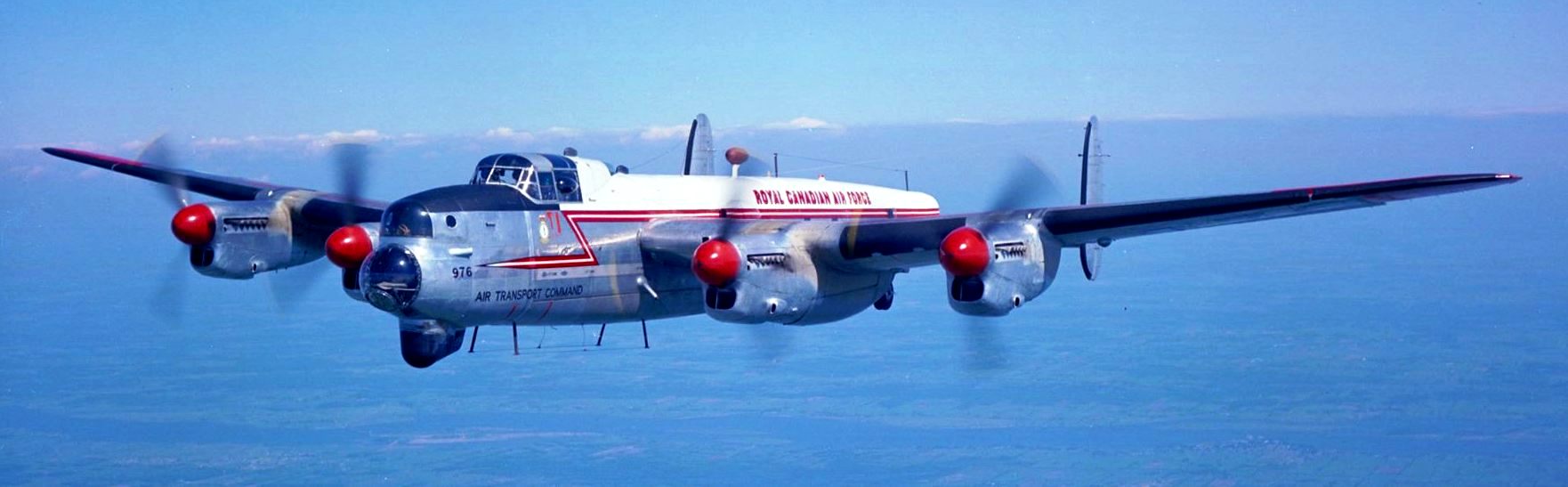
(RCAF Photo via Mike Kaehler)
Avro Lancaster Mk. 10, RCAF (Serial No. KB976), coded MN, in flight. No. 408 (P) Squadron, “Victory“, with an extended nose.
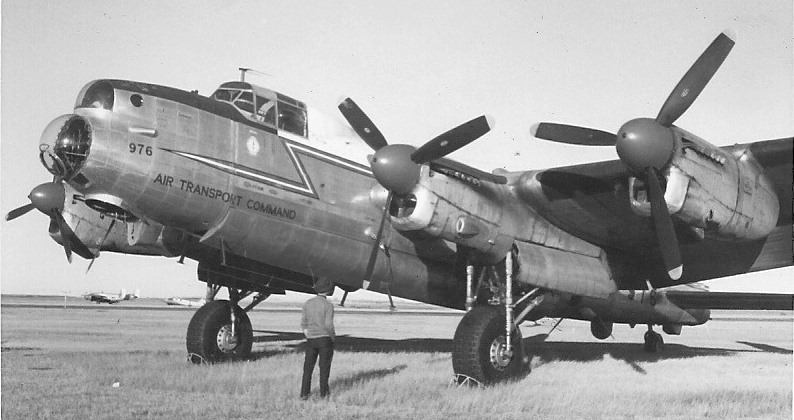
(Larry Farley Photo)
Avro Lancaster Mk. 10, RCAF (Serial No. KB976), coded MN, No. 408 (P) Squadron, “Victory“, with an extended nose, Calgary, Dec 1964.
KB994 was flown to England in June 1945, where it served with No. 32 Maintenance Unit, 408 Squadron (EQ-K). Returned to Canada 16 June 1945. Aircraft was struck off Charge from the RCAF 22 Jan 1947. It stood on a farm in Alberta until acquired by teh No. 408 Squadron Museum, CFB Edmonton, Alberta, 1984-1988. Sold to Charles Church and shipped to Manchester, England. Registered as G-BVBP, stored dismantled at Bedford, Biggin Hill, UK, fuselage to be used in the rebuild of KB976. Forward fuselage under restoration with David Arnold, Flying A Services, North Weald Airfield, Epping, Essex, England.
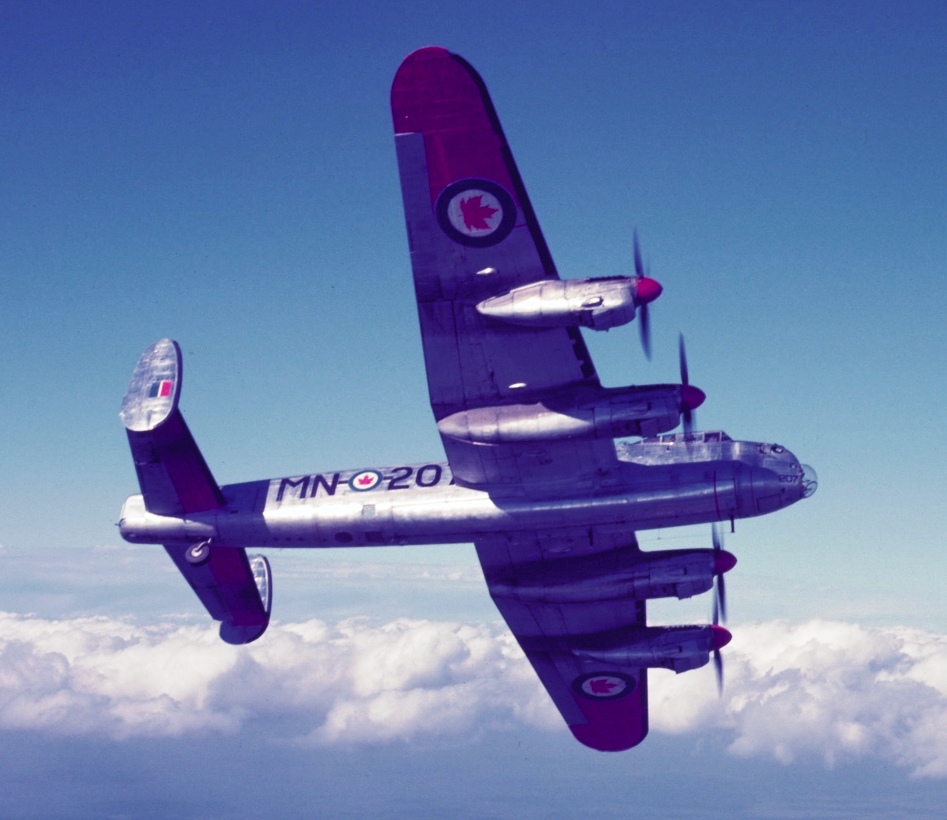
(DND Photo via Francois Dutil)
Avro Lancaster Mk. 10, RCAF (Serial No. FM207), coded MN, No. 408 (P) Squadron.
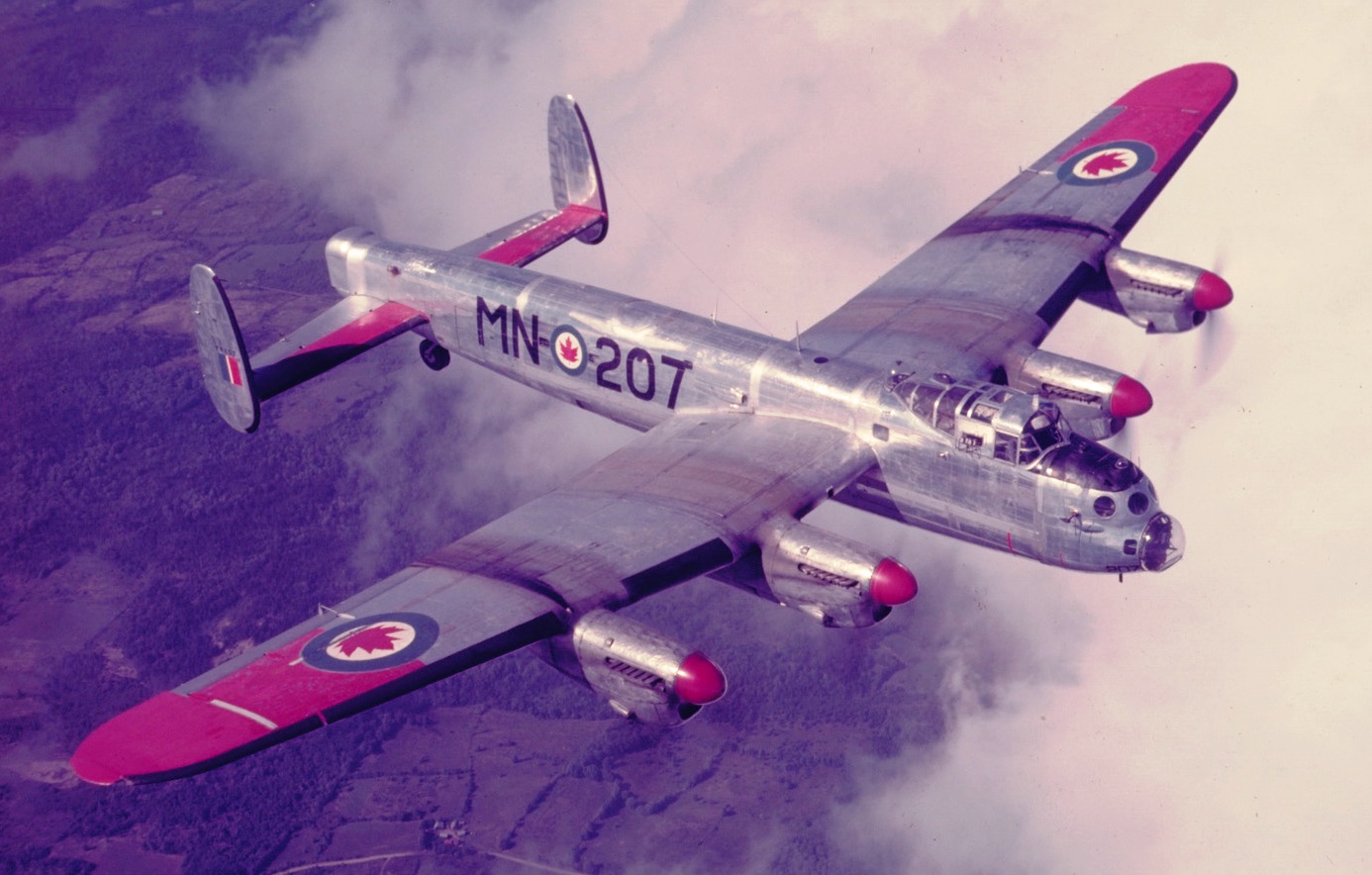
(DND Photo via Francois Dutil)
Avro Lancaster Mk. 10, RCAF (Serial No. FM207), coded MN, No. 408 (P) Squadron.
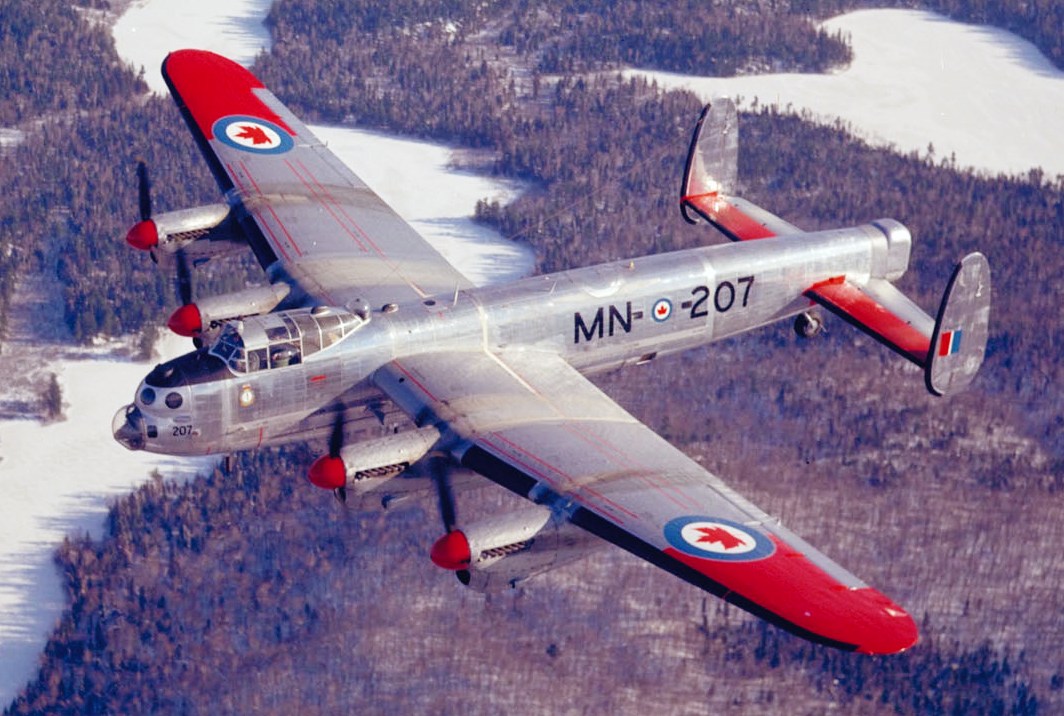
(DND Photo via Francois Dutil)
Avro Lancaster Mk. 10, RCAF (Serial No. FM207), coded MN, No. 408 (P) Squadron.
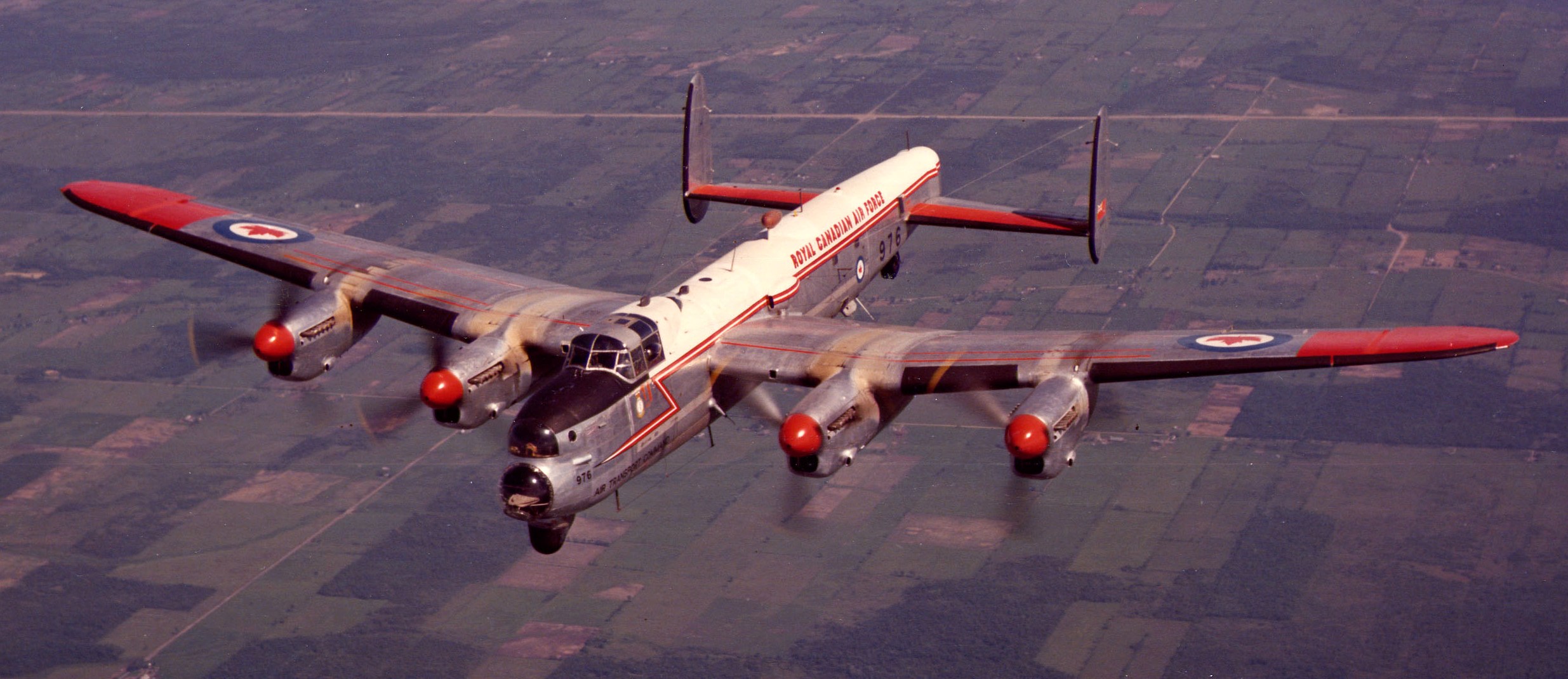
(RCAF Photo courtesy of the Shearwater Aviation Museum)
Avro Lancaster Mk. 10, RCAF (Serial No. KB976), coded AK, in flight. No. 408 (P) Squadron, “Victory“, with an extended nose.
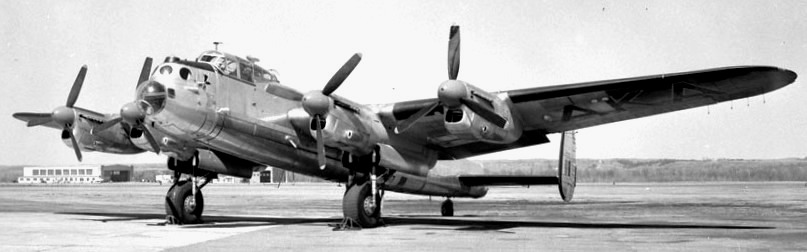
(Library and Archives Canada Photo, MIKAN No. 3584502)
Avro Lancaster Mk. 10, coded AK-A, No. 408 (P) Squadron, 23 May 1951.
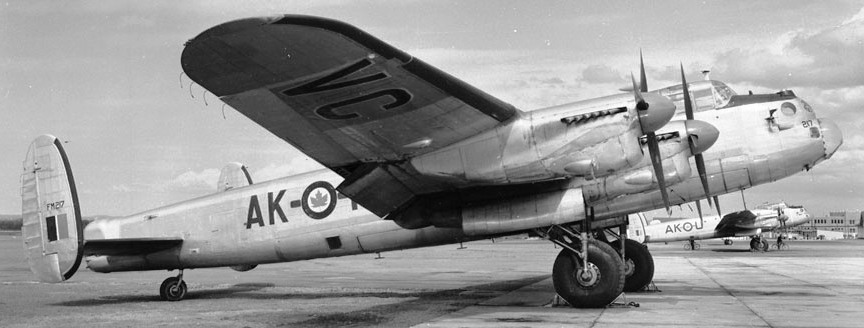
(Library and Archives Canada Photo, MIKAN No. 3584572)
Avro Lancaster Mk. 10, RCAF (Serial No. FM217), coded AK, No. 408 (P) Squadron, RCAF Station Rockcliffe, Ontario, 6 Sep 1951.
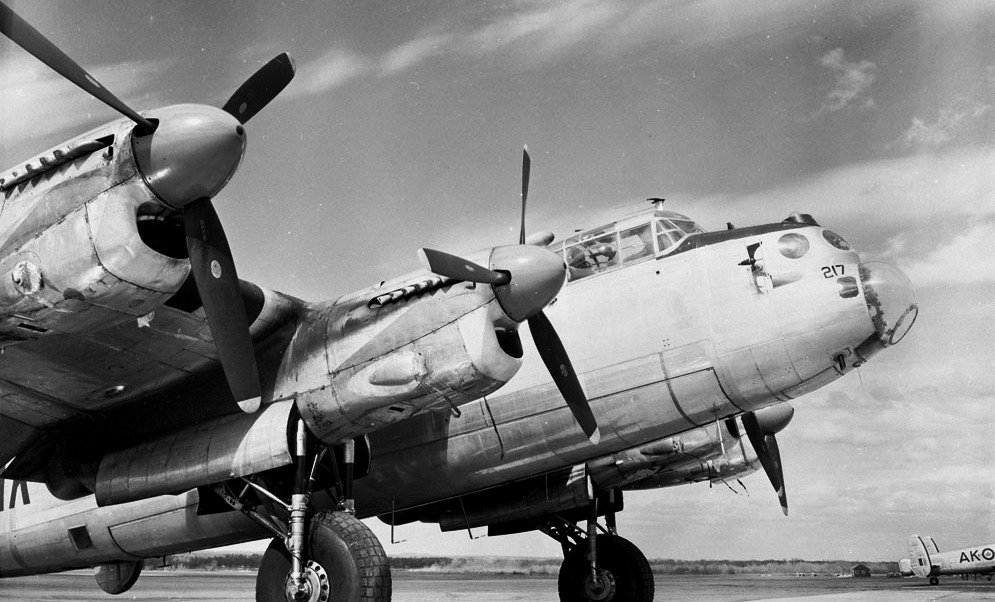
(Library and Archives Canada Photo, MIKAN No. 3584553)
Avro Lancaster Mk. 10, RCAF (Serial No. FM217), coded AK, No. 408 (P) Squadron, 18 Jun 1951.
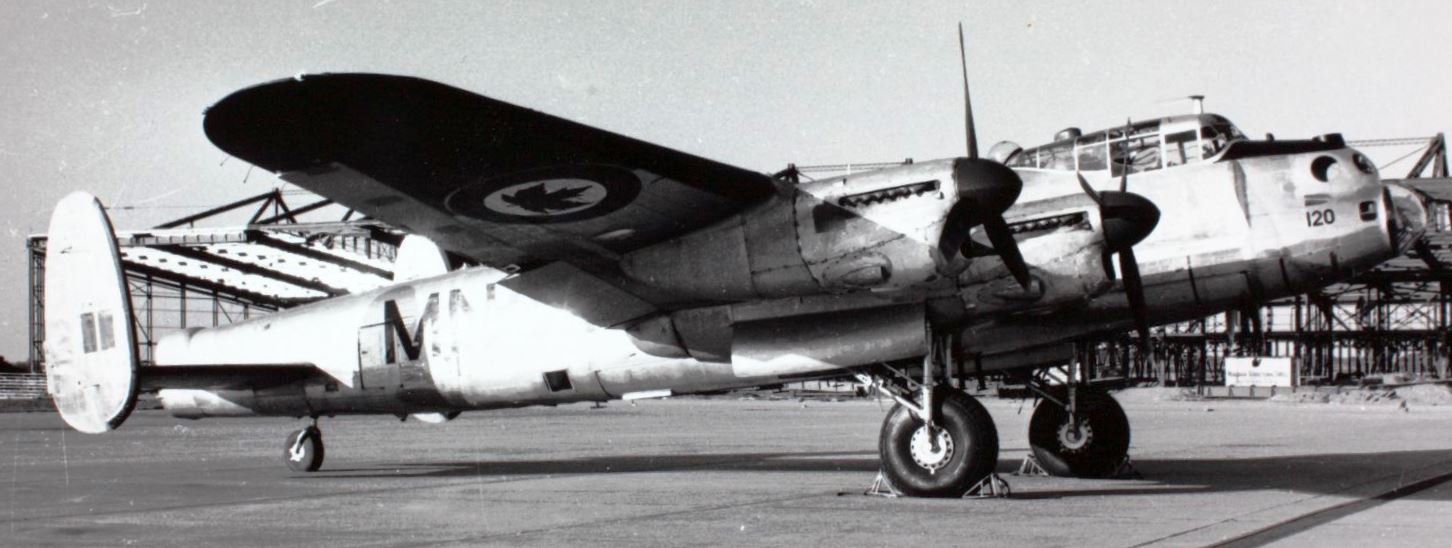
(SDASM Photo)
Avro Lancaster Mk. 10, RCAF (Serial No. 120), coded MN, No. 408 (P) Squadron.
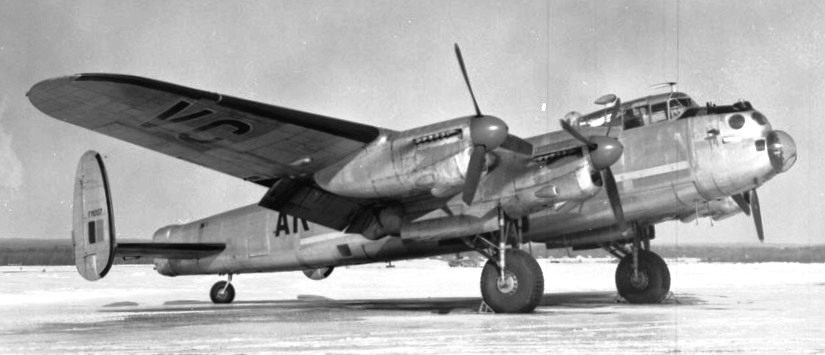
(Library and Archives Canada Photo, MIKAN No. 3207414)
Avro Lancaster Mk. 10, RCAF (Serial No. FM207), No. 408 (P) Squadron, 2 Apr 1951.
(Library and Archives Canada Photo, MIKAN No. 3584699)
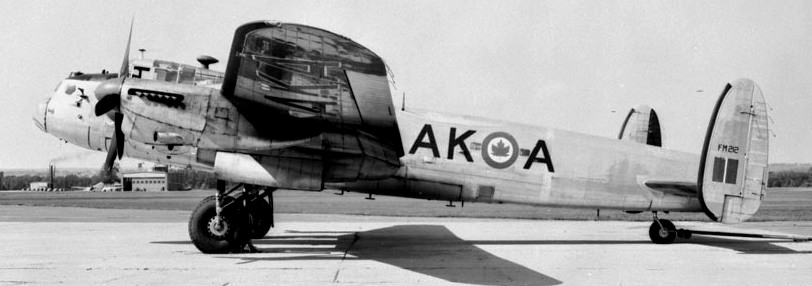
Avro Lancaster Mk. 10, RCAF (Serial No. 212), coded AK-A, No. 408 (P) Squadron, 26 Aug 1952.
(Library and Archives Canada Photo, MIKAN No. 3584509)
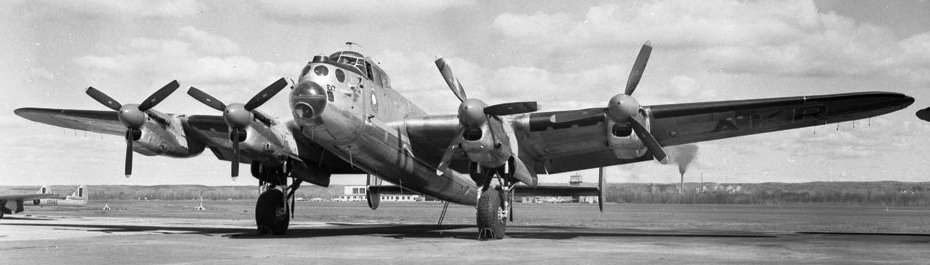
Avro Lancaster Mk. 10, coded AK, No. 408 (P) Squadron, 23 May 1951.
(Library and Archives Canada Photo, MIKAN No. 3584666)
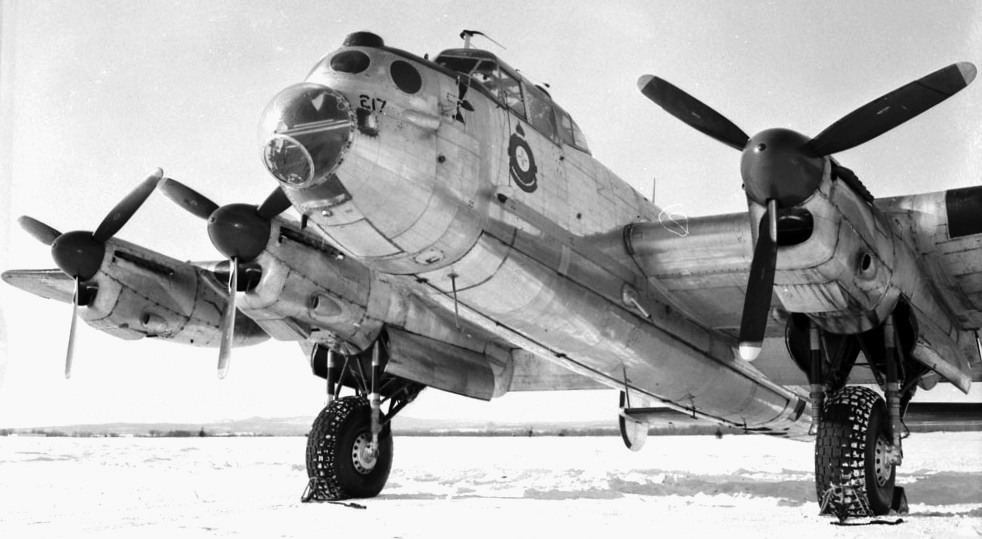
Avro Lancaster Mk. 10, RCAF (Serial No. FM217), coded AK, No. 408 (P) Squadron, 26 Aug 1952.
(Library and Archives Canada Photo, MIKAN No. 3584553)
Avro Lancaster Mk. 10, RCAF (Serial No. FM217), coded AK, No. 408 (P) Squadron, 18 Jun 1951.
(DND Photo via Francois Dutil)
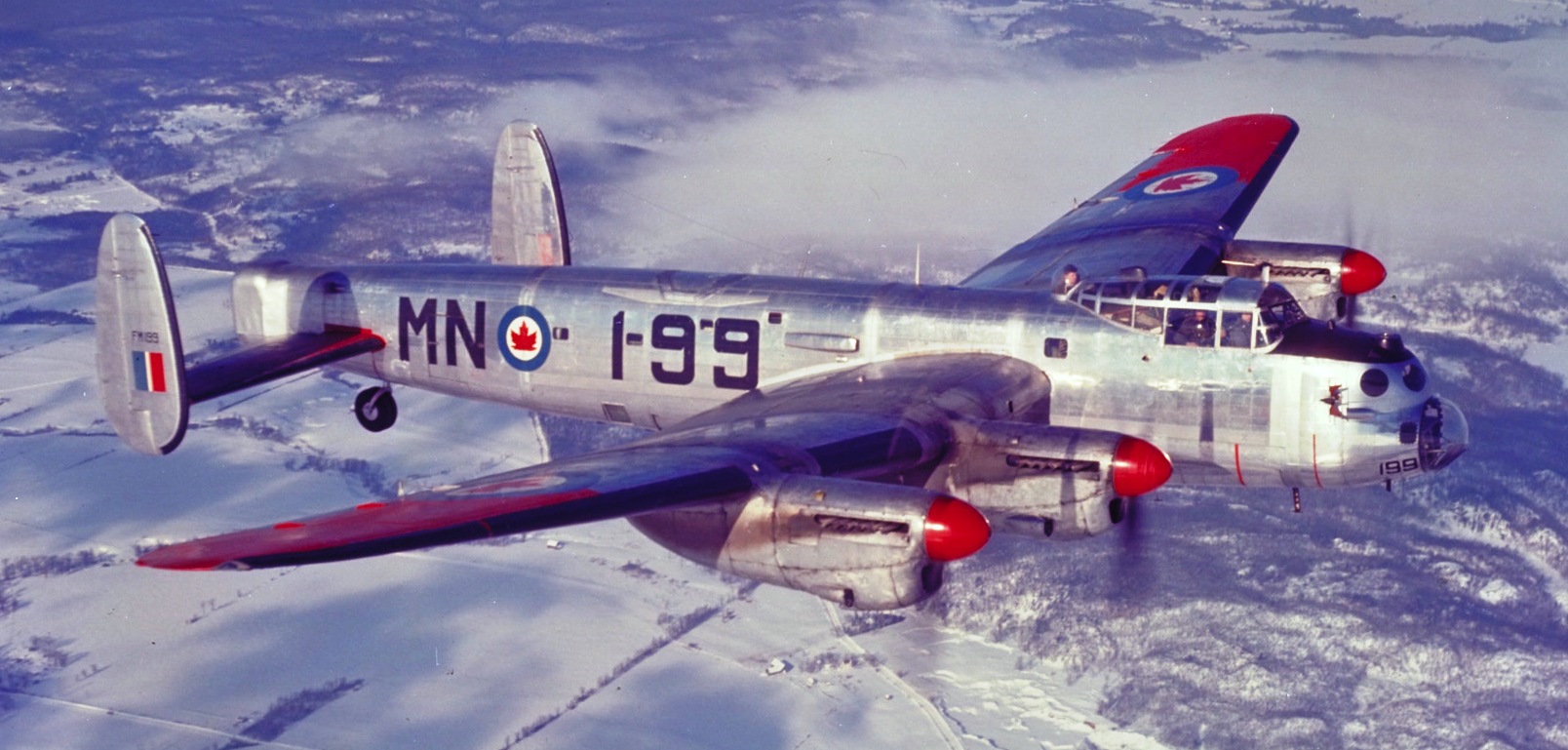
Avro Lancaster (Serial No. FM199), coded MN, No. 408 (P) Squadron.
(DND Photo via James Craik)
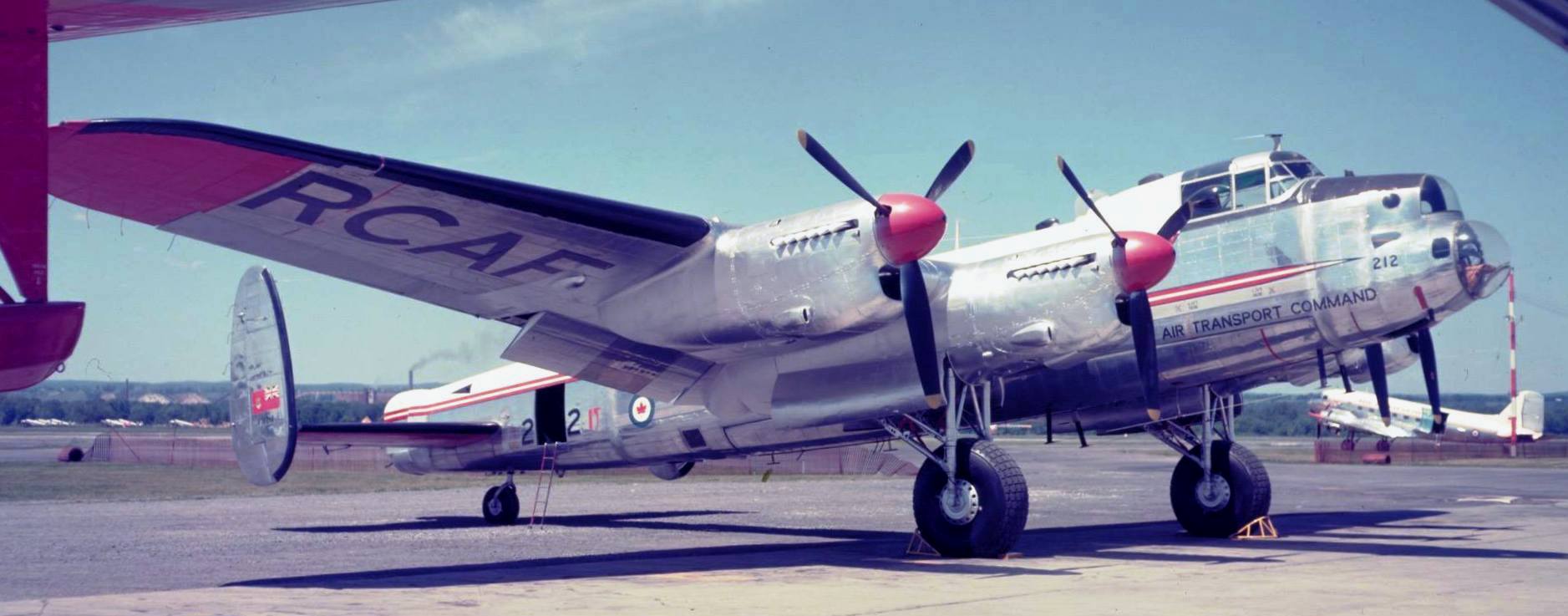
Avro Lancaster Mk. 10MR (Serial No. FM212), coded AK-A, No. 408 (P) Squadron.
(Library and Archives Canada Photo, MIKAN No. 3584699)
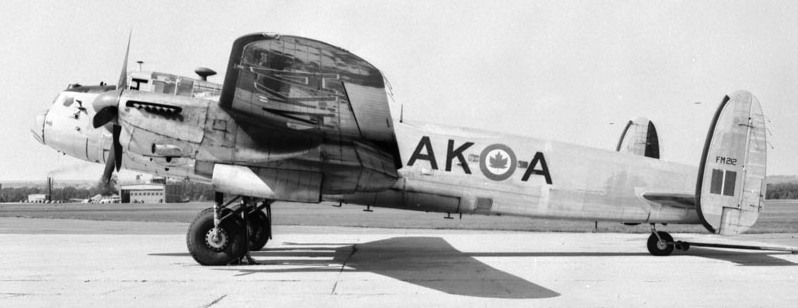
Avro Lancaster Mk. 10MR (Serial No. FM212), coded AK-A, No. 408 (P) Squadron, 25 Aug 1952.
(Library and Archives Canada Photo, MIKAN No. 3585525)
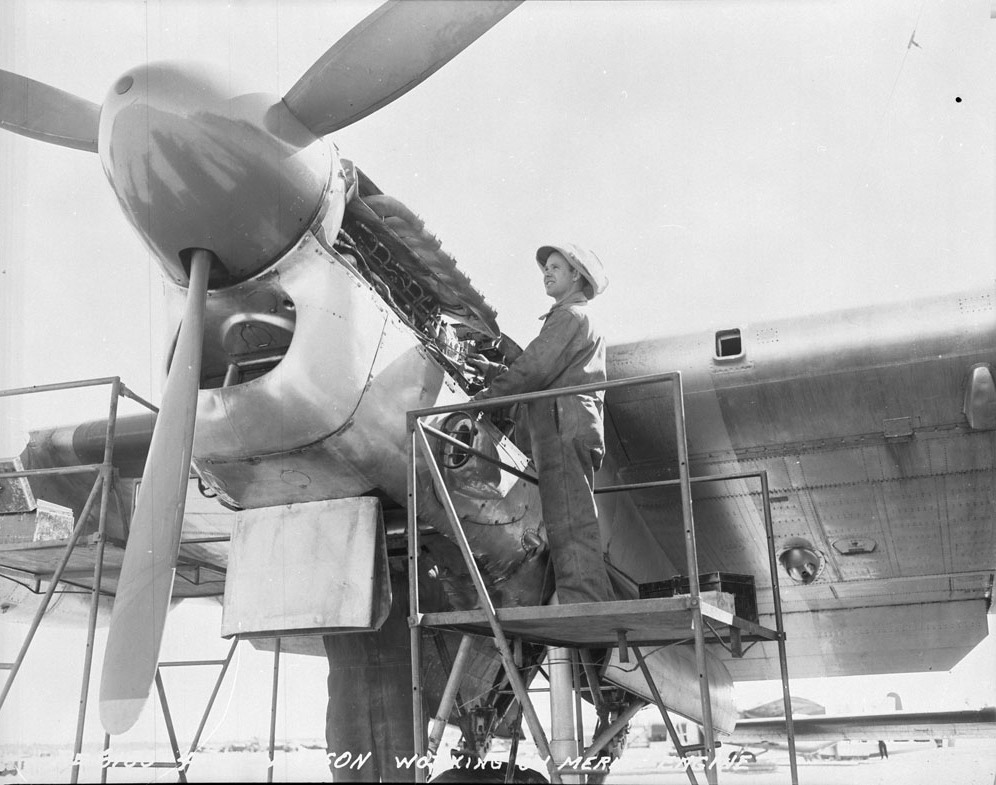
Avro Lancaster engine maintenance, No. 408 Squadron, Yellowknife, 4 Jul 1951.
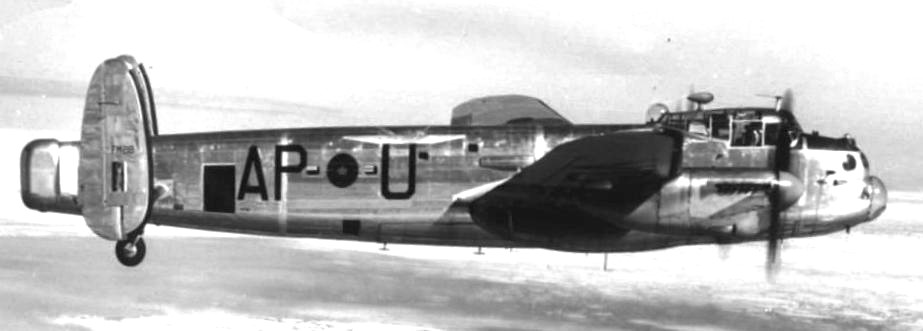
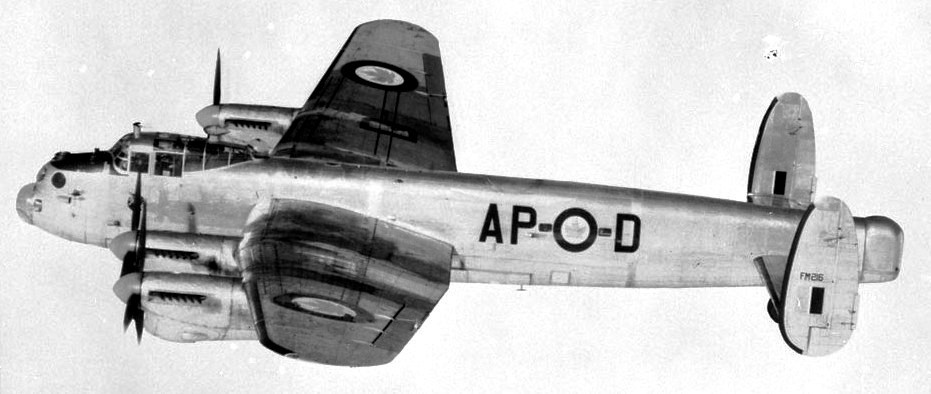
No. 413 Photographic (P) Squadron, aircraft coded AP, reformed on 1 Apr 1947 at RCAF Station Rockcliffe, Ontario, it took over the duties of No. 13 (Photographic) Squadron. It operated in this role until 1 Nov 1950. The squadron reformed again on 1 Aug 1951, as a fighter squadron at RCAF Station Bagotville, Quebec. Equipped with the Canadair CL-13 Sabre, No. 413 Squadron deployed to 3 (F) Wing, Zweibrücken, Germany. No. 413 Squadron stood down on 7 Apr 1957, and was then reformed on 1 May 1957 operating the Avro CF-100 Canuck at Bagotville. The squadron again disbanded on 30 Dec 1961. The squadron was reactivated at CFB Summerside on 8 July 1968, in its current role of a Transportation and Rescue Squadron. With the closure of CFB Summerside, the squadron was relocated to CFB Greenwood, Nova Scotia on 10 June 1991.
(RCAF Photo courtesy of the Canadian Aviation Preservation Association)
Avro Lancaster Mk. 10, RCAF (Serial No. FM128), coded AP-U, No. 413 (P) Squadron.
(Library and Archives Canada Photo, MIKAN No. 3584468)
Avro Lancaster Mk. 10, RCAF (Serial No. FM216), coded AP-D, 28 No. 413 (P) Squadron, Dec 1959.
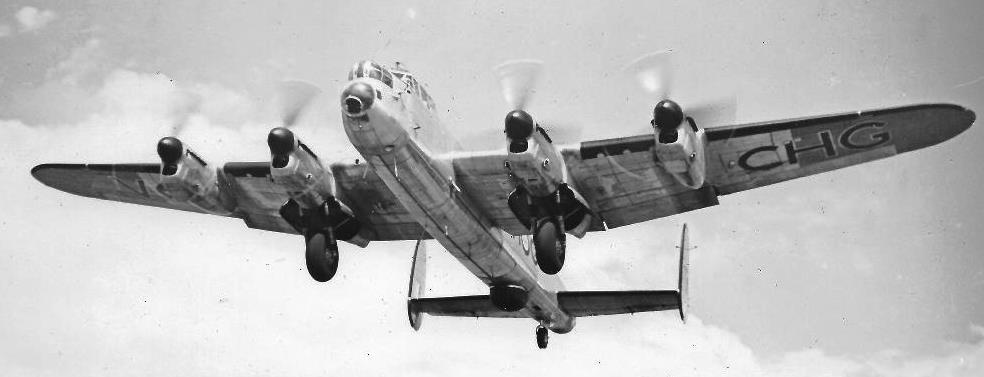
No. 103 Rescue Unit (RU), aircraft coded CH and FH, stood up on 1 April 1947, at RCAF Station Dartmouth, Nova Scotia as No. 103 Search and Rescue Flight a section of 101KU. Later that year, the unit moved to RCAF Station Greenwood, Nova Scotia. In 1950, the unit was renamed No. 103 Rescue Unit and moved to RCAF Station Summerside, Prince Edward Island, where it remained until the unification of the Canadian Forces in 1968, when it was disbanded. The remnants of the unit formed No. 413 Transport and Rescue Squadron at CFB Summerside. As No. 103 RU it flew a variety of aircraft: Canso A (until 1962), Avro Lcaster (until 1965), Douglas Dakota (until 1968), Noorduyn Norseman (until 1957), and Sikorsky H-5 helicopters (until 1965). No. 103 RU also had detachments at RCAF Station Torbay, Newfoundland, and RCAF Station Goose Bay (closed in 1954). The RCN provided High Speed Launch vessels (ex-RCMP) support at select locations. The unit was re-activated in 1977 at CFB Gander, Newfoundland, to meet the search and rescue demands in Canada’s area of responsibility in the western North Atlantic region.
(Wilma Bearman Photo via Don Smith)
Avro Lancaster Mk. 10SR, RCAF (Serial No. KB954), coded VC-CHG, No. 103 Rescue Unit.
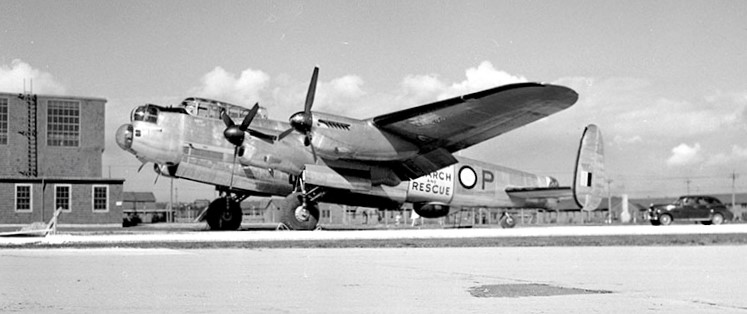
No. 123 Search and Rescue (SAR) Flight, aircraft coded CJ and FH, formed at Sea Island, British Columbia in 1951. It was equipped with two Cansos, two Lancasters, two Norseman, and one H-5 Helicopter.
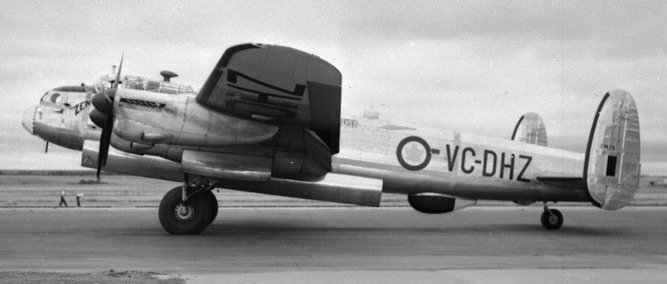
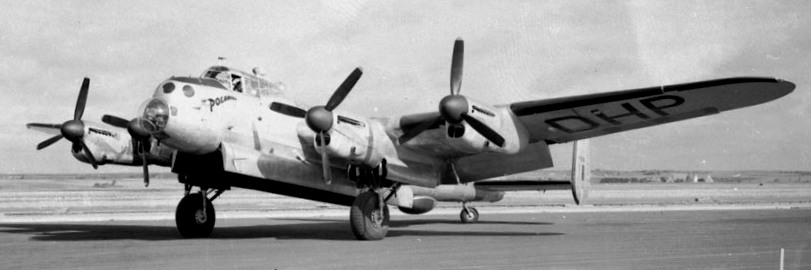
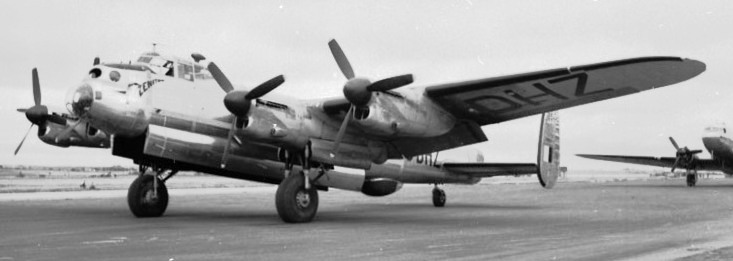
Central Navigation School (CNS), aircraft coded CQ and DH, was re-formed at Summerside, Prince Edward Island, on 1 Aug 1951, and then moved to Winnipeg, Manitoba in 1954. In August 1967, CNS and Central Flying School (CFS) joined as Central Flying and Navigation School (CFNS), training both flying and navigation. In November 1968 navigator training was again separated from flying training, and became the specialty of the Canadian Forces Air Navigation School (CFANS).
(Library and Archives Canada Photo, MIKAN No. 3224106)
Avro Lancaster Mk. 10SR, possibly RCAF (Serial No. KB904), coded CJ-P, No. 123 Rescue Unit, Sea Island, British Columbia, 31 May 1950.
(Library and Archives Canada Photo, MIKAN No. 3586596)
Avro Lancaster Mk. 10, RCAF (Serial No. FM211), coded VC-DHZ, Central Air Navigation School, 8 Aug 1949.
(Library and Archives Canada Photo, MIKAN No. 3586597)
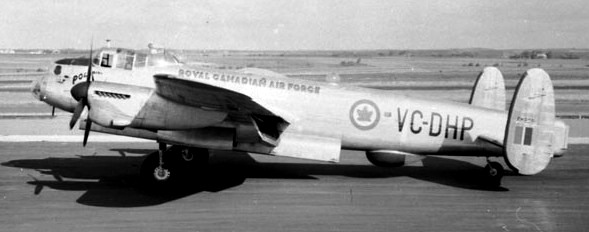
Avro Lancaster Mk. 10N, (Serial No. FM208), coded VC-DHP, “Polaris“, 8 Aug 1949. FM208 came off the assembly line at Malton in July 1945, one of three converted to Mk. 10N, a flying classroom for navigator trainees. It was stationed at RCAF Station Trenton, Ontario. It was bought by Ajax Aircraft Ltd. on 28 May 1957, Reg. No. CF-KHH, with the intent to use it to fly fuel into northern Canada. However, it sat at Dorval airport in Quebec for years before eventually being scrapped. (Don Christopher)
(Library and Archives Canada Photo, MIKAN No. 3580433)
Avro Lancaster Mk. 10, RCAF (Serial No. FM211), coded DHZ, 2 May 1949.
(Library and Archives Canada Photo, MIKAN No. 3586595)
Avro Lancaster Mk. 10N, (Serial No. FM208), coded VC-DHP, “Polaris“, 8 Aug 1949.
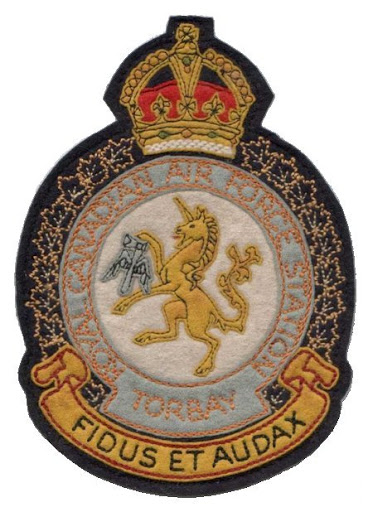
RCAF Station Torbay, Newfoundland, King’s crown crest.
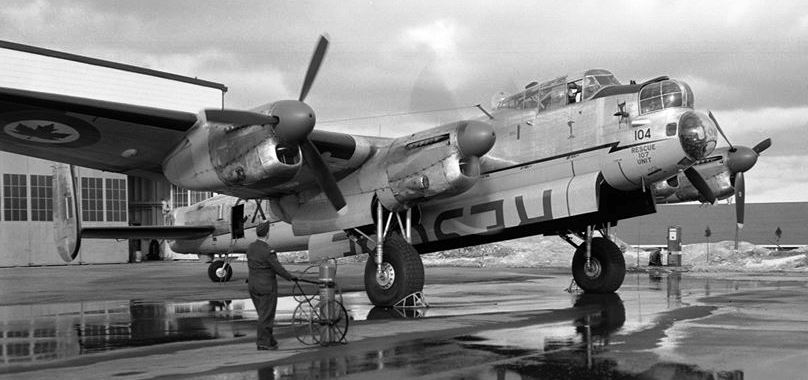
No. 107 Rescue Unit (RU), aircraft coded CX. A detachment of 103 Rescue Unit (RU) had been stationed in Torbay since Newfoundland joined Canada in November 1949. This unit was kept busy supporting Newfoundland and the Eastern oceanic approaches to Canada. In 1954, the decision was made to make the detachment a full unit, and so No. 103 RU Det was disbanded and in its place No. 107 Rescue Unit was stood up on 1 April 1954. The action was merely administrative in nature since the same crews and aircraft kept flying in the same role.
(Larry Creel Photo)
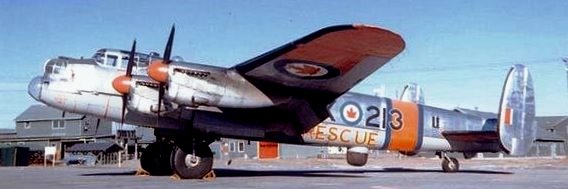
Avro Lancaster (Serial No. CX214), No. 107 Rescue Unit (RU), Torbay, Newfoundland, June 1957.
(DND Photo via Mike Kaehler)
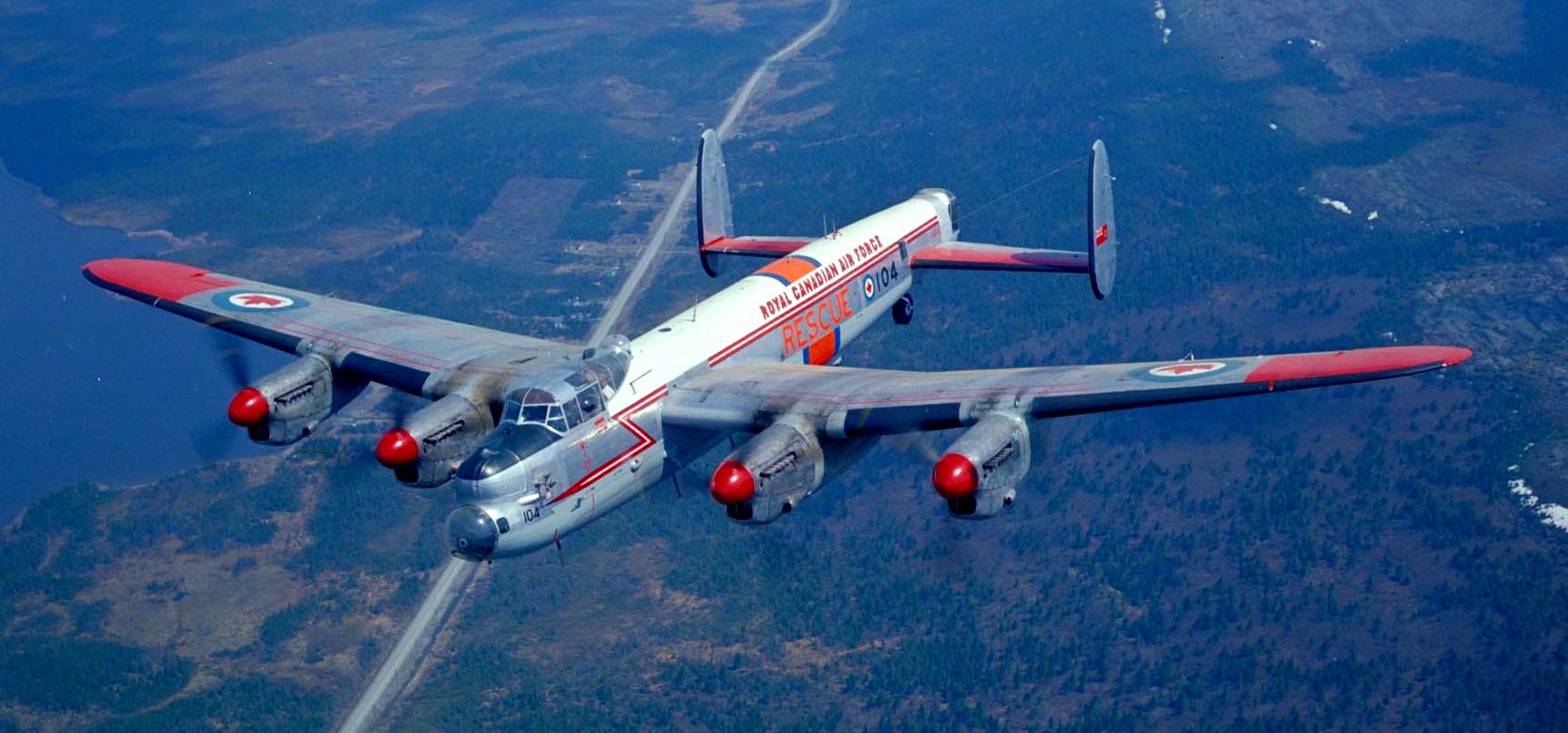
Avro Lancaster Mk. 10MR (Serial No. FM104), coded CX, No. 107 Rescue Unit, RCAF Station Torbay, Newfoundland.
Lancasters assigned to the Search and Rescue role carried the RESCUE sign pained in red, initially on the bombay doors and later on the side of the fuselage edged in blue and enhanced with a florescent orange-red band, from 1952 to 1964.
(DND Photo via Mike Kaehler)
Avro Lancaster Mk. 10 (Serial No. FM104), coded CX, No. 107 Rescue Unit, Summerside, Prince Edward Island, ca 1950s.
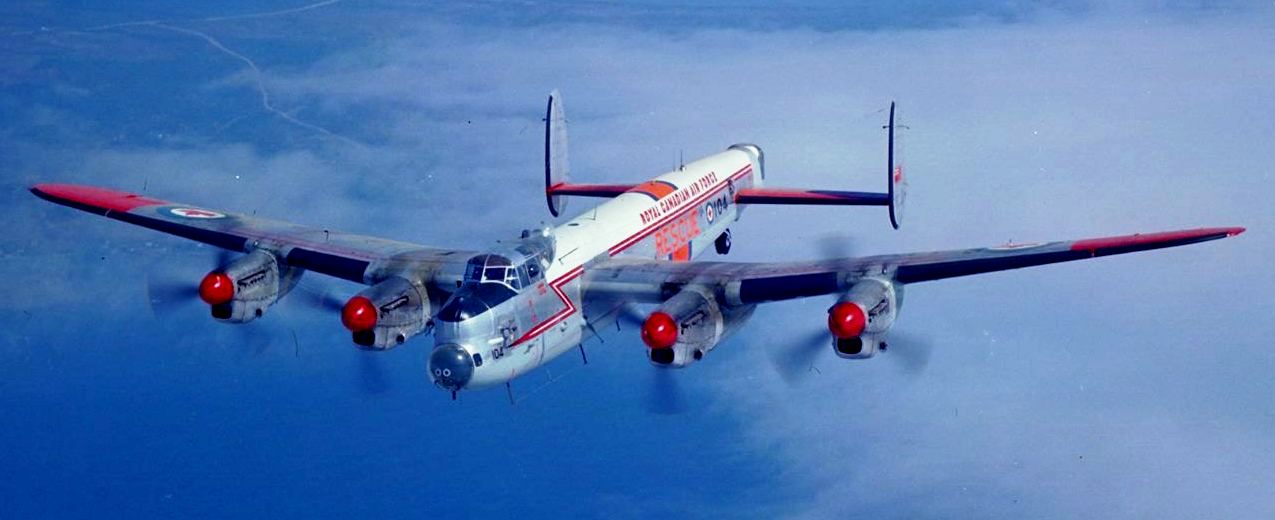
(RCAF Photo via Mike Kaehler)
Avro Lancaster Mk. 10 (Serial No. FM104), coded CX, No. 107 Rescue Unit, Summerside, Prince Edward Island.
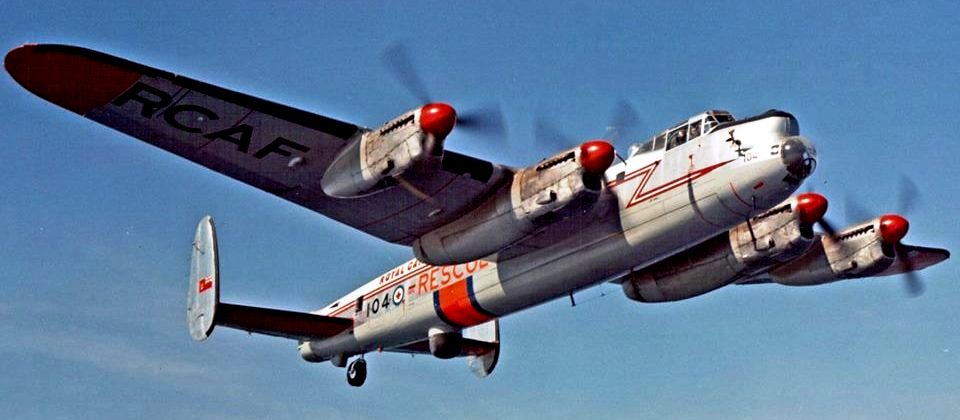
(DND Photo via James Craik)
Avro Lancaster Mk. 10 (Serial No. FM104), coded CX, No. 107 Rescue Unit, Summerside, Prince Edward Island.
Central Flying School (CFS), aircraft coded DD,
Air Armament School (AAS), aircraft coded DK. The Mountain View aerodrome in Ontario opened on 23 June 1941 to host No. 6 Bombing and Gunnery School (6 B&GS), one of eleven bombing and gunnery schools that opened across Canada under the BCATP during the Second World War. The station was later designated RCAF Station Mountain View when No. 6 B&GS was renamed the Ground Instruction School and merged with the Air Armament School at RCAF Station Trenton, Ontario. The main use of CFB Trenton Mountain View Detachment in the present day, is the storage and overhaul of older aircraft. This facility belongs to the Aerospace and Telecommunications Engineering Support Squadron (ATESS) based at Trenton.
(RCAF Photo)
Avro Lancaster Mk. 10 (Serial No. FM222), coded DK, Air Armament School.
Central Experimental Proving Establishment (CEPE) and Winter Experimental Establishment (WEE), aircraft coded FC. Central Experimental and Proving Establishment (CEPE), aircraft coded PX, authorized as Aerospace Engineering Test Establishment (AETE) on the amalgamation of CEPE (authorized 1951), No.10 Experimental Squadron (authorized 5 Nov 1952), and No. 448 Test Squadron (authorized 20 Jun 1967). The Winter Experimental Establishment (WEE) was established in 1947 at Edmonton. It had advanced bases at Watson Lake and Churchill. It main focus was to provide guidance in the design of new equipment for cold weather use and in improving existing technology. The Royal Canadian Air Force (RCAF) carried test for Canadian forces and for British and American air forces.
(RCAF Photo)
Avro Lancaster Mk. 10DC (Serial No. KB851) with Ryan Firebee drone KD-4656, 1962. KB851 and KB848 were the only Lancaster Mk. 10DC’s (DC-Drone Carrier). They were coded PX-851 and PX-848 while with CEPE’s Air Armament Evaluation Detachment at RCAF Station Cold Lake, Alberta. KB848 had previously served with CEPE at RCAF Station Uplands, Ontario.
(NDIL image PCN-1965)
Avro Lancaster Mk. 10DC (Serial No. KB851) with Ryan Firebee drone KD-4656.
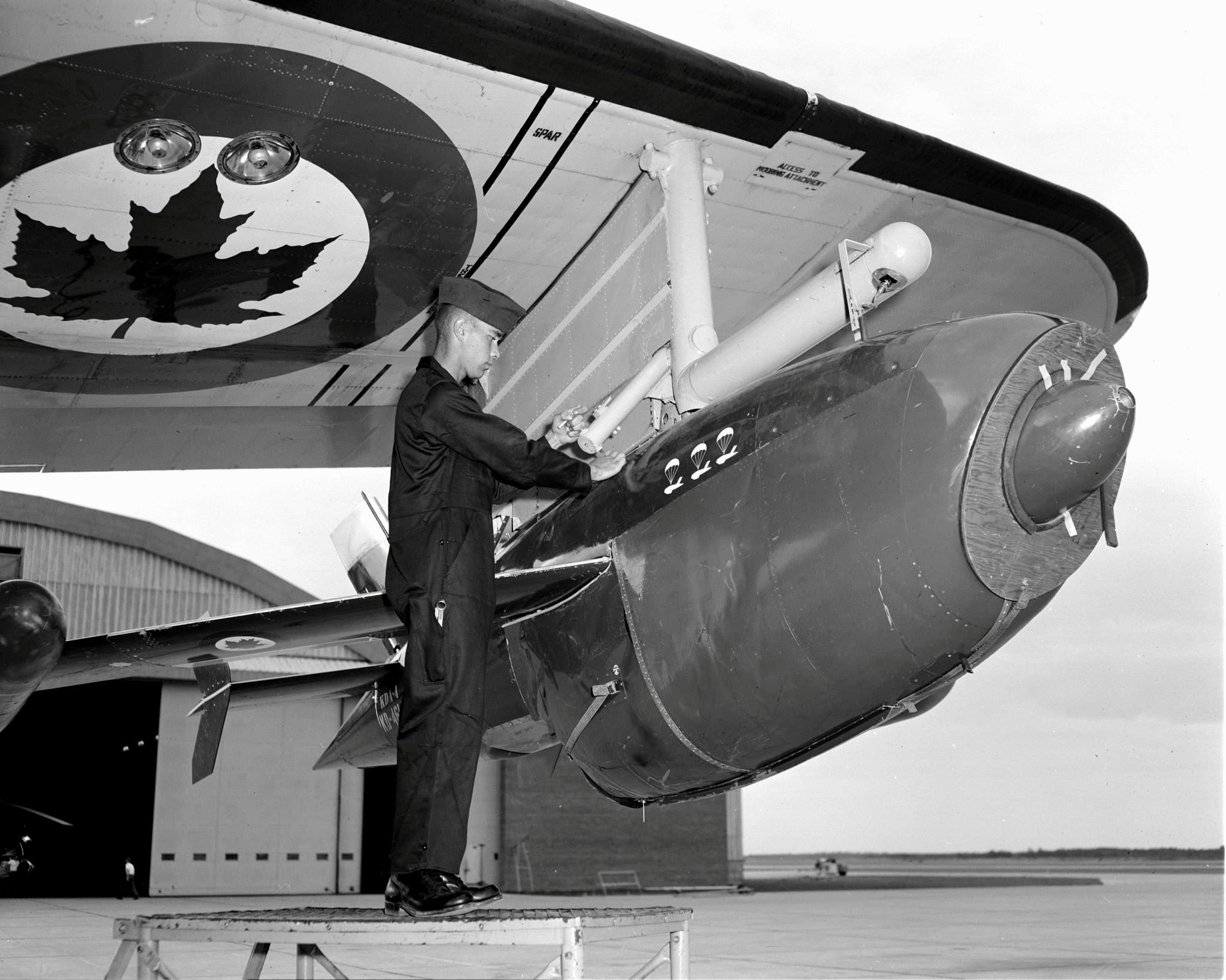
(RCAF Photo via Mike Kaehler)
Avro Lancaster with Ryan Firebee drone.
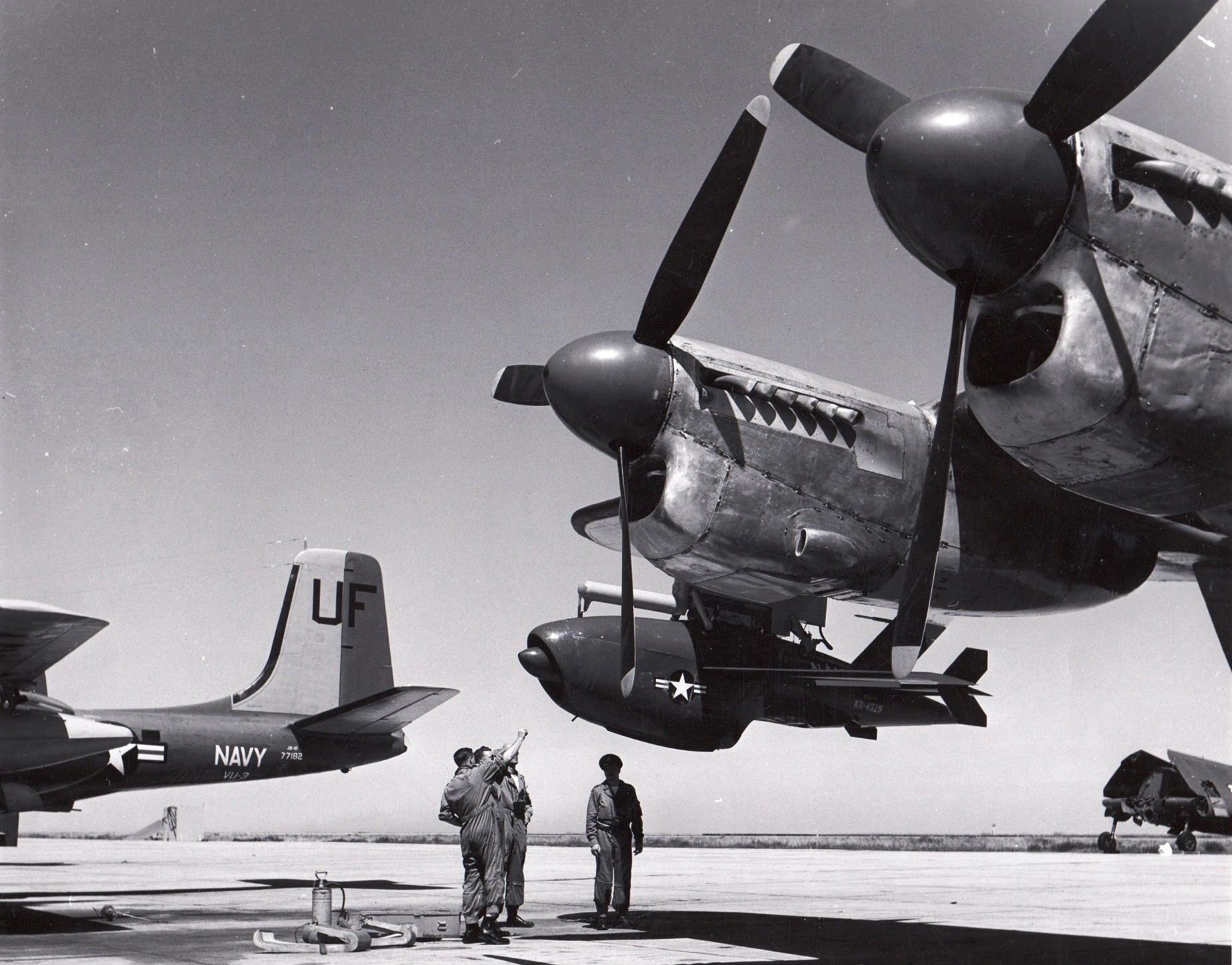
(Ryan Aeronautical Company Photo via Benoit Thibeault)
Avro Lancaster with Ryan Firebee drone.
No. 1 Air Navigation School (1 ANS), aircraft coded GS.
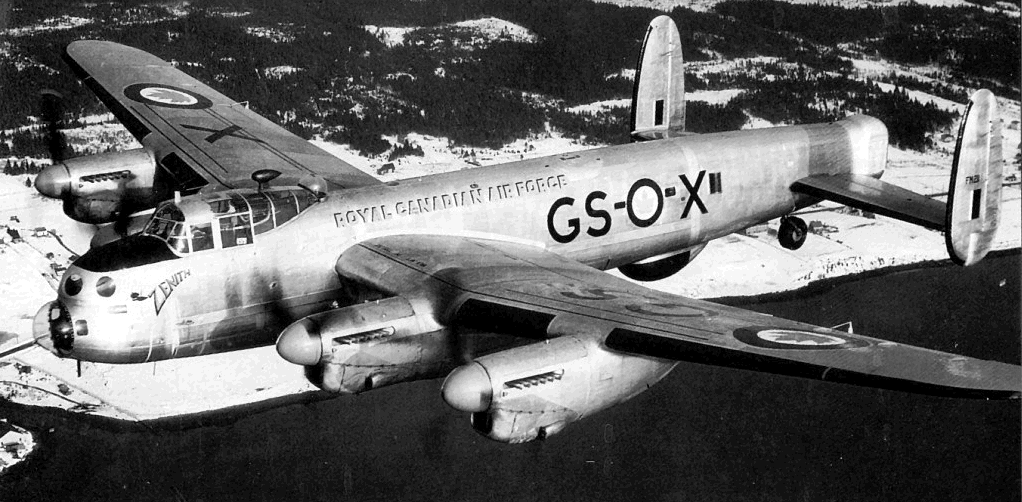
(RCAF Photo)
Avro Lancaster Mk. 10, RCAF (Serial No. FM211), coded GS-X, “Zenith“, No. 1 Air Navigation School (1 ANS).
No. 2 Air Navigation School (2 ANS), aircraft coded HW.
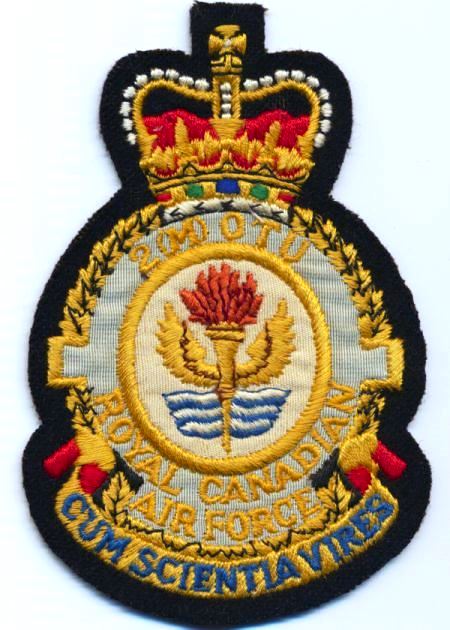
No. 2 (Maritime) Operational Training Unit (OTU), aircraft coded XV, became operational on 12 Dec 1949, the same day that No. 405 Squadron reactivated, using modified Avro Lancaster bombers as maritime reconnaissance aircraft . Part of No. 2 (M) OTU became No. 404 Squadron, the base’s second operational maritime reconnaissance squadron on 30 Apr 1951, with No. 2 (M) OTU continuing to train units at RCAF Station Greenwood, Nova Scotia. The station was experiencing a crowding problem, thus No. 2 (M) OTU was moved to RCAF Station Summerside, Prince Edward Island, effective 14 Nov 1953. The Lockheed P2V Neptune replaced Greenwood’s Avro Lancasters beginning 30 Mar 1955 as the operational maritime reconnaissance aircraft.
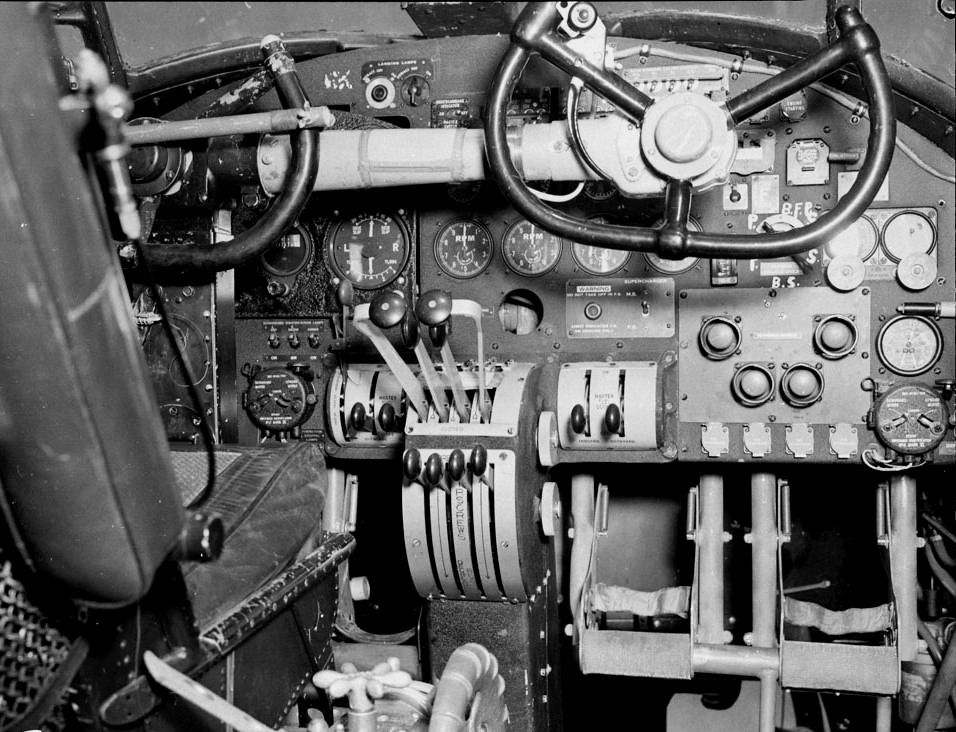
(Library and Archives Canada Photo, MIKAN No. 3584032)
Avro Lancaster cockpit.
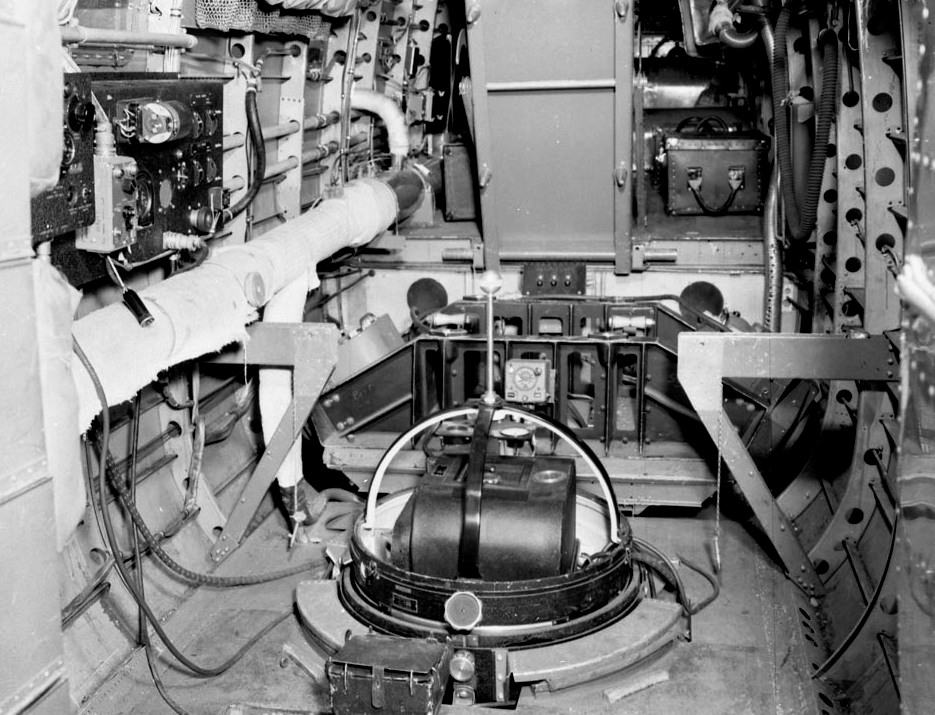
(Library and Archives Canada Photo, MIKAN No. 3584365)
Avro Lancaster OSC camera installation.
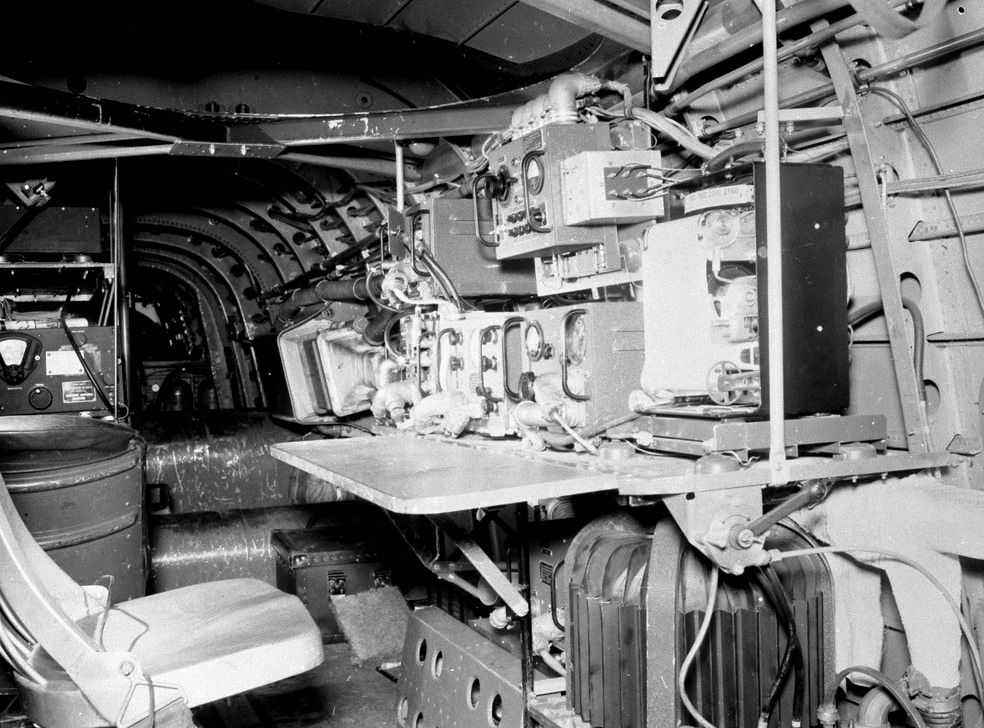
(Library and Archives Canada Photo, MIKAN No. 3584855)
Avro Lancaster radio altimeter installation.
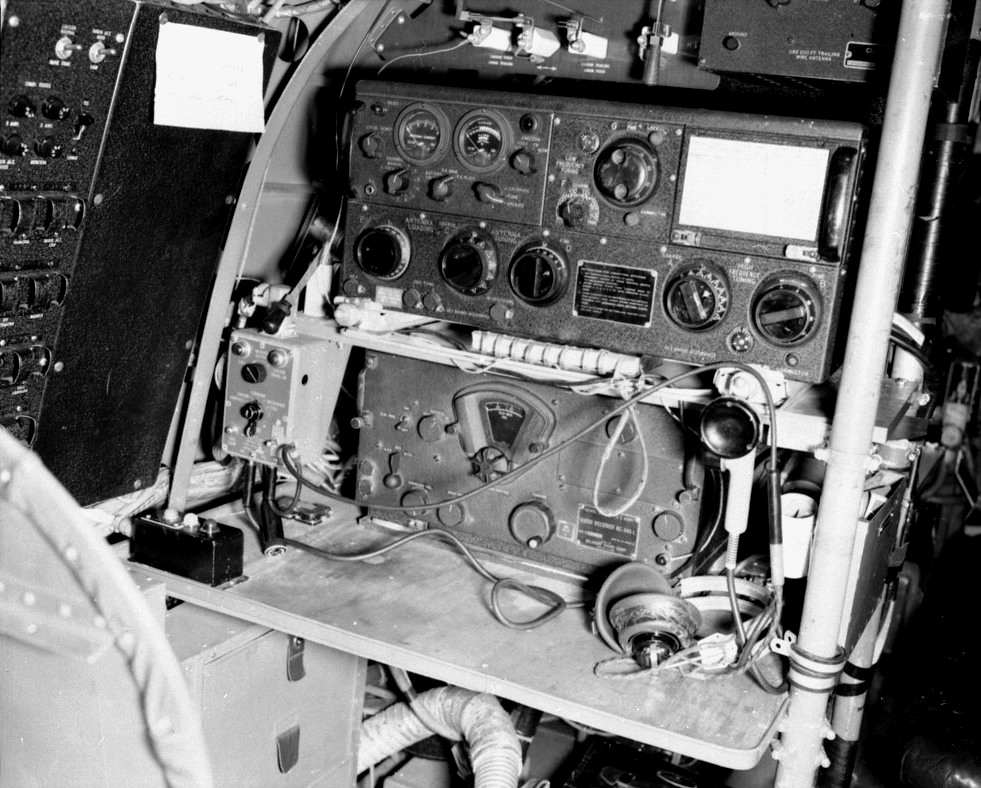
(Library and Archives Canada Photo, MIKAN No. 3584318)
Avro Lancaster Shoran equipment.
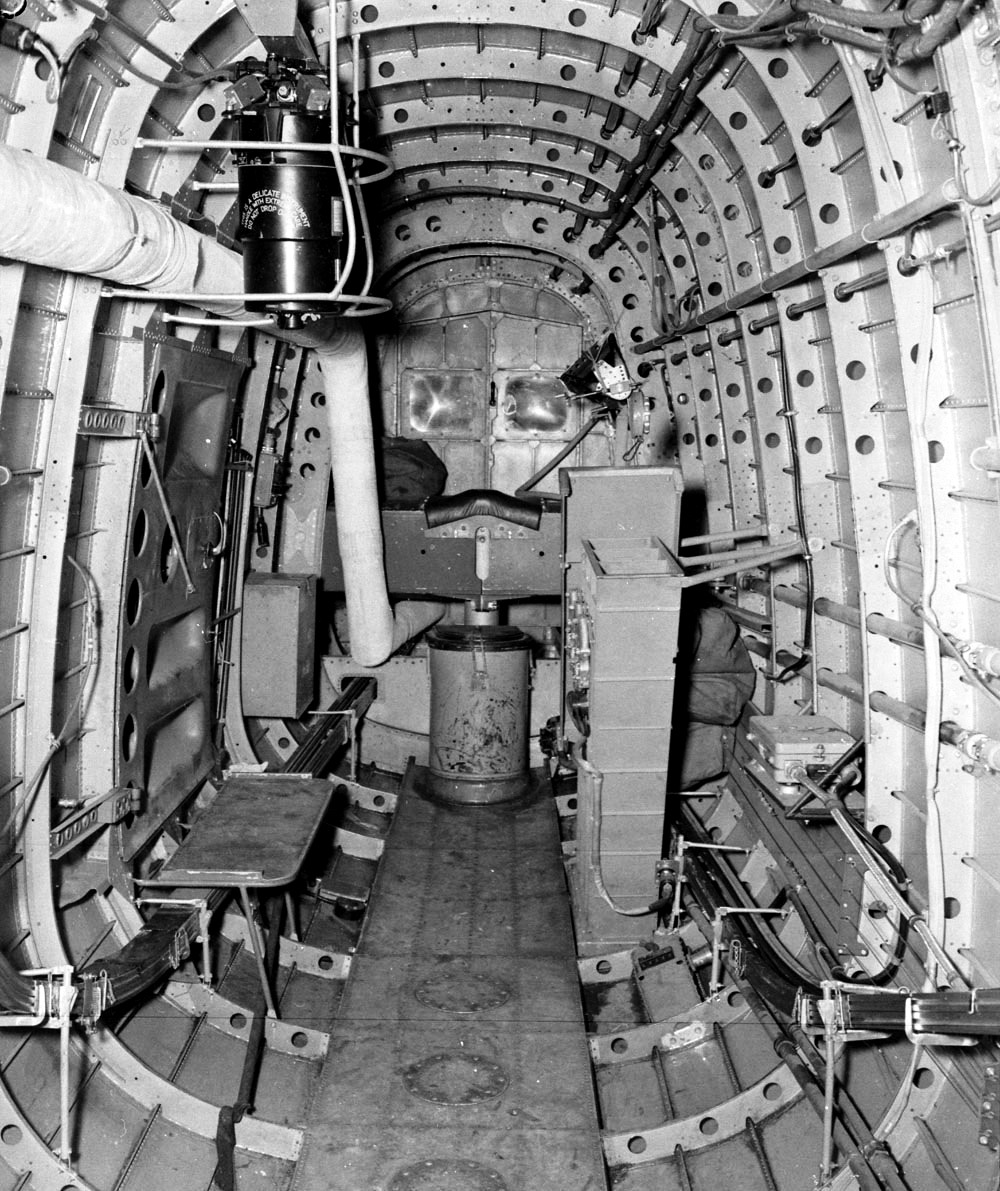
(Library and Archives Canada Photo, MIKAN No. 3584029)
Avro Lancaster installation and equipment.
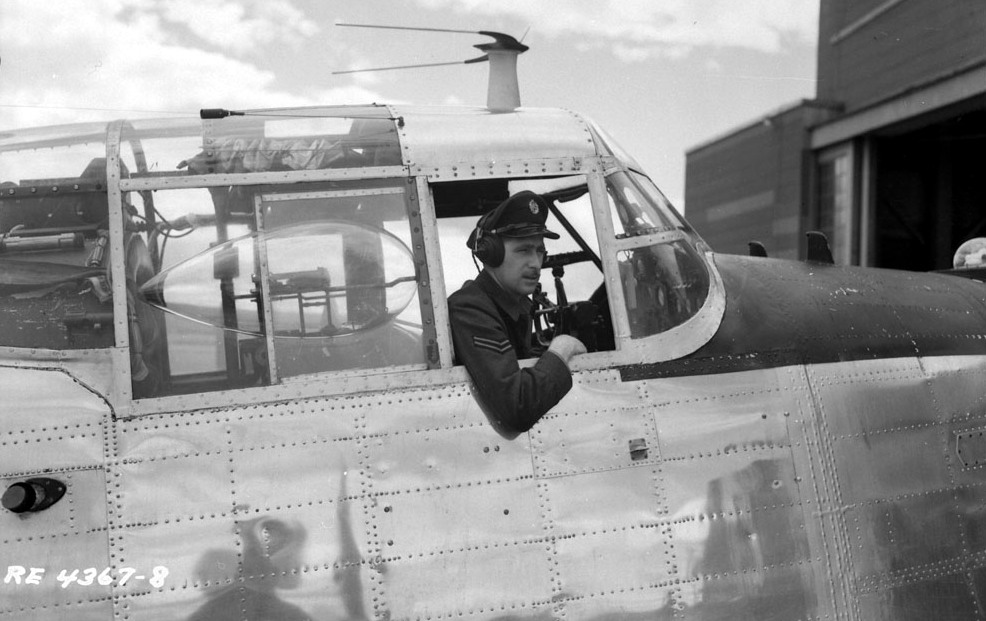
(Library and Archives Canada Photo, MIKAN No. 3586147)
Avro Lancaster, RCAF No. 8 Detachment, 16 Nov 1948.
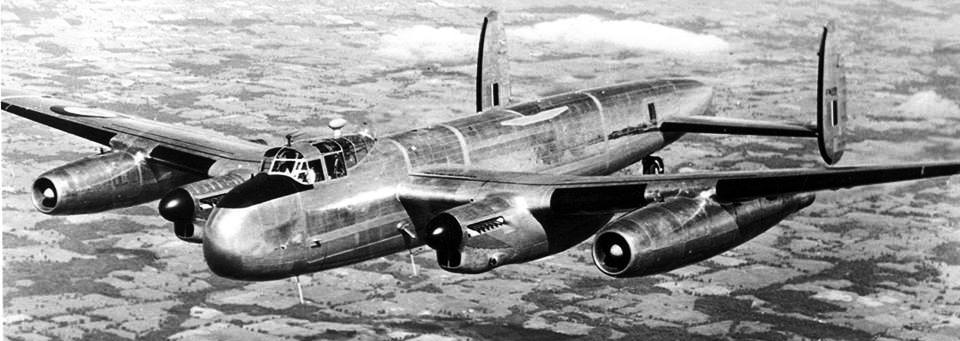
(Nanton Bomber Command Museum Photo)
Avro Lancaster Mk. 10C, RCAF (Serial No. FM209). This aircraft was used as a jet engine test bed. It was converted by Avro Canada as a Mk.10C test bed for two 3,000 pound thrust Avro Chinook TR.4 Mk. II axial-flow turbojets in outer nacelles in 1951 and scrapped in 1956.
FM209 was taken on strength with the RCAF as a Mk. 10U on 21 Aug 1946. FM209 was loaned to Avro (Canada) in the latter part of 1948 and converted to designation Mk. 10O (Orenda). The bombadier’s position and nose turret were removed, and the tail turret was replaced by tail-cone and observation windows in each side of the fuselage for photographic test recording. The two outboard Merlin engines were replaced by various Orenda enginess with the first test flight on 13 Jul 1950 with pilot Don Rogers at the controls. Flying on its jets alone, with the inboard props feathered, was as fast as a stock four engine Lancaster bomber. One incident with Mike Cooper-slipper at the controls took place at an airshow in which Mike asked the engineer to start the Merlin engines and a mixup occured and the Lancaster became a glider. The jet engines were started on time. The aircraft became an ideal engine test bed and was able to fly on either jet or Merlin engines or both. The crew of pilot, two engine test observers and a navigator were normal with over 500 hrs logged up till Jul 1954. FM209 was lost in a fire on 24 Jul 1956 in Avro’s wartime flight test Hangar at Malton, Ontario.
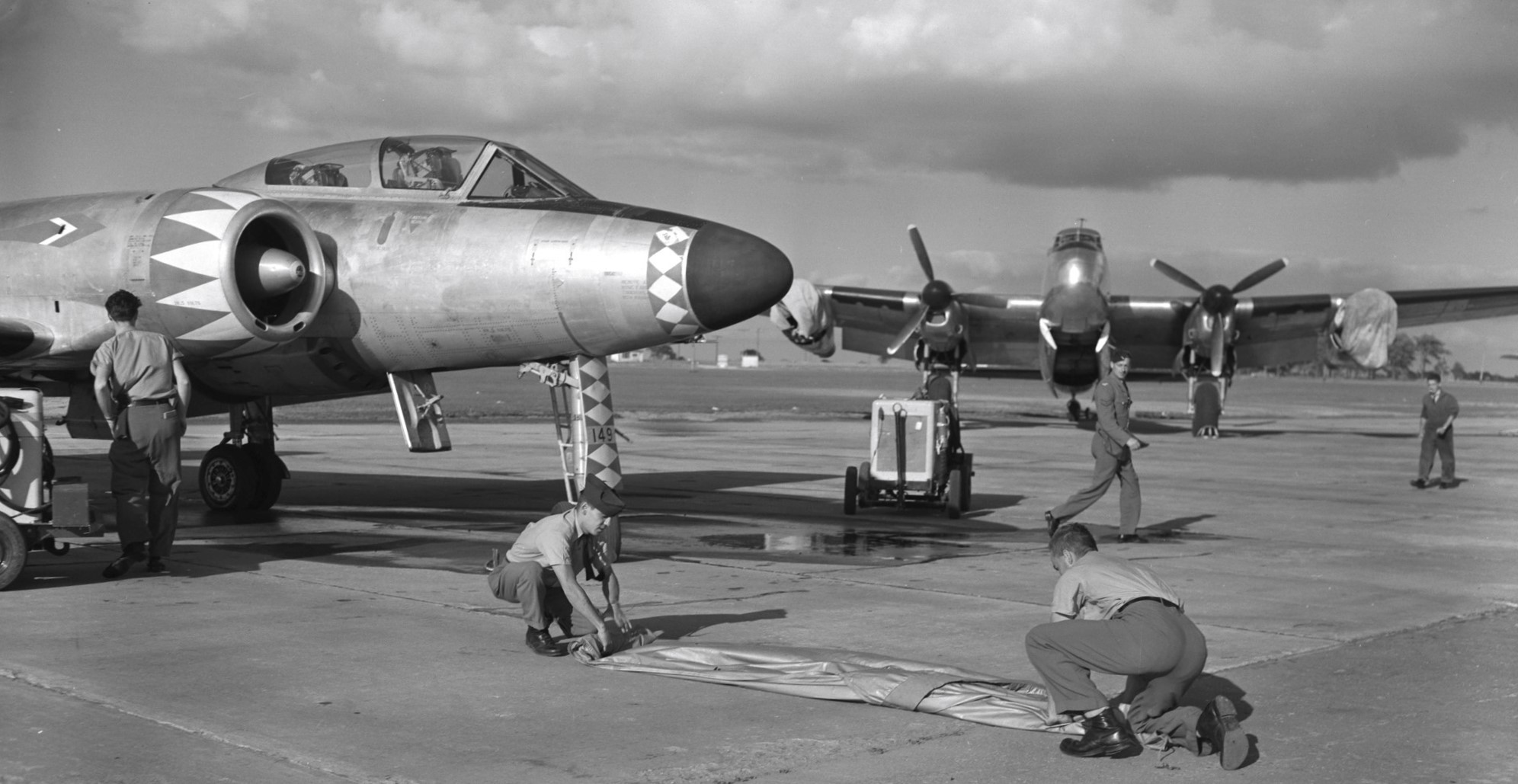
(RCAF Photo)
Avro CF-100 Canuck Mk. 3 (Serial No. 18149), one of the last Mk. 3s. it crashed on 27 Feb 1967. The crew ejected safely. In the background with covers over its outboard jet engines is RCAF Avro Lancaster (Serial No. FM 209) that was used as a jet engine test bed. It was converted by Avro Canada as a Mk. 10C test bed for two 3,000 pound thrust Avro Chinook TR.4 Mark II axial-flow turbojets in outer nacelles in 1951 and scrapped in 1956. The techs in the foreground are rolling up the canopy cover for 18149.
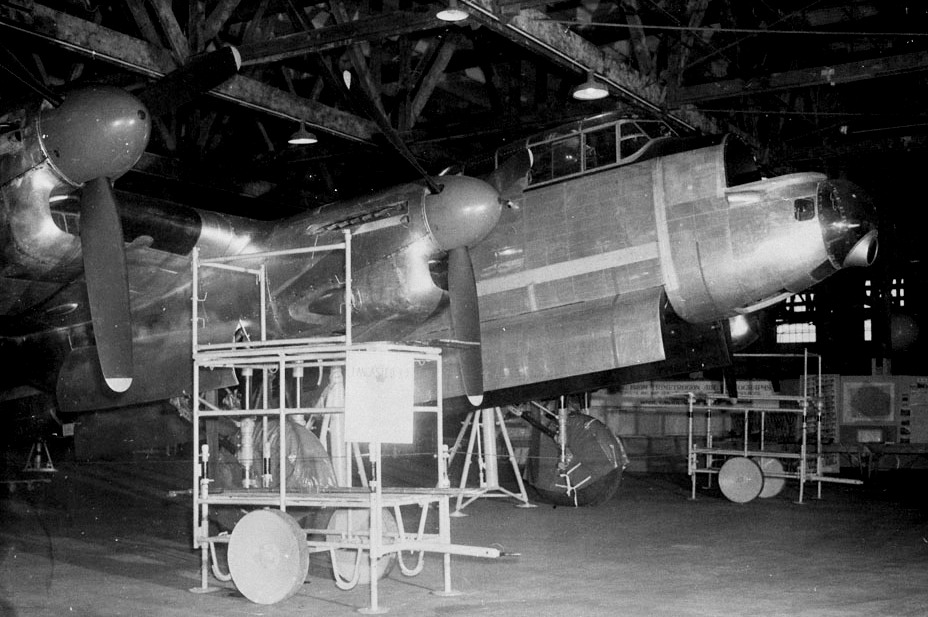
(Library and Archives Canada Photo, MIKAN No. 3584072)
Avro Lancaster Mk. 10, RCAF, 1947.
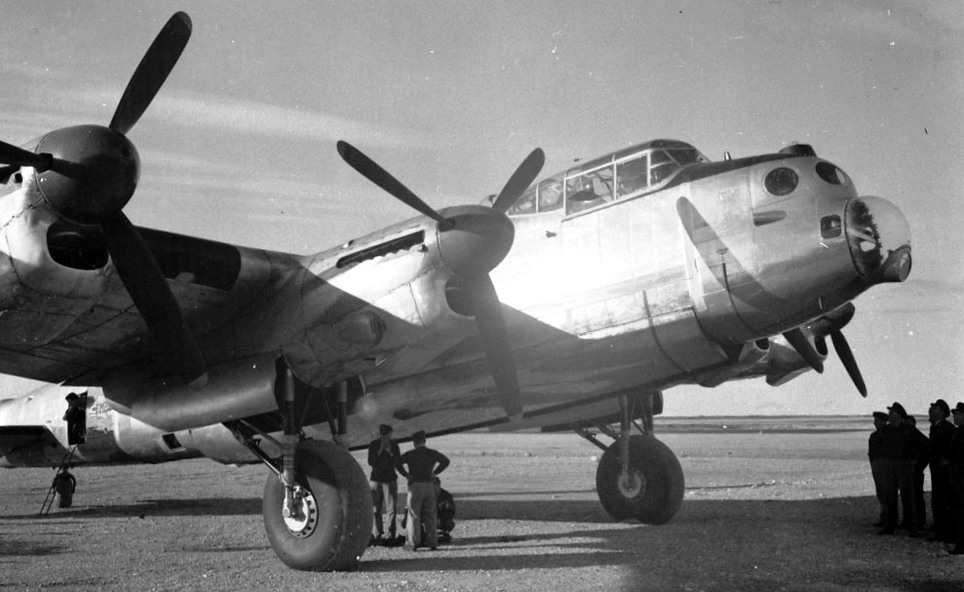
(Library and Archives Canada Photo, MIKAN No. 3584103)
Avro Lancaster Mk. 10, RCAF, 1947.
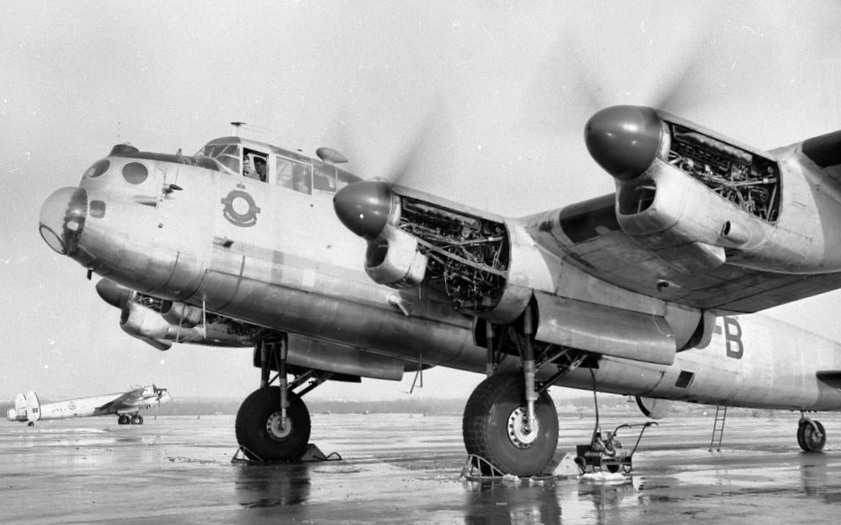
(Library and Archives Canada Photo, MIKAN No. 3584476)
Avro Lancaster Mk. 10, RCAF, warming up, 2 Feb 1951.
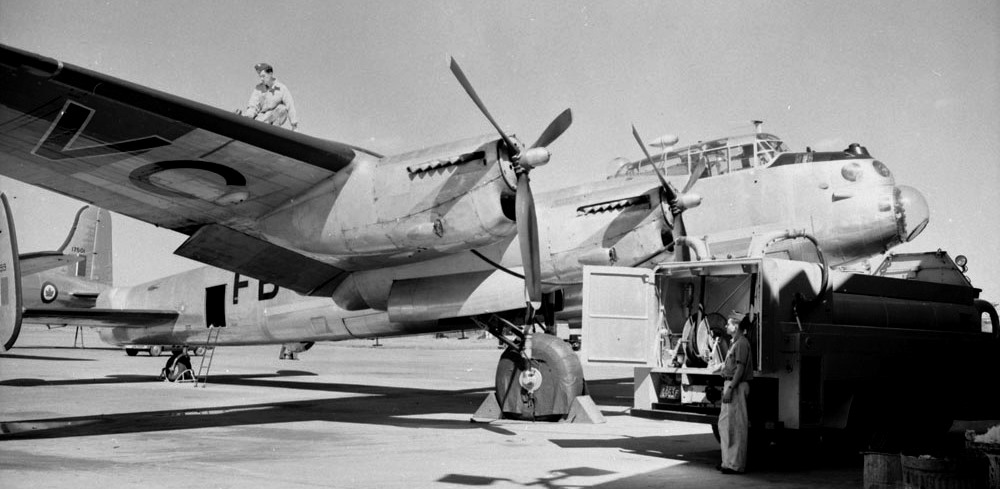
(Library and Archives Canada Photo, MIKAN No. 3584296)
Avro Lancaster Mk. 10, coded FB, being refueled, 6 Sep 1949.
(Library and Archives Canada Photo, MIKAN No. 3584478)
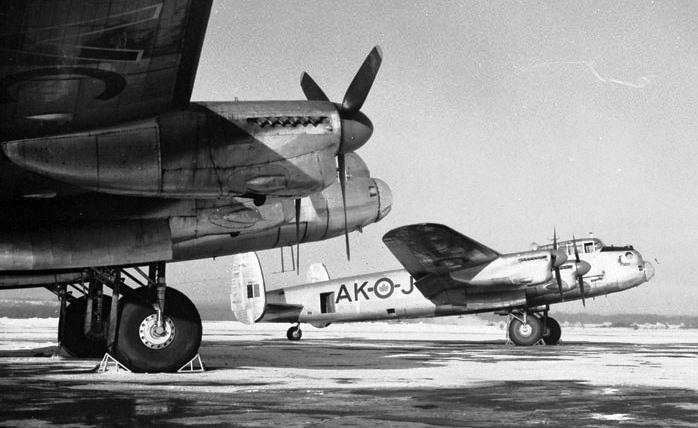
Avro Lancaster Mk. 10, coded AK-J, RCAF Station Rockcliffe, Ontario, 28 Dec 1950.
(DND Photo via Francois Dutil)
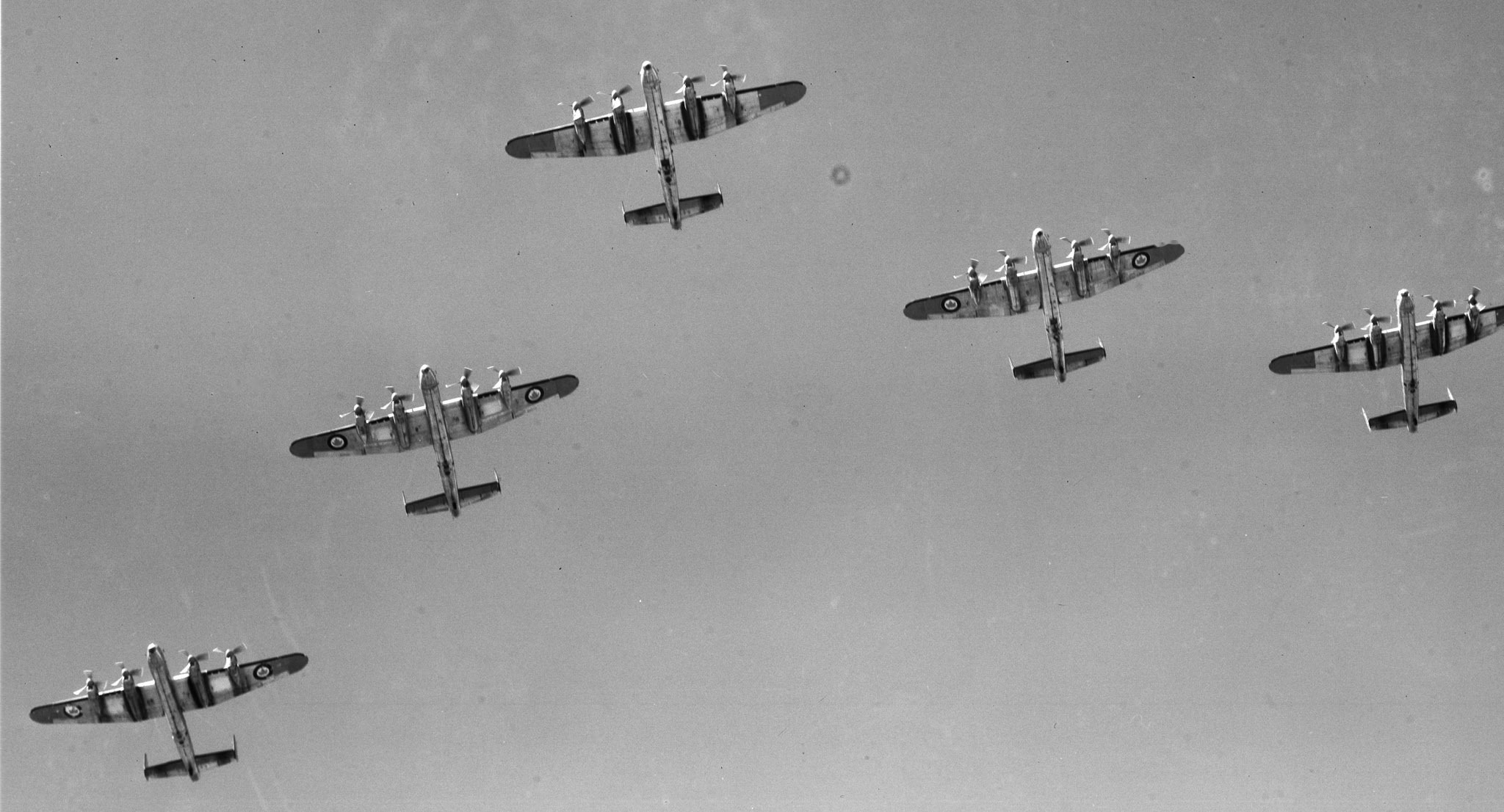
Avro Lancaster Formation.
(RCAF photo via Mike Kaehler)
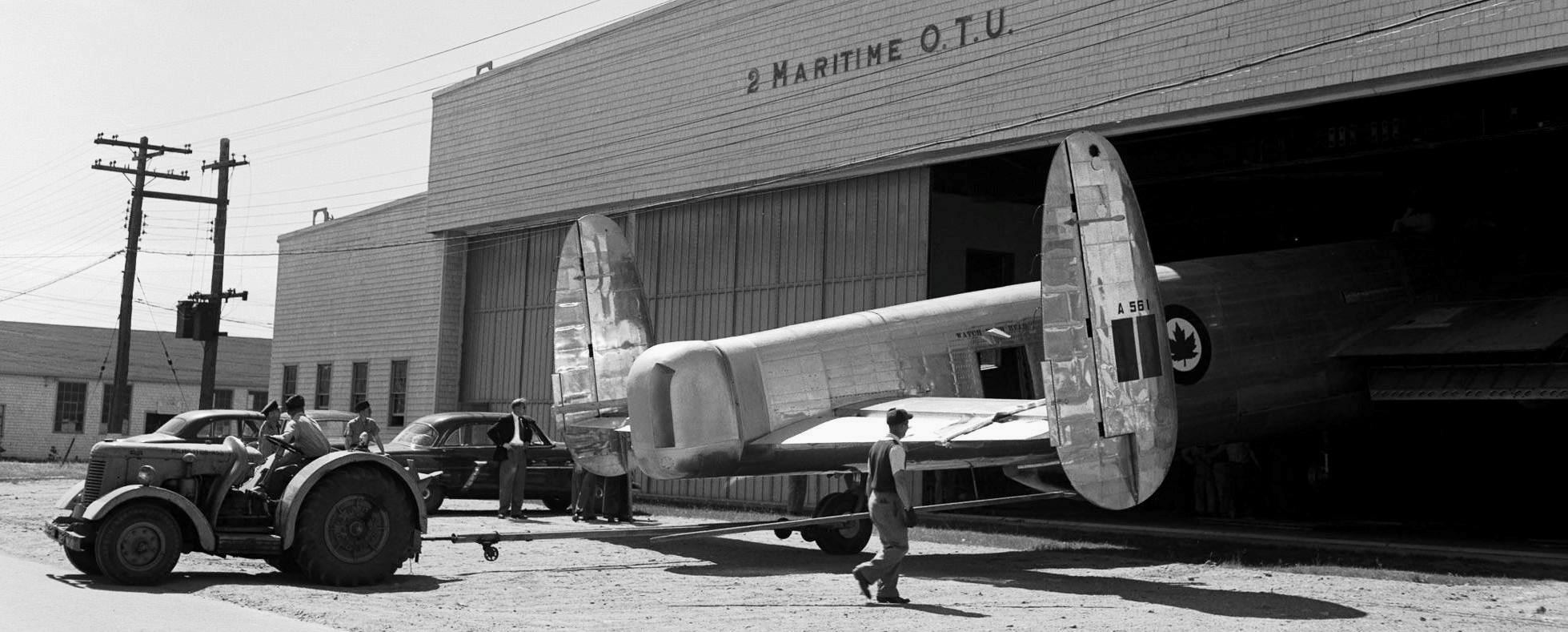
Avro Lancaster Mk. 10N (Serial No. KB986) as Instructional Trainer A561 being towed out of the hanger at 2 Maritime OTU.
(RCAF photo via Mike Kaehler)
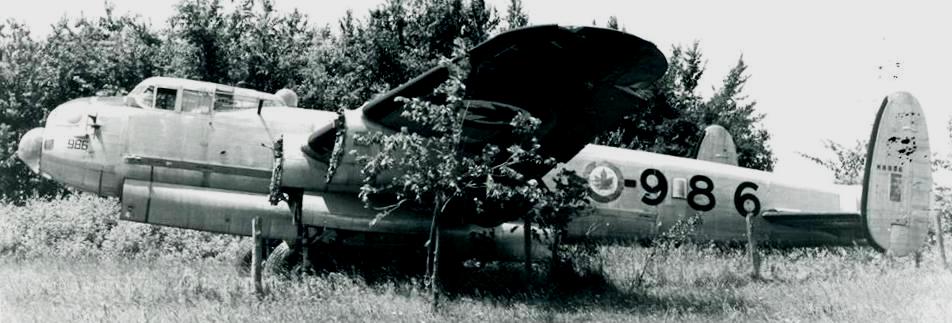
Avro Lancaster Mk. 10N (Serial No. KB986), Dunnville, Ontario.
(Library and Archives Canada Photo, MIKAN No. 4236026)
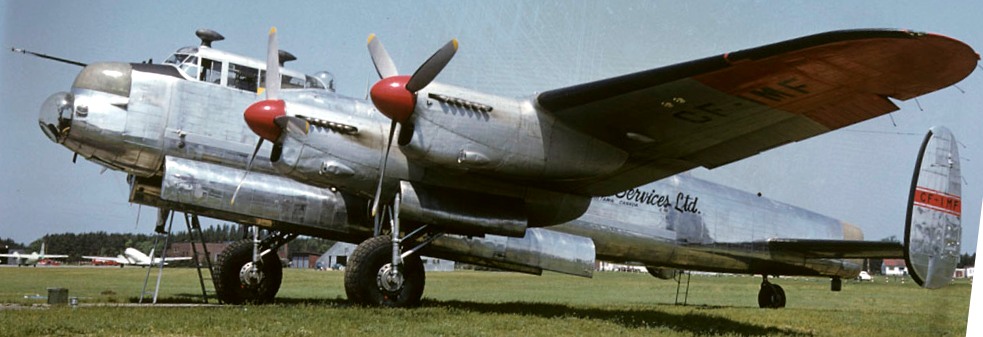
Avro Lancaster Mk. 10, Reg. No. CF-IMF, Spartan Air Services Ltd.
(Library and Archives Canada Photo, MIKAN No. 3562607)
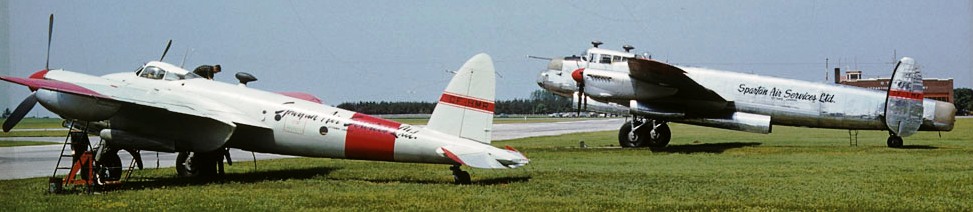
Avro Lancaster Mk. 10, Reg. No. CF-IMF, and de Havilland DH.98 Mosquito, Spartan Air Services Ltd.
(Library and Archives Canada Photo, MIKAN No. 3584480)
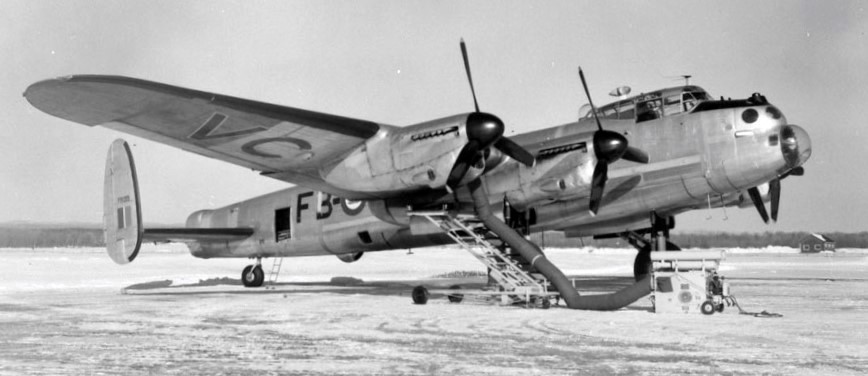
Avro Lancaster Mk. X with Herman Nelson heaters, 2 April 1951.
(RCAF Photo via Mike Kaehler)
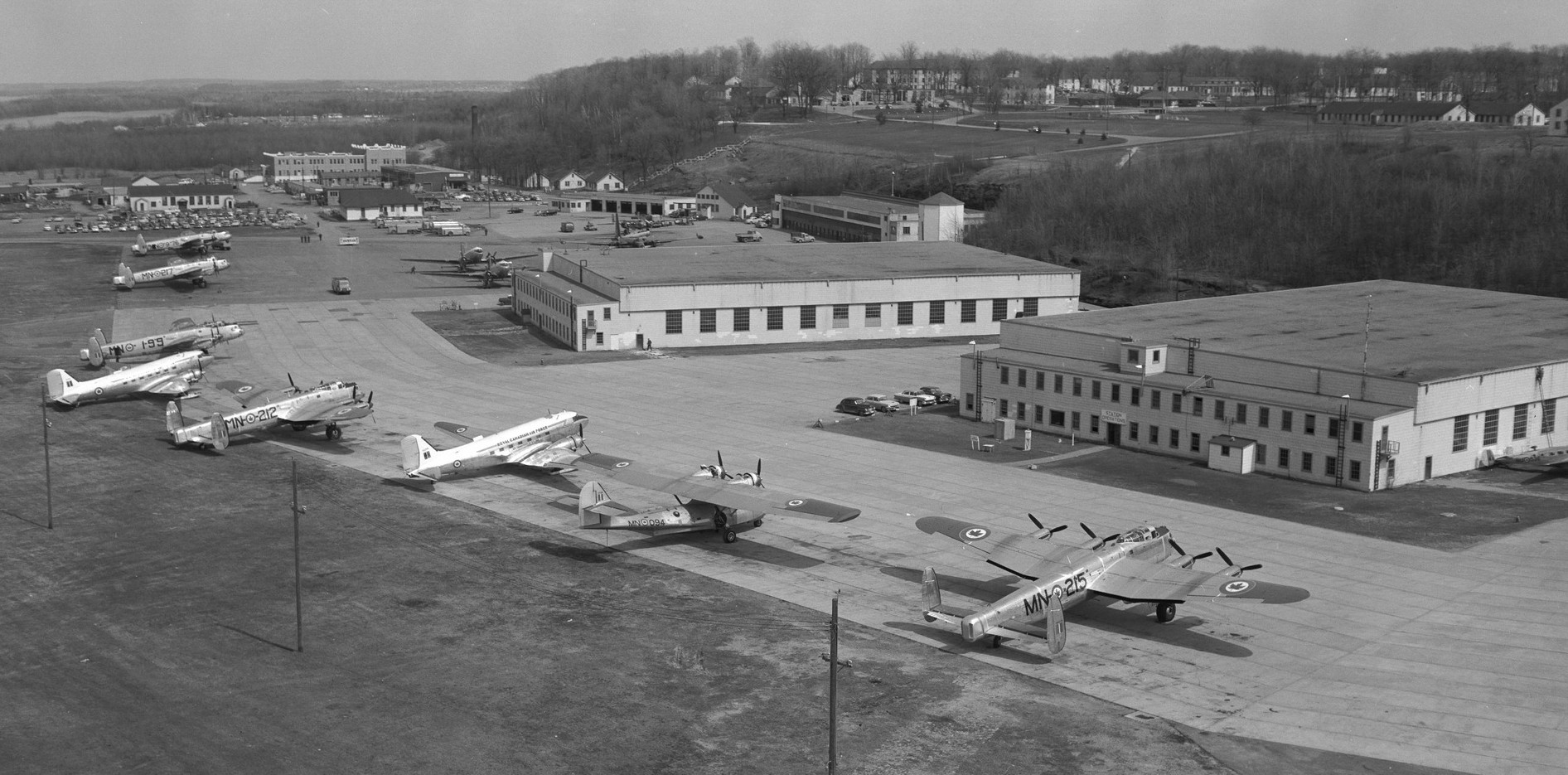
No. 408 Squadron flight line at Rockcliffe, Ontario, c1955-1962. In this photo are Lancasters, Dakotas, a Canso, a Mitchell, a Neptune, a Harvard and an Expeditor.