
North American P-51 Mustang Mk. I, II and IV flown by the RCAF in the Second World War
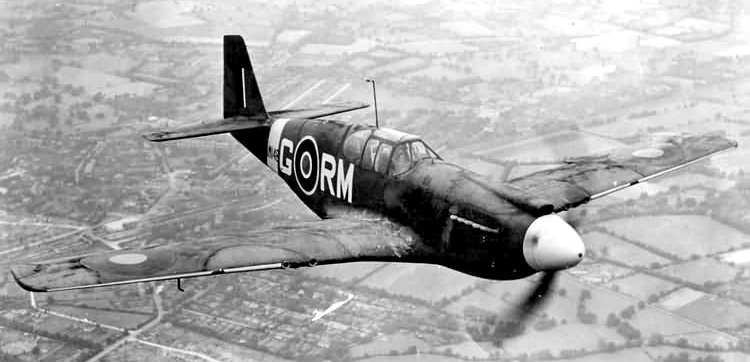
(RAF Photo)
North American Mustang Mk. I (Serial No. AM148), coded G-RM, No. 26 Squadron, RAF, based at Gatwick around June 1942. AM148 later served with No. 430 Squadron, RCAF.
North American Mustang Mk. I, Mk. III (P-51B and P-51C), and Mk. IV (P-51D)
Canada had five squadrons equipped with Mustangs during the Second World War. RCAF Nos. 400, 414 and 430 Squadrons flew Mustang Mk. Is (1942–1944) and Nos. 441 and 442 Squadrons flew Mustang Mk. IIIs and Mk. IVAs in 1945.
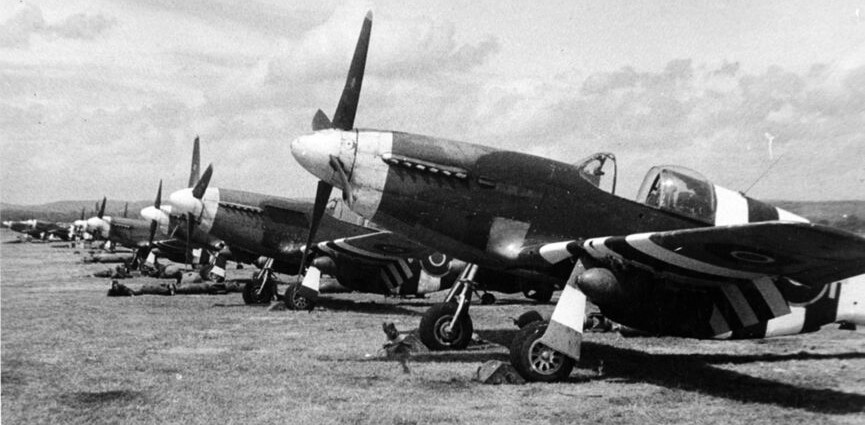
(IWM Photo, MH 6845)
North American Mustang Mk. IIIs of No. 129 Squadron at Coolham in Sussex, June 1944. The squadron was one of many transferred to 2nd Tactical Air Force in support of the Normandy invasion. It later returned to Fighter Command, flying long-range bomber escorts.
The North American Mustang Mk. I does not have a US applied ‘P’ type designation/aircraft identification number. It was produced by North American Aviation under a direct contract with the British Government and pre-dates the P-51 designation that was first applied to the next sub-type of the Mustang to be manufactured for the RAF. No. 430 Squadron, RCAD, still had a few Mustang Mk. I aircraft on their operational strength on 1 January 1945. They were amongst the aircraft either destroyed or damaged on the airfield where they were based on 1 January 1945 when the Luftwaffe launched their New Year’s Day attack on allied airfields on the continent, “Operation BODENPLATTE”. No. 430 Squadron, RCAF, was in the process of converting to the Spitfire Mk. XIV, so the New Year’s Day Mustang Mk. I losses hastened their departure from the Squadron, and by mid-January 1945 they were gone. The Mustang Mk. I did not have provision for underwing hard points.
The first Mustang version to have the P-51 designation, was the batch of 150 aircraft that followed on from the Mustang Mk. I. This was the first batch to be produced for the RAF under Lend Lease – and the reason why it had to be given the US Army Air Force (USAAF) ‘P’ designation for official USAAF ordering purposes. This was the follow on sub-type that was armed with 4 x 20-mm Hispano cannon – 2 in each wing to replace the MG and HMG armament of the Mustang Mk. I. This was the Mustang Mk. IA in RAF service. 93 were delivered to the RAF, while the remainder were retained by the USAAF after Pearl Harbor – before they could be delivered to RAF. Like the Mk. I, the Mustang Mk. IA did not have provision for underwing hard points.
The next Mustang variant to be built by North American was the A-36A Mustang, which was the dive bomber – ground attack sub-variant produced for the USAAF. See note regarding sole RAF example flown in UK below.
The final Allison engined early Mustang variant to be built by NAA was the P-51A, which was the Mustang Mk. II in RAF service. The RAF received 50 of them to replace the P-51/Mustang Mk. IA held back by the USAAF from the earlier order. A couple of RCAF pilots flew these while attached to RAF Squadrons who flew them. The Mk. II had provision for hard points under the wings for carrying bombs or drop tanks but the RAF never fitted hard points as they used them solely for the low level tactical reconnaissance role. (Colin Ford, Canberra Australia, Historian, No .268 Squadron Royal Air Force, 1940-1946)
No. 268 Squadron, RAF was a Second World War Army Co-operation and Fighter Reconnaissance Squadron and was the RAF Squadron with the longest continual service record operating the Allison engined North American Mustang in all three major marks used by the RAF, Mk.I, Mk.IA and Mk.II from mid-April 1942 until late-August 1945. During its existence, the Squadron included aircrew from the RAF, RAAF, RCAF, RNZAF, IAF and PAF.
No. 400 Squadron formed in Canada as No. 110 “City of Toronto” (Army Co-operation) Squadron (Auxiliary) on 5 Oct 1932. The Squadron flew the North American Mustang Mk. I from Jun 1942 to Feb 1944. The Squadron’s Mustang Mk. I aircraft were all drawn from the AG, AL, AM and AP serial ranges allocated to that aircraft type by the RAF. The Squadron’s aircraft, when they did carry Squadron identification codes were ‘SP’ followed by the individual aircraft identification letter eg. SP-A.
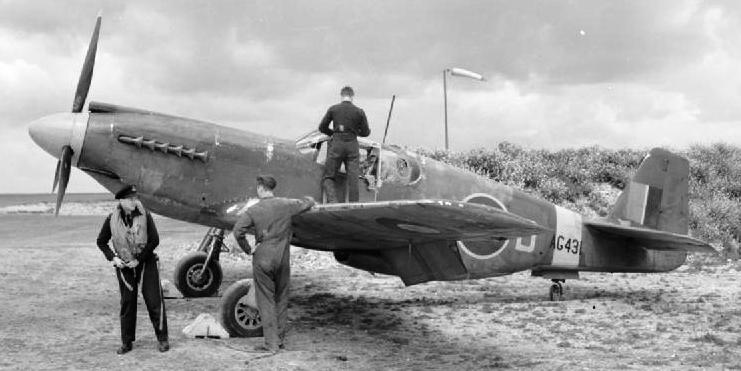
(IWM Photo CH 10222)
North American Mustang Mk. I, RAF (Serial No. AG431), coded D, of No. 16 Squadron RAF, being prepared for a reconnaissance sortie at Middle Wallop, Hampshire. The pilot in photo putting on his Mae West life vest in front of the aircraft is Flying Officer Doug Sampson, RAAF.
(AWM Photo via Peter Lambros)
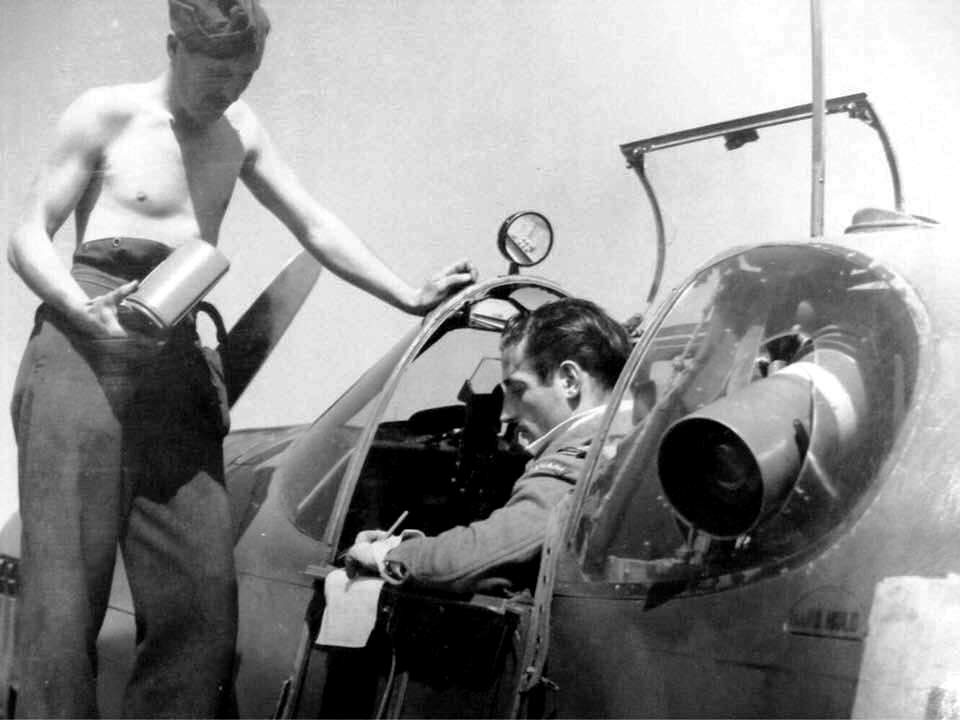
North American Mustang Mk. IA, RAF, with aerial camera behind the pilot. The Mustang Mk. I’s excellent range and low-level performance led to it being fitted with an oblique camera for use in the army co-operation role. Two RCAF units flew these aircraft. This Mustang was photographed while it was allocated to No. 268 Squadron RAF. The pilot shown in the cockpit is Flying Officer G Gibson RCAF, who was attached to the RAF when the photo was taken. The oblique reconnaissance camera is a Williamson F.24 camera which was the standard reconnaissance camera fitted to RAF Mustangs for low level photographic reconnaissance operations. No RCAF Squadrons were equipped with the Mustang Mk. IA, although a number of RCAF pilots flew this sub-type of the Mustang while attached to RAF Squadrons that did.
Three RCAF Squadrons operated the North American Mustang Mk. I, No. 400 Squadron, RCAF, No. 414 Squadron, RCAF, and No. 430 Squadron, RCAF.
01 Mar 1941. No. 400 Army Co-Operation Squadron received the first number in the 400 block in recognition of the fact it was the first squadron to deploy overseas. During the war, the squadron flew the Westland Lysander, Curtiss Tomahawk, North American Mustang, de Havilland Mosquito, and Supermarine Spitfire primarily in the armed and unarmed reconnaissance role. Later in the war, the squadron also flew air interdiction operations. At the end of the war, No. 400 Squadron was disbanded on 7 Aug 1945, at a captured airfield in Lüneburg, Germany.
13 Aug 1941. No. 414 (Army Co-operation) Squadron was formed at RAF Croydon, England, as the RCAF’s 12th squadron formed overseas. The squadron flew Westland Lysander Mk. III and Curtiss Tomahawk Mk. I and Mk. II. On 28 Jun 1943 it was redesignated No. 414 (Fighter Reconnaissance) Squadron at Dunsfold, Surrey and flew the North American Mustang Mk. I from from Jun 1942 to Aug 1944, and Supermarine Spitfire LF Mk. IX and FR Mk. XIV. The squadron was disbanded at Luneburg, Germany, on 7 Aug 1945. The Squadron’s aircraft were coded AG, AL, AM and AP.
On 1 January 1943, No. 430 (Army Cooperation) Squadron, “City of Sudbury”, was formed at Hartford Bridge, Hampshire, England as the RCAF’s 30th (3rd and last) AC squadron formed overseas. On 28 Jun 1943 it was redesignated No. 430 (Fighter Reconnaissance) Squadron. This unit flew Curtiss Tomahawk Mk. I and II, North American Mustang Mk. I and Supermarine Spitfire FR Mk. XIV fighters on air intelligence work, carrying out photographic reconnaissanc for Allied invasion planners and before-and-after photographs of air attacks on German “No-ball” V-1 flying bomb launch sites. After 6 Jun 1944 the squadron provided tactical photographic reconnaissance for ground forces in North-West Europe. The squadron was disbanded at Luneburg, Germany, on 7 Aug 1945.
(RAF Photo)
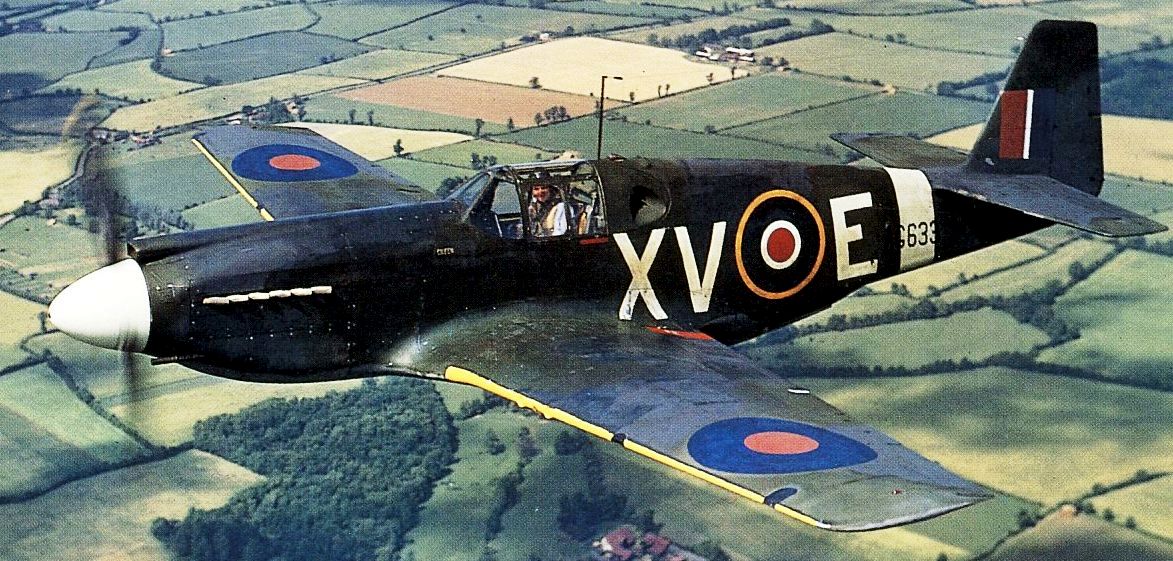
North American Mustang Mk. I, RAF (Serial No. AG633), coded XV-E, No. II (AC) Squadron, RAF, with an aerial camera mounted behind the pilot.
The first Mustang Mk. I victory was claimed over during Operation Jubilee over Dieppe on 19 Aug 1942, by RCAF Pilot Officer Hollis Hills of RCAF No. 414 Squadron. On his second mission of the day, flying Mustang Mk. I (Serial No. AG470), coded RU-M, P/O Hills, reported he had shot down a Focke-Wulf Fw 190. Squadron identification codes were ‘RU’ followed by the individual aircraft identification letter eg. RU-M.
Post-war analysis of RAF and surviving Luftwaffe records, plus review of other official records, including French Gendarmerie and Civil Defence records, record no Luftwaffe FW-190s crashing in the area or adjoining immediate areas where F/O Hills made his claim. No matching Fw 190 loss is recorded for date, time and location and encounter with RAF Mustangs, although there is a likely matching Fw 190 with damage. Furthermore, further research has revealed, with matching RAF records, Luftwaffe loss records and other corroborating evidence, including photographs, of certainly one and a very high probability of two earlier claims by RAF pilots against Fw 190s before the claim made by Hills. Those records also show that at the time Hills made his claim, the RAF did not have a clear confirmation of the earlier claims and could not make them known due to wartime security concerns – part of their intelligence was via intercepts of Luftwaffe radio transmissions and intelligence obtained via other ‘special means’. Details of this research are due to be released in the near future in a major book setting out the history of the North American Mustang in RAF and Commonwealth Service. So at best, Hills at the time made the first KNOWN and publicly acknowledged claims for an air to air kill flying the Mustang. (Colin Ford)
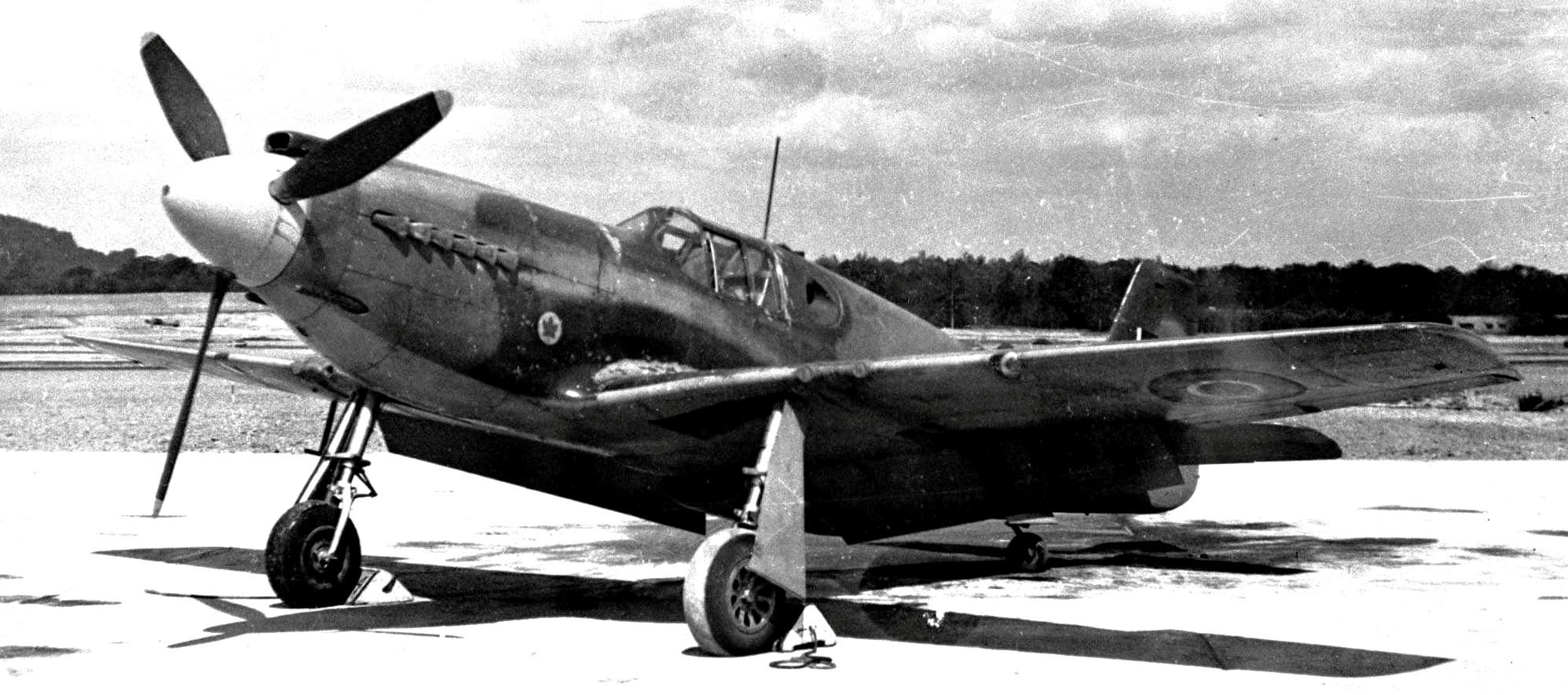
(RCAF Photo via James Craik)
North American Mustang Mk. I, No. 414 Squadron, RCAF, Dunsfold, Surrey, UK. No. 414 Squadron received its Mustang Mk. Is in June 1942. The RCAF Overseas Maple Leaf Roundel decal seen on the front cowling were not first issued to RCAF units until early 1943. Photo is most likely from the first half 1943.
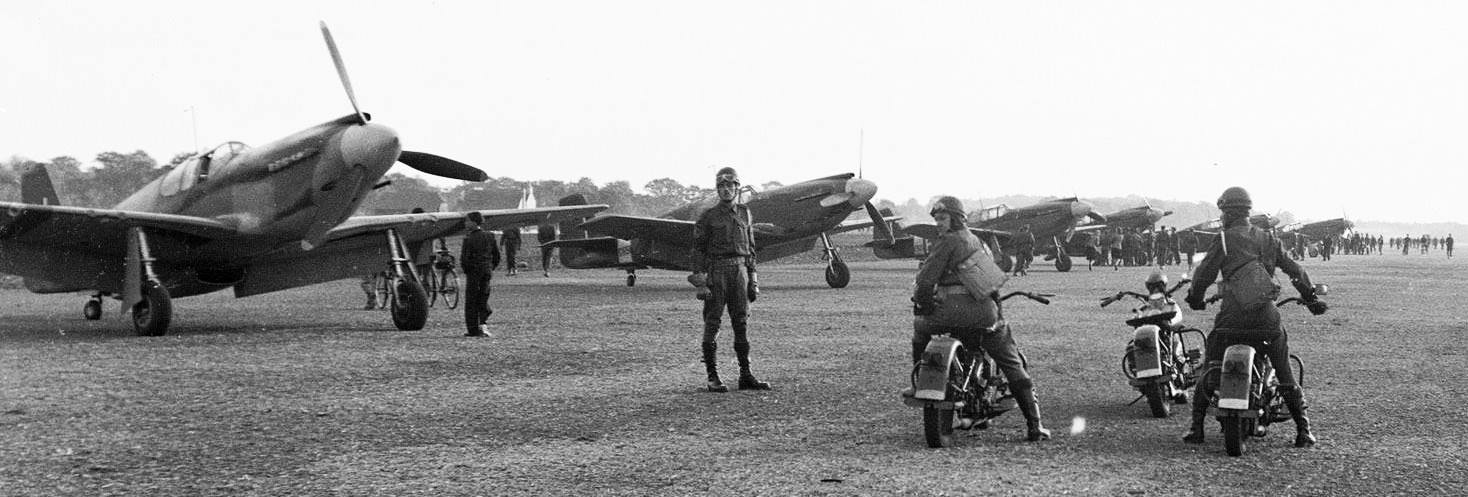
(RCAF Photo via James Craik)
North American Mustang Mk. I, No. 414 Squadron, RCAF, Dunsfold, Surrey, UK, likely between July and mid-November 1942.
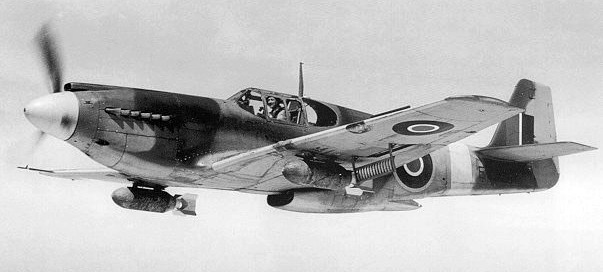
(RAF Photo)
North American A-36A Mustang (Serial No. EW998), carrying two 250-lb bombs. This is the sole example of this sub-type of the Mustang received by the RAF in the UK. EW998 was flown purely for trial purposes in the UK. (Six examples of the A-36 were borrowed by RAF/loaned by USAAF in the Mediterranean Theatre of Operations (MTO), and used for a time in late 1942 to early 1943.) This A-36A was the first version of the Mustang to be fitted with hard points under the wings allowing it to carry bombs or long range fuel drop tanks. It was also the only variant to be fitted with the dive flaps/brakes as shown in the photo. It is not called an A-36 Apache, as confirmed by all North American Aviation (NAA) and USAAF original period documentation, which officially designate and call this aircraft a Mustang. (Colin Ford)
For a brief period, the Apache name was originally used for an internal NAA proposed marketing name when they were originally trying to interest the USAAF in the P-51 (RAF Mustang Mk. IA) but it was dropped without ever being officially adopted by the USAAF.
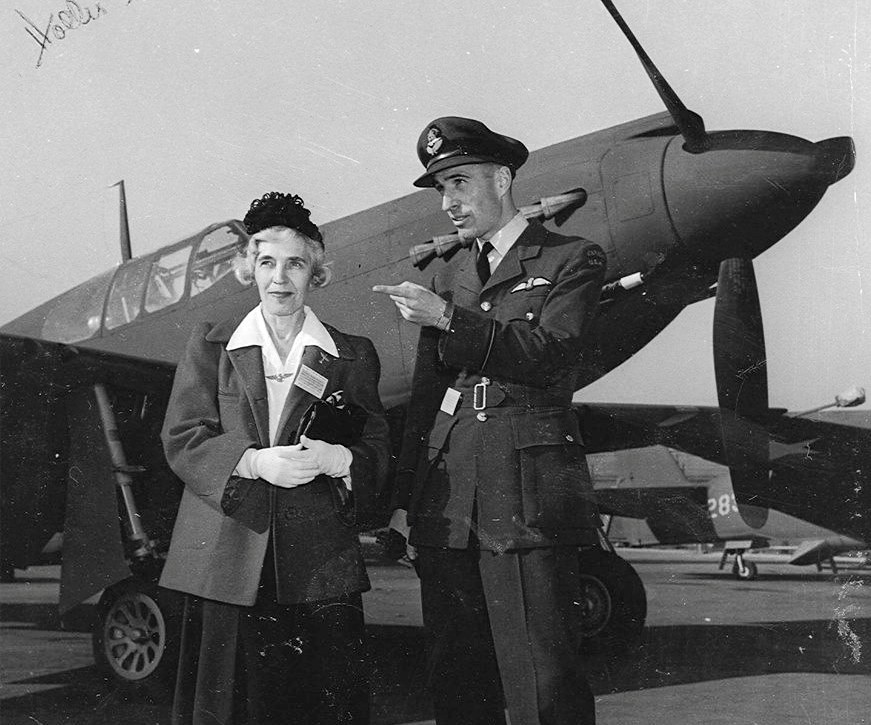
(NMNA Photo)
NAA publicity photo taken at the NAA plant in California in 1943, showing RCAF Flight Lieutenant Hollis H. Hills briefing a visitor in 1943. The aircraft is an A-36A Mustang. While flying with No. 414 Squadron, RCAF, he was recorded as the first pilot to shoot down an enemy aircraft with a Mustang. Born in Baxter, Iowa, he joined the RCAF in 1940. During his combat service overseas, he was Mentioned in Dispatches (MiD):
“During the Battle of Dieppe on 19th August 1942, this officer accompanied his Flight Commander on two low reconnaissances over the approaches to the battle area. During the second of these, they were attacked by three Fw 190s. When Flying Officer Hills found he could not warn his Flight Commander, owing to a radio failure, he engaged the three enemy aircraft, shooting down one and driving off the other two, until the Flight Commander became aware of the situation.”
Hollis served with the RCAF from 1940 to 1942. He transferred to the US Navy on 8 Nov 1942, and fought in the Pacific Theatre of Operations (PTO). While flying with the 32nd Fighting Squadron based on the aircraft carrier USS Langley (CV-27), he was awarded the Silver Star Medal (SSM):
“Lieutenant Hollis H. Hills, United States Navy, was awarded the Silver Star for gallantry in action as a Pilot and Division Leader of Fighter Planes embarked in USS Langley (CV-27), over Truk, on 29 April 1944. His gallant actions and dedicated devotion to duty, without regard for his own life, were in keeping with the highest traditions of military service and reflect great credit upon himself and the United States Naval Service.” Bureau of Naval Personnel Information Bulletin No. 363.
He was also awarded the Distinguished Flying Cross (DFC). He became a flying ace with five credited aerial victories. He also served in the Korean War and in Vietnam before retiring with the rank of Commander in the USN in 1962. He passed away on 31 Oct 2009.
No. 430 Squadron, formed as an Army Co-operation unit at Hartford Bridge, Hampshire, England on 1 Jan 1943, redesignated Fighter Reconnaissance on 28 Jun 1943. The Squadron was disbanded at Luneburg, Germany, on 7 Aug 1945. The Squadron flew Mustang Mk. Is from Jan 1943 to Dec 1944. The Squadron’s aircraft were coded AG, AL, AM and AP.
(IWM Photo, CH 10679)
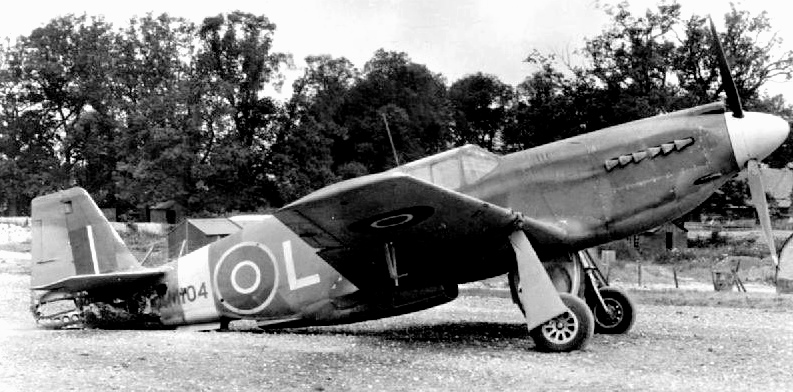
A badly damaged North American Mustang Mark I (Serial No. AM104), coded L, of No. 268 Squadron, RAF, on the ground at Odiham, Hampshire, UK, after returning from a sortie over the Rouen area, France. The pilot, Flying Officer A.R. Hill of Norwich, was met by heavy anti-aircraft fire while attacking barges on a canal. Despite losing the rudder controls and the hydraulic system, Hill brought the aircraft back for a successful landing. AM104 was repaired and later flew with Nos. 414 and 430 Squadrons, RCAF, before it was again damaged by flak, near Venlo, Holland, on 21 October 1944, and was finally struck off charge.
No. 441 Squadron, formed in Canada as No. 125 (Fighter) Squadron on 20 Apr 1942. The Squadron flew Mustang Mk. IIIs from May to Aug 1945.
(RCAF Photo)
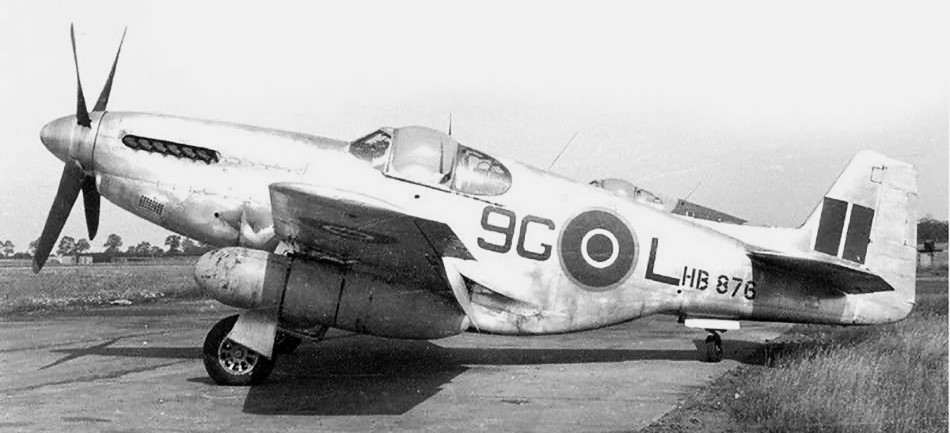
North American Mustang Mk. III with Malcolm hood, RAF (Serial No. HB876), coded 9G-L, No. 441 Squadron, RCAF. This aircraft is armed with four wing-mounted .50 calibre Browning M2 machine guns, and equipped with two under-wing racks for bombs or drop tanks. Mk. IIIs were powered with one 1,380-hp Packard-built V-1650-3 Merlin engine or one 1,490-hp Packard-built V-1650-7 Merlin engine. Equipped with a four-bladed constant speed 11-ft-2-in.-diameter Hamilton Standard propeller, it had a maximum speed of 708 kmh (440 mph) at 9,144 m (30,000 ft).
The RAF put into service more Mustang Mk. III fighters than any other version. These included Inglewood, California-built, P-51Bs and Dallas, Texas-built, P-51Cs. Like the subsequent Mk. IV and Mk. IVA, the Mk. IIIs should have been designated Mk. III and Mk. IIIA but were not. The RAF received 855 Mk. III Mustangs, (Serial Nos. FB-100 to FB124 (25); FB135 to FB399 (265); FR411 (1); FX848 to FX999 (152); FZ100 to FZ109 (10); HB821 to HB962 (142); HK944 to HK947 (4); HK955 and HK956 (2); KH421 to KH640 (220); SR406 to SR438 (33); and SR440 (1). About 60 Mk. IIIs were diverted to other RAF air bases in Canada and Australia.
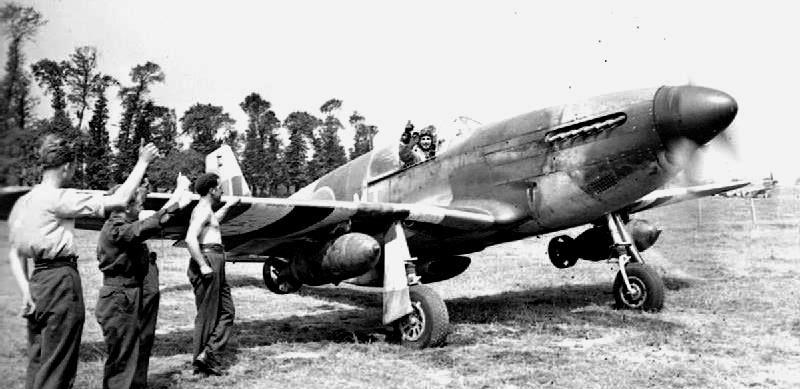
(IWM Photo, CL 735, McMurdo (F/Sgt RCAF), Royal Air Force official photographer)
Warrant Officer C R Castleton of Bingley Yorkshire, bids farewell to his ground crew as he readies for take off in his North American Mustang Mk. III of No. 122 Squadron, RAF, armed with two 1000-lb bombs on wing racks, at B12/Ellon, Normandy. The ground crew are from left to right: Leading Aircraftman G Townsend of Cheshire, Corporal E Whitney of Northampton, Leading Aircraftman S J Davey of Launceston and Leading Aircraftman W Jessop of Preston.
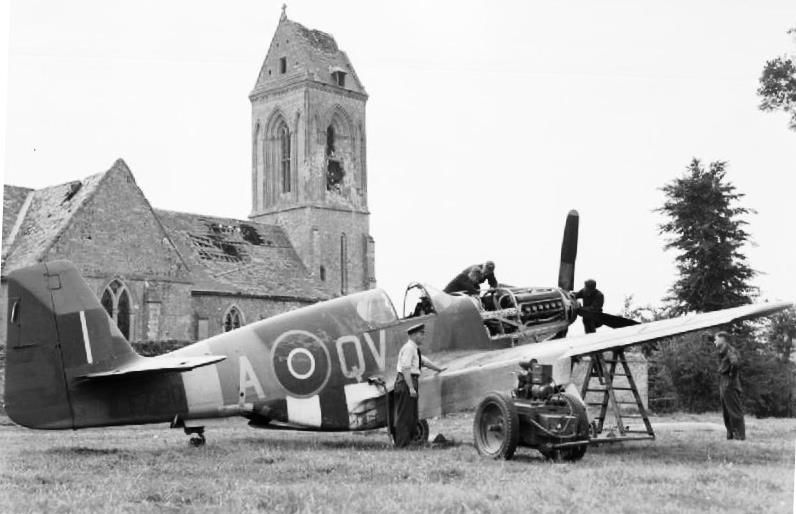
(IWM Photo, CL 571, McMurdo (F/Sgt RCAF), Royal Air Force official photographer)
Members of a Repair and Salvage Unit attend to North American Mustang Mk. III (Serial No. FZ190), coded QV-A, of No. 19 Squadron, RAF, in the shadow of the shell-torn village church at B12/Ellon, Normandy. From left to right, Flying Officer F.H. Price of Hereford, Leading Aircraftman L. Polley of Boxted near Colchester, Corporal J. Hughes of Crewe, Corporal N. Lee of Birmingham and Sergeant W.G. Ward of Emsworth.
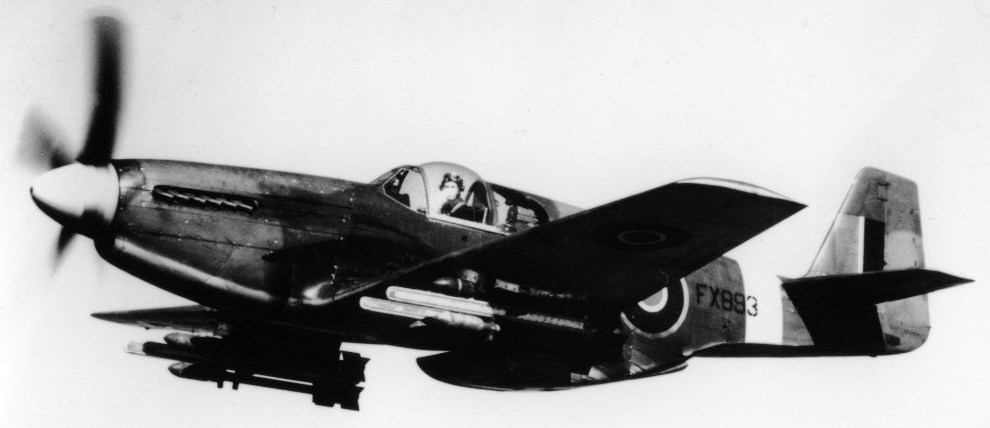
(San Diego Air & Space Museum Photo)
North American Mustang Mk. III with Malcolm hood, RAF (Serial No. XF893).
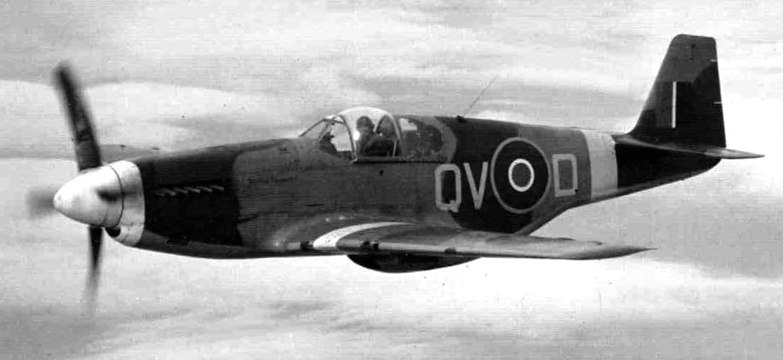
(RAF Photo)
North American Mustang Mk. III with Malcolm hood, RAF (Serial No. FX 925), coded SZ-U, cA 1945.
No. 442 Squadron, formed in Canada as No. 14 (Fighter) Squadron on 2 Jan 1942. The Squadron flew Mustang Mk. IIIs from Mar to Aug 1945, with aircraft coded KH and Mustang Mk. IVs coded Y2.
(The Squadron did not have a badge during the Second World War)
No. 442 Squadron, RCAF, brielfly flew Mustang Mk. IVs in May 1945. The RAF Mustang Mk. IV and Mk. IVA fleet of aircraft were based on P-51D and P-51K Mustangs, P-51Ds built at Inglewood, California and Dallas, Texas made up the Mk. IV, while only the Dallas-built P-51K made up the Mk .IVA. RAF squadrons operating these Mustangs included Nos. 19, 64, 65, 112, 118, 122, 149, 154, 213, 260, 303 (Polish), No. 442 Squadron, RCAF, and No. 611 Squadrons.
RAF Serial Nos for these Mustangs include KH641 to KH670 (30 Mk. IV), KH671 to KH870 (200 Mk. IVA), KM100 to KM492 (393 Mk. IVA), KM493 to KM743 (251 Mk. IV), KM744 to KM799 (56 that were never delivered), TK586 and TK589 – both former USAAF P-51D-5-NA aircrafts (Serial Nos. 44-13524 and 44-13332). The RAF received 876 Mk. IV and Mk. IVA in total from the US under the Lend-Lease program.
(IWM Photo ATP 13617C)
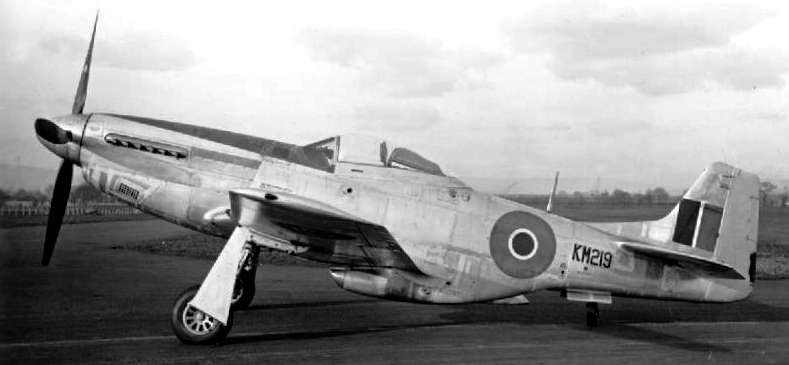
Royal Air Force Mustang Mk. IVA (Serial No. KM219) in the United Kingdom. This aircraft was delivered as a P-51K-10-NT USAAF (Serial No. 44-12342), Mar 1945.
The RAF Mustang Mk. IVA fleet consisted solely of Dallas, Texas-built, P-51K fighters, received in 1944-1945. During the spring and summer months of 1944, RAF Mk. IV and Mk. IVA Mustangs based in England accounted for the destruction of 232 V-1 Buzz Bombs by 5 September 1944. After VE Day, the RAF redirected deliveries of Mk. IV and Mk. IVA Mustangs to its units in India to help ward off the Japanese still fighting in the China-Burma-India (CBI) theatre. After the Second World War, a number of Mustang Mk. IV and Mk. IVA aircraft continued to serve with the RAF up until May 1947, when they were superseded by more modern turbojet-powered fighters. A large number were returned to the US while unserviceable aircraft were scrapped.
The Mustang Mk. IV was powered with a 1,695-hp Packard-built V-1650-7 Merlin engine driving a four-bladed constant speed 11-ft-1-in.-diameter Hamilton Standard propeller or a four-bladed 11-ft-diameter Aeroproducts propeller. It had a maximum speed of 703 kmh (437 mph) at 7620 m (25,000 ft).
The Mustang Mk. IV was armed with six wing-mounted .50 calibre Browning M2 machine guns with 12,100 total rounds of ammunition; three-to-four under-wing attachment points for bazooka tubes, bombs, rockets and drop tanks.
(RCAF Photo)
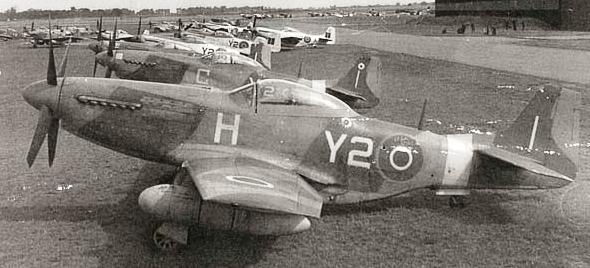
North American Mustang Mk. IV, RCAF, coded H-Y2, No. 442 Squadron, RCAF, at Hunsdon, Hertfordshire in the United Kingdom, ca May 1945. The Mustangs flown by the RCAF during the war were owned by the RAF and carried RAF serial numbers and designations.
The yellow trimmed Mustang Mk. IVs of No. 442 “Caribou” Squadron, RCAF, flew one of the last operational missions of the Second World War. On 9 May 1945, the day after VE Day (and some heavy celebrations) the squadron was called upon to escort a naval force that had been sent to liberate the Channel Islands that had been occupied by German forces since 1940. Rumours prevailed that the German Commandant was refusing to surrender and would resist the liberating forces.
(John Mallandine Photo)
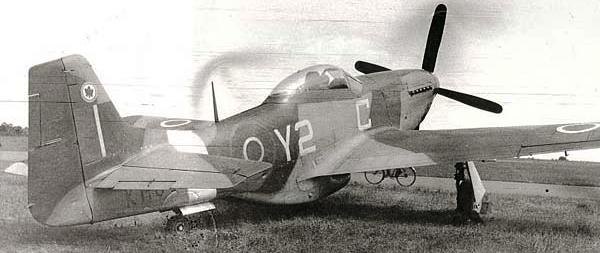
North American Mustang Mk. IV (Serial No. KH661), coded Y2-C, No. 442 Squadron, RCAF, at Hunsdon, Hertfordshire in the United Kingdom, just before VE day in May 1945. This aircraft was flown by Flying Officer P. Bremmner. No. 442 Squadron was based at Hunsdon from 23 Mar to 17 May 1945, while converting onto the Mustang, and then while the Squadron was engaged in long-range bomber escort duties up to VE-Day.
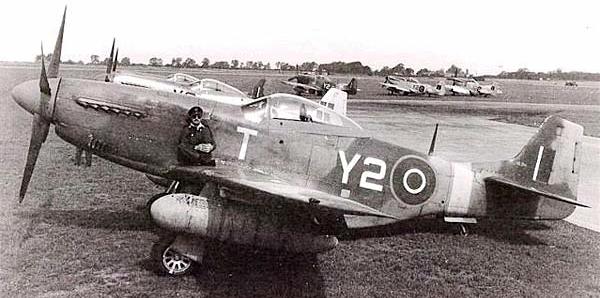
There were variations on the markings on these Mustang Mk. IVs. Some were marked as “B”, “C” and “T”, but also some of the bare metal ones were marked with “Y2” by the windscreen and had the individual letter painted just ahead of the roundel. Others have the individual letter behind the roundel and the “Y2” immediately ahead of the roundel, in the manner used postwar. Note that most of the aircraft in these photos have a louvered panel at the lower front of the engine cowling where most P-51Ds & Ks had a perforated panel. (Jerry Vernon)
(John Mallandine Photo)
North American Mustang Mk. IV, RCAF, coded Y2-T, No. 442 Squadron, RCAF, Art Nolan on the wing at Digby in the United Kingdom, May 1945.
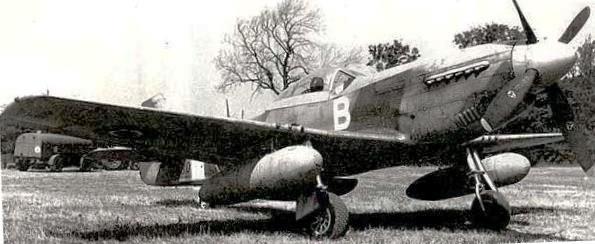
(John Mallandine Photo)
North American Mustang Mk. IV, RCAF, coded Y2-B, “The Edmonton Special“, No. 442 Squadron, RCAF, in the United Kingdom, ca May 1945. The Mustangs flown by the RCAF during the war were owned by the RAF and carried RAF serial numbers and designations.