
The Canadian Army Order of Battle in the Italian Campaign, 1943-1945
From the Official History of the Canadian Army in the Second World War, Volume II, “The Canadians in Italy, 1943-1945” by LCol G.W.L. Nicholson, Ottawa, Queen’s Printer, 1956.
Formations and units are grouped by corps. Designations are those authorized by General Orders at the time (except for certain modifications made for the sake of brevity and consistency, or as concessions to current usage). The complete roll of units is too long to be printed here. Thus, headquarters of formations and supporting arms and services, as well as such relatively small units as Field Dressing Stations, are not included; although all made important contributions.[1]
Canadian Armoured Corps
1st Armoured Brigade
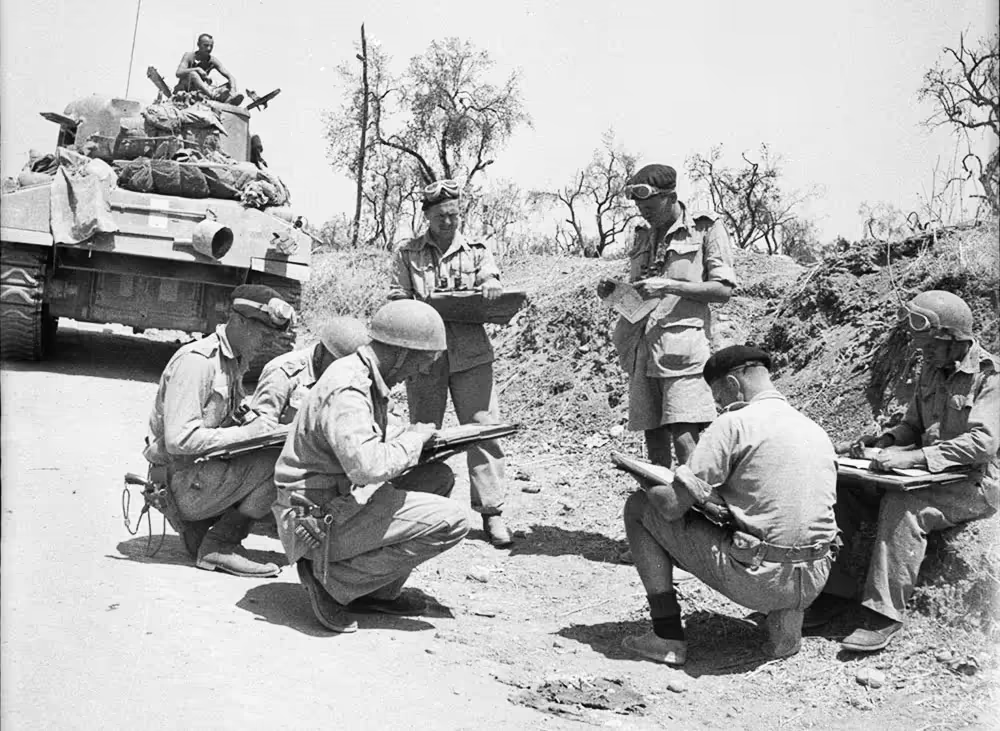
(Library and Archives Canada Photo, MIKAN No. 3204885)
Major Irwin, Officer Commanding “C” Squadron, The Ontario Regiment, conducting an O Group (Orders group) with personnel of the squadron. They were on the right flank of the Paterno front, Italy, 3 August 1943.
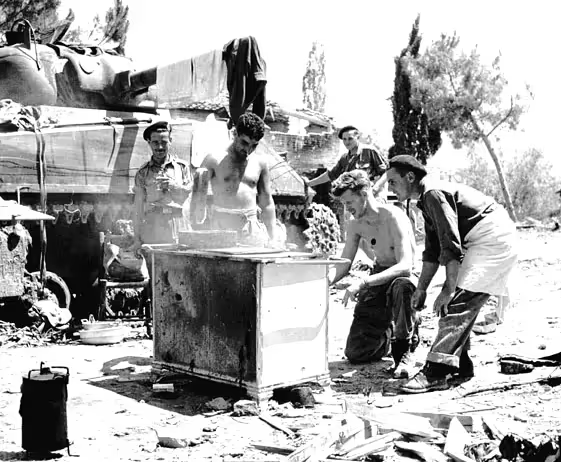
(Library and Archives Canada Photo, MIKAN No. 3574212)
Troopers of the Ontario Regiment roasting a pig, Piucarelli, Italy, 28 June 1944.
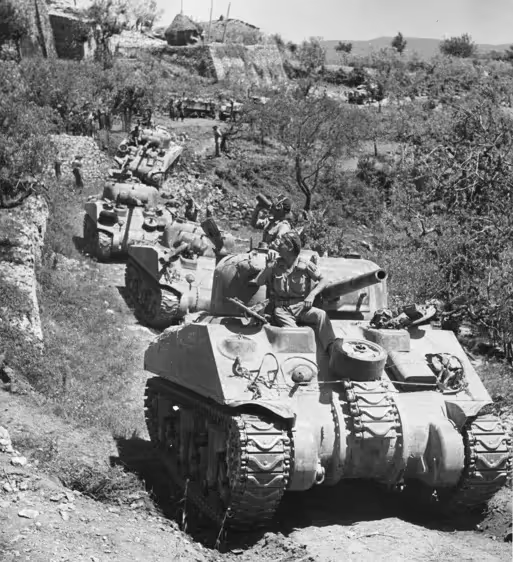
(DND Photo)
Sherman V tanks of The Ontario Regiment, 1st Canadian Armoured Brigade in the Liri Valley, ca May 1944.
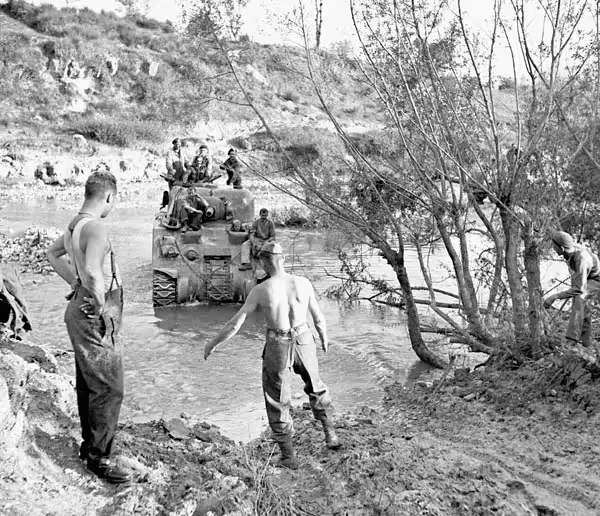
(Library and Archives Canada Photo, MIKAN No. 3576479)
A Sherman V tank of “A” Squadron, Ontario Regiment, crossing a stream near Colle d’Anchise, Italy, 26 October 1943.
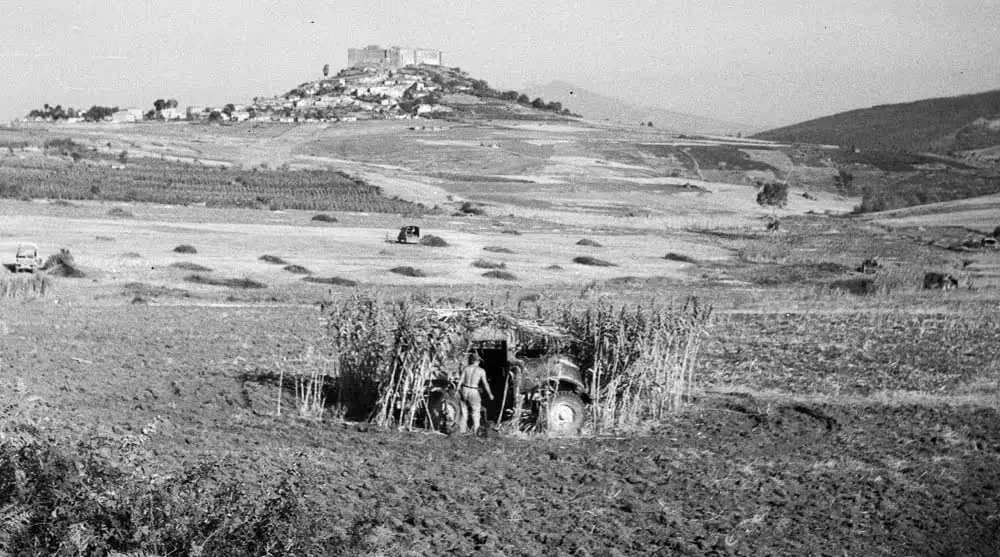
It was no easy feat discerning what lay ahead and to then determine a strategic plan that was often out of sync to what really lay ahead. Good, detailed maps of Sicily were scant. Companies and platoons often getting completely lost or separated from each other during the confusion. This during night time flanking operations where every gully, goat path and featureless scrubby hills looked the same. (Paul Leanne)
Major Herbert “Ward” Irwin, of Whitby, ON, is standing at the right. He was a pre-war member of the Ontario Regiment, having joined in 1932. On August 20, 1943 Major Irwin was riding in a scout car which drove over a mine, flipped over and crushed his left arm, resulting in its amputation. He left the Ontario Regiment but stayed in the army, serving out the war as a liaison officer at Canadian Army HQ in London. He served as the Ontario Regiment’s Honorary Lieutenant Colonel from 1981 to 1986. (Rod Henderson)
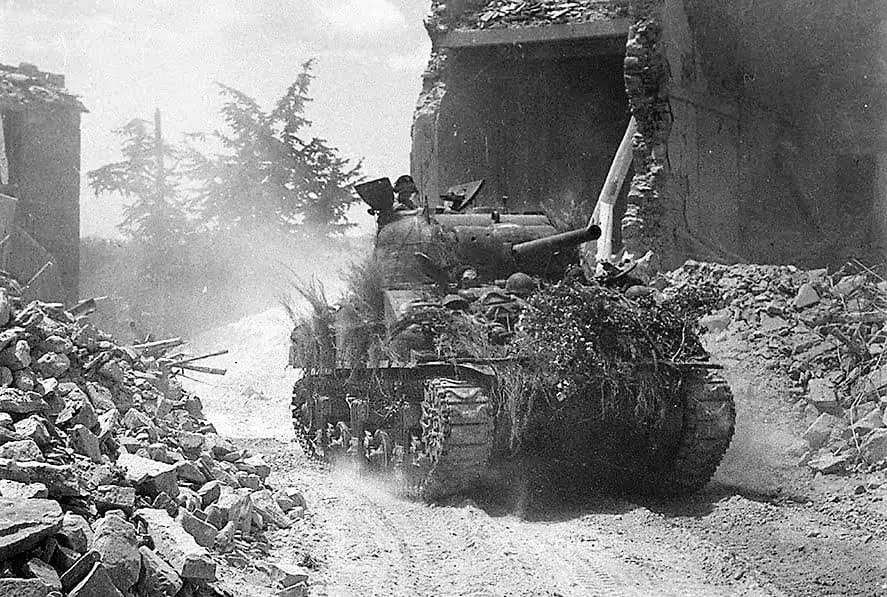
(Library and Archives Canada Photo, MIKAN No. 3224755)
Sherman V tank of the Ontario Regiment entering San Pancrazio, Italy, 16 July 1944.
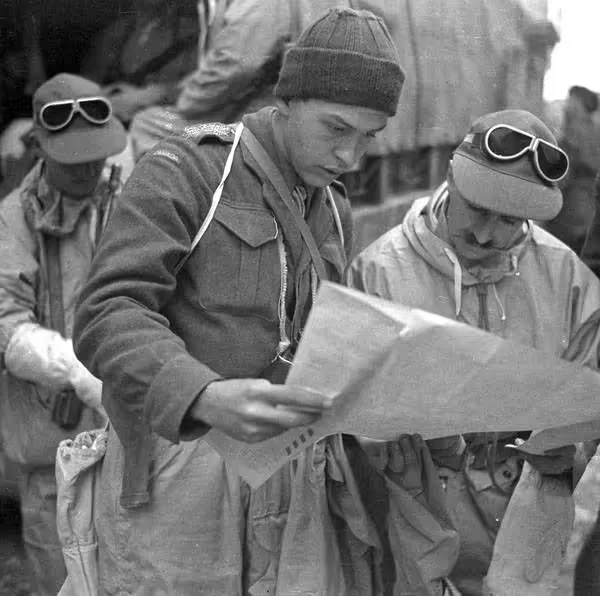
(Library and Archives Canada Photo, MIKAN No. 3230288)
Captain Duncan Morrison, Captain Dunstan McNicol as 2iC of the Ontario Regiment and Regimental Sergeant-Major F.R. Prevost of the Three Rivers Regiment, consulting a map en route to Atessa, Italy, 21 February 1944. They were delivering supplies via a ski party to British troops snowed-in in the mountains at Colledimezzo and Montazzoli. Their next tasking was to carry Bren guns and ammo on sledges to the Polish Army 12th Polodian Lancers at Pescopennatoro. RSM Prevost was from the Three Rivers Regiment and the only member of the ski party who was not a member of the Ontario Regiment. RSM Prevost was selected because he was a highly skilled skier.
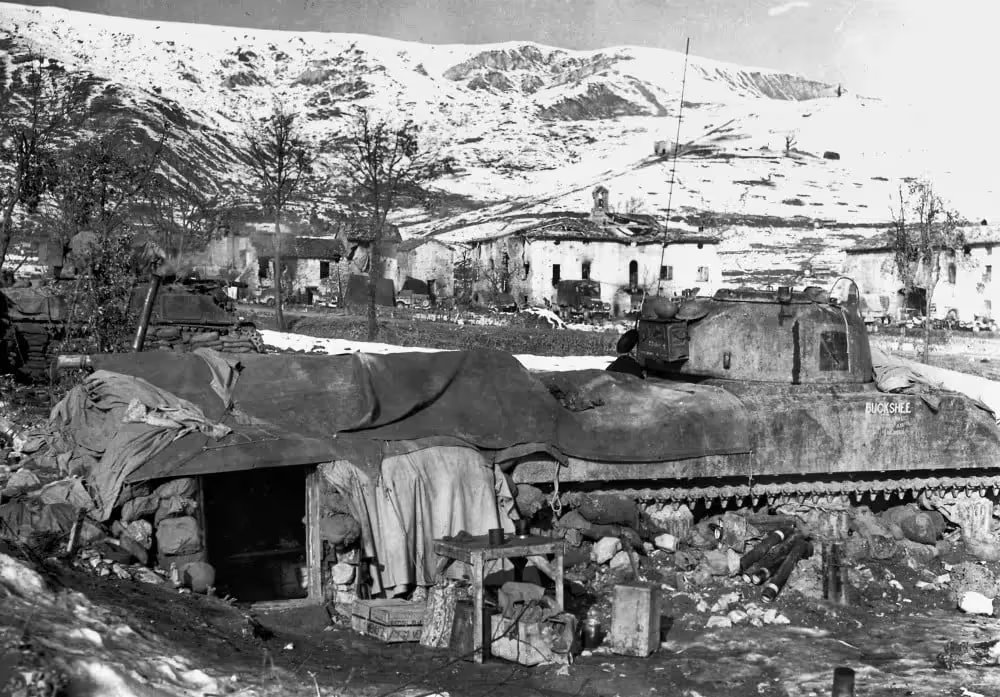
(Library and Archives Canada Photo, PA-151745)
“Buckshee” of “B” Squadron near San Clemente, Italy on January 21, 1945. Photo by Lieutenant Daniel Guravich.
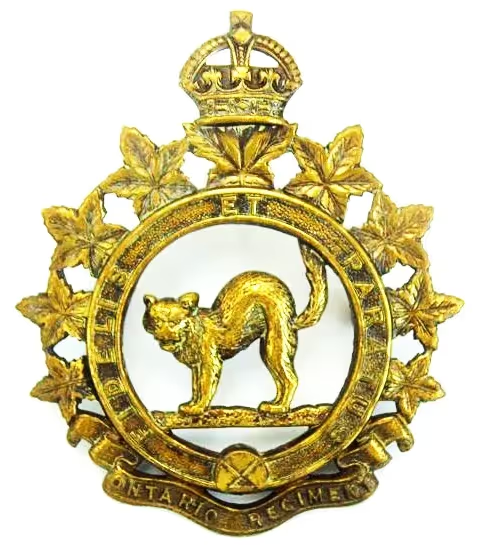
11th Armoured Regiment (The Ontario Regiment)
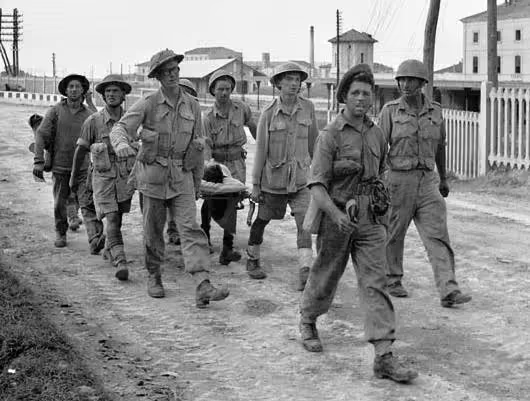
(Library and Archives Canada Photo, MIKAN No. 3397081)
Sgt. Ronnie Leather, Toronto, of the Three Rivers Regiment, on a stretcher after being hit in the tank he commanded, near Termoli, Italy, 6 October 1943.
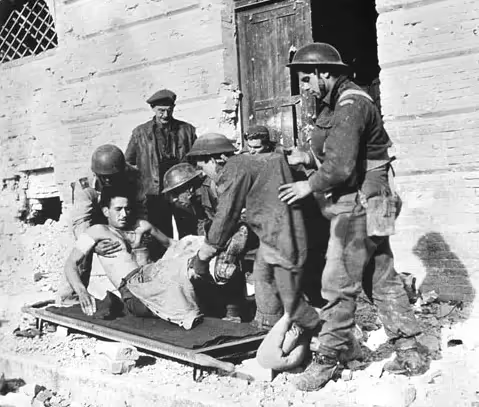
(Library and Archives Canada Photo, MIKAN No. 3227868)
First-aid personnel of the Three Rivers Regiment placing Sergeant Johnny Marchand on a stretcher, Ortona, Italy, 21 December 1943.
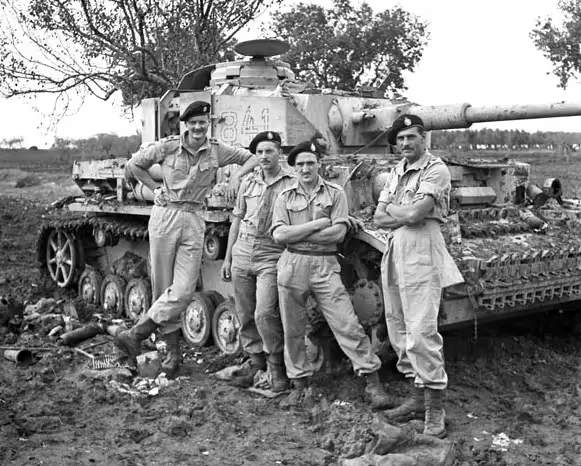
(Library and Archives Canada Photo, MIKAN No. 3397568)
Three Rivers Regt tank crew with a German Panzer IV tank they destroyed, Termoli, Italy, 9 October 1943. The photo was taken after a squadron of The Three Rivers supported the Irish Brigade in the capture of the San Giacomo ridge, following which an Irish Brigade flag was presented to the Three Rivers Regiment. The 2 i/c of 1st Royal Irish Fusiliers, Major (later Major-General) Bala Bredin was fulsome in his praise for the tankmen. (Richard Doherty)
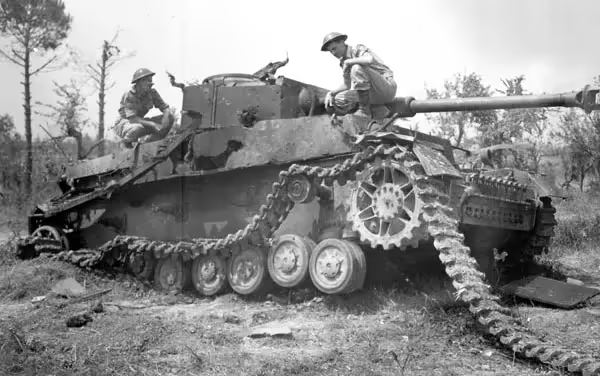
(Library and Archives Canada Photo, MIKAN No. 3405800)
Lance-Bombardier T. Hallam and Signalman A.H. Wharf, both of Headquarters, Royal Canadian Artillery (RCA), 5th Canadian Armoured Division, examining a knocked out German Panzer Mk. IV tank, near Pontecorvo, Italy, 26 May 1944.
(IWM Photo NA 15496)
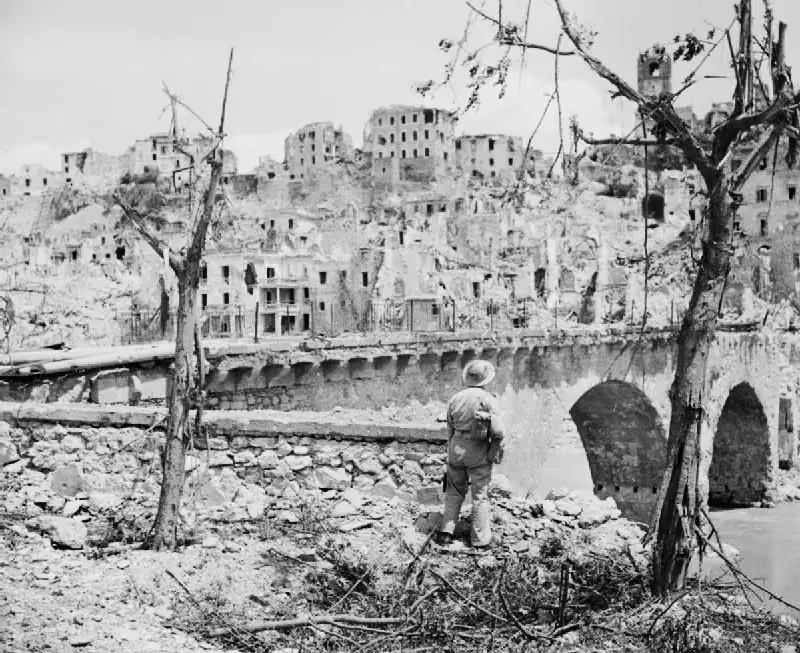
The ruined town of Pontecorvo, 26 May 1944. In the Eighth Army sector, the enemy were forced to evacuate Pontecorvo, and to draw back north-west along the Liri river as a result of the Canadian penetration of the Hitler Line between Pontecorvo and Aquino. This picture bears testimony to the terrific battering which the enemy received while defending the town of Pontecorvo.
(Library and Archives Canada Photo, MIKAN No. 3576567)
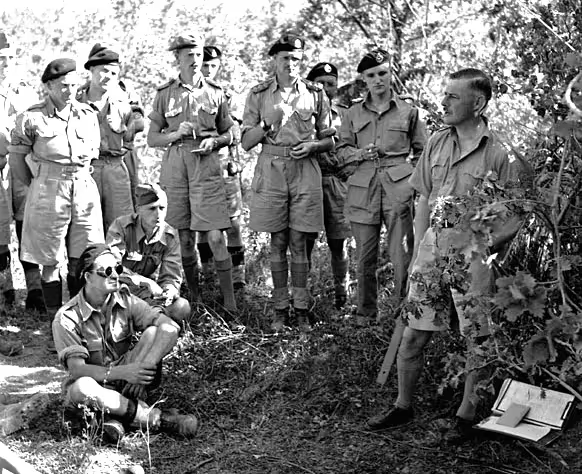
Brigadier Murphy, 1st Canadian Armoured Brigade, visiting the Forward Headquarters of the Calgary Regiment to make rush plans to cut off German paratroops withdrawing from Aquino, Italy, 23 May 1944.
(Library and Archives Canada Photo, MIKAN No. 3574229)
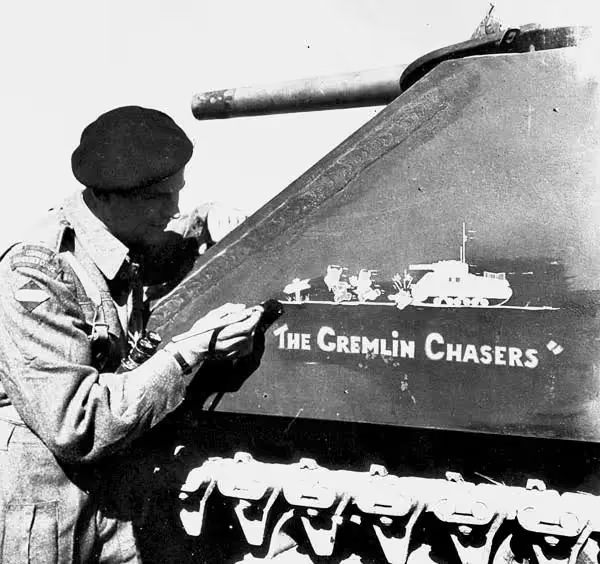
Lieutenant R.H. Heggie putting the finishing touches on “The Gremlin Chasers” painting on his Sherman V tank of the Three Rivers Regiment near Lucera, Italy, 21 October 1943.
(Library and Archives Canada Photo, MIKAN No. 3559496)
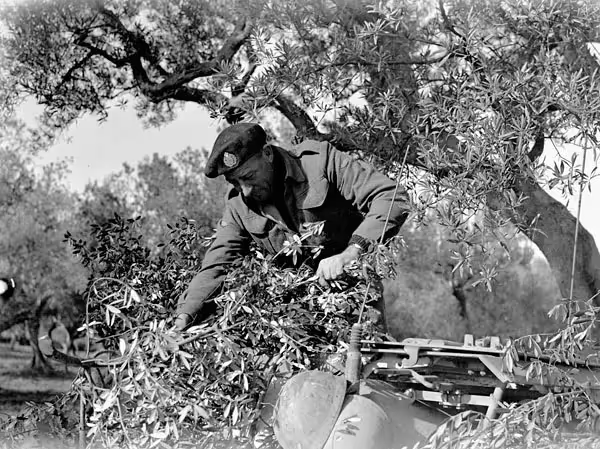
Sergeant F. Greenway (possibly with the Three Rivers Regiment), camouflaging a Lynx scout car with olive branches, 1 Canadian Army Tank Brigade Tactical Headquarters, near Treglio, Italy, 6 December 1943.
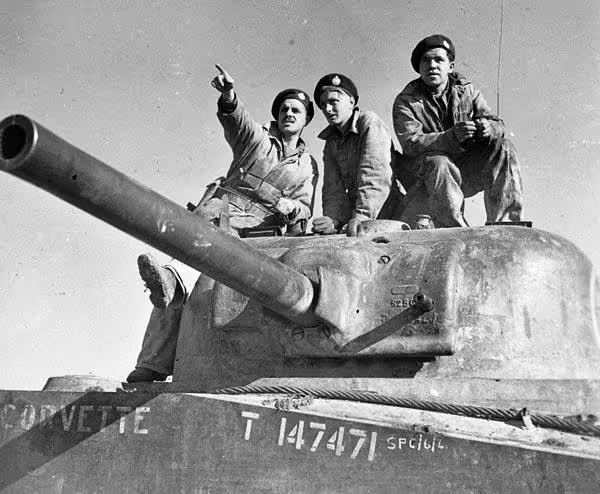
(Library and Archives Canada Photo, MIKAN No. 3582735)
Crew of the Sherman V tank “Corvette” of “C” Squadron, Three Rivers Regiment, near San Tommasso, Italy, 30 January 1944.
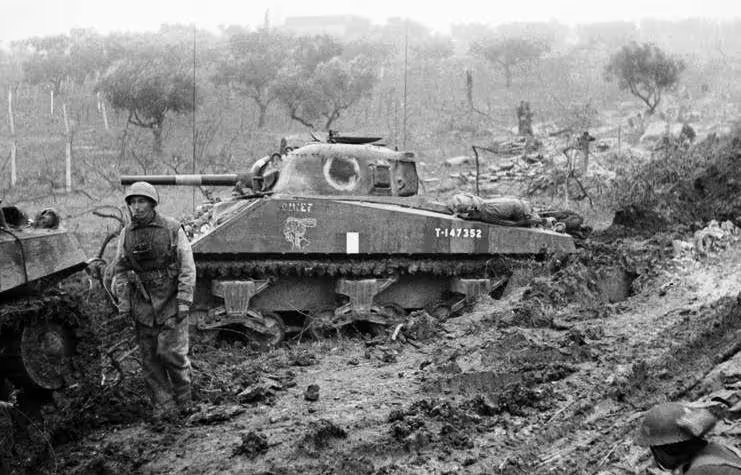
(IWM Photo)
Sherman V tank, 12th Canadian Armoured Regiment, (Three Rivers Regt), Arielli River, Italy, 18 Jan 1944.
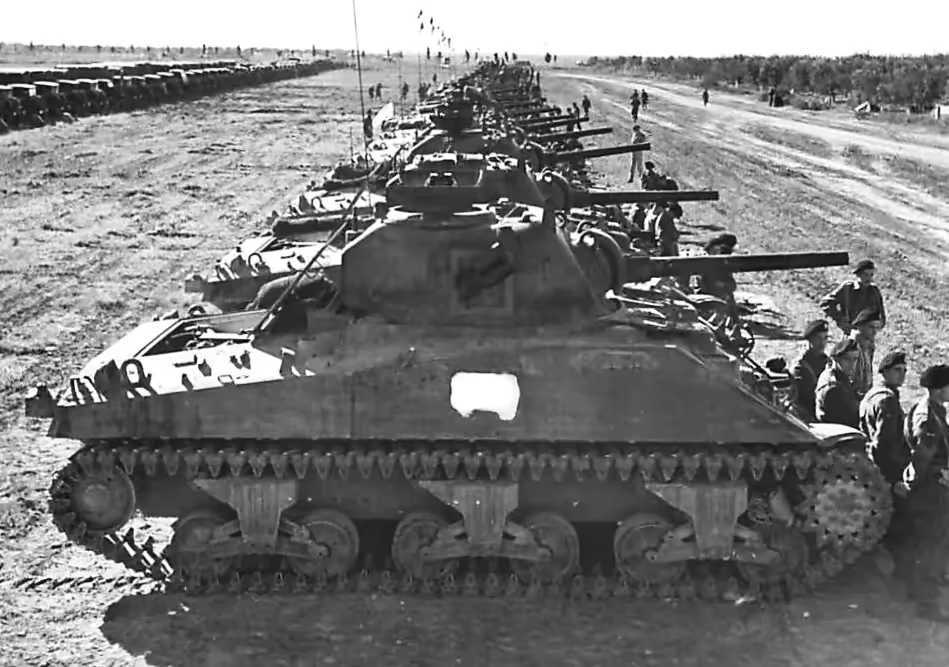
(World War Photos)
Inspection of B Squadron, 12th Canadian Armoured Regiment, (Three Rivers Regt), in Italy, ca 1944.
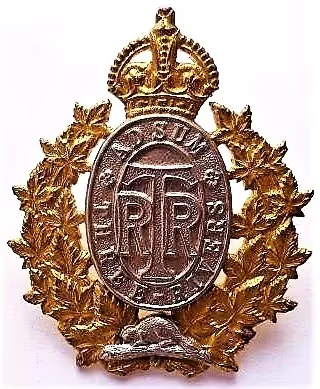
12th Armoured Regiment (Three Rivers Regiment)
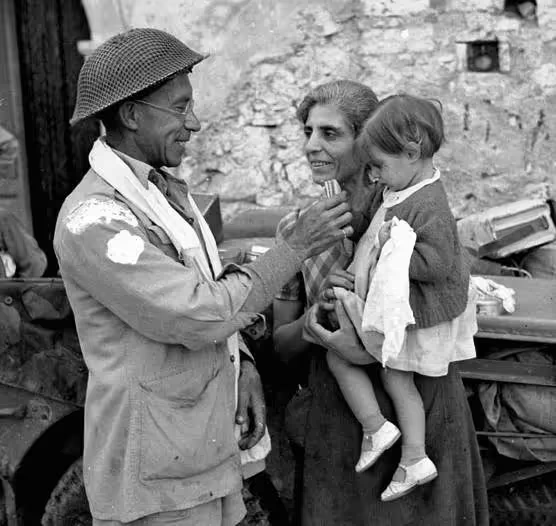
(Library and Archives Canada Photo, MIKAN No. 3202306)
Trooper Ralph Catherall of The Calgary Regiment giving food to an Italian child, Volturara, Italy, 3 October 1943. (14th Armoured Regiment).
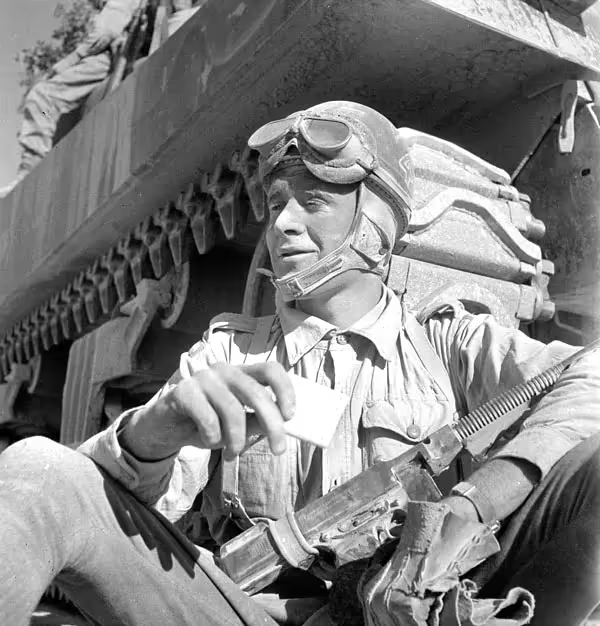
(Library and Archives Canada Photo, MIKAN No. 3202313)
Trooper T.H. Baker, a despatch rider of The Calgary Regiment, near Villapiana, Italy, 18 September 1943.
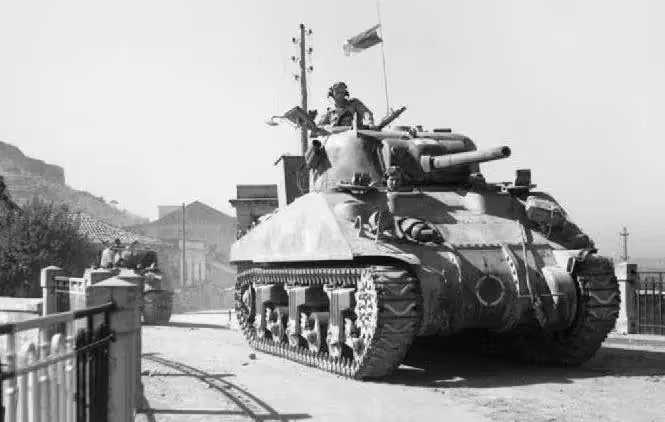
(IWM Photo, NA6209)
M4A4 Sherman V tank, 14th Canadian Tank Regiment (Calgary Regt), C Sqn, Reggio, Italy, 3 Sep 1943.
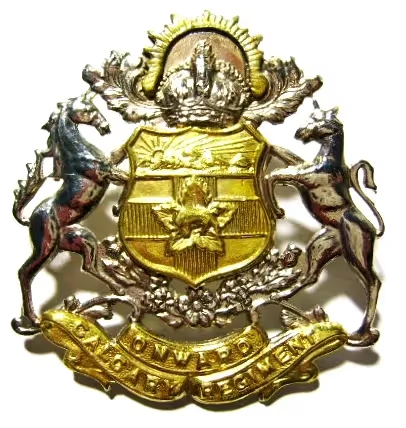
14th Armoured Regiment (The Calgary Regiment)
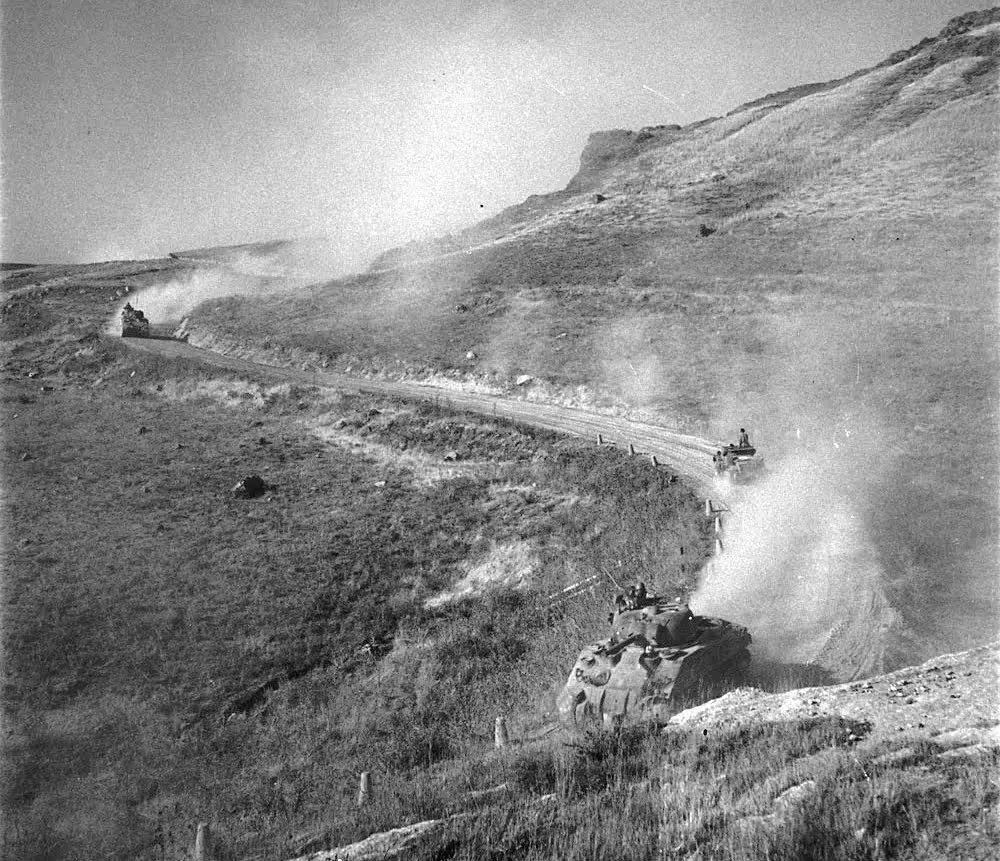
(Library and Archives Canada Photo, MIKAN No. 4485873)
1st Canadian Army Tank Brigade Sherman tanks on a trail in Sicily, 1943. A Dingo or Lynx Scout car is going the other way.
1st Infantry Division
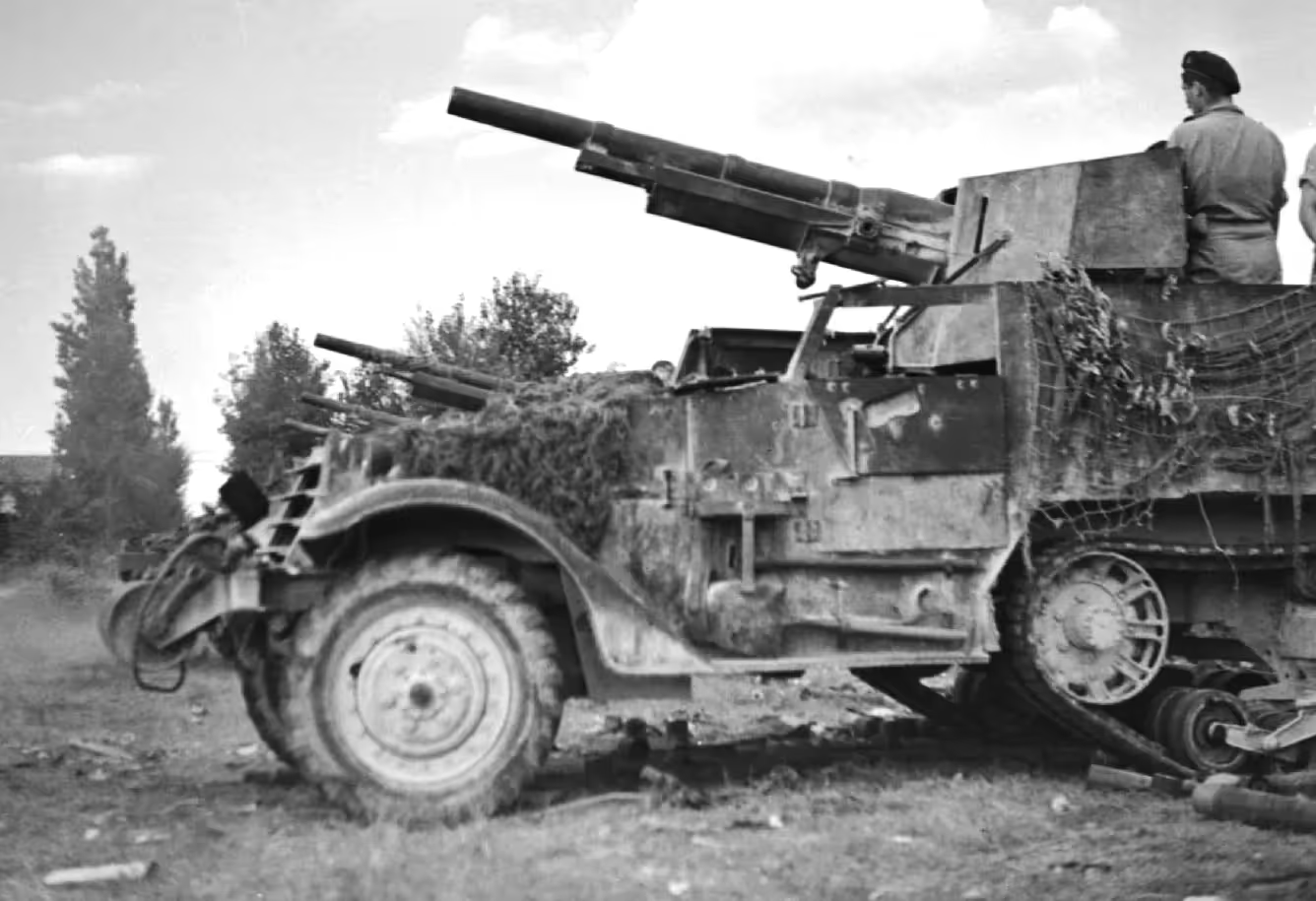
(Library and Archives Canada Photo, MIKAN No. 3607690)
M3 Motor Gun Carriage Half-track with 75-mm Gun, crewed by the Royal Canadian Dragoons (RCD).
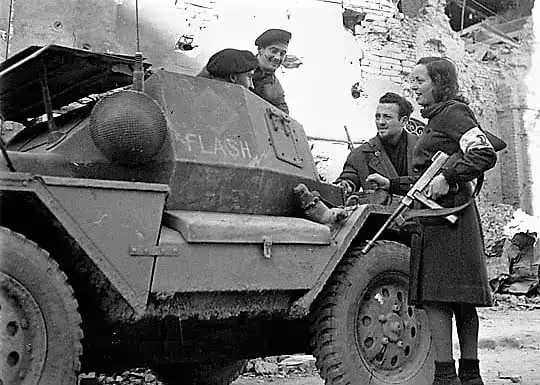
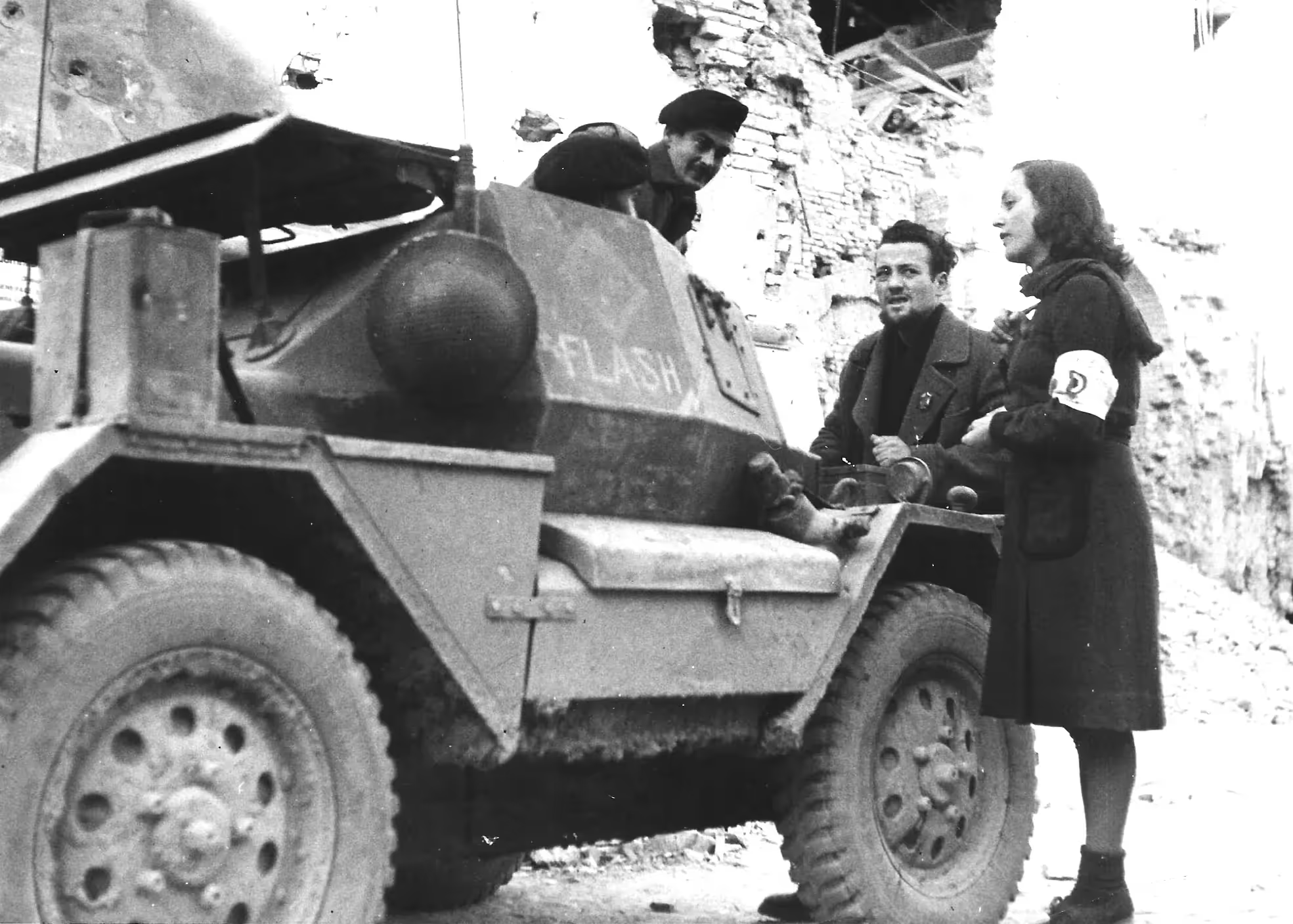
(Library and Archives Canada Photo, MIKAN No. 3240447)
Troopers W. Balinnan and A. Gallant in a Royal Canadian Dragoons Dingo scout car speaking to partisans Louisa and Bruno Cristofori after the capture of Bagnacavallo, Italy, 3 January 1945. Louisa is armed with a well-used Thompson M1929 SMG.
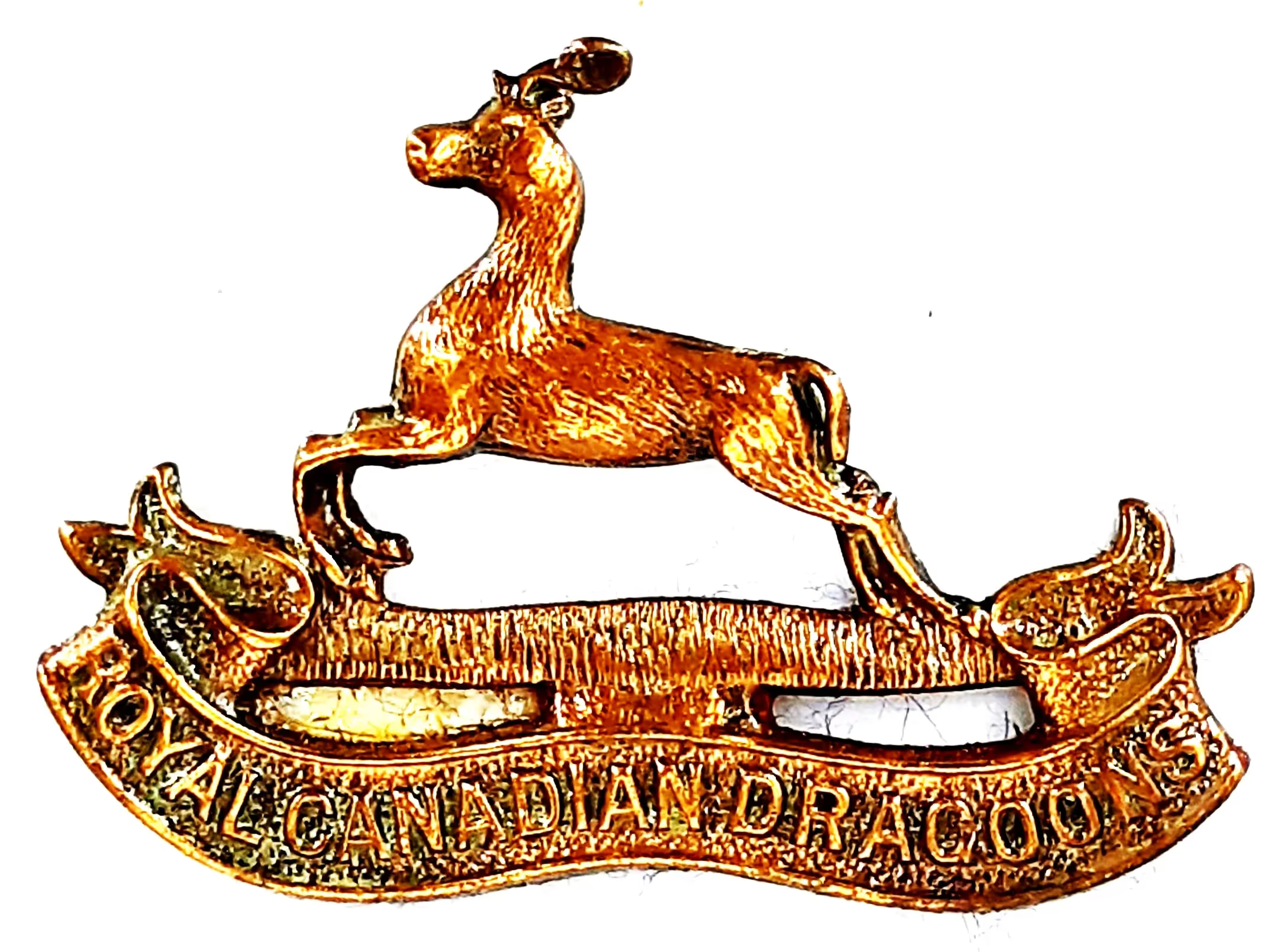
(Fredericton Region Museum Collection, Author Photo)
1st Armoured Car Regiment (The Royal Canadian Dragoons)
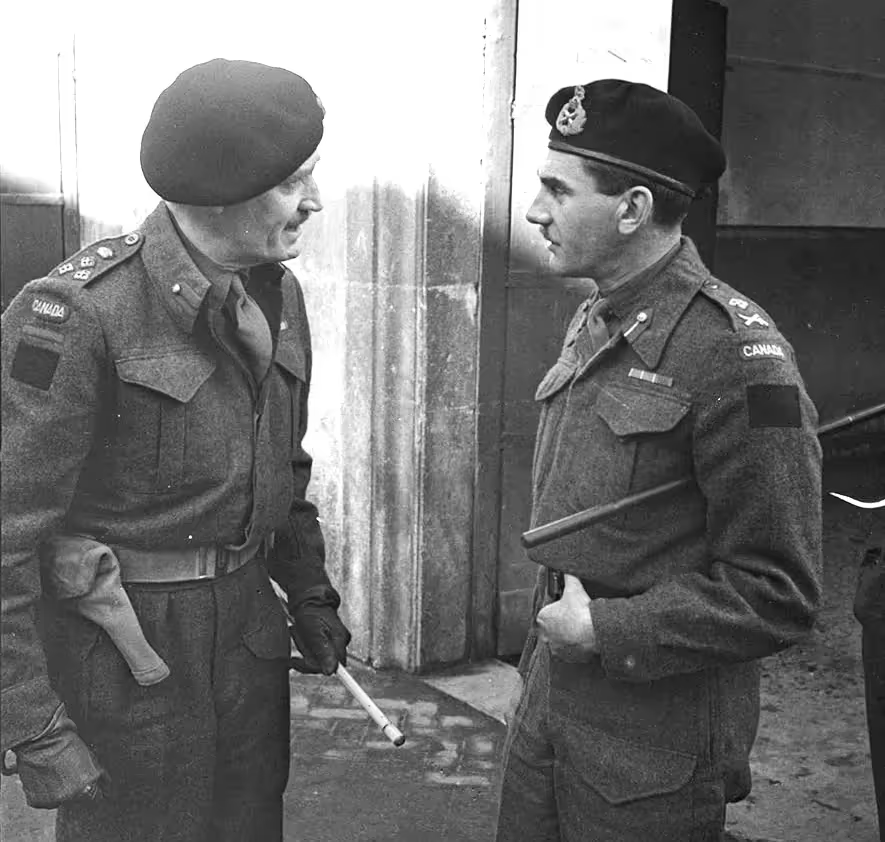
(Library and Archives Canada Photo, MIKAN No. 3203277)
General G.G. Simonds (right) and Brigadier G.R. Bradbrooke of the 5th Canadian Armoured Division, 20 December 1943.
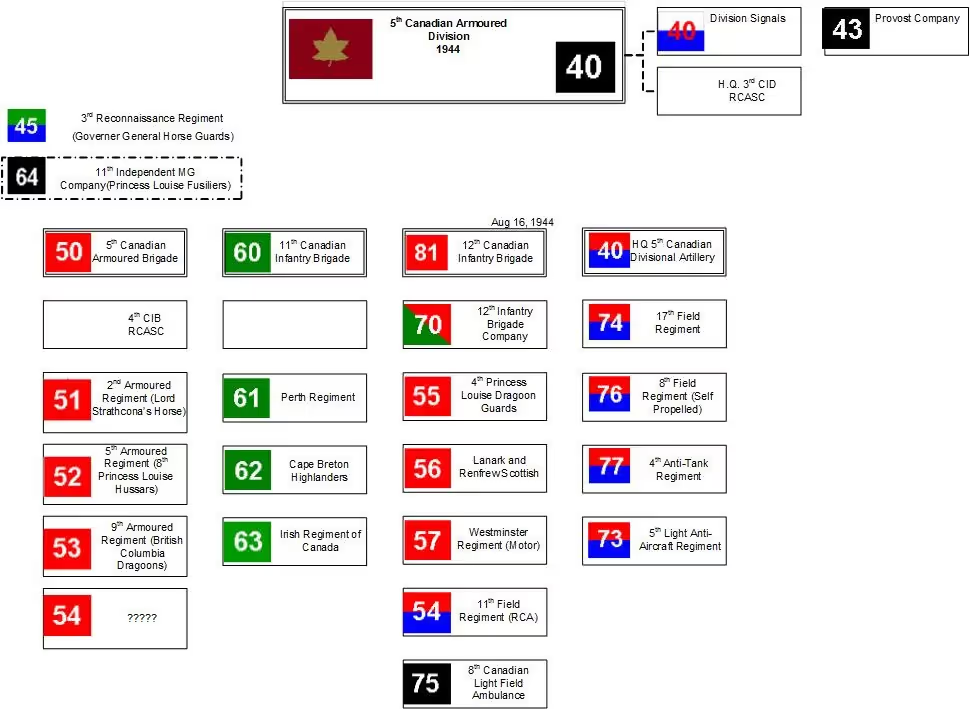
5th Canadian Armoured Division
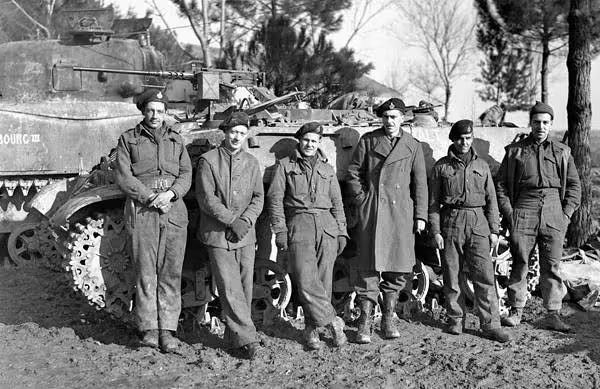
(Library and Archives Canada Photo, MIKAN No. 3240406)
Governor General’s Horse Guards, M3A3 Stuart recce tank, “Cobourg III” – “C” Troop, Cervia, Italy, 19 Jan 1945.
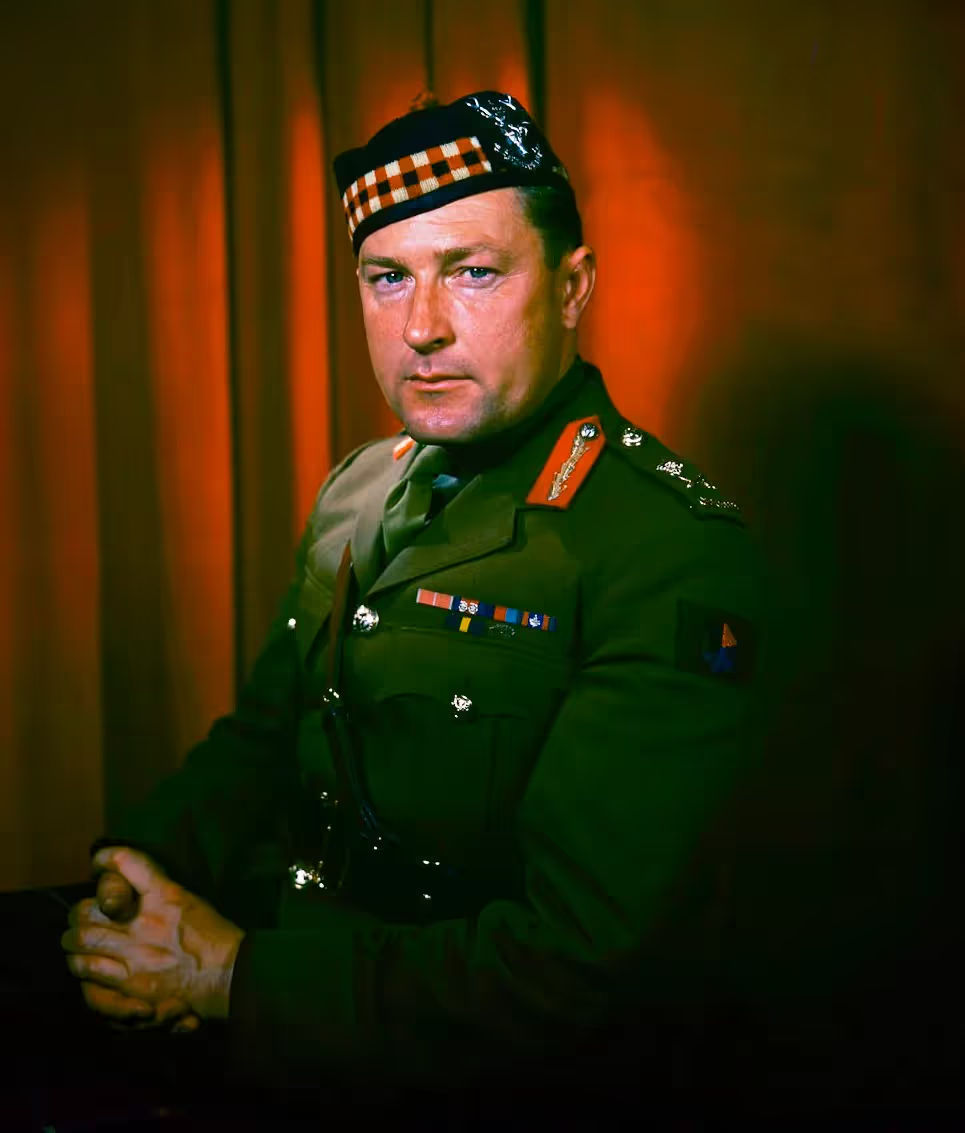
(Library and Archives Canada Photo, MIKAN No. 4233482)
Major-General B.M. Hoffmeister took command of the 5th Canadian Armoured Division inItalyin March 1944. He is shown here post-war.
3rd Armoured Reconnaissance Regiment (The Governor General’s Horse Guards)
5th Armoured Brigade:
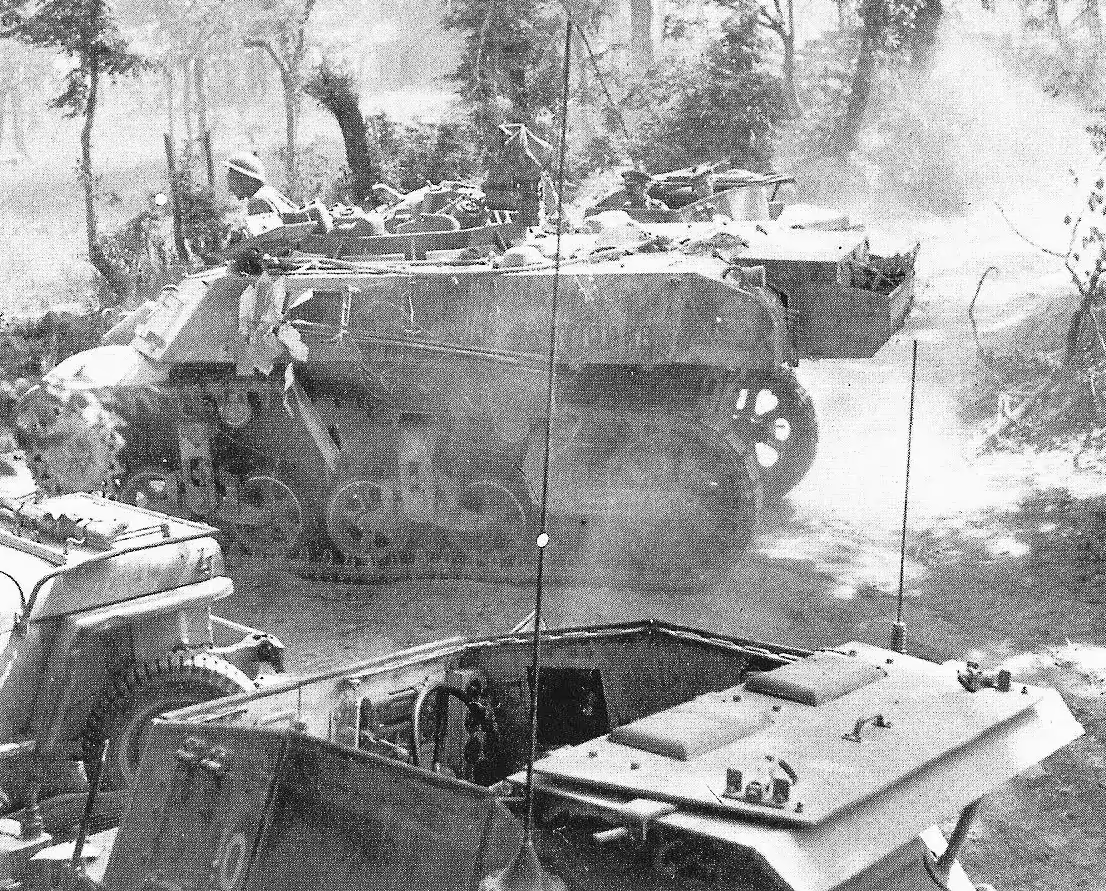
(RCAC Illustrated History, LAC, PA204157).
M3A3 Stuart recce tank without turret, LdSH (RC) in action at the Melfa River, May 1944.
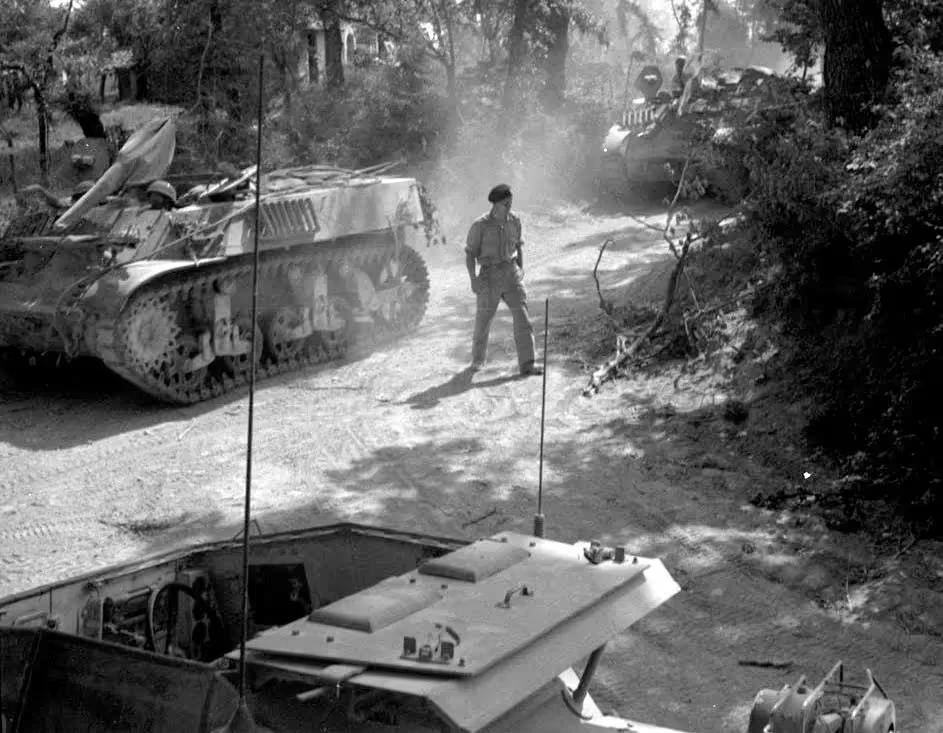
(Library and Archives Canada Photo, MIKAN No. 4166584)
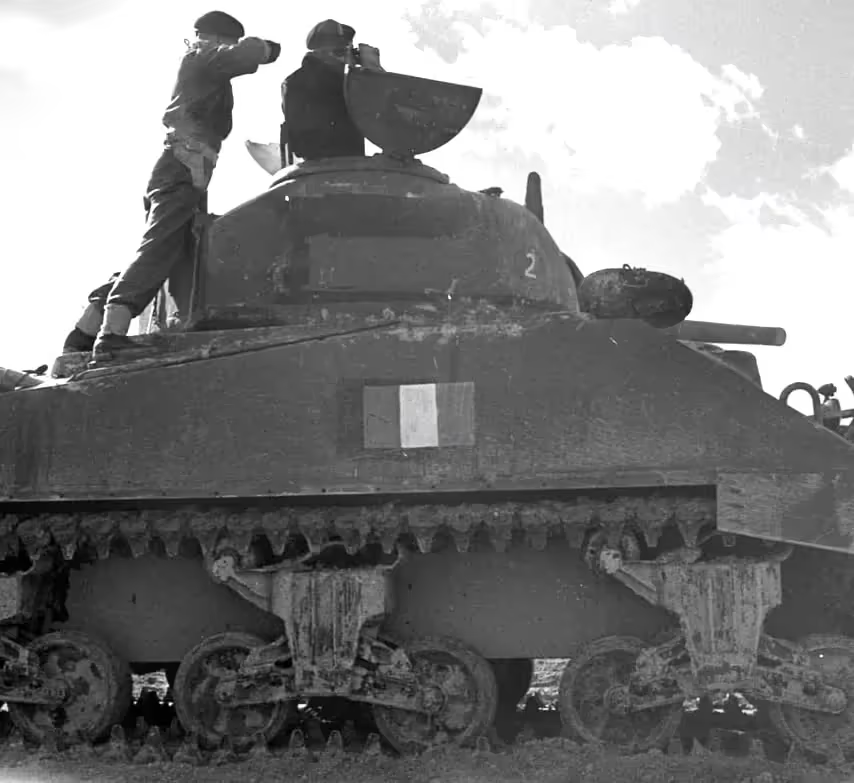
M3A3 Stuart recce tank without turret, LdSH (RC) at a crossroads in Italy, ca. 1943.
(Library and Archives Canada Photo, MIKAN No. 4166662)
From a hull-down position, an LdSH (RC) Sherman V tank of “C” Sqn 2nd Troop carries out an observed shoot in support of the artillery, somewhere between Castlefrantano and Ortona, Italy, 24 January 1944.
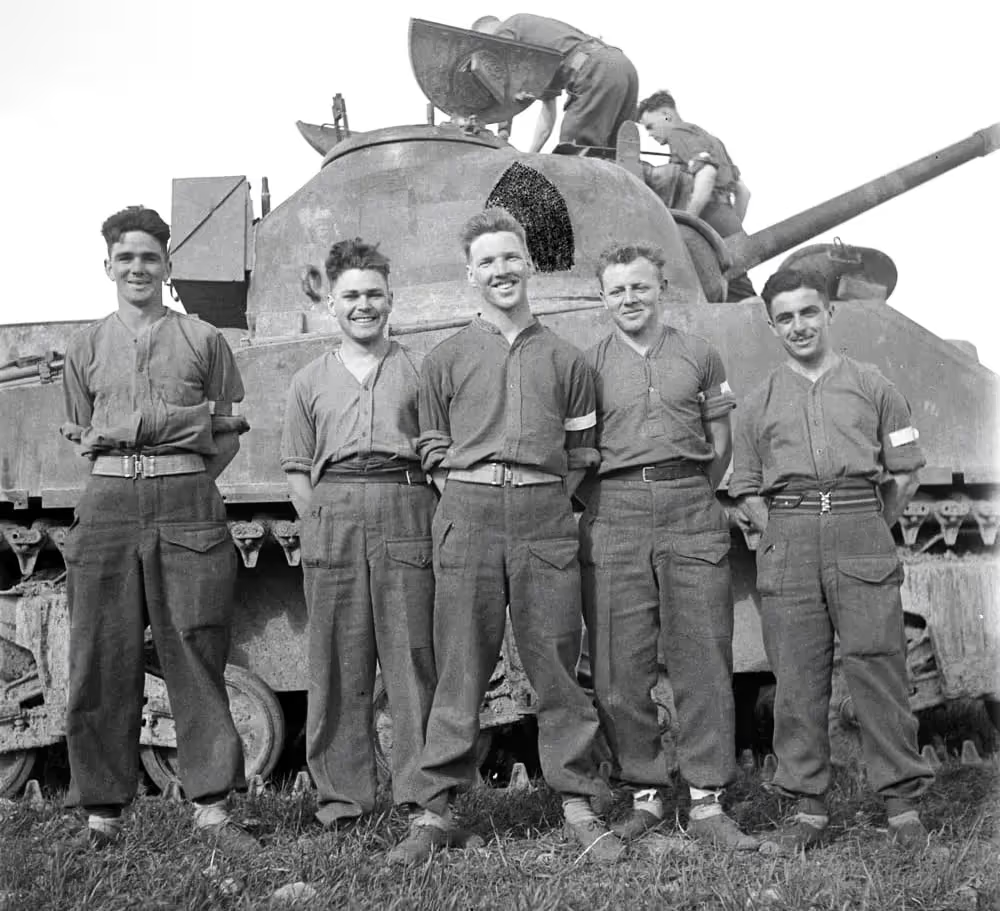
(Library and Archives Canada Photo, MIKAN No. 4166612)
Canadian Sherman tank crew which won a relay competition in Italy, ca 1943. “Winners of the Tank Quickner relay race, L-R Tpr K.C. Parsons, Trp. A.K. Williams, Cpl P.C. Buzza, Tpr. F.B Tompkins, and Trp. W.J. Vella. Tpr. Tompkins was one of a number of American citizens including “B-B” Bruschansky who came up to join the Canadian Army.
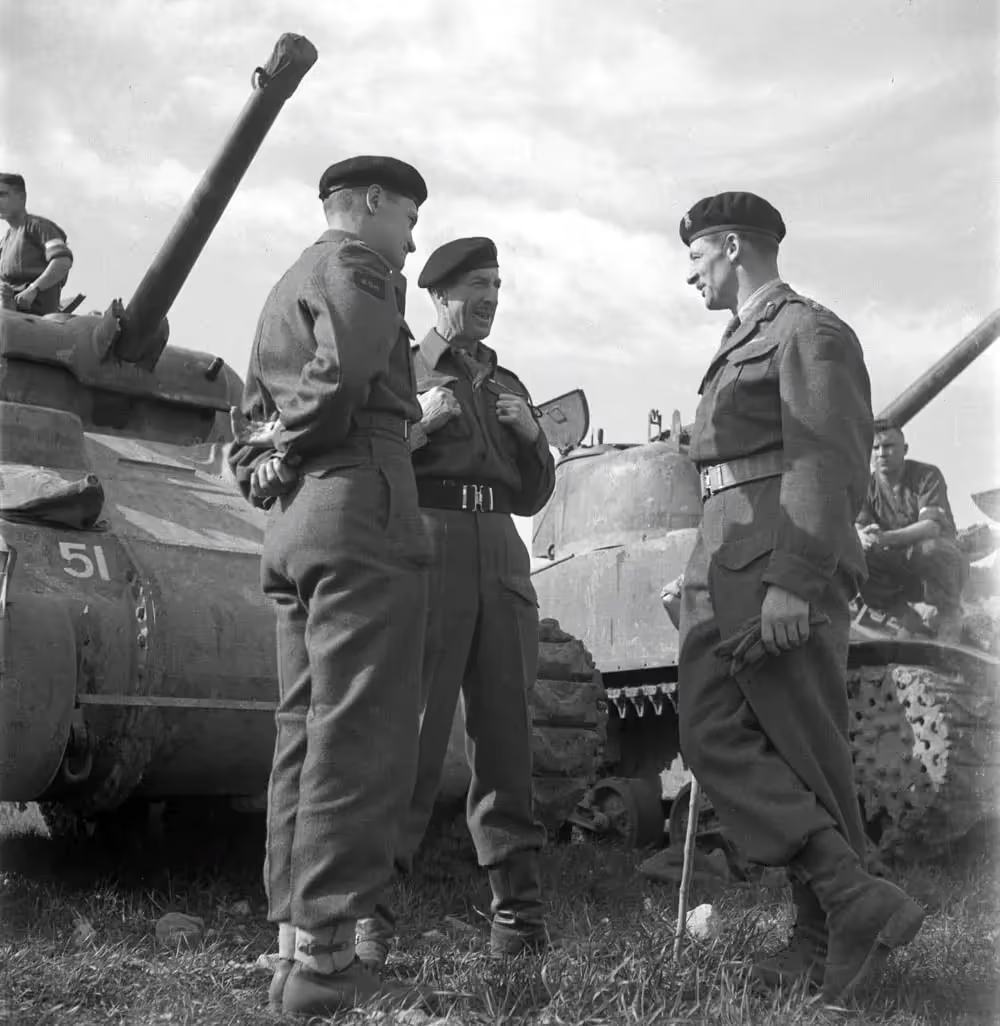
(Library and Archives Canada Photo, MIKAN No. 4166630)
Left to Right Major G.J.H. Wattsford, Lieutenant-Colonel P.G. “Paddy” Griffin (CO LdSH), Brigadier J.D.B. Smith with Lord Strathcona’s Horse (Royal Canadians) Sherman tanks in the background, in Italy, 1943.
An Introduction to The Battle for the Melfa River, Lieutenant-General W.A. Milroy, DSO, CD.
The battle for the Melfa River on 24 May 1944 started with Lieutenant-Colonel Vokes’ VOKESFORCE, based on the British Columbia Dragoons, advancing through the breakthrough of the Hitler Line at about 0800 hours. This force established a firm base, codeword KUMMEL, about 2,000 yards beyond the 3rd Infantry Brigade salient. STRATHFORCE, (also known as “Griffin Force,”) based on Lieutenant-Colonel Griffin’s Lord Strathcona’s Horse (RC), moved through KUMMEL at about 1330 hours. Its objective was to seize a crossing of the Melfa River. The direct route from KUMMEL to a ford on the Melfa, which was the obvious place to cross, was reasonably open and rolling country-what is generally called “good tank going.” Fortunately, Colonel Griffin decided to avoid this route and took one 1,000 yards to the right, or northeast. This decision was made despite the fact that the chosen route had rough going, visibility limited by brush, olive orchards and woods, and a much more difficult crossing of the river. The result was that STRATHFORCE was able to advance at speed, encountering little enemy opposition on the way. “A” Squadron followed the three vehicle recce troop, commanded by Lieutenant E.J. Perkins, down the centre line. “C” Squadron followed on the left, and “B” Squadron, the squadron I was commanding, was on the right with the railway station as its’ objective. The country was so close in the “B” Squadron sector that we could not employ conventional tactics. We therefore closed up into a tight formation and just smashed our way through until we got to the edge of the open area around the station. “A” and “C” Squadrons covered the four miles to the river in remarkably short time. Once there they found themselves in the rear of the surprised defenders, who were positioned to cover the “good tank going” approach and the ford. To quote G.W.L. Nicholson’s The Canadians in Italy,… the action developed into a series of bitter duels between individual Shermans and Panthers. By half-past four the German forces had been destroyed or driven across the river, but the enemy had moved up reinforcing armour and guns to the far bank, and a heavy fire fight raged back and forth across the river until dark. “B” Squadron, meanwhile, encountered nothing at the railway station but did find some action towards Highway 6 on its right. The battle cost the Strathcona’s 17 tanks for the destruction of five German tanks, eight self-propelled guns and various other equipment. Two officers and 18 other ranks were killed; seven officers, including the second-in-command and the “A” and “C” Squadron commanders, and nine other ranks, were wounded. It was against this background that Lieutenant Perkins was getting across the river and establishing a bridgehead as he describes in the following report. This bridgehead, reinforced by Major Jack Mahony’s “A” Company of the Westminsters, which was part of STRATHFORCE, was held despite fierce attacks by the Germans. The mission of STRATHFORCE was accomplished thanks, in part, to “poor tank going.” For their contributions to this action, Major Mahony received the Victoria Cross, Lieutenant-Colonel P.A. Griffin was awarded the Distinguished Service Order, and Lieutenant Perkins was awarded the Distinguished Service Order. Perkins’ Troop Sergeant, C.N. Macey, was awarded the Distinguished Conduct Medal while another soldier in his unit, Trooper Jacob Funk, won the Military Medal for his actions at the Melfa River.
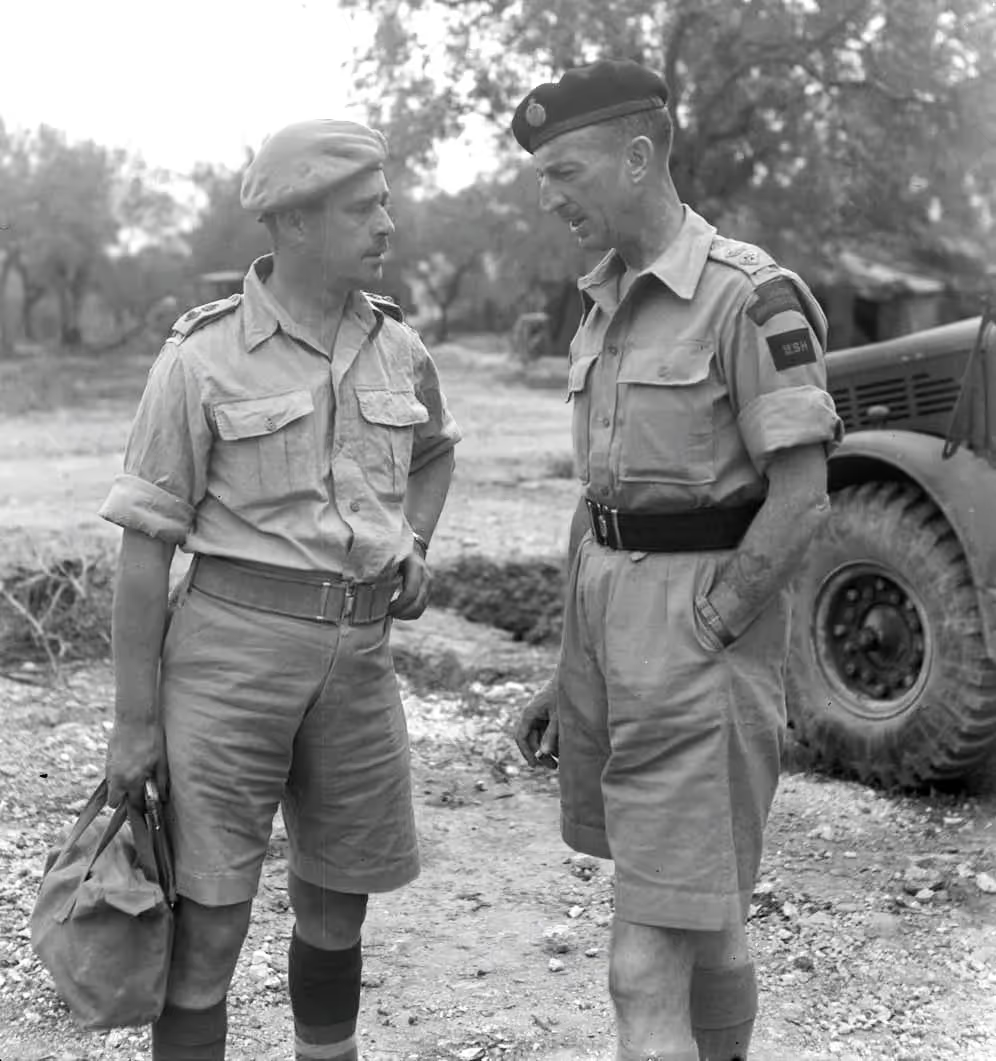
(Library and Archives Canada Photo, MIKAN No. 4166645)
LCol Gordon C. Corbould, Commander of the Westminster Regiment on the left, speaking with LCol Griffin, LdSH (RC), on the right, in Italy, ca 1943.
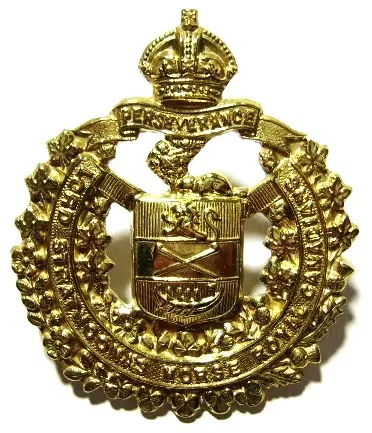
(Stuart Phillips Photo)
2nd Armoured Regiment, Lord Strathcona’s Horse (Royal Canadians)
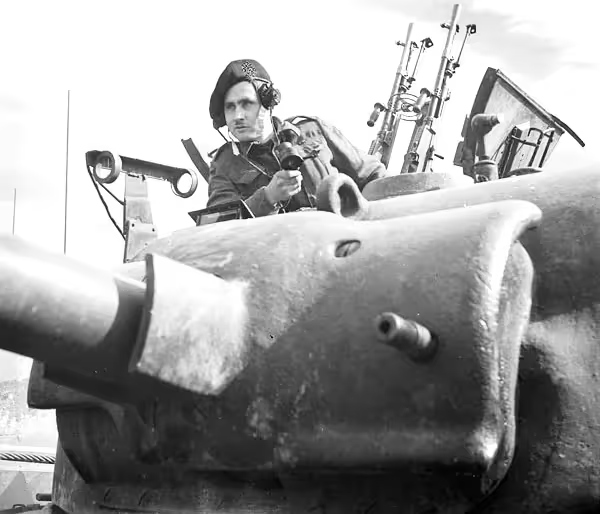
(Library and Archives Canada Photo, MIKAN No. 3599666)
A crew commander of the 8th Princess Louise’s (New Brunswick) Hussars in the hatch of his Sherman tank giving firing orders to his gunner during a predicted mass tank firing exercise, Italy, 2 March 1944. The twin ring on the left are a sight added to the front “bladesight” which was used for firing indirect in a firebase position. The sight has crosshairs added front and back to aid int the direction of fire. Used in Tollo, Italy, 4 February 1944. There are 4 other photos from the same photographer from this shoot.
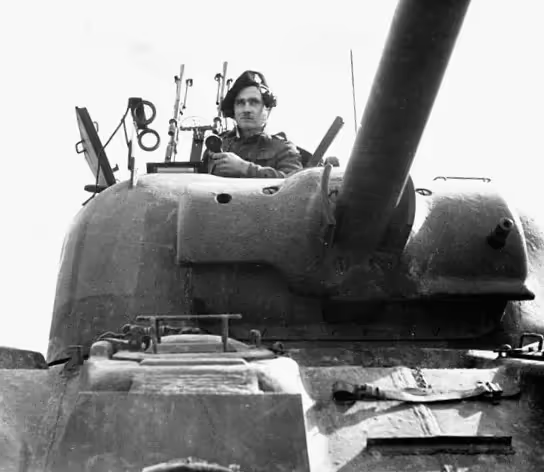
(Library and Archives Canada Photo, MIKAN No. 3574217)
A crew commander of the 8th Princess Louise’s (New Brunswick) Hussars in the hatch of his Sherman tank giving firing orders to his gunner during a predicted mass tank firing exercise, Italy, 2 March 1944.
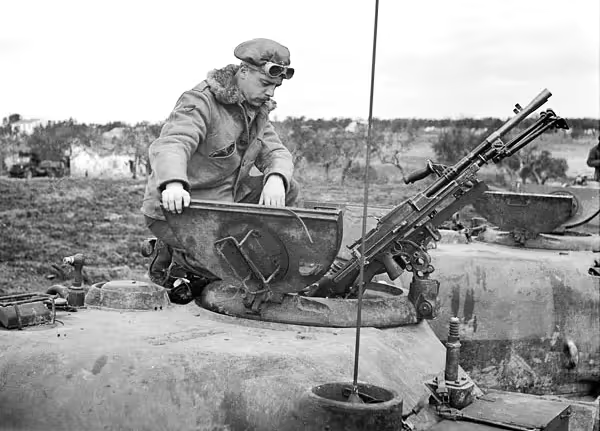
(Library and Archives Canada Photo, MIKAN No. 3599664) Also PA-213559 & PA-21356.
A crew commander of the 8th Princess Louise’s (New Brunswick) Hussars looking into his Sherman tank’s access hatch during a predicted tank shoot, Italy, 2 March 1944. Note the twin Bren anti-aircraft (AA) guns mounted on his Sherman.
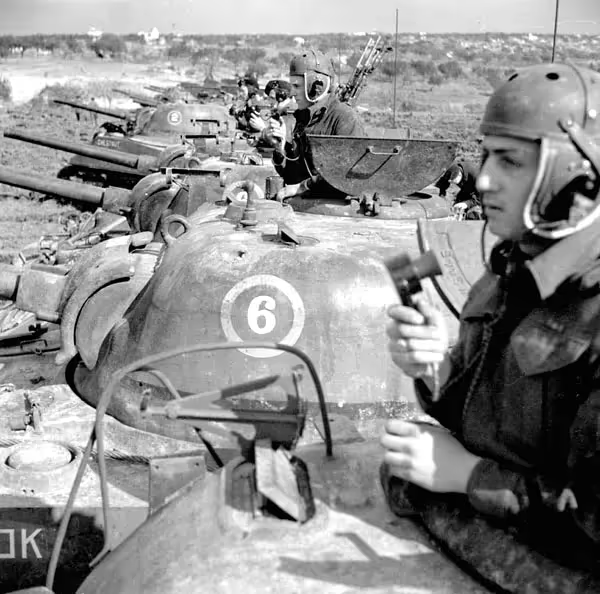
(Library and Archives Canada Photo, MIKAN No. 3534481)
Sherman tanks of “C” Squadron, 8th Princess Louise’s (New Brunswick) Hussars, taking part in an indirect shoot on a German-held crossroads, Tollo, Italy, 4 February 1944.
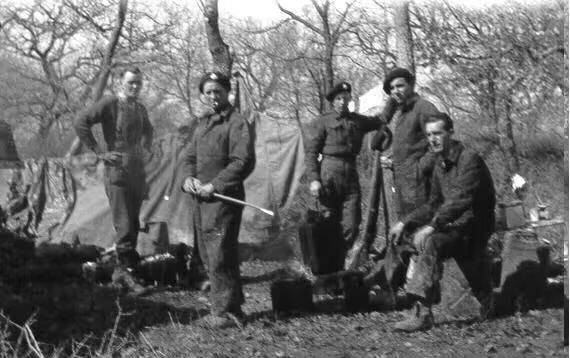
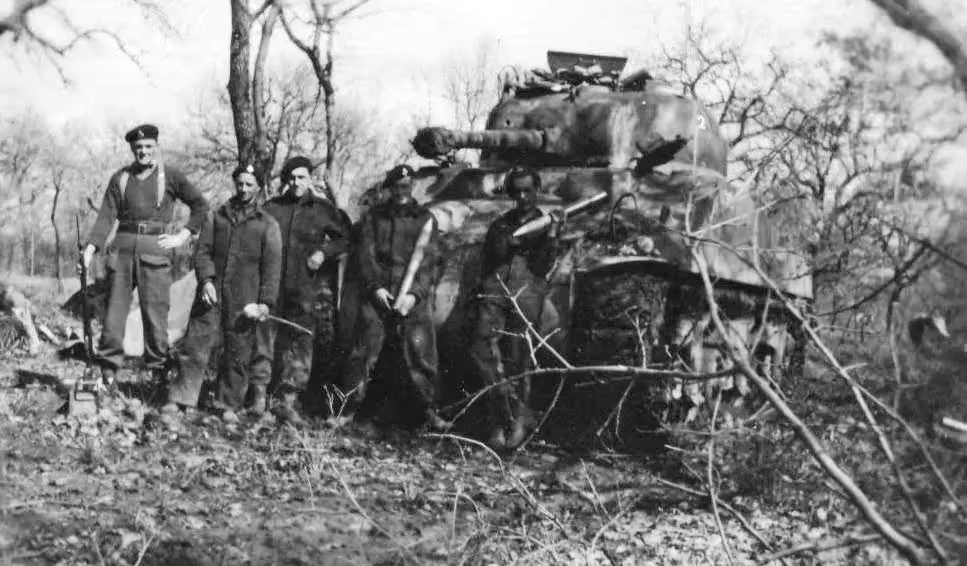
“A” Squadron of the 5th Armoured Regiment, 8th Princess Louise’s New Brunswick Hussars. Photo taken by my uncle Harold, who died on 6 Sep 1944 from wounds he sustained during the battle for Point 111, not far from Montecchio, Italy, where he is buried. Among Harold’s personal belongings, which were later forwarded to his brother Aage Skaarup, was a 116 Kodak camera. In the camera was an exposed film, which Aage later had developed. The photos give a first hand view of the men and the places in which the 8th CH served.
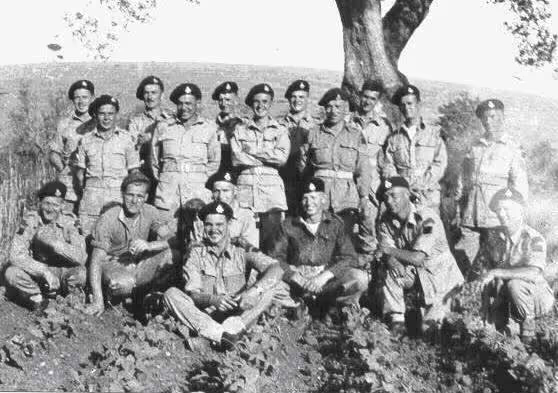
A group photo a few of the 8th Hussars in the south of Italy, fall 1944. In the rear rank from left to right, #1, 2 and 3 are unknown, #4 is Elmer Devoe F32035, #5 is Jack F. Stewart G160, #6 is George A. Bridgen SG334, and #7 is Sgt Archie Stevens G146.
In the second rank, #1 is Charles F. “Muscles” McGrattan G105, #2 is William F. “Horn” Bell G21, #3 is Joseph A. Bradshaw G49, and #4 is William J. Preston G190.
In the third rank seated #1 is Lt George G. Pitt, #2 is unknown, #3 is Lt Waldo E. Tulk, #4, 5 and 6 are unknown. Seated in front is Capt Douglas E. Lewis.
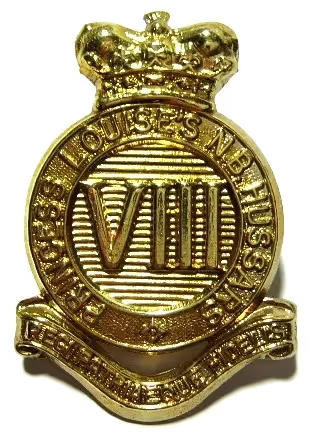
(Stuart Phillips Photo)
5th Armoured Regiment (8th Princess Louise’s (New Brunswick) Hussars)
(Library and Archives Canada Photo, MIKAN No. 3718093)
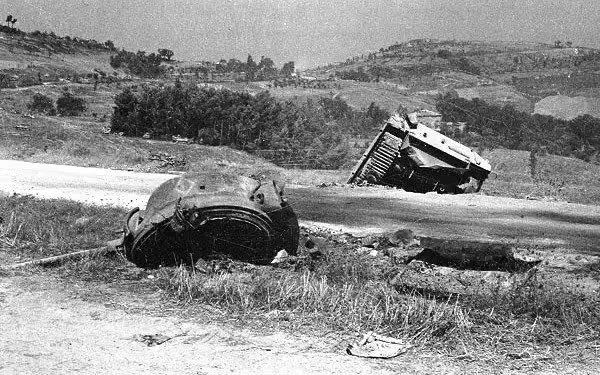
Destroyed Sherman V with a D50878 low bustle turret without the pistol port. The wreckage is on the ridge road past point 204. The hill on the left of the photo, just rising with the summit out of shot is Monte luro. The hill in the back ground is across the valley from Gradara, Italy, ca Sep 1944. The tank has a diamond headquarters TAC sign, HQ Squadron, BCD.
(World War Photos)
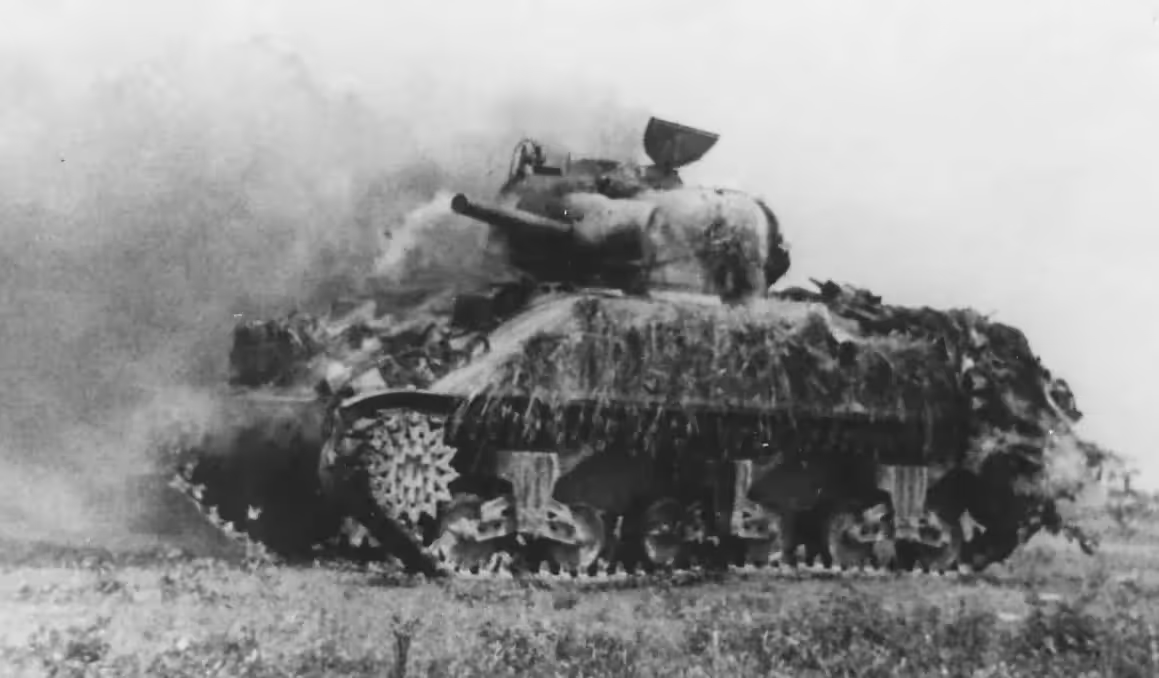
The tank units took a tremendous number of hits with many casualties. This is a Canadian Sherman V burning after being hit in Italy in July 1944.
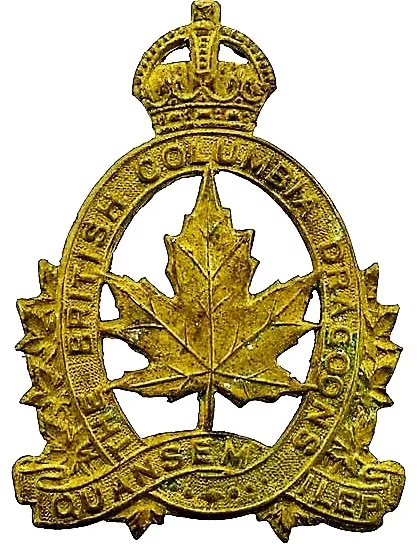
9th Armoured Regiment (The British Columbia Dragoons)
First Canadian Army Troops
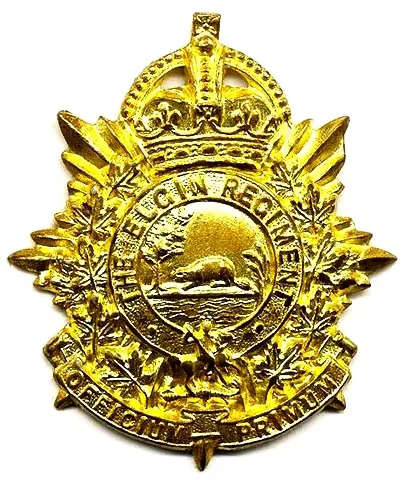
“A”, “B”, and “G” Squadrons, 25th Armoured Delivery Regiment(The Elgin Regiment)
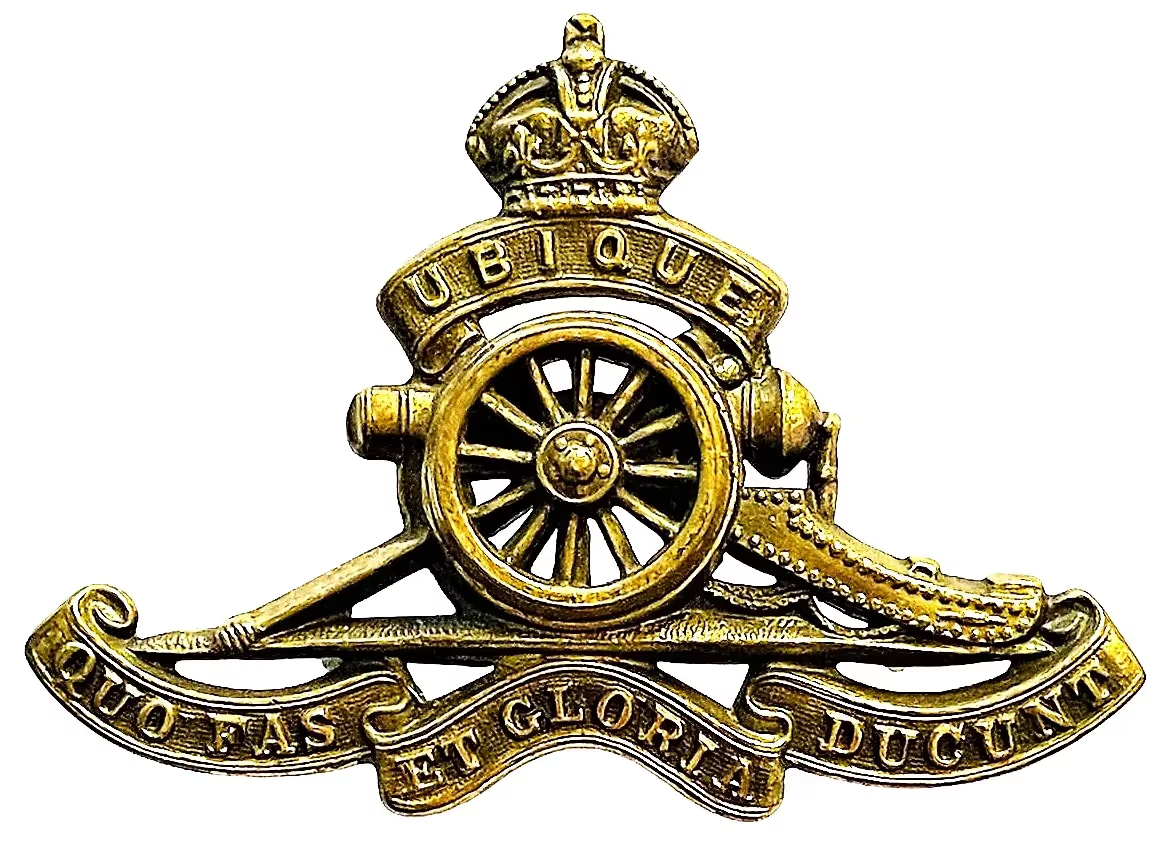
Royal Canadian Artillery
1st Infantry Division
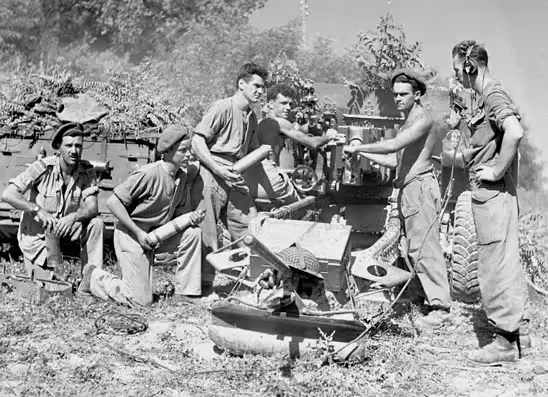
(Library and Archives Canada Photo, MIKAN No. 3533088)
Personnel of the 1st Regiment, Royal Canadian Horse Artillery (RCHA), near Cattolica, Italy, 9 September 1944.
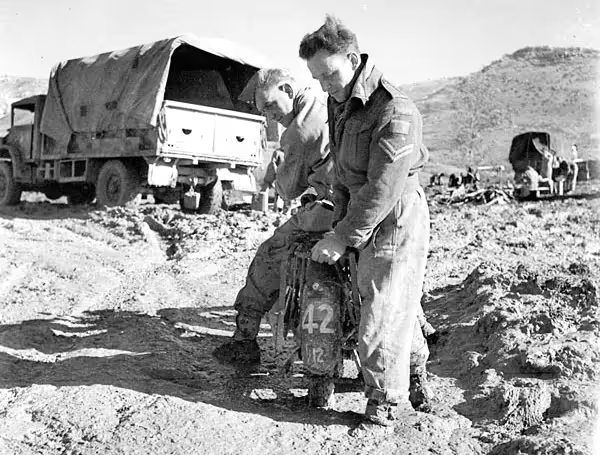
(Library and Archives Canada Photo, MIKAN No. 3206627)
Bombardier W.J. Black of the 1st Field Regiment Royal Canadian Horse Artillery (RCHA) pushing Sergeant-Major Jimmy Walker’s motorcycle out of the mud, San Pietro, Italy, 26 November 1943.
1st Field Regiment Royal Canadian Horse Artillery (RCHA)
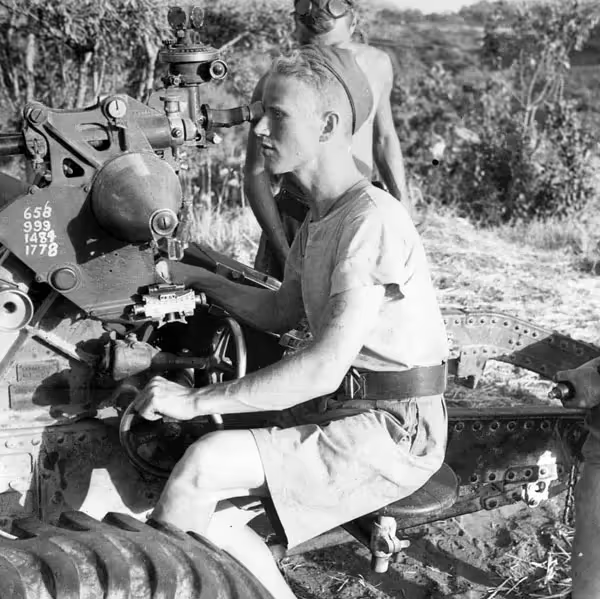
(Library and Archives Canada Photo, MIKAN No. 3203860)
Gunner J.R. Walsh operating the gunsight of a 25-pounder gun of the 2nd Field Regiment, Royal Canadian Artillery (RCA), Sicily, Italy, 28 July 1943.The 25 pounder was a field gun/howizer, and was a wonderful artillery piece. As a howizer, it was deadly accurate, putting down fire within 100-200 yards of Allied troops. In the absence of a decent anti-tank gun in North Africa, the 8th Army used the 25 pounder to eliminate German Panzer Mark IIIs and IVs over open sights. (Peter Smith)
The gun/howitzer classification arose because the 25-pounder replaced both the 18-pounder field gun and the 4.5-inch howitzer. It was designed to fire in both the lower and higher (above 45 degrees) and the originally planned split trail was thus replaced by the ‘box trail cum platform’. One Gunner officer/historian noted it had originated from ‘largely unprompted “doodles” by the technical staff’ and was the ‘child of an unblessed liaison between the technical staff and the School of Artillery’. Its success as an ad hoc anti-tank weapon may have had something to do with its calibre of 87.5mm, usually rounded up to 88, a description applied by at least one Commonwealth army to its 25-pounders. (Richard Doherty)
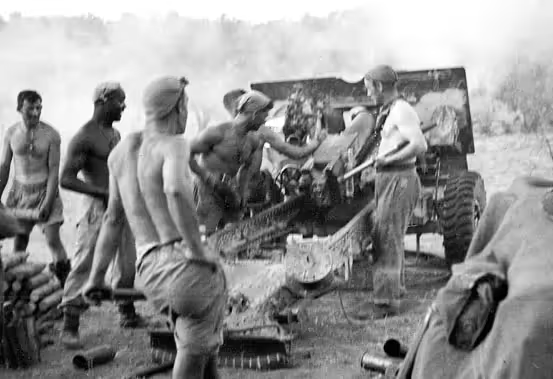
(Library and Archives Canada Photo, MIKAN No. 3259922)
Gunners of the 7th Battery, 2nd Field Regiment, Royal Canadian Artillery (RCA), firing their 25-pounder guns at German positions, Nissoria, Italy, 23-28 July 1943.
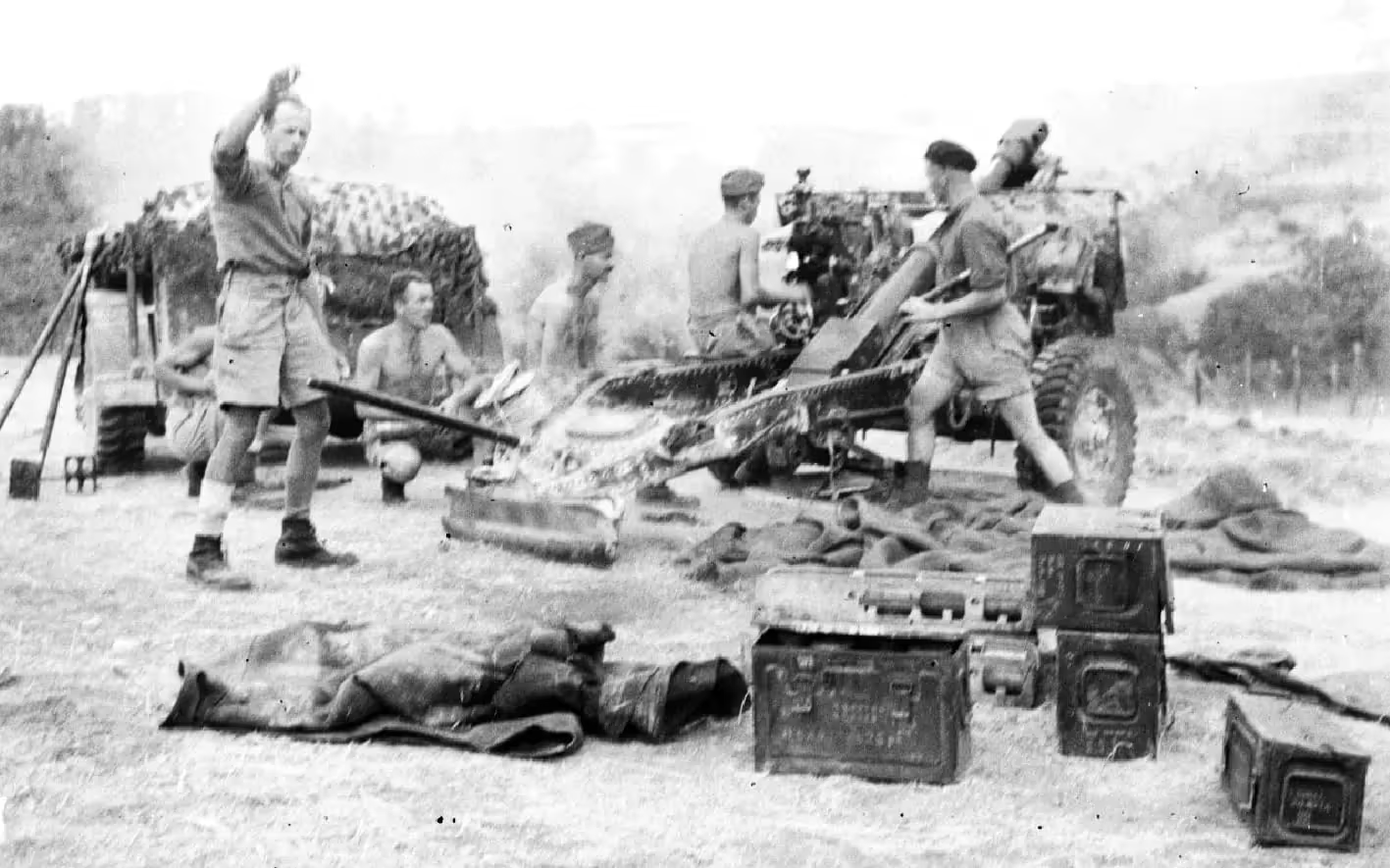
(Library and Archives Canada Photo, MIKAN No. 3604332)
25-pounder Howitzer in action in Italy, c1943.
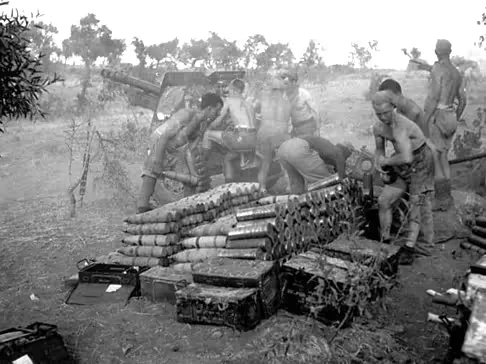
(DND Photo)
25-pounder in action in Italy, 1943.
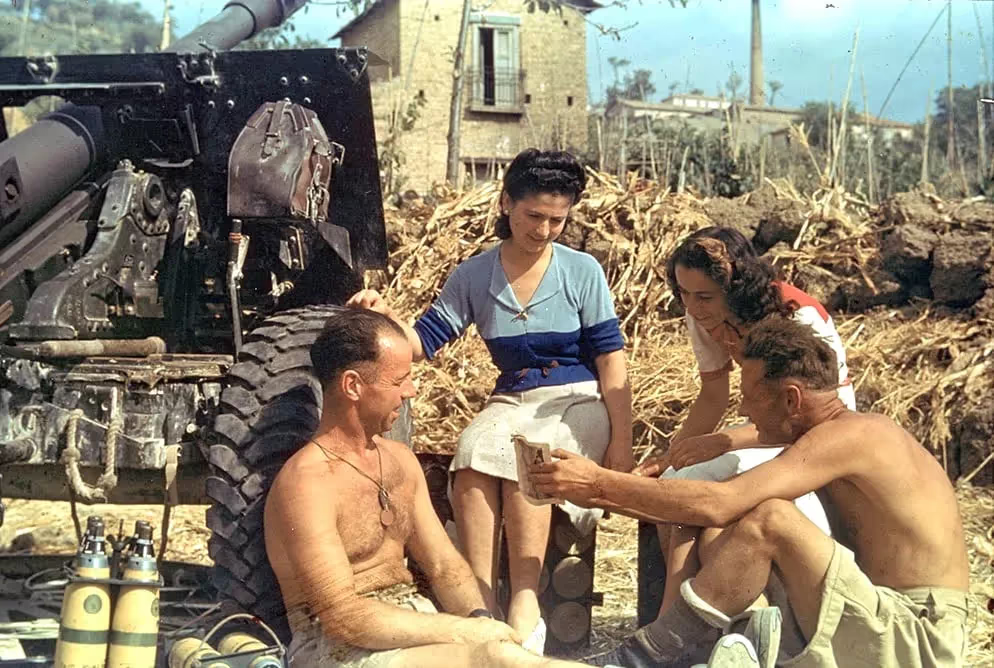
(Library and Archives Canada Photo, MIKAN No. 4232829)
25-pounder gun detachment with two Italian women, 1943.
2nd Field Regiment
3rd Field Regiment
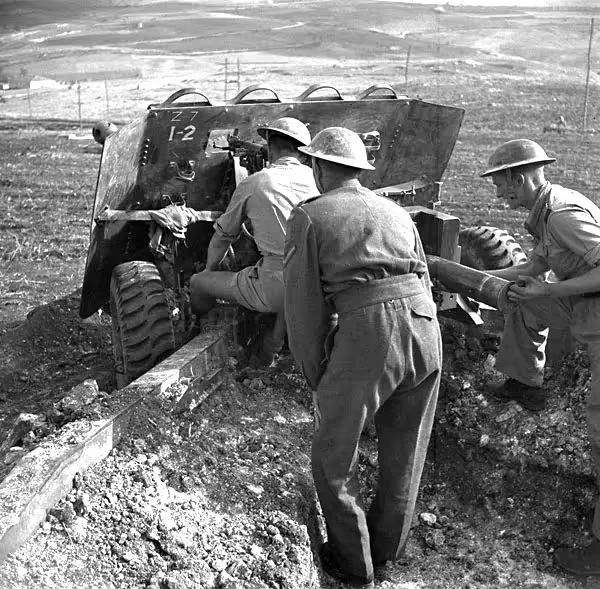
(Library and Archives Canada Photo, MIKAN No. 3599876)
17-pounder anti-tank gun detachment, 57th Battery, 1st Anti-Tank Regiment, Royal Canadian Artillery (RCA), near Campobasso, Italy, 25 October 1943.
1st Anti-Tank Regiment
2nd Light Anti-Aircraft Regiment
5th Armoured Division
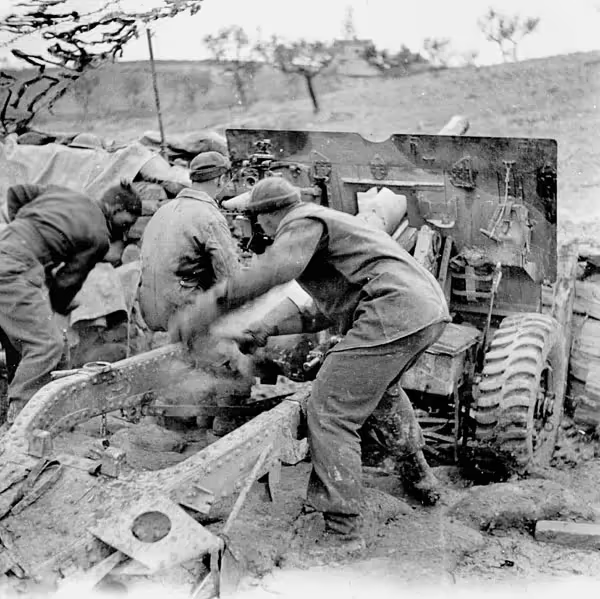
(Library and Archives Canada Photo, MIKAN No. 3534477)
Gunners of the 17th Field Regiment, Royal Canadian Artillery (R.C.A.), firing a 25-pounder gun near Castel Frentano, Italy, 10 February 1944.
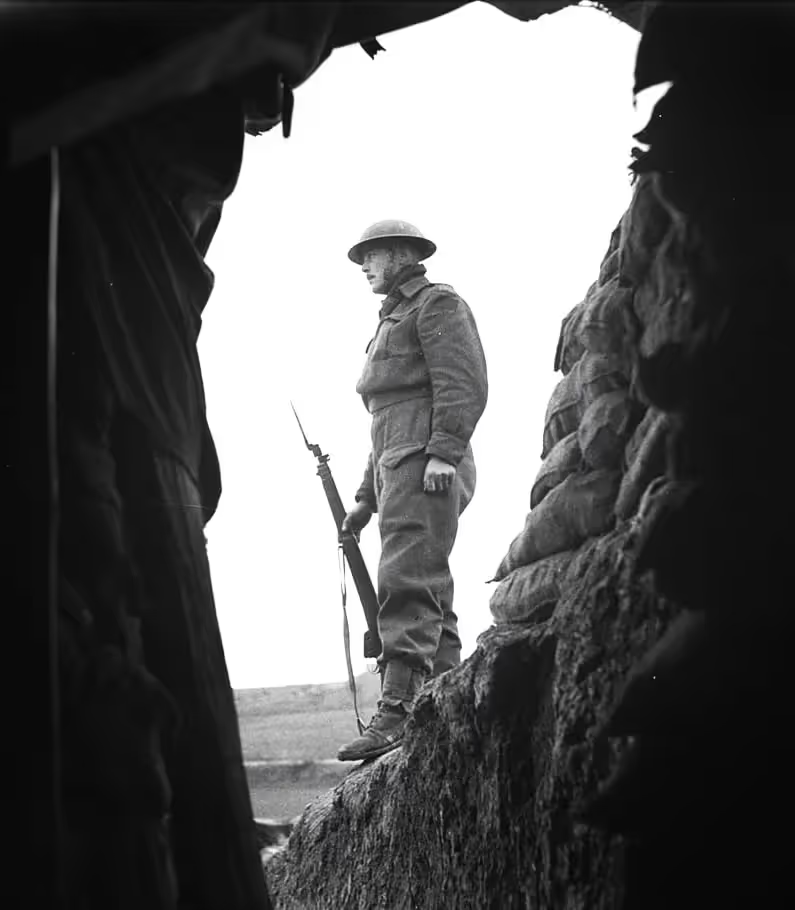
(Library and Archives Canada Photo, MIKAN No. 3524499)
Gunner Douglas Hat on guard outside the Battery Command Post of the 17th Field Regiment, Royal Canadian Artillery (RCA), Castel Frentano, Italy, 10 February 1944.
(Library and Archives Canada Photo, MIKAN No. 3203863)
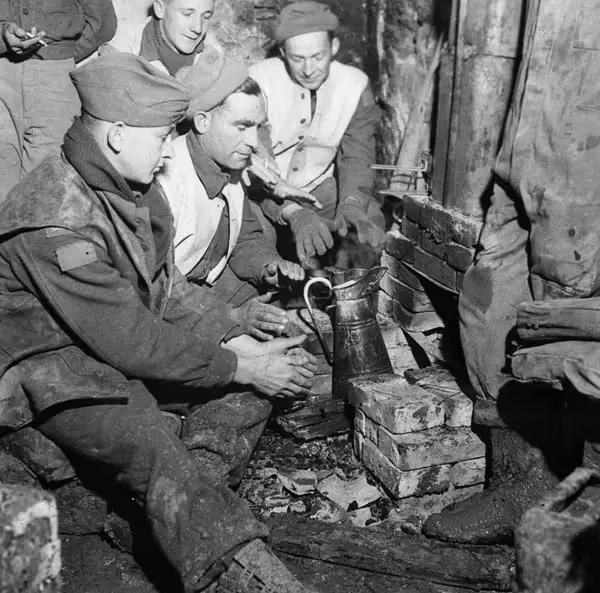
Gunners of the 2nd Field Regiment, Royal Canadian Artillery (RCA), warming up around a fireplace in a damaged farmhouse, Italy, 15 February 1944.
(Library and Archives Canada Photo, MIKAN No. 3524521)
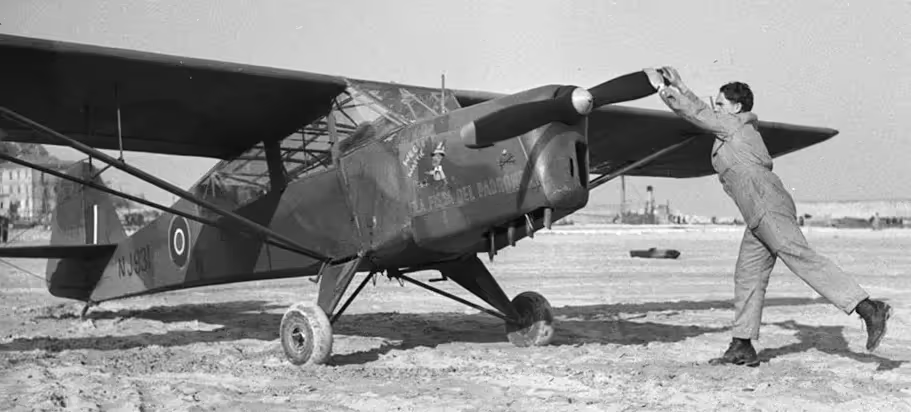
Cpl David Dumphries, hand-propping a Taylorcraft Auster Mk. III,(Serial No. NJ931) “Wee Wattie – La Pissa del Padrone”, of SHQ Flight, No. 651 (AOP) Squadron RAF at Vasto, Italy, Feb 1944.
(Library and Archives Canada Photo, MIKAN No. 3524523)
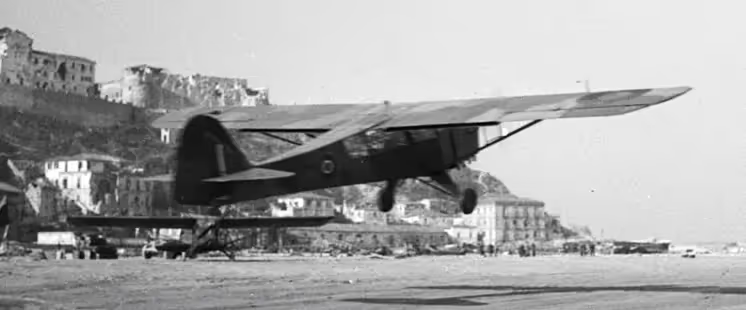
Auster Air Observation Post taking off, Ortona (beach), Italy, Feb 1944.
The Taylorcraft Auster was a British military liaison and observation aircraft in service during the Second World War. The Auster Mk. III, IV and V were issued to 12 RAF, one Polish and three RCAF Air Observation Post (AOP) Squadrons. No. 664 Squadron RCAF, No. 665 Squadron RCAF and No. 666 Squadron RCAF were issued the Auster Mk. IV and V, and were formed in the UK at RAF Andover in late 1944 and early 1945. The RCAF squadrons were manned by Canadian personnel of the Royal Canadian Artillery and the RCAF, with brief secondment to the squadrons with pilots from the Royal Artillery; overall control was maintained in the UK by 70 Group, RAF Fighter Command. The three squadrons deployed from RAF Andover, England, to the Netherlands, to Dunkirk, France, where the last Canadian ‘shots’ in Europe were fired, and later to occupied Germany. The Canadian Army flew Auster AOP.6 aircraft post war.
(Library and Archives Canada Photo, MIKAN No. 3524498)
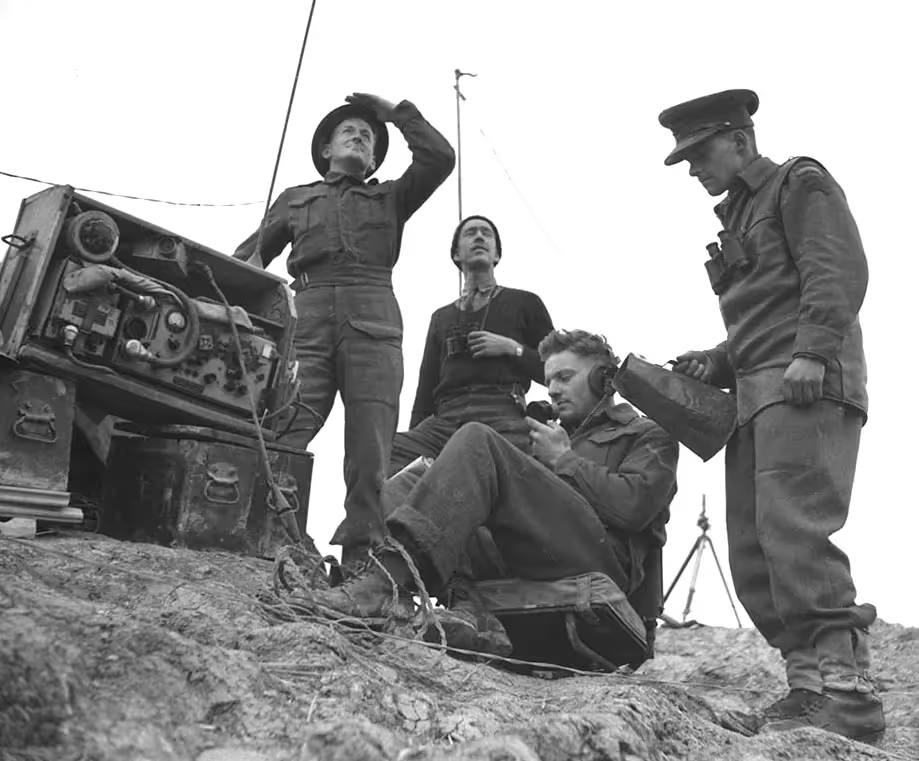
Personnel of the 17th Field Regiment. R.C.A., receiving signals from Taylorcraft Auster AOP III aircraft of the RAF. (Left to right): Bdr. Barney Little. Lt. Leonard Rasberry, L/Bdr Aby Castel, Lt. David Armour, 10 Feb 1944.
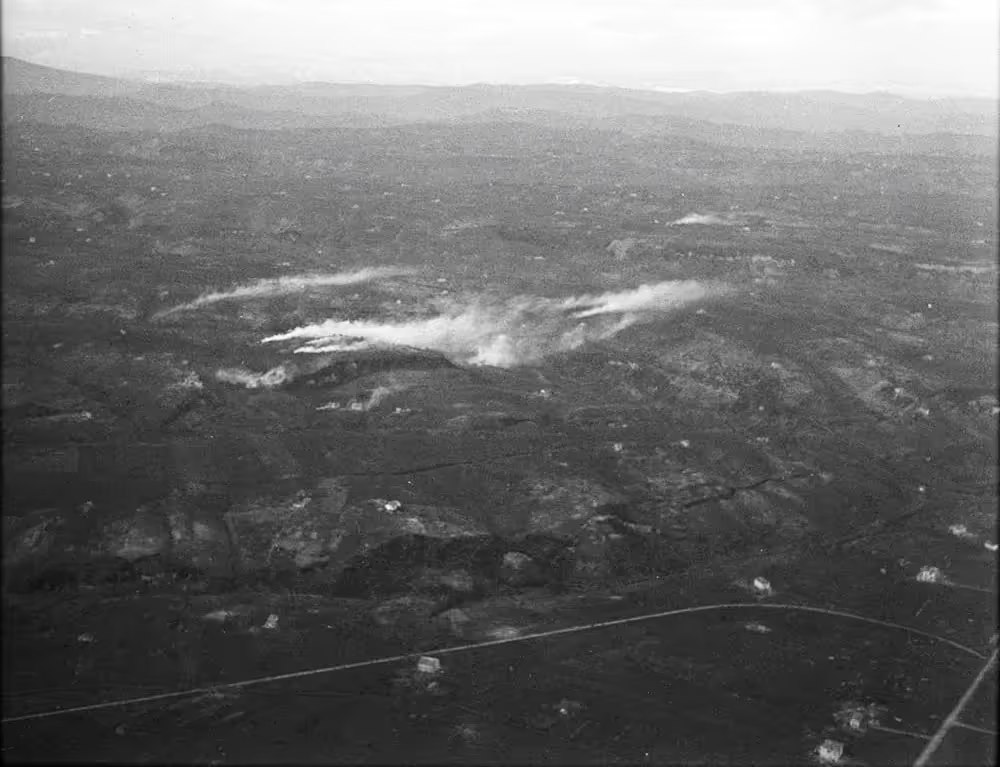
(Library and Archives Canada Photo, MIKAN No. 3524513)
Aerial view from Observation Post Aircraft showing a concentration of smoke from Canadian Artillery shoot. Orsogna (vicinity), Italy, Feb 1944.
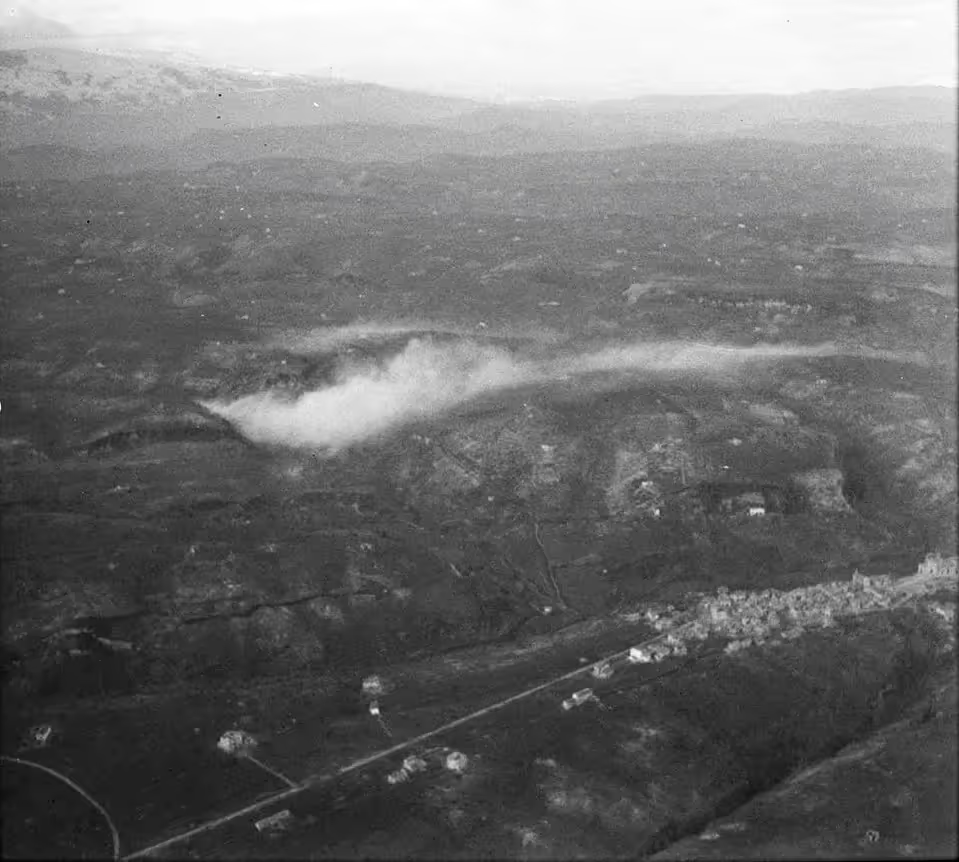
(Library and Archives Canada Photo, MIKAN No. 3524514)
Aerial view from Observation Post Aircraft showing a concentration of smoke from Canadian Artillery shoot. Orsogna (vicinity), Italy, Feb 1944.
17th Field Regiment
8th Field Regiment (Self-Propelled)
4th Anti-Tank Regiment
5th Light Anti-Aircraft Regiment
1st Corps Troops
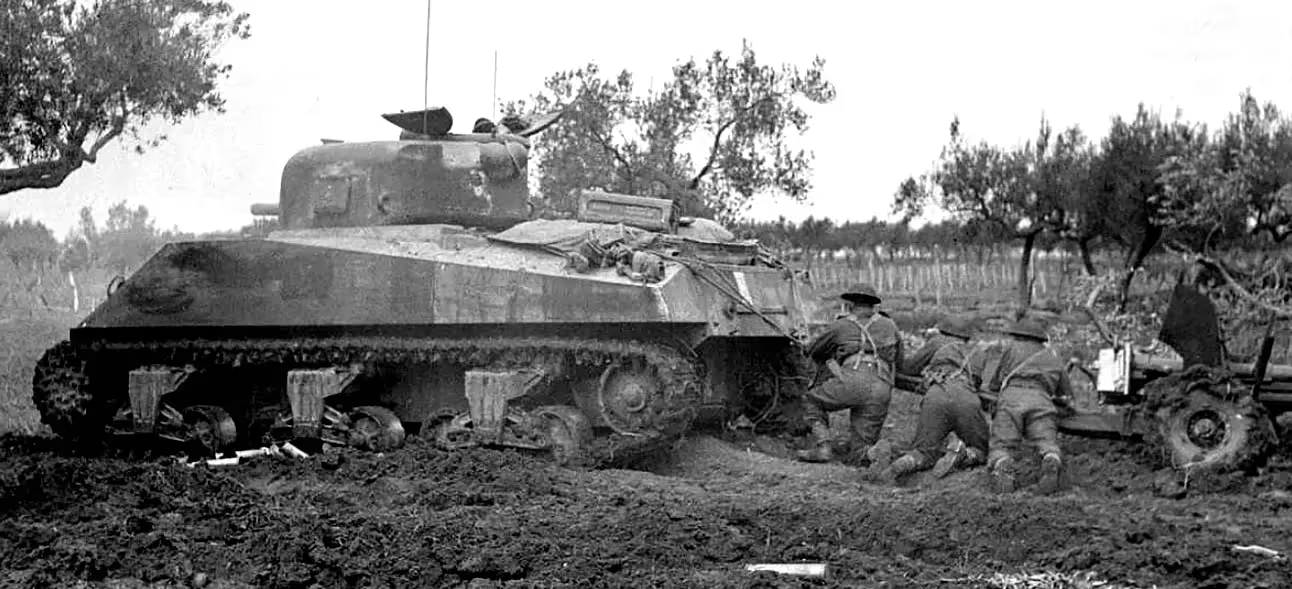
(DND Photo via Don Orth)
Canadian gunners un-hitch their 6-pounder anti-tank gun from the rear of a Sherman tank of the 12th Canadian Armoured Regiment (Three Rivers), Battle of The Arielli River, 17 January 1944.
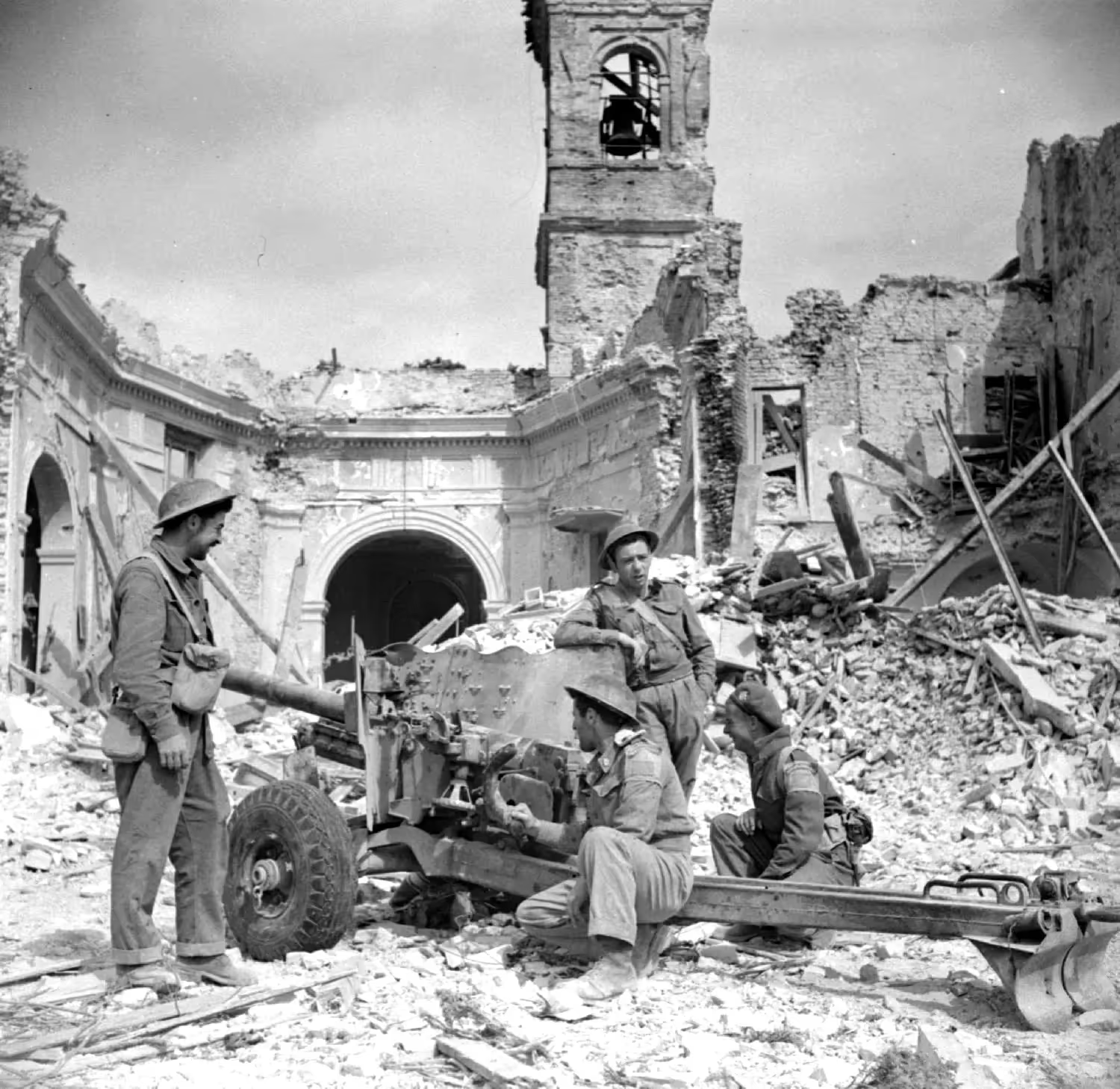
(Library and Archives Canada Photo, MIKAN No. 3607691)
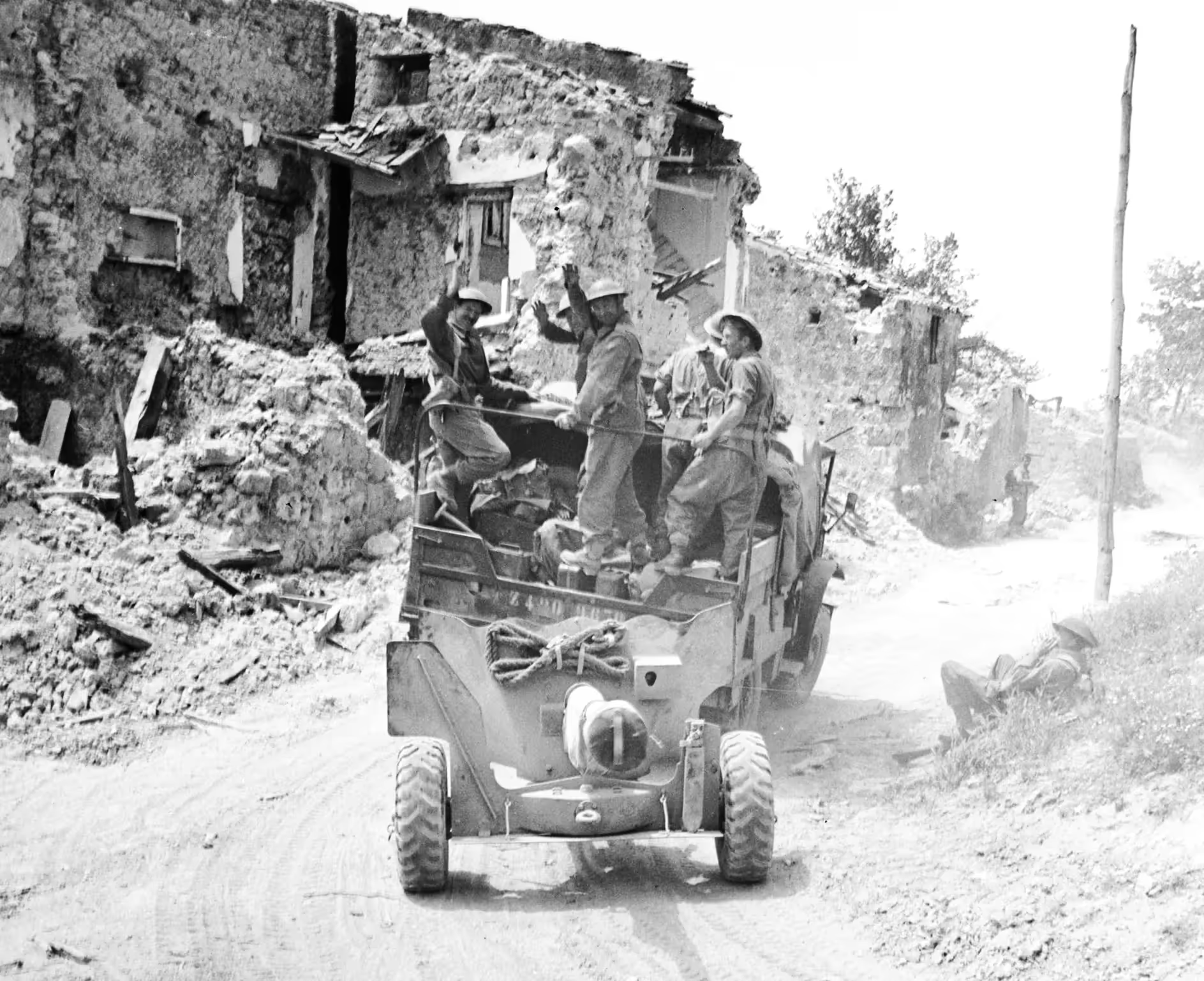
Canadian gunners with their 6-pounder anti-tank gun in the ruins of a church, Rimini, Italy, 1944.
(Library and Archives Canada Photo, MIKAN No. 3607615)
Canadian gunners with their 6-pounder anti-tank gun in the ruins of a town in Italy, c1944.
7th Anti-Tank Regiment
1st Survey Regiment
First Canadian Army Troops
No. 1 Army Group, Royal Canadian Artillery (RCA):
11th Army Field Regiment
(Library and Archives Canada Photo, MIKAN No. 5053591)
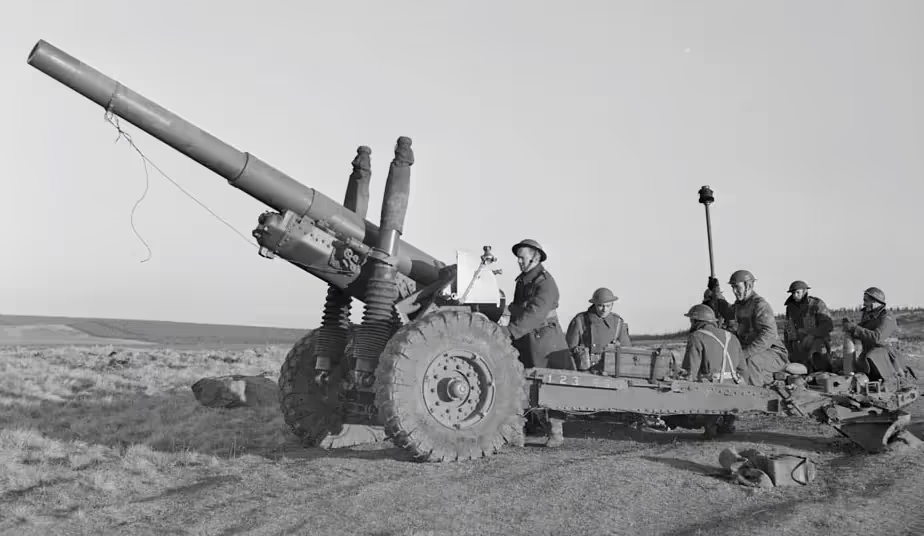
5.5-inch Medium gun, 3rd Medium Artillery Regiment, RCA, 26 Nov 1943.
1st Medium Regiment
(Library and Archives Canada Photo, MIKAN No. 3191934)
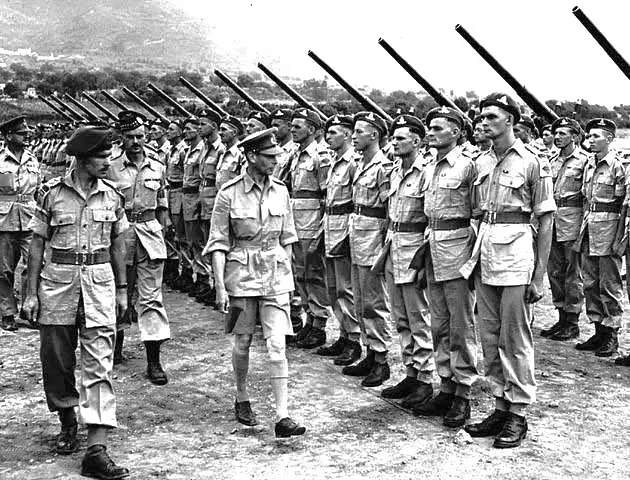
HM King George VI inspecting the 2nd Medium Regiment, RCA, Italy, July 1944.
2nd Medium Regiment
5th Medium Regiment
(New Brunswick Military History Museum Collection, Author Photo)
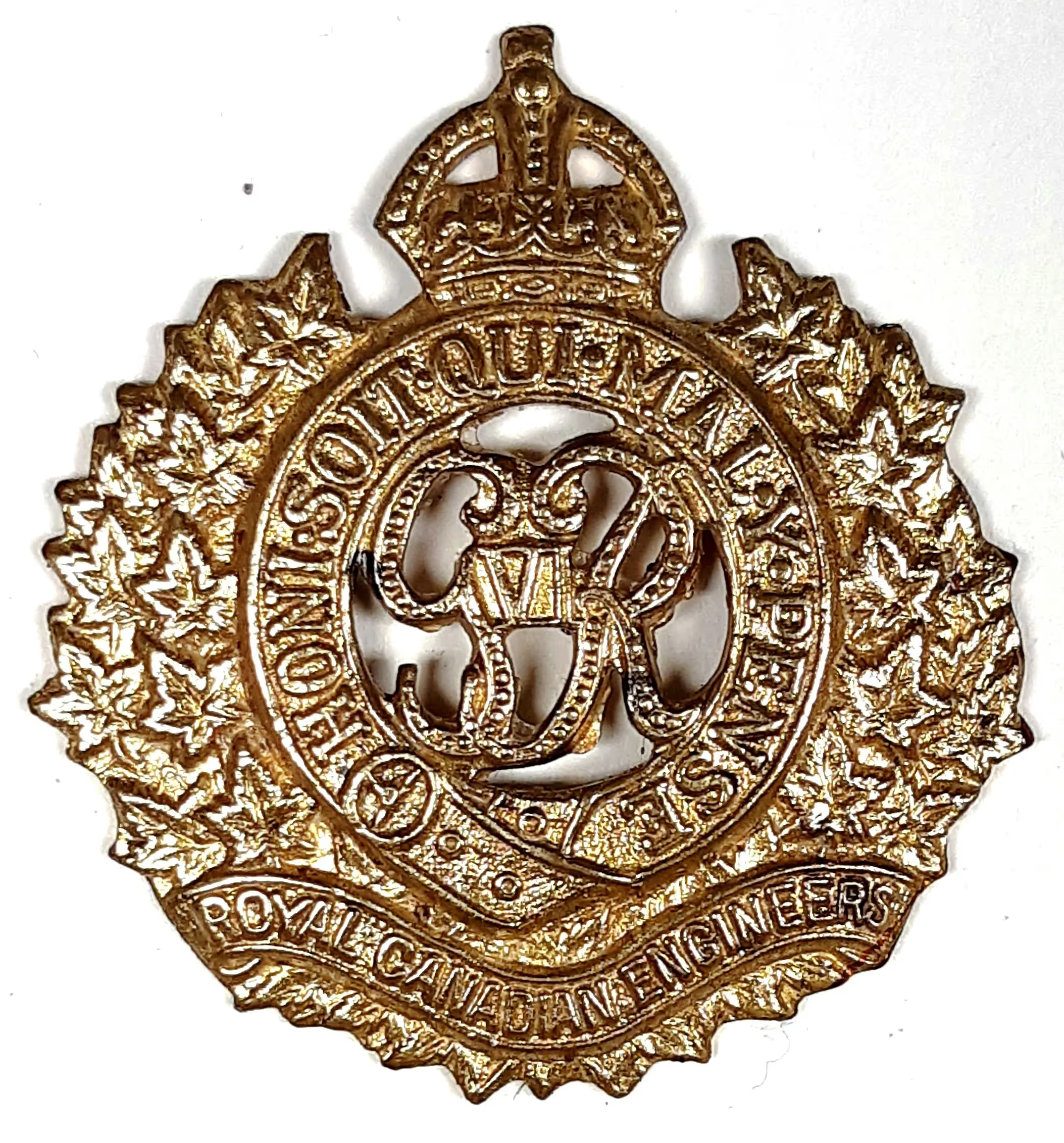
Corps of Royal Canadian Engineers (RCE)
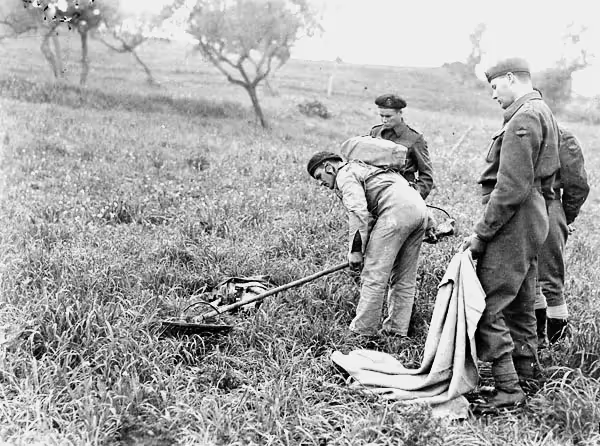
(Library and Archives Canada Photo, MIKAN No. 3585921)
Personnel of the Royal Canadian Engineers (RCE) clearing a minefield, Italy, 20 December 1943. They are clearing a path to recover the body of a soldier who stepped on a mine. His body is visible behind the mine detector.
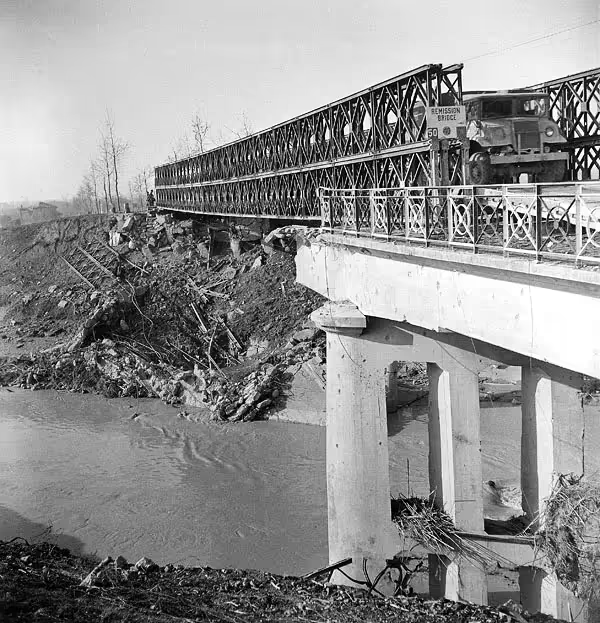
(Library and Archives Canada Photo, MIKAN No. 3718233)
CMP F15A truck on a triple-double Bailey bridge built by Canadian Engineers over the Lamone River, Italy, 1944. The sign states REMISSION BRIDGE.
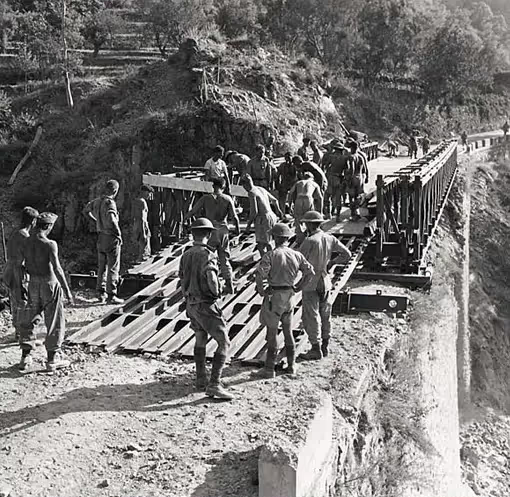
(Library and Archives Canada Photo, PA-177088)
In the mountains of Calabria, the progression of tanks and armoured vehicles was often slowed down as many bridges had been destroyed by the retreating German forces. The 1st Field Company of the Royal Canadian Corps of Engineers setting up a Bailey bridge over a ravine of the Straorini River, 4 September 1943.
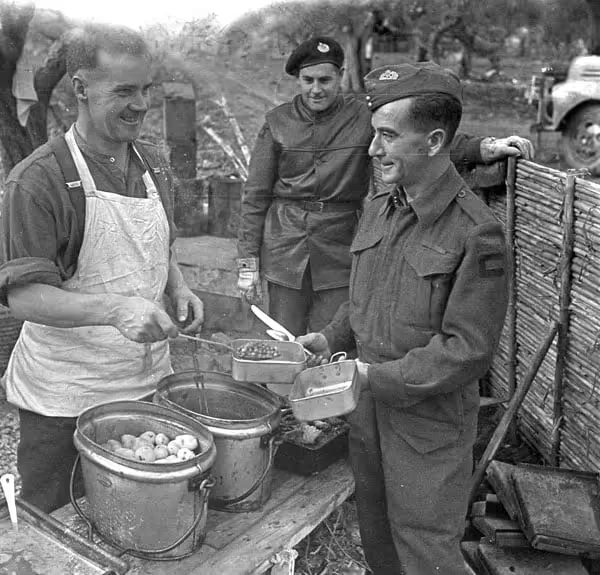
(Library and Archives Canada Photo, MIKAN No. 3524511)
Sappers of the Royal Canadian Engineers (RCE) having dinner, Castel Frentano, Italy, 20 December 1943.
(Library and Archives Canada Photo, MIKAN No. 5176151)
Engineers blow a mine along road below a castle in Italy as Sgt. Z. Buchsbaum watches. The Sgt. was with British Army four years in North Africa, now attached to 2 C.I.B. as an interrogator. (speaks Italian), 1943.
(Library and Archives Canada Photo, MIKAN No. 3586332)
Valentine bridgelayer, Melfa, Italy, 23 May 1944.
1st Infantry Division
2nd Field Park Company
1st Field Company
3rd Field Company
4th Field Company
5th Armoured Division
4th Field Park Squadron
1st Field Squadron
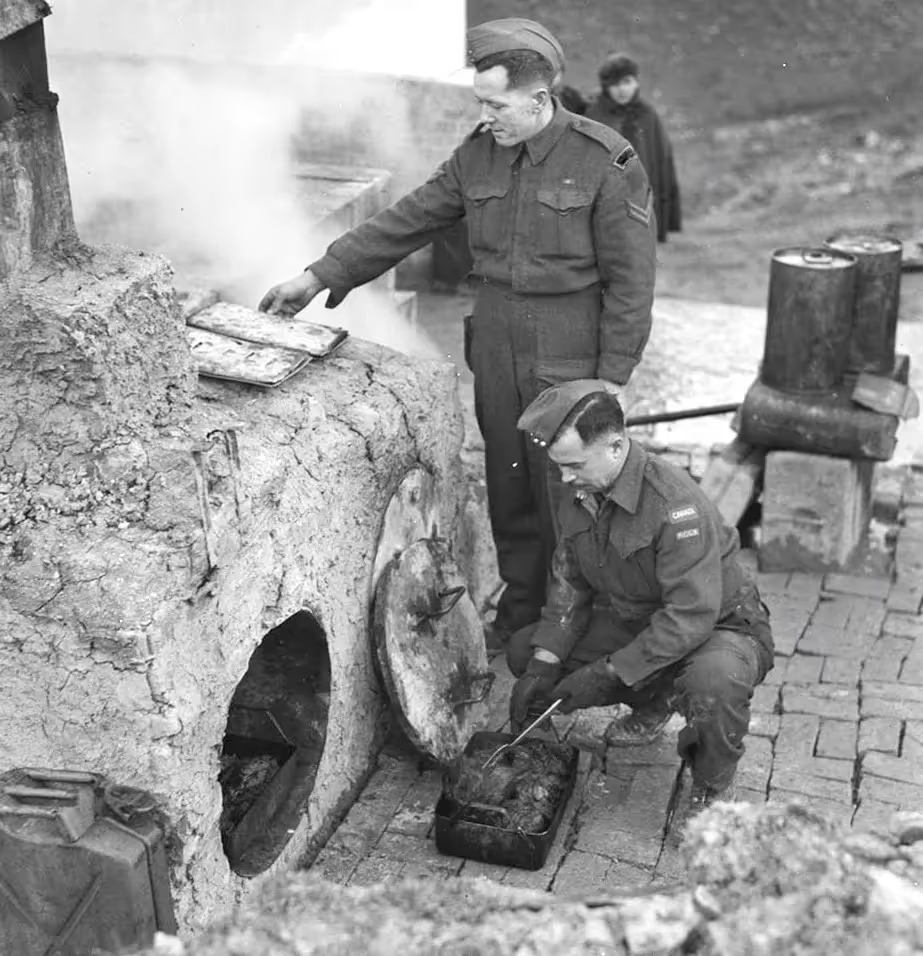
(Library and Archives Canada Photo, MIKAN No. 3524509)
Royal Canadian Corps of Signals (RCCS) soldier, kneeling with meat in apan, and an RCHA gunner baking bread, Castel Frentano, Italy, 20 December 1943.
10th Field Squadron Corps of Signals
1st Corps Troops
9th Field Park Company
12th Field Company
13th Field Company
14th Field Company
G.H.Q. and L. of C. TROOPS
1st Drilling Company
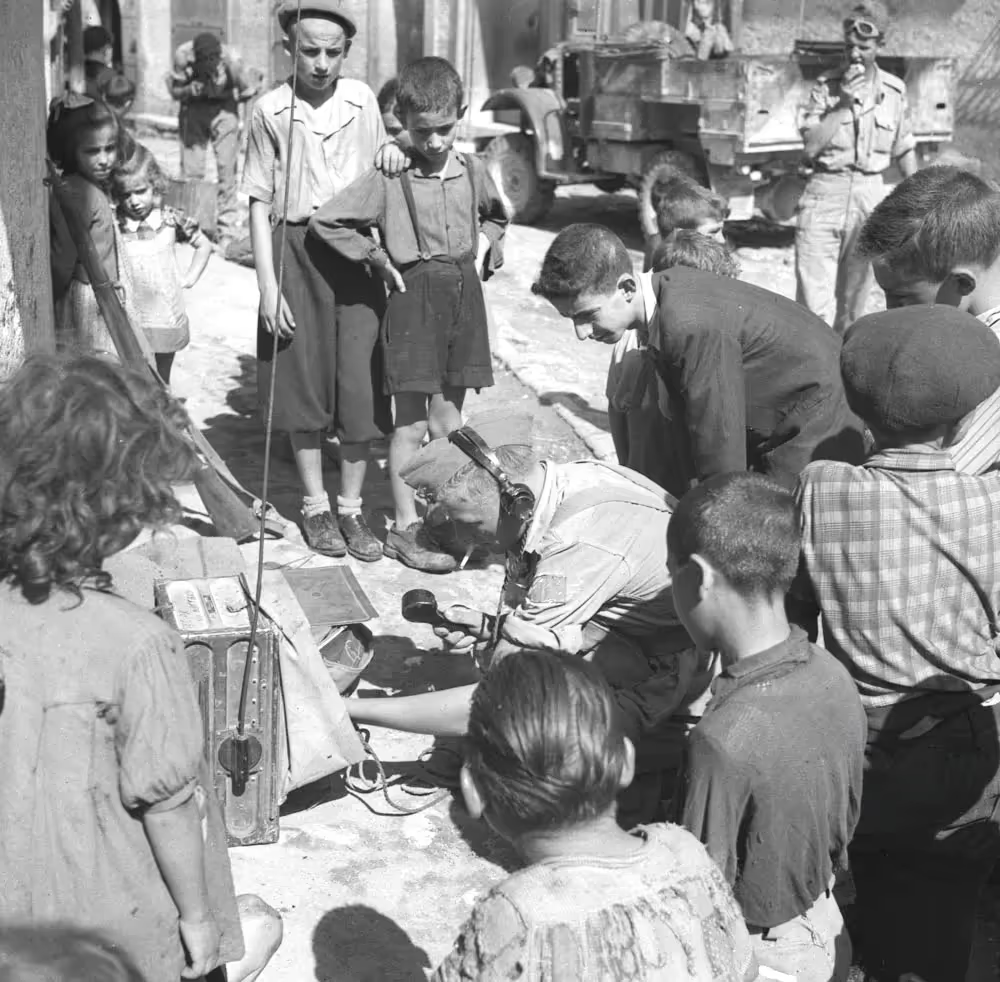
(Library and Archives Canada Photo, MIKAN No. 5010523)
Pte. John Bobinski, operates a signal set in the streets of Rionero while local children look on, Rionero in Vulture, Basilicata, Italy, 1943.
Pasquale Libutti commented: This picture, in the first hours of the arrival in the town after the retreat of the Germans, is very revealing. Only two days before the arrival of the Canadians in Rionero (my town) ltalian Fascists with German paratroopers executed16 civilians; all of the inhabitants were frightened, locked in their homes. Until a few hours before (the arrival of the Canadians), German patrols were prowling around in silent, deserted and rough roads. Now, imagine the arrival of unknown soldiers of another strange army. Any parent would be cautious and would have prevented their children from going near them. But my father, then 13 years old, told me that the first Allied troops arrived between two wings of a cheering crowd, and he was one of them. So we can see these children are surrounding these soldiers without fear.
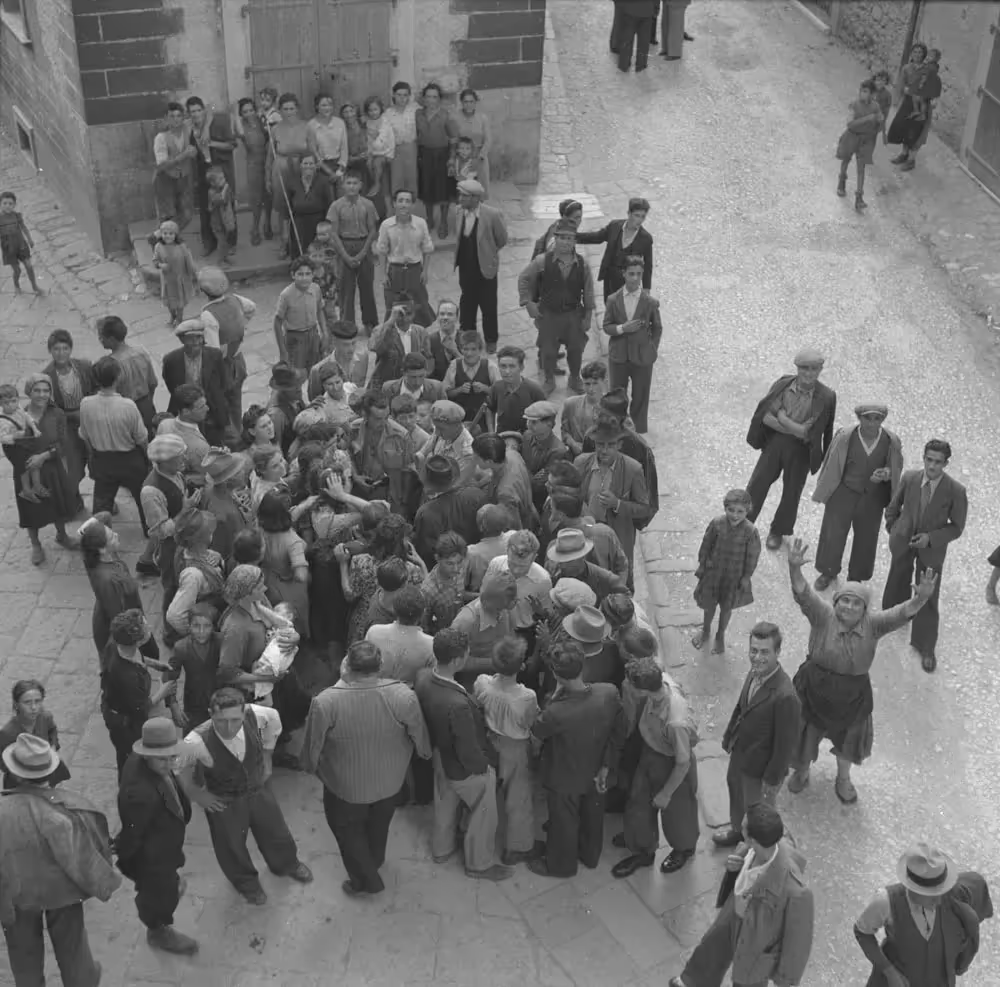
(Library and Archives Canada Photo, MIKAN No. 5010533)
Civilians greeting Princess Patricia’s Canadian Light Infantry in Rionero Vulture, Italy, September 1943.
Instinctively, and despite years of Fascist censorship and propaganda, people realized what was happening.
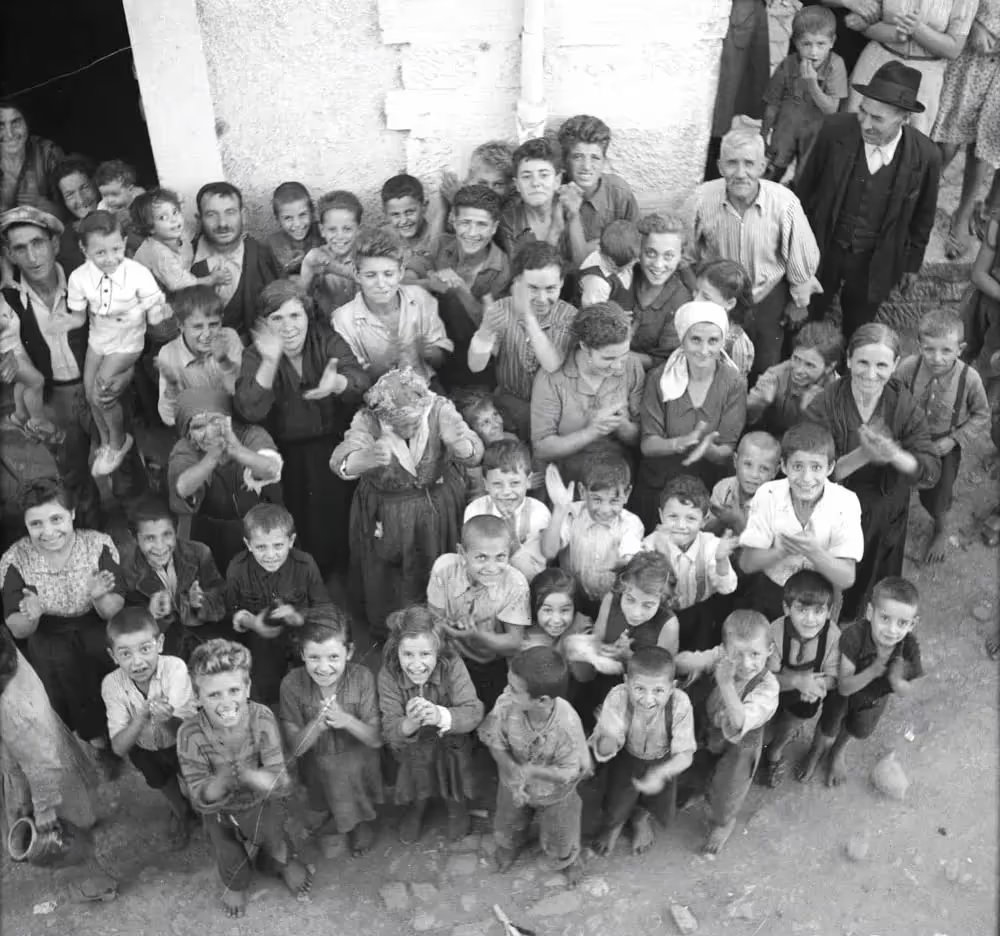
(Library and Archives Canada Photo, MIKAN No. 5010534)
Civilians and kids cheering first Canadian troops in Rionero, Italy, September 1943.
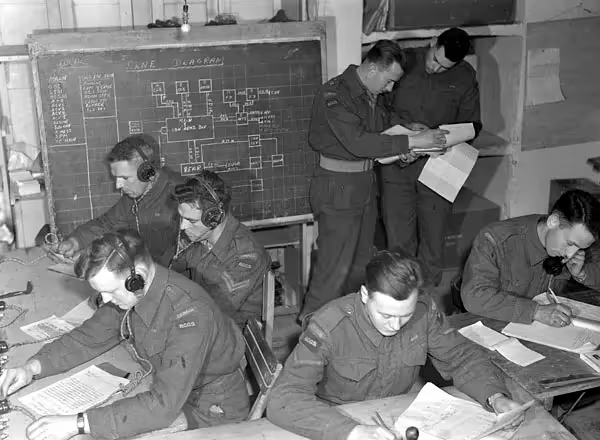
(Library and Archives Canada Photo, MIKAN No. 3259902)
Signals Centre of the 5th Canadian Armoured Division near Castelnuovo, Italy, 17 March 1944.
Royal Canadian Corps of Signals
1st Armoured Brigade Signals
1st Infantry Divisional Signals
5th Armoured Divisional Signals
1st Corps Headquarters Signals
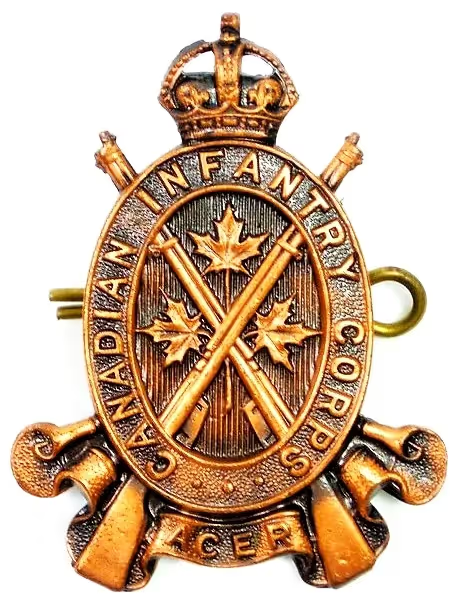
Canadian Infantry Corps
1st Infantry Division
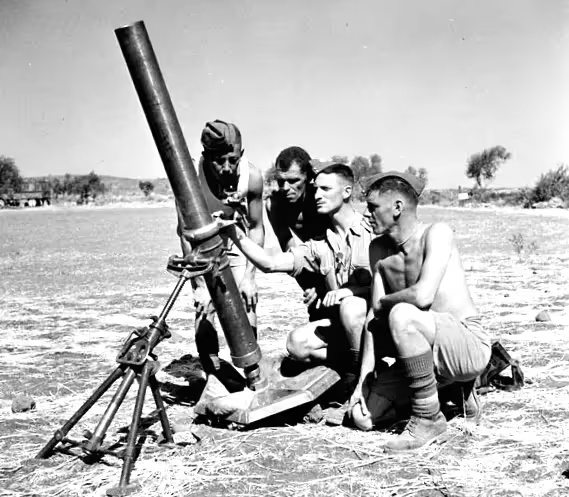
(Library and Archives Canada Photo, MIKAN No. 3516223)
Personnel of the Saskatoon Light Infantry (MG) with a 4.2-inch mortar, Militello, Italy, 22 August 1943.
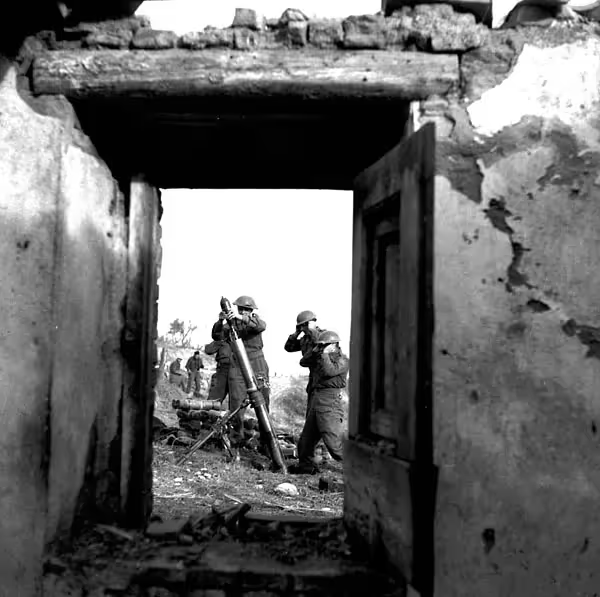
(Library and Archives Canada Photo, MIKAN No. 3394487)
Personnel of the Saskatoon Light Infantry firing a 4.2-inch mortar, near Ortona, Italy, 5 January 1944.
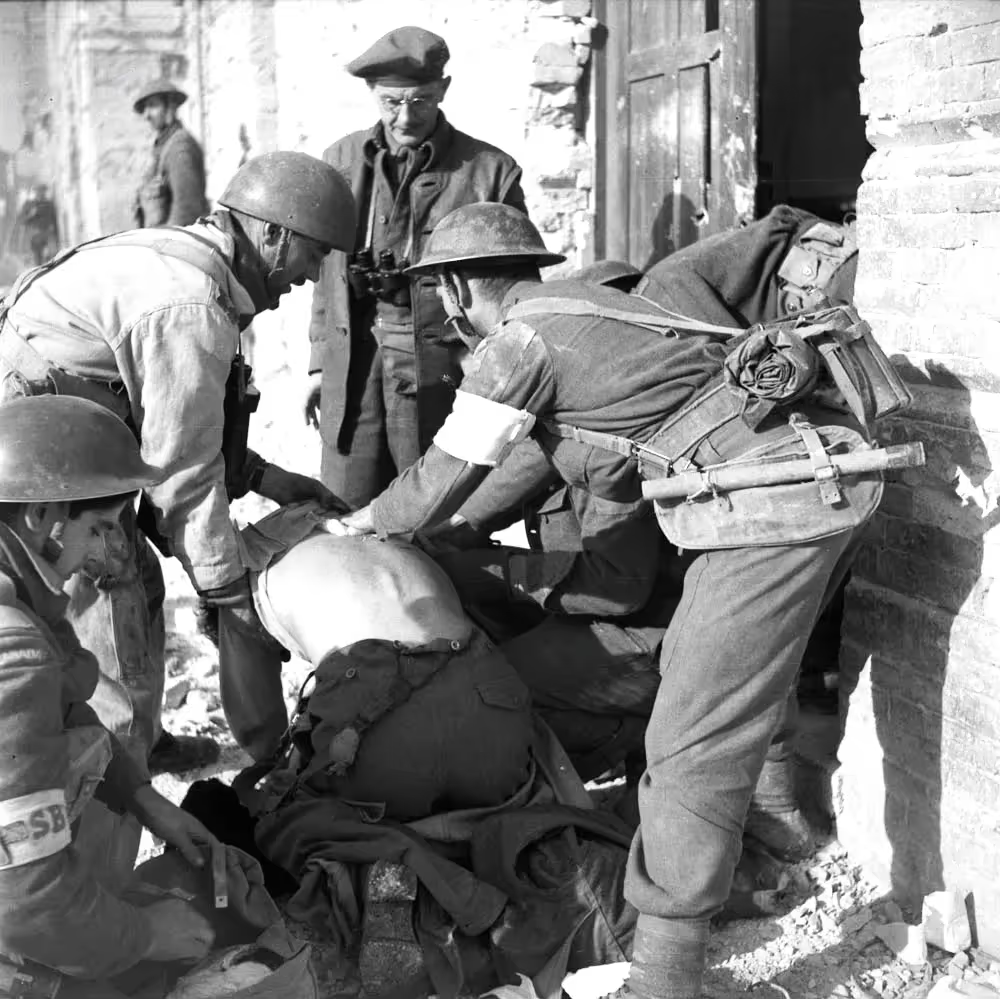
(Library and Archives Canada Photo, MIKAN No. 4542728)
Treating a wounded Canadian soldier in Ortona, Italy.
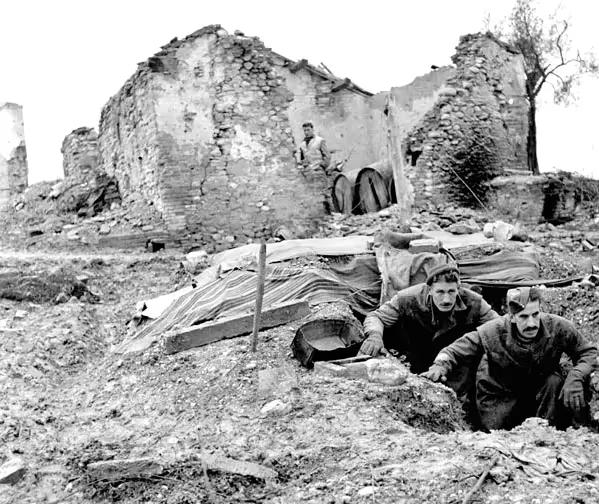
(Library and Archives Canada Photo, MIKAN No. 3534479)
Sergeant F.V. MacDougal and Sergeant-Major J.H. Ferguson, 2nd Field Regiment, Royal Canadian Artillery (RCA), emerging from their dugout north of Ortona, Italy, 15 February 1944.
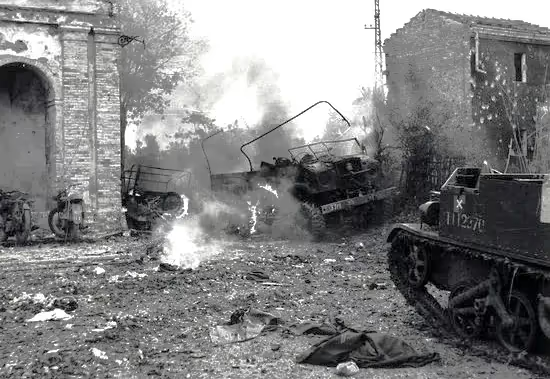
(Library and Archives Canada Photo, PA-170281)
Truck and jeep of the 1st Canadian Division burning after being mortared by German troops, RCA Universal Carrier to the right, Ortona, Dec 1943. The CFPU team didn’t move very far – it wasn’t very safe to just wander about. You can see the progression of photographs in the negatives. This was the effect of German mortars that stuck at 10:30 AM on 22 December. The Seaforths had just made S.M. di Constantinopli their Battalion HQ. The poor church lost all of its neoclassical facade. (Benjamin Moogk)
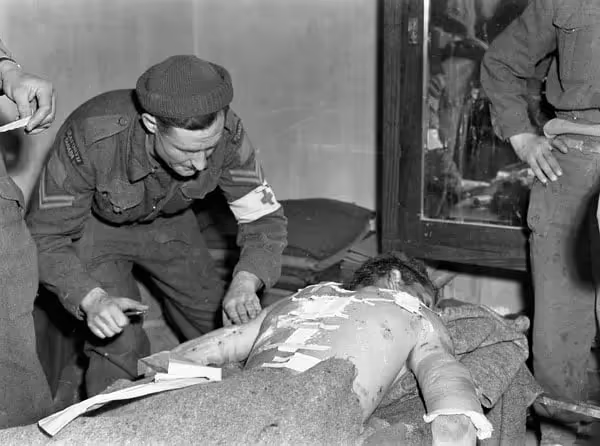
(Library and Archives Canada Photo, MIKAN No. 3534478)
Corporal Quinton Carsell of the Regimental Aid Post (RAP), Seaforth Highlanders of Canada, administering first aid to Lieutenant J.N. Hobbs, American Field Service, north of Ortona, Italy, 29 January 1944.
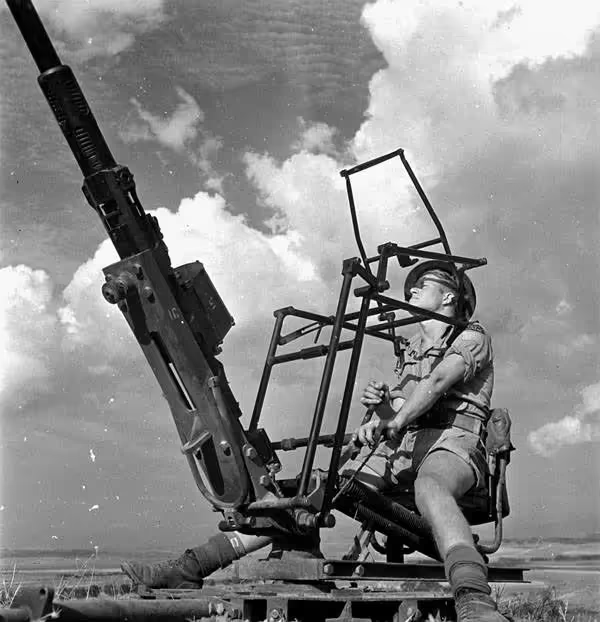
(Library and Archives Canada Photo, MIKAN No. 3516225)
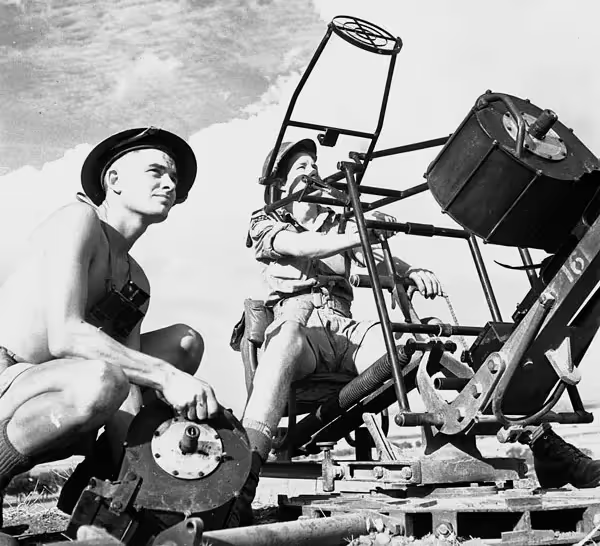
Private Everett Dewar, Saskatoon Light Infantry (M.G.) attached to the West Nova Scotia Regiment, manning an Oerlikon 20mm. anti-aircraft gun, Spinazzola, Italy, 1 October 1943.
(Library and Archives Canada Photo, MIKAN No. 3520404)
Privates Roger Widdifield (left), West Nova Scotia Regiment, and Everett Dewar, Saskatoon Light Infantry (M.G.) attached to the West Nova Scotia Regiment, manning an Oerlikon 20-mm. anti-aircraft gun, Spinazzola, Italy, 1 October 1943.
(Library and Archives Canada Photo, MIKAN No. 3512566)
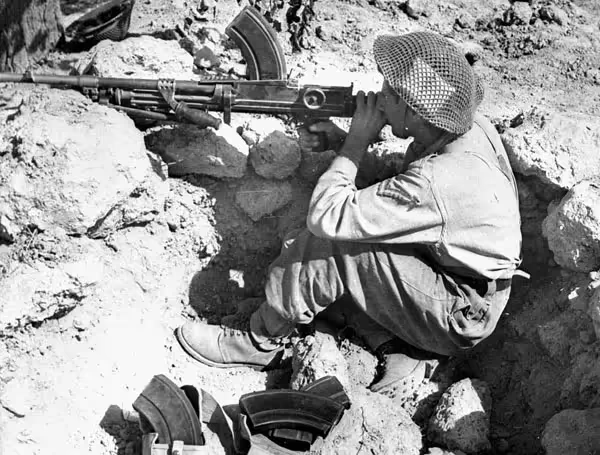
Lance-Corporal J.A. Weston, West Nova Scotia Regiment, aiming his Bren gun across the Foglia River during the advance on the Gothic Line near Montelabbate, Italy, ca. 30 August -1944.
(Library and Archives Canada Photo, MIKAN No. 3394528)
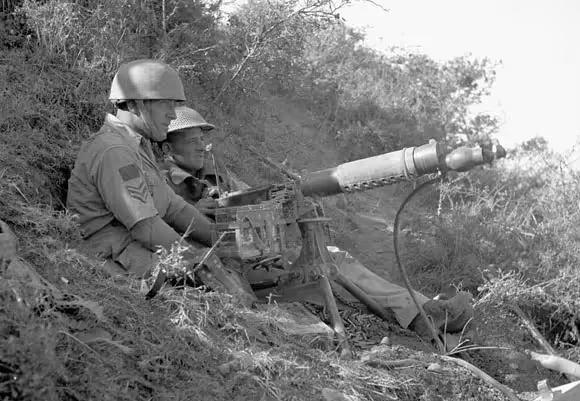
Machine gunners of The Saskatoon Light Infantry (MG), Potenza, Italy, 20 September 1943.
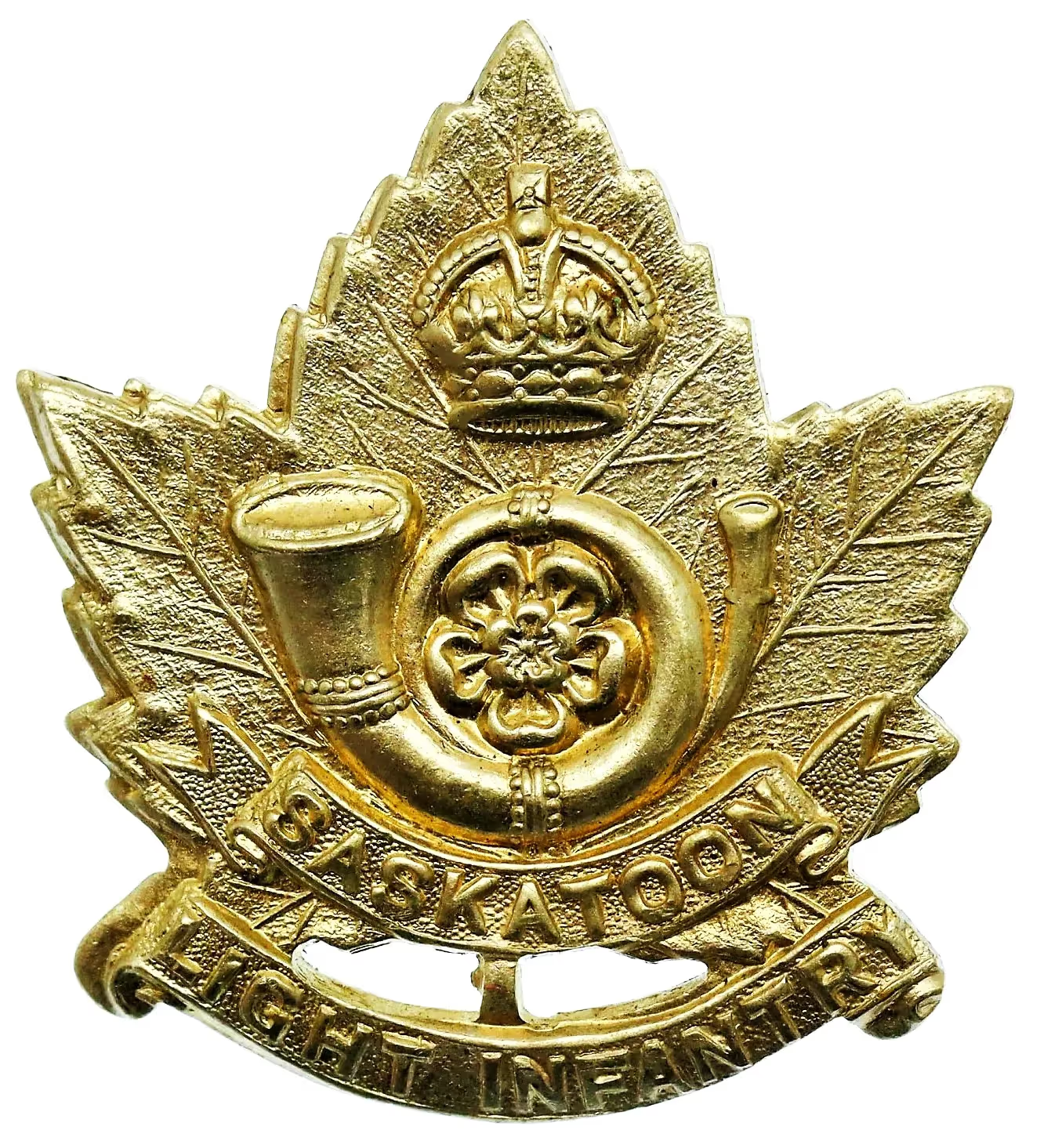
The Saskatoon Light Infantry (Machine Gun)
1st Infantry Brigade:
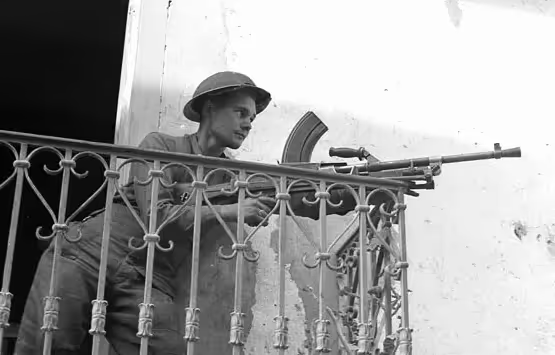
(Library and Archives Canada Photo, MIKAN No. 3396012)
Private L.G. Kenny armed with a Bren gun, Royal Canadian Regiment (RCR). Castropignano, Italy, 23 October 1943.
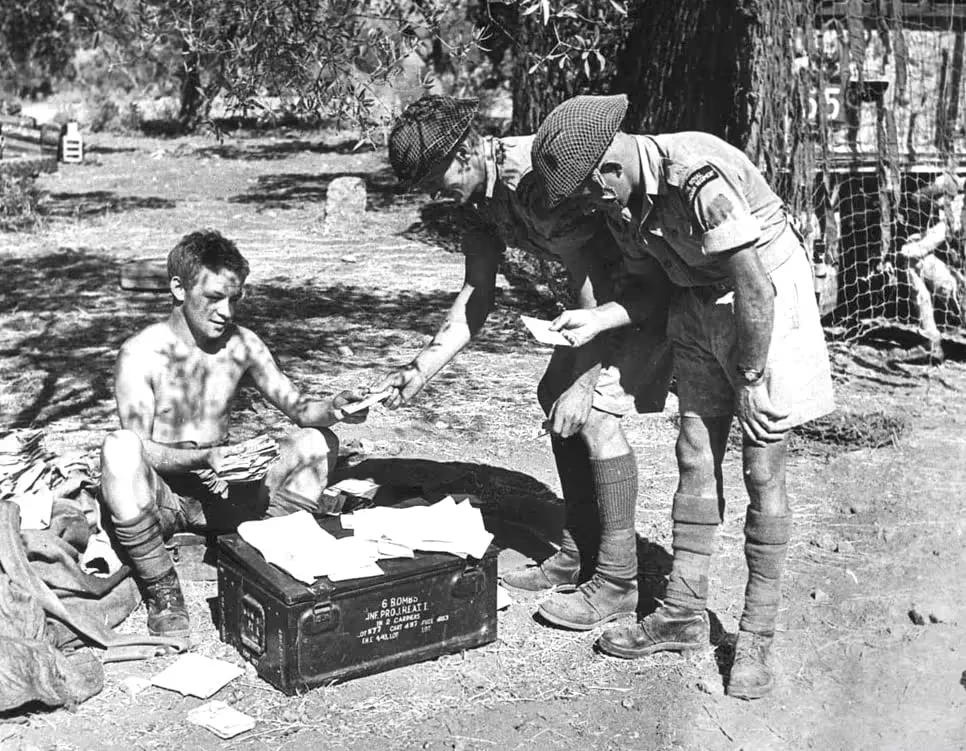
(Library and Archives Canada Photo, MIKAN No. 3396844)
Royal Canadian Regiment soldiers, mail call in Sicily, 1943.
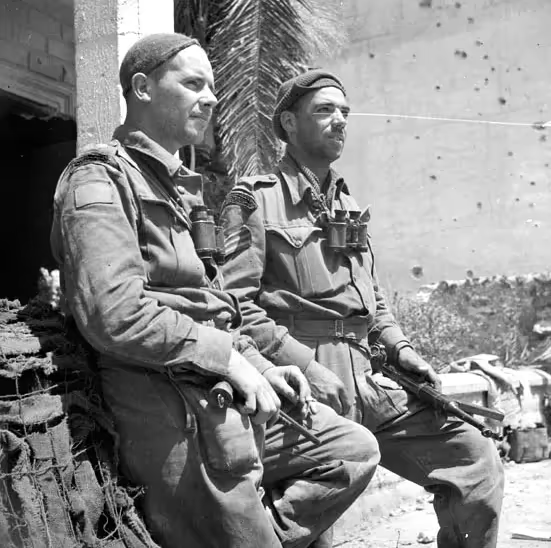
(Library and Archives Canada Photo, MIKAN No. 3202714)
Lieutenant W. Smith, a platoon commander holding his revolver, and Sergeant F.G. White, a platoon sergeant, holding a German MP40 SMG, both of The Royal Canadian Regiment, resting after the capture of Pontecorvo, Italy, 24 May 1944.
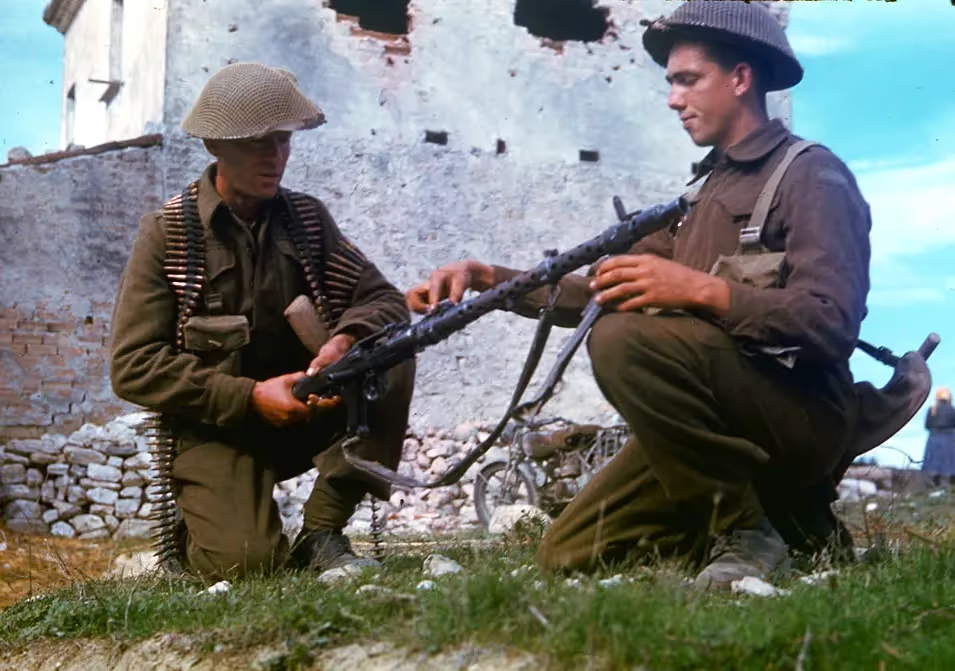
(Library and Archives Canada Photo, MIKAN No. 4232837)
Canadian soldiers inspect a captured German MG34 machine gun near Cesena, Italy.
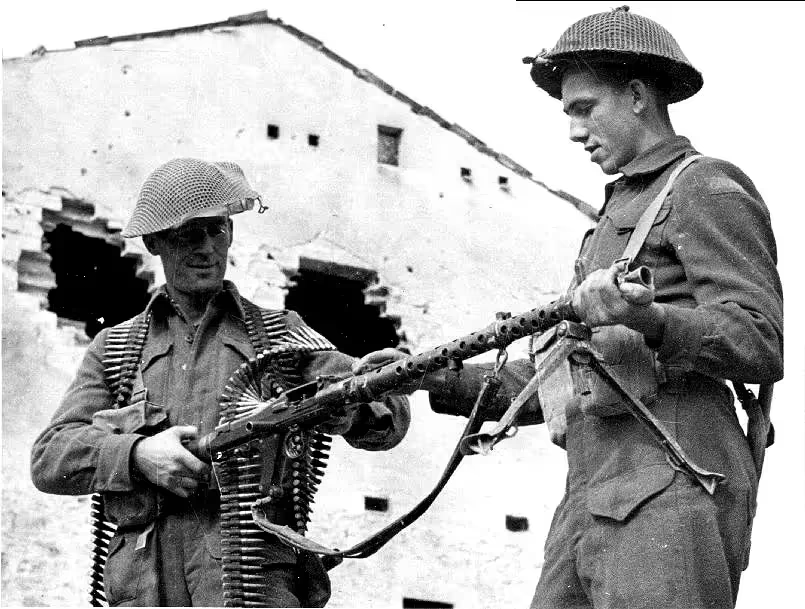
(Library and Archives Canada Photo, MIKAN No.)
Canadian soldiers inspect a captured German MG34 machine gun near Cesena, Italy.
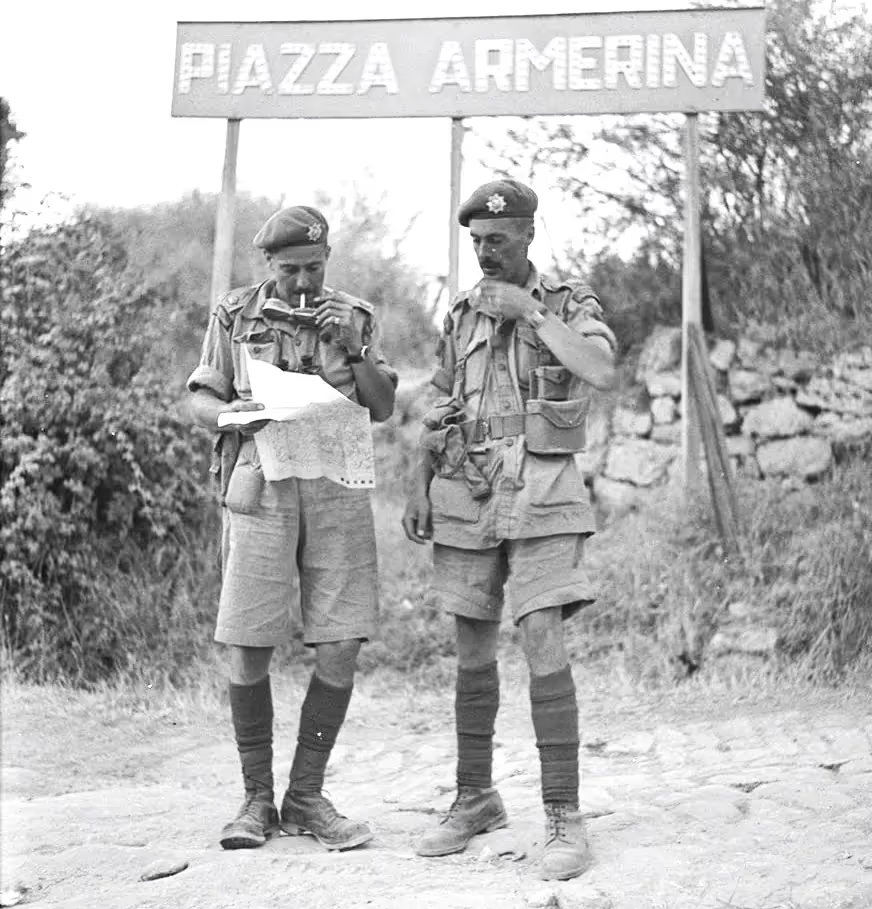
(Library and Archives Canada Photo, MIKAN No. 3203272)
Major J.H.W.T. Pope and Lieutenant-Colonel R.M. Crowe of the Royal Canadian Regiment checking their maps in Italy, 17 July 1943. One day later Billy Pope was killed in action near Valguarnera and Ralph Crowe on 24 July near Nissoria, Sicily.
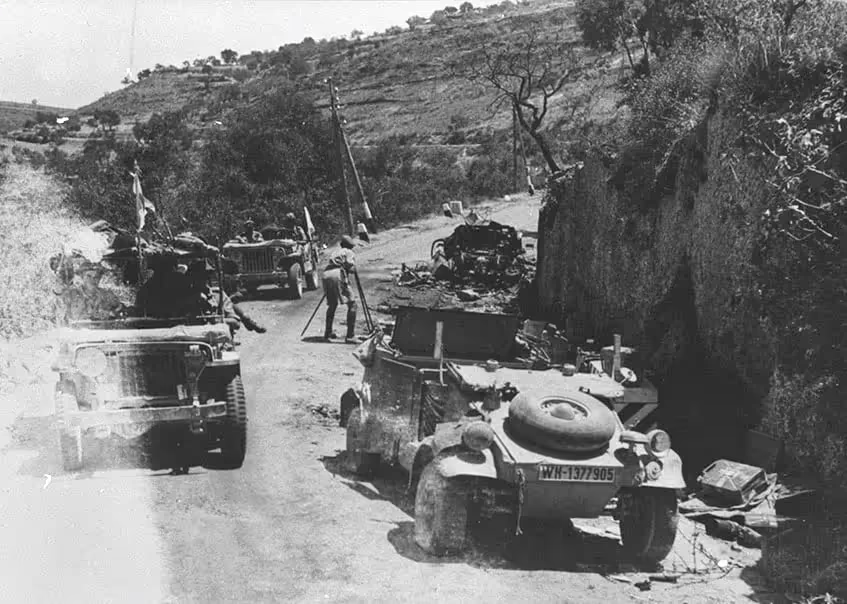
(Library and Archives Canada Photo, MIKAN No. 3524568)
Allied jeeps passing burnt-out German vehicles between Nissoria and Agira, Sicily, July 1943.
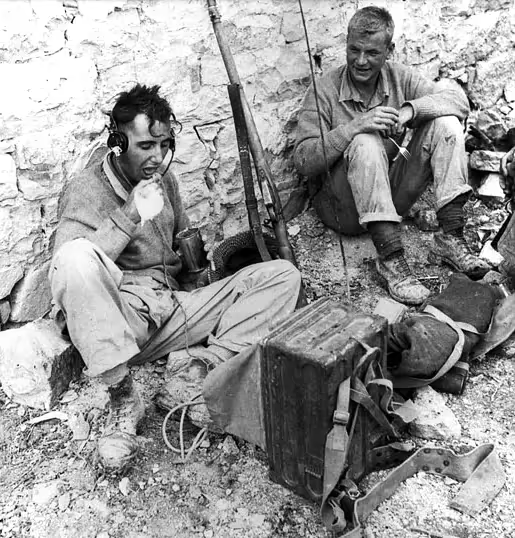
(Library and Archives Canada Photo, MIKAN No. 3397524)
Private W.G. Turner, Royal Canadian Regiment, having a meal beside a British No. 18 Wireless radio set, Motta, Italy, 2 October 1943.
(Stuart Phillips Photo)
The Royal Canadian Regiment (RCR)
(Library and Archives Canada Photo, MIKAN No. 3395998)
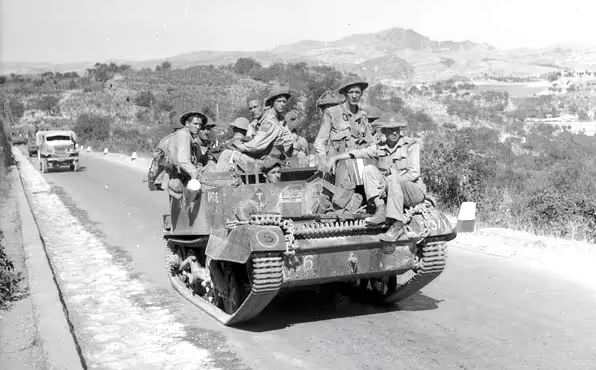
Infantrymen of The Hastings and Prince Edward Regiment in a Universal Carrier “Katie“, used as their secition support vehicle, advancing on Nissoria, Italy, July 1943.
(Library and Archives Canada Photo, MIKAN No. 3193153)
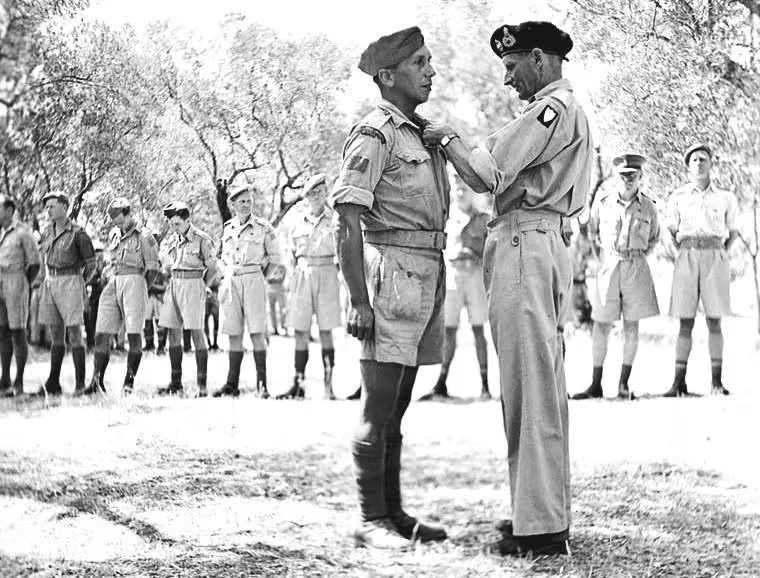
LGen Sir Bernard Montgomery investing Corporal H.E. Brant of the Hastings and Prince Edward Regiment with the Military Medal. Catanzaro, Italy. Sadly he was killed in October 14, 1944. Buried at the Cesena war cemetery. He was 34 years old. He received his MM for bravery at Grammichele in Sicily. “In the battle for Grammichele on the 14 July 1943 Pte H.E. Brant distinguished himself by his prompt and courageous attack with his Bren gun on an enemy force of approximately 30 men, inflicting severe casualties. Pte H.E. Brent totally disregarded his own personal safety in the face of very heavy enemy fire and made possible the killing, or capturing of the entire enemy force.” (Brett Stringfellow)
(Library and Archives Canada Photo, MIKAN No. 229941)
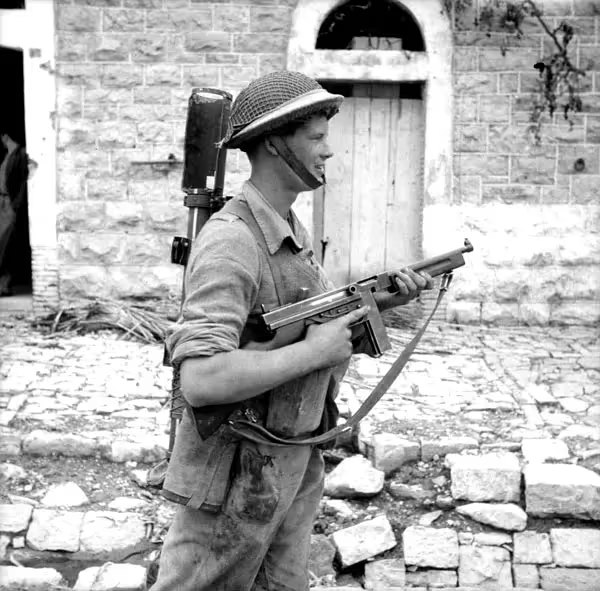
Corporal E.H. Pruner of The Hastings and Prince Edward Regiment, who carries both a projector infantry anti-tank (PIAT) weapon and a Thompson sub-machine gun, Motta, Italy, 2 October 1943.
(Library and Archives Canada Photo, MIKAN No. 3525793)
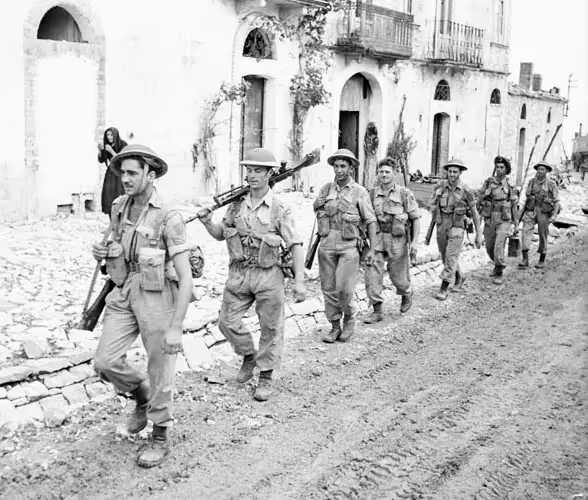
Infantrymen of the Hastings and Prince Edward Regiment advancing through Motta, Italy, 2 October 1943.
(Library and Archives Canada Photo, MIKAN No. 3525792)
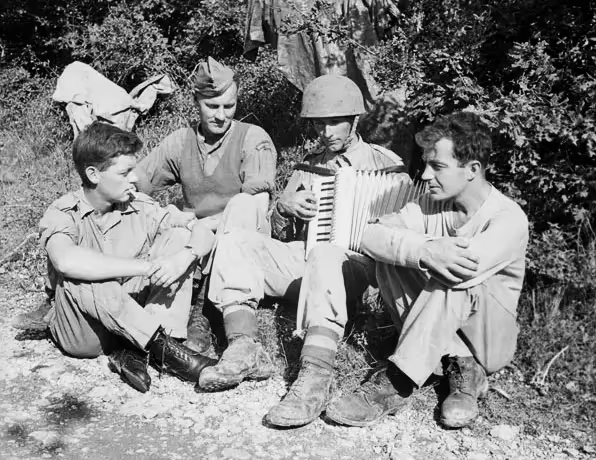
Private A.R. Beaton of the Saskatoon Light Infantry (M.G.) plays his accordion for infantrymen of The Hastings and Prince Edward Regiment at Motta on 3 October 1943. From left to right are Lieutenant Farley Mowat, Private J. Dalton, Private A.R. Beaton, and Captain J.A. Baird.
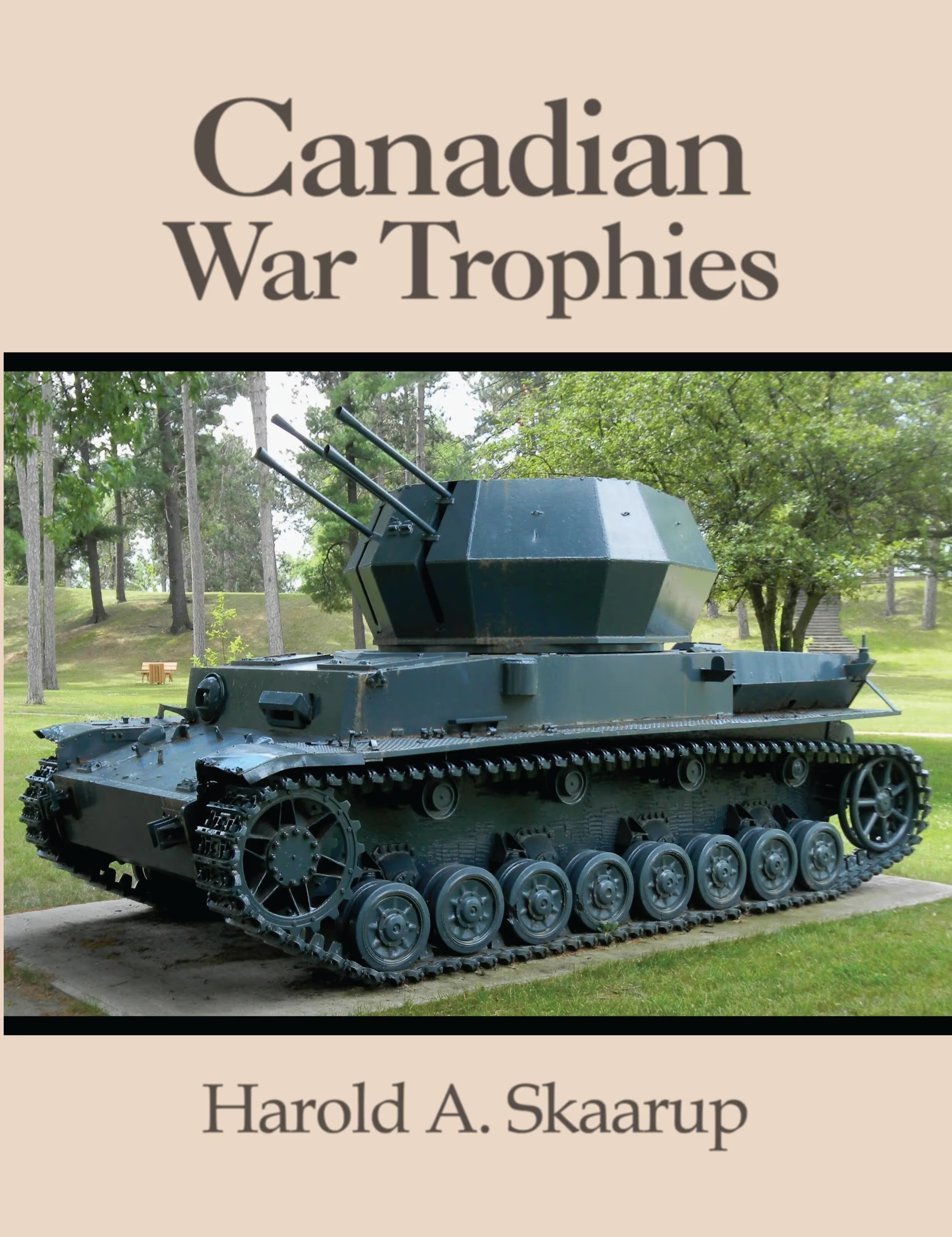
Mowat went on to great fame as an environmentalist and prolific author following the war, including writing a regimental history of The Hastings and Prince Edward Regiment as well as two memoirs of his war-time service. At the end of the war, he was tasked to find and send to Canada any and all German weapons and artifacts of Intelligence value. He came back with 700 tons of captured equipment, including a V-2 rocket. This author corresponded at length with Captain (Retired) Mowat, and sought to track down all the kit he brought back I succeeded in accounting for much of it, and put the findings together in a book, a copy of which he accepted with thanks, shortly before he passed away. https://www.silverhawkauthor.com/post/canadian-war-trophies-book.
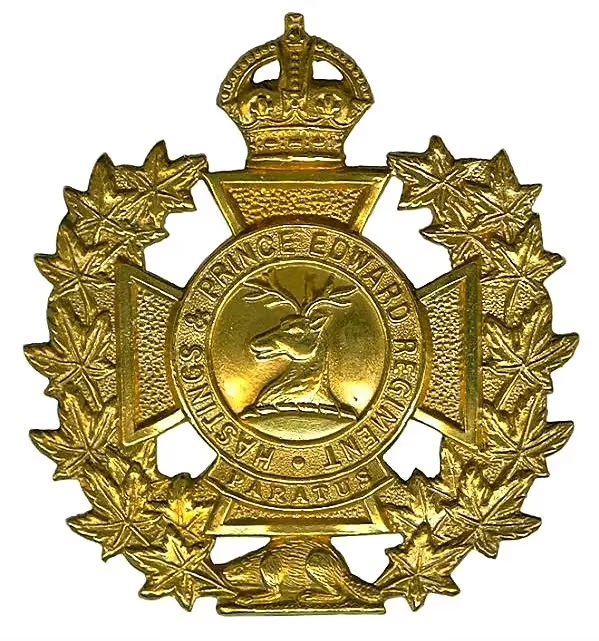
The Hastings and Prince Edward Regiment
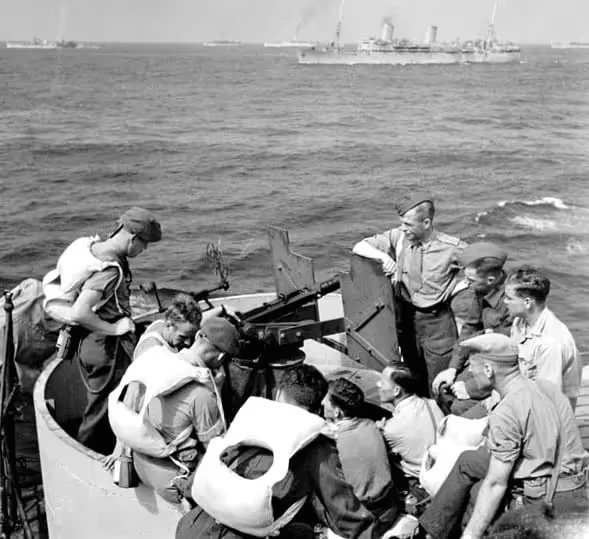
(Library and Archives Canada Photo, MIKAN No. 3560470)
Personnel of the 48th Highlanders of Canada receiving training about the Oerlikon 20-mm gun aboard the troopship HMT Nea Hellas en route to Philippeville, Algeria, 5 July 1943.
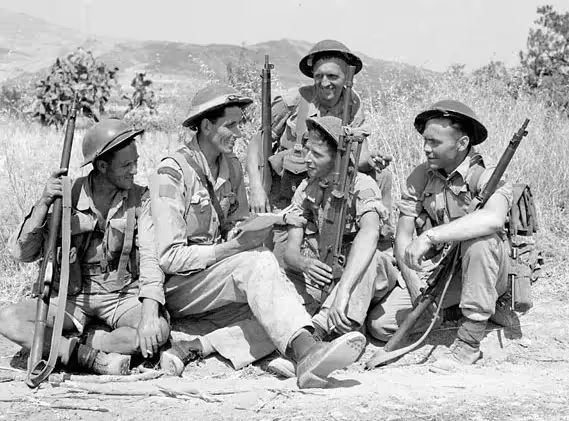
(Library and Archives Canada Photo, MIKAN No. 3259912)
H/Captain S.B. East, a chaplain, talking with soldiers of the 48th Highlanders of Canada near Regalbuto, Italy, July-August 1943.
Padre East was a living legend! Made sure all the bodies of the killed men were recovered or noted where they were buried and not only from the 48th, but all the regiments. Even when he was wounded on the Italian mainland he did his job looking for casualties. (Jimmy Jimbo)
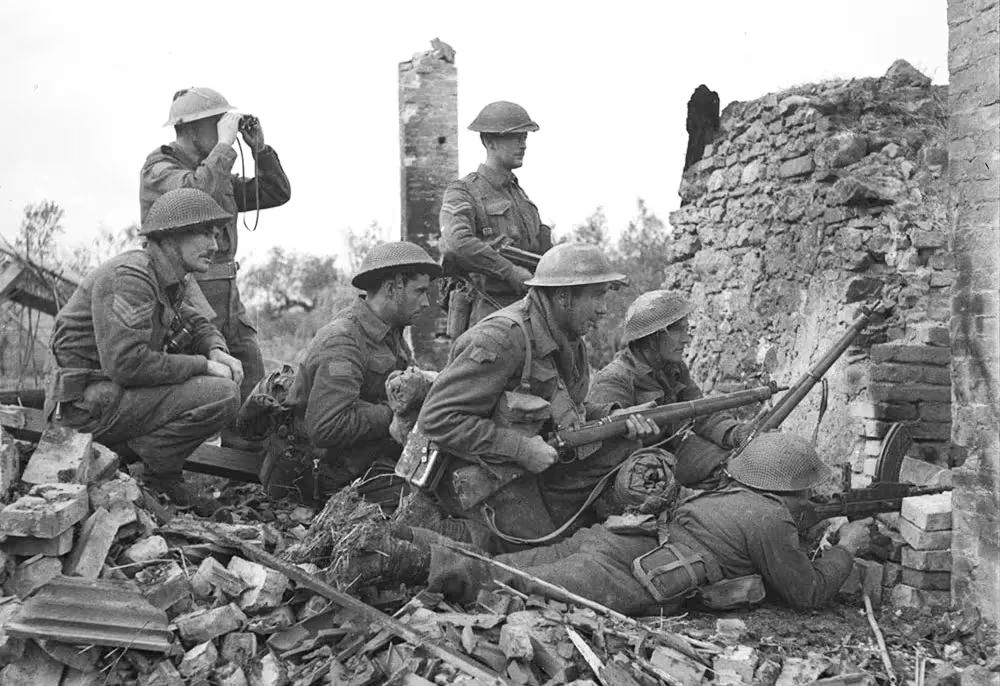
(Library and Archives Canada Photo, MIKAN No. 3199446)
1st Canadian Division in action. Platoon Commander Lt. I. Macdonald with binoculars preparing to give attack order. L. to R.: Sgt. J.T. Looney, Ptes. A.R. Downie, O.E. Bernier, G.R. Young, Cpl. T. Fereday and Pte S.L. Hart of the 48th Highlanders, Ortona, Italy, 10 December 1943.
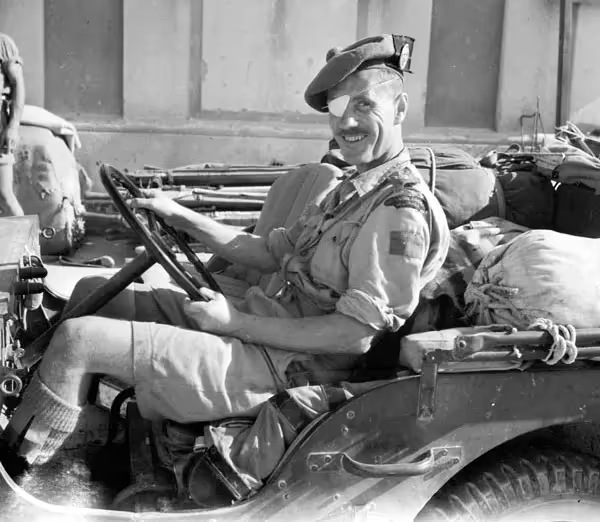
(Library and Archives Canada Photo, MIKAN No. 3206361)
Captain Ted Cameron, Officer Commanding the Anti-Tank Platoon, The 48th Highlanders of Canada, near Adrano, Italy, 6 August 1943.
(Library and Archives Canada Photo, MIKAN No. 3356567)
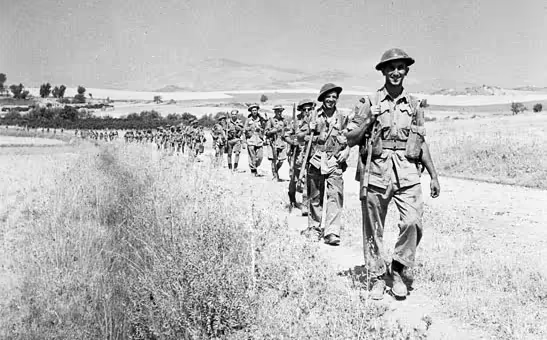
Infantrymen of the 48th Highlanders of Canada advancing towards Adrano, Italy, 18 August 1943.
(Library and Archives Canada Photo, MIKAN No. 3214233)
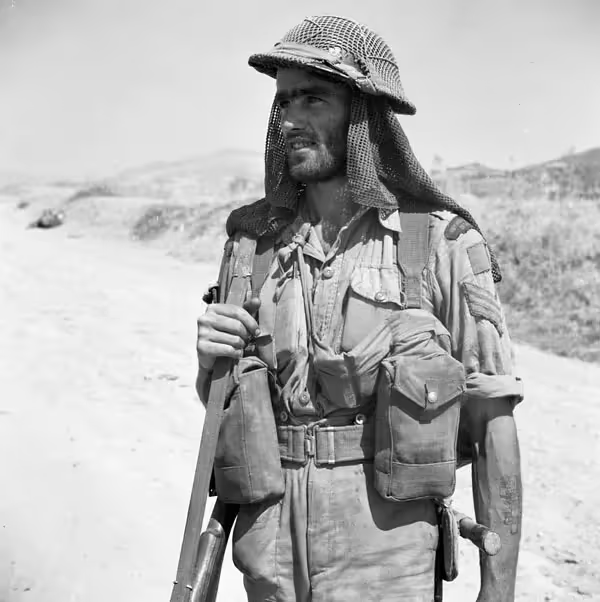
Sgt H.E. Cooper, 48th Highlanders of Canada, Sicily, 11 August 1943.
(Library and Archives Canada Photo, MIKAN No. 3225482)
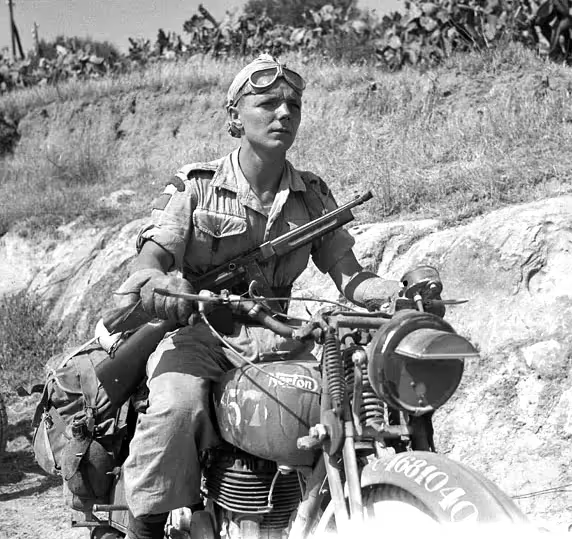
Despatch rider Private H. McDowell of The 48th Highlanders of Canada delivering a message to the battalion’s advanced headquarters, Regalbuto, Italy, 4 August 1943.
Library and Archives Canada Photo, MIKAN No. 3516222)
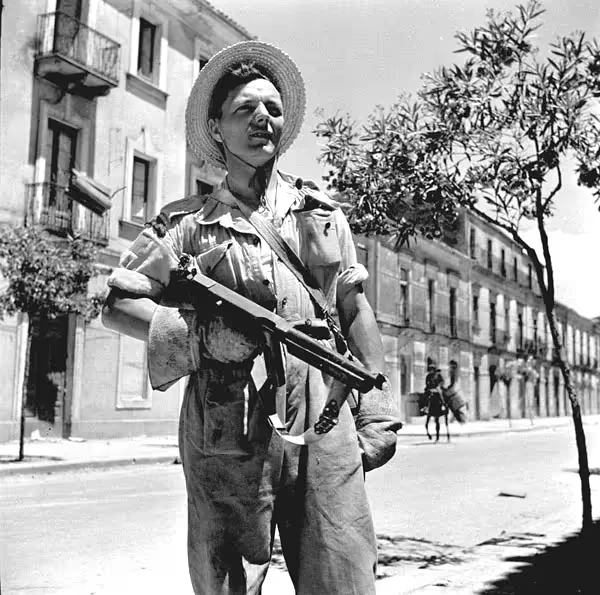
Private Harry H. McDowell, Despatch rider with the 48th Highlanders of Canada, Caltagirone, Sicily, Italy, ca. 2-3 August 1943.
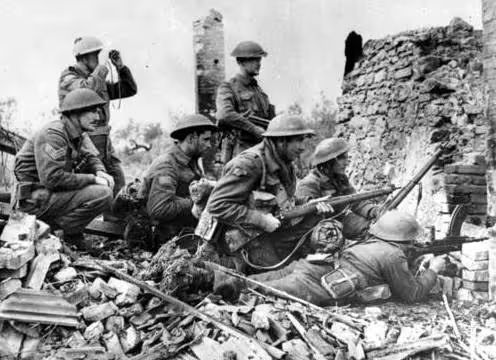
(DND Photo)
Members of Canada’s 48th Highlanders prepare to attack in the vicinity of San Leonardo di Ortona: Lieutenant I. Macdonald (with binoculars) and (L-R) J.T. Cooney, A.R. Downie, O.E. Bernier, G.R. Young, T. Fereday, and S.I. Hart. The Battle of Ortona (December 20 – 28, 1943) was a small, yet extremely fierce, battle fought between a battalion of German paratroops from the German 1st Parachute Division and assaulting Canadian forces from the Canadian 1st Infantry Division. It was the culmination of the fighting on the Adriatic front in Italy during “Bloody December”. The battle, dubbed “Little Stalingrad” for the deadliness of its close-quarters combat, took place in the small Adriatic Sea town of Ortona, with its peacetime population of 10,000.
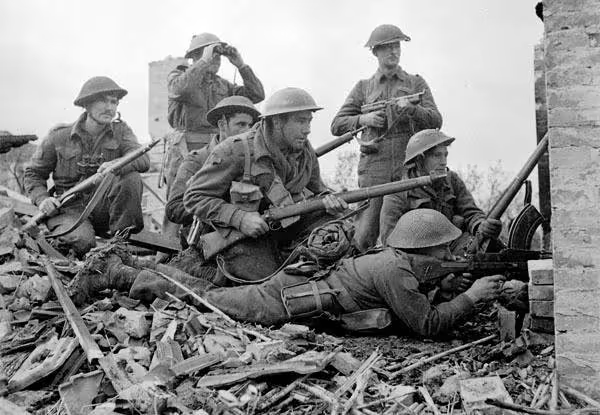
( Library and Archives Canada Photo, MIKAN No. 3226036)
Another view of this group: Lieutenant I. Macdonald (with binoculars) of The 48th Highlanders of Canada preparing to give the order to attack to infantrymen of his platoon, San Leonardo di Ortona, Italy, 10 December 1943.
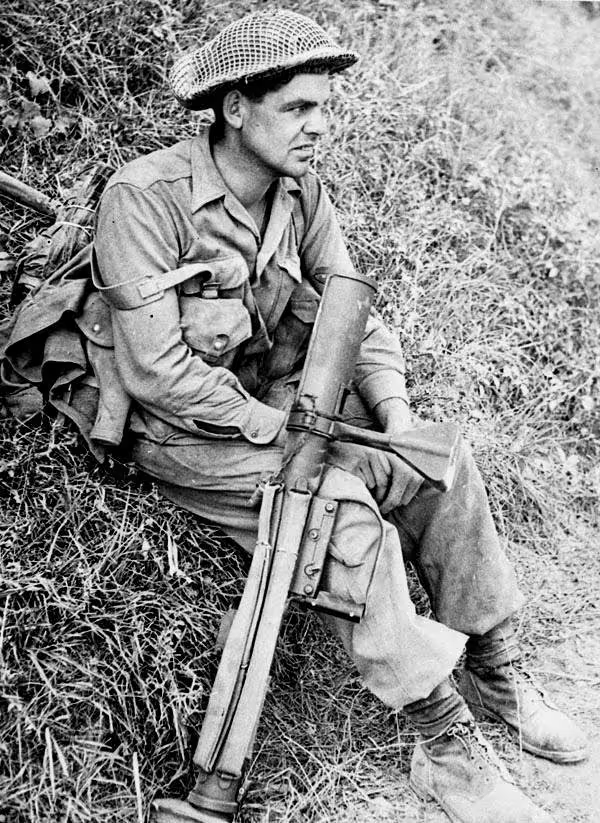
(Library and Archives Canada Photo, MIKAN No. 3520465)
Private Stanley Rodgers of the 48th Highlanders of Canada, holding a projector infantry anti-tank (PIAT) weapon, resting north of the Conca River en route to Rimini, Italy, September 1944.
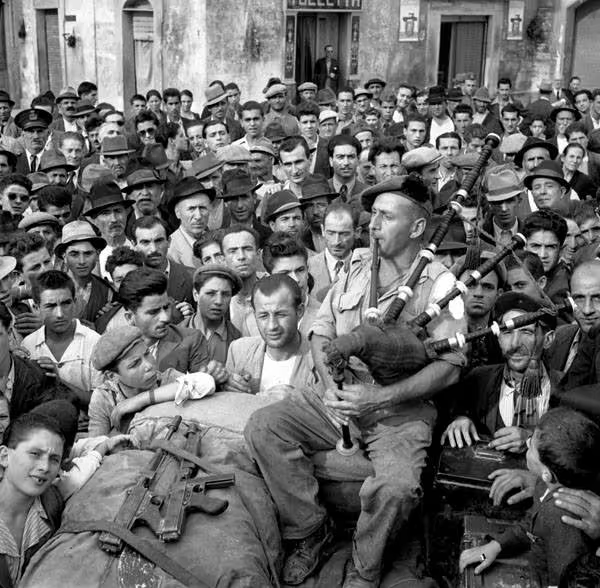
(Library and Archives Canada Photo, MIKAN No. 3591199)
Piper Roderick Grant, 48th Highlanders of Canada, piping for liberated civilians, Matera, Italy, 24 Sep 1943.
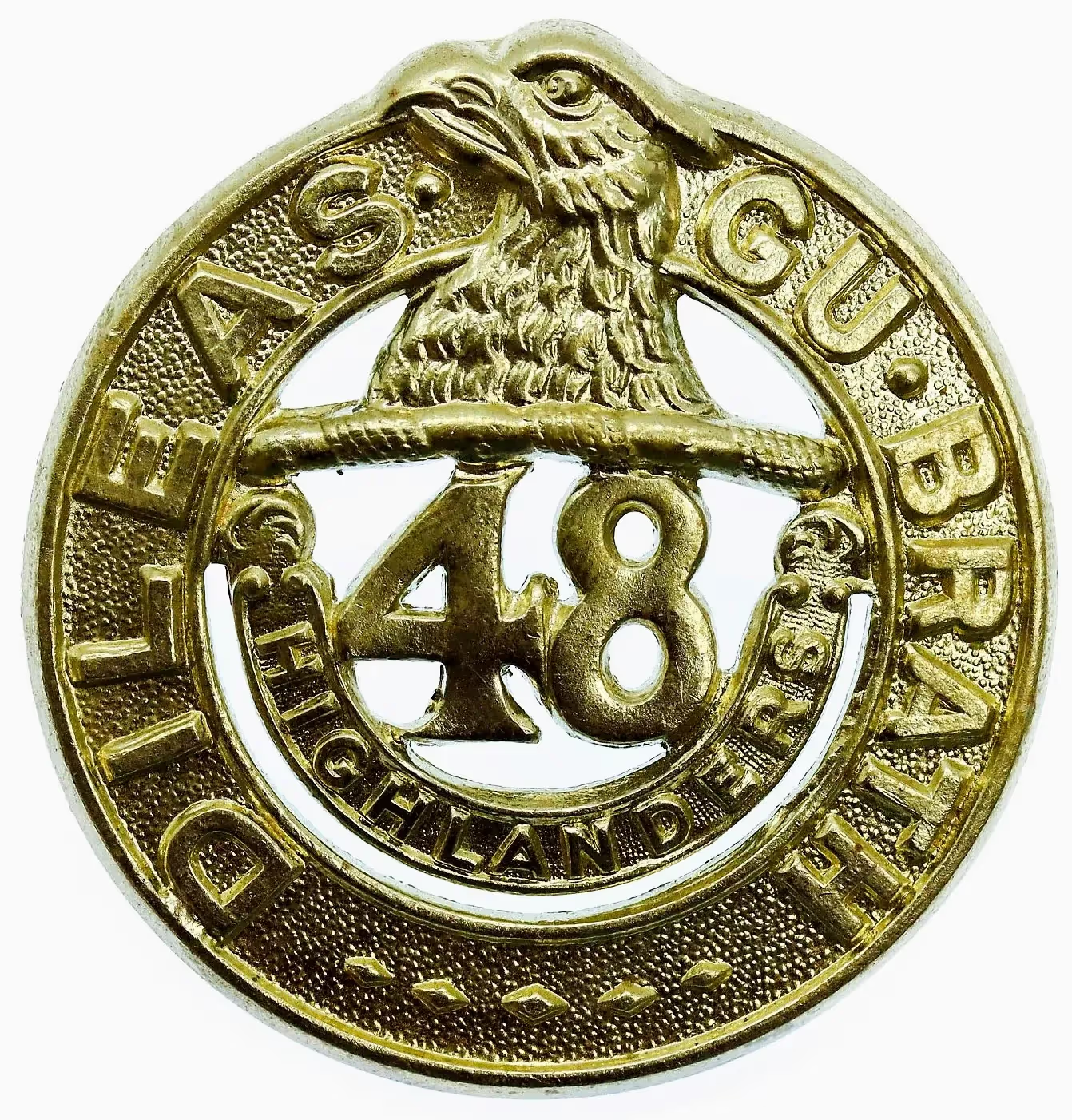
48th Highlanders of Canada
2nd Infantry Brigade:
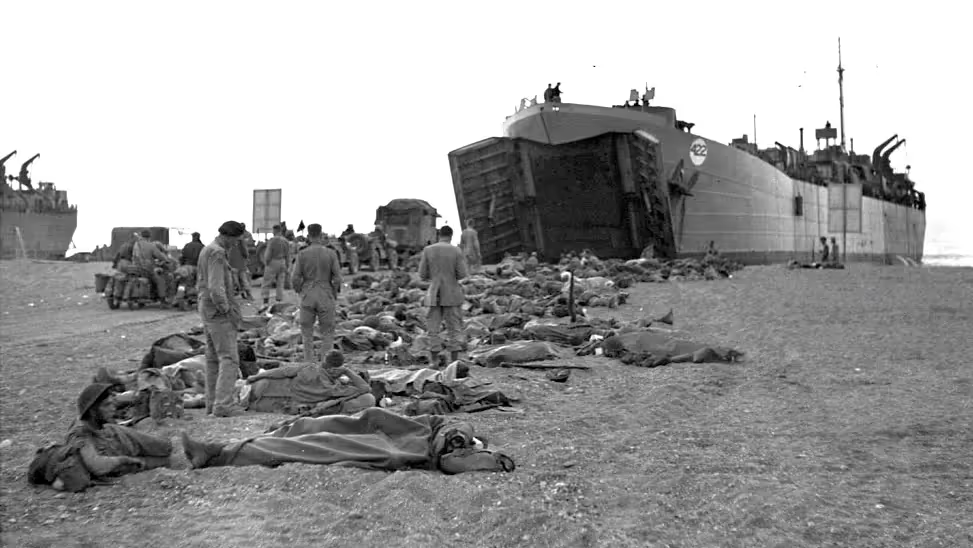
(Library and Archives Canada Photo, MIKAN No. 4002439)
Princess Patricia’s Canadian Light Infantry troops sleeping on beach at dawn with a landing ship tank (LST) in the background awaiting transport to Italy, 4 September 1943, near Santa Teresa. Santa Teresa di Riva is a small town and commune in the Metropolitan City of Messina, Sicily, southern Italy, located about 15 kilometres from Taormina.
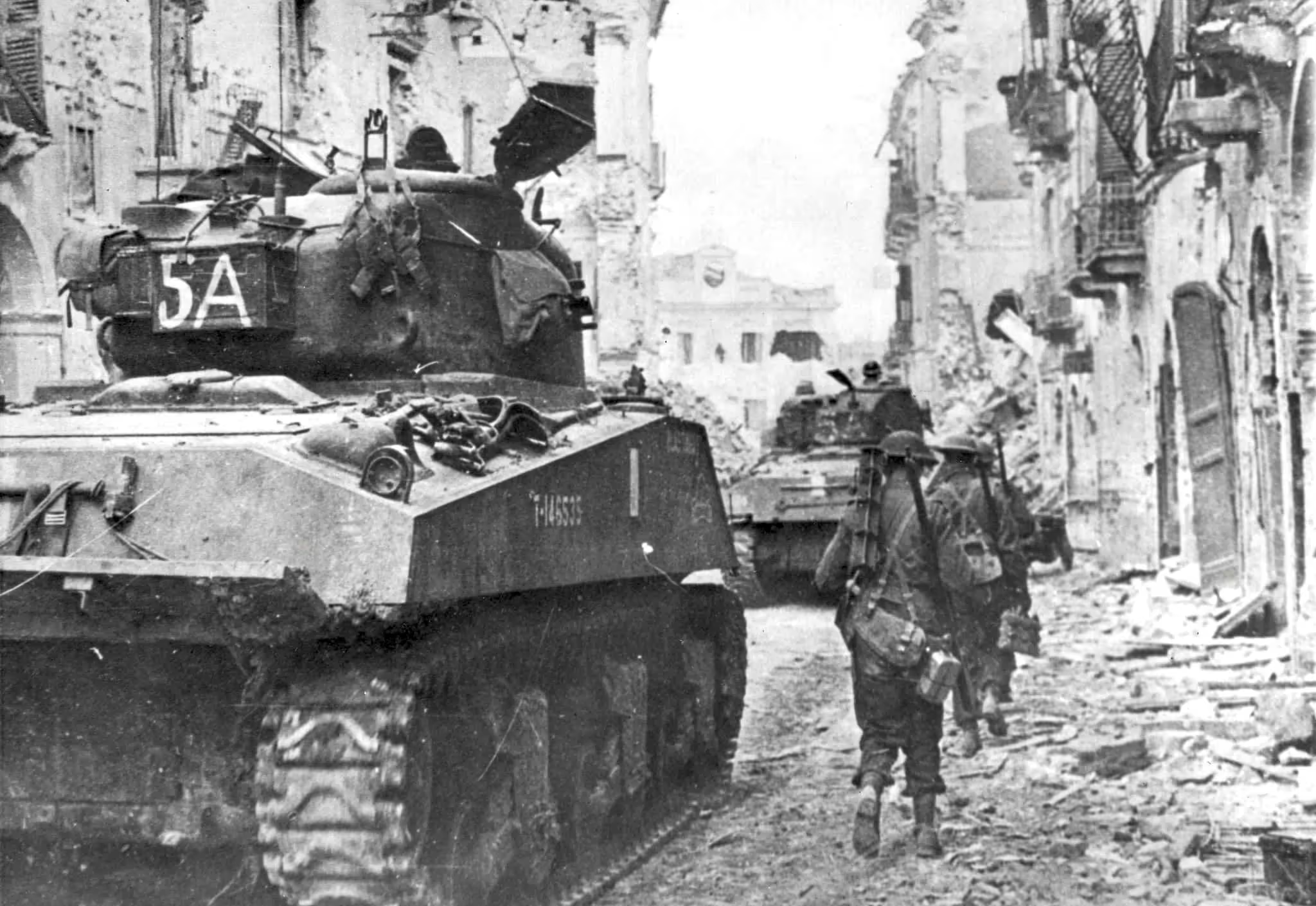
(IWM Photo, NA10371)
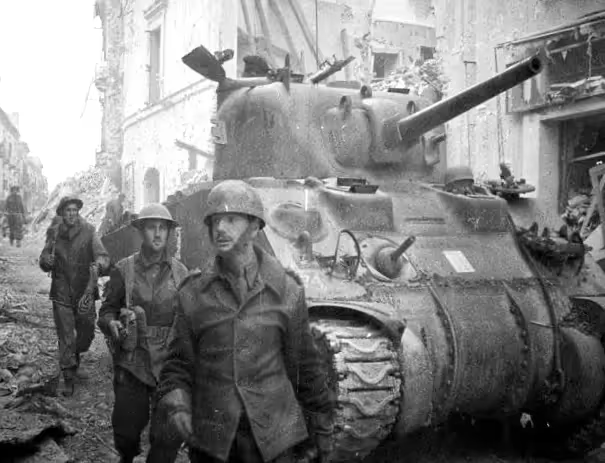
Canadian soldiers accompanied by Sherman tanks in Ortona, Dec 1943.
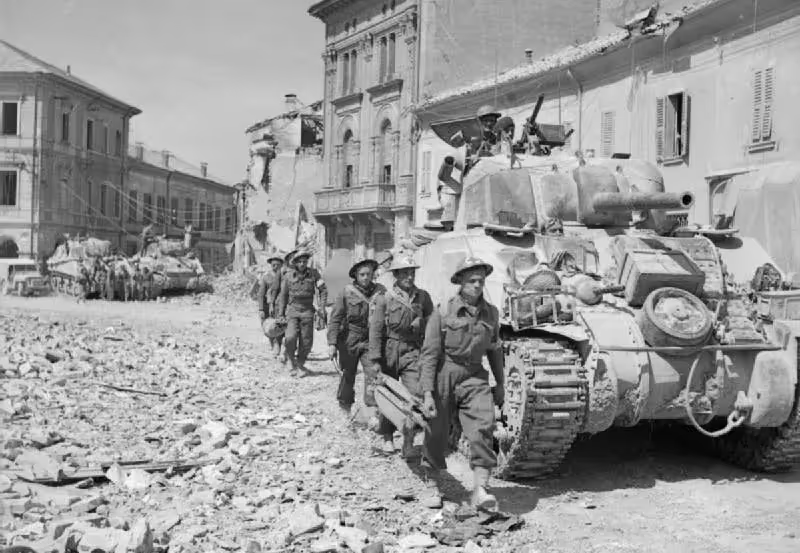
(IWM Photo)
British soldiers of the 78th Infantry Division passing a Sherman tank in Portomaggiore (Ferrara), Italy, on April 19, 1945. By this time the Canadians were no longer in Italy.
(DND Photo)
Canadian stretcher bearers walk past a Sherman tank in Ortona.
(Library and Archives Canada Photo, MIKAN No. 3396044)
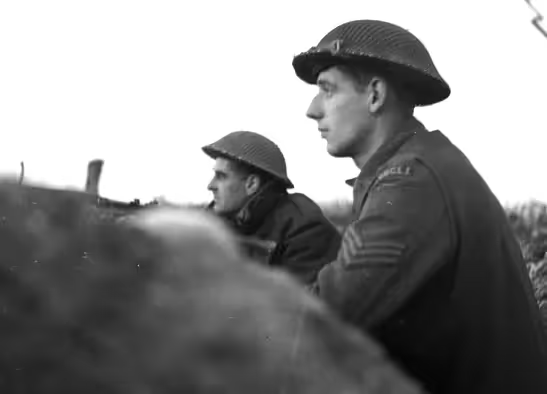
“A” Company, Princess Patricia’s Canadian Light Infantry (PPCLI), in action north of Ortona, Italy, 29 January 1944.
(Library and Archives Canada Photo, MIKAN No. 4002442)
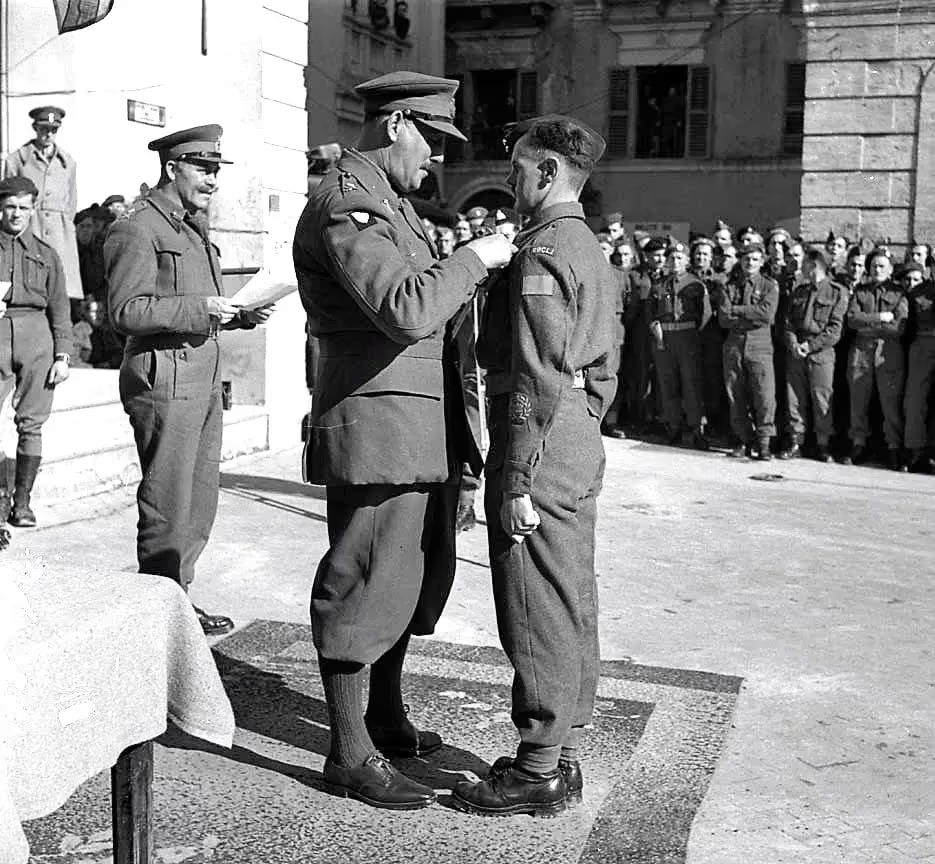
CSM WD Davidson, PPCLI being awarded the Military Medal (MM), by Sir Oliver Leese, Commander of the Eighth Army, 2 March 1944. General Chris Vokes is behind them, holding the award documents.
(Library and Archives Canada Photo, MIKAN No. 4002443)
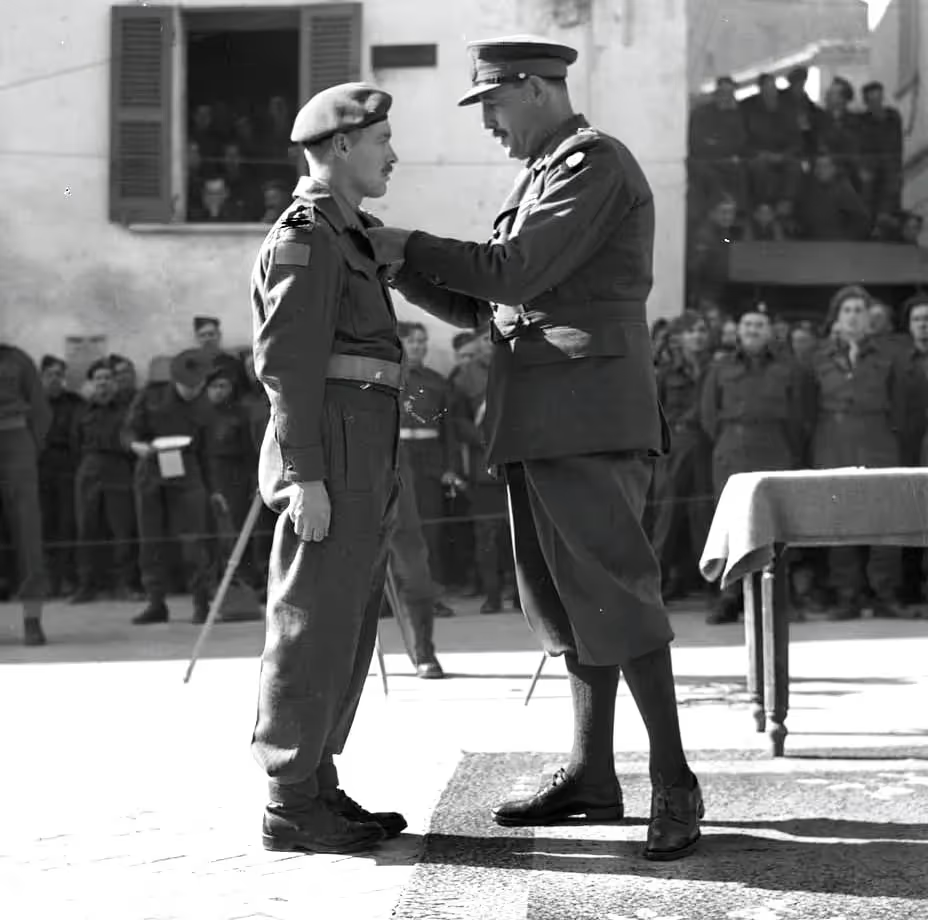
Lieutenant-Colonel Charles B, Ware, PPCLI, awarded the Distinguished Service Order (DSO), Italy, 4 March 1944.
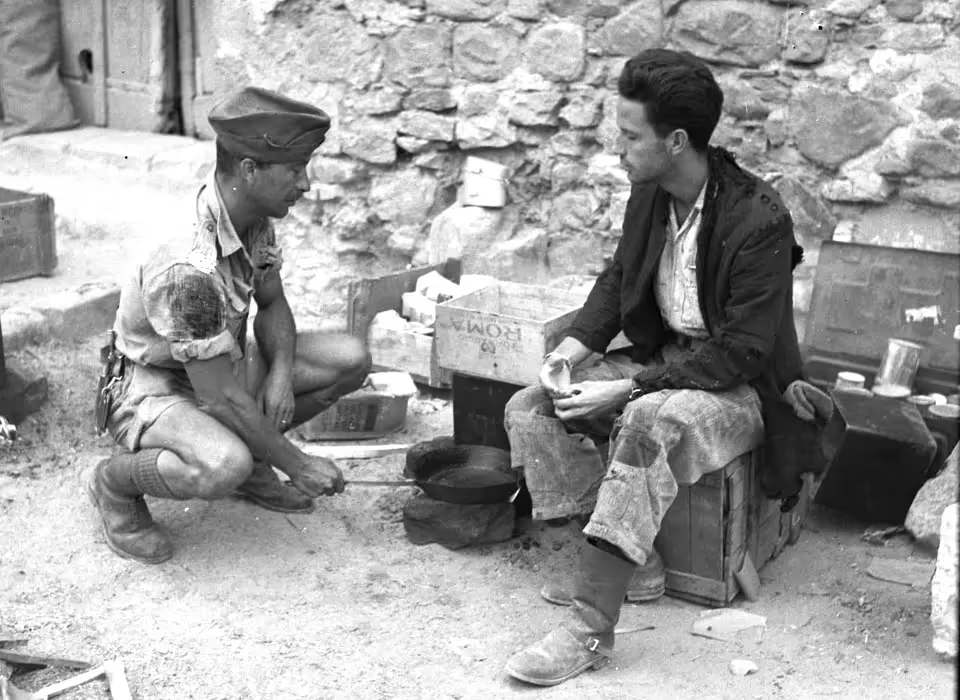
(Library and Archives Canada Photo, MIKAN No. 5053953)
Pte E.C. Erickson, PPCLI, cooks up food for 2Lt. Douglas A. Neilson, US Army Air Corps (USAAC), who had been shot down near Foggia, on 21 September 1943. Two Italian officers helped him back through German lines to the Canadians, 25 September 1943.
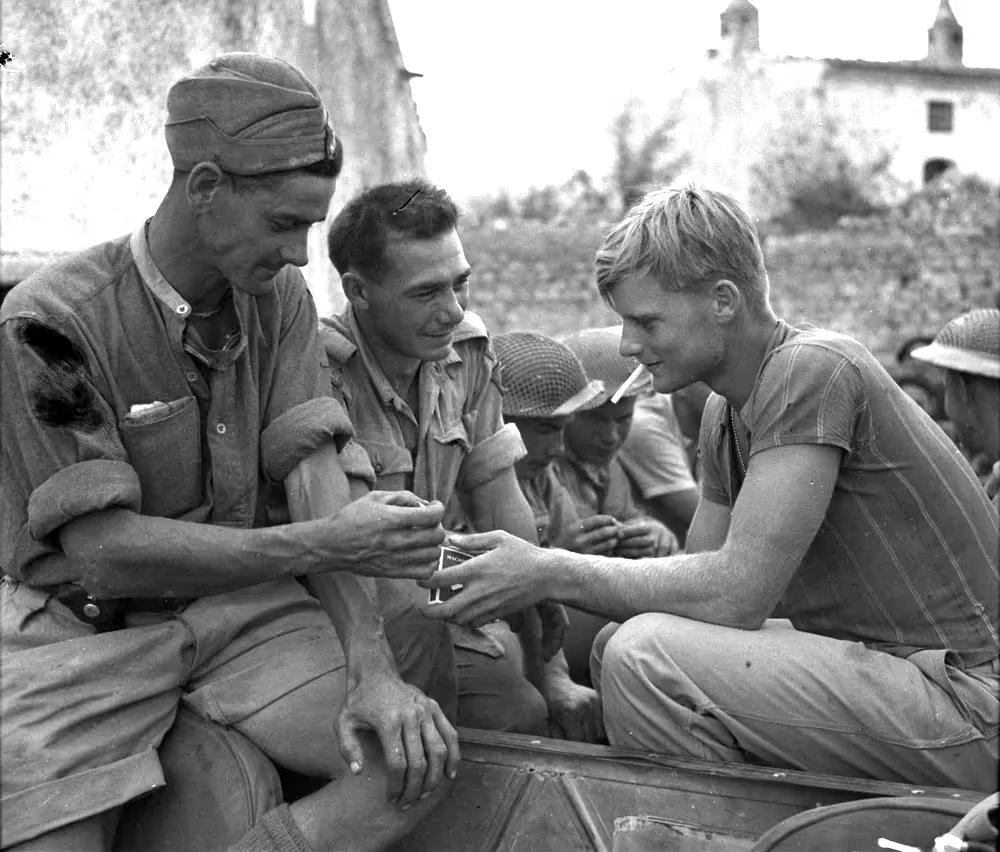
(Library and Archives Canada Photo, MIKAN No. 5053949)
Pte L. Gauthier, PPCLI, Pte. T.G.K. Mackie and Pte. R.L. Loy, U.S Army Air Corps (USAAC) en route back from front (photo taken in Atella). Loy had contacted Canadians in Atella after travelling to freedom for four days through German lines and being picked and then released by Italians, 25 Sep 1943.
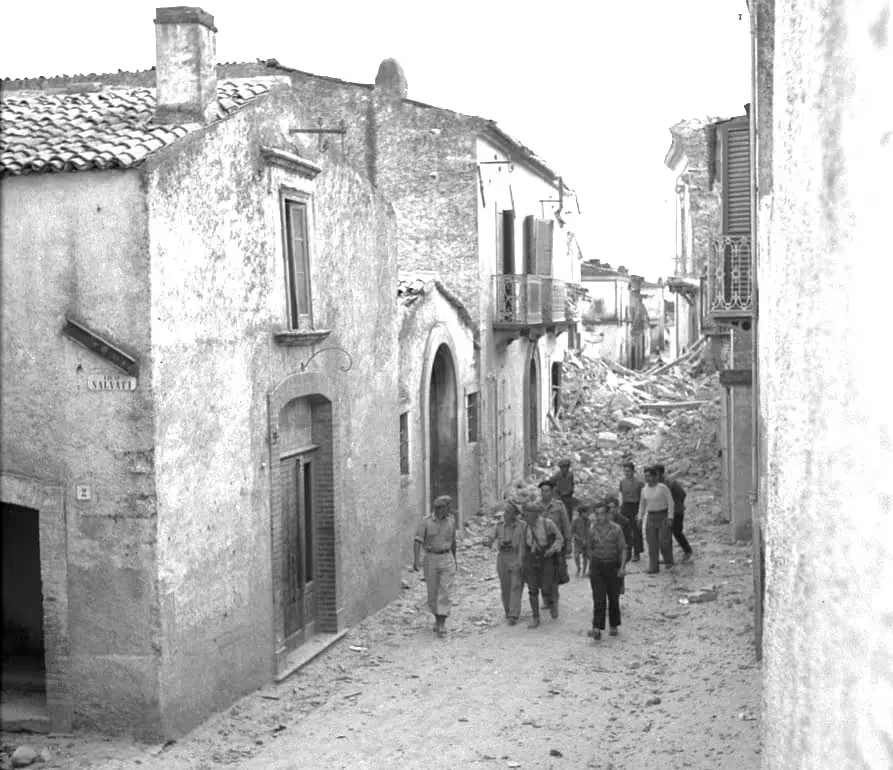
(Library and Archives Canada Photo, MIKAN No. 5053952)
Greg Clark and Ralph Allen with Italian Lieutenant E.A. Terasca in streets of Atella with German road block demolitions in background, 25 September 1943.
Gregoray Clark joined the editorial staff of the Toronto Star in 1911, where he worked for the next 36 years, interrupted only by military service in the First World War, from 1916 through 1918. He survived three years in the trenches, returning to Canada in 1918 as a major with the Canadian Mounted Rifles. He earned a Military Cross (MC) for conspicuous gallantry at Vimy Ridge. After the Armistice, Clark returned to his job as a newspaper reporter. Too old for active service, in theSecond World War , Greg Clark returned to the battlefield as a reporter. To his peers he was Dean of Canadian War Correspondents. Clark reported on the German Blitzkrieg from in 1940, on and from England, and on the Italian and North-West Europe campaigns from the Front. He was awarded the for his service as a war correspondent.
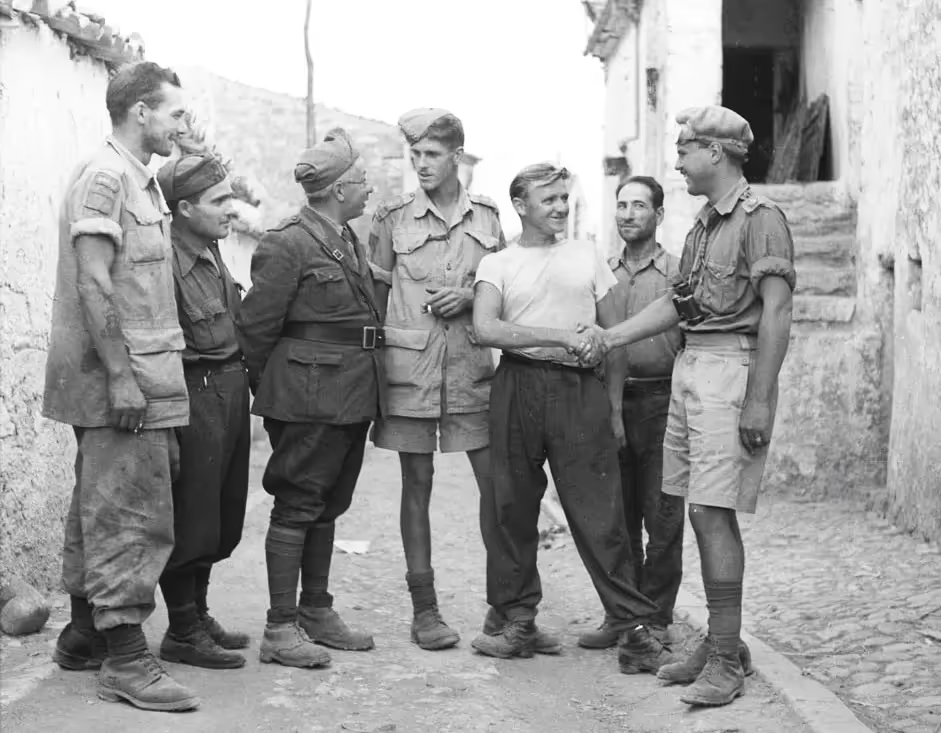
(Library and Archives Canada Photo, MIKAN No. 5010511)
Soon after the first Canadian patrol, Princess Patricia’s Canadian Light Infantry entered Atella after Germans driven out by Arty fire, a South African Gunner POW in Italy for 16 months, walked up to them. Pte. T.G.K. Mackie, Lieut. E.A. Tarasca, an Italian Lieut. Capt. J.E.Leach, Gunner J.M. Prins and Major deFaye, September 1943.
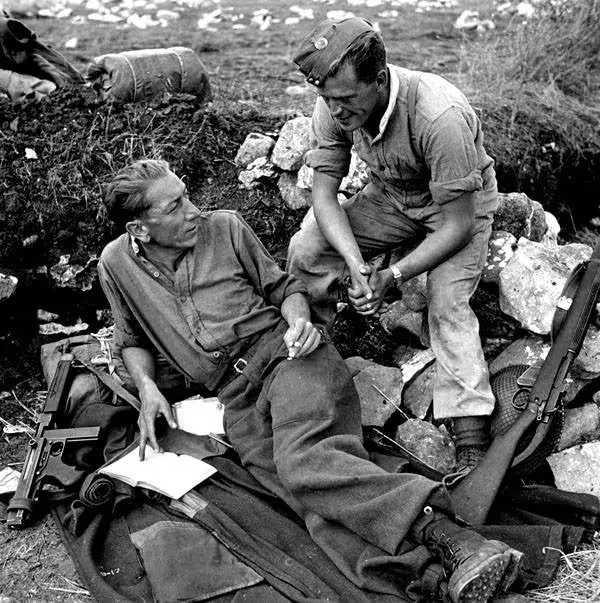
(Library and Archives Canada Photo, MIKAN No. 3227107)
Private Danny Dafoe and Lance-Corporal L.H. MacWilliam, both of Princess Patricia’s Canadian Light Infantry, in a slit trench, Spinete, Italy, ca. 22-23 October 1943.
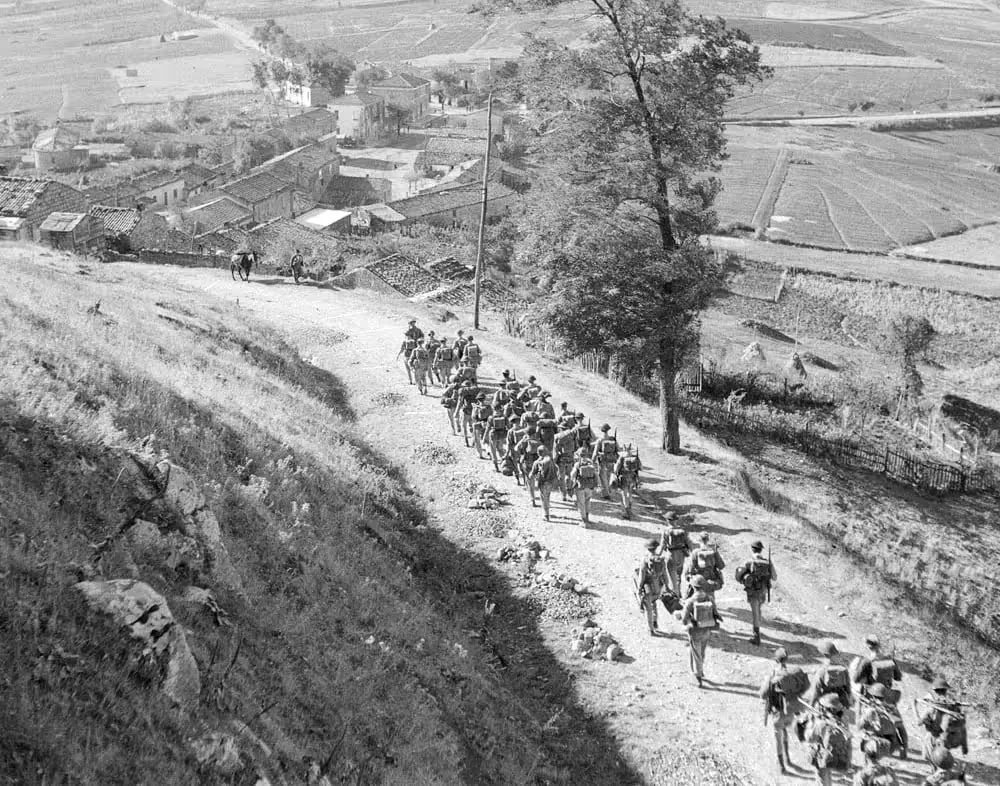
(Library and Archives Canada Photo, MIKAN No. 5176155)
PPCLI leaving Castel Lagopesole, Italy, 1943. An excerpt from “The Canadians in Italy 1943 – 1945” by LCol G.W.L. Nicholson “After the rebuff of their patrol on the (September) 22nd the Patricias set up an advanced base at Castello di Lagopesole, a village about five miles south of Atella. From the battlements of the great square 13th century castle they had a clear view of Atella across the intervening plain and of the impressive and isolated peak of Mount Vulture, beyond. A battery of field artillery came forward on the 23rd and began shelling Atella. That night the paratroopers withdrew northward, but for two more days held on to Rionero on the eastern slope of Mount Vulture. When Patricia patrols entered this village on the 26th, they found the inhabitants angrily lamenting the mass execution of 17 male civilians by the retreating Germans.” (Don Orth)
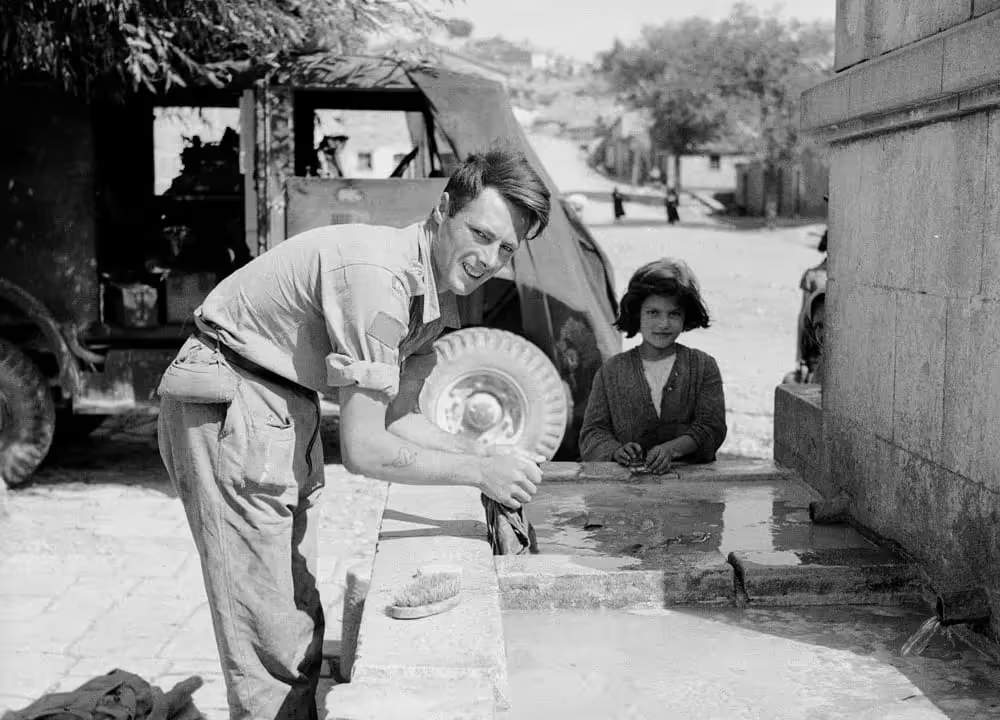
(Library and Archives Canada Photo, MIKAN No. 5176175)
Pte. David Anderson of PPCLI washes clothes at fountain in Castel Lagopesole, Italy, 1943. CMP C8A truck in the background.
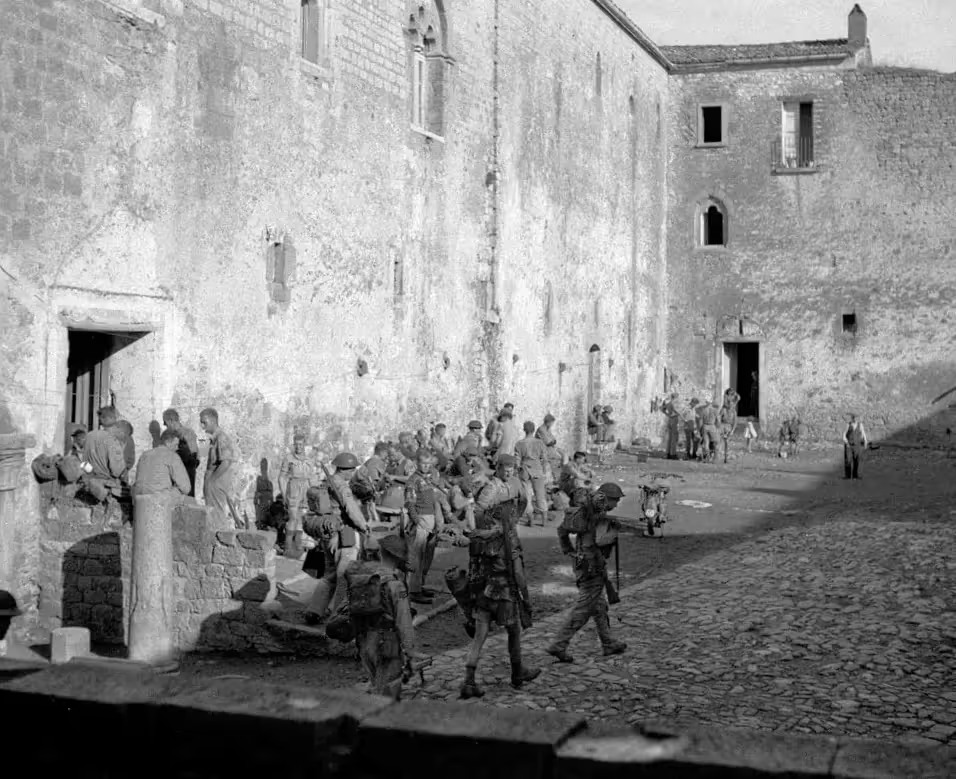
(Library and Archives Canada Photo, MIKAN No. 5176160)
PPCLI inside castle at Castel Lagopesole, 1943.
(Library and Archives Canada Photo, MIKAN No. 5176149)
Town of Castel Lagopesole with PPCLI camouflaged trucks. guns, in foreground and hill-top PPCLI occupied castle in background, 1943.
(Library and Archives Canada Photo, MIKAN No. 3228146)
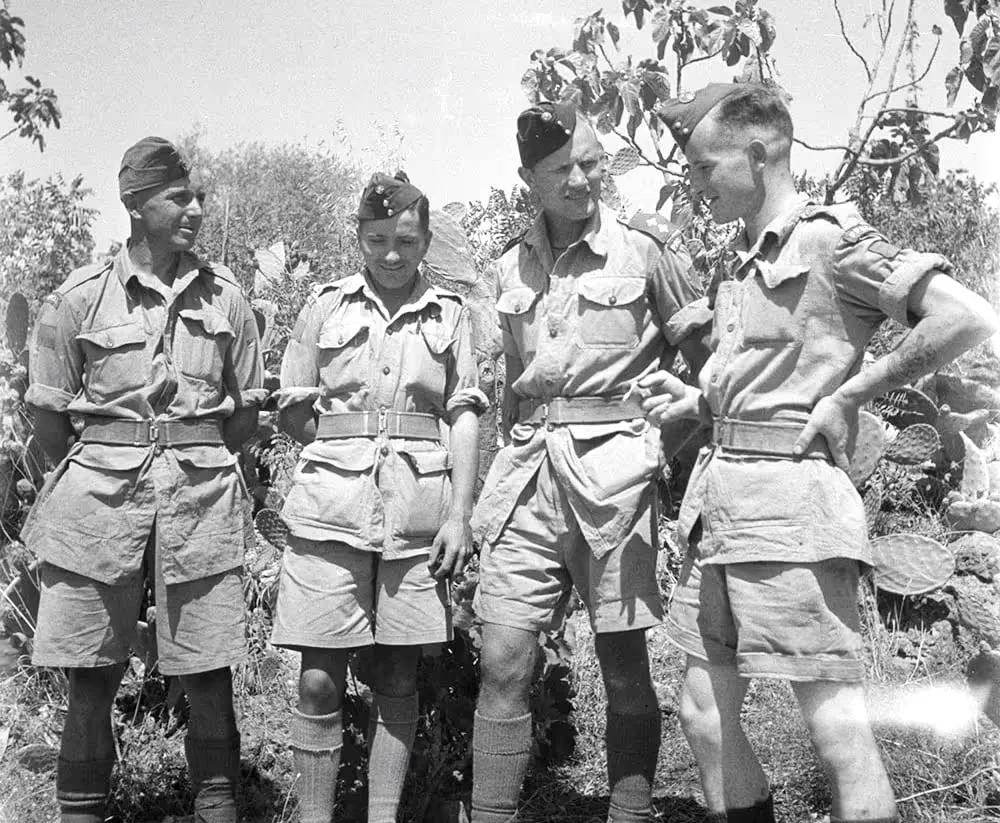
Award winners in Princess Patricia’s Canadian Light Infantry during action in Sicily. L-R, Private Wilfred Reilly, Major R.C. Coleman, Lieutenant Rex Carey, & Corporal Bob Middleton, 17 August 1943.
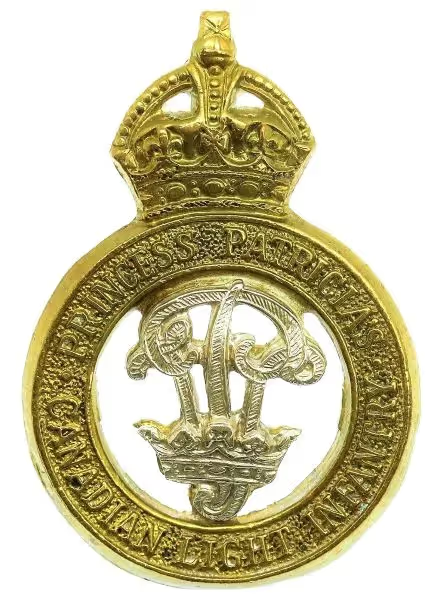
Princess Patricia’s Canadian Light Infantry (PPCLI)
(Library and Archives Canada Photo, MIKAN No. 3229111)
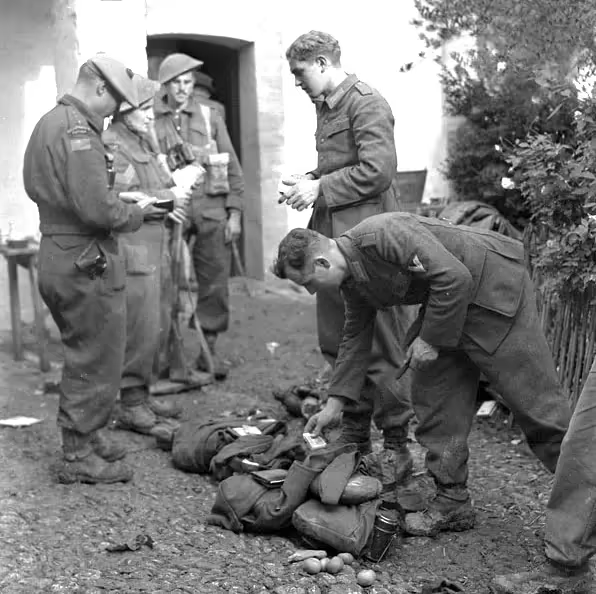
Seaforth Highlanders of Canada searching German PW near the Moro River, Italy, 8 Dec 1943.
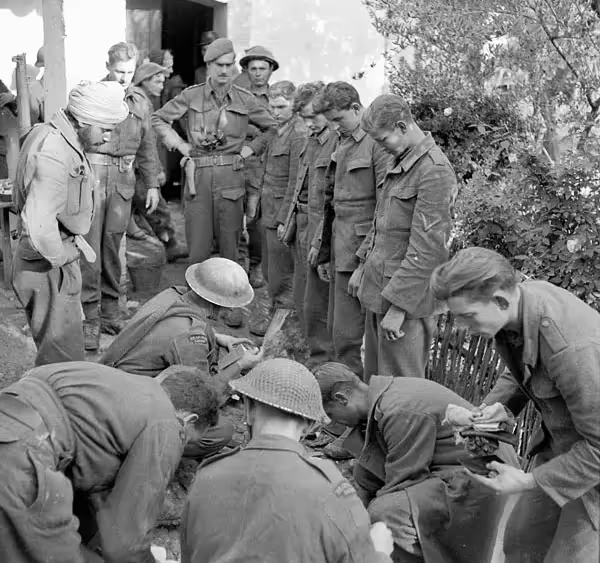
(Library and Archives Canada Photo, MIKAN No. 3396023)
Infantrymen of The Seaforth Highlanders of Canada searching German prisoners on the Moro River front, Italy, 9 December 1943.
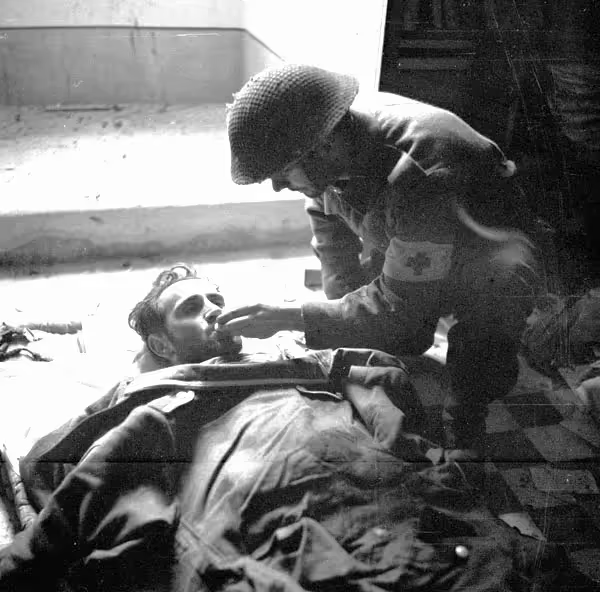
(Library and Archives Canada Photo, MIKAN No. 3227162)
Private B.D. Flynn of the Regimental Aid Party, The Seaforth Highlanders of Canada, giving a drink of water to a badly-wounded German prisoner inside the church of Santa Maria Constantinopolia, Ortona, Italy, 21 December 1943.
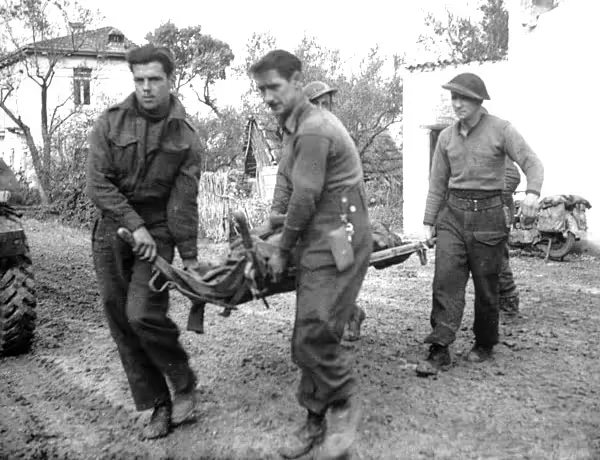
(Library and Archives Canada Photo, MIKAN No. 3229109)
Infantrymen of The Seaforth Highlanders of Canada carrying a comrade who was killed by shellfire while escorting German prisoners, San Leonardo di Ortona, Italy, 10 December 1943.
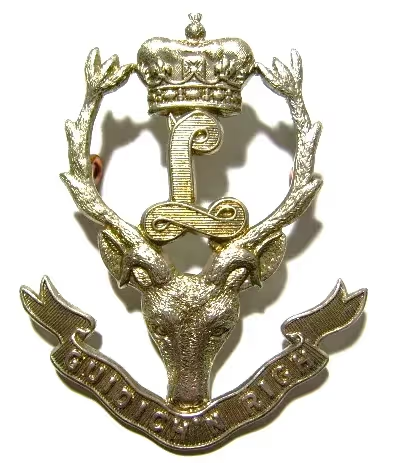
(Stuart Phillips Photo)
The Seaforth Highlanders of Canada
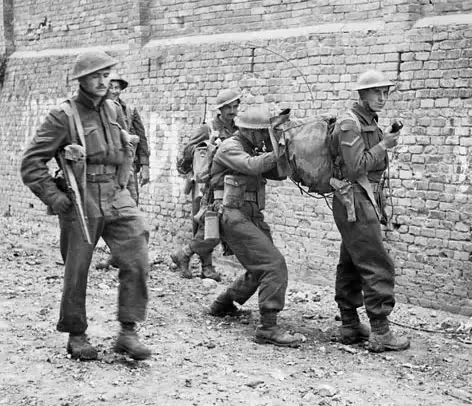
(Library and Archives Canada Photo, MIKAN No. 3227873)
Infantrymen of The Loyal Edmonton Regiment using a radio during an advance, Ortona, Italy, 21 December 1943.
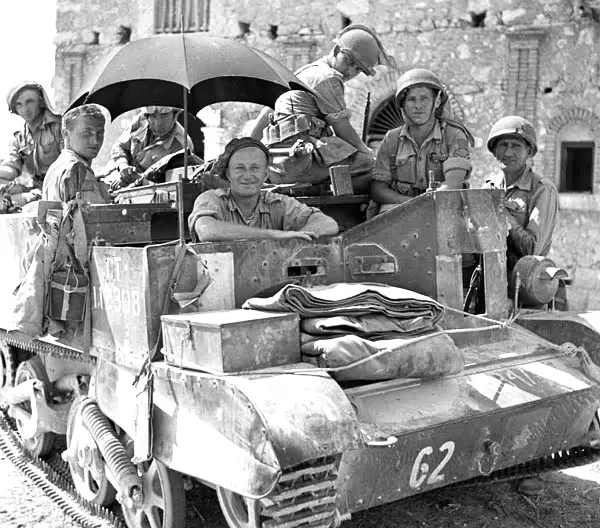
(Library and Archives Canada Photo, MIKAN No. 3534540)
Infantrymen of the Loyal Edmonton Regiment in a Universal Carrier, using an umbrella to provide shade in the sunlight, Valguarnera, Sicily, 17 July 1943.
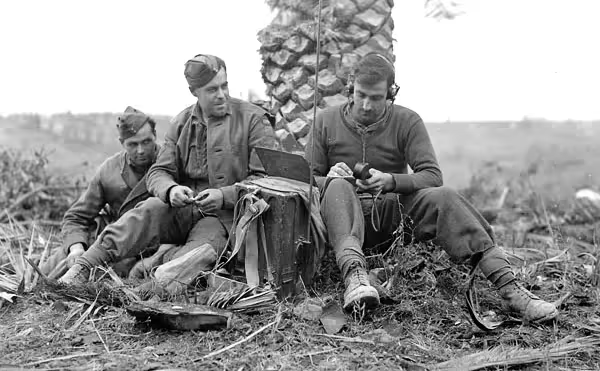
(Library and Archives Canada Photo, MIKAN No. 3227866)
Infantrymen of The Loyal Edmonton Regiment operating a No.18 wireless set outside Regimental Headquarters, Ortona, Italy, 21 December 1943.
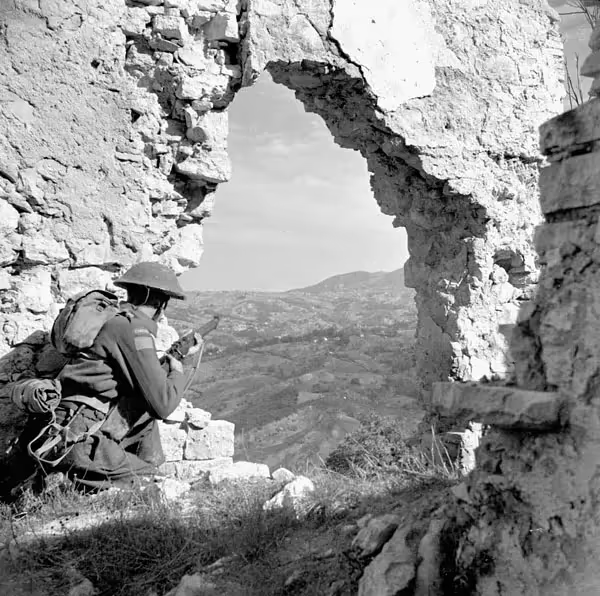
(Library and Archives Canada Photo, MIKAN No. 3201229)
(Library and Archives Canada Photo, MIKAN No. 4232832)
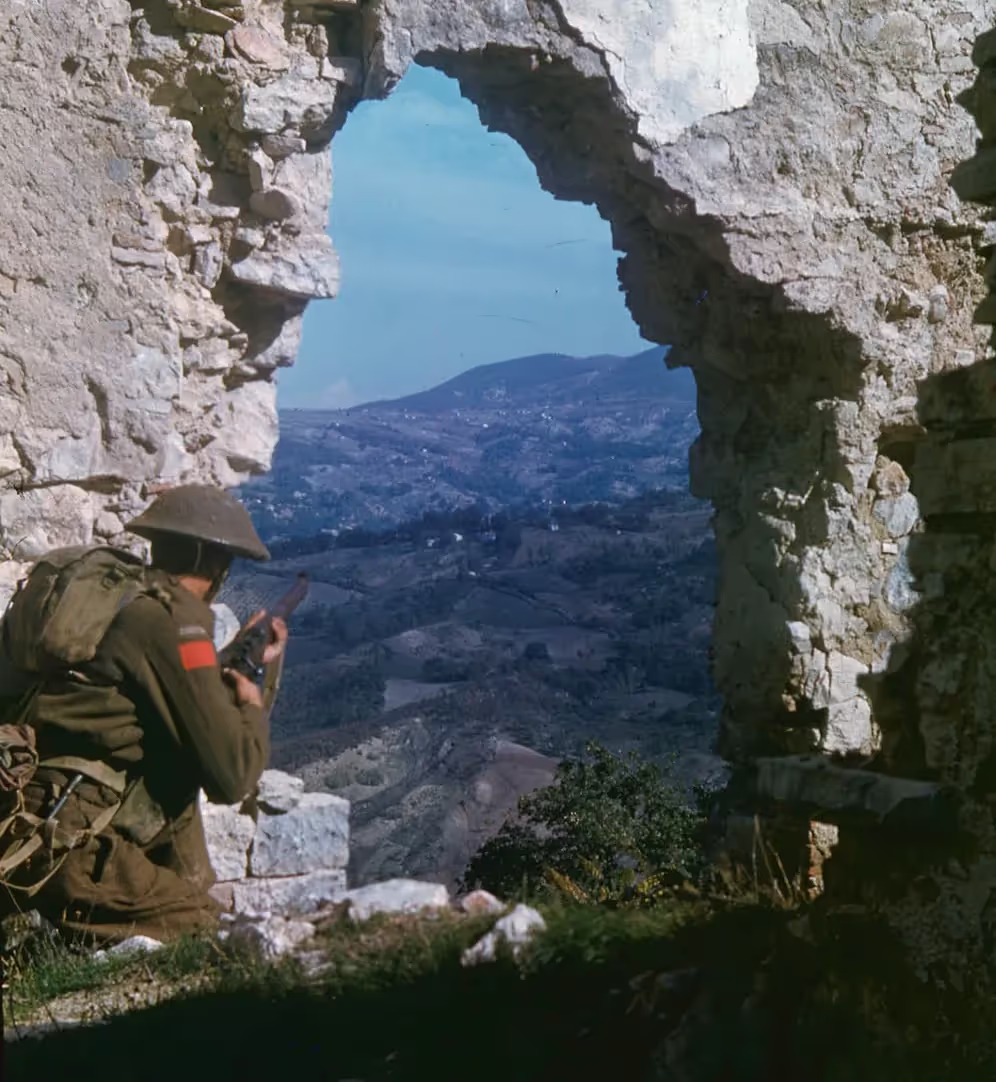
Private M.D. White of The Loyal Edmonton Regiment observing from a defensive position, Colle d’Anchise, Italy, 26 October 1943.
(Library and Archives Canada Photo, MIKAN No. 3227878)
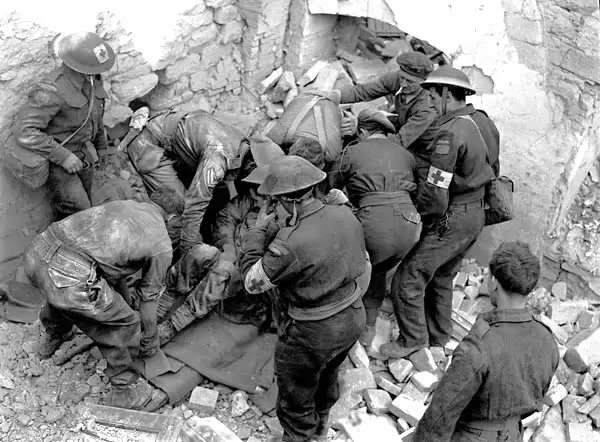
Personnel of The Loyal Edmonton Regiment digging out Lance-Corporal Roy Boyd, a comrade who was buried alive for 3 1/2 days in the wreckage of a demolished building, Ortona, Italy, 30 December 1943.
(Stuart Phillips Photo)
The Loyal Edmonton Regiment
3rd Infantry Brigade:
(Library and Archives Canada Photo, MIKAN No. 3578068)
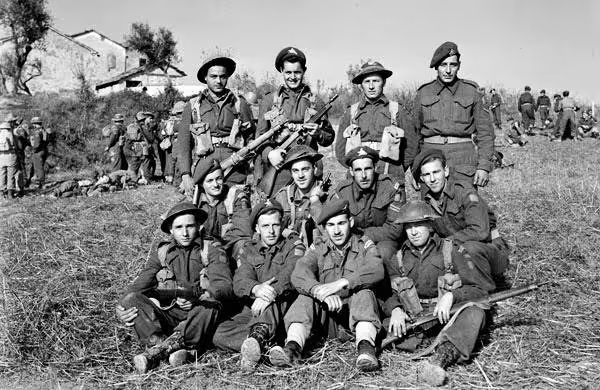
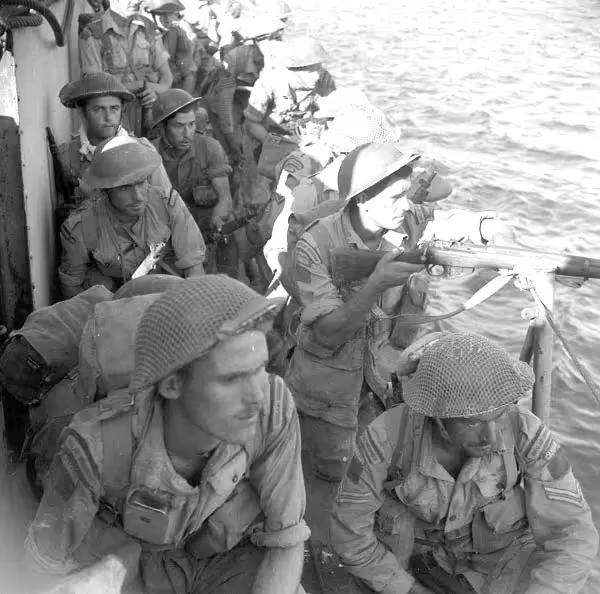
New Brunswick group, Royal 22e Régiment, near Cattolica, Italy, 24-25 November 1944.
(Library and Archives Canada Photo, MIKAN No. 3396545)
Personnel of Le Royal 22e Régiment getting ready for disembarkation, Villapiana, Italy, 16 September 1943.
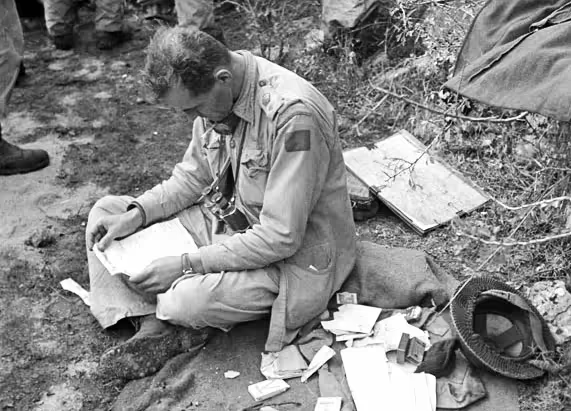
(Library and Archives Canada Photo, MIKAN No. 3525796)
Lieutenant-Colonel Paul Bernatchez, Commanding Officer, Royal 22e Régiment, reading his mail while en route to Campobasso, Italy, October 1943.
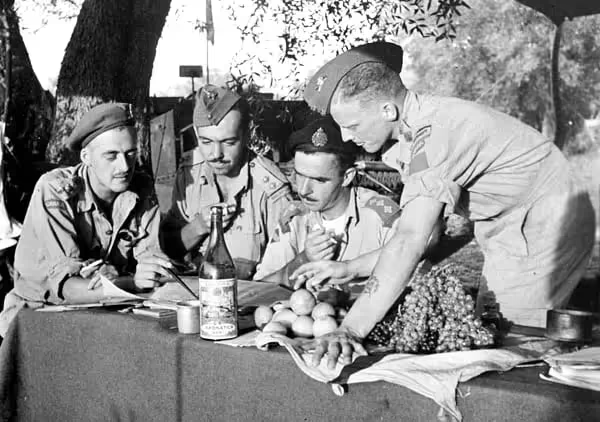
(Library and Archives Canada Photo, MIKAN No. 3521116)
An RCA Officer – possibly the Forward Observation Officer (FOO), an Officers with the Royal 22e Régiment, an Officer with a black beret from the Three Rivers Regiment equipped with Sherman tanks, and another R22eR Officer, reviewing plans during the advance on Busso, Italy, October 1943.
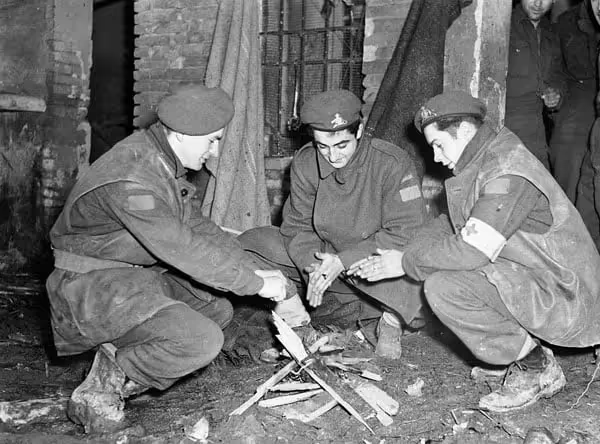
(Library and Archives Canada Photo, MIKAN No. 3240070)
Privates Dougal, M. Guerette and A. Corneau, all of the Royal 22e Régiment, warming their hands around a small fire, Ravenna, Italy, 10 February 1945.
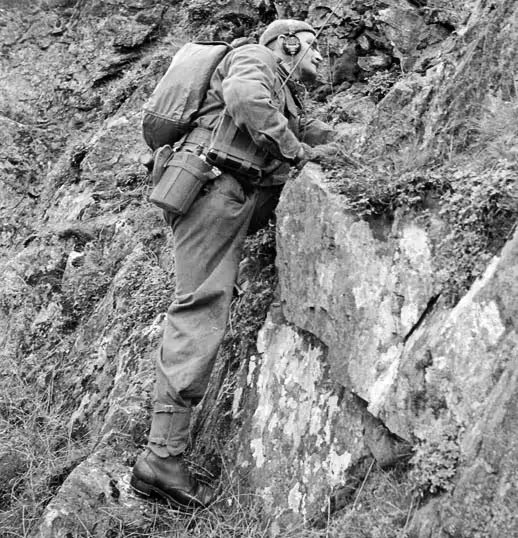
(Stuart Phillips Photo)
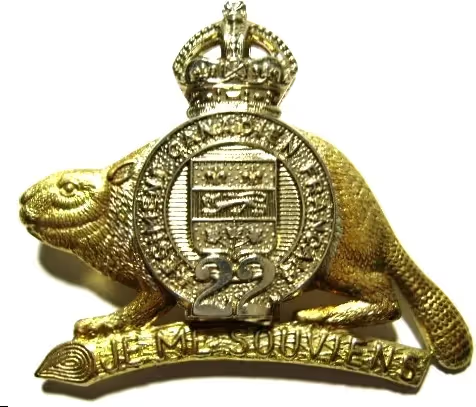
Royal 22e Régiment
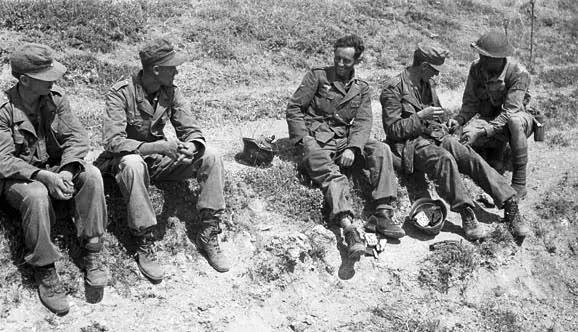
(Library and Archives Canada Photo, MIKAN No. 323260
Carleton and York Regiment, Private T.M. Collins, searching German prisoners, Enna, Italy, 18 July 1943.
(Library and Archives Canada Photo, MIKAN No. 3232605)
Private W.H. Morris of The Carleton and York Regiment, who holds a field wireless set, taking part in a training exercise prior to the invasion of Sicily. England, 26 May 1943.
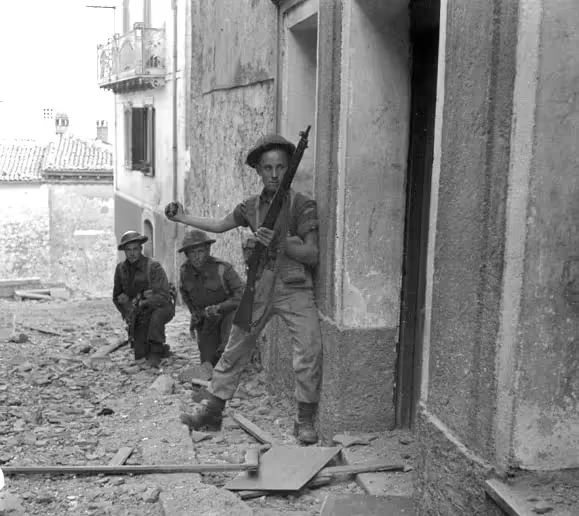
(Library and Archives Canada Photo, MIKAN No. 3200692)
Infantrymen of The Carleton and York Regiment preparing to lob a hand grenade into a sniper’s hideout, Campochiaro, Italy, 23 October 1943.
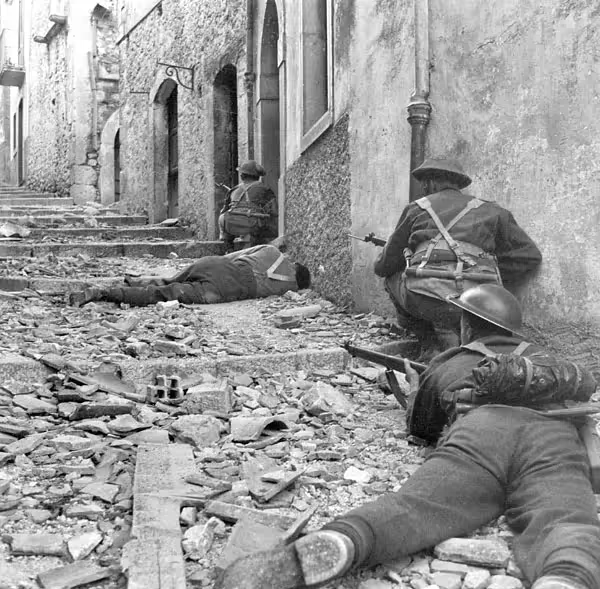
(Library and Archives Canada Photo, MIKAN No. 3228293)
The Carleton and York Regiment of the 3rd Canadian Infantry Brigade run into snipers and machine gun fire, Campochiaro, Italy, 23 October 1943.
(Fredericton Region Museum Collection, Author Photo)
Carleton and York Regiment
(Library and Archives Canada Photo, MIKAN No. 3516219)
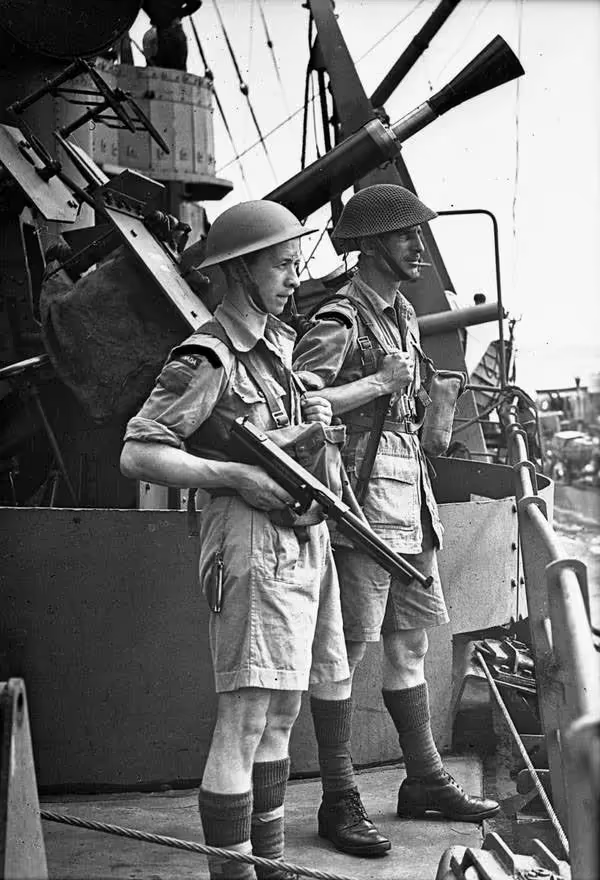
Canadian soldiers en route to Sicily, 1943, West Nova Scotia Regiment soldier holding a .45 cal Thompson SMG, with a 40-mm Bofors AA Gun in the background.
(Library and Archives Canada Photo, MIKAN No. 3194290)
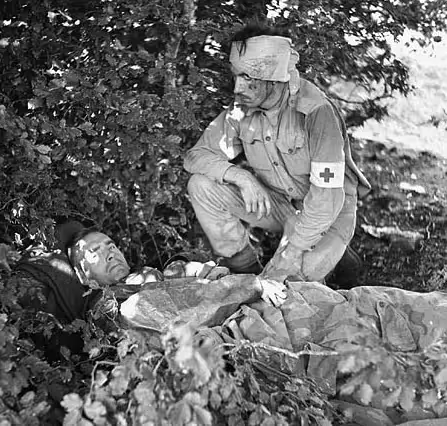
Captain A.W. Hardy, Edmonton, Alberta, Medical Officer with the West Nova Scotia Regiment, lying wounded, with Pte. W.E. Dexter, a unit stretcher-bearer who was wounded in the head, Santa-Cristina D’Aspromonte, Italy, 8 September 1943.
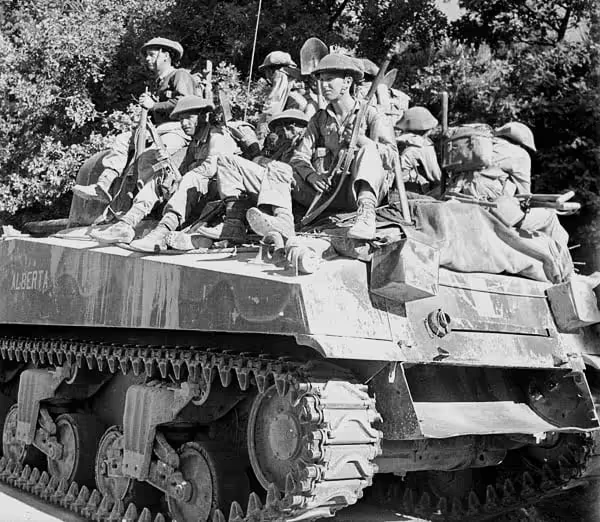
(Library and Archives Canada Photo, MIKAN No. 3260951)
Infantrymen of the West Nova Scotia Regiment riding on a Sherman V tank of the Calgary Regiment during the advance from Villapiano to Potenza, Italy, 18 September 1943.
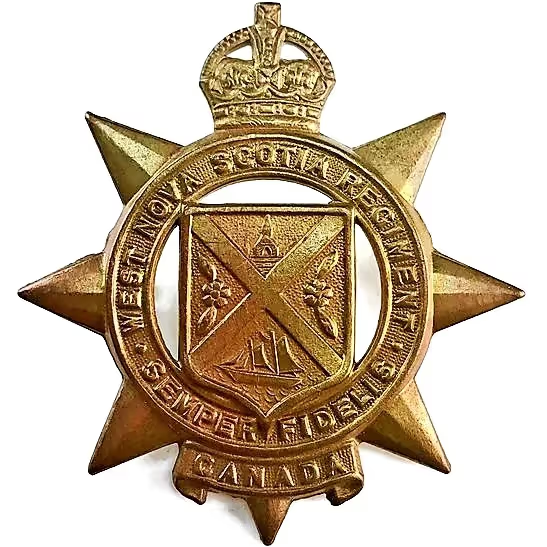
The West Nova Scotia Regiment
5th Armoured Division
11th Infantry Brigade:
11th Independent Machine Gun Company (The Princess Louise Fusiliers)
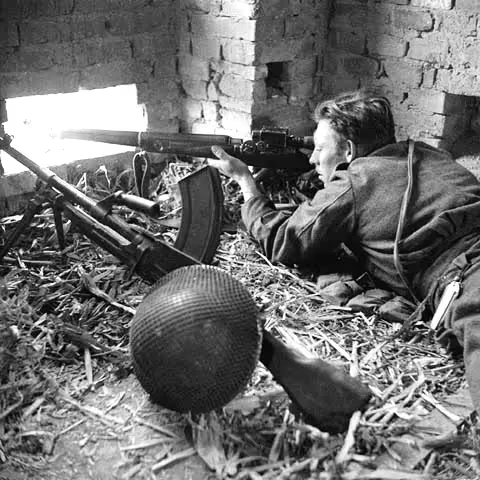
(Library and Archives Canada Photo, MIKAN No. 3191904)
Pte. Jack Bailey of the Perth Regiment, sniping at enemy troops, Orsogna, Italy, 29 January 1944.
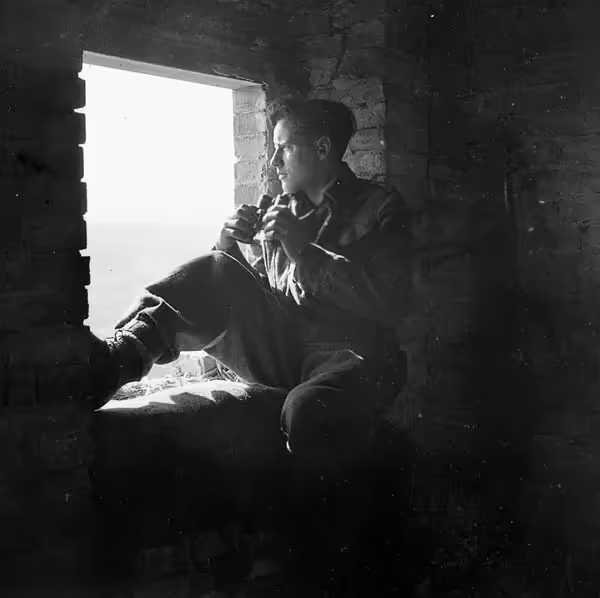
(Library and Archives Canada Photo, MIKAN No. 3251401)
Private Albert Rock of the Perth Regiment maintaining a lookout for German snipers, Orsogna, Italy, 29 January 1944.
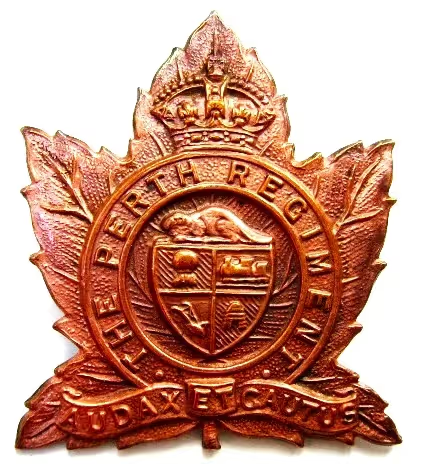
(Stuart Phillips Photo)
The Perth Regiment
The 1st Battalion, The Perth Regiment, was mobilized 1 September 1939 for service in World War II. The 1st Battalion embarked for Great Britain on 9 October 1941. It landed in Italy on 8 November 1943, as part of the 11th Infantry Brigade, 5th Canadian Division. The 1st Battalion transferred with the I Canadian Corps to North-West Europe in March 1945, where it fought until the end of the war. It returned home under command of a Perth militia officer, Lt Col MW Andrew and was disbanded on 31 January 1946.
Old soldiers say just as soon as you were confident of not moving for a while, and scrounged some bricks to keep the water and mud at bay from your bivvy, you would be ordered to up stakes and go. (Steve Gault)
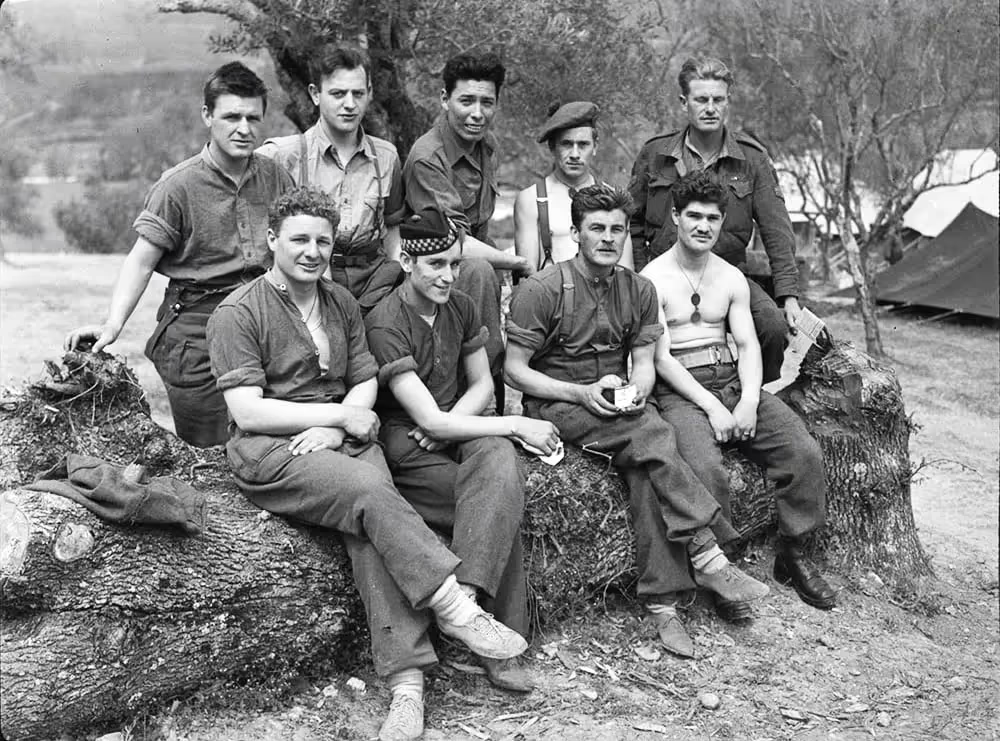
(Library and Archives Canada Photo, MIKAN No. 3203934)
Members of The Cape Breton Highlanders baseball team at the Snow Haven rest camp, Fornelli, Italy, 2 May 1944. Winslow Eagle child noted that his First Nations father top center, Pat Eagle Child, is a Blackfoot from The Blood Tribe, Kainai Nation, Southern Alberta.
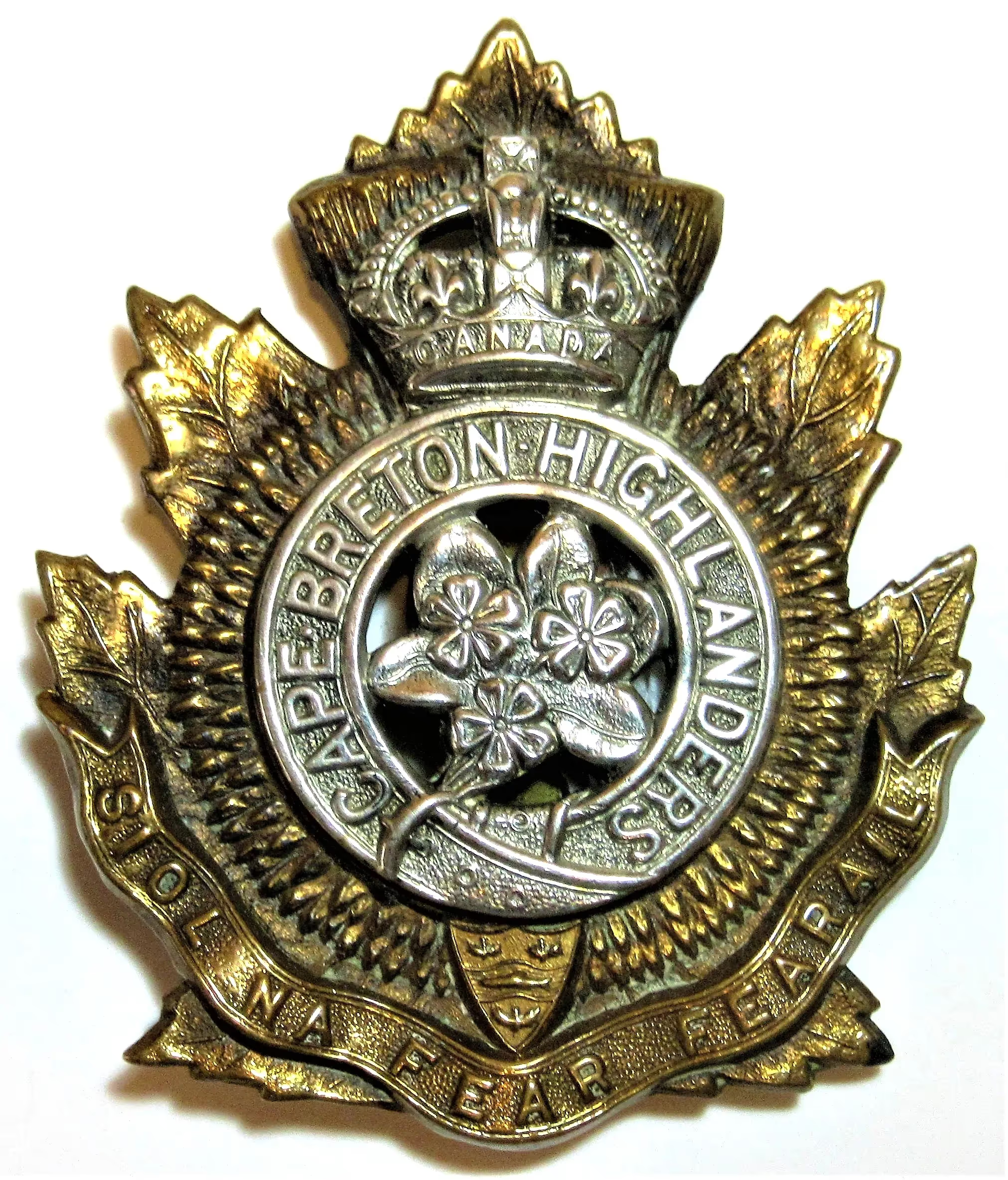
The Cape Breton Highlanders
12th Infantry Brigade:
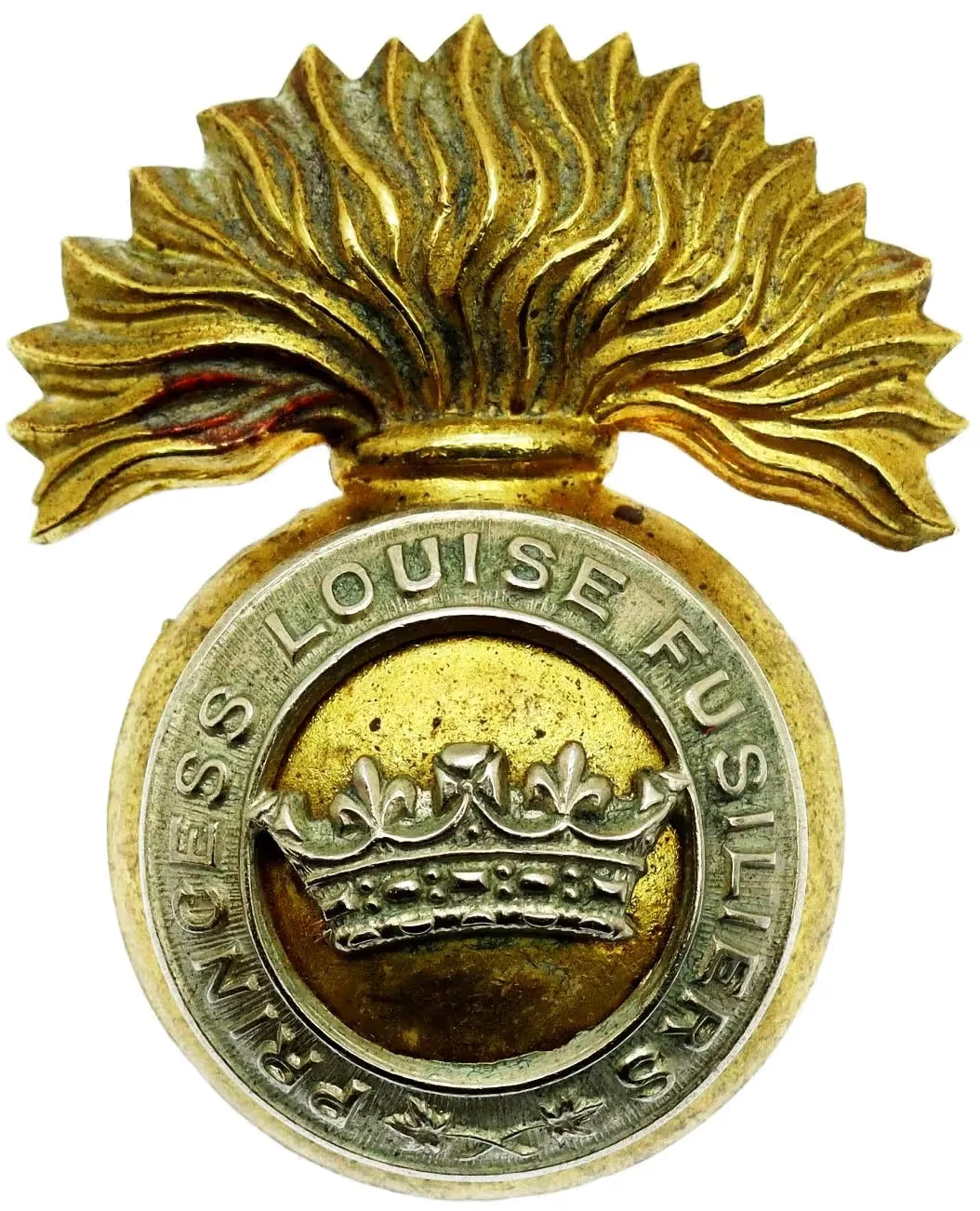
12th Independent Machine Gun Company (The Princess Louise Fusiliers)
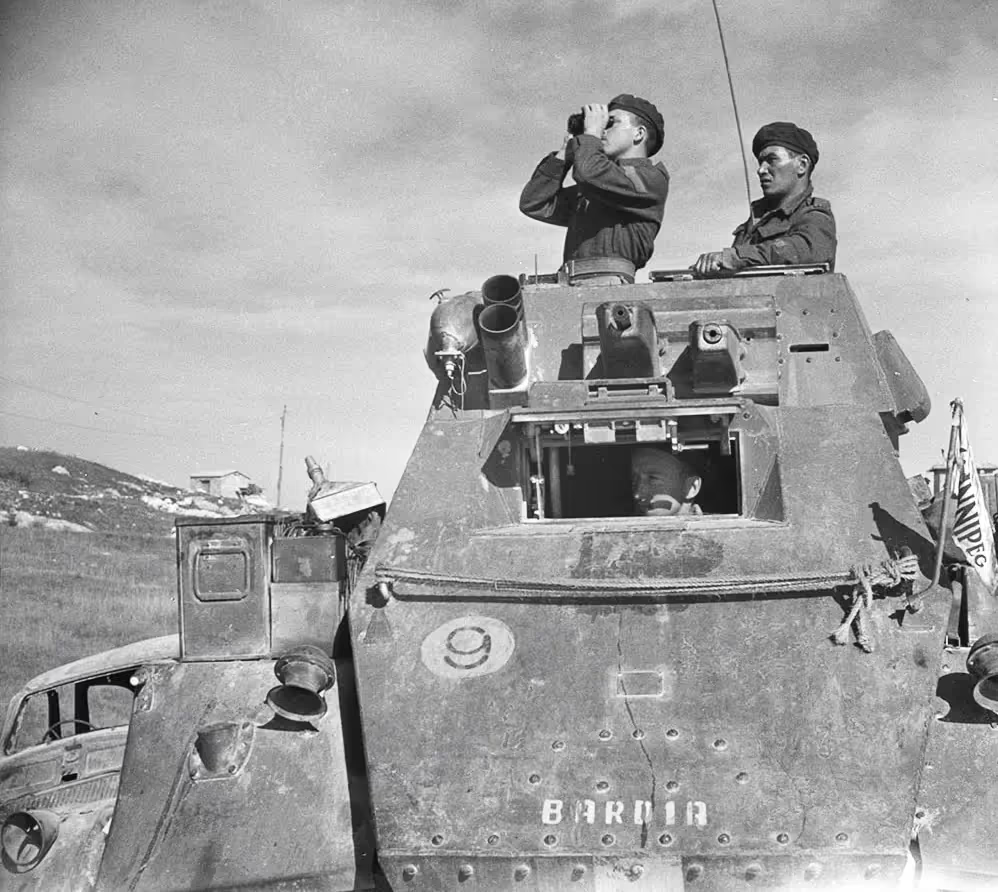
(Library and Archives Canada Photo, MIKAN No. 3206255)
Troopers of the 4th Princess Louise Dragoon Guards (4 PLDG) in a Fox armoured car, Matrice, Italy, 27 October 1943.
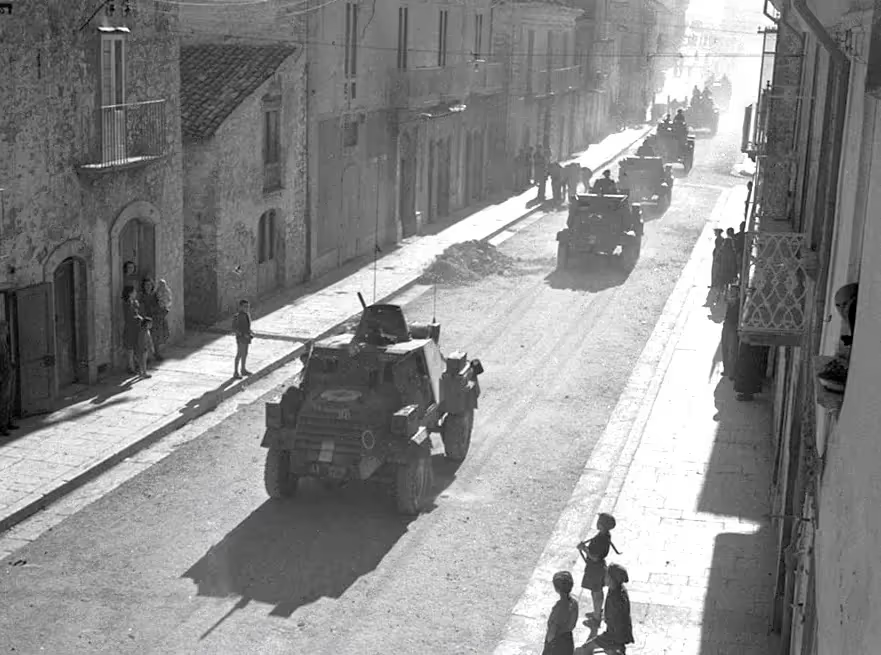
(Library and Archives Canada Photo, MIKAN No. 3205704)
Otter armoured cars of the Princess Louise Dragoon Guards (PLDG) patrol through the street Corso Umberto in Montango, about 13 kilometers southeast of Limosano, The PLDG were on the left flank of the Canadian Divisional Area, 26 October 1943.
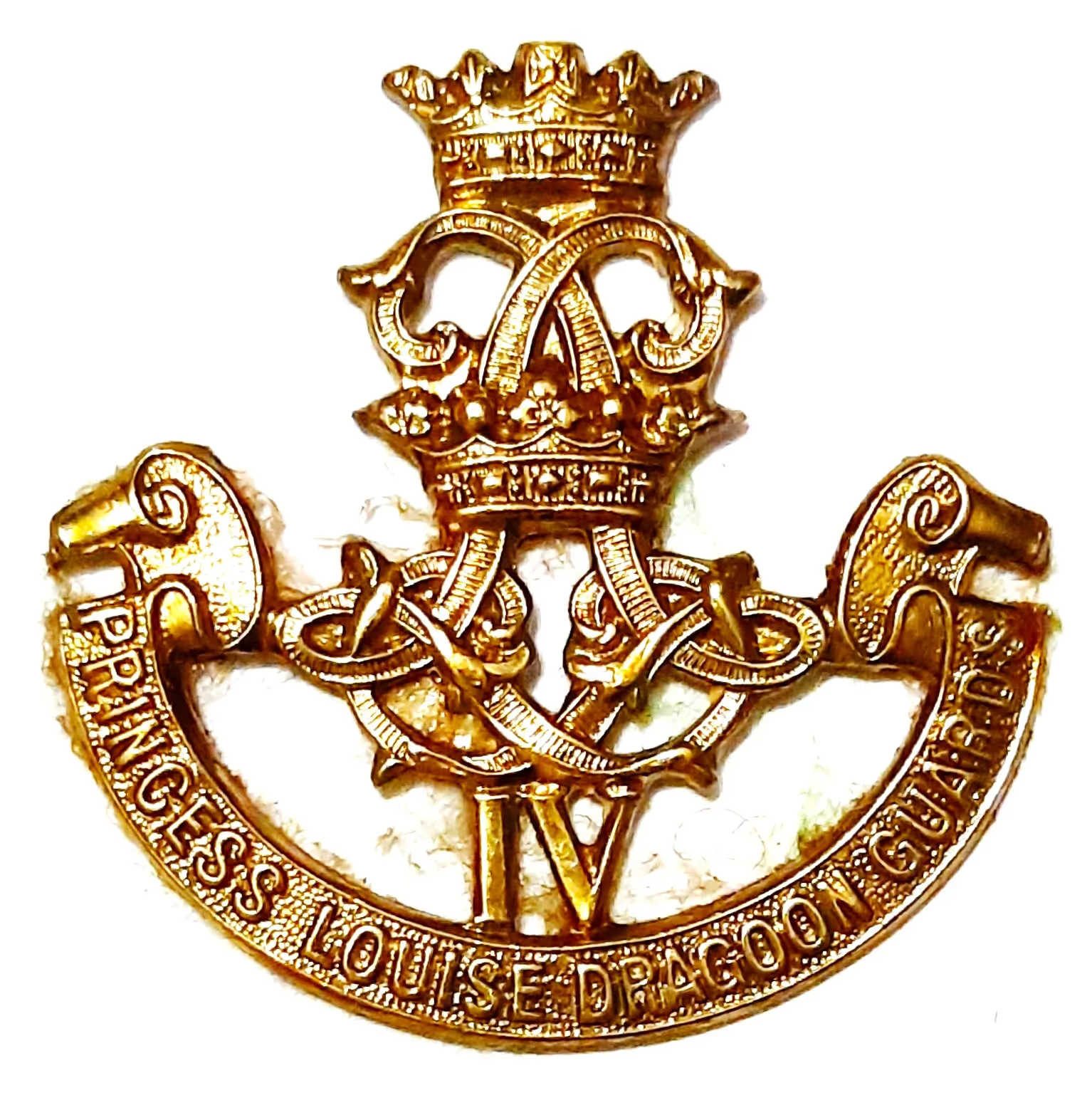
(Fredericton Region Museum Collection, Author Photo)
4th Princess Louise Dragoon Guards
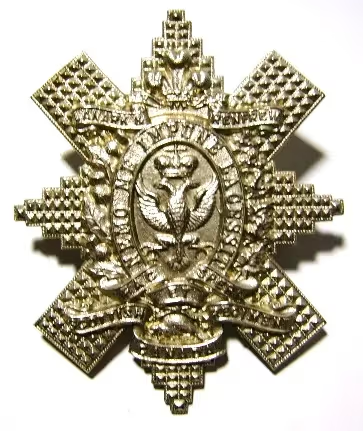
(Stuart Phillips Photo)
The Lanark and Renfrew Scottish Regiment[2]
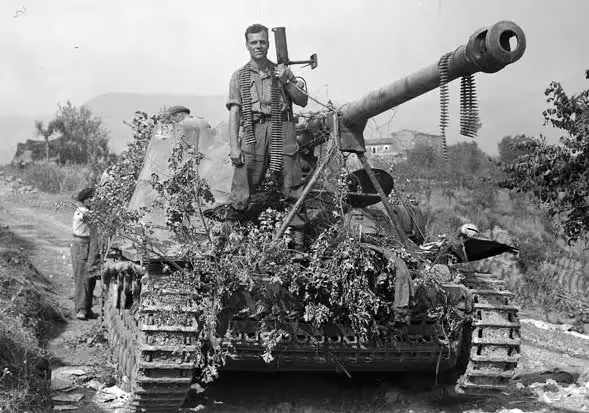
(Library and Archives Canada Photo, MIKAN No. 3231053)
Lance-Corporal J.A. Thrasher of The Westminster Regiment (Motor), holding a projector infantry anti-tank (PIAT) weapon with which he used to disable a German SdKfz 164 Nashorn, 88-mm L71 self-propelled gun near Pontecorvo, Italy, 26 May 1944.
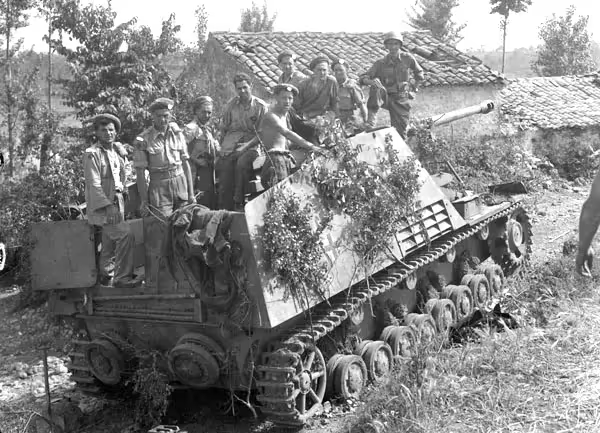
(Library and Archives Canada Photo, MIKAN No. 3391742)
Personnel of the Westminster Regiment, 5th Canadian Armoured Brigade, examining a German SdKfz 164 Nashorn, 88-mm L71 self-propelled gun knocked out by Lance-Corporal J.A. Thrasher with his projector infantry anti-tank (PIAT) weapon, near Pontecorvo, Italy, 26 May 1944.
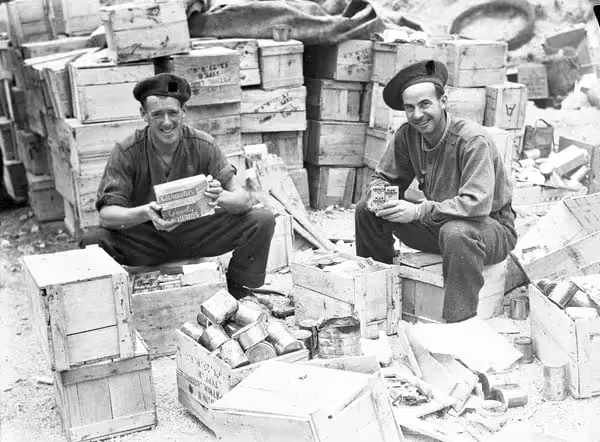
(Library and Archives Canada Photo, MIKAN No. 3210988)
Private W. Sutherland (left) of The Westminster Regiment (Motor) and Private V.A. Keddy of The Cape Breton Highlanders repacking compo rations at a supply depot, Cassino, Italy, 18 April 1944. This is when the Westminsters had come out of the line on the eastern mountains and were conducting rehearsals and battle procedure. The four months before had been mountain patrolling and not much of motor bn operations. This lead up to OP CHESTERFIELD and the breaking of the Hitler Line and Melfa River Crossing. (Chuck Mackinnon)
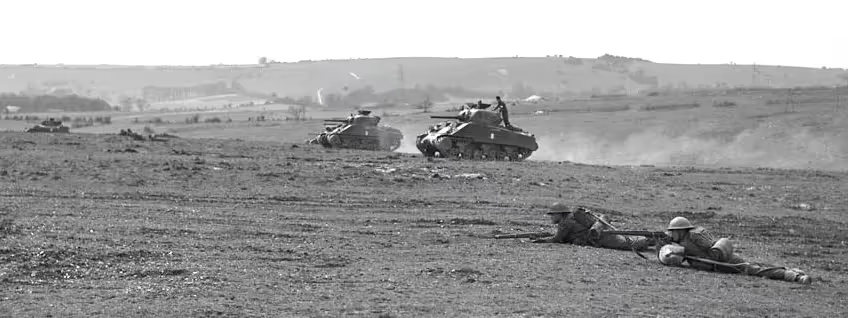
(Library and Archives Canada Photo, MIKAN No. 4542726)
Sherman tanks and troops taking part in combined arms training, Exercise Pedal II in Italy, April 1944.
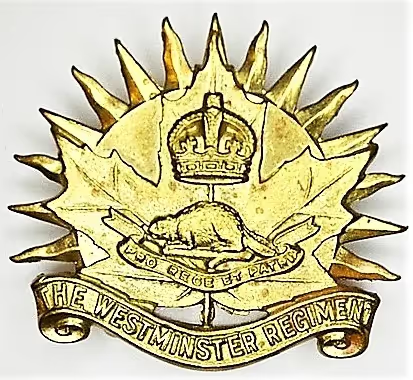
The Westminster Regiment (Motor)
1st Corps Troops
1st Corps Defence Company[3]
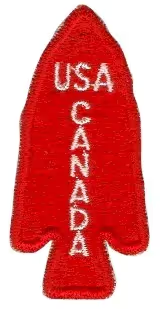
First Special Service Force (FSSF)
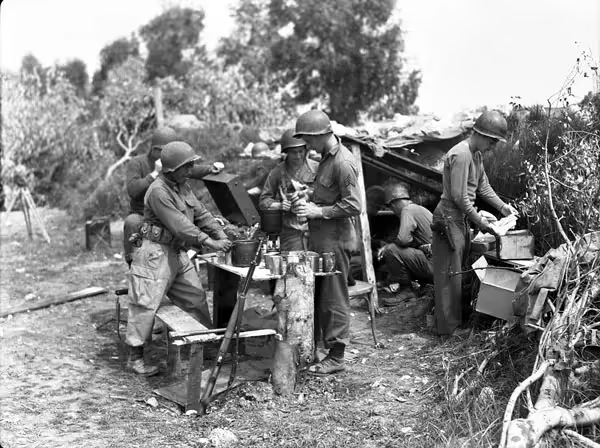
(Library and Archives Canada Photo, MIKAN No. 3395526)
Members of the First Special Service Force preparing a meal, Anzio beach-head, Italy, late April, 1944.
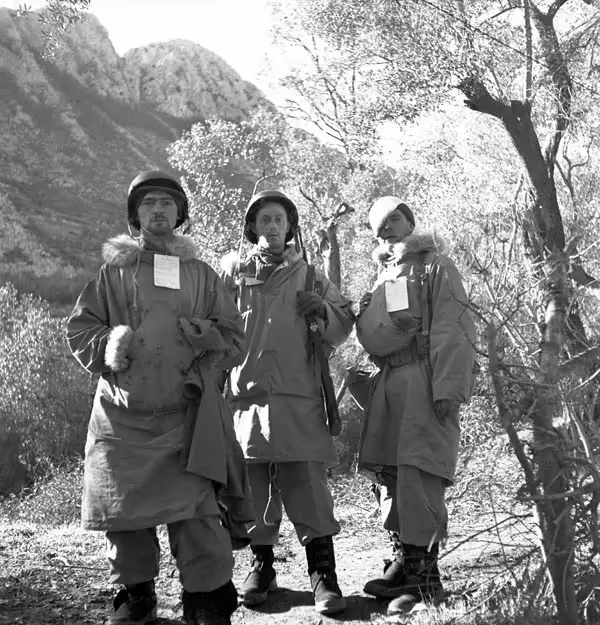
(Library and Archives Canada Photo, MIKAN No. 3397561)
Canadian personnel of the First Special Service Force awaiting medical evacuation, near Venafro, Italy, January 1944.
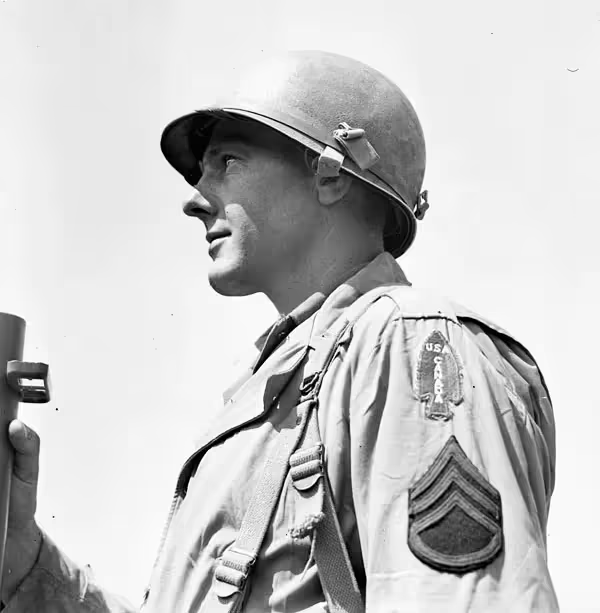
(Library and Archives Canada Photo, MIKAN No. 3302126)
Sergeant of the First Special Service Force, wearing the distinctive USA-CANADA spearhead shoulder title, Anzio beachhead, Italy, 20 April 1944.
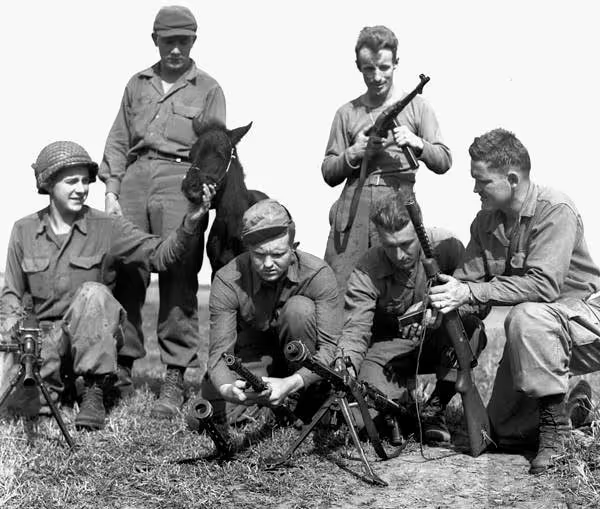
(Library and Archives Canada Photo, MIKAN No. 3396063)
Canadian and American paratroopers of The First Special Service Force, posing with captured automatic weapons and an Italian colt in the Anzio beachhead, Italy, 20 April 1944.
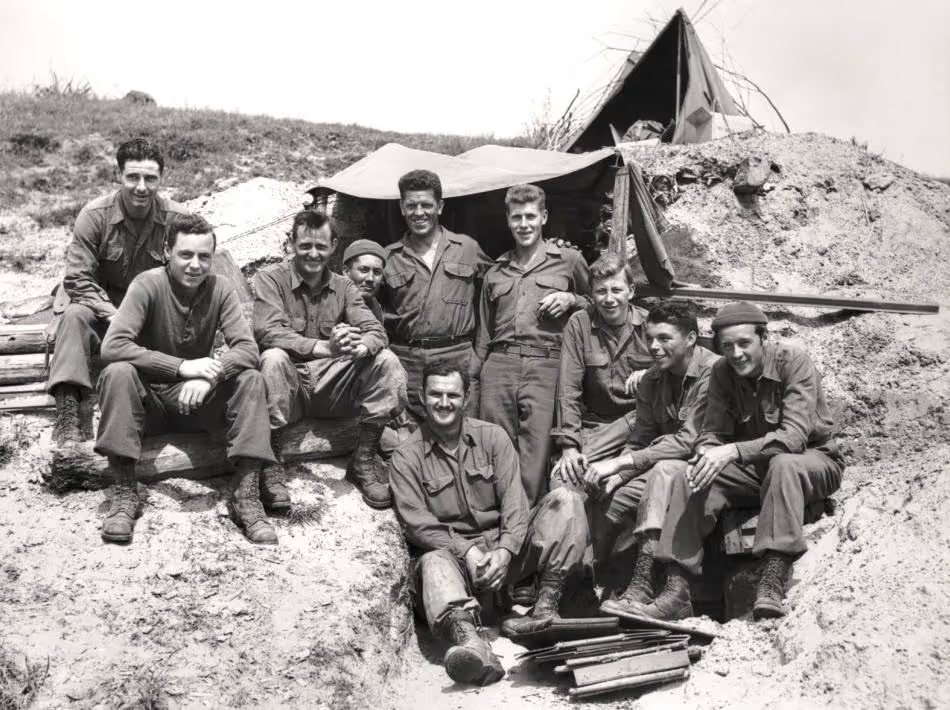
(Library and Archives Canada Photo, PA128976)
Members of First Special Service Force await lunch, Anzio Beach, April 1944.
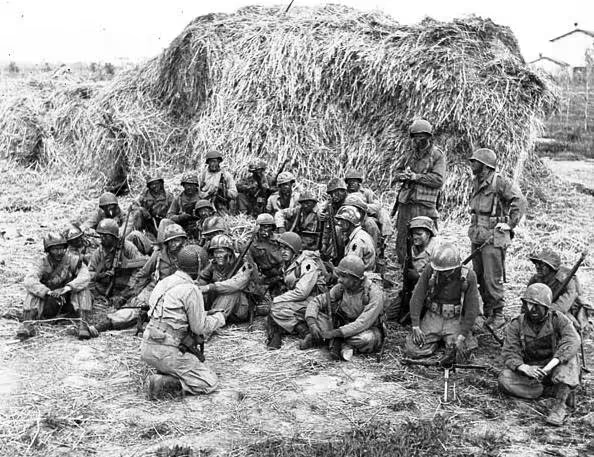
(Library and Archives Canada Photo, MIKAN No. 3396066)
FSSF patrol briefing, Anzio beachhead, Italy, 20 Apr 1944.
1st Canadian Special Service Battalion
Royal Canadian Army Service Corps
1st Armoured Brigade Company
1st Infantry Divisional Troops Company
1st Infantry Brigade Company
2nd Infantry Brigade Company
3rd Infantry Brigade Company
5th Armoured Divisional Troops Company
5th Armoured Divisional Transport Company
5th Armoured Brigade Company
11th Infantry Brigade Company
12th Infantry Brigade Company
No. 31 Corps Troops Company
No. 32 Corps Troops Company
1st Corps Transport Company
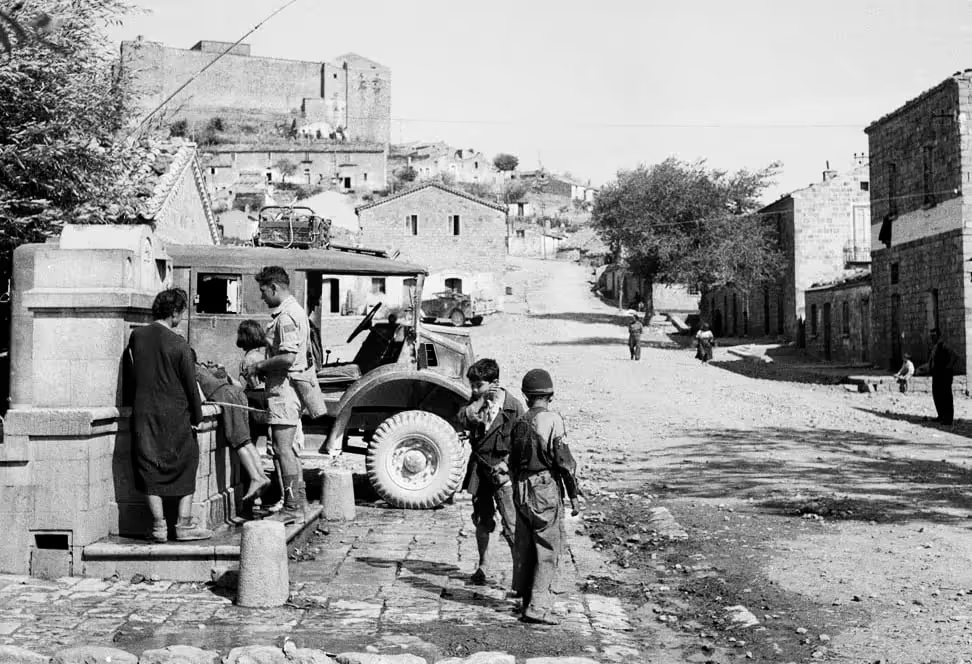
(Library and Archives Canada Photo, MIKAN No. 5176174)
Canadian Military Pattern (CMP) truck with Private E.A. McKay, at a fountain and an old castle in background, Castel Lagopesole, Italy, 1943.
No. 1 Motor Ambulance Convoy
No. 1 Headquarters Corps Car Company
No. 41 Army Transport Company
Royal Canadian Army Medical Corps
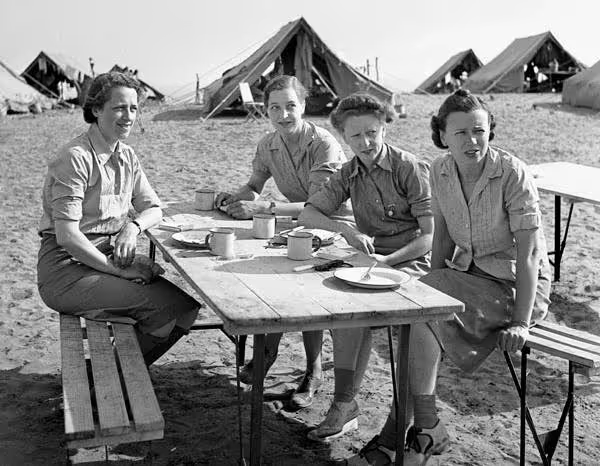
(Library and Archives Canada Photo, MIKAN No. 3599960)
Nursing Sisters of No. 15 Canadian General Hospital, Royal Canadian Army Medical Corps, El Arrouch, Algeria, 15 July 1943.
No. 15 General Hospital
The staff of No. 15 General Hospital disembarked at Philippeville on 11 July. Onthe 13th, an advance party proceeded to the site selected for the hospital near El Arrouch, approximately 21 miles inland from Philippeville. The remaining personnel followed within a few days, except the nursing sisters, who were left behind to await the provision of accommodation. Equipment and stores were unloaded at Bone, and reached the unit with little delay. The site at El Arrouch was anything but ideal. On a steep slope, in an undulating valley about six miles long by four miles wide, it was exposed throughout the day to the direct rays of the tropical sun. The soil was clay, so that in the rainy season poor drainage and deep mud could be anticipated. Malaria of the malignant type was prevalent in the area. The distance from No. 1 Canadian Convalescent Depot and No. 1 Canadian Reinforcement Depot, both located along the coast near Philippeville, was unsatisfactory from the administrative standpoint. The commanding officer was strongly of the opinion that his unit had been located most disadvantageously, as it appeared to him that there were almost ideal hospital sites potentially available along the coast. This was passed on to Lieutenant-General McNaughton, then visiting North Africa, who took the matter up with senior British officers during a conference held at Headquarters Tunis District on 17 July. He was promised that the situation would be reviewed. Unfortunately no alternative site was ever found.
Before the unit could function at all, a tented hospital had to be erected literallyfrom the ground up. There had been a minimum of preparatory work: a central road had been excavated; water, derived from the main Philippeville source, had been piped in anda 7200 gallon storage tank erected; a second tank was in the course of construction; one cookhouse had been entirely completed, two others partially; of the cement floors required, only one had been laid. The British construction plans called for a widedispersal of single hospital tents, which the unit considered impracticable with the existing sanitary facilities and in the absence of roads. New plans had consequently to beprepared on the spot. Nevertheless, by dint of strenuous efforts in temperatures thathovered around the 100 degree mark, it proved possible to accept patients on 24 July, only 12 days after the unit landed in North Africa.Much of the work to be done was an engineering responsibility, and beyond the capacity of unit personnel. Inevitably, therefore, it was some considerable time after thefirst patients arrived before all facilities desirable in a hospital became available.Electricity, supplied by a generator of a nearby British hospital, came into limited use on 27 July. The operating room was completed on the 28th, but the cement floor was of such poor quality that it had subsequently to be re-laid. Laboratory and x-ray facilities werenot in full operation until 8 August. Electric lighting became available throughout thehospital only on the 17th. It was ten days later, after repeated complaints to higher authority, before the installation of a proper drainage system was begun. It was still laterbefore the remaining engineer projects were under-taken, notably a road system. Despite these construction difficulties and the ravages of a severe wind storm or”sirocco”, which early in August blew down half the tents, the hospital handled a large number of patients from 24 July onwards. Every effort was made to have all Canadians arriving in the areaadmitted directly. The difficulty was to secure advance information as to the number of Canadian patients aboard ambulance trains reaching Philippeville from the forwardhospital area in Tunisia. As a result, many Canadians were admitted initially to a Britishhospital and later transferred; conversely, many British patients were admitted to theCanadian installation. It was not until the latter part of August, when some hospital shipsbegan to dock at Philippeville, that this situation materially improved.On 31 July there were 347 patients on hand, of which only 61 were Canadian. On 31 August the total number of patients was 1013, and on the previous day alone 220 Canadians had been admitted, mostly malaria convalescents transferred on the hospitalship Dorsetshire from No. 5 General. Altogether, from the date of its opening to 31 August, No. 15 admitted a total of 2226 patients, of which 1386 were Canadian.*Despite the initial forebodings, malaria did not in fact prove a serious menaceeither to the efficient functioning of the hospital or to the health of the staff and patients.This was due primarily to the introduction of efficient control measures. In addition to thenormal personal precautions insisted upon, some dozen members of the unit, assisted bymore than three times that number of Arabs, were permanently employed in locating anddestroying mosquito breeding areas. Although there were numerous malaria patients inhospital, the number of cases among unit personnel was negligible.
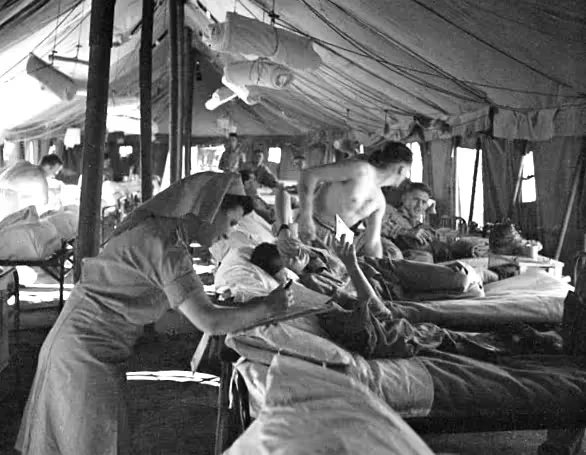
(Library and Archives Canada Photo, MIKAN No. 3205979)
Nursing Sister D. Mick reading patient’s chart during rounds of a ward at No. 15 Canadian General Hospital, RCAMC, likely near Phillipeville, Algeria in August 1943.
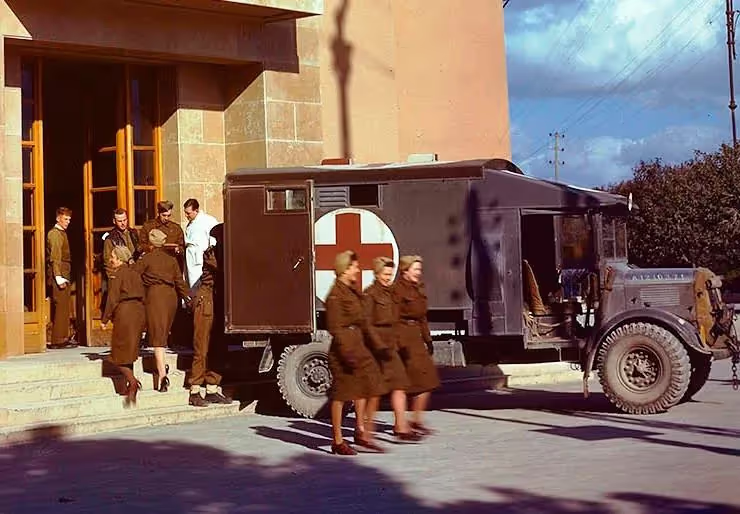
(Library and Archives Canada Photo, MIKAN No. 423293 )
Nursing Sisters in Italy, 1943.
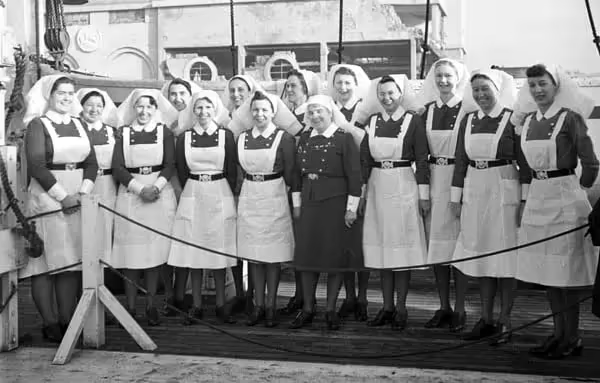
(Library and Archives Canada Photo, MIKAN No. 3227113)
Nursing sisters of the Royal Canadian Medical Corps (RCAMC) aboard the hospital ship, Lady Nelson, Naples, Italy, 29 January 1944. (L-R): Nursing Sisters R. MacLennan, J. Goodston, Reta Moffat, E. Covey, D.E. MacTier, E. Bateman, Y. Carr, J. Jackson, Captain C.I. Nixon (Matron), M. McLeod, R. Hughes, H.J. Battram, E.K. Sutherland and M.B. Meisner.
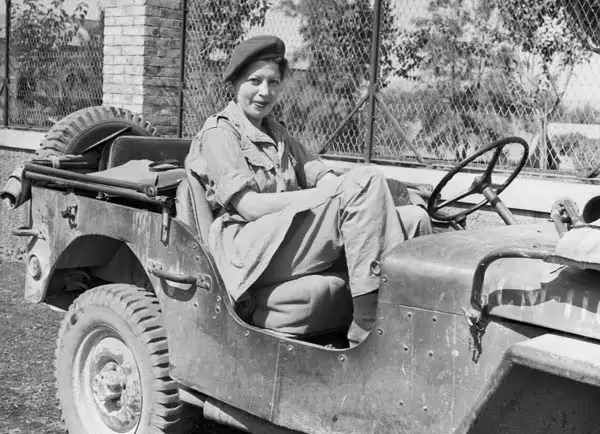
(Library and Archives Canada Photo, MIKAN No. 3206360)
Nursing Sister Constance Browne of the Royal Canadian Army Medical Corps (RCAMC) sitting in a jeep, Leonforte, Italy, 7 August 1943.
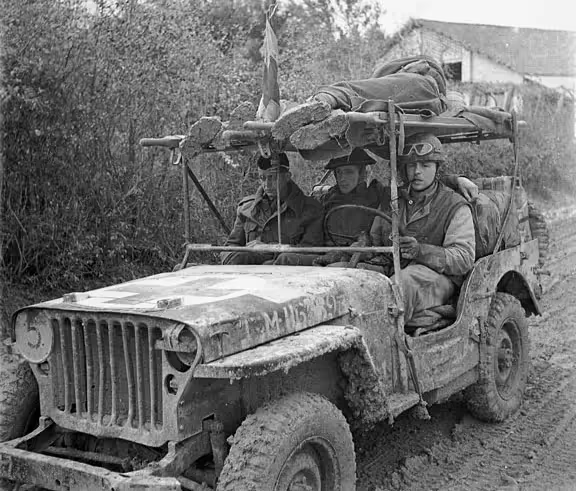
(Library and Archives Canada Photo, MIKAN No. 3314438)
A jeep ambulance of the Royal Canadian Army Medical Corps (RCAMC) bringing in two wounded Canadian soldiers on the Moro River front south of San Leonardo di Ortona, Italy, 10 December 1943.
1st Armoured Brigade
No. 2 Light Field Ambulance
1st Infantry Division
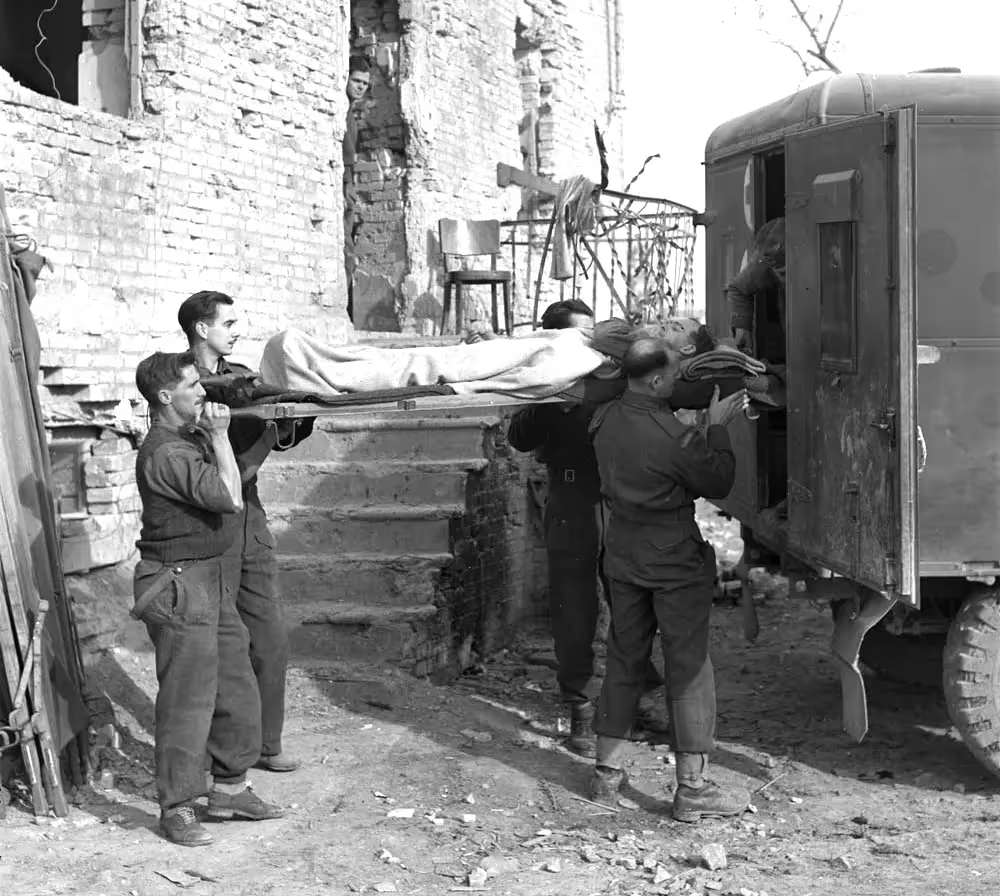
(Library and Archives Canada Photo, MIKAN No. 3207609)
Personnel of No. 4th Field Ambulance, RCAMC, carrying a wounded man on a stretcher at an Advanced Dressing Station, Ortona, 15 Jan 1944.
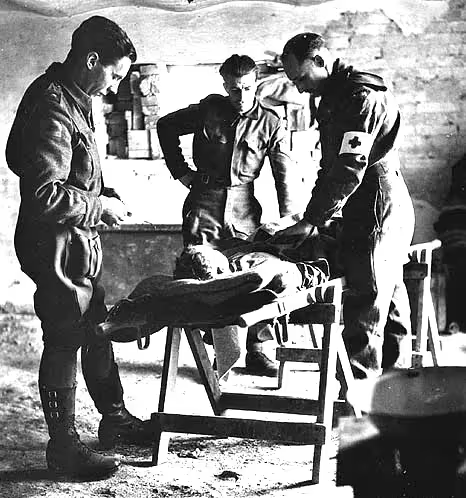
(Library and Archives Canada Photo, MIKAN No. 3191738)
Major P.K. Tisdale, 4th Field Ambulance, RCAMC, checking the condition of a wounded man before Sergeant W.H. Brigham and Private L.P. Lemieux donate blood before his transfer to a Field Surgical Unit, 15 January 1944.
No. 4 Field Ambulance
No. 5 Field Ambulance
No. 9 Field Ambulance
5th Armoured Division
No. 7 Light Field Ambulance
No. 8 Light Field Ambulance
No. 24 Field Ambulance
1st Corps Troops
No. 4 Casualty Clearing Station
No. 5 Casualty Clearing Station
G.H.Q. and L. of C. Troops
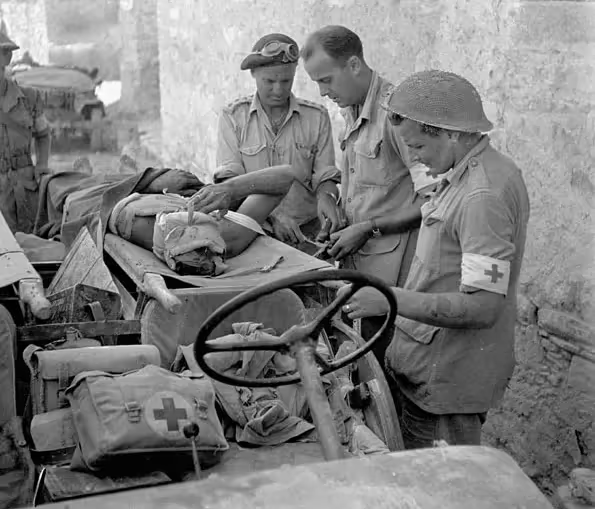
(Library and Archives Canada Photo, MIKAN No. 3534499)
A wounded German officer, who was found by Lieutenants Alex Stirton and George Cooper, being evacuated to hospital, Carleto, Italy, 18 September 1943.
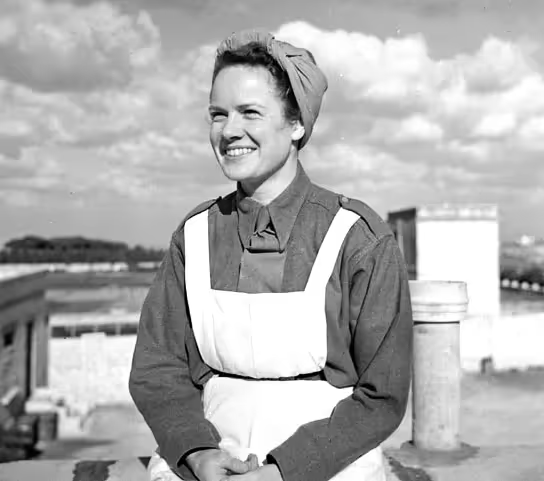
(Library and Archives Canada Photo, MIKAN No. 3599965)
Nursing Sister Elaine Wright, No.1 Canadian General Hospital, Royal Canadian Army Medical Corps (RCAMC), Andria, Italy, February 1944.
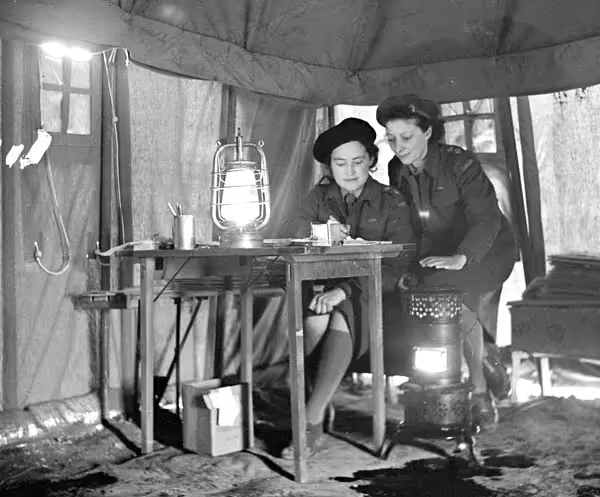
(Library and Archives Canada Photo, MIKAN No. 3599964)
Nursing Sisters Eloise MacDiarmid and Frances Caddy on night duty, No.1 Canadian General Hospital, Royal Canadian Army Medical Corps (RCAMC), Andria, Italy, February 1944.
No. 1 General Hospital
No. 3 General Hospital
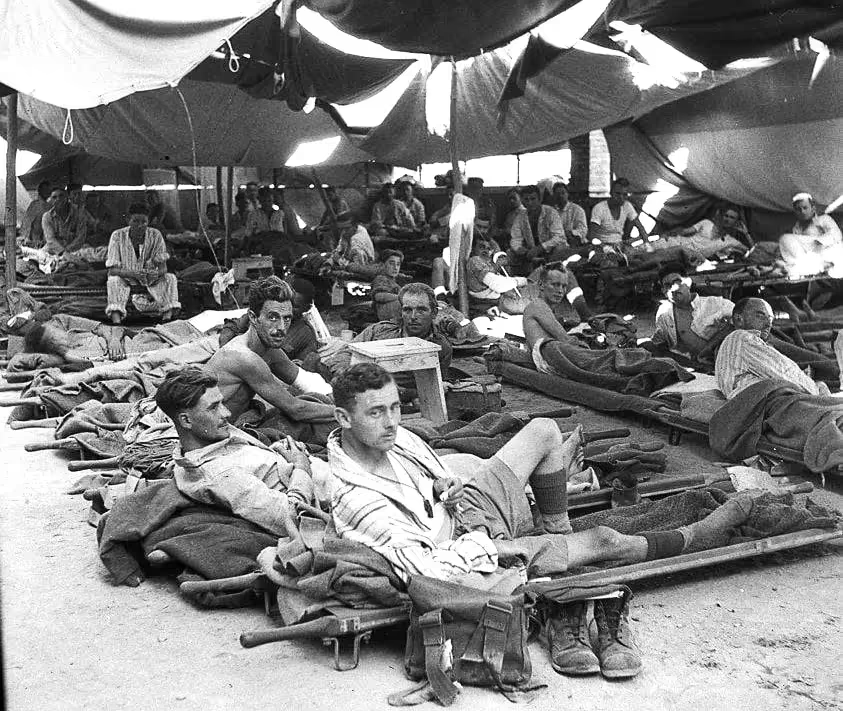
(DND Photo via Ron May)
Wounded Canadian Soldiers lie on stretchers at reception tent of No. 5 Canadian Field Hospital in Italy.
No. 5 General Hospital
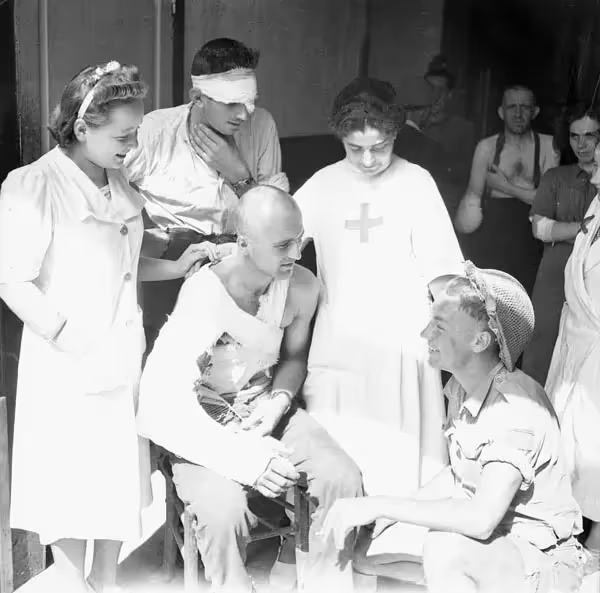
(Library and Archives Canada Photo, MIKAN No. 3509525)
Private R.E. Pavely (lower right) of the 2nd Canadian Infantry Brigade talking with nurses and patients at a hospital in Avigliano, Italy, ca. 21-22 September 1943.
(Library and Archives Canada Photo, MIKAN No. 3395934)
Nursing sisters of No. 14 Canadian General Hospital, Royal Canadian Army Medical Corps (RCAMC), who survived the sinking of SS Santa Elena landing at Naples, Italy, 8 November 1943.
No. 14 General Hospital
No. 15 General Hospital
No. 28 General Hospital
No. 1 Convalescent Depot
Canadian Dental Corps
No. 1 Dental Company
No. 3 Dental Company
No. 8 Dental Company
No. 11 Base Dental Company
Royal Canadian Ordnance Corps
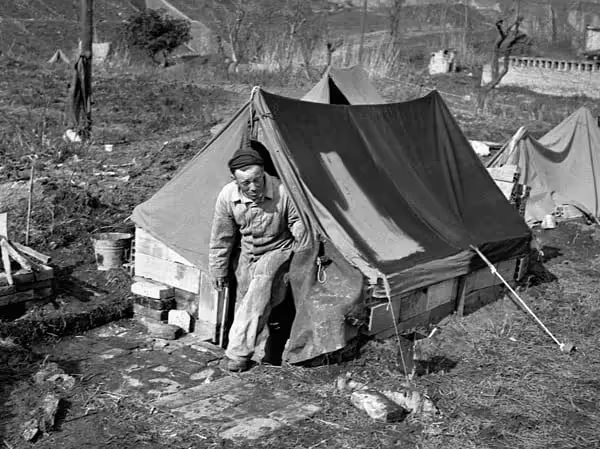
(Library and Archives Canada Photo, MIKAN No. 3576481)
Private Albert Vincent, Royal Canadian Ordnance Corps (RCOC), emerges from his tent north of Ortona, Italy, 15 February 1944.
Old soldiers say just as soon as you were confident of not moving for a while, and scrounged some bricks to keep the water and mud at bay from your bivvy, you would be ordered to up stakes and go. (Steve Guthrie)
No. 201 Infantry Ordnance Sub-Park
No. 205 Armoured Ordnance Sub-Park
No. 1 Corps and Army Troops Sub-Park
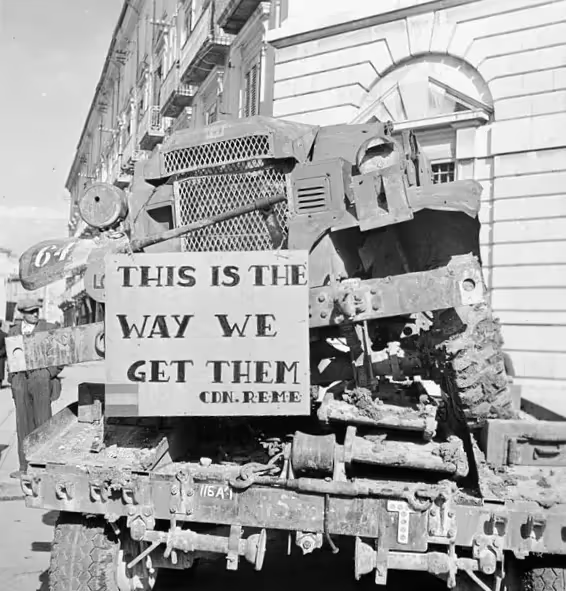
(Library and Archives Canada Photo, MIKAN No. 3526000)
A Royal Canadian Electrical and Mechanical Engineers (RCEME) display supporting the Fifth Victory Bond campaign, Campobasso, Italy, 27 October 1943.
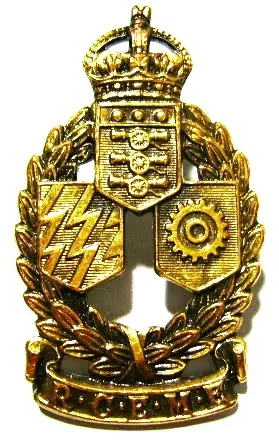
(Stuart Phillips Photo)
Royal Canadian Electrical and Mechanical Engineers (RCEME)
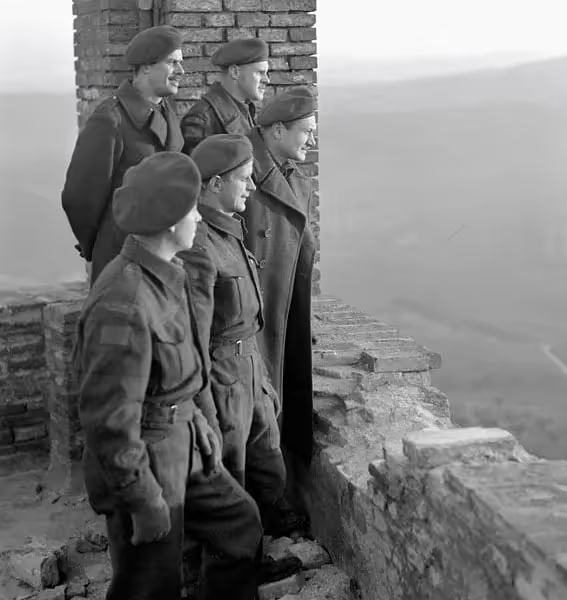
(Library and Archives Canada Photo, MIKAN No. 3240423)
Personnel of one of the 1st Armoured Brigade Workshop visiting Gradara Castle, Gradara, Italy, 5 February 1945.
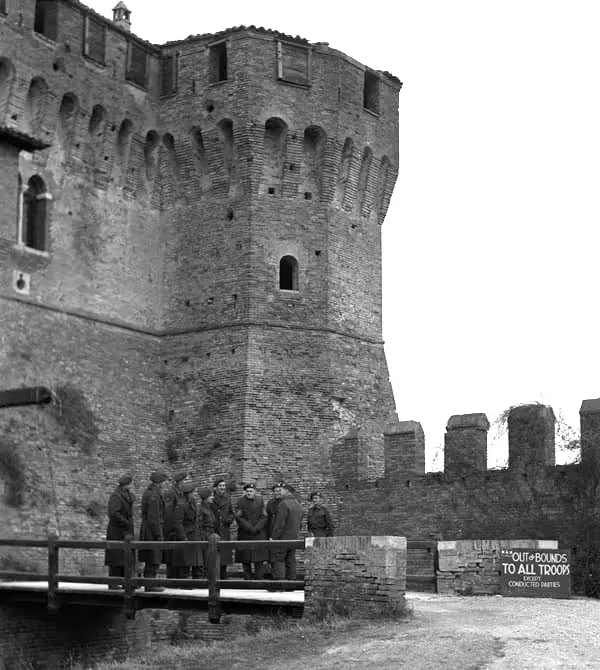
(Library and Archives Canada Photo, MIKAN No. 3842426)
Canadian soldiers on the drawbridge of Gradara castle, Italy, c1944. The sign in the photo states, “Out of bounds to all troops except conducted parties”.
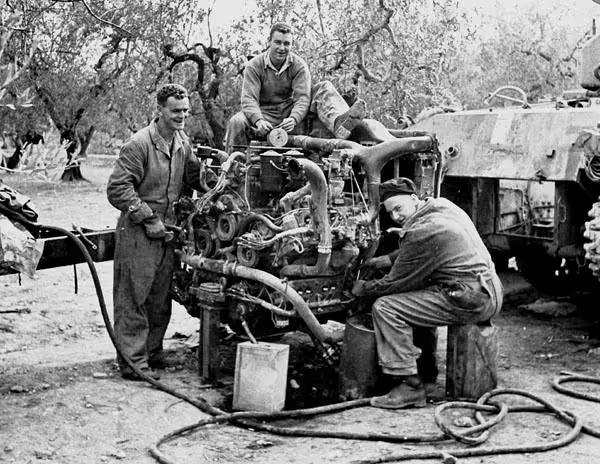
(Library and Archives Canada Photo, MIKAN No. 3574228)
Personnel of the 1st Armoured Brigade Workshop, RCOC working on the engine of a Sherman V tank of the 5th Canadian Armoured Division, Italy, 13 October 1943. It is a Chrysler A57 multibank. Five 250.6 cu.in. L-head inline six cylinder engines placed around central shaft ,driven by a sun gear arrangement. 30-cylinder 1,253 cu.in. 370 hp. M4A4 Sherman’s used this engine, it had a longer hull to fit it. Most were used for Lend-Lease.
1st Armoured Brigade Workshop
No. 1 Army Tank Troops Workshop
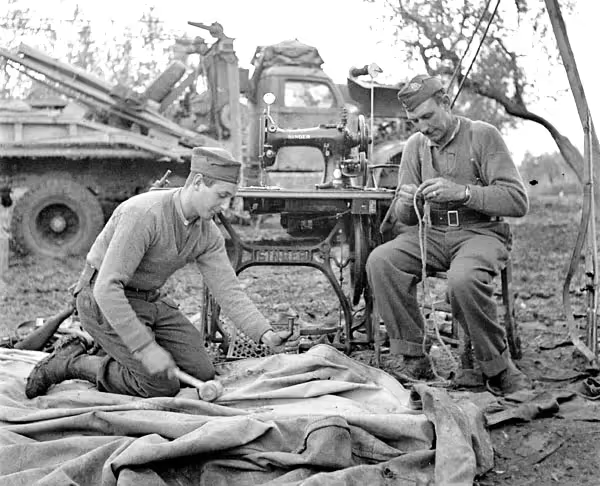
(Library and Archives Canada Photo, MIKAN No. 3533590)
Private W.A. Lloyd repairs a tarpaulin while Lance-Corporal W.L. Milburn mends rope, 1st Infantry Brigade Workshop, RCOC, San Leonardo di Ortona, Italy, 13 December 1943.
1st Infantry Brigade Workshop
2nd Infantry Brigade Workshop
3rd Infantry Brigade Workshop
5th Armoured Brigade Workshop
11th Infantry Brigade Workshop
12th Infantry Brigade Workshop
No. 1 Infantry Troops Workshop
No. 5 Armoured Troops Workshop
1st Corps Troops Workshop
No. 1 Recovery Company
(Stuart Phillips Photo)
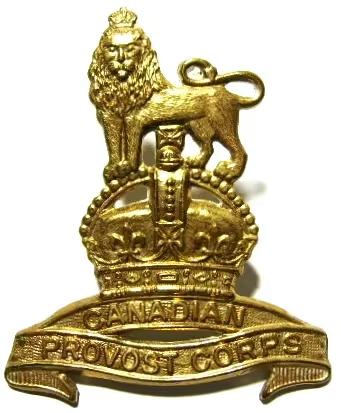
Canadian Provost Corps
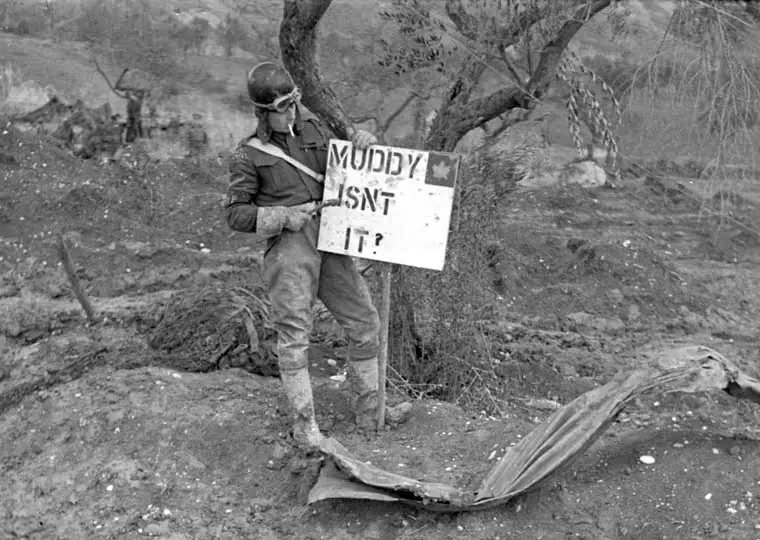
(Library and Archives Canada Photo, MIKAN No. 4166603)
Canadian Provost Corps motorcyclist with the 5th Canadian Division at Orsogna, Italy, 27 January 1944.
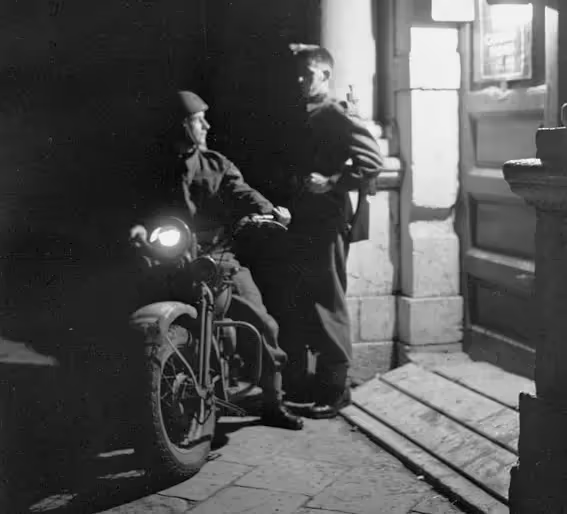
(Library and Archives Canada Photo, MIKAN No. 3403723)
Corporal Joe Babcock (left) talking with Private Herb Thompson, both of the Canadian Provost Corps, at Provost Detachment Headquarters before starting his nightly motorcycle patrol of Taormina, Sicily, Italy, December 1943.
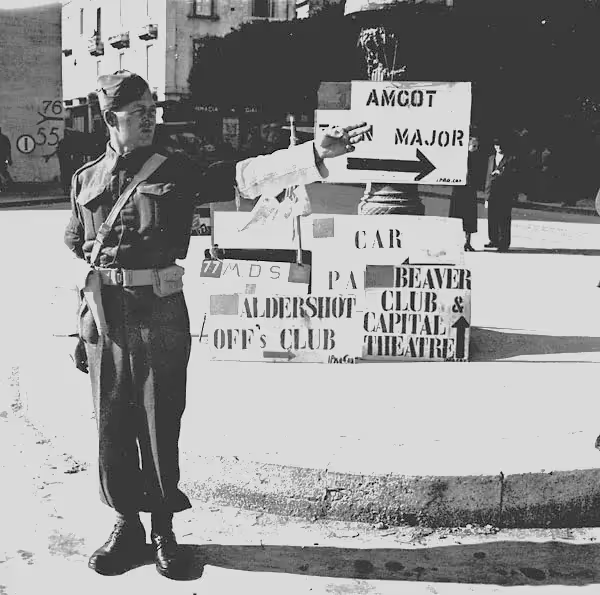
(Library and Archives Canada Photo, MIKAN No. 3599872)
Lance-Corporal D.G. Stackhouse, Royal Canadian Mounted Police (RCMP), directing traffic, Campobasso, Italy, 21 October 1943.
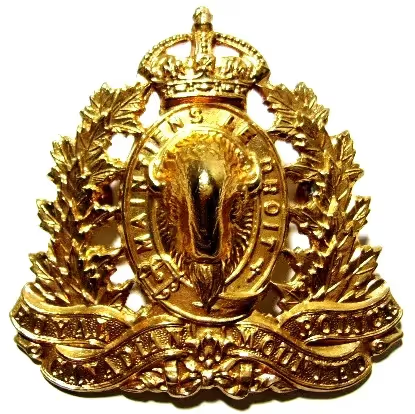
(Stuart Phillips Photo)
No. 1 Provost Company (RCMP)
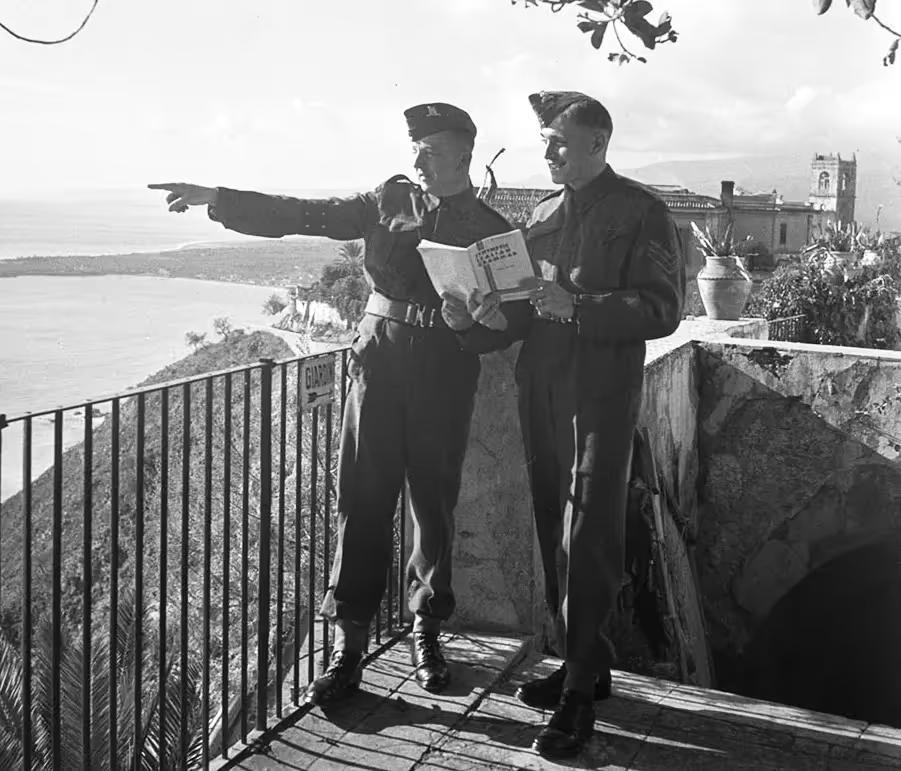
(Library and Archives Canada Photo, MIKAN No. 3228143)
Sergeants W. McKeown and S.R. Forse, both of the Canadian Provost Corps (C Pro C), Taormina, Italy, ca. 23-24 November 1943.
No. 3 Provost Company
No. 5 Provost Company
No. 1 L. Of C. Provost Company
No. 35 Traffic Control Company[4]
Miscellaneous
Canadian Section G.H.Q. 1st Echelon A.A.I.
Canadian Section G.H.Q. 2nd Echelon A.A.I.
No. 1 Base Reinforcement Group:
No. 1 Base Reinforcement Depot
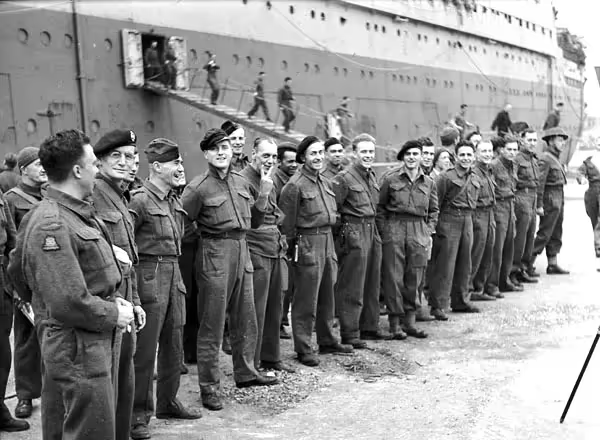
(Library and Archives Canada Photo, MIKAN No. 3405393_
Personnel of Headquarters Company, No. 2 Canadian Base Reinforcement Depot (Canadian Army Miscellaneous Units), who survived the sinking of SS Santa Elena, disembarking from the SS Monterey at Naples, Italy, 8 November 1943.
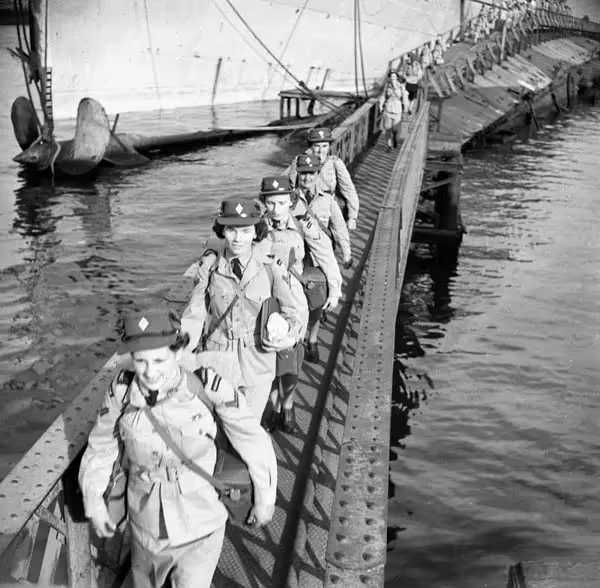
(Library and Archives Canada Photo, MIKAN No. 3405622)
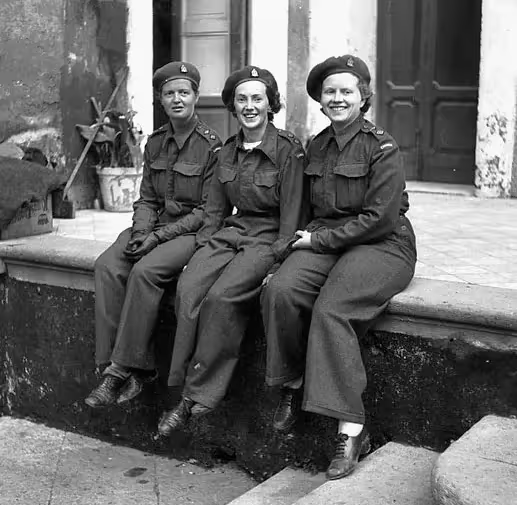
Personnel of the Canadian Women’s Army Corps (C.W.A.C.) disembarking from a troopship at Naples, Italy, 22 June 1944.
No. 2 Base Reinforcement Depot
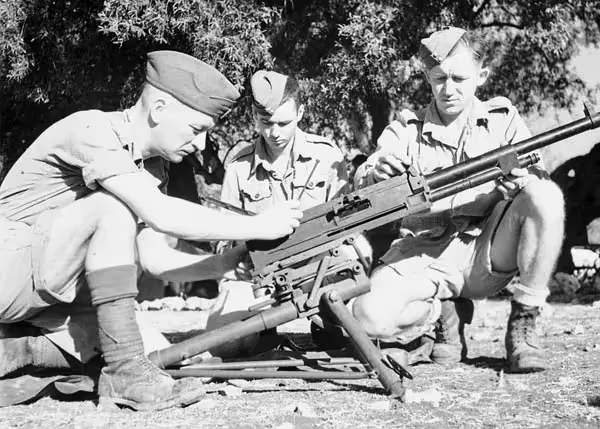
(Library and Archives Canada Photo, MIKAN No. 3509521)
Personnel restoring a captured Italian Breda machine gun, No. 1 Base Reinforcement Depot, near Syracuse, Italy, 11 August 1943.
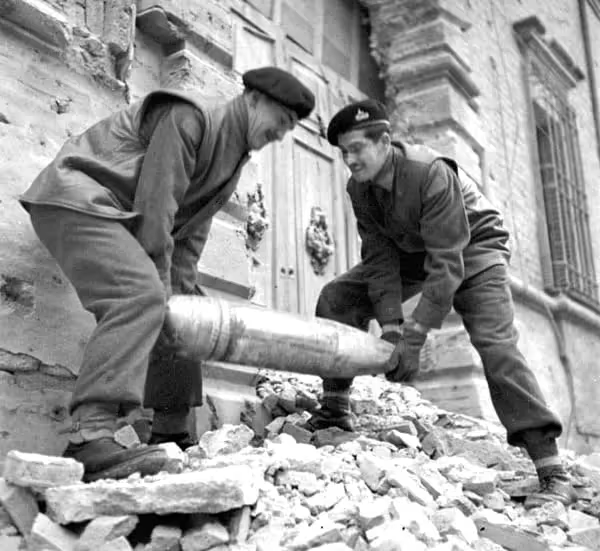
(Library and Archives Canada Photo, MIKAN No. 3240323)
Troopers W. Ballinan and A. Gallant of the Royal Canadian Dragoons carrying an unexploded 6-inch naval artillery shell (likely fired by an American light cruiser off the coast), at the request of Allied Military Government, Bagnacavallo, Italy, 3 January 1945.
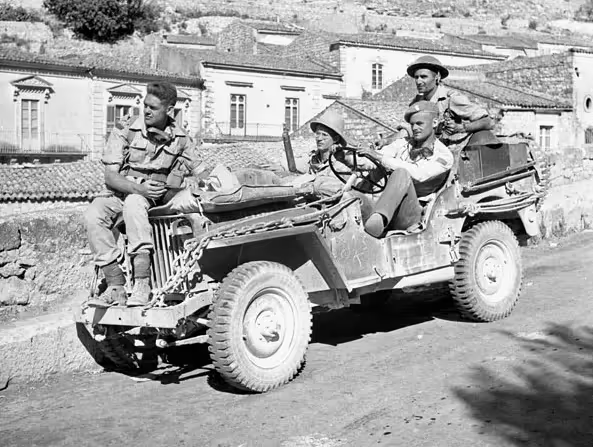
(Library and Archives Canada Photo, MIKAN No. 3578062)
Canadian war correspondents in a jeep, Modica, Italy, 13 July 1943.
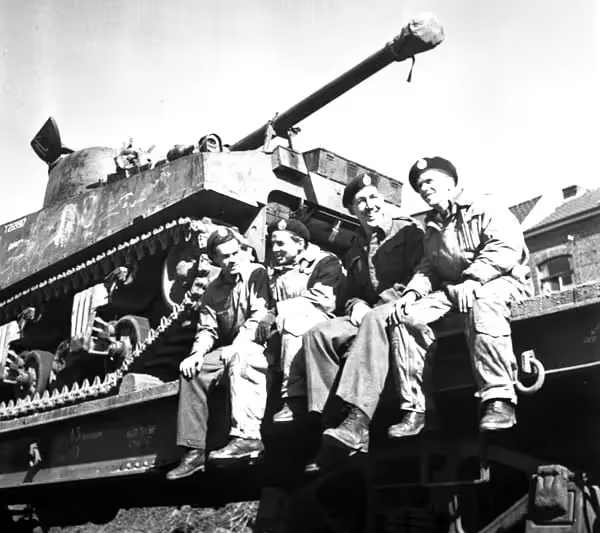
(Library and Archives Canada Photo, MIKAN No. 3378550)
Troopers Ed Owles, Jim Simmons, Sandy Cartner and Harry Clark from “B” Squadron, the Ontario Regiment, with a Sherman tank on a railway flatcar en route from Italy to Northwest Europe, Mouscron, Belgium, 24 March 1945.
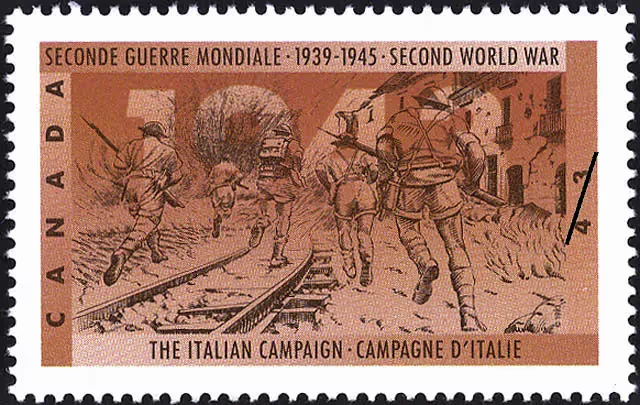
(Library and Archives Canada Photo, MIKAN No. 2266405)
Second World War, 1939-1945. The Italian campaign, 1993 stamp.