
Breaking the Gustav Line
Despite local victories, overall Allied attempts to break free of the Gustav Line remained frustrated throughout the winter, leading to a decision to concentrate forces for a joint offensive by the Eighth Army and the US Fifth Army at Monte Cassino. Accordingly, the Canadians moved there in late April.
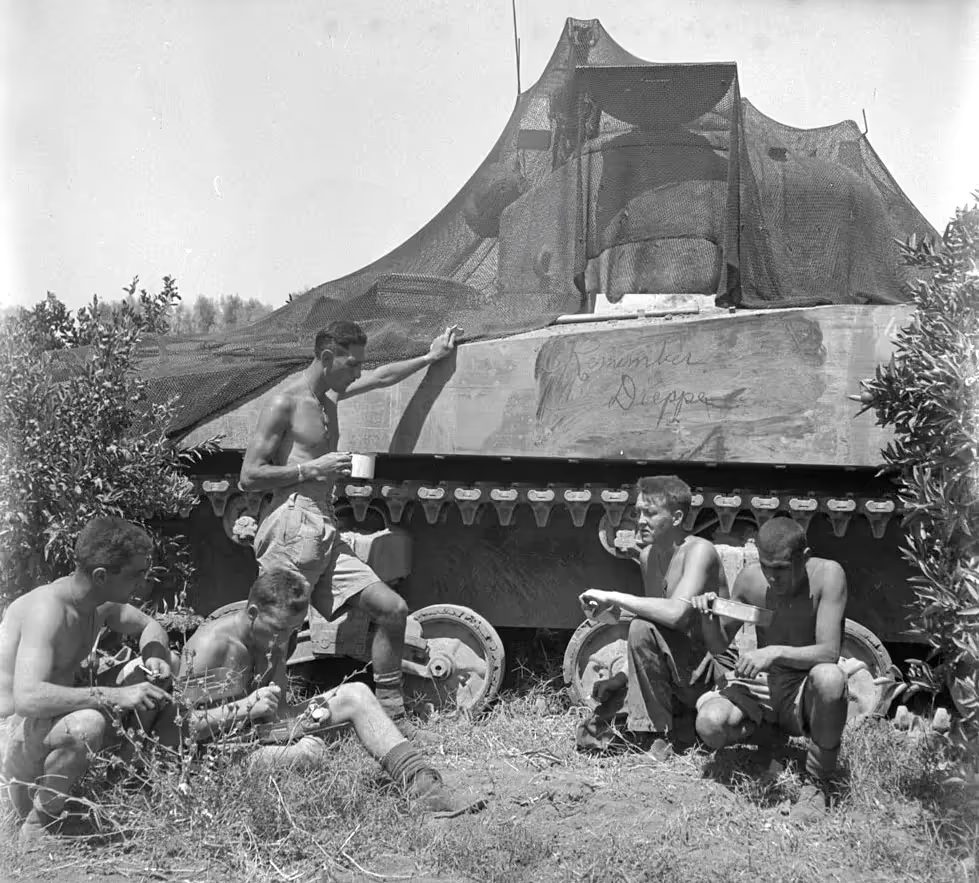
(Library and Archives Canada Photo, MIKAN No. 4558188)
Sherman V tank, 14th Canadian Tank Regiment (The Calgary Tank Regiment), “Remember Dieppe”, with its crew in Italy, taking time for a cup of coffee, Italy, 1943. The Calgary Tank Regiment was very much involved in Operation Jubilee, the Dieppe Raid in August 1942 and the men in this photo were not going to forgot what happened to their Regiment in that action. (Don Orth)
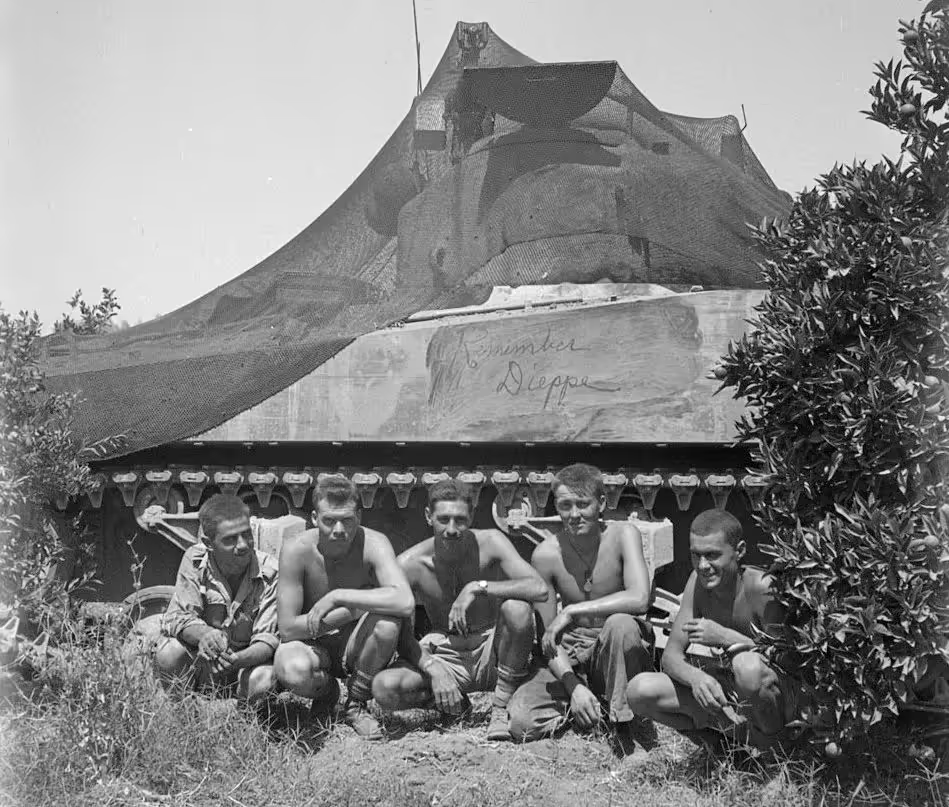
(Library and Archives Canada Photo, MIKAN No. 4558187)
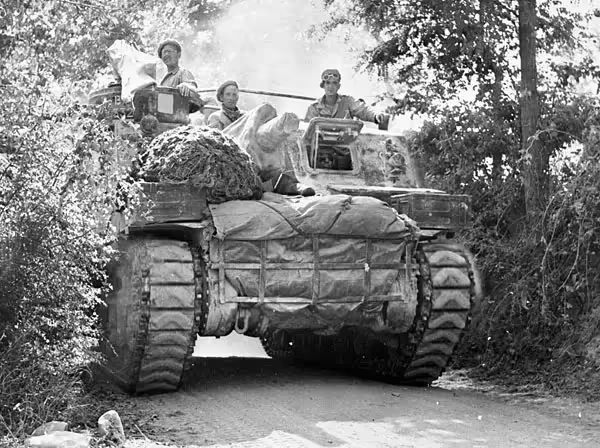
Sherman V tank, 14th Canadian Tank Regiment (The Calgary Tank Regiment), “Remember Dieppe“, Italy, 1943.
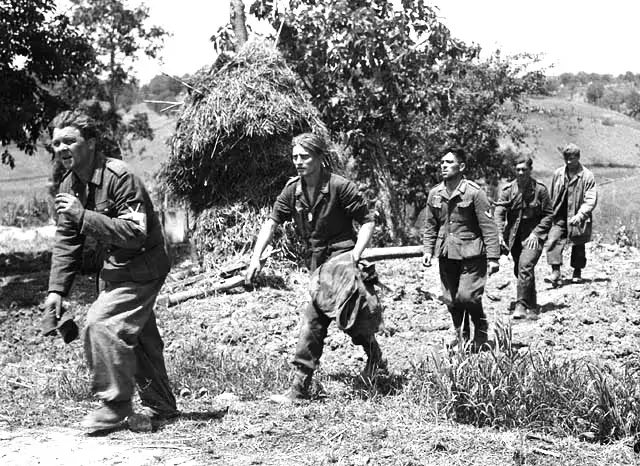
(Library and Archives Canada Photo, MIKAN No. 3191505)
German prisoners of war captured between Gustav and Hitler Lines, 26 May 1944.
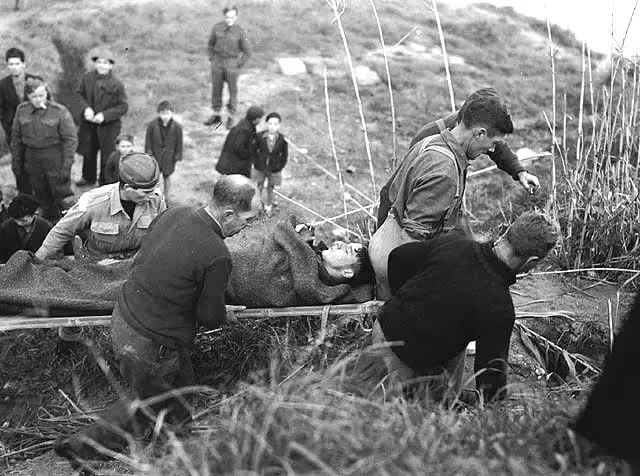
(Library and Archives Canada Photo, MIKAN No. 3191737)
Personnel of the 1st Canadian Armoured Brigade carrying Lieutenant Harold Hanreck, SAAF pilot serving with the RAF No. 112 ‘Shark’ Squadron, on a stretcher after his aircraft crashed into the Adriatic Sea. San Vito di Ortona, Italy, 31 December 1943.
(Library and Archives Canada Photo, MIKAN No. 3198870)
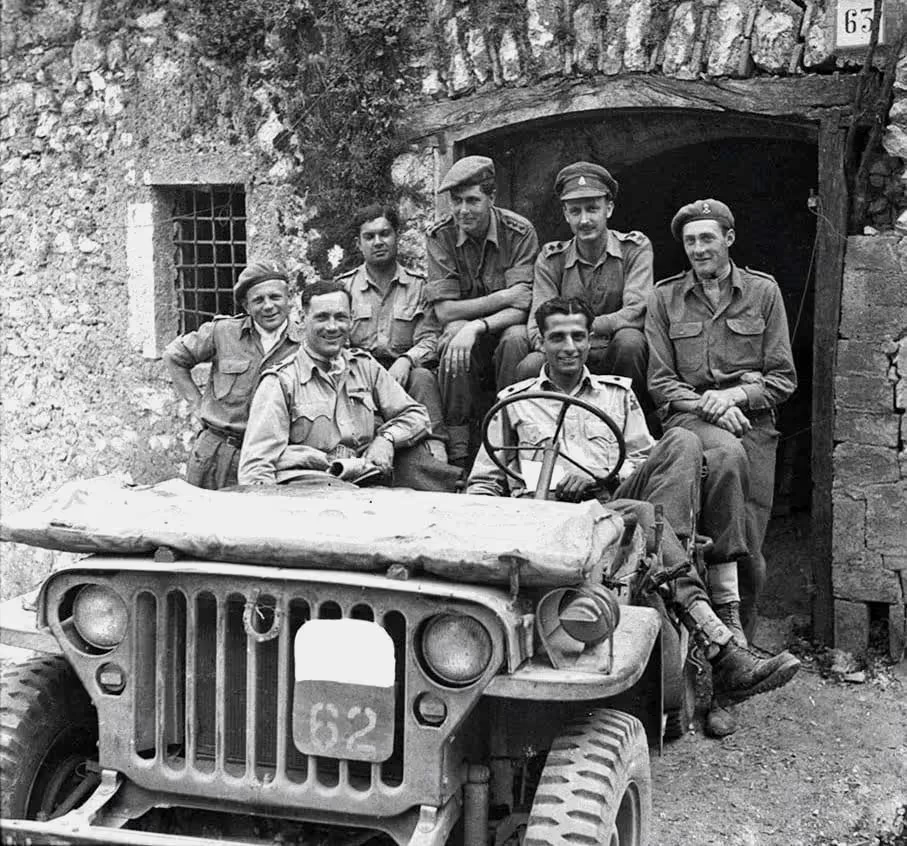
Group of 8th Indian Division officers of the Frontier Force Rifles who worked with the Calgary Tank Regiment on the crossing of the Gari River, 27 May 1944. Note the lucky horseshoe on the jeeps grill!
(Library and Archives Canada Photo, MIKAN No. 3224759)
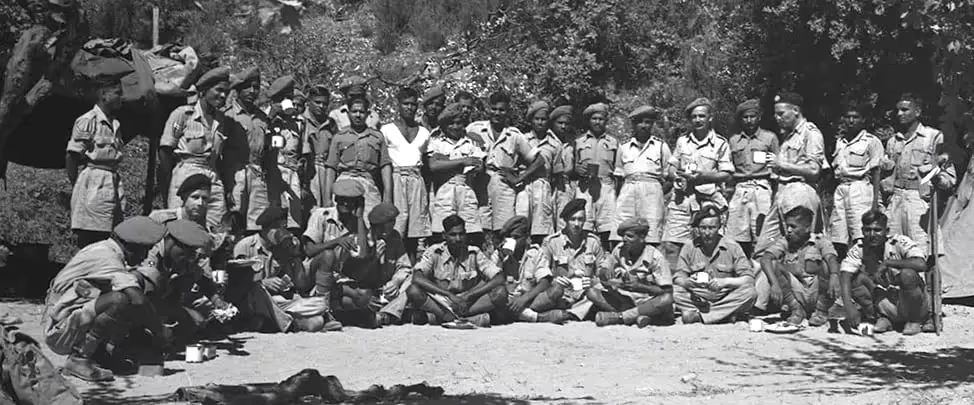
Personnel of the Calgary Tank Regiment visiting personnel of the 1st Battalion, 5th Mahratta Light Infantry, Indian Army, 28 August 1944.
On 11 May, the 1st Canadian Armoured Brigade supported an 8th Indian Division attack. The Calgary Tank Regiment established a tenuous bridgehead across the Gari River that enabled the Indians to break the Gustav Line and open the way — along with breakthroughs by other Allied units — for an advance against the next defensive position, known as the Hitler Line. Like the Gustav Line, this defensive system bristled with pillboxes, tank turrets mounted on concrete emplacements, and vast concentrations of barbed wire and minefields.
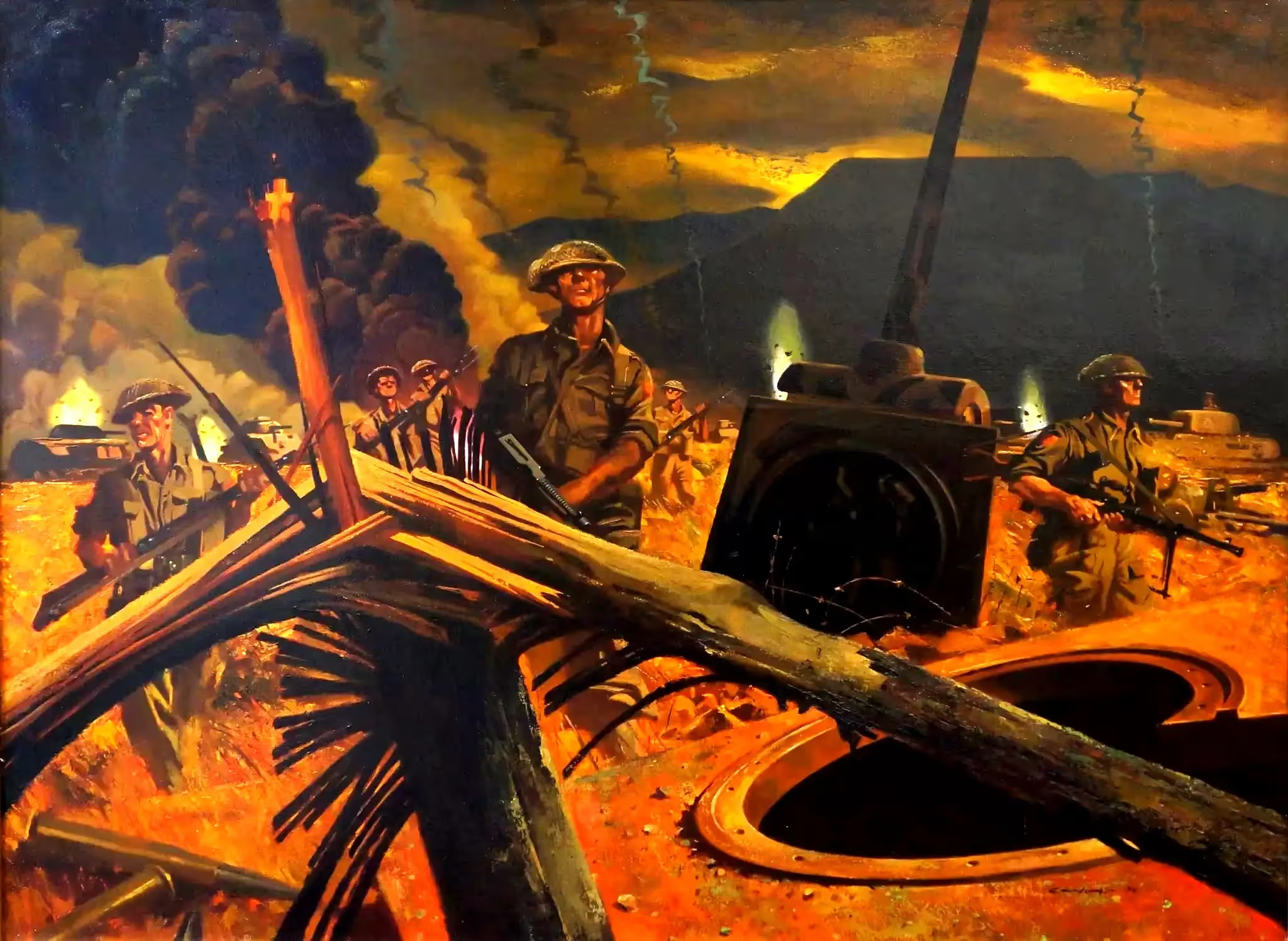
Charles Comfort, The Hitler Line, Oil painting on canvas, 1944, CWM (12296).
(DND Photo)
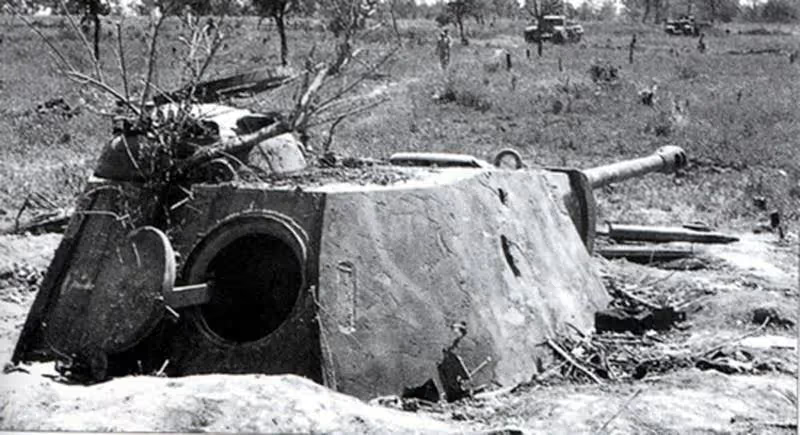
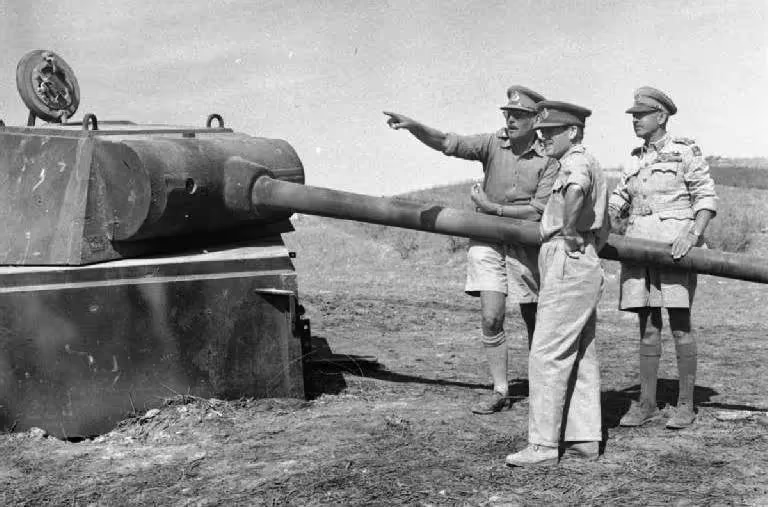
Panther turret emplacement, 1943.
(IWM Photo NA18349)
General Sir Harold Alexander (right), with Lt General Leese and Lt General Harding, inspect one of the German Panther tank turrets which formed part of the Gothic Line defences, September 1944. Field Marshal Harold Rupert Leofric George Alexander, 1st Earl Alexander of Tunis, KG, GCB, OM, GCMG, CSI, DSO, MC, CD, PC (10 December 1891 – 16 June 1969) was a senior British Army officer who served with distinction in both the First World War and the Second World War and, afterwards, as Governor General of Canada, the 17th since Canadian Confederation.
The Hitler Line
(Library and Archives Canada Photo, MIKAN No. 3191712)
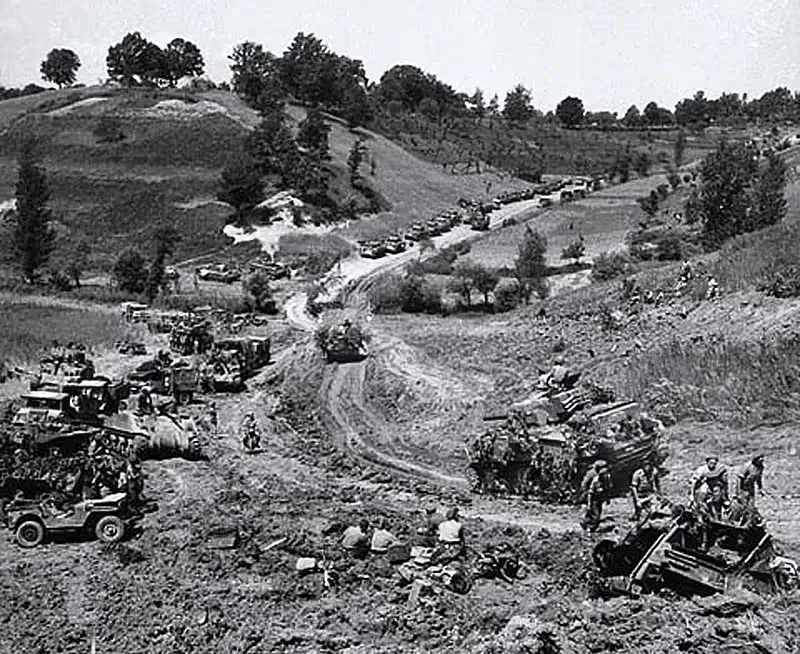
Canadians advancing from the Gustav Line to the Hitler Line, 24 May 1944.
Cracking the Hitler Line fell to I Canadian Corps, which moved toward it on 18 May. Attempting to avoid the heavy casualties inherent in set-piece attacks, the 1st Division’s commander, Major-General Chris Vokes attempted to pierce the line with individual battalion thrusts. When these failed, he implemented Operation Chesterfield, a two-brigade wide assault on 23 May.
(Library and Archives Canada Photo, MIKAN No. 3396066)
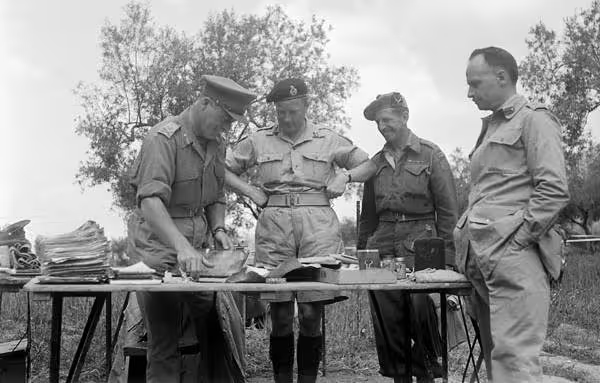
Possibly Major General Christopher Vokes CB, CBE, DSO, CD, Major General Bertram Meryl “Bert” Hoffmeister OC CB CBE DSO ED, possibly Lt-Colonel Thomson, DSO, MC, Seaforth Highlander and possibly Col Griffin, LdSH (RC), likely in Italy, ca 1944.
The three battalions of the 2nd Brigade were shredded by enemy fire on the division’s right flank and suffered 162 men killed, 306 wounded, and 75 taken prisoner, the single highest loss rate suffered by any brigade in a day’s fighting in Italy. To the left, however, the 3rd Brigade’s Carleton & York Regiment pierced the line. The remaining two battalions and the Three Rivers Regiment tanks soon widened this narrow gap to enable the 5th Canadian Armoured Division’s advance past the Hitler Line.
(Library and Archives Canada Photo, MIKAN No. 4167255)
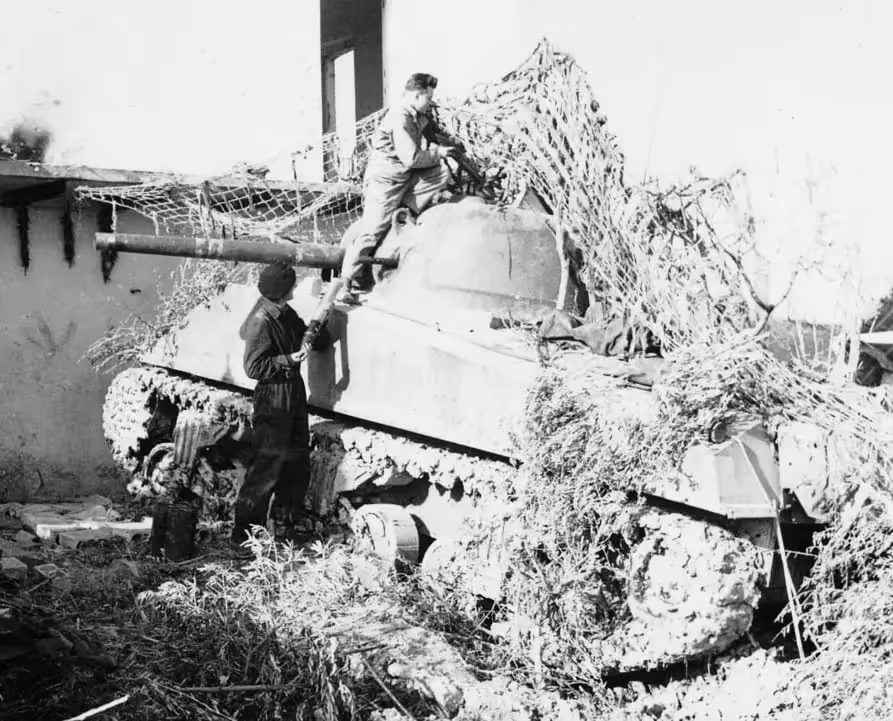
Two tanks in harbour beside a peasant’s farmhouse in Italy, 25 January 1944.
Liri Valley Offensive
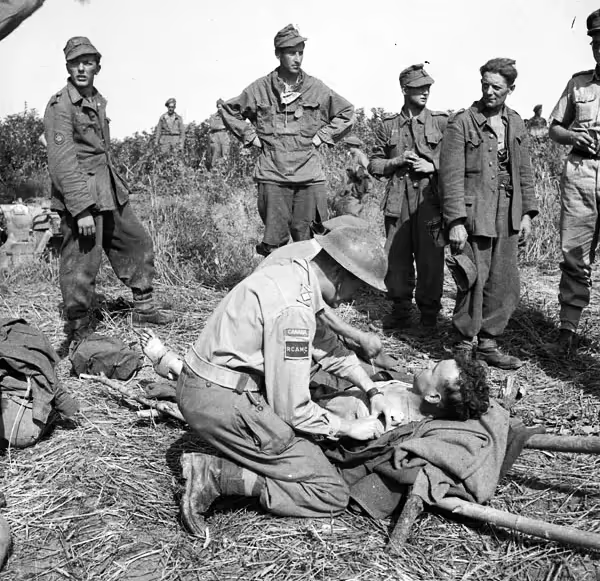
(Library and Archives Canada Photo, MIKAN No. 3207607)
Captain J.A. Gardner, RoyalCanadian Army Medical Corps (RCAMC), talking with a wounded German soldier in the Liri River valley, Italy, 24 May 1944.
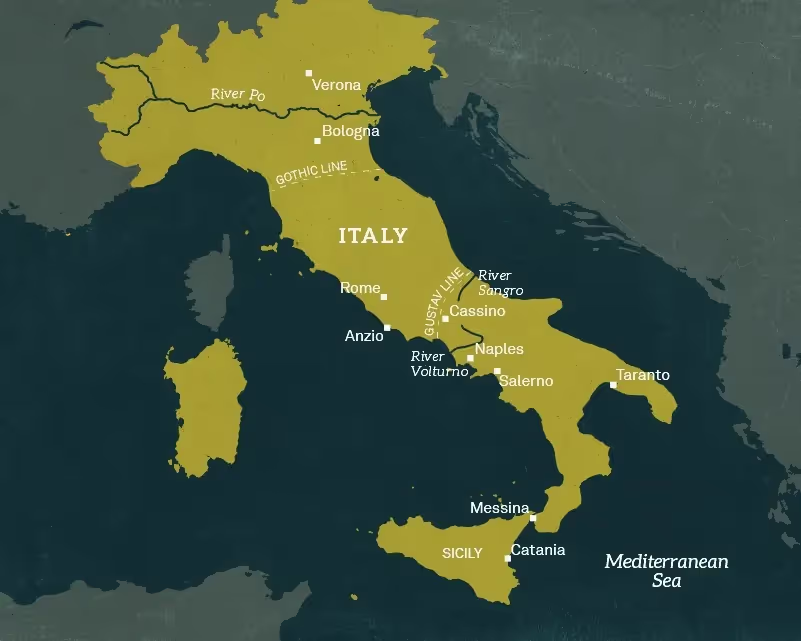
In the spring of 1944, the Germans still held the line of defence north of Ortona, as well as the mighty bastion of Monte Cassino which blocked the Liri corridor to the Italian capital. Determined to maintain their hold on Rome, the Germans constructed two formidable lines of fortifications, the Gustav Line, and 14.5 kilometres behind it, the Adolf Hitler Line.
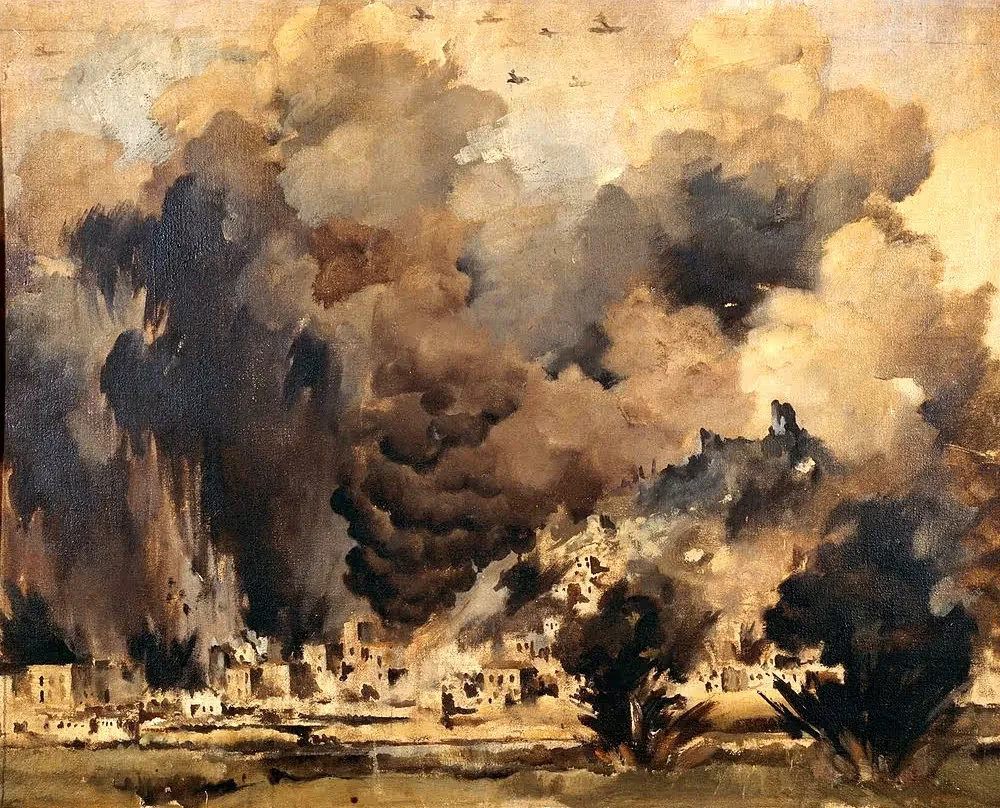
On 15 February 1944 Allied forces began a massive air assault on Monte Cassino, Italy. The air raid was part of an ongoing push by the Allies against the Winter Line in Italy held by Axis forces during the Italian Campaign of World War II, known as the ‘Battle of Monte Cassino’. At the beginning of 1944, the western half of the Winter Line was being anchored by Germans holding the Rapido, Liri, and Garigliano valleys and some of the surrounding peaks and ridges. Repeated pinpoint artillery attacks on Allied assault troops caused their leaders to conclude the abbey at Monte Cassino was being used by the Germans as an observation post. Fears escalated along with casualties, and in spite of a lack of clear evidence, it was marked for destruction. On 15 February American bombers dropped 1,400 tons of high explosives, creating widespread damage. The raid failed to achieve its objective, as German paratroopers occupied the rubble and established excellent defensive positions amid the ruins. Between 17 January and 18 May, Monte Cassino and the surrounding area were assaulted four times by Allied troops, the last involving twenty divisions attacking along a twenty-mile front. This painting by Peter McIntyre is part of the National Collection of War Art held by Archives New Zealand.
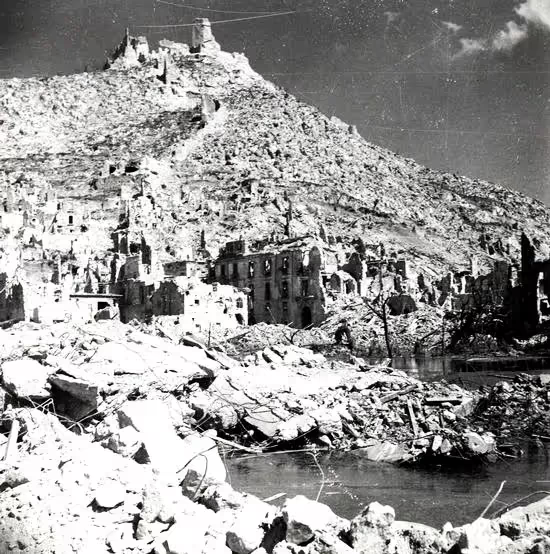
(Library and Archives Canada Photo, PA-136204)
Ruins of the town of Cassino and the fortress of Rocca Janula., 21 May 1944.
During April and May of 1944, the Eighth British Army, including the 1st Canadian Corps, was secretly moved across Italy to join the Fifth U.S. Army in the struggle for Rome. Here under the dominating peak of Cassino, the Allied armies hurled themselves against the enemy positions. Tanks of the 1st Canadian Armoured Brigade (formerly 1st Canadian Army Tank Brigade) supported the Allied attack. After four days of hard fighting, the German defences were broken from Cassino to the Tyrrhenian Sea and the Germans moved back to their second line of defence. On 18 May, Polish troops took the Cassino position and the battered monastery at the summit.
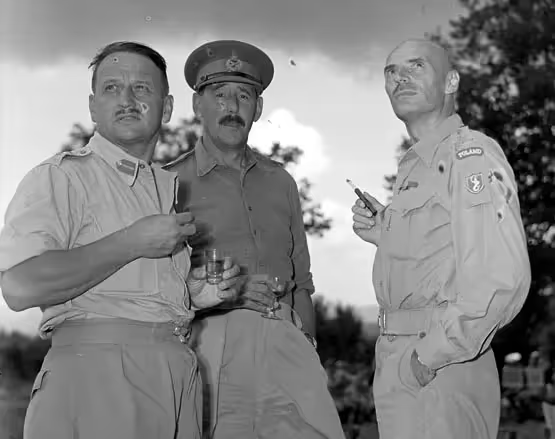
(Library and Archives Canada Photo, MIKAN No. 3718084)
Oliver Leese, and Lieutenant-General W. Anders, 2nd Polish Corps, Italy.
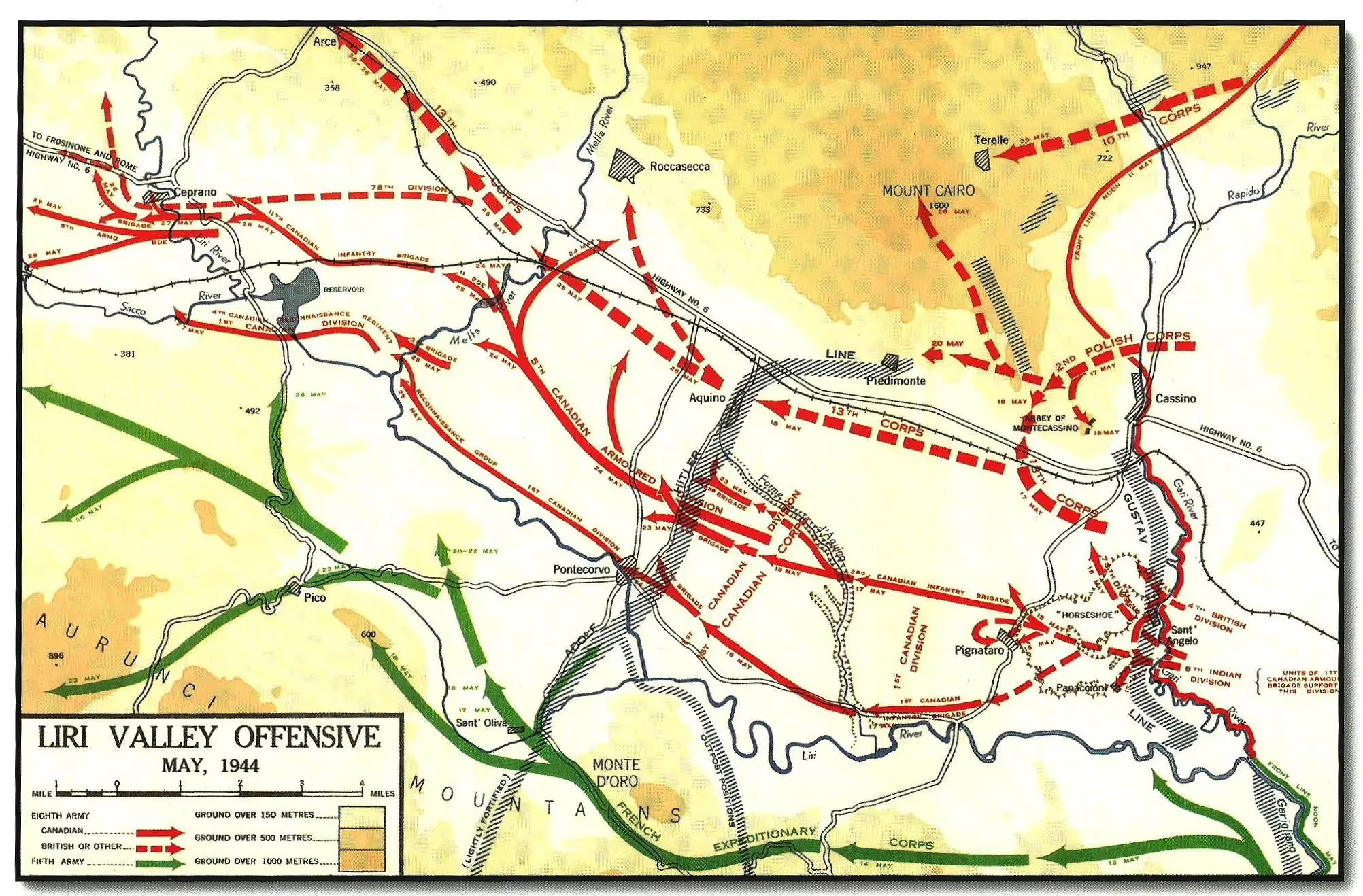
Mapofthe Liri Valley Offensive, May 1944. (Map drawn by C.C.J. Bond, in C.P. Stacey, The Canadian Army 1939-1945: An Official Historical Summary (1948), Department of National Defence)
On 16 May, the 1st Canadian Corps received orders to advance on the Hitler Line ten kilometres farther up the valley. Early on May 23, the attack on the Hitler Line went in. Under heavy enemy mortar and machine-gun fire, the Canadians breached the defences and the tanks of the 5th Canadian Armoured Division poured through toward the next obstacle, the Melfa River. Desperate fighting took place in the forming of a bridgehead across the Melfa. Once the Canadians were over the river, however, the major fighting for the Liri Valley was over.
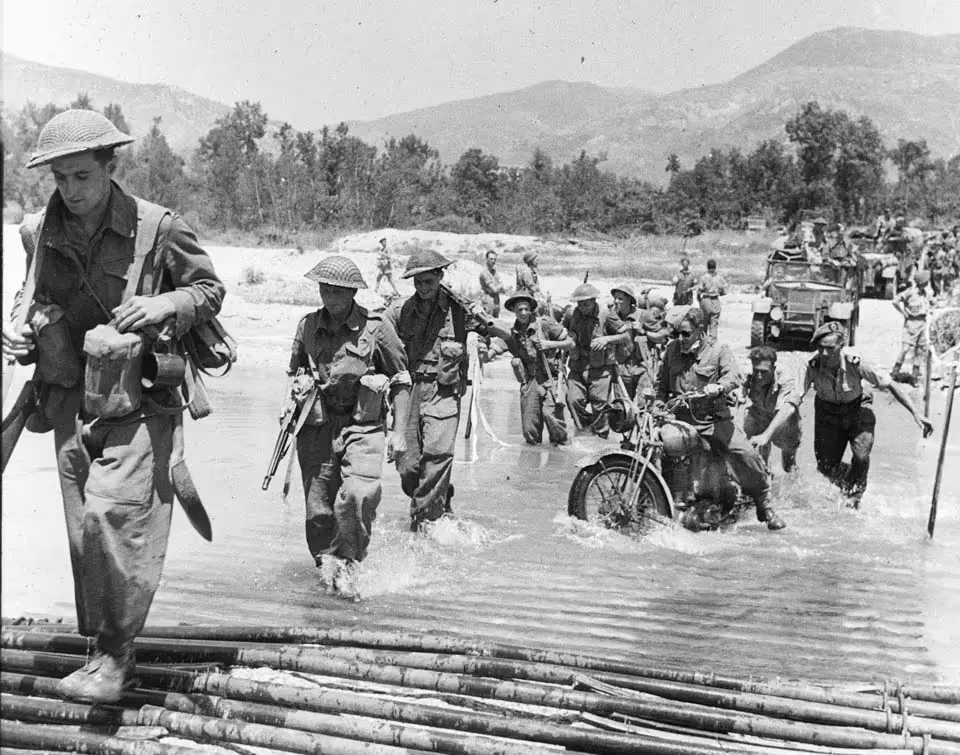
(DND Photo)
Canadian soldiers crossing the Melfa River, 1944.
The operation developed into a pursuit as the Germans moved back quickly to avoid being trapped in the valley by the American thrust farther west. The 5th Armoured Division carried the Canadian pursuit to Ceprano where the 1st Canadian Infantry Division took over the task. On May 31, the Canadians occupied Frosinone and their campaign in this area came to an end as they went into reserve. Rome fell to the Americans on 4 June. Less than 48 hours later, the long-awaited D-Day invasion of Northwest Europe began on the Normandy beaches. It remained essential, therefore, for the Allied forces in Italy to continue to pin down German troops.
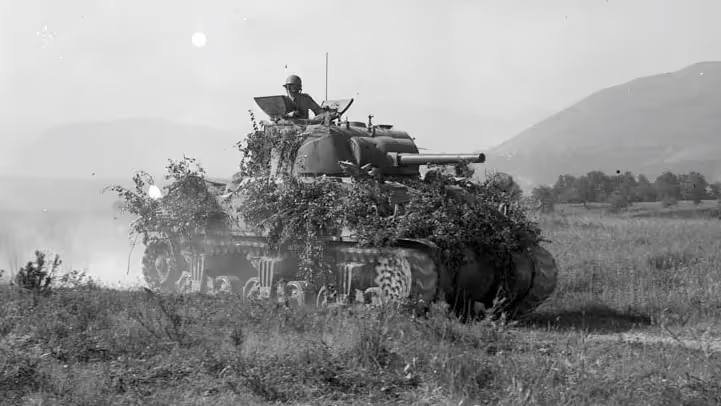
(Library and Archives Canada Photo, MIKAN No. 4166579)
8th Princess Louise’s (New Brunswick) Hussars Sherman tank approaching Ceprano, Italy, 1944.
The Canadians were now withdrawn for well-earned rest and re-organization, except for the 1st Canadian Armoured Brigade which accompanied the British in the Allied action as the Germans moved northward to their final line of defence.
The Advance to Rimini
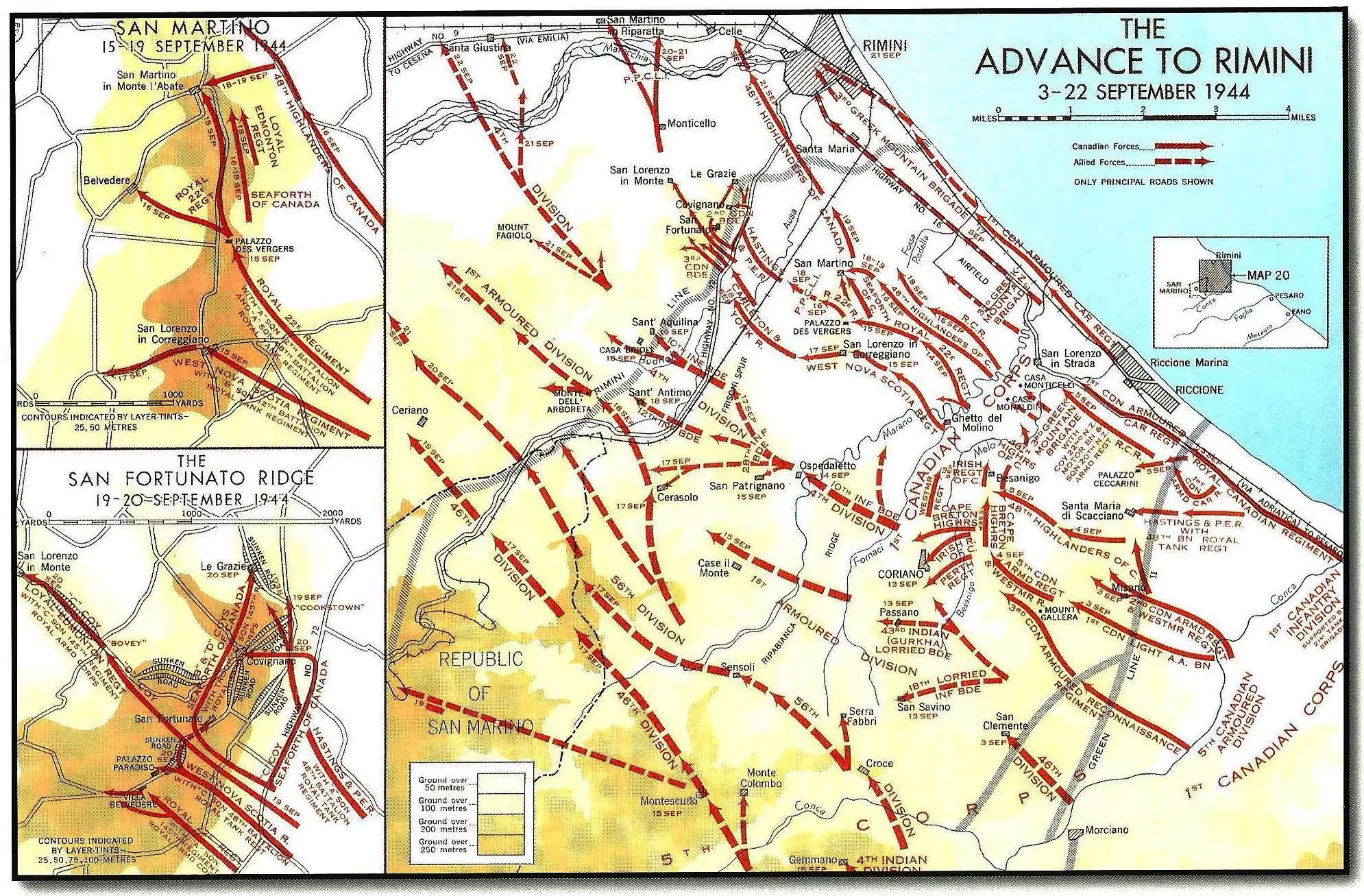
Map of the Advance to Rimini, 3-22 September 1944. (Map drawn by C.C.J. Bond, in C.P. Stacey, The Canadian Army 1939-1945: An Official Historical Summary (1948), Department of National Defence)
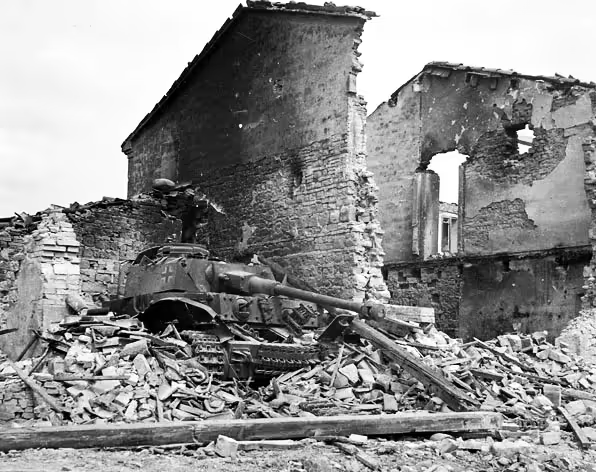
(Library and Archives Canada Photo, MIKAN No. 3718111)
German Panzer IV tank in the ruins of a house near Rimini, Italy, 1944.
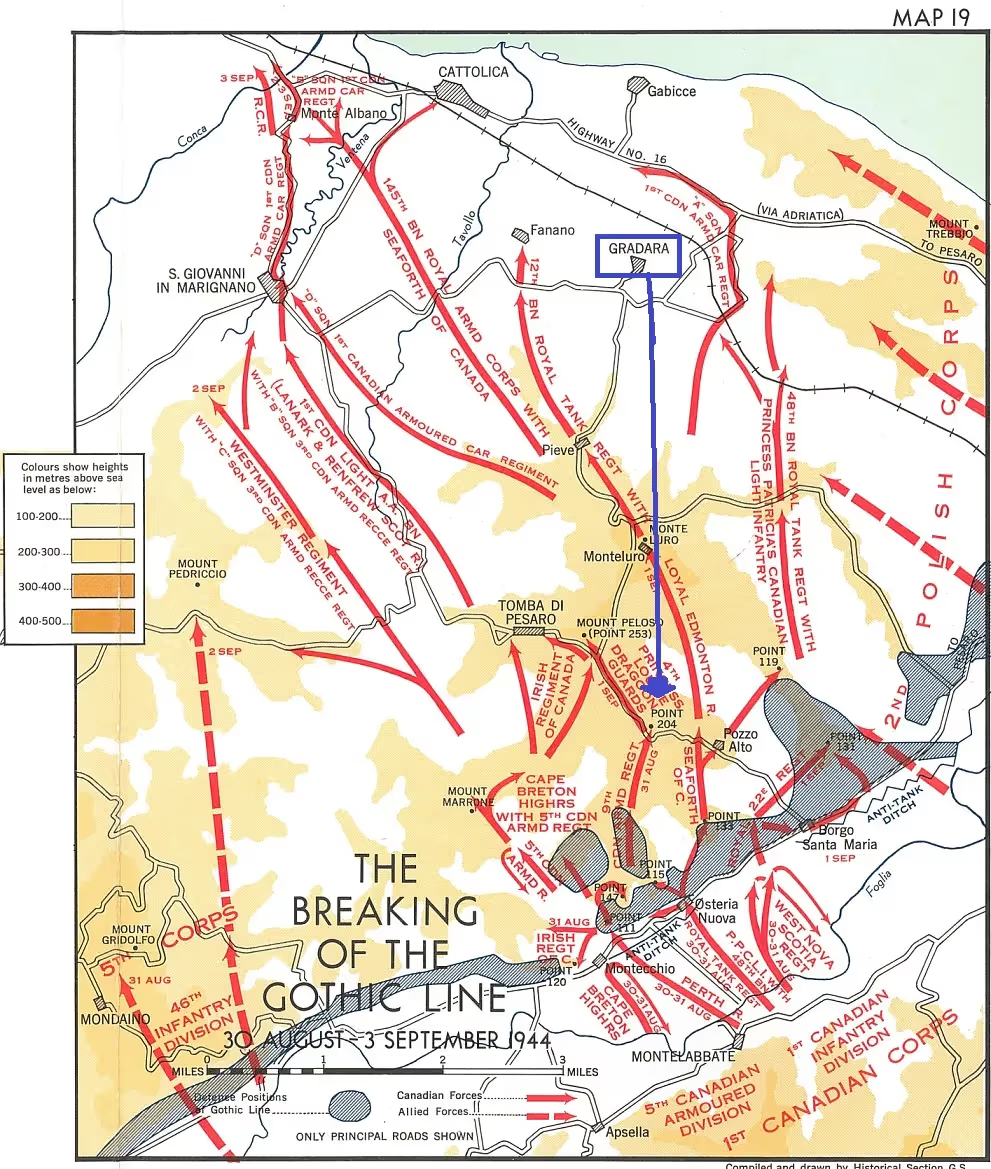
During the approach to the green line No. 1 (from Metauro to Foglia river). (Map drawn by C.C.J. Bond, in C.P. Stacey, The Canadian Army 1939-1945: An Official Historical Summary (1948), Department of National Defence)
Autumn and winter 1944 saw the Canadians back on the Adriatic coast with the objective of breaking through the Gothic Line. This line, running roughly between Pisa and Pesaro, was the last major German defence line separating the Allies from the Po Valley and the great Lombardy Plain in northern Italy. Since many factories producing vital supplies were located in the north, the Germans would fight hard to prevent a breakthrough. The line was formidable, composed of machine-gun posts, anti-tank guns, mortar- and assault-gun positions and tank turrets set in concrete, as well as mines, wire obstacles and anti-tank ditches.
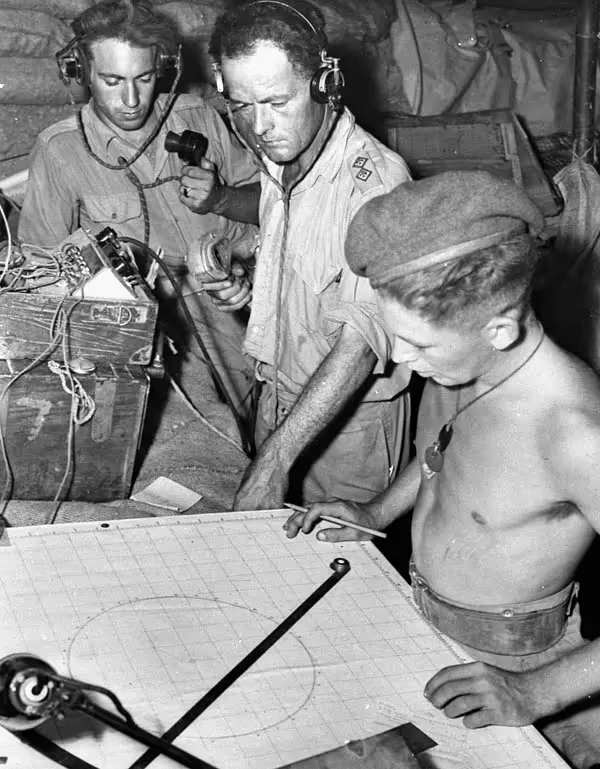
(Library and Archives Canada Photo, MIKAN No. 3512560)
Personnel of the Royal Canadian Artillery (R.C.A.) plotting corrections for artillery during the assault on the Gothic Line, Italy, ca. 30-31 August 1944. On the Foglia River, near Montecchio, going up to Tavullia.
The Artillery Board (Arty Board) was operated by a Technical Assistant, Royal Artillery (TARA). The arty board represented a map with no features. The arc allowed bearings to be calculated and the range arm allowed ranges to be determined. The board could be set up two ways. With the pivot point set at the map coordinates of the battery centre or with the pivot point set at the map coordinates of the observer calling in the fire and corrections. Generally, the battery centre was the default setting. Corrections to the initial fall of shot were marked onto the board from the point of view of the observer (OT or Observer to Target). The TARA then used the arc and range arm to convert the OT data into GT (Gun to Target) data which would be issued to the guns as a bearing and range. Relatively simple trigonometry once you get the hang of it. Normally, two TARAs set up left and right of the officer. The duplication of work was to ensure errors were caught before the data was issued to the guns. The officer would satisfy himself that the two TARAs were within tolerance of each other. He would then do a common sense check on his “check map” to provide a third level of safety and finally he would issue the data to the guns. The method is still used today, as the MAPS system. (Michael Thomas Anthony Calnan)
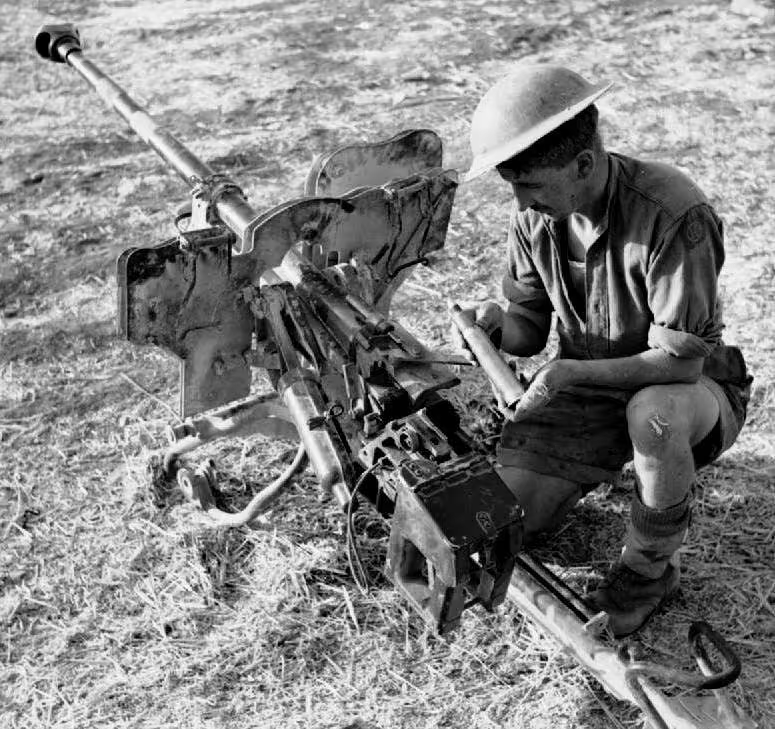
(IWM Photo NA 4961)
Captured German 2.8-cm schwere Panzerbüchse 41 anti-tank Gun, Italy, 21 July 1943.
The Allied plan called for a surprise attack upon the east flank, followed by a swing toward Bologna. To deceive the Germans into believing the attack would come in the west, the 1st Canadian Division was concentrated near Florence, then secretly moved northward to the Adriatic.
In the last week of August 1944, the entire Canadian Corps began its attack on the Gothic Line with the objective of capturing Rimini. On 25 August, the Canadians crossed the Metauro River, the first of six rivers lying across the path of the advance. They moved on to the Foglia River to find that the Germans had concentrated their forces here. It required days of bitter fighting and softening of the line by Allied air forces to reach it.
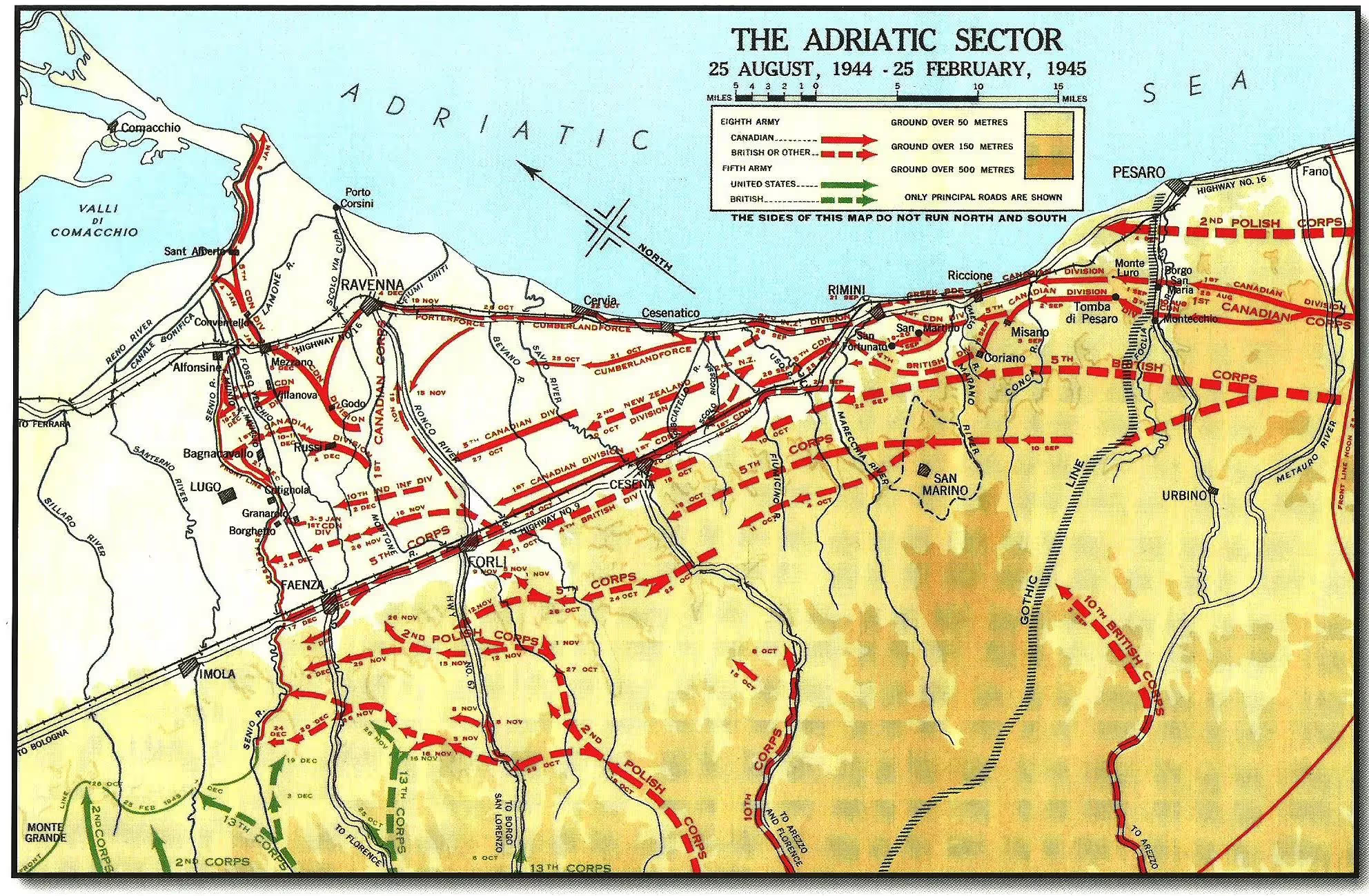
Map of Canadian Operations in the Adriatic Sector, 25 August 1944to 25 February 1945. (Map drawn by C.C.J. Bond, in C.P. Stacey, The Canadian Army 1939-1945: An Official Historical Summary (1948), Department of National Defence)
(IWM Photo, NA 18051)
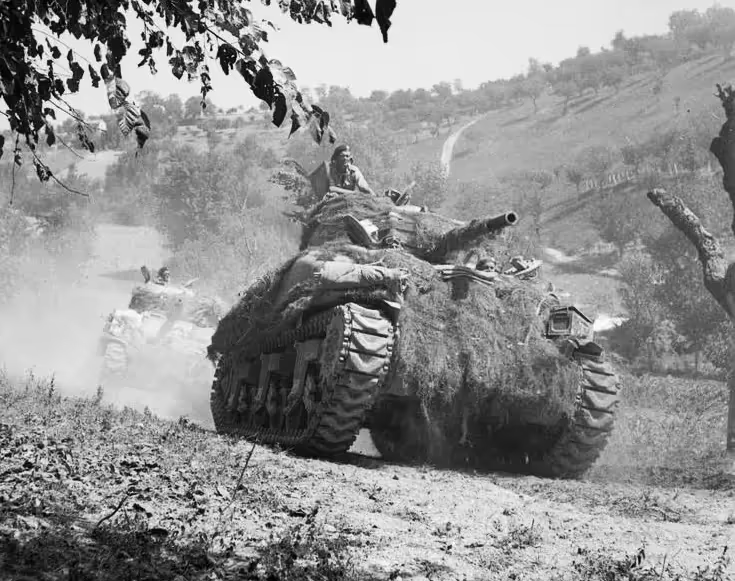
Sherman tanks of 1st Canadian Armoured Brigade advancing towards the Gothic Line, Italy, 26 August 1944.
(Library and Archives Canada Photo, MIKAN No. 3216972)
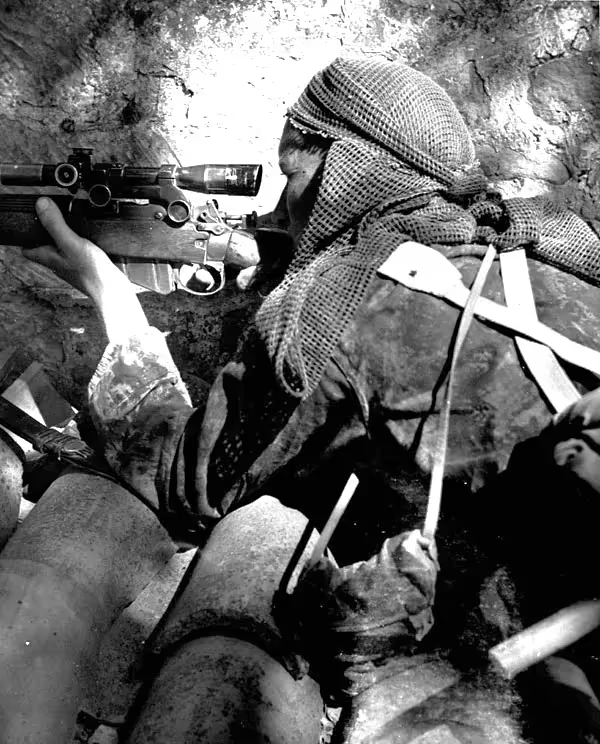
Private L.V. Hughes, 48th Highlanders of Canada, sniping German position, near the Foglia River, Italy, 1944.
(Library and Archives Canada Photo, MIKAN No. 3238673)
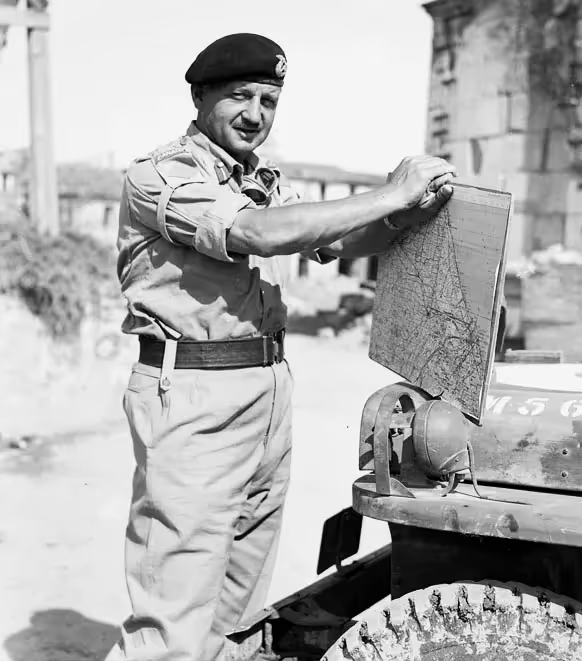
Lieutenant-General E.L.M. Burns, General Officer Commanding 1st Canadian Corps, consults his map en route to Rimini, Italy, 23 September 1944.
(Library and Archives Canada Photo, MIKAN No. 4846226)
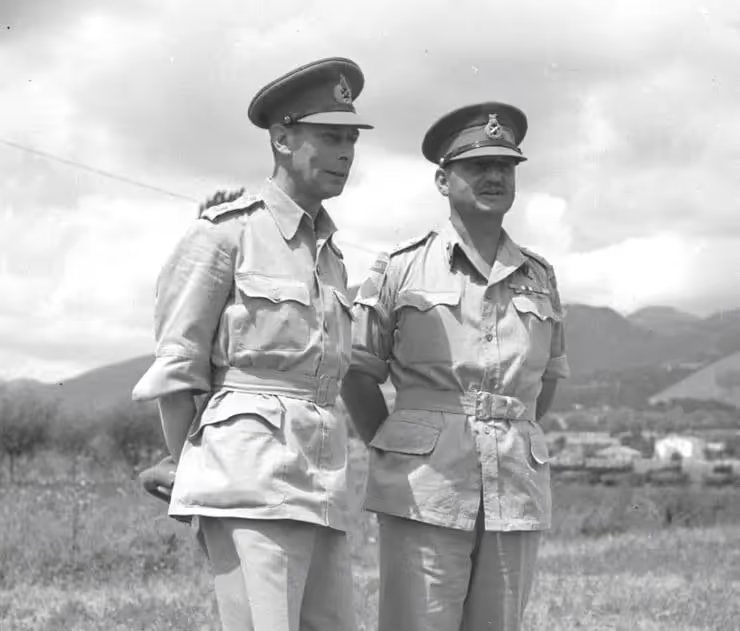
King George VI with LGen E.L.M. Burns, G.O.C. of 1st Canadian Corps, in Italy, 31 July 1944.
On 30 August, two Canadian brigades crossed the Foglia River and fought their way through the Gothic Line. On 2 September, General Burns reported that; “the Gothic Line is completely broken in the Adriatic Sector and the 1st Canadian Corps is advancing to the River Conca.” The announcement was premature for the enemy recovered quickly, reinforced the Adriatic defence by moving divisions from other lines and thus, slowed the advance to Rimini to bitter, step-by-step progress. Five kilometres south of the Conca, the forward troops came under fire from the German 1st Parachute Division, while heavy fighting was developing on the Coriano Ridge to the west. By hard fighting, the Canadians captured the ridge and it appeared that the Gothic Line was finally about to collapse. The Canadians battled for three more weeks, however, to take the hill position of San Fortunato which blocked the approach to the Po Valley.
(Library and Archives Canada Photo, MIKAN No. 3512556)
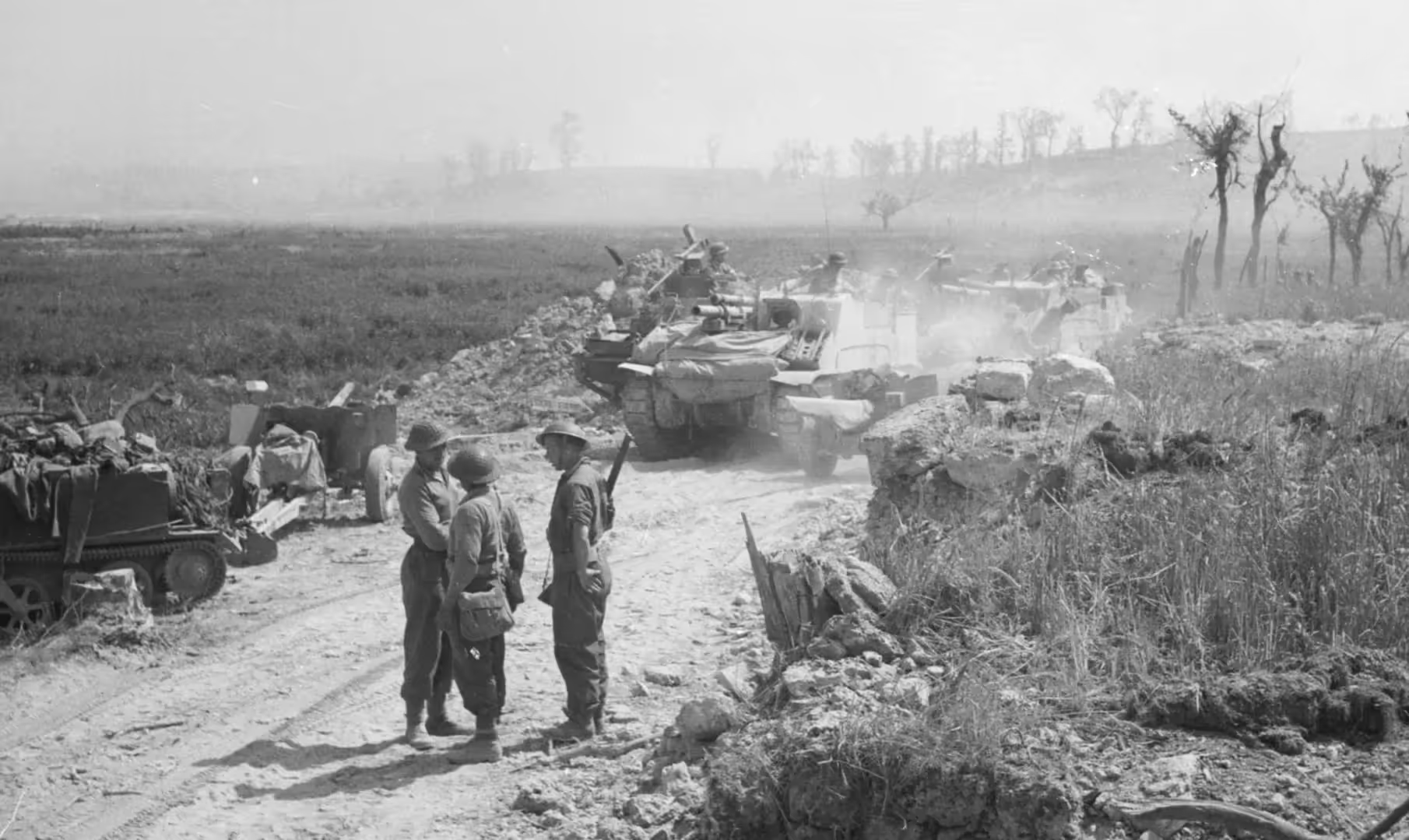
Infantrymen of the 1st Canadian Infantry Division riding on a 105-mm Priest self-propelled howitzer of the Royal Canadian Artillery (RCA) behind the Foglia River, south of Pesaro during the assault on the Gothic Line, Italy, ca. 26-27 August 1944.
(Library and Archives Canada Photo, MIKAN No. 3607614)
Troop of 105-mm Priest self-propelled howitzers of the Royal Canadian Artillery (RCA) in Italy, c1943. Possibly 8th Field Regiment (SP) RCA.
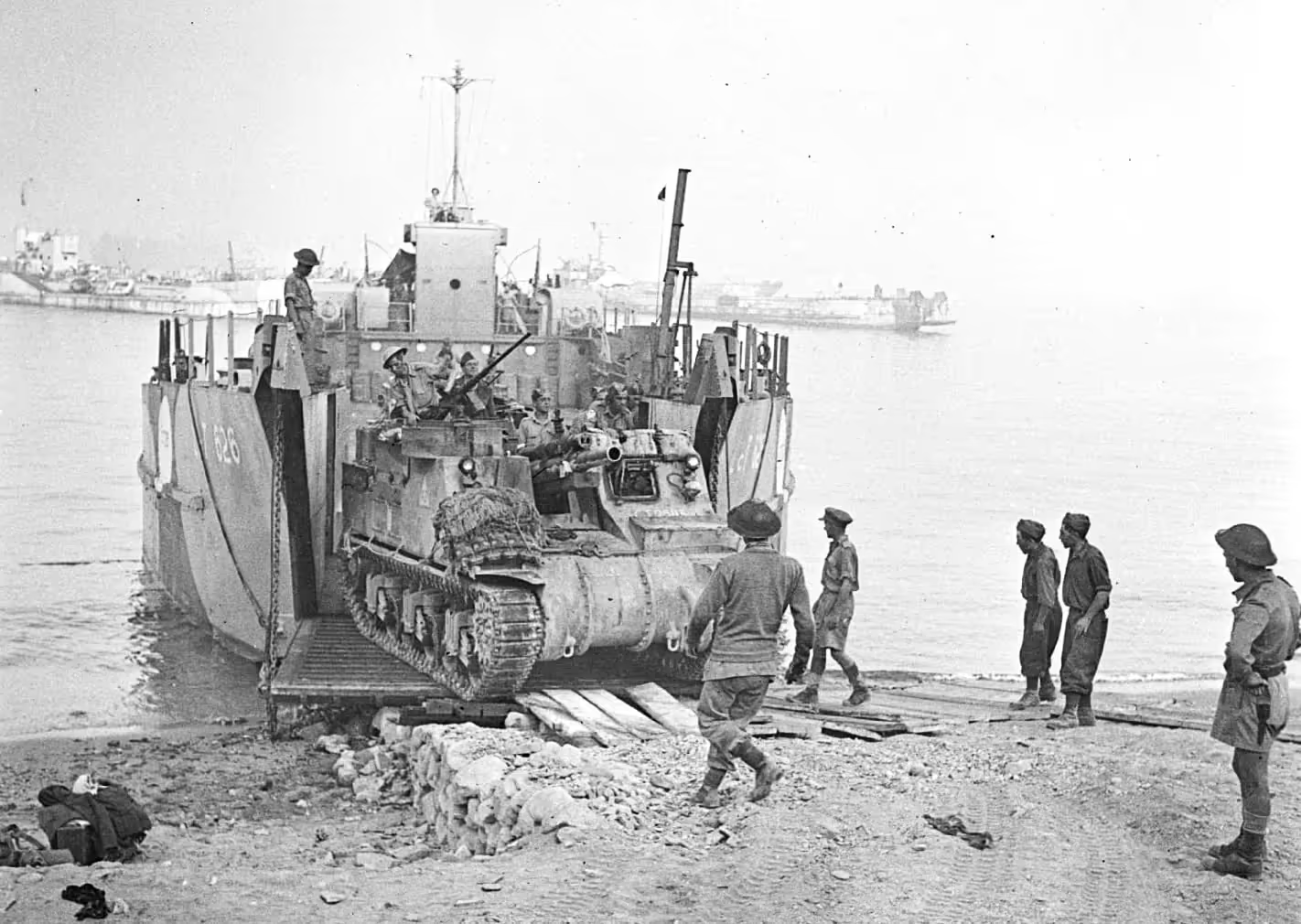
(Library and Archives Canada Photo, MIKAN No. 3607963)
105-mm Priest M-7 self-propelled gun coming ashore at Termoli, c1943. Possibly 8th Fd Regt (SP) Howitzers, as the only Canadian SP unit in Italy.
On 21 September, the Allies entered a deserted Rimini. That same day, the 1st Division was relieved by the New Zealand Division, ready with the 5th Armoured Division to sweep across the Lombardy Plain to Bologna and the Po. But the rains came. Streams turned into raging torrents, mud replaced the powdery dust and the tanks bogged down in the swamp lands of the Romagna. The Germans still resisted.
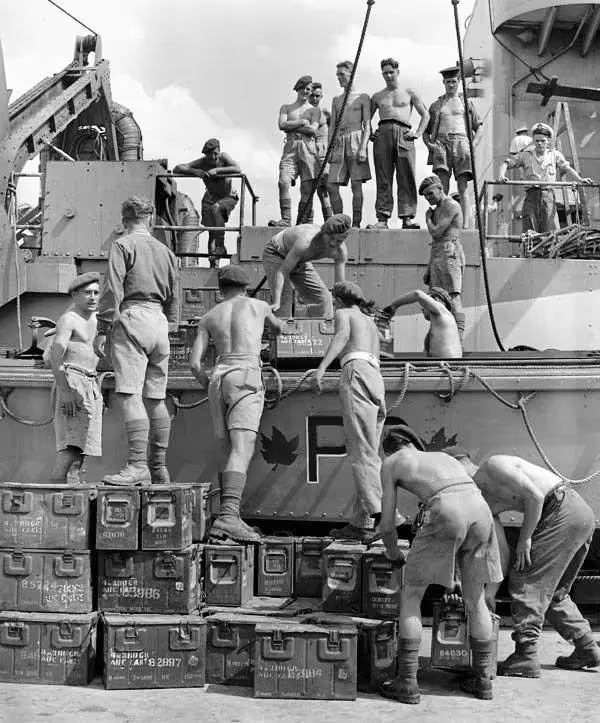
(Library and Archives Canada Photo, MIKAN No. 3201116)
RCN Commandos loading ammunition aboard a Landing Craft Assault (LCA) of HMCS Prince David, near Taranto, Italy, 13 September 1944.
September 1944 waned and with it the hopes of quickly advancing into the valley of the Po. On 11 October, the 1st Canadian Infantry Division returned to the line and the 5th Division went into corps reserve. For three weeks, the Canadians fought in the water-logged Romagna. The formidable defences of the Savio River were breached, but the Germans counter-attacked to try to throw the Canadians back. Meanwhile, the Americans were progressing toward Bologna, and to halt their advance, the Germans took two crack divisions from the Adriatic front. The Canadians were thus able to move up to the banks of the Ronco, some ten kilometres farther on.
The Canadian Corps was now withdrawn into Army Reserve to recuperate from the ten weeks of continuous fighting and to train for the battles which lay ahead. The 1st Canadian Armoured Brigade, meanwhile, continued to operate with the Americans and British in the area north of Florence. They would end their campaign in Italy in the snow-covered peaks in February 1945.
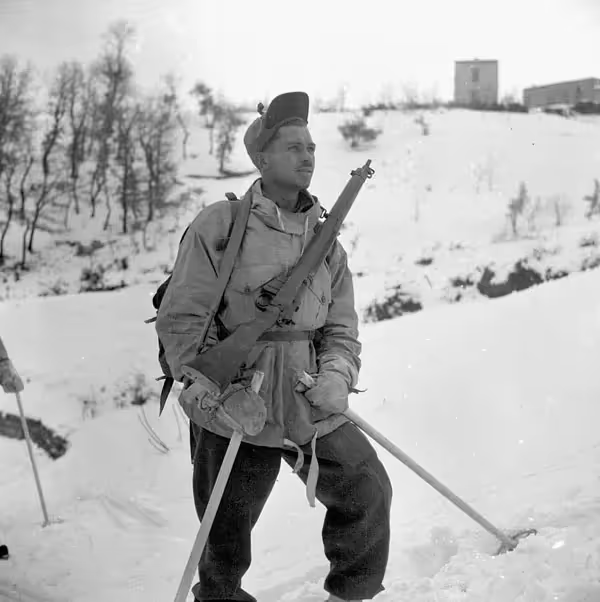
(Library and Archives Canada Photo, MIKAN No. 3231417)
Trooper E.C. Taciun, Ontario Regiment, a member of the ski party that carried food and medical supplies to stranded British troops of the 56th Reconnaissance Regiment, 78th Division, commanded by Lt Col Kendal G.F. Chavasse DSO & Bar, Tornareccio, Italy, 15 February 1944.
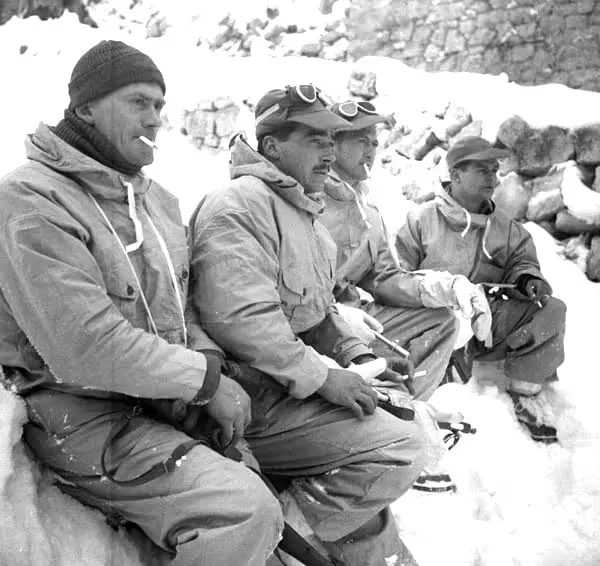
(Library and Archives Canada Photo, MIKAN No. 3230042)
Troopers of The Ontario Regiment near Tornareccio, Italy, 21 February 1944.
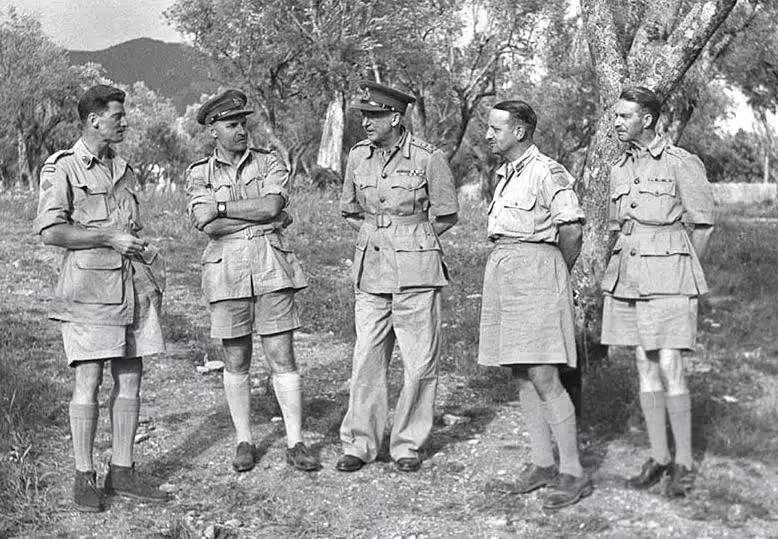
(Library and Archives Canada Photo, MIKAN No. 3225474)
Lieutenant-General E.L.M. Burns (fourth from left) and other senior officers during Lieutenant-General Kenneth Stuart’s visit to units of the 1st Canadian Corps, July 1944.
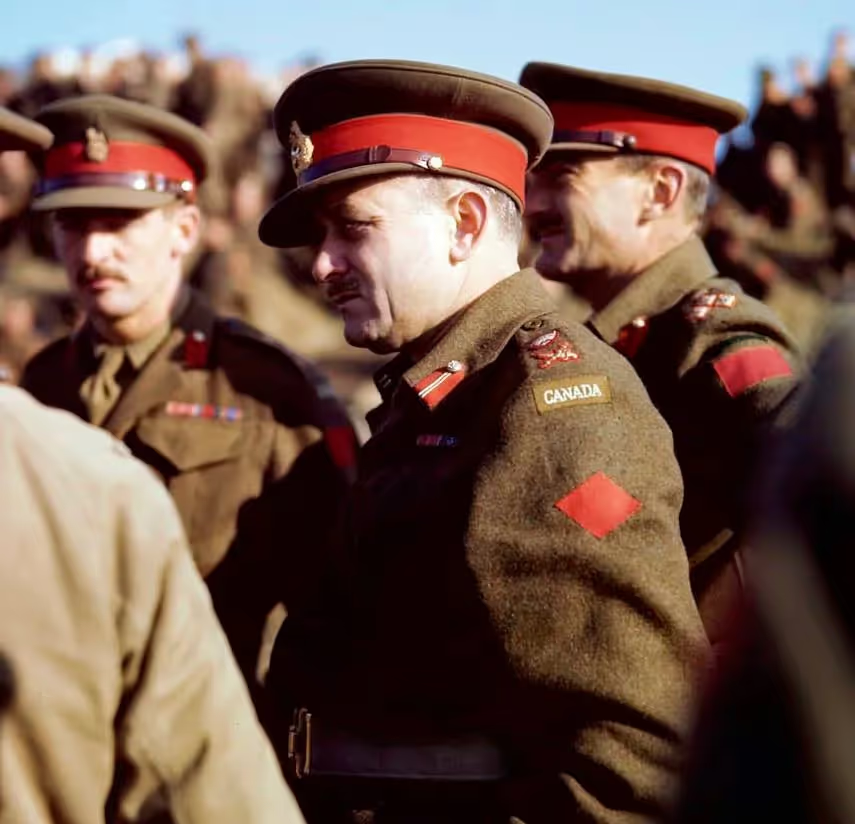
(Library and Archives Canada Photo, MIKAN No. 4233348)
LGen Charles Foulkes near Cattolica, Italy, September 1944.
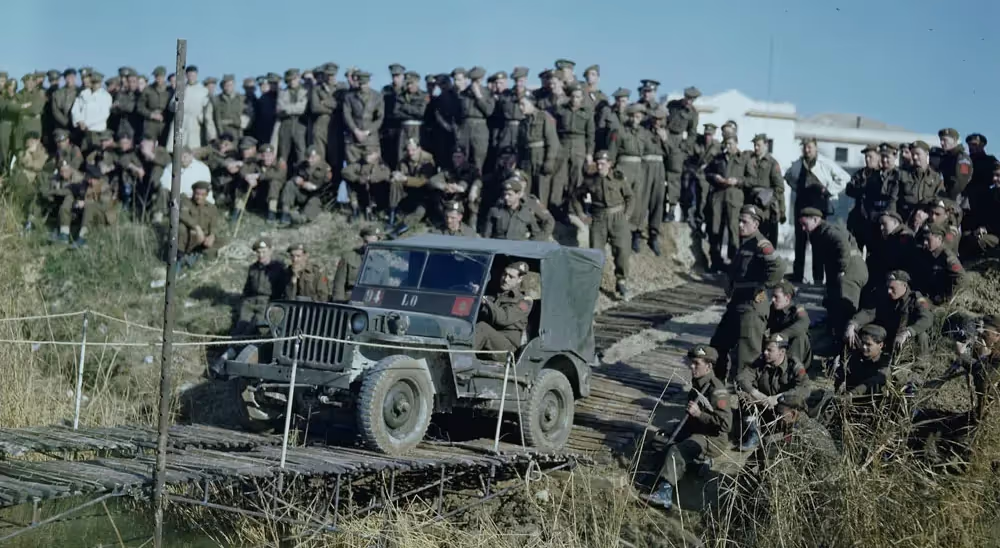
(Library and Archives Canada Photo, MIKAN No. 4233351)
LGen Charles Foulkes, near Cattolica, Italy, September 1944..
Changes in command occurred before the Corps returned to the line. On 5 November, Lieutenant-General Charles Foulkes succeeded Lieutenant-General Burns as commander of the 1st Canadian Corps, and Major-General Vokes left for Holland to exchange appointments with Major-General H.W. Foster.
The Canadians returned to battle on 1 December as the Eighth Army made one last attempt to break through into the Lombardy Plain. In a bloody month of river crossings which resulted in extremely heavy casualties, they fought through to the Senio River. Here the Germans, desperate in their resistance, drew reinforcements from their western flank and, aided by the weather and topography, stopped the Eighth Army. In January 1945 the Senio became stablilized as the winter line, and in appalling weather both sides employed minimum troops as they observed each other from concealed positions.
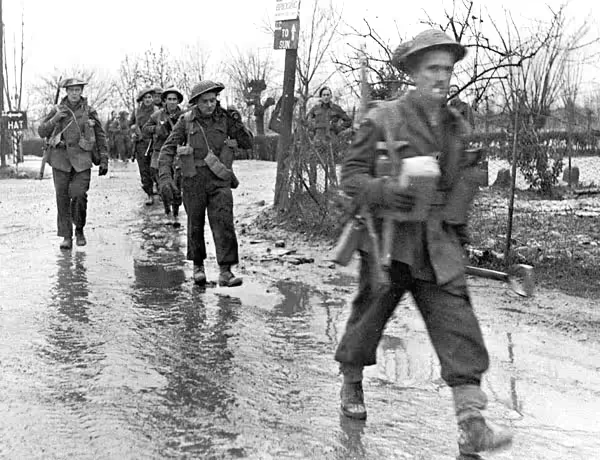
(Library and Archives Canada Photo, MIKAN No. 3240581)
Canadian soldiers in miserable winter weather near Russi, Italy, January 1945.
(Library and Archives Canada Photo, MIKAN No. 3329654)
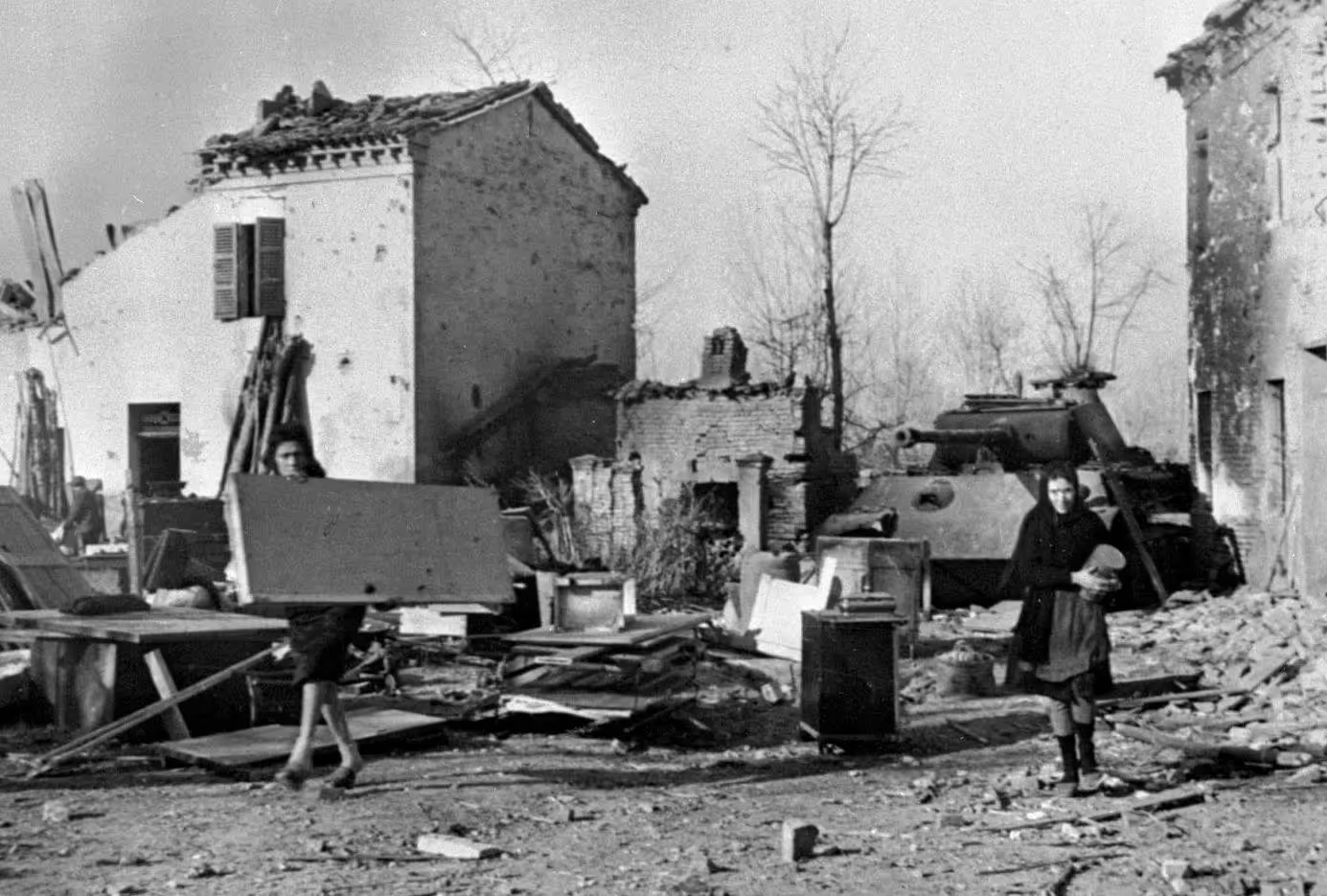
German Panther knocked out, Conventello, Italy, 22 Jan 1945.
(Library and Archives Canada Photo, MIKAN No. 4166596)
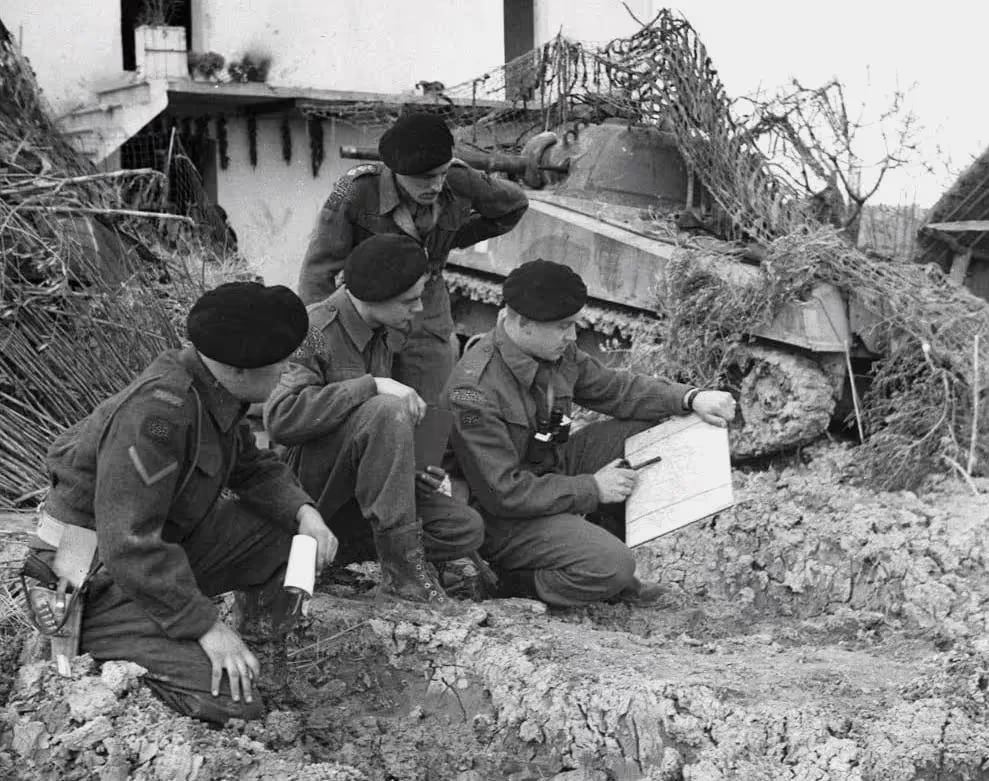
“A” Squadron HQ, Lord Strathcona’s Horse (Royal Canadians), with their Sherman tank near Ortona, Italy, c1943. Left to right: Lance Corporal Montgomery, Corporal Cade, Captain J.B. Windsor, Major G.L. Symmes.
(Library and Archives Canada Photo, MIKAN No. 4166643)
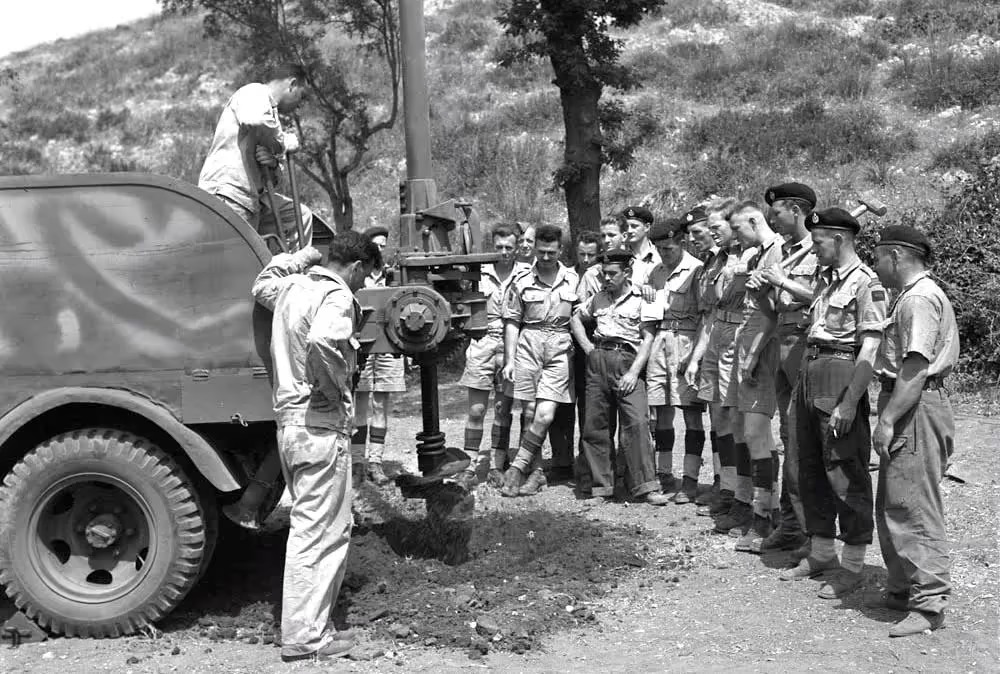
American Engineers lend their earth-bore to the LdSH in Italy, c1943. Possibly being used to dig latrines.
(Library and Archives Canada Photo, MIKAN No. 4166606)
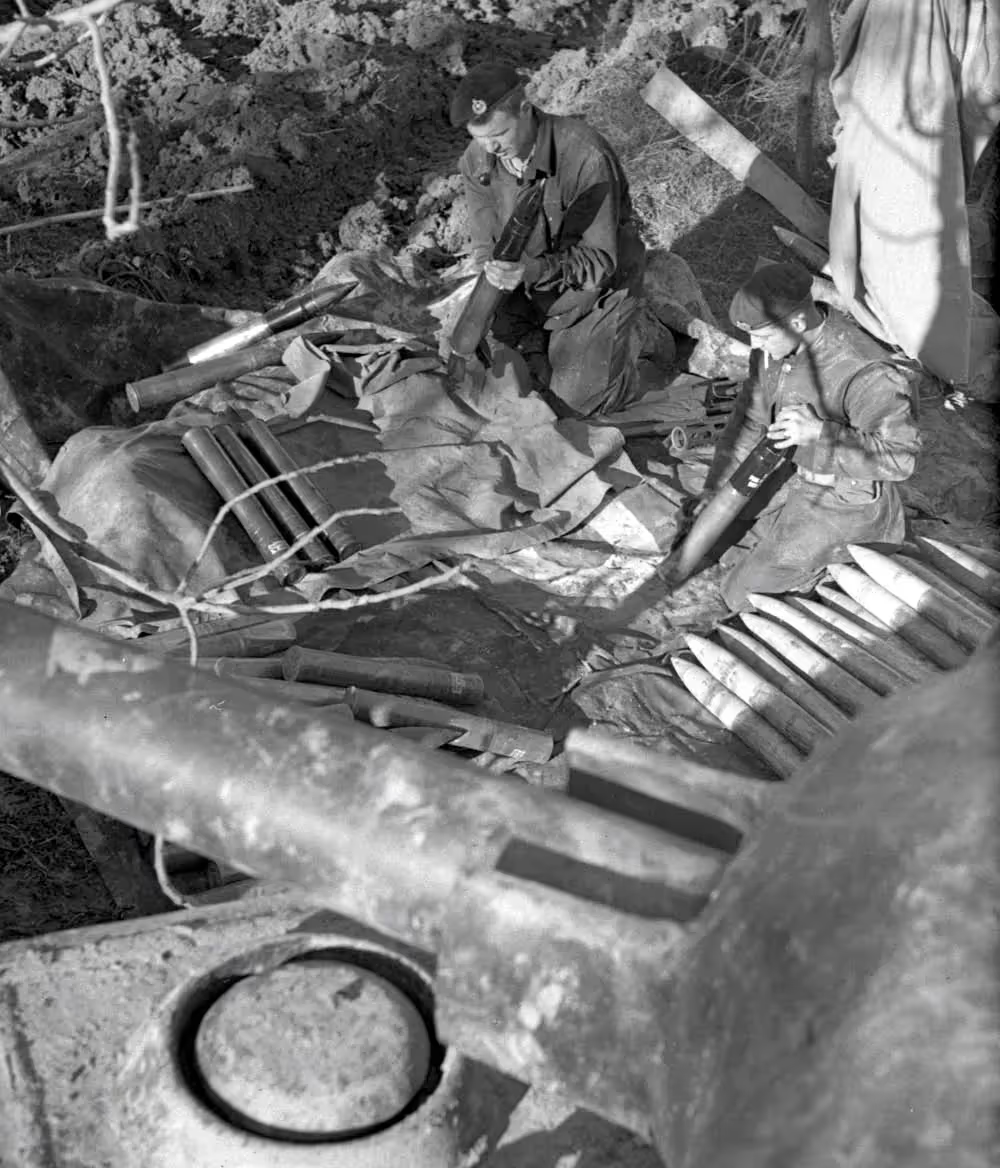
Tpr Walter Dyck (left), Cpl Dan Moore (right), A Squadron, Lord Strathcona’s Horse (Royal Canadians), by their Sherman V tank after a hull-down shoot on Ortona, Italy, 27 January 1944.
The Italian campaign continued into the spring of 1945, but the Canadians did not participate in the final victory. In February 1945 the 1st Canadian Corps began Operation Goldflake, the move to Northwest Europe to be re-united with the First Canadian Army. There they would join in the drive into Germany and Holland and see the war in Europe to its conclusion.
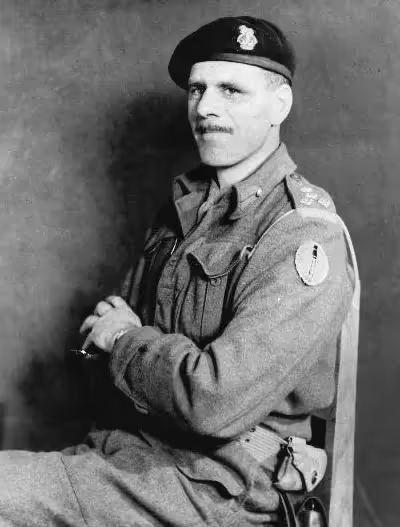
(DND Photo)
Major General Harry Foster traded places with General Chris Vokes and took command of the 1st Canadian Infantry Division in Italy, then returned with this division to North West Europe as part of Operation Goldflake.
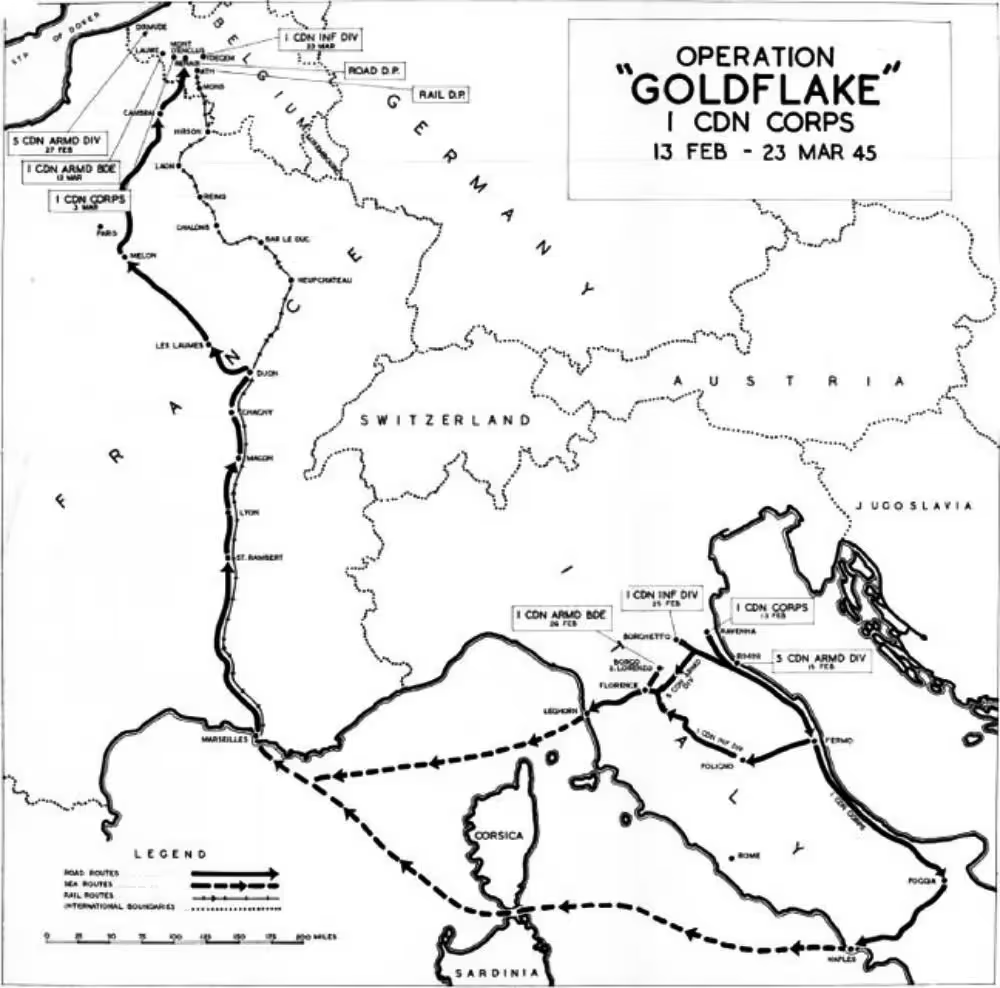
The 5th Armoured Division advanced to free the area south of the Valli di Comacchio. Both operations were completed by early January and they proved to be the last battles fought by the Canadians in Italy. In early February 1945, at the Malta Conference, the decision to transfer up to five divisions, including all the Canadians, was made. Operation Goldflake, the move from Italy through Marseilles to Belgium, began on 13 February 1945.
(Library and Archives Canada Photo, MIKAN No. 3205377)
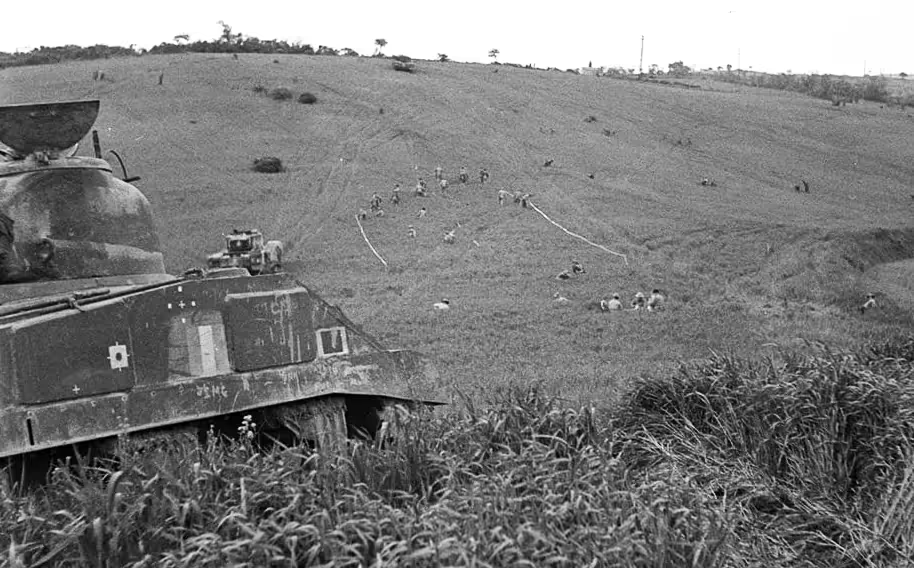
Sherman V and Churchill tanks taking part in the advance on Rome, 17 May 1944. An infantry section is working its way up the hill between two lines of tape on the ground indicating a cleared path through a mine field. The men are also in “ arrowhead formation.”
Capture of Rome
(Library and Archives Canada Photo, MIKAN No. 3206400)
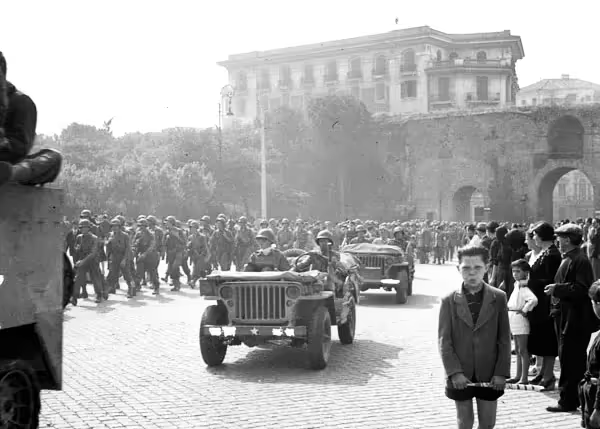
Entry of Allied Forces into Rome, 4 June 1944.
(Library and Archives Canada Photo, MIKAN No. 3206339)
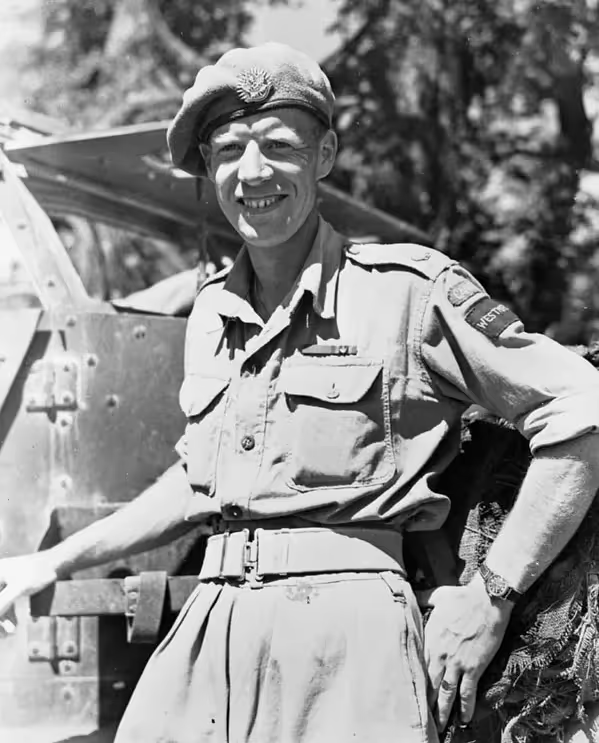
Major John K. Mahony, VC, The Westminster Regiment (Motor), Italy, 1944.
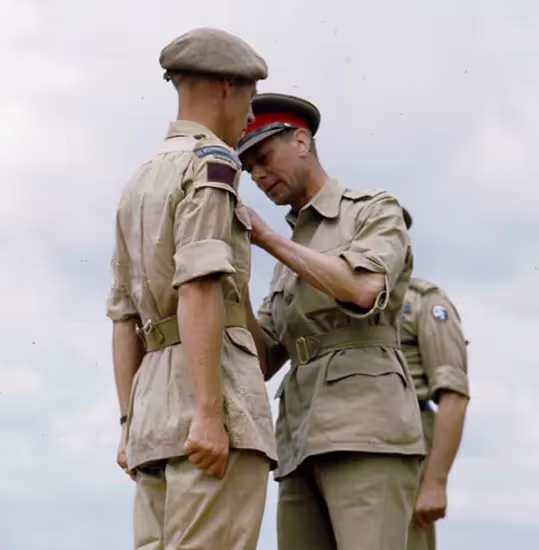
The Eighth Army continued up the Liri Valley towards Rome against fierce resistance. The advance stalled briefly at the Melfa River in a costly battle involving the 5th Division’s Westminster Regiment. For leading the successful defence of a small bridgehead across the river, Major Jack Mahony was awarded a Victoria Cross.
(Library and Archives Canada Photo, MIKAN No. 4233084)
Presentation of Victoria Cross to Maj. Mahony by King George VI in Italy.
The capture of Ceprano on 27 May cracked the German resistance before Rome, and the city was liberated on 4 June. Three weeks of action for I Canadian Corps resulted in about 800 dead, 2,500 wounded, 4,000 sick, and 400 battle exhaustion cases. Meanwhile, attention was shifting to France. When the Allies invaded Normandy on 6 June, Italy became a largely forgotten theatre of war. Derided as D-Day Dodgers, the rank-and-file soldiers fighting in Italy transformed the epithet into a mark of pride.
Gothic Line
The Allies marched northward to the Gothic Line in August, which the Canadians were tasked with breaking at Pesaro on the Adriatic coast. Striking on 25 August, the 1st Infantry Division sought to open a breach through which the 5th Armoured Division could pass. Encountering line after line of heavy defences, the Gothic Line was not fully overcome until 21 September, at a cost of 4,511 Canadian casualties that included 1,016 dead – among other Allied losses. It took until 20 October to capture the city of Cesena just 20 kilometres from the next offensive’s starting point. Cesena stood alongside the Savio River, and here the following day, Private Ernest Alvia Smith earned a Victoria Cross by staving off a German armoured column.
(Canada at war Photo)
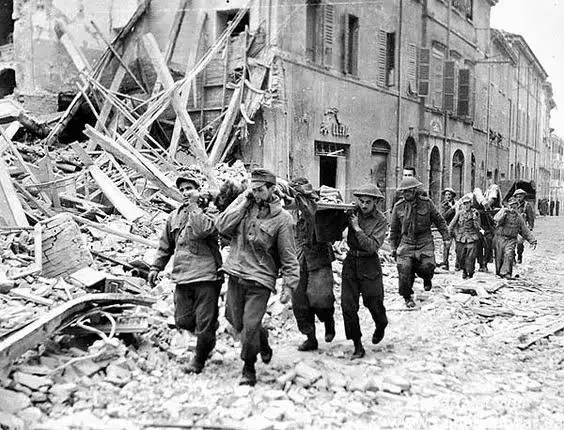
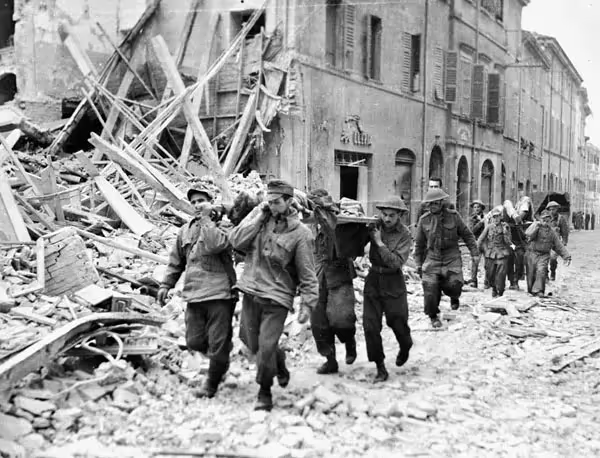
German prisoners-of-war carrying wounded members of the 1st Canadian Corps through Cesena. October 21, 1944, Cesena, Italy.
(Library and Archives Canada Photo, MIKAN No. 3239426)
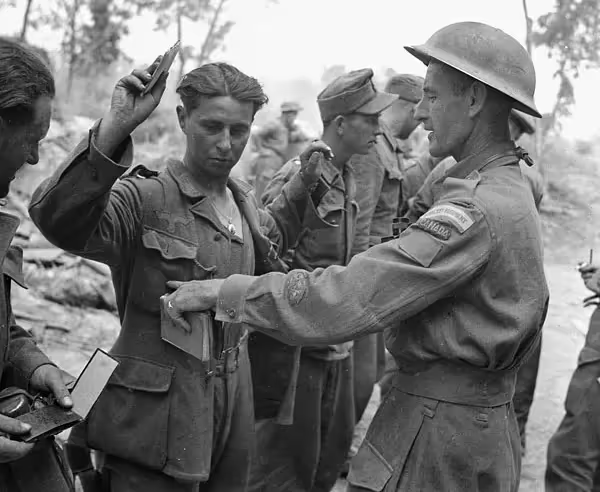
A company sergeant-major of the Royal 22e Régiment searching German prisoners-of-war, Italy, 1944.
(Library and Archives Canada Photo, MIKAN No. 3240082)
German prisoners-of-war carrying wounded members of the 1st Canadian Corps through Cesena, Italy, 21 October 1944.
(Library and Archives Canada Photo, MIKAN No. 4166580)
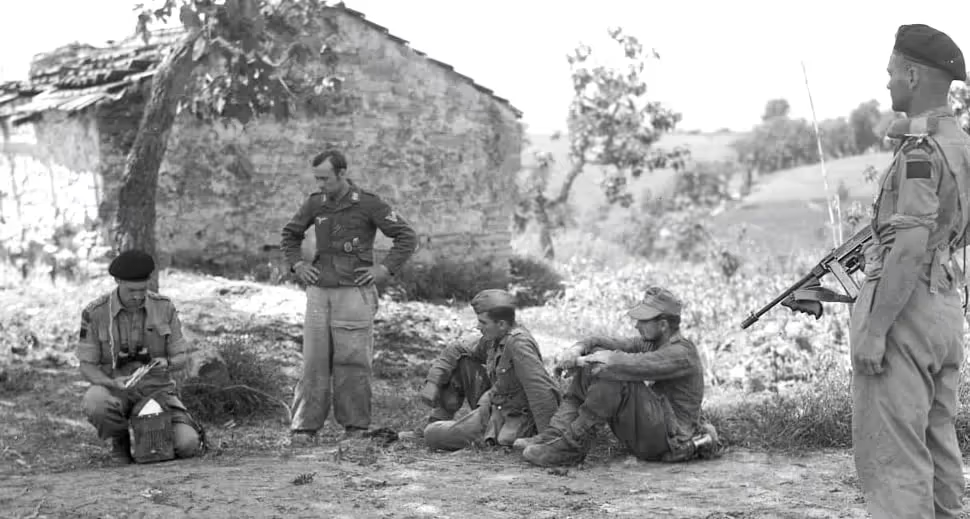
Captain D.J. Cowley inspecting German prisoners asanother Canadian stands guard with a .45 cal Thompson SMG..
(Library and Archives Canada Photo, MIKAN No. 3227168)
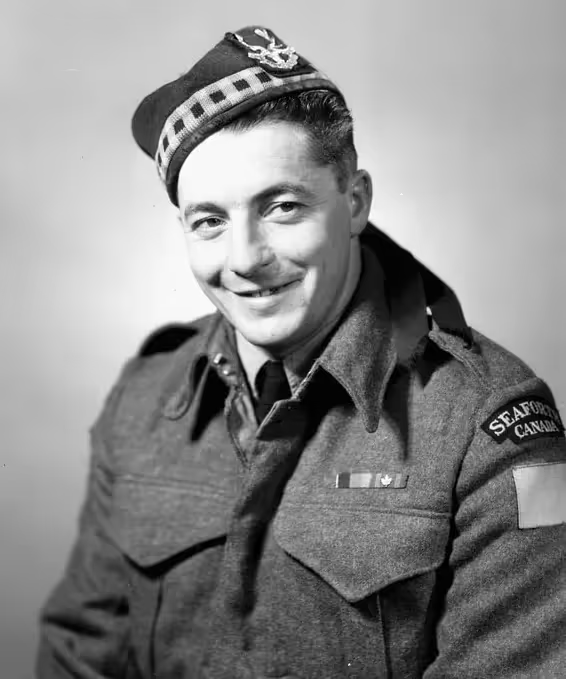
Private Ernest Alvia “Smoky” Smith, V.C., of The Seaforth Highlanders of Canada, 1944.
The Germans fought a successful delaying action south of the Gothic Line, halting British troops at the Trasimene Line for three weeks. When the advance continued on 29 June, there was a major change in the 8th Army’s plans for the drive on Arezzo and Florence. The 13th Corps was given priority in men and resources over the neighbouring 10th Corps, which had made little progress in the more mountainous region north of Perugia. As well, the British 78th Division was withdrawn to Palestine for a rest, relieved by the British 6th Armoured Division and tasked with leading the advance of the 13th Corps up Highway 71. The British 4th Division found its front increased, and the 12th Brigade brought into the line on the left of the 10th Brigade. A poorly coordinated two-pronged attack on 29 June was supported by both the 12th Canadian Armoured Regiment (Three Rivers Regiment) and the 14th Canadian Armoured Regiment (The Calgary Regiment). With no means of communicating with each other, they couldn’t press the attack nor call down effective artillery and the Germans retreated in good order, missing no opportunity for demolitions behind them that would impede the Allied advance.
(IWM Photo)
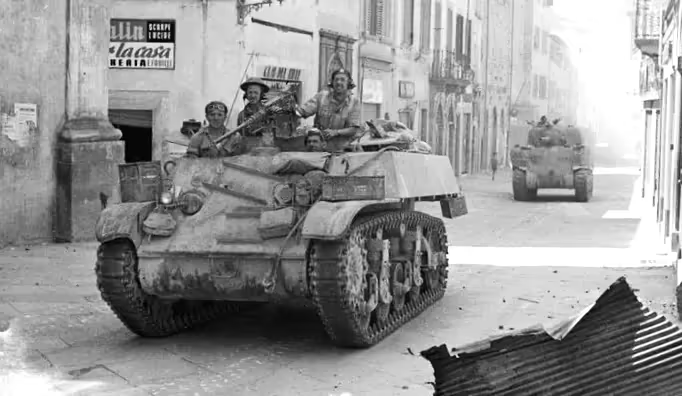
M3A3 Stuart. reconnaissance tank, 26th Armoured Brigade, 6th Armoured Division, in Arezzo, Italy, 16 July 1944.
The 28th Brigade continued the advance on the west side of the Canale Maestro della Chiana with Sherman V tanks of the Ontario Regiment in support, replacing the 10th Brigade and Three Rivers on the right flank of the 4th Division. It was not ideal terrain for tanks, with vineyards and tall maize restricting fields of vision for both drivers and crew commanders. Both brigades crossed the Arezzo-Siena highway on 4 July, and encountered increased resistance on 5 July. By the next day Allied progress all across Italy had come to a halt, and it was clear Kesselring as determined to defend the rail and road centre at Arezzo, as well as the major ports of Leghorn and Ancona.
On 6 July, infantry of the British 12th Brigade attempted to scale the terraced heights below San Pancrazio under the cover fire provided by tanks of the Calgary Regiment. On the right flank, “B” Squadron had been halted a mile south of Civitella by rocky terrain, steep hills, heavy enemy fire and the exhaustion of the infantry accompanying them. The terrain was so tight that the armour was unable to assist infantry attacks on Point 543, and the 2nd Battalion, The Royal Fusiliers were thrown back on 4 July and again on 5 July. In the meantime, another battalion of the 28th Brigade drove the Germans from Tuori with support from the Ontario Regiment, two miles east of Civitella.
The failure to take the main San Pancrazio-Civitella ridge frontally caused the 4th Division’s commander to try the right flanking attack. The infantry unit mentioned in the quote above was the 2nd Battalion, The Somerset Light Infantry. With support from the Ontario Regiment’s tanks, they seized two heights, Points 535 and 484. However, the division intended for the 10th Brigade with tanks of the Three Rivers to exploit toward Highway 69, lying three miles beyond, and German counter-attacks over the next three days continued to frustrate these plans. On the right flank, the inability of the 6th Armoured Division to take Mount Lignano was also frustrating. A week of stalemate ensued and action on the front of the corps devolved to small skirmishes and patrolsThe failure to take the main San Pancrazio-Civitella ridge frontally caused the 4th Division’s commander to try the right flanking attack. The infantry unit mentioned in the quote above was the 2nd Battalion, The Somerset Light Infantry. With support from the Ontario Regiment’s tanks, they seized two heights, Points 535 and 484. However, the division intended for the 10th Brigade with tanks of the Three Rivers to exploit toward Highway 69, lying three miles beyond, and German counter-attacks over the next three days continued to frustrate these plans. On the right flank, the inability of the 6th Armoured Division to take Mount Lignano was also frustrating. A week of stalemate ensued and action on the front of the corps devolved to small skirmishes and patrols.
The final stage in the battle for Arezza began early on 15 July with the 1st Guards Brigade of 6th Armoured Division attacked the northern end of the Chiana Valley and the 2nd New Zealand Division stormed Mount Lignano. Also firing in support were all available small arms and mortars of the 4th Division west of the Chiana Canal, and tank guns of the Three Rivers Regiment, firing at targets north of Tuori. The 15th Panzergrenadier Division resisted the Guards, but the New Zealanders seized Lignano early, giving them a commanding view of Arezzo and German artillery positions to the north.
(Nicholson, Gerald Official History of the Canadian Army in the Second World War: Volume II: The Canadians in Italy (2nd printing, Queen’s Printer, Ottawa, Ontario, 1957)
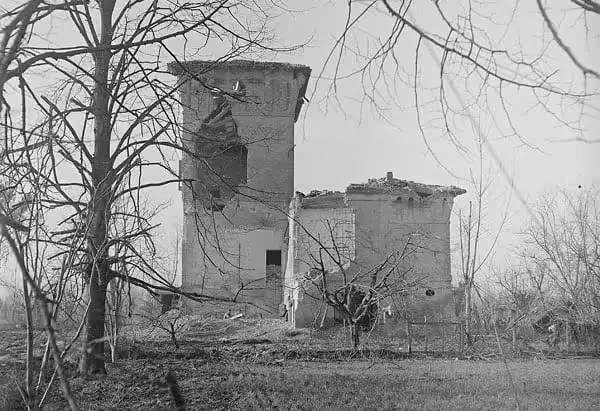
(Library and Archives Canada Photo, MIKAN No. 3718213)
Torre di Traversara, hit by 127 artillery shells in 1944. Standing just to the NW of Ravenna, the tower of Traversara, in Bagnacavallo, was built around 1370. Originally it was only a defensive tower, then it became a fortified house and, around 1736, a “villa”. It was rebuilt in 1999.
After spending November in reserve, the Canadians returned to attack Ravenna. The city fell on 4 December, but heavy fighting raged through the rest of the month with few gains.
After a short stand down, I Canadian Corps started withdrawing from Italy in February 1945 to rejoin the First Canadian Army in northwest Europe. The Italian campaign ended in the spring of 1945, with Germany’s eventual surrender. The Canadians who had slogged their way through Italy from south to north since 1943 would not see victory there, participating instead in the liberation of the Netherlands, and the eventual invasion and defeat of Germany itself.
Total Canadian casualties in Italy were 408 officers and 4,991 non-commissioned men killed. A further 1,218 officers and 18,268 men were wounded, and 62 officers and 942 men were captured. Another 365 died of other causes. Of the 92,757 Canadians who served in Italy, 26,254 became casualties there.
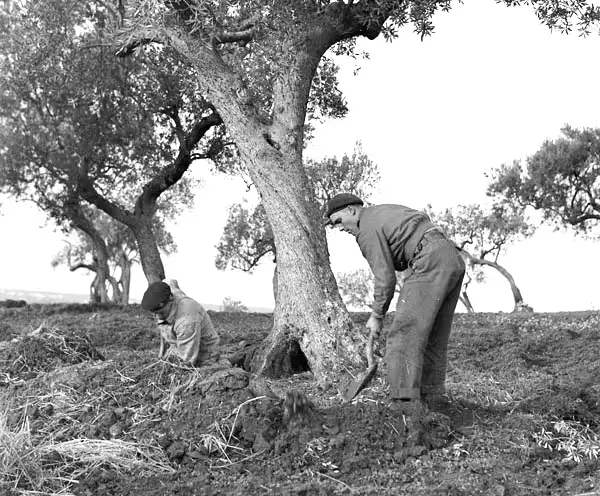
(Library and Archives Canada Photo, MIKAN No. 3314433)
Troopers of “A” Squadron, The Calgary Regiment, who are under enemy shellfire, digging a grave for a comrade who was killed by shrapnel, San Leonardo di Ortona, Italy, 8 December 1943.
Canadian Cemeteries and Memorials in Italy
Canada has more than 5,900 war dead in Italy, buried in Commonwealth War Cemeteries or commemorated on the Cassino Memorial.
The Agira Canadian War Cemetery is located in the heart of Sicily, 71 kilometres from Catania, where 490 Canadians are buried.
The Assisi War Cemetery forms part of the locality of Rivotoro in the Commune of Assisi. It contains 945 graves of Commonwealth soldiers of which 49 are Canadians.
In Bari War Cemetery on Italy’s Adriatic coast, are 2,245 Commonwealth headstones, of which 210 are Canadian.
The Bolsena War Cemetery is situated on the eastern side of Lake Bolsena and near the towns of Montefiascone and Bolsena. Among the 597 war dead commemorated in the cemetery, twelve are Canadians.
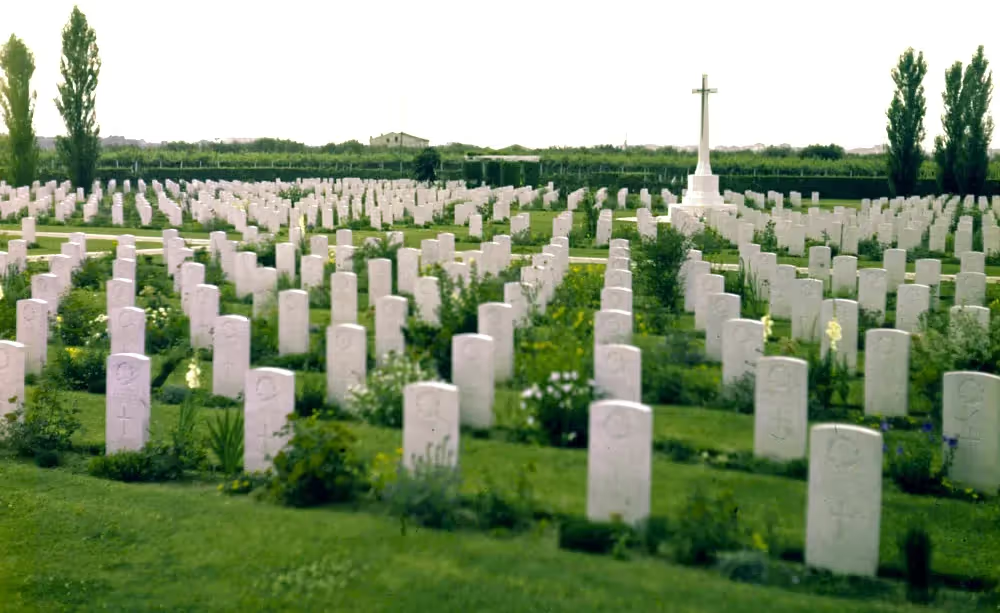
(Library and Archives Canada Photo, MIKAN No. 4235522)
The Moro River Canadian War Cemetery, located about five kilometres south of Ortona, contains 1,615 graves, of which 1,376 are for Canadians and 50 which are unidentified. The Moro River Canadian War Cemetery is located on high ground near the Adriatic Sea at San Donato, in the Commune of Ortona (about 5 kilometres south of the town) and the Province of Chieti. In January 1944 the Canadian Corps selected this site, intending that it would contain the graves of those who died during the Ortona battle and in the fighting in the weeks before and after it.
Most of the Canadians who fell in the Liri Valley are buried in two cemeteries in the area south of Rome: Caserta War Cemetery, where 98 Canadian soldiers and one Canadian airman are buried, and Cassino War Cemetery, farther north and just off the road to Rome. The latter is the largest Second World War cemetery in Italy. Among the over 4,200 headstones located here are those of 855 Canadians who died during the battles of the Hitler Line and the advance toward Rome. Also found in this cemetery is the Cassino Memorial which lists the names of 4,054 men who died in the Sicilian and Italian campaigns and have no known grave, and includes the names of 193 Canadians.
At Beach Head War Cemetery in Anzio on Italy’s west coast, 69 Canadians lie among the 2,313 war dead.
Rome War Cemetery has 22 Canadian graves – those of administrative staff and prisoners who died in captivity.
In Florence War Cemetery, east of the city on the north bank of the Arno, the graves of 50 Canadians can be found among those of 1,637 Commonwealth soldiers who died in action before the city was captured.
“They shall grow not old, as we that are left grow old: Age shall not weary them, nor the years condemn. At the going down of the sun and in the morning,We will remember them.” (Lawrence Binyon)
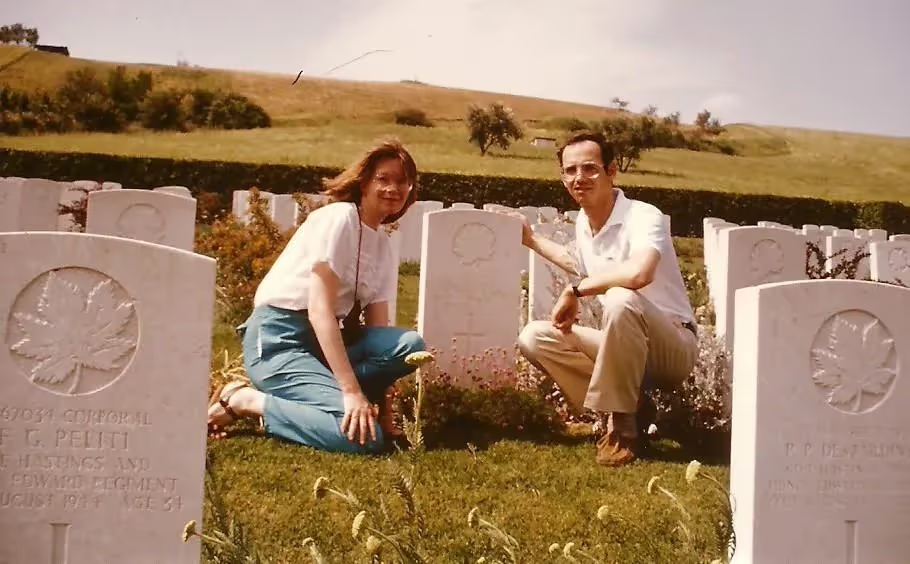
My wife Faye and I visiting my uncle Harold J. Skaarup’s grave, Montecchio, Italy. He was one of a number of 8th Hussars who never came home. We never met, but I do carry his name. The high ground above and behind you is Point 111, the first feature taken in the breaking into the Gothic Line by D Coy, Perth Regiment followed by the capture of Point 147.
The Allies began the day of August 30th with an air bombardment against German positions at dawn. At 5.30 p.m., the Perth Regiment attacked the end of a ridge northeast of Montecchio, while a knoll at the west end of the town and the high ground beyond were the objectives of the Cape Breton Highlanders. Both units faced incessant fire from the heights as well as minefields along the flat lands. The Perth Regiment managed to break through the line first, reaching and passing their objective. The Cape Breton troops had the support of tanks from the 8th Princess Louise’s (New Brunswick) Hussars, which helped three of their companies make it to the base of the knoll. After each attempt, however, they were driven back to the Foglia, with casualties totaling 19 members killed and 46 wounded. The Irish Regiment, which had been in reserve, was moved through the path of the Perths. Tanks and artillery guns were not yet available here and as a result the regiment lost 19 killed and 31 wounded. In the end, however, the knoll position was successfully taken, and 121 Germans captured, thanks to Allied artillery assaults and crafty positioning of the Irish Regiment soldiers who caught the enemy from behind. The 4th Princess Louise Dragoon Guards (4 PLDG) were also involved in these actions as they had been assigned “mop up” duties.
LCol G.W.L. Nicholson, The Canadian Army in the Second World War, Volume II, The Canadians in Italy, (Queen’s Printer, Ottawa, 1956), p. 504.
Begun as a battlefield cemetery, this site is in the rural locality of Montecchio, in the commune of Sant’Angelo (in Lizzola) and the province of Pesaro-Urbino. It is located 12 kilometres west of Pesaro and was chosen as a permanent battlefield in the autumn of 1944, when the Allies were fighting to break through the Gothic Line. During the war, Montecchio was situated on the east end and just to the south of this highly effective defensive barrier. In fact, an anti-tank ditch which formed part of the line ran through the valley that lies below the cemetery.
Two cemeteries near the Adriatic Sea were begun during the fighting to breach the Gothic Line: Ancona War Cemetery, where over a thousand Commonwealth soldiers and airmen are buried, including 161 Canadians; and Montecchio War Cemetery, further north and 13 kilometres inland from Pesaro, where 289 graves, of a total of 582, belong to Canadians.
In Gradara War Cemetery, the 1,192 Commonwealth headstones, including those of 369 Canadians, are mute testimony of the Allied sacrifice in the advance from Ancona to Rimini.
Coriano Ridge War Cemetery also contains 1,940 graves of those killed on the advance to Rimini, including 427 Canadian graves.
A total of 937Commonwealth soldiers who died in the winter of 1944-45 are buried in Ravenna War Cemetery, including 438 Canadians.
A half-hour drive from Ravenna is the Casena War Cemetery where 307 Canadian graves can be found among the 775 graves dating from November 1944.
In Villanova Canadian War Cemetery, 206 of the 212 graves belong to Canadians. This cemetery has been described as a memorial to the fallen of the 5th division as 85 members of two battalions of this division are buried here.
While Canadians did not fight in the area of Argenta Gap War Cemetery, north of Ravenna, this cemetery contains the graves of 77 Canadian soldiers and airmen who were brought here from battlefield graves farther south.