
Canadians in the Italian Campaign, 10 July 1943 – 2 May 1945, Part 1, Sicily
Articles by Veterans Affairs Canada and by Mark Zuehlke (The Canadian Encyclopedia)
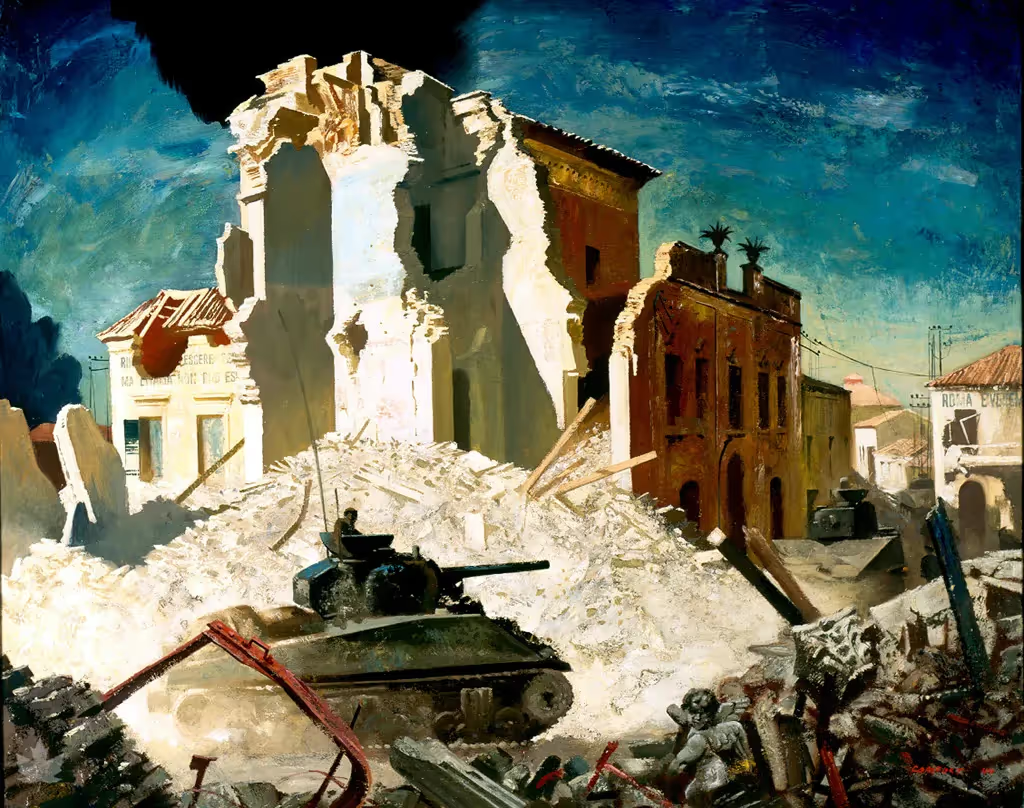
(Canadian War Museum (CN 12245).
Canadian Armour Passing through Ortona, by Charles Comfort.
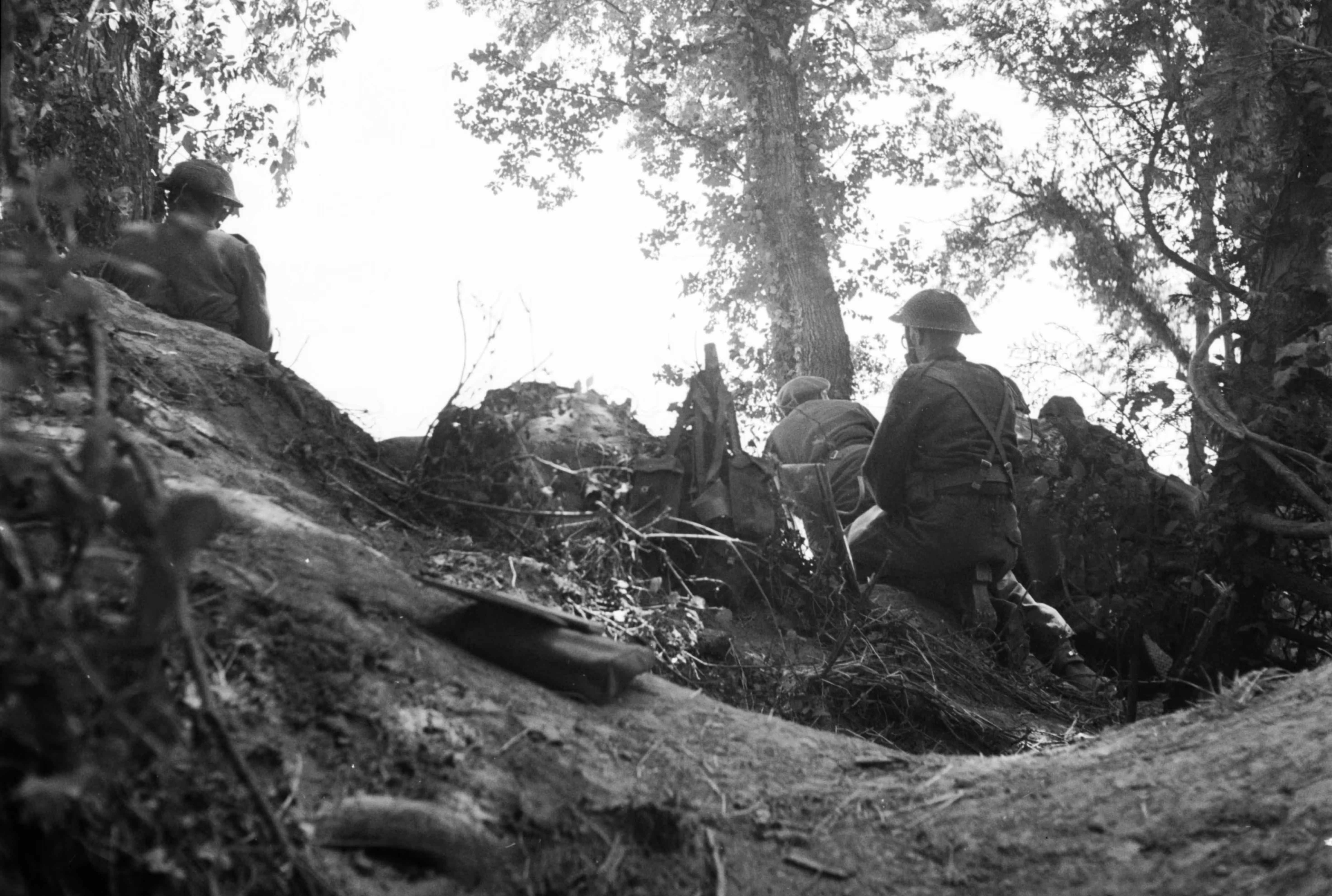
(Library and Archives Canada Photo, MIKAN No. 3614539)
Front Line – North Nova Scotia Regiment, 9th Canadian Infantry Brigade – Furthermost Canadian outpost – ‘Arty’ O Pip sighting for a shoot, 1,000 yds from the enemy, 22 June 1944.
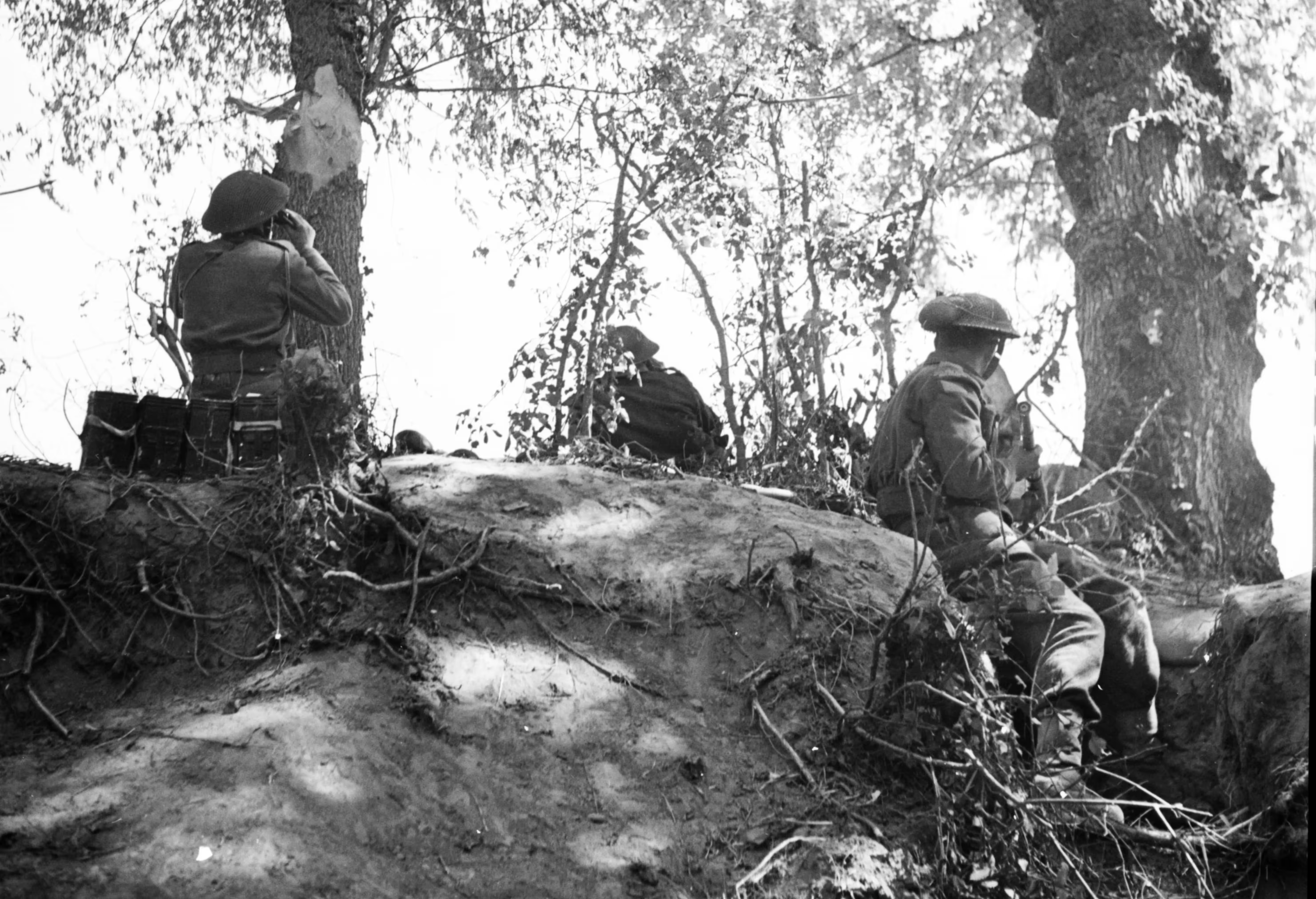
(Library and Archives Canada Photo, MIKAN No. 3614538)
Front Line – North Nova Scotia Regiment, 9th Canadian Infantry Brigade – Furthermost Canadian outpost – ‘Arty’ O Pip sighting for a shoot, 1,000 yds from the enemy, 22 June 1944.
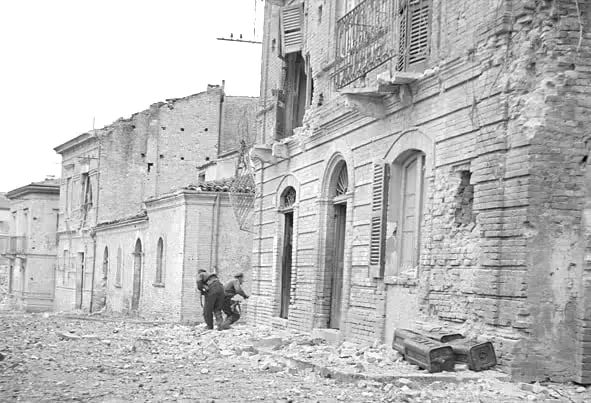
(Library and Archives Canada Photo, MIKAN No. 3724217)
Two Canadian soldiers cautiously rounding the corner of a ruined building in Ortona, Italy, 1944.
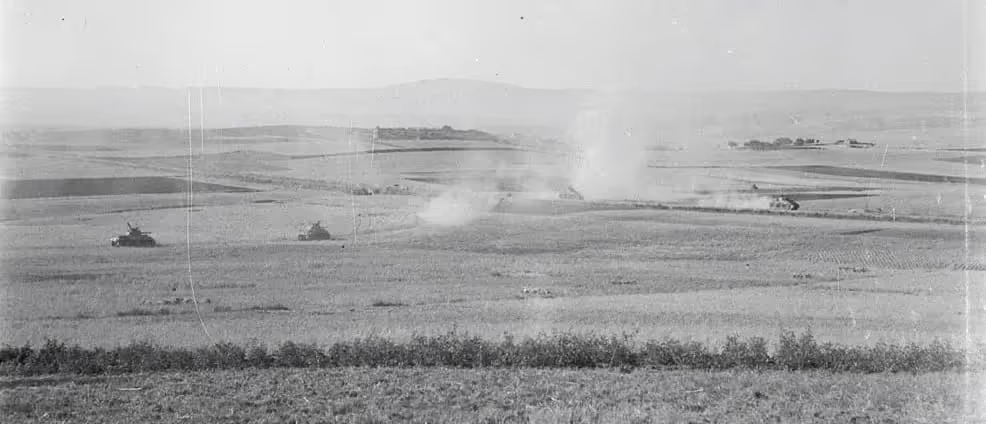
(Library and Archives Canada Photo, MIKAN No. 4558189)
Canadian tanks in action in Italy, 1943.
A total of 92,257 Canadians served in Italy. Of these, 5,399 lost their lives and 19,486 were wounded. A further 1,002 became prisoners of war and 365 died from “causes other than war. (Terry Copp)
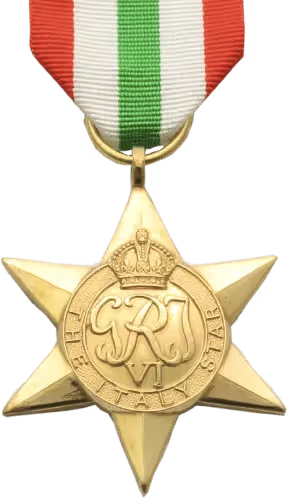
Canada’s longest Second World War army campaign was in Italy. Canadians fought alongside soldiers serving with the Allied forces of the United Kingdom, the United States, France, New Zealand and Poland, against the combined Axis forces of Germany and Italy.
Canadian troops played a vital role in the 20-month Mediterranean campaign which led to the liberation of Italy during the Second World War. In fact, this campaign was the first large-scale land operation in which the Canadian Army stationed in Great Britain took part.
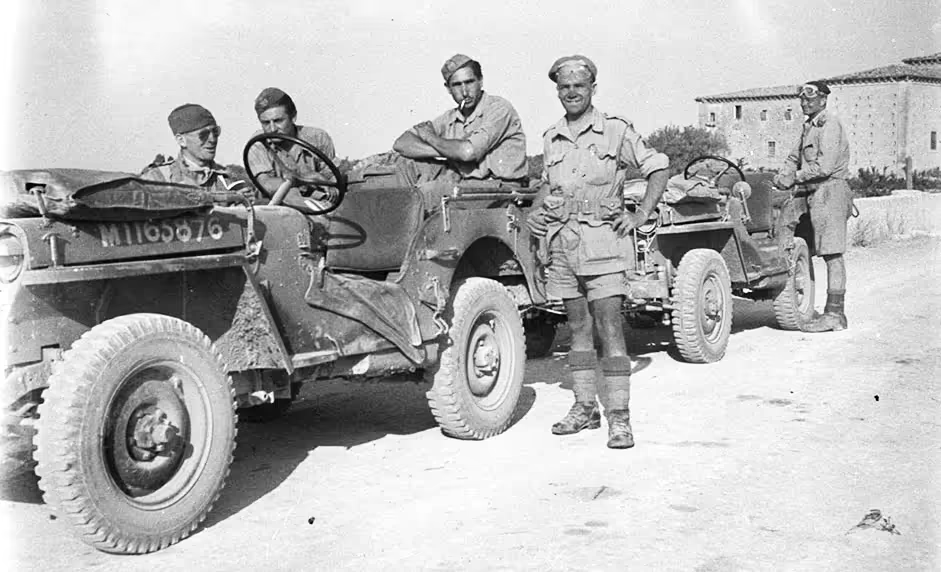
(Library and Archives Canada Photo, MIKAN No. 3524569).
Canadian Public Relations No. 2 staff with Italian personnel and jeeps. Sicily, Italy, July 1943. Likely British jeeps, according to the hood numbers (Canadian generally had a C in front of the M)j, Sicily, Italy, July 1943. This is one of two photos taken at the same location with most of the same personnel. The camera roll is by CFPU photographer Lt. Dwight Dolan and these two jeeps are probably from Canadian Public Relations No.2. This is the second of the two photos. You can see the shadow of the photographer in the uncropped version of both photos (Rolleiflex square format). But the picture taker changes in each photo. The two Italians in the photos appear to have Italian “Regia Aeronautica” (Italian Royal air force) cap badges. They might be Italian PoWs turned into guides for the Public Relations group, or simply PoWs about to be turned in. (Glenn Warner)
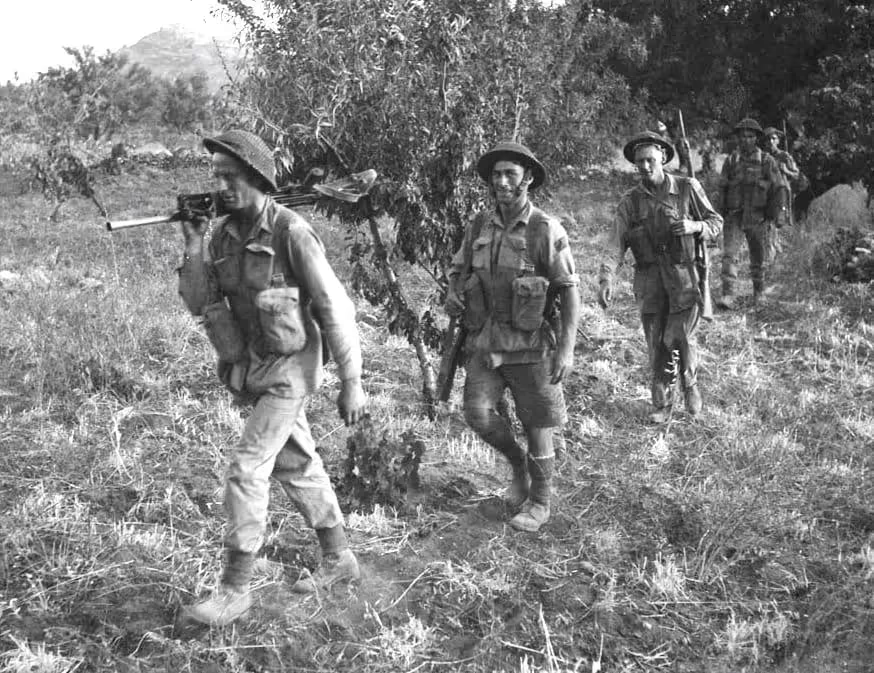
(Library and Archives Canada Photo, MIKAN No. 4485870)
A patrol in Sicily, 1943.
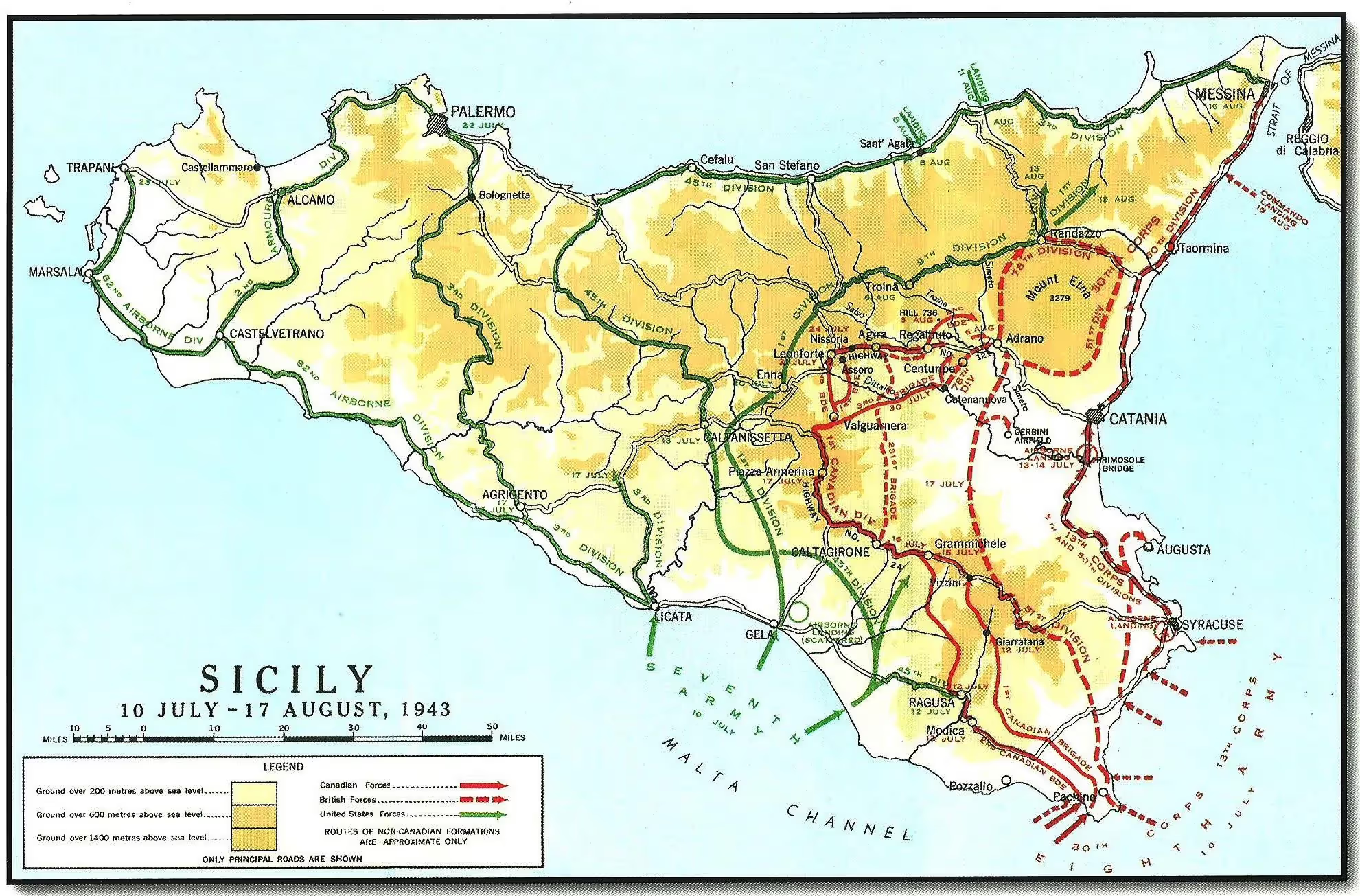
Map of Canadian Operations in Sicily, 10 July to 17 August 1943. (Map drawn by C.C.J. Bond, in C.P. Stacey, The Canadian Army 1939-1945: An Official Historical Summary (1948), Department of National Defence)
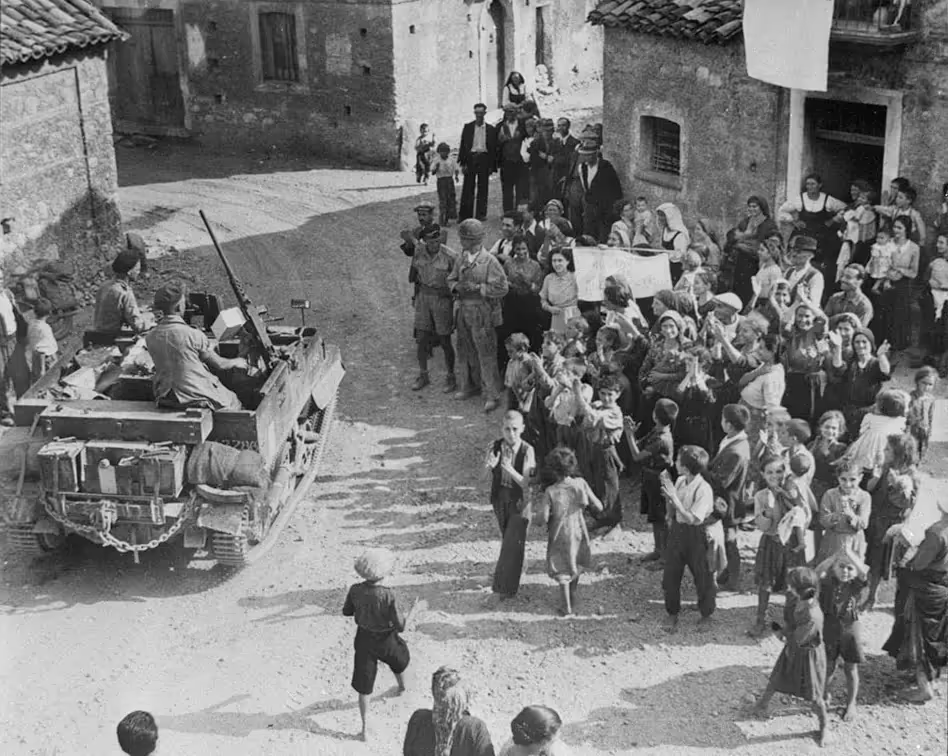
(Library and Archives Canada Photo, MIKAN No. 3205846)
Italians greet Canadian troops enthusiastically as they pass through, September 1943.
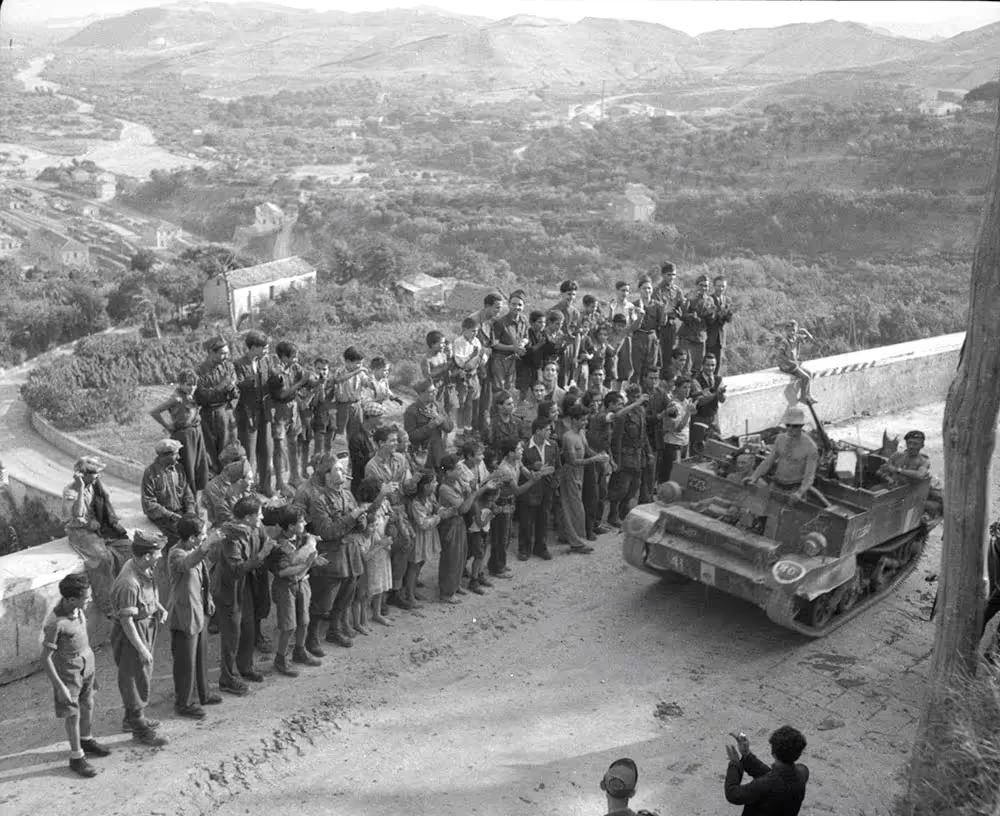
(Library and Archives Canada Photo, MIKAN No. 3199141)
Italians welcome Canadian troops at the entrance of Catanzaro.
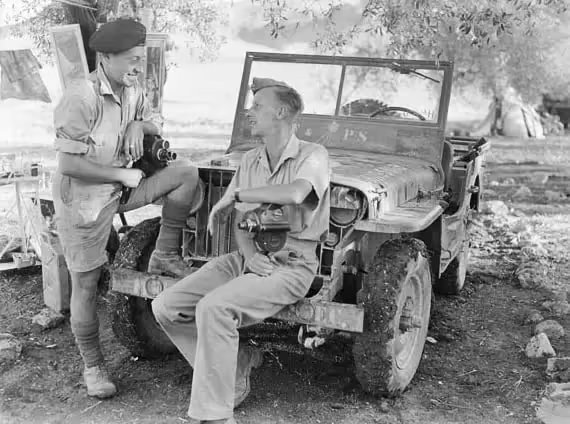
(Library and Archives Canada Photo, MIKAN No. 3607429)
Sergeants Al Grayston and Jack Stollery MM respectively, with film cameras and a jeep in Sicily, 1943. Grayston shot the first footage of the landings in Sicily. Stollery was awarded the MM for his disregard of enemy fire when filming in Ortona.
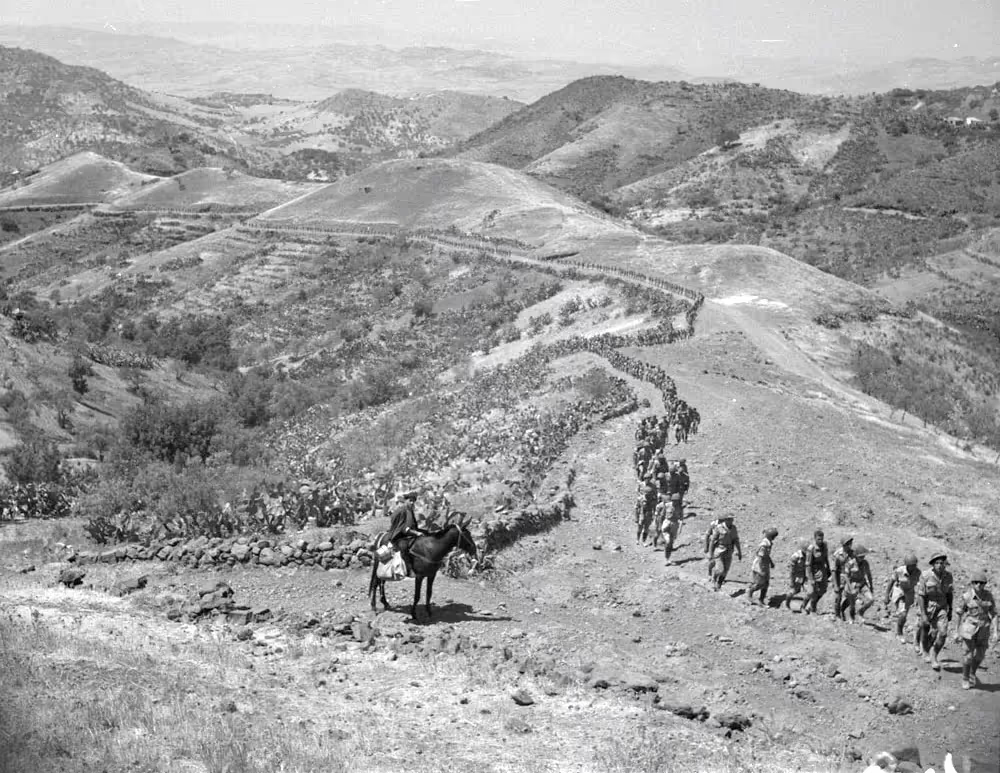
(Library and Archives Canada Photo, MIKAN No. 4485882)
Seaforth Highlanders on the March, en route to a Brigade Inspection by General Sir Bernard Montgomery, Militello, Sicily, 20 Aug 1943.
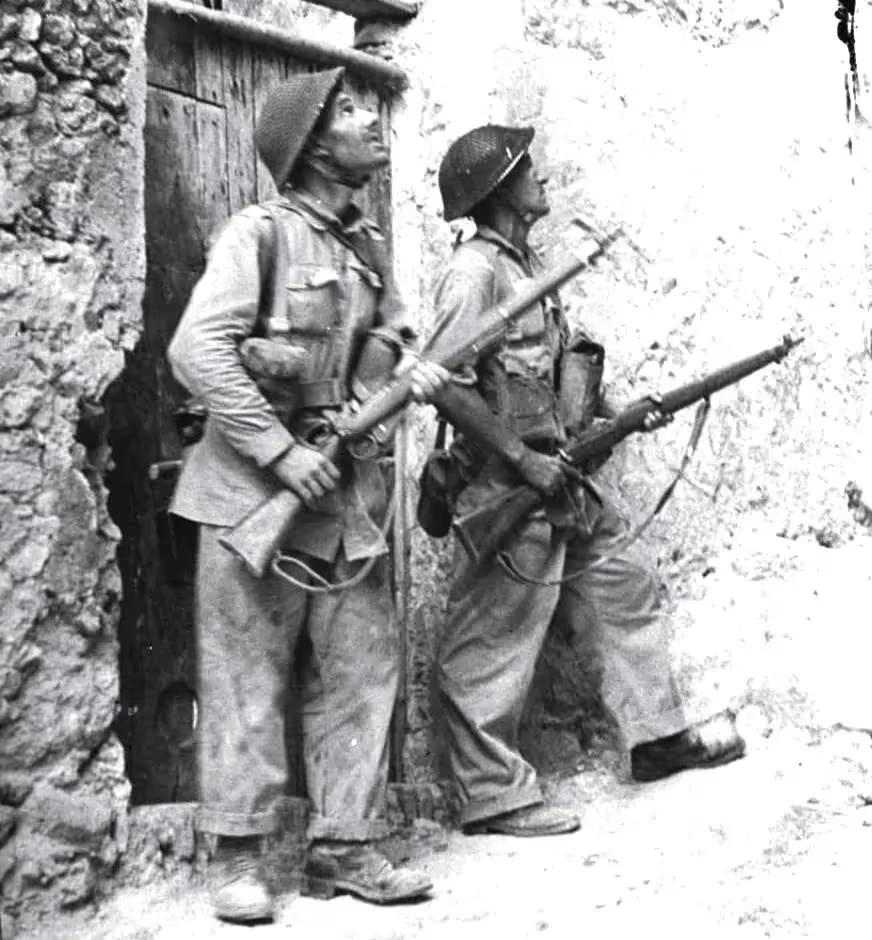
(Library and Archives Canada Photo, MIKAN No. 4485868)
Canadian soldiers likely scanning the upper windows for Germans in the streets of a town in Sicily in 1943.
In this campaign, which was fought in Sicily from 10 July to 6 August 1943, and in mainland Italy from 3 September 1943, to 25 February 1945, the fighting was particularly bitter. The Germans, taking full advantage of mountain peaks and swiftly running rivers, made Allied advance very difficult and costly. There were 25,264 Canadian casualties in the fighting, including more than 5,900 who were killed.
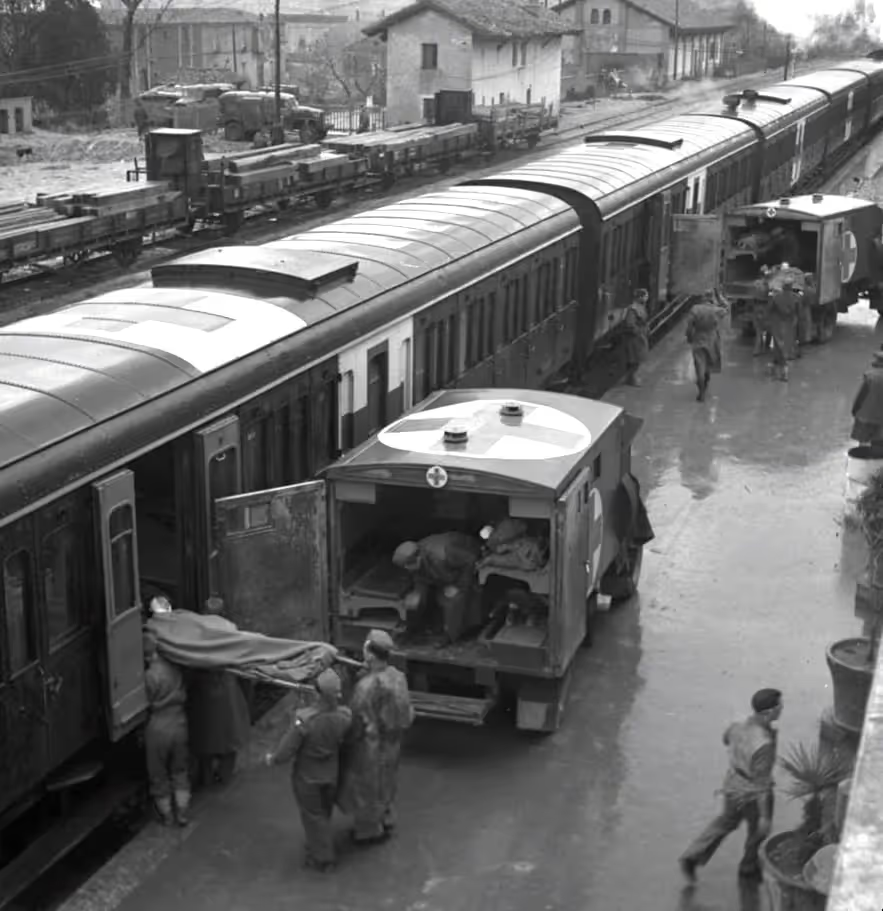
(Library and Archives Canada Photo, MIKAN No. 4113912)
Transferring casualties from an ambulance to a hospital train, Barletta-Andria area of Italy, Feb 1944.
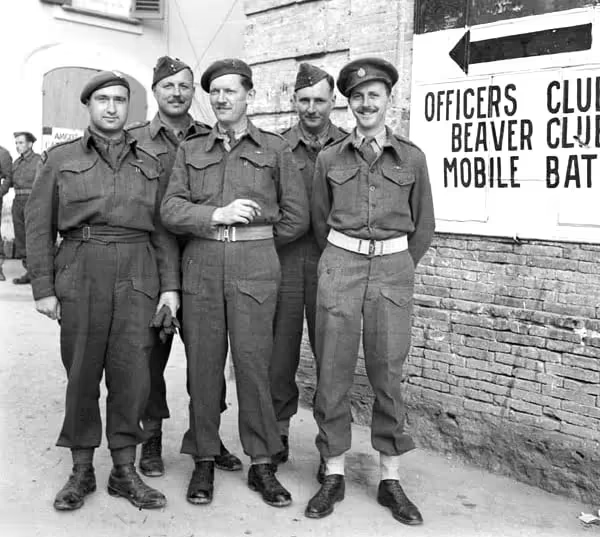
(Library and Archives Canada Photo, MIKAN No. 3203793)
L-R: RCR Captain Sam Lerner, RCR Captain R. B. Watson, Major M.H. Hodgins, Captain J.A. Johnston and Captain J.L. Morrison, all from London, Ontario, at San Vito Chietino, Italy, 4 February 1944. After the war, Sam Lernerer became the war Honorary Colonel RCR.
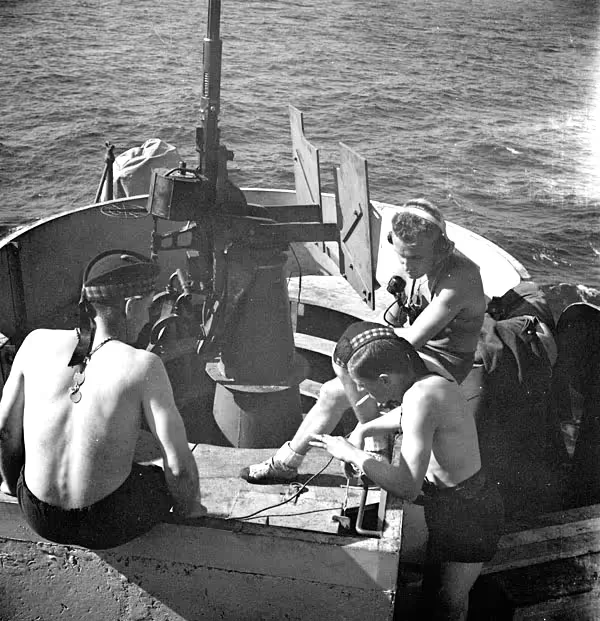
(Library and Archives Canada Photo, MIKAN No. 3578055)
Infantry reinforcements of the 48th Highlanders of Canada next to a 20-mm Oerlikon anti-aircraft gun on board HMT Nea Hellas en route to Philippeville, Algeria, 5 July 1943.
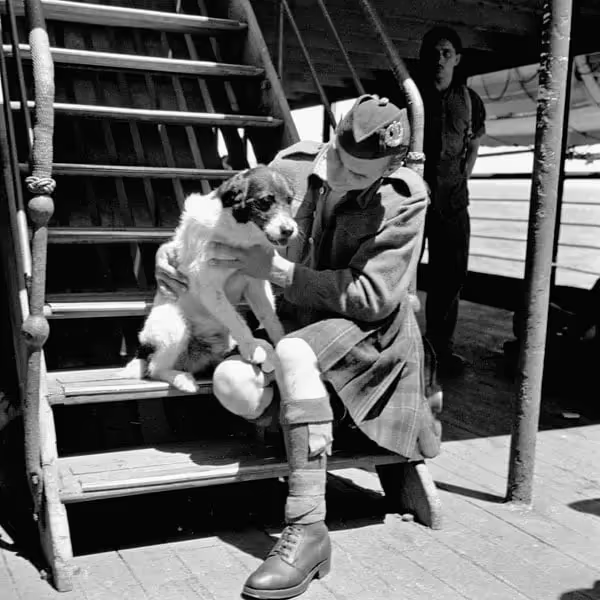
(Library and Archives Canada Photo, MIKAN No. 3619641)
Private Peter Bross, and mascot Bob, of the Cameron Highlanders of Ottawa, aboard the troopship HMT Nea Hellas en route to Philippeville, Algeria, 8 July 1943. This is interesting. The Cameron Highlanders of Ottawa fought in North West Europe, not in Italy – and yet this soldier is certainly wearing their cap badge in the Mediterranean.
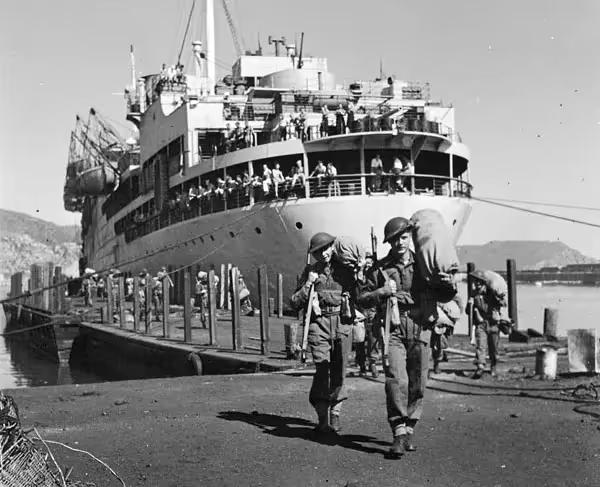
(Library and Archives Canada Photo, MIKAN No. 3521050)
Canadian troops disembarking from HMT Nea Hella, Philippeville, Algeria, 10 July 1943.
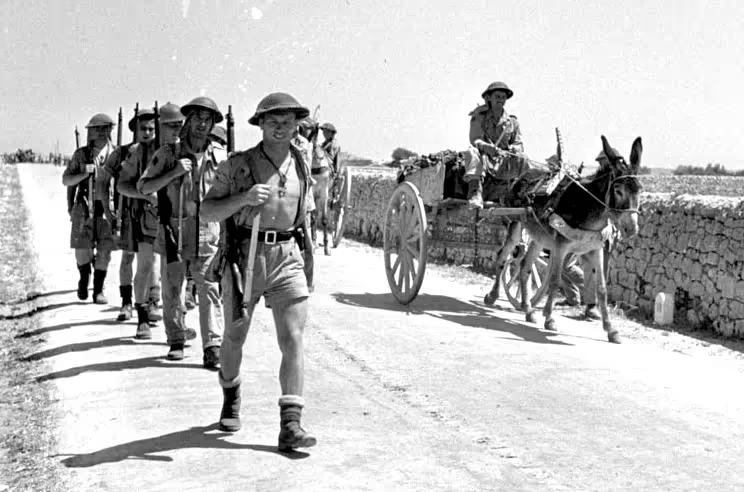
(Library and Archives Canada Photo, MIKAN No. 3227102)
48th Highlanders of Canada on the march near Modica, Italy, 12 July 1943.
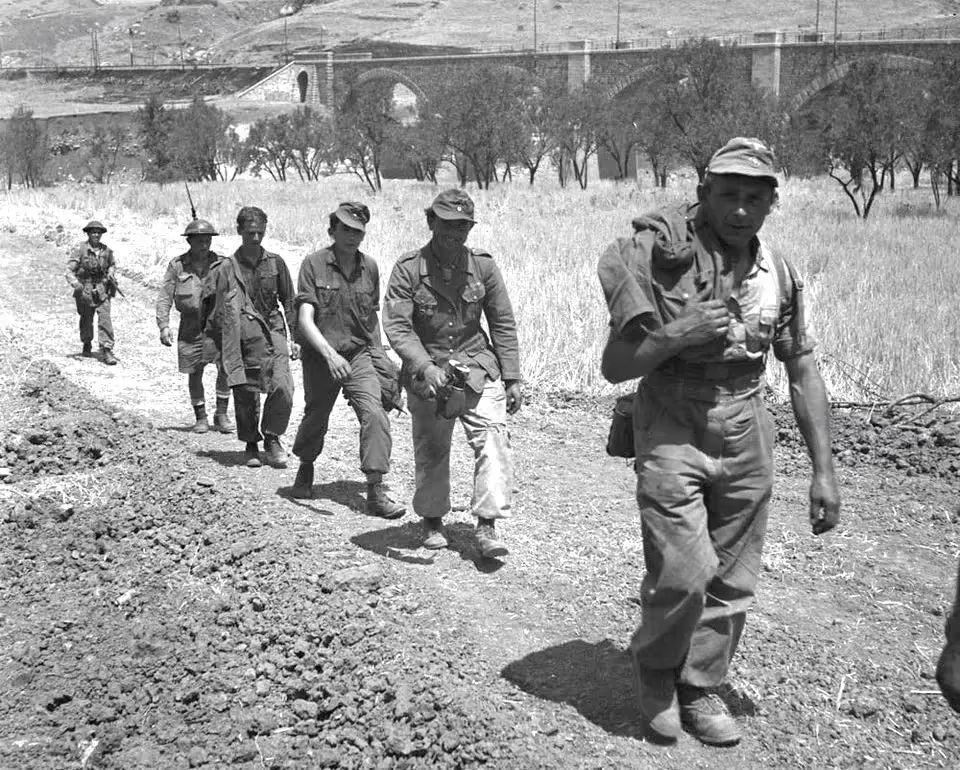
(Library and Archives Canada Photo, MIKAN No. 4485877)
German prisoners of war in Sicily, 1943.
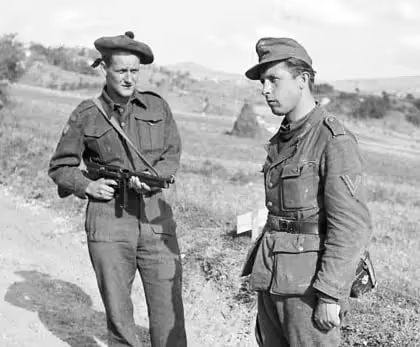
(Library and Archives Canada Photgo, MIKAN No. 3607766)
Pte. Charlie Henry, 48th Highlanders with German prisoner, ca 1943.
Invasion of Sicily
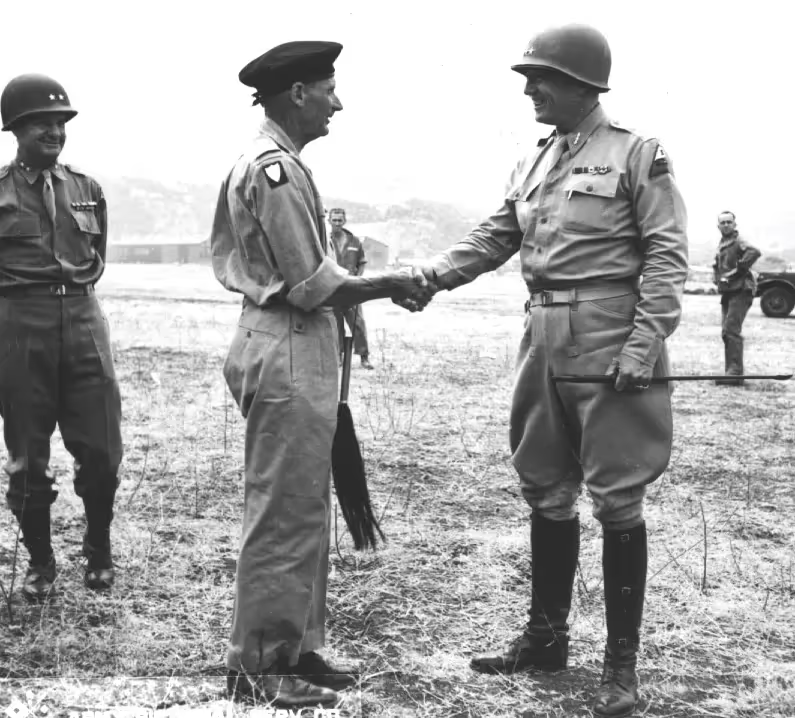
(US Army Photo)
General Bernard Law Montgomery with Lieutenant-General George S. Patton, Jr., at the Palermo, Sicily airport, 28 July 1943.
The assault on Sicily was to be the prelude to the invasion of mainland Europe. The invasion was assigned to the Seventh U.S. Army under Lieutenant-General George S. Patton, and the Eighth British Army under General Sir Bernard L. Montgomery. The Canadians were to be part of the British Army.
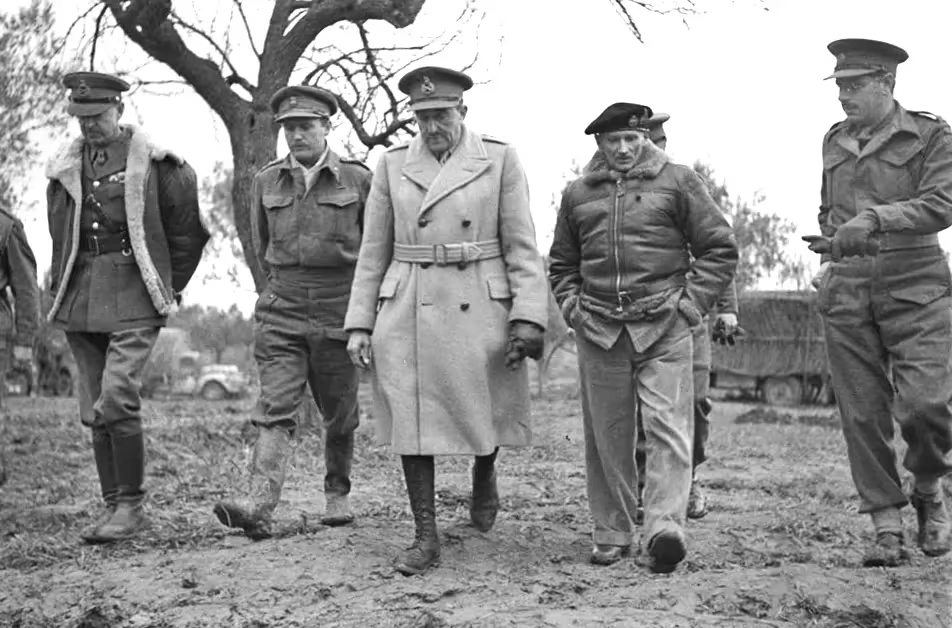
(Library and Archives Canada Photo, MIKAN No. 3203276)
Visit of General Sir Alan Brooke to the 1st Canadian Division. (L.-R.): Gen. Sir Harold Alexander, Lieutenant-Colonel Kit Dawnay, General Sir Alan Brooke, Sir Bernard Montgomery, and Brigadier Bruce Matthews, CRA 1st Cdn Div, 14 Dec 1943.
(Library and Archives Photo, MIKAN No. 3225683)
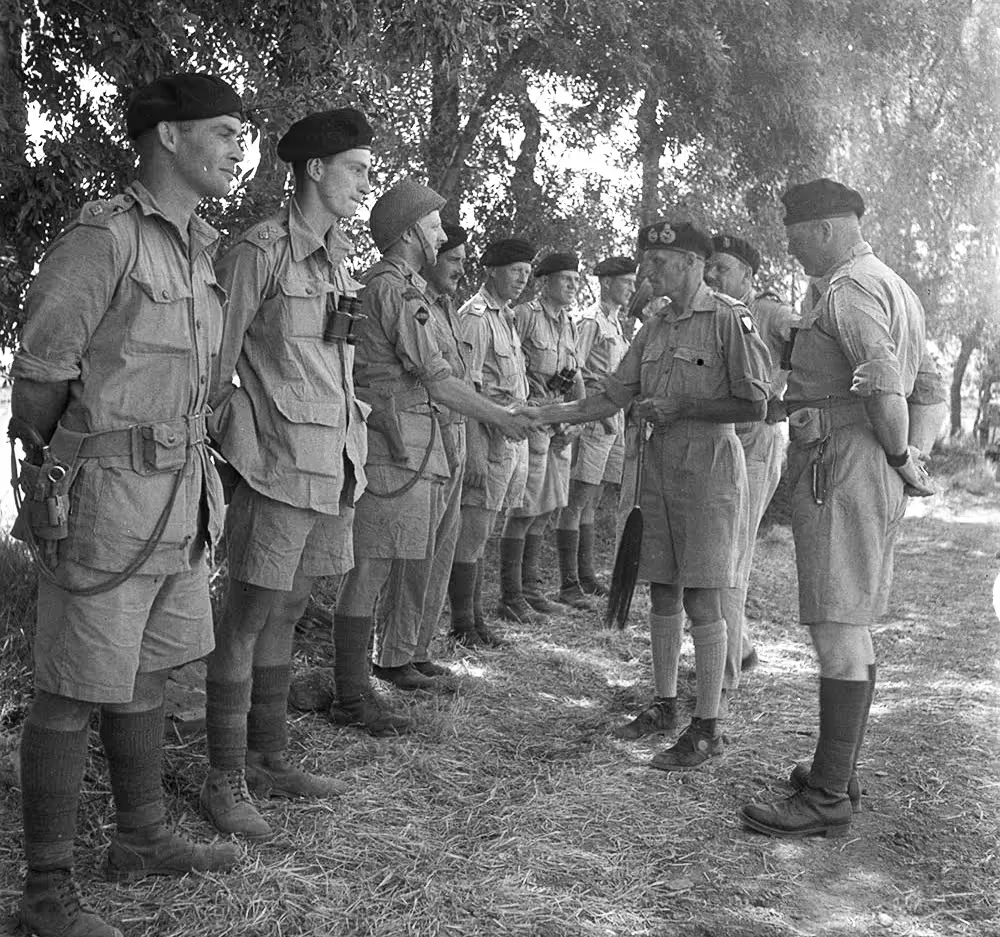
General Montgomery visiting forward positions of most advanced troops and meeting officers holding these positions, 23 July 1943.
(Library and Archives Photo, MIKAN No. 4233436)
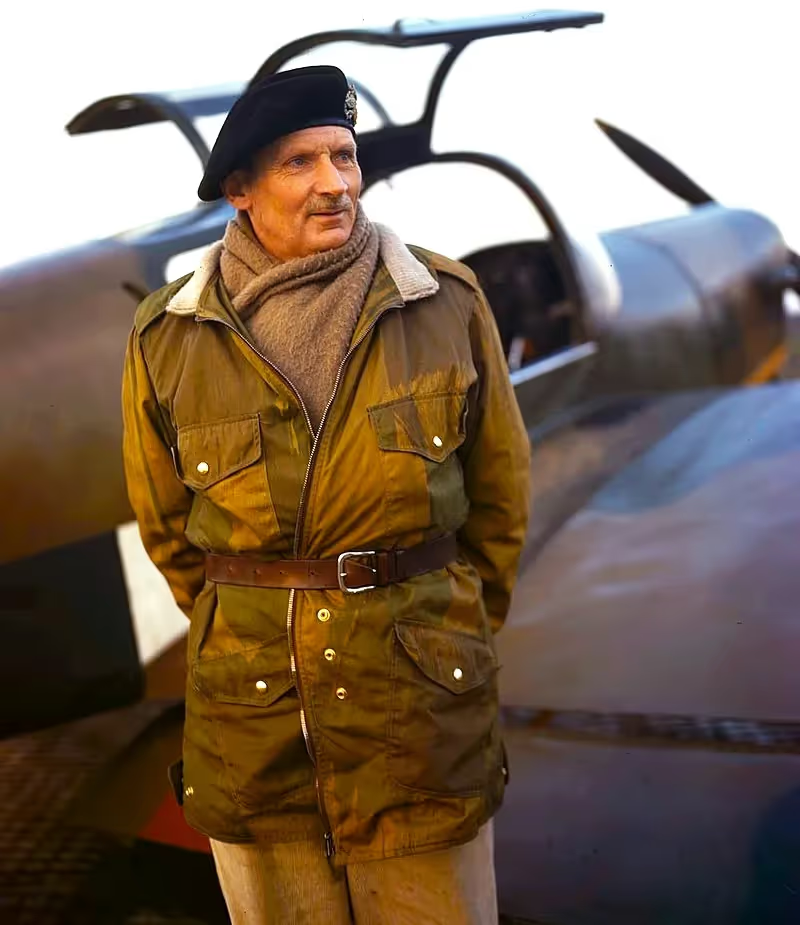
General Montgomery in front of his Miles Messenger light aircraft, ca 1943-1945.
(Library and Archives Photo, MIKAN No. 4234029)
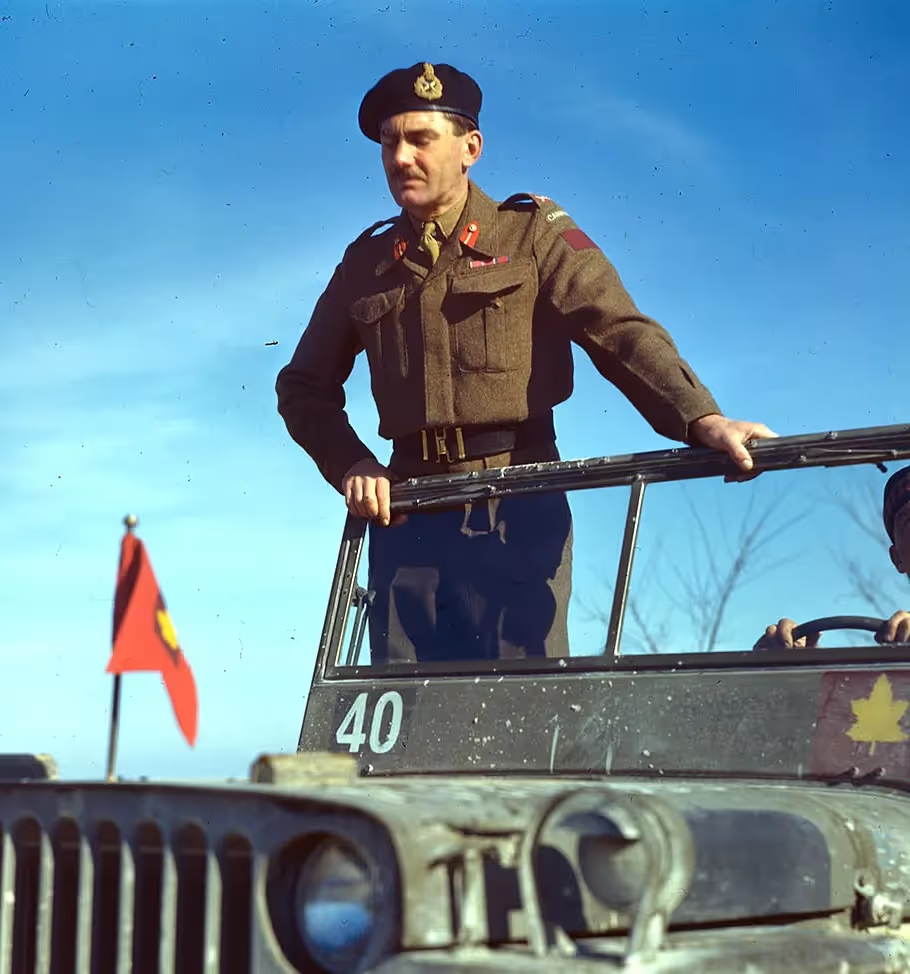
Major-General G.G. Simonds in a Jeep in Italy.

The 1st Canadian Infantry Division and the 1st Canadian Armoured Brigade, under the command of Major-General G.G. Simonds, sailed from Great Britain in late June 1943. En route, 58 Canadians were drowned when enemy submarines sank three ships of the assault convoy, and 500 vehicles and a number of guns were lost. Nevertheless, the Canadians arrived late in the night of 9 July to join the invasion armada of nearly 3,000 Allied ships and landing craft.
(Library and Archives Canada Photo, MIKAN No. 3228148)
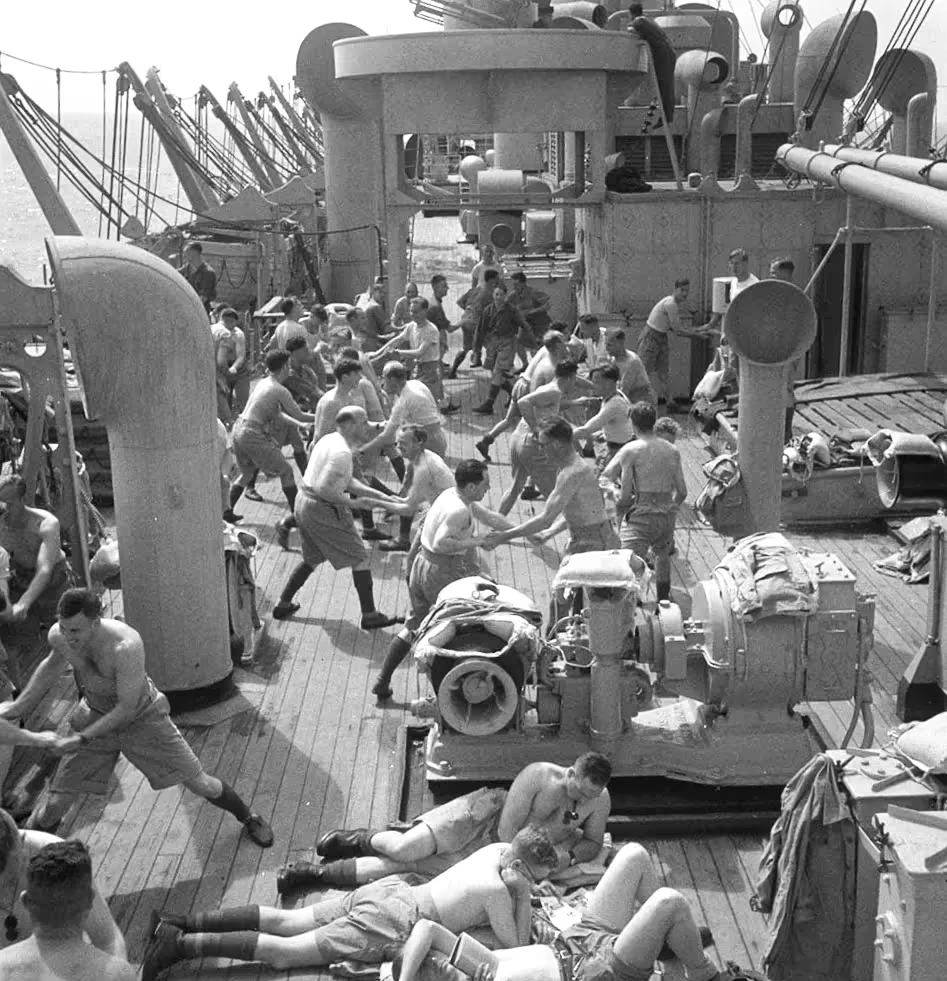
Canadian troops in unarmed-combat practice on board His Majesty’s Transport possibly HMT Dunera during the troop convoy to the Mediterranean Theatre, 1 July 1943. Possibly also HMT Rohna, both of which took part in the Sicily landings in 1943.
Operation Husky
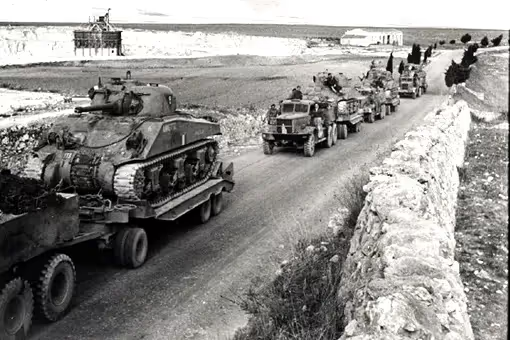
(Library and Archives Canada Photo, PA-142076)
Diamond T tractor-trailer transporters hauling Sherman tanks of the 1st Canadian Armoured Brigade, Manfredonia, Italy, 12 October 1943. The new RCASC organization first proved itself during the invasion of Sicily, but it had an inauspicious baptism of fire. Three merchant vessels from the Slow Assault Convoy carrying cargo from Britain for the initial landings were sunk en route, entailing a loss of about 500 trucks. As a result, the RCASC was faced with maintaining 1st Canadian Infantry Division and 1st Canadian Army Tank Brigade with only 43 vehicles instead of the 225 required. By the end of the Sicilian campaign, only 114 of the 500 vehicles lost had been replaced. This shortage, plus the lack of good roadways through the mountainous terrain on the island placed a great strain on RCASC personnel. Vehicles that were available were run almost continuously, about 22 hours out of 24, and routine maintenance was performed at convoy staging points where relief drivers took over in relays.
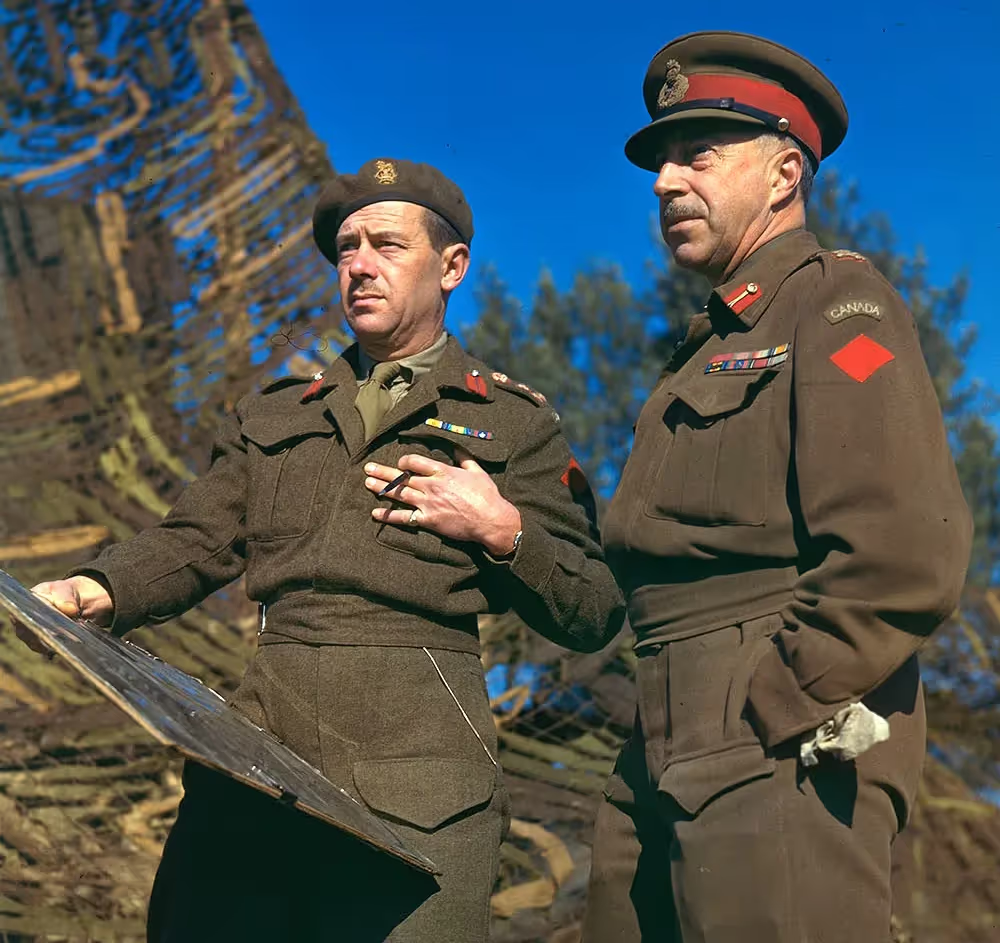
(Library and Archives Canada Photo, MIKAN No. 4233970)
General H.D.G. Crerar and Brigadier McCarter in the UK, ca 1944. From 1 October 1943 to 6 June 1944, Brigadier General McCarter served on the Staff of I Canadian Corps, Mediterranean – Italy.

Canada’s Italian campaign began on 10 July 1943 when the 1st Canadian Infantry Division and the 1st Canadian Armoured Brigade began Operation Husky, the seaborne invasion of the island of Sicily. The Italian defenders were quickly overwhelmed, and the Canadians then advanced on Pachino and its strategic airport. Nightfall saw most of the Canadian units either on or past every initial objective. Seven men died and 25 others were wounded.
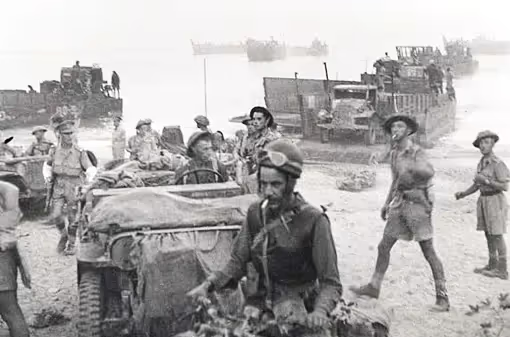
(Library and Archives Canada Photo, PA-177114)
The Royal 22e Regiment landing on the beach at Reggio di Calabria on the morning of 3 September 1943. The 80th and 81st Landing Craft Mechanized Flotillas, RCN, transported the R22eR across the straits of Messina departing from Catania’s port. LCMs are pictured in the photo. (David Patterson)
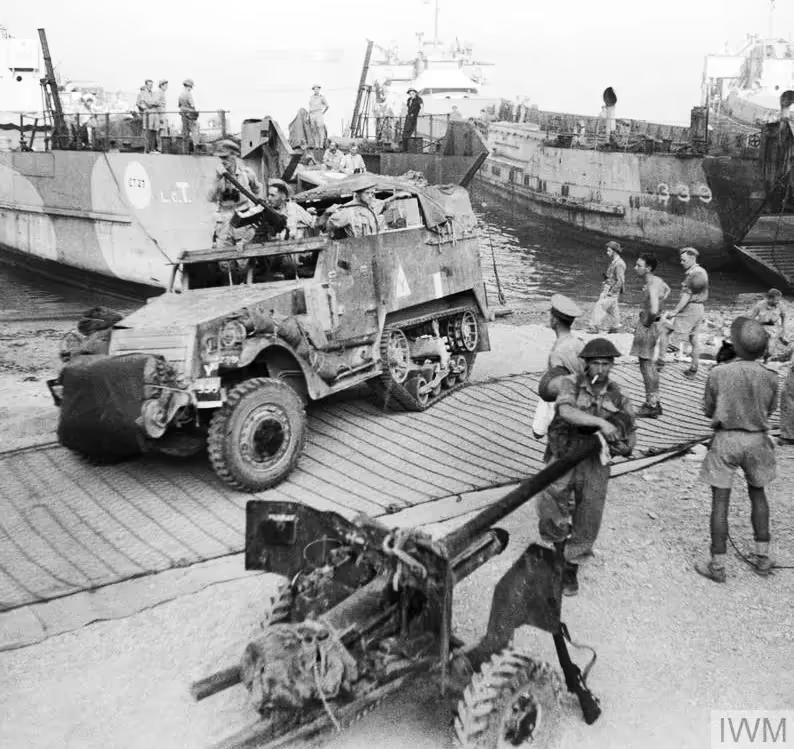
(IWM Photo, NA 6204)
A half-track and 6-pdr anti-tank gun coming ashore from landing craft at Reggio, 3 September 1943.
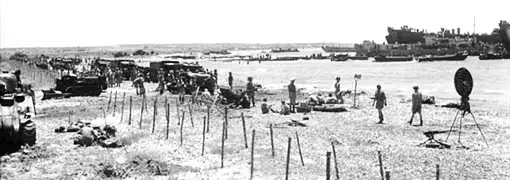
(Library and Archives Canada Photo, PA-166751.
The landing in Pachino, Sicily, July 10th, 1943.
Just after dawn on 10 July, the assault (preceded by airborne landings) went in. Canadian troops went ashore near Pachino close to the southern tip of Sicily and formed the left flank of the five British landings that spread along more than 60 kilometres of shoreline. Three more beachheads were established by the Americans over another 60 kilometres of the Sicilian coast. In taking Sicily, the Allies aimed, as well, to trap the German and Italian armies and prevent their retreat across the Strait of Messina into Italy.
On 11 July, the Canadians were delayed, not as much by enemy opposition than by thousands of Italian troops wanting to surrender. The Canadians followed an inland route that guarded the British Eighth Army’s left flank up the eastern coastline toward Catania and the ultimate objective of the Strait of Messina, which divides Sicily from the Italian mainland.
With the Italian army’s rapid collapse, several German divisions hurriedly established a series of defensive lines. Canadian troops encountered such a line on 15 July near Grammichele. Enemy anti-tank guns knocked out one tank, three carriers, and several trucks before the Canadians rallied and carried the town. Having inflicted 25 Canadian casualties, the Germans withdrew.
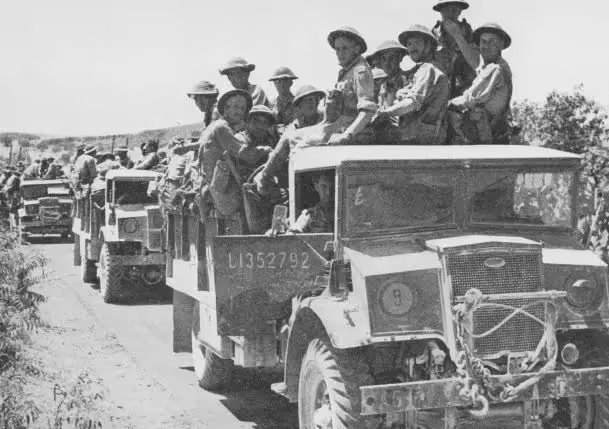
(DND Photo)
Overcoming light resistance on the beaches after landing in Sicily on 10 July 1943, the 1st Canadian Infantry Division units pushed rapidly inland for first few days of Operation HUSKY. Troops with CMP trucks.
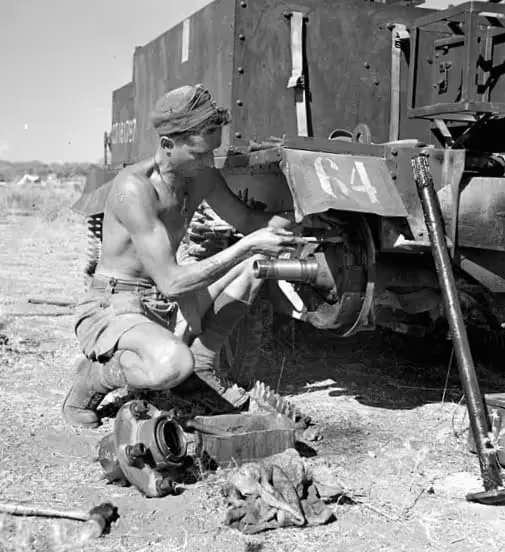
(Library and Archives Canada Photo, MIKAN No. 3259916)
Private R.E. Hill (possibly with the Saskatoon Light Infantry), repairing his Universal Carrier, Catania, Italy, 22 August 1943. It appears that more than brake repair is needed, as the axle shaft is sitting upright, leaning on the front of the vehicle. Possibly the differential gears were stripped? The axle splines look battered. (Jim Bunting)
From the Pachino beaches, where resistance from Italian coastal troops was light, the Canadians pushed forward through choking dust, over tortuous mine-filled roads. At first all went well, but resistance stiffened as the Canadians were engaged increasingly by determined German troops who fought tough delaying actions from the vantage points of towering villages and almost impregnable hill positions. On 15 July, just outside the village of Grammichele, Canadian troops came under fire from Germans of the Hermann Goering Division. The village was taken by the men and tanks of the 1st Infantry Brigade and Three Rivers Regiment.
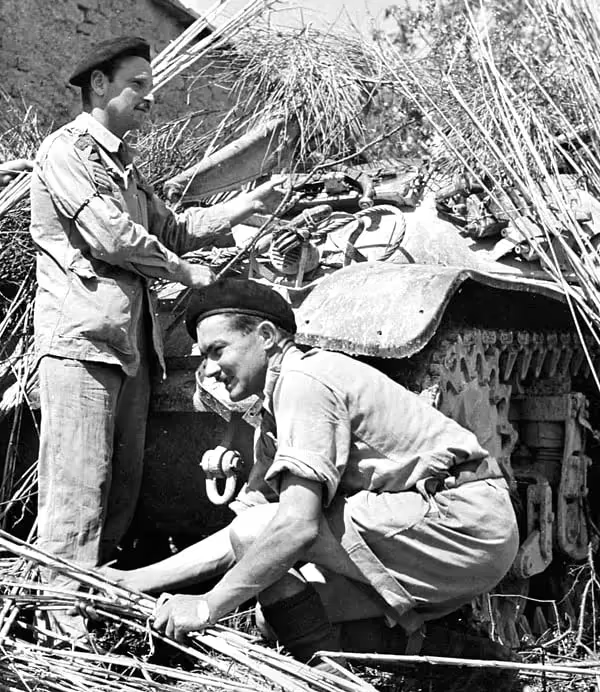
(Library and Archives Canada Photo, MIKAN No. 3238411)
Sergeant R. Gladnick and Trooper W.J. Whan of the Three Rivers Regiment camouflaging their Stuart V recce tank “Ajax“, Italy, 11 September 1944.
(Library and Archives Canada Photo, PA-170290)
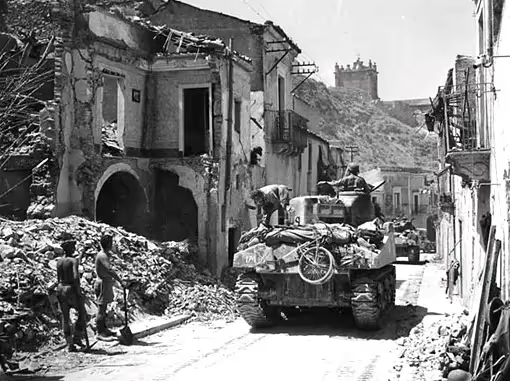
Sherman tanks of the Three Rivers Regiment entering the ruins of Regalbuto, 4 August 1943.
(IWM Photo)
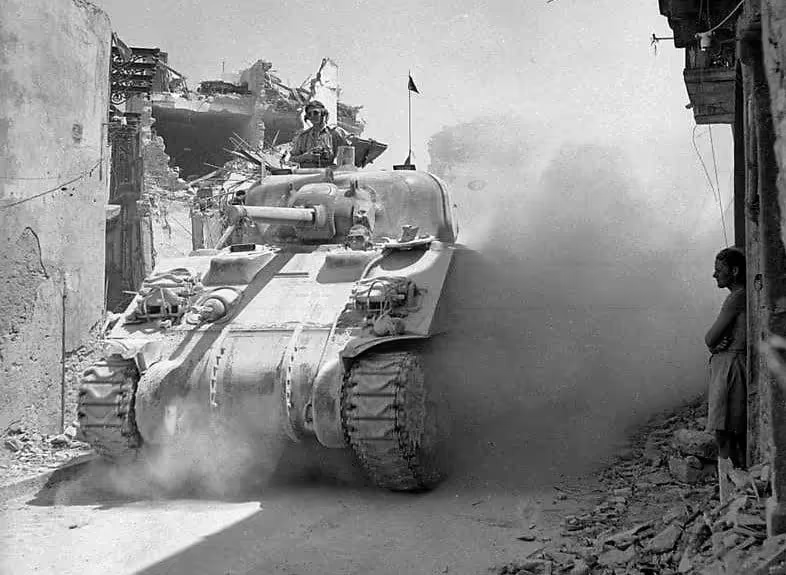
A Sherman tank of the 1st Canadian Armoured Brigade rolling through the ruins of Regalbutto during the advance on Messina, Sicily in August 1943.
German tactics in Sicily were a precursor for those applied throughout the Italian campaign. This entailed heavily entrenched fortifications set on ideal defensive terrain of ridges, mountains, and rivers. When one line was breached the Germans quickly withdrew to another.
(Library and Archives Canada Photo, MIKAN No. 3238631)
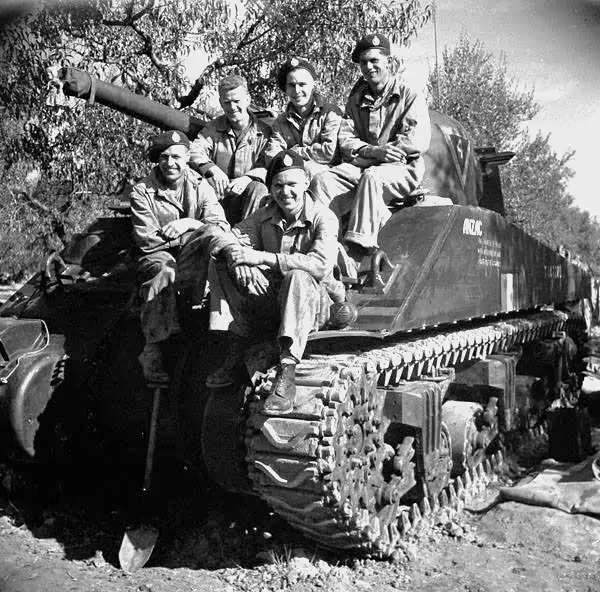
Tank crew of the Three Rivers Regiment with their Sherman V tank, Termoli, Italy, 15 October 1943. (L-R): Sergeant John Gallagher, Troopers Herb Easton, Bill Reid, Henry Brown and Frank Wurmlinger. All of these men survived the war. “ANZAC” as indicated by the name starting with the letter A was from A Squadron of the Regt.
(Library and Archives Canada Photo, MIKAN No. 3396858)
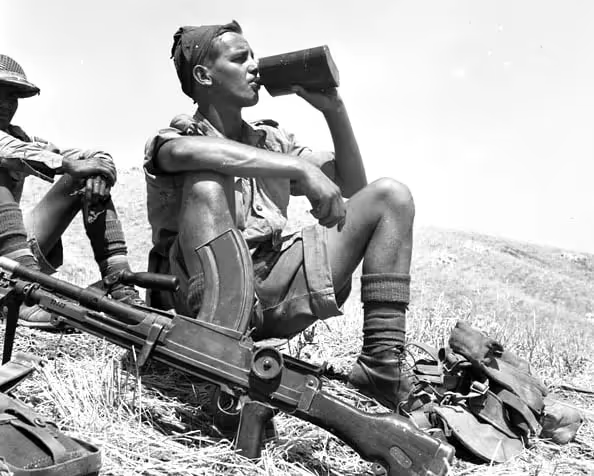
Pte. Stephen Wallis, Princess Patricia’s Canadian Light Infantry (PPC.LI), taking a drink, north of Valguarnera, Sicily, July 1943.
Piazza Armerina and Valguarnera fell on successive days, after which the Canadians were directed against the hill towns of Leonforte and Assoro. Despite the defensive advantages which mountainous terrain gave to the Germans, after bitter fighting both places fell to the Canadian assault. Even stiffer fighting was required as the Germans made a determined stand on the route to Agira. Three successive attacks were beaten back before a fresh brigade, with overwhelming artillery and air support, succeeded in dislodging the enemy. On 28 July, after five days of hard fighting at heavy cost, Agira was taken.
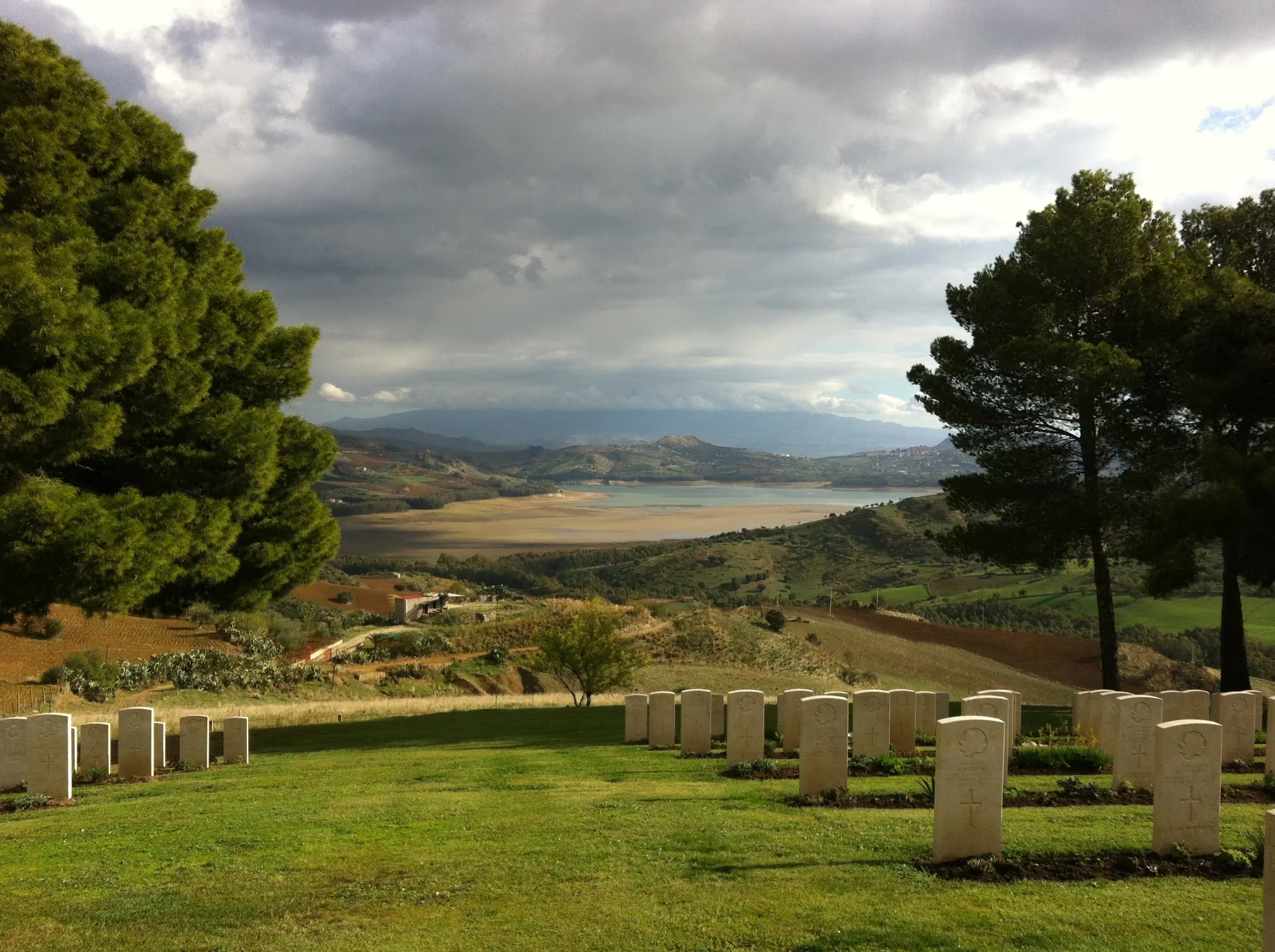
(Commonwealth War Graves Foundation Photo)
Agira was taken by the 1st Canadian Division of 28 July and the site for the war cemetery was chosen in September for the burial of all Canadians who had been killed in the Sicily campaign. Agira Canadian War Cemetery contains 490 Commonwealth burials of the Second World War.
(Library and Archives Canada Photo, MIKAN No. 3228145)
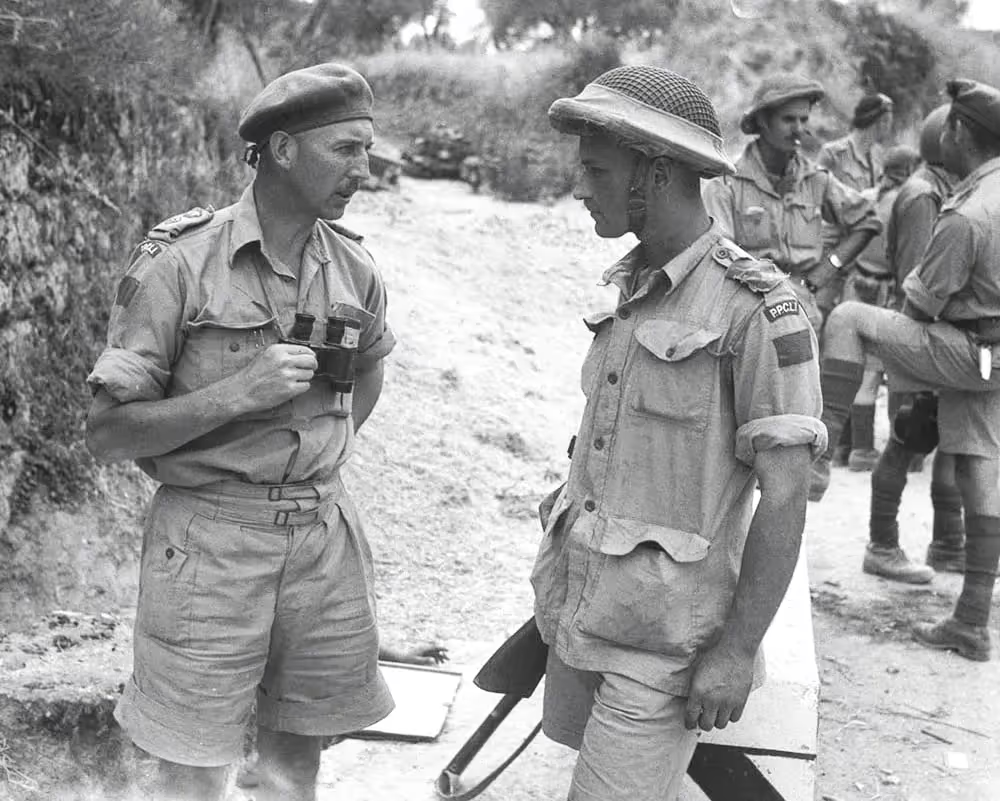
Lieutenant-Colonel R.A. Lindsay with Lieutenant Colin McDougal, of Princess Patricia’s Canadian Light Infantry, who has just been made adjutant of the regiment, 28 July 1943.
(Library and Archives Canada Photo, MIKAN No. 3661962)
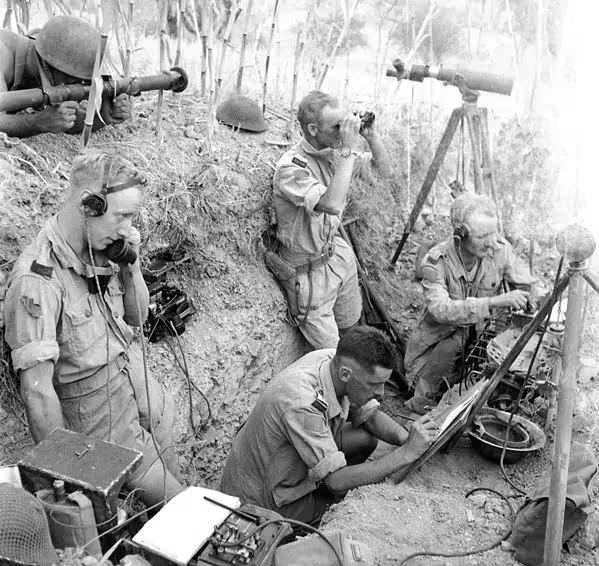
Forward Observation Post, “B” Battery, 1st Field Regiment, Royal Canadian Horse Artillery, Potenza, Italy, 24 September 1943. From left to right, Gunner Chuck Drickerson (rangefinder), Signalman Jim Tully (telephone), Regimental Sergeant-Major George Gilpin (plotting board), Captain G.E. Baxter (field glasses), and Signalman Hugh Graham (radio).
Meanwhile, the Americans were clearing the western part of the island and the British were pressing up the east coast toward Catania. These operations pushed the Germans into a small area around the base of Mount Etna where Catenanuova and Regalbuto were captured by the Canadians.
(Library and Archives Canada Photo, MIKAN No. 3222598)
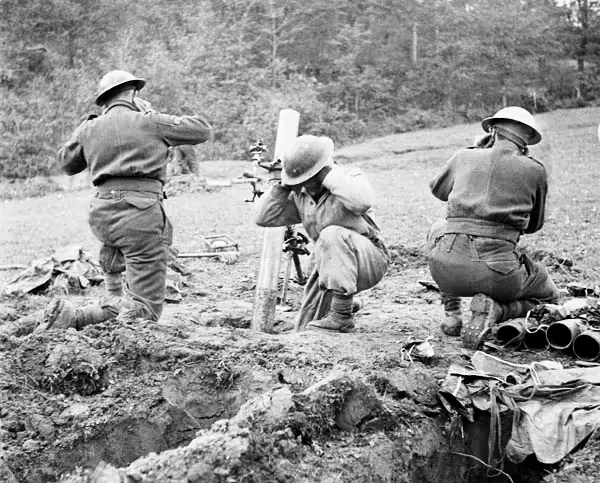
3rd Canadian Infantry Brigade, Saskatoon Light Infantry soldiers firing a 4.2-inch mortar near the Sangro River, Italy, 1 December 1943.
(Library and Archives Canada Photo, MIKAN No. 3520403)
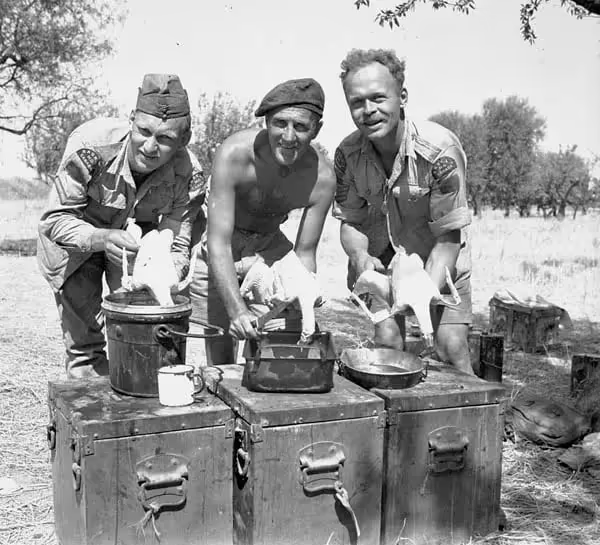
Personnel of the Support Company, Saskatoon Light Infantry (M.G.), placing birds in roasting pans, near Montescaglioso, Matera, Italy 15 September 1943.
(Library and Archives Canada Photo, MIKAN No. 3240639)
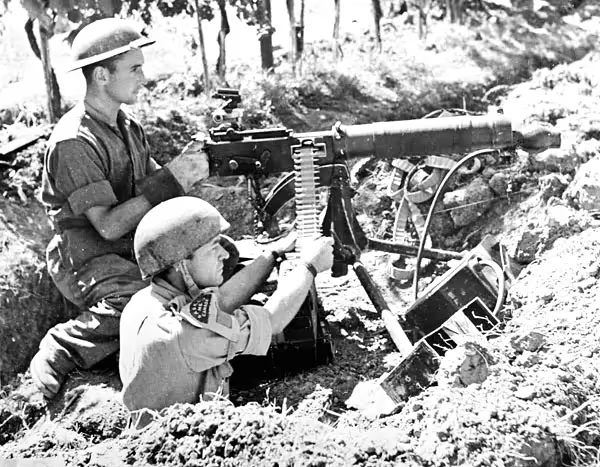
Corporal R. Hill and Private A.D. Hiebert, Saskatoon Light Infantry (M.G.), manning a Vickers machine gun, Riccione, Italy, 1944.
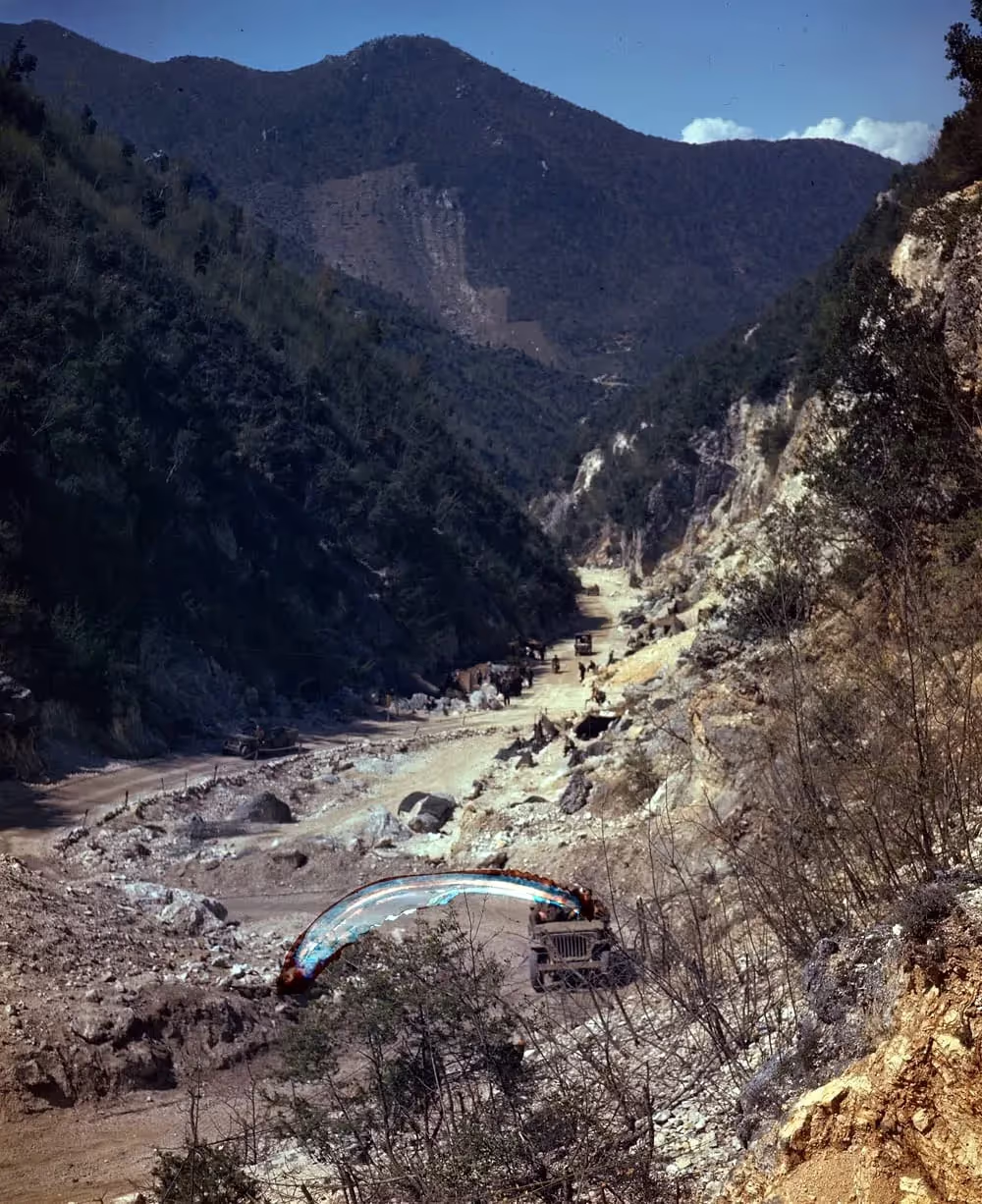
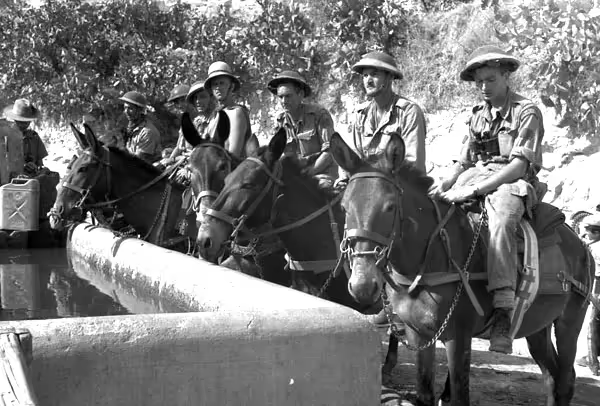
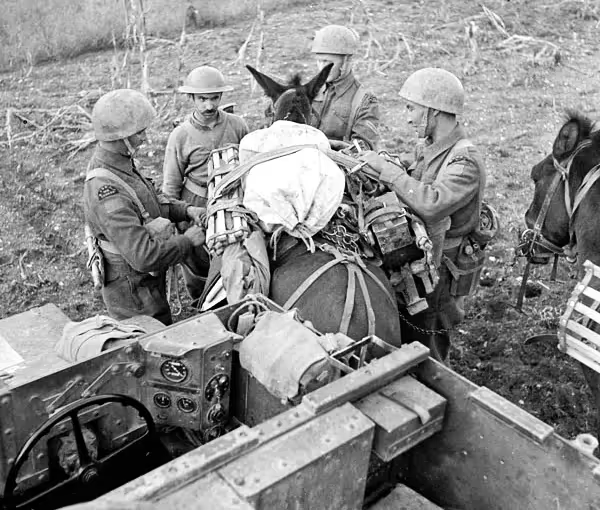
The final Canadian task was to break through the main enemy position and capture Adrano. Here, they continued to face not only enemy troops, but also the physical barriers of a rugged, almost trackless country. Mortars, guns, ammunition, and other supplies had to be transported by mule trains. Undaunted, the Canadians advanced steadily against the enemy positions, fighting literally from mountain rock to mountain rock.
(Library and Archives Canada Photo, MIKAN No. 4233023)
The Canadian supply route through the mountains of Italy, c1943.
Canada’s “Mountain Boys”
On 18 July, the Canadians met their heaviest resistance to date, at Valguarnera, Sicily. Fighting before the town and on adjacent ridges resulted in 145 casualties, including 40 killed. But the Germans lost 250 men captured and an estimated 180 to 240 killed or wounded. Field marshal Albert Kesselring reported that his men were fighting highly trained mountain troops. “They are called ‘Mountain Boys,’ he said, “and probably belong to the 1st Canadian Division.” German respect for the Canadian soldier was beginning.
For the next 17 days, the Canadians were hotly engaged. At Leonforte, the 2nd Canadian Infantry Brigade spent a night of house-to-house fighting. Meanwhile, the Hastings and Prince Edward Regiment carried out a nighttime ascent of the 904-metre-high Monte Assoro to surprise the German defenders.
(Library and Archives Canada Photo, MIKAN No. 3396001)
Pioneer platoon of the Royal Canadian Regiment watering their mules near Regalbuto, Italy, 4 August 1943.
(Library and Archives Canada Photo, MIKAN No. 3582752)
Saskatoon Light Infantry soldiers with their Universal Carrier and a mule carrying supplies, Italy, 9-18 October 1943.
(Library and Archives Canada Photo, MIKAN No. 3564308)
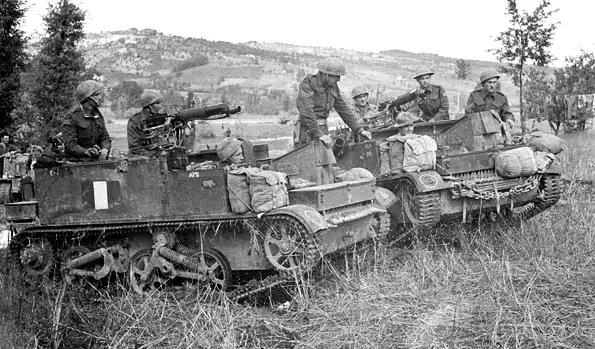
Personnel of the Saskatoon Light Infantry (MG) in Universal Carriers, Monacilione, Italy, ca. 9 – 18 October 1943.
(Library and Archives Canada Photo, MIKAN No. 3520400)
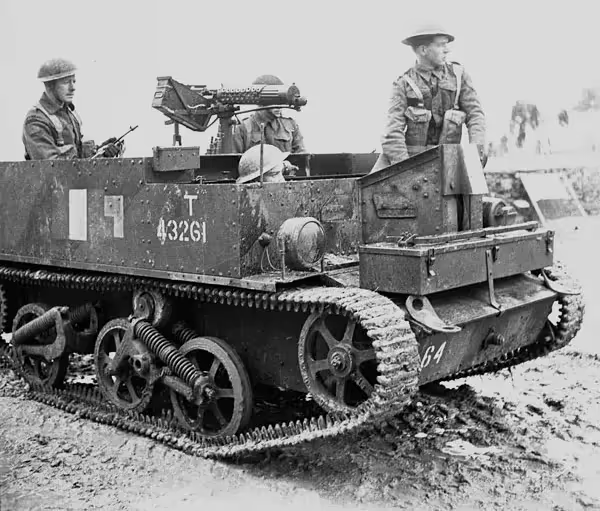
Saskatoon Light Infantry (M.G.) soldiers in a Universal Carrier equipped with a Vickers machine gun, Italy, 8 March 1944.
(IWM Photo, B 10448)
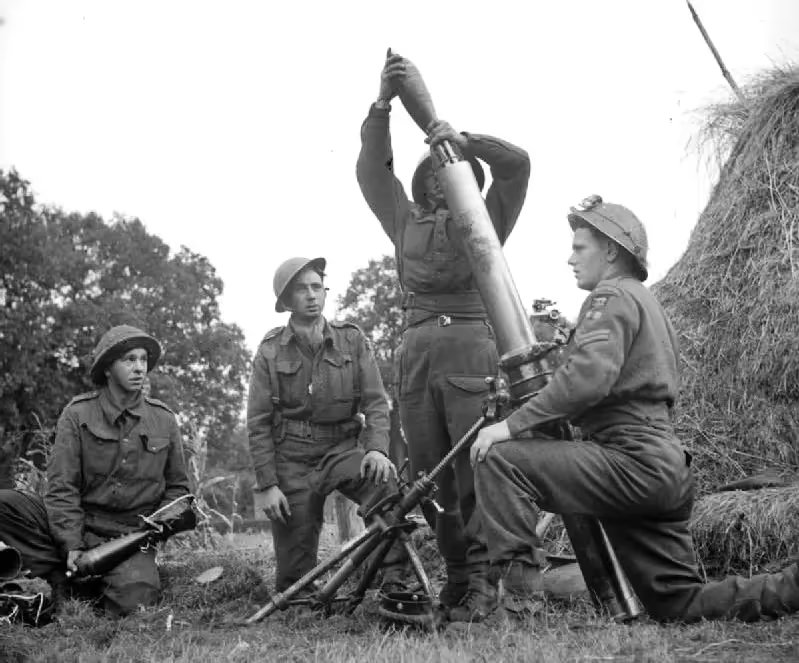
4.2-inch Mortar.
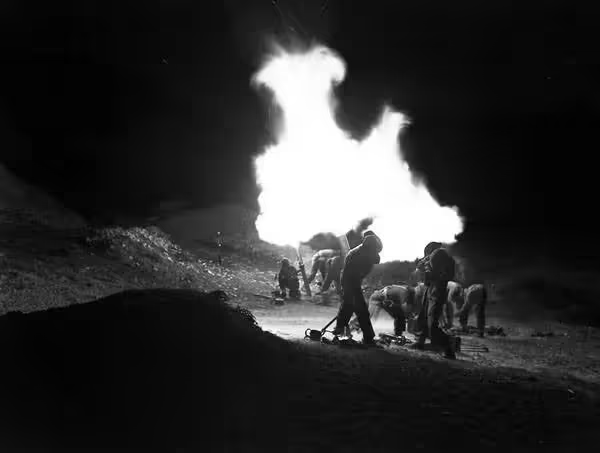
(Library and Archives Canada Photo, MIKAN No. 3396064)
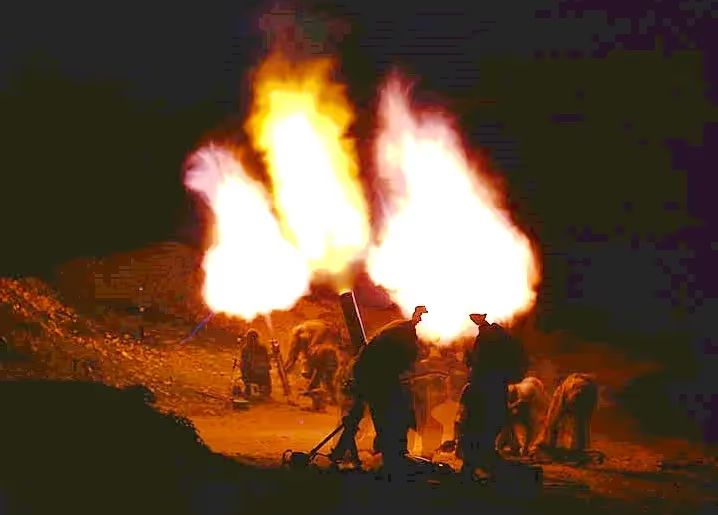
(Library and Archives Canada Photo, MIKAN No. 4232994)
4.2-inch Mortars, 1st Cdn Corps, night firing, Italy, 6 April, 1944.