
First Army Signals, Royal Canadian Corps of Signals (RCCS)
1st Air Support Signals Unit
Nos. 1, 2 & 3 Special Wireless Sections
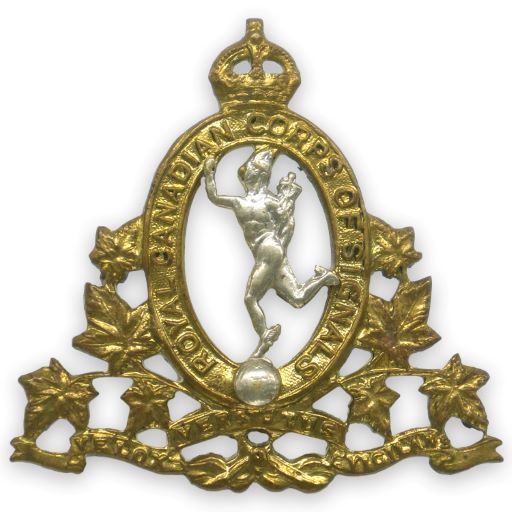
Royal Canadian Corps of Signals (RCCS)
Once upon a time…back in the day, the author served as a Radio Operator (RadOp) in 723 Communications Squadron, Halifax Nova Scotia (1971-1972)
This is a collection of historical Royal Canadian Corps of Signals (RCCS) photos found in the LAC files.
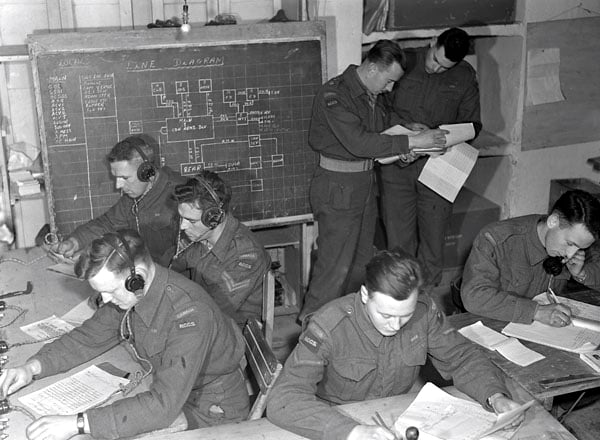
(Library and Archives Canada Photo, MIKAN No. 3259902)
Signals Centre of the 5th Canadian Armoured Division near Castelnuovo, Italy, 17 March 1944.
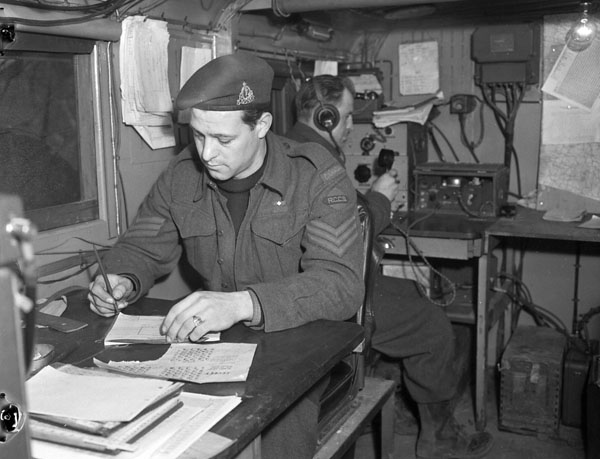
(Library and Archives Canada Photo, MIKAN No. 3405830)
Personnel of 1st Canadian Army Signals, Royal Canadian Corps of Signals (RCCS), Zeddam, Netherlands, 4 April 1945.
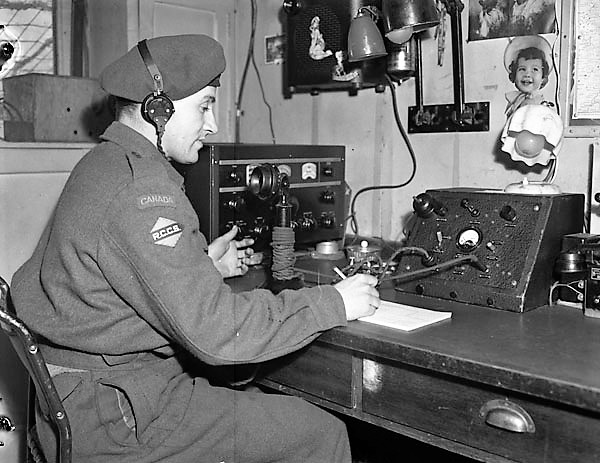
(Library and Archives Canada Photo, MIKAN No. 3405827)
Signalman J.T. Prime of 1st Canadian Army Signals, Royal Canadian Corps of Signals (RCCS), operating a local radio receiver and remote unit, Zeddam, Netherlands, 4 April 1945.
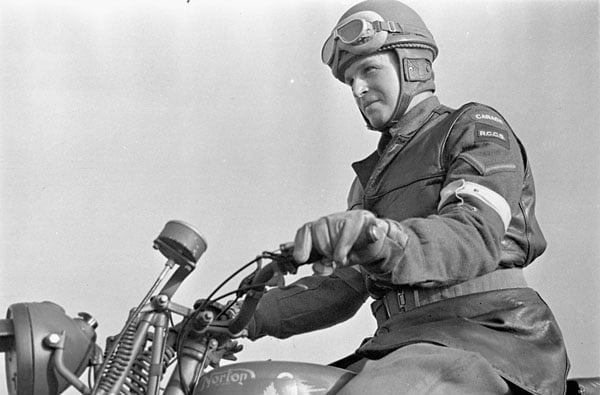
(Library and Archives Canada Photo, MIKAN No. 3534713)
Dispatch rider of the Royal Canadian Corps of Signals (RCCS) riding a Norton motorcycle during a 4th Canadian Armoured Division training exercise, Aldershot, England, 11 January 1943.
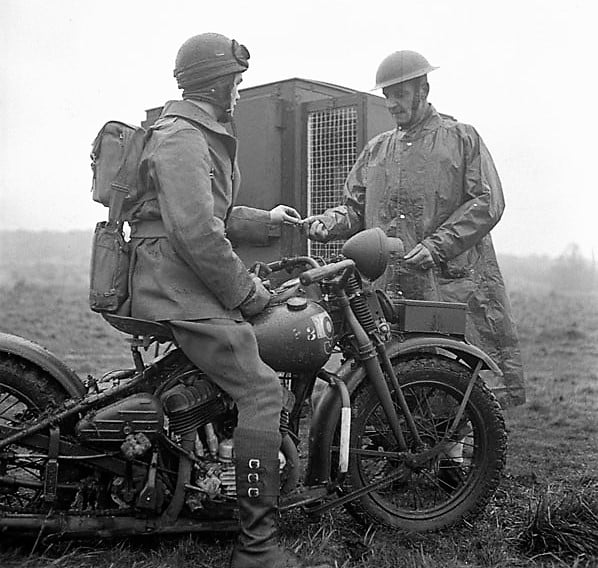
(Library and Archives Canada Photo, MIKAN No. 3228795)
Dispatch rider Private J.W. King (left), who is riding a Harley-Davidson motorcycle, accepts a pigeon message from Corporal J. Hanley, Royal Canadian Corps of Signals (R.C.C.S.), England, 10 February 1943.
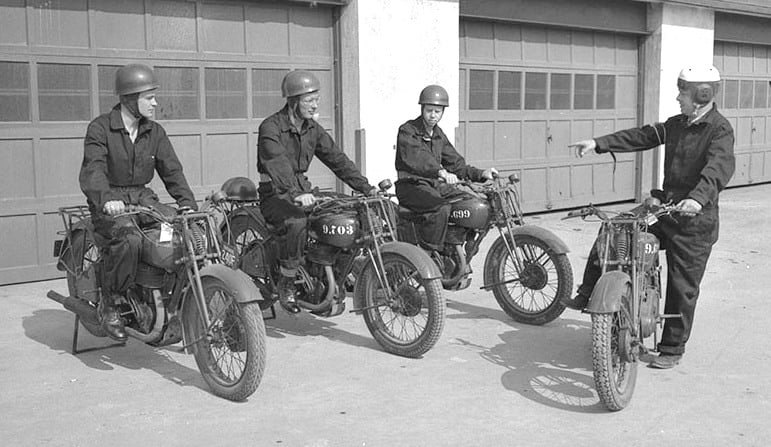
(Library and Archives Canada Photo, MIKAN No. 3223985)
Canadian Officers Training Corps at Royal Canadian School of Signals. Officer Cadet G.W. Procter and some of his comrades take motorcycle instruction. 23 June 1950.
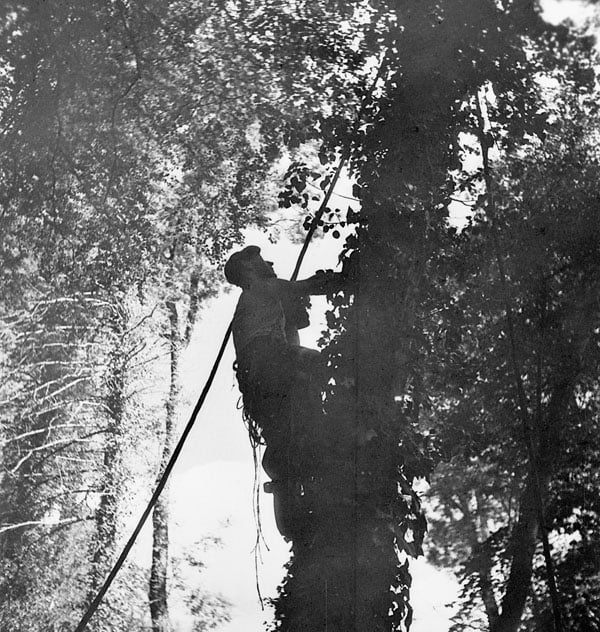
(Library and Archives Canada Photo, MIKAN No. 3202816)
Signalman F. Roy of the Royal Canadian Corps of Signals (R.C.C.S.), 9th Canadian Infantry Brigade, stringing wires for a signals exchange, Normandy, France, 24 June 1944.
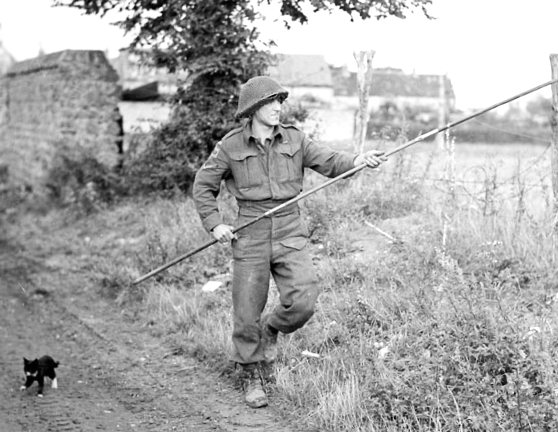
(Library and Archives Canada Photo, MIKAN No. 3251023)
A lineman of the Royal Canadian Corps of Signals laying a telephone line, Boulogne, France, 19 September 1944.
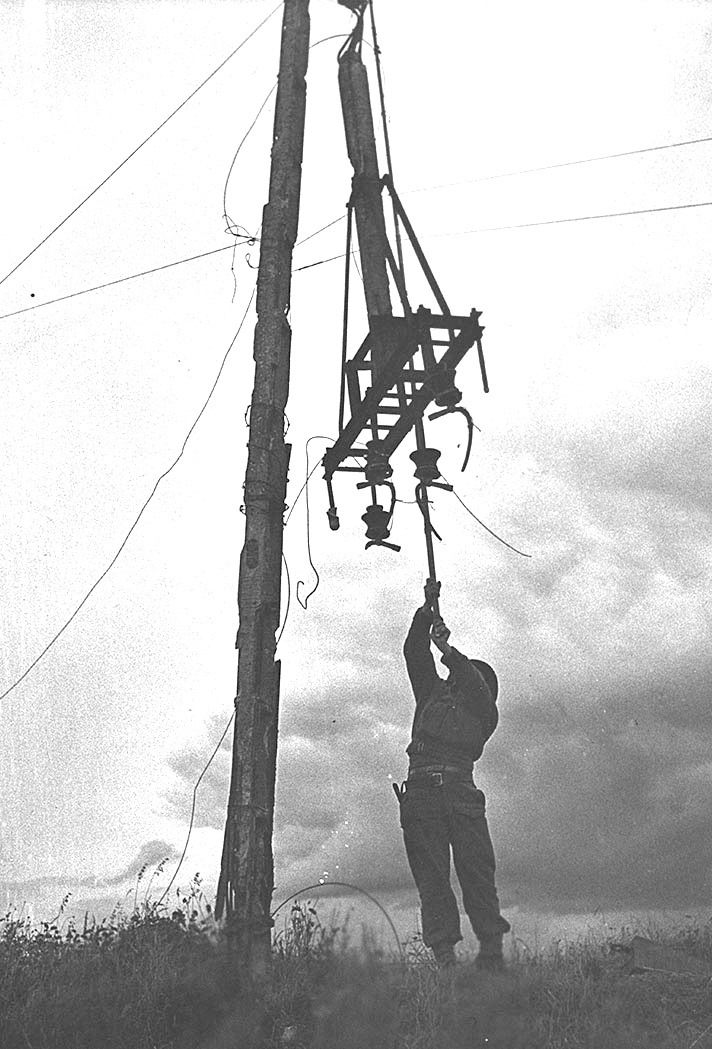
(Library and Archives Canada Photo, MIKAN No. 3226718)
Royal Canadian Corps of Signals soldiers installing communication lines near the French city of Caen, Normandy, 9 July 1944.
(Library and Archives Canada Photo, MIKAN No. 3258518)
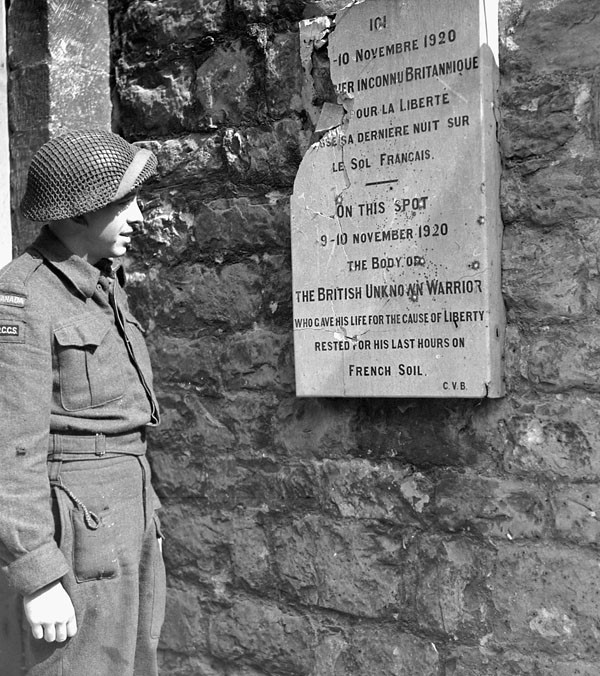
Signalman F.R.J. Savage of the Royal Canadian Corps of Signals and the 9th Canadian Infantry Brigade reads the inscription on a plaque dedicated to an unknown British soldier buried on 9-10 November 1920. Boulogne, France, 19 September 1944.
(Library and Archives Canada Photo, MIKAN No. 3202169)
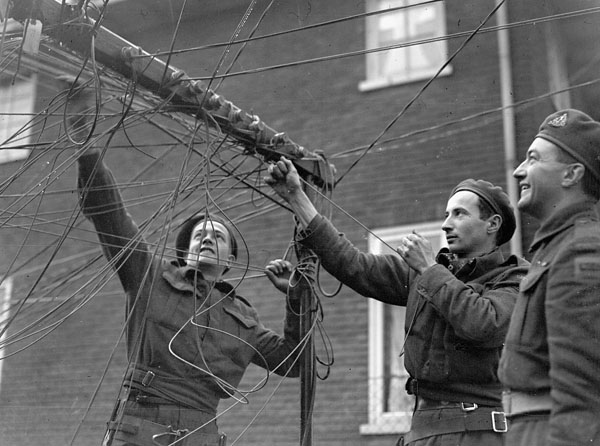
Sergeant-Major R.J. McLeod, Signalman W.J. Martin and Company Sergeant-Major P.E. Maisonneuve, Royal Canadian Corps of Signals, repairing telephone lines in Belgium, 23 November 1944.
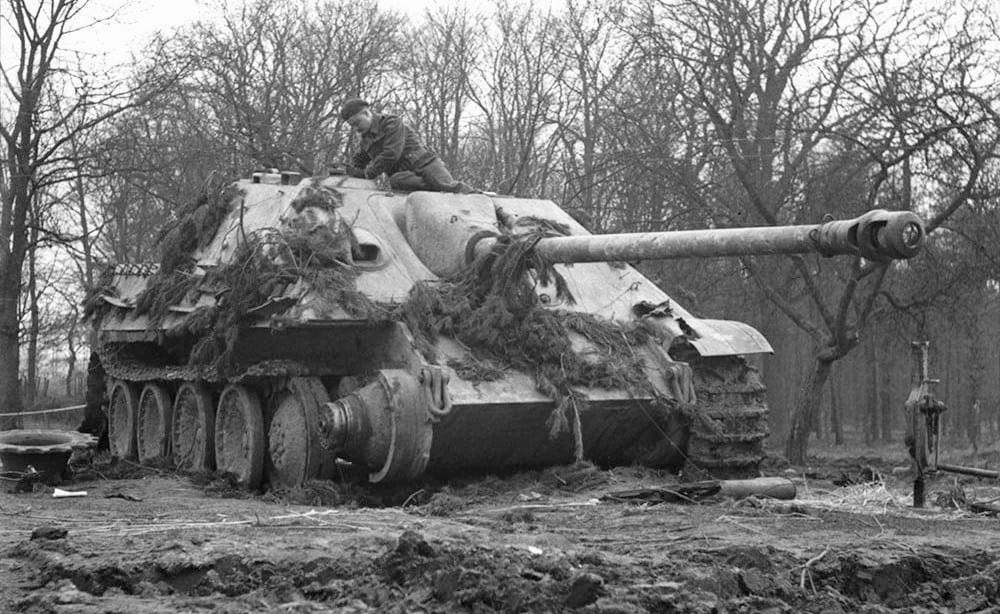
(Library and Archives Canada Photo, MIKAN No. 3520261)
Member of the Royal Canadian Corps of Signals looking over destroyed German Jagdpanther self-propelled gun, Northwest Europe, 15 Mar 1945.
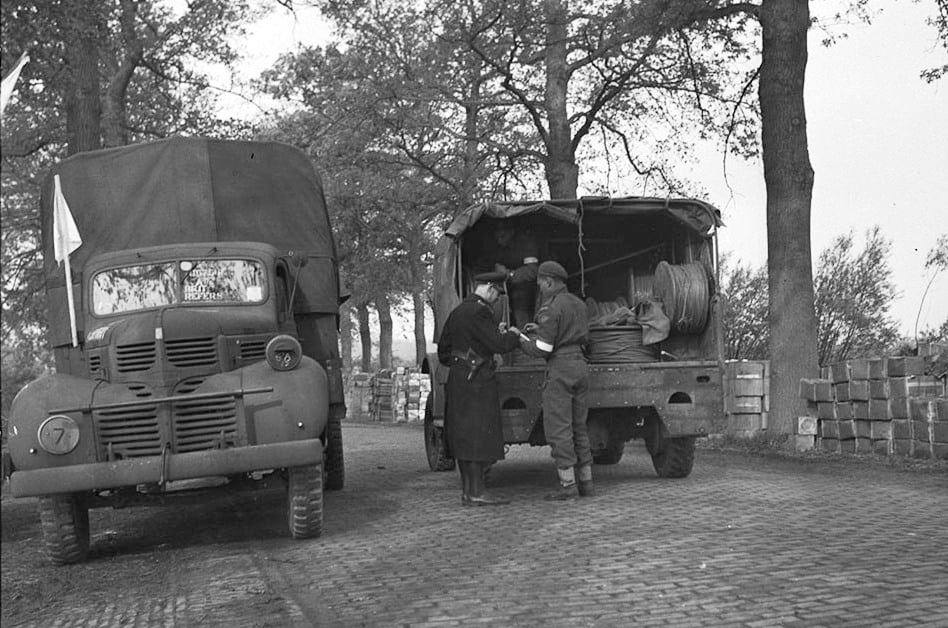
(Library and Archives Canada Photo, MIKAN No. 3208401)
German and Canadian telephone link up with German Major K. Henninger, German Signals, and Sgt. J. Steacy, 1 Canadian Corps Signals, in no-mans-land, 5 May 1945.
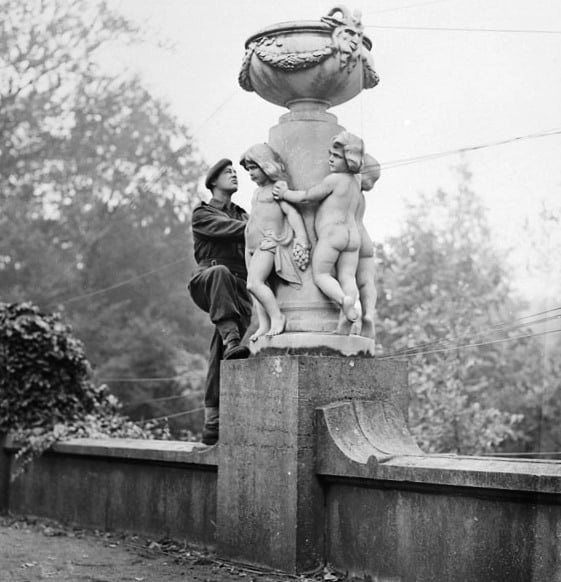
(Library and Archives Canada Photo, MIKAN No. 3262713)
Signalman J.A. Knirchk, Royal Canadian Corps of Signals (RCCS), 4th Canadian Armoured Division, stringing a line on a statue, Eikelenberg, Belgium, 23 October 1944.
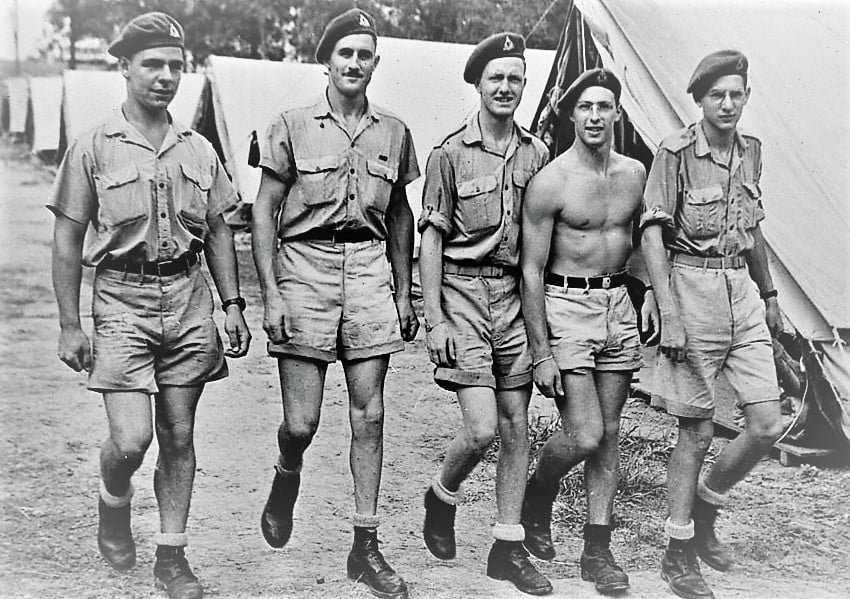
(Library and Archives Canada Photo, MIKAN No. 4283557)
Canadian Signalmen in Australia – Members of a Canadian special wireless group training for action in the Pacific now stationed in Brisbane, Australia, are cheerful despite the hottest March weather in 42 yrs. Shown here are: Signalman R. Montreuil, Signalman J.G. Groome, Signalman L. Exelby, Signalman E.A. Lowe and Signalman J. Taylor, c1944-1945.
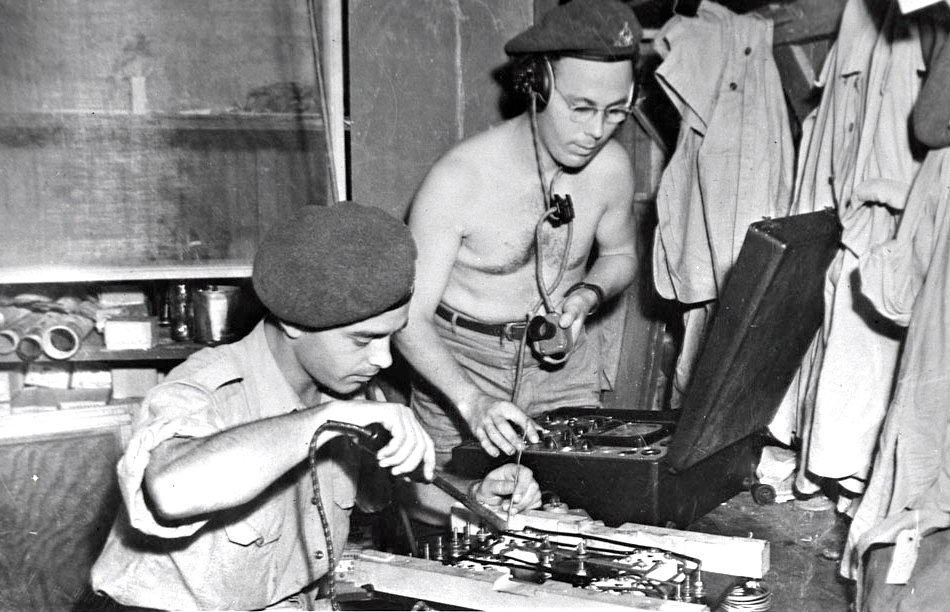
(Library and Archives Canada Photo, MIKAN No. 4283559)
Members of a Canadian special wireless group, training in Brisbane, Australia, for action in the Pacific, are cheerful despite the hottest March in 42 yrs. Shown here testing Canadian radio equipment in Australia are: Signalman J.P. Trottier, and Signalman Maywood, 1944-1945.
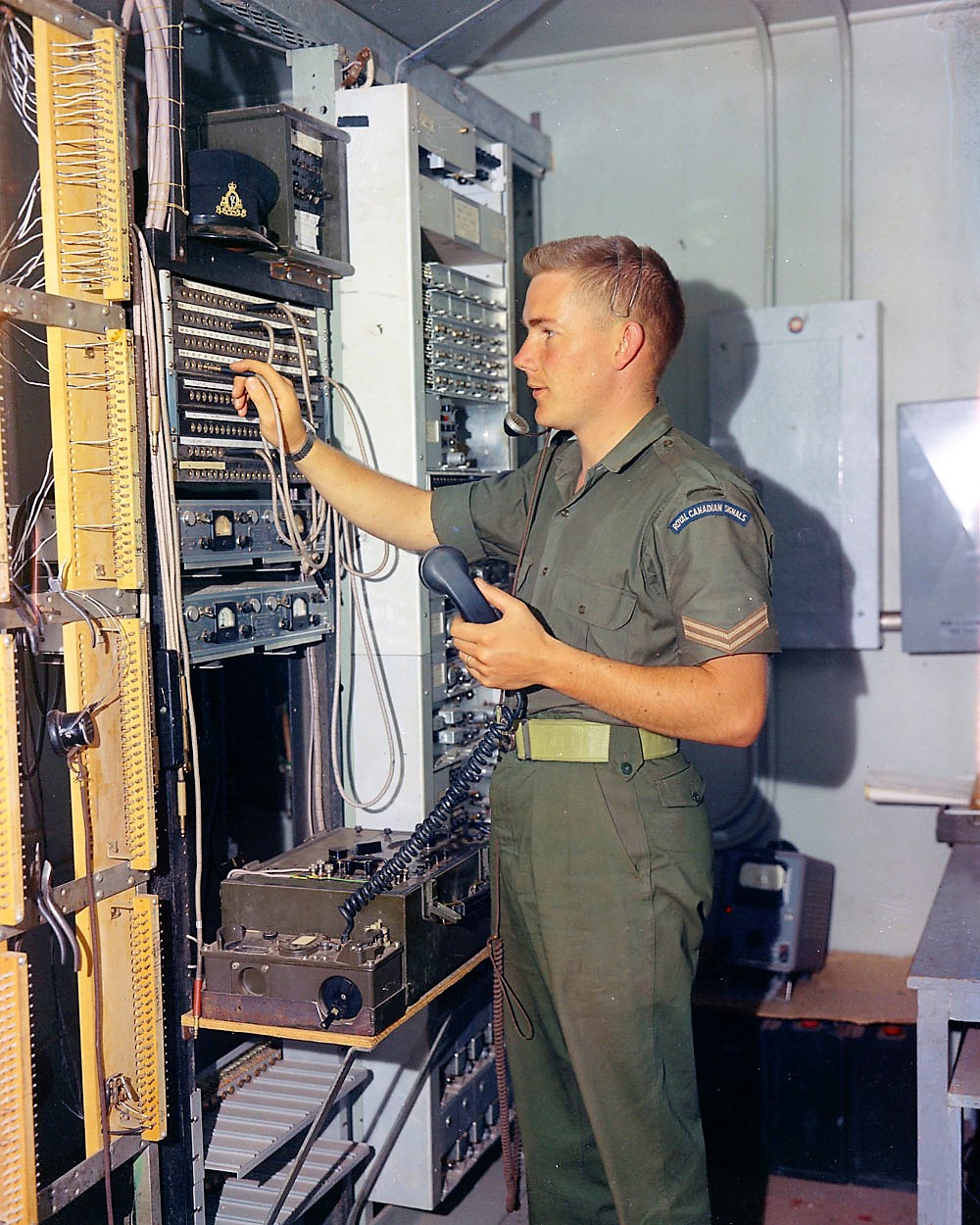
(Library and Archives Canada Photo, MIKAN No. 4235503)
RCCS, 1961 Summer Concentration, Cpl James W. Carter testing the telephone and carrier lines in preparation for the summer concentration exercises, Camp Gagetown, New Brunswick.
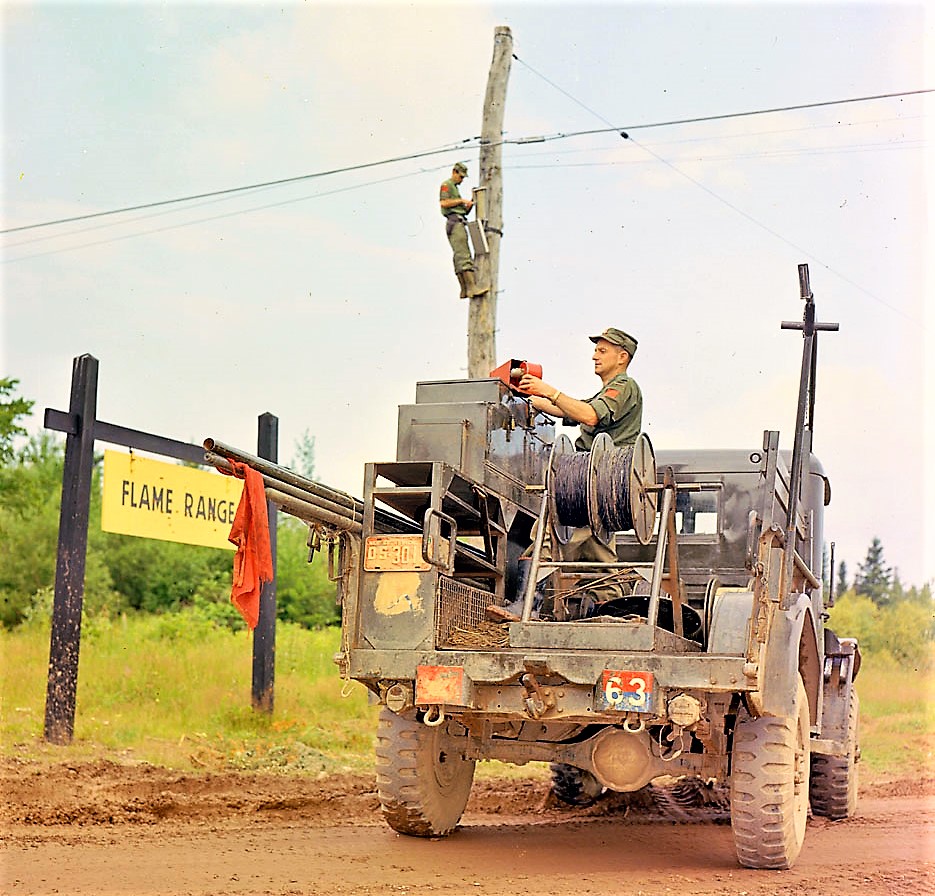
(Library and Archives Canada Photo, MIKAN No. 4235426)
RCCS, summer concentration, Camp Gagetown, New Brunswick, 1963.
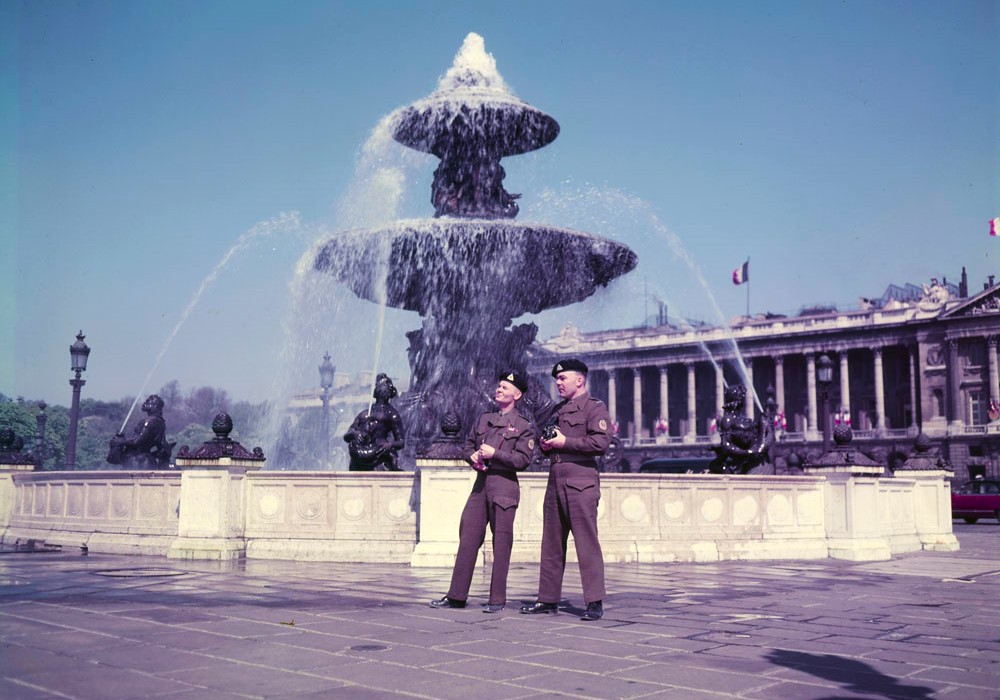
(Library and Archives Canada Photo, MIKAN No. 4234170)
RCCS band members in Paris, c1965.
Canada drawn into the Second World War
In view of the deteriorating world situation Canada initiated programs to expand and modernise its military forces commencing in the 1934-35 fiscal year. Despite this, Canada was woefully unprepared to take part in the war which had broken out in Europe in late August 1939. On 24 August 1939 Prime Minister MacKenzie King’s Cabinet first learned of the German-Soviet Non-Aggression Pact. It was agreed that “Canada would participate” in a general conflict involving Great Britain although Parliament would decide the precise nature of Canada’s commitment.
On 26 August 1939 General Order 124 announced the “Precautionary Stage of the Defence Scheme”. This order called out 10,000 soldiers on a voluntary basis to guard vulnerable points and coastal defences. NPAM Signal units called out included 4, 5, 6, 9, 10 and 11 Fortress Signal Companies and details from 4th Divisional signals and 5, 6, and 11 District Signals.
On 1 September 1939 General Order 135 announced a “State of Apprehended War”. Although war had not yet been declared, this placed the Canadian military on a war footing and initiated mobilization. The mobilized force was designated the Canadian Active Service Force.
On 1 September 1939, 1st Canadian Divisional Signals formed at Barriefield and later left for overseas service under command of Lieutenant-Colonel J.E. Genet, MC. 1st Canadian Corps Signals and four other divisional Signals were later formed there as mobilization progressed. In England later on there was a Signals Holding Unit, 2nd Canadian Corps Signals, 1st Canadian Army Signals, 1st Canadian Line of Communications Signals and a number of other units formed, all of which played important parts in the European campaigns.
On 10 September 1939, with the approval of the Government of Canada, King George VI proclaimed the existence of a state of war between Canada and the German Reich. (RC Sigs.ca, 90 years and Counting)