
The Halifax Explosion, 6 Dec 1917
(Author Photo)
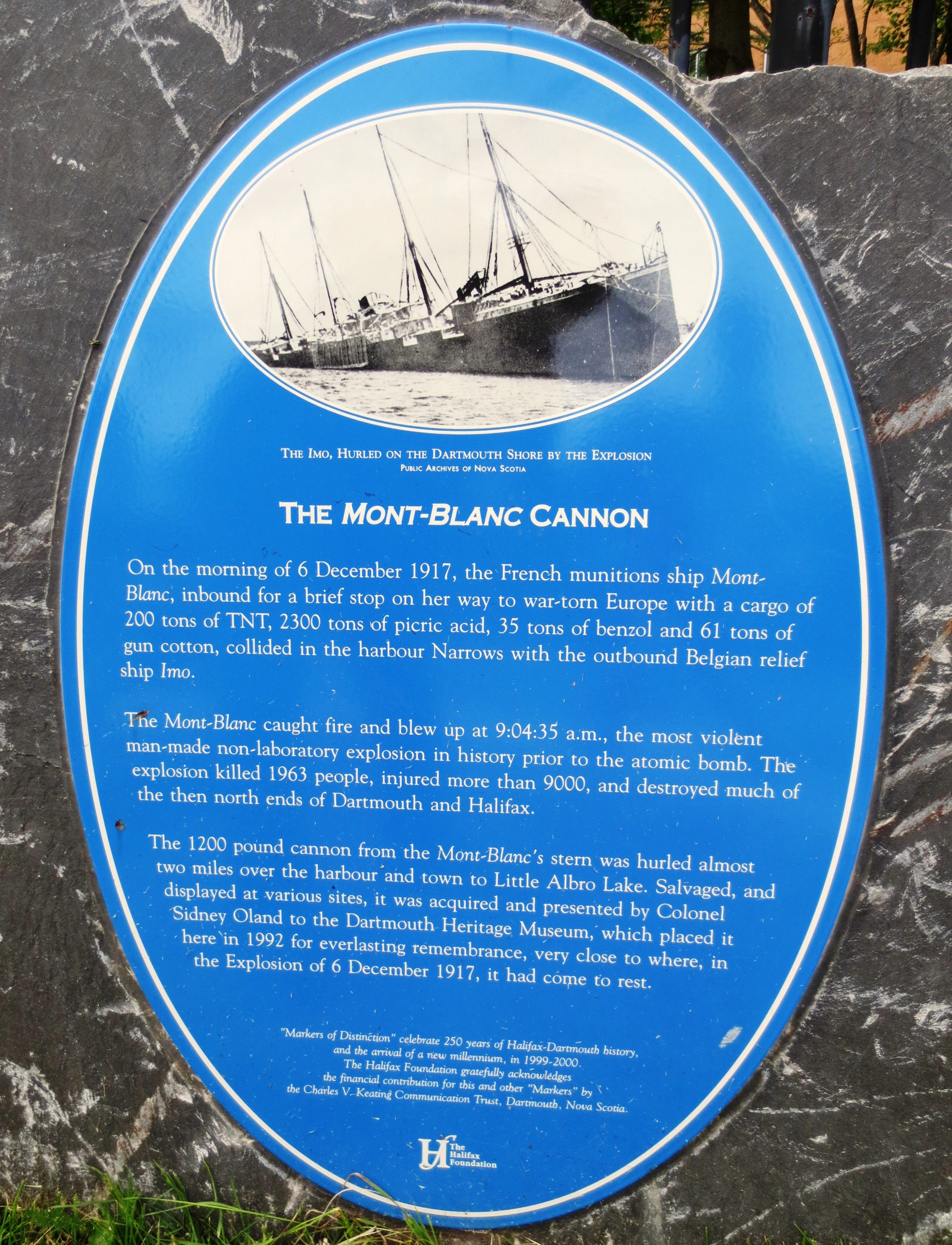
Memorial plaque for the Mont Blanc Gun. Dartmouth, Albro Lake.
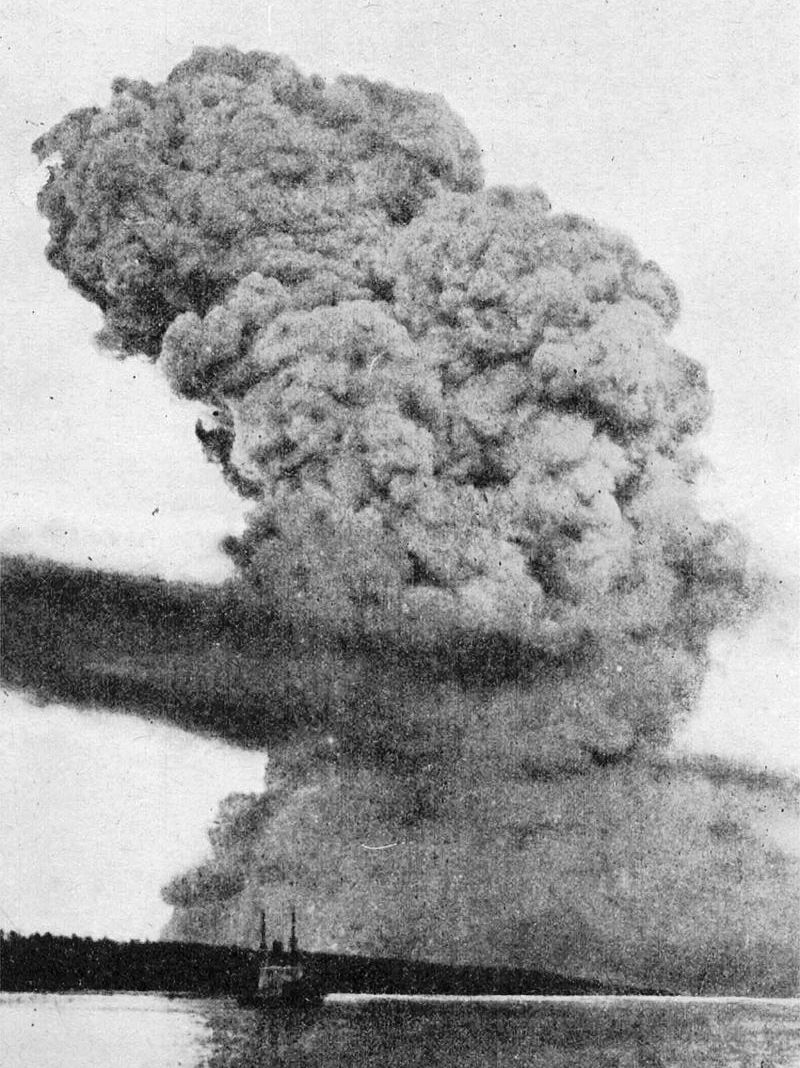
(Library and Archives Canada Photo, MIKAN No. 3531262), and PA-166585)
Photo of remnants of the blast reportedly taken 15-20 seconds after the Halifax explosion, 6 Dec 1917. Indications are that it was taken at Bedford Basin, Halifax, Nova Scotia, Canada, from approximately a mile’s distance looking southeast. Photographer: unknown. Although the National Library and Archives Canada description estimates the distance from the explosion as 21 km/13 mi, the actual location and distance have never been firmly established. However, the height of the blast at its peak was measured at 3,600 metres (11,811 feet or 2.25 miles) on a sextant by Captain W. M. A. Campbell of the Canadian merchant ship, Acadian, approximately 28 km (18 mi) from the harbour approaches. This measurement is consistent with the time-frame of 15-20 seconds at a distance of 1 mile. Furthermore, documented photographic evidence from the Ron Fralick Collection (photo reference numbers: 16,274 & 16,275 – Maritime Museum of the Atlantic) clearly shows the size, shape and direction of the blast cloud as it passed by York Redoubt and indicates that the original photograph was probably taken from Bedford Basin.
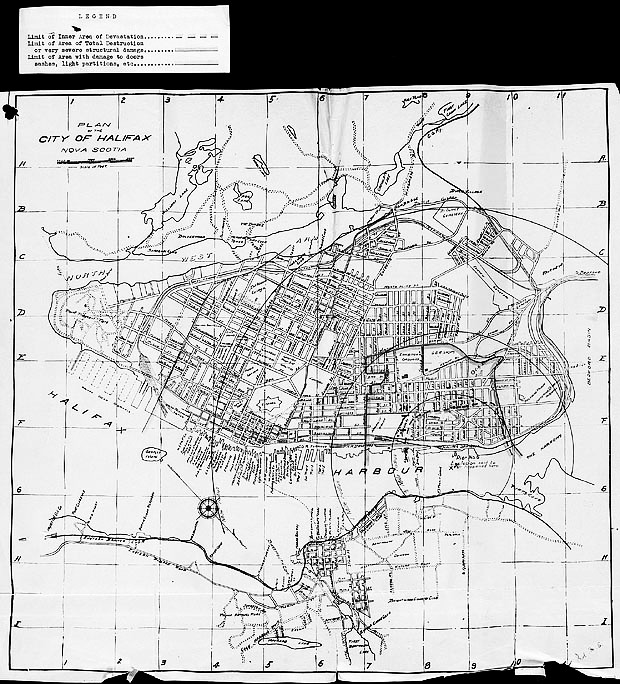
(Library and Archives Canada Photo, MIKAN No. 165552)
Map of Halifax c1917-1918, depicting the severity of the explosion originating in Halifax Harbour; taken from a Royal Society of Canada report.
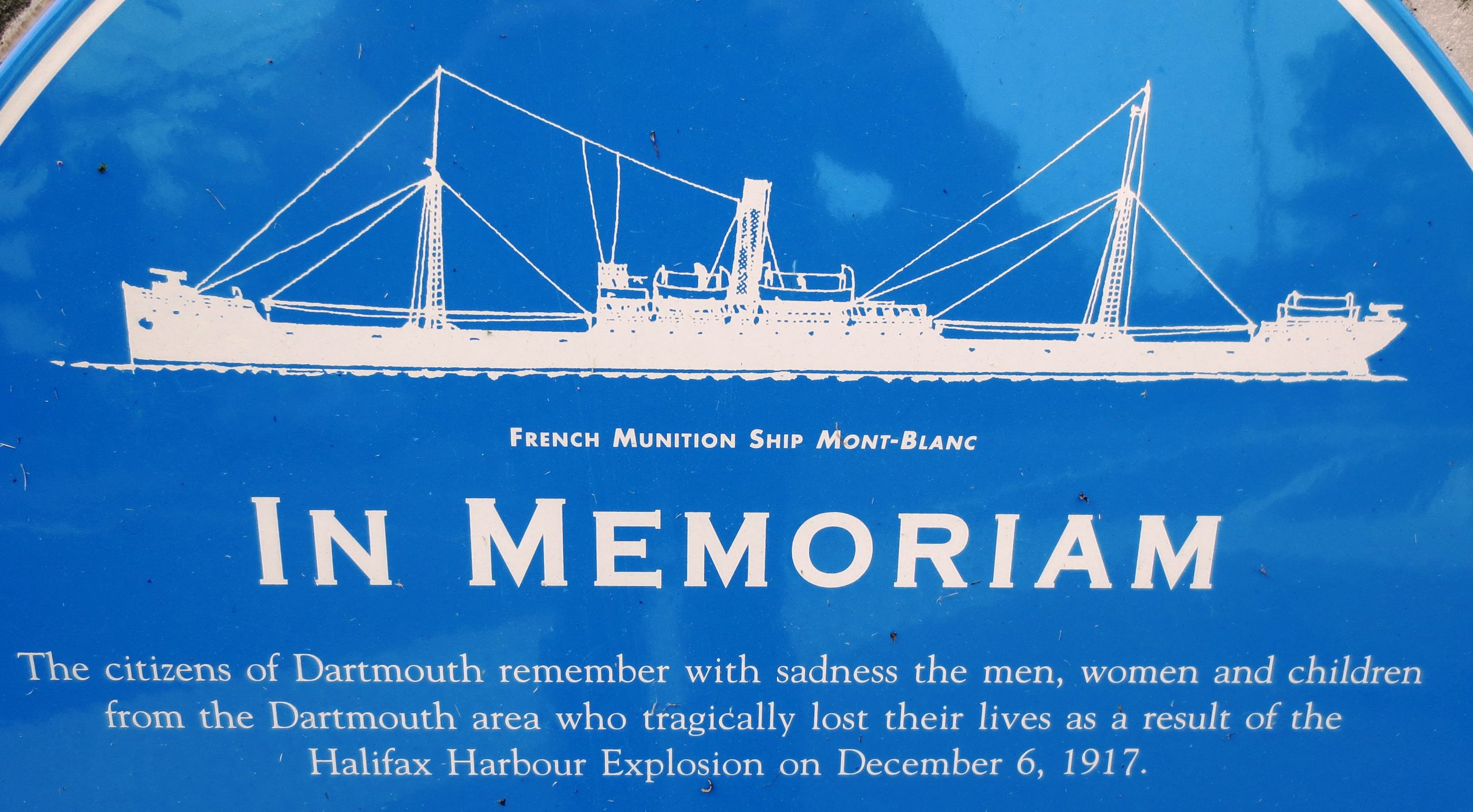
Memorial plaque for the Mont Blanc.
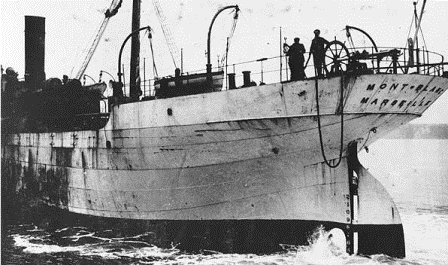
Mont Blanc, the only known photo of the ship, taken in 1913. The memorial stands on the site where the Mont Blanc‘s gun came to rest.
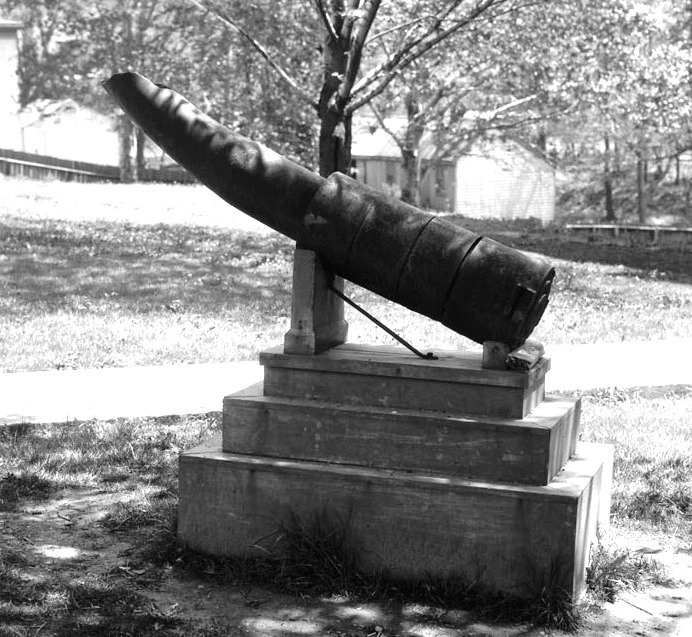
(Library and Archives Canada Photo, MIKAN No. 3517948)
Mont-Blanc Gun, heavily damaged, on display near the Dartmouth Museum in the early 1950s.
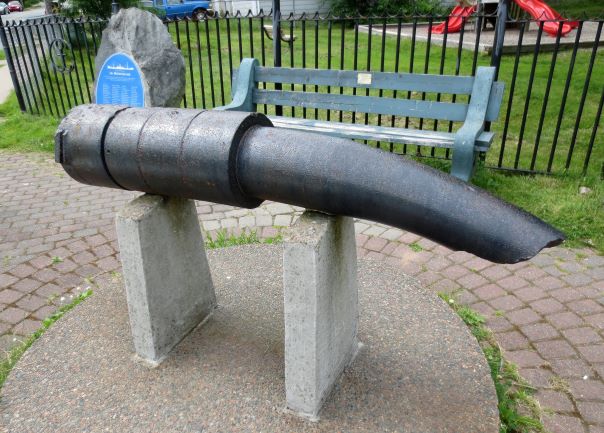
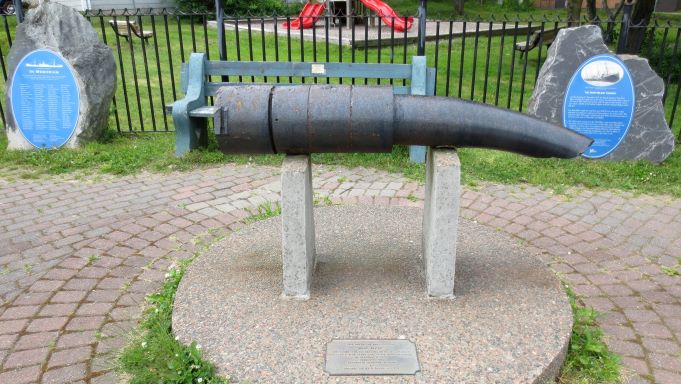
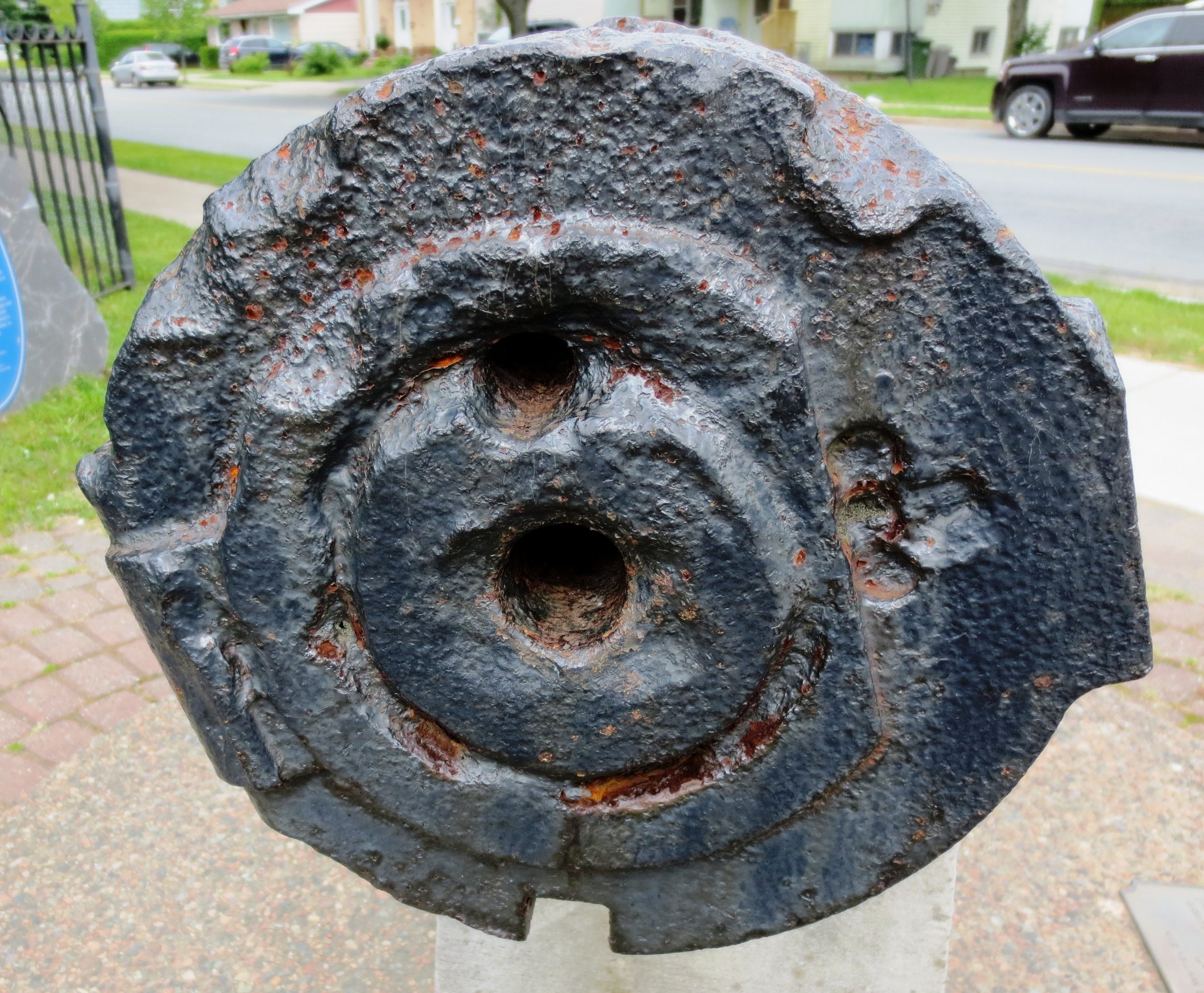
Mont-Blanc Gun, heavily damaged. On the morning of 6 December 1917, the French munitions ship Mont-Blanc, inbound for a brief stop on her way to war-torn Europe with a cargo of 200 tons of TNT, 2,300 tons of picric acid, 35 tons of benzol and 61 tons of gun cotton, collided in the harbour Narrows of Halifax with the outbound Belgian relief ship Imo. The Mont-Blanc caught fire and blew up at 9:04:35 a.m., the most violent man-made non-laboratory explosion in history prior to the atomic bomb. The explosion killed 1,963 people, injured more than 9,000, and destroyed much of the then north ends of Dartmouth and Halifax. The 1,200-pound Gun from the Mont-Blanc’s stern was hurled more than two and a half kilometres over the harbour and town to Little Albro Lake. Salvaged, and displayed at various sites, it was acquired and presented to Colonel Sidney Oland to the Dartmouth Heritage Museum, which placed it in 1992 close to where the gun had come to rest in 1917. The Heritage Foundation, Nova Scotia.