
Brigadier the Honorable Milton Fowler Gregg, VC, PC, OC, CBE, MC and Bar
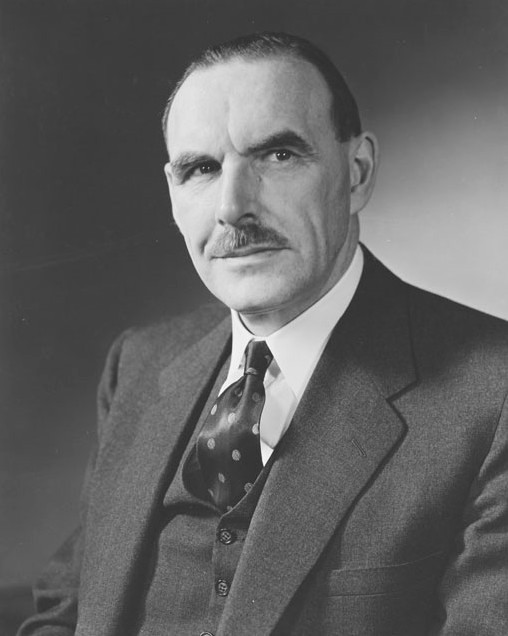
(Library and Archives Canada Photo, MIKAN No. 4840897)
Brigadier the Honorable Milton Fowler Gregg, VC, PC, OC, CBE, MC and Bar, Canada’s Minister of Veteran’s Affairs, 1948-1950.
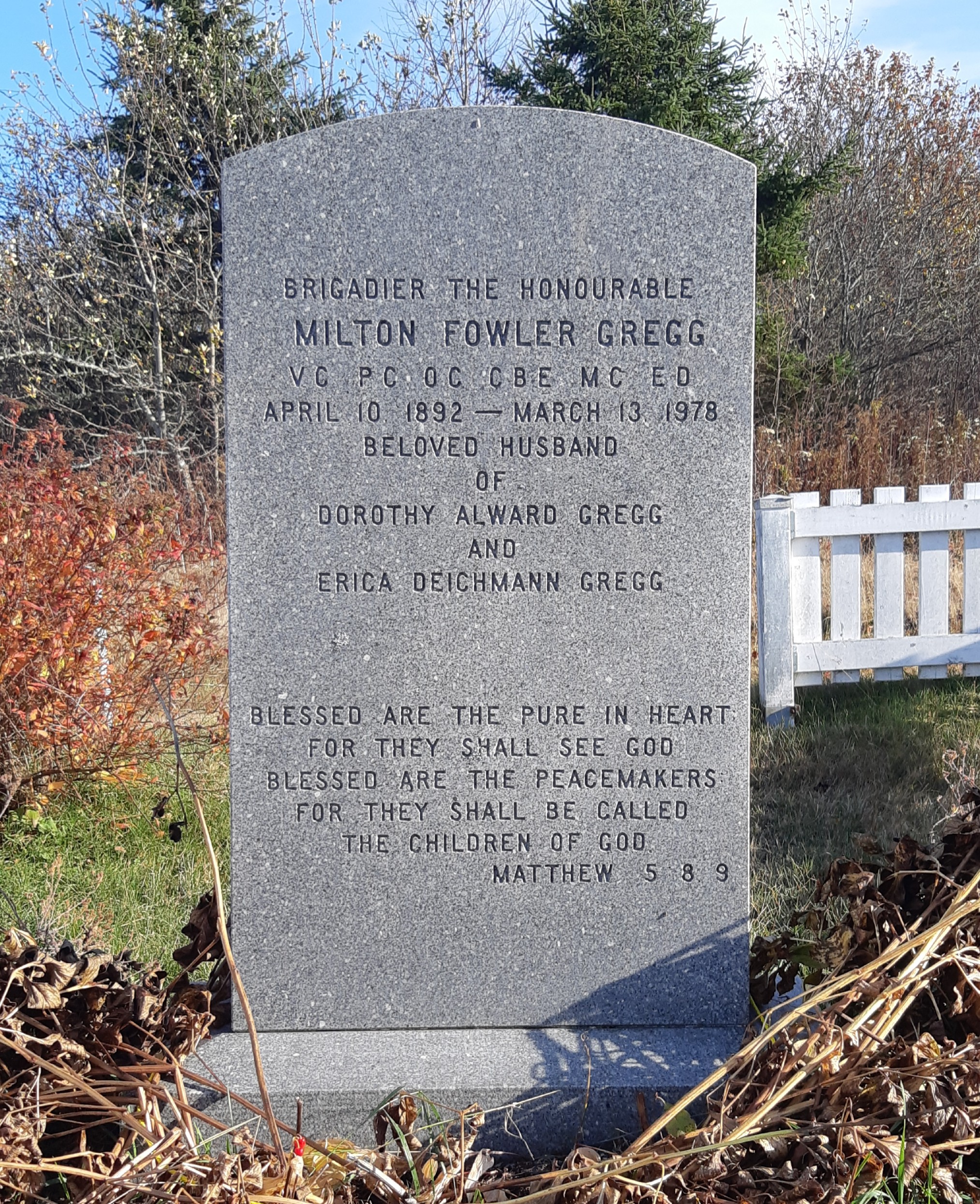
(Author Photo)
Brigadier the Honorable Milton Fowler Gregg, VC, PC, OC, CBE, MC and Bar, gravestone, Snider Mountain Baptist Church Cemetery, Snider Mountain, New Brunswick.
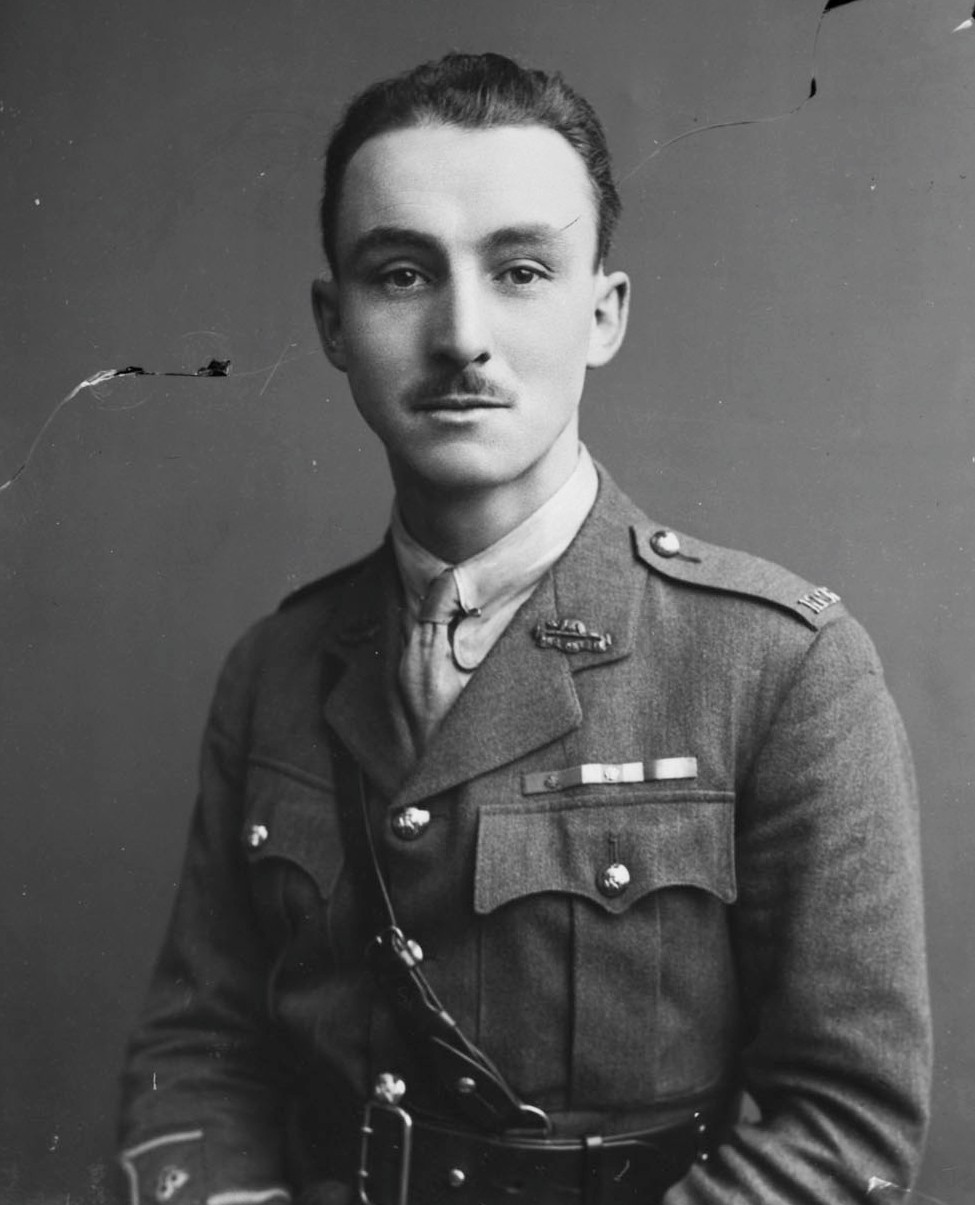
Brigadier-General (Retired) Milton Fowler Gregg, VC, PC, OC, CBE, MC and Bar, educator, soldier, university president, politician, diplomat (born 10 April 1892 in Mountain Dale [now Snider Mountain], NB; died 13 March 1978 in Fredericton, NB). Gregg was awarded the Victoria Cross in 1919 for his actions in the closing days of the First World War, having previously been awarded two Military Crosses. After service in the Second World War, Gregg became president of the University of New Brunswick. He then become a Liberal cabinet minister and diplomat.
Milton Gregg was the son of George Gregg, a farmer, and Elizabeth Myles. He attended his local public school and obtained his teaching certificate from the Provincial Normal School in Fredericton. In 1910, when he was 18, he joined the 8th Princess Louise’s New Brunswick Hussars, a local militia regiment. He graduated from Acadia University in Wolfville, Nova Scotia, with a Bachelor of Arts degree and attended Dalhousie University in Halifax. Gregg then taught school in his home province for three years.
Milton Gregg enrolled in the 13th (Royal Highlanders) Battalion of the Canadian Expeditionary Force as a private in September 1914. He sailed to Britain with the First Canadian Contingent later that month. In February 1915, the battalion moved to France, where Gregg served as a stretcher bearer and was wounded twice at the Battle of Festubert.
Gregg was sent to a hospital in Britain to recover, where he was recommended for a commission. He was sent to the Imperial Officers’ Training School and was commissioned as a lieutenant in 1916. Gregg returned to France and was posted to the Royal Canadian Regiment (RCR), where he served as a platoon commander in C Company.

On 8 June 1917, the regiment’s C and D Companies participated in a three-battalion night trench raid during the Battle of Lens. As the soldiers moved forward, Milton Gregg led a successful flank attack against a German machine gun holding up the advance. Ninety minutes after the raid began, the RCR began to withdraw. During the retreat, Gregg carried a seriously wounded fellow officer back to RCR lines under heavy fire, despite being wounded himself. Gregg was awarded the Military Cross (MC) for his actions.
On 26 August 1918, Gregg led a bombing attack against two German machine-gun posts in Monchy-le-Preux during the Battle of the Scarpe. Although wounded, he carried on and killed the crews of both guns. Gregg’s platoon was soon cut off, but he linked up with RCR soldiers on his left flank. He then successfully fought off a German counterattack. These actions resulted in the award of a second MC to Gregg.
Courage at Cambrai
On 8 August 1918, the Battle of Amiens marked the start of the country’s most significant feat of arms in its history, known as “Canada’s Hundred Days.” During this period, Canadian and Allied armies pushed the Germans back in a series of battles that ended in Belgium. This period saw many of the war’s key battles, from Amiens to Mons on 11 November.
By late September, the Canadian Corps had to cross the Canal du Nord, occupy Bourlon Wood and then capture the city of Cambrai. (See Battle of Cambrai.) The attack began on 27 September, and Canadian soldiers quickly crossed the canal, seized Bourlon Wood and came up against the last trench line in the area, the heavily defended Marcoing Line.
On 28 September, thick barbed wire and strong enemy machine-gun fire from both flanks held up the RCR at the Marcoing Line. Milton Gregg wormed his way forward to the wire, found a gap large enough for one man at a time and directed his soldiers into a German trench. He next led his men in an attack with bombs (as hand grenades were then called) along the German trench.
When the enemy counterattacked, the situation quickly became critical once Gregg’s men ran out of bombs. Although wounded, Gregg returned to his own lines under heavy fire to pick up more bombs. He rejoined his men, now reduced in numbers, and led them against the German trenches, despite being wounded a second time.
By the time Gregg cleared the German trench, he had personally killed or wounded 11 enemy soldiers and captured 25 prisoners and 12 machine guns. On 30 September, he repeated this feat and led another attack against enemy positions. This time Gregg was so severely wounded, he had to be evacuated and hospitalized.
For his courage and determination, Gregg was awarded the Victoria Cross. He received it from King George V at Buckingham Palace on 26 February 1919.
The citation for Gregg’s Victoria Cross reads:
Lt. Milton Fowler Gregg, M.C., R. Can. Regt., Nova Scotia R. – For most conspicuous bravery and initiative during operations near Cambrai, 27th September to 1st October, 1918.
On 28th September, when the advance of the brigade was held up by fire from both flanks and by thick, uncut wire, he crawled forward alone and explored the wire until he found a small gap through which he subsequently led his men and forced an entry into the enemy trench. The enemy counter-attacked in force and, through lack of bombs, the situation became critical. Although wounded Lt. Gregg returned alone under terrific fire and collected a further supply. Then rejoining his party, which by this time was much reduced in numbers, and in spite of a second wound, he reorganized his men and led them with the greatest determination against the enemy trenches, which he finally cleared. He personally killed or wounded 11 of the enemy and took 25 prisoners, in addition to 12 machine guns captured in the trench. Remaining with his company in spite of wounds he again on the 30th September led his men in attack until severely wounded. The outstanding valour of this officer saved many casualties and enabled the advance to continue.
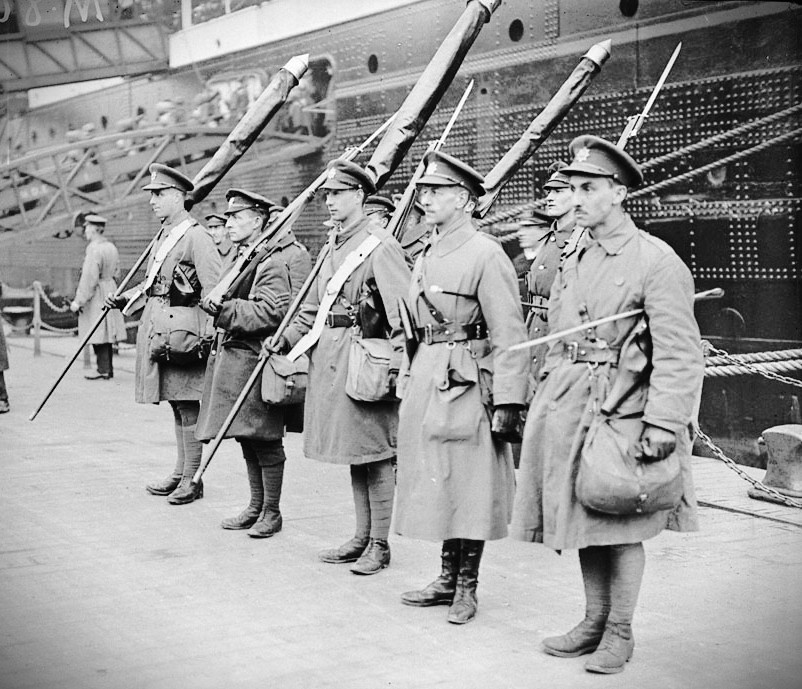
(Library and Archives Canada Photo, MIKAN No.)
Departure of 3rd Canadian Division per SS Adriatic from Liverpool, 1 March 1919. Royal Canadian Regiment Colours with Colonel Hill Officer Commanding next Adjutant Lieutenant Gregg, VC, nearest camera.
Milton Gregg married Dorothy Alward in August 1919, not long after he returned to Canada. He then worked for the Soldiers Settlement Board, the Halifax Herald and other businesses. Gregg also maintained his military connections and remained in the militia. From February 1934 to August 1945, he was sergeant-at-arms of the House of Commons. During his absence in the Second World War (see below), the clerk of the House of Commons replaced him. In August 1936, Gregg commanded the guard of honour at the unveiling of the Vimy Ridge National Memorial by King Edward VIII.
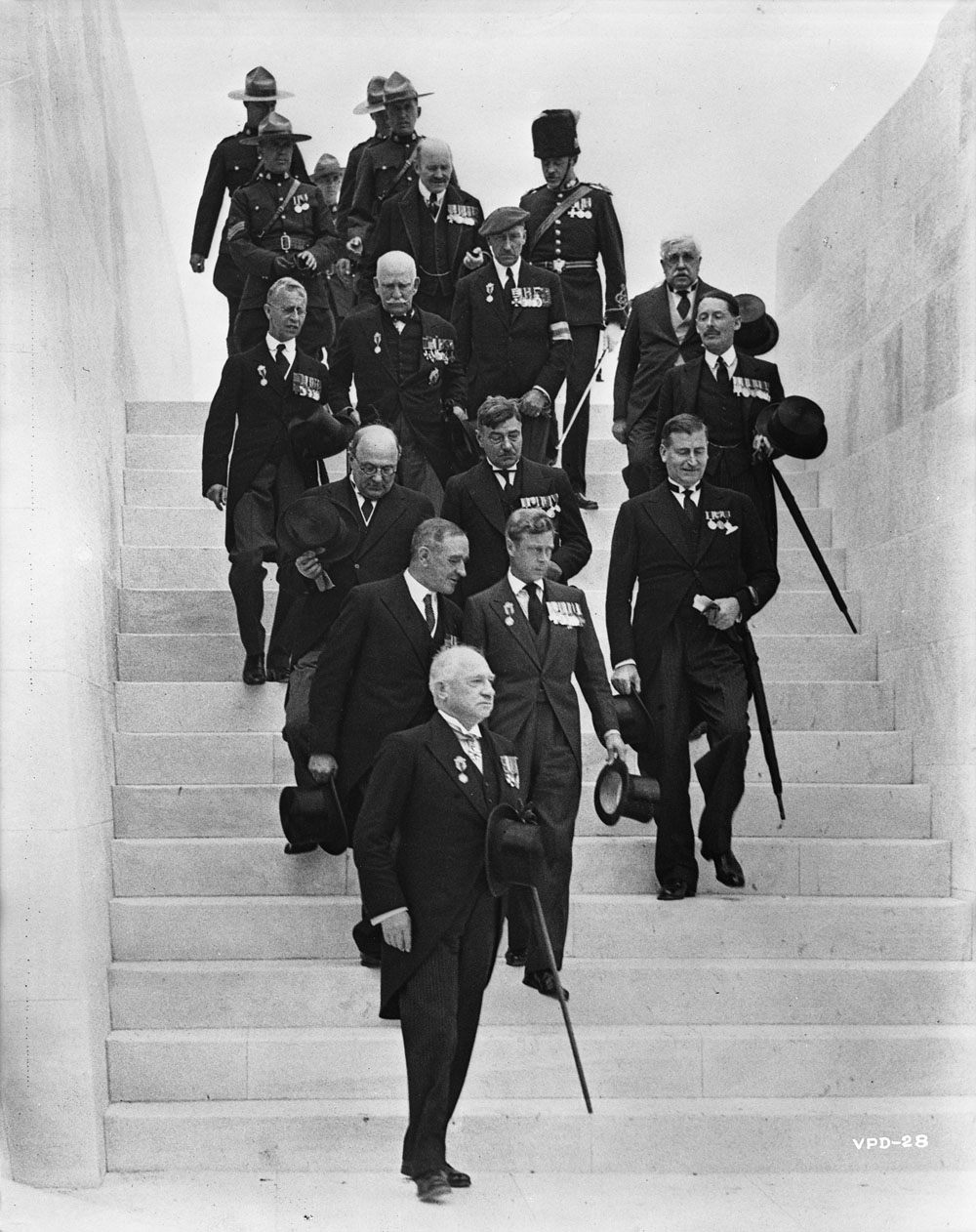
(Library and Archives Canada Photo, MIKAN No. 3377866)
Unveiling of Canada’s national Memorial at Vimy Ridge – His Majesty, King Edward VIII, descends from Vimy Monument to greet Canadian Pilgrims at the Unveiling ceremony, 26 July 1936. Left to Right from bottom to top: Brig-Gen. Alex Ross, DSO, 28th (Northwest) Battalion, President of the Canadian Legion; Major-General S.H. Burstall, wartime commander of 2nd Canadian Division; Edward VIII. Top row L-R: Hon. Ernest Lapointe; Maj-Gen. Sir Archibald Macdonald, wartime commander of 1st Canadian Division; Hon. Ian Alistair Mackenzie, Minister of National Defence.
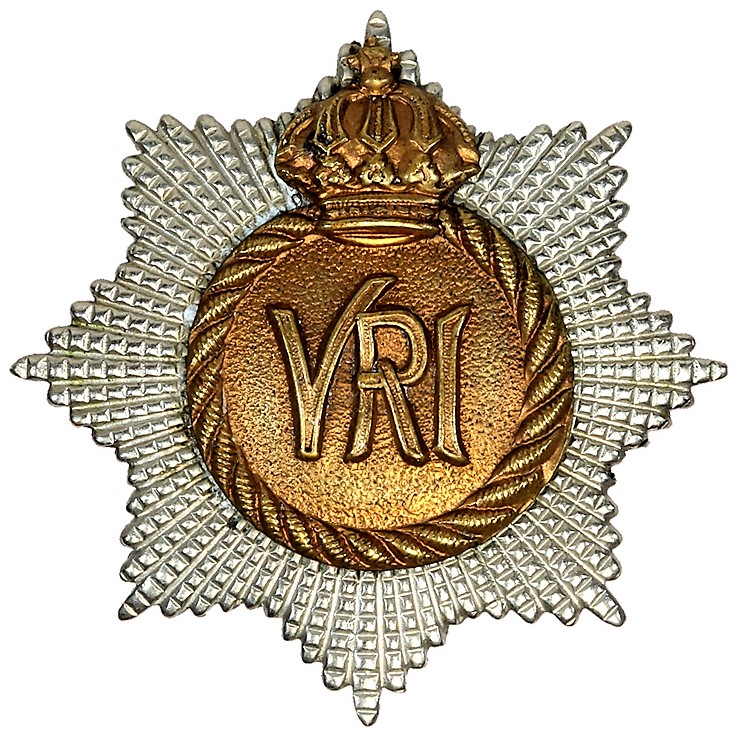
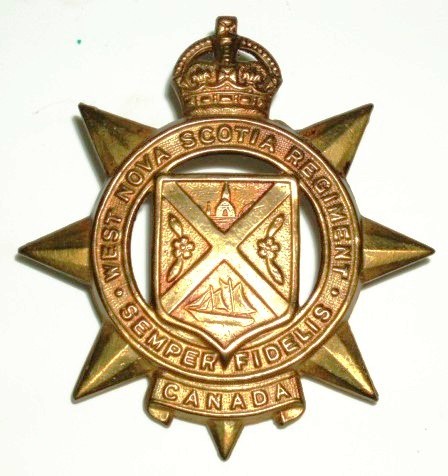
When the Second World War broke out in September 1939, Milton Gregg re-enrolled in the Permanent Force and became second-in-command of the RCR. He went overseas with the unit in December 1939 and in February 1940 was appointed commanding officer of the West Nova Scotia Regiment (WNSR). Gregg was soon promoted lieutenant-colonel and led the unit through a rigorous training schedule.
In late October, Gregg became ill and after a lengthy period of recovery returned to the WNSR in April 1941. The next month, he was promoted colonel and appointed as commander of the Canadian Officer Cadet Training Unit in London. Gregg returned to Canada in 1942 and commanded the Officers’ Training Centre (Eastern Canada) in Brockville, Ontario.
Gregg was promoted brigadier in 1943 and appointed chairman of the Officers’ Selection Board. He then went on to command the Canadian Infantry School in Vernon, British Columbia, followed by the Canadian Infantry Training Centre (Reinforcement) at Sussex, New Brunswick. Among his responsibilities was the training of CANLOAN officers, a scheme that loaned 673 surplus Canadian Army junior officers to the British Army.
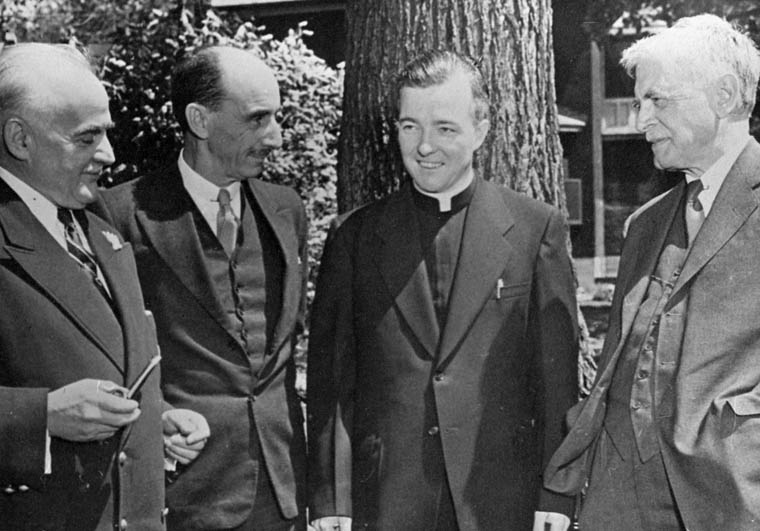
(Library and Archives Canada Photo, MIKAN No. 3364667/PA-034123)
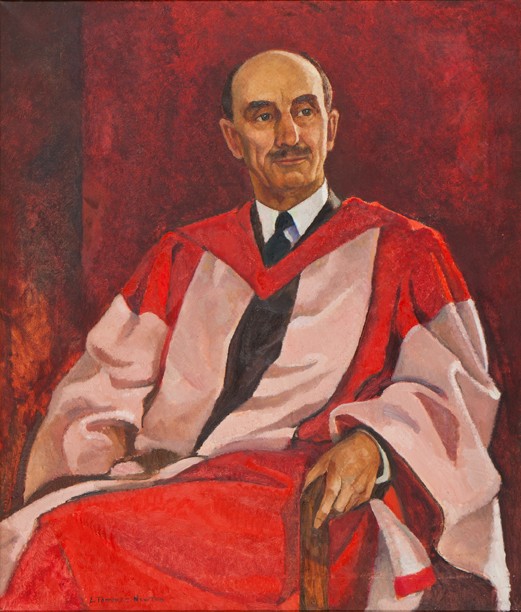
In the summer of 1944, University of New Brunswick (UNB) officials invited Milton Gregg to become the university’s president. From 1944 to 1947, he successfully handled the influx of veterans who enrolled in studies after the Second World War, significantly enlarging the student population at UNB, as at other universities. Gregg extensively reorganized university administration and made other organizational changes. In December 1945, while UNB president, his appointment as a Commander of the Order of the British Empire (CBE) for his wartime service was also announced.
In 1947, Prime Minister William Lyon Mackenzie King personally asked Gregg to join his cabinet. In a by-election called due to the death of the incumbent, he was elected as the Liberal Member of Parliament for the New Brunswick riding of York-Sunbury. Gregg served as Minister in three consecutive portfolios: Fisheries (2 September 1947 to 18 January 1948), Veterans Affairs (19 January 1948 to 6 August 1950) and Labour (7 August 1950 to 20 June 1957).
Gregg also served as a diplomat. He represented the United Nations in Iraq (1958–59), UNICEF in Indonesia (1960–63) and Canada at UN headquarters in New York. In December 1959, while he served with the UN, Gregg’s wife died; in 1964, he married Erica Deichman. One of Gregg’s final public duties was as Canadian High Commissioner to British Guiana as it transitioned to the independent state of Guyana (1964–67).
In December 1967, Gregg became one of the first recipients of the newly created Order of Canada, which was created to honour the centennial of Confederation. The honour recognized his service as a soldier and public servant.
Gregg became president of the Canadian Council for International Co-operation (today Cooperation Canada) when it was founded in 1968. He was also the first honorary president of the Conservation Council of New Brunswick when it was established in 1969. Gregg had a particular interest in the health of the Saint John River.
He is buried in the Soldier Mountain Baptist Church Cemetery in New Brunswick.
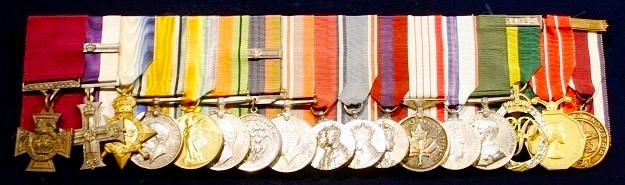
On 24 December 1978, Gregg’s Victoria Cross and his other medals were stolen at a function at the RCR Museum in London, Ontario. They have never been recovered.

(Arthur Majoor Photo)
Medals awarded to Milton Fowler Gregg, VC, PC, OC, CBE, MC, ED, CD, as displayed in The Royal Canadian Regiment Museum.
(These medals are a rebuilt group of replacements, assembled after the theft of the Gregg VC group from the Museum).
(RCR Museum Photo)
Gregg Trophy CAF Small Arms Competition for highest pistol score (1978)
RCR Milton Fowler Gregg VC Memorial Bursary for a UNB student showing promise in environmental management or international affairs
Brig. Milton F. Gregg VC CANLOAN Memorial, in front of the Infantry School, 5 CDSB Gagetown, New Brunswick
Milton F. Gregg Award, Conservation Council of New Brunswick (1981)
The Honourable Brigadier Milton F. Gregg Memorial, 5th Canadian Support Division Base Gagetown (1983)
The Brigadier Milton F. Gregg, VC, Centre for the Study of War and Society, University of New Brunswick (2006)
(DND Photo)
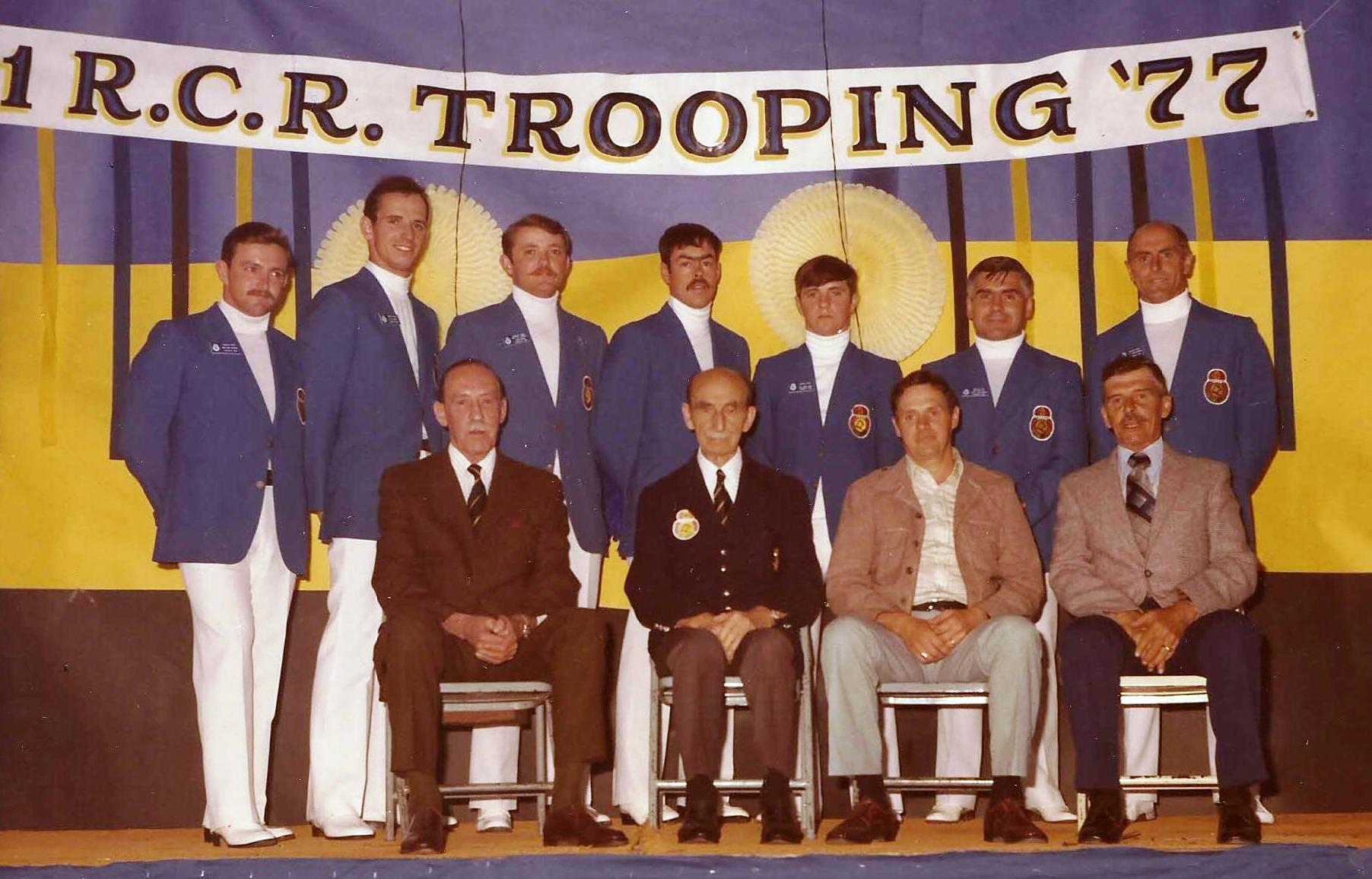
Standing left to right, MCpl Rick Guthrie, Lt Hal Skaarup, Capt Phil Campbell, MCpl Pat Turpin, Cpl Lorne Ogden, WO Gerry Vida and MWO Kevin Gammon. First one seated Major-General Dan Spry, then Colonel of the Regiment, a Second World War Vet, the gentleman seated 2nd from the left wearing a Sky Hawk sticker is Brigadier the Honorable Milton Fowler Gregg, VC, PC, OC, CBE, MC and Bar, one of New Brunswick’s Victoria Cross winners from the Great War. There are none left now. The third was Lieutenant-Colonel Bill Pettipas, the CO of the RCR, and the fourth was RSM “Buz” Girden.
During my first tour of duty with the Canadian Forces Parachute Team, the Sky Hawks, we attended many civilian and military functions. For informal occasions, the team members were usually dressed with white turtlenecks and white or grey slacks with blue jackets. We parachuted in to the Western Alumni Stadium in London, Ontario, for the RCR Trooping, then visited CFB London, Ontario in 1977. 
At the reception, Erica (née Mathieson) Deichmann, noticed my name tag, and asked, “Er du Aage Skaarup’s søn?” (Are you Aage Skaarup’s son?). I said yes, he is my father. She then said, “we went to school together in New Denmark, New Brunswick, you must come and meet my husband!” She then introduced me to Milton Gregg. Small world. I handed him a Sky Hawk sticker and he promptly put it on his suit.