
Northrop/McDonnell Douglas YF-23 Black Widow
(NASA/DFRC Photo)
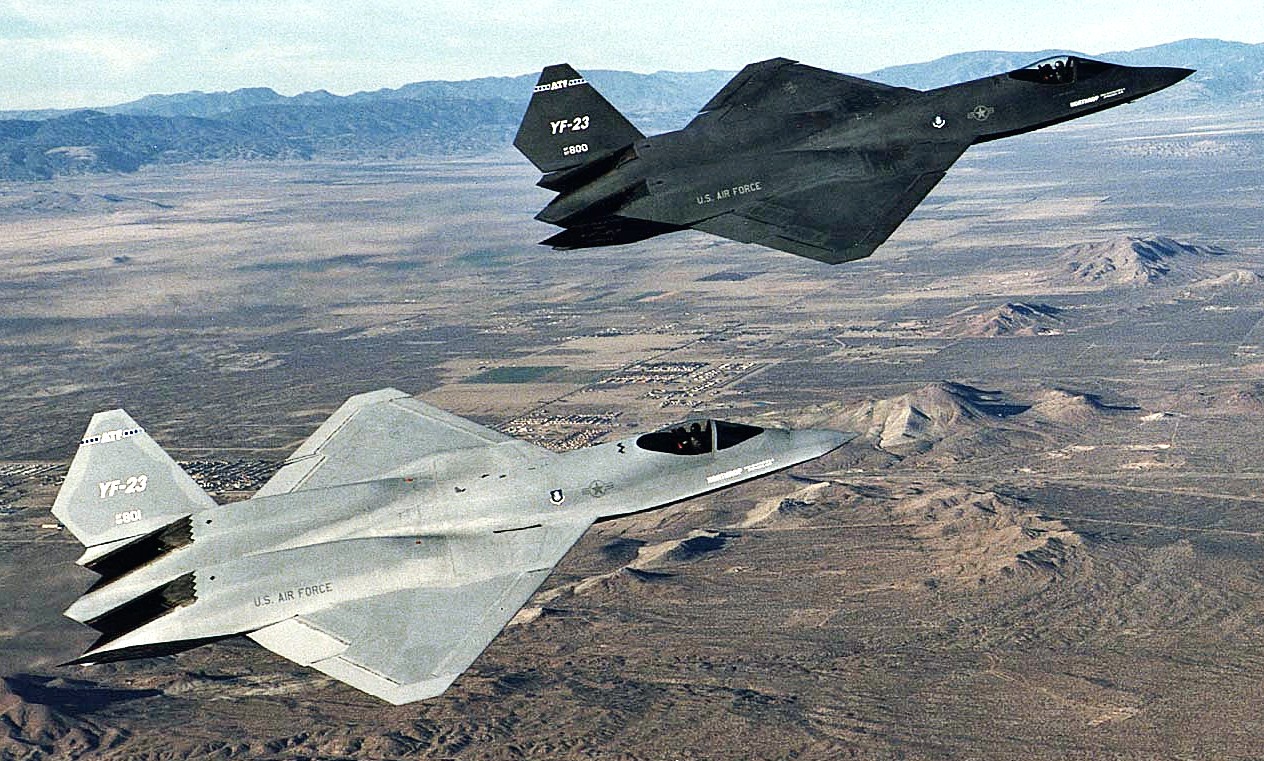
The two YF-23 prototype aircraft fly over the Mojave Desert prior to arrival at NASA’s Dryden Flight Center, Edwards, California, 1994.
The Northrop/McDonnell Douglas YF-23 is an American single-seat, twin-engine, stealth fighter technology demonstrator prototype designed for the United States Air Force (USAF). The design team, with Northrop as the prime contractor, was a finalist in the USAF’s Advanced Tactical Fighter (ATF) demonstration/validation competition, battling the YF-22 team for full-scale development and production. Two YF-23 prototypes were built.In the 1980s, the USAF began looking for a replacement for its F-15 fighter aircraft to more effectively counter emerging threats such as the Soviet Union’s advanced Sukhoi Su-27 and Mikoyan MiG-29. Several companies submitted design proposals; the USAF selected proposals from Northrop and Lockheed for demonstration/validation. Northrop teamed up with McDonnell Douglas to develop the YF-23, while Lockheed, Boeing, and General Dynamics developed the YF-22. The YF-23 was stealthier and faster, but less agile than its competitor. After a four-year development and evaluation process, the YF-22 team was announced as the winner in 1991 and developed the F-22 Raptor, which first flew in 1997 and entered service in 2005. The U.S. Navy considered using a naval version of the ATF as a replacement for the F-14, but these plans were later canceled due to costs. After flight testing, both YF-23s were placed in storage while various agencies considered plans to use them for further research, although none proceeded. In 2004, Northrop Grumman used the second YF-23 as a display model for its proposed regional bomber aircraft, but this project was dropped because longer range bombers were required. The two YF-23 prototypes are currently exhibits at the National Museum of the United States Air Force and the Western Museum of Flight respectively. (Wikipedia)
(USAF Photo)
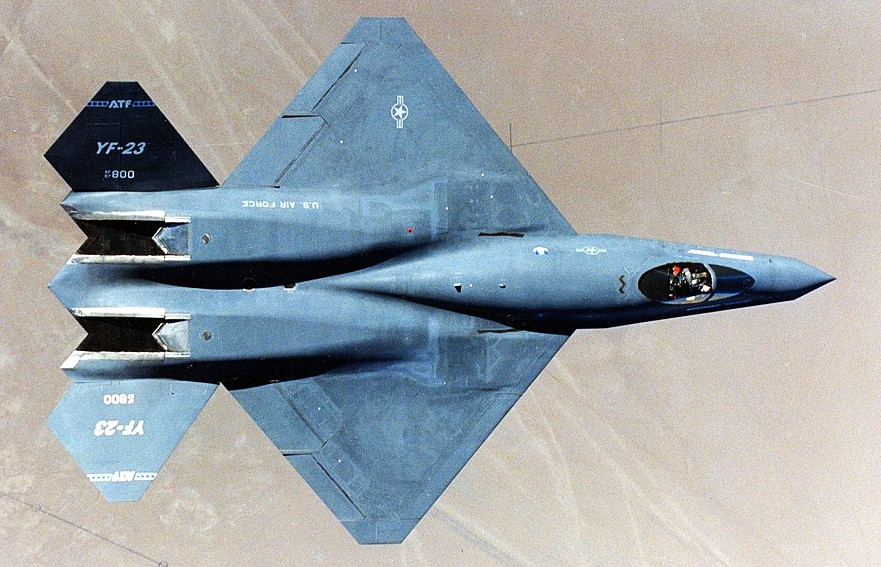
Top view of the YF-23 (DP117K), showing the diamond wings and separation between the forward fuselage and engine nacelles
(SDASM Archives Photo)
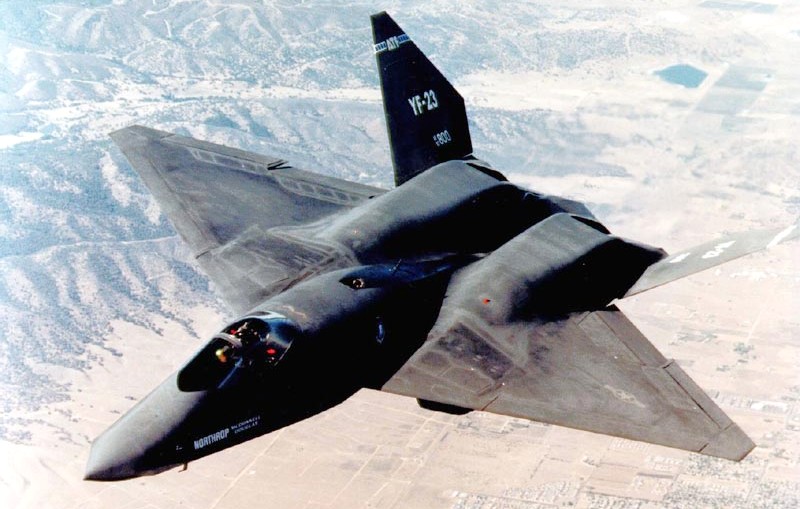
Northrop YF-23 PAV-1 in flight.
(NMUSAF Photo)
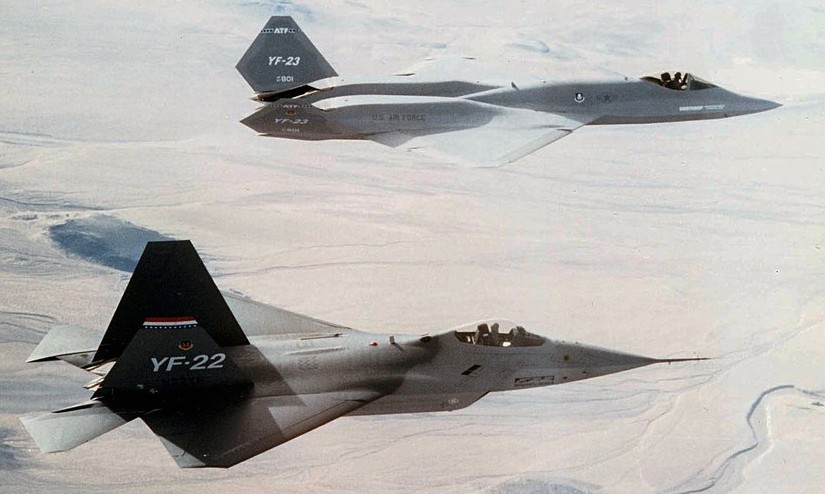
A YF-22 in the foreground with a YF-23 in the background, c1990-1991.
(USAF Photo)
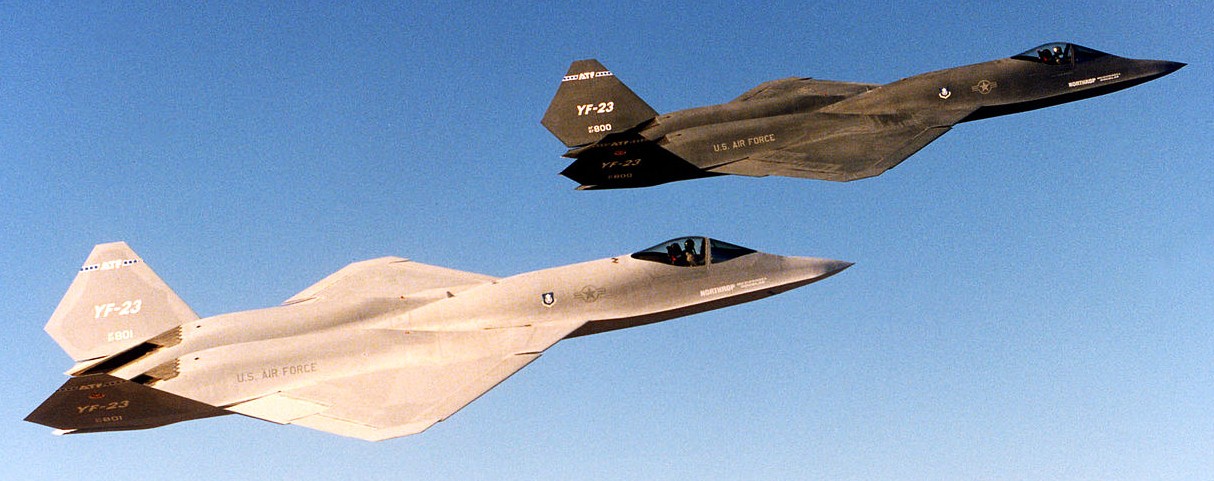
Two YF-23 in formation.
(USAF Photo)
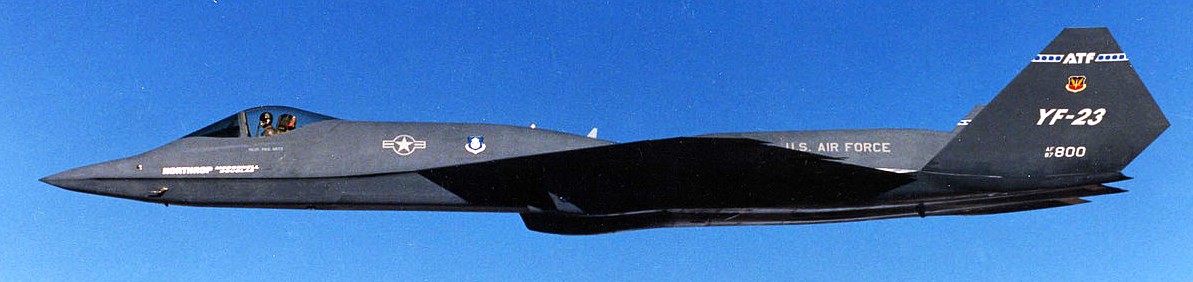
Northrop-McDonnell Douglas YF-23 in flight.
(USAF Photo)
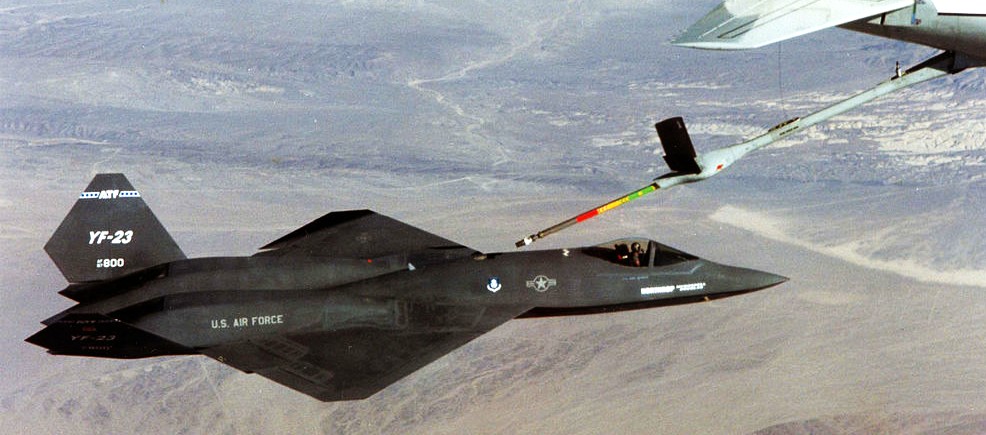
Northrop-McDonnell Douglas YF-23 in-flight refueling.
(USAF Photo)
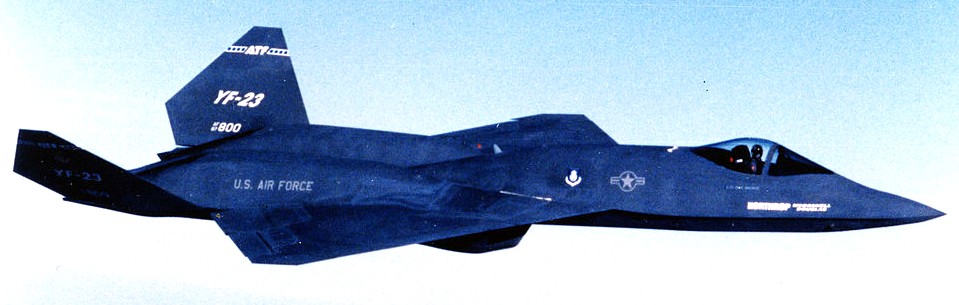
Northrop-McDonnell Douglas YF-23 in flight.
(NMUSAF Photo)
(UnaDriver Photo)
(NMUSAF Photos)
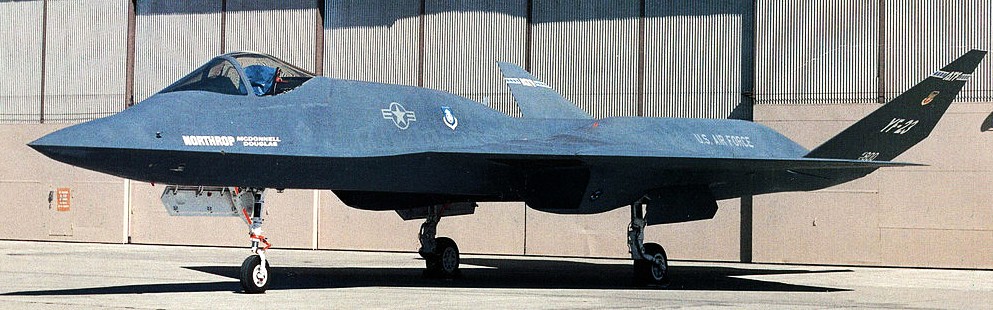
(USAF Photo)
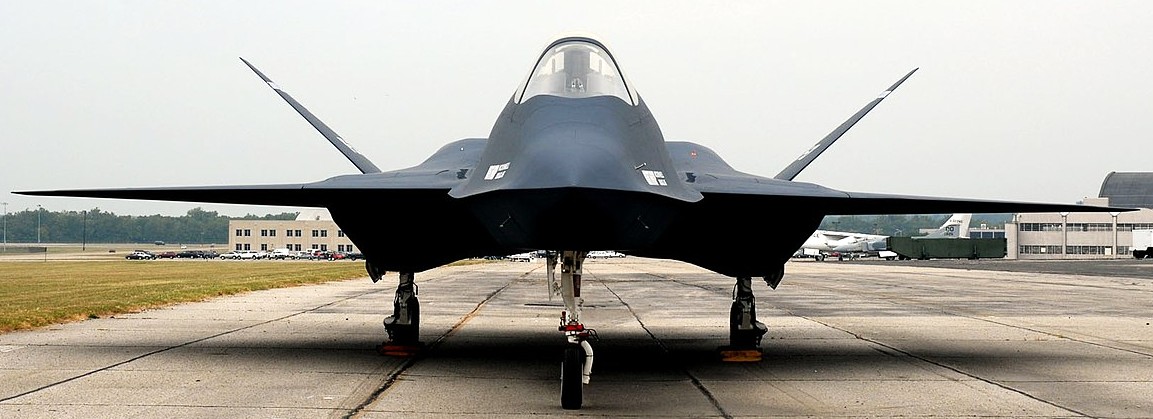
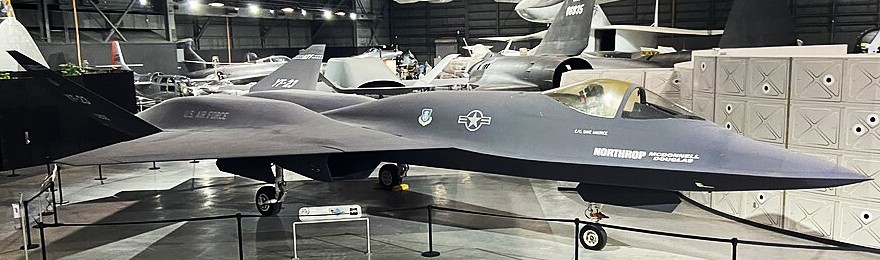
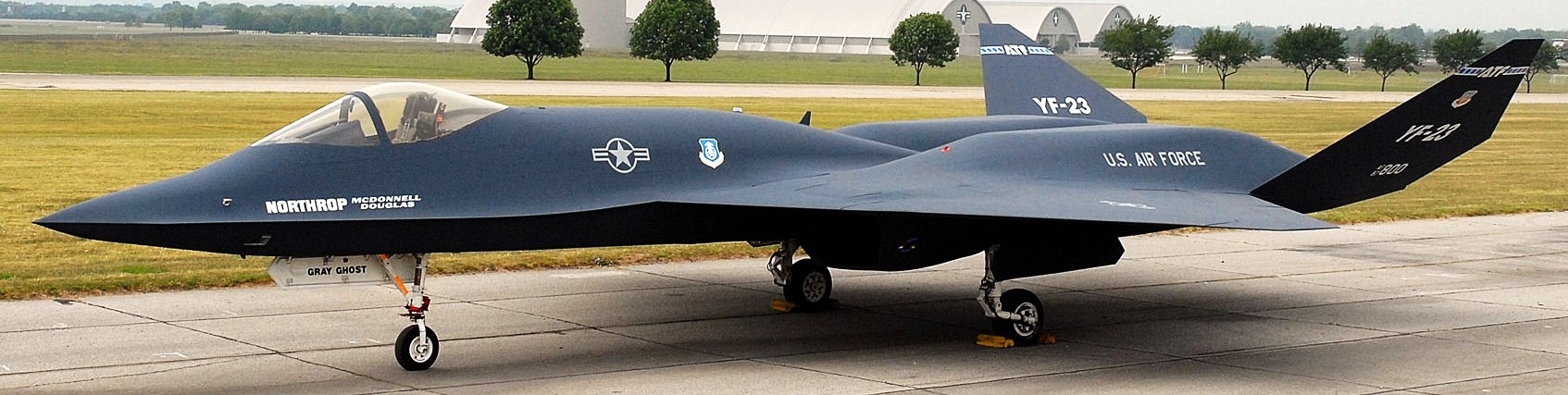
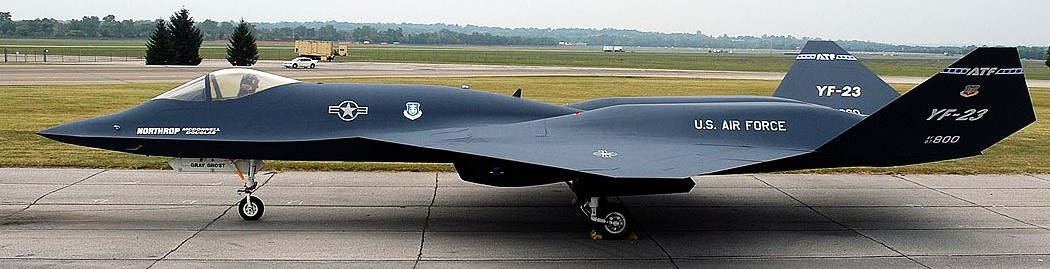
YF-23A PAV-1, Air Force (Serial No. 87-0800), “Gray Ghost“, Reg. No. N231YF, is on display in the Research and Development hangar of the National Museum of the United States Air Force near Dayton, Ohio.
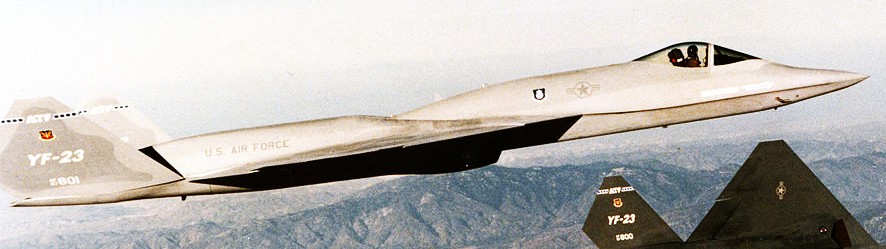
(USAF Photo)
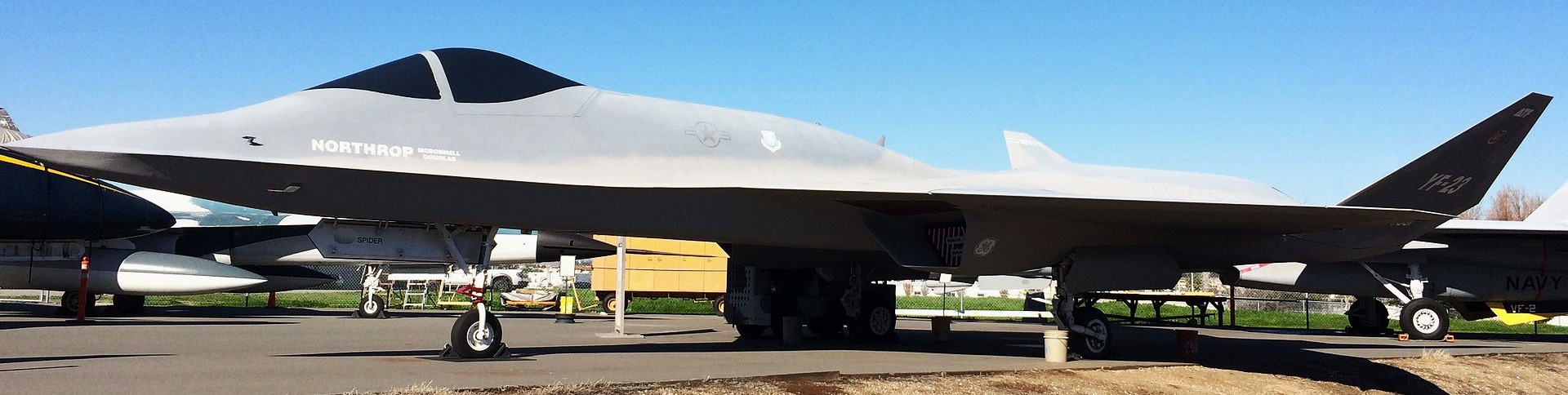
(Cdw1952 Photo)
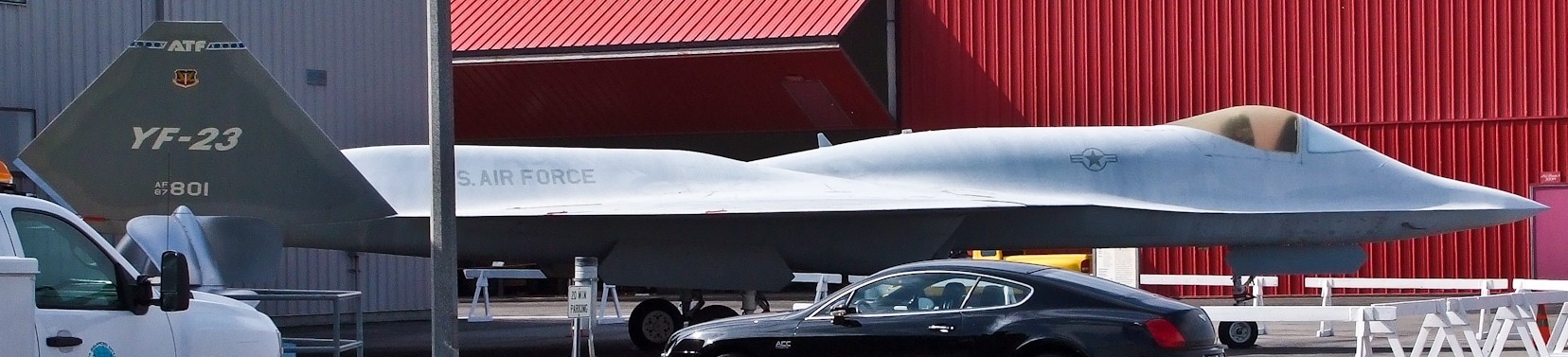
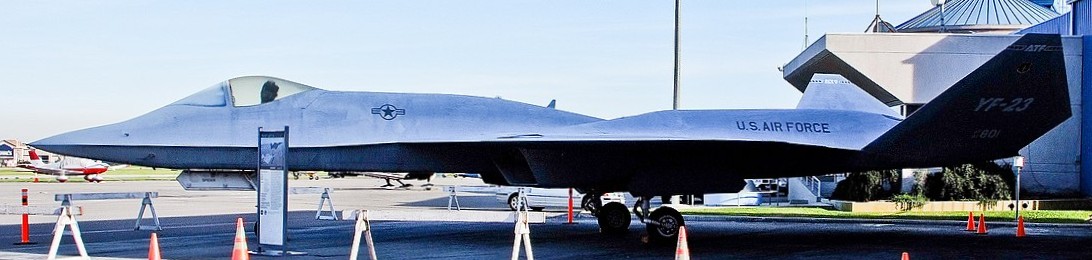
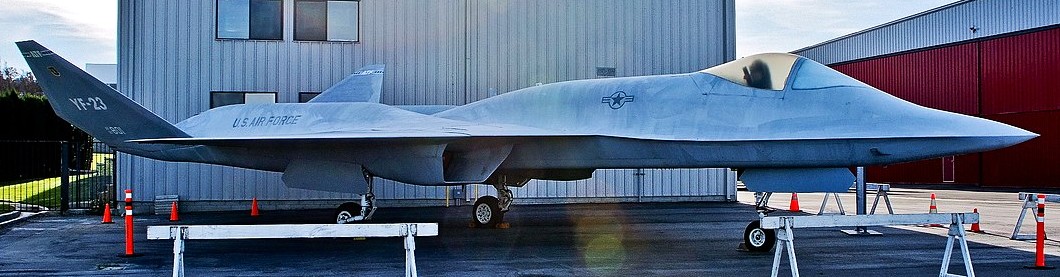
(Motohide Miwa Photos)
YF-23A PAV-2, AF (Serial No.. 87-0801), “Spider“, Reg. No. N232YF, on display at the Western Museum of Flight at Zamperini Field in Torrance, California.