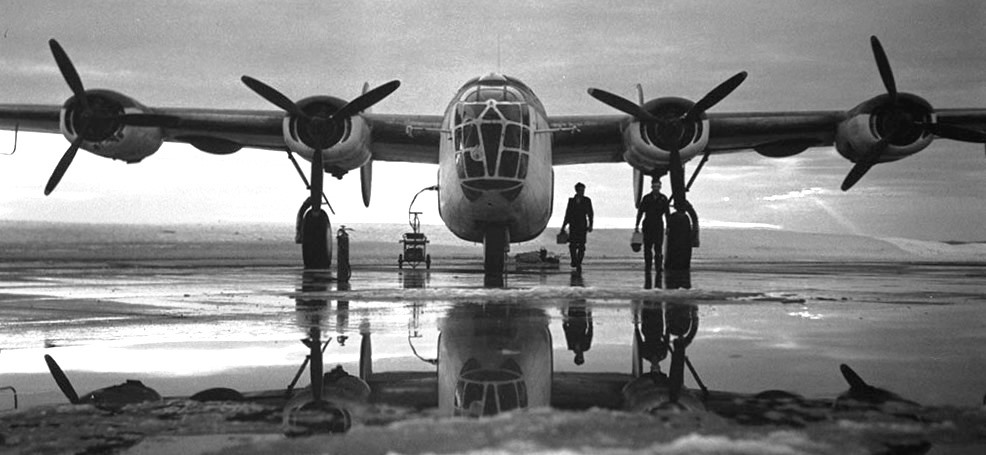
(Library and Archives Canada Photo, 3224374)
RAF Consolidated Liberator, one of the two first bombers to land at Goose Bay in December 1941. They were being serviced prior to take-off.
The Consolidated B-24 Liberator is an American heavy bomber, designed by Consolidated Aircraft of San Diego, California. It was known within the company as the Model 32, and some initial production aircraft were laid down as export models designated as various LB-30s, in the Land Bomber design category.
At its inception, the B-24 was a modern design featuring a highly efficient shoulder-mounted, high aspect ratio Davis wing. The wing gave the Liberator a high cruise speed, long range and the ability to carry a heavy bomb load. In comparison with its contemporaries, the B-24 was relatively difficult to fly and had poor low-speed performance; it also had a lower ceiling and was less robust than the Boeing B-17 Flying Fortress. While aircrews tended to prefer the B-17, General Staff favored the B-24 and procured it in huge numbers for a wide variety of roles. At approximately 18,500 units – including 8,685 manufactured by Ford Motor Company – it holds records as the world’s most produced bomber, heavy bomber, multi-engine aircraft, and American military aircraft in history.
The B-24 was used extensively in World War II where it served in every branch of the American armed forces, as well as several Allied air forces and navies. It saw use in every theater of operations. Along with the B-17, the B-24 was the mainstay of the US strategic bombing campaign in the Western European theater. Due to its range, it proved useful in bombing operations in the Pacific, including the bombing of Japan. Long-range anti-submarine Liberators played an instrumental role in closing the Mid-Atlantic gap in the Battle of the Atlantic. The C-87 transport derivative served as a longer range, higher capacity counterpart to the Douglas C-47 Skytrain.
By the end of World War II, the technological breakthroughs of the Boeing B-29 Superfortress and other modern types had surpassed the bombers that served from the start of the war. The B-24 was rapidly phased out of U.S. service, although the PB4Y-2 Privateer maritime patrol derivative carried on in service with the U.S. Navy in the Korean War. (Wikipedia)
The first British Liberators had been ordered by the Anglo-French Purchasing Board in 1940. After the Fall of France the French orders were in most cases transferred to the United Kingdom. The RAF found, as did the US, that global war increased the need for air transports and early-type bombers and seaplanes were converted or completed as cargo carriers and transports. LB-30As were assigned to transatlantic flights by RAF Ferry Command, between Canada and Prestwick, Scotland. The first Liberators in British service were ex-USAAF YB-24s converted to Liberator GR Is (USAAF designation: LB-30A). The aircraft were all modified for logistic use in Montreal. Changes included the removal of all armament, provision for passenger seating, a revised cabin oxygen and heating system. Ferry Command’s Atlantic Return Ferry Service flew civilian ferry pilots, who had delivered aircraft to the UK, back to North America.[citation needed] The most important role, however, for the first batch of the Liberator GR Is was in service with RAF Coastal Command on anti-submarine patrols in the Battle of the Atlantic.
LB-30A (YB-24) in RAF service Later in 1941, the first Liberators entered RAF service. This model introduced self-sealing fuel tanks, a 2 ft 7 in (79 cm) plug in the forward fuselage to create more space for crew members and, more vitally, ever more equipment such as ASV Mark II radar (anticipated early in the Liberator’s development when Reuben Fleet told the engineering team he had a gut feeling the nose was too short). The Mark II was the first Liberator to be equipped with powered turrets, one plane having them installed before leaving San Diego, the remainder having them installed in the field: four Browning Boulton Paul A-type Mk IV with 600 rounds of .303 in the dorsal position; and a Boulton Paul E-type Mk II with 2200 rounds in the tail (later increased to 2500 rounds), supplemented by pairs of guns at the waist position, a single gun in the nose and another in the belly, for a total of fourteen guns. The maximum take-off weight was slightly raised to 64,250 pounds, the maximum altitude lifted from 21,200 to 24,000 feet but the maximum speed was reduced to 263 mph, largely as a result of increased drag.
The Liberator II (referred to as the LB-30A by the USAAF[19]) were divided between Coastal Command, Bomber Command, and British Overseas Airways Corporation (BOAC). Both BOAC and the RAF used converted Liberator IIs as unarmed long-range cargo carriers. These aircraft flew between the United Kingdom and Egypt (with an extensive detour around Spain over the Atlantic), and they were used in the evacuation of Java in the East Indies. BOAC also flew trans-Atlantic services and other various long-range air transportation routes.
Two RAF bomber squadrons with Liberators were deployed to the Middle East in early 1942. While RAF Bomber Command did not use B-24s as strategic bombers over mainland North West Europe, No. 223 Squadron RAF, one of Bomber Command’s 100 (Bomber Support) Group squadrons, used 20 Liberator VIs to carry electronic jamming equipment to counter German radar.
In October 1944, two RAF Liberator squadrons (357 and 358) were deployed to Jessore, India, in support of British SAS, American OSS and French SIS underground operations throughout SE Asia. The aircraft were stripped of most armaments to allow for fuel for up to 26-hour return flights such as Jessore to Singapore.
Liberators were also used as anti-submarine patrol aircraft by RAF Coastal Command. RAF Liberators were operated as bombers from India by SEAC and would have been a part of Tiger Force if the war had continued. Many of the surviving Liberators originated in this Command.
AAF Antisubmarine Command (AAFAC) modifications at the Consolidated-Vultee Plant, Fort Worth, Texas in the foreground in the olive drab and white paint scheme. To the rear of this front line are partly assembled C-87 “Liberator Express Transports”.
The Liberators made a significant contribution to Allied victory in the Battle of the Atlantic against German U-boats. Aircraft had the ability to undertake surprise air attacks against surfaced submarines. Liberators assigned to the RAF’s Coastal Command in 1941, offensively to patrol against submarines in the eastern Atlantic Ocean, produced immediate results. The introduction of Very Long Range (VLR) Liberators vastly increased the reach of the UK’s maritime reconnaissance force, closing the Mid Atlantic Gap where a lack of air cover had allowed U-boats to operate without risk of aerial attack.
For 12 months, No. 120 Squadron RAF of Coastal Command with its handful of worn and modified early model Liberators supplied the only air cover for convoys in the Atlantic Gap, the Liberator being the only airplane with sufficient range. The VLR Liberators sacrificed some armor and often gun turrets to save weight, while carrying extra aviation gasoline in their bomb-bay tanks. Liberators were equipped with ASV Mk. II radar, which together with the Leigh light, gave them the ability to hunt U-boats by day and by night. Before the Leigh Light, not a single enemy submarine had been sunk in over five months, but in combination with radar, it was so overwhelmingly effective that many German submarine crews chose to surface during the day so that they could at least see the aircraft attacking them and have a chance to fire their anti-aircraft weaponry in defence.
These Liberators operated from both sides of the Atlantic with the Royal Canadian Air Force and the Army Air Forces Antisubmarine Command and later, the US Navy conducting patrols along all three American coasts and the Canal Zone. The RAF and later American patrols ranged from the east, based in Northern Ireland, Scotland, Iceland and beginning in mid-1943 from the Azores. This role was dangerous, especially after many U-boats were armed with extra anti-aircraft guns, some adopting the policy of staying on the surface to fight, rather than submerging and risking being sunk by aerial weapons such as rockets, gunfire, torpedoes and depth charges from the bombers. American Liberators flew from Nova Scotia, Greenland, the Azores, Bermuda, the Bahamas, Puerto Rico, Cuba, Panama, Trinidad, Ascension Island and from wherever else they could fly far out over the Atlantic.
The sudden and decisive turning of the Battle of the Atlantic in favor of the Allies in May 1943 was the result of many factors. The gradual arrival of many more VLR and in October, PB4Y navalized Liberators for anti-submarine missions over the Mid-Atlantic gap (“black pit”) and the Bay of Biscay was an important contribution to the Allies’ greater success. Liberators were credited in full or in part with sinking 93 U-boats.[28] The B-24 was vital for missions of a radius less than 1,000 mi (1,600 km), in both the Atlantic and Pacific theaters where U.S. Navy PB4Y-1s and USAAF SB-24s took a heavy toll of enemy submarines and surface combatants and shipping. (Wikipedia)
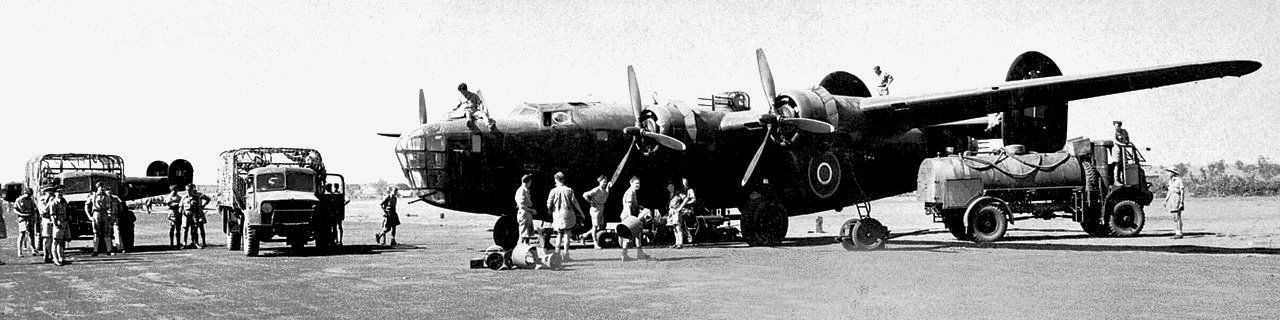
(IWM Photo, CI123)
Consolidated Liberator Mk. II of No. 159 Squadron, RAF, being refueled at Salbani, India, before undertaking a raid on the docks at Rangoon, Burma.
No. 159 Squadron was reformed at RAF Molesworth on 2 July 1942 during the Second World War and its ground crew personnel were posted, without aircraft, to the Middle East on 12 February 1942 and then to India on 18 May 1942. Flying Consolidated Liberators, the squadron was posted to Palestine in July 1942 and carried out bombing raids in North Africa, Italy and Greece. No. 159 then flew to India on 30 September 1942. The first operation against the Japanese was on 17 November 1942, and during the rest of the war, the squadron flew mine-laying, bombing, and reconnaissance missions over Burma, Siam, Malaya, Indo-China and the Dutch East Indies.
In October 1944, the Squadron mounted an audacious minelaying raid on the Japanese held port of Penang. The mission entailed a round trip of over 3,000 miles, which at the time was the longest distance bombing raid in history. Eric Burchmore was in charge of the modification and preparation of the Consolidated Liberator aircraft used for the mission. The raid was led by Wing Commander James Blackburn and was a complete success, with the port of Penang completely blocked by mines and all of the aircraft and crews returning safely. Burchmore was awarded a military MBE in recognition of his contribution to the operation, whilst Wing Commander Blackburn was awarded a Bar to his DSO and was also awarded the American DFC by the United States. After the war, No.159 converted to transport and survey duties before disbanding on 1 June 1946.
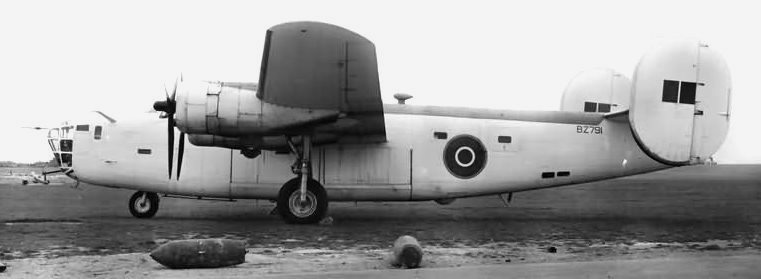
(RAF Photo)
Consolidated Liberator G.R. Mk. V, RAF (Serial No. BZ791), Prestwick, UK, Nov 1943.
(IWM Photo, CH 12373)
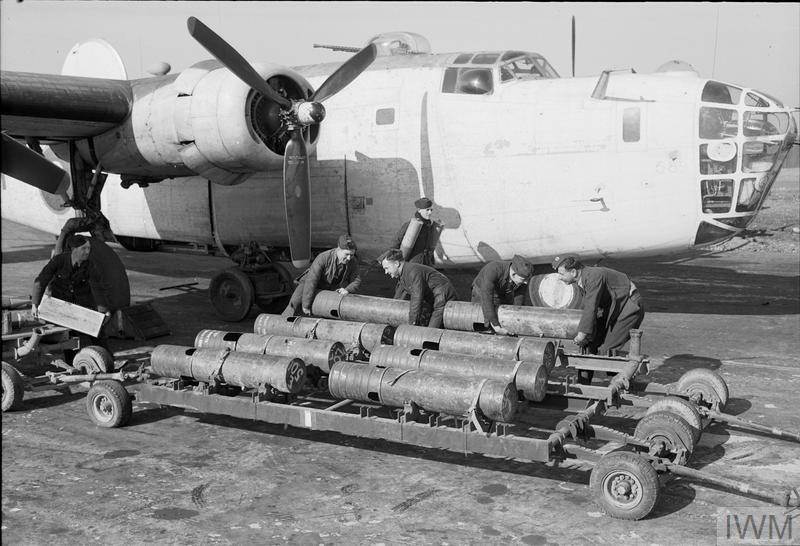
Armourers unload 250-lb Mk. VIII depth charges from bomb-trolleys beside a Consolidated Liberator GR Mk. VA of No. 53 Squadron RAF at St Eval, Cornwall in the UK.
(RAF Photo)
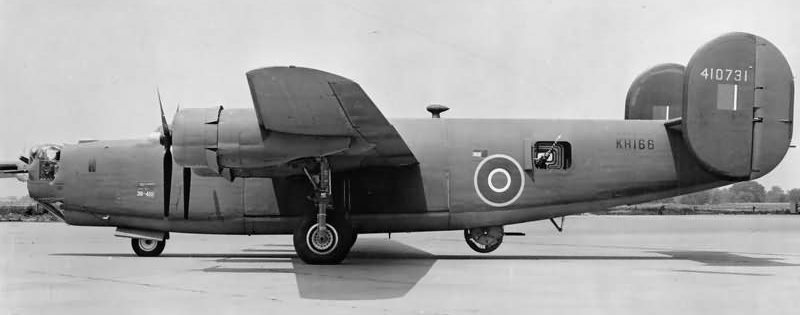
Consolidated Liberator B Mk. VI, RAF (Serial No. KH166), ex-USAAF B-24J (Serial No. 44-10731).
(Library and Archives Canada Photo, MIKAN No. 4564729)
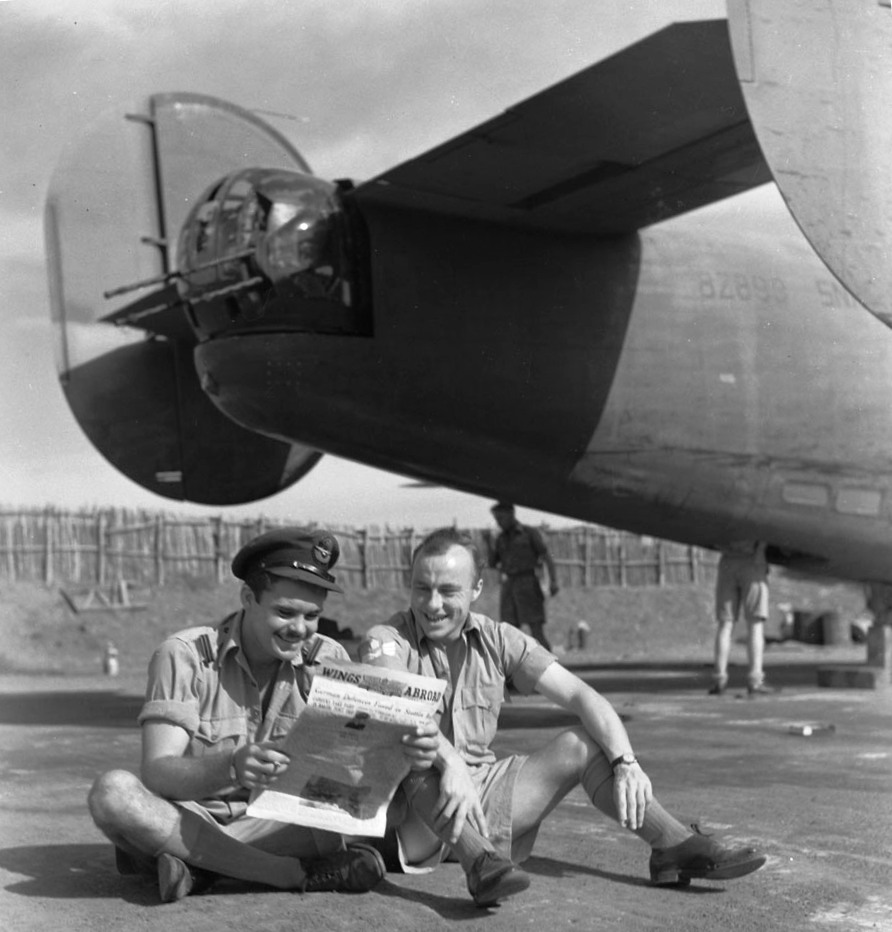
Consolidated Liberator B Mk. III (Serial No. BZ899), RAF No. 159 (B) Squadron, with a four-gun Boulton-Paul tail gun turret. F/O Pete Evans and F/Lt Sgt Stephens, 4 May 1944.
Consolidated B-24 Liberators preserved in the UK
(Clemens Vasters Photo)
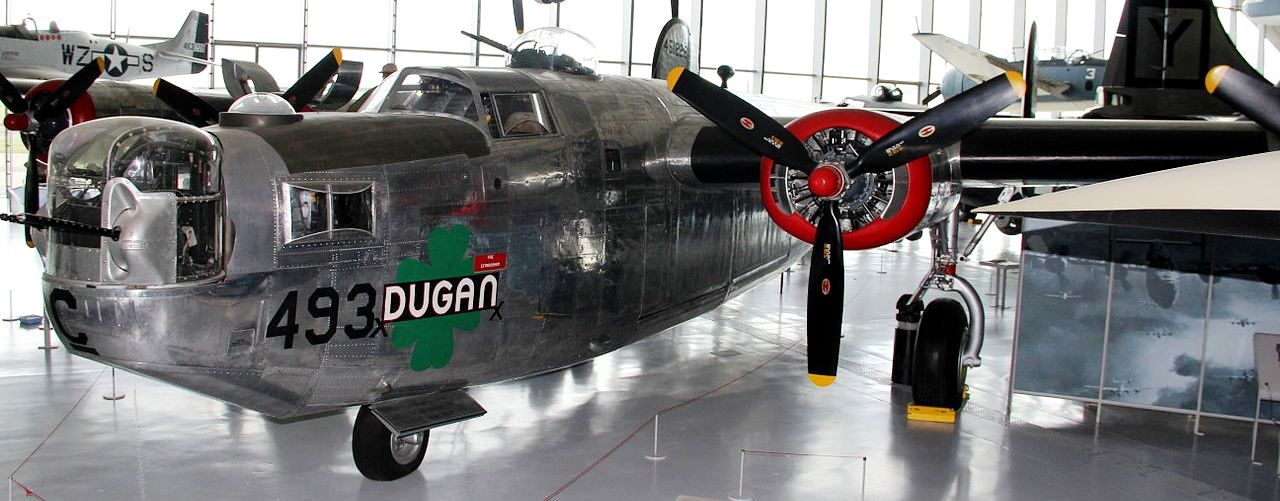
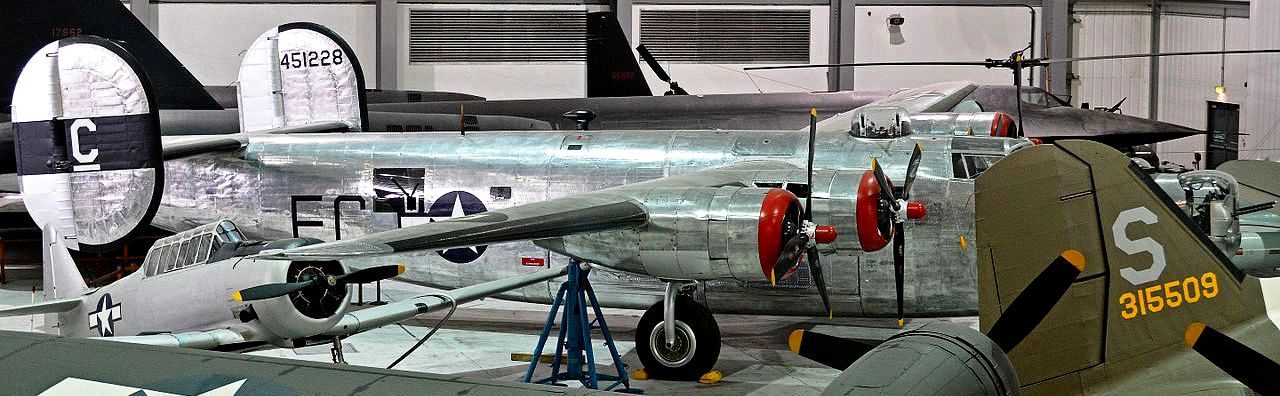
Consolidated B-24M Liberator (Serial No. 44-51228), “Dugan”, Imperial War Museum, Duxford, Cambridgeshire.
(Alan Wilson Photo)
Consolidated B-24M Liberator (Serial No. 44-51228), “Dugan”, Imperial War Museum, Duxford, Cambridgeshire.
(Mike Freer – Touchdown-aviation Photo)
(Les Chatfield Photo)
(tataquax Photo)
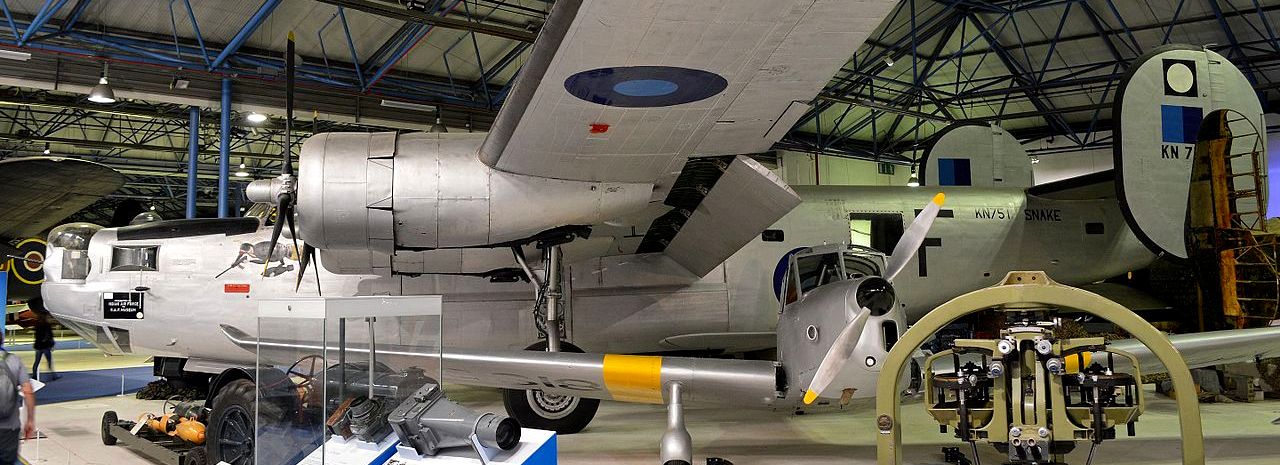
(Alan Wilson Photo)
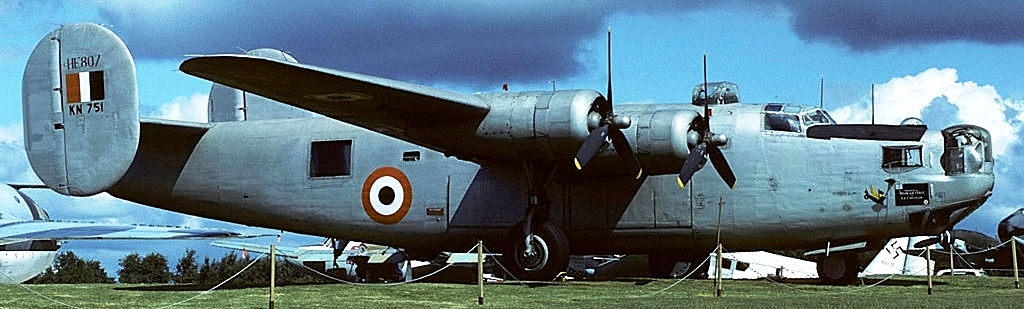
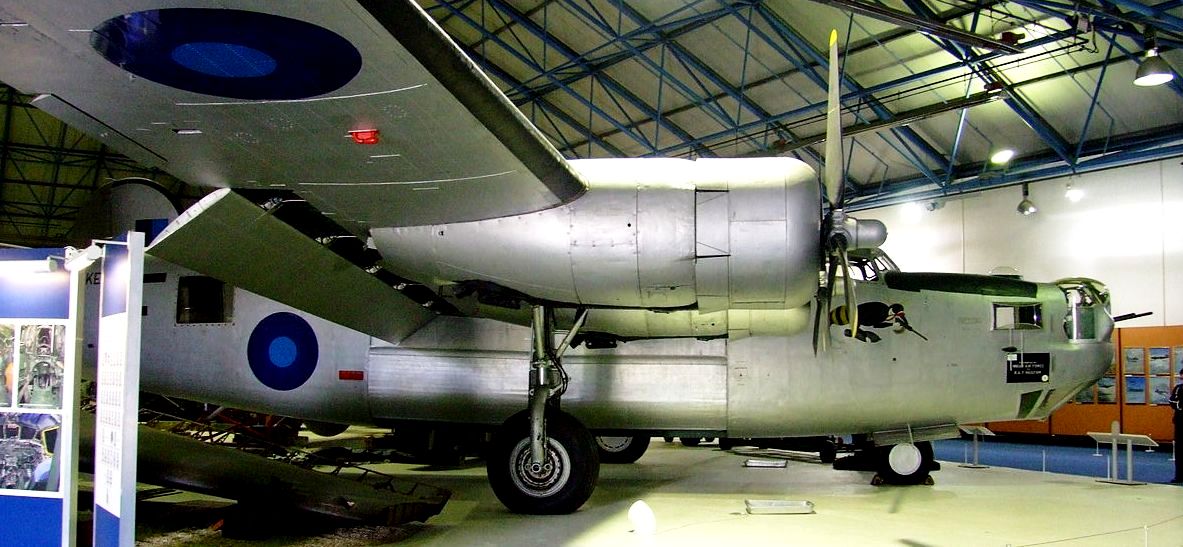
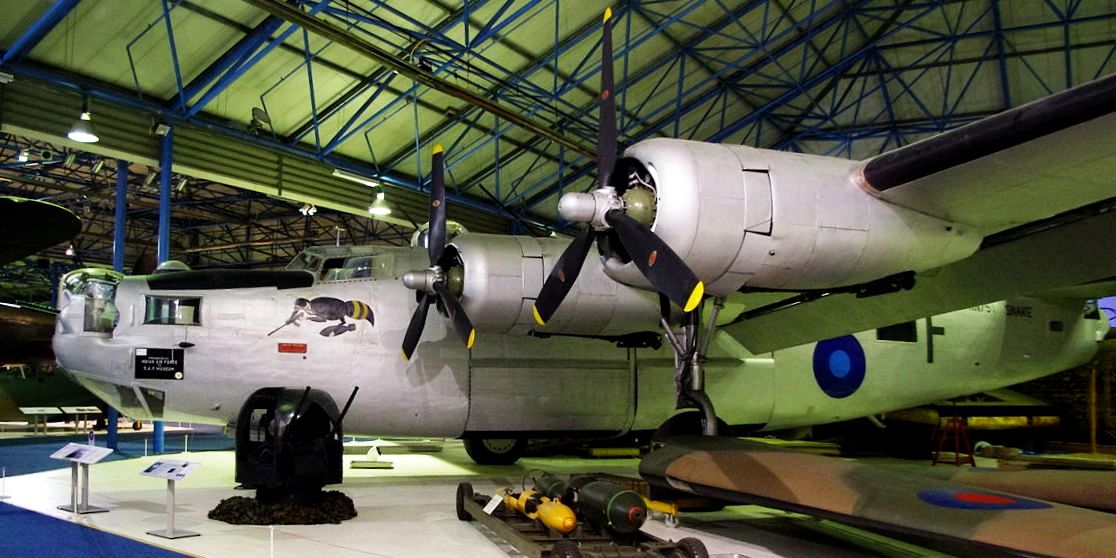
Consolidated B-24L Liberator B Mk. VI (Serial No. 44-50206), RAF (Serial No. KN751), Indian Air Force (Serial No. HE807), Royal Air Force Museum London, Hendon.