
Boeing Fortress
The aim of this website is to locate, identify and document Warplanes from the Second World War preserved in the United Kingdom. Many contributors have assisted in the hunt for these aircraft to provide and update the data on this website. Photos are by the author unless otherwise credited. Any errors found here are by the author, and any additions, corrections or amendments to this list of Warplane Survivors of the Second World War in the United Kingdom would be most welcome and may be e-mailed to the author at hskaarup@rogers.com.
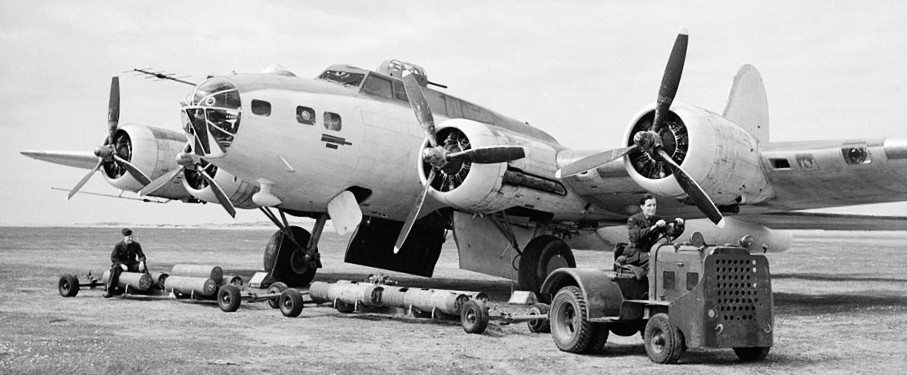
(IWM Photo, CH 11101)
A Coastal Command No. 220 Squadron Fortress Mk. IIA seen ‘bombing up’ with depth charges at Benbecula, in the Outer Hebrides, May 1943.
The Boeing B-17 Flying Fortress is an American four-engined heavy bomber aircraft that was developed in the 1930s for the United States Army Air Corps (USAAC). A fast and high-flying bomber used primarily in the European Theater of Operations, the B-17 dropped more bombs than any other aircraft during the Second World War. The B-17 was also employed in transport, anti-submarine warfare, and search and rescue roles.
The RAF entered the Second World War without a sufficient supply of modern heavy bombers, with the largest available long-range medium bombers in any numbers being the Vickers Wellington, which could carry 4,500 pounds (2,000 kg) of bombs. While the Short Stirling and Handley Page Halifax became its primary bombers by 1941, in early 1940, the RAF agreed with the U.S. Army Air Corps to acquire 20 B-17Cs, which were given the service name Fortress Mk. I. Their first operation, against Wilhelmshaven on 8 July 1941 was unsuccessful. On 24 July three B-17s of 90 Squadron took part in a raid on the German capital ship Gneisenau and Prinz Eugen anchored in Brest from 30,000 ft (9,100 m), to draw German fighters away from 18 Handley Page Hampdens attacking at lower altitudes, and in time for 79 Vickers Wellingtons to attack later with the German fighters refueling. The operation did not work as expected, with 90 Squadron’s Fortresses being unopposed.
By September, the RAF had lost eight B-17Cs in combat and had experienced numerous mechanical problems, and Bomber Command abandoned daylight bombing raids using the Fortress I because of the aircraft’s poor performance. The experience showed both the RAF and USAAF that the B-17C was not ready for combat, and that improved defenses, larger bomb loads, and more accurate bombing methods were required. However, the USAAF continued using the B-17 as a day bomber, despite misgivings by the RAF that attempts at daylight bombing would be ineffective.
As use by Bomber Command had been curtailed, the RAF transferred its remaining Fortress Mk. I aircraft to Coastal Command for use as a long-range maritime patrol aircraft. These were augmented starting in July 1942 by 45 Fortress Mk.IIA (B-17E) followed by 19 Fortress Mk II (B-17F) and three Fortress Mk III (B-17G). A Fortress IIA from No. 206 Squadron RAF sank U-627 on 27 October 1942, the first of 11 U-boat kills credited to RAF Fortress bombers during the war.
As sufficient Consolidated Liberators finally became available, Coastal Command withdrew the Fortress from the Azores, transferring the type to the meteorological reconnaissance role. Three squadrons undertook Met profiles from airfields in Iceland, Scotland, and England, gathering data for vital weather forecasting purposes.
The RAF’s No. 223 Squadron, as part of 100 Group, operated several Fortresses equipped with an electronic warfare system known as “Airborne Cigar” (ABC). This was operated by German-speaking radio operators to identify and jam German ground controllers’ broadcasts to their nightfighters. They could also pose as ground controllers themselves to steer nightfighters away from the bomber streams. (Wikipedia)
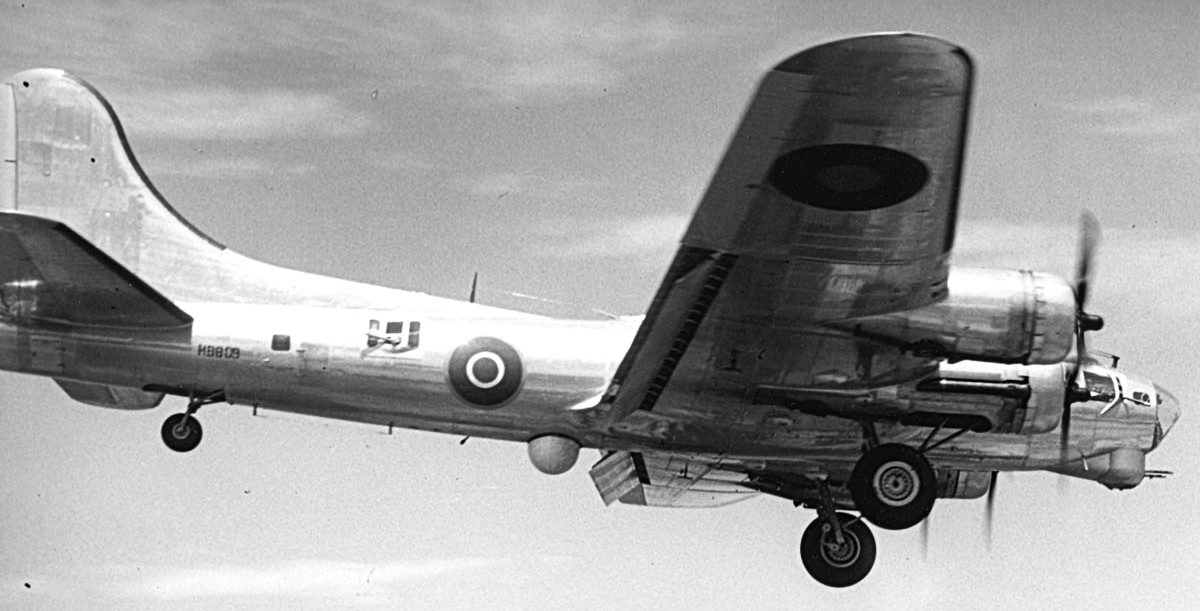
(Bill Larkins Photo)
Royal Air Force B-17G landing at Denver, Colorado, in January 1944. Denver was a modification center for new B-17’s before delivery.
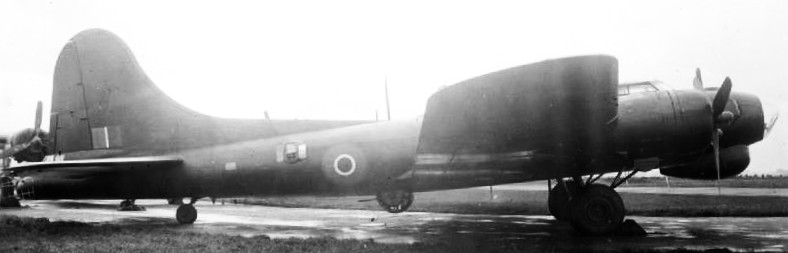
(IWM Photo, ATP, 13090E)
Royal Air Force Fortress B Mark III (serial HB796) at Prestwick, Ayrshire (UK), after being fitted with radio counter-measures equipment by Scottish Aviation Ltd. It served with No. 214 Squadron RAF of No. 100 Bomber Group, based at Sculthorpe, Norfolk, from November 1944. Equipment fitted included American AN/APS15 radar in the large radome under the nose, “Airborne Cigar” (ABC) radio-jamming equipment (shown by the large aerial on top of the fuselage), and an “Airborne Grocer” aircraft radar jamming installation, the aerials of which can be seen on either side of the tail turret. HB796 failed to return from a bomber support mission on 9 February 1945.
(Mike Freer – Touchdown-aviation Photos)
(Steve Fitzgerald Photo)
(Kogo Photo)

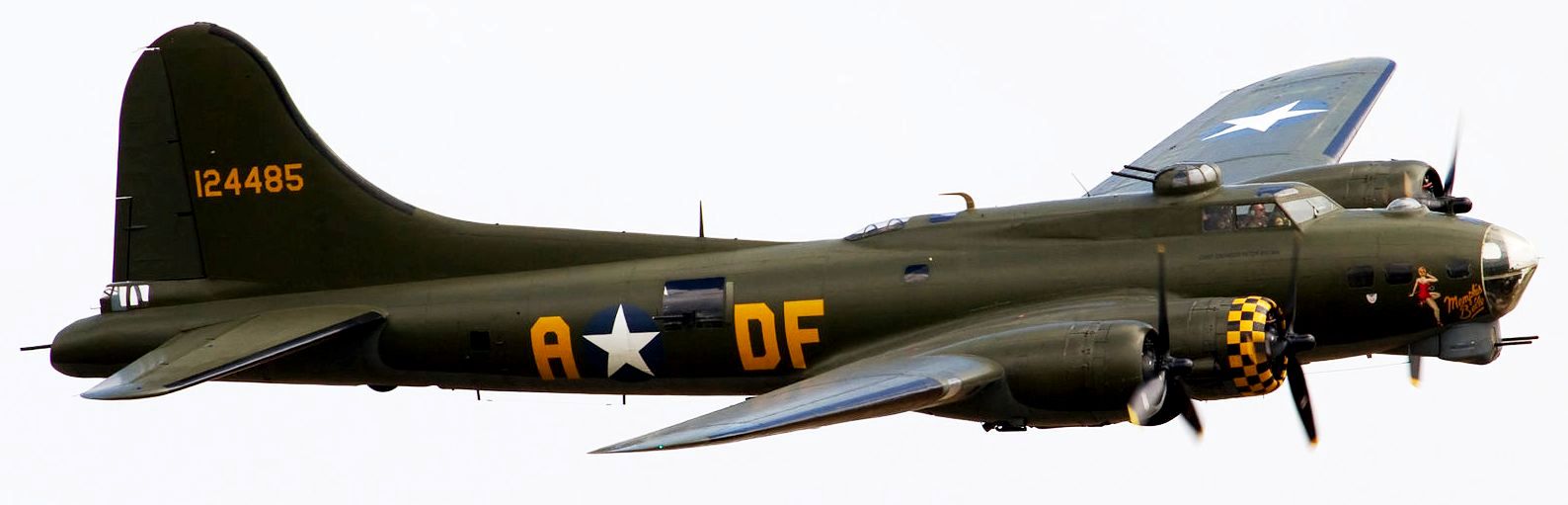
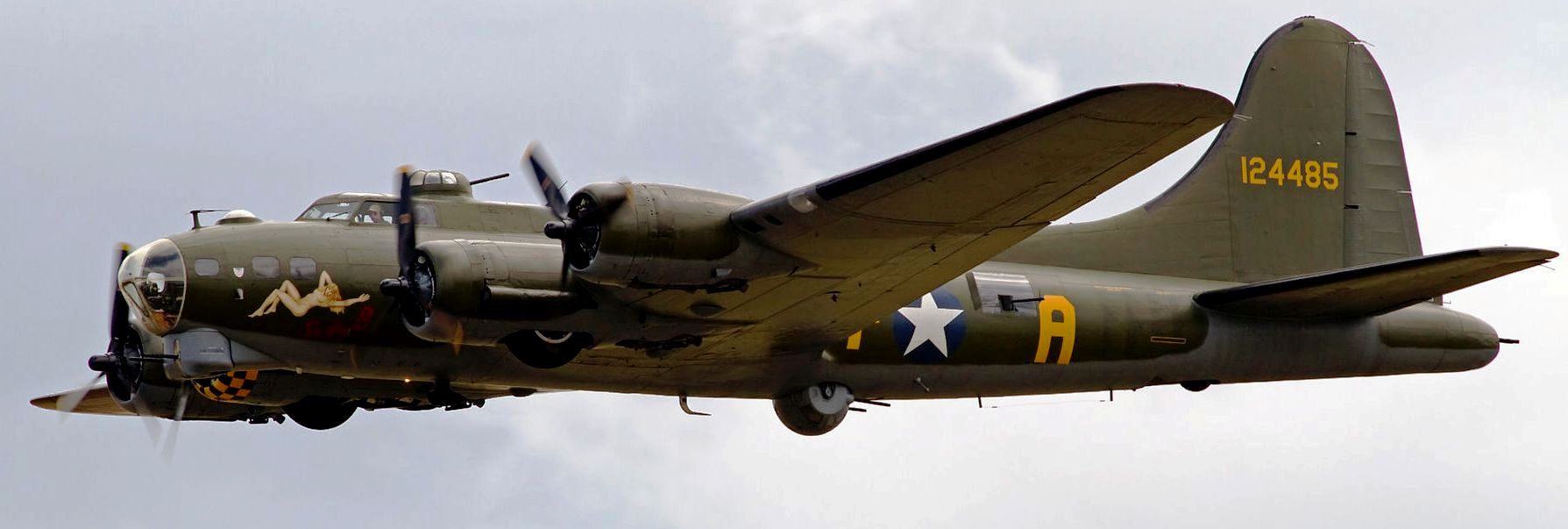
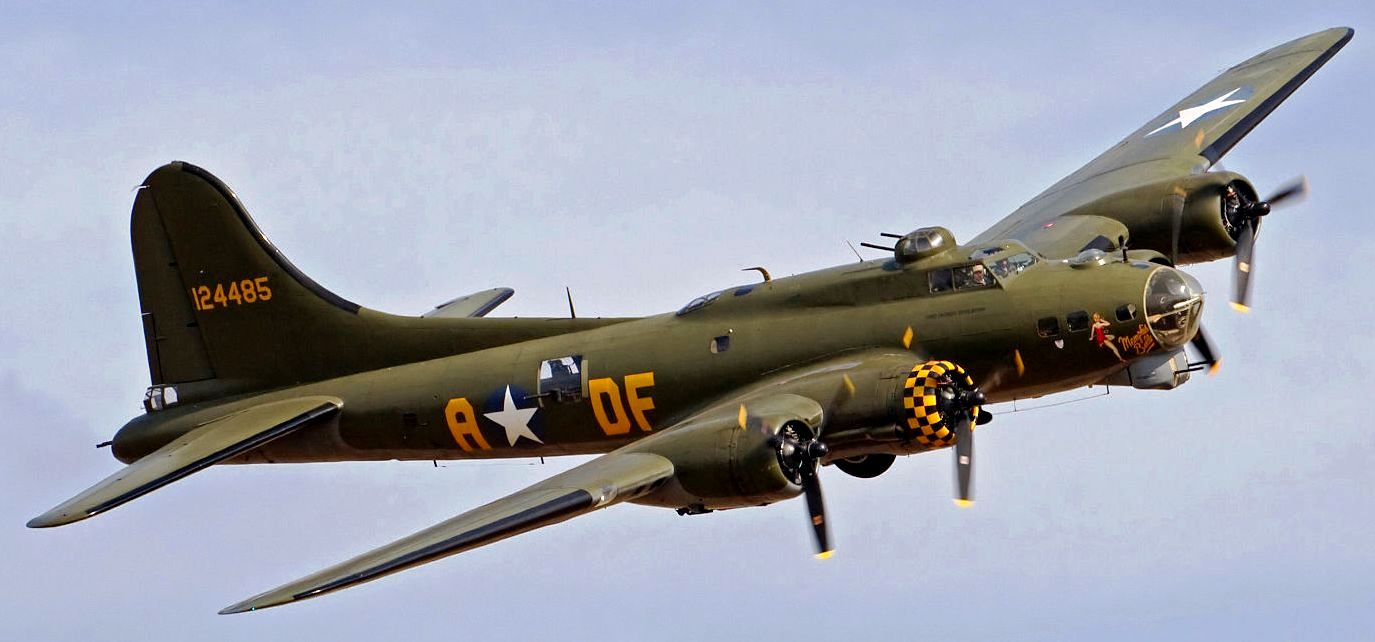
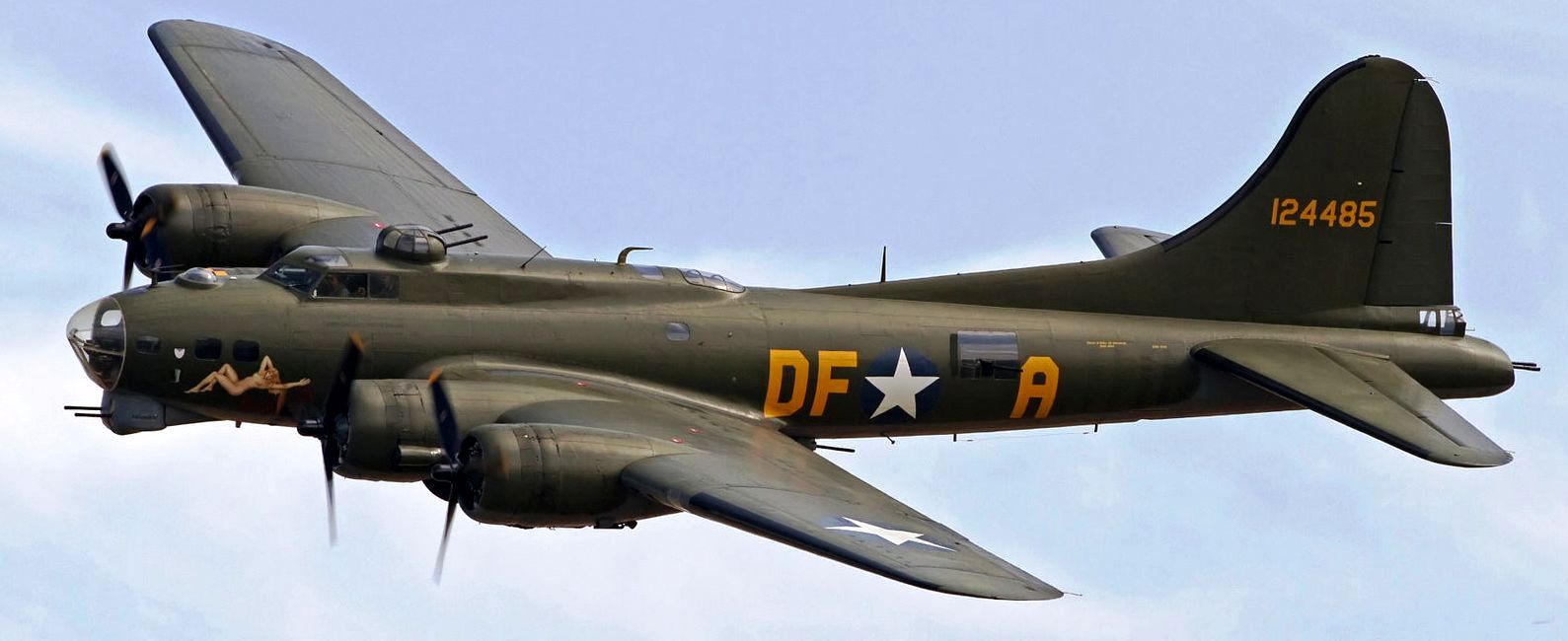
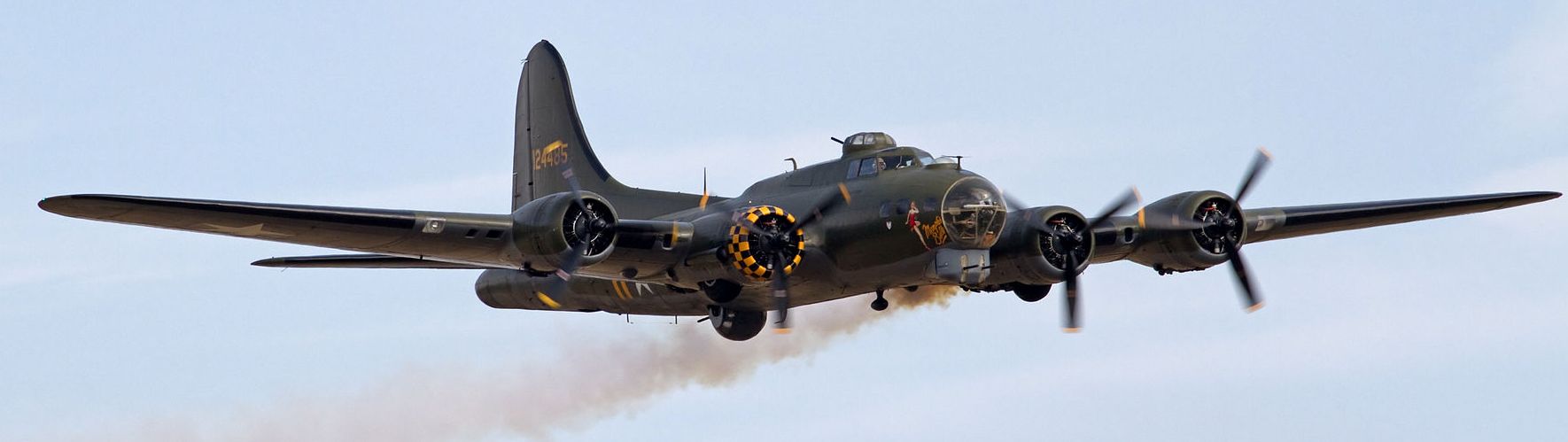
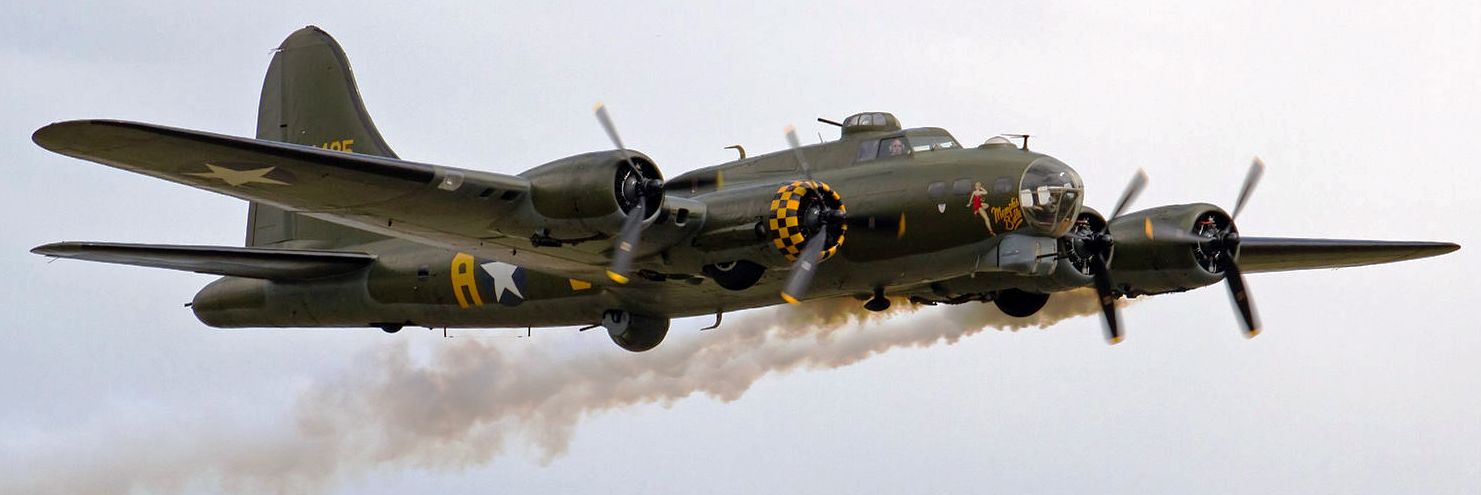
(Tony Hisgett Photos)
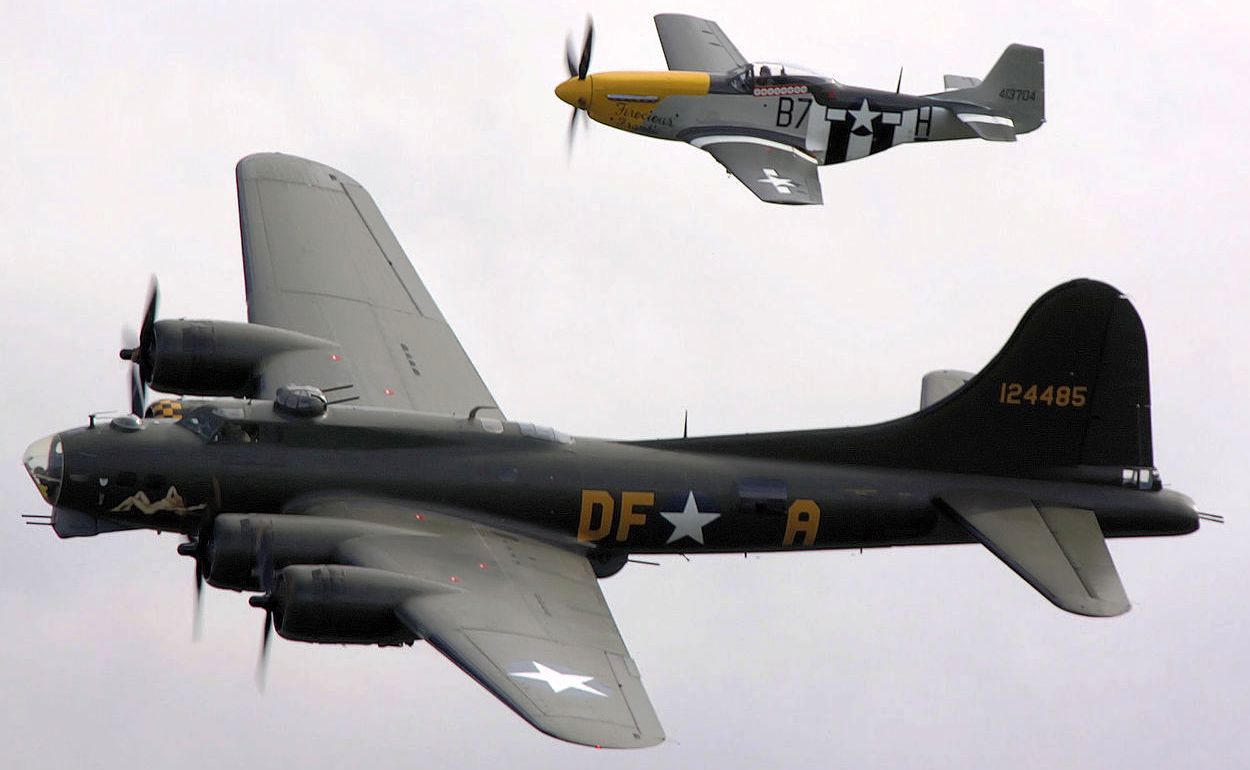
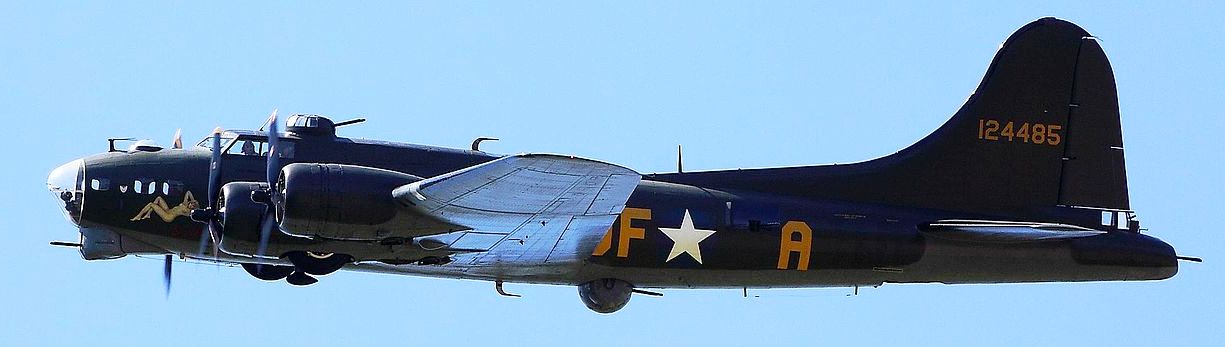
(Tim Felce Photos)
(John5199 Photos)
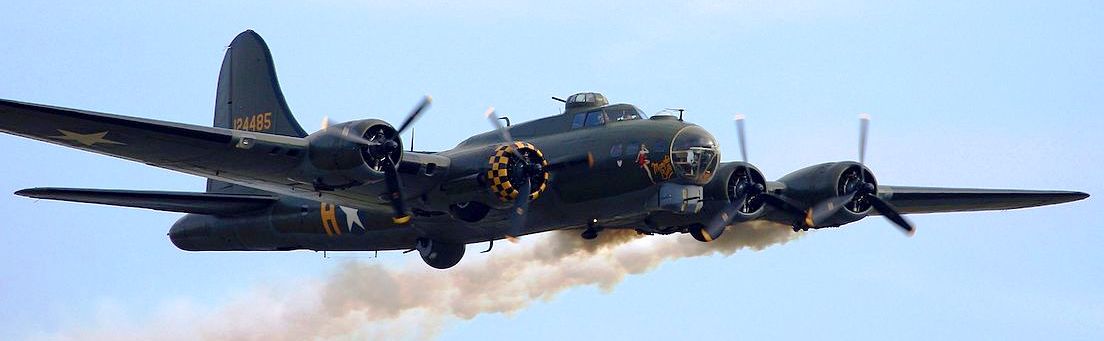
(Paul from United Kingdom Photo)
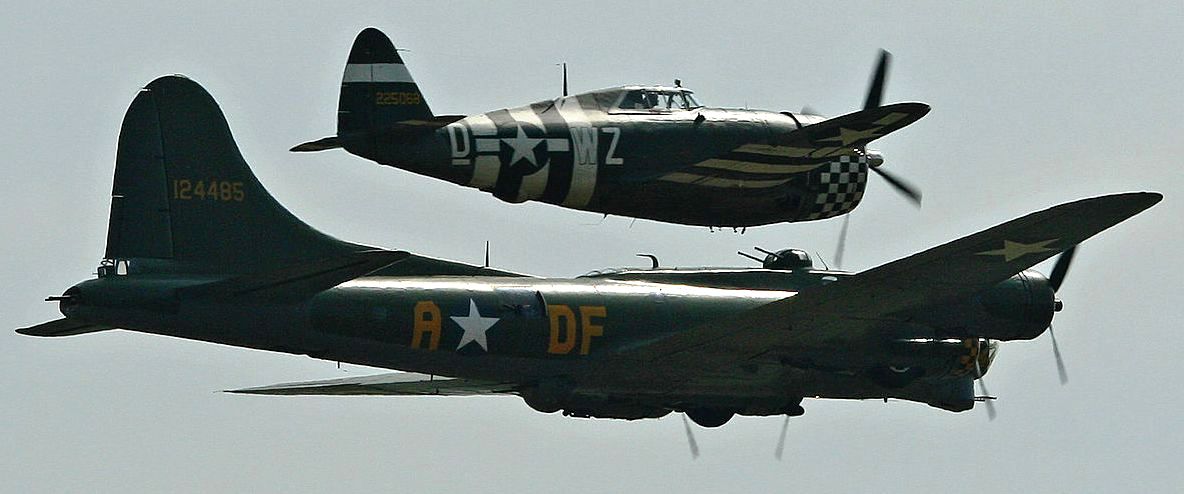
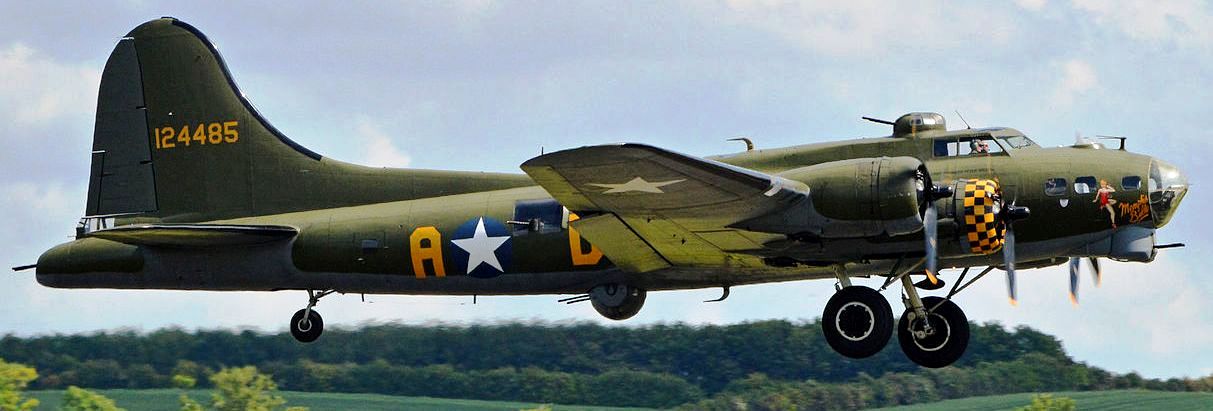
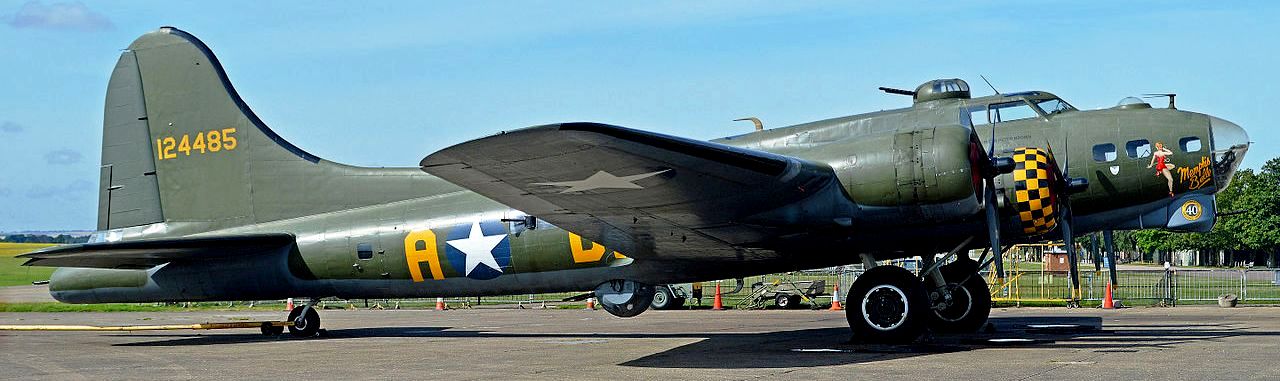
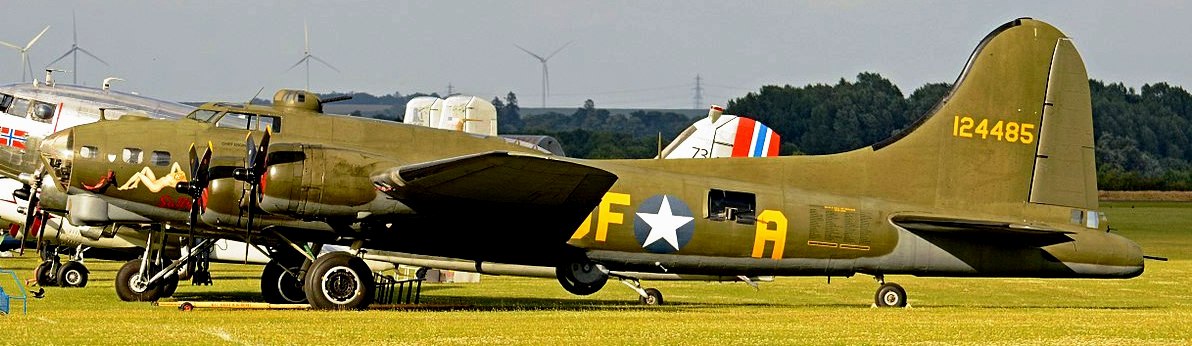
(Alan Wilson Photos)
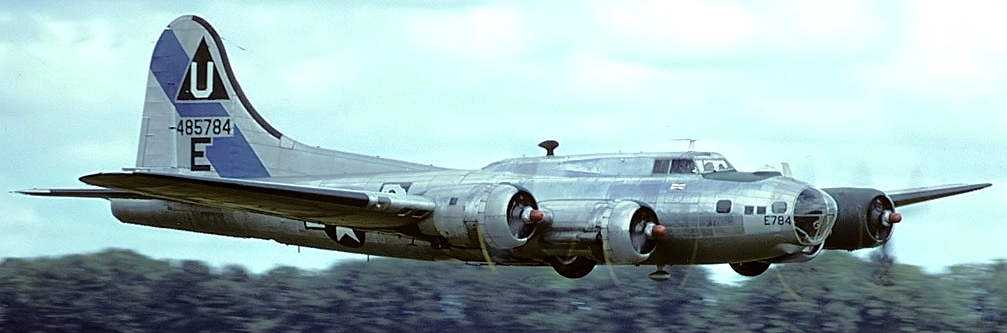
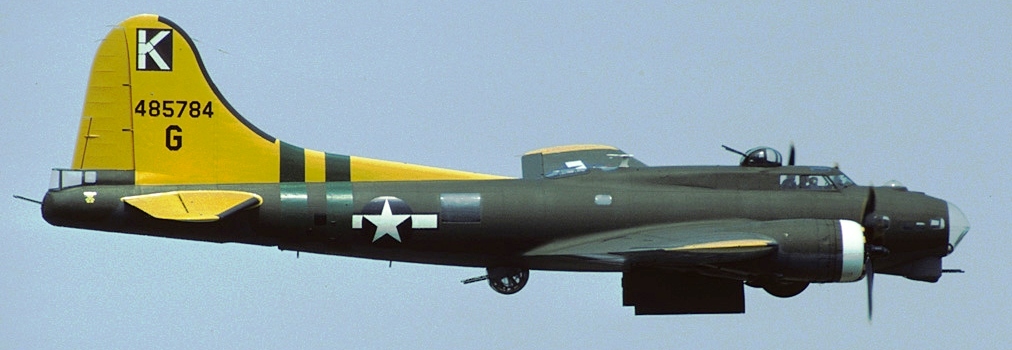
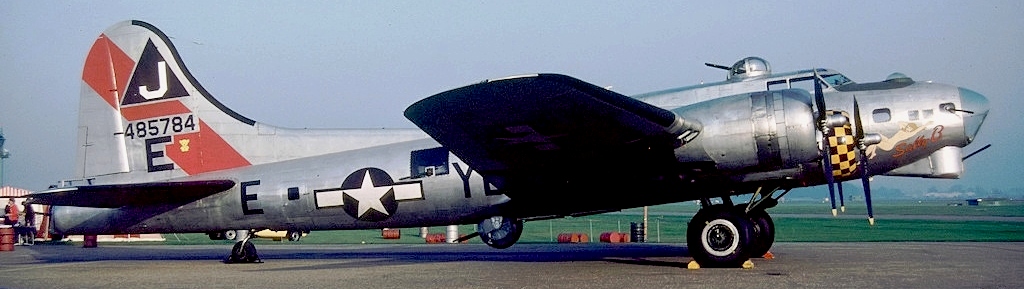
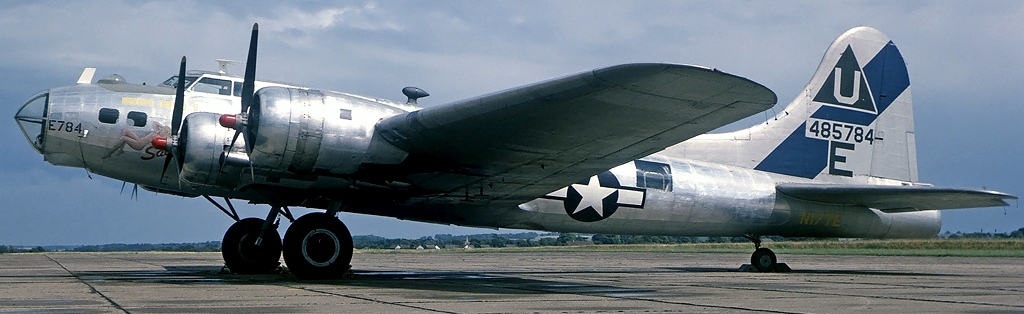
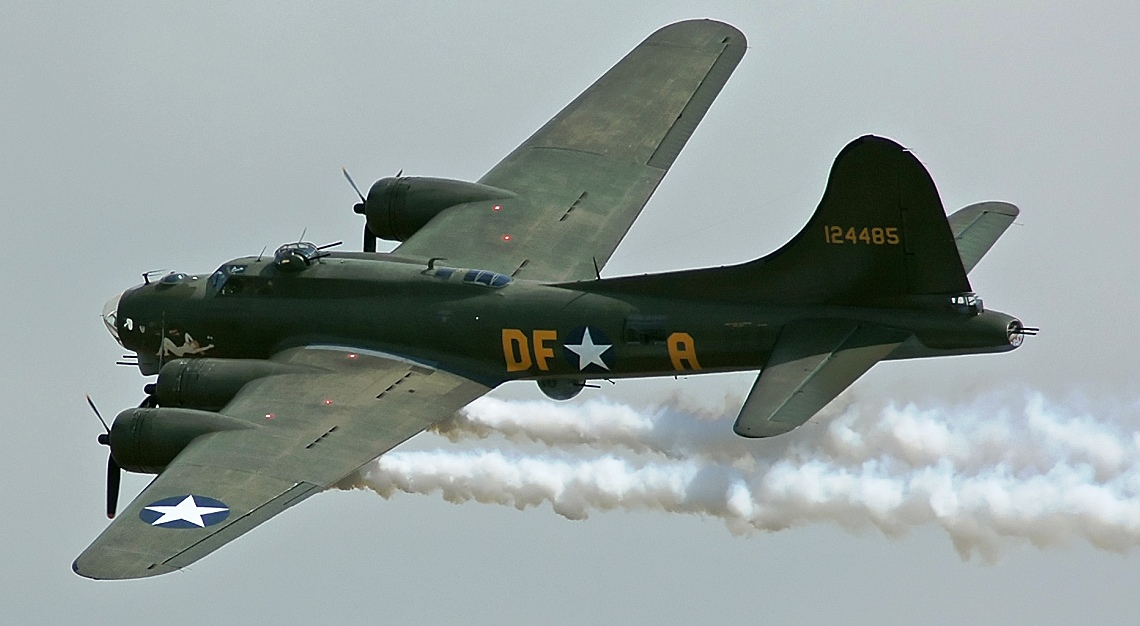
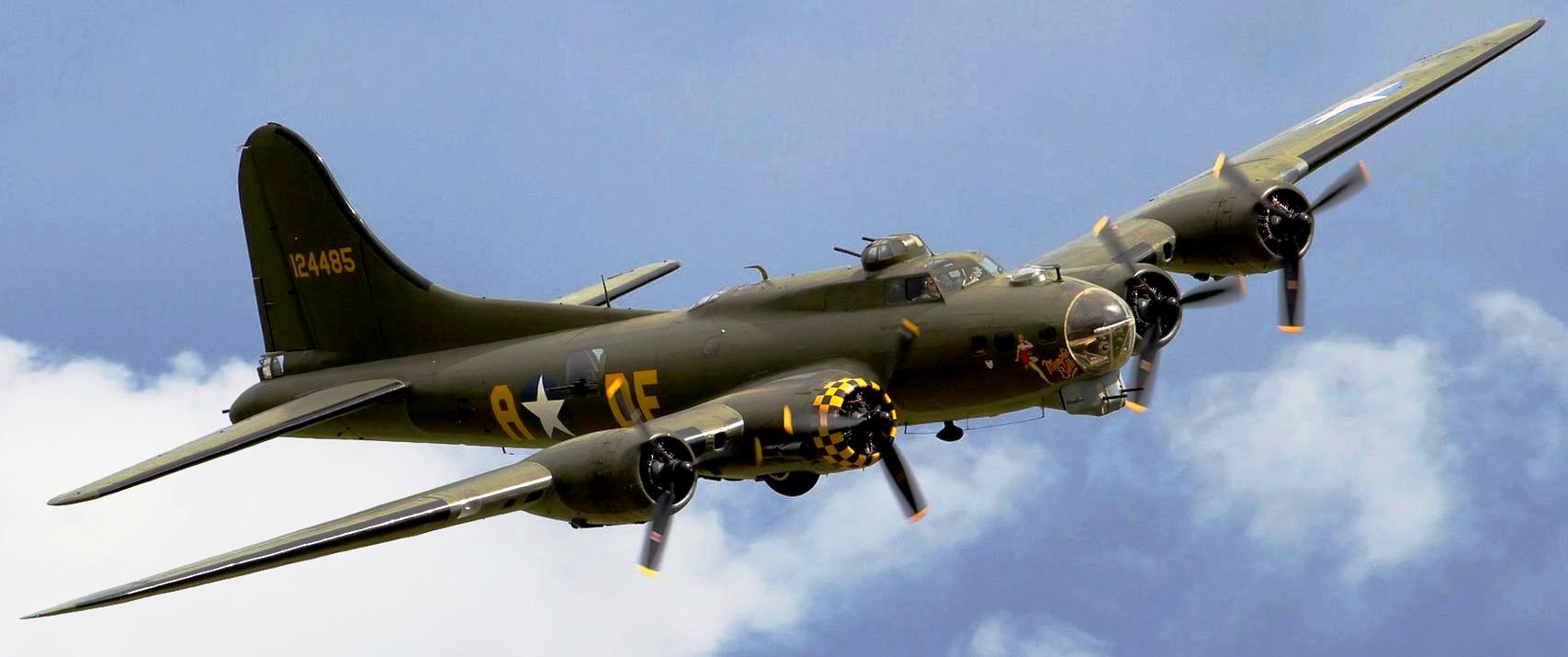
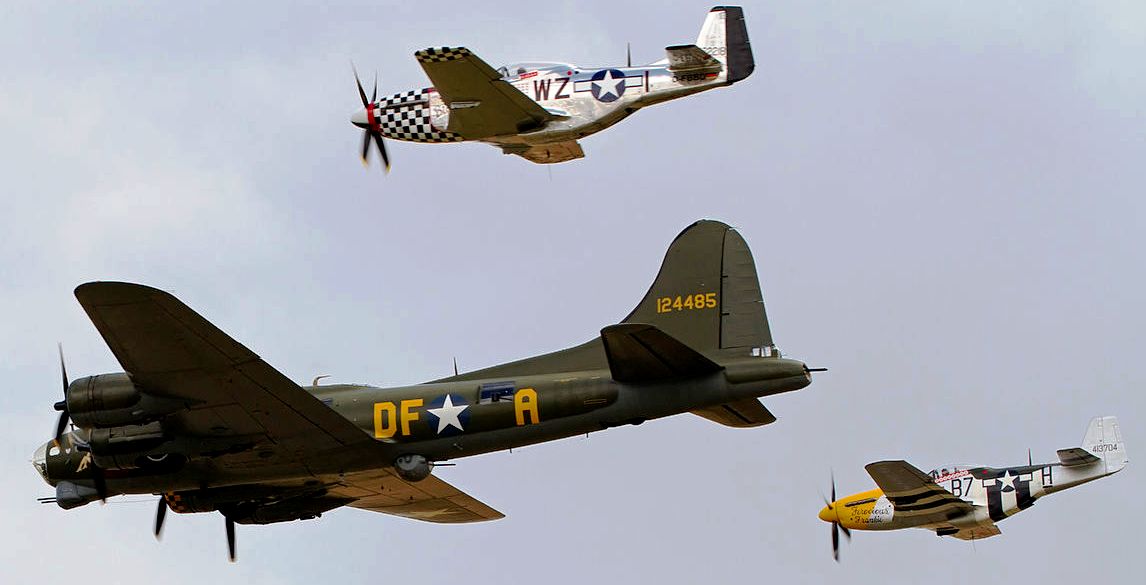
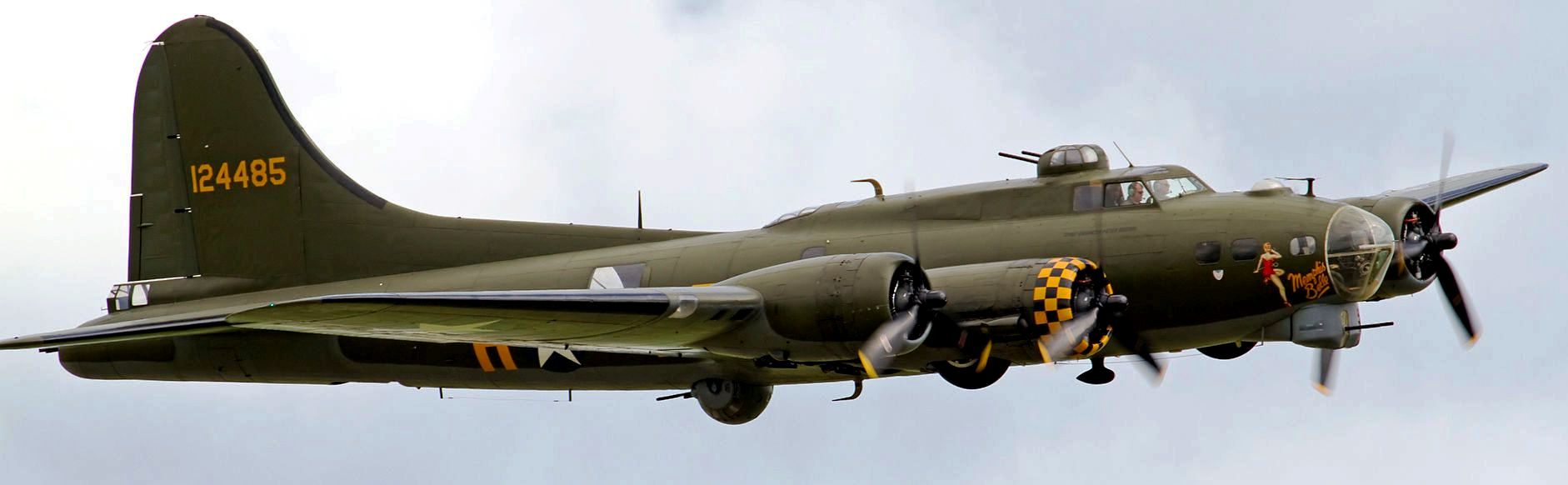
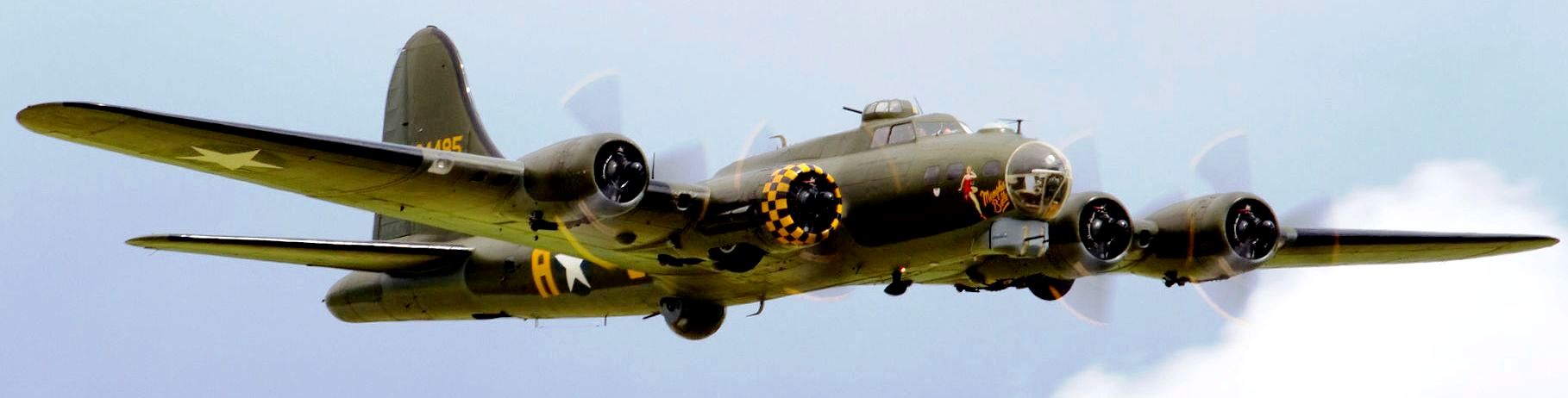
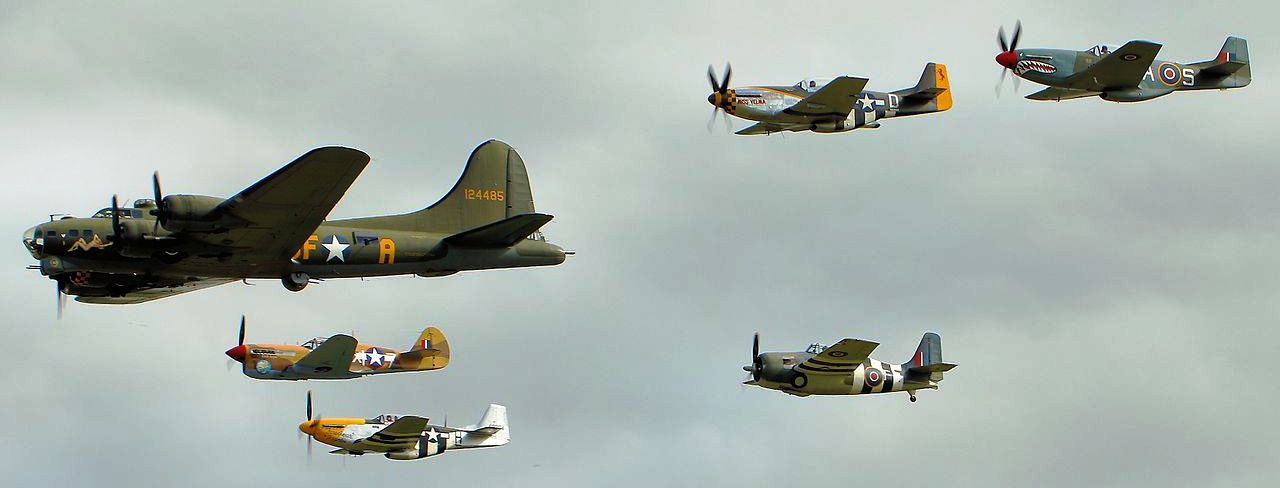
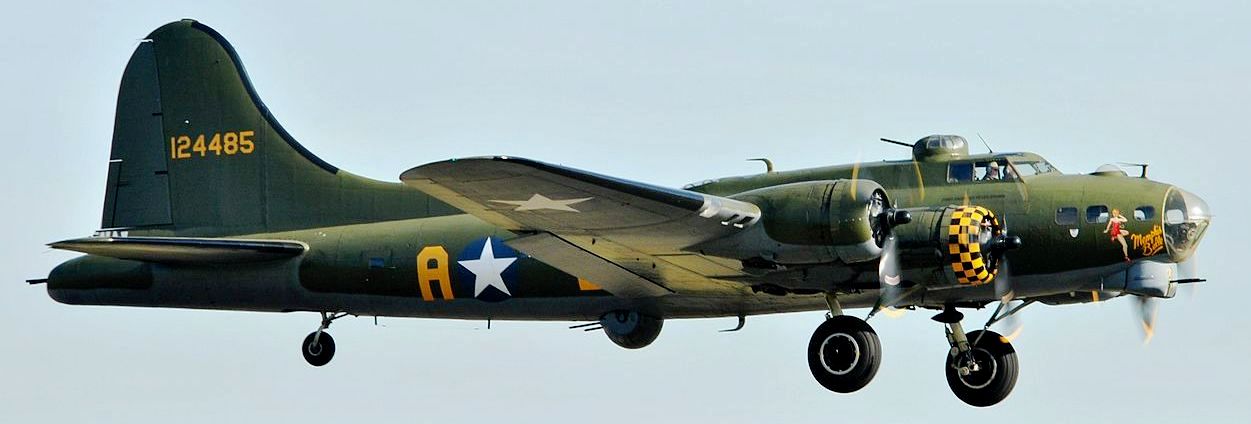
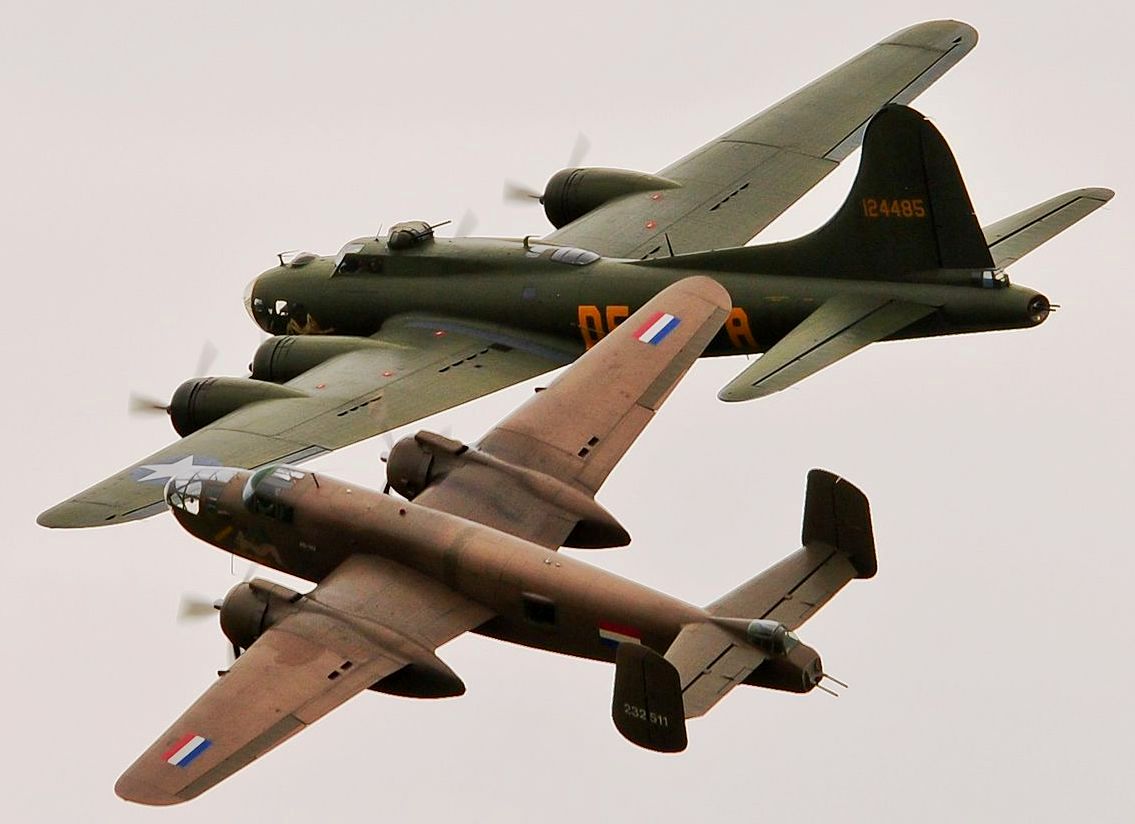
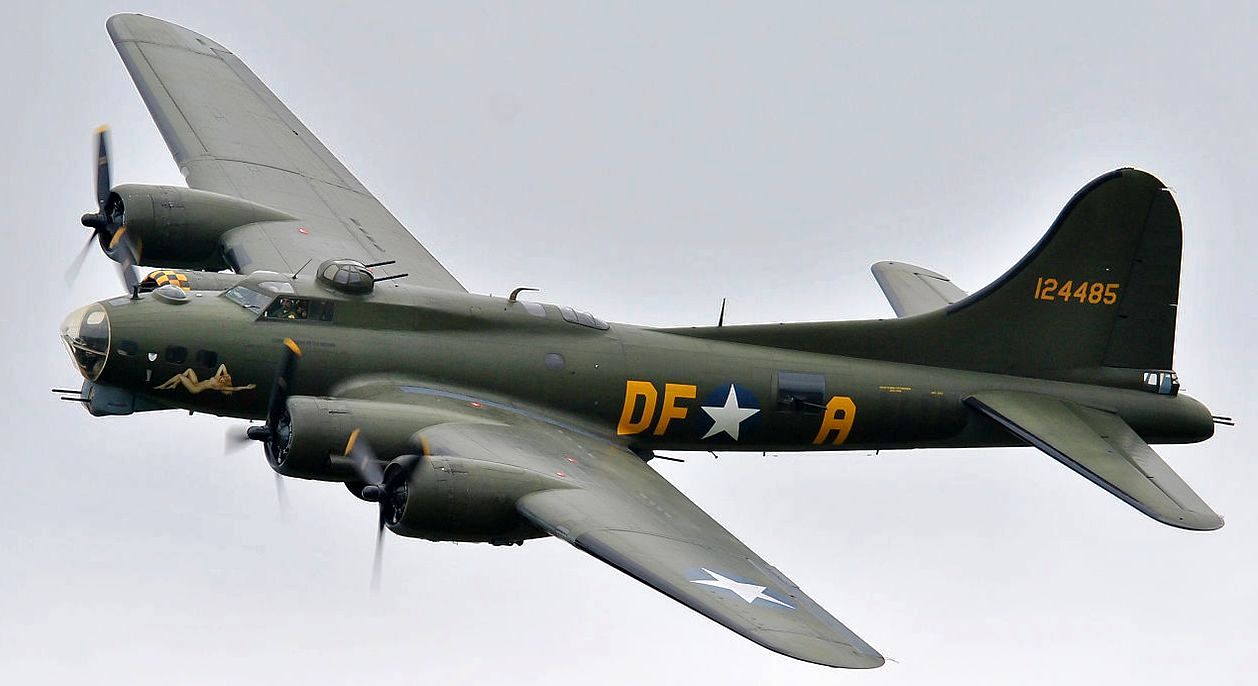
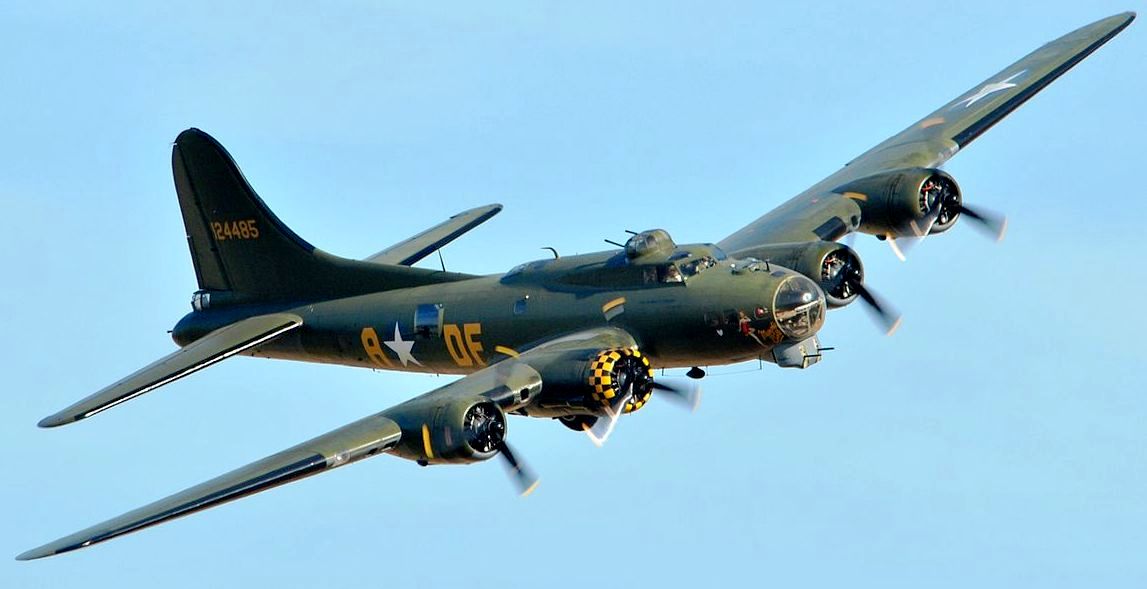
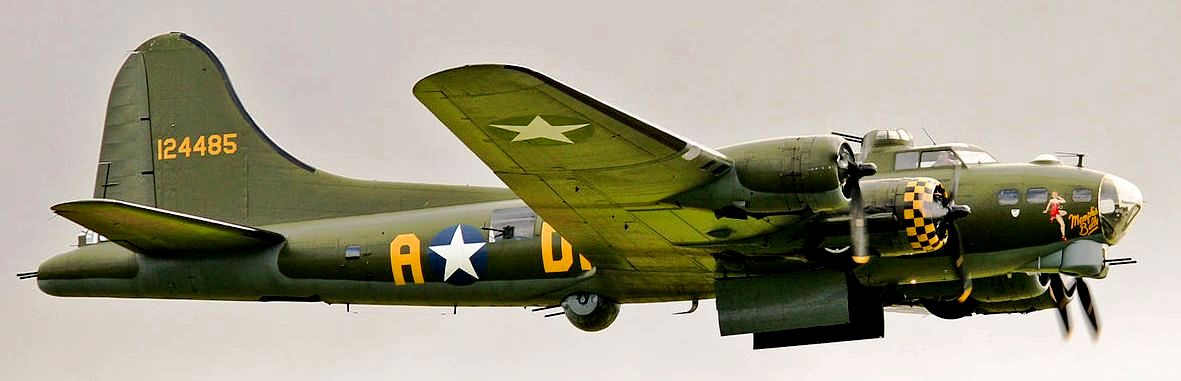
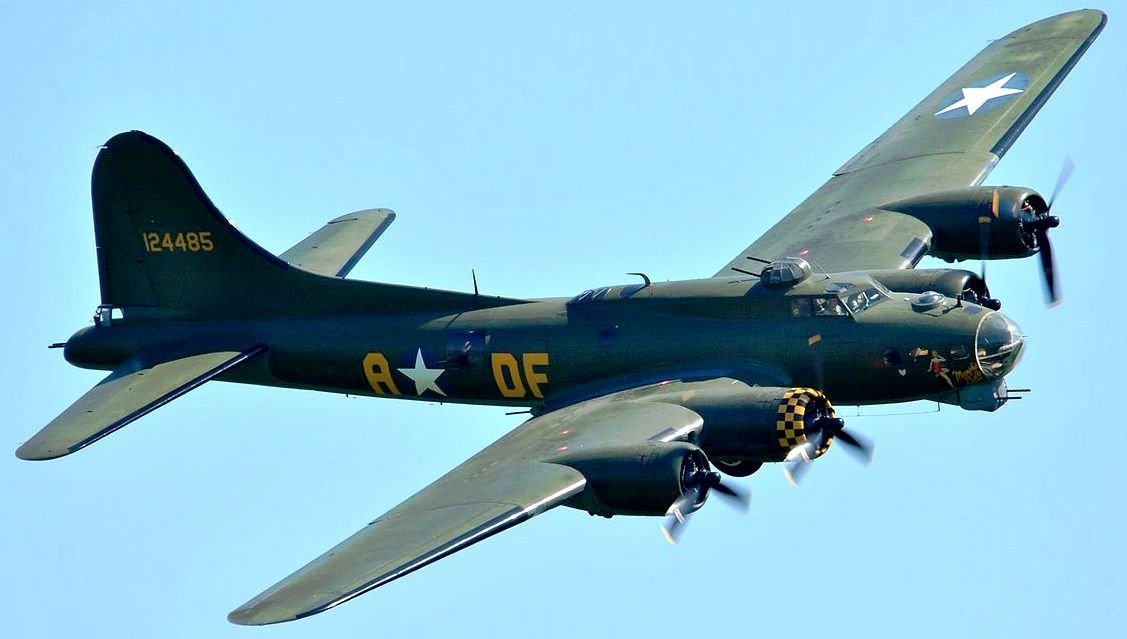
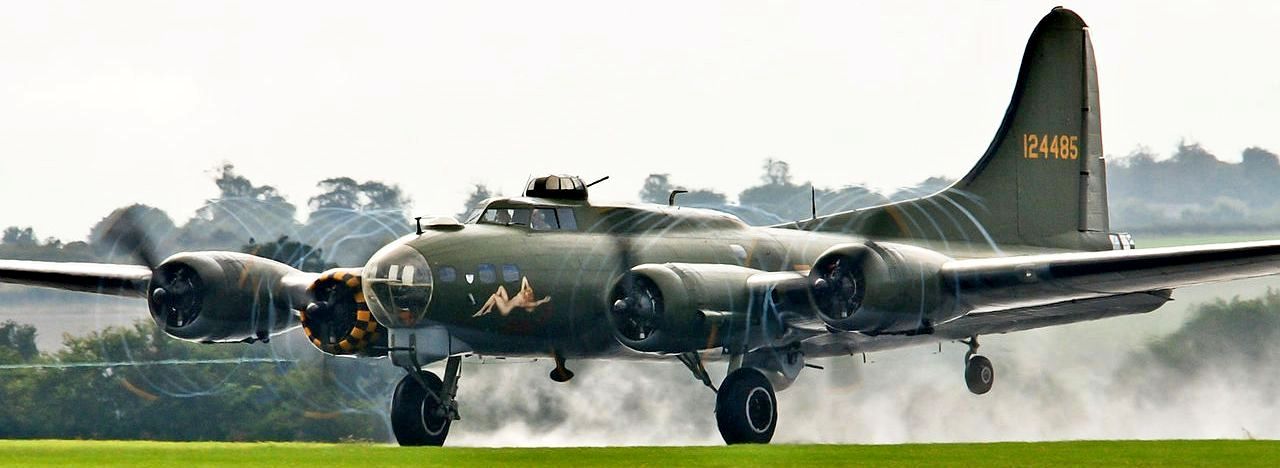
Boeing B-17G Flying Fortress (Serial No. 44-85784), “Sally B”, Reg. No. G-BEDF, B-17 Preservation Ltd, Imperial War Museum Duxford, Cambridgeshire. Painted as (Serial No. 41-24485), 124485. Airworthy.
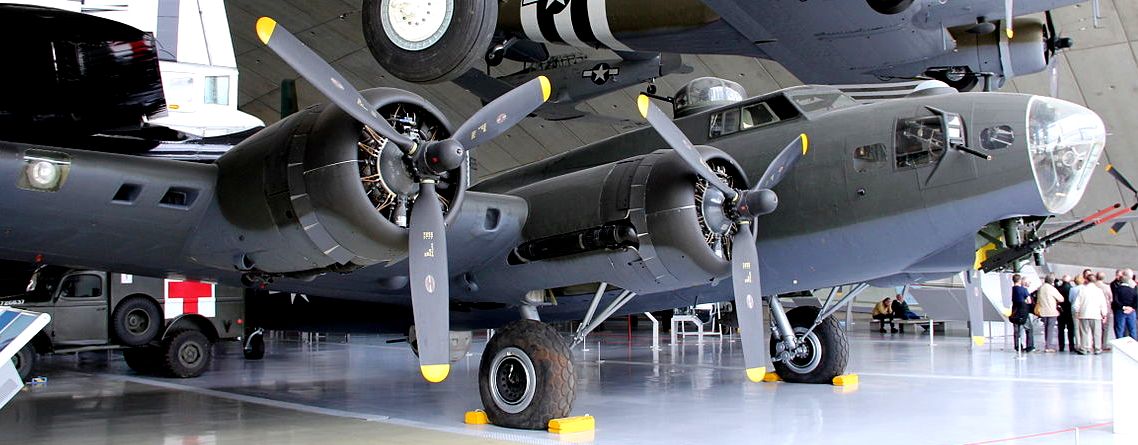
(Clemens Vasters Photo)
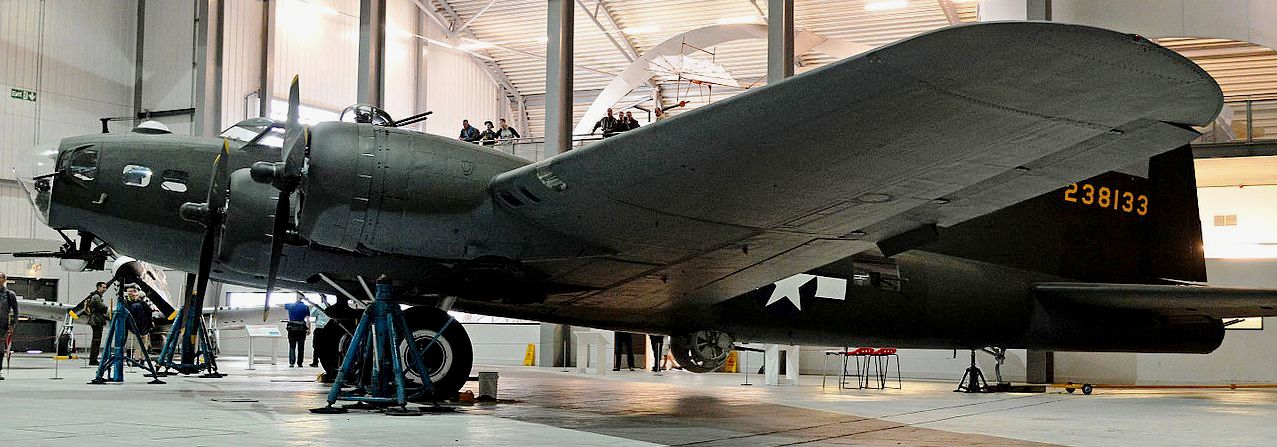
(Alan Wilson Photo)
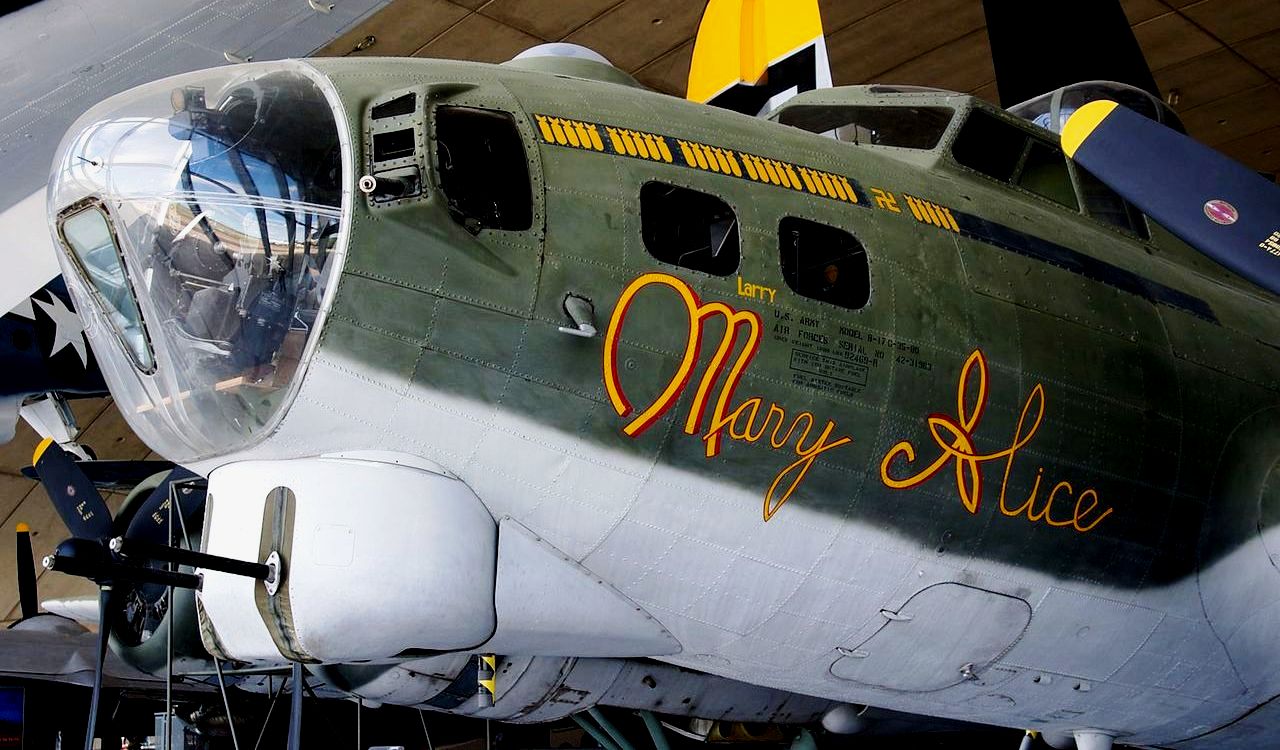
(Paul from United Kingdom Photo)
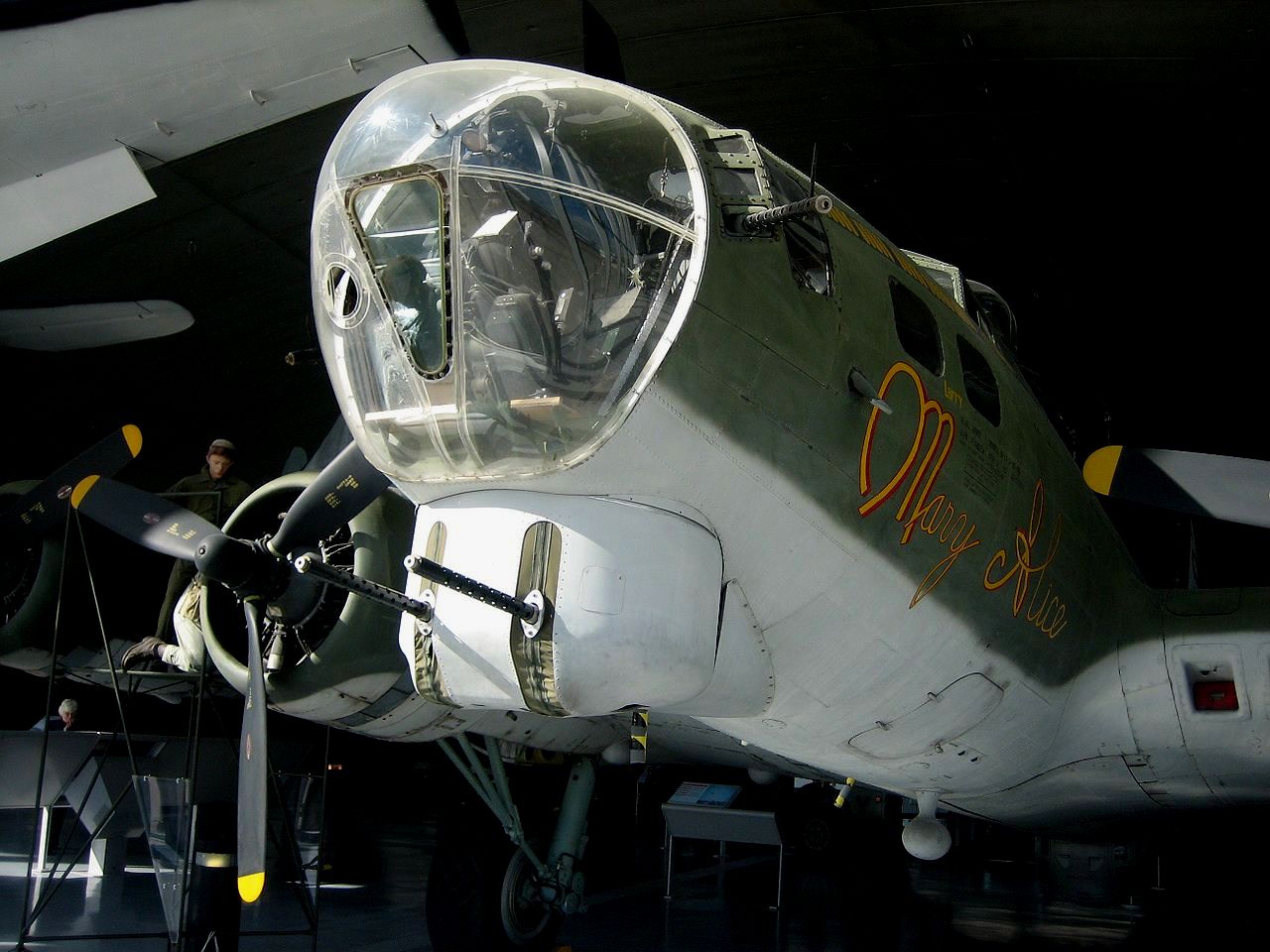
(en:Mark.murphy Photo)
Boeing B-17G Flying Fortress (Serial No. 44-83735), Reg. No. F-BDRS, “Mary Alice”, American Air Museum Duxford, Imperial War Museum. Painted as (Serial No. 238133), Y-G.
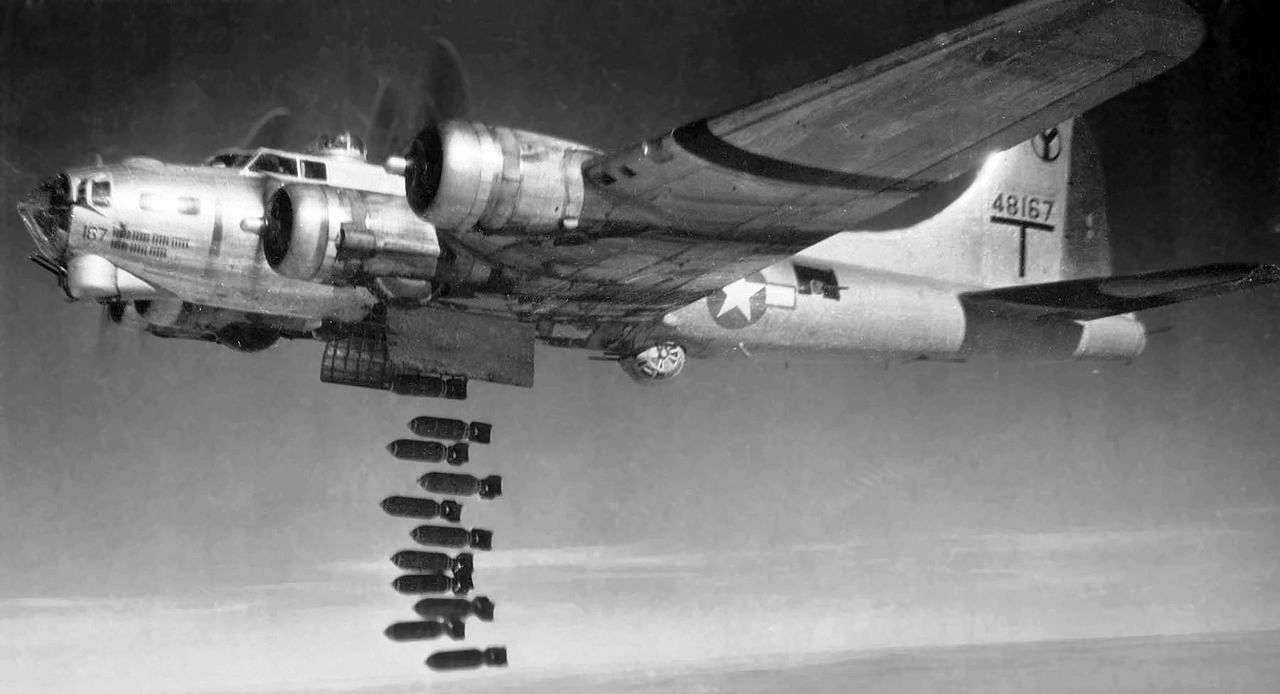
Boeing B-17G-50-VE Flying Fortress (Serial No. 44-8167), of the 15th Air Force, 2nd Bomb Group, 96th Bomb Squadron, dropping its bombs in 1944/45. (NMUSAF Photo)
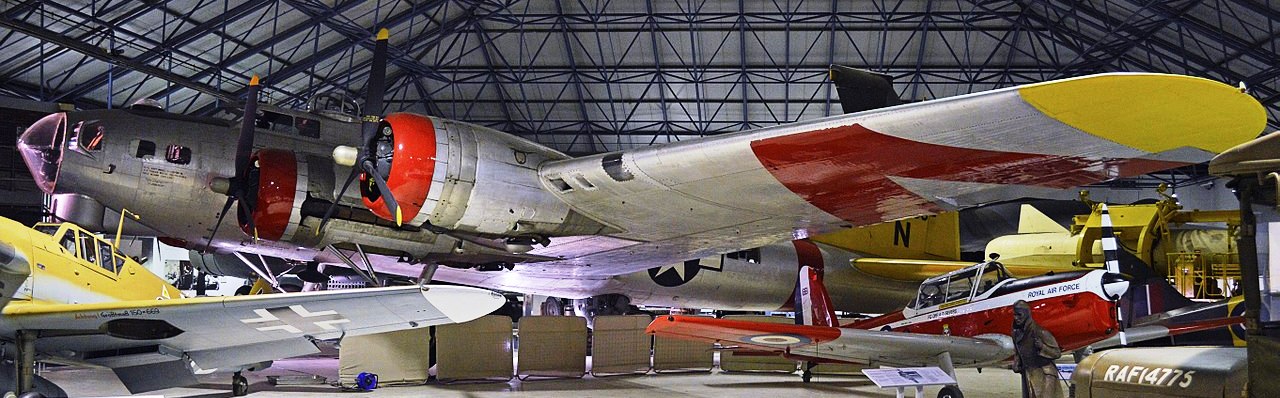
(Alan Wilson Photo)
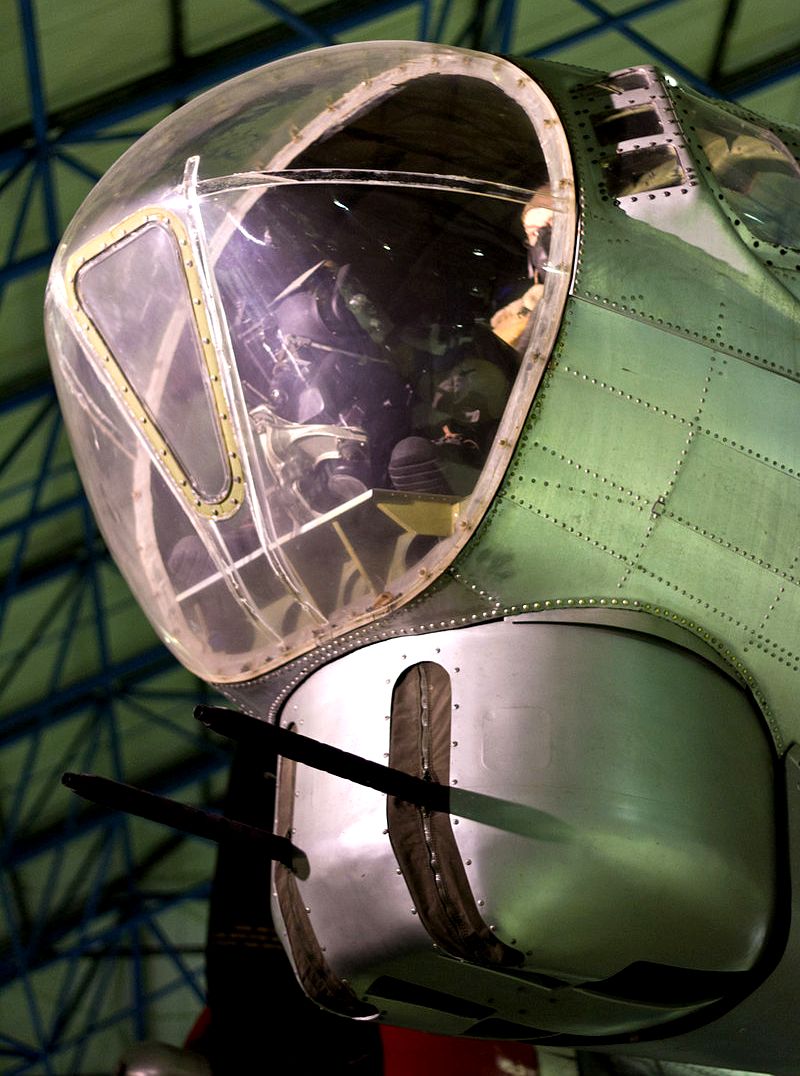
(Oren Rozen Photos)
(Roland Turner Photo)
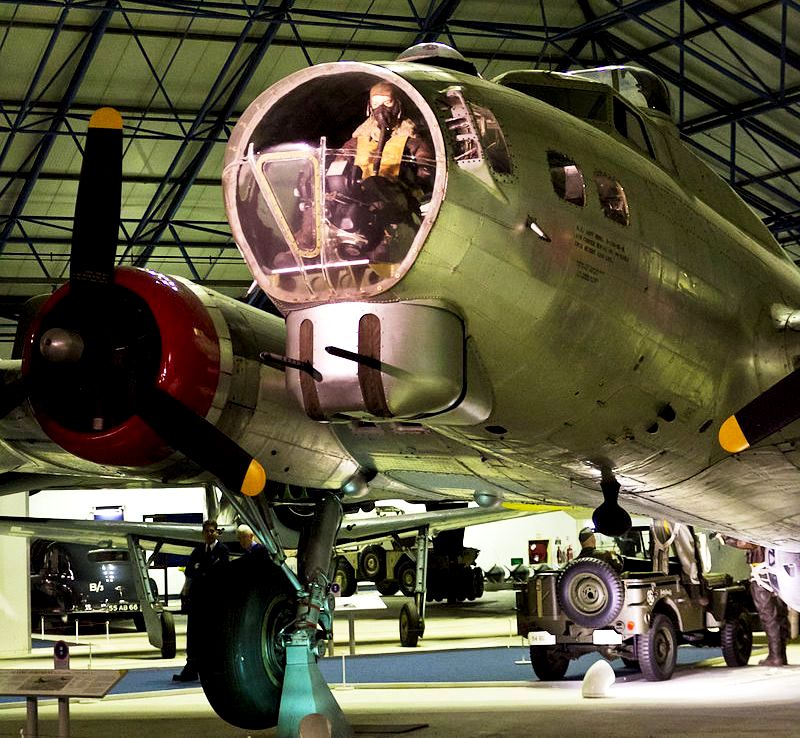
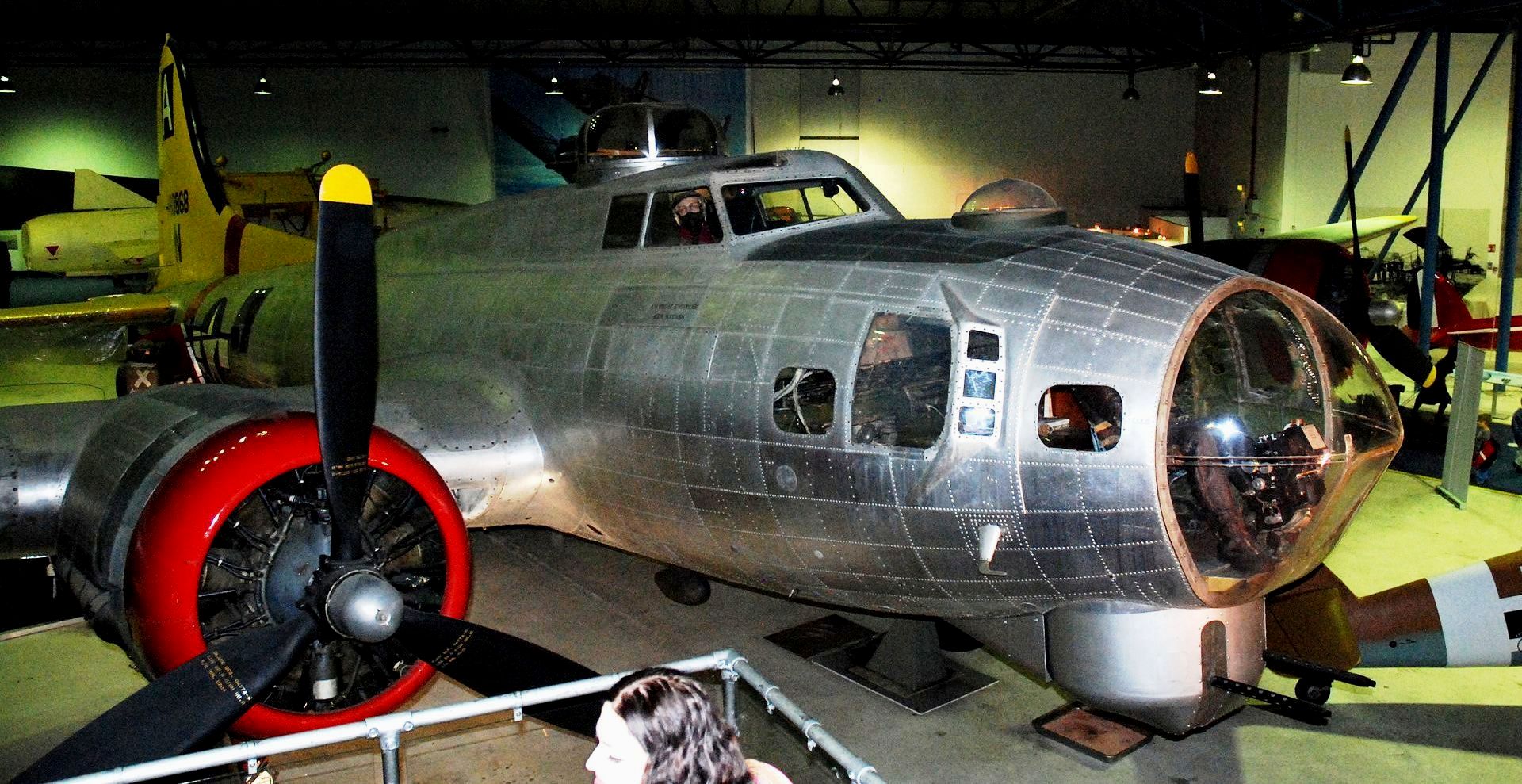
Boeing B-17G Flying Fortress (Serial No. 44-83868), Reg. No. N5237V, ex-USN (BuNo. 77233) ex-N6466D). This aircraft was flown as a fire fighting tanker for a number of years before being converted back to full B-17G configuration at Sequoia, California. Royal Air Force Museum Hendon, London.