
Avro Lancaster
The aim of this web site is to locate, identify and document Warplanes from the Second World War preserved in the United Kingdom. Many contributors have assisted in the hunt for these aircraft to provide and update the data on this website. Photos are by the author unless otherwise credited. Any errors found here are by the author, and any additions, corrections or amendments to this list of Warplane Survivors of the Second World War in the United Kingdom would be most welcome and may be e-mailed to the author at hskaarup@rogers.com.

(RAF Photo)
Seven-man RAF Bomber Command Avro Lancaster crew as they return from a sortie over Germany.
(RAF Photo)
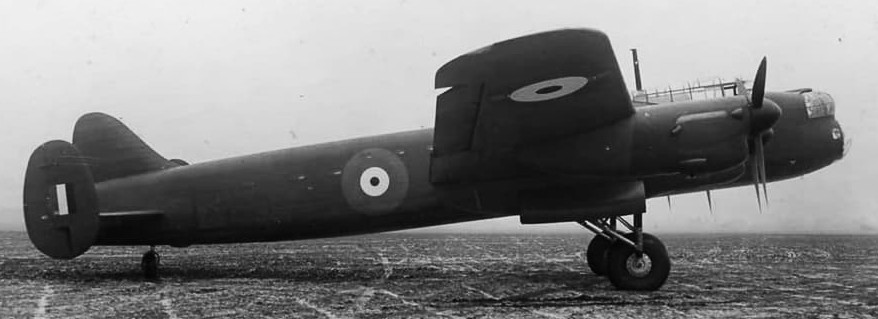
AVRO Lancaster (Serial No. BT308), the first prototype modified from a twin engined AVRO Manchester, made its maiden flight on 9 Jan 1941.
(RAF Photo)
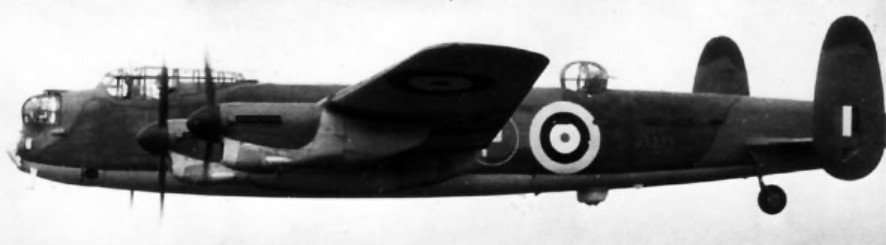
Avro Lancaster (Serial No. DG595) the second prototype modified to production standard.
(RAF Photo)
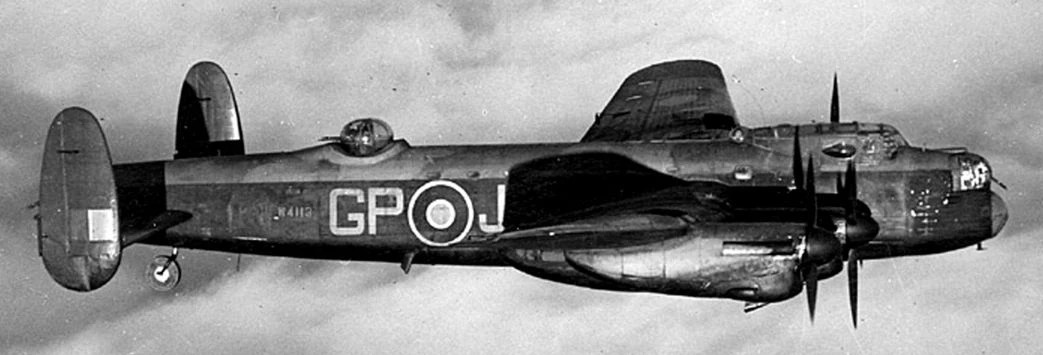
Avro Lancaster B Mk. I (Serial No. W4113), coded GP-J, No. 49 Squadron RAF, 1944.
The Avro Lancaster Bomber, is a British Second World War heavy bomber. It was designed and manufactured by Avro as a contemporary of the Handley Page Halifax, both bombers having been developed to the same specification, as well as the Short Stirling, all three aircraft being four-engined heavy bombers adopted by the Royal Air Force (RAF) during the same era.
The Lancaster has its origins in the twin-engine Avro Manchester which had been developed during the late 1930s in response to the Air Ministry Specification P.13/36 for a medium bomber for “world-wide use” which could carry a torpedo internally, and make shallow dive-bombing attacks. Originally developed as an evolution of the Manchester (which had proved troublesome in service and was retired in 1942), the Lancaster was designed by Roy Chadwick and powered by four Rolls-Royce Merlins and in one of the versions, Bristol Hercules engines. It first saw service with RAF Bomber Command in 1942 and as the strategic bombing offensive over Europe gathered momentum, it was the main aircraft for the night-time bombing campaigns that followed. As increasing numbers of the type were produced, it became the principal heavy bomber used by the RAF, the Royal Canadian Air Force (RCAF) and squadrons from other Commonwealth and European countries serving within the RAF, overshadowing the Halifax and Stirling, two other commonly used bombers.
A long, unobstructed bomb bay meant that the Lancaster could take the largest bombs used by the RAF, including the 4,000 lb (1,800 kg), 8,000 lb (3,600 kg) and 12,000 lb (5,400 kg) “blockbusters”, loads often supplemented with smaller bombs or incendiaries. The “Lanc”, as it was known colloquially,[3] became one of the most heavily used of the Second World War night bombers, delivering 608,612 long tons (618,378,000 kg) of bombs in 156,000 sorties. The versatility of the Lancaster was such that it was chosen to equip 617 Squadron and was modified to carry the Upkeep “bouncing bomb” designed by Barnes Wallis for Operation Chastise, the attack on German Ruhr valley dams. Although the Lancaster was primarily a night bomber, it excelled in many other roles, including daylight precision bombing, for which some Lancasters were adapted to carry the 12,000 lb (5,400 kg) Tallboy and then the 22,000 lb (10,000 kg) Grand Slam earthquake bombs (also designed by Wallis). This was the largest payload of any bomber in the war.
In 1943, a Lancaster was converted to become an engine test bed for the Metropolitan-Vickers F.2 turbojet. Lancasters were later used to test other engines, including the Armstrong Siddeley Mamba and Rolls-Royce Dart turboprops and the Avro Canada Orenda and STAL Dovern turbojets. Postwar, the Lancaster was supplanted as the main strategic bomber of the RAF by the Avro Lincoln, a larger version of the Lancaster. The Lancaster took on the role of long range anti-submarine patrol aircraft (later supplanted by the Avro Shackleton) and air-sea rescue. It was also used for photo-reconnaissance and aerial mapping, as a flying tanker for aerial refuelling and as the Avro Lancastrian, a long-range, high-speed, transatlantic passenger and postal delivery airliner. In March 1946, a Lancastrian of BSAA flew the first scheduled flight from the new London Heathrow Airport. (Wikipedia)
(RAF Photo)
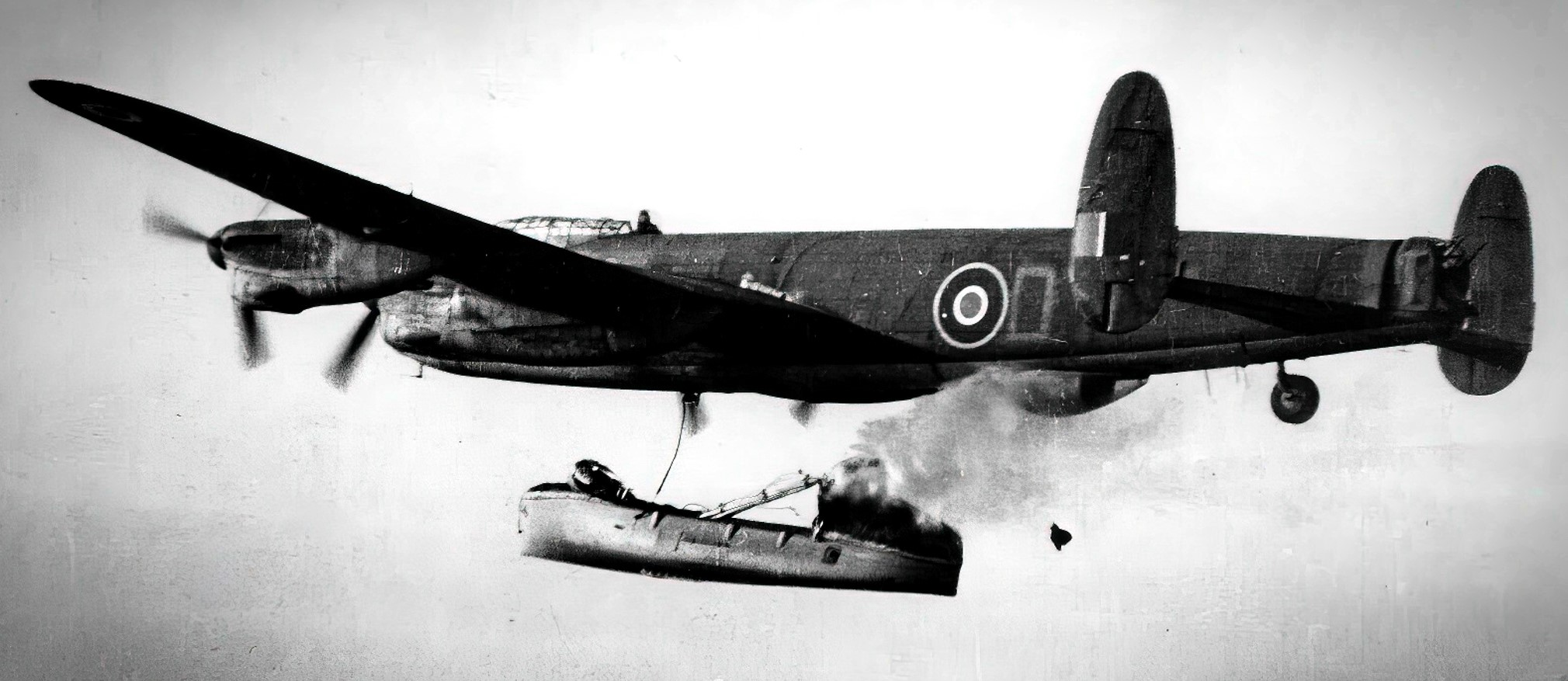
Avro Lancaster GR Mk. III of No. 279 Squadron releasing a Mk. IIA Airborne Lifeboat, sometime in 1945. Airborne lifeboats were powered boats designed for air-sea rescues, dropped from modified aircraft like the Lancaster shown here to aid survivors of ocean accidents. They were parachuted into the water to reach airmen who had made emergency landings at sea.
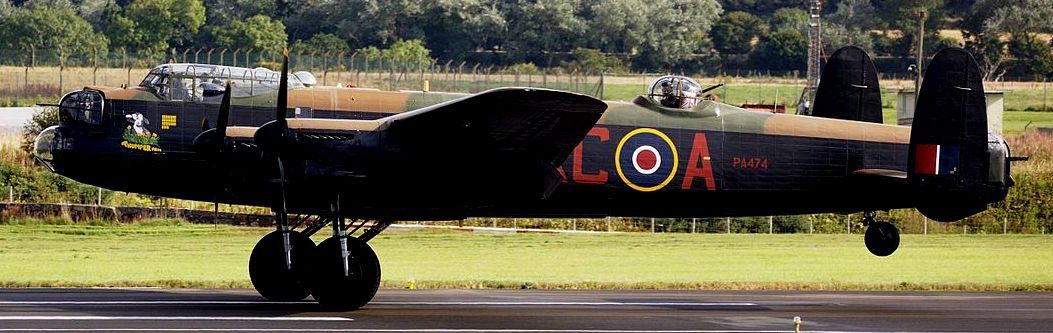
(Ronnie Macdonald Photo)
Battle of Britain Memorial Flight Avro Lancaster Mk. I (Serial No. PA474).
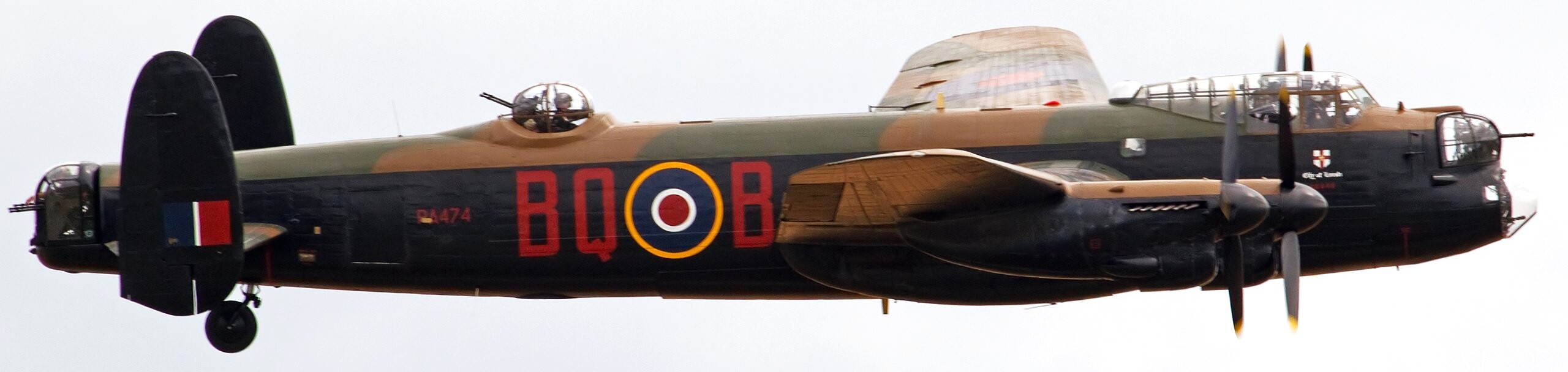
(Tony Hisgett Photo)
Battle of Britain Memorial Flight Avro Lancaster Mk. I (Serial No. PA474) in flight showing nose, dorsal and tail .303 Browning gun positions.
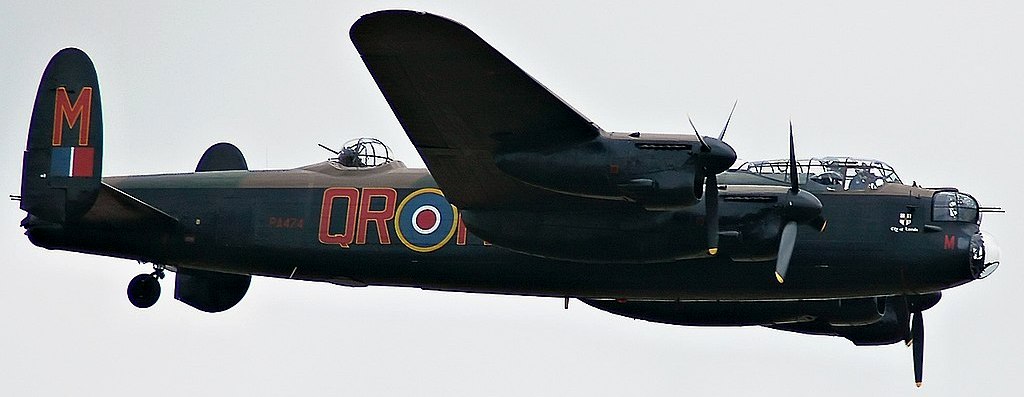
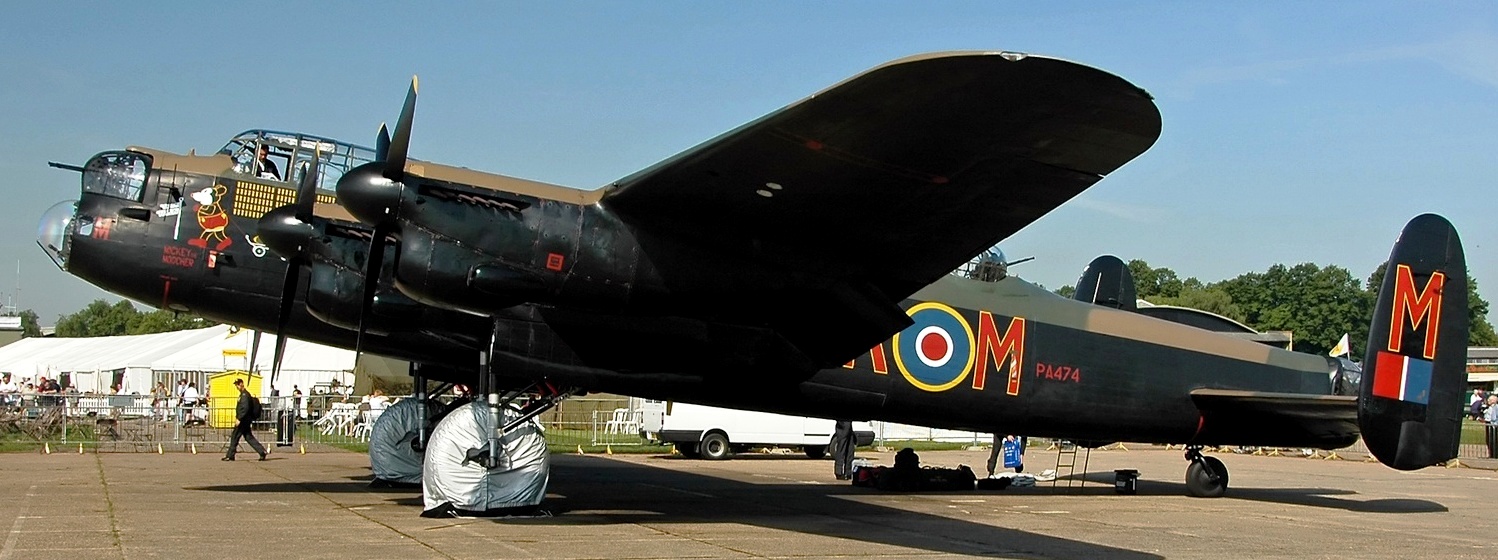
(Kogo Photos)
Avro Lancaster B Mk. I (Serial No. PA474), No. 617 Squadron, “City of Lincoln”, coded WS-J, painted as (Serial No. DV385), “Thumper Mk. III”, Battle of Britain Memorial Flight, Coningsby, Lincolnshire. Airworthy.
(Alan Wilson Photo)
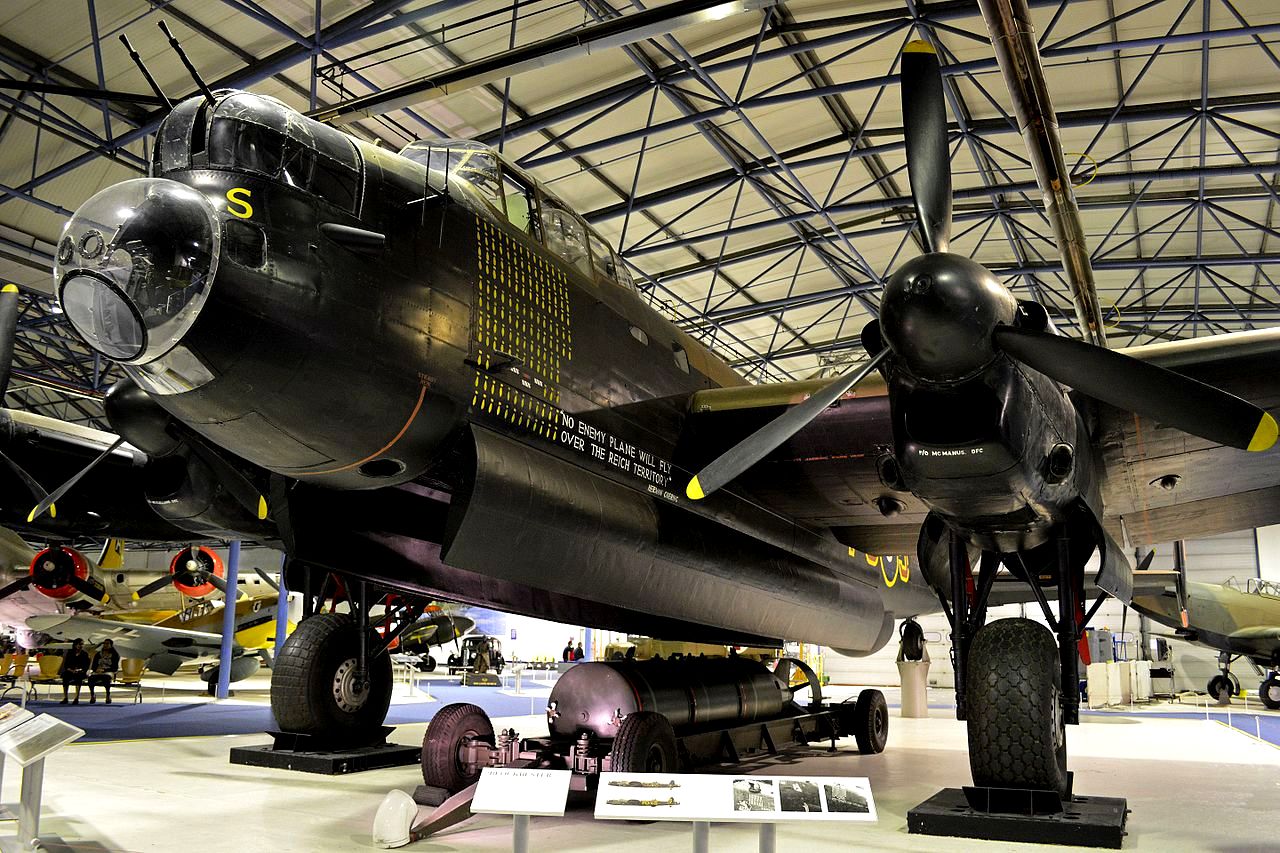
Avro Lancaster B Mk. I (Serial No. R5868), “S-Sugar”, No. 467 Squadron, RAAF, Royal Air Force Museum Hendon, London.

(Alan Wilson Photo)
(Jim IWM Duxford Photo)
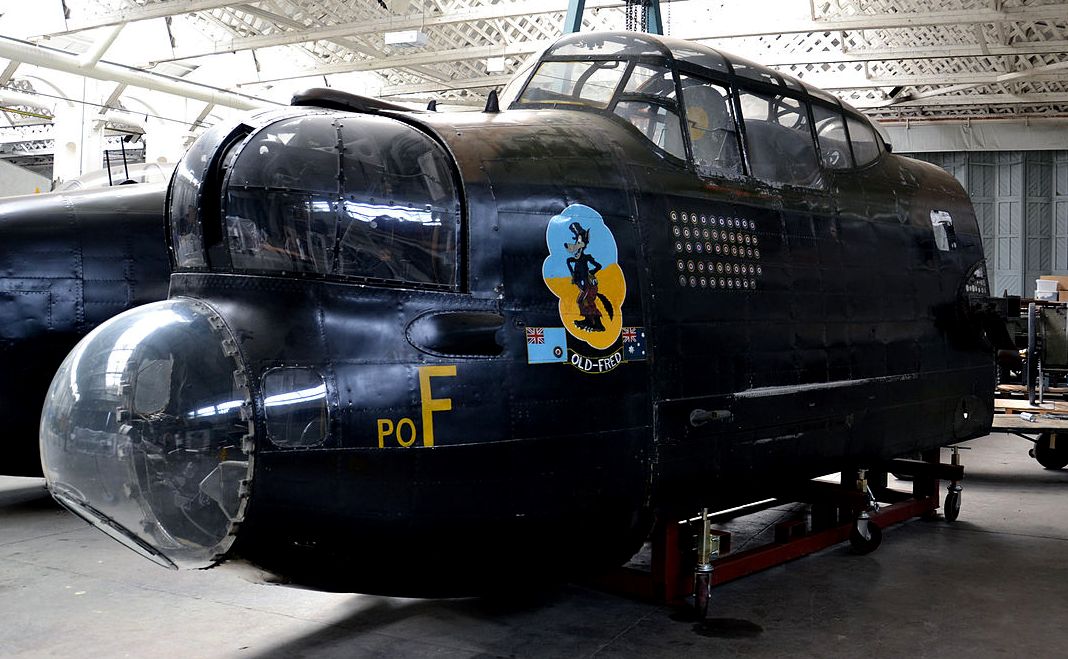
Avro Lancaster Mk. X (Serial No. DV372), “Old Fred”, forward fuselage, PO-F, No. 467 (RAAF) Squadron, Imperial War Museum, Lambeth.
(David Merrett Photos)
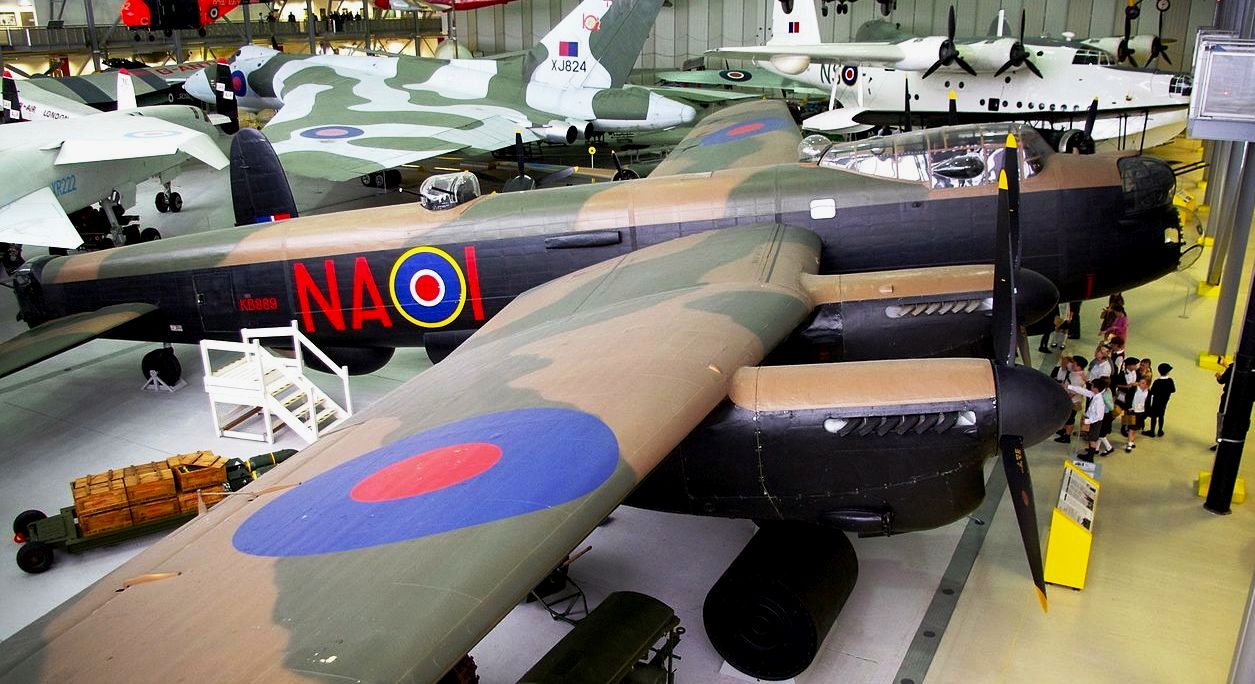
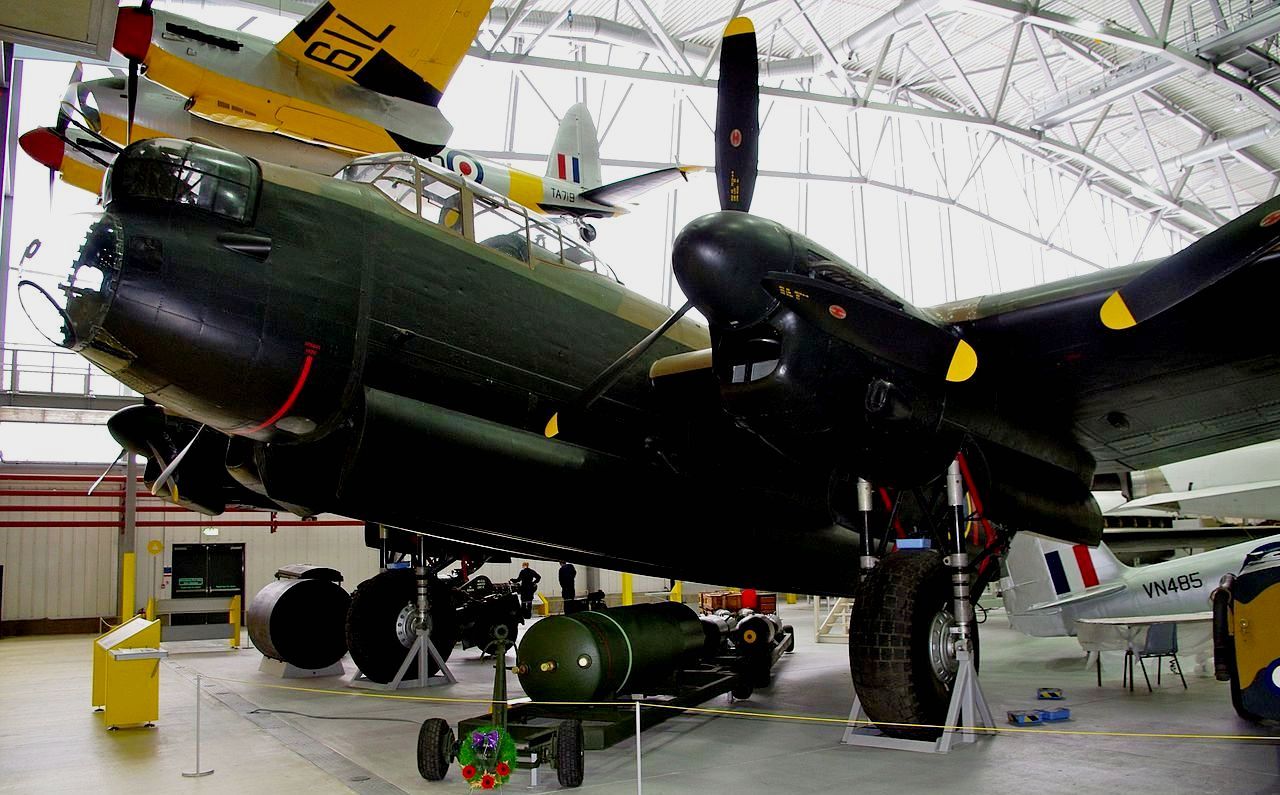
Avro Lancaster B Mk. X, RCAF (Serial No. KB889), Reg. No. G-LANC, Imperial War Museum, Duxford, Cambridgeshire.
(Eastkirkby Photo)
(IdreamofJeanie Photo)
(Alan Wilson Photo)
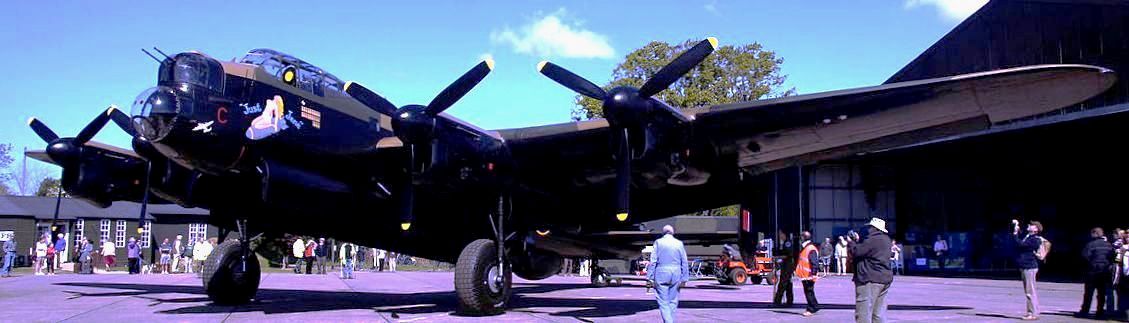
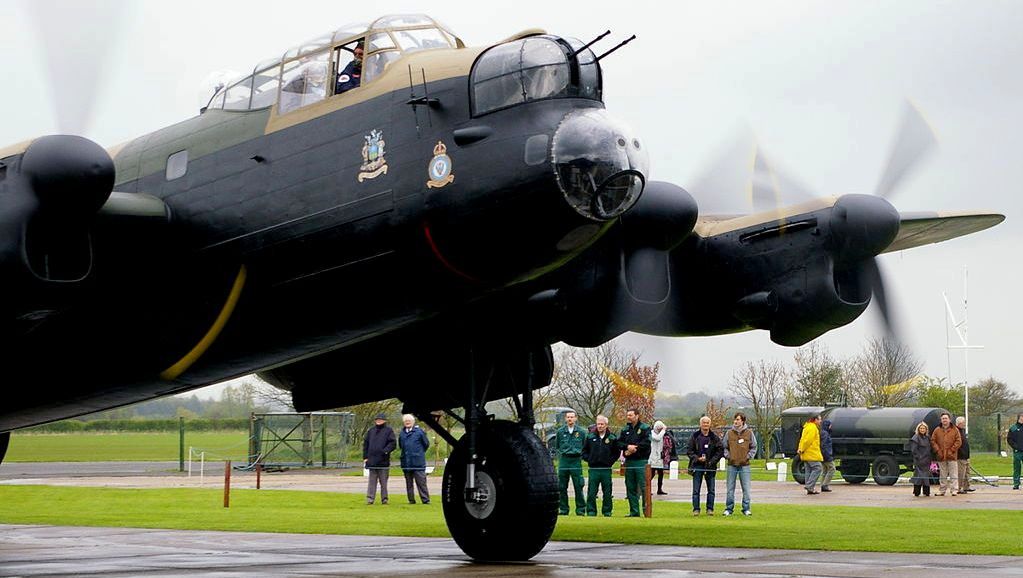
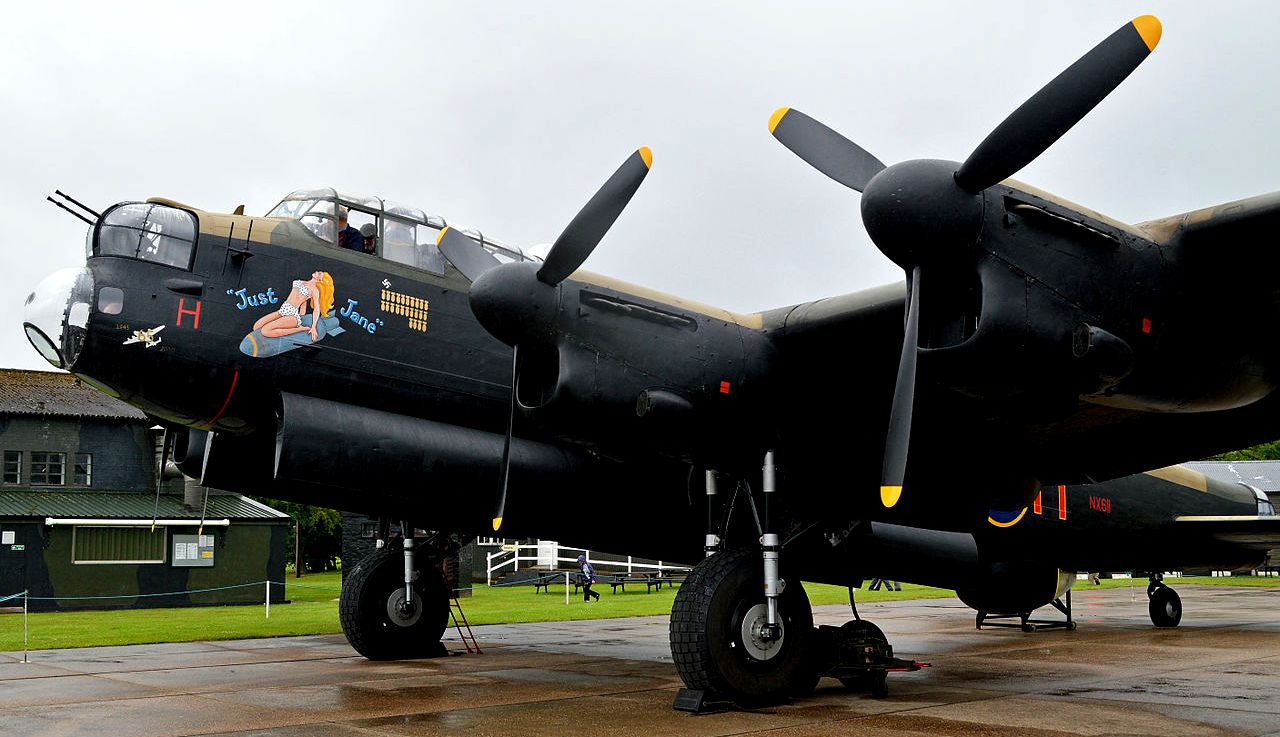
Avro Lancaster B Mk. VII (Serial No. NX611), “Just Jane”, Reg. No. G-ASXX, Lincolnshire Aviation Heritage Centre, East Kirby, Lincolnshire. Taxi runs.
(AlfvanBeem Photo)
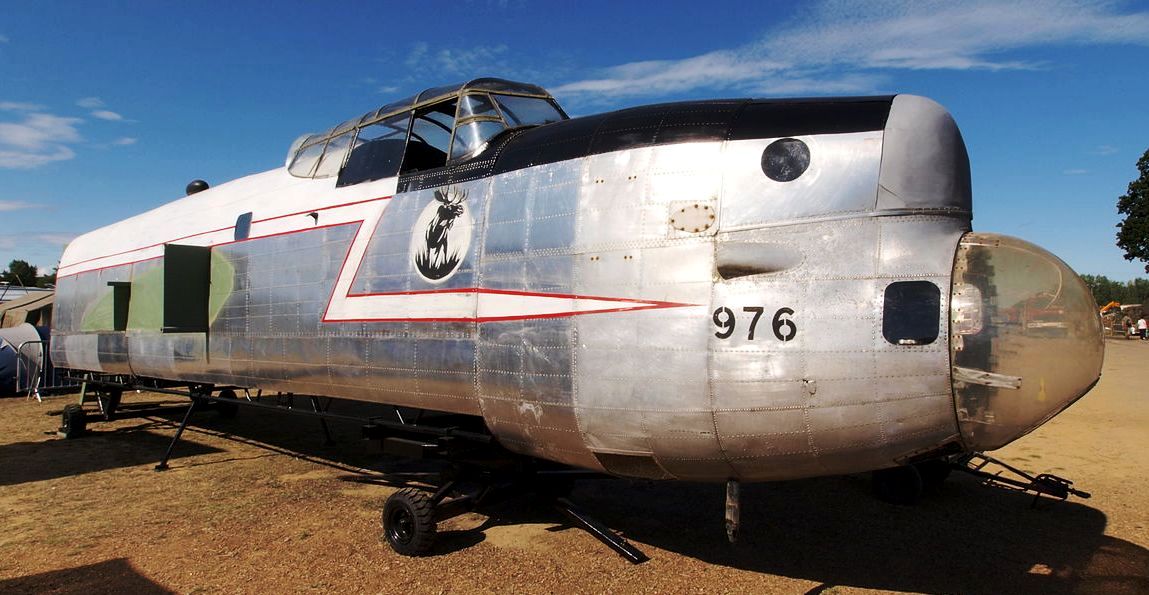
Avro Lancaster B. Mk. X (Serial No. KB976/KB994), Reg. No. G-BCOH, composite forward fuselage, damaged, Boscombe Down Aviation Collection, Wiltshire.
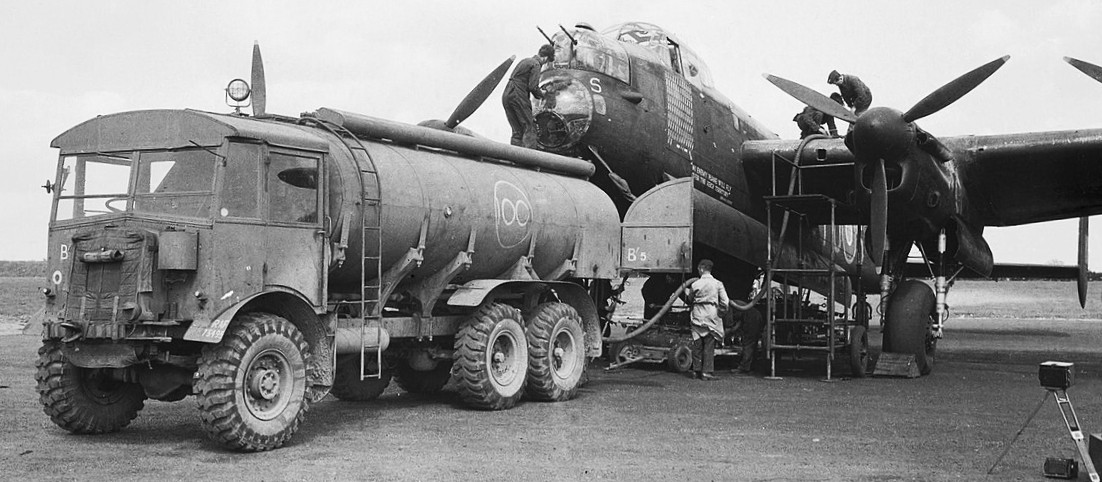
(IWM Photo, CH 13151)
Avro Lancaster B I (Serial No. R5868) ‘S-Sugar‘ refuels at RAF Hunsdon after completing its 100th operation the previous evening against Bourg Leopold in Belgium on 12 May 1944. The 2500 gallon tank truck is an AEC 854 Matador.
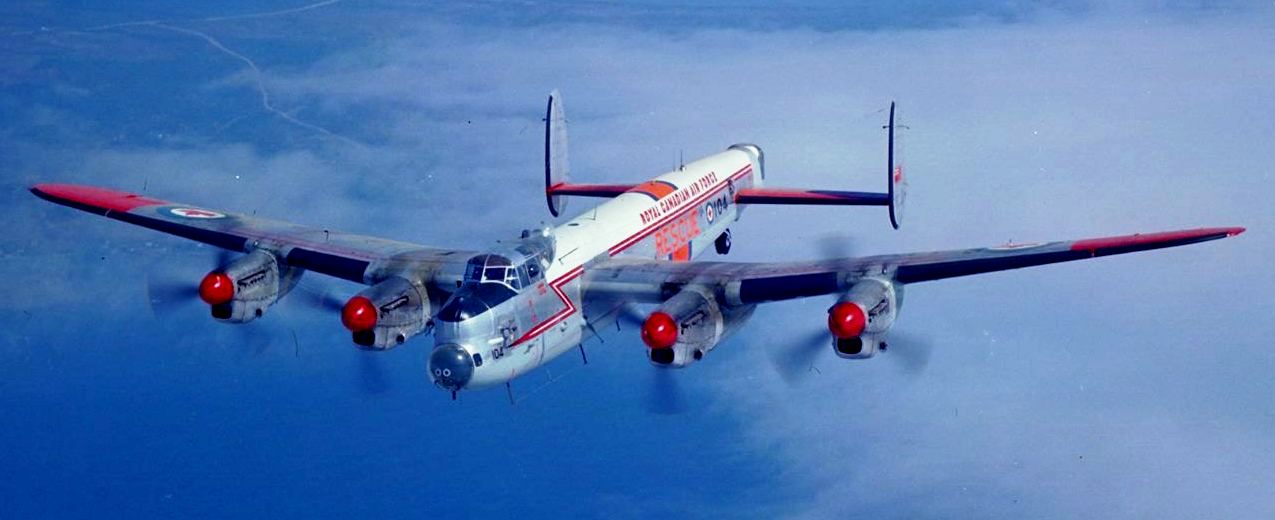
(RCAF Photo via Mike Kaehler)
Avro Lancaster Mk. 10 (Serial No. FM104), coded CX, No. 107 Rescue Unit, Summerside, Prince Edward Island.
Beginning in 1946, Lancaster Mk Xs were modified for service with the Royal Canadian Air Force (RCAF). Fourteen were modified to perform aerial and photo-reconnaissance missions; these would go on to perform much of the mapping of northern Canada until as late as 1962. Throughout the 1950s, the RCAF operated seventy modified Lancasters, designated Lancaster 10MR/MPs, as Maritime Reconnaissance and Patrol aircraft in an anti-submarine role. Modifications involved the installation of radar and sonobuoy operators’ positions, removal of the rear and mid-upper gun turrets, installation of a 400-gallon fuel tank in the bomb bay to increase the patrol range, upgraded electronics, radar, and instrumentation, and a cooking stove in the centre section. They served throughout the 1950s, when they were supplemented by the Lockheed Neptune and finally replaced by the Canadair Argus. (Wikipedia)