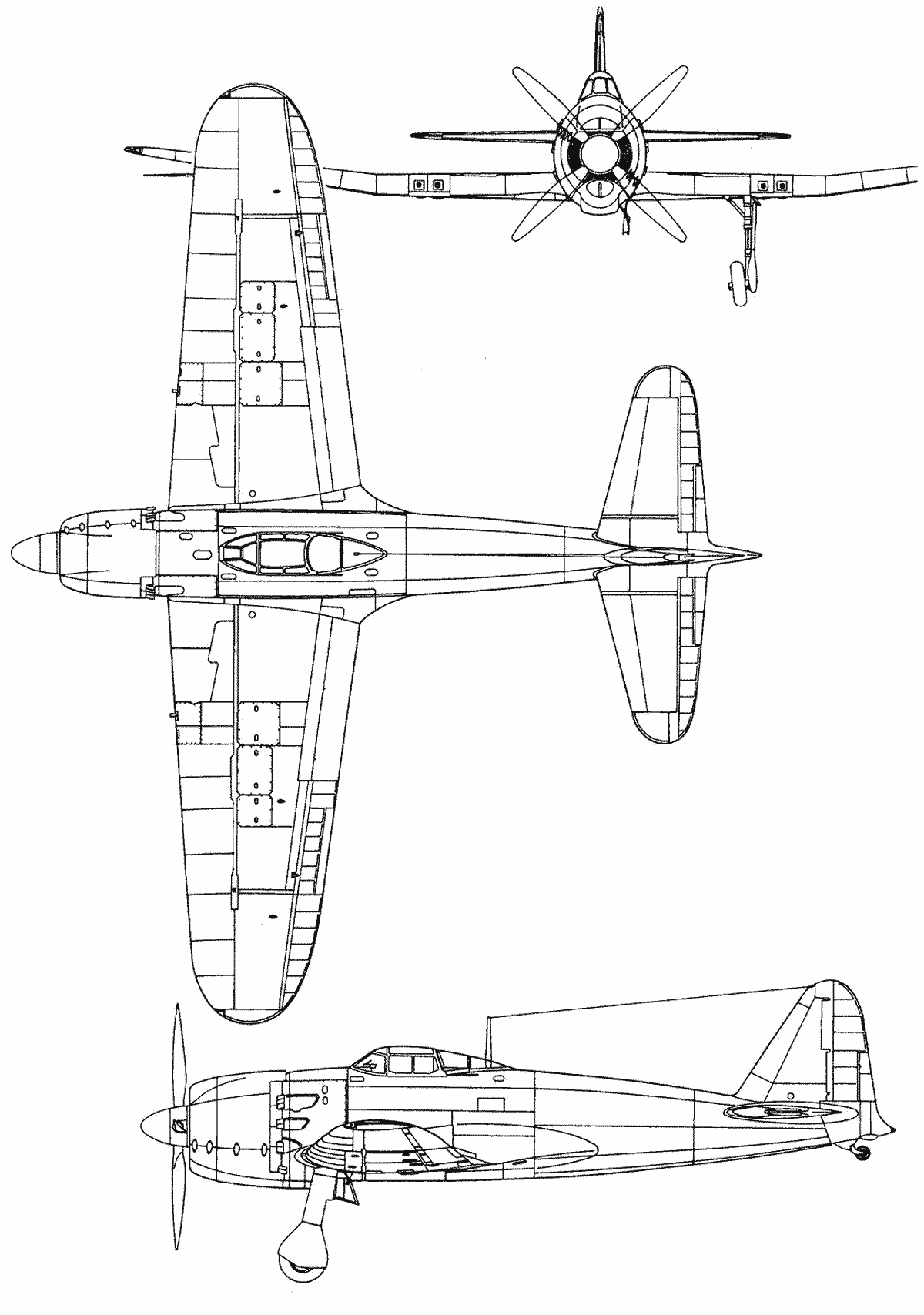
Mitsubishi A7M Reppu
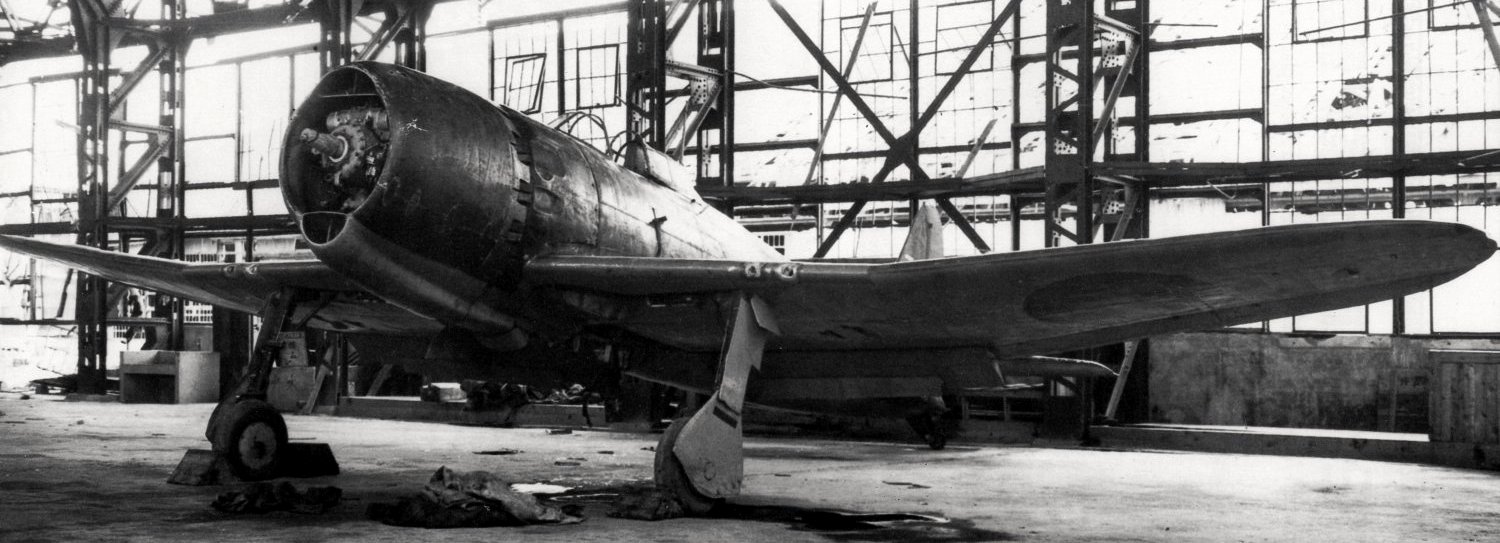
(USN Photo)
Mitsubishi A7M Reppu found in a hangar after the end of the Second World War, ca late 1945.
The Mitsubishi A7M Reppū (烈風, “Strong Wind”) was designed as the successor to theImperial Japanese Navy’s A6M Zero, with development beginning in 1942. Performance objectives were to achieve superior speed, climb, diving, andarmament over the Zero, as well as better maneuverability – all parameters that were ultimately achieved towards the end of its development in 1945. However,limitations on Japanese industry towards the end of the war prevented the A7M from ever entering mass production or being deployed for active duty, and it neversaw active service. Its Allied reporting name was “Sam”.
Towards the end of 1940, the Imperial Japanese Navy asked Mitsubishi to start design on a carrier-based fighter, to meet specification 16-Shi (a designatio nunder a system using regnal years that indicated “1941” – the year in which the specification was formally issued). The fighter would be the successor to the carrier-based Zero. At that time, however, there were no viable high-output, compact engines to use for a new fighter. In addition, Jiro Horikoshi’s team was preoccupied with addressing early production issues with the A6M2b as well as starting development on the A6M3 and the 14-Shi interceptor (which would later become the Mitsubishi J2M Raiden, a land-based interceptor built to counter high-altitude bombers). As a result, work on the Zero successor was halted in January 1941.
In April 1942, the development of the A6M3 and the 14-Shi interceptor was complete, and the Japanese Navy once again tasked Mitsubishi and Horikoshi’s team with designing a new Zero successor to become the Navy Experimental 17-shi Ko (A) Type Carrier Fighter Reppu. In July 1942 the Navy issued specifications for the fighter: it had to fly faster than 345 kn (639 km/h; 397 mph) above 6,000 m (20,000 ft), climb to 6,000 m (20,000 ft) in less than 6 minutes, be armed with two 20 mm cannon and two 13 mm (0.51 in) machine guns, and retain the maneuverability of the A6M3.
As before, one of the main hurdles was engine selection. To meet the specifications the engine would need to produce at least 2,000 hp (1,500 kW),which narrowed choices down to Nakajima’s NK9 (Ha-45/Homare), or Mitsubishi’sMK9 (Ha-43); both engines still under development. These engines were based on 14-cylinder (Nakajima Sakae and Mitsubishi Kinsei, respectively) engines converted to 18-cylinder powerplants. The early NK9 had less output but was already approved by the Navy for use on the Yokosuka P1Y Ginga bomber, while the larger MK9 promised more horsepower.
With the larger, more powerful engine, wing loading became an issue. The Navy requested at most 150 kg/m2, but wanted 130 kg/m2 which complicated design considerations further. With the NK9 it could achieve 150 kg/m2, but with less power it would not meet the specifications for maximum speed. With the MK9 the engineers concluded it could fulfill the requirements; however, production of the MK9 was delayed compared to the NK9, and the Japanese Navy instructed Mitsubishi to use the NK9.
Work on the 17-Shi was further delayed by factories prioritizing A6M and Mitsubishi G4M medium bomber production as well as further work on A6M variants and addressing Raiden issues. As a result, the 17-Shi, which became the A7M1, officially flew for the first time on 6 May 1944, four years after development started. The aircraft demonstrated excellent handling and maneuverability, but was underpowered as Mitsubishi engineers feared, and with a top speed similar to the A6M5 Zero. It was a disappointment, and the Navy ordered development to stop on 30 July 1944, but Mitsubishi obtained permission for development to continue using the Ha-43 engine, flying with the completed Ha-43 on 13 October 1944. The A7M2 now achieved a top speed of 628 km/h (339 kn; 390 mph), while climb and other areas of performance surpassed the Zero, leading the Navy to change its mind and adopt the craft. The A7M2 was also equipped with automatic combat flaps, used earlier on the Kawanishi N1K-J, significantly improving maneuverability. In June 1945, ace pilot Saburō Sakai was ordered to test the prototype at Nagoya. He was favorably impressed. (Wikipedia)
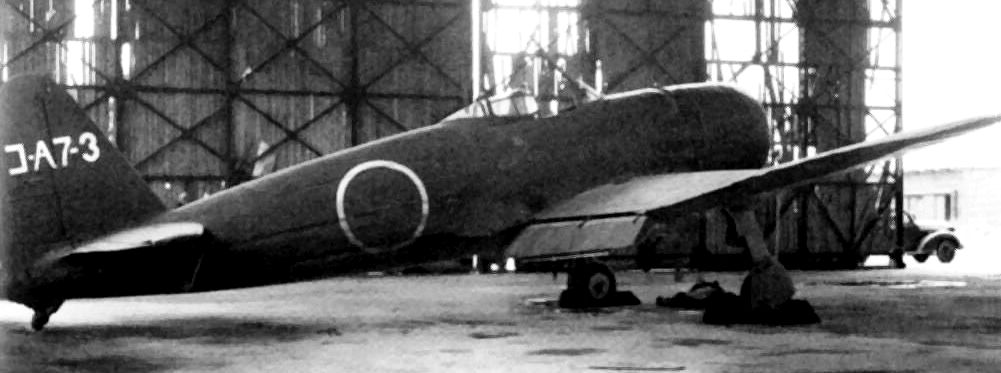
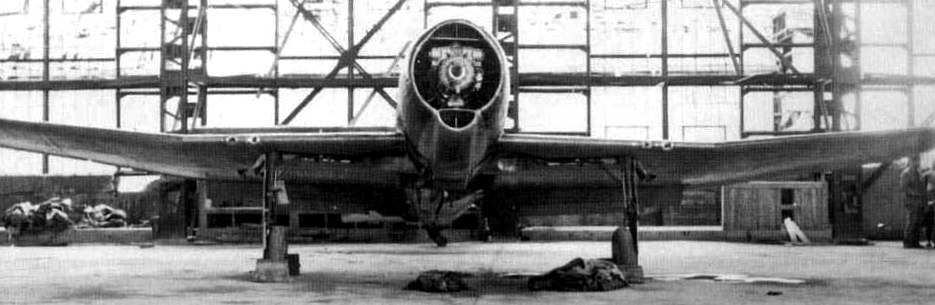
(USN Photos)
Mitsubishi A7M Reppu (Strong Gale), codenamed Sam.
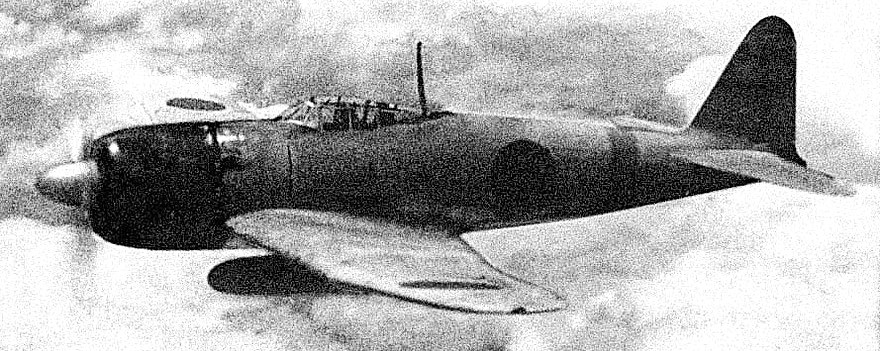
(IJAAF Photo)
Mitsubishi A7M Reppu.
In June 1945 Japanese Ace pilot Saburo Sakai was ordered to Nagoya to test the aircraft and declared it to be the fastest aircraft he had ever seen, capable of surpassing anything in the air, Japanese or American. He claimed also that it could fly in circles, while ascending around a Hellcat or a Mustang and it could fight at up to 12000m. Further versions were proposed and even worked on, like the A7M3, that would’ve featured a mechanically driven three-speed supercharger Mitsubishi Ha-43 engine rated at 2250hp (1680Kw), and, unlike the previous variants it would’ve operated from land bases. Work on the prototype of this variant was underway, however the end of the war halted any development.
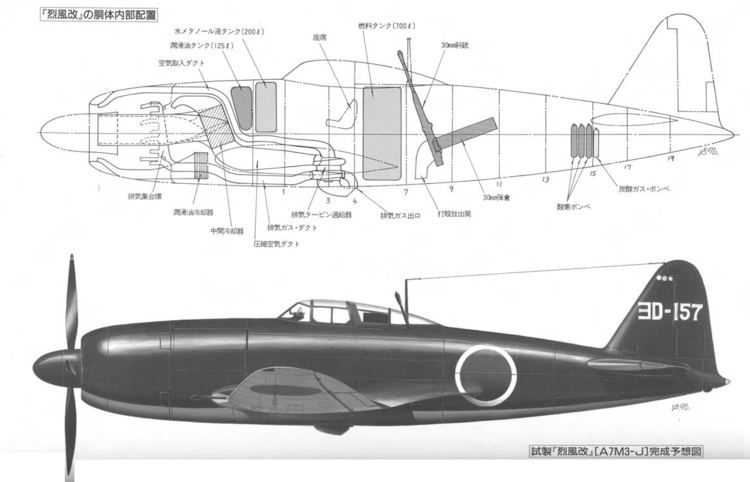
Another land based variant the A7M3-J Reppu-Kai was planned around the turbo-supercharged Ha-43 engine, rated this time at 2200hp (1600Kw) including an inter-cooler with a maximum speed of 648km/h (402mph) and armed with six 30mm Type 5 cannons, four wing mounted and two oblique-firing mounted in the fuselage, copying the German Schäge Musik system. A full-scale mock-up was built but no prototype was produced.When Japan surrendered in September 1945, every development was halted. (War Machines Drawn illustration)