
Blohm + Voss BV 40 glider interceptor
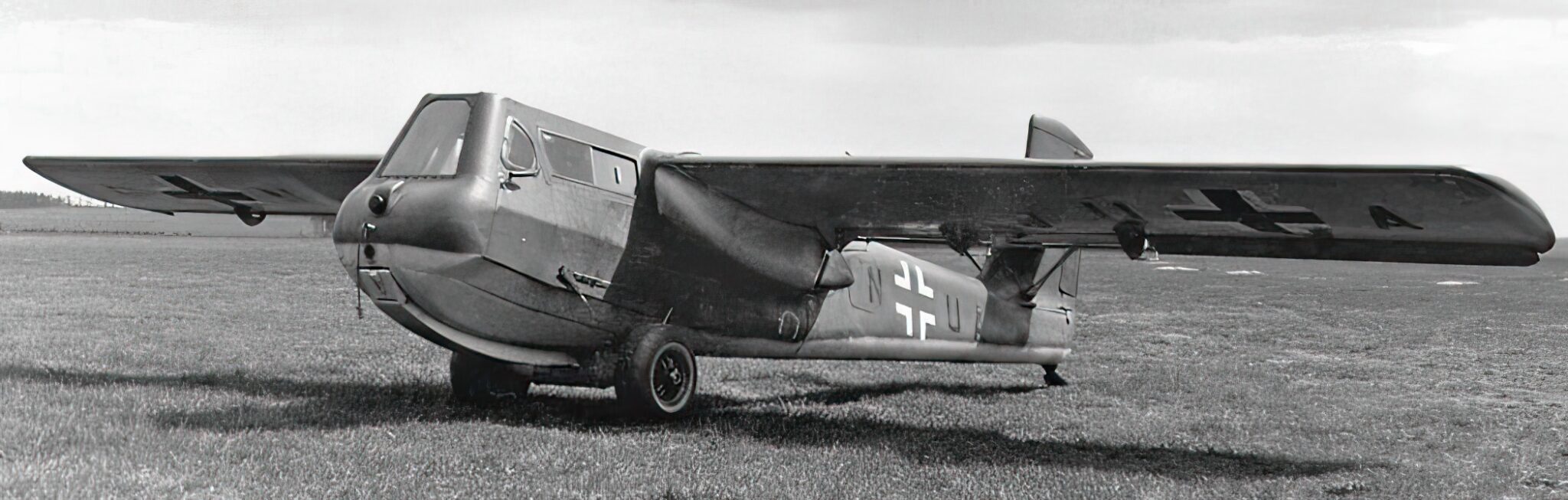
(Blohm & Voss Photo)
Blohm & Voss BV 40, coded PN + IA. This was the first prototype, which was lost on its second test flight.
The Blohm & Voss BV 40 was a prototyp armoured German glider initially designed in mid-1943 by Blohm& Voss to attack Allied bomber formationsduring . The BV 40 would be towed to high altitude by single-engined fighters and then ram the bombers while in a dive, but this concept was rejected before its first flight in May 1944 in favour of using its guns. The Luftwaffe had lost interest in the BV 40’s original mission the month prior; development continued as its mission changed to attacking ships with specialized bombs. Blohm & Voss discovered that the prototypes were significantly overweight, and some ofthe armour and one gun had to be removed to conduct flight testing. The BV 40 was cancelled in August with only 6 gliders completed out of the 21 ordered. All of the aircraft were destroyed in an air raid inOctober.
Construction of six prototypes began in December 1943, designated V1–V6 (German: Versuchs, ’Experimental’), including one airframe for stress testing to destruction, and another 15 prototypes were ordered on 15 February 1944. As production progressed, over-optimistic weight estimates were revealed during a meeting on 16 February and a drastic weight reduction program had to be implemented. Blohm & Voss informed the Air Ministry that the six gliders already begun would have to be lightened by 182 kilograms (401 lb) to allow flight testing to begin as scheduled. The changes included the substitution of wood for steel in the upper canopy and the sliding steel shutters, and ordinary glass for the bulletproof windscreen. One gun and its ammunition and armour would be deleted as would the leg armour.
At the same time, the specifications for the production BV 40s were also modified to save 144.5 kilograms (319 lb), bringing the gross weight down to approximately 1,000 kilograms (2,200 lb). All 8-millimetre plates were reduced to 6 millimetres (0.24 in) in thickness, and the middle fuselage section was to use wood rather than sheet steel. In addition the ammunition armour was to be deleted, lightening holes were to be drilled in most structural members and the skin of the wings and flight control surfaces were reduced in thickness. These changes compromised the glider’s structural strength, which reduced its estimated safe diving speed to a maximum of 850 kilometres per hour (530 mph; 460 kn) above 4 kilometres (13,000 ft) and 700 kilometres per hour (430 mph; 380 kn) closer to the ground. Rocket propulsion was also considered, but was judged unsuitable.
The Office of the Inspector of Fighters had lost interest in the BV 40 programme by 20 April, but development work continued under the auspices of Bomber Group 200 (Kampfgeschwader 200 (KG 200)), the Luftwaffe’s special operations force. The unit had decided to investigate the possibility of using manned glide bombs against Allied invasion shipping. Blohm & Voss’ response was to substitute a pair of BT700 (Bomben Torpedo) weapons for the gun pods, with the gliders to be carried aloft by Heinkel He 177 heavy bombers, one under each wing. The BT700s were bombs that were designed to be dropped short of the target and travel underwater before detonating. They had warheads that weighed either 320 or 330 kilograms (710 or 730 lb). While not strictly suicide weapons because the pilots could possibly pull up in time to avoid hitting their targets, the gliders would have nowhere to land and the armoured cockpits would sink very quickly.
The first prototype was completed in late April 1944 and made an unsuccessful attempt to get off the ground between 27 April and 2 May. A second attempt on 6 May was successful, but the V1 was badly damaged while landing on 2 June. V2 had been completed by this time and took over the majority of the flight testing beginning on 5 June that lasted until 26 July. The BV 40 made a total of 17 flights. The highest speed attained by any of the BV 40s was 470 kilometres per hour; 254 knots (292 mph), and it was thought to have the potential to go far faster.
Blohm & Voss lacked the resources to pursue the other variants of the BV 40 requested by KG200 and was not able to build any gliders beyond those already ordered. The Air Ministry had grown disenchanted with the programme by late July and acceded to a request by Blohm & Voss to stop further work on the incomplete aircraft on 27 July. By this time V7 of the second batch was on track to be completed in August and construction had begun on V8 through V14 with deliveries scheduled through March 1945. The Luftwaffe formally cancelled the programme on 13 August. Blohm & Voss stored all of the BV 40s in a hangar at its airfield in Wenzendorf, but this was bombed by Consolidated B-24 Liberator heavy bombers on 6 October and destroyed. (Wikipedia)
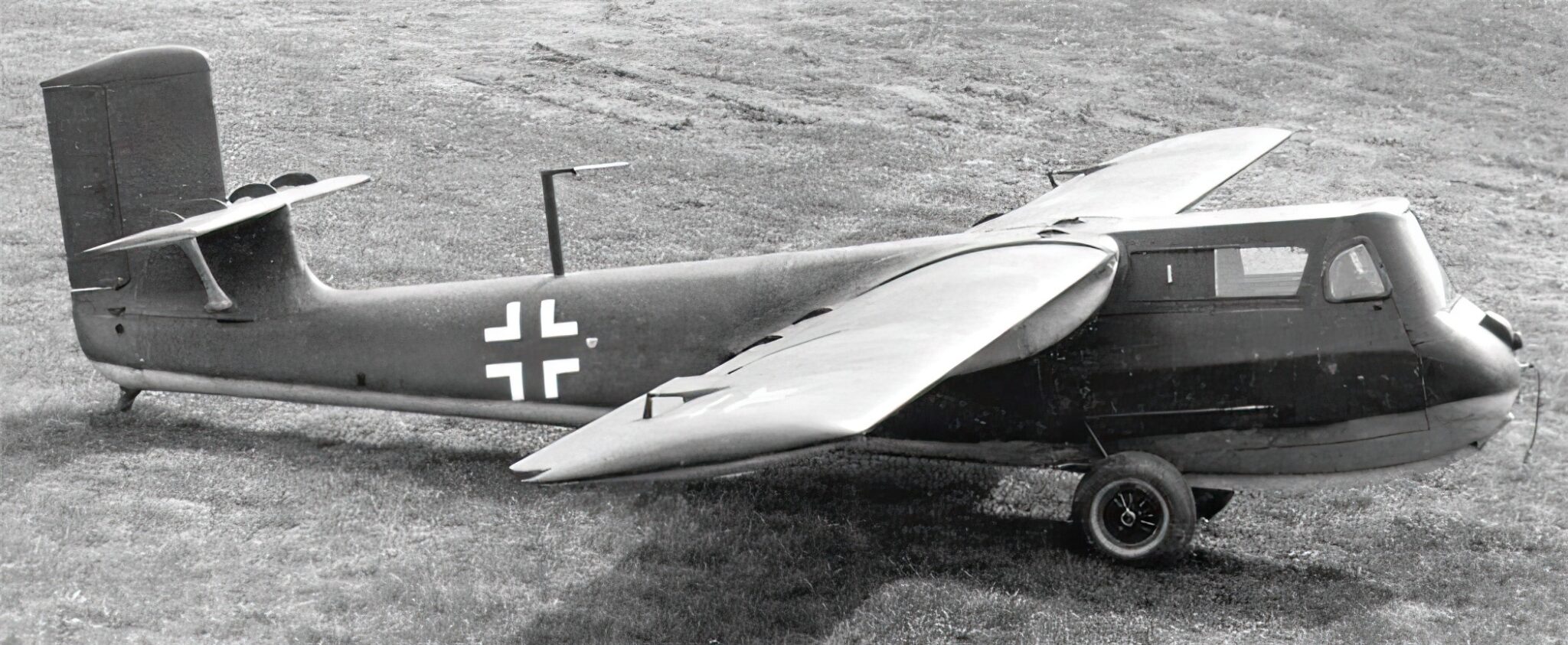
(Blohm & Voss Photo)
Blohm & Voss BV 40
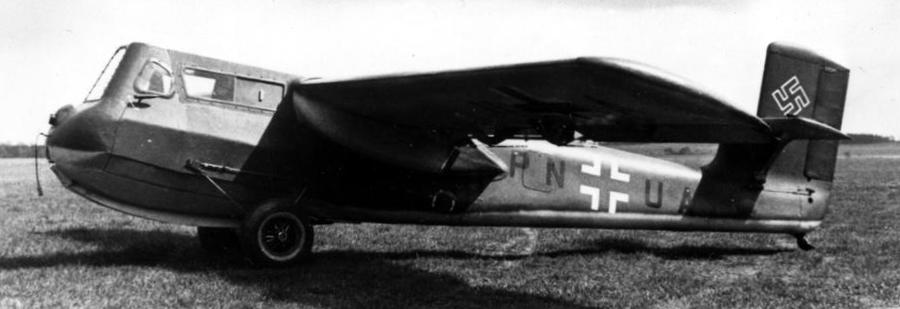
(SDASM Photo)
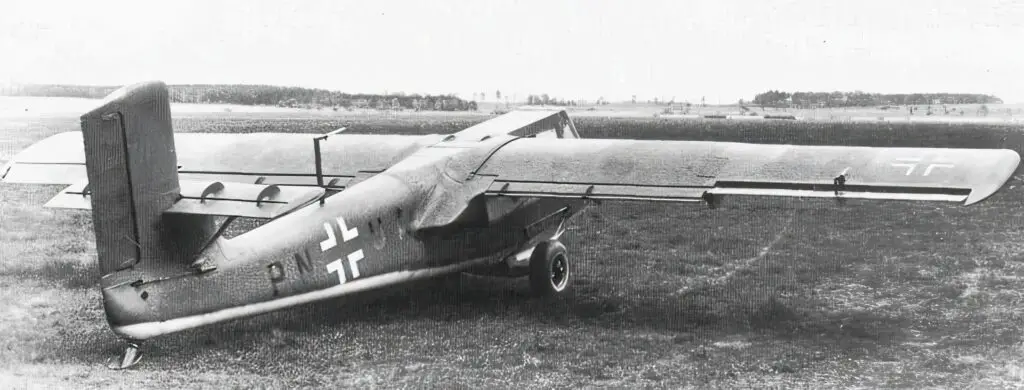
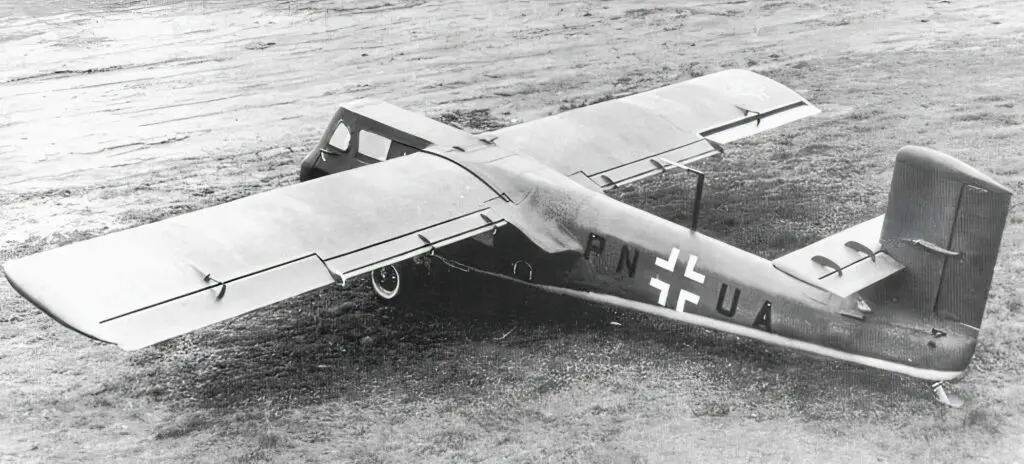
Blohm & Voss BV 40 Stummelhabicht, coded PN+UA, first prototype.
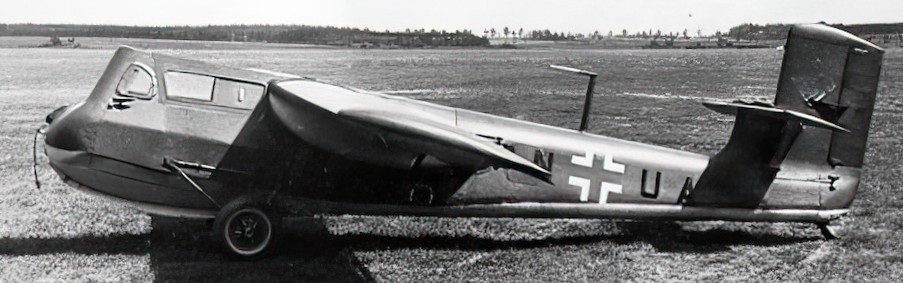
(Blohm + Voss Photo)
Blohm & Voss BV 40 Stummelhabicht, coded PN+UA, first prototype.
(Blohm + Voss Photo)
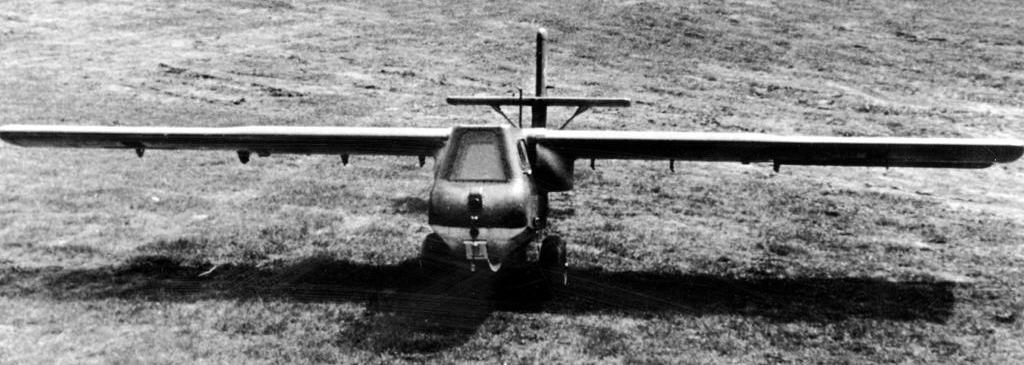
Blohm & Voss BV 40 Stummelhabicht, coded PN+UA, first prototype.
(Blohm + Voss Photo)
Blohm & Voss BV 40 Stummelhabicht, coded PN+UA, first prototype.
(Blohm + Voss Photo)
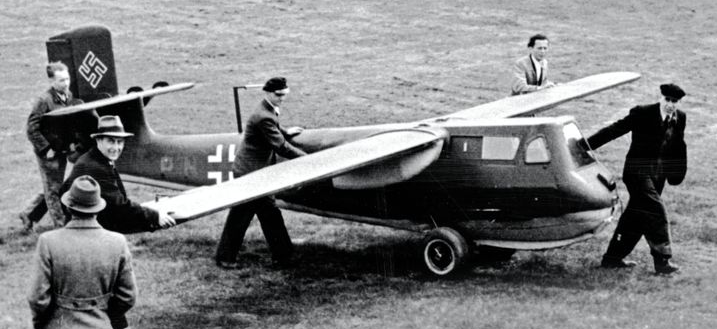
Blohm + Voss BV 40, glider interceptor (prototype).
(Blohm + Voss Photo)
Blohm + Voss BV 40, glider interceptor.
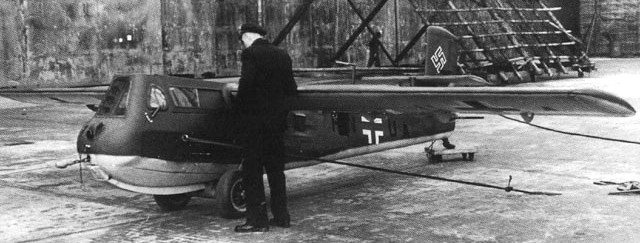
(Nevington War Museum Photo)
Blohm + Voss BV 40, glider interceptor (prototype).
The BV 40 was a glider fighter designed to attack Allied bomber formations. By eliminating the engine and positioning the pilot in a prone position, the cross-sectional area of the aircraft made it harder for bomber gunners to hit it. The Bv 40 had a very narrow and heavily-armored cockpit, and two 30 mm (1.18 in) MK 108 cannons in the wing roots. For a time, the idea of carrying a bomb on a cable behind the glider was entertained.