
Canada. Air Board
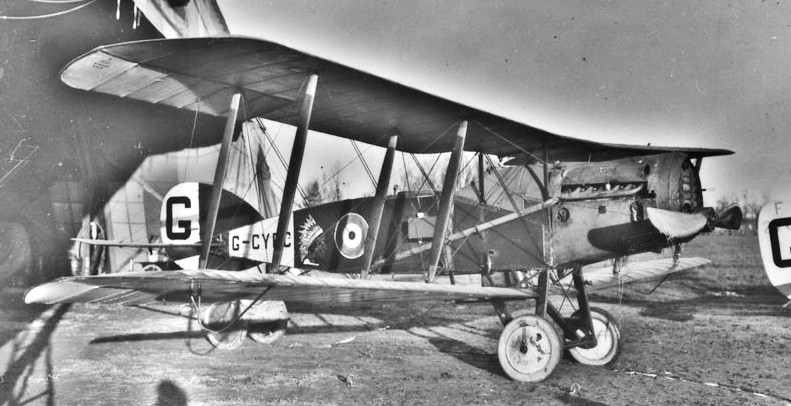
(Library and Archives Canada Photo, MIKAN No. 3643665)
Air Board Bristol F.2B, G-CYBC, Rockcliffe, Ontario, c.1922.
Air Board Bristol F.2B, G-CYBC, Rockcliffe, Ontario, c.1922.
Canada. Air Board : On 6 June 1919, Royal Assent was given to the Air Board Act (9-10 George V, chap. 11) which created a board “to supervise all matters connected with aeronautics”. By an Order in Council of 23 June 1919 (P.C. 1295), the Honourable Arthur L. Sifton was named chairman of the Board and the following were appointed members: O.M. Biggar, Judge Advocate General; Hon. S.C. Newburn, Minister of Militia and Defence; Hon. C.C. Ballantyne, Minister of the Naval Service; Dr. R.M. Coulter, Deputy Minister, Department of the Naval Service; J.A. Wilson, Assistant Deputy Minister, Department of the Naval Service; and E.S. Busby, Chief Inspector, Department of Customs and Inland Revenue. The preliminary work of organization (the creation of a departmental staff, publication of civil aviation regulations and the general principles underlying the organization of the Canadian Air Force fixed) was completed by April 1920 and the Air Board was reorganized by Order-in-Council P.C. 826 of April 19, 1920. The new chairman was the Honourable Hugh Guthrie and the members were: O.M. Biggar, Sir Willoughby Gwatkin, Inspector General of the C.A.F., Lt.-Col. Robert Leckie, Director of Flying Operations, Lt.-Col. J.S. Scott, Controller of Civil Aviation, Capt. Walter Hose, Director of the Naval Service, Dr. E. Deville, Surveyor General.
The Board had three main functions: the regulation of civil aviation; the conduct of civil government operations; and the air defence of Canada, including the organization and administration of the Canadian Air Force. In addition to the Board, there was a Departmental Committee consisting of Biggar, Gwatkin, Leckie, Scott, J.A. Wilson who was the Board’s secretary, the Air Officer Commanding the Canadian Air Force and the heads of the Technical and Equipment Branches. In January 1923, when the Department of National Defence was created, the Air Board ceased to exist as a separate agency and its functions were assumed by the Minister of National Defence. (Directorate of History, Canadian Forces Headquarters, DND fonds, Air Board)
The Air Board was Canada’s first governing body for aviation, operating from 1919 to 1923. The Canadian government established the Air Board by act of Parliament on June 6, 1919, with the purpose of controlling all flying within Canada. Canada was the first country to legislate and implement rules governing the entire domain of aviation.
The Air Board had three functions: devising a means of, and administering Canadian air defence; controlling and conducting all civil (non-military) government flying operations; and providing rules and regulations for flying within Canada, which included licensing, issuing air regulations and managing air traffic. The Board consisted of three sections: 1) the Department of the Controller of Civil Aviation which controlled all civil flying; 2) the Directorate of Flying Operations which controlled civil flying operations of the Air Board; and 3) the Headquarters of the Canadian Air Force (CAF), which operated at Camp Borden.
Because of Canada’s involvement with aviation during the First World War, the government felt obliged to further its responsibilities related to aviation in Canada. It was thought that since Canada had a large supply of trained personnel and equipment because of the war, government responsibilities could be better enabled by facilitating civil (non-military) aviation. As early as October 1917 a government committee, the Reconstruction and Development Committee, was established to examine issues related to transportation, including air transportation, in the post-war era. The future of civil aviation was also determined by Canada’s commitment to the International Convention for Air Navigation, part of the convention signed by Britain in Paris in 1919. Canada was required to control air navigation and traffic within its borders. For these reasons, Canada instituted the Air Board, whose task was mainly regulatory but it was also responsible for controlling civil aviation and handling air defence
One of the Air Board’s first responsibilities was managing the operation of over 100 surplus aircraft that had been gifted to Canada by the British Government to help Canada with air defence. Several flying boat aircraft and other equipment had also been donated to Canada by the Americans who had temporarily established naval air stations on the east coast pending formation of the Royal Canadian Naval Air Service. The Air Board decided to operate these aircraft in support of civil operations such as forestry, photographic surveying, and anti-smuggling patrols. Six air stations were established by the Air Board in 1920–21 for civil flying operations: Jericho Beach, Morley (later moved to High River), Ottawa, Dartmouth, Victoria Beach and Roberval.
Five air stations were established for civil flying operations in 1920:
Halifax, Nova Scotia, a former US Navy seaplane base responsible for the overhaul of Curtiss HS-2L flying boats, fishery and forestry patrols, and aerial photography.
Roberval, Quebec, a seaplane base on Lac Saint-Jean responsible primarily for forestry patrols and surveying.
Jericho Beach, British Columbia, a seaplane base responsible for fishery, forestry, anti-smuggling patrols.
Morley, Alberta, a landplane base responsible primarily for forestry patrols.
Rockcliffe, Ontario, a landplane and seaplane base responsible primarily for photo surveying.
Additional stations were added in subsequent years:Victoria Beach, Manitoba, established in 1921 as a seaplane base responsible primarily for forestry patrols.
High River, Alberta, moved from Morley in 1921 due to poor flying weather.
The Northern Ontario Mobile Unit, a temporary seaplane base operated from boxcars on a Canadian National Railway siding in Sioux Lookout, Ontario for the 1921 flying season responsible primarily for forestry patrols.
Temporary seaplane bases at Whitney, Ontario and Parry Sound, Ontario for the 1922 flying season, responsible primarily for forestry patrols.
High River, Alberta, moved from Morley in 1921 due to poor flying weather.
The Northern Ontario Mobile Unit, a temporary seaplane base operated from boxcars on a Canadian National Railway siding in Sioux Lookout, Ontario for the 1921 flying season responsible primarily for forestry patrols.
Temporary seaplane bases at Whitney, Ontario and Parry Sound, Ontario for the 1922 flying season, responsible primarily for forestry patrols.
The Air Board’s venture into air defence consisted of providing refresher training to former wartime pilots via a small part-time, non-permanent air militia known as the Canadian Air Force (CAF) at the old Royal Flying Corps air station, Camp Borden. Political thinking at the time was that proposing a permanent military air service, especially during peacetime, would not be popular with the public. This training scheme began in July 1920 and ended in March 1922 with no new pilots trained.
In 1922, the Air Board with its CAF branch, the Department of Militia and Defence, and the Department of Naval Services were amalgamated to form the Department of National Defence. The CAF became a new organization and by January 1923 when the reorganization was finalized, the CAF became responsible for all flying operations in Canada, including civil aviation. The CAF itself was also reorganized, effective 1 July 1922. On 25 November 1922, the six Air Board stations were declared CAF stations.
The CAF, which had been a small non-permanent air militia directed by the Air Board and originally formed to provide refresher flying training to veterans, was reorganized and became responsible for all Canadian aviation, including the control of civil aviation. Both the Controller of Civil Aviation Branch and responsibility for civil government air operations remained under DND (though they were moved in and out of the RCAF’s organization) until 1936. In November 1936 the Civil Aviation Branch was transferred to the new Department of Transport, which would control all civil flying except for work directly related to defence.
Hitchens, Wing Commander F.H. (August 1972). Air Board, Canadian Air Force and Royal Canadian Air Force. Canadian War Museum Paper No. 2. Ottawa: Canadian War Museum.
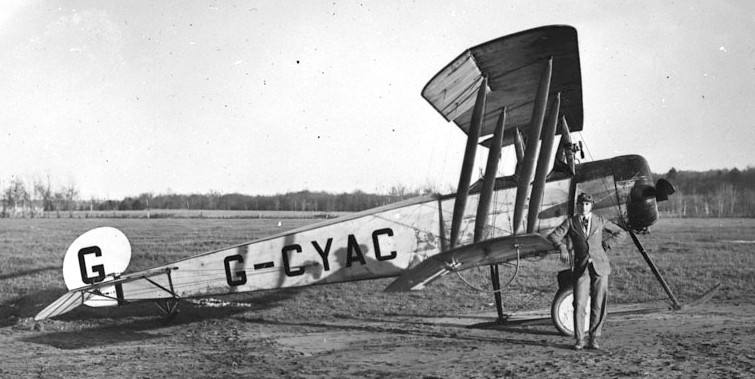
(Library and Archives Canada Photo, MIKAN No. 3643665)
Air Board Avro Bristol F.2B, G-CYAC, Rockcliffe, Ontario, c.1921.
Air Board Avro Bristol F.2B, G-CYAC, Rockcliffe, Ontario, c.1921.
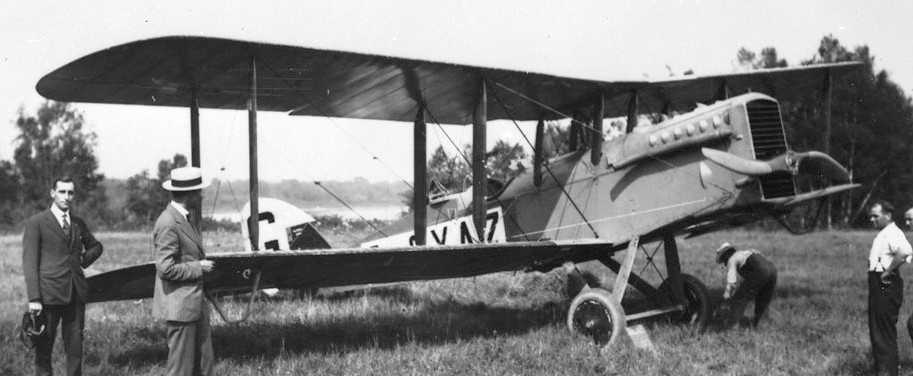
(Library and Archives Canada Photo, MIKAN No. 3256150)
Air Board de Havilland D.H.9A, G-CYAZ, Ottawa Air Station, Ontario. Lieutenant-Colonel Robert Leckie is standing at extreme left, c1921-22.
Air Board de Havilland D.H.9A, G-CYAZ, Ottawa Air Station, Ontario. Lieutenant-Colonel Robert Leckie is standing at extreme left, c1921-22.
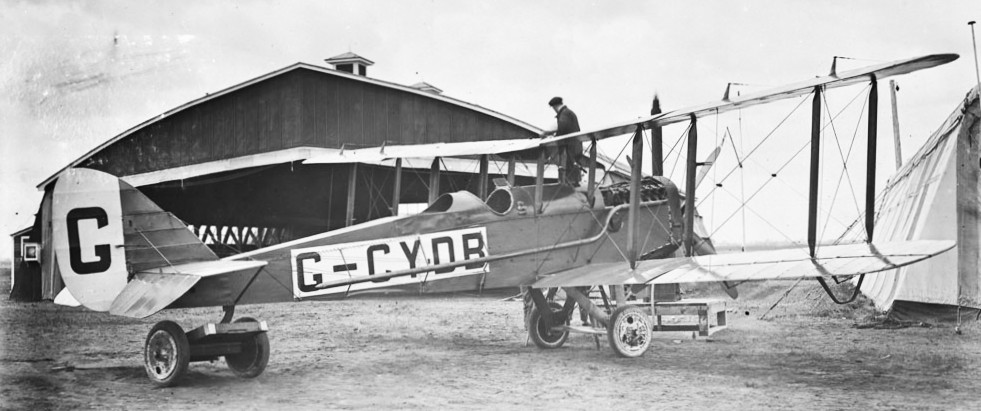
(Library and Archives Canada Photo, MIKAN No. 3390138)
Air Board de Havilland D.H.4A, G-CYDB, High River, Alberta, 12 May 1923.
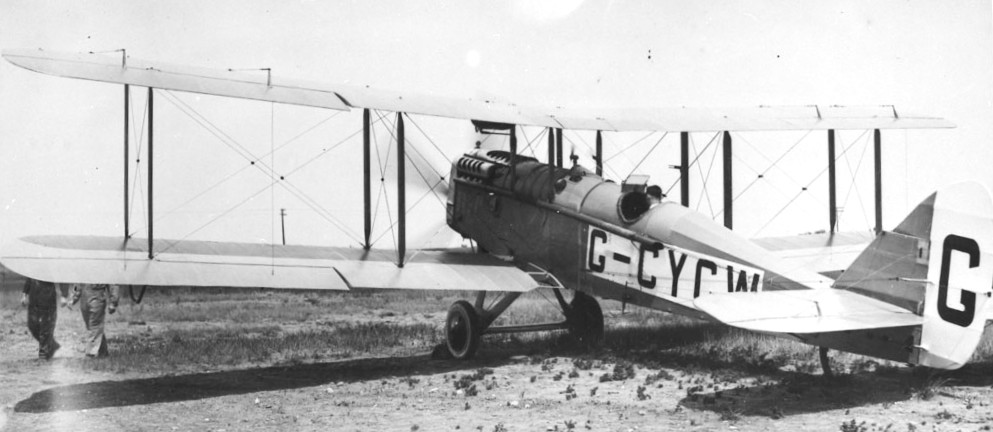
(Library and Archives Canada Photo, MIKAN No. 3643547)
Air Board de Havilland D.H.4A, G-CYCW, High River, Alberta, 28 June 1922.
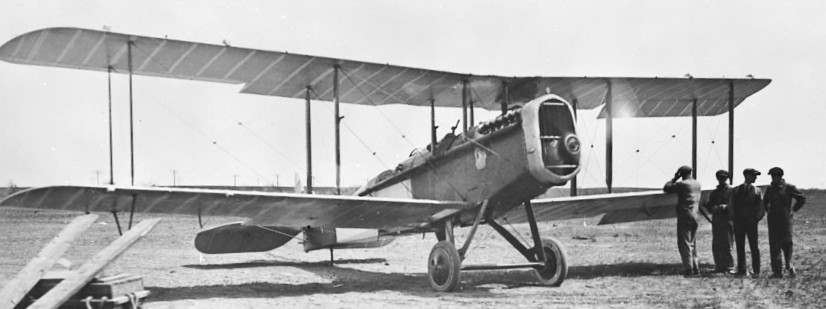
(Library and Archives Canada Photo, MIKAN No. 3643557)
Air Board de Havilland D.H.4A, High River, Alberta, 27 May 1922.
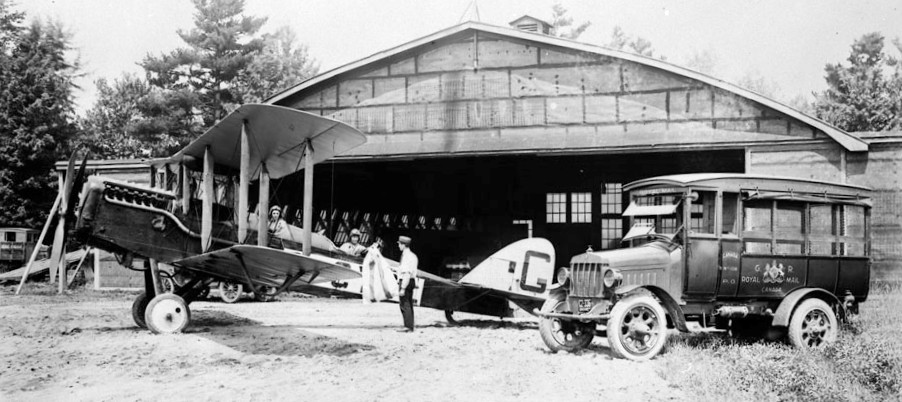
(Library and Archives Canada Photo, MIKAN No. 3203748)
Air Board D.H.4 preparing to make airmail flight to Toronto, 16 July 1923.
Air Board D.H.4 preparing to make airmail flight to Toronto, 16 July 1923.
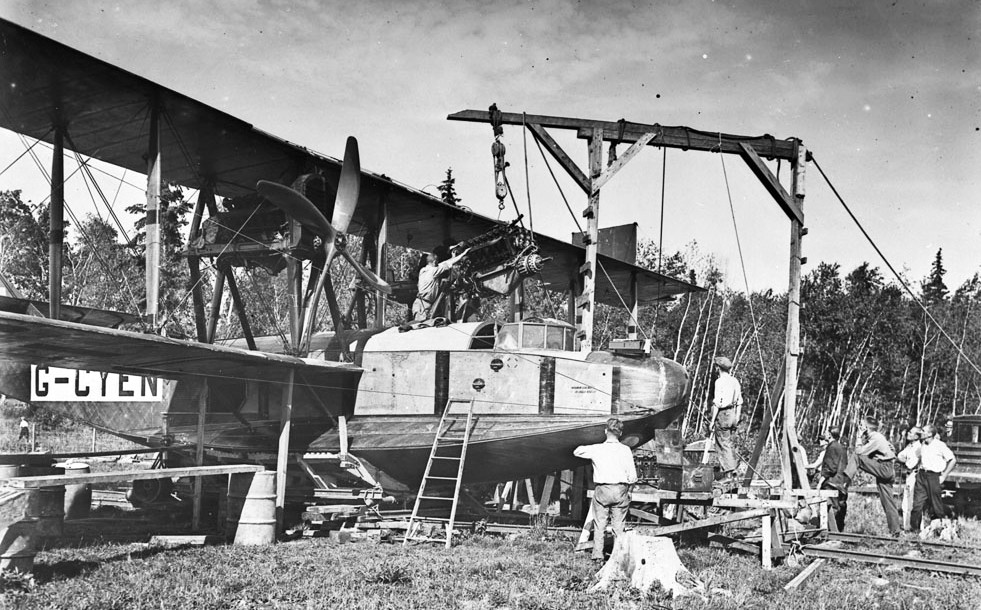
(Library and Archives Canada Photo, MIKAN No. 3643557)
Air Board engine change on a Felixstowe F.3 flying boat, G-CYEN, Victoria Beach, Manitoba, 8 August 1922.
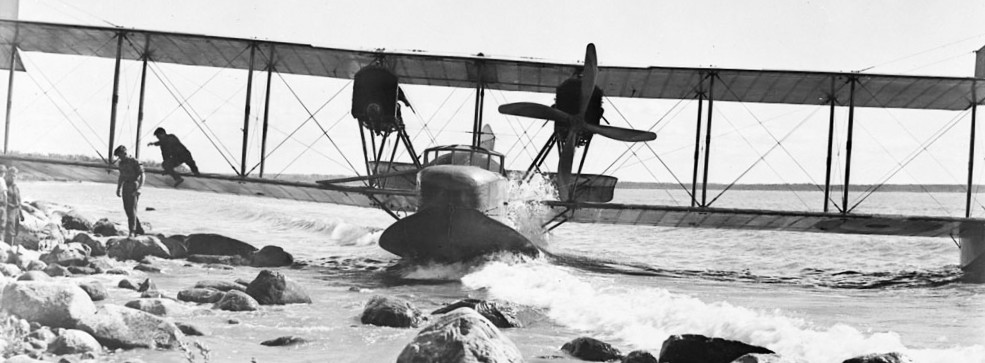
(Library and Archives Canada Photo, MIKAN No. 3575578)
Air Board engine change on a Felixstowe F.3 flying boat, Victoria beach, Manitoba, 5 September 1921.
Canadian Air Force
The Canadian Privy Council approved the formation of the Canadian Air Force in England on the 19th of September, 1918. The Canadian Air Force (England) was formed in London, England as the Canadian Air Force Section of the General Staff H.Q. Overseas Military Forces of Canada the same day. No. 1 Canadian Wing, RAF which was comprised of of No. 1 Squadron (No. 81 Squadron (Canadian) Royal Air Force flying fighters including the Sopwith Snipe, Sopwith Pup, Bristol F.2B and Fokker D. VII war prize aircraft. No. 2 Squadron (No. 123 Squadron (Canadian) Royal Air Force operated two-seat day D.H.9A bombing aircraft..
The end of the war negated the need for the proposed further expansion. Incidentally, the first commanding officer was the legendary Billy Bishop. The CAF went on to be re-organized as the Directorate of Air Services on 28 February 1919. It was subsequently disbanded on 9 August 1919.
Major A. E. McKeever DSO, MC and Bar assumed command of No. 1 Squadron on 26 November, 1918. He relinquished command to Captain W. B. Lawson effective 14 August 1919.
The second crack at forming a Canadian Air Force took place back in Canada when it was authorized on 18 February 1920.
Royal Canadian Air Force
On 1 April 1924 the Canadian Air Force was renamed the Royal Canadian Air Force (RCAF) when it was granted the royal title by King George V. The RCAF existed as an independent service until 1968. The RCAF replaced the Air Board and the CAF as the regulator of Canadian civil aviation and continued civil tasks such as anti-smuggling patrols, forest fire watches, aerial forest spraying, mail delivery, mercy flights, law enforcement, and surveying/aerial photography, and there was some training.
The Royal Canadian Air Force served in the Second World War, the Korean War, and several United Nations peacekeeping missions and NATO operations. In April 1949 Canada joined NATO, and as part of its military commitment established an Air Division (No. 1 Air Division) in Europe consisting of four wings. Because of the Cold War and the Korean War, the RCAF grew to a strength of 54,000 personnel (all ranks) by 1954 and reached a 1955 peak of 41 squadrons. The force maintained a presence in Europe through the second half of the 20th century. Canadian Forces Europe was shut down in 1994.
Canadian Forces
On 1 February 1968 the Canadian Forces Reorganization Act came into effect and the RCAF ceased to exist. The three branches of the Canadian Forces were unified into a single service with the aim of improving Canada’s military effectiveness and flexibility.
Royal Canadian Air Force
On 16 August 2011, the Canadian government announced that the name “Air Command” was being changed to the air force’s original historic name: Royal Canadian Air Force. The change was made to better reflect Canada’s military heritage and align Canada with other key Commonwealth countries whose militaries use the royal designation. The modern Royal Canadian Air Force, formerly known as Canadian Forces Air Command, is one of three environmental commands of the Canadian Forces.
“Sic Itur Ad Astra”
The RCAF used British roundels and other markings until 1946, when Canada began using its own insignia identity. Although the maple leaf roundel was approved for use by the RCAF in 1924, it was not until after the war that it began to be used on aircraft. It was, however, used on the ensign beginning in 1941. The realistic-looking “silver maple” style of leaf (referred to as the “RCAF” roundel) was replaced with the eleven-point stylized leaf of the new Canadian flag in February 1965.
RCAF aircraft used the British fin flash, which consisted of red and blue vertical bands separated by a white band. In 1955 the red ensign Canadian Flag began replacing the fin flash on aircraft based in Europe. On Canada-based aircraft the flag began replacing the flash in 1958. Beginning in 1965 the new Canadian flag was used.
Greenhous, Brereton; Halliday, Hugh A. Canada’s Air Forces, 1914–1999. Montreal: Editions Art Global and the Department of National Defence, 1999.
Canadian Civil Aviation Notes:
In 1937 the Canadian government created Trans-Canada Airlines (which became Air Canada in 1964) to meet Canada’s need for a transcontinental service. That same year, the role of Minister of Transport was created through the Department of Transport Act. On 6 March 1938, the first coast-to-coast passenger service Canada began.
in 1944, the International Civil Aviation Organization (ICAO) was founded with the signing of the Convention on International Civil Aviation. Canada was one of the original 52 member states, and the organization is headquartered in Montreal.
In 1945, the Canadian aviation industry employed 120,000 people, including 25,000 women.
On 29 March 1990, the Transportation Safety Board (TSB) was created by the Canadian Transportation Accident Investigation and Safety Board Act.
In 1996, NavCanada became responsible for air navigation in Canada. The Canadian Aviation Regulations become law on 10 October 1996, replacing the Air Regulations and Air Navigation Orders.