
Supermarine Seagull ASR.I
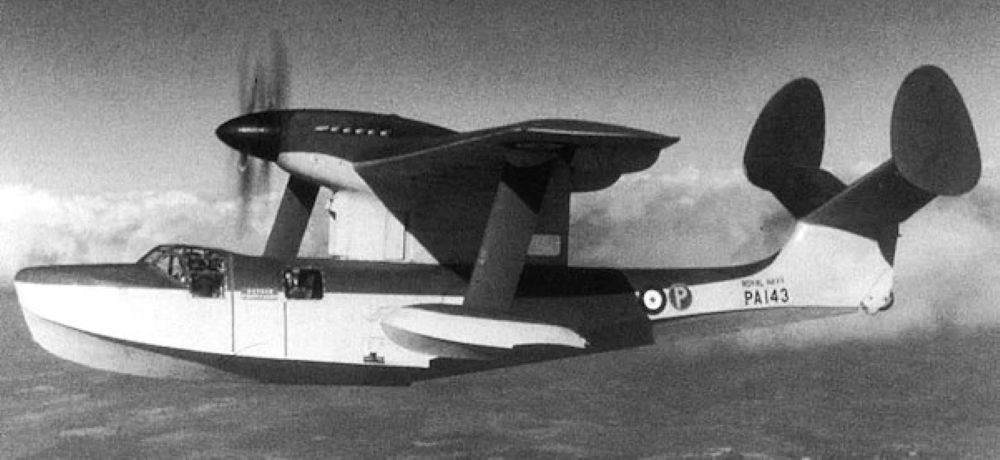
(RAF Photo)
The Supermarine Seagull was a British amphibious, military flying boat and the last to be built by the Supermarine company. Design started during the Second World War but it did not fly until three years after the war had ended and the project was cancelled without it being adopted for service.
The first prototype – Seagull serial PA143 – first took off on 14 July 1948 from Southampton Water, flown by test pilot Mike Lithgow. The second aircraft – PA147 – flew in September 1949, and was used for carrier trials on HMS Ark Royal later in that year, during which it demonstrated the capability to carry five passengers. Experiments were also carried out with rocket assisted take-offs.
By the early 1950s, helicopters were taking over the air-sea rescue role. In 1952, the two completed prototypes and the partially built third aircraft, (Serial No. PA152), were scrapped. (Wikipedia)
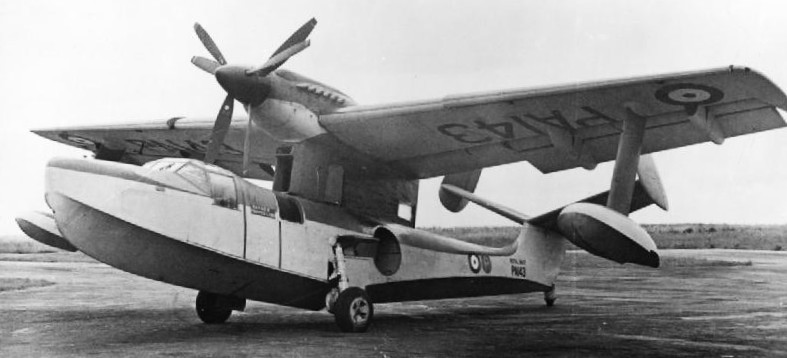
(IWM Photo, ATP16910B)
Supermarine Seagull ASR.I prototype (Serial No. PA143), in 1948.
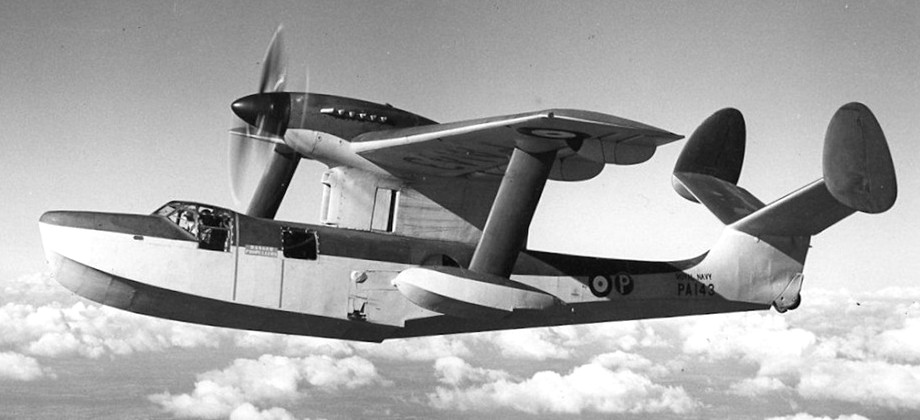
(Aviation History Online Museum Photo)
Supermarine’s Seagull ASR.I prototype powered by a Rolls-Royce Griffon 29 engine with a 10 ft diameter contra-rotating prop. It did not fly until after the war and it was the last military flying boat to be built by the Supermarine company. Only two aircraft were completed.