
Atlantic Canada Aviation Museum
The Atlantic Canada Aviation Museum (ACAM), near the Halifax Stansfield International Airport, 20 Sky Blvd, Goffs.
(Author Photos)
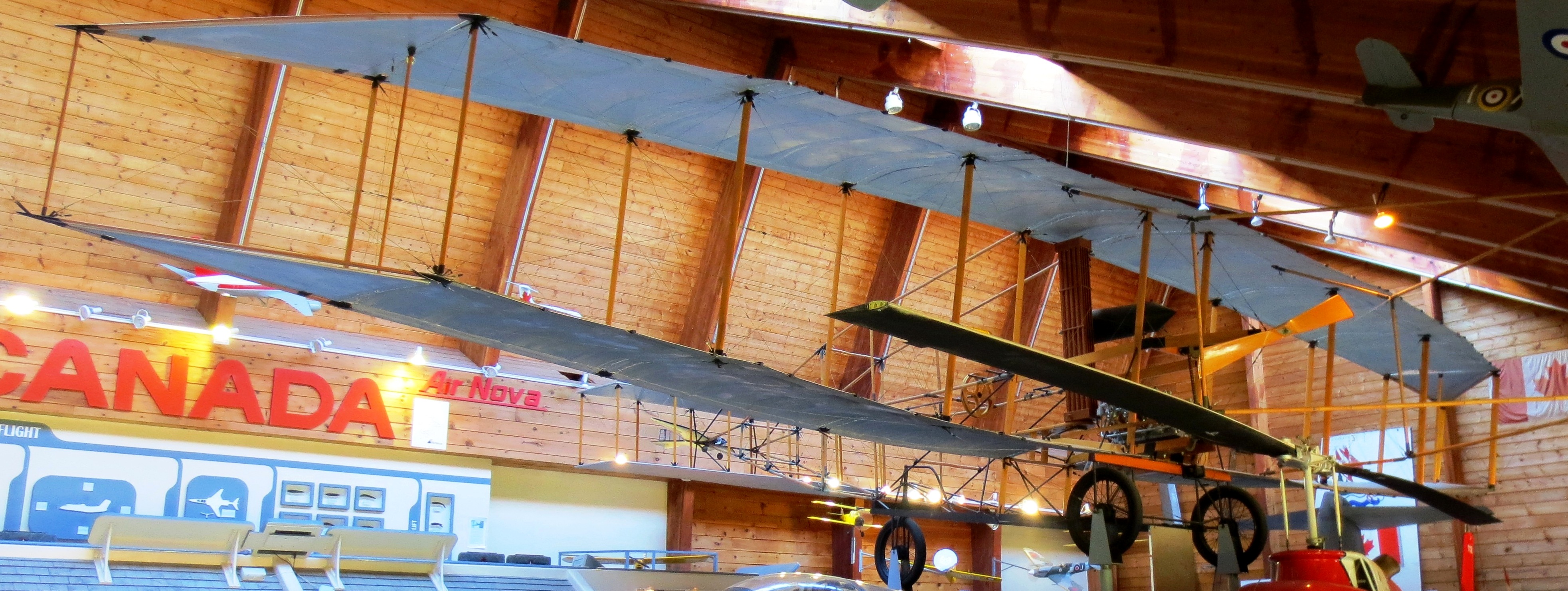
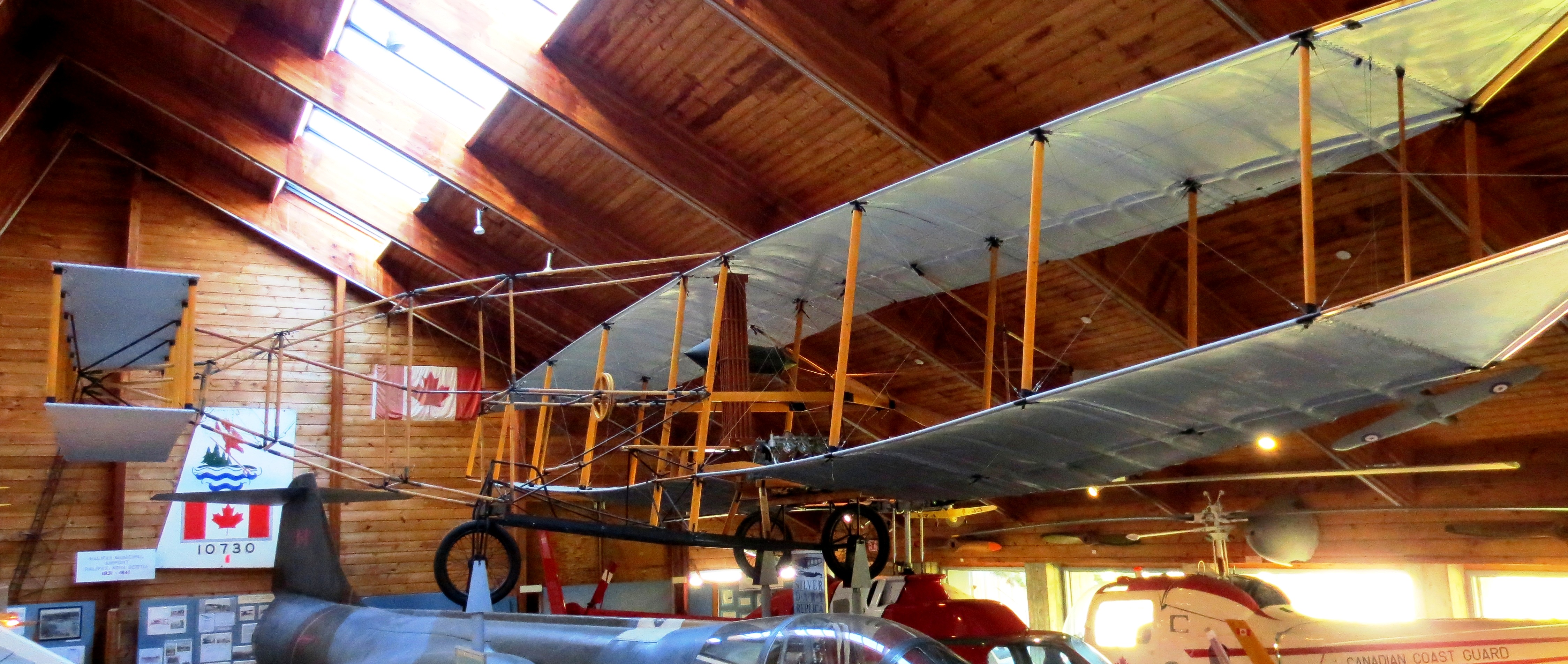
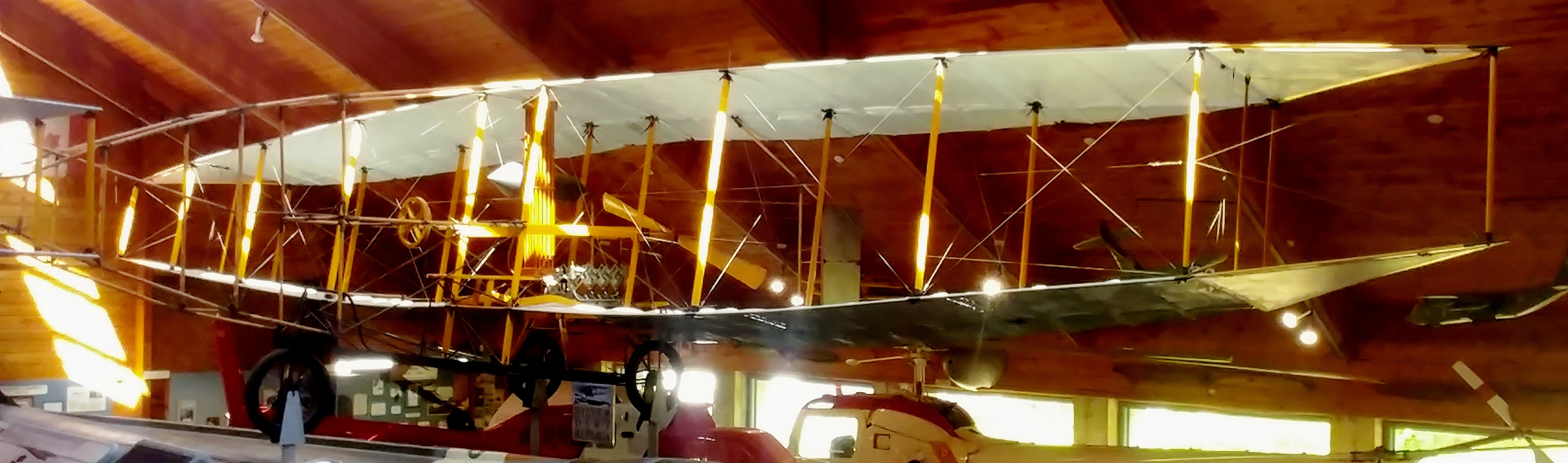
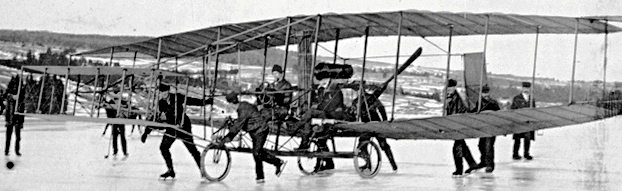
AEA Silver Dart replica. The original Silver Dart was built by the Aerial Experiment Association in Hammondsport, New York. After being relocated to Baddeck, Nova Scotia it made the first flight in the British Commonwealth in 1909. The ACAM’s replica was built by Gordon MacRae of Baddeck, Nova Scotia to help celebrate the 75th anniversary of the 1909 flight. The Museum was offered the replica for display in 1993 and it is now displayed directly above our CF-104 Straighter as this helps demonstrate the tremendous advances that have been made in aviation in a timespan of less than just 50 years.
(Alexander Graham Bell National Historic Site Photo)
Aerial Experimental Association Silver Dart with J.A.D. McCurdy at the controls, on Bras d’Or Lake near Baddeck, as skaters position him for take-off 23 Feb 1909.
(Atlantic Canada Aviation Museum Photo)
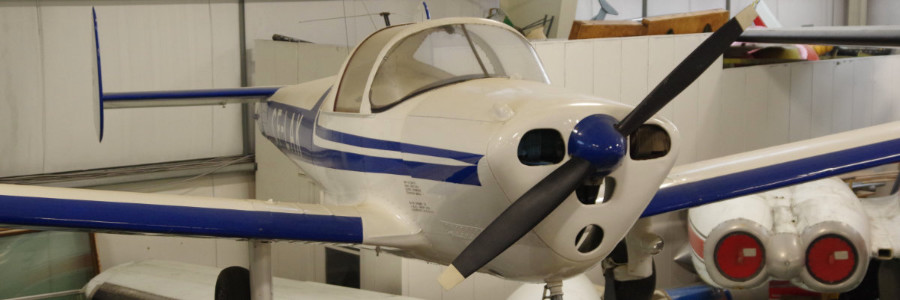
Aero 415C Ercoupe. Designed in 1937 by Erco, the Ercoupe is a light pleasure aircraft also used by some militaries as a liaison aircraft. With its tricycle landing gear and twin tail design, it was an easy aircraft to fly. The Museum’s aircraft was built in 1946 and acquired in 1988. After restoration, it was put on display in 2000.
Aeronca C-3 (P). Introduced in 1931, the C-3 featured room for a passenger seated next to the pilot. Powered by a new 36hp Aeronca E-113 engine, the seating configuration made flight training much easier and many Aeronca owners often took to the skies with only five hours of instruction, largely because of the C-3’s predictable flying characteristics. Both the C-2 and C-3 are often described as ‘powered gliders’ because of their gliding ability and gentle landing speeds. The Museum’s C-3 was imported into Canada in 1931 and bought by WJ Morgan of New Glasgow, Nova Scotia, in 1936. We acquired the fuselage from John Campbell in 1991 and plans are in place to restore the aircraft in the future.
(RCAF Photo)
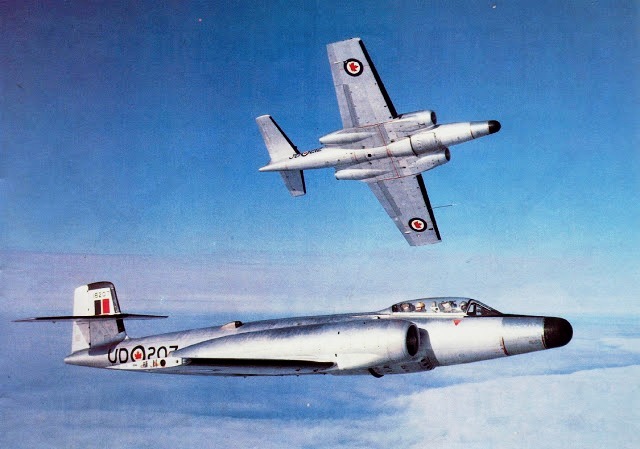
Avro CF-100 Canuck Mk. 4As in flight.
(Author Photos)
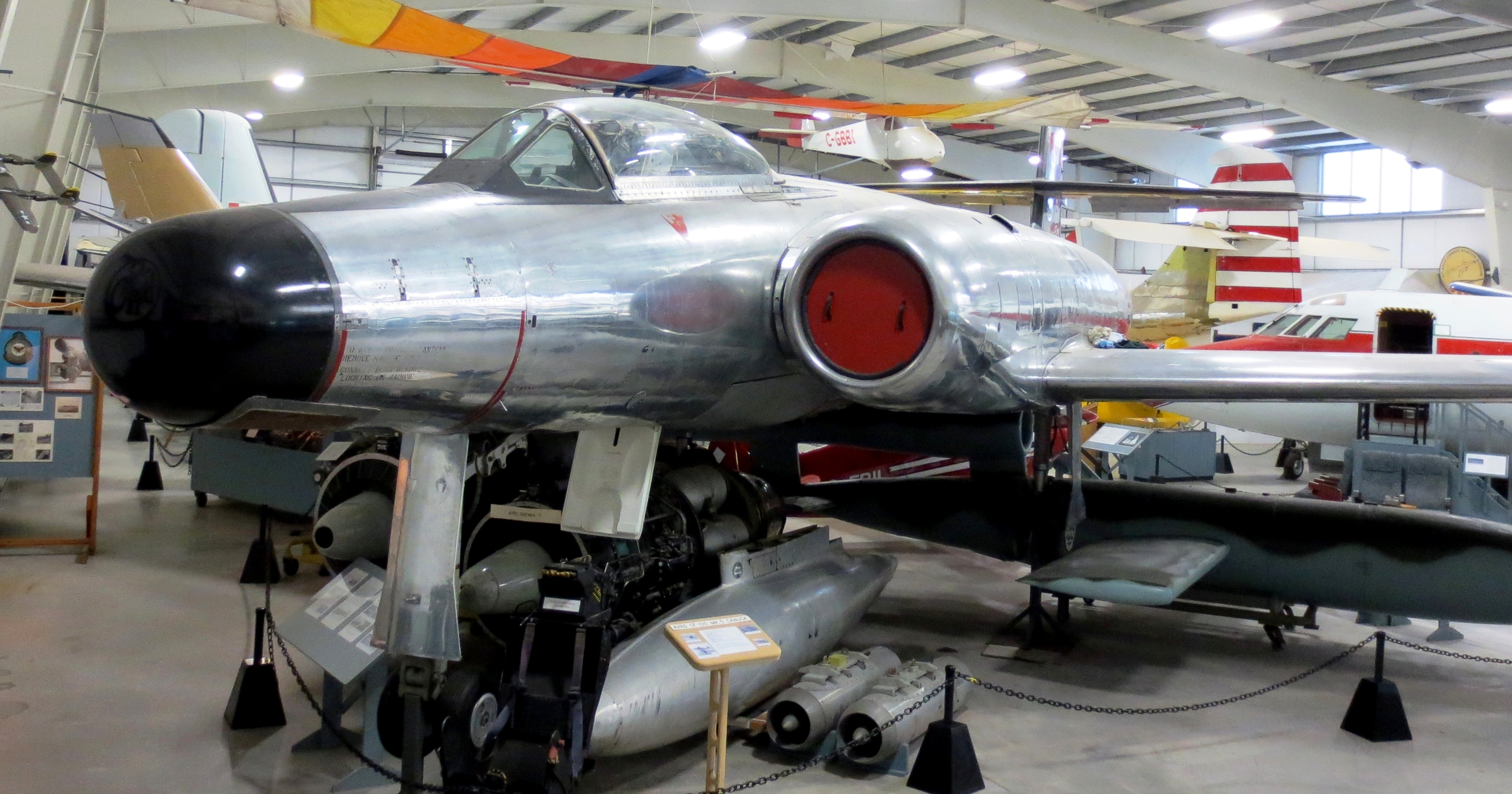
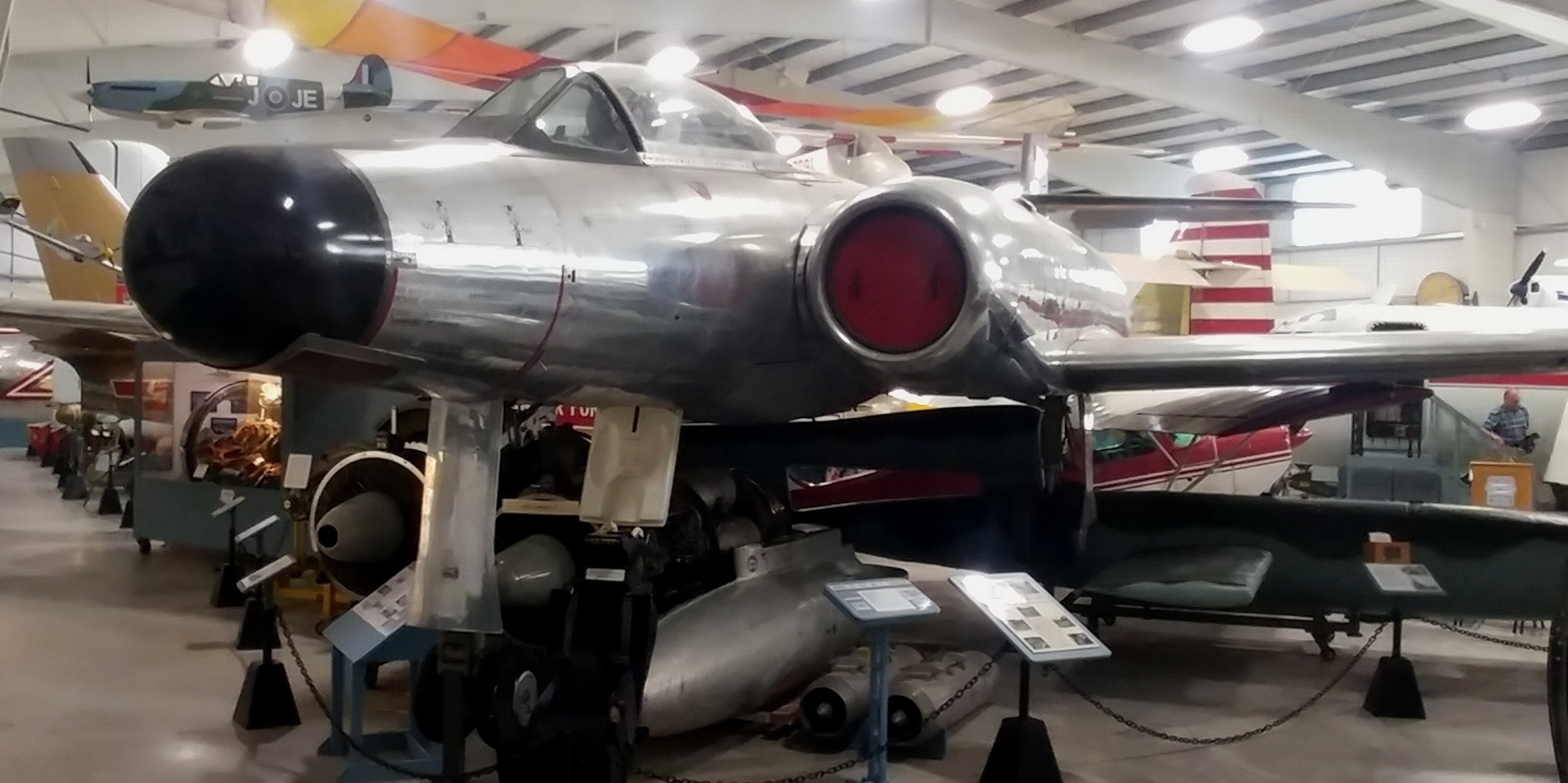
Avro CF-100 Canuck Mk. 5D (Serial No. 18747), (Serial No. 100747). 100747 came to the Museum in 1995 after it had on display at CFB Shearwater as part of No. 423 Squadron’s 50th anniversary. It served with No. 3 OTU as well as AETE test squadron.
Designed and built in Canada by the Avro Canada CF-100 Canuck was first flown in 1950 and was used by the RCAF from 1951 through 1981. The only other user was Belgium. The Canuck was used as an interceptor and electronic warfare aircraft in Canada and was also based in Europe as part of Canada’s NATO commitment.
(Author Photo)
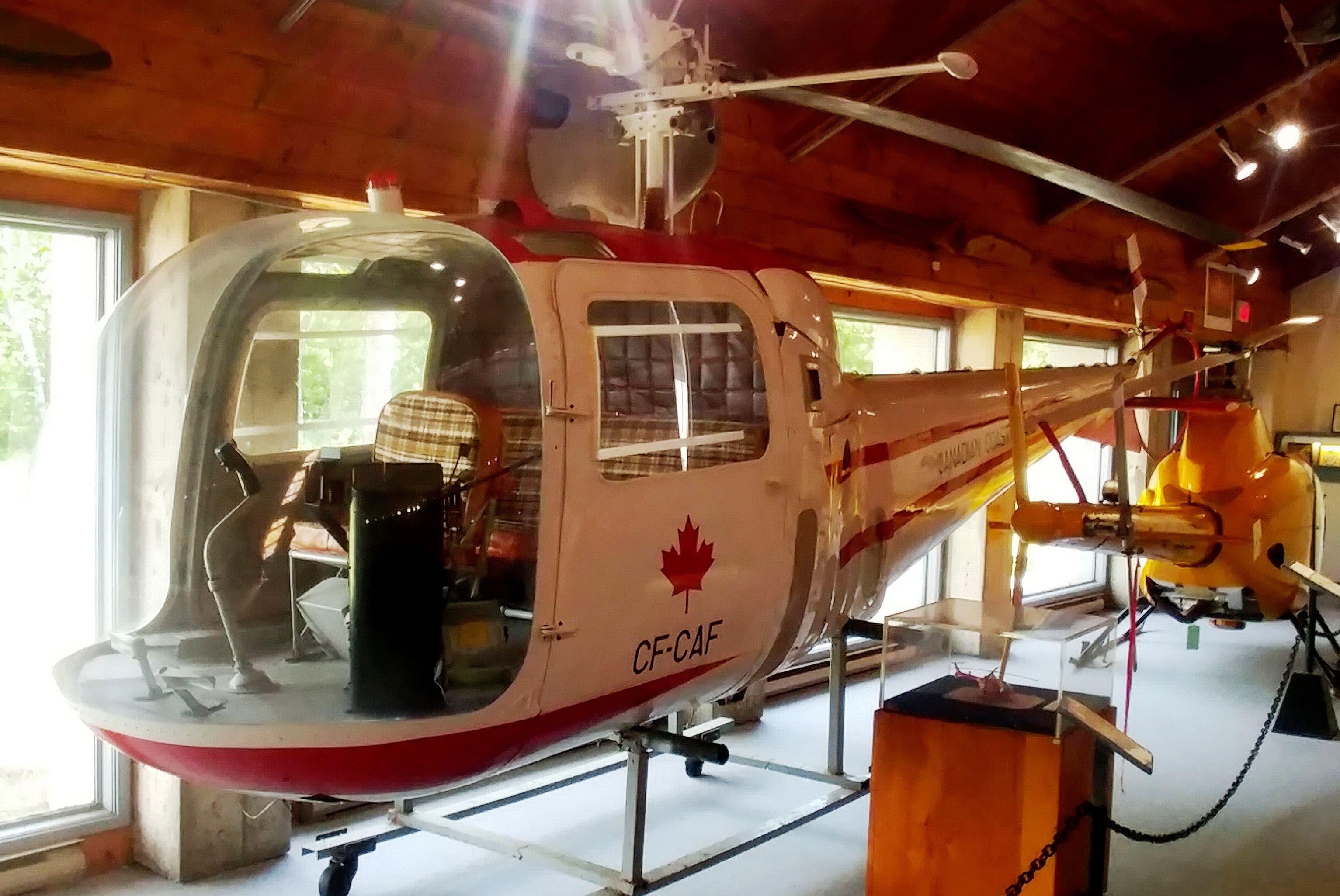
Bell Model 47-J2 Ranger Helicopter (Serial No. 1827), CF-PQZ, repainted as CF-CAF. The Bell 47J Ranger is a two-bladed, single engine, light helicopter that was manufactured by Bell Helicopter. It was an executive variant based on the highly successful Bell 47 of Korean War vintage. Most of the history of the Museum’s aircraft is unknown. We do know, however, that it was operated by the Province of Quebec and used in the rescue of an RCAF Navigator who was accidentally ejected from his CF-100 over rural Quebec. The CF-100 he was ejected from is the one we have in our collection.
(Author Photo)
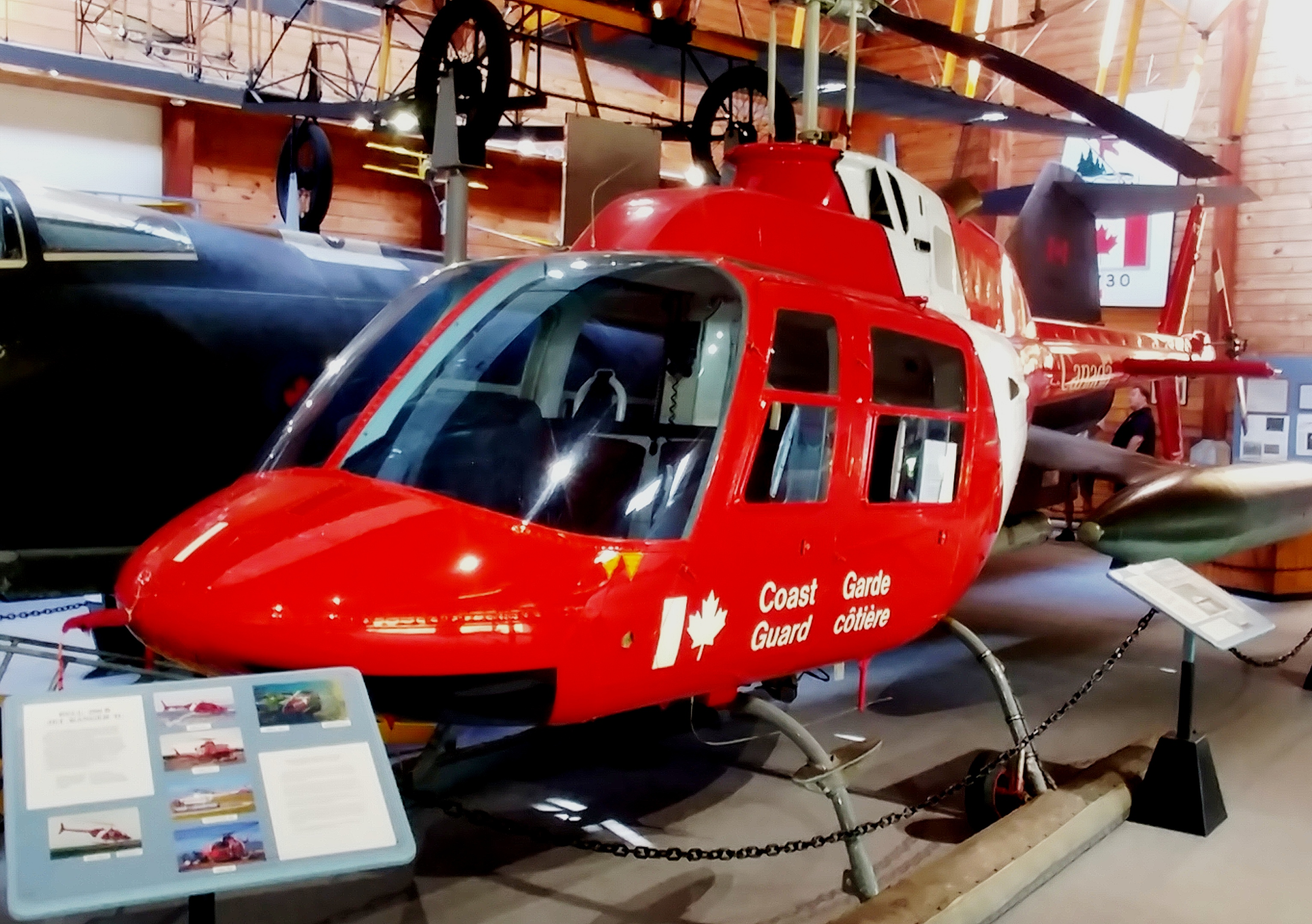
Bell 206B Jet Ranger Helicopter, Canadian Coast Guard (Serial No. 3980), CF-DOI. The Bell 206 is a family of two-bladed helicopters developed in the early 1960s. The Museum’s 1973 Bell 206 Ranger was in Coast Guard Service. In 1977 it was called into emergency rescue service when the CN Ferry, The William Carson, sank off the coast of Newfoundland. The crew rescued 42 persons from the ice in 50 minutes. In 1987, while servicing a remote lighthouse, the main rotor struck a building. Damage was enough that it was uneconomical to repair. It was declared a write-off and offered to our Museum for display.
(Atlantic Canada Aviation Museum Photo)
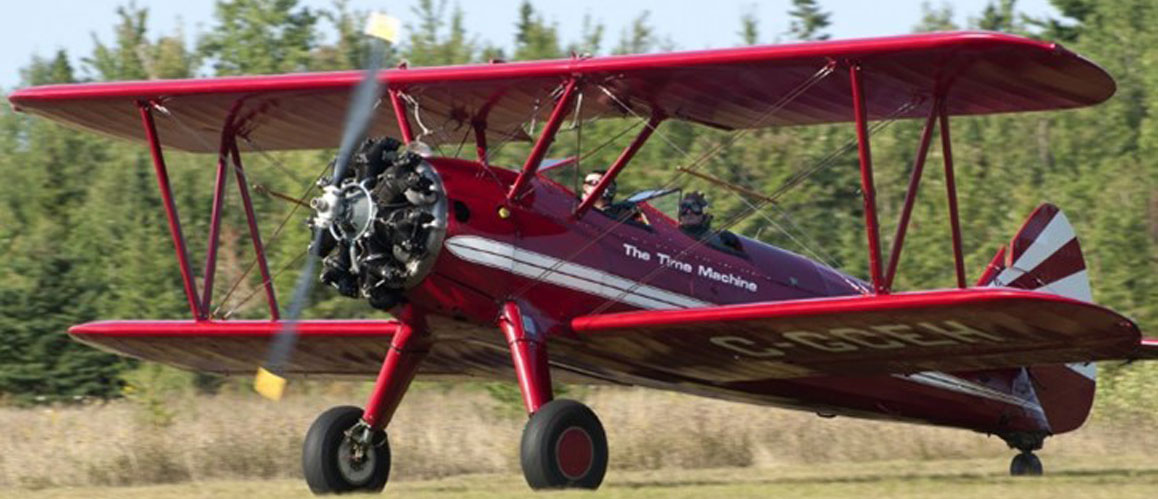
Boeing Model 75 (PT-17) Stearman.
This aircraft, originally built in 1941, was graciously donated to the museum by Madelyn Morse of Somerset, Nova Scotia. Her husband, Harry Morse, and 3 others rebuilt the Stearman after a crash on takeoff in 1984. It was part of many local events in the Annapolis Valley from 1989 to 2015.
The Boeing Model 75 (PT-17) Stearman, created in 1934, was used as a primary trainer in World War 2. After the war they were sold off as surplus to the civilian market and delegated to tasks such as crop dusting. In Canadian service the Stearman was known as the “Kaydet”.
(Author Photos)
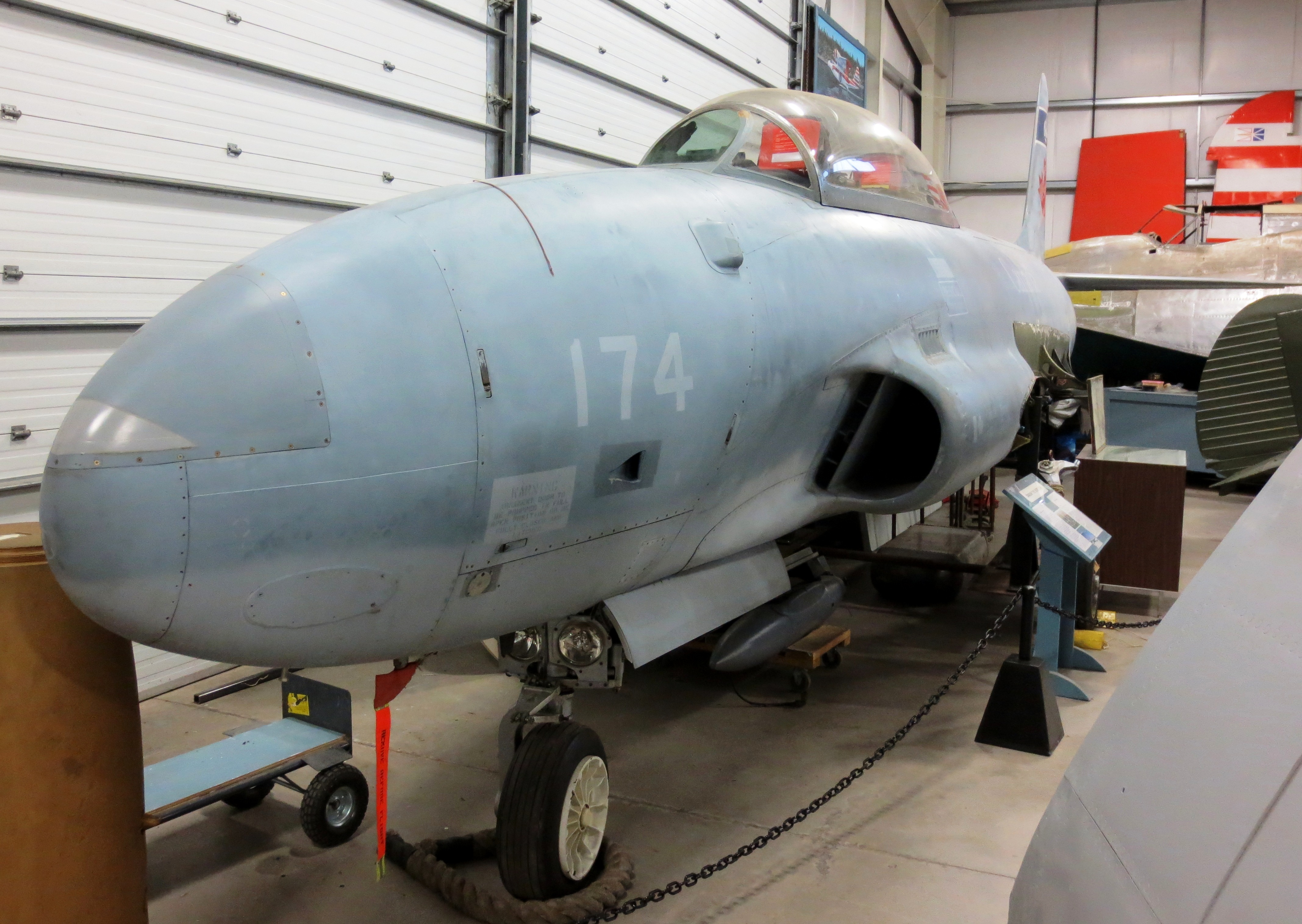
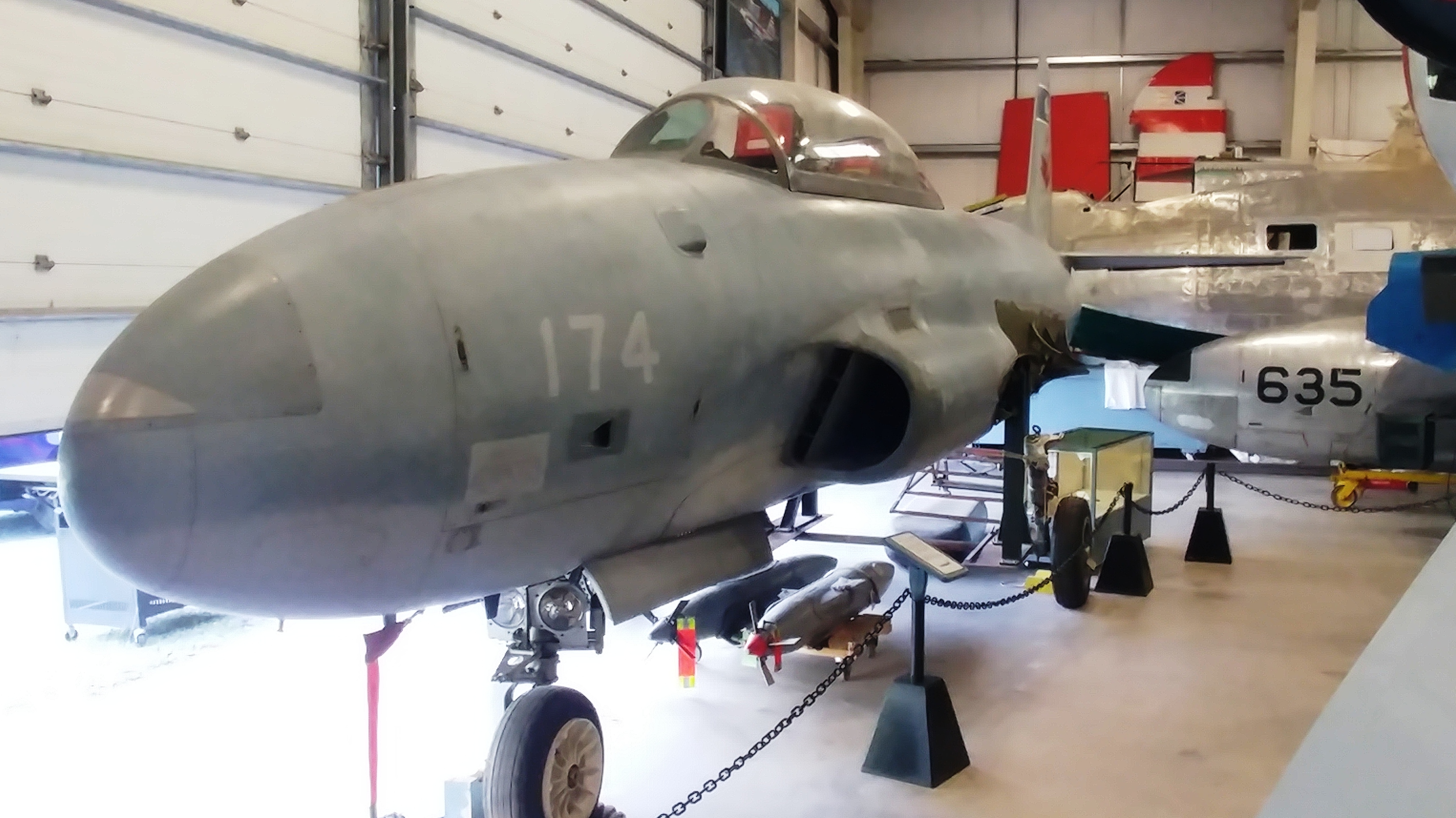
Canadair CT-133 Silver Star (Serial No. 133174). The Lockheed T-33, a development of the P-80 Shooting Star, was mainly used as a jet trainer by a very large number of air forces worldwide. The RCAF employed Canadair and built T-33s from 1953 to 2005 as trainers, target tugs, and electronic warfare platforms. The Museum’s example was acquired in 2003 and is painted in No. 434 City of Halifax/Bluenose squadron colours as worn at the time of its retirement at CFB Greenwood, Nova Scotia. There are in fact many ex RCAF T-33s that still fly in private hands at air shows throughout North America.
Canadair CT-133 Silver Star (Serial No. 133635), cockpit section.
(Author Photos)
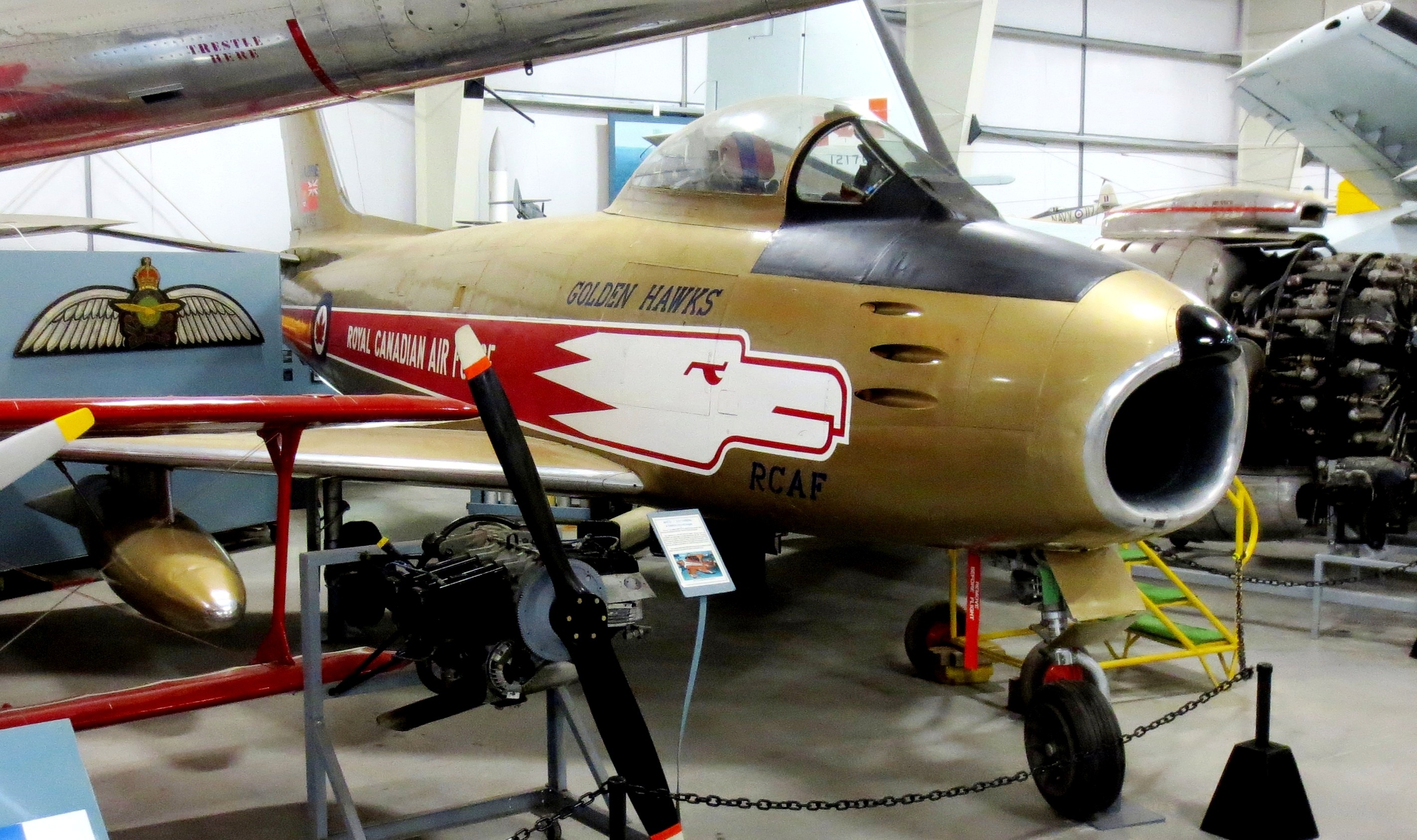
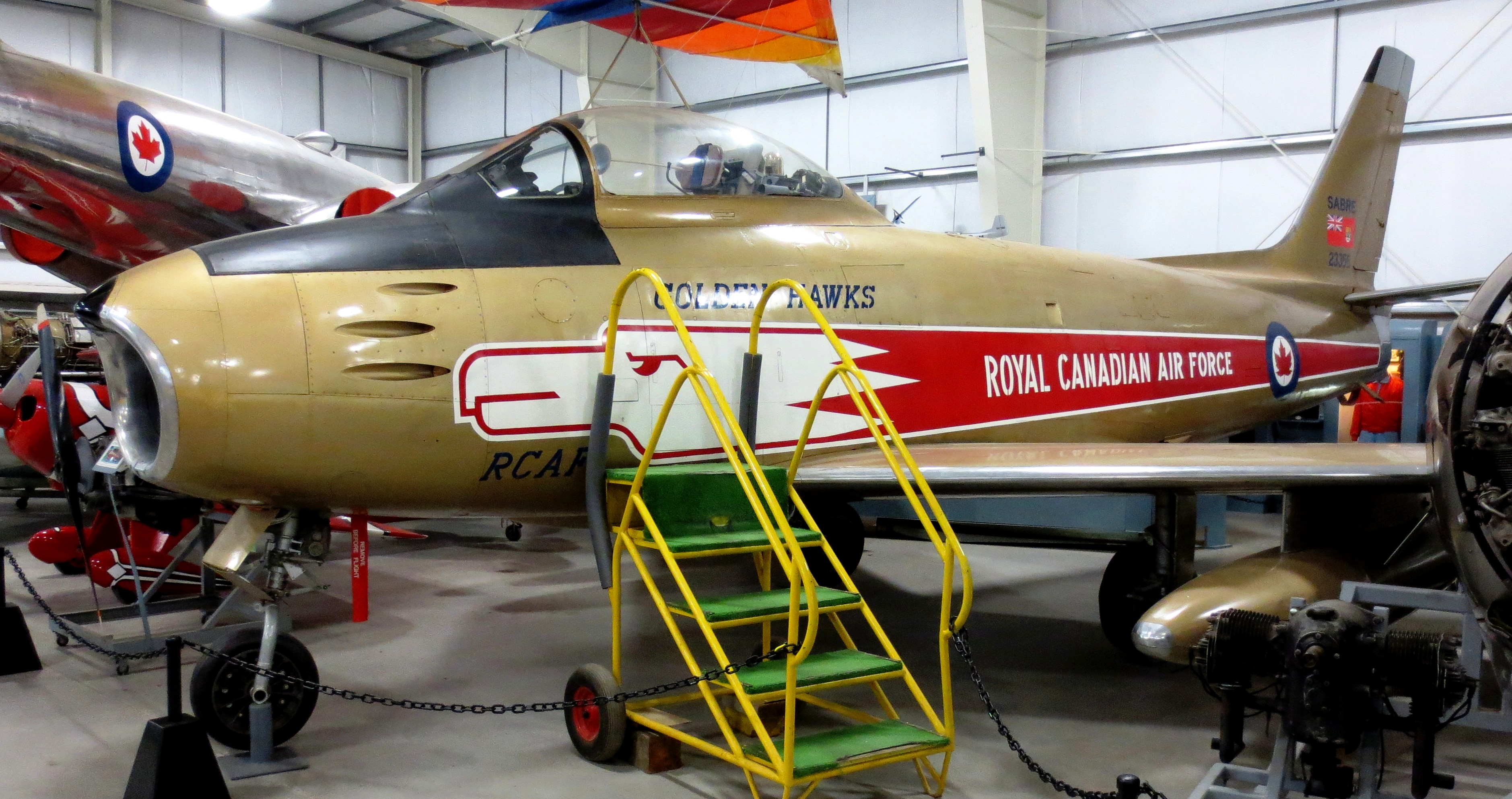
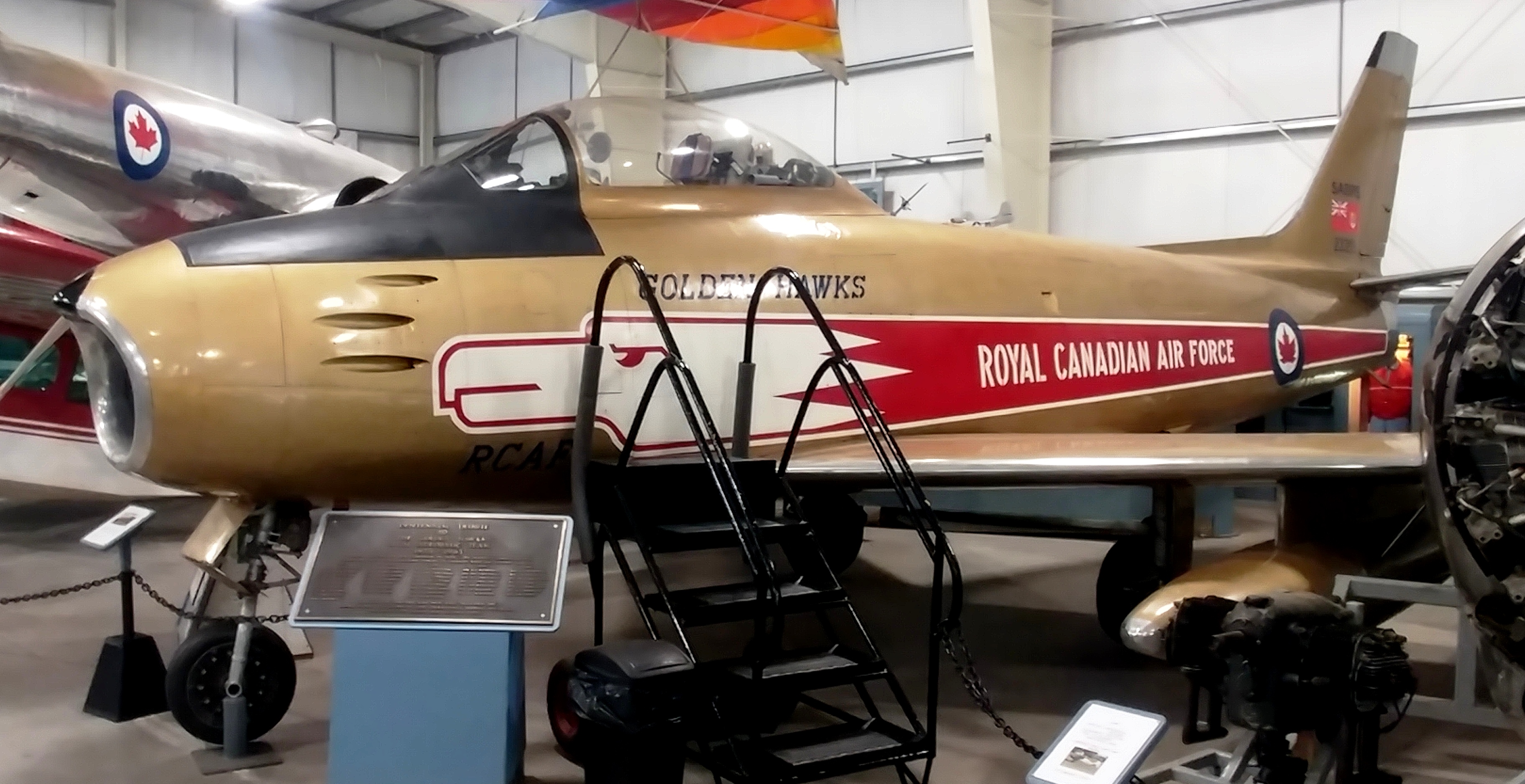
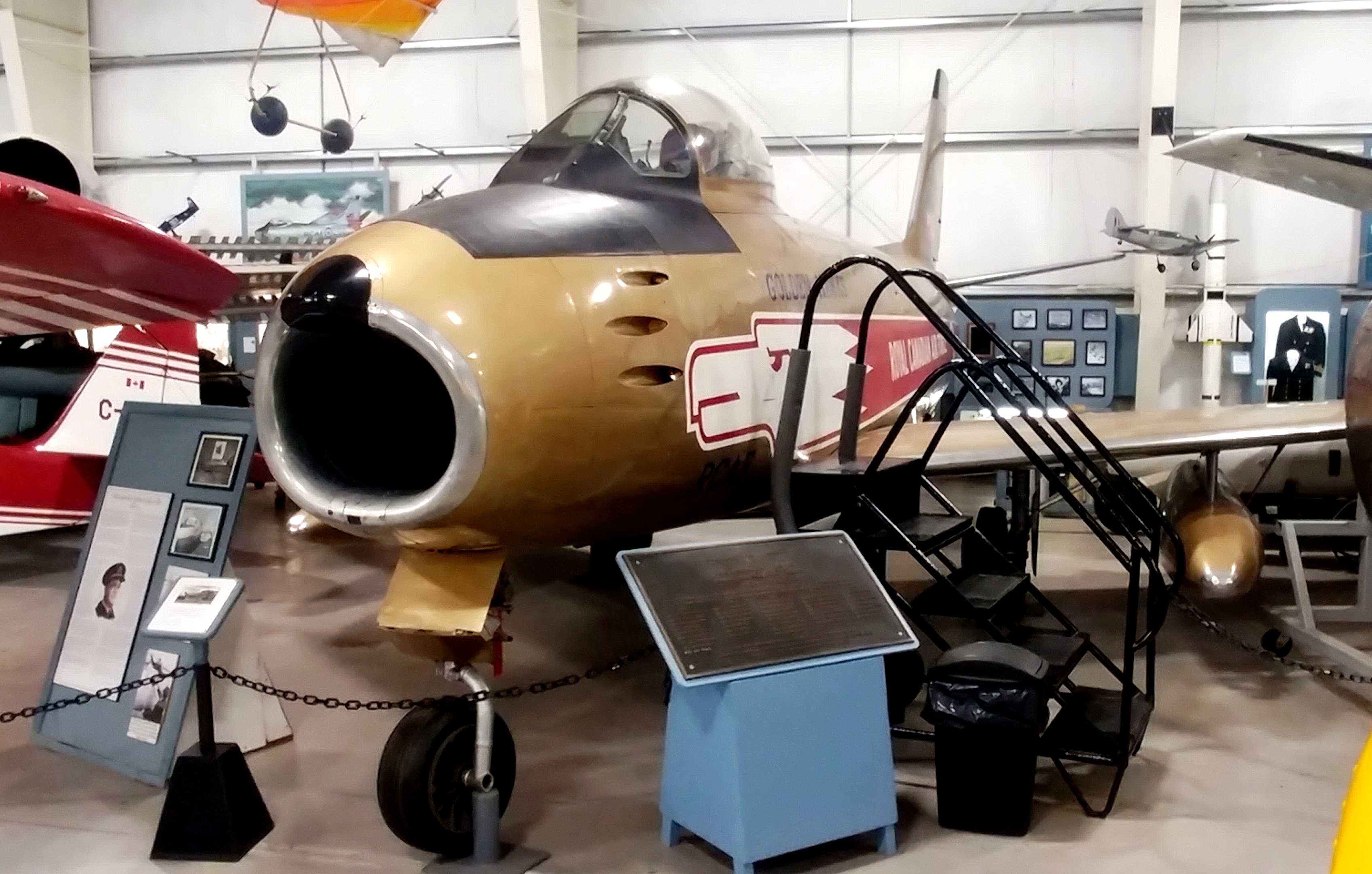
Canadair F-86E Sabre Mk. 5 (Serial No. 23355), Golden Hawks. T23355 is painted in the colours of The Golden Hawks display team that operated between 1959 and 1963. Although this aircraft never served with the Hawks it was placed on display at CFB Chatham, New Brunswick, the former home of the team, for many years in the team’s colours as a tribute. Upon closing of CFB Chatham the Air Force was looking to place the Sabre in a museum and the ACAM was able to take possession of the aircraft and put it on display. The F-86E Sabre first flew in 1948. Designed by North American Aviation the Canadian Sabres were built by Canadair. The RCAF acquired Sabres starting in 1958 and many continue to fly in private hands on the air show circuit.
(Author Photos)
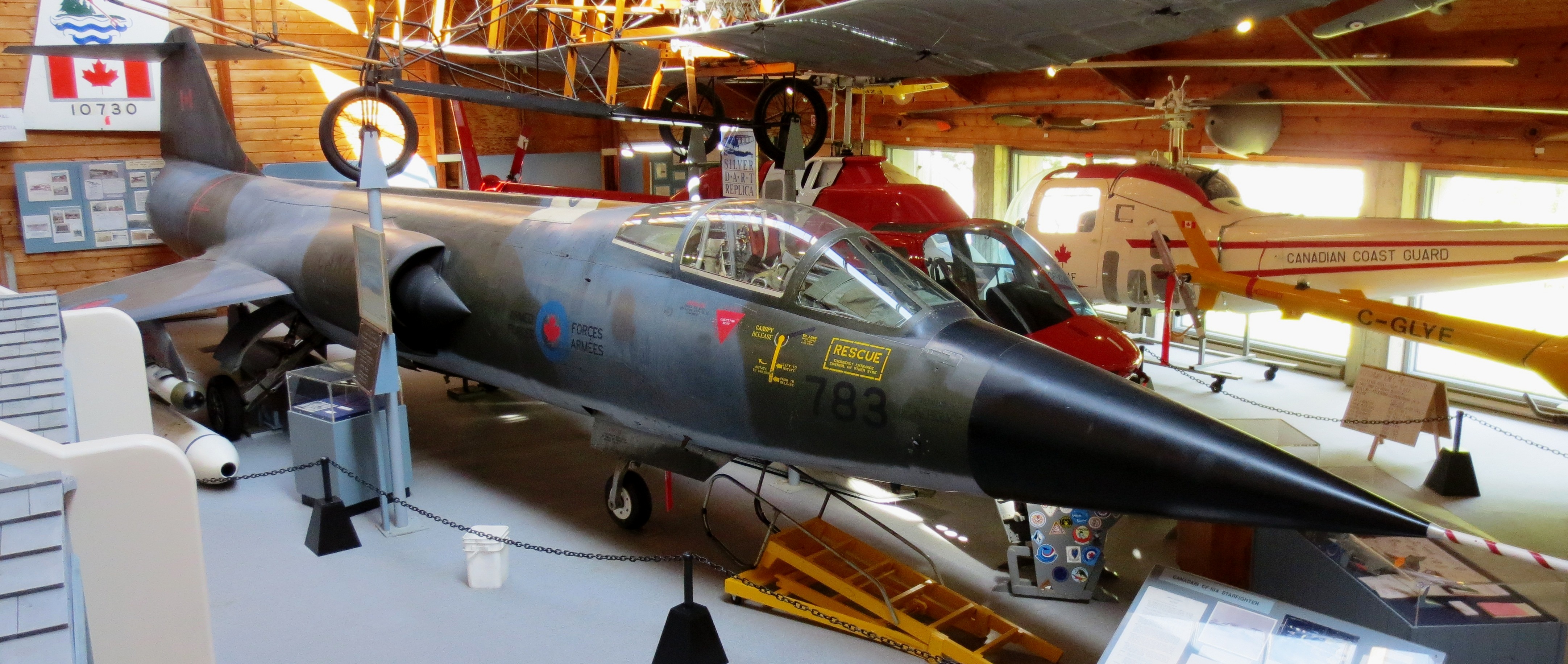
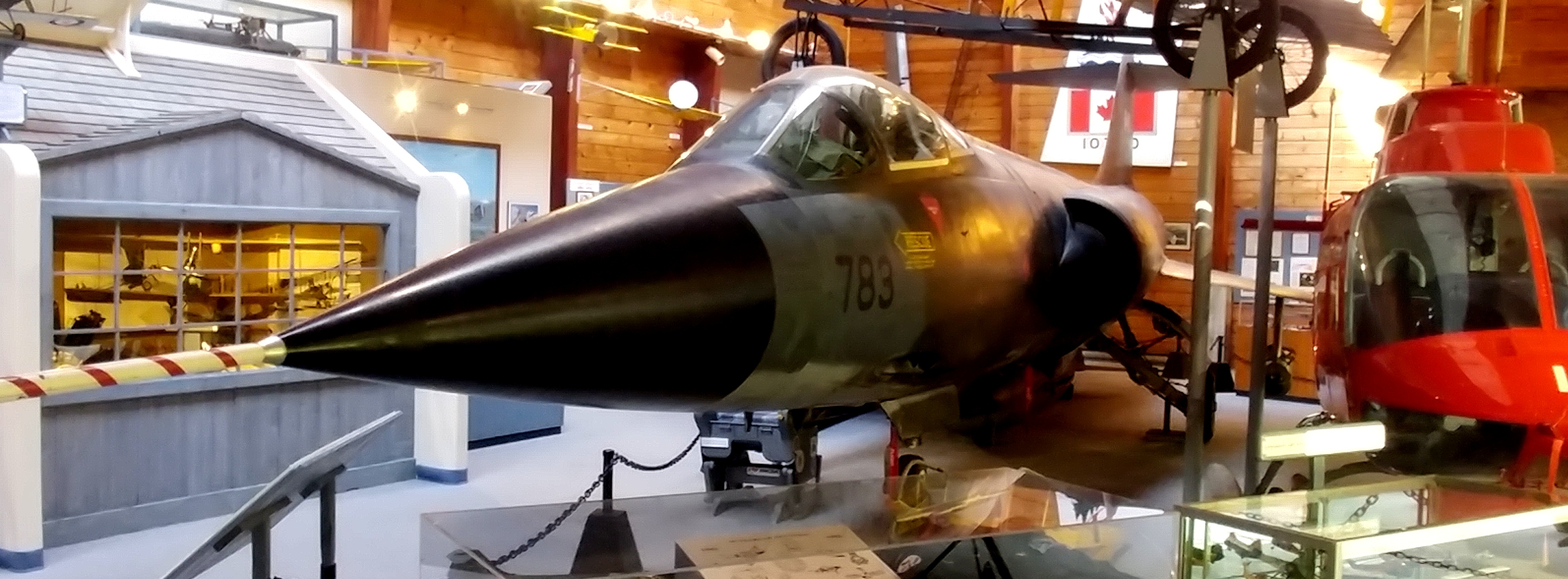
Canadair CF-104 Starfighter (Serial No. 104783). 104783 served with No. 417 Squadron and spent her entire career at CFB Cold Lake, Alberta. It was acquired from the Air Force in 1989. It remains one of the most complete Starfighters on display in Canada.
CF-104 Starfighters were built in Canada by Canadair beginning in 1960. The Lockheed design first flew in 1954 and was used by many air forces worldwide. Reaching speeds of over 2,300kmph the Starfighter was a very capable interceptor and nuclear delivery platform. The RCAF took delivery of Starfighters beginning in 1962 and finally retired the last examples in 1984.
(Author Photos)
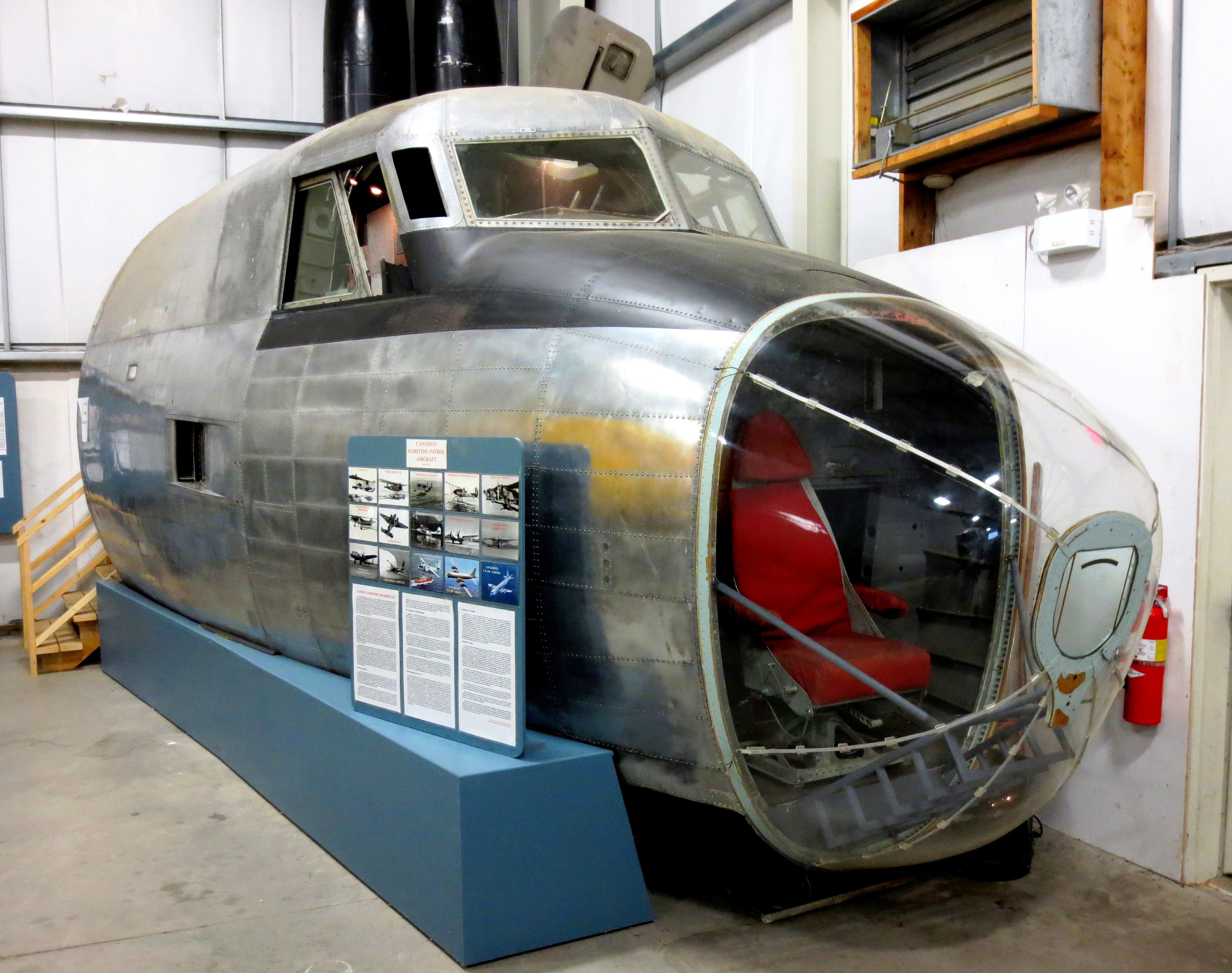
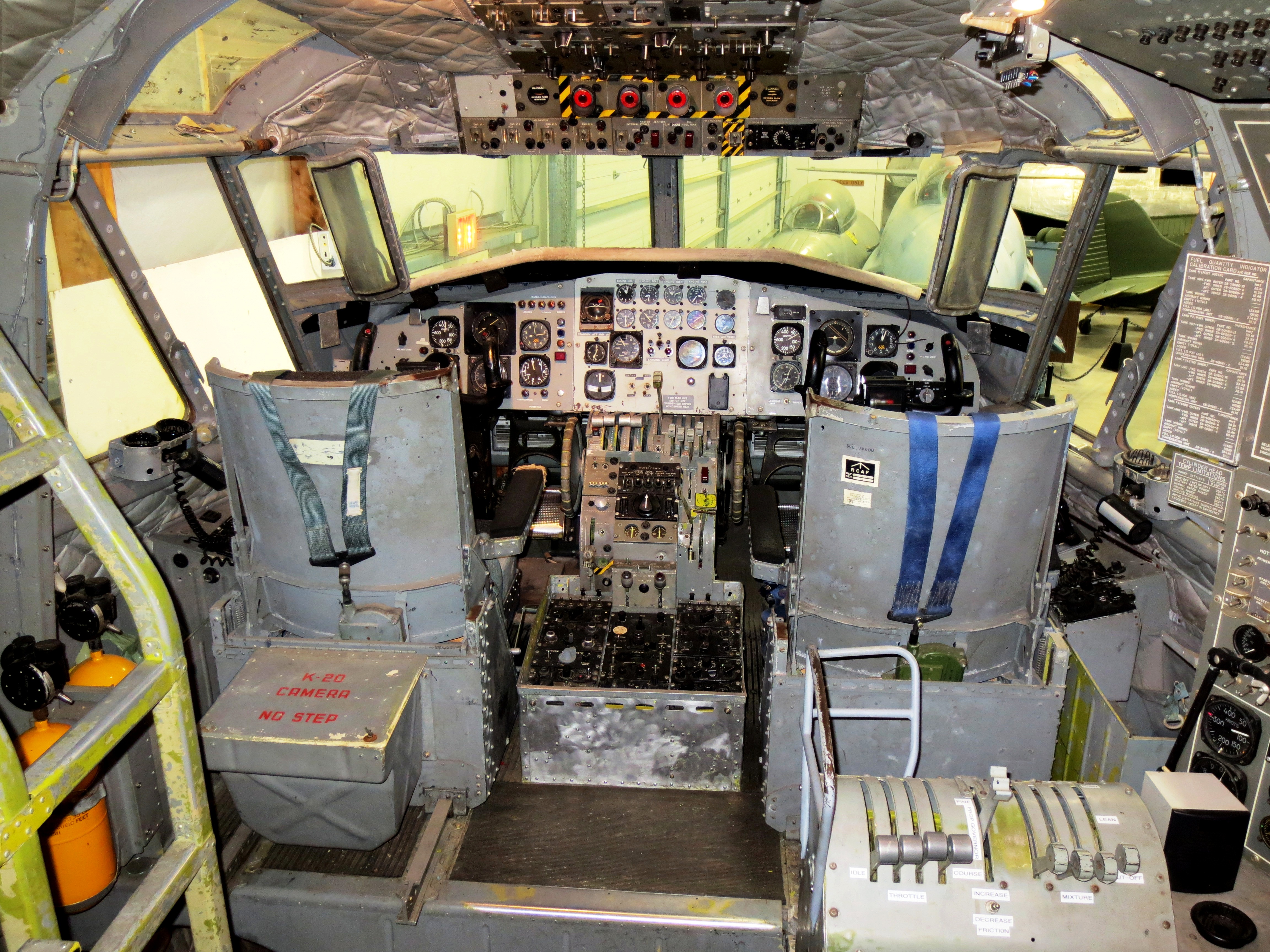
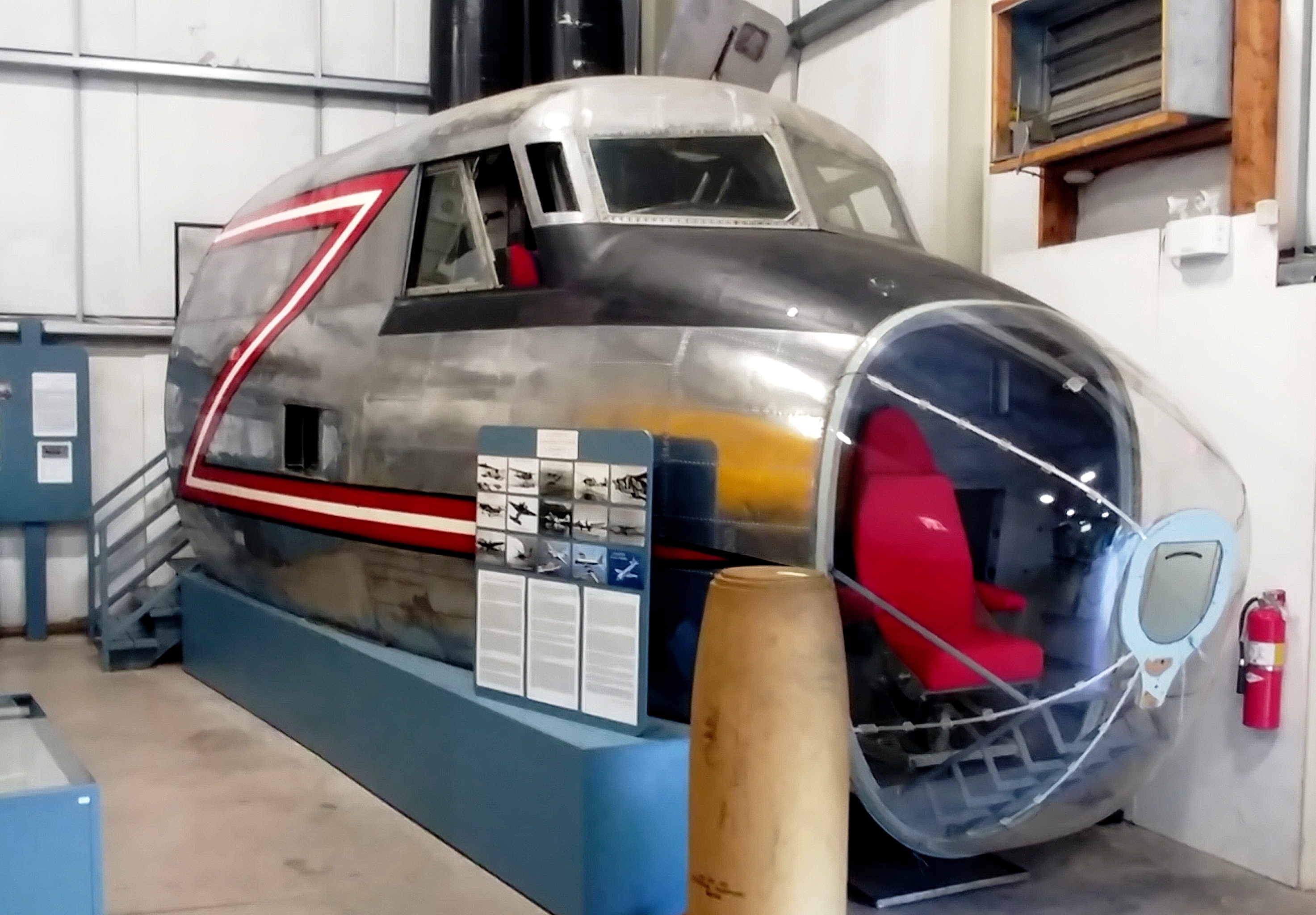
Canadair CP-107 Argus, cockpit simulator.

(CF Photo via Mike Murphy)
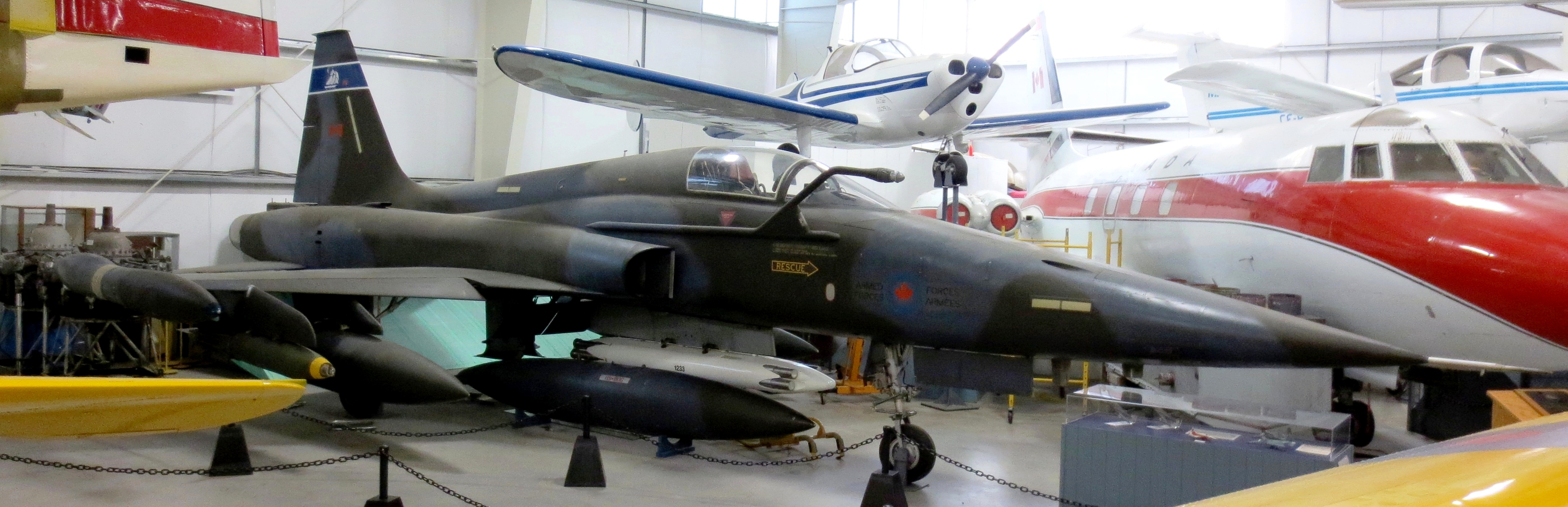
Canadair CF116 (Serial No.116715), No. 419 Squadron, AEC 89 1048.
(Author Photo)
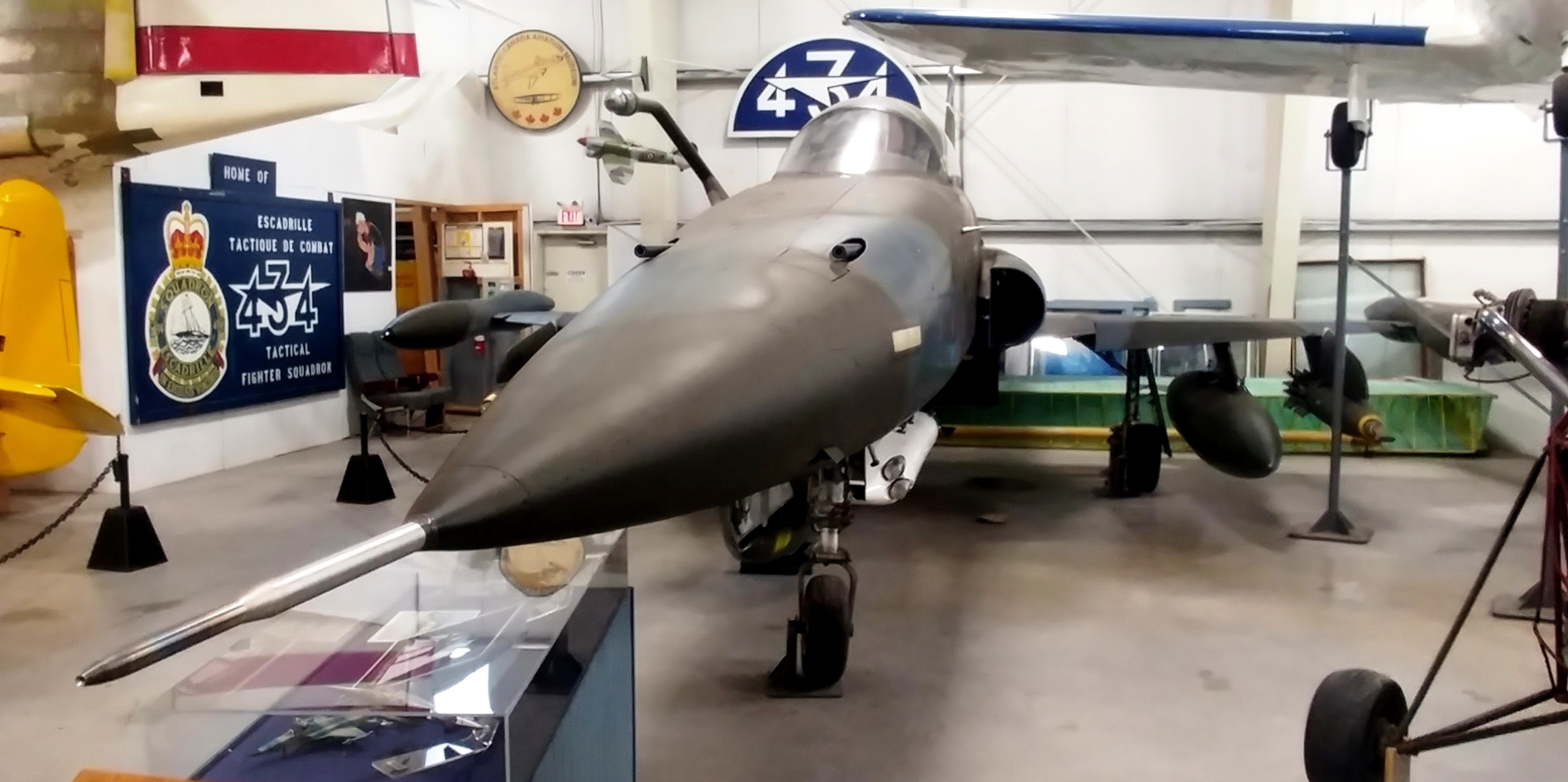
(Author Photo)
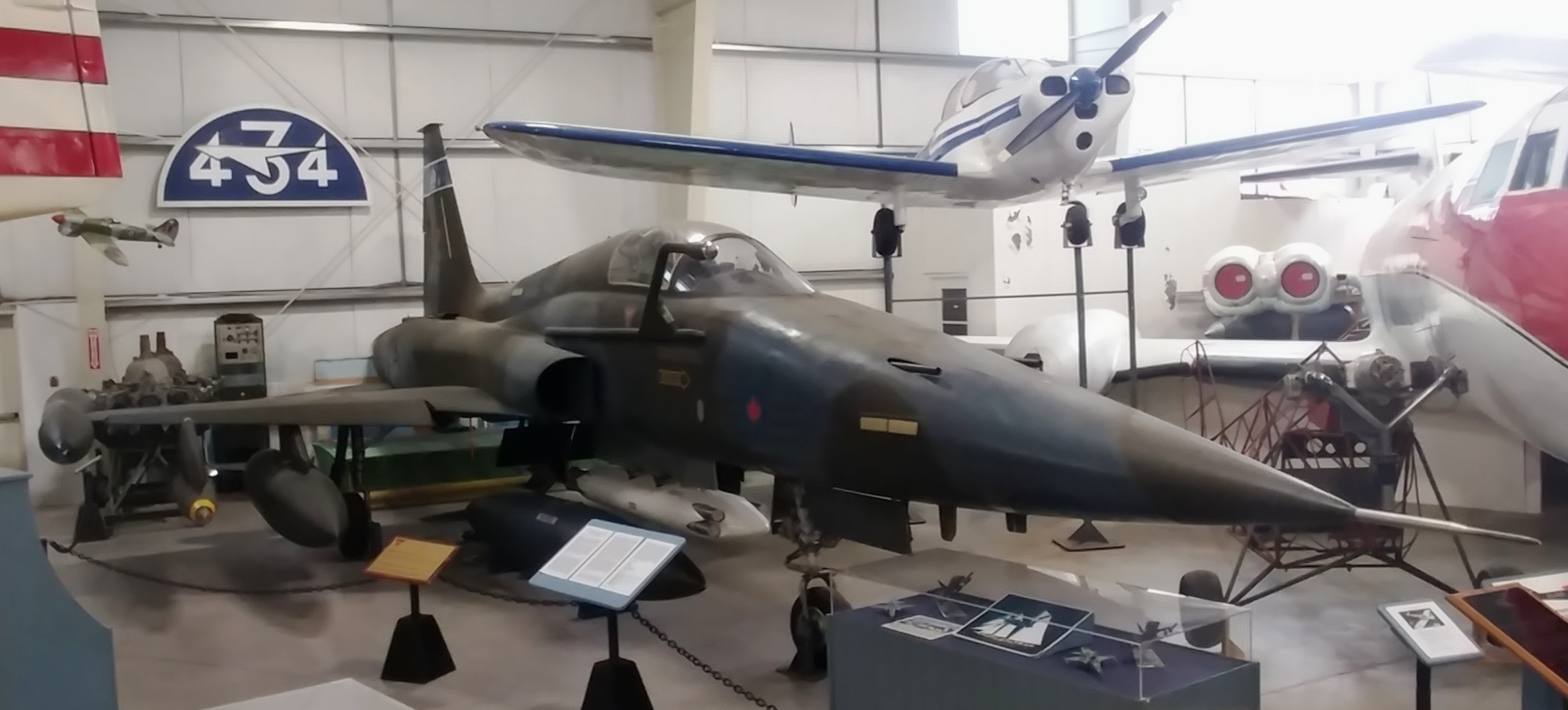
(Author Photo)
Canadair CF-116 Freedom Fighter (Serial No. 116748). 116748 was purchased from the government in 1998 and is painted in the colours of No. 434 Bluenose Squadron as based at CFB Chatham, New Brunswick.
The Canadair CF-116, (aka CF-5) Freedom Fighter, a Northrop design, was built between 1968 and 1975. 240 were taken on strength by the CAF. In Canadian service, the CF-5 flew with Nos. 419, 433 and 434 squadrons in support of Canada’s NATO commitment. Canada’s Freedom Fighters were retired in 1995 and put in storage. Some were sold off to other countries and some were made available to aviation museums.
(CF Photo)
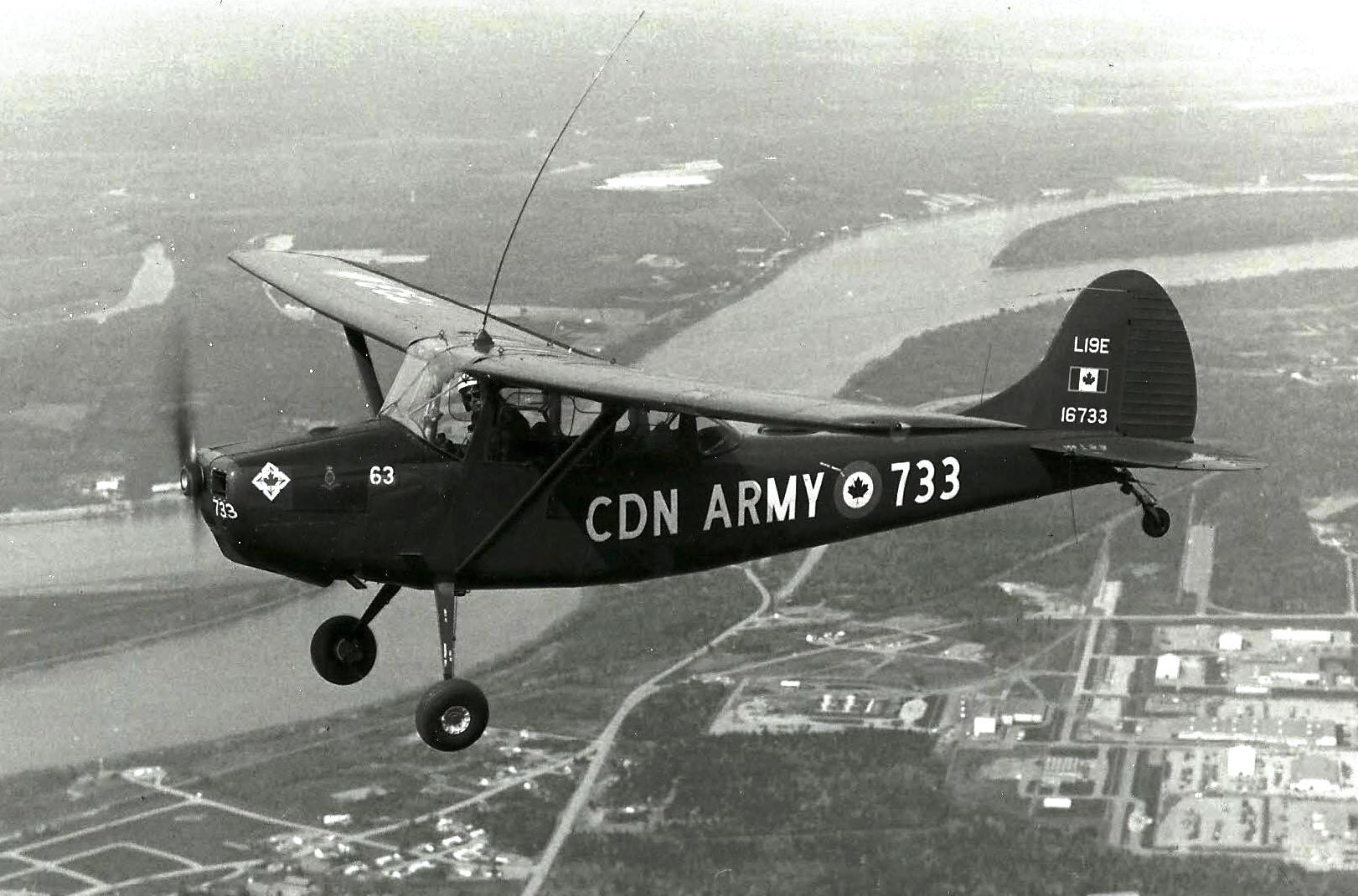
Cessna L-19E Bird Dog in flight over CFB Gagetown, New Brunswick.
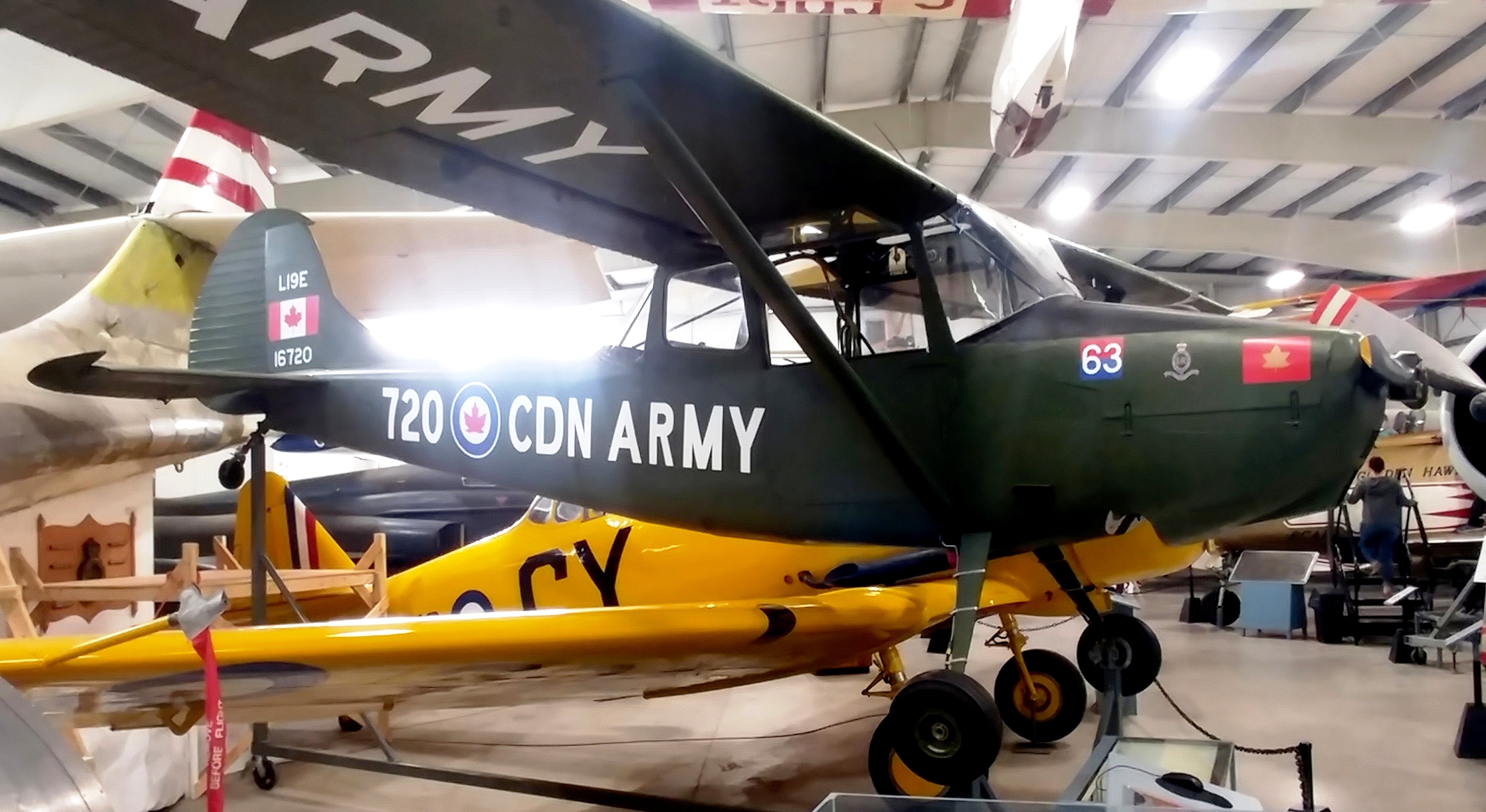
(Author Photos)
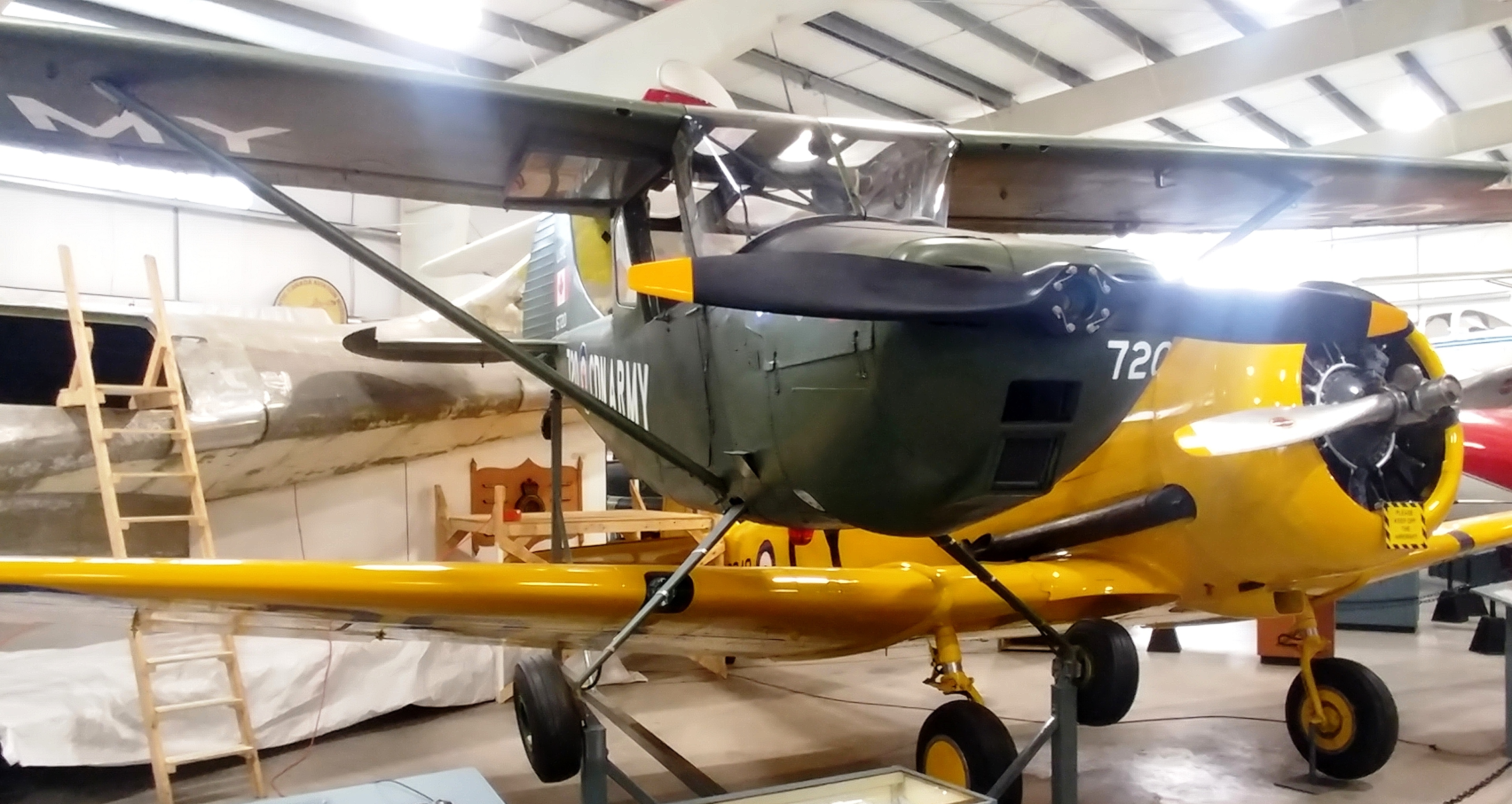
Cessna L-19E Bird Dog (Serial No. 56-4037), painted as (Serial No. 16720). 16720, was built in 1957 for the US Army and was transferred, along with 25 others, to the Canadian Army under a military assistance program. It is painted to represent 16720 as stationed at CFB Gagetown, New Brunswick in the 1970s.
The L-19 Bird Dog, designed by Cessna, was built for the US Army as a light observation aircraft with deliveries starting in 1950. In Canadian Army service, the L-19 was used as a spotter plane for artillery targeting as well as other duties.
(ACAM Photo)
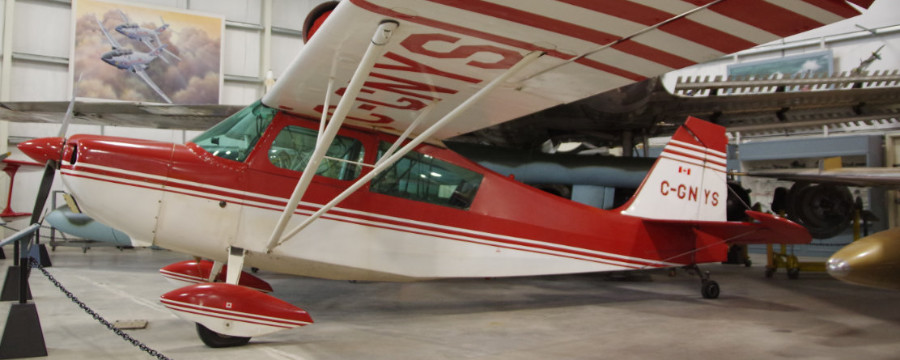
Citabria. The Citabria is a light single-engine, two-seat, fixed conventional gear airplane which entered production in the United States in 1964. Designed for flight training, utility and personal use, it is capable of sustaining aerobatic stresses from +5g to -2g. Its name spelled backwards is ‘aerobatic’ and suits it very well. The Museum’s example, built in 1973, was donated by Don Horne of Hopewell, Nova Scotia and flown from his private airstrip to Halifax. A pilot for 57 years, at age 89, Don decided it was time to give up flying, although he was still riding his motorcycle now and then.
(Library and Archives Canada Photo, MIKAN No. 3388270)
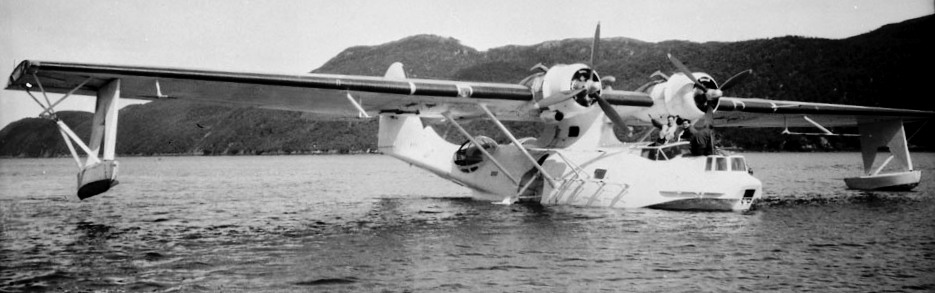
Consolidated PBY Canso (Serial No. 9798), RCAF No. 160 Squadron, Newfoundland, 13 Oct 1944.
(Library and Archives Canada Photo, MIKAN No. 3643747)
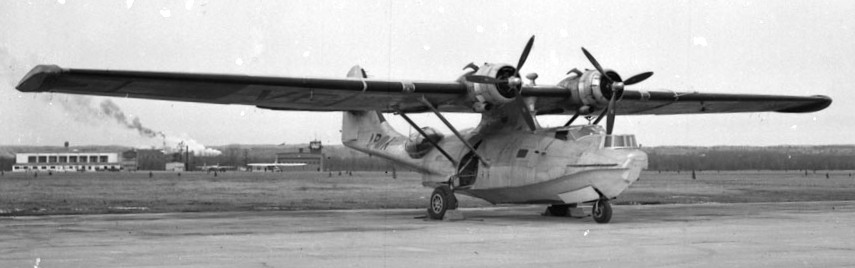
Consolidated PBY Canso, RCAF, AP-K, No. 413 (Tusker) Squadron, 15 Dec 1948.
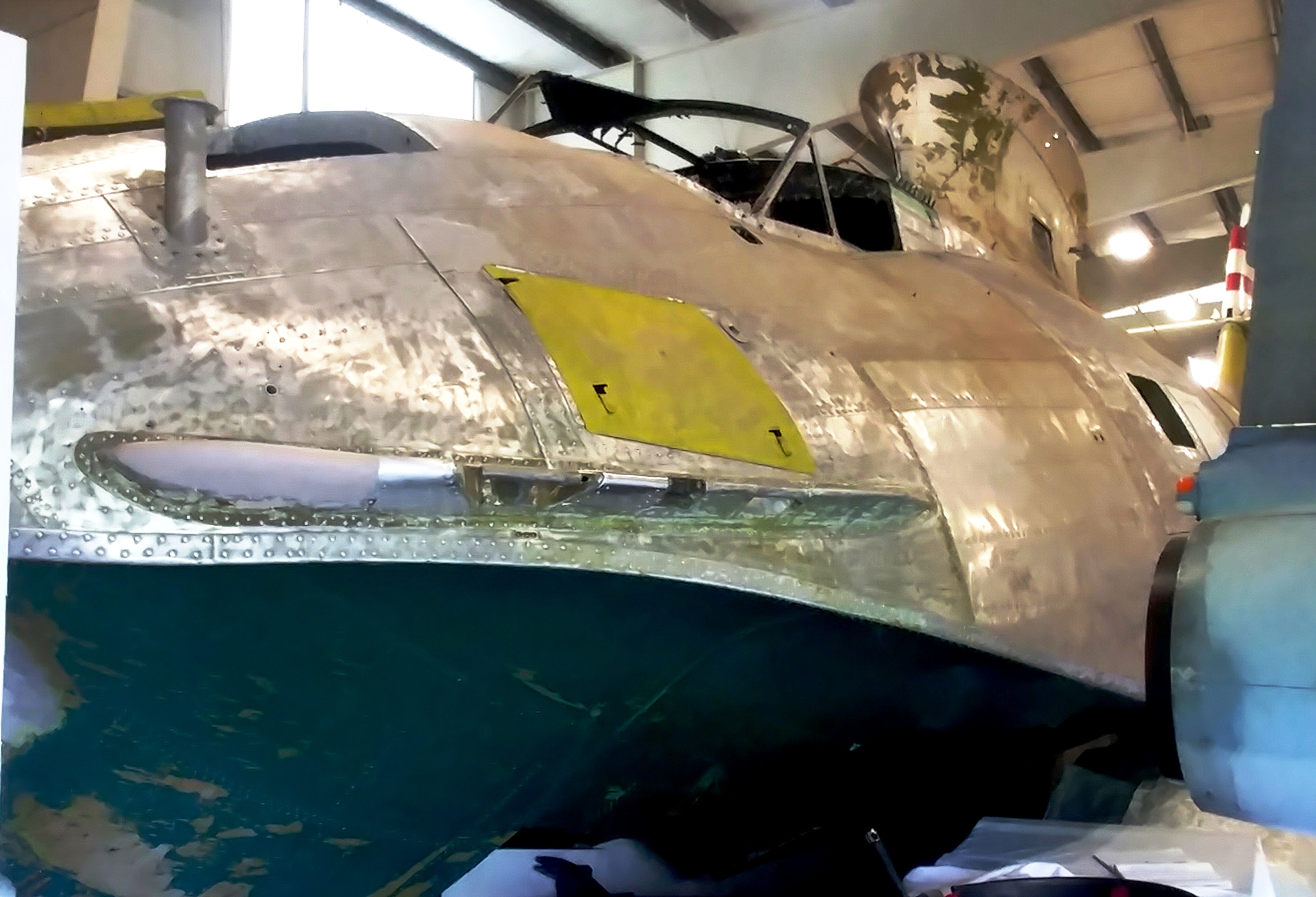
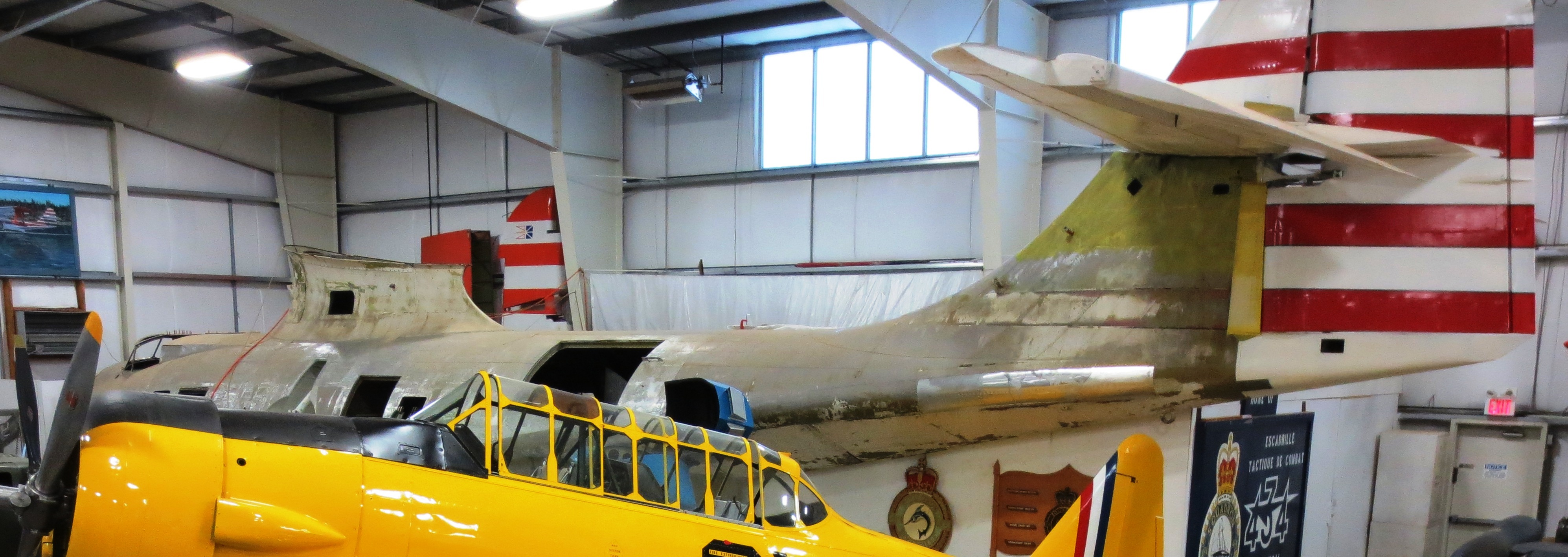
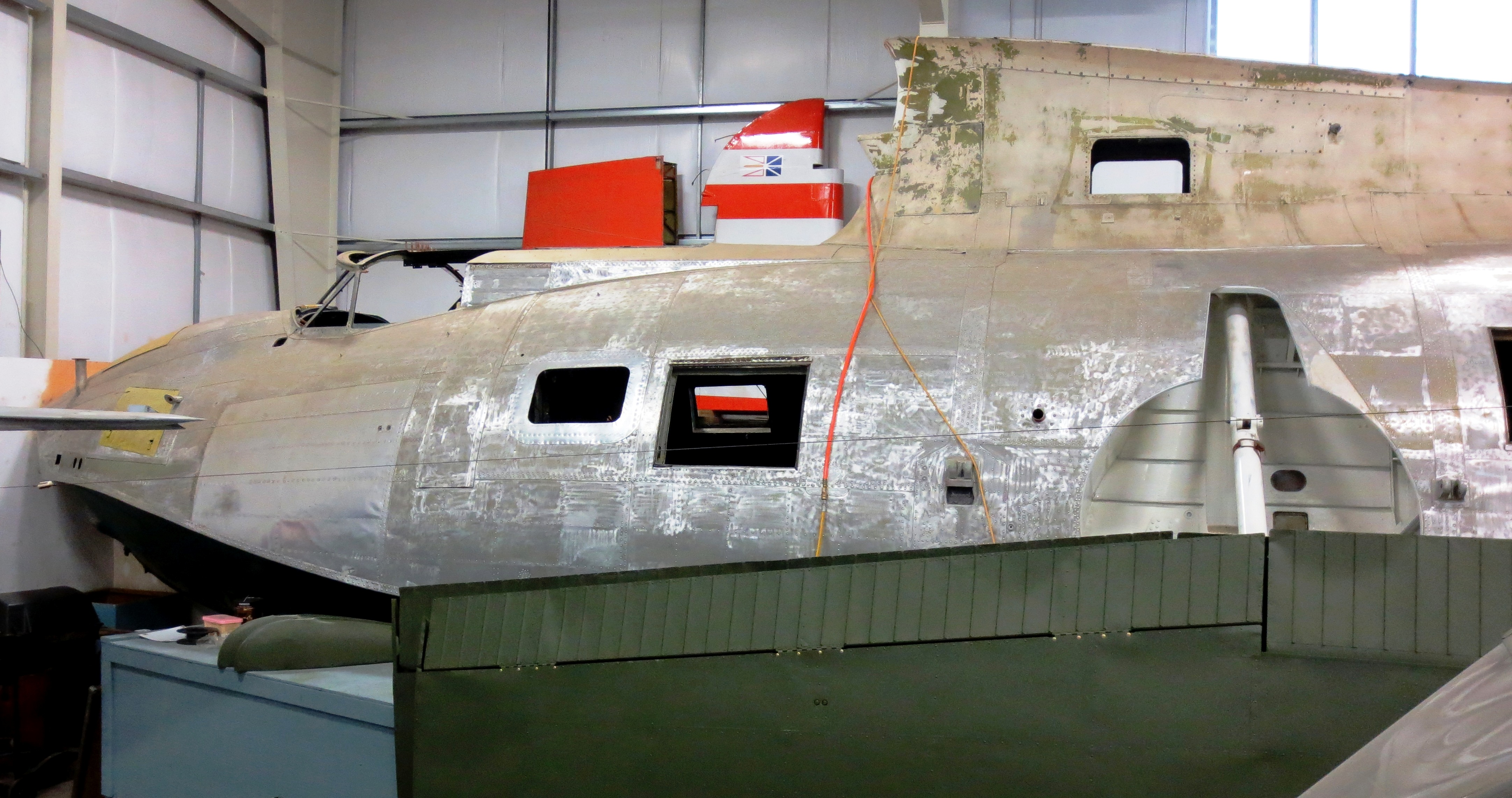
(Author Photos)
Consolidated PBY-5A Canso, RCAF (Serial No. 5021), C/N 100, Reg. No. CF-HFL. The Museum’s PBY was built for the US Navy in 1942. After being retired from Navy service it flew with various air cargo companies in the Caribbean before being bought by Eastern Provincial Airways. In 1957 it crashed in Labrador and remained there until recovered by the ACAM with the aid of a No. 450 Squadron RCAF Chinook helicopter. 5021 is being refinished in the EPA colours it wore on its last flight.
First developed in the 1930s the Consolidated PBY was built to fulfill a US Navy requirement. The PBY is an amphibian capable of operating from land or sea.
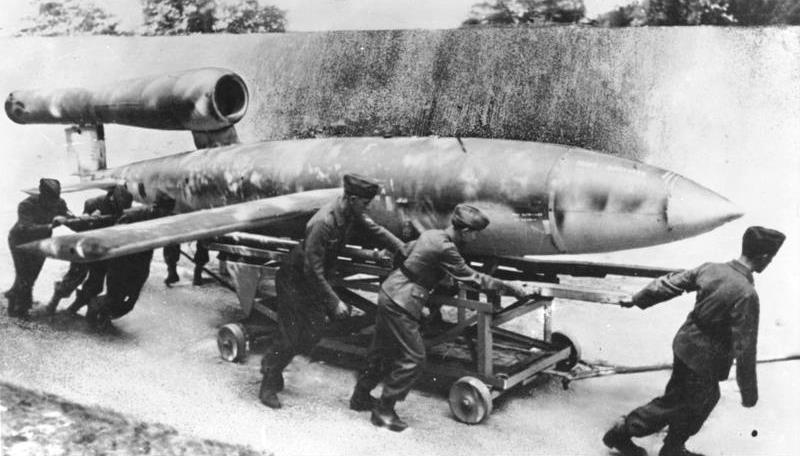
(Bundesarchiv Photo Bild 146-1975-117-26)
Fieseler Fi 103, V-1 flying bomb being wheeled into position by its German launch crew.
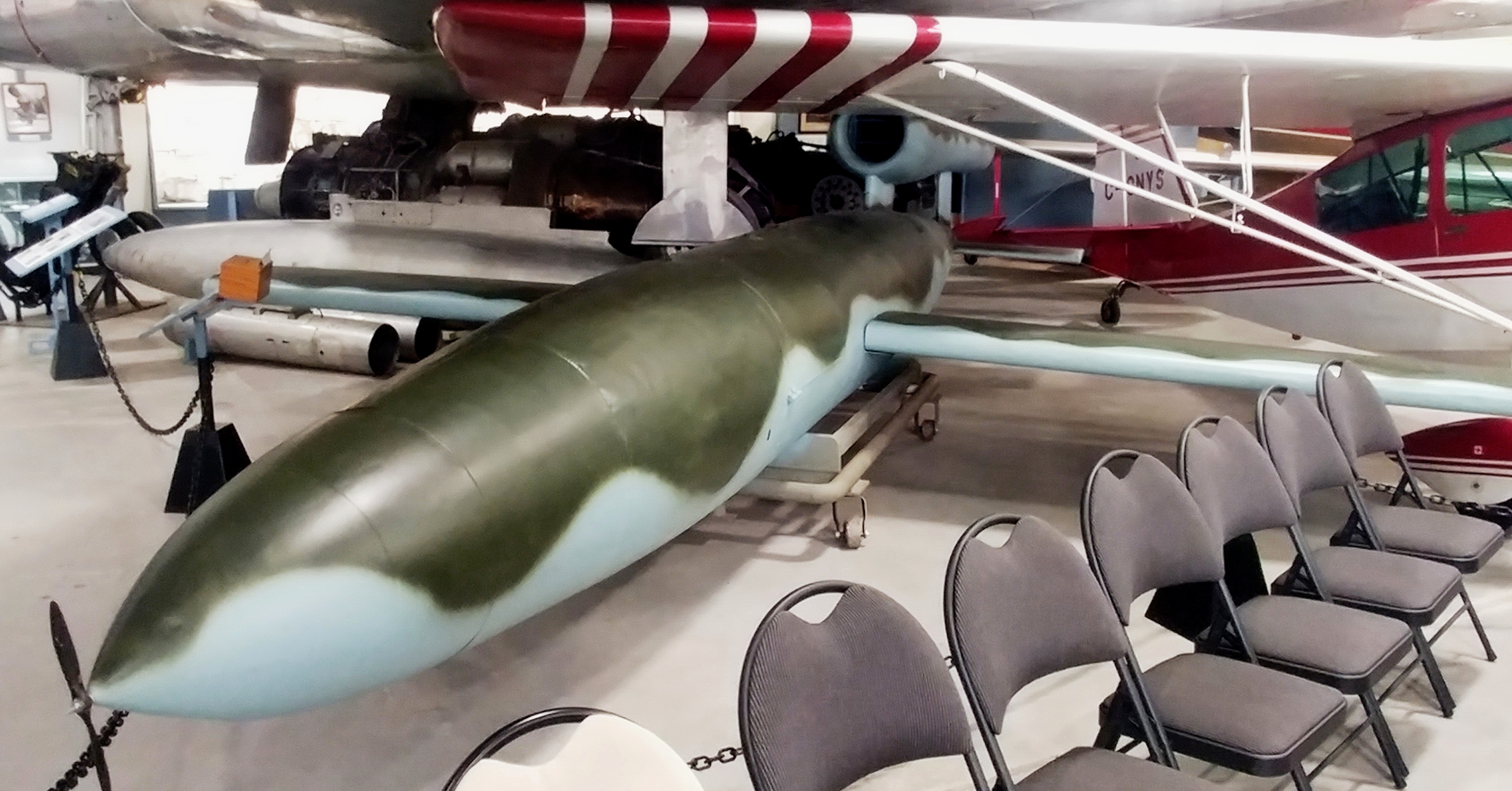
The V-1 flying bomb Vergeltungswaffe 1 (Vengeance Weapon 1), also known to the Allies as the buzz bomb, or doodlebug, and in Germany as Kirschkern (cherrystone) or Maikäfer (maybug), was an early cruise missile and the only production aircraft to use a pulsejet for power.
The V-1 was the first of the so-called “Vengeance weapons” (V-weapons or Vergeltungswaffen) series designed for the terror bombing of London. It was developed at the Peenemünde Army Army Research Center in 1939 by the German Luftwaffe during the Second World War. During initial development it was known by the codename “Cherry Stone”. Because of its limited range, the thousands of V-1 missiles launched into England were fired from launch facilities along the French (Pas-de-Calais) and Dutch coasts. The first V-1 was launched at London on 13 June 1944, one week after (and prompted by) the successful Allied D-Day landings in Europe. At its peak, more than one hundred V-1s a day were fired at south-east England, 9,521 in total, decreasing in number as sites were overrun until October 1944, when the last V-1 site in range of Britain was overrun by Allied forces. After this, the V-1s were directed at the port of Antwerp and other targets in Belgium, with 2,448 V-1s being launched. The attacks stopped only a month before the war in Europe ended, when the last launch site in the Low Countries was overrun on 29 March 1945.
The British operated an arrangement of air defences, including anti-aircraft guns and fighter aircraft, to intercept the bombs before they reached their targets as part of Operation Crossbow, while the launch sites and underground V-1 storage depots were targets of strategic bombing. (Wikipedia)
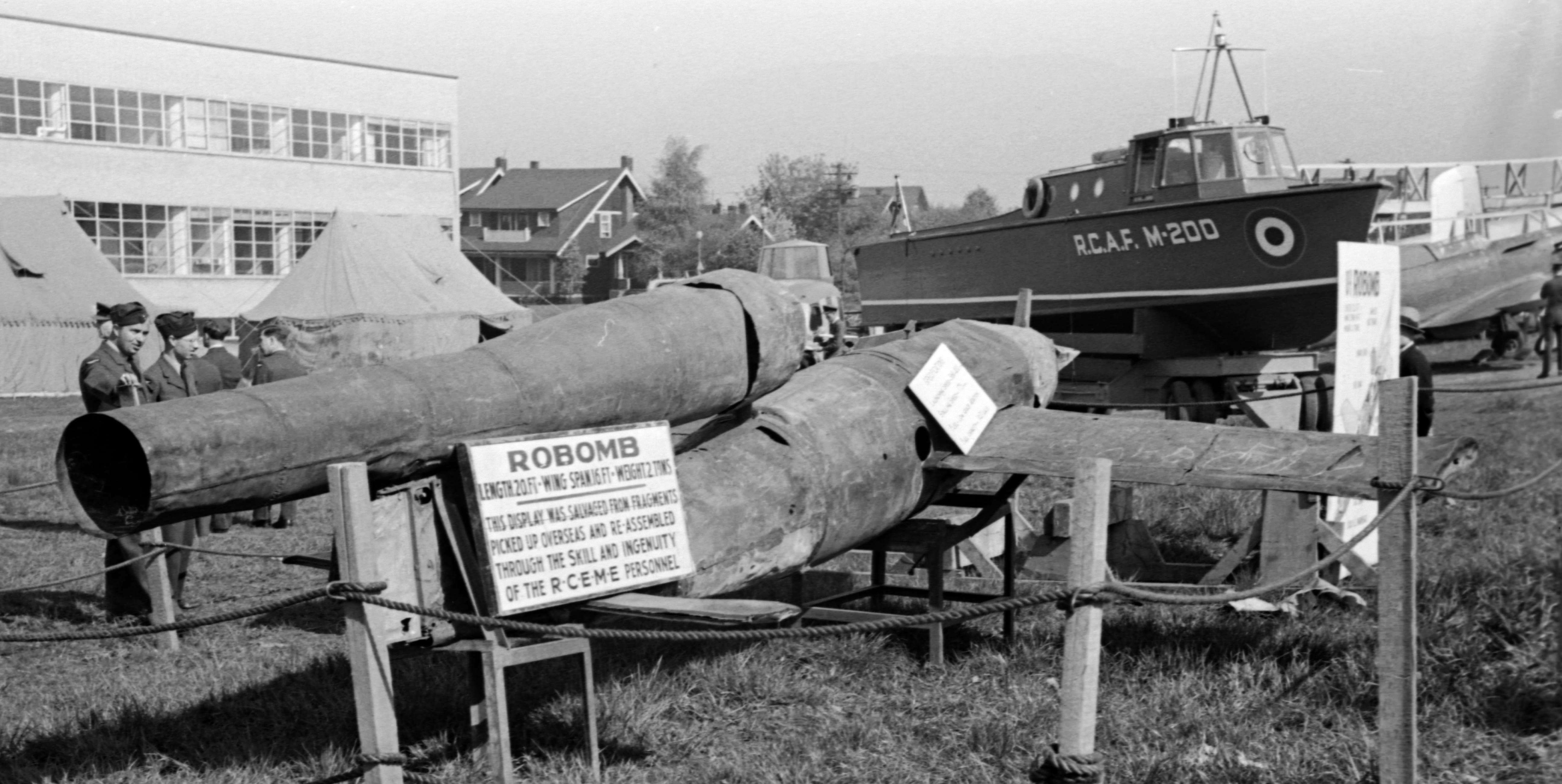
(City of Vancouver Archives, Photo, AM640-S1-: CVA 260-1409)
Fieseler Fi 103, V-1 flying bomb reconstruction from parts salvaged by the RCEME in France, along with an RCAF M-200 boat, on display in Vancouver, British Columbia, 1945.
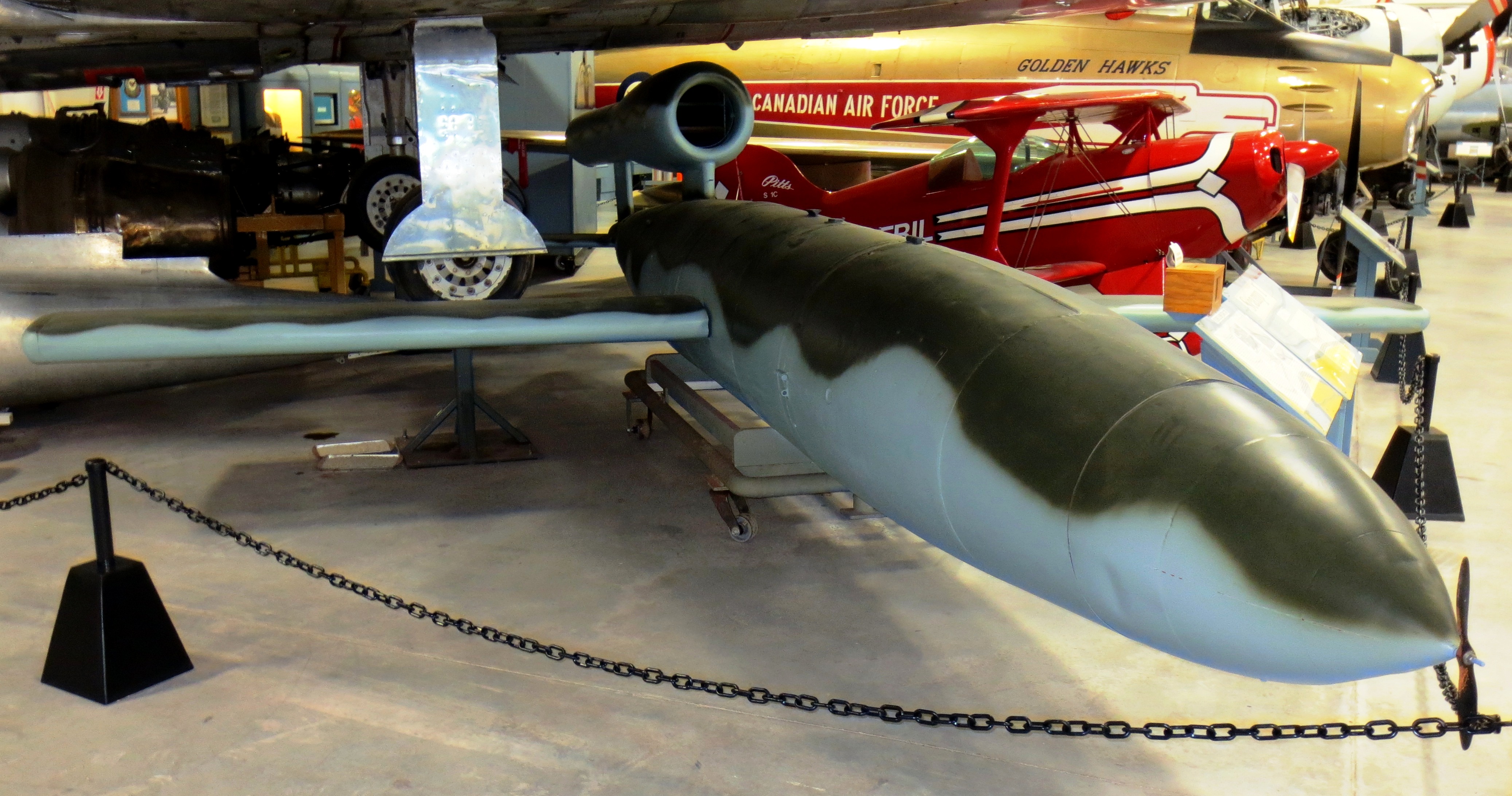
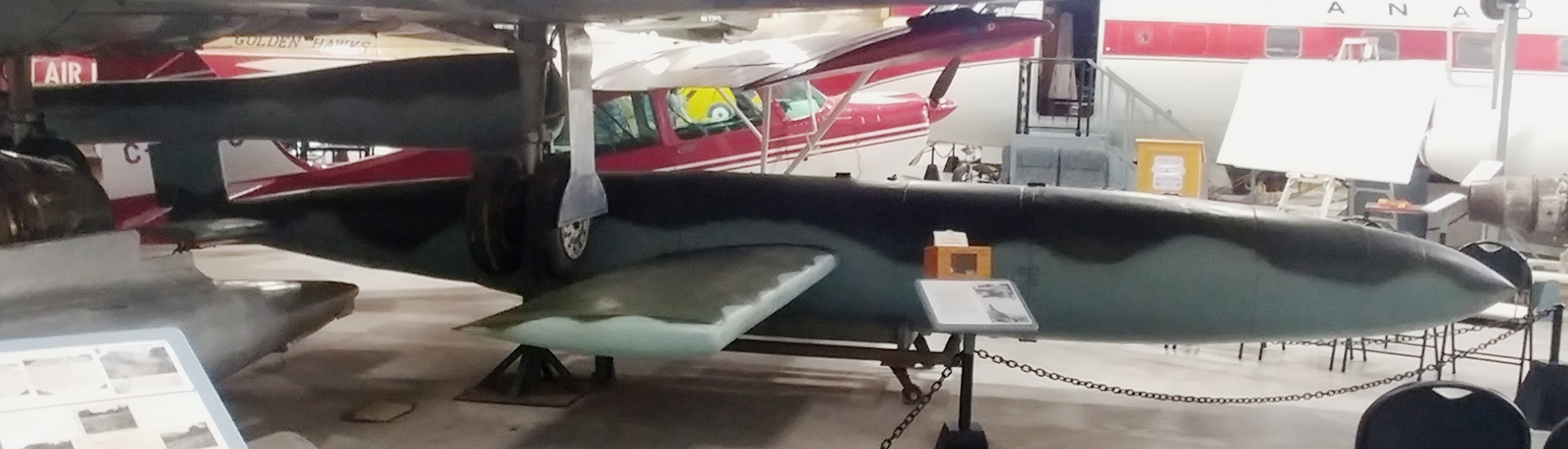
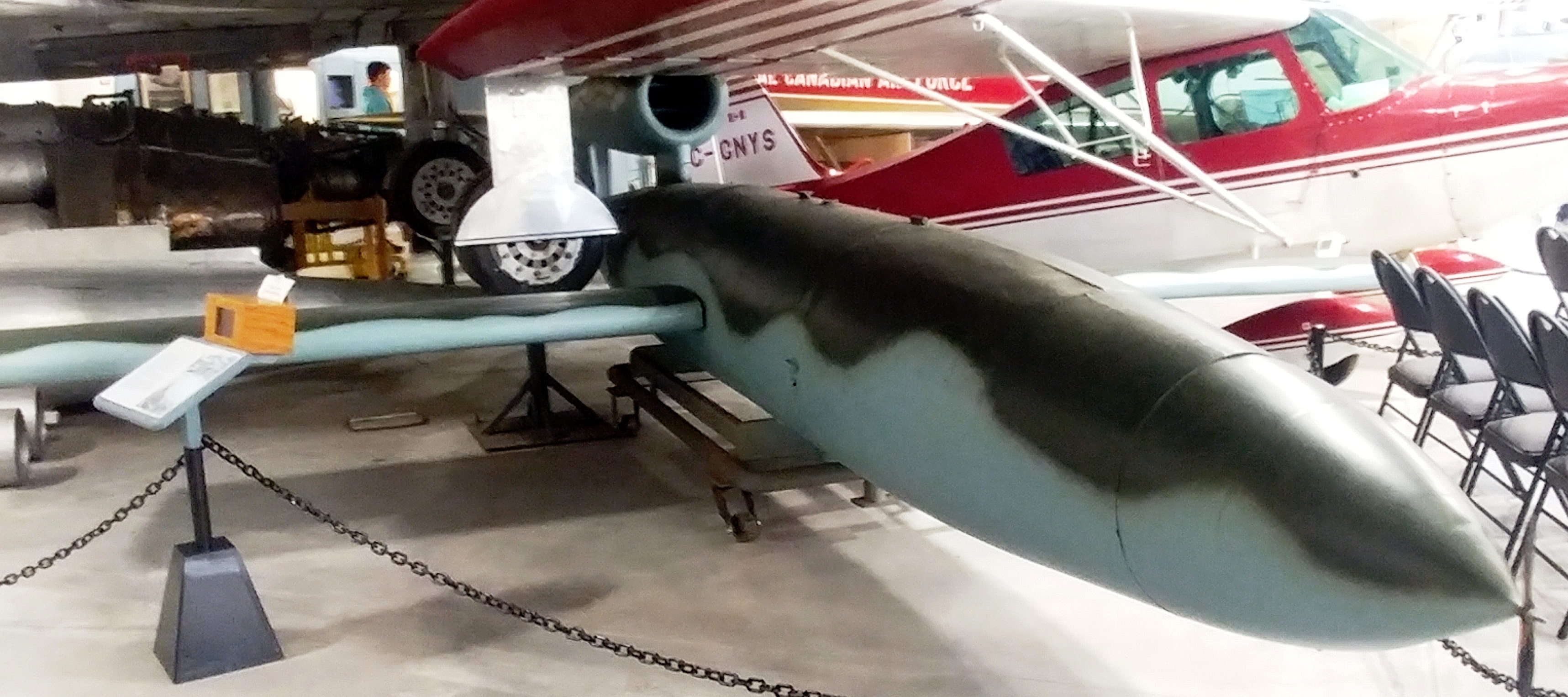
(Author Photos)
Fieseler Fi 103, V-1 flying bomb. War Prize.
(Author Photo)
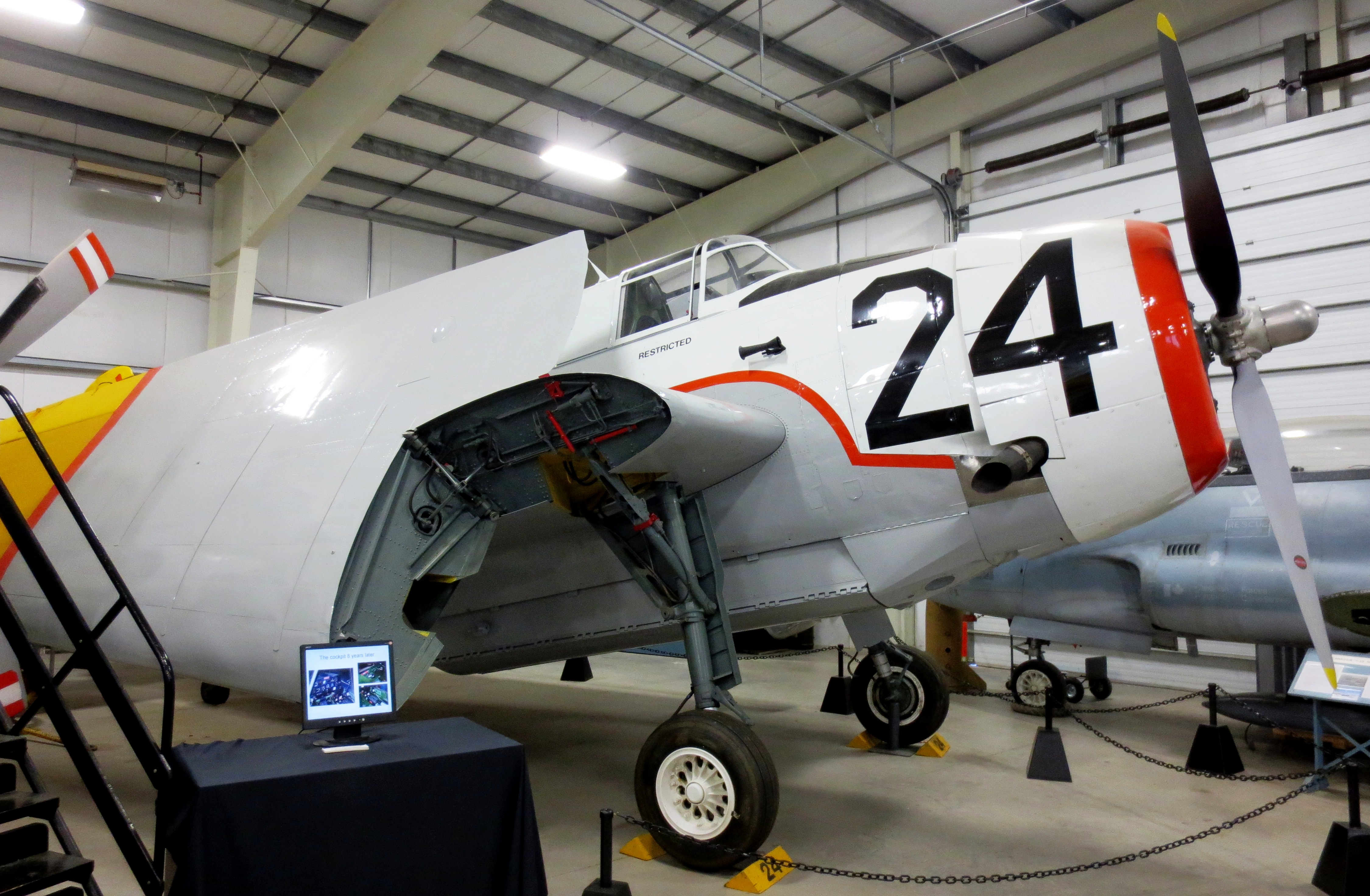
General Motors (Grumman) TBM-3 Avenger (Serial No. 53607), USN (BuNo. 53607), in the colours of Forest Protection Limited.
The Grumman Avenger was designed as a torpedo bomber for the US Navy during World War II. It was flown by many air arms during the war and carried on until the late 1950s. The Museum’s Avenger was originally built for the US Navy and after its military career it became a spray plane for use in fighting forest fires and the Spruce Bud Worm spray program. In 1975, shortly after take-off, the plane lost power and crashed in the bush, luckily the pilot walked away with only minor injuries. In 1997 the Museum recovered the Avenger from the crash site and moved it to Fredericton, New Brunswick. There over a course of the next 9 years, Museum members restored it to like-new condition and upon completion transported it by truck to Halifax.
(Library and Archives Canada Photo, MIKAN No. 4821470)
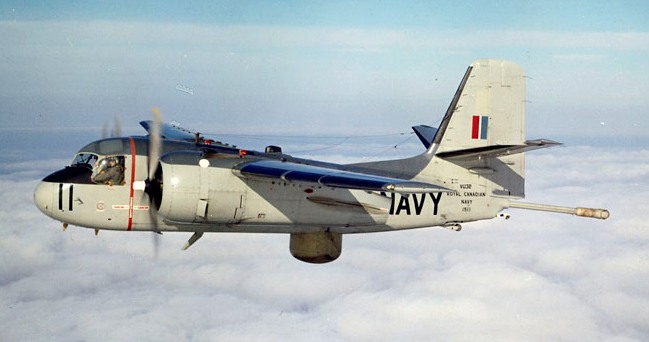
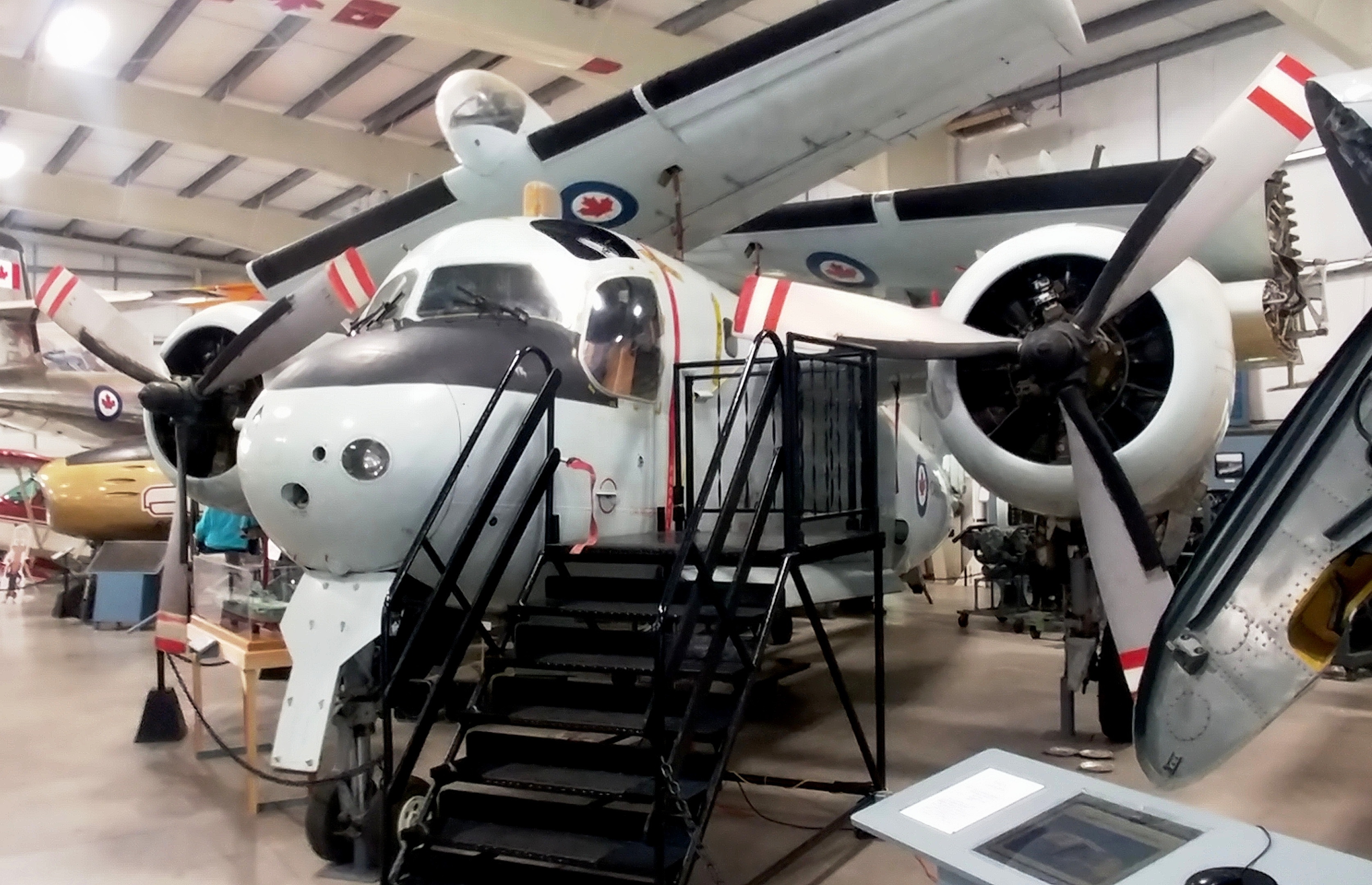
de Havilland Canada (Grumman) CS2F-1/CP-121 Tracker, MAD boom extended.
(Author Photos)
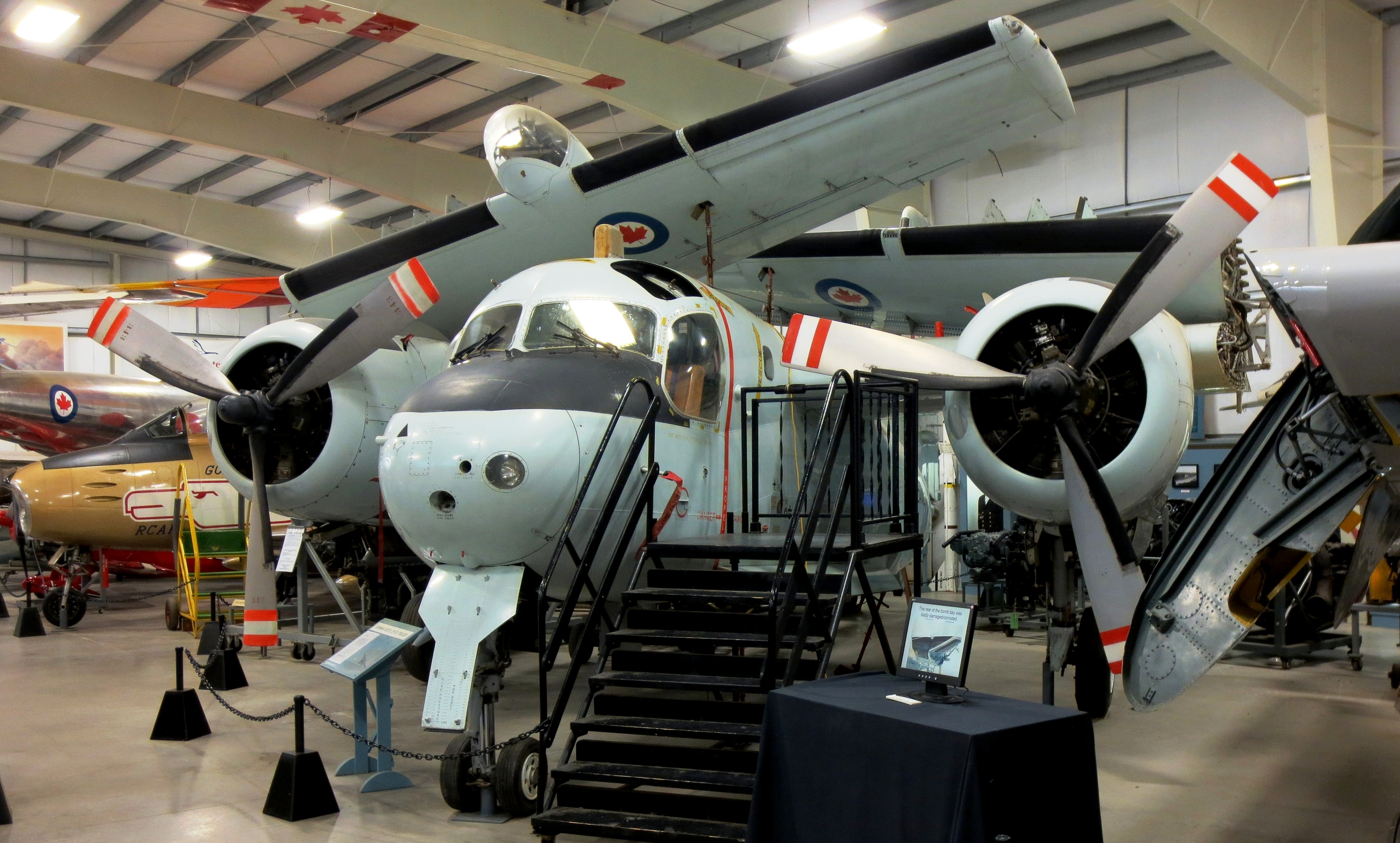
de Havilland Canada (Grumman) CP-121 Tracker (Serial No. 12176). The Museum’s Tracker was declared a surplus in 1990 and acquired for display.
Designed by Grumman, the Tracker is a twin-engine aircraft carrier-borne anti-submarine patrol aircraft from the 1950s. In Canada, 100 Trackers were built under license by De Havilland Canada for use with the RCN aboard HMCS Bonaventure. With the retirement of the Bonaventure, the Trackers became land-based patrol aircraft based at CFB Shearwater and later CFB Summerside PEI.

(ACAM Photo)
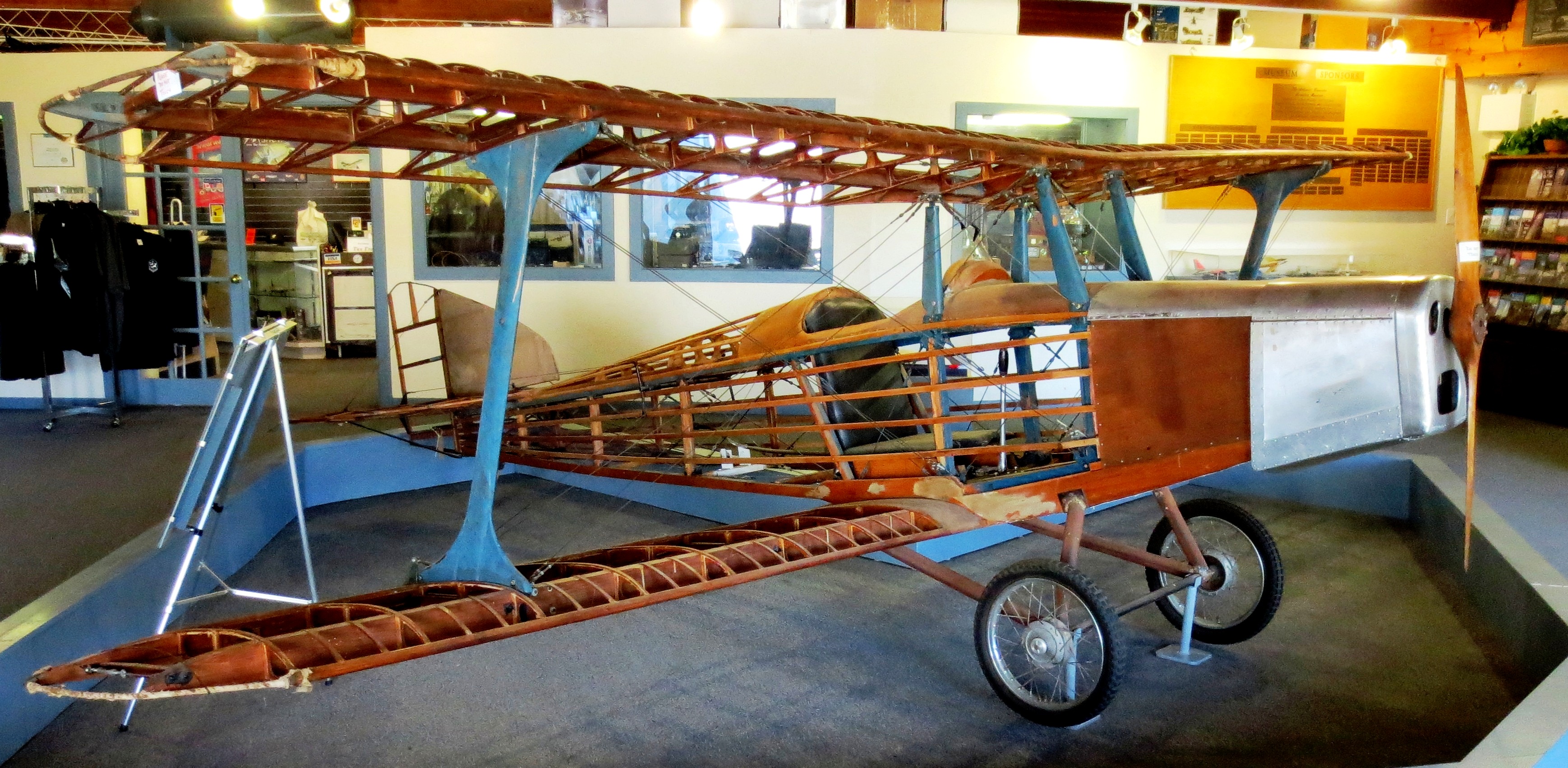
Lincoln Sport. This is a smaller one passenger version of the Lincoln Biplane. It was designed in the 1930s, but it is a true time-tested design. It has a length of 16 feet and a wingspan of only 20 feet, with a 35 h.p. engine it has a top speed of 100 mph. The Museum’s example came out of an attic in Truro. It was partly built by Mr. Charles X. Craig who bought the hardware and plans for $25.00 and supplied the wood himself. Sadly he died before he was able to finish it, but members of the Museum worked on it to its current finished display condition.
(Library and Archives Canada Photo, MIKAN No. 4327232)
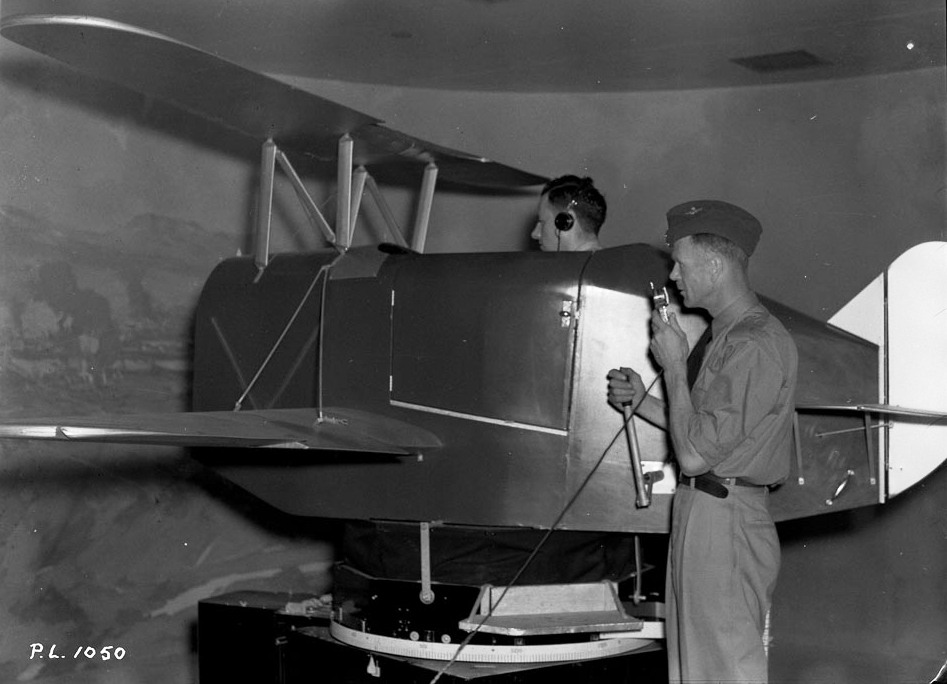
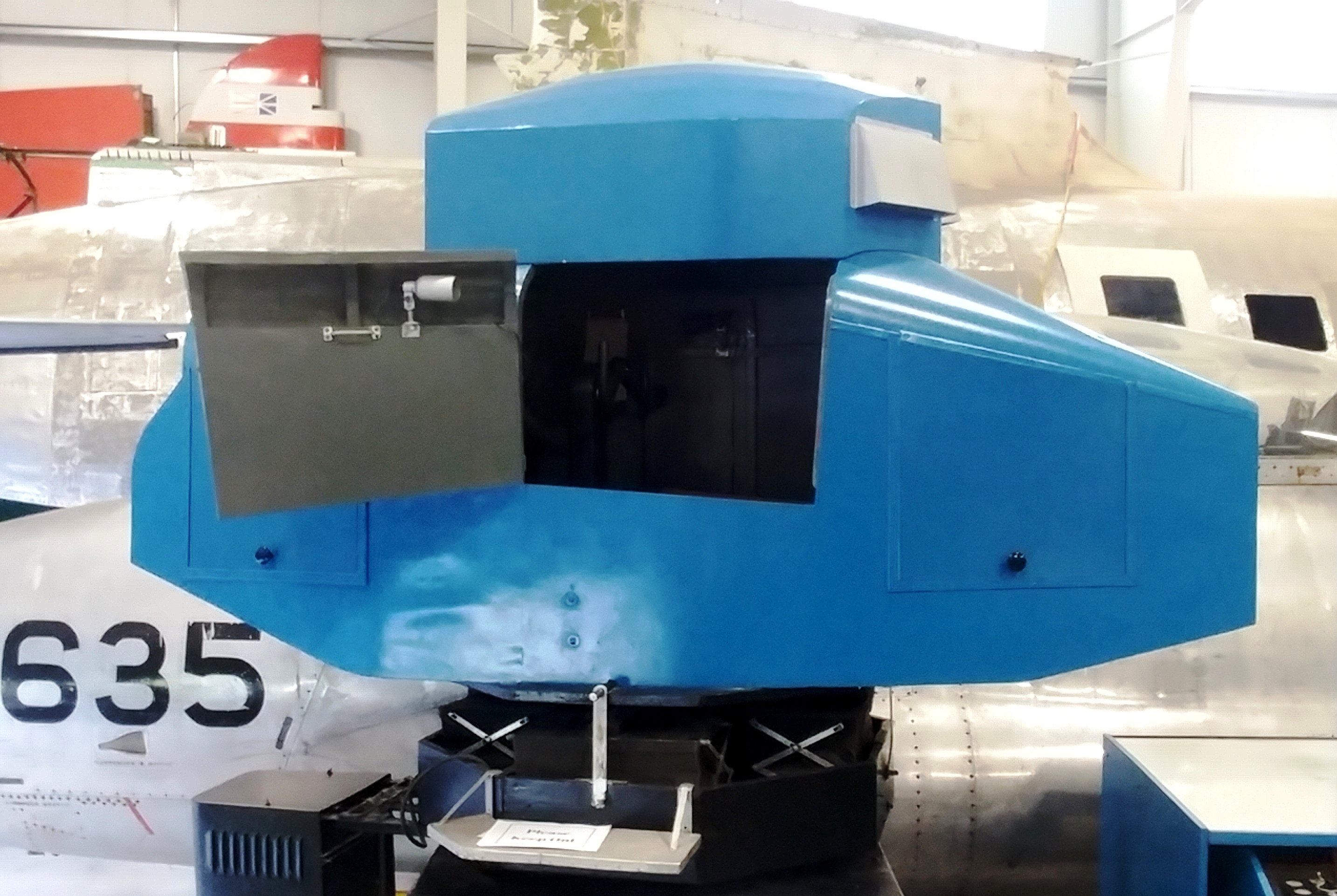
Flying Officer A.E. Jarvis instructs students on a Link Trainer at Initial Training School, Toronto, 25 July 1940.
(Library and Archives Canada Photo, MIKAN No. 3199512)
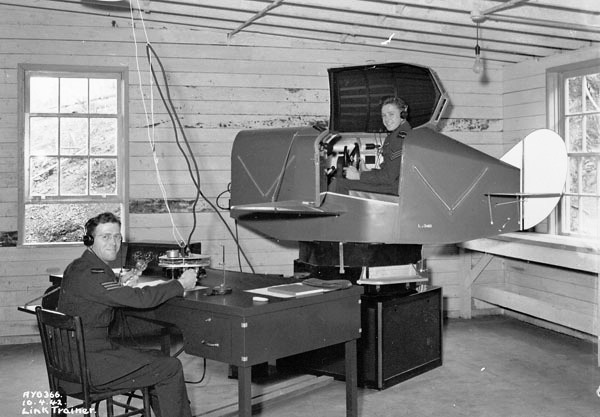
Link Trainer, RCAF Station Alliford Bay, BC, 10 Apr 1942.
(Author Photos)
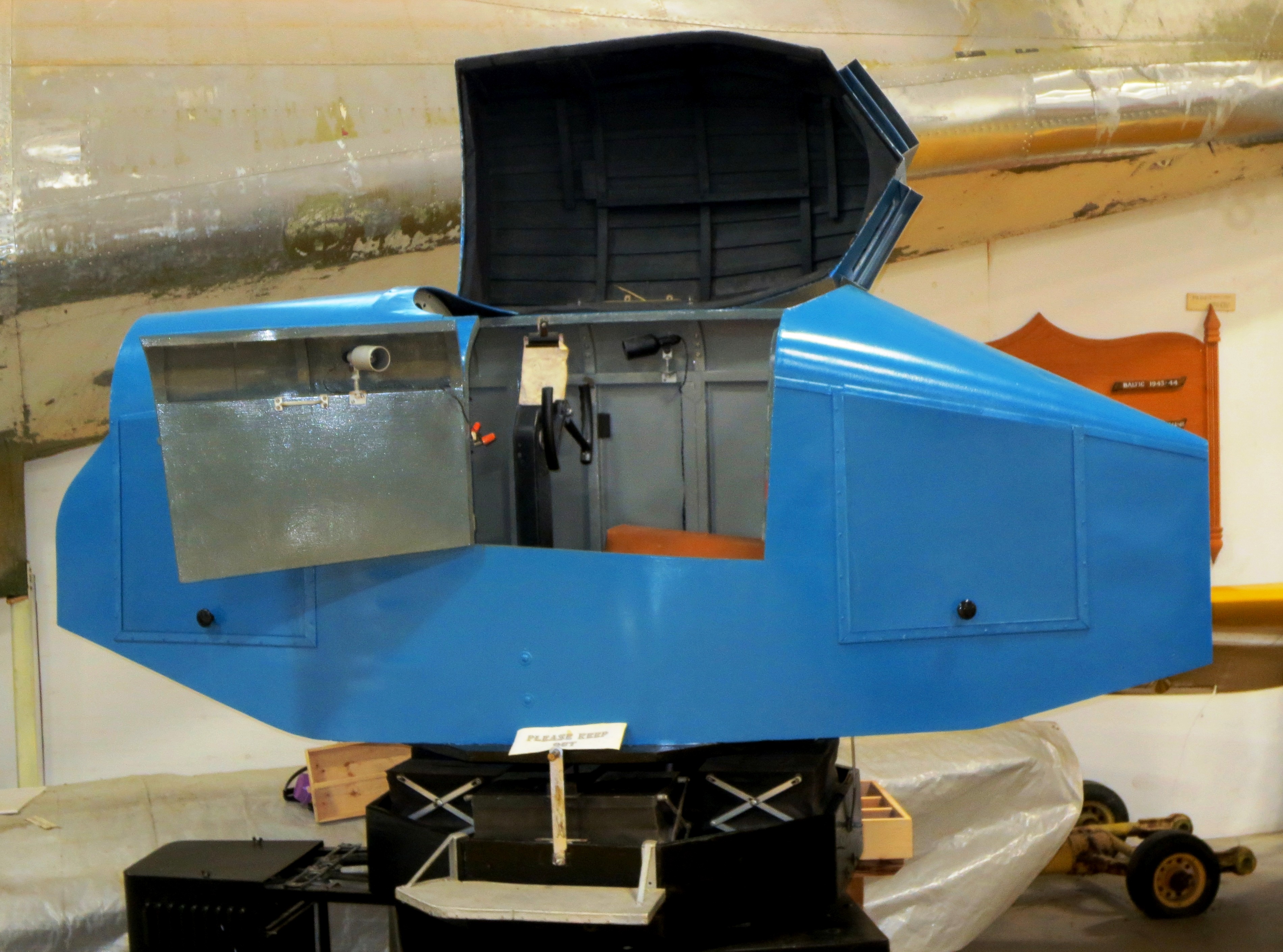
Link Trainer.
(Library and Archives Canada Photo, MIKAN No. 3589741)
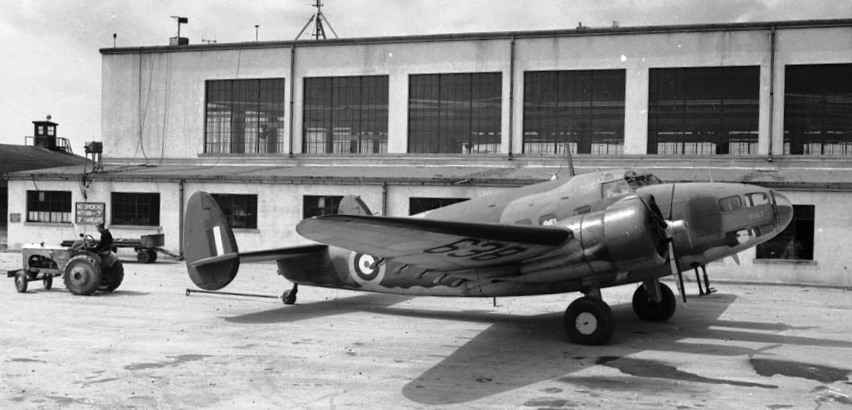
Lockheed Hudson, RCAF, 21 June 1943.
Lockheed 414 Hudson Mk. VI (A-28A), fuselage, USAAF (Serial No. 42-47022), C/N 414-6942, Lend-Lease Contract No. DA-908, RAF (Serial No. FK466). This aircraft is undergoing restoration with parts from a Lockheed Lodestar, Reg. No. CF-CEC from the Reynolds Museum at the NMRCAF in Trenton, Ontario.
(Author Photos)
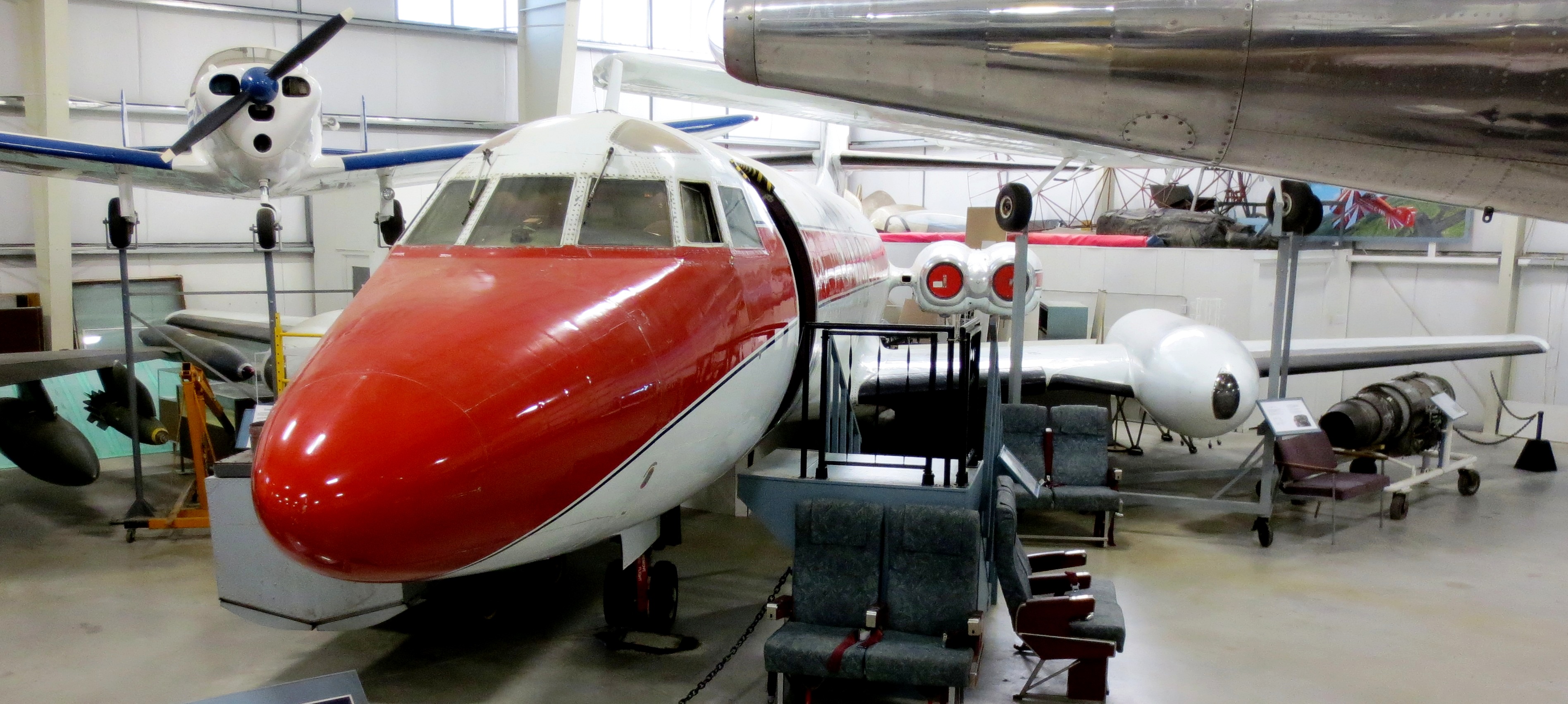
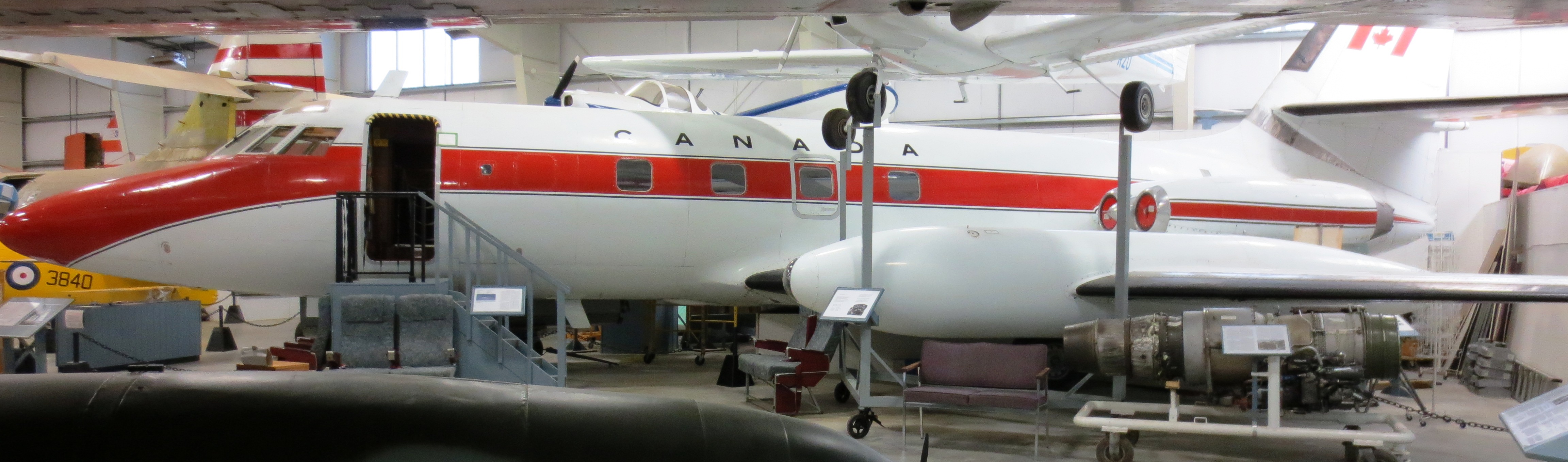
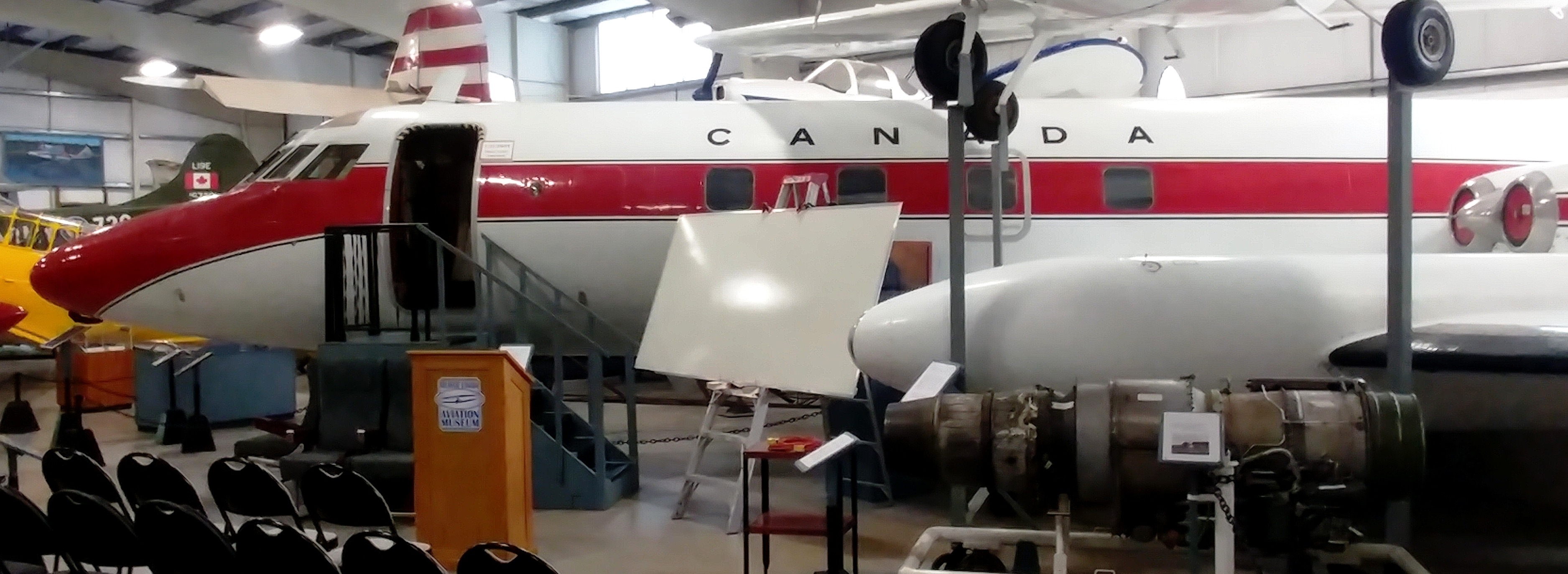
Lockheed C-140 Jetstar (Serial No. 802), CF-DTF. 802 was used by Transport Canada for many years to fly Prime Ministers, including Pierre Trudeau, on official business around the globe. Due to changing regulations regarding noise levels, the Jetstar fleet was forced into early retirement. Flown to Halifax Airport in 1985 our Jetstar was put on display in 1999.
Lockheed produced 204 Jetstars between 1961 and 1980. Capable of carrying a maximum of 14 passengers Jetstars were used by business and governments alike as a VIP transport.
(Author Photo)
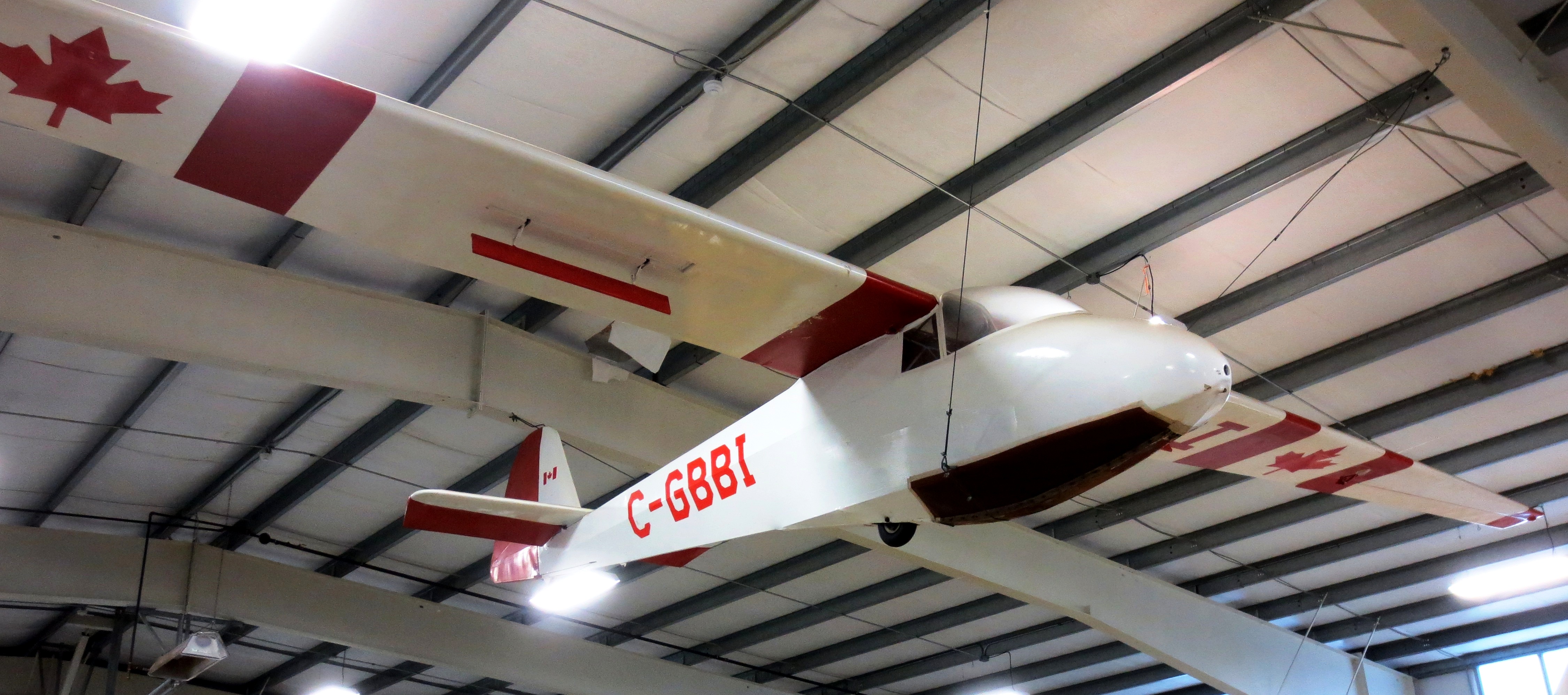
L-Spaatz sailplane.
(Author Photos)
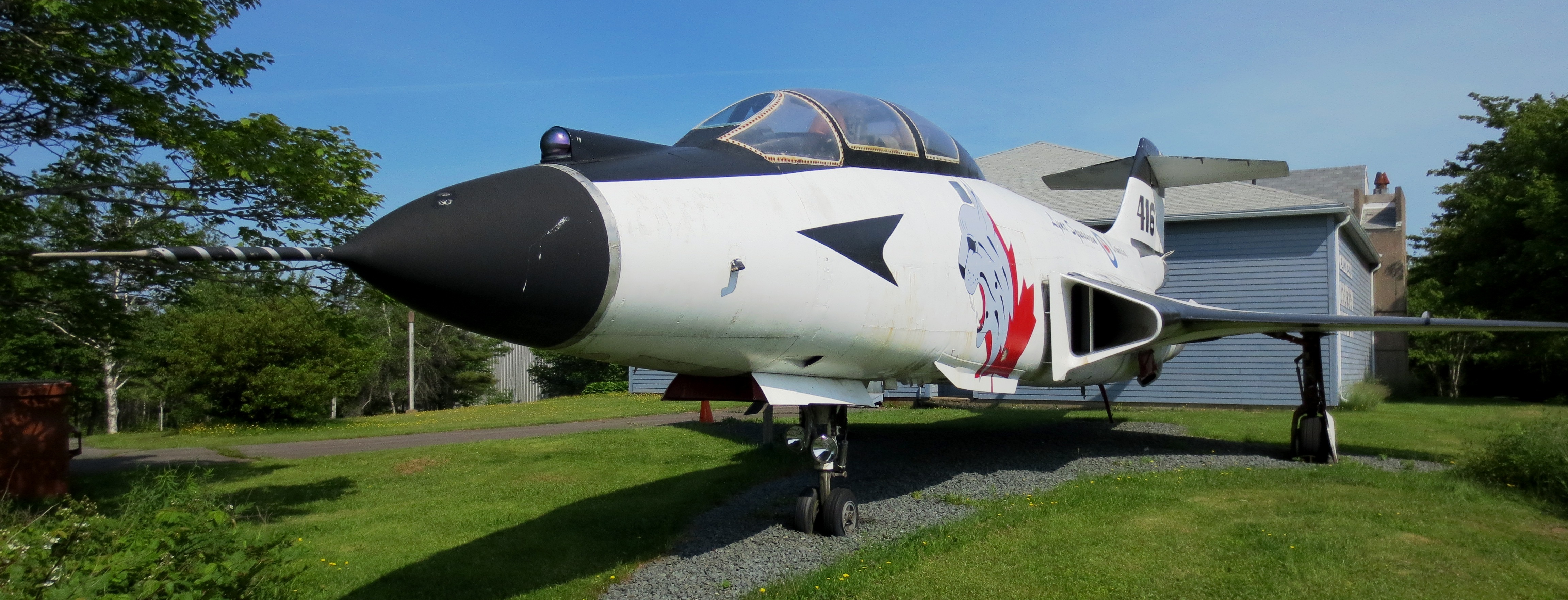
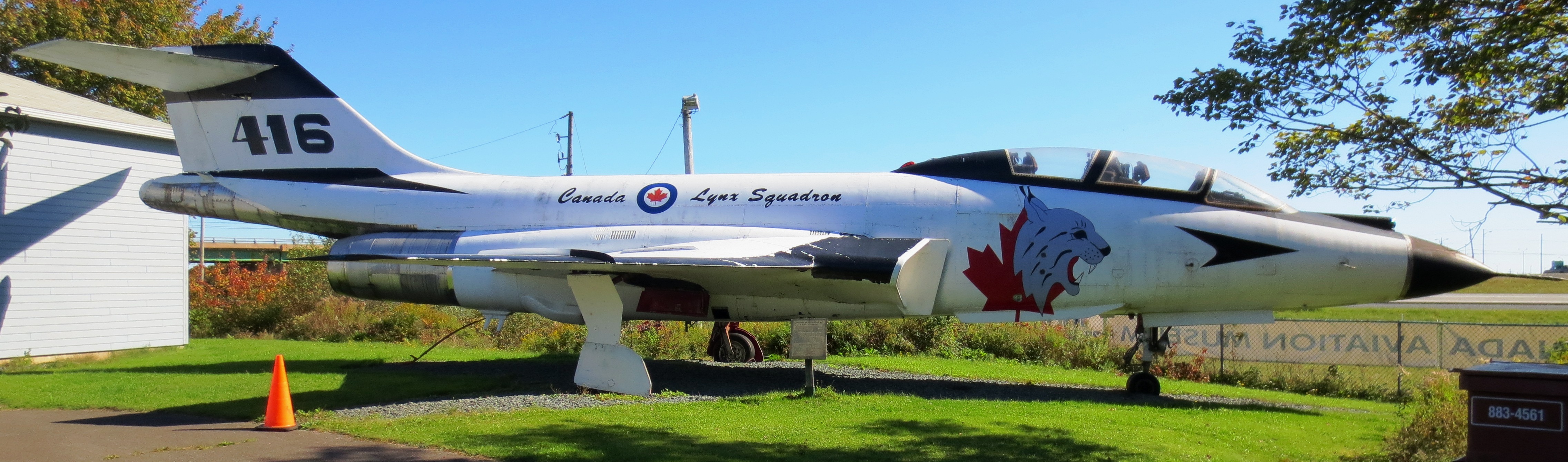
McDonnell CF-101B Voodoo (Serial No. 101043), ex-USAF (Serial No. 57-00380). 101043 was flown to Halifax in February 1985. It had served with No. 416 Squadron, based at CFB Chatham, New Brunswick, and at the time of its retirement was painted in a commemorative No. 416 Squadron scheme to help celebrate the 60th anniversary of the RCAF.
The CF-101 Voodoo served with the RCAF between 1961 and 1984. Designed by McDonnell Aircraft, as part of the ‘Century Series’, it first flew in 1954. Voodoos, capable of over 1,800kmph, it was used as an interceptor aircraft to deliver nuclear weapons to defend against air attacks during the Cold War.
(Author Photo)
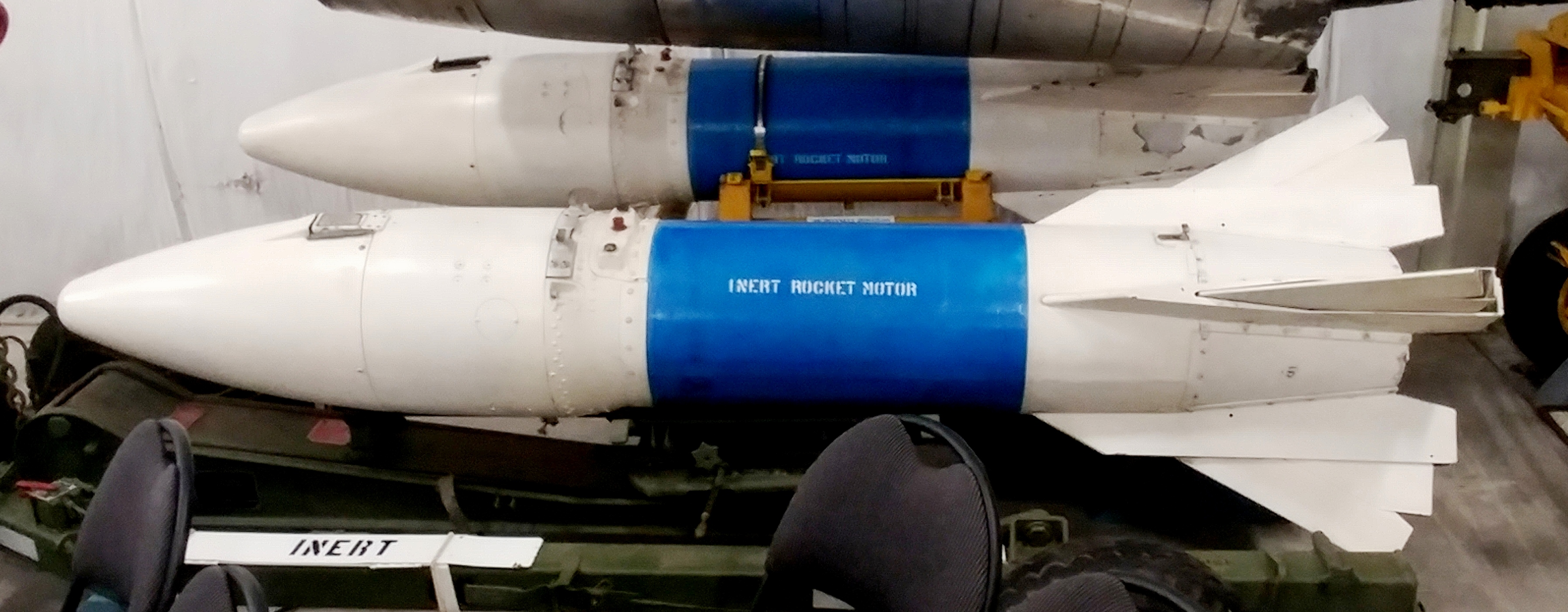
AIR-2A Genie Nuclear unguided air-to-air rocket, primary armament for the Voodoo.
(Author Photo)
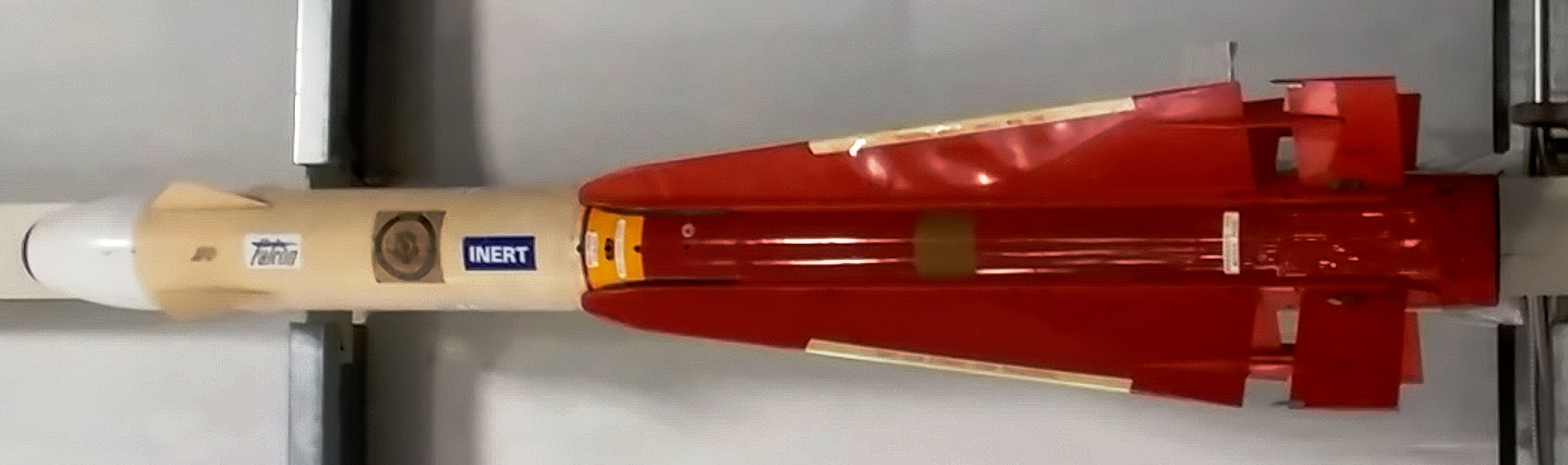
AIM-4D Falcon Air to air missile.
(Library and Archives Canada Photo, MIKAN No. 4327249)
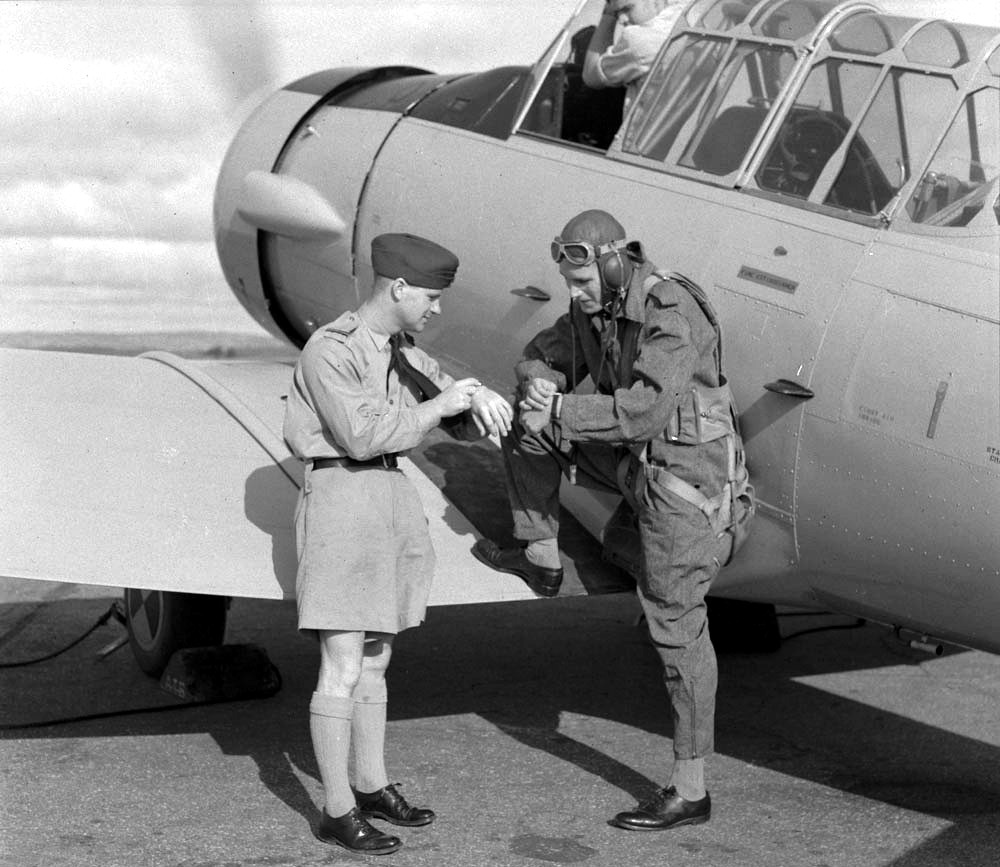
North American NA-66 Harvard Mk. II, RCAF, Flying Officer J. Woolfenden and Pilot Officer I.M.S. Brown check watches before flight. Camp Borden, 31 July 1940.
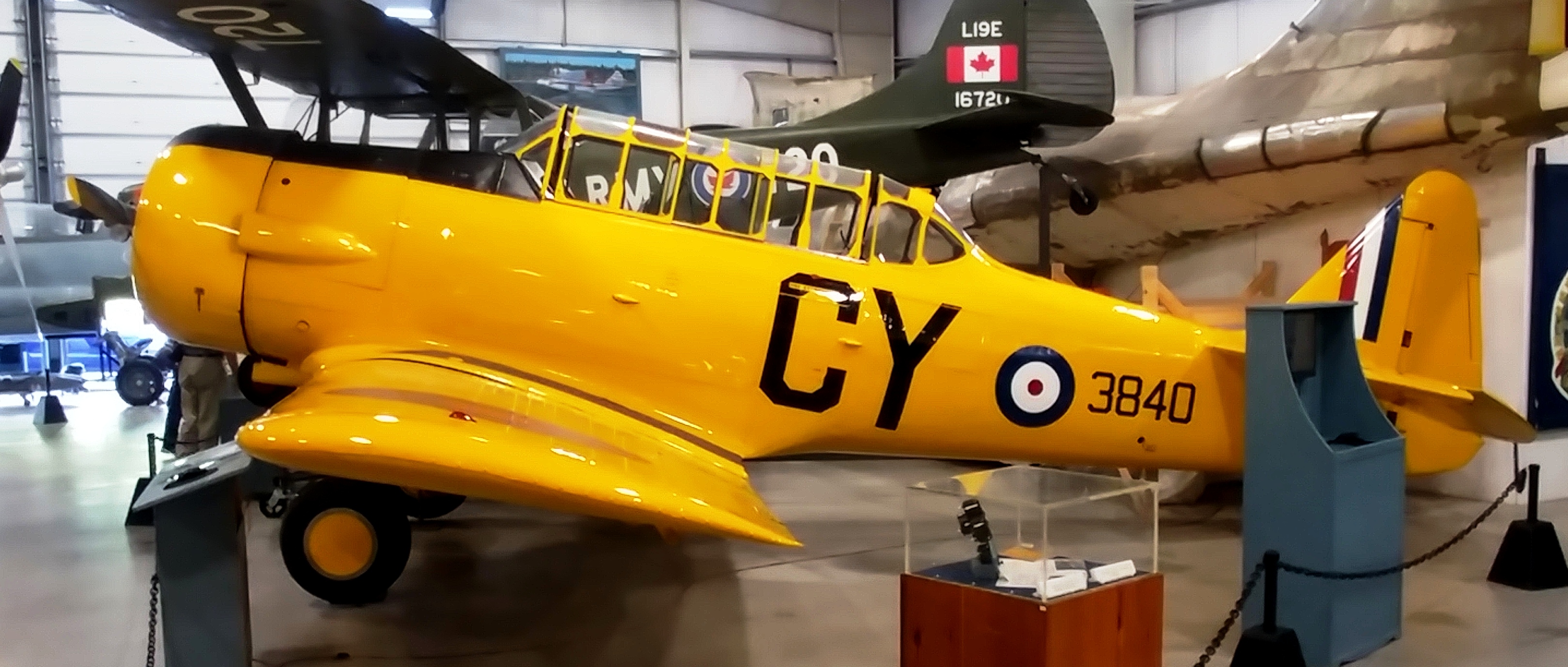
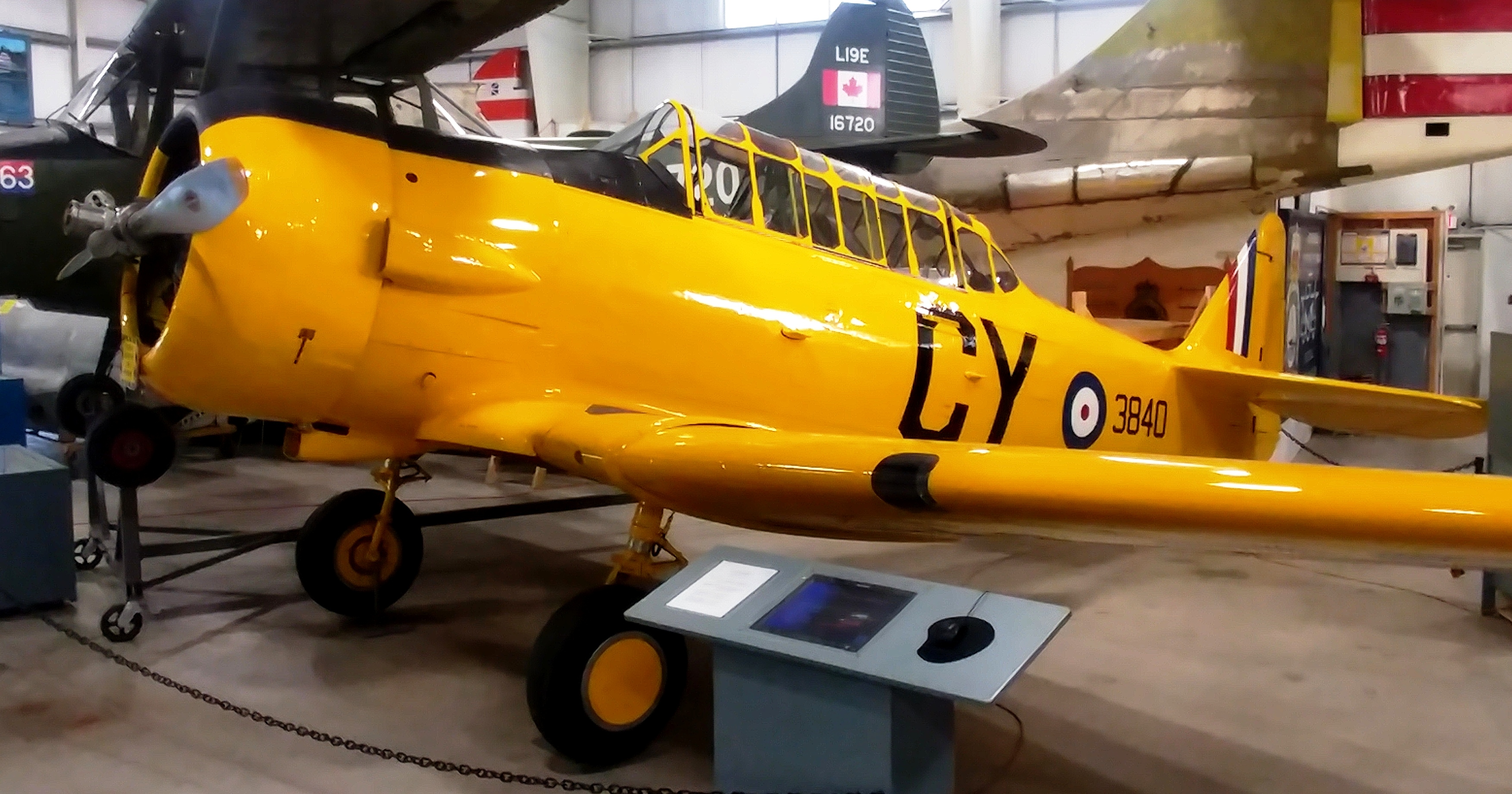
(Author Photos)
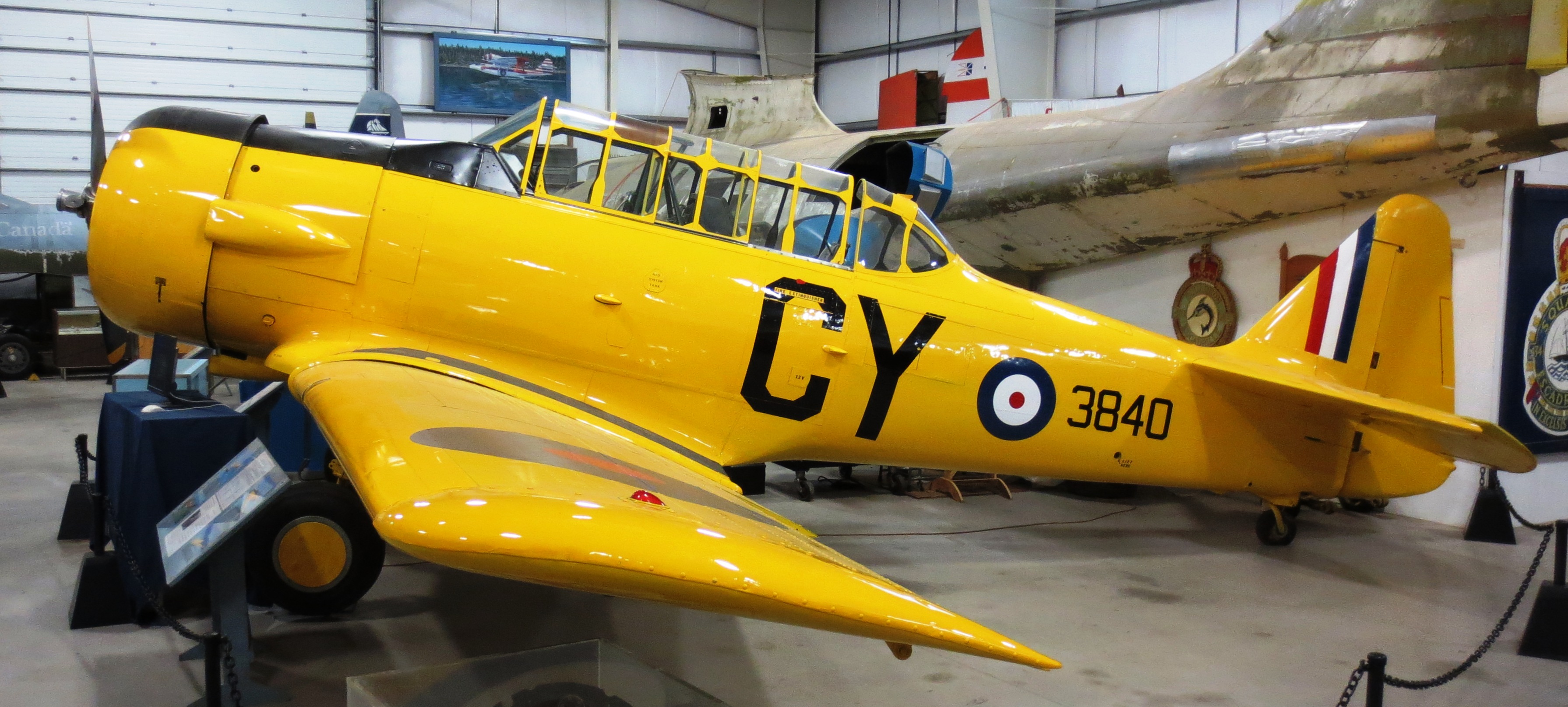
North American NA-66 Harvard Mk. II, RCAF (Serial No. 3840), C/N 81-4107. This Harvard is Harvard, on loan from the Canada Aviation & Space Museum, and is finished in colours with the roundel as it would have worn during the Second World War.
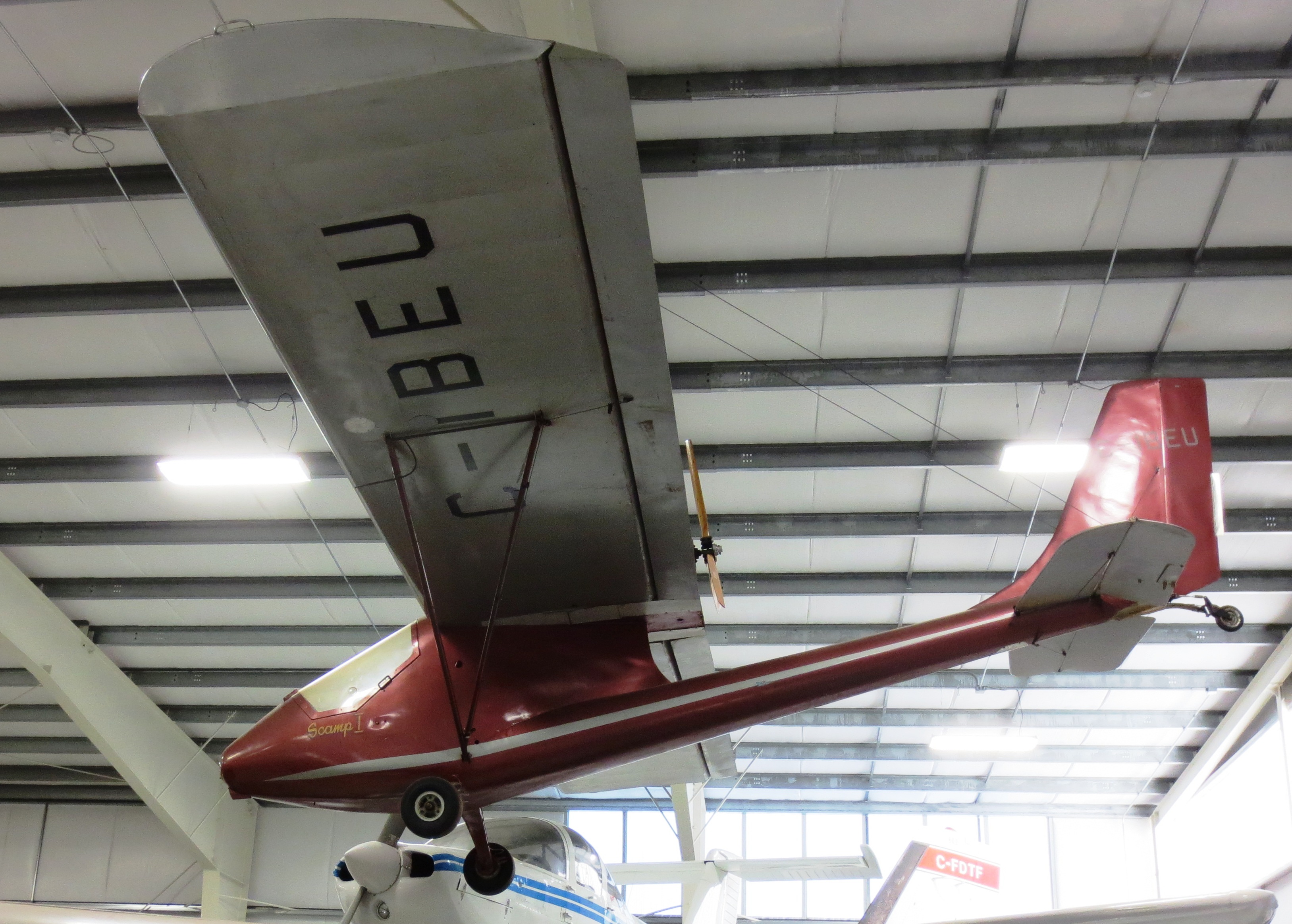
Scamp 1 Ultralight. The Scamp 1 is an high-wing, ultralight aircraft with a pusher engine arrangement. The Museum’s Scamp 1 might be the only aircraft that was designed, built and flown exclusively in Nova Scotia, it was designed and built by Donnie MacDermid of Margaree, Cape Breton. When Donnie became interested in ultralight aircraft, he looked at some designs and decided to draw his own plans. Donnie did all of his aircraft building with only the use of one arm as he lost an arm as a young man. His wonderful achievement is now on display in our Museum for everyone to enjoy.
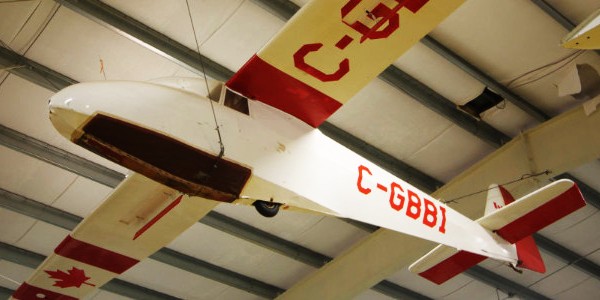
(ACAM Photo)
Scheibe L-Spatz 55 ( Sparrow) Glider. Built in Munich, Germany, the Museum’s L-Spatz was built in 1952. In 1976 it was purchased by members of the Canadian Armed Forces for use at the Lahr Germany flying club where it was used until 1980. Transferred to Canada in 1982 it flew until 1983. Donated to the Museum by Peter Myers in 1995 it has been on display ever since. Of note: it was a glider of this type that set a free flight record of 678 km in May 1957
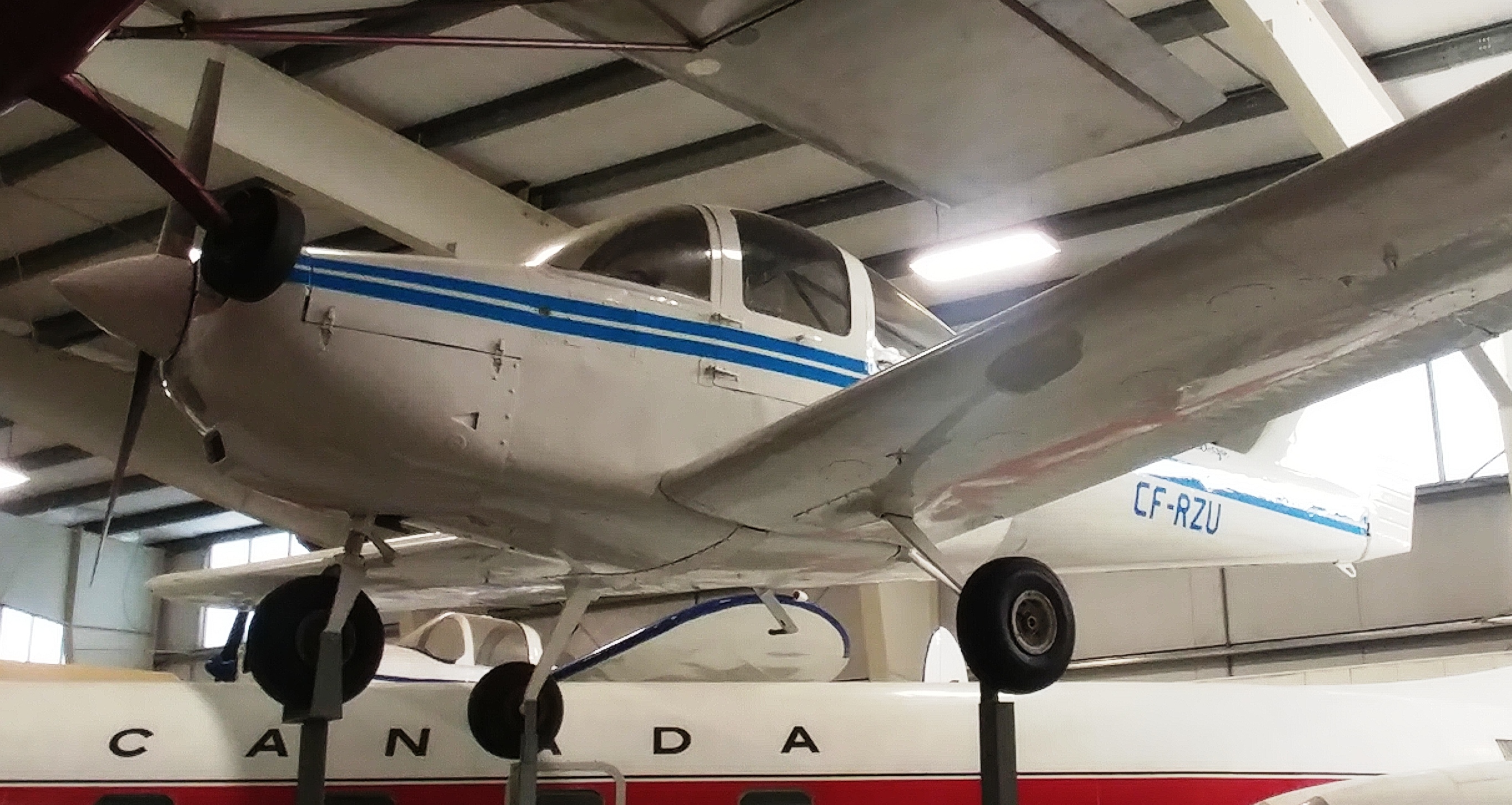
(Author Photo)
Piper PA-38-112 Tomahawk, c/n 3878A0093. The PA-38 is a two-seat low wing trainer/utility aircraft introduced in 1978. The Museum’s Tomahawk was the first PA-38 delivered to Canada. The Moncton Flying Club purchased the aircraft and Chief Flight Instructor Mike Doiron first flew it on May 22, 1978. After being retired from the flight school it was acquired by our Museum and rebuilt by Museum member Bill Leeming. It is displayed in the colours of The Moncton Flight College.
(Author Photo)
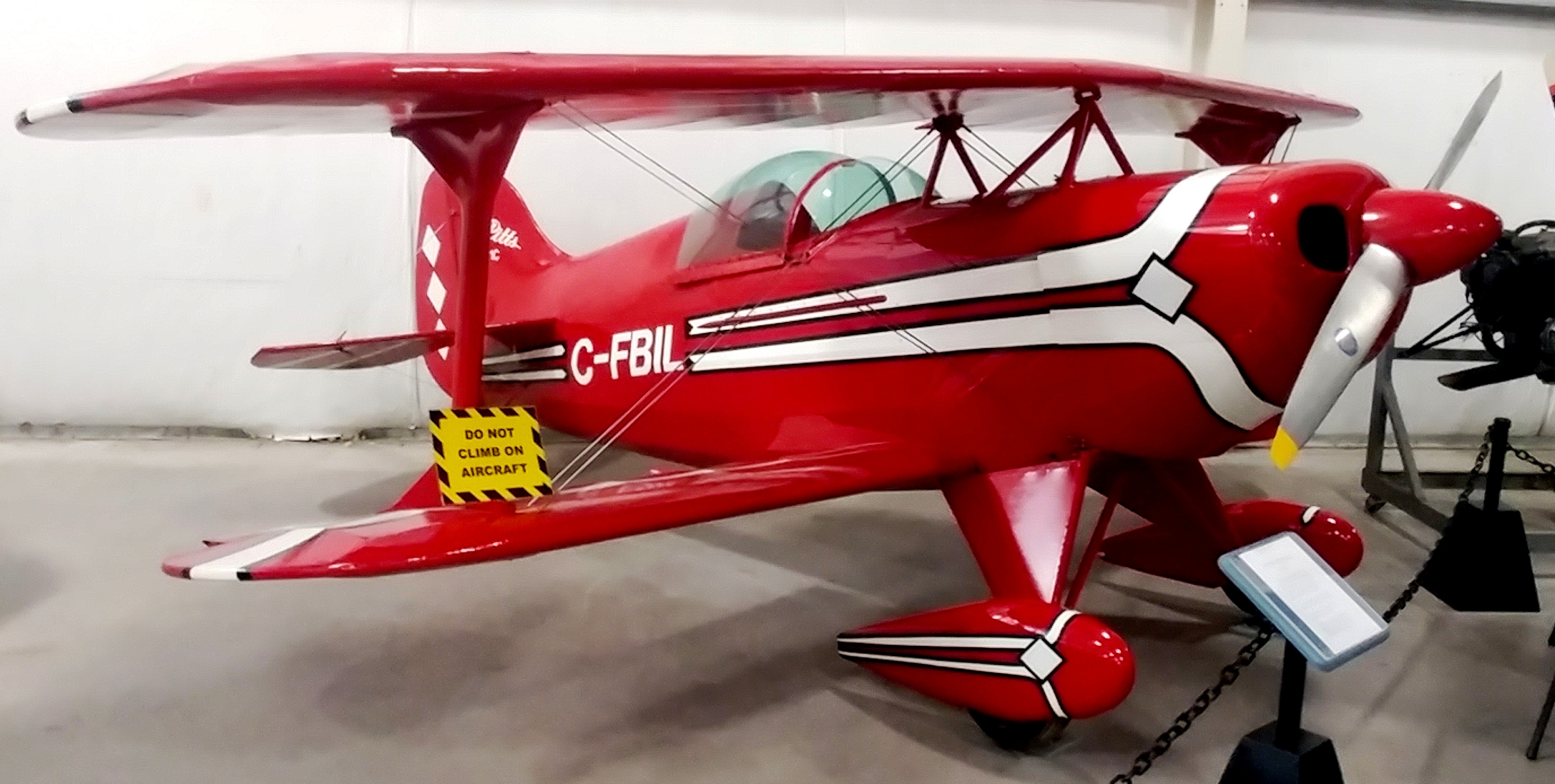
Pitts Special S-1C. The first Pitts Special, designed as an aerobatic aircraft, flew in 1947. Versions of the Pitts are still flown at air displays all over the world today. The ACAM’s Pitts was built in the 1970s in the USA and brought to Canada in 1978. Unfortunately, it was not able to be flight certified in Canada so it was later donated to the Museum by Darrell Davis. Museum volunteers refinished the plane in 1999 for display.
(Author Photos)
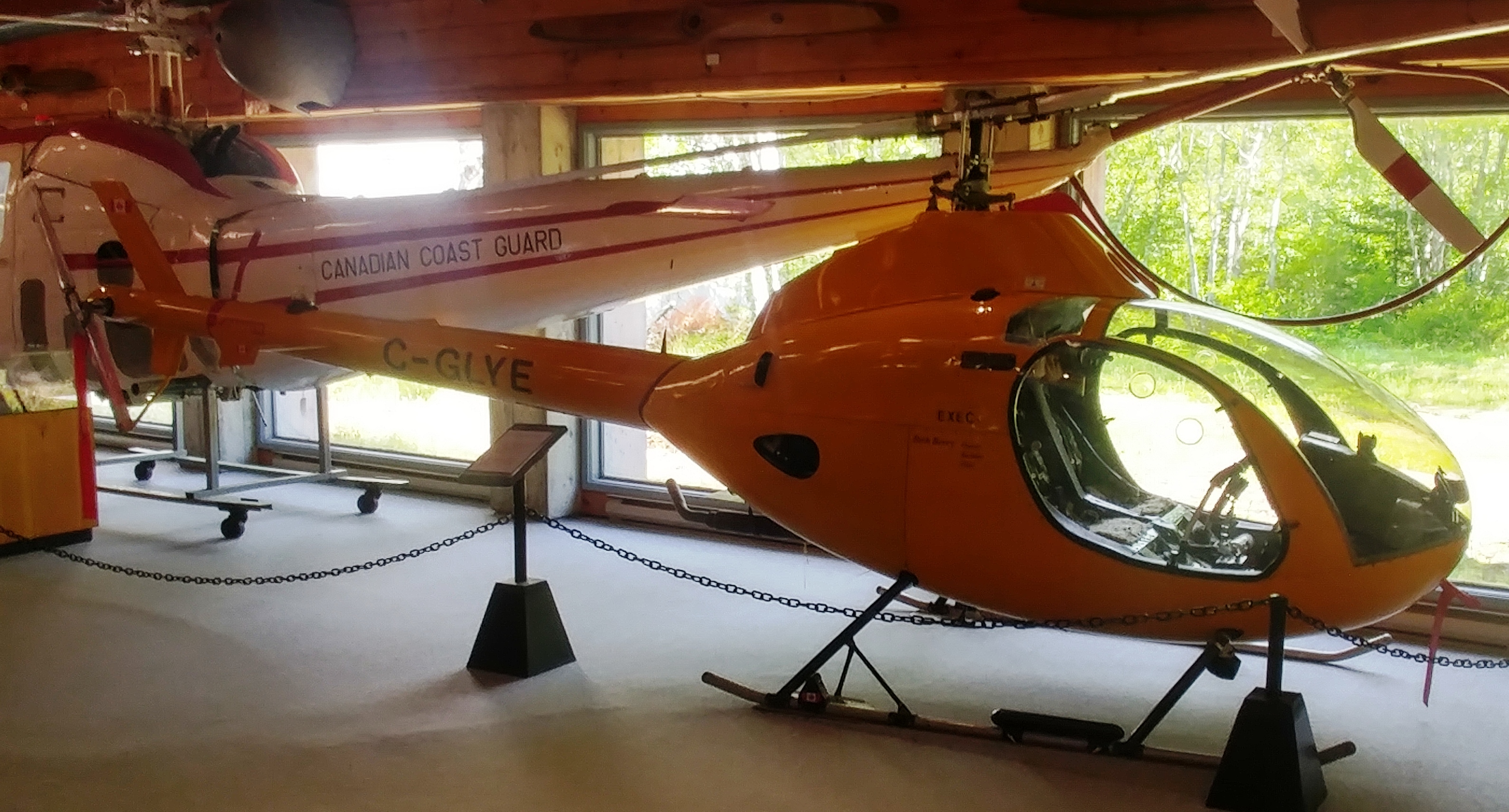
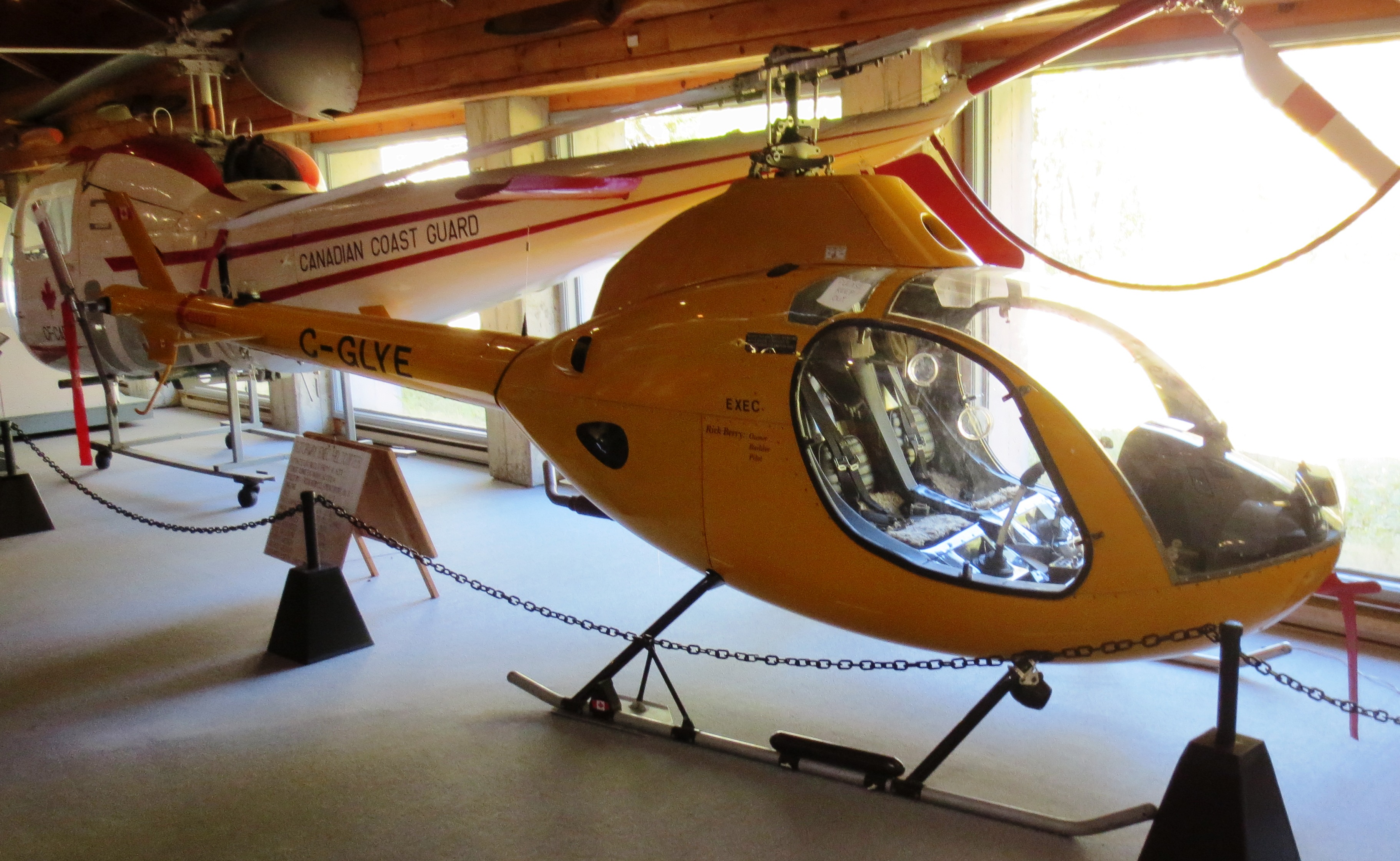
RotorWay Executive Helicopter, C-GLYE. The RotorWay Exec is a family of two-bladed, skid-equipped, two-seat kit helicopters, manufactured by RotorWay International of Chandler, Arizona and supplied in kit form for amateur-construction. The Exec was introduced in 1980. The Museum’s example arrived on 22 Dec 2007. C-GLYE is a beautifully built machine that was donated by Rick Berry of Clementsport, Nova Scotia.
(Author Photo)
Homebuilt bi-plane.
(Author Photo)
Ultralight.
(Author Photo)
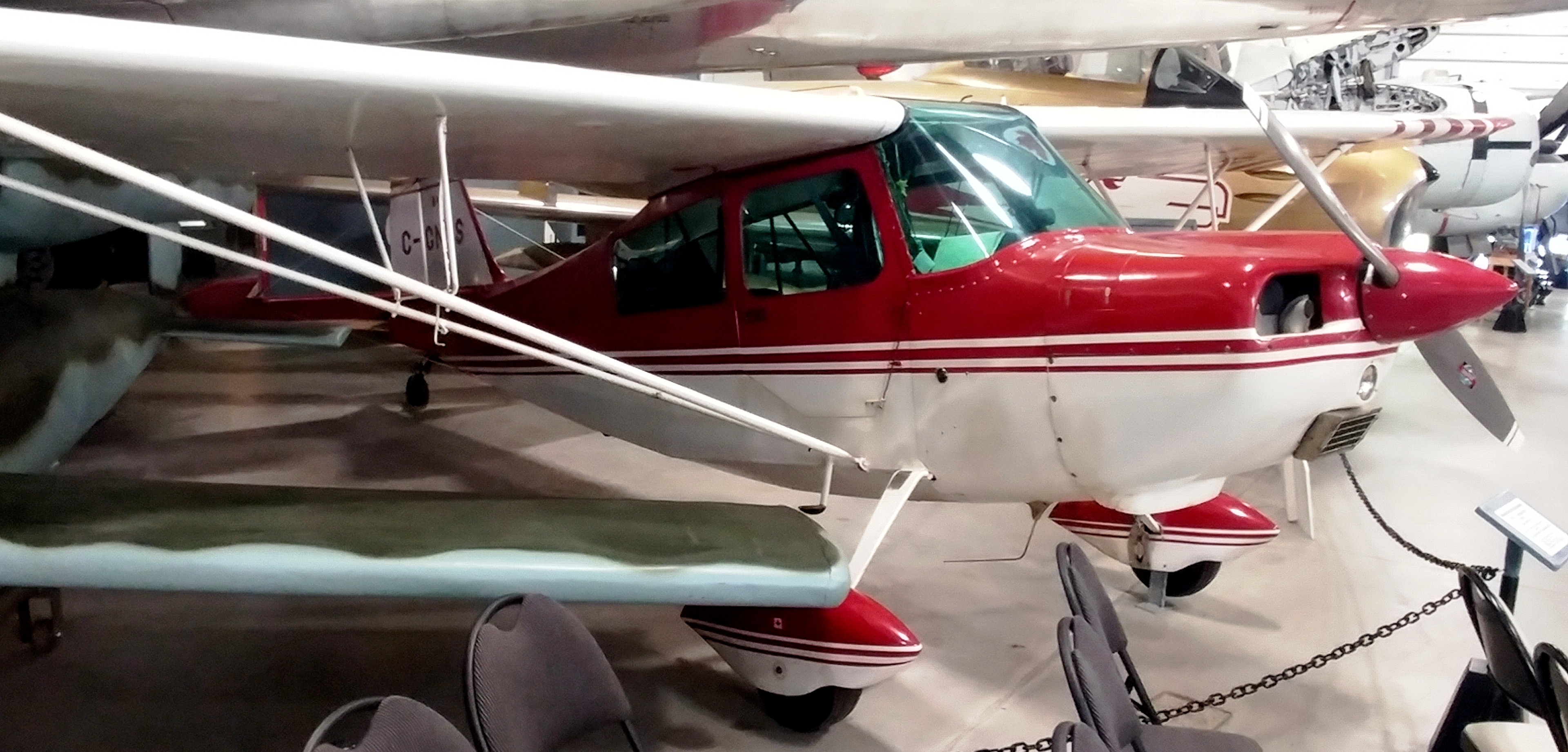
C-CNYS.
The aim of this website is to locate, identify and document every historical Warplane preserved in Canada. Many contributors have assisted in the hunt for these aircraft to provide and update the data on this website. Photos are by the author unless otherwise credited. Any errors found here are by the author, and any additions, corrections or amendments to this list of Warplanes in Canada would be most welcome and may be e-mailed to the author at hskaarup@rogers.com.
2024, Canadian Warplanes II.
All comments are subject to our Comment Policy. You must be at least 18 years old to comment.
See a comment that violates our guidelines? Report it here.