
Canadian Artillery: Gatling Gun
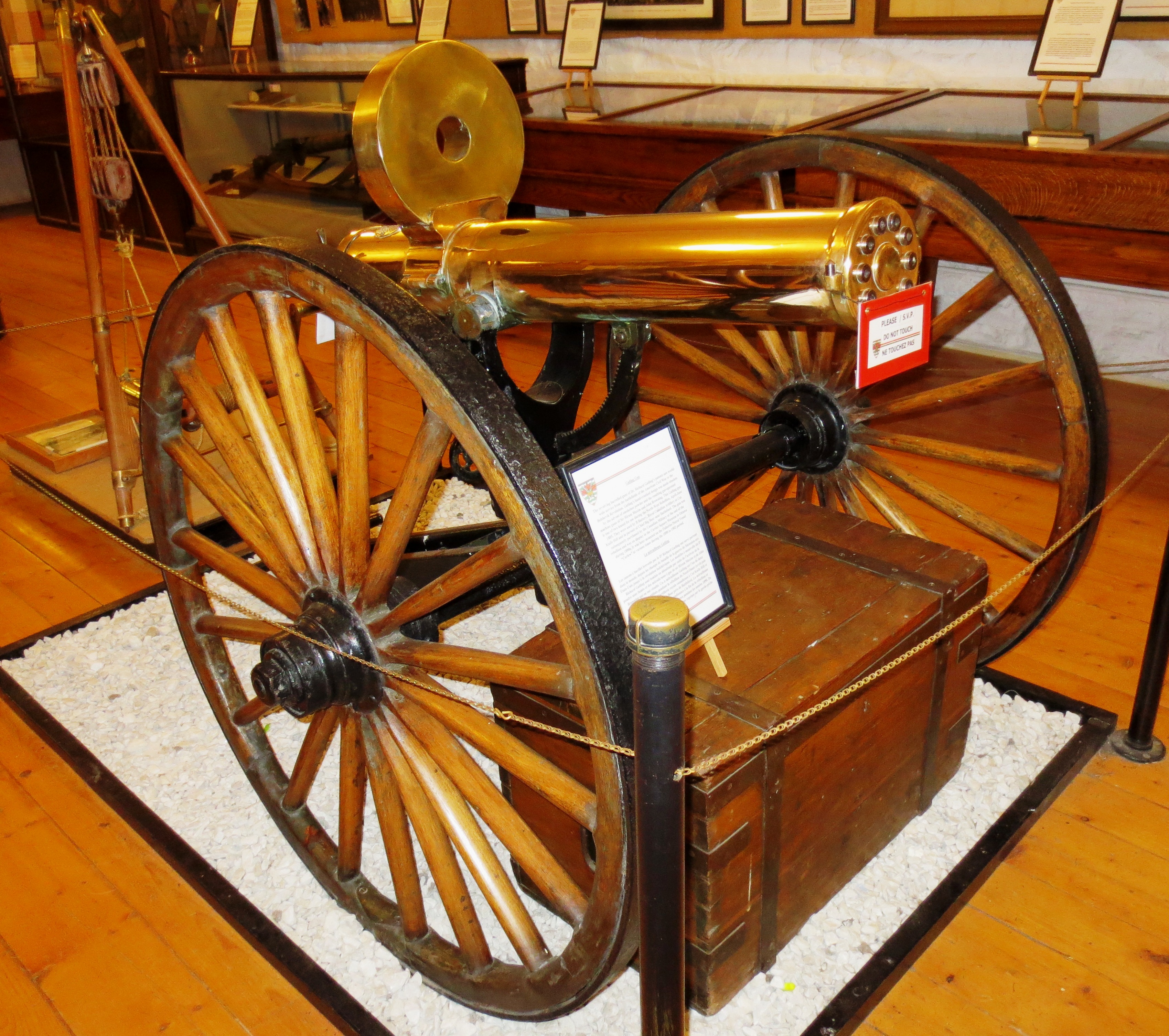
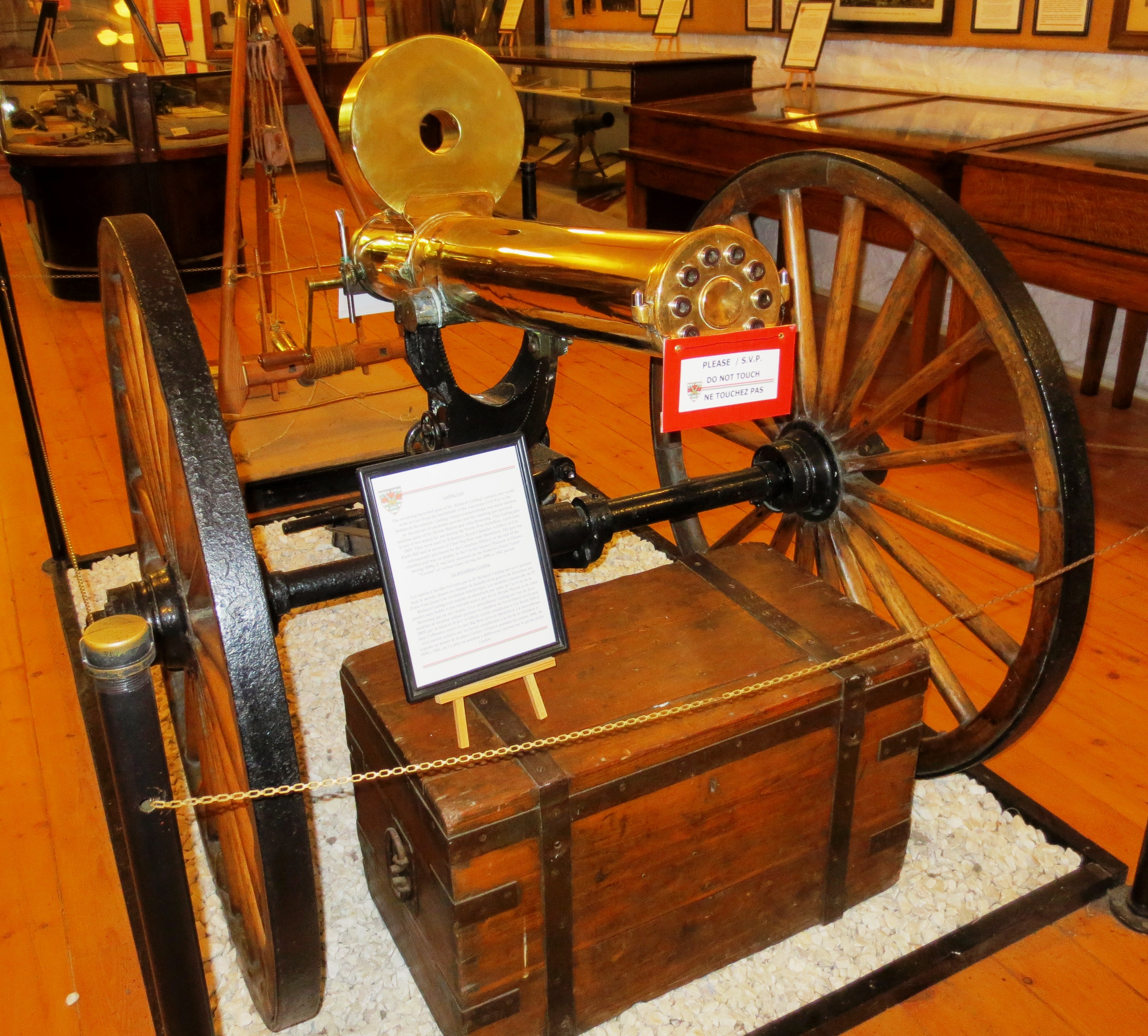
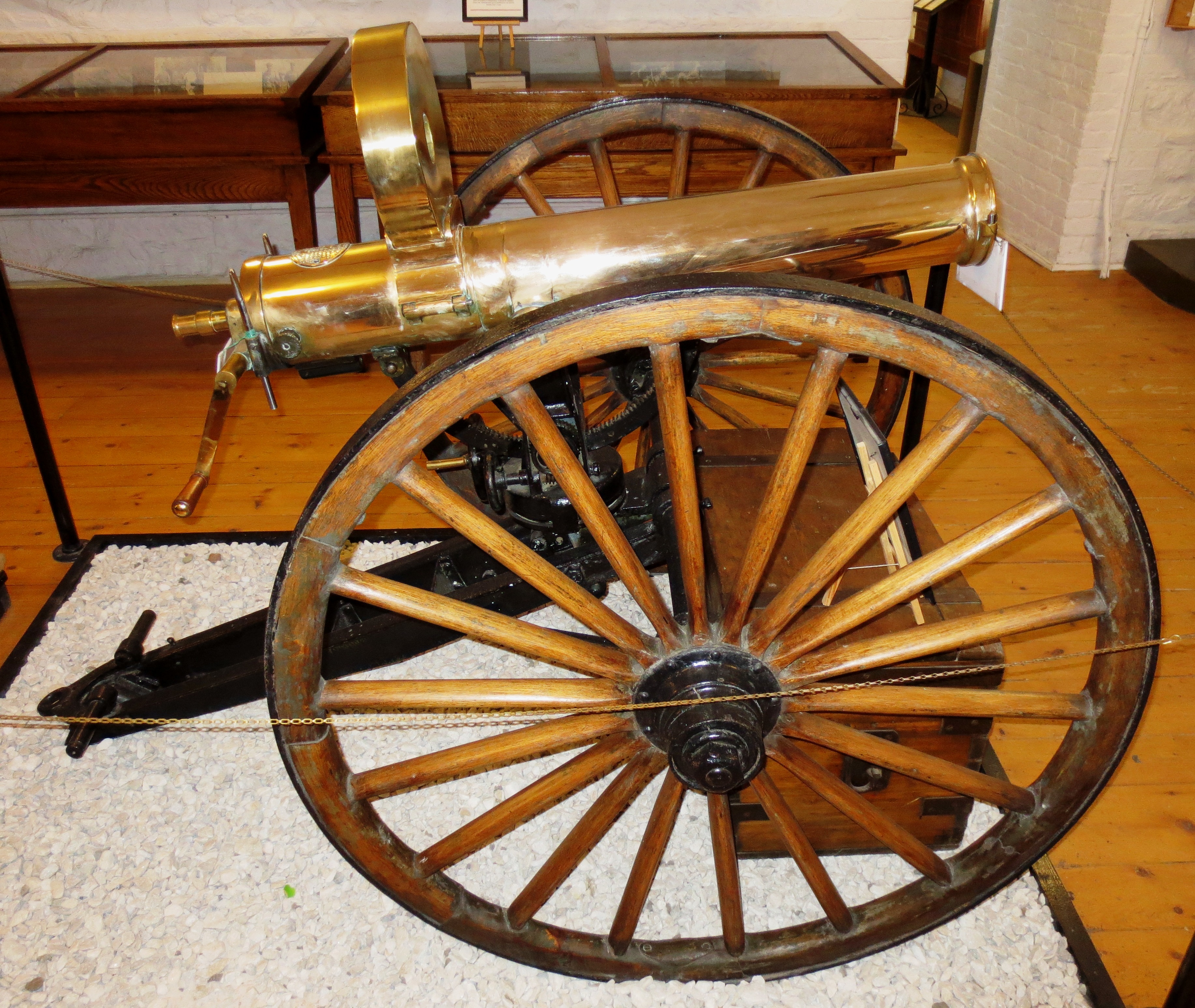
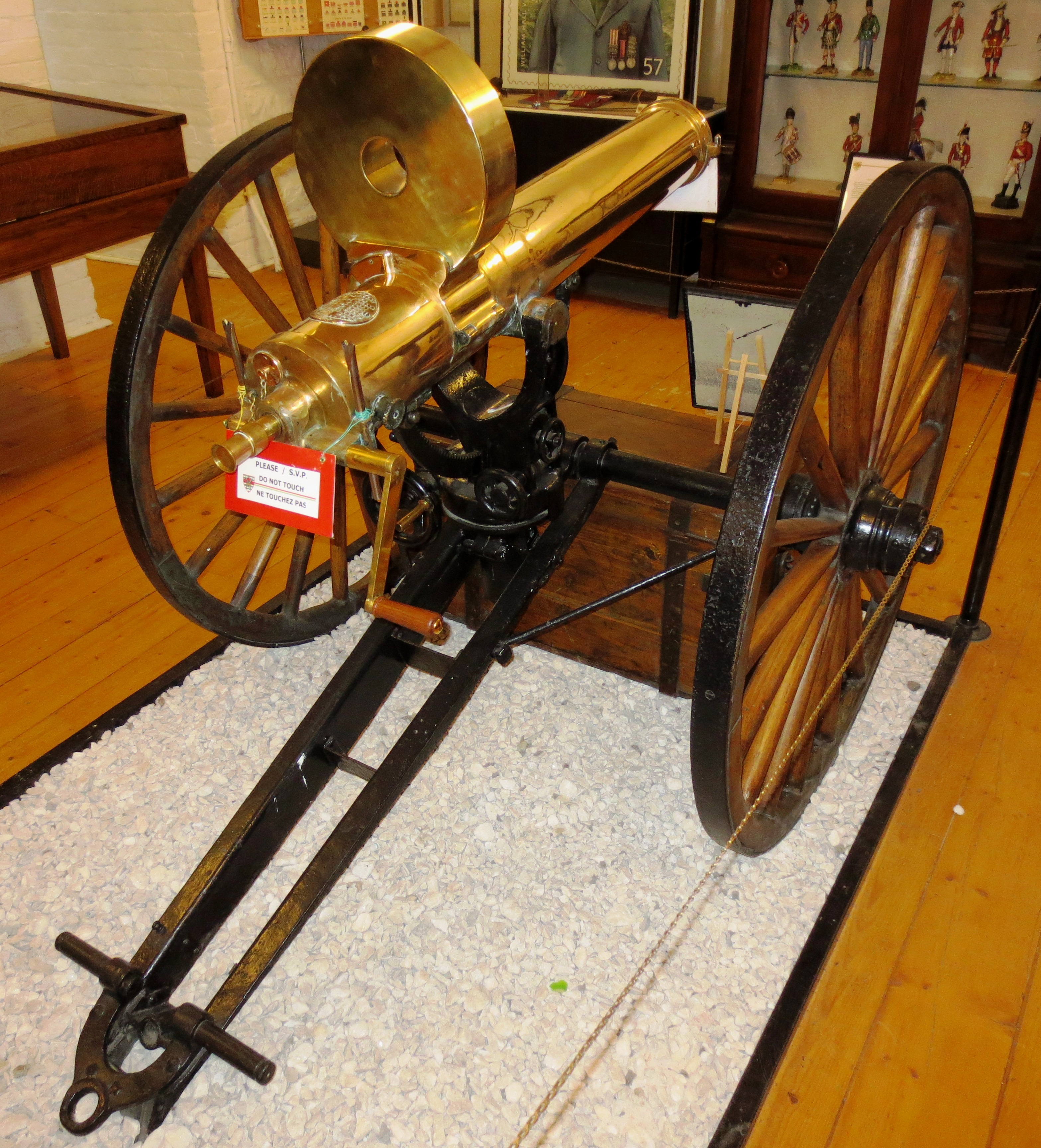
The Gatling gun is centered on a cyclic multi-barrel design which facilitated cooling and synchronized the firing-reloading sequence. As the handwheel is cranked, the barrels rotate, and each barrel sequentially loads a single cartridge from a top-mounted magazine, fires off the shot when it reaches a set position (usually at 4 o’clock), then ejects the spent casing out of the left side at the bottom, after which the barrel is empty and allowed to cool until rotated back to the top position and gravity-fed another new round. This configuration eliminated the need for a single reciprocating bolt design and allowed higher rates of fire to be achieved without the barrels overheating quickly.
One of the best-known early rapid-firearms, the Gatling gun saw occasional use by the Union Army during the American Civil War, which was the first time it was employed in combat. It was later used in numerous military conflicts, including the Boshin War, the Anglo-Zulu War, and the assault on San Juan Hill during the Spanish–American War. It was also used by the Pennsylvania militia in episodes of the Great Railroad Strike of 1877, specifically in Pittsburgh. Gatling guns were also mounted aboard ships. (Wikipedia)
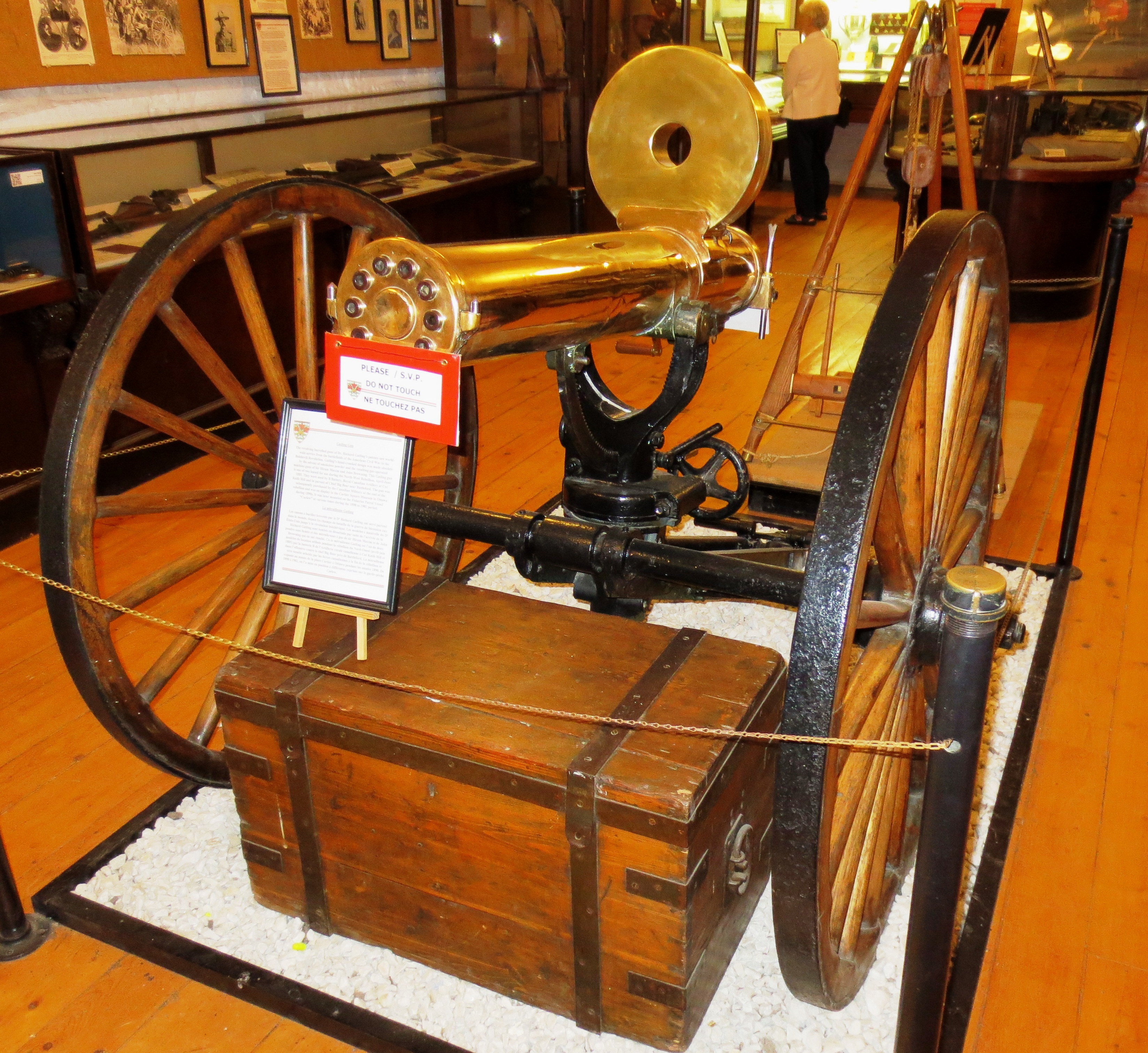
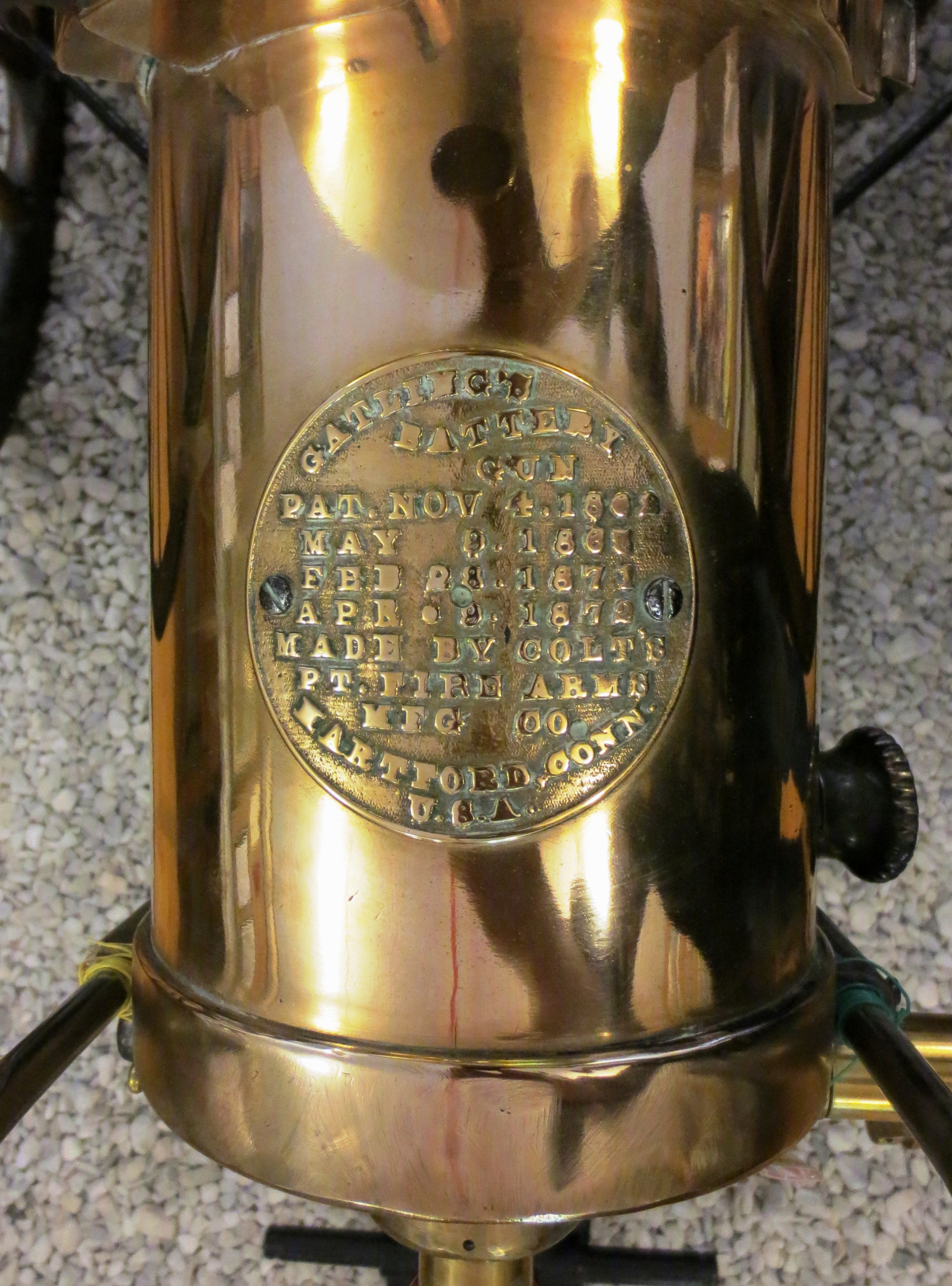
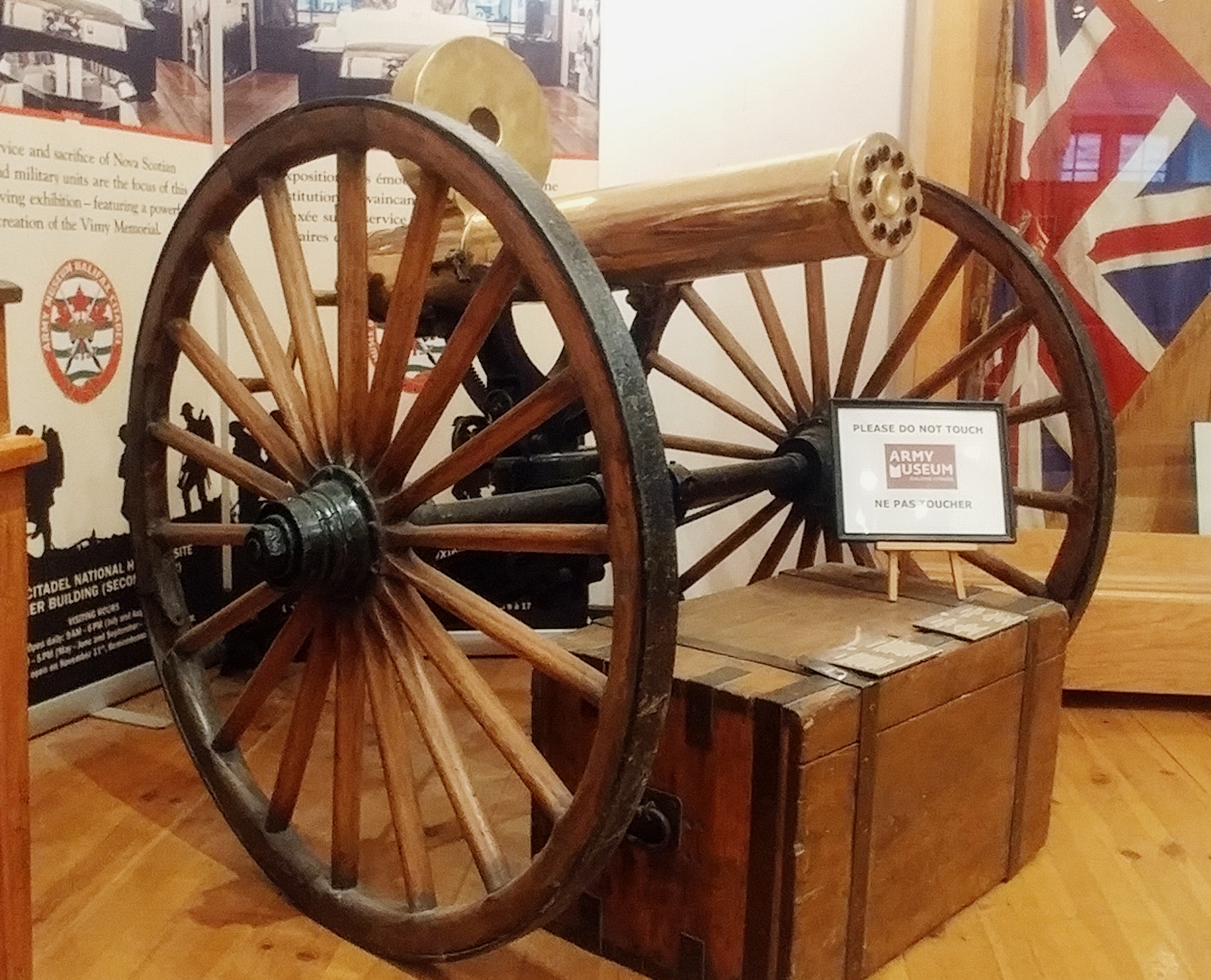
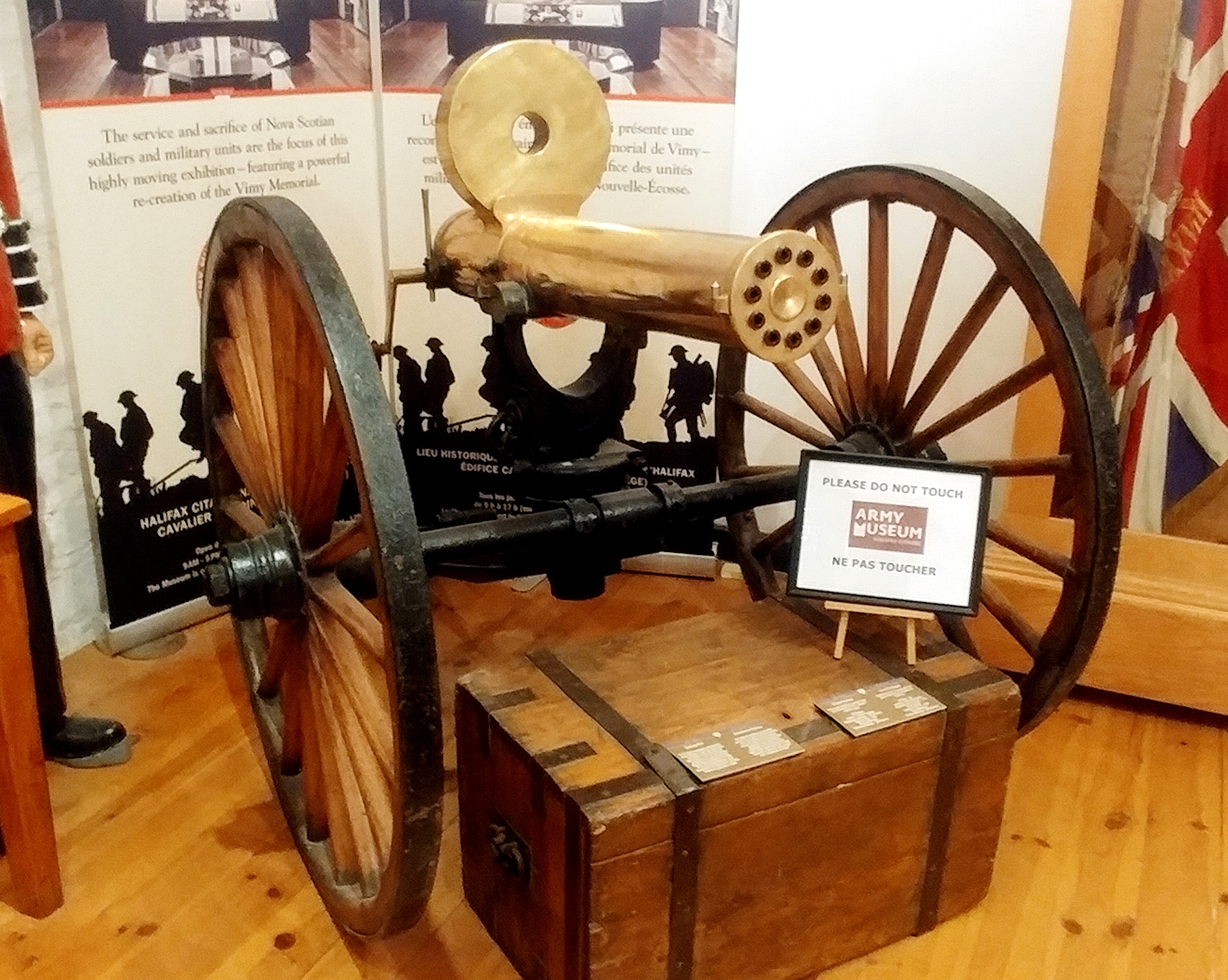
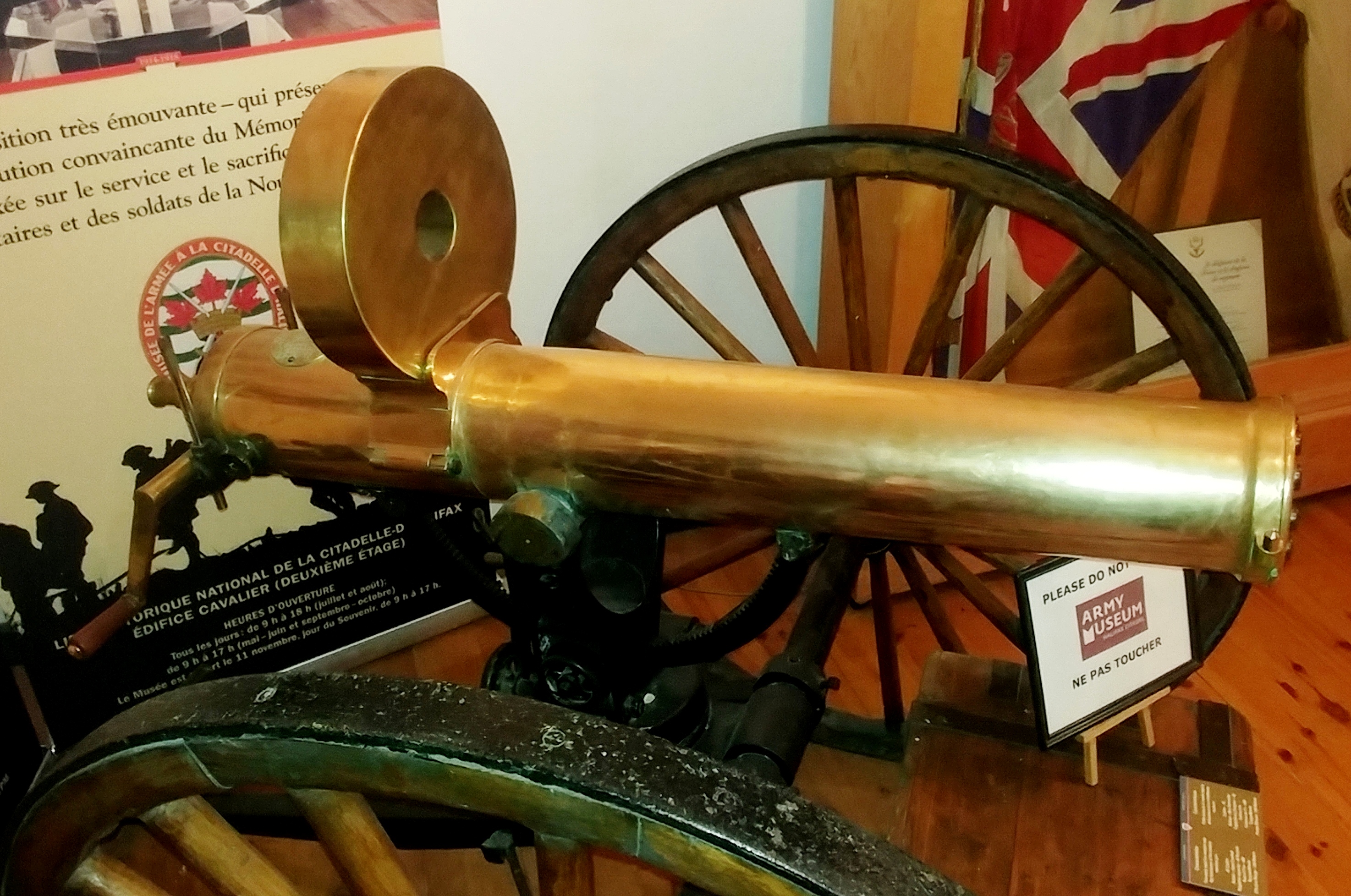
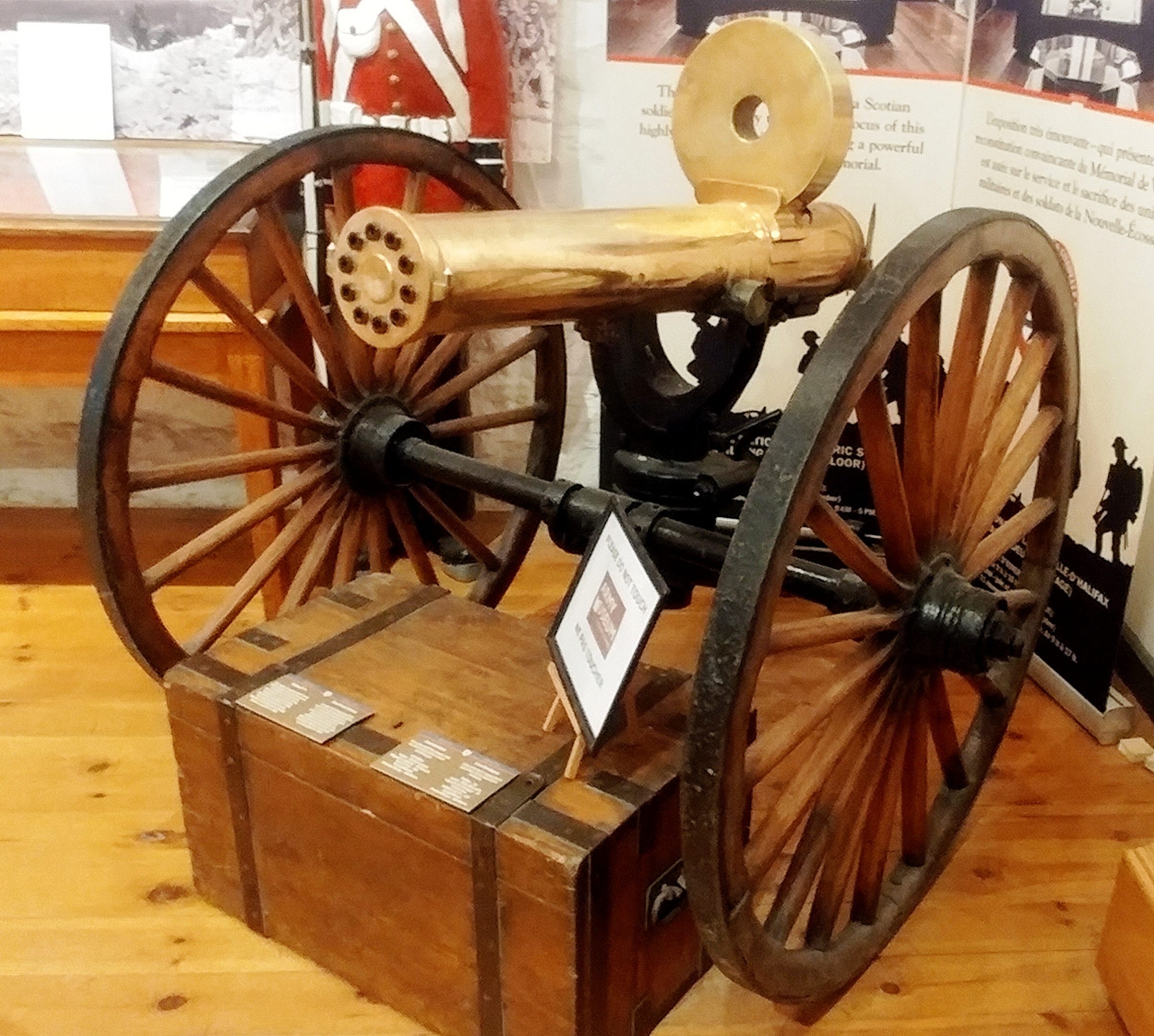
(Author Photos)
.45-calibre Gatling Battery Gun, Colt Fire Arms, (Serial No. 00).
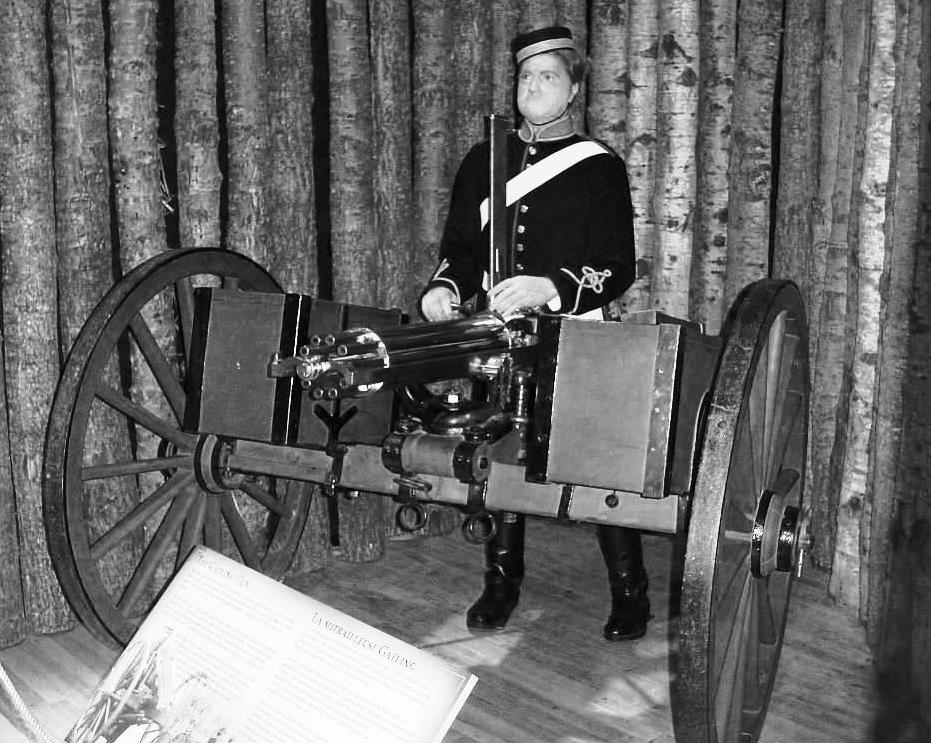
(Leon Jensen Photo)
.45-inch calibre Gatling Gun, mounted on a wood wheeled carriage. Gatling Guns were used in the engagements at Cut Knife and Batoche in 1885. Battleford Historic site, Saskatchewan.
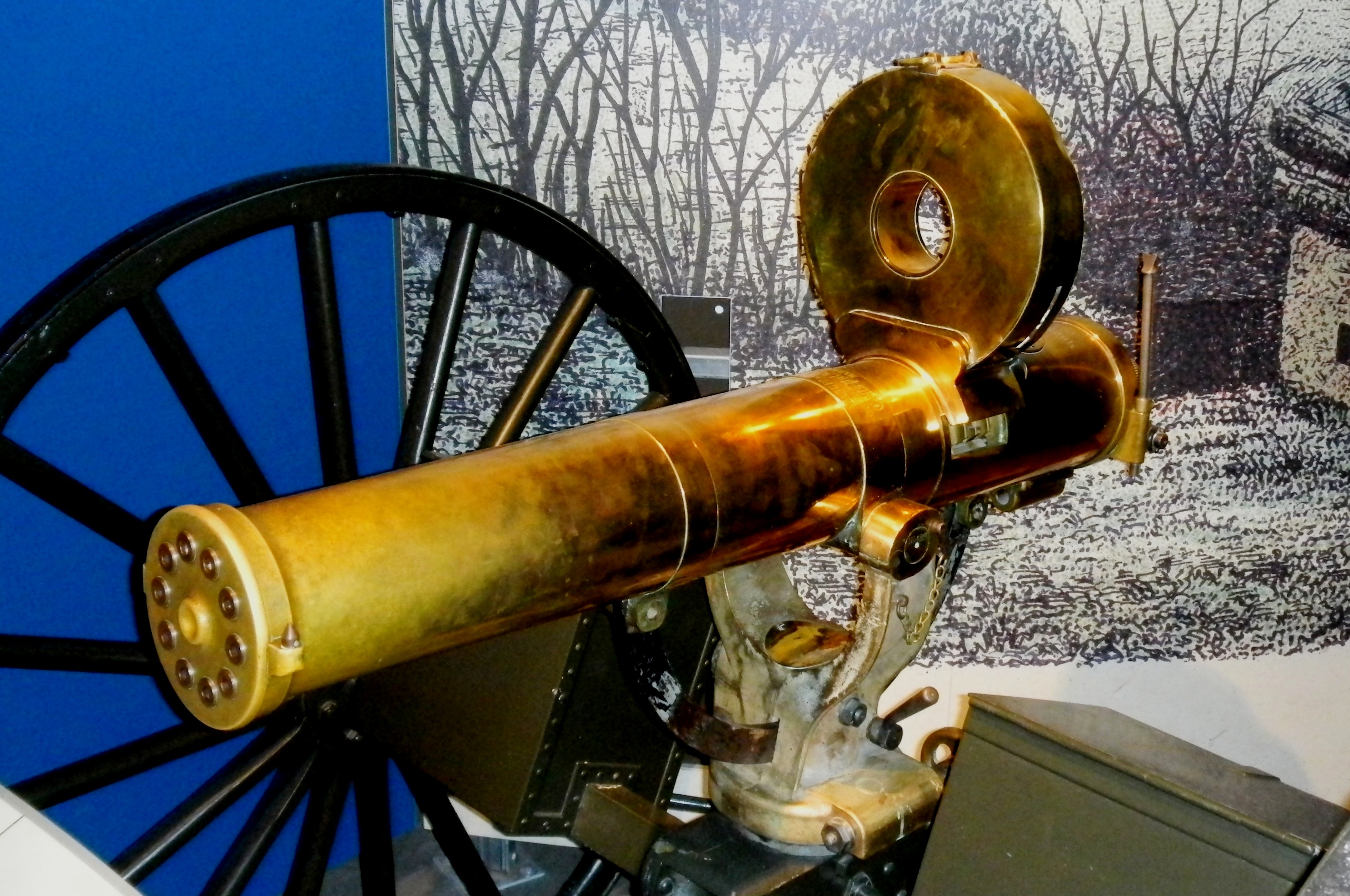
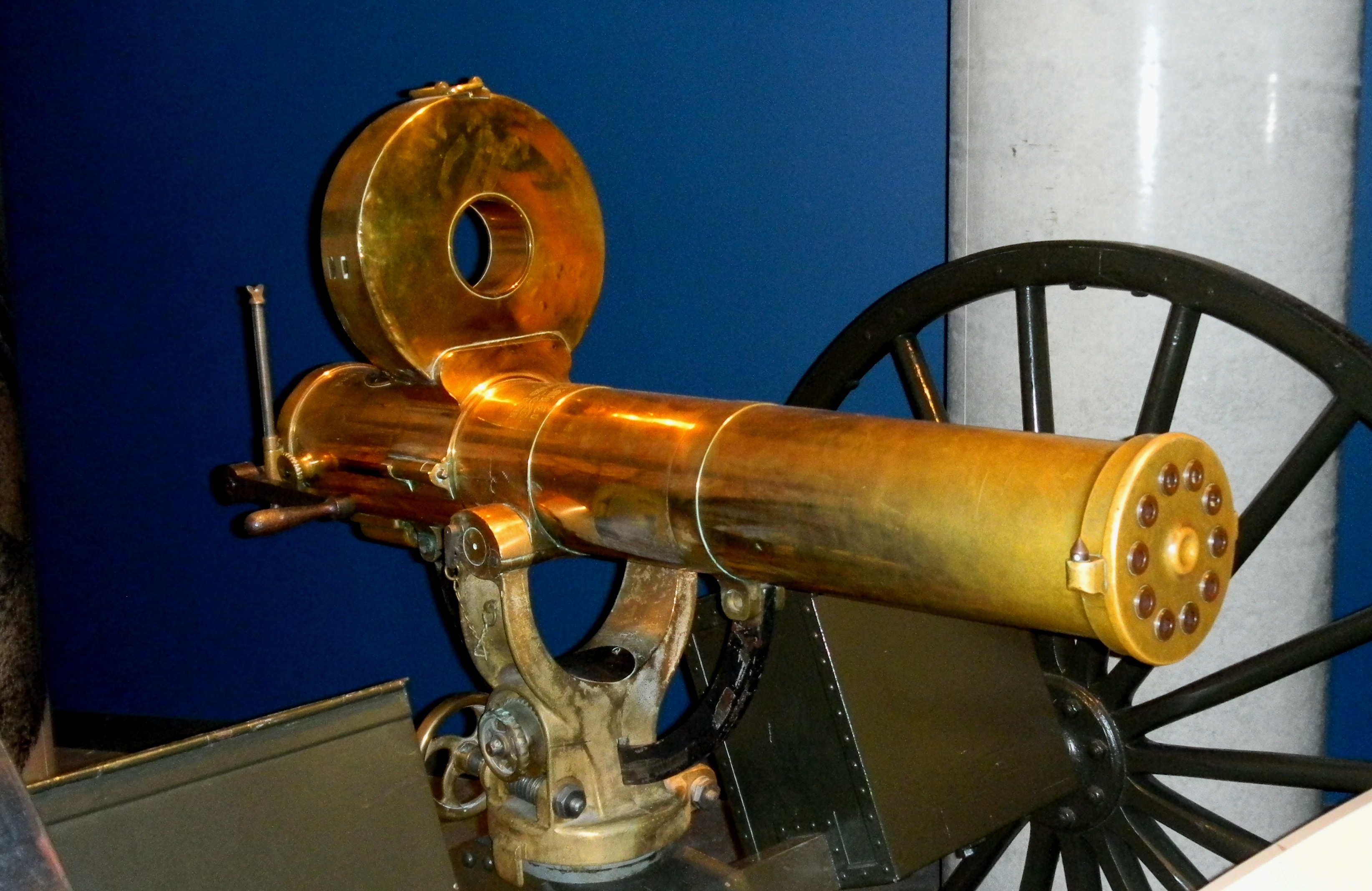
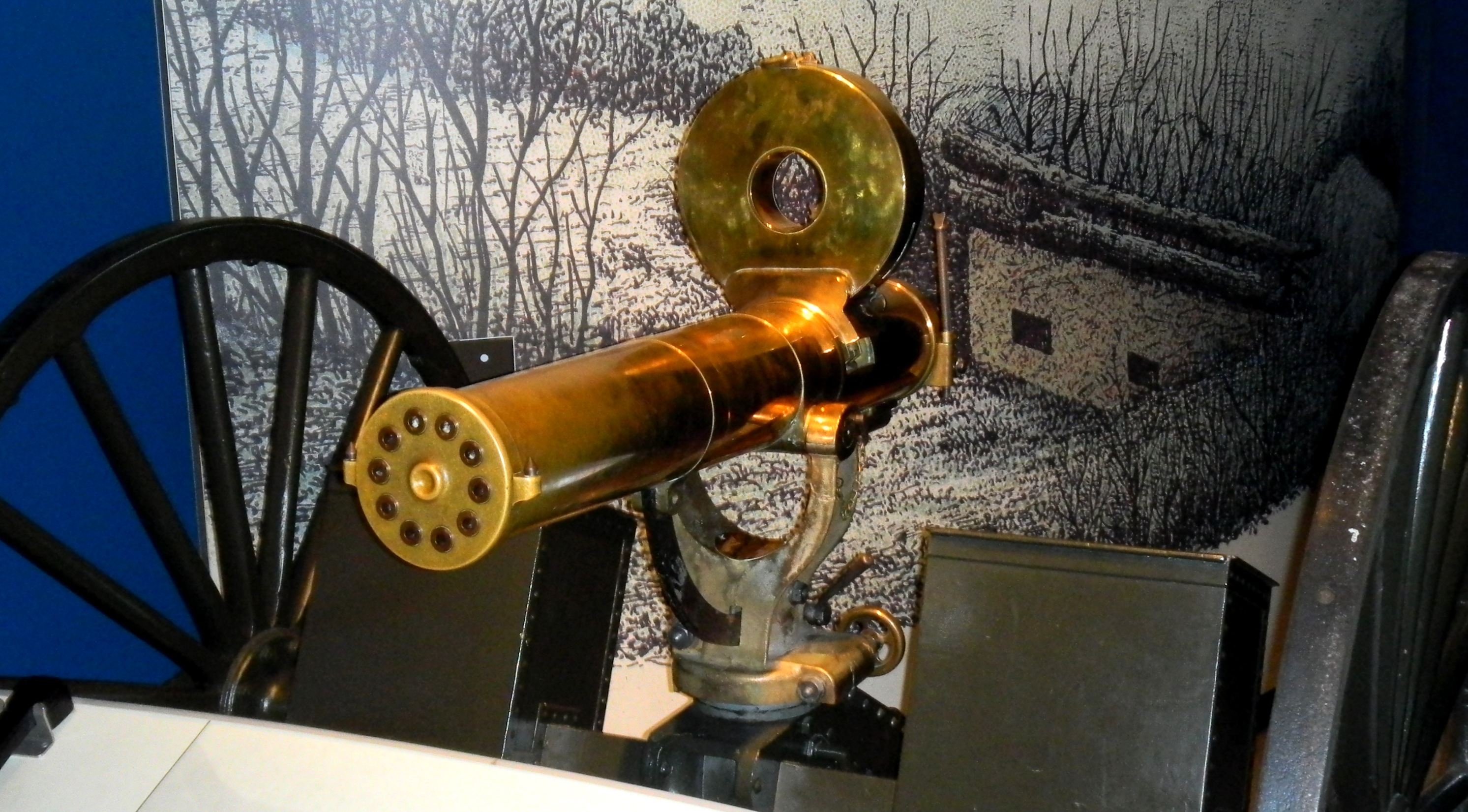
(Author Photos)
.45-calibre Model 1883 Gatling Gun (one of three) held in the Canadian War Museum, Ottawa, Ontario.
.45-calibre Gatling Gun, 10-barrel, weight (260 lbs), 1883, bronze case, held in Fort Henry, Kingston, Ontario.
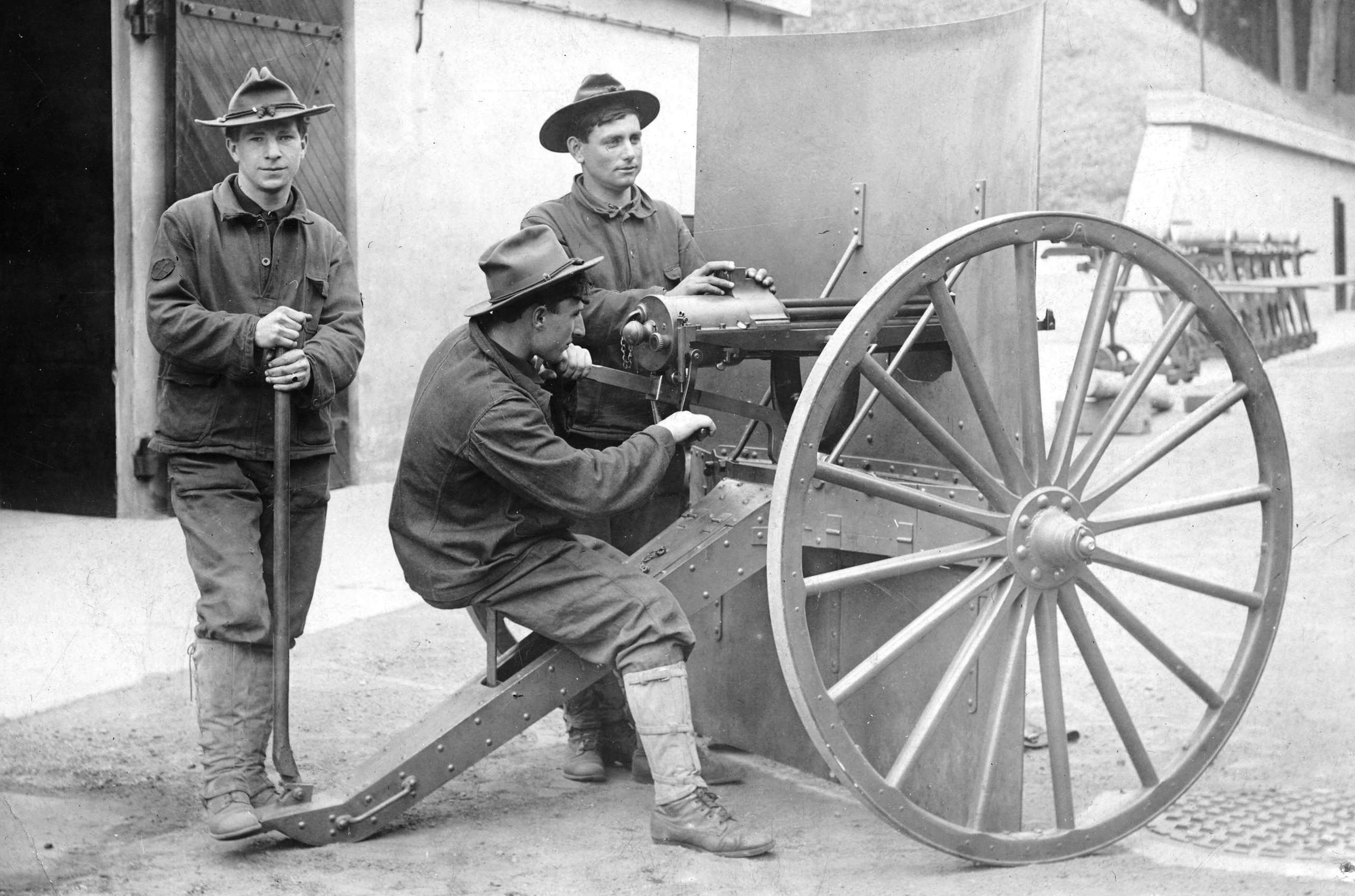
(City of Vancouver Archives Photo, AM54-S4-: Mil P141.6)
Gatling Gun being used by a National Guard Unit visiting Vancouver, British Columbia for an international competition in 1906.