
5-inch 5-barrel Nordenfelt Mk. II Machine Gun
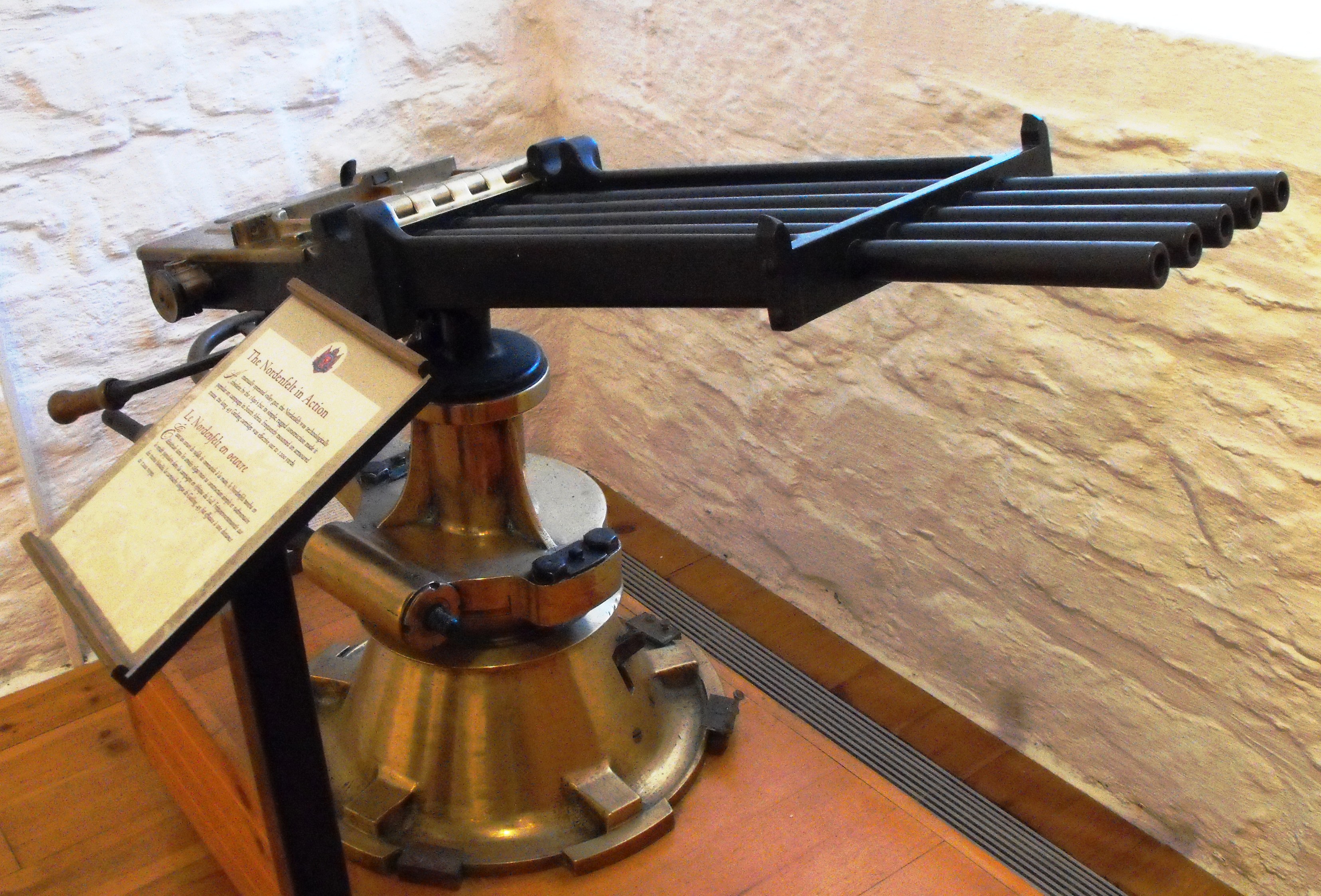
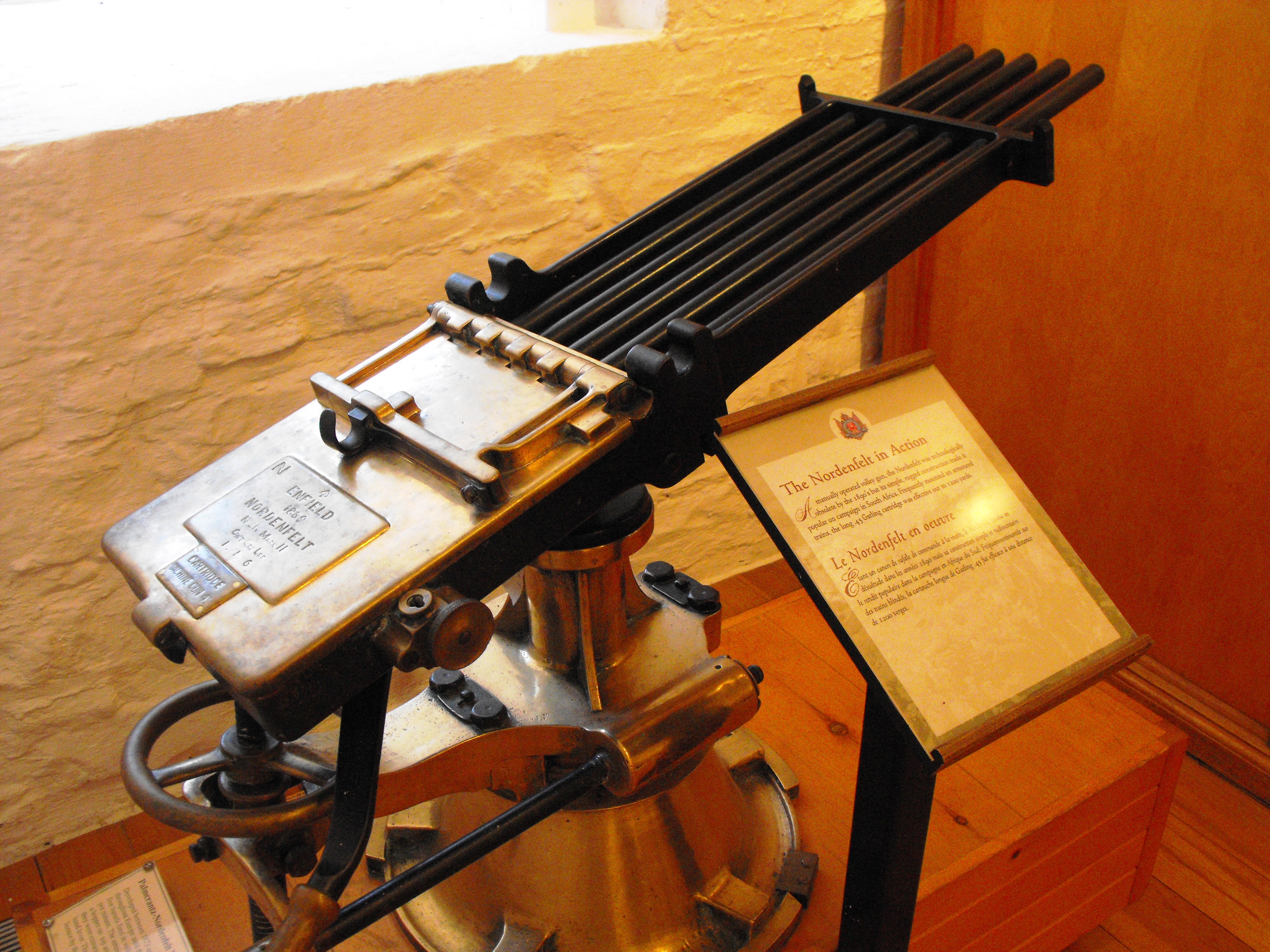
(Gary Melville, Photos)
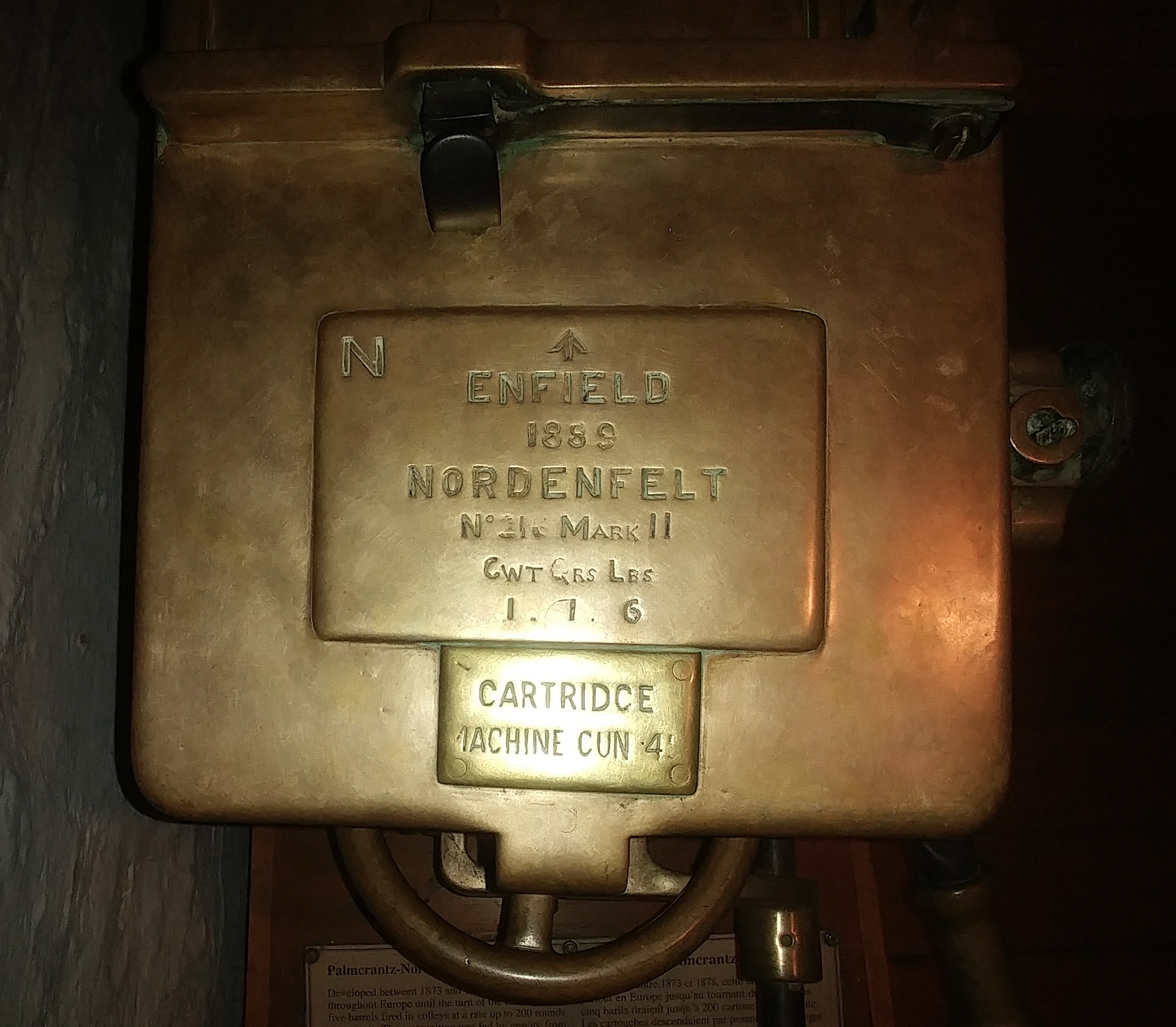
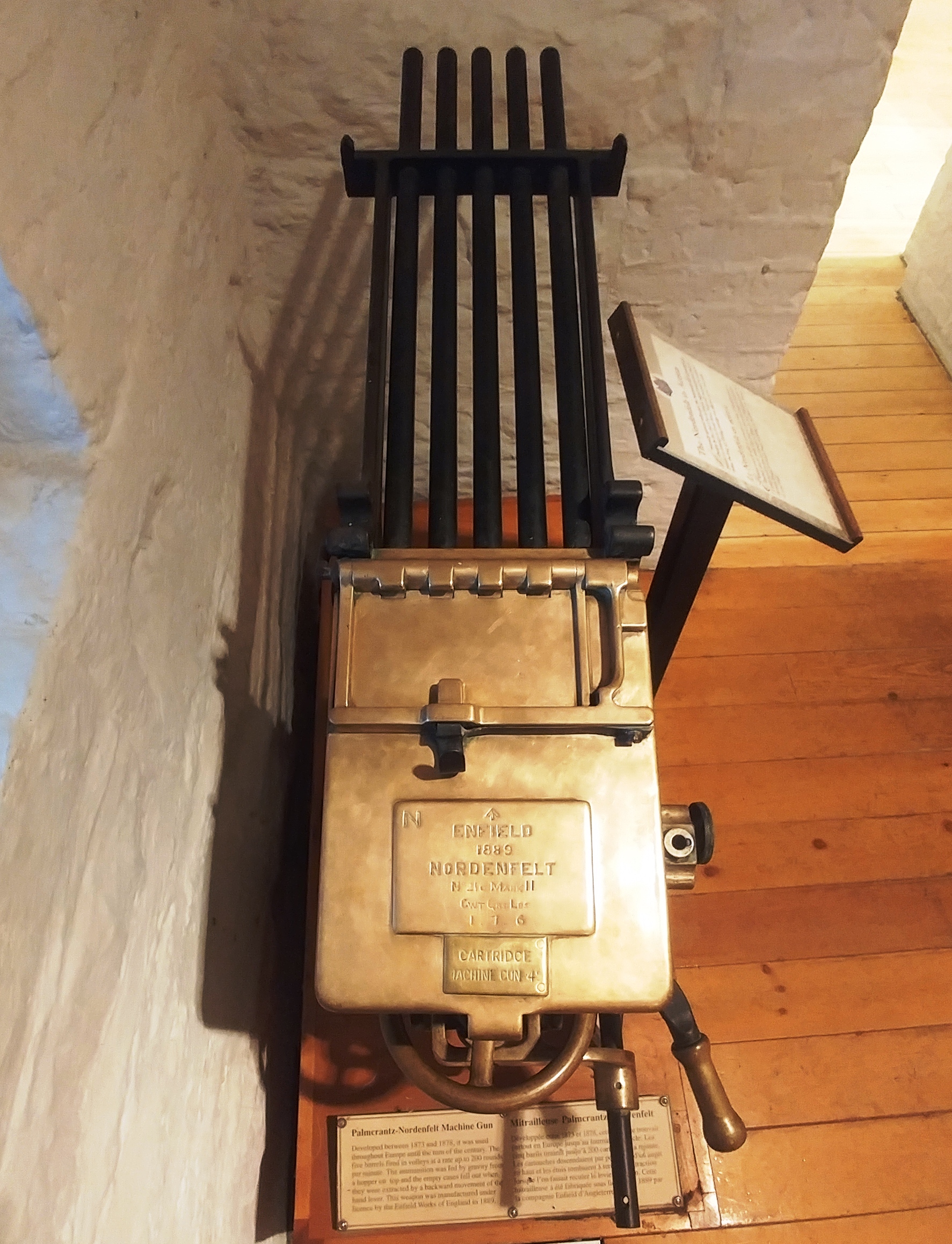
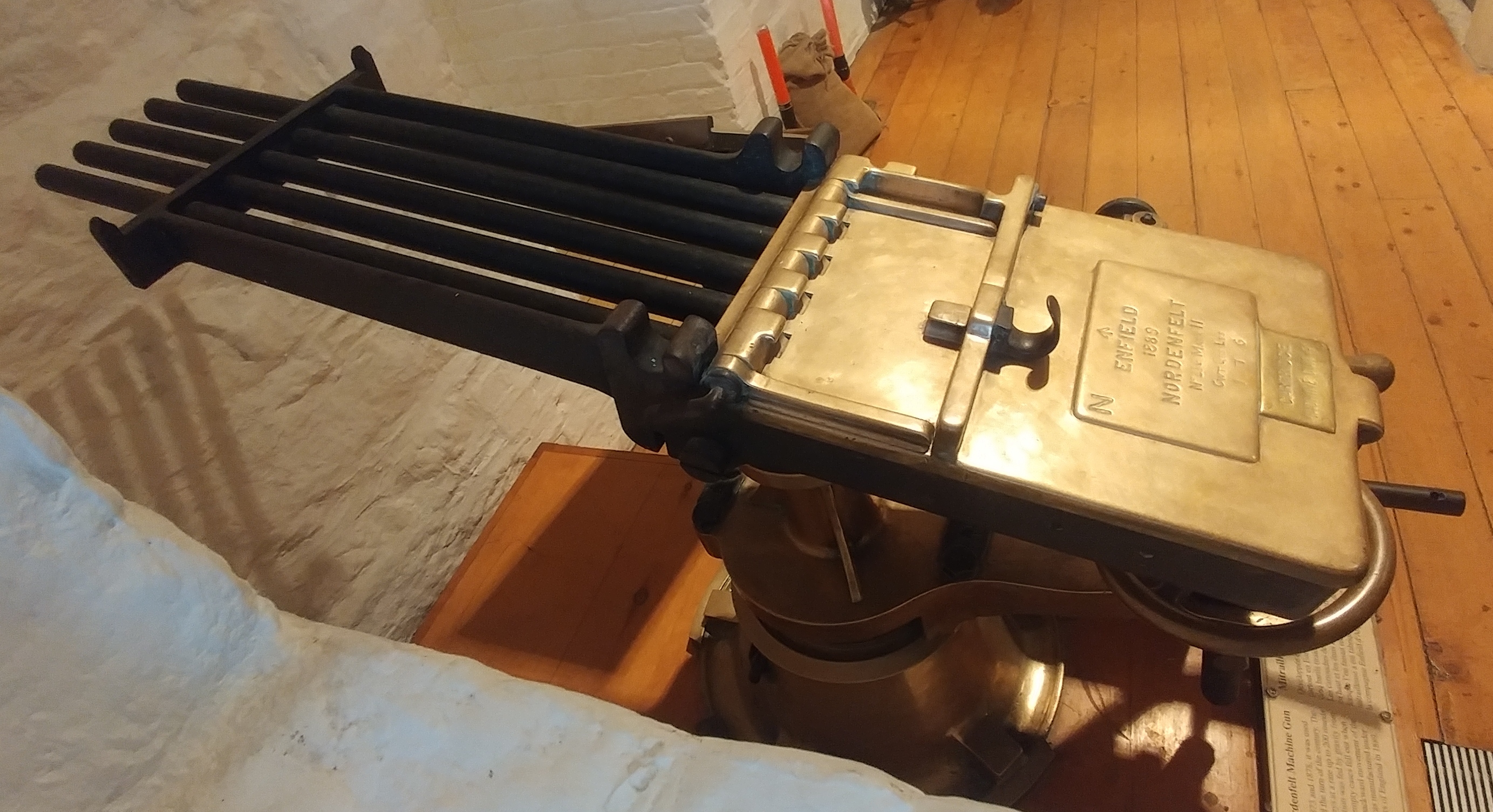
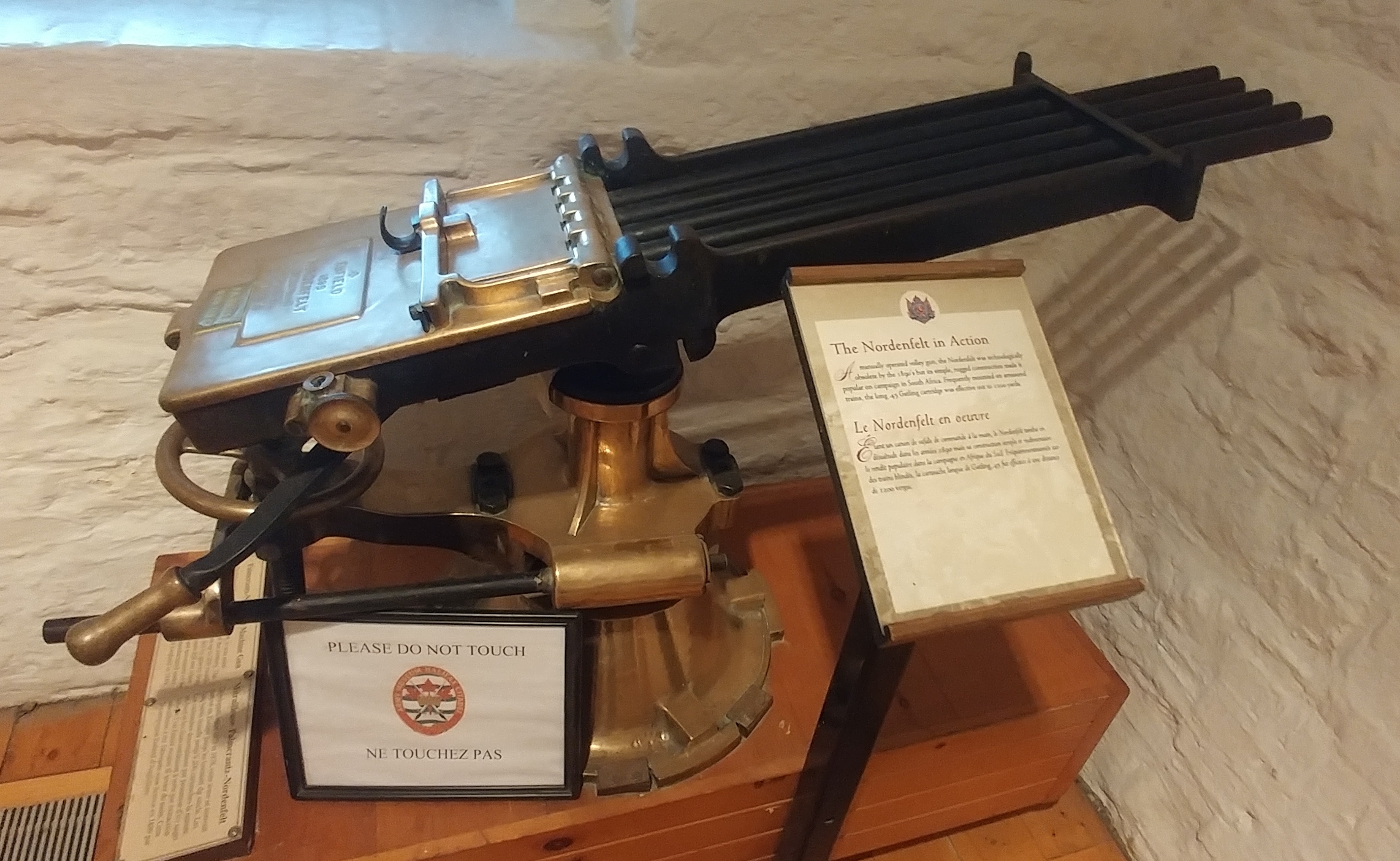
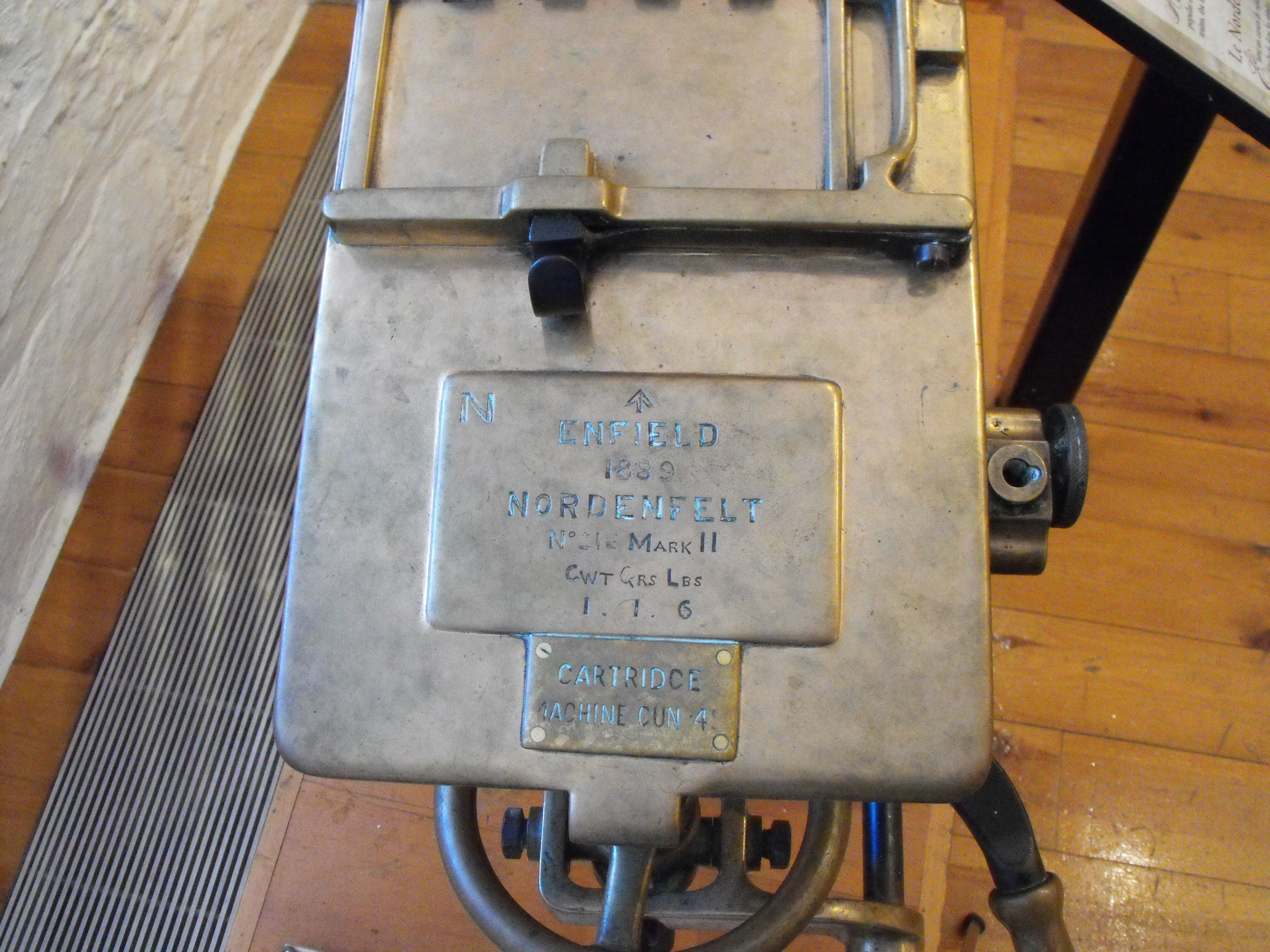
(Author Photos)
5-inch 5-barrel Nordenfelt Mk. II Machine Gun, stamped Enfield 1889, Nordenfelt No. 216 Mark II, weight 1-1-6 (146 lbs), Cartridge Machine Gun 41.
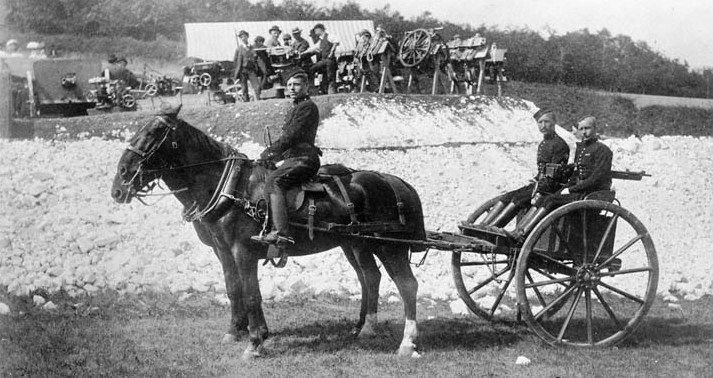
(Library and Archives Canada Photo, MIKAN No. 3228076)
45-inch 5-barrel Nordenfelt Mk. II Machine Gun mounted on a galloping carriage, 1887.
(Royal Navy Photo)
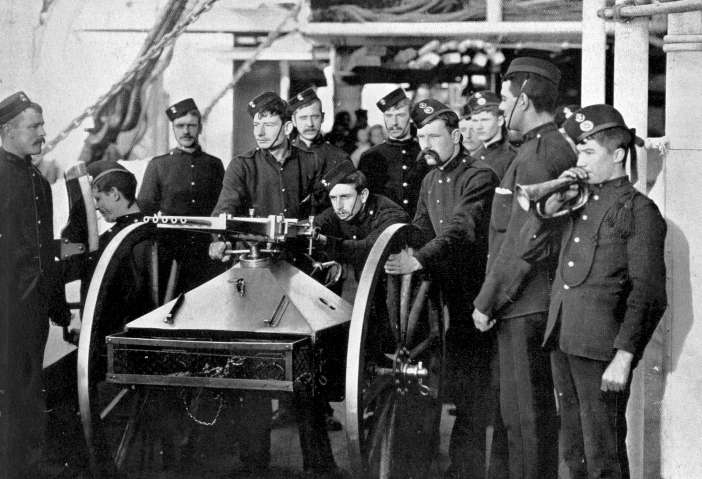
45-inch 5-barrel Nordenfelt Mk. II Machine Gun, and Royal Navy Marine gunners, 1890s.
(Guilmann Photo)
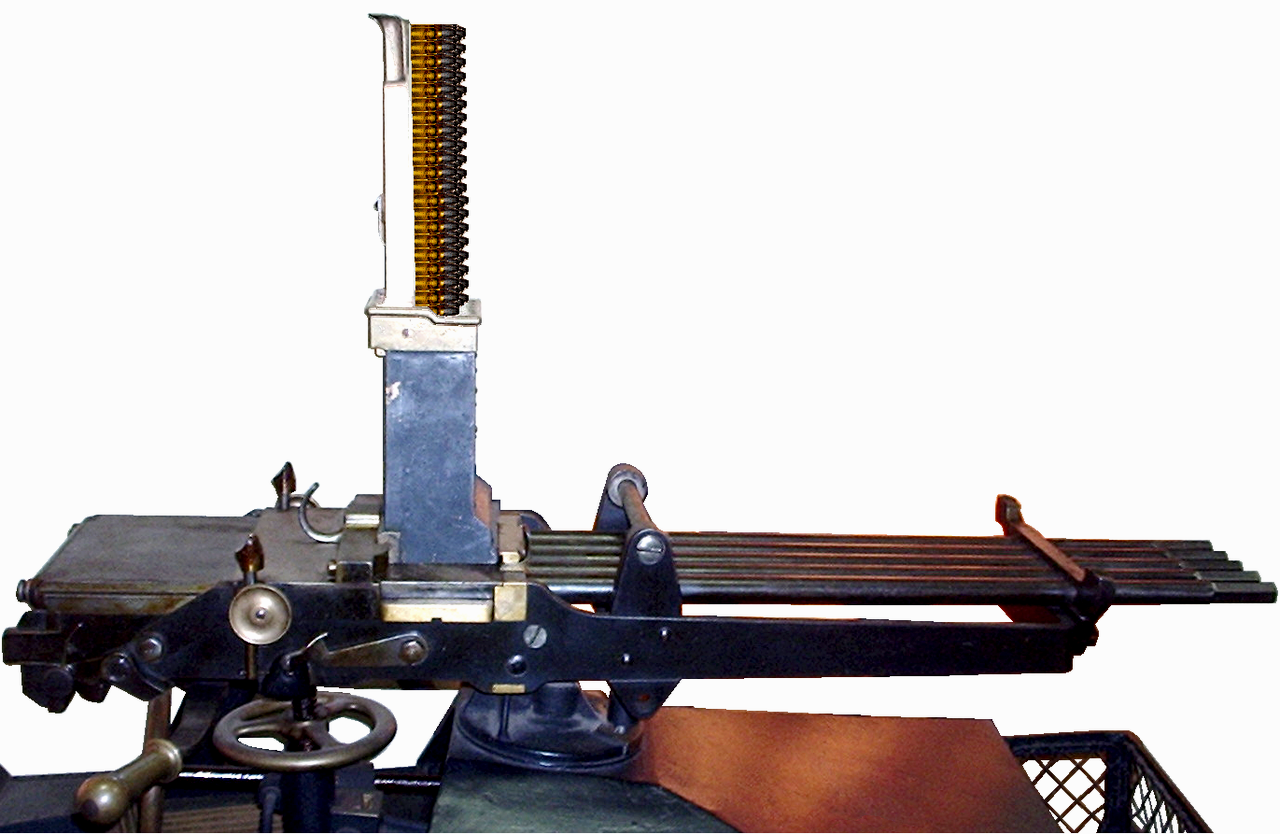
Ammunition feed system for the 5-inch 5-barrel Nordenfelt Mk. II Machine Gun.

(Rock Island Auctions Photo)
U.S. Navy marked 5-barrel Maxim-Nordenfelt crank handle volley gun in 7mm Mauser, manufactured in 1898. The Nordenfelt gun was reportedly originally designed at the end of the 1860s by Helge Palmcrantz (July 7, 1842-November 22, 1880), a Swedish inventor, and subsequently financially backed in the early 1870s by Thorsten Nordenfelt (March 1, 1842-February 8, 1920), a Swedish steel producer and banker operating out of London, as a multi-barreled, volley firing weapon. Both of the aforementioned names have British patents relating to the designs of the gun, ammunition and carriage. The gun was officially named the “Nordenfelt machine gun” with the Nordenfelt Guns and Ammunition Company operating with sales offices in London and a plant set up in England. These guns were made in anywhere between single, 2, 3, 5, 6, 10 and 12-barrel configurations and offered in a variety of calibers. An early variant of the gun was demonstrated to the Swedish Defense Minister in 1868, and it was subsequently bought into the Swedish Army. During a demonstration at Portsmouth naval base in England, a 10-barrel Nordenfelt reportedly fired 3,000 rounds in 3 minutes and 3 seconds without any stoppages, which was a very respectable feat for the time. The British Royal Navy officially adopted the Nordenfelt in addition to their Gardner and Gatling guns then in use. The Nordenfelt gun was eventually overshadowed by the Maxim machine gun as designed by Sir Hiram Maxim. Thorsten Nordenfelt eventually merged operations with the Maxim Gun Company to officially become Maxim-Nordenfelt Guns and Ammunition Company Limited in 1888. Shortly after, Thorsten Nordenfelt suffered a personal bankruptcy and was forced out of the Maxim-Nordenfelt company in 1890. Although a few examples are known in prominent museums, Nordenfelt guns never gained widespread success, and any surviving example today is considered extremely rare and desirable as an evolutionary piece in the story of “machine gun” development. The weapon basically functions by simply moving the side mounted crank handle backwards and forwards. The initial operation of the weapon is by retracting the crank handle to the rear, this movement retracts the breech bolts rearward, which in turn allows five rounds to drop from the gravity fed hopper magazine located on top of the weapon through the cutouts on top of the receiver/top cover. Upon pushing the crank handle forward, this advances the breech bolts forward, while simultaneously positioning the rounds in line with the chambers in which the five rounds fire at the end of travel. The operation is repeated with the addition of the extraction and ejection function, in which the empty shells drop out the bottom. The speed or cyclic rate of firing is determined by how fast the operator can move the crank handle forward and backwards. The weapon itself is all machined steel with a “U” shaped frame in which the five barrels are mounted in parallel, with a brass breech block, blade and notch sights with elevation adjustable rear sight. The top cover on the gun is marked “U.S.N./7 M/M NORDENFELT. NO. 2./W.S./WT 154 LBS./1898.” in five lines, and a rectangular brass plaque affixed to the rear of the gun reads “MAXIM NORDENFELT/7 M/M MAUSER/No 1483”. Matching visible serial number “1483” on various components, besides the pin for the elevation mechanism numbered “1484” and the period original magazine marked “SM 1482” and “U.S.N. No. 1”. The gun is mounted on an original brass navy mount with an oval brass plaque that reads “Maxim-Nordenfelt/No 2857/LONDON.” and the base is also marked with a Maxim-Nordenfelt maker marking along with “U.S.N. 7 M/M NORDENFELT. No. 2./W.S. WT 224 LBS. 1898.” marked in two places, with hand-cranked elevation and traverse knobs. (guns@rockislandauction.com)