
Handley Page Victor
(RAF Photo via Mike Kaehler)
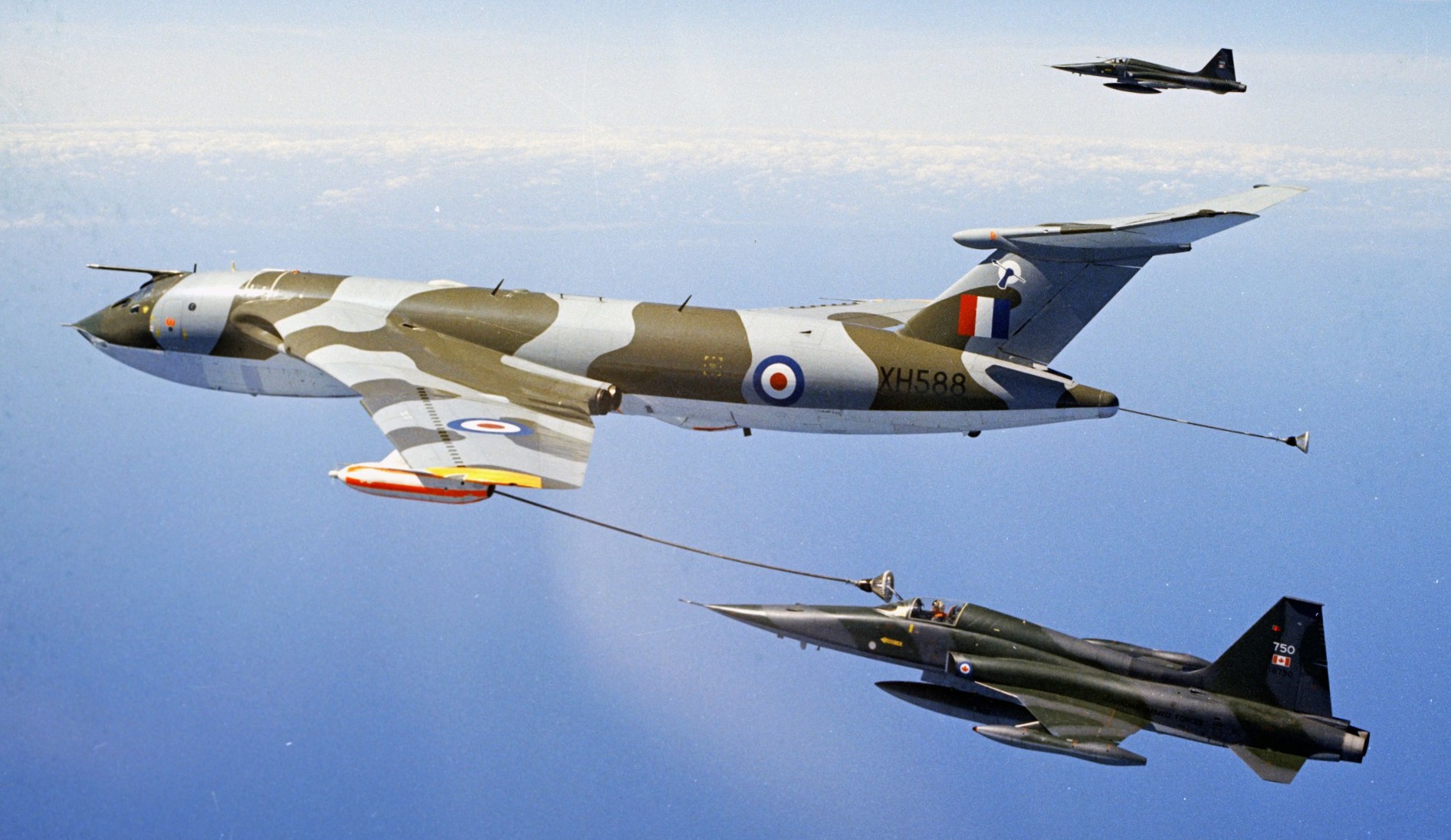
Canadair CF-116 Freedom Fighters refuel from a Handley Page Victor K.2 tanker (Serial No. XH588) of No. 55 Squadron, RAF, in May 1971. The fighters, flown by test pilots Major Ned Henderson and Captain Stan Kerel, No. 433 Squadron, were taking part in air-to-air refuelling trials to test the feasibility of the probe and drogue system used by the RAF. The trials were considered a success and a number of Boeing 707 airframes were converted and entered service as Boeing CC-137s with the Canadian Air Force.
(RAF Photo)
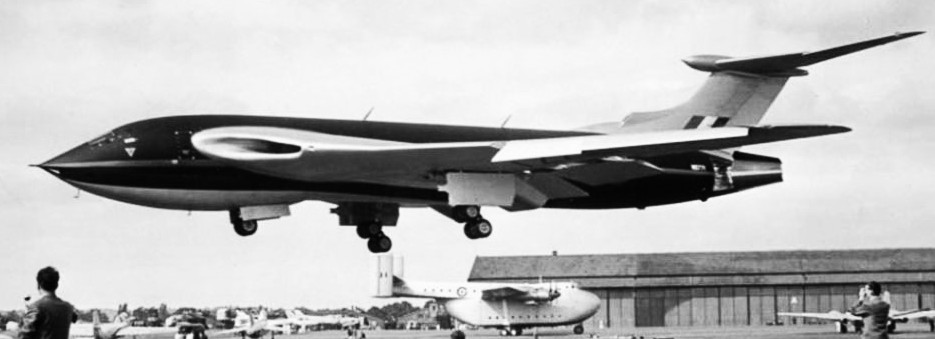
Handley Page Victor (Serial No. WB771) prototype landing at Farnborough, UK, August 1953. Black fuselage with a red cheatline and silver flight surfaces. WB771 was lost in a crash on 14 July 1954 while on a low-level run. The tail assembly was weak and tore off, with test pilot Ronald Ecclestone and his crew all killed. The second prototype, (Serial No. WB775), which featured a reinforced tail, performed its initial flight on 11 September 1954. It had the same colour scheme that had been applied to the first prototype, and was fitted with operational kit. Production of the HP.80 had been ordered in June 1952, well before the first flight of the initial prototype, with the British Air Ministry ordering a batch of 25 production bombers, to be designated “Victor B.1”. First flight of a production aircraft was on 1 February 1956, with test pilot Johnny Allam at the controls. Allam “accidentally” broke Mach 1 in a shallow dive on 1 June 1957, making it the largest aircraft to that time to exceed the speed of sound.
(RAF Photo)
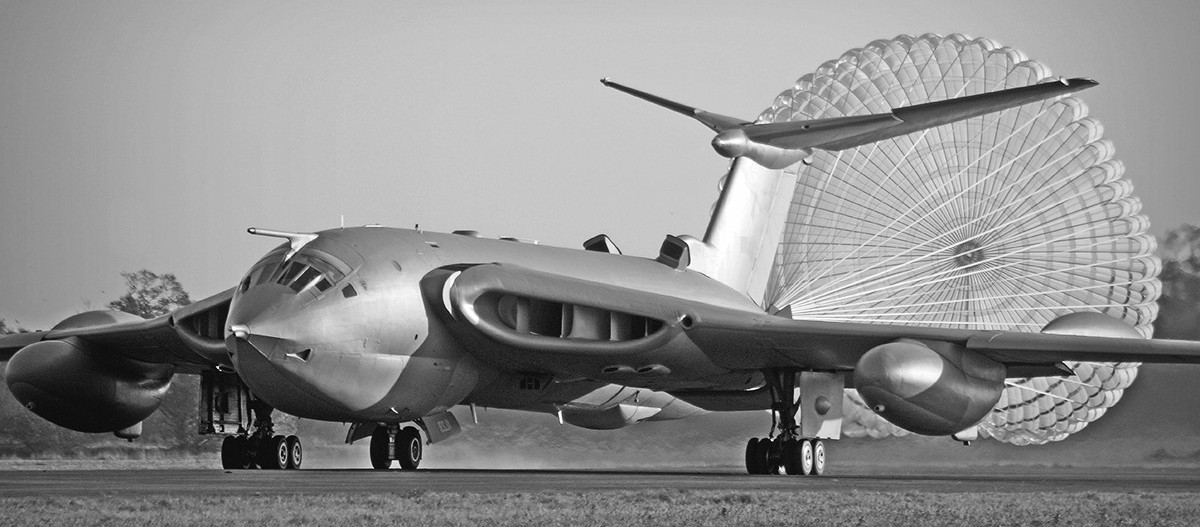
Handley Page Victor with drogue chute deployed.
(Mike Freer Photo – Touchdown Aviation)
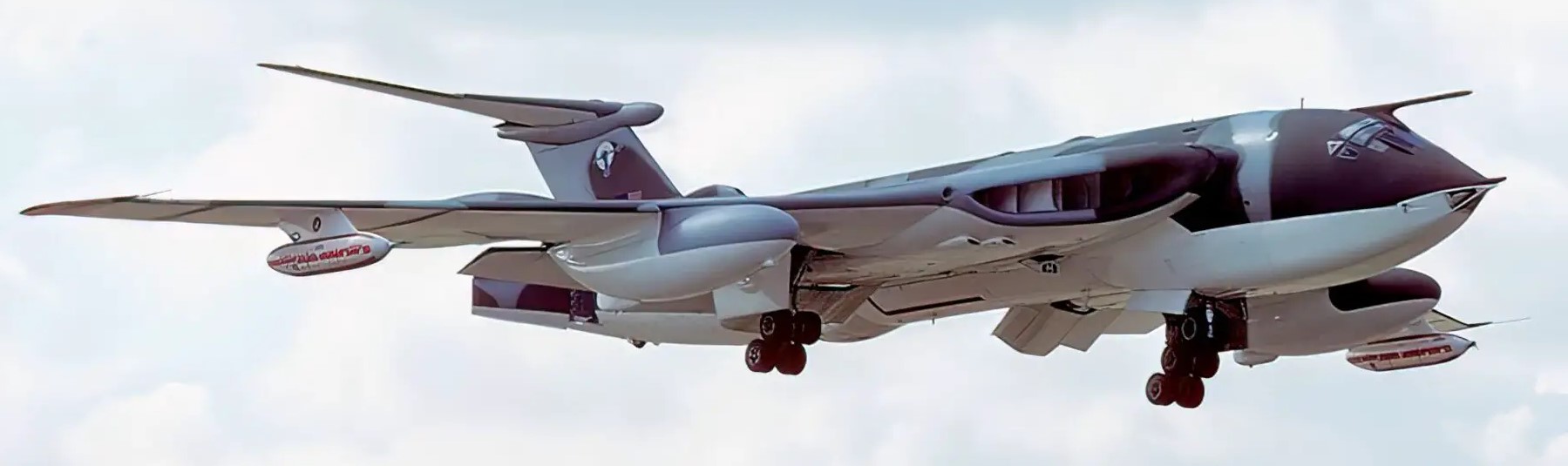
Handley Page Victor K2 (Serial No. XL161) approaching RAF Abingdon, September 1979.
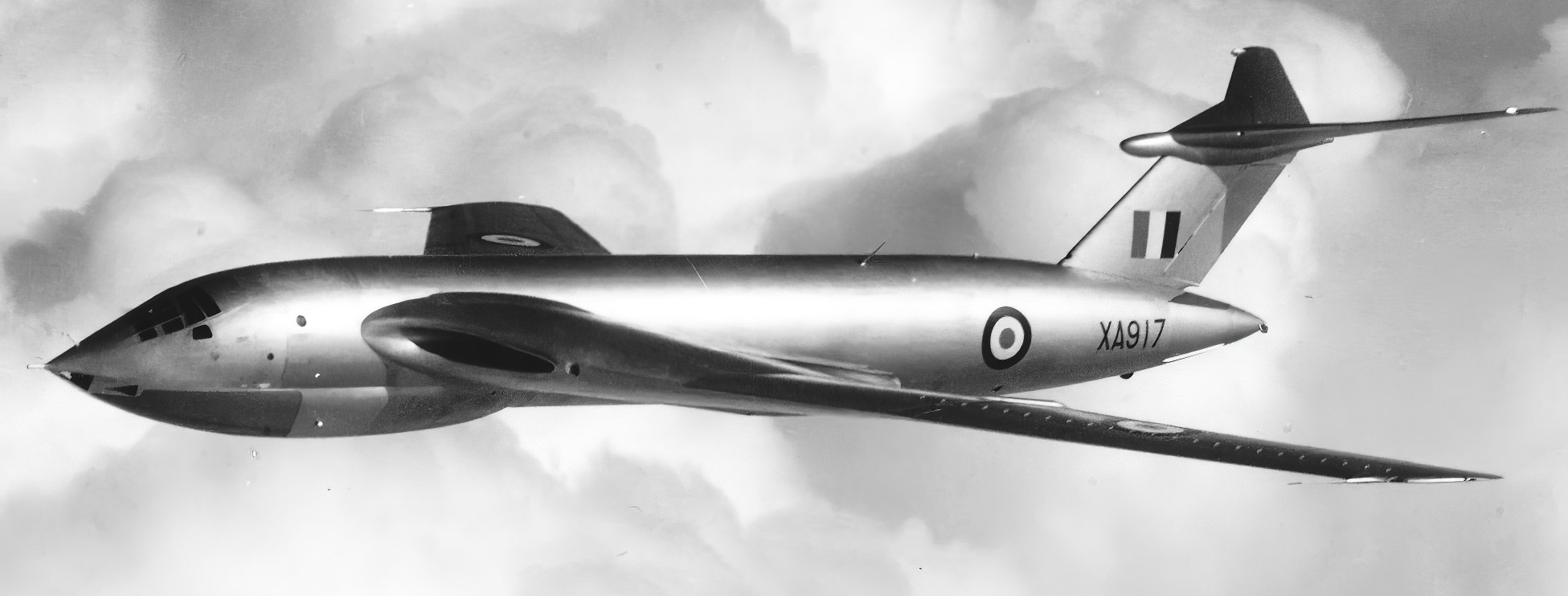
(RAF Photo)
Handley Page Victor. The production B.1 Victors were propelled by Armstrong Siddeley Sapphire ASSa.7 turbojets, boasting a thrust rating of 11,000 lbf (49 kN). Initially armed with the Blue Danube, they later transitioned to the more potent Yellow Sun upon its availability. Additionally, Victors carried U.S.-supplied Mark 5’s through the Project E program and the British Red Beard tactical nuclear weapon. A total of 24 aircraft underwent upgrades to the B.1A standard between 1958 and 1960, which included the installation of Red Steer tail warning radar within an enlarged tail-cone, alongside a suite of radar warning receivers and electronic countermeasures (ECM).
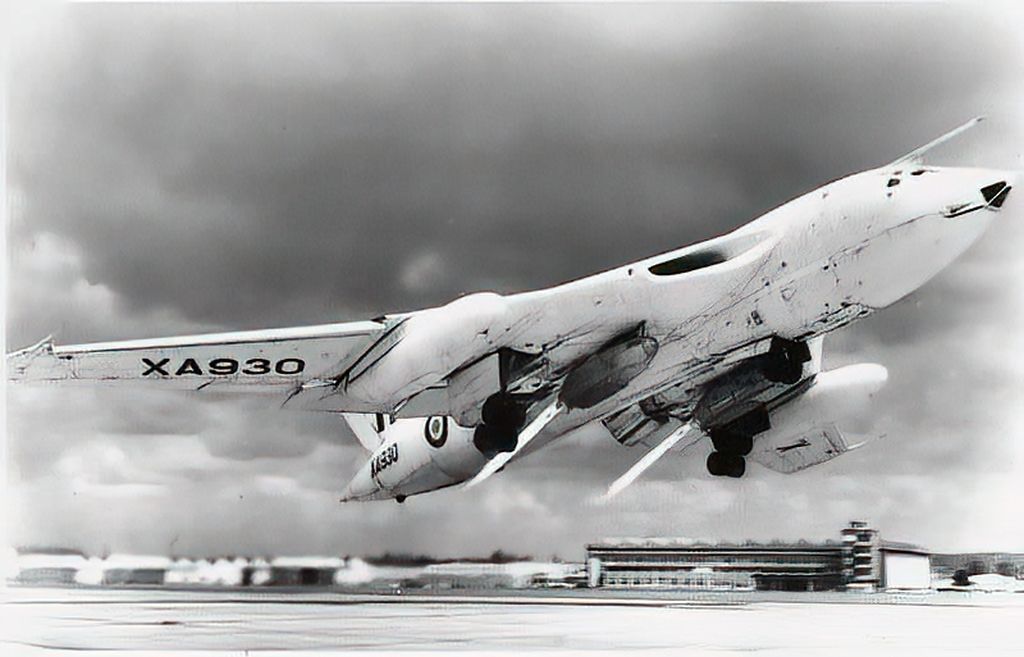
(RAF Photo, via Jets and Props)
Handley Page Victor (Serial No. XA930), departing from the de Havilland Aircraft Company aerodrome at Hatfield, Hertfordshire, England, 14 July 1960 at 190,000lb all-up weight assisted in a trial take-off assisted by de Havilland Spectre rockets. A total of 50 B.1s was built, with the last delivered in February 1961, and the B.1 also equipped RAF Numbers 15, 55, and 57 Squadrons. Three of the B.1s were fitted with Yellow Aster radar, a modification of the H2S Mark IX with a recording function, and attached to Number 543 Squadron for radar reconnaissance operations. Pictures survive of a B.1 fitted with large underwing antenna booms for the “Red Neck” side-looking radar system for radar reconnaissance, but the Victor never carried the Red Neck in service.
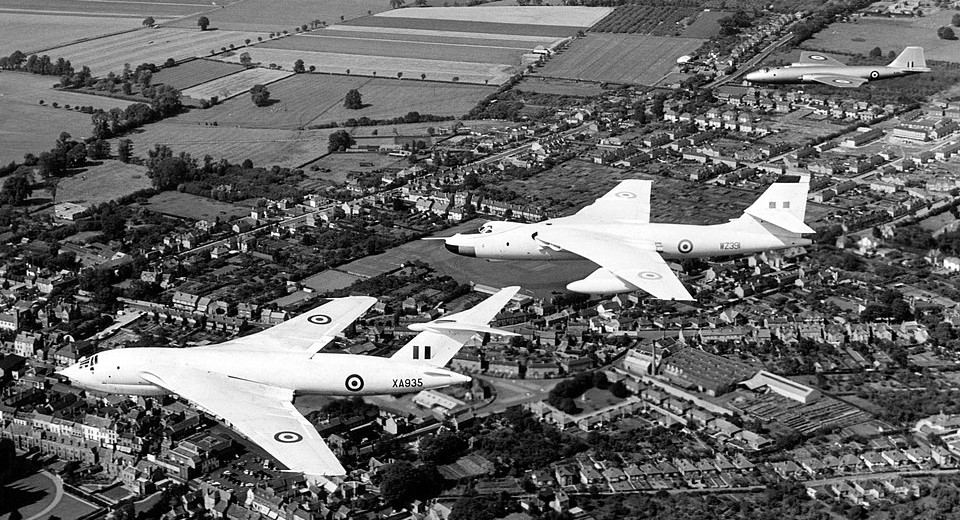
(RAF Photo)
Handley Page Victor B.1 (Serial No. XA935), with Vickers Valiant B(PR).1 (Serial No. WZ391) of No. 543 Squadron RAF, and a Canberra PR.7 (possibly Serial No. WJ815) of No. 58 Squadron RAF. The Victor featured tricycle landing gear. The nose gear had twin wheels and retracted backward; each main gear unit consisted of eight-wheel bogies, with two rows of four tires, and retracted into the wings. Large hydraulic airbrakes were fitted to each side of the tailcone, and the tailcone contained a drag chute. B.1s were initially painted in a tidy overall “anti-flash white” to reflect the heat of a nuclear blast.
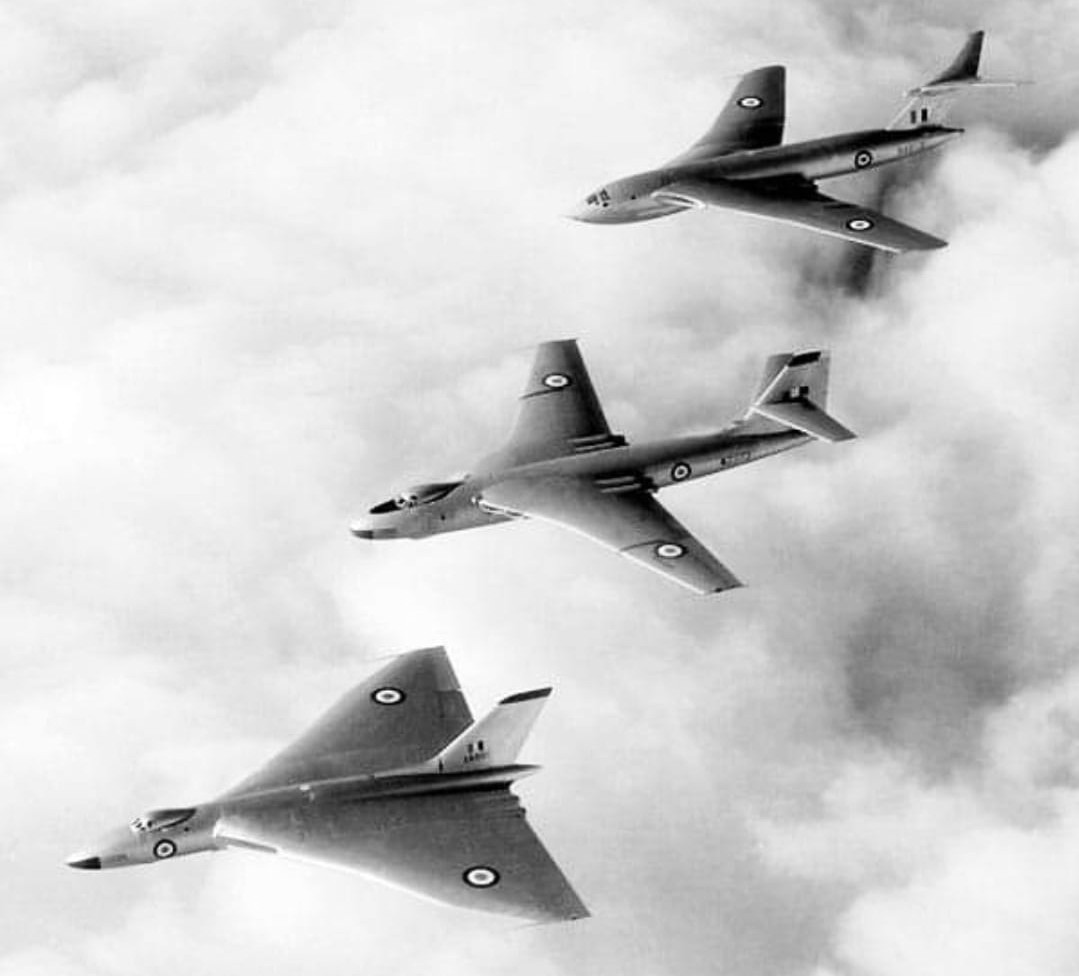
(RAF Photo)
Handley Page Victor, Vickers Valiant, Avro Vulcan in formation.
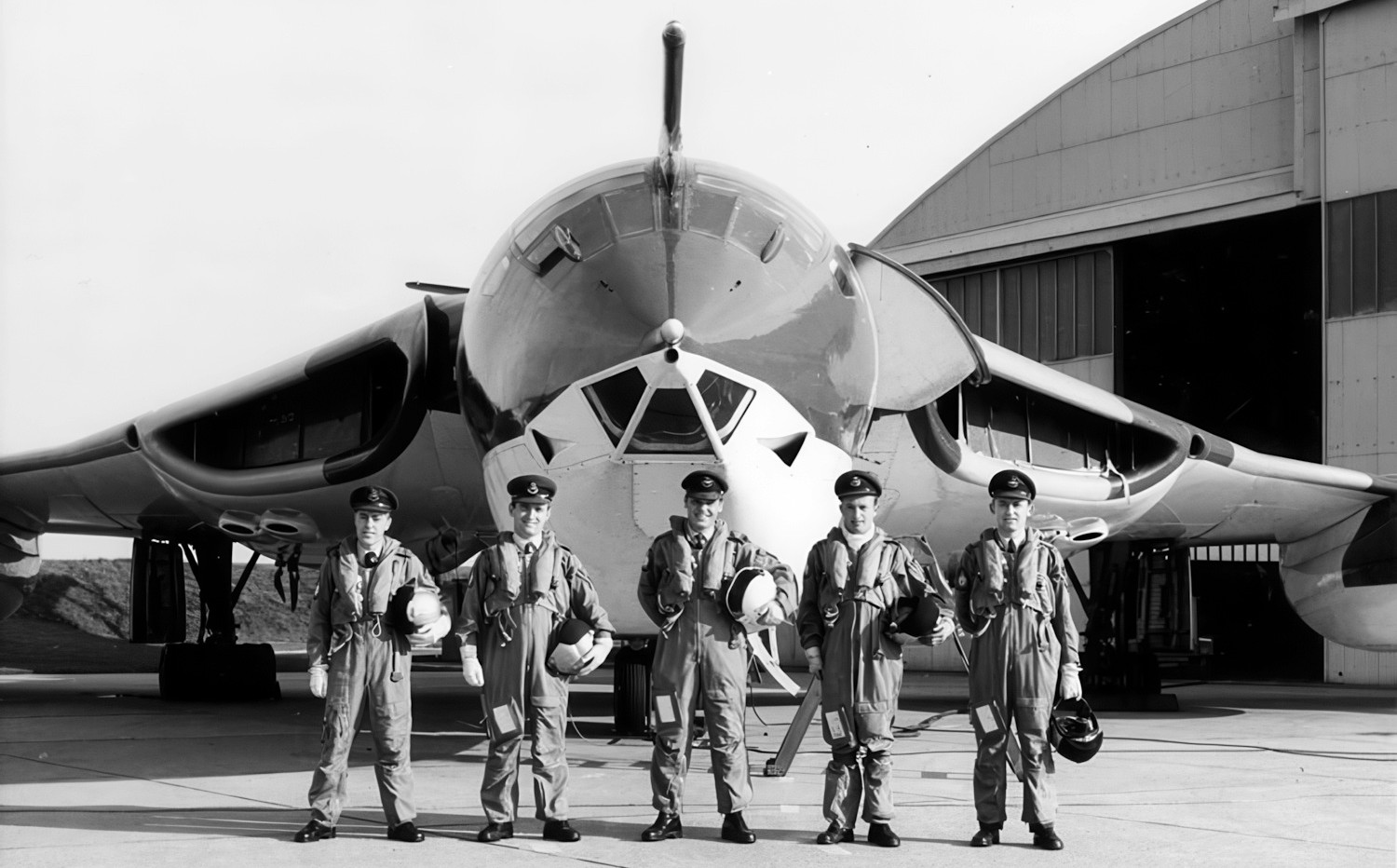
(RAF Photo)
Handley-Page Victor of No. 139 (Jamaica) Squadron in front of No. 3 Hangar at their home base of RAF Wittering in September 1968. From left to right: Squadron Leader Harper with Flight Lieutenants Hall, Gatward, Webb and Campbell.
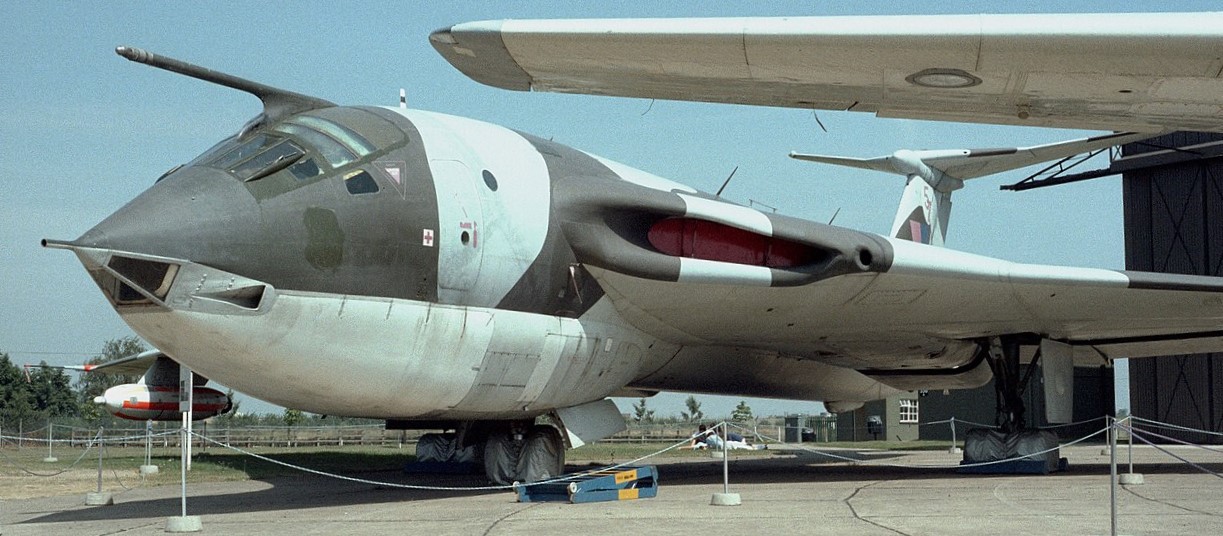
(Anidaat Photo)
Handley Page Victor (Serial No. XH646), Imperial War Museum, Duxford, 1983.
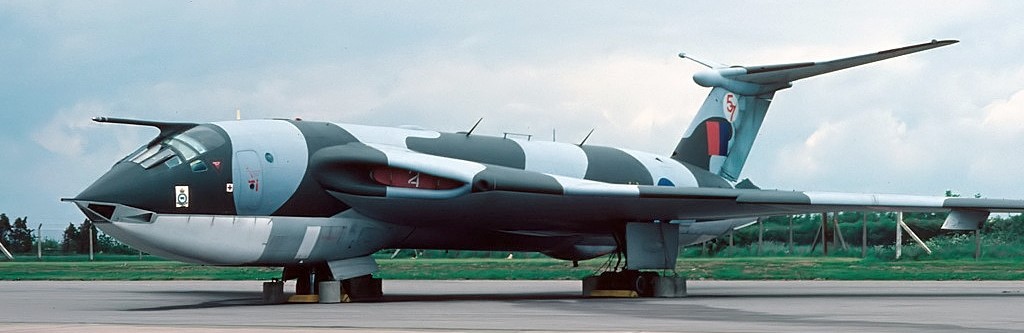
(Mike Freer – Touchdown Aviation Photo)
Handley Page HP-80 Victor K1A, UK.
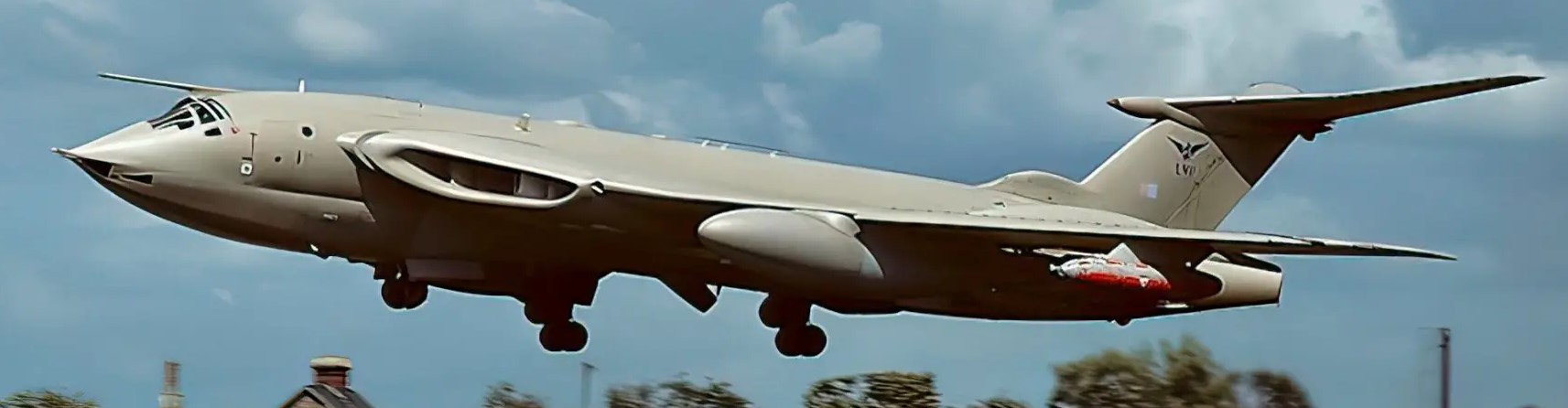
(RAF Photo)
Handley Page HP-80 Victor K2.
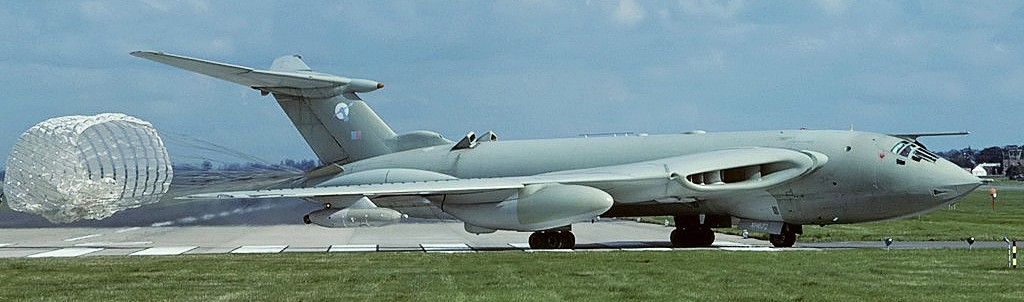
(Mike Freer Touchdown-aviation Photo)
Handley Page HP-80 Victor K2.
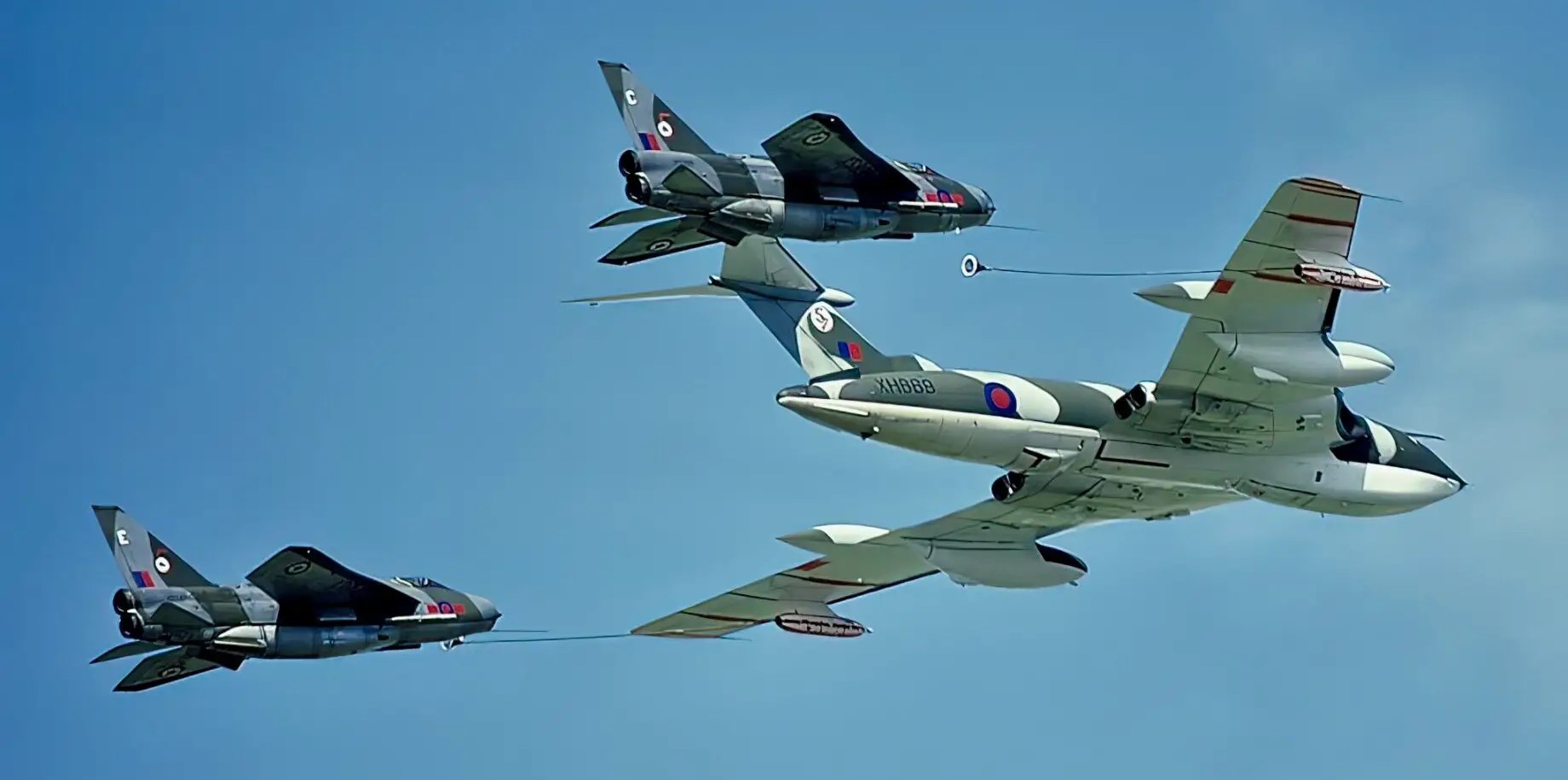
(Mike Freer Photo)
Victor K2 (XH669) refuelling a pair of English Electric Lightnings, September 1978.
86 Victors werebuilt, including two “HP.80” prototypes, 50 “Victor B.1” bombers, with 24 converted to “Victor B1.A” bombers with improved ECM, and 11 converted to “Victor K.1” tankers. 6 B1.As were further converted to fast-track “Victor B.1A(K2P)” bomber-tanker conversions, and 14 to “Victor K.1A” tankers, and 34 “Victor B.2” bombers with new engines and greater wingspan, with 21 converted to “Victor B.2R” configuration with uprated engines and Blue Steel missile carriage; 9 converted to “Victor B(SR).2” strategic reconnaissance platforms; and 24 converted to “Victor K.2” tankers.
All comments are subject to our Comment Policy. You must be at least 18 years old to comment.
See a comment that violates our guidelines? Report it here.