
Fairchild 91
(IWM Photo, CM 4401)
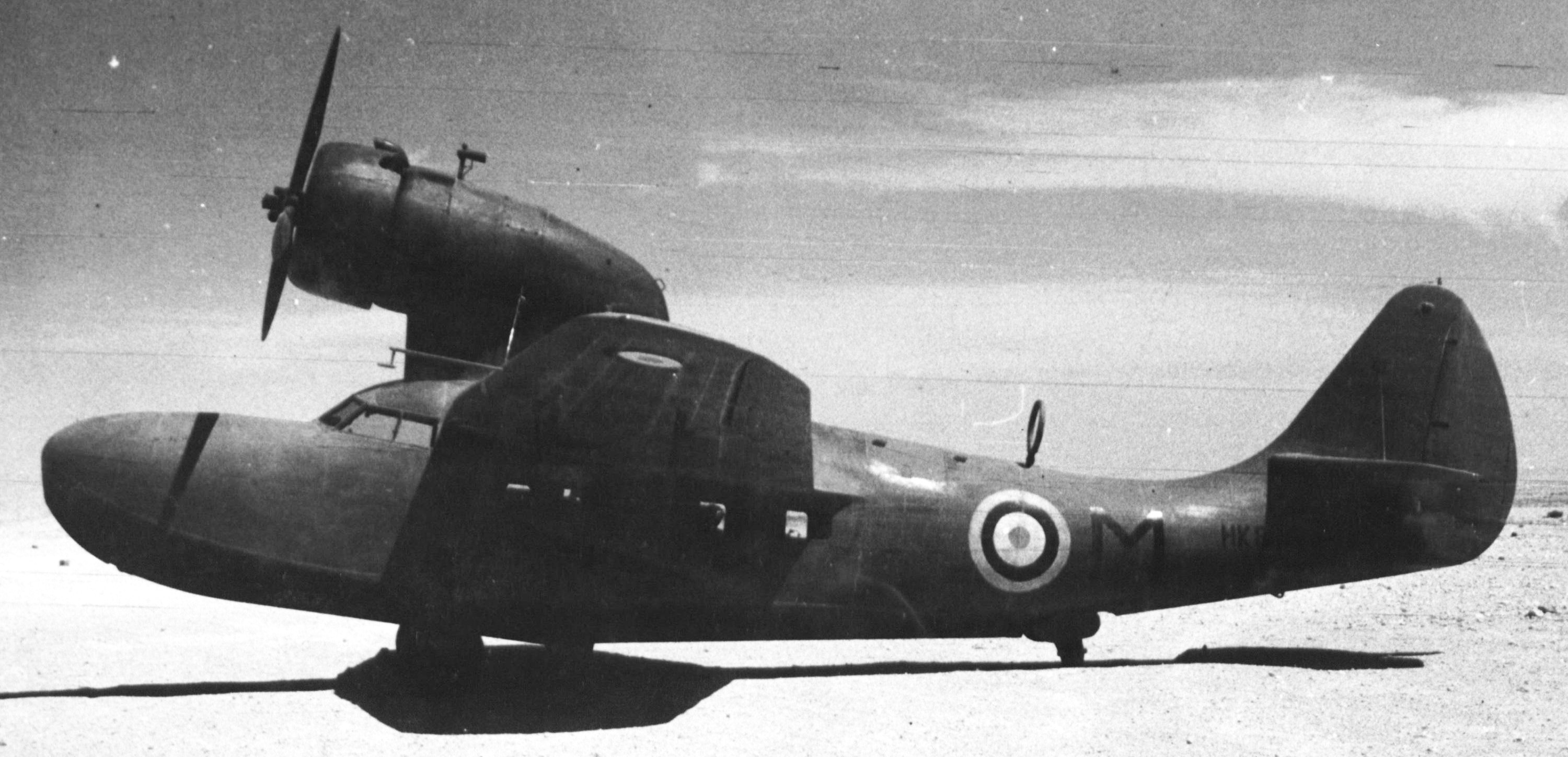
Fairchild 91, (Serial No. HK832), coded M, of the Sea Rescue Flight RAF, on an airfield in Egypt. This single-engined amphibian, formerly NC16690 on the US civil register, was purchased second-hand by the British Air Ambulance Corps, a New York-based charity, and delivered to the Middle East where it served with the SRF until sunk in a take-off accident near Benghazi on 17 May 1943.
The Fairchild 91 (a.k.a. A-942) was a single-engine eight-passenger flying boat airliner developed in the United States in the mid-1930s. Fairchild designed the aircraft in response to a Pan American Airways request[2] for a small flying boat to operate on their river routes along the Amazon and Yangtze. The result was a conventional high-wing cantilever monoplane with its radial engine mounted above the wing in a streamlined nacelle. Before construction of the prototype was complete, however, Pan American no longer required the aircraft to operate in China, and Fairchild optimised the design for the Brazilian tropics. A-942 Reg. No. NC16690 bought by industrialist Garfield Wood, was sold to the British American Ambulance Corps before being transferred to the RAF, who operated it in Egypt for air-sea rescue. (Wikipedia)
(RAF Photo)
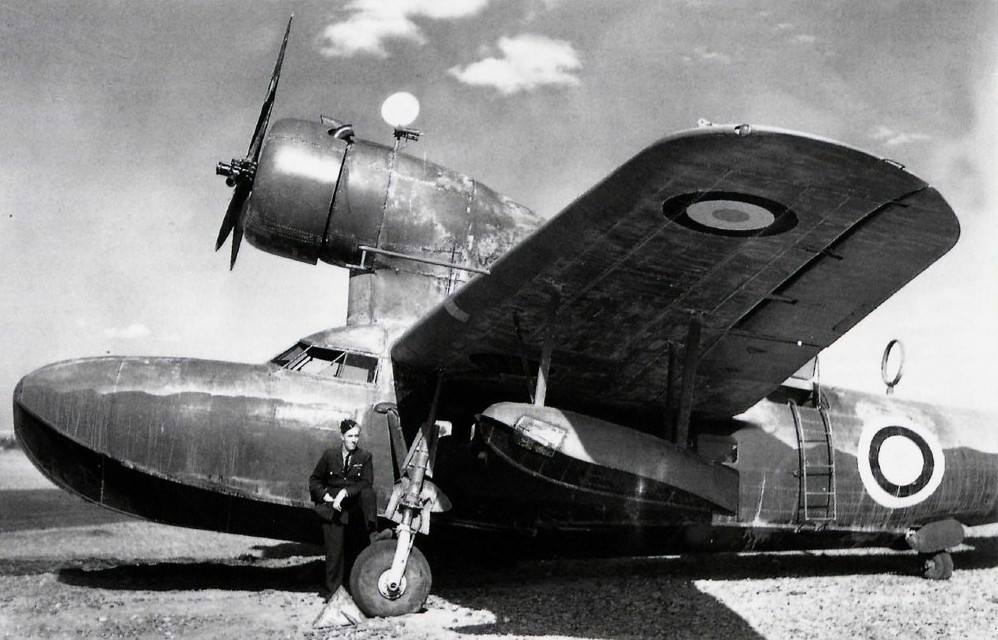
Fairchild 91, (Serial No. HK832), coded M, of the Sea Rescue Flight RAF, on an airfield in Egypt. ypt.
(IWM Photo, 2304)
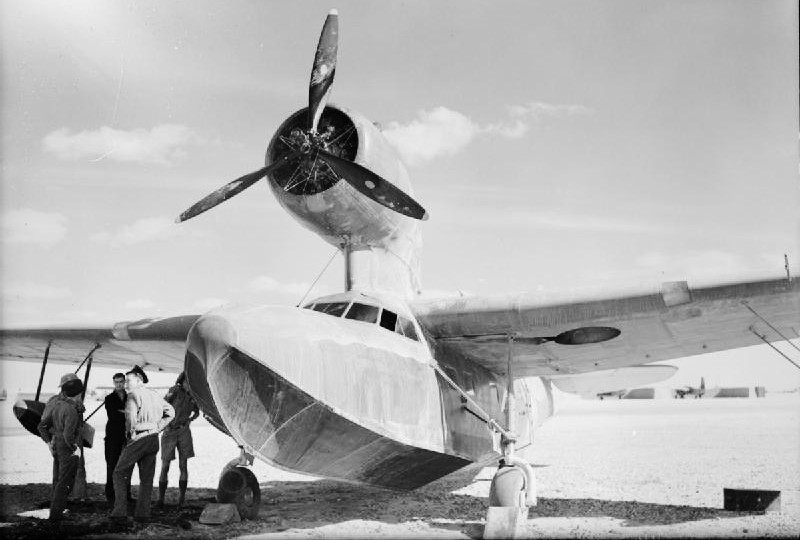
Fairchild 91, (Serial No. HK832), coded M, of the Sea Rescue Flight RAF, on an airfield in Egypt.
(RAF Photo)
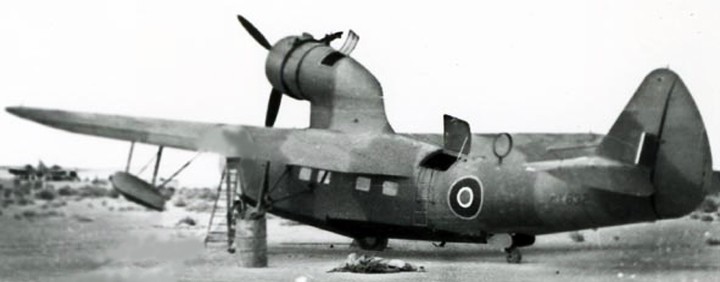
Fairchild 91, (Serial No. HK832), coded M, of the Sea Rescue Flight RAF, on an airfield in Eg
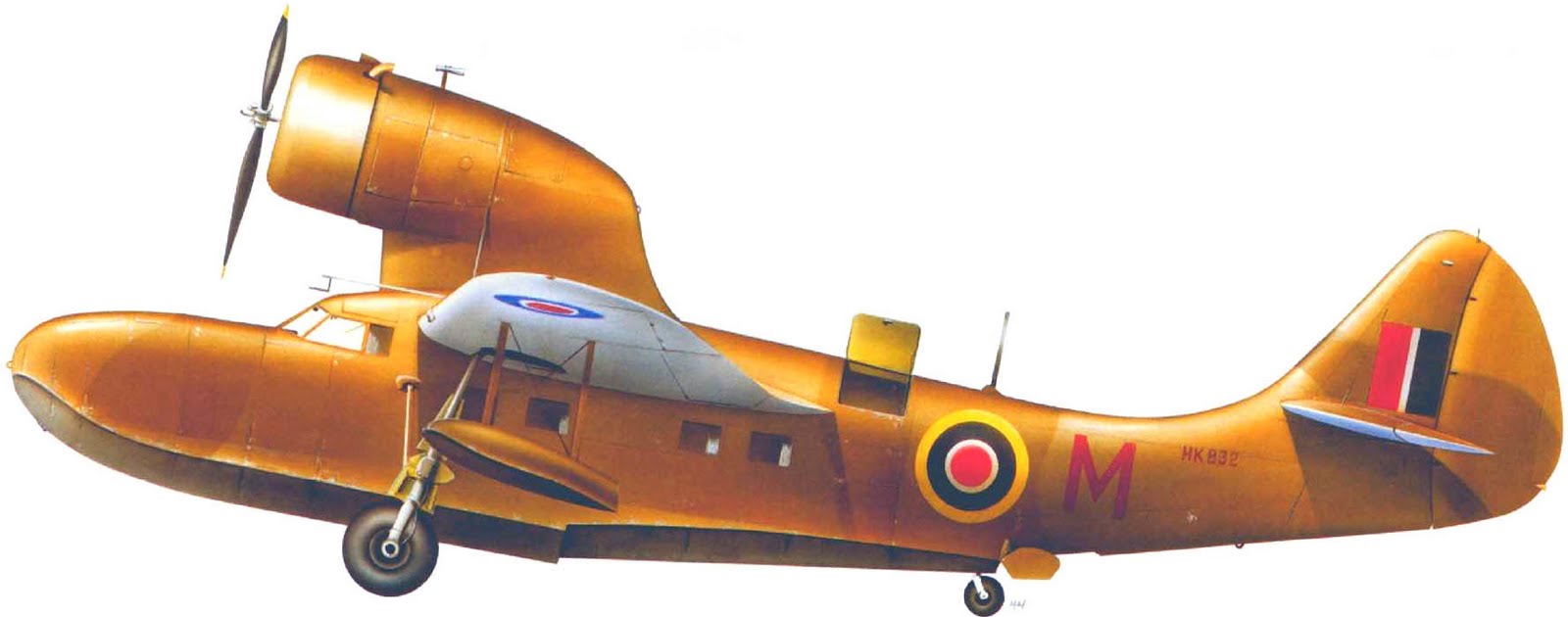
Fairchild 91, (Serial No. HK832), coded M, of the Sea Rescue Flight RAF, colour profile.
All comments are subject to our Comment Policy. You must be at least 18 years old to comment.
See a comment that violates our guidelines? Report it here.