
Mitsubishi A6M Zero (Zeke)
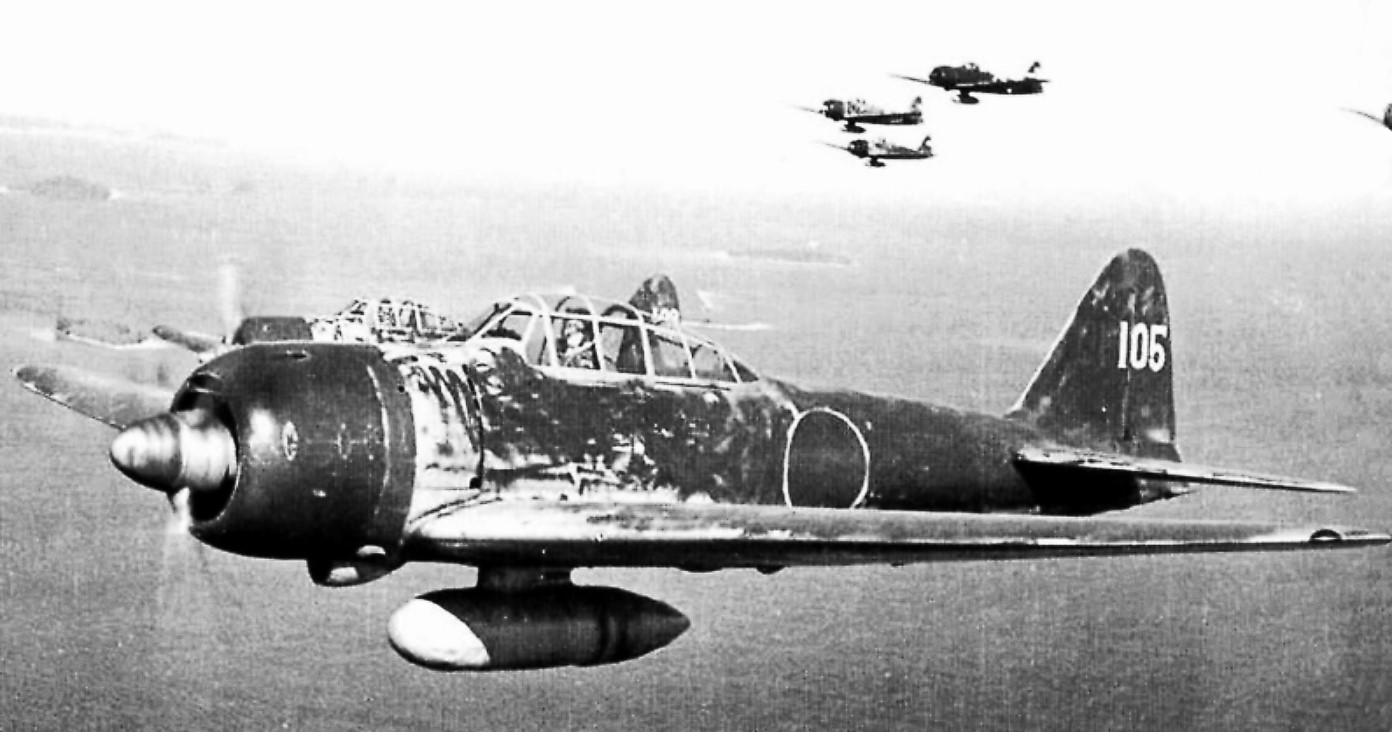
(IJN Photo)
Mitsubishi A6M3 Model 22, flown by Japanese ace Hiroyoshi Nishizawa over the Solomon Islands, 1943.
The Mitsubishi A6M “Zero” is a long-range carrier-based fighter aircraft formerly manufactured by Mitsubishi Aircraft Company, a part of Mitsubishi Heavy Industries. It was operated by the Imperial Japanese Navy (IJN) from 1940 to 1945. The A6M was designated as the Mitsubishi Navy Type 0 carrier fighter[1] (零式艦上戦闘機, rei-shiki-kanjō-sentōki), or the Mitsubishi A6M Rei-sen. The A6M was usually referred to by its pilots as the Reisen (零戦, zero fighter), “0” being the last digit of the imperial year 2600 (1940) when it entered service with the Imperial Navy. The official Allied reporting name was “Zeke”, although the name “Zero” was used colloquially as well.
The Zero is considered to have been the most capable carrier-based fighter in the world when it was introduced early in the Second World War, combining excellent maneuverability and very long range. The Imperial Japanese Navy Air Service also frequently used it as a land-based fighter.
In early combat operations, the Zero gained a reputation as a dogfighter, achieving an outstanding kill ratio of 12 to 1, but by mid-1942 a combination of new tactics and the introduction of better equipment enabled Allied pilots to engage the Zero on generally equal terms.[5] By 1943, the Zero was less effective against newer Allied fighters. The Zero lacked hydraulic boosting for its ailerons and rudder, rendering it difficult to maneuver at high speeds. Lack of self-sealing fuel tanks also made it more vulnerable than its contemporaries. By 1944, with Allied fighters approaching the A6M’s levels of maneuverability and consistently exceeding its firepower, armor, and speed, the A6M had largely become outdated as a fighter aircraft. However, as design delays and production difficulties hampered the introduction of newer Japanese aircraft models, the Zero continued to serve in a front-line role until the end of the war in the Pacific. During the final phases, it was also adapted for use in kamikaze operations. Japan produced more Zeros than any other model of combat aircraft during the war. (Wikipedia)
The A6M is usually known as the “Zero” from its Japanese Navy aircraft type designation, Type 0 carrier fighter (Rei shiki Kanjō sentōki, 零式艦上戦闘機), taken from the last digit of the Imperial year 2600 (1940) when it entered service. In Japan, it was unofficially referred to as both Rei-sen and Zero-sen; Japanese pilots most commonly called it Zero-sen, where sen is the first syllable of sentōki, Japanese for “fighter plane”.[Note 2][14] In the official designation “A6M”, the “A” signified a carrier-based fighter, “6” meant that it was the sixth such model built for the Imperial Navy, and “M” indicated Mitsubishi as the manufacturer.
The official Allied code name was “Zeke”, in keeping with the practice of giving male names to Japanese fighters, female names to bombers, bird names to gliders, and tree names to trainers. “Zeke” was part of the first batch of “hillbilly” code names assigned by Captain Frank T. McCoy of Nashville, Tennessee, assigned to the Allied Technical Air Intelligence Unit at Eagle Farm Airport in Australia, who wanted quick, distinctive, easy-to-remember names. The Allied code for Japanese aircraft was introduced in 1942, and McCoy chose “Zeke” for the “Zero”. Later, two variants of the fighter received their own code names. The Nakajima A6M2-N floatplane version of the Zero was called “Rufe”, and the A6M3-32 variant was initially called “Hap”. General “Hap” Arnold, commander of the United States Army Air Forces, objected to that name, so it was changed to “Hamp”. (Wikipedia)
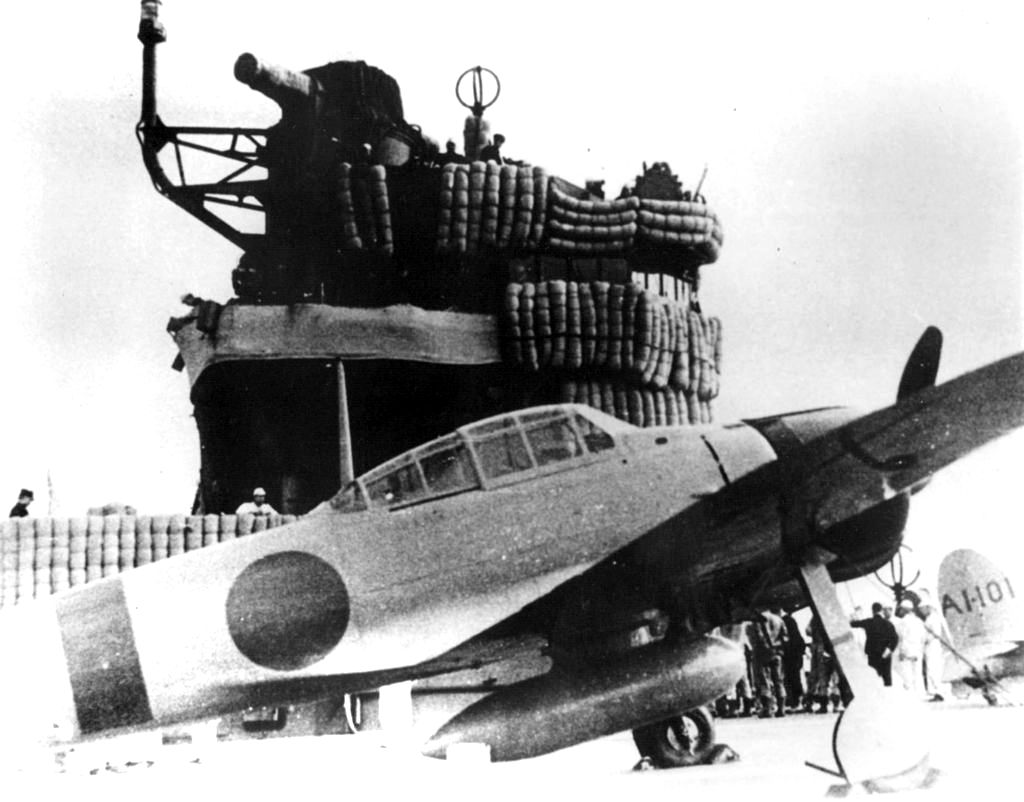
Mitsubishi A6M2 Model 21 Zero-Sen (Navy Type 0 Carrier Fighter), codename “Zeke”, IJN carrier Akagi, 7 Dec 1941. (IJN Photo)
The US naval base at Pearl Harbor was attacked by 353 Japanese aircraft including Mitsubishi A6M2 Zeke fighters, Aichi D3A Val dive bombers and Nakajima B5N Kate torpedo planes in two waves, launched from six IJN aircraft carriers.
Four US Navy battleships were sunk and four others damaged. Three cruisers, three destroyers, an anti-aircraft training ship and one minelayer were also sunk or crippled. The Japanese air attack also concentrated on surrounding airfields, where 188 US aircraft and hangers were destroyed. Casualties on the ground were calculated at 2,402 men killed and a further 1,282 wounded. The Japanese lost 29 aircraft and five midget submarines, with 65 servicemen killed or wounded. One Japanese sailor was captured.
The attack on Pearl Harbor immediately propelled the United States into conflict with Japan and its Axis allies, both in the Pacific and in Europe.
At the time of the attack on Pearl Harbor, 521 Zeros were active in the Pacific, 328 in first-line units.[18] The carrier-borne Model 21 was the type encountered by the Americans. Its tremendous range of over 2,600 kilometres (1,600 mi) allowed it to range farther from its carrier than expected, appearing over distant battlefronts and giving Allied commanders the impression that there were several times as many Zeros as actually existed. (Wikipedia)
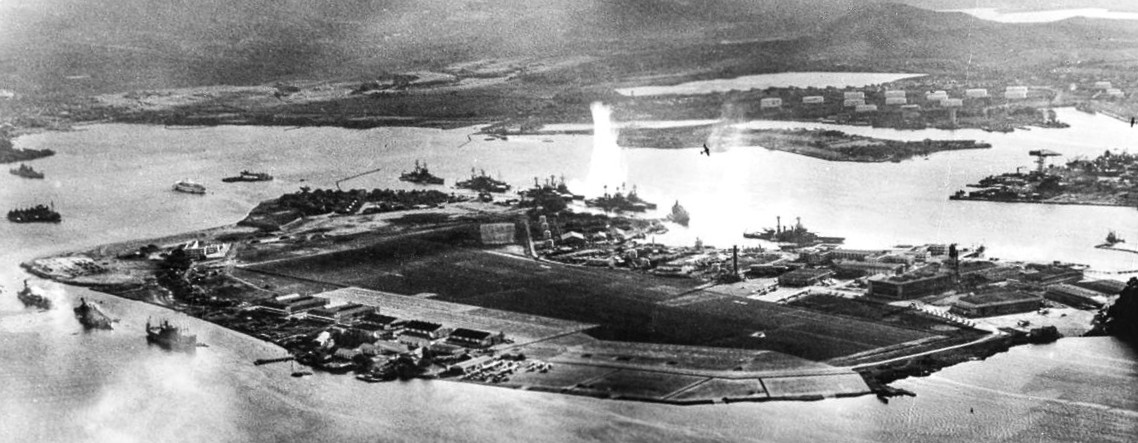
(IJNAF Photo)
Photograph from a Japanese plane of Battleship Row at the beginning of the attack. The explosion in the center is a torpedo strike on the USS Oklahoma. Two attacking Japanese planes can be seen: one over the USS Neosho and one over the Naval Yard.
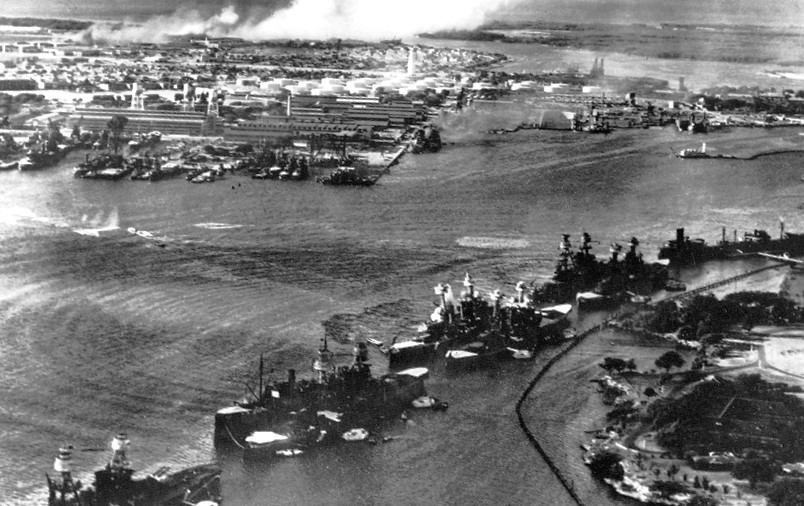
(IJNAF Photo)
Photograph taken from the air by another Japanese aircraft during the attack on Pearl Harbor.
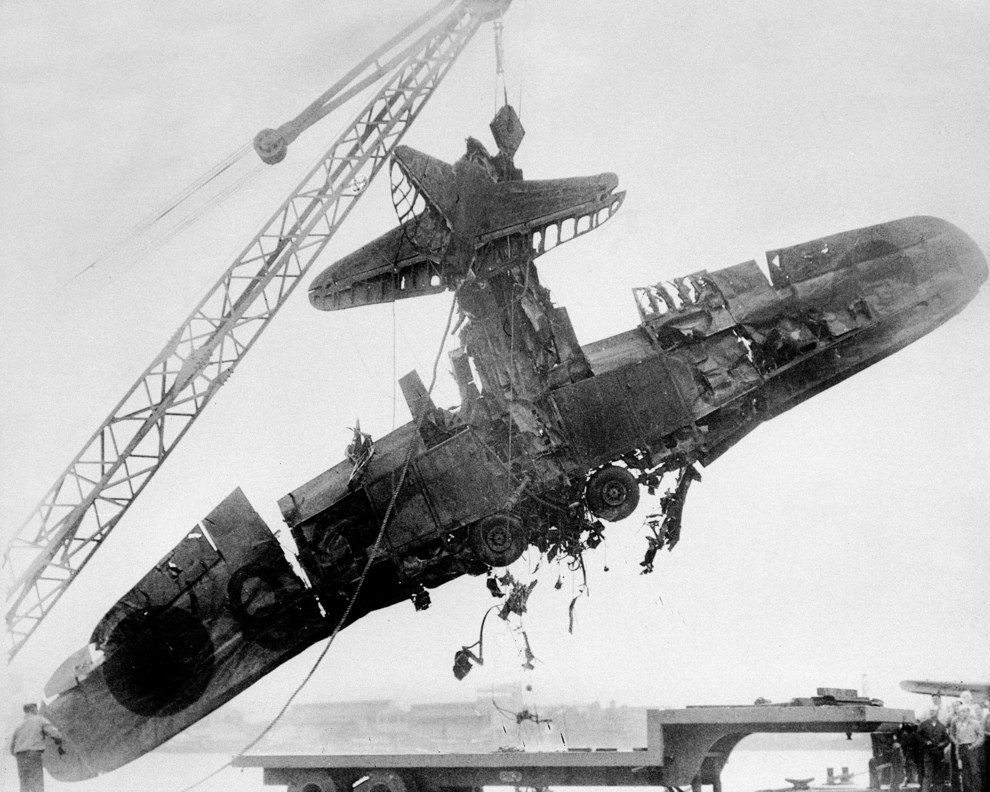
(USN Photo)
Mitsubishi A6M Zeke wreckage being recovered from Pearl Harbor, one of the 29 IJNAF aircraft shot down during the 7 Dec 1941 attack.
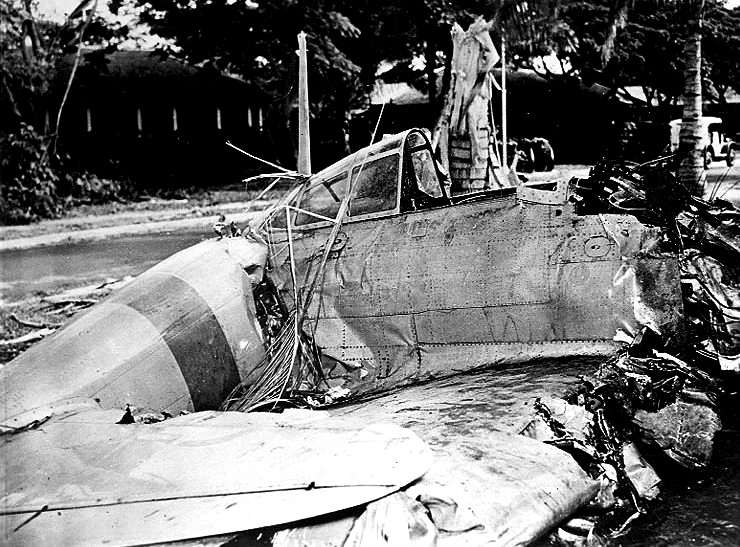
(USN Photo)
Mitsubishi A6M Zeke wreckage found after the attack on Pearl Harbor, one of the 29 IJNAF aircraft shot down during the 7 Dec 1941 attack.
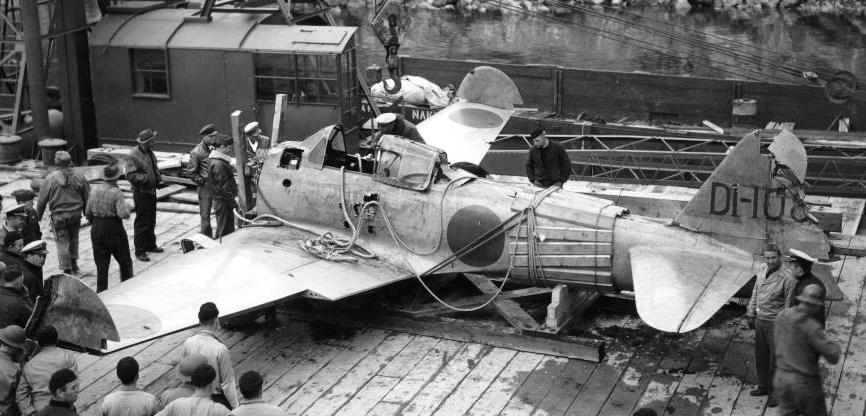
(USAAF Photo)
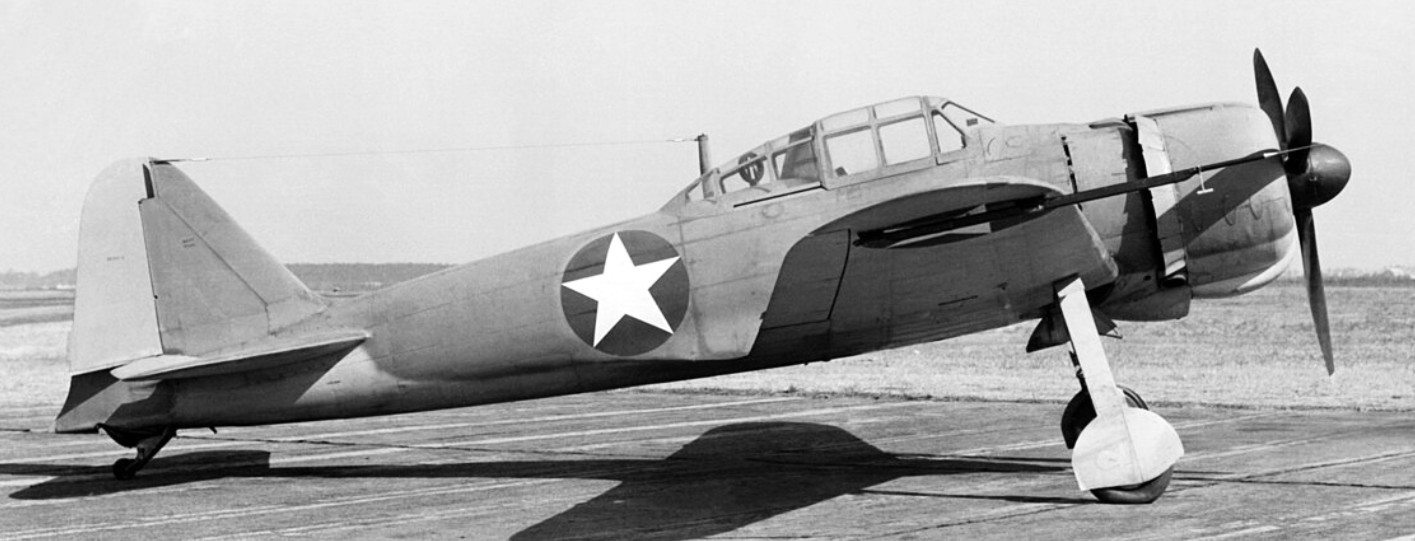
Mitsubishi A6M2 Model 22 Zero-Sen (Navy Type 0 Carrier Fighter), codename “Zeke”, coded DI-108, being recovered from its crash site on Akutan Island, Alaska by USAAF forces. This aircraft was designated TAIC 1. The American military discovered many of the A6M’s unique attributes when they recovered this largely intact specimen of an A6M2, the Akutan Zero, on Akutan Island in the Aleutians. During an air raid over Dutch Harbor on 4 June 1942, one A6M fighter was hit by ground-based anti-aircraft fire. Losing oil, Flight Petty Officer Tadayoshi Koga attempted an emergency landing on Akutan Island, about 20 miles (32 km) northeast of Dutch Harbor, but his Zero flipped over on soft ground in a sudden crash-landing.
Koga died instantly of head injuries, his neck was broken by the tremendous impact, but his wingmen hoped he had survived and so went against Japanese doctrine to destroy disabled Zeros. The relatively undamaged fighter was found over a month later by an American salvage team and was shipped to Naval Air Station North Island, where testing flights of the repaired A6M revealed both strengths and deficiencies in design and performance.
The experts who evaluated the captured Zero found that the plane weighed about 2,360 kg (5,200 lb) fully loaded, some 1,260 kg (2,780 lb) less than the F4F Wildcat, which was the standard United States Navy fighter of the time. The A6M’s airframe was “built like a fine watch”; the Zero was constructed with flush rivets, and even the guns were flush with the wings. The instrument panel was a “marvel of simplicity… with no superfluities to distract [the pilot]”. What most impressed the experts was that the Zero’s fuselage and wings were constructed in one piece, unlike the American method that built them separately and joined the two parts together. The Japanese method was much slower but resulted in a very strong structure and improved close maneuverability.
American test pilots found that the Zero’s controls were “very light” at 320 km/h (200 mph) but stiffened at speeds above 348 km/h (216 mph) to safeguard against wing failure. The Zero could not keep up with Allied aircraft in high-speed maneuvers, and its low “never exceed speed” (VNE) made it vulnerable in a dive. Testing also revealed that the Zero could not roll as quickly to the right as it could to the left, which could be exploited. While stable on the ground despite its low weight, the aircraft was designed purely for the attack role, emphasizing long range, maneuverability, and firepower at the expense of protection of its pilot. Most lacked self-sealing tanks and armor plating. (Wikipedia)
Captain Eric Brown, the chief naval test pilot of the Royal Navy, recalled being impressed by the Zero during tests of captured aircraft. “I don’t think I have ever flown a fighter that could match the rate of turn of the Zero. The Zero had ruled the roost totally and was the finest fighter in the world until mid-1943.”
(USN Photo)
Mitsubishi A6M2 Zero recovered from Akutan Island in the Aleutians island chain by U. S. Navy salvage specialists in July 1942.
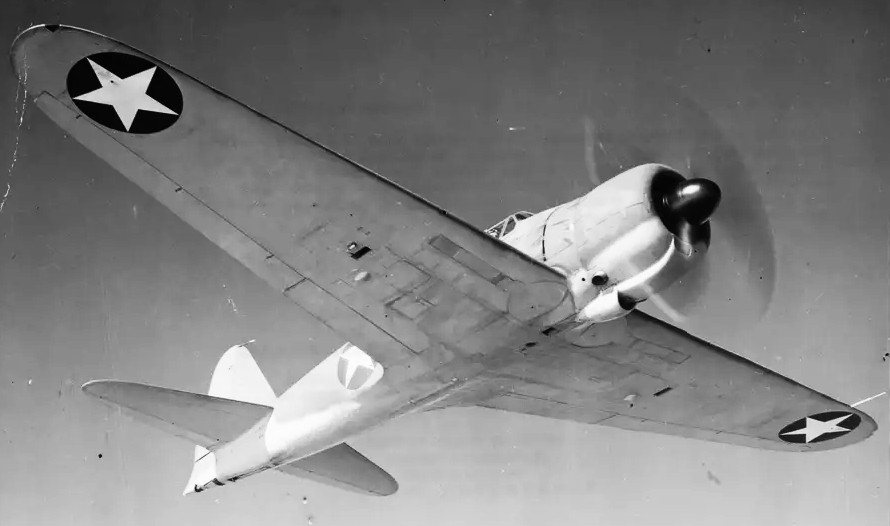
(NASA Langley Research Center Photo)
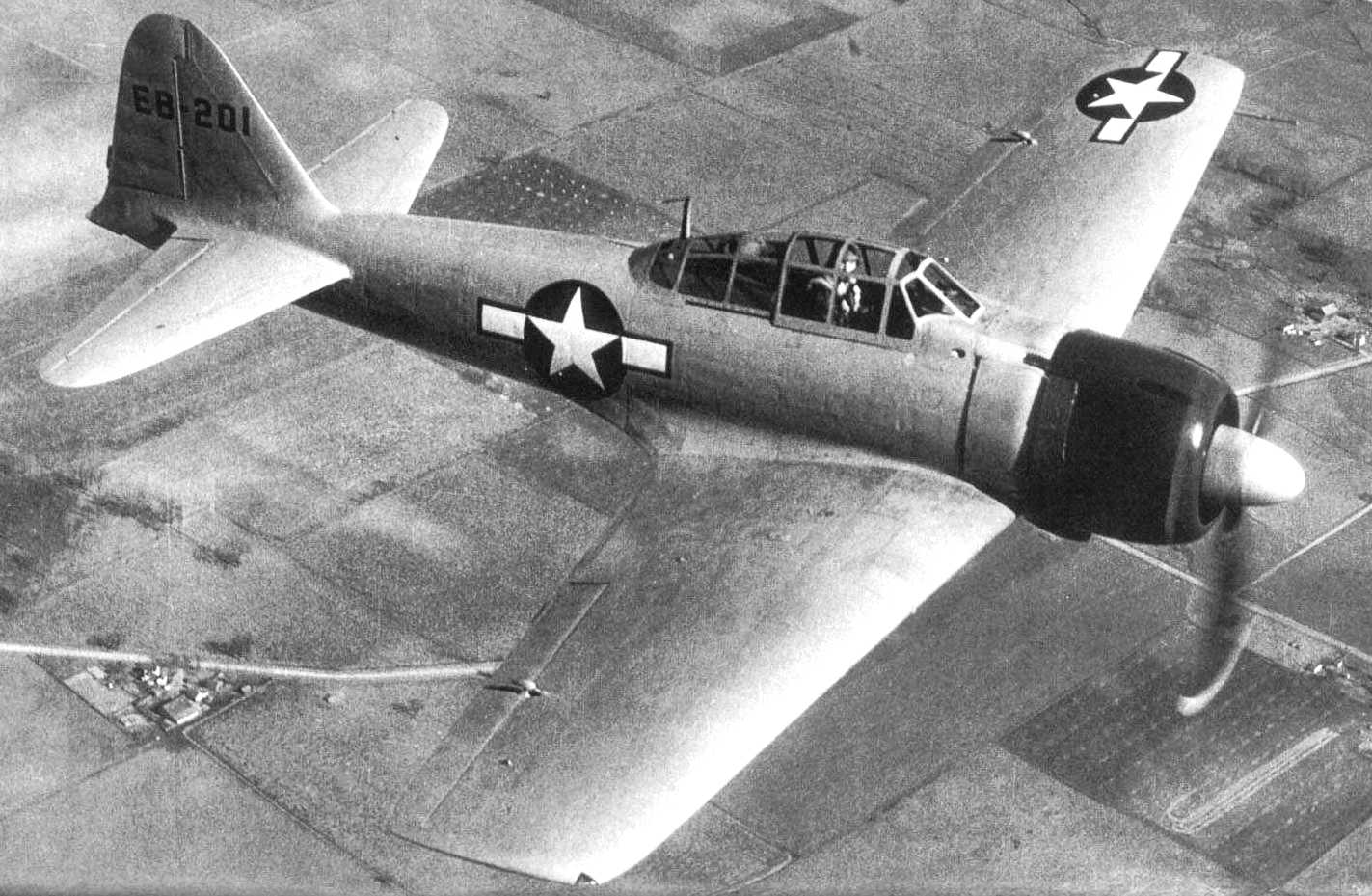
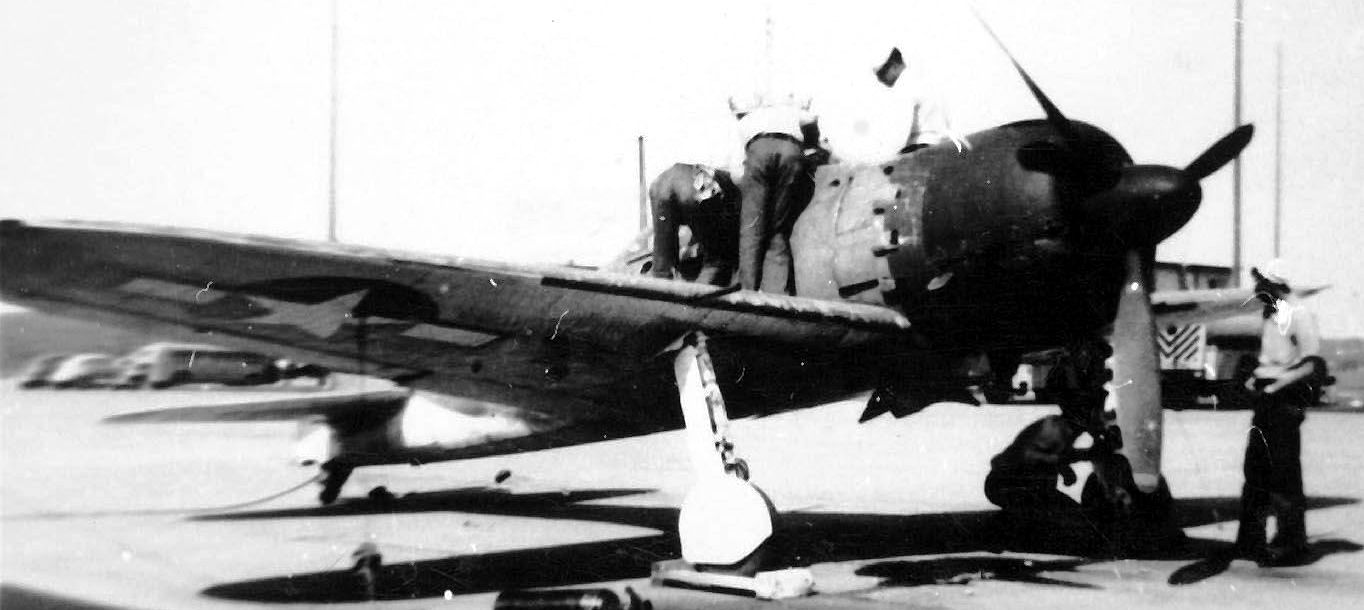
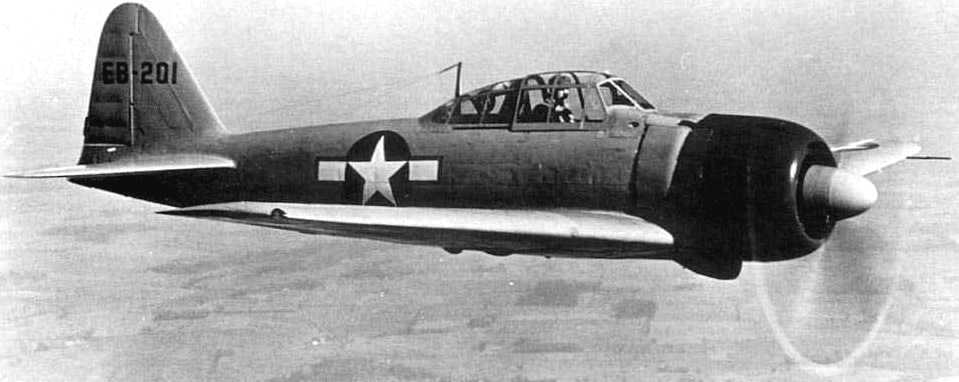
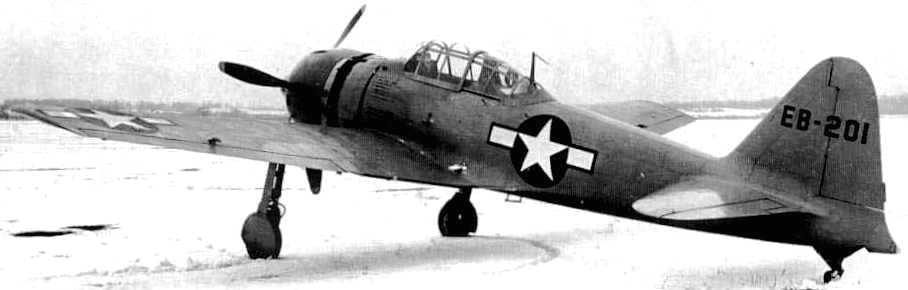
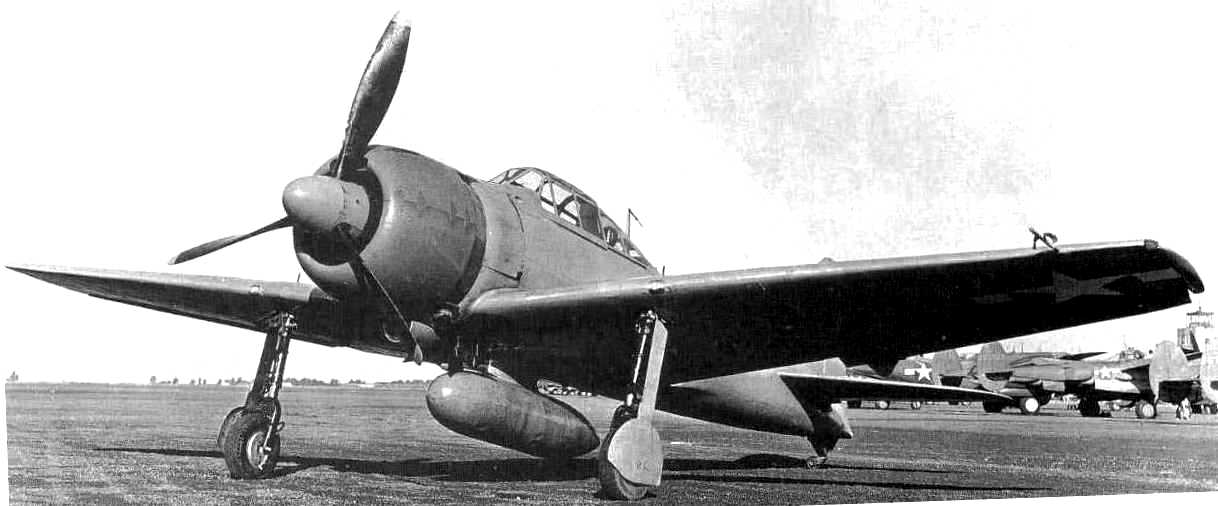
The Mitsubishi A6M2 Zero captured on Akutan Island seen with American markings in March 1943. The Akutan aircraft was the first Zero to be captured intact, giving the Americans a better understanding of the Zero’s strengths and weaknesses. It was later designated EB-201.
USAAF Photos)
Mitsubishi A6M2 Model 21 Zero-Sen (Navy Type 0 Carrier Fighter), codename “Zeke”, captured, restored and test flown by Allied Air Forces. Coded EB-201, this aircraft eventually made its way to Wright Field, Dayton, Ohio, in July 1943.
Variants
A6M1, Type 0 Prototypes
A6M2a Type 0 Model 11
A6M2b Type 0 Model 21
A6M3 Type 0 Model 32
A6M3 Type 0 Model 22
A6M4 Type 0 Model 41/42
A6M5 Type 0 Model 52
A6M6 Type 0 Model 53
A6M7 Type 0 Model 62/63
A6M8 Type 0 Model 64
Somewhere between 10,934 and 11,291 A6M variants were produced.
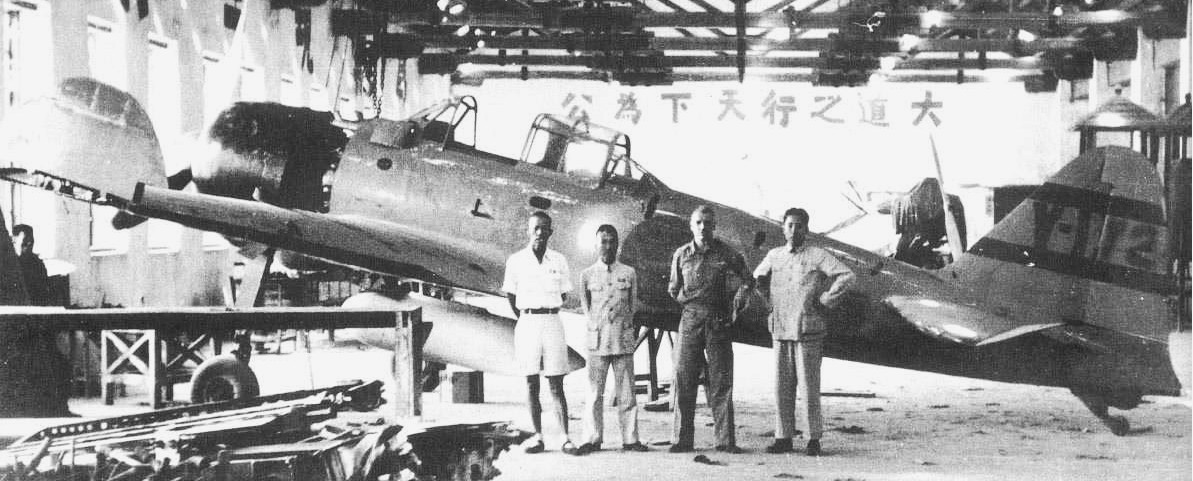
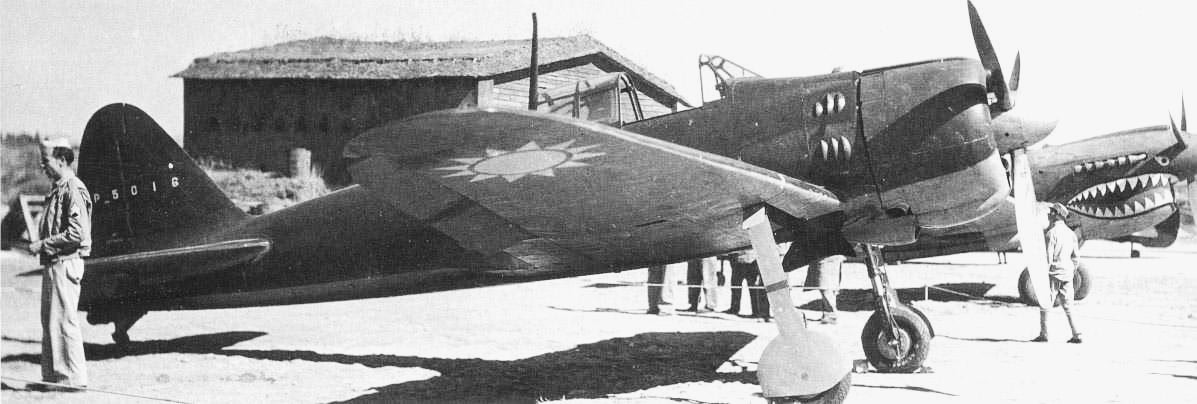
A6M2b Type 0 Model 21
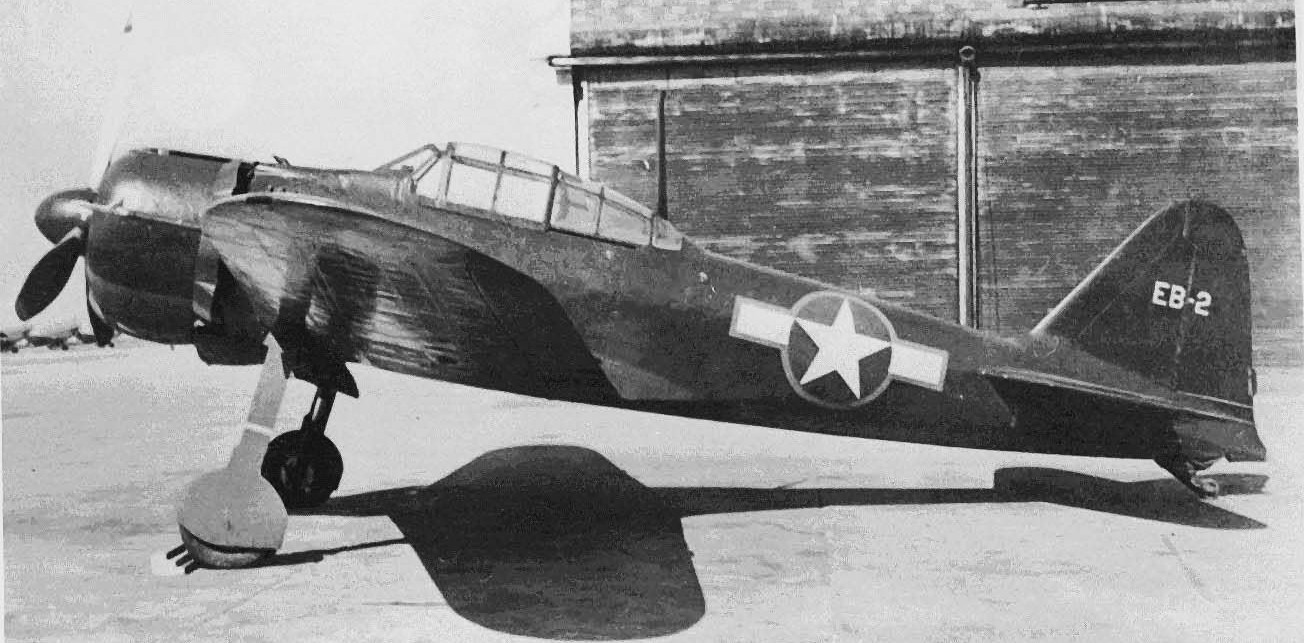
(USN Photo)
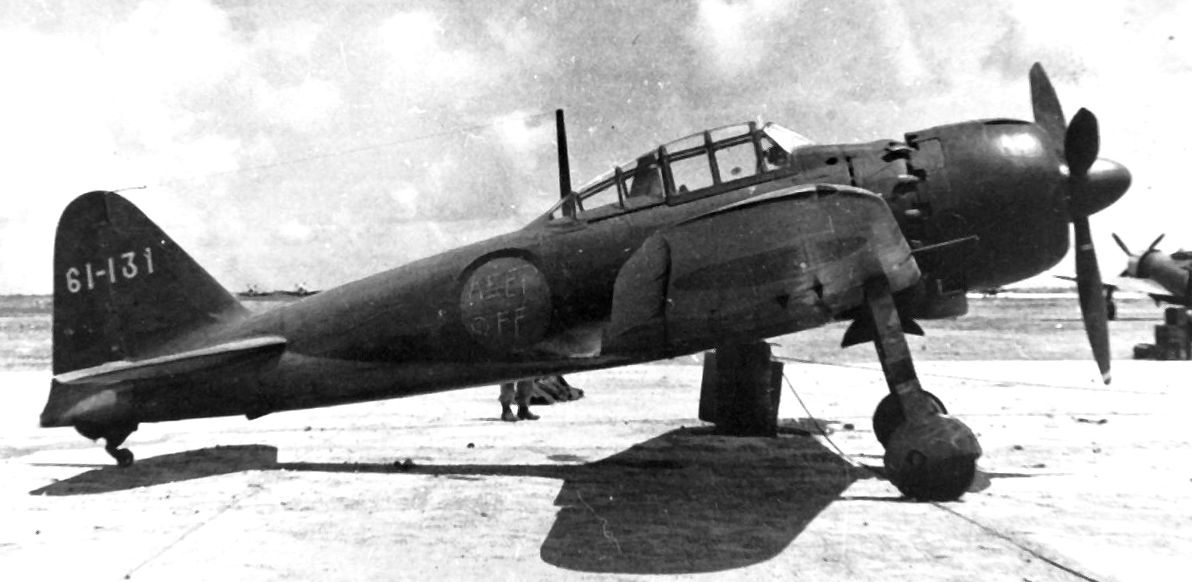
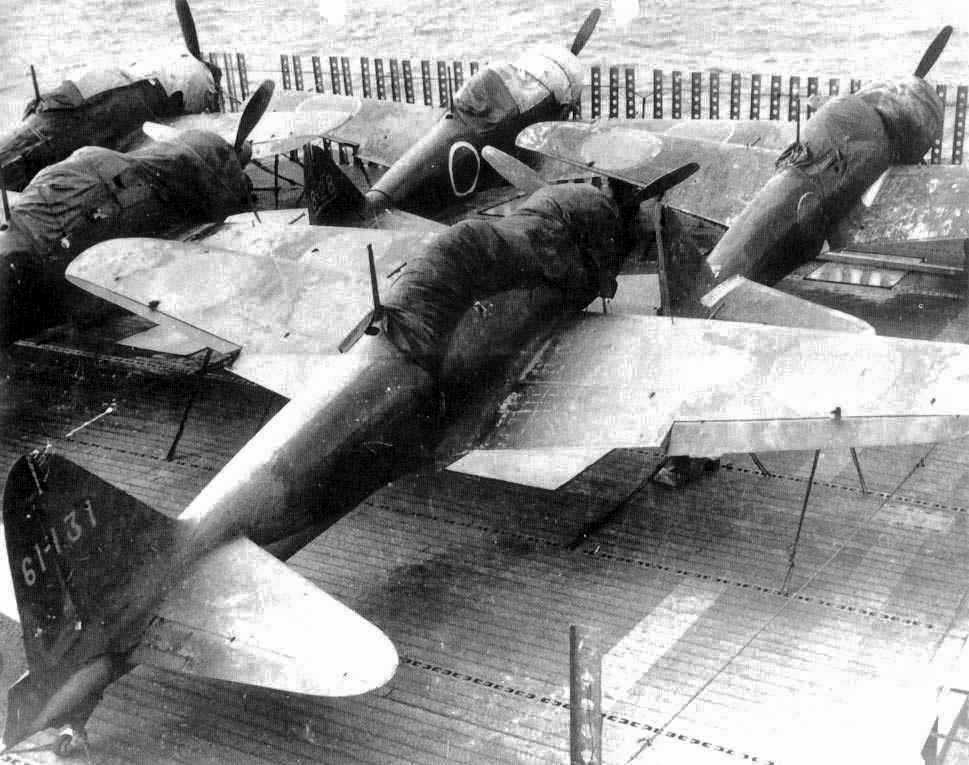
(USN Photo)
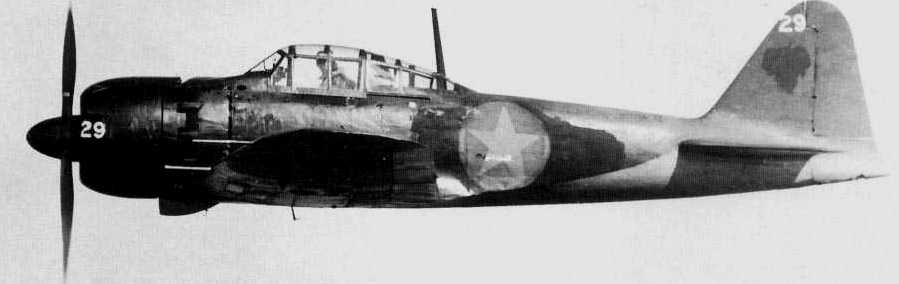
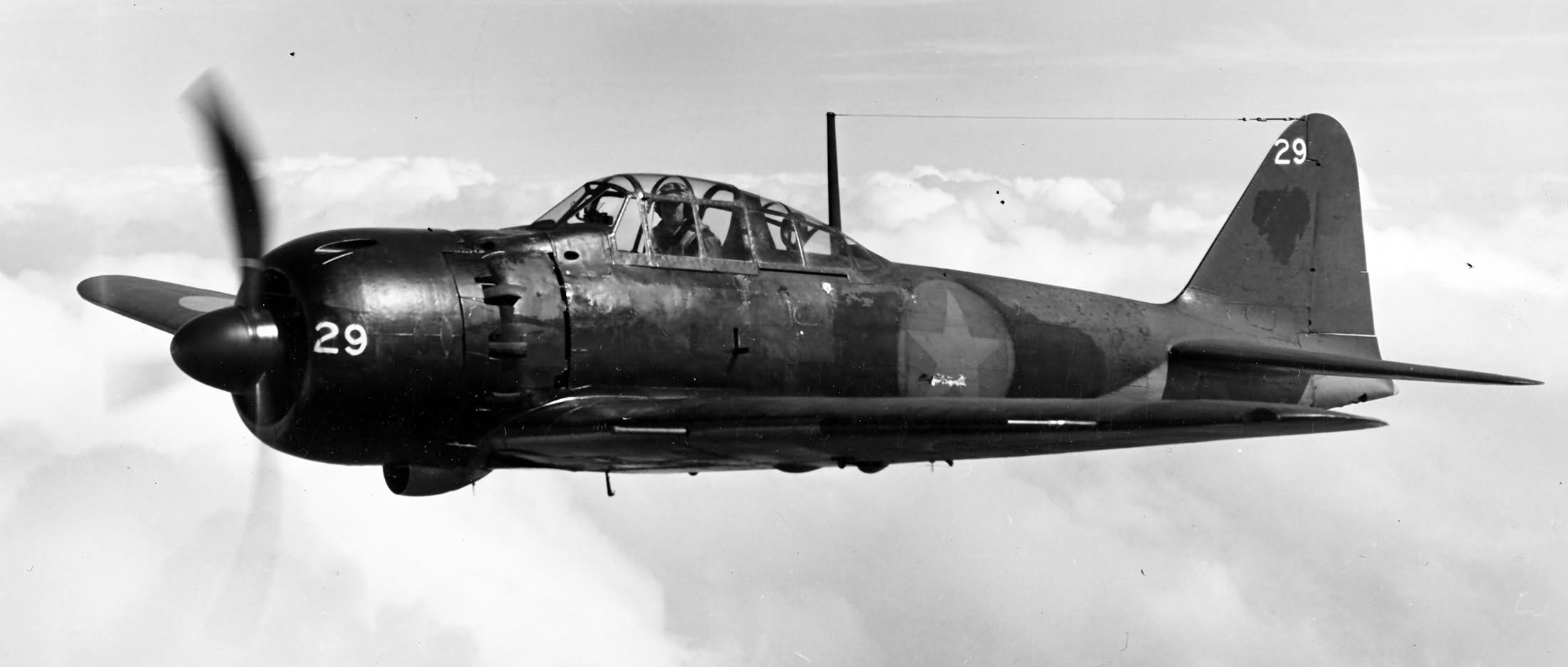
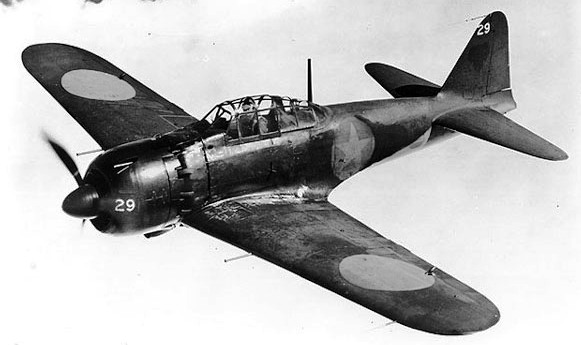
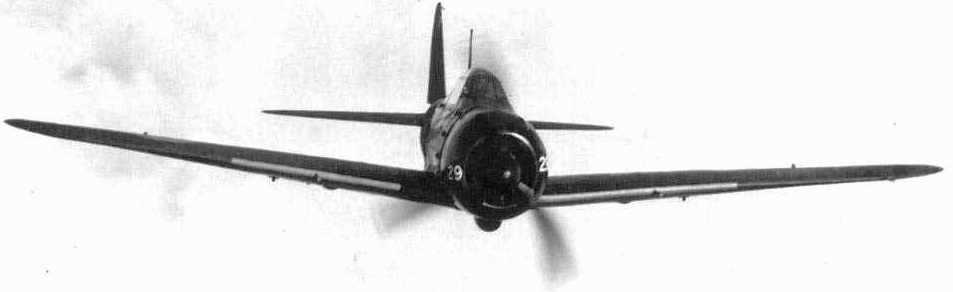
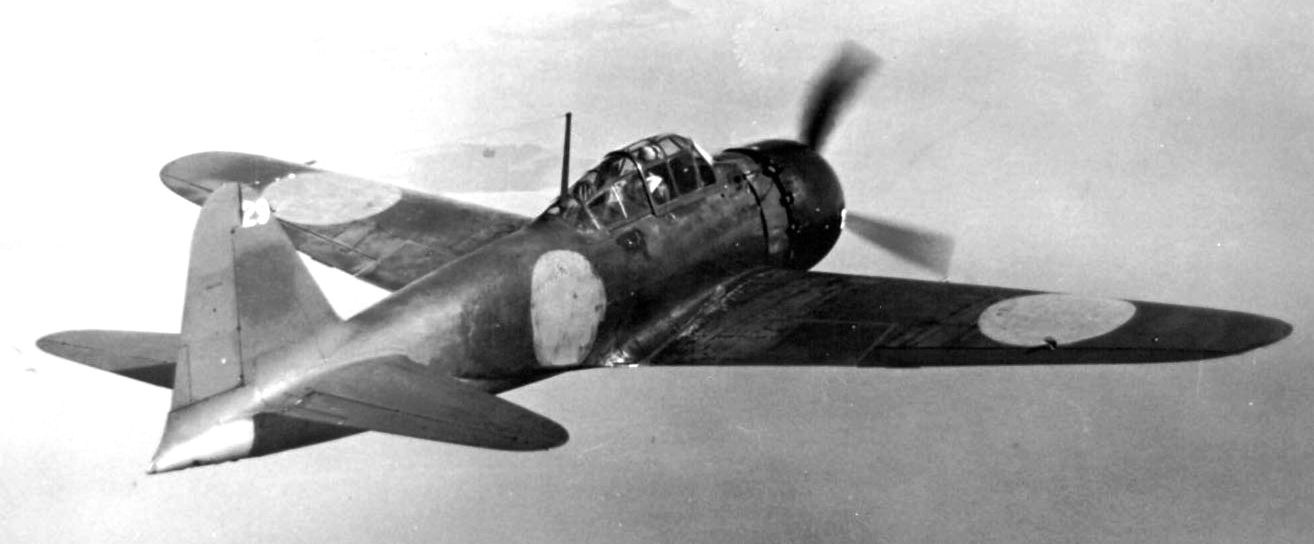
(USAAF/USN Photos)
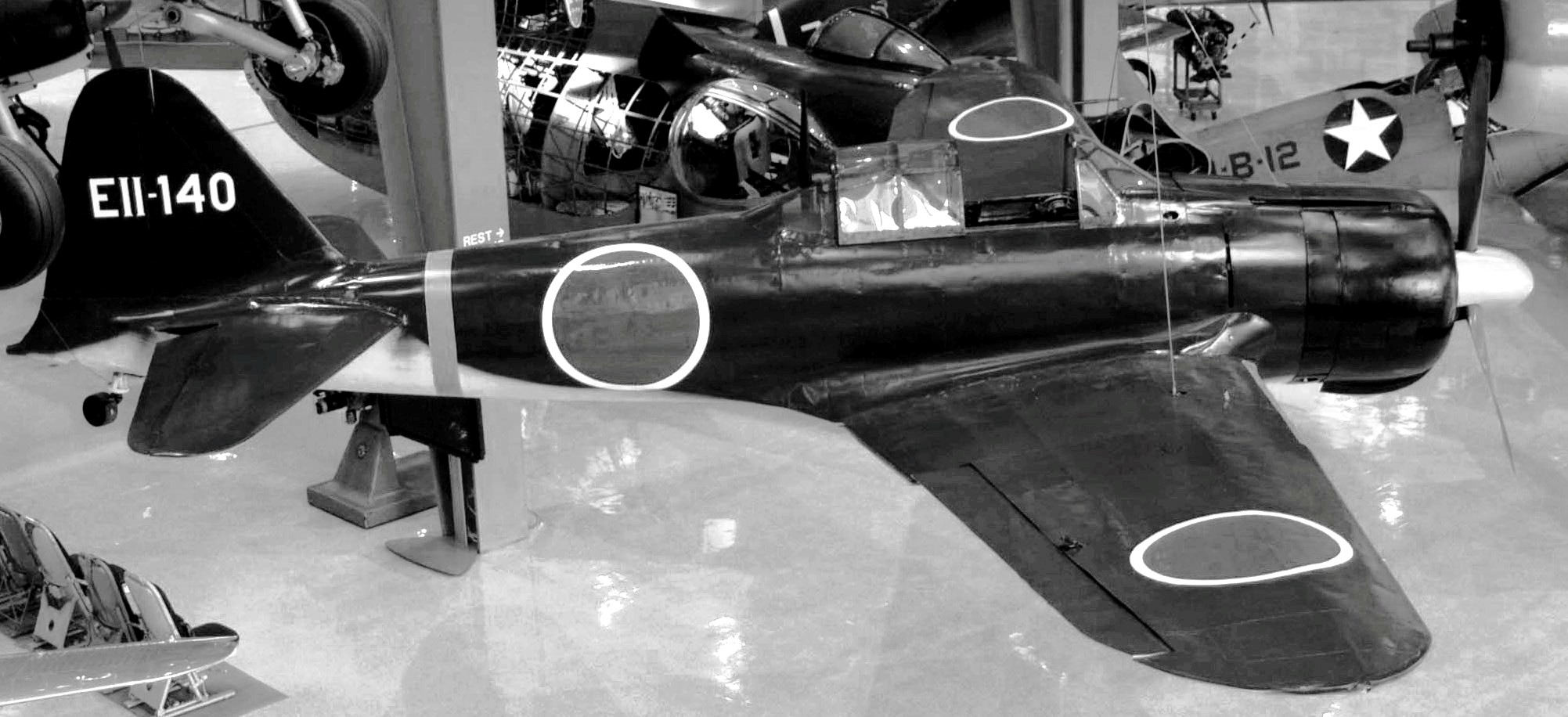
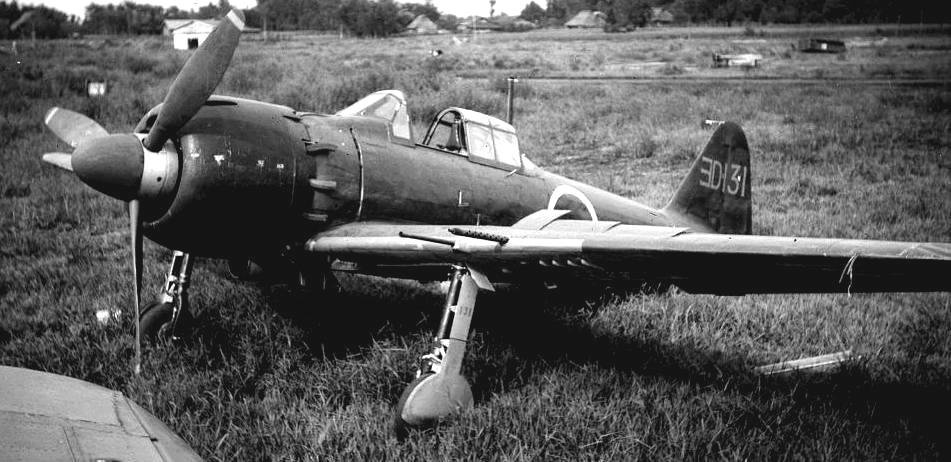
Mitsubishi A6M2 Model 21 Zero-Sen (Navy Type 0 Carrier Fighter), codename “Zeke”, coded 61-131, (Serial No. 5450), flown by the 361st Kokutai, found on Saipan in 1944. It was test flown as No. 29 in the USA. This aircraft is now on display in the National Museum of Naval Aviation, NAS Pensacola, Florida, painted as EII-140.
(NMNA Photo)
Mitsubishi A6M2 Model 21 Zero-Sen (Navy Type 0 Carrier Fighter), codename “Zeke”, coded 61-131, (Serial No. 5450), painted as EII-140, on display in the National Museum of Naval Aviation, NAS Pensacola, Florida.
(IJNAF Photos)
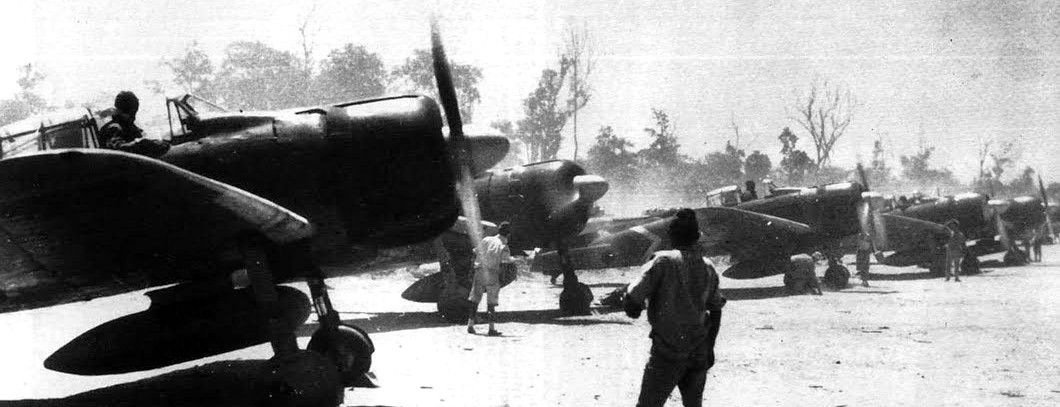
Mitsubishi A6M2 Zero and A6M3 Zero fighters from the IJN aircraft carrier Zuikaku preparing for a mission at Rabaul, November 1943.
(USAAF Photo)
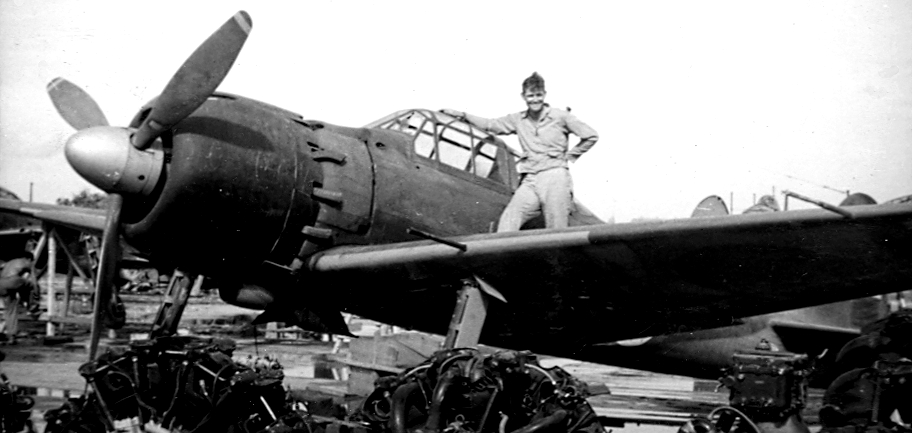
Mitsubishi A6M2 Model 21 Zero-Sen (Navy Type 0 Carrier Fighter), codename “Zeke”, abandoned on an airfield in Japan being examined by American soldiers.
(Tataroko Photo)
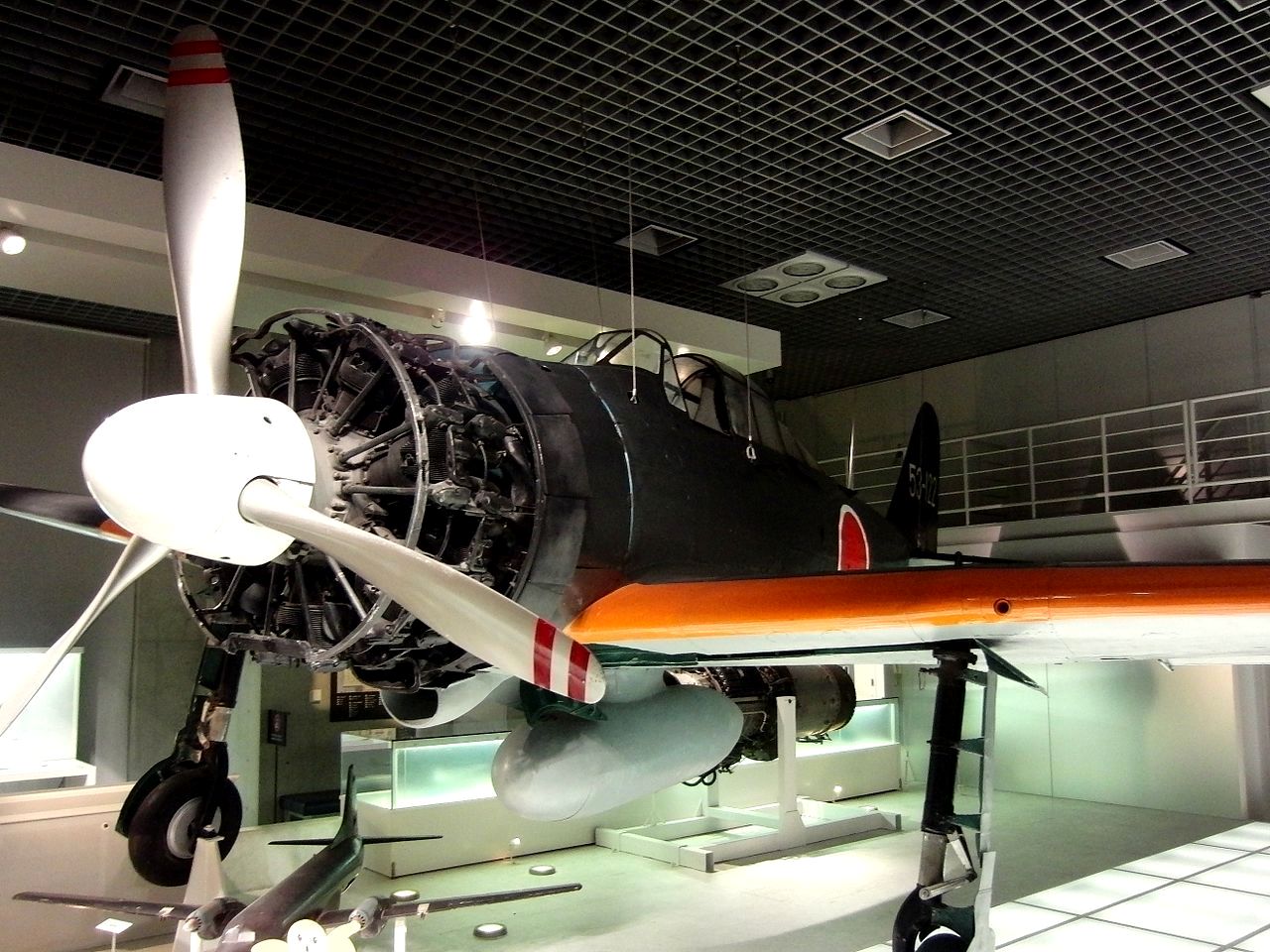
( Momotarou Photo)
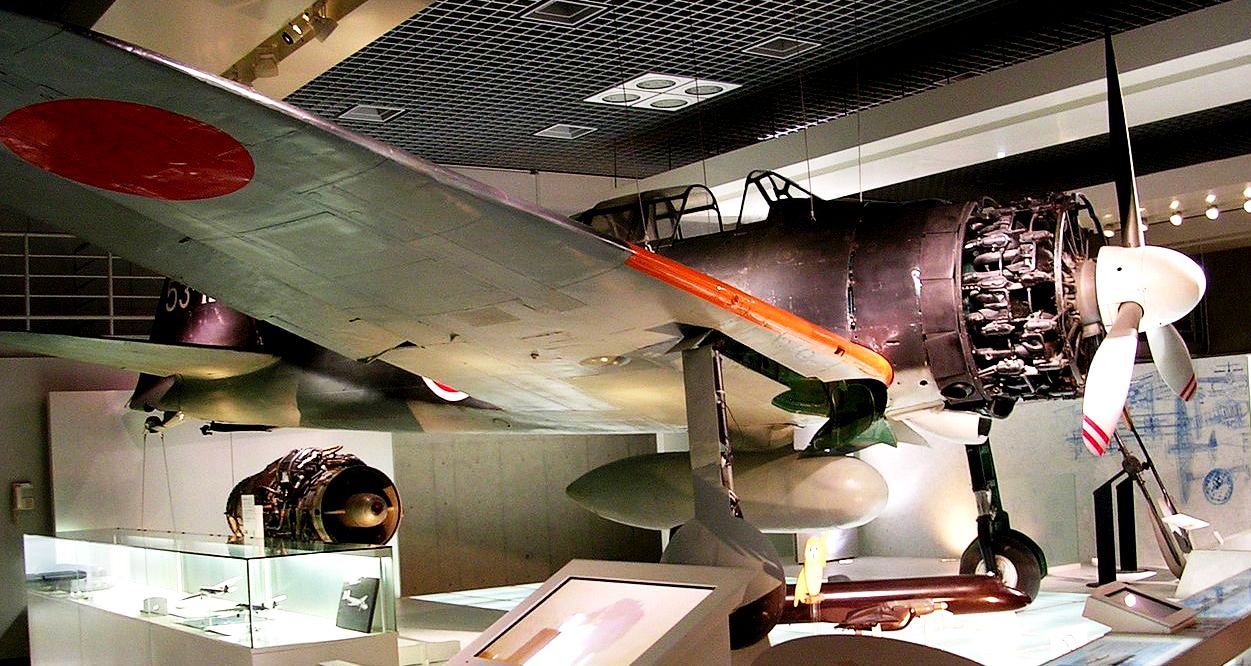
Mitsubishi A6M2 Model 21 Zero-Sen (Navy Type 0 Carrier Fighter), codename “Zeke”, (Serial No. 31870), on display at the National Museum of Nature and Science, Tokyo, Japan.
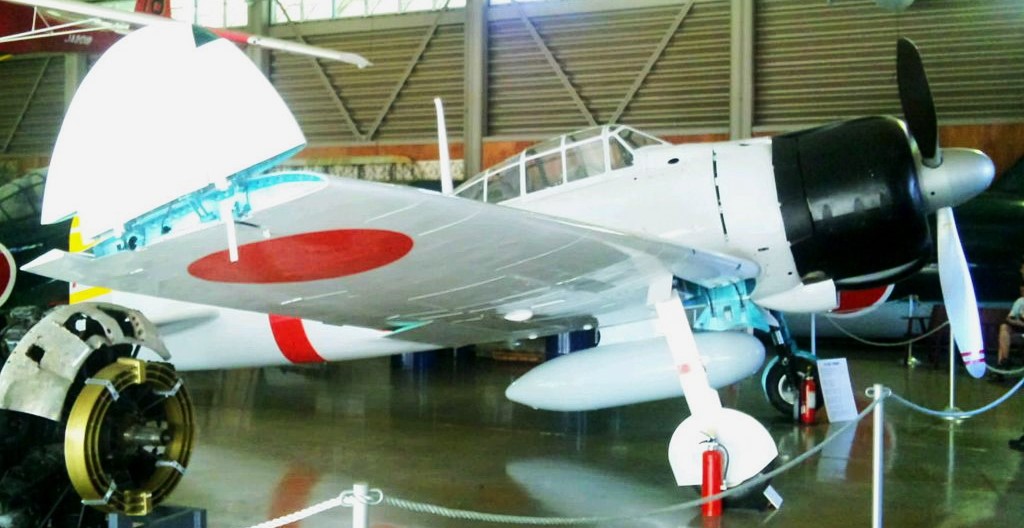
(Josephus37 Photo)
Mitsubishi A6M2 Model 21 Zero-Sen (Navy Type 0 Carrier Fighter), codename “Zeke”, (Serial No. 91518), coded EII-102, on display inside the Kawaguchiko Motor Museum, Fujikawaguchiko, Yamanashi prefecture, Japan.
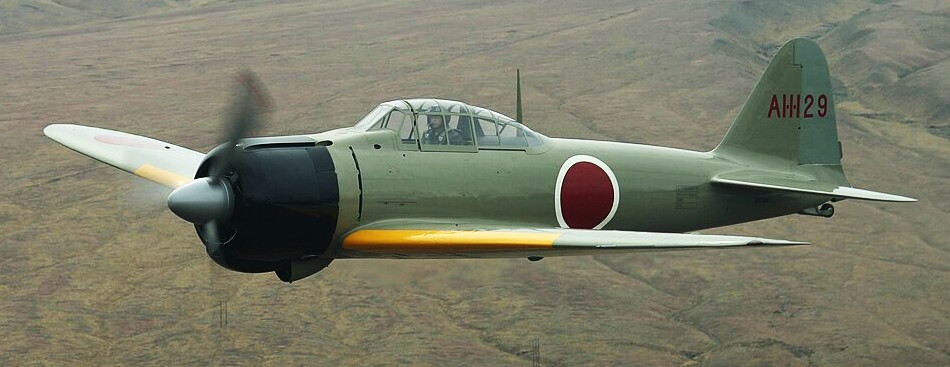
(Marc Grossman Photo)
Mitsubishi A6M2 Model 21 Zero-Sen (Navy Type 0 Carrier Fighter), codename “Zeke”, (Serial No. 1498), coded A1-129, Reg. No. N8280K.
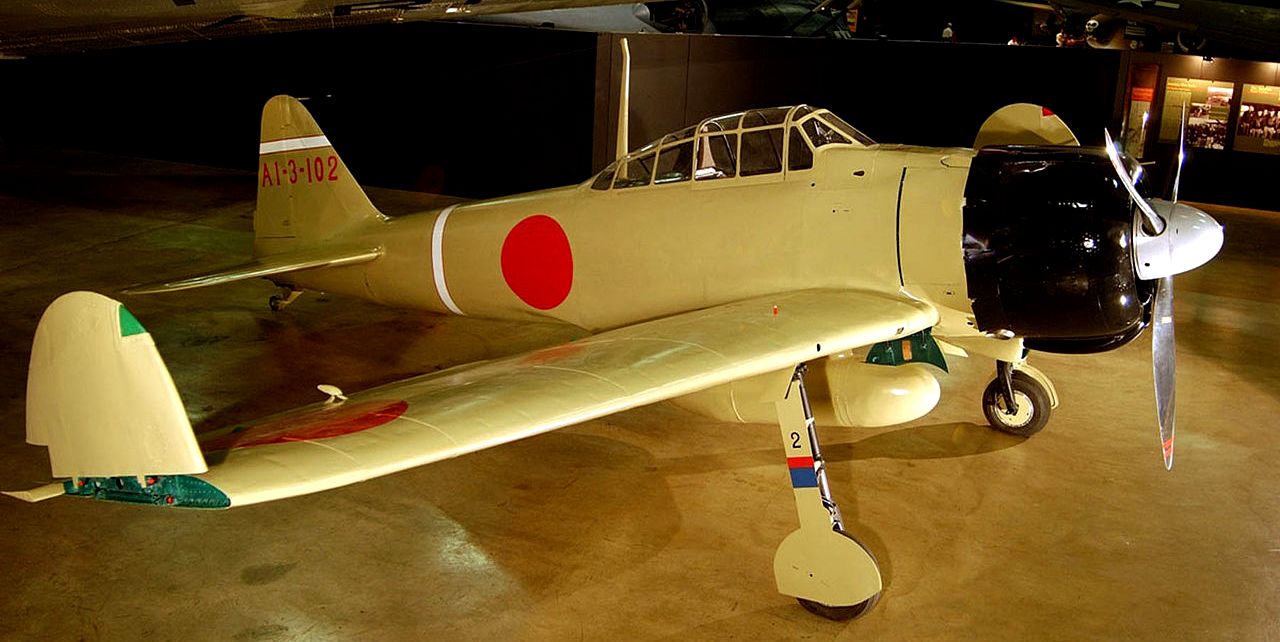
(NMUSAF Photo)
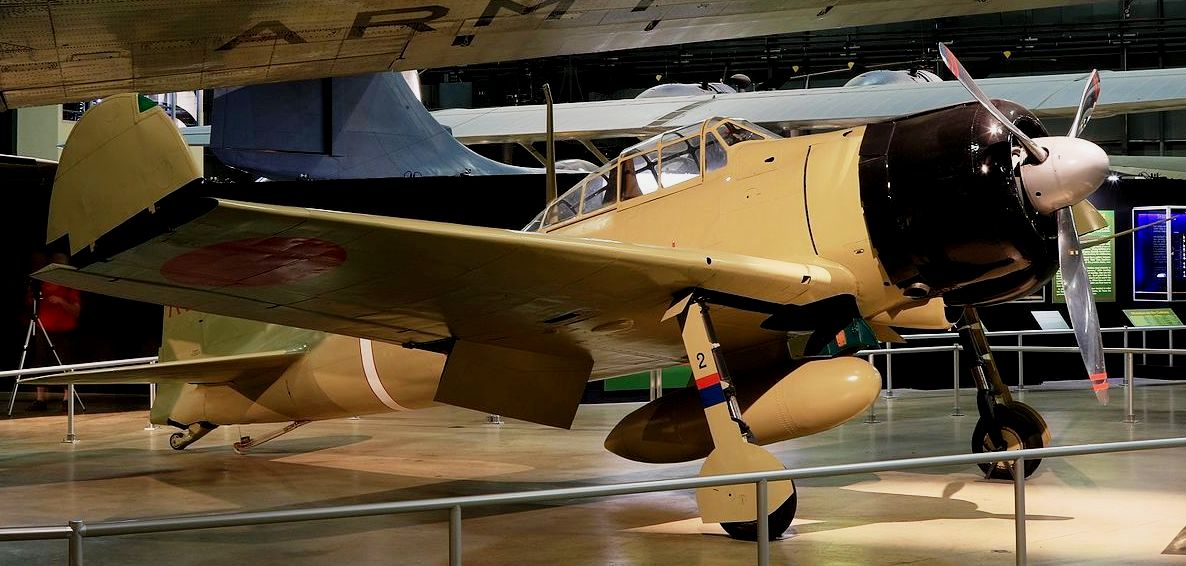
(Goshimini Photo)
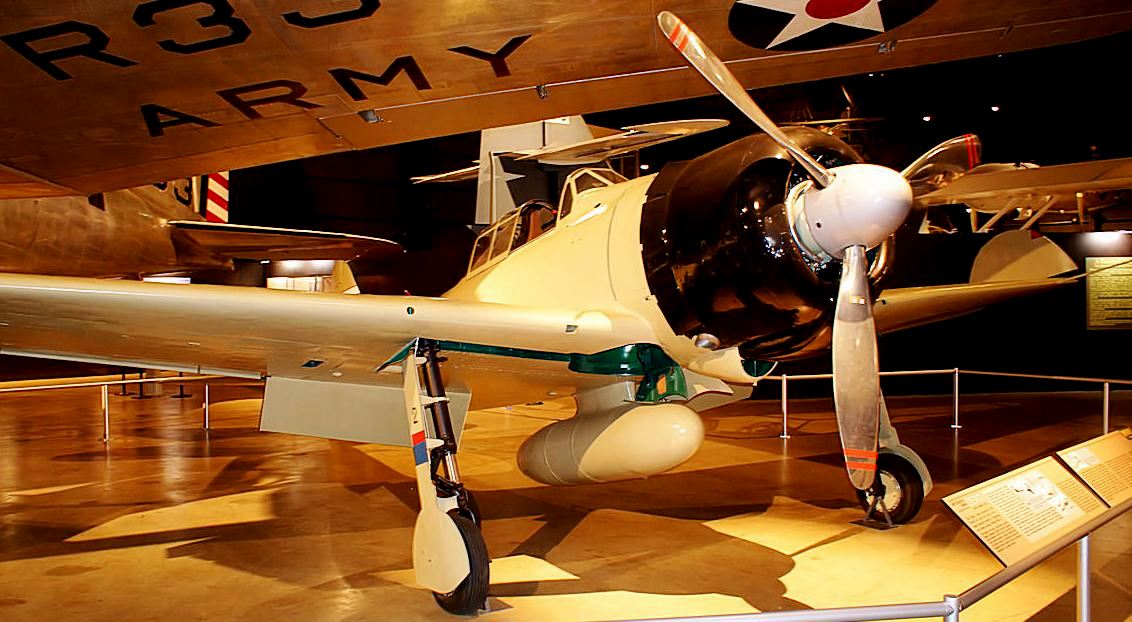
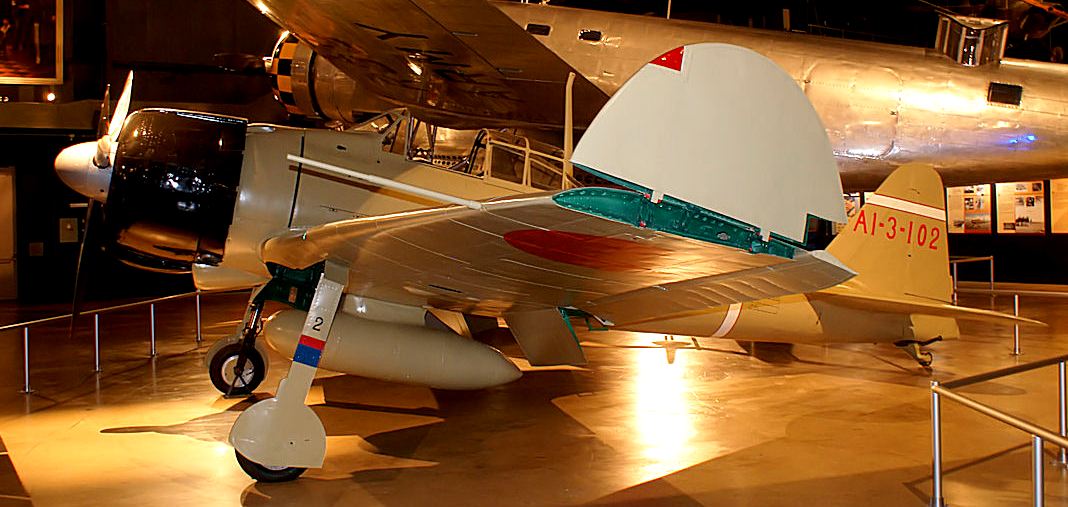
(Valder 137 Photos )
Mitsubishi A6M2 Model 21 Zero-Sen (Navy Type 0 Carrier Fighter), codename “Zeke”, preserved in the National Museum of the USAF, Dayton, Ohio.
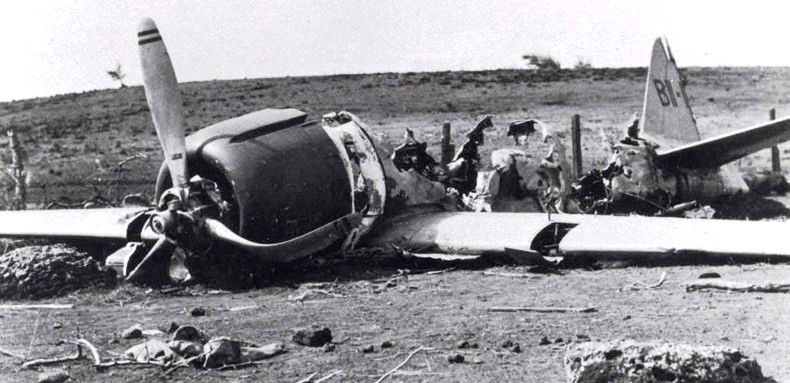
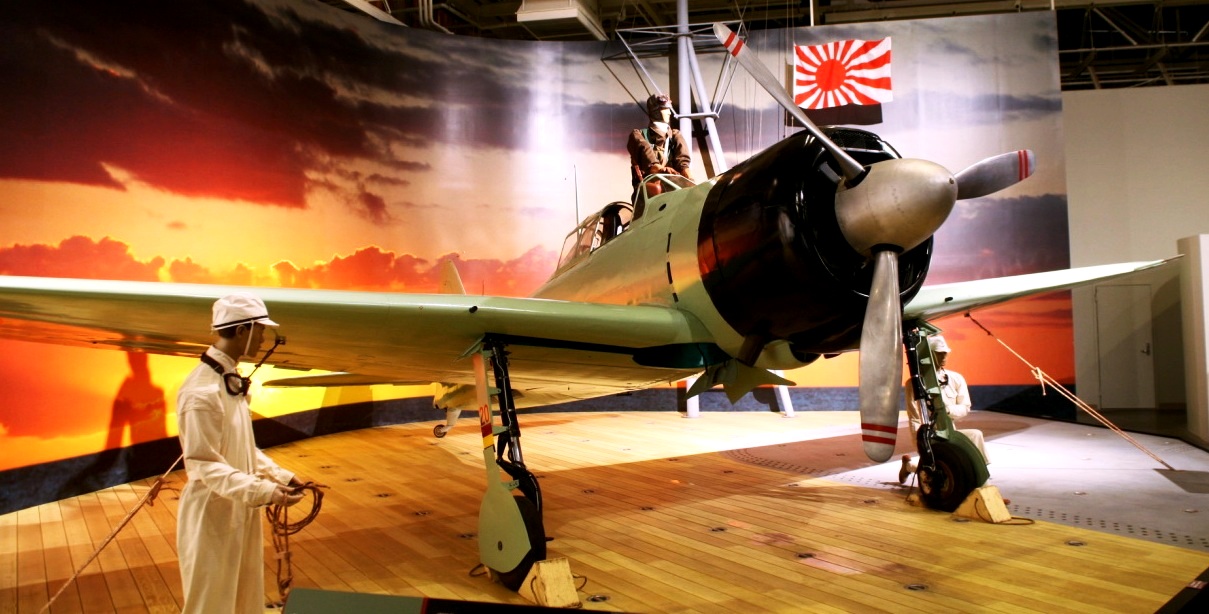
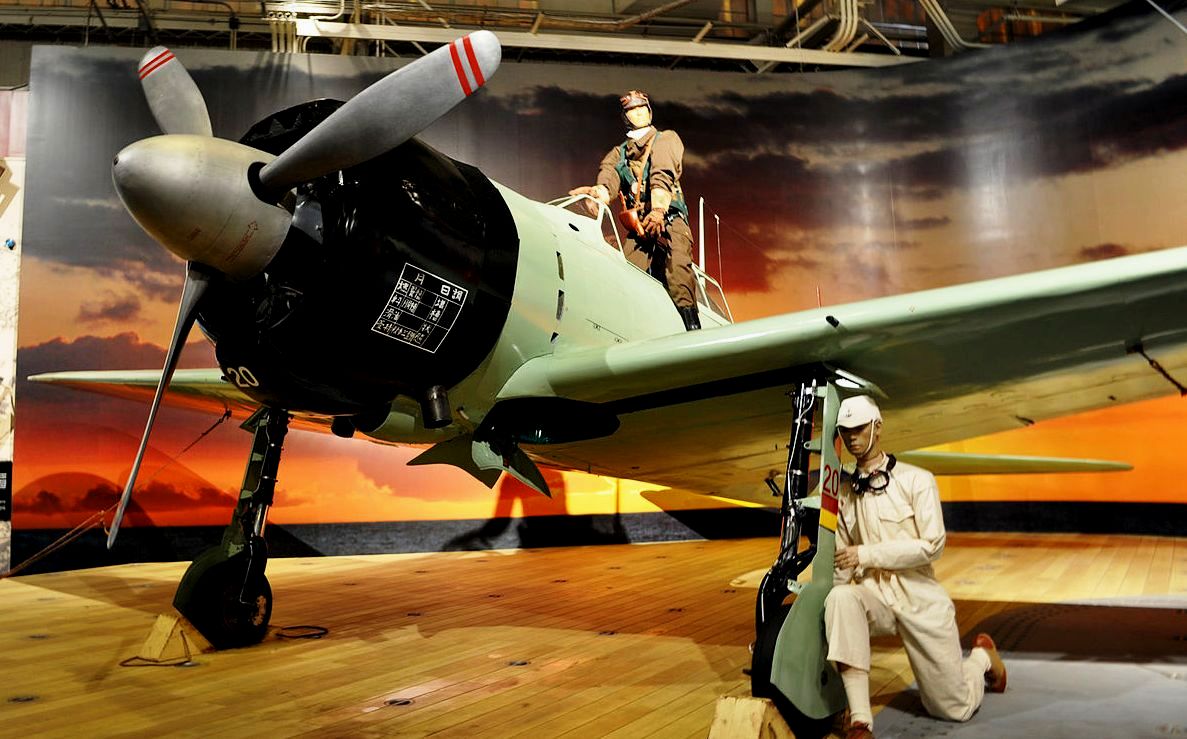
Mitsubishi A6M2 Model 21 Zero-Sen (Navy Type 0 Carrier Fighter), codename “Zeke”, wreckage at the Ni’ihau crashsite of IJNAS pilot Shigenori Nishikaichi, 12-13 Dec 1941. He was killed in a struggle with people on the island. The aircraft on display at the Pacific Aviation Museum, Pearl Harbor, Hawaii is painted in his A6M2’s colours. (USN Photo)
(Cliff Photo)
(InSapphoWeTrust Photo)
(Messerly Photos)
(Lepeu1999 Photo)
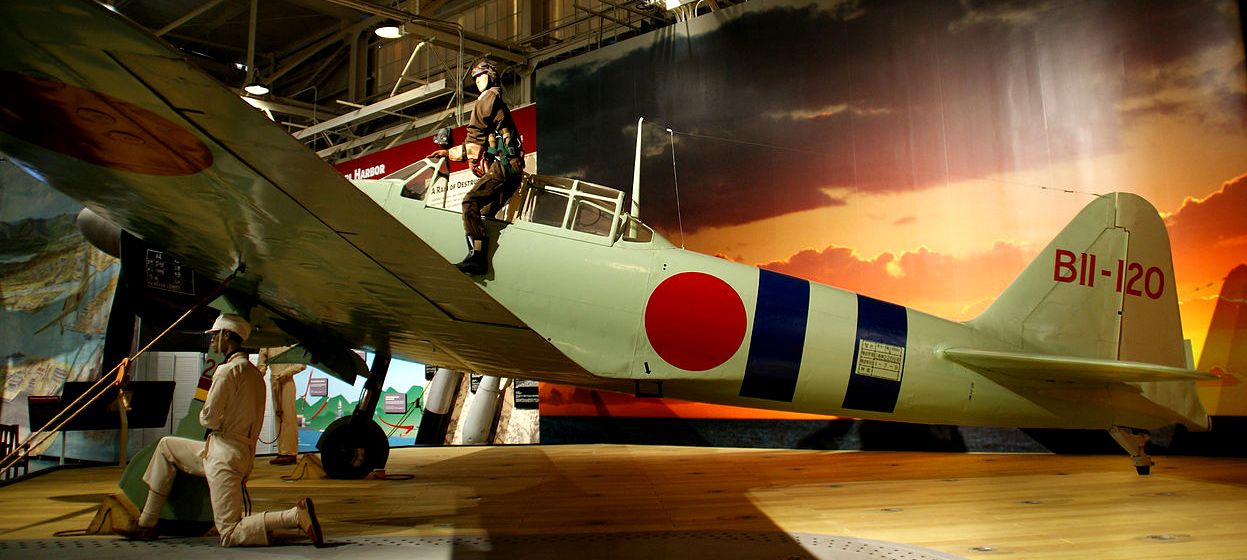
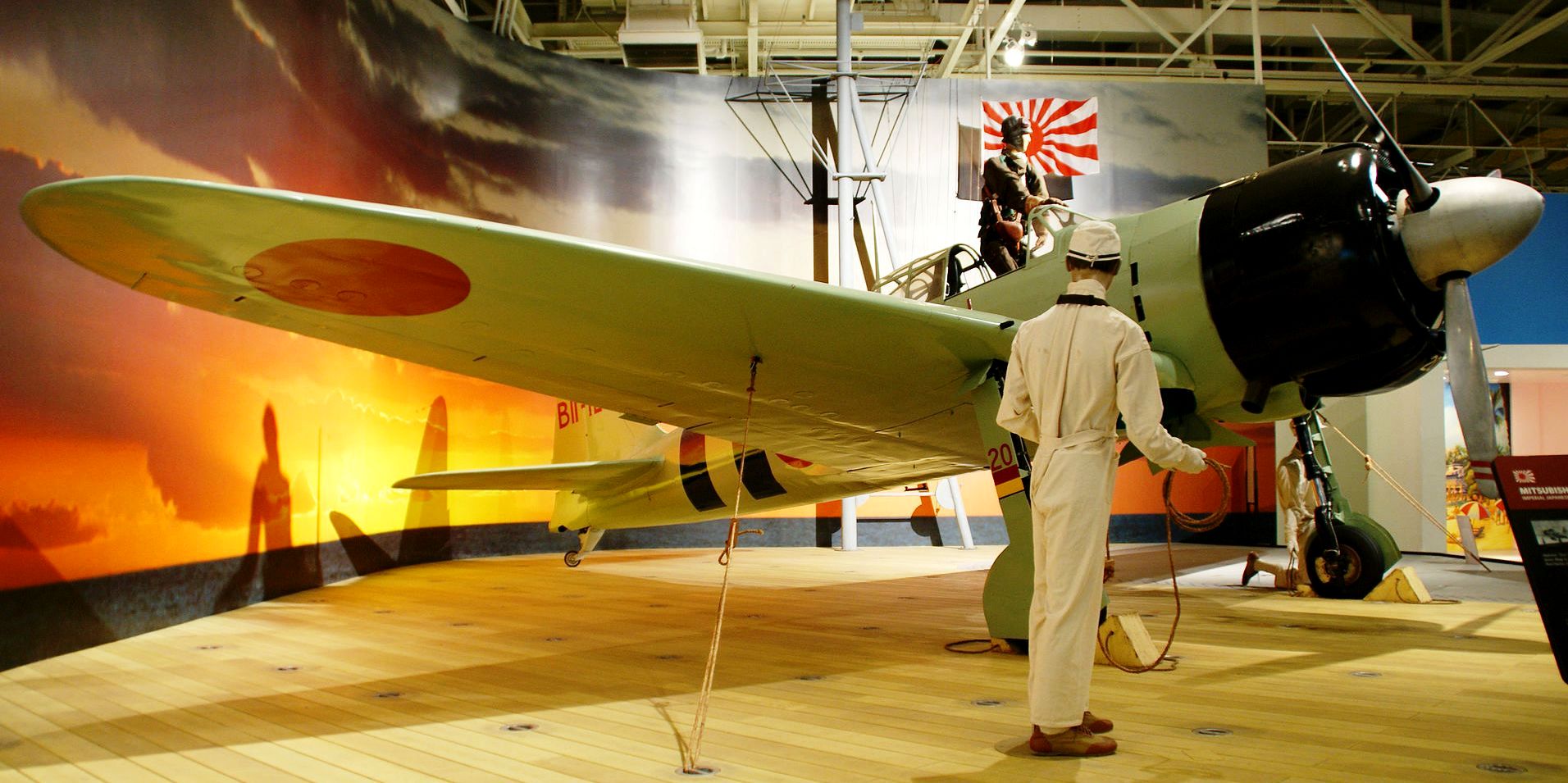
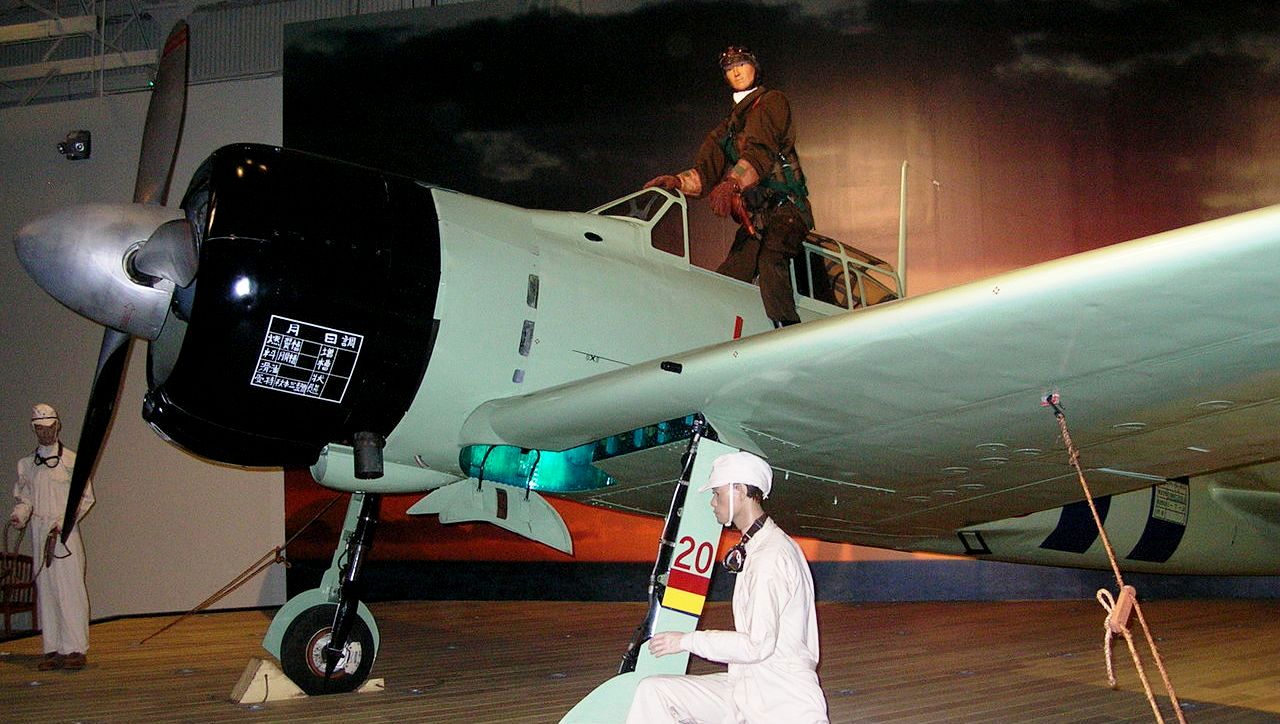
Mitsubishi A6M2 Model 21 Zero-Sen (Navy Type 0 Carrier Fighter), codename “Zeke”, on display at the Pacific Aviation Museum, Pearl Harbor, Hawaii. This aircraft was made airworthy in the early 1980s before it was grounded in 2002. A6M2 Model 21 Zero Nakajima Manufacture Number 500, built by Nakajima in December, 1942, this aircfraft served with Air Group 201 of the 24th Air Flotilla in the Solomon Islands. It was abandoned to the jungles of Ballale Island due to combat damage. Recovery and restoration began in 1964. It was repowered by an American Pratt and Whitney R-1830, and used to depict BII-120 which pilot Shigenori Nishikaichi flew from carrier Hiryu in the attack Pearl Harbor. The original BII-120 landed on Niihau after running low on fuel and was destroyed with some fragments remaining. Authentic markings correspond to BI-120, Manufacture number 2262.
(AWM Photo)
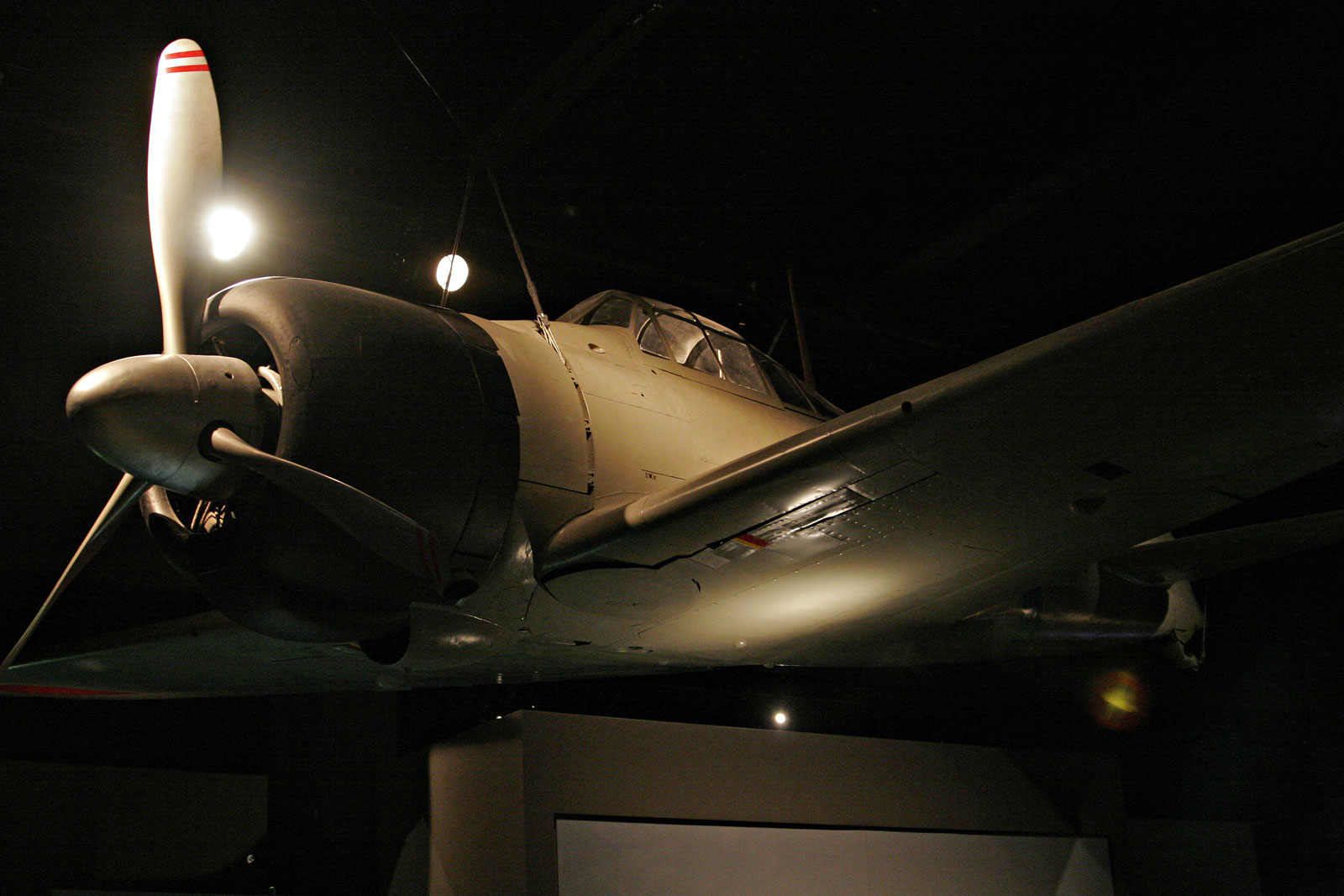
Mitsubishi A6M2 Model 21 Zero-Sen (Navy Type 0 Carrier Fighter), codename “Zeke”, (Serial No. 5784), coded V-173, retrieved as a wreck after the war and later found to have been flown by Saburo Sakai at Lae, on display inside the Australian War Memorial in Canberra, Australia.
Another aircraft recovered by the Australian War Memorial Museum in the early 1970s now belongs to Fantasy of Flight in Polk City, Florida. Along with several other Zeros, it was found near Rabaul in the South Pacific. The markings suggest that it was in service after June 1943 and further investigation suggests that it has cockpit features conducive to the Nakashima built Model 52b. If this is correct, it is most likely one of the 123 aircraft lost by the Japanese during the assault of Rabaul. The aircraft was shipped in pieces to the attraction and it was eventually made up for display as a crashed aircraft. Much of the aircraft is usable for patterns and some of its parts can be restored to one day make this a basis for a flyable aircraft.
Mitsubishi A6M2 Model 21 Zero-Sen (Navy Type 0 Carrier Fighter), codename “Zeke”, (Serial No. 840) is on display at the Australian Aviation Heritage Centre at Winnellie, Northern Territory, Australia. It consists of the wreckage of the forward fuselage, inboard wings, engine, and propeller.
(Blayd Photo)
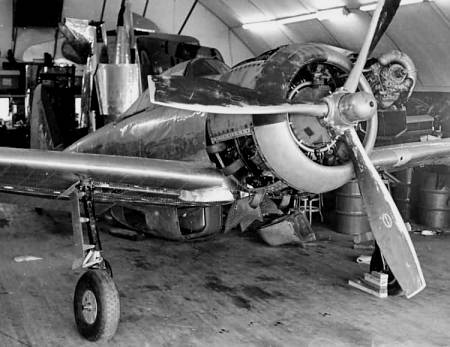
Mitsubishi A6M2 Model 21 Zero-Sen (Navy Type 0 Carrier Fighter), codename “Zeke”. Although not a survivor, the “Blayd” Zero is a reconstruction based on templating original Zero components recovered from the South Pacific. In order to be considered a “restoration” and not a reproduction, the builders used a small fraction of parts from the original Zero landing gear in the reconstruction. Restored as an A6M2 Model 21, it is currently owned by the Texas Flying Legends Museum.
A6M3 Type 0 Model 32
( aizou Nakamura Photo)
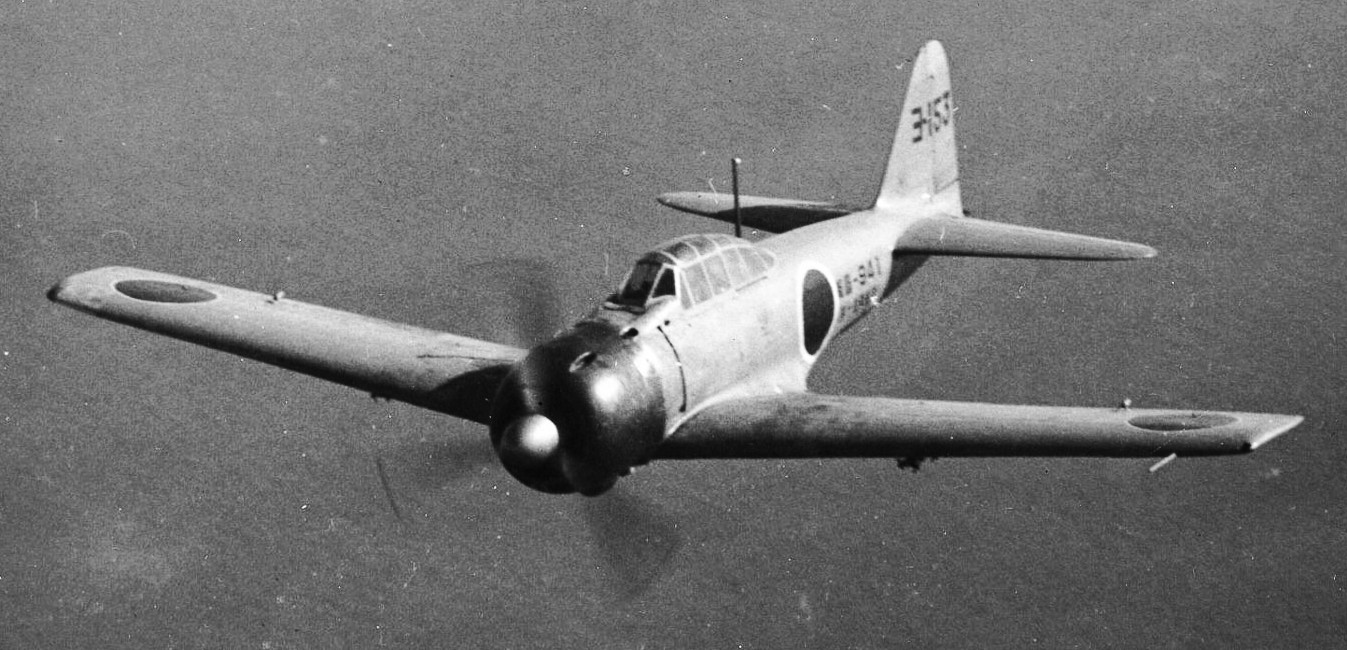
Mitsubishi A6M3 Model 32 in flight, c1943-1944.
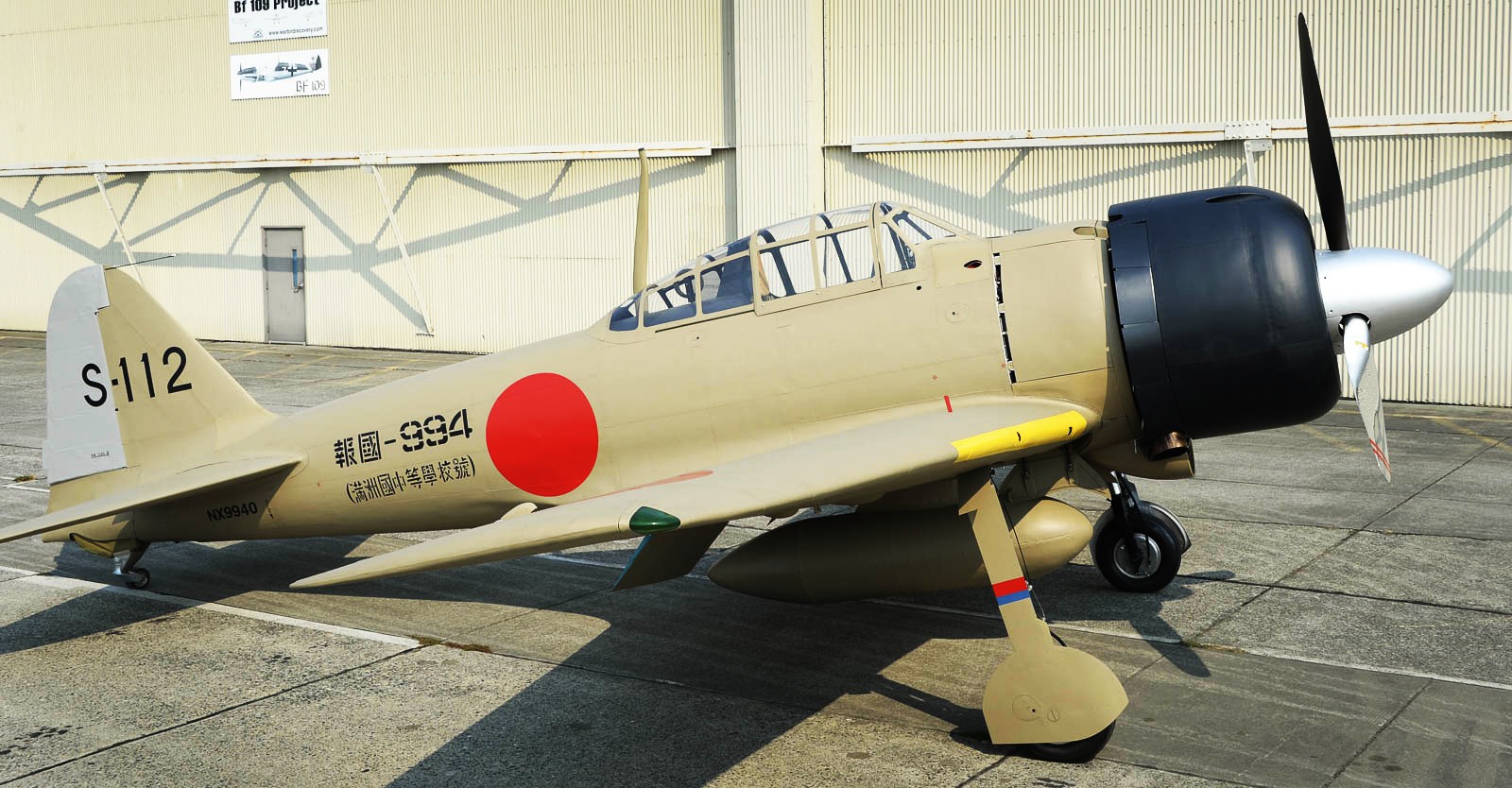
(Jim Larsen Photo via Legend Flyers)
Mitsubishi A6M3 Model 32, Military Aviation Museum, 1341 Princess Anne Road Virginia Beach, VA 23457. The resurrection of this aircraft is based upon the forward fuselage and wings belonging to (Serial No. 3148) and the aft fuselage and tail from (Serial No. 3145). While we do not know for sure, it is possible that these two Zeros were combined during the war to produce one airworthy airframe from two damaged examples. It would not be surprising if this occurred as it was common practice for every armed service in wartime.
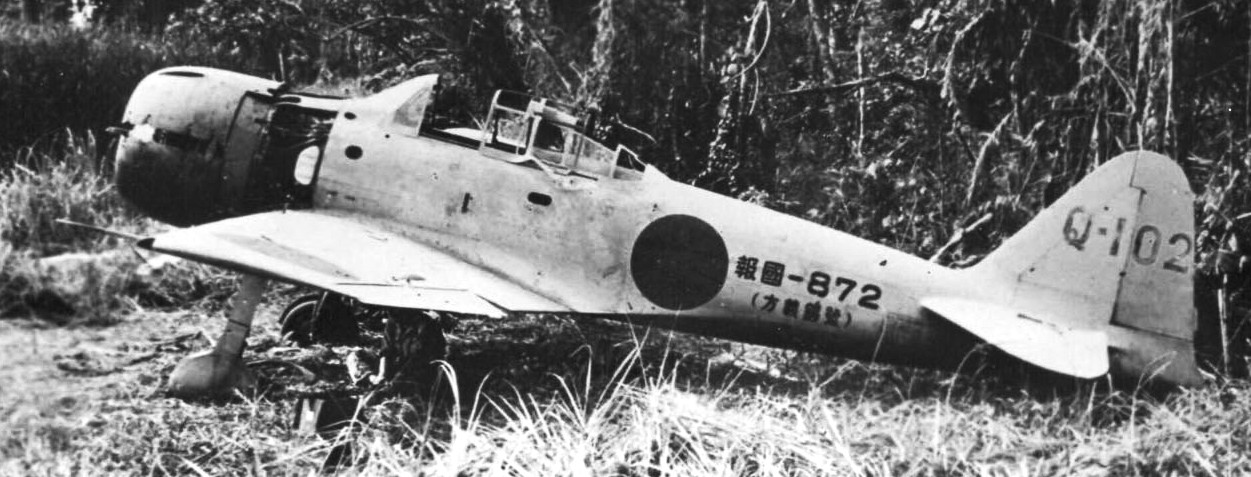
(US Army Photo)
Mitsubishi A6M3 Zero Model 32 (Serial No. 3030) sitting disabled at the former IJN airstrip in Buna, New Guinea circa December, 1942. This aircraft was salvaged soon after, along with several other examples nearby, and transported to Brisbane, Australia for resurrection into a flying example to evaluate. Note that this aircraft bears the HKK number 872.
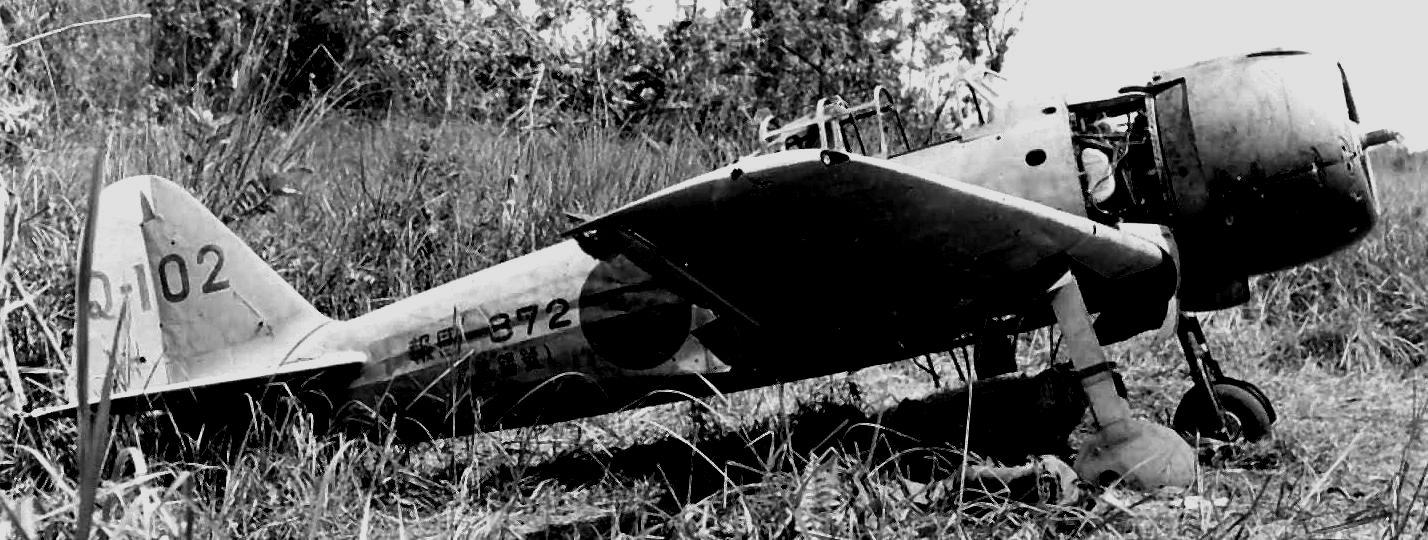
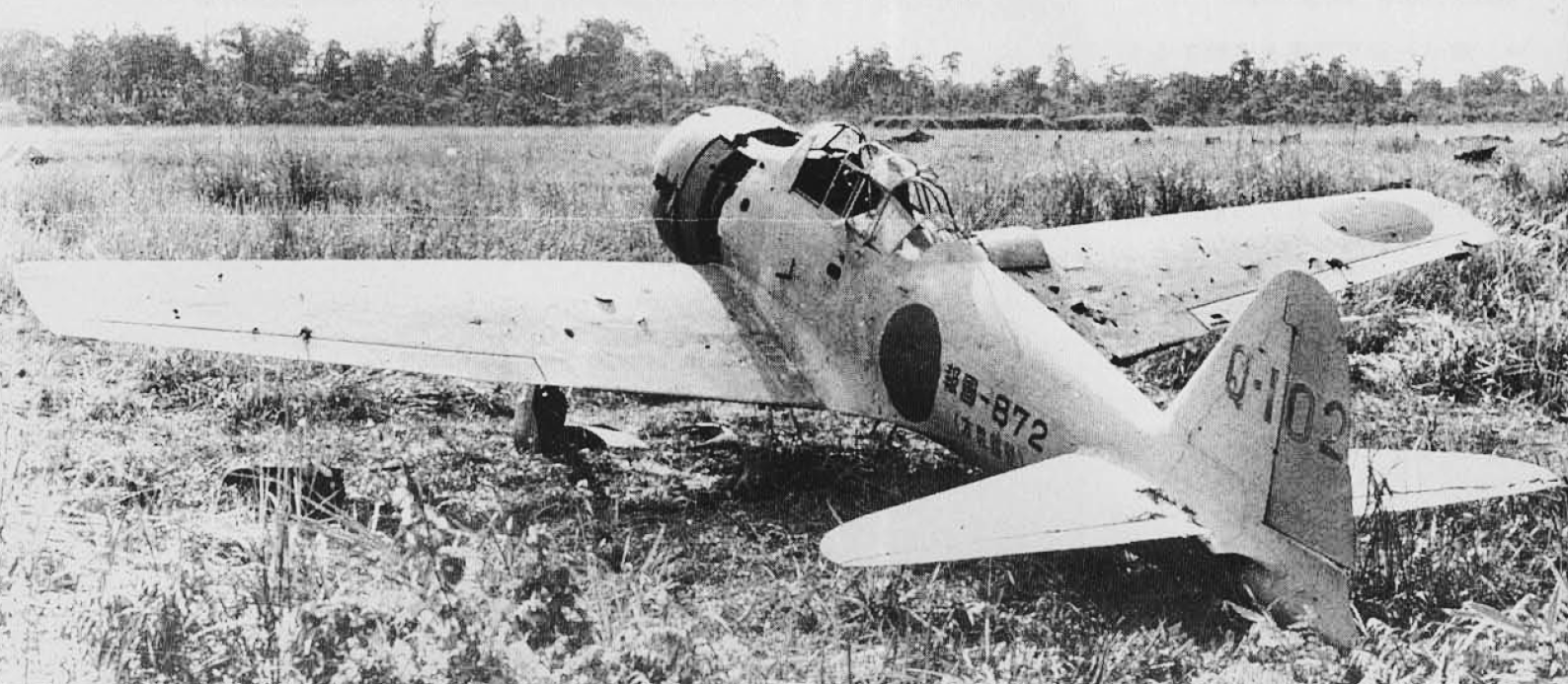
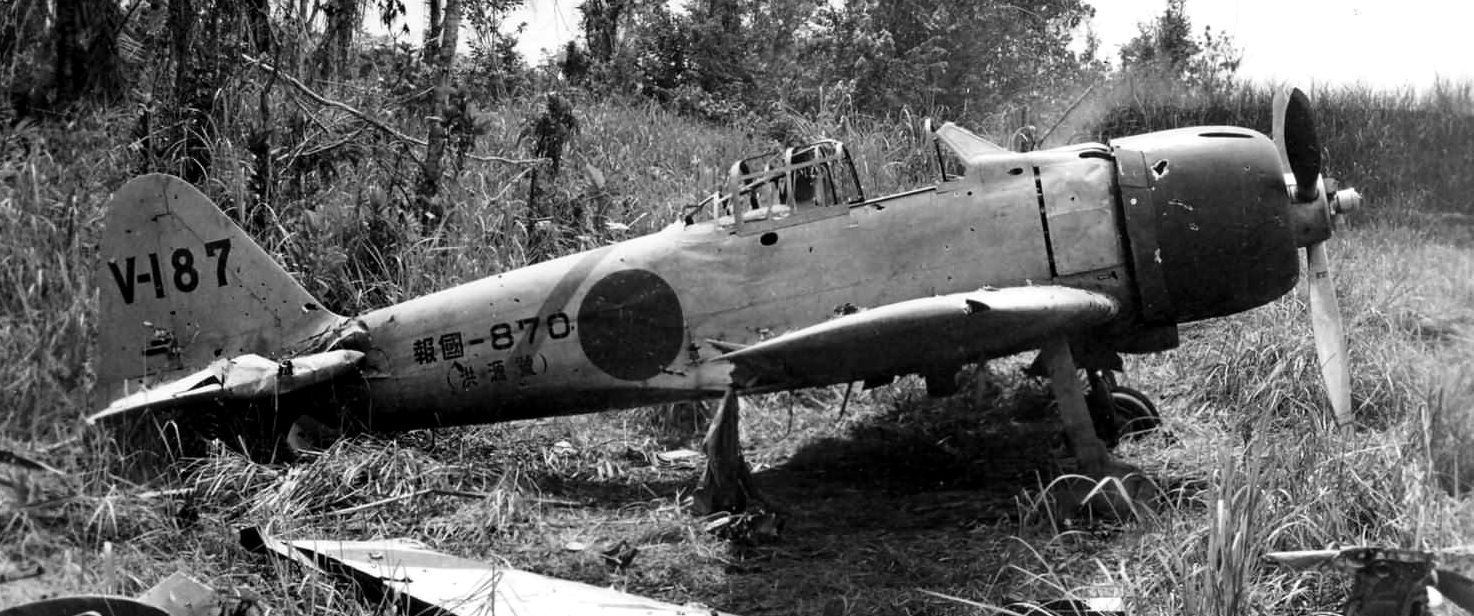
Mitsubishi A6M3 Model 32 Zero-Sen (Navy Type 0 Carrier Fighter), codename “Zeke”, coded Q-102 and V-187, both numbered -870, found damaged at Buna, Papua-New Guinea in 1943. (USAAF Photo)
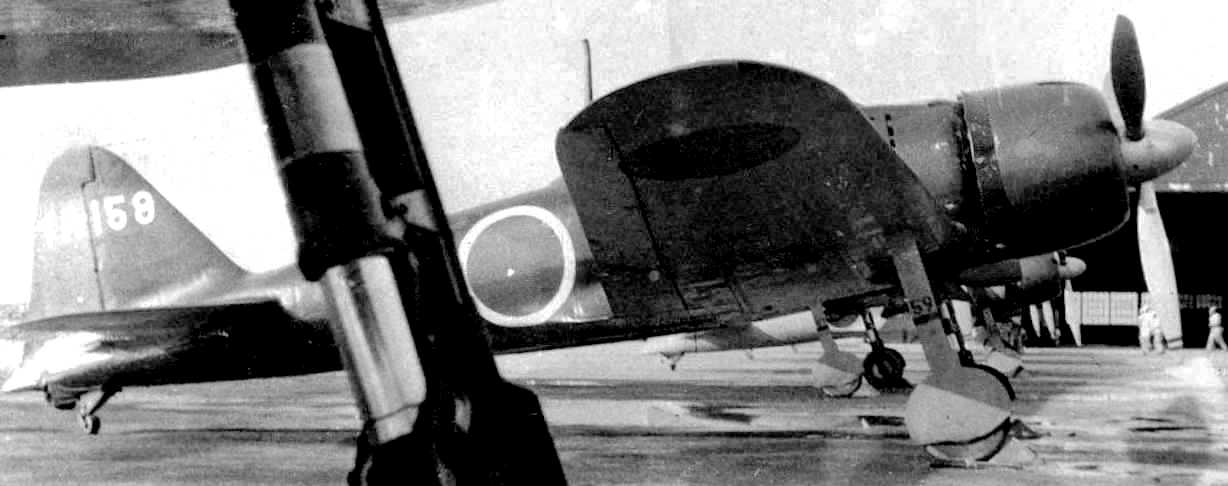
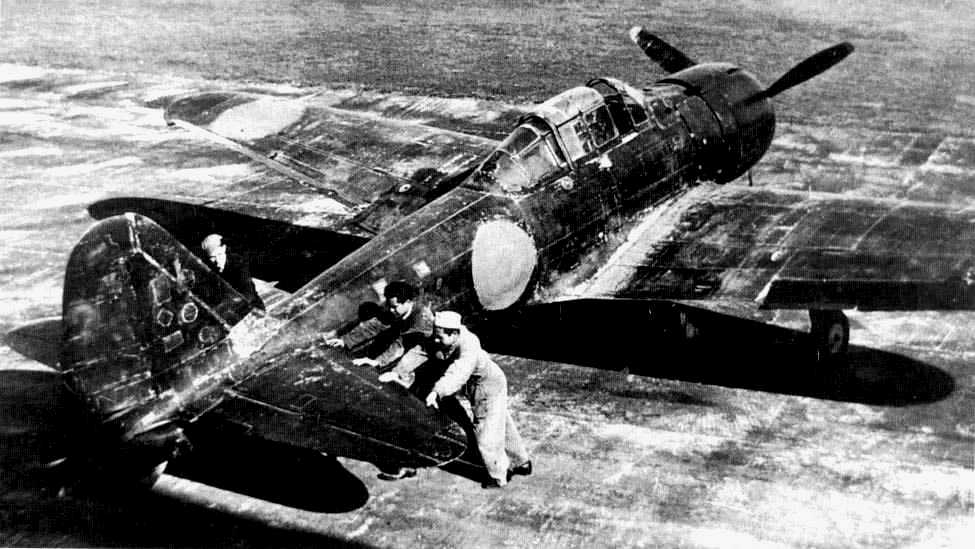
(IJAAF Photos)
Mitsubishi A6M3 Model 32 Zero-Sen (Navy Type 0 Carrier Fighter), codename “Zeke”, ca 1945.
A6M3 Type 0 Model 22
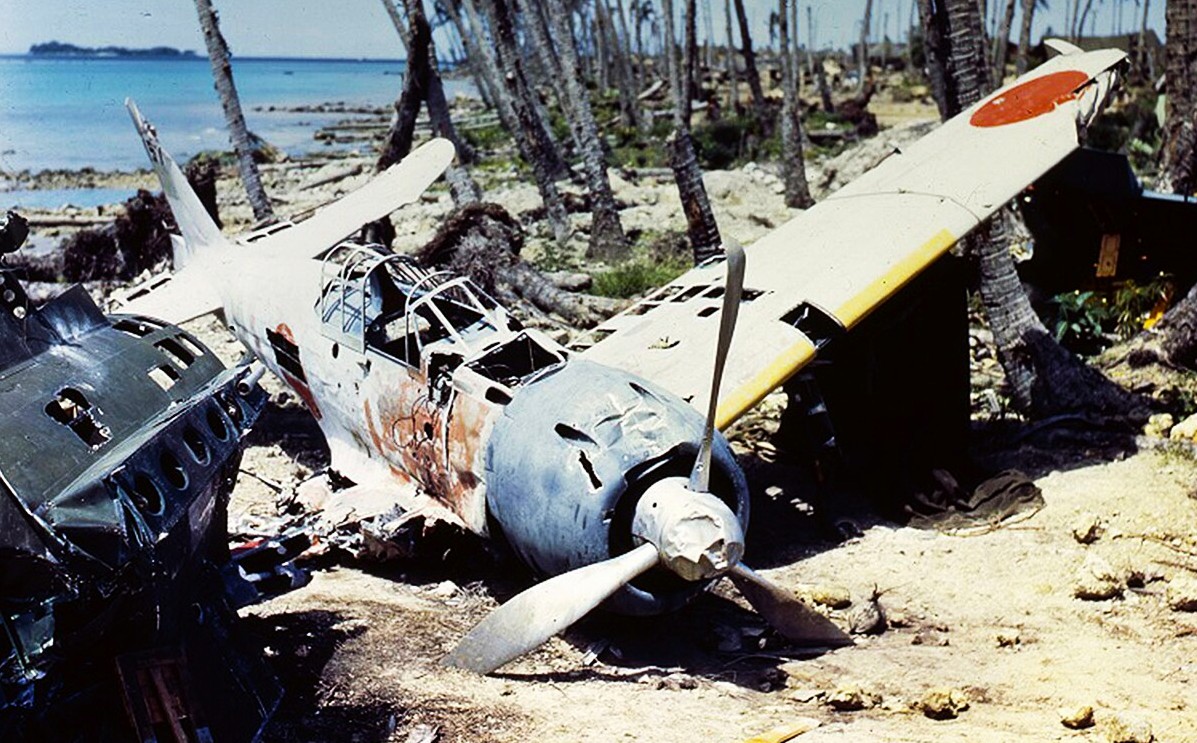
(USN Photo)
Japanese Mitsubishi A6M3 Zero (“T2-157”) abandoned at Munda Airfield (Central Solomon Islands), after the Allied Invasion, September 1943.
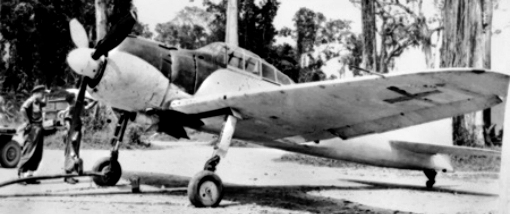
Mitsubishi A6M3 Model 32 Zero-Sen (Navy Type 0 Carrier Fighter), codename “Zeke”, wearing green cross surrender markings at Bougainville, 1945, in RNZAF hands. Mitsubishi A6M5 “Zeke” (Serial No. 3835) was captured at Kara, Bougainville and later shipped to New Zealand. Reg No. NZ6000, it is displayed at the War Memorial Museum in Auckland, New Zealand.
(Oren Rozen Photo)
(Tab-chan Photo)
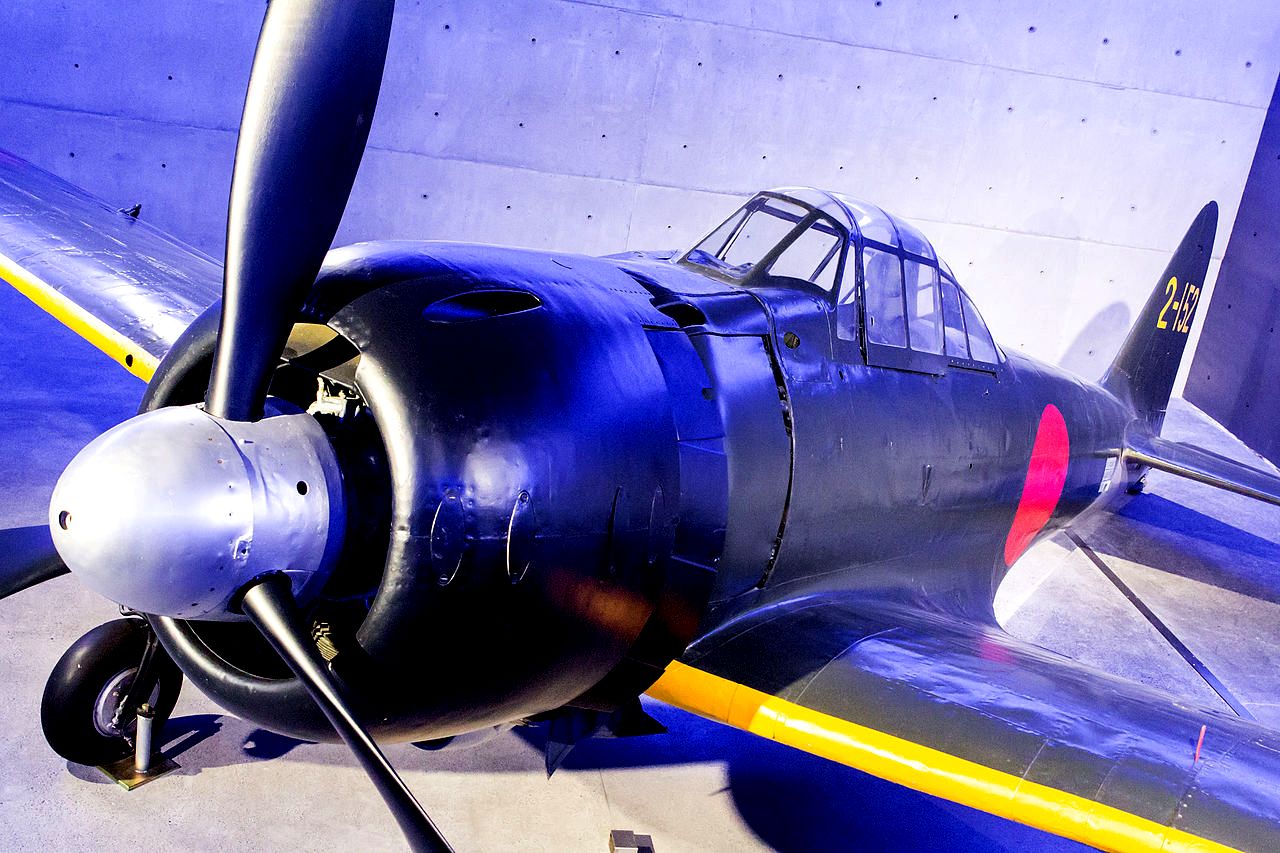
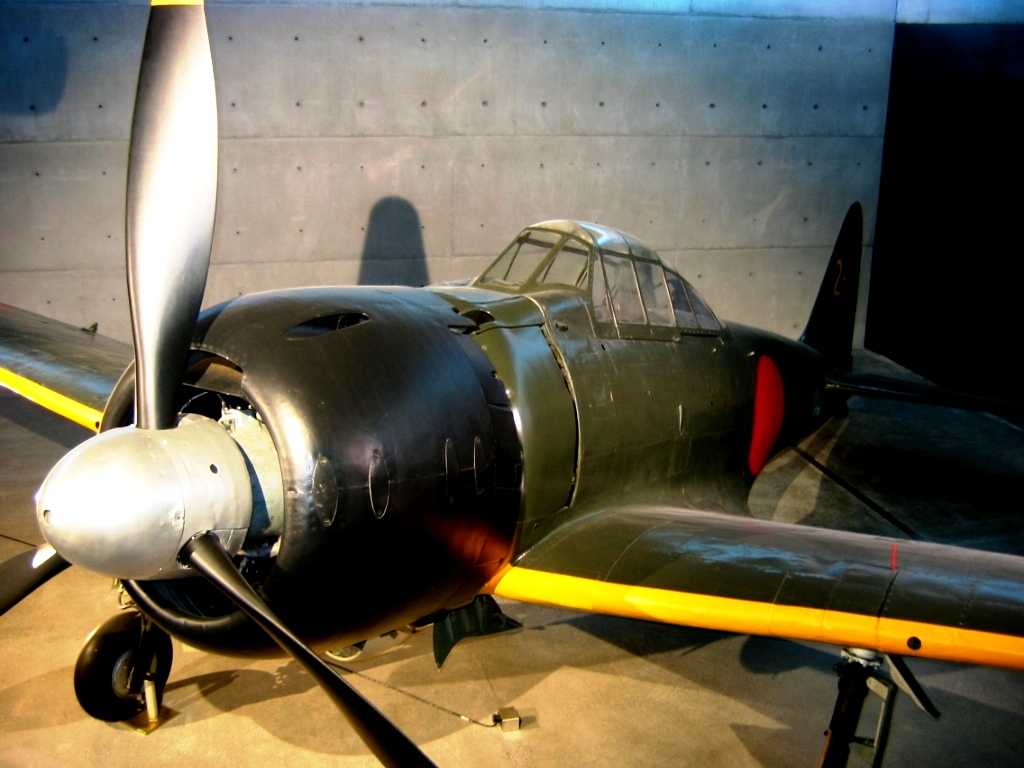
Mitsubishi A6M3 Model 22 Zero-Sen (Navy Type 0 Carrier Fighter), codename “Zeke”, (Serial No. 3835/3844), coded 2-152, Auckland War Memorial Museum, New Zealand.
Mitsubishi A6M3-22 Model 22 Zero-Sen (Navy Type 0 Carrier Fighter), codename “Zeke”, two-seater (Serial No. 31870), on display at the National Museum of Nature and Science, Taito, Tokyo, Japan.
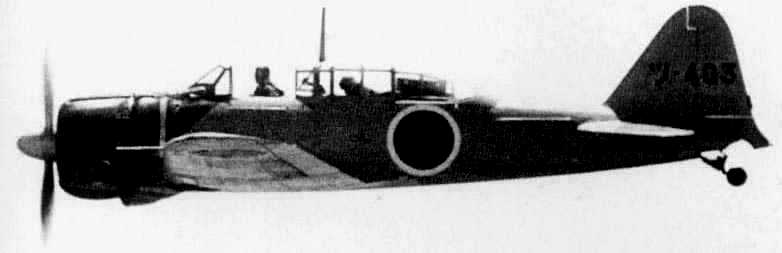
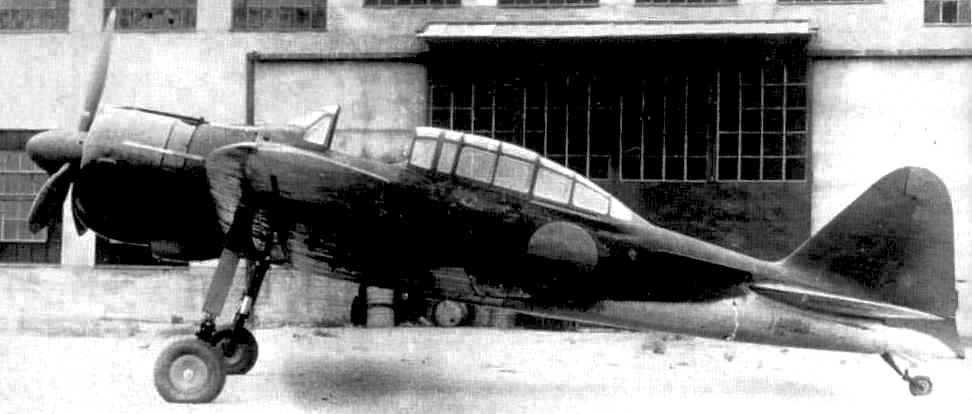
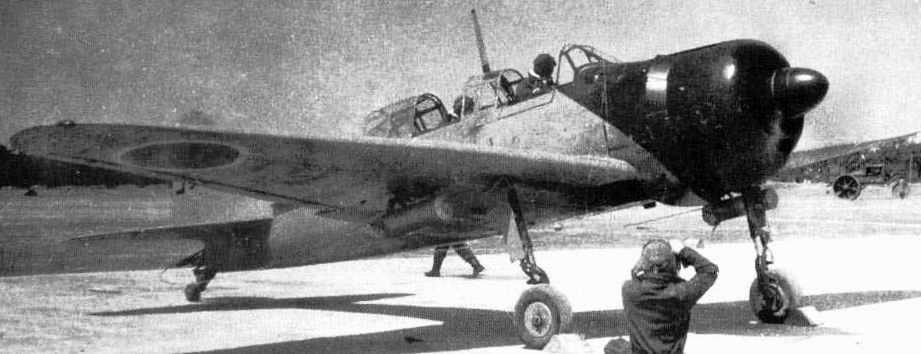
Mitsubishi A6M3-22 two-seat Model 21 Zero-Sen (Navy Type 0 Carrier Fighter), codename “Zeke”. (IJNAF Photos)
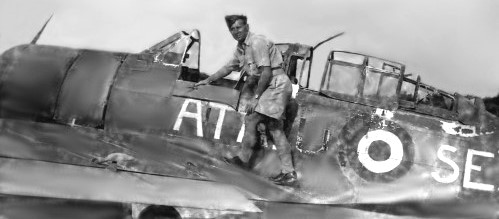
Mitsubishi A6M3-22 two-seat Model 21 Zero-Sen (Navy Type 0 Carrier Fighter), codename “Zeke”, captured example taken into service with the French Air Force in the Far East in 1945. (Armee de l’Air Photo)
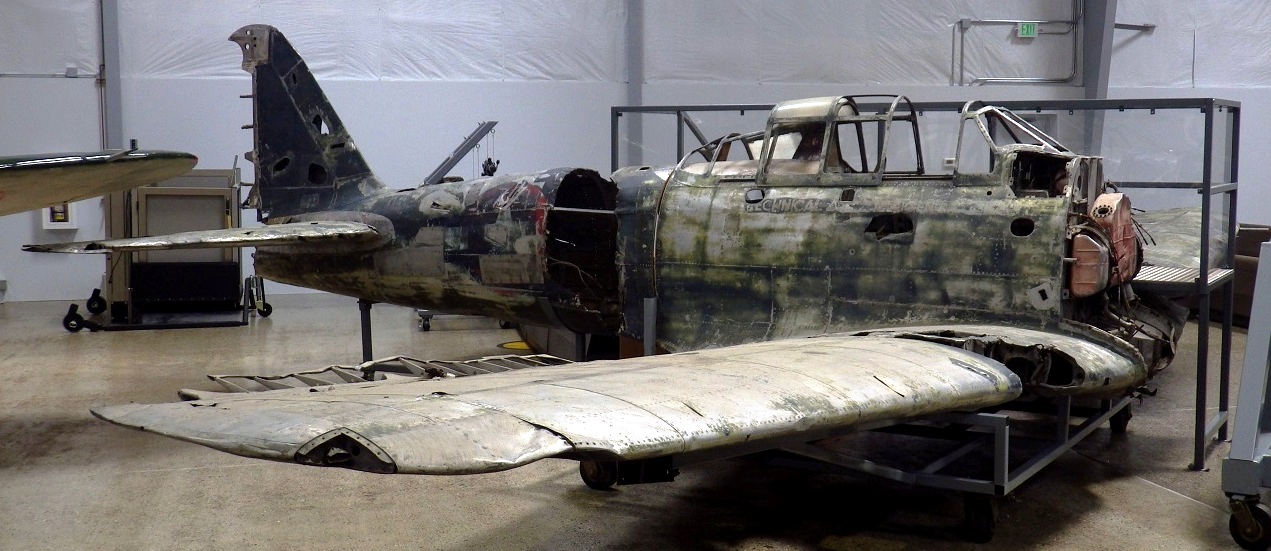
(Goshimini Photo)
Mitsubishi A6M3-22 two-seat Model 21 Zero-Sen (Navy Type 0 Carrier Fighter), codename “Zeke”, coded UI-161, before restoration, with the Flying Heritage Collection, Evrett, Washington
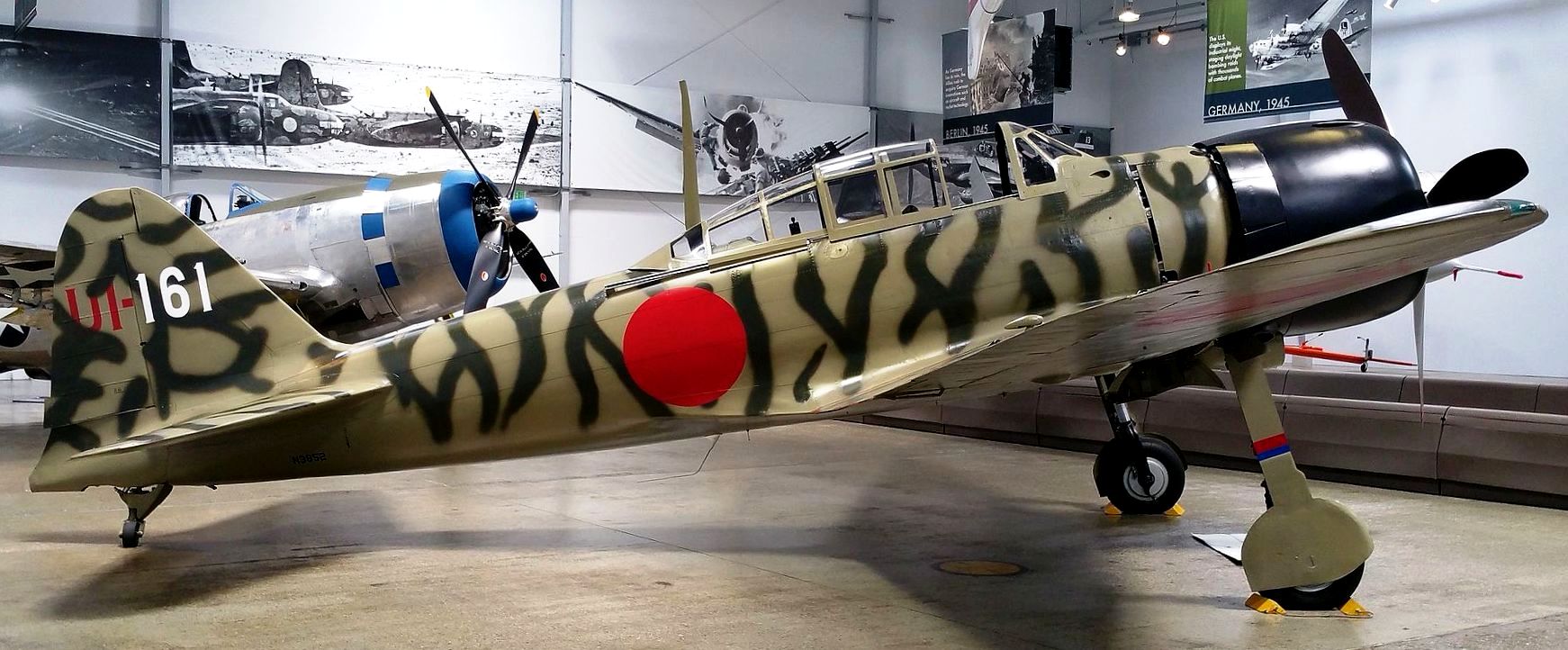
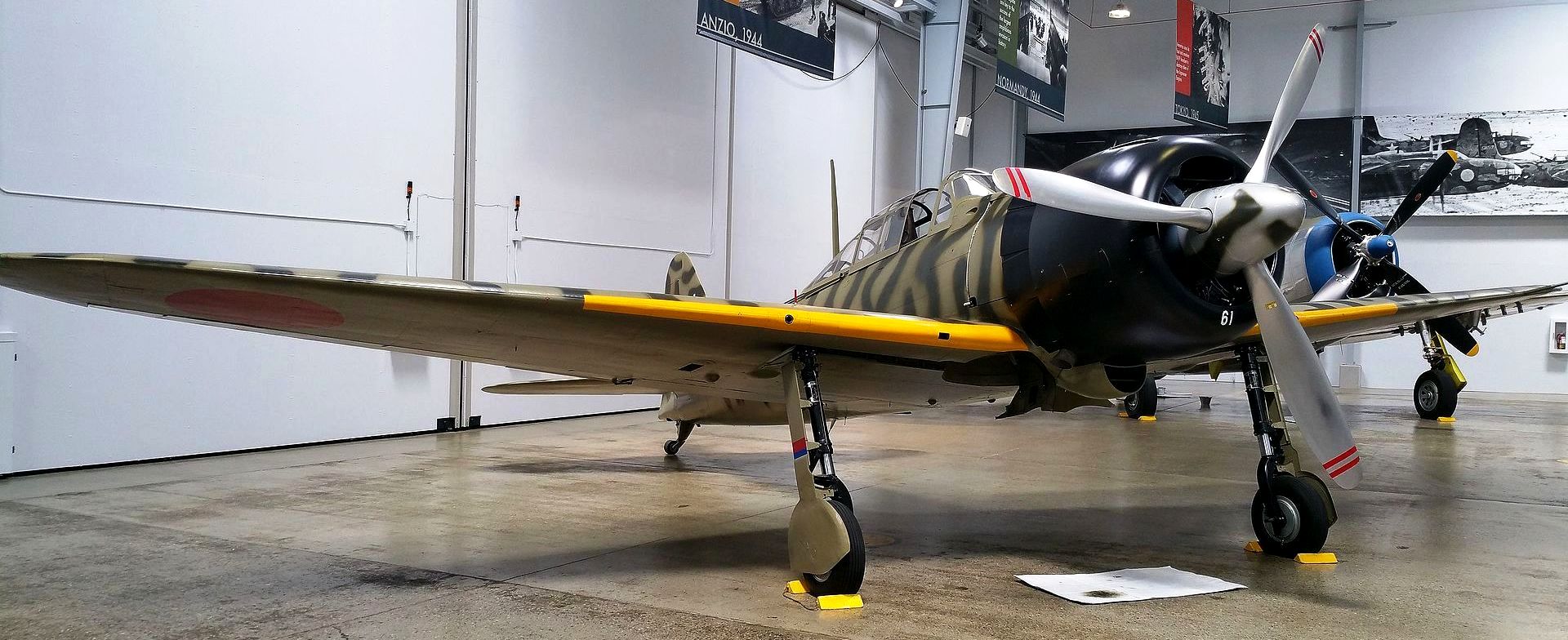
(Articseahorse Photos)
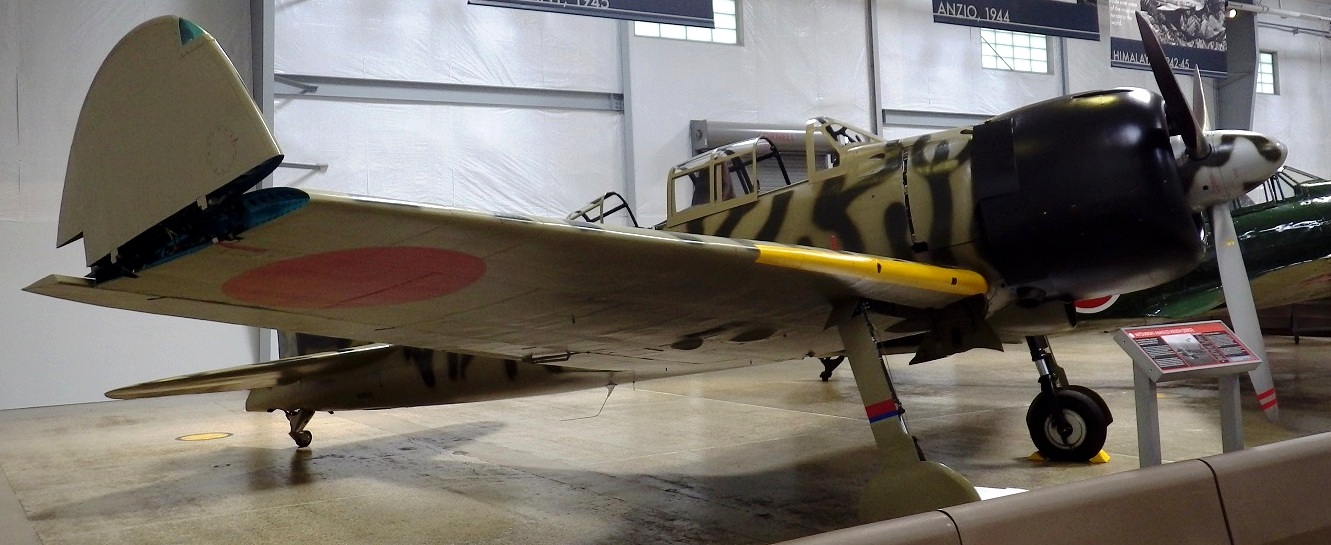
( Goshimini Photo)
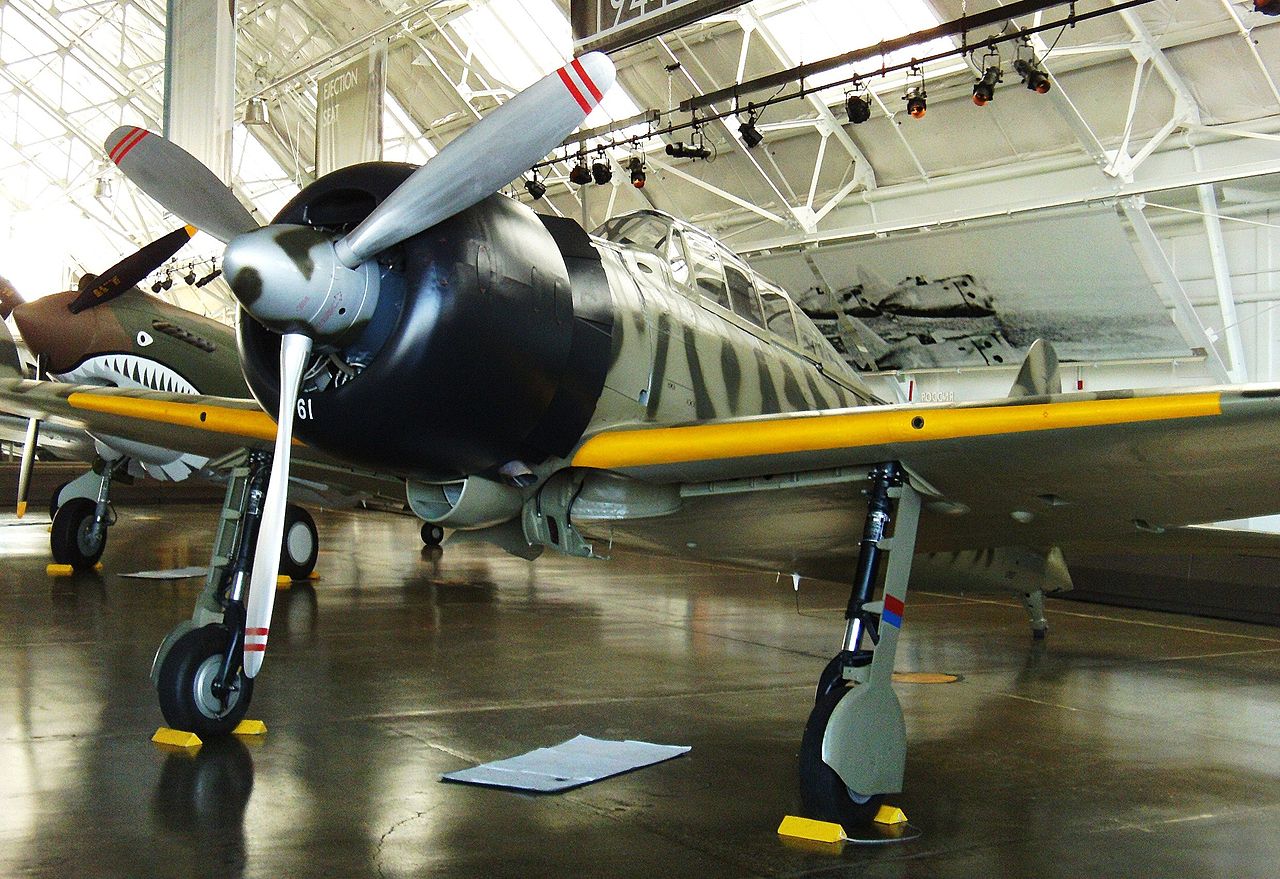
(John Velt Photo)
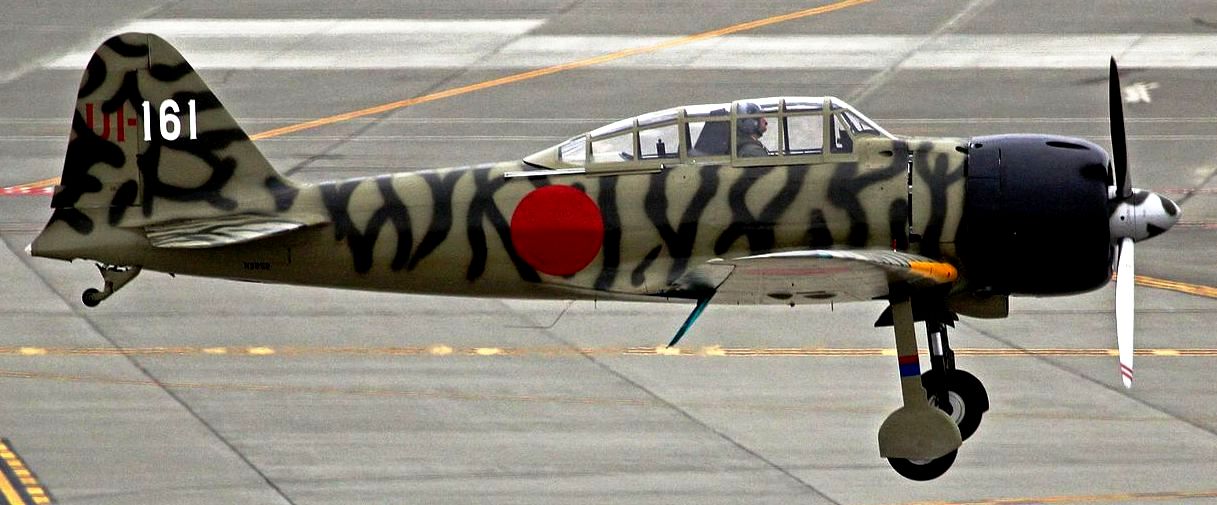
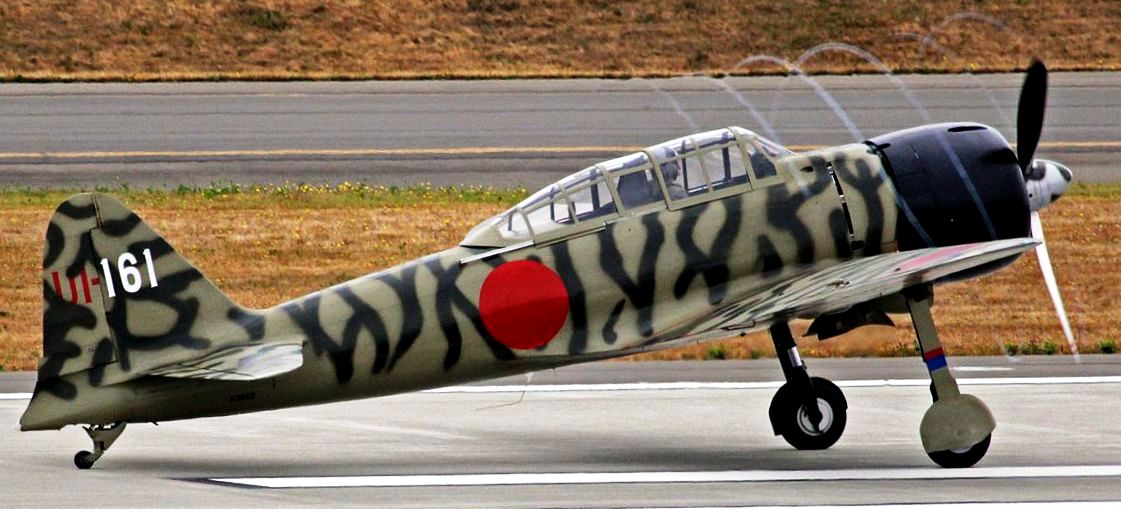
(Ken Fielding Photos)
Mitsubishi A6M3-22 two-seat Model 21 Zero-Sen (Navy Type 0 Carrier Fighter), codename “Zeke”, coded UI-161, Reg. No. N3852 with the Flying Heritage Collection, Evrett, Washington.
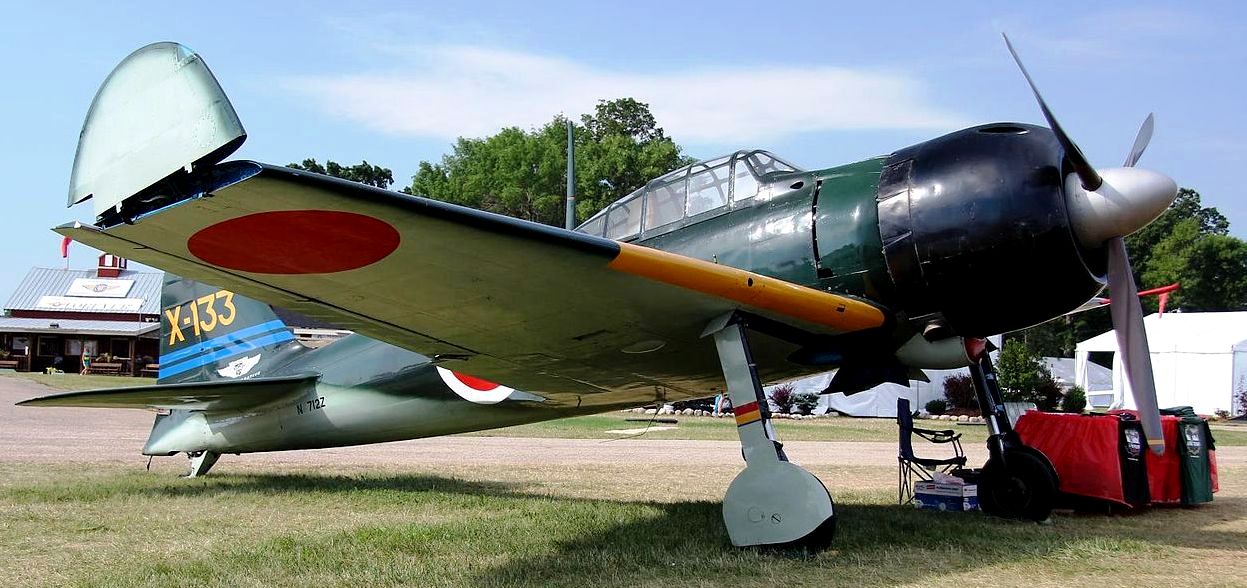
(Armchair Aviator’s Photo)
Mitsubishi A6M3 Model 22 Zero, c/n 3869m replica, X-133, Reg. No. N7122, American Airpower Heritage Flying Museum, Commemorative Air Force, Midland, Texas.
The Commemorative Air Force’s A6M3 was recovered from Babo Airfield, New Guinea, in 1991. It was partially restored from several A6M3s in Russia, then brought to the United States for restoration. The aircraft was re-registered in 1998 and displayed at the Museum of Flying in Santa Monica, California. It currently uses a Pratt & Whitney R1830 engine.
A6M4 Type 0 Model 41/42
A6M5 Type 0 Model 52
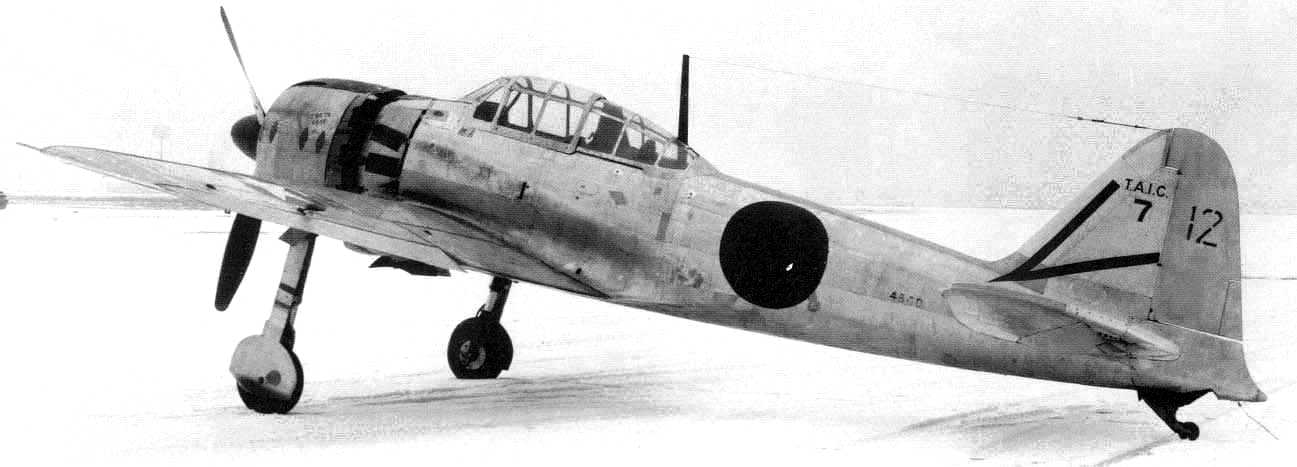
(USAAF Photos)
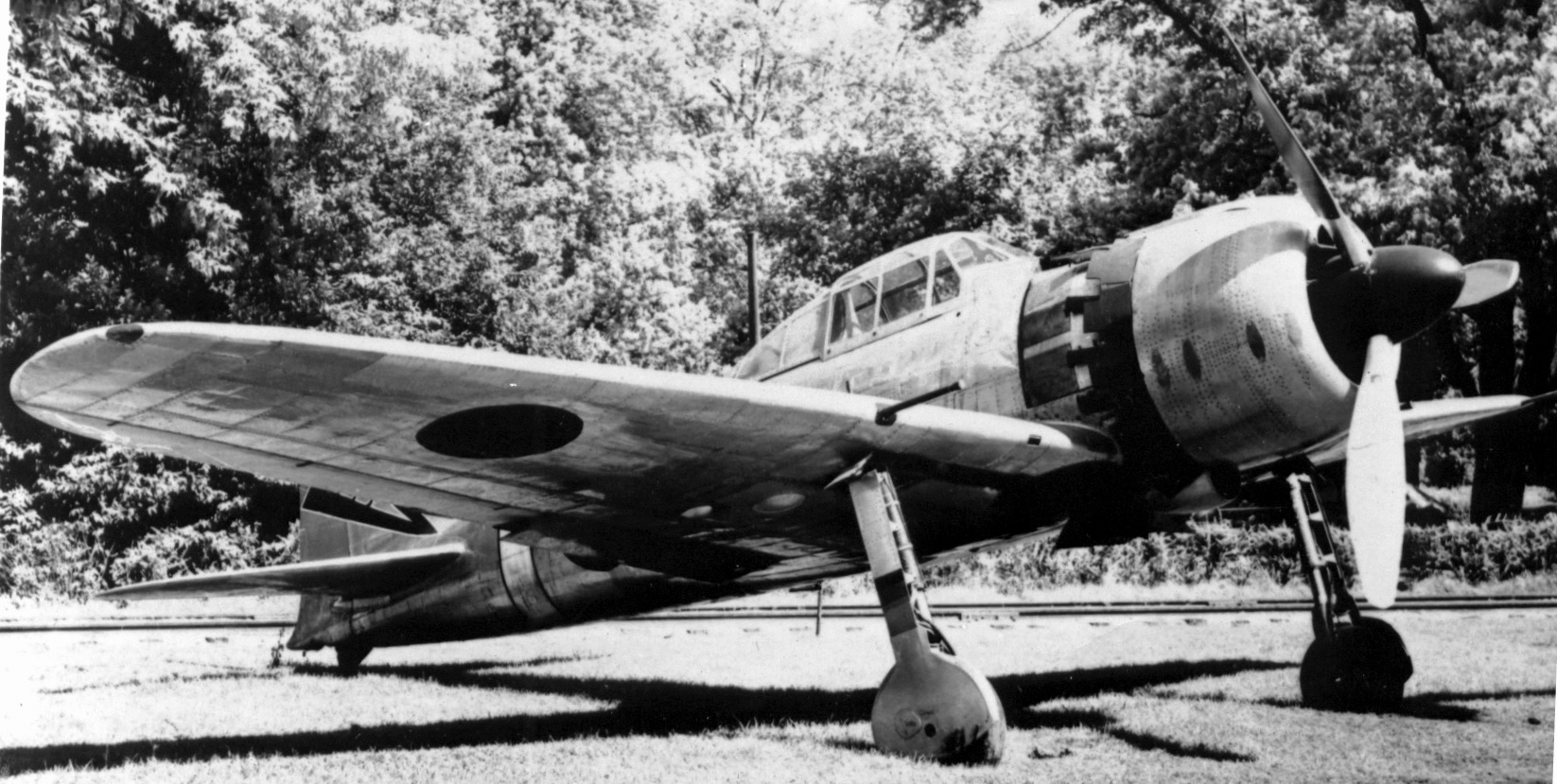
(Edgar Diegan Photo)
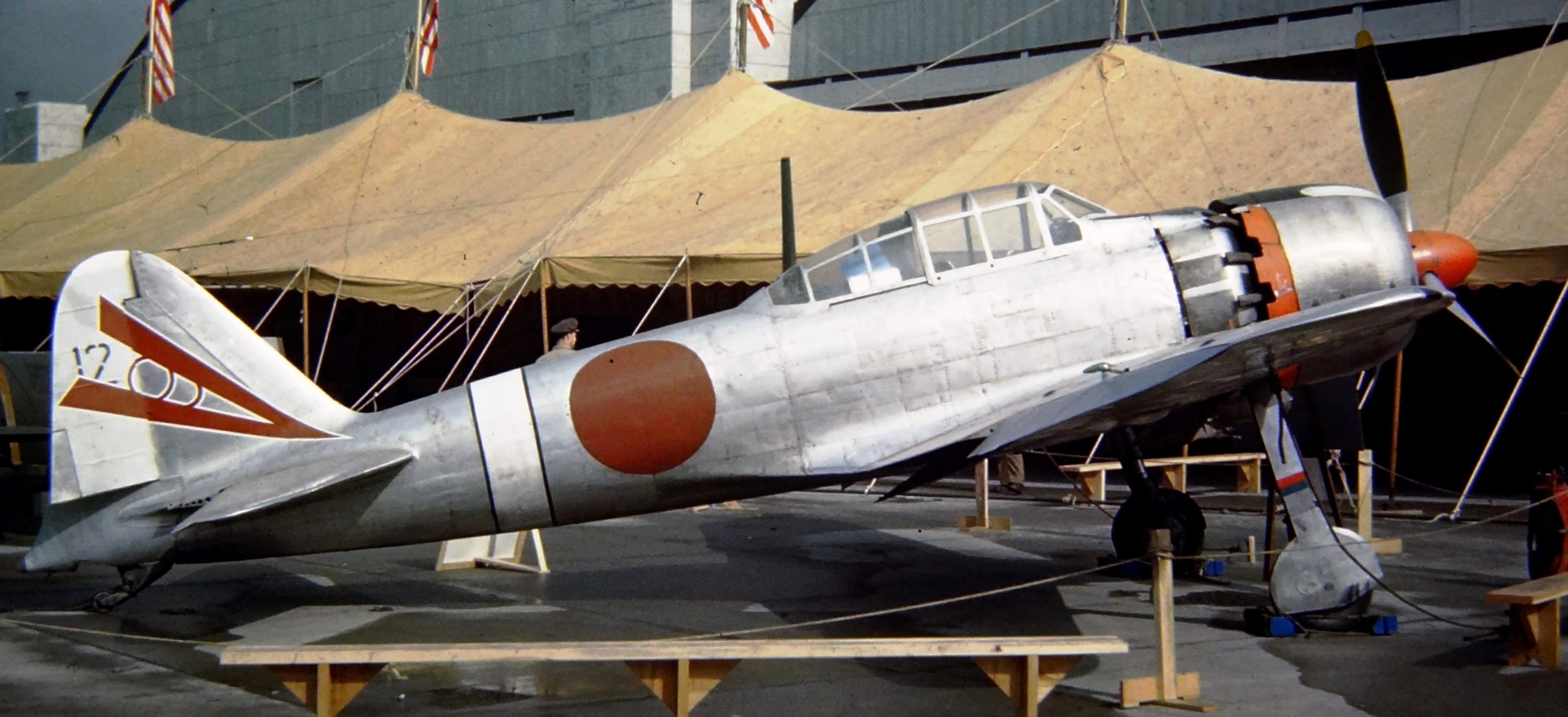
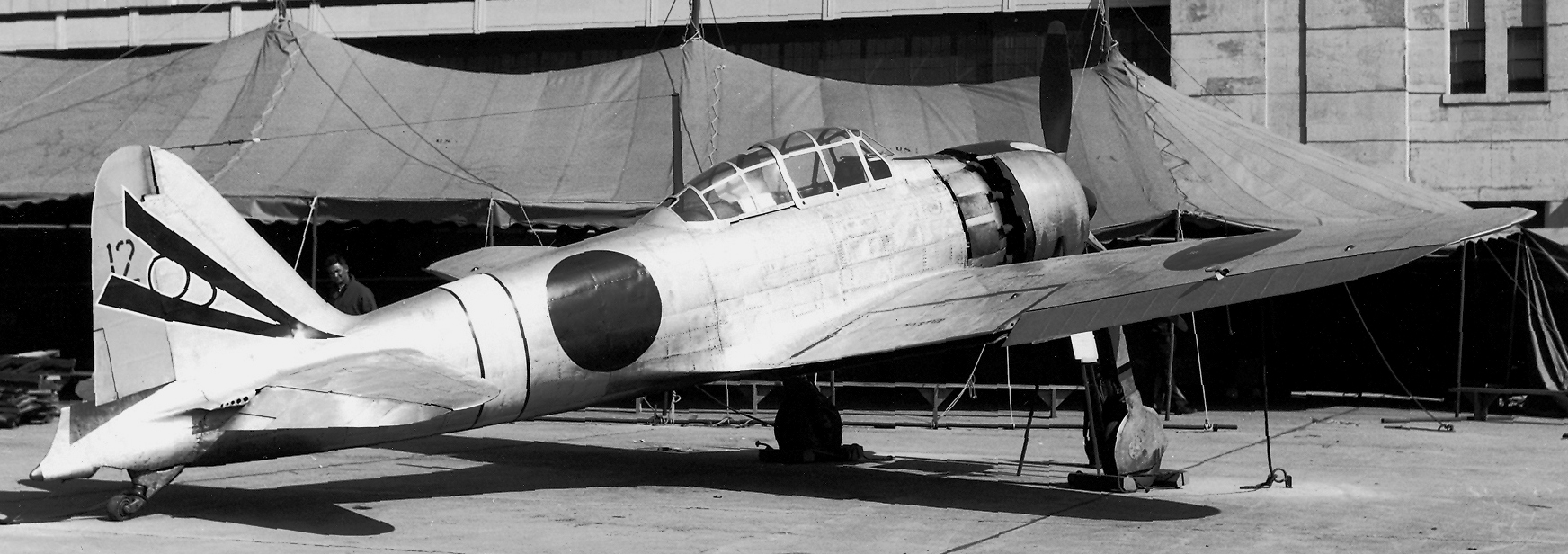
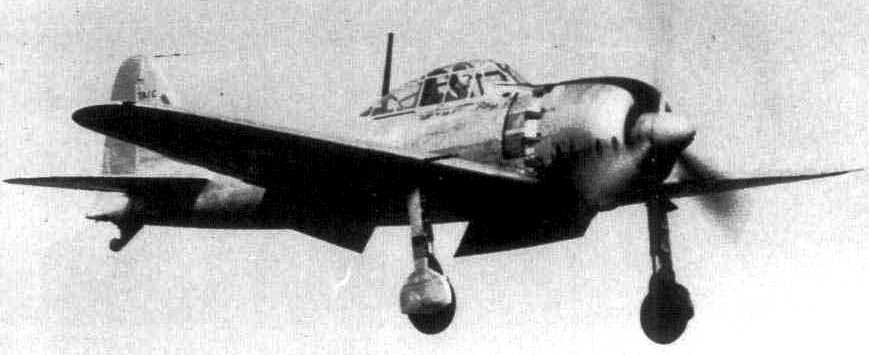
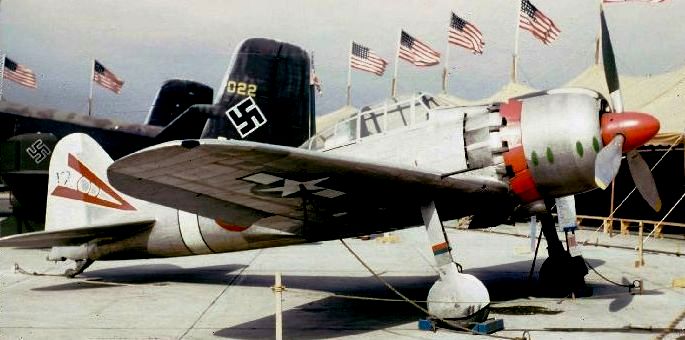
Mitsubishi A6M5 Model 52 Zero-Sen (Navy Type 0 Carrier Fighter), codename “Zeke”, (Serial No. 4340), TAIC 7, with partial Japanese and USAAF FE-130, later T2-130 markings. This is the Zero that is presently displayed at the National Air & Space Museum hanging from the 2nd Floor, Second World War gallery in Washington, D.C.
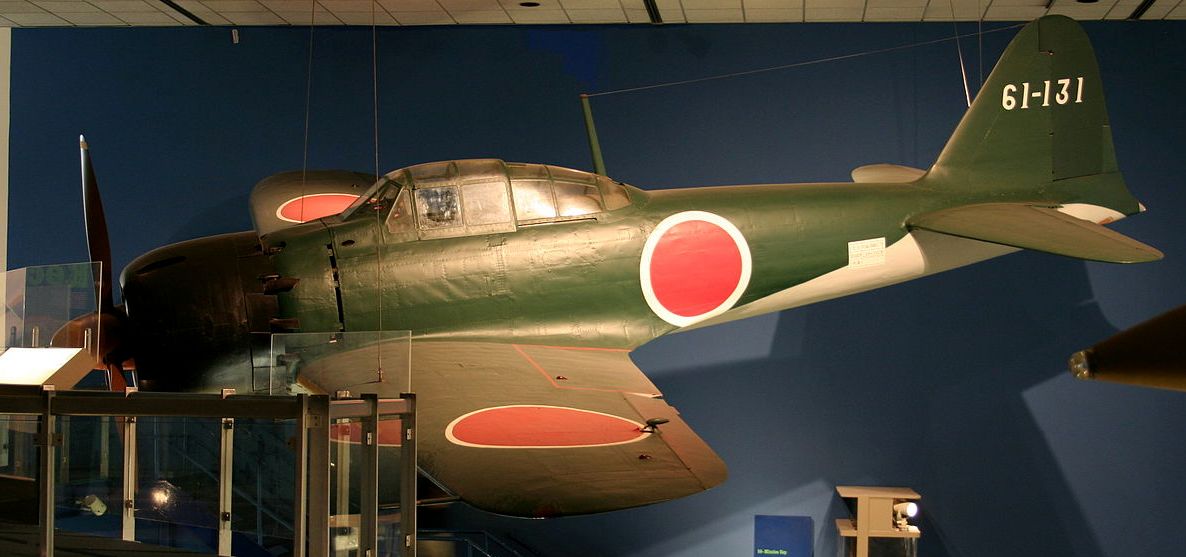
(350z33 Photo)
Mitsubishi A6M5 Model 52 Zero-Sen (Navy Type 0 Carrier Fighter), codename “Zeke”, (Serial No. 4340), TAIC 7, coded 61-131, USAAF FE-130, later T2-130, on display in the National Air and Space Museum, Washington, D.C. This aircraft came from a group of 12 Japanese aircraft captured on Saipan Island in April 1944. Navy personnel removed the Zeros from the island and sent them to the United States for evaluation in July. The earliest records pertaining to the Museum’s Zero show that it was evaluated in 1944 at Anacostia Naval Air Station across the river from Washington, D. C., in Sep 1944 and then in Jan 1945 at Eglin Field, Florida. In Feb 1945 it went to Wright Field, Dayton, Ohio. As of 13 July 1945, this Zero had flown for 93 hours and 15 minutes in Allied hands. The aircraft was moved to Freeman Field, Indiana ca 4 Mar 1946 where it remained until 14 Jun 1946. While in U. S. Navy and Army Air Forces custody, the aircraft was stripped of all markings and colors. Today, the only remaining clue to the original identity of the airplane is the manufacturer’s serial number 4340, etched and painted on major components. Curators selected the markings of an aircraft from the 261st Naval Air Corps because an aircraft of this unit was captured at Saipan. The 261st NAC was more commonly known as the Tiger Corps. It was activated on 1 Jun 1943, and was soon assigned to the newly organized 1st Air Fleet. The Tiger Corps moved to the Marianas on 16 Feb 1944, and participated in some of the fiercest fighting of the war.
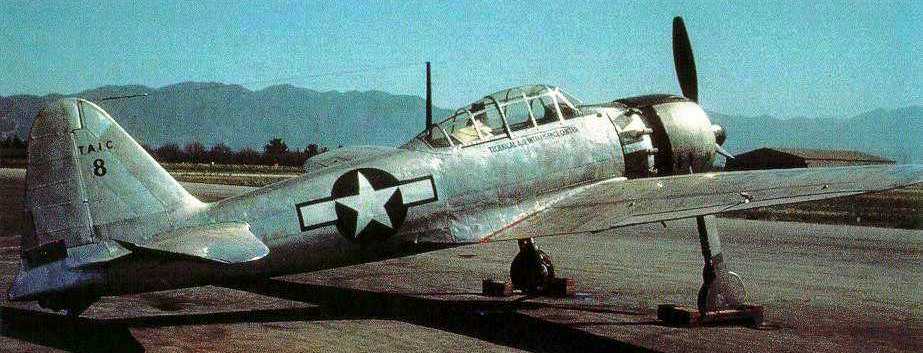
(USAAF Photo)
Mitsubishi A6M5 Model 52 Zero-Sen (Navy Type 0 Carrier Fighter), codename “Zeke”, (Serial No. 2193), TAIC 8. This particular Zeke was built by Mitsubishi ca December 1943. It was originally assigned to the 261st Kokutai with tail code 61-108. It was one of 12 captured by the USMC at Aslito Airfield, Saipan in March 1944. American intelligence coded this aircraft as TAIC 8. In the USA, this Zero was transported to the USAAF test organization at Wright Field, Ohio. Late in 1945 it was relocated at Eglin Field, Florida. This colour photo was taken in the US some months after the Second World War had ended.
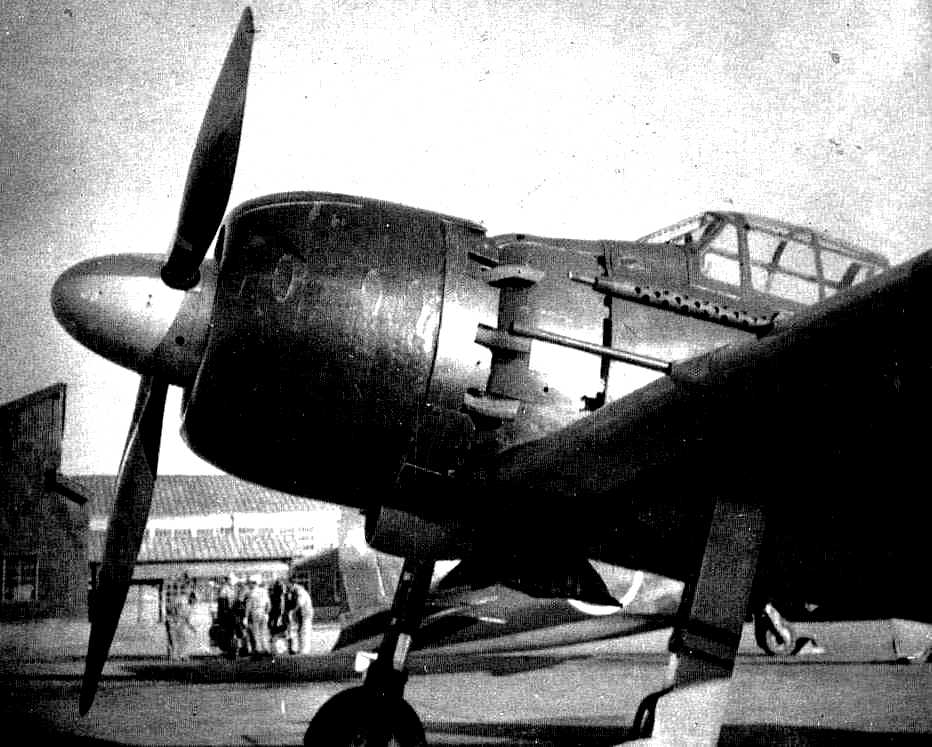
(IJNAF Photos)
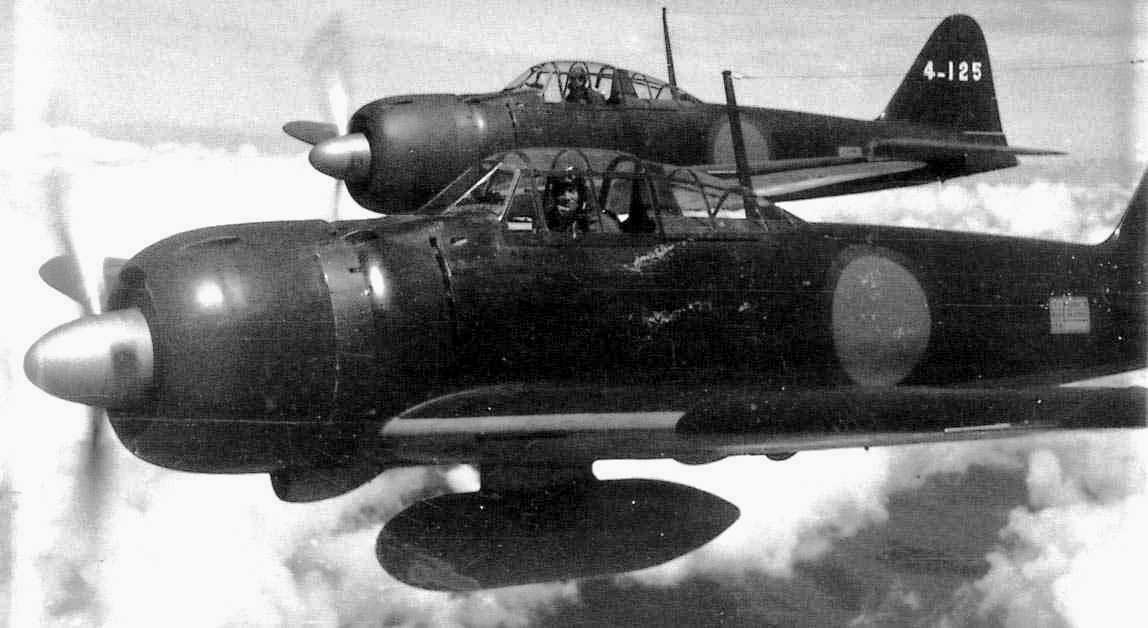
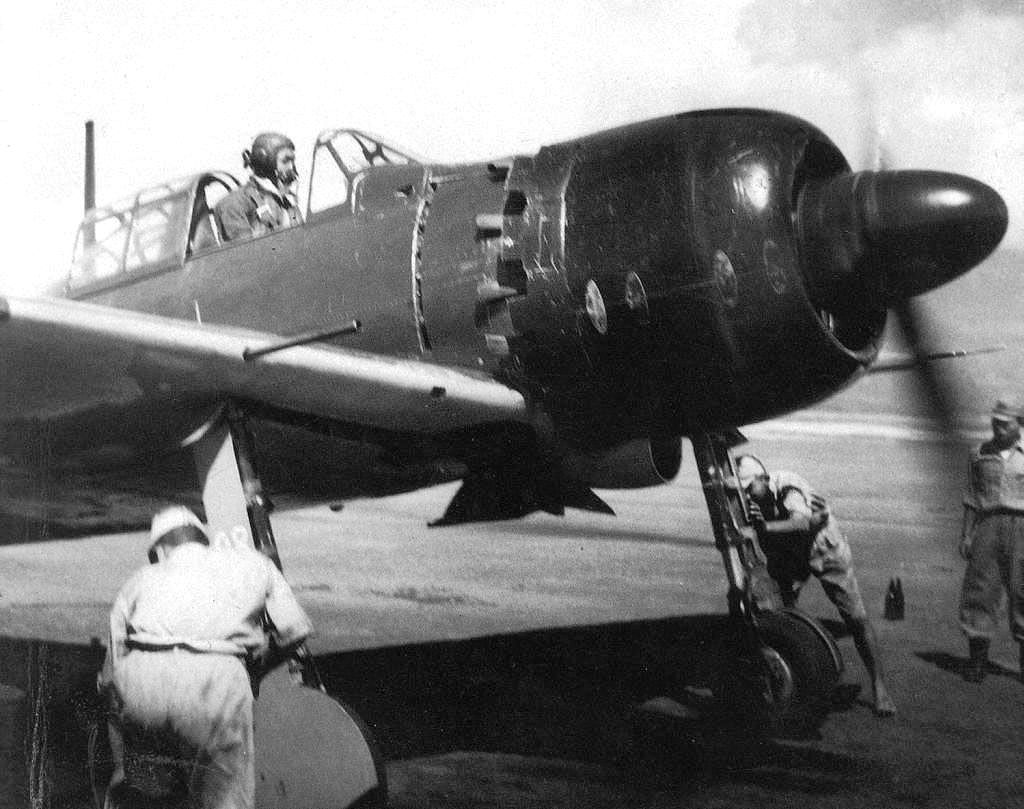
Mitsubishi A6M5 Zero Model 52 in IJNAF service.
(IJNAF Photo)
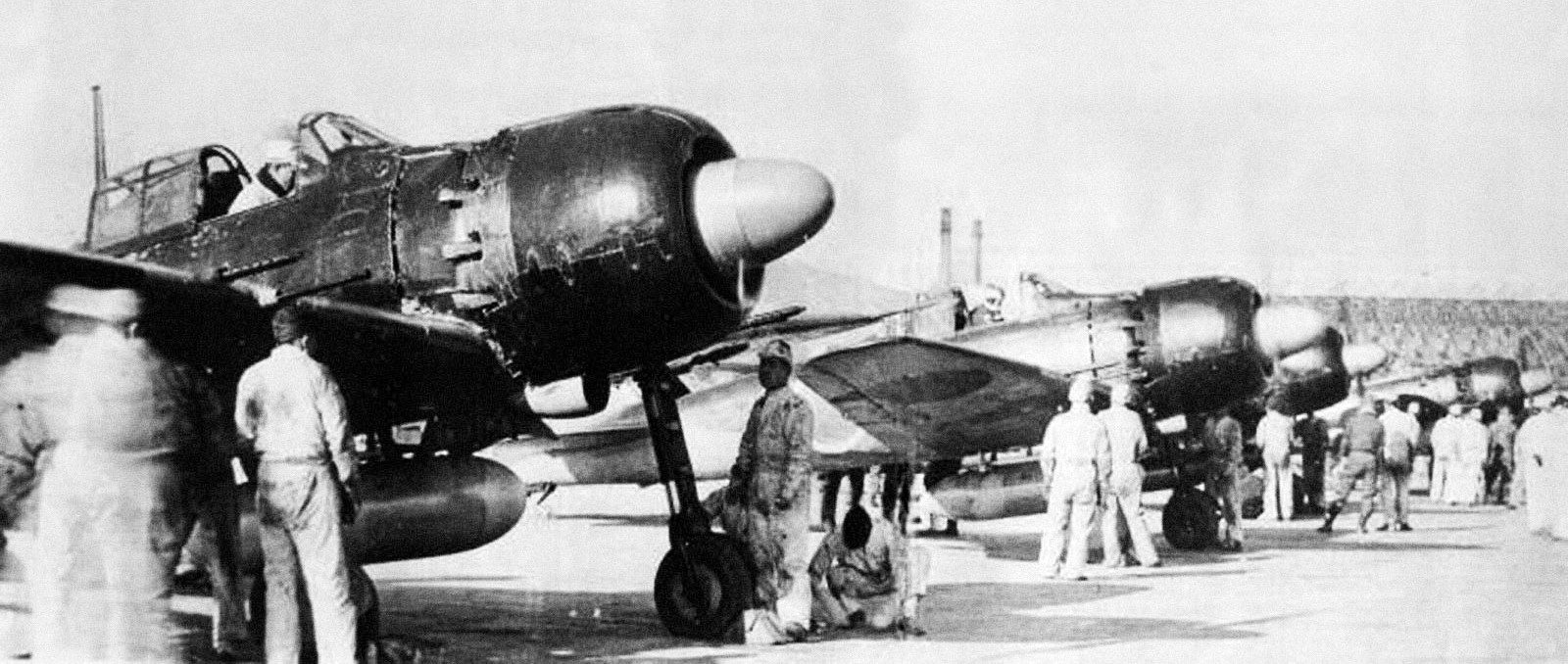
Mitsubishi A6M5c Zeros preparing to take part in a kamikaze attack in early 1945.
(USN Photo)
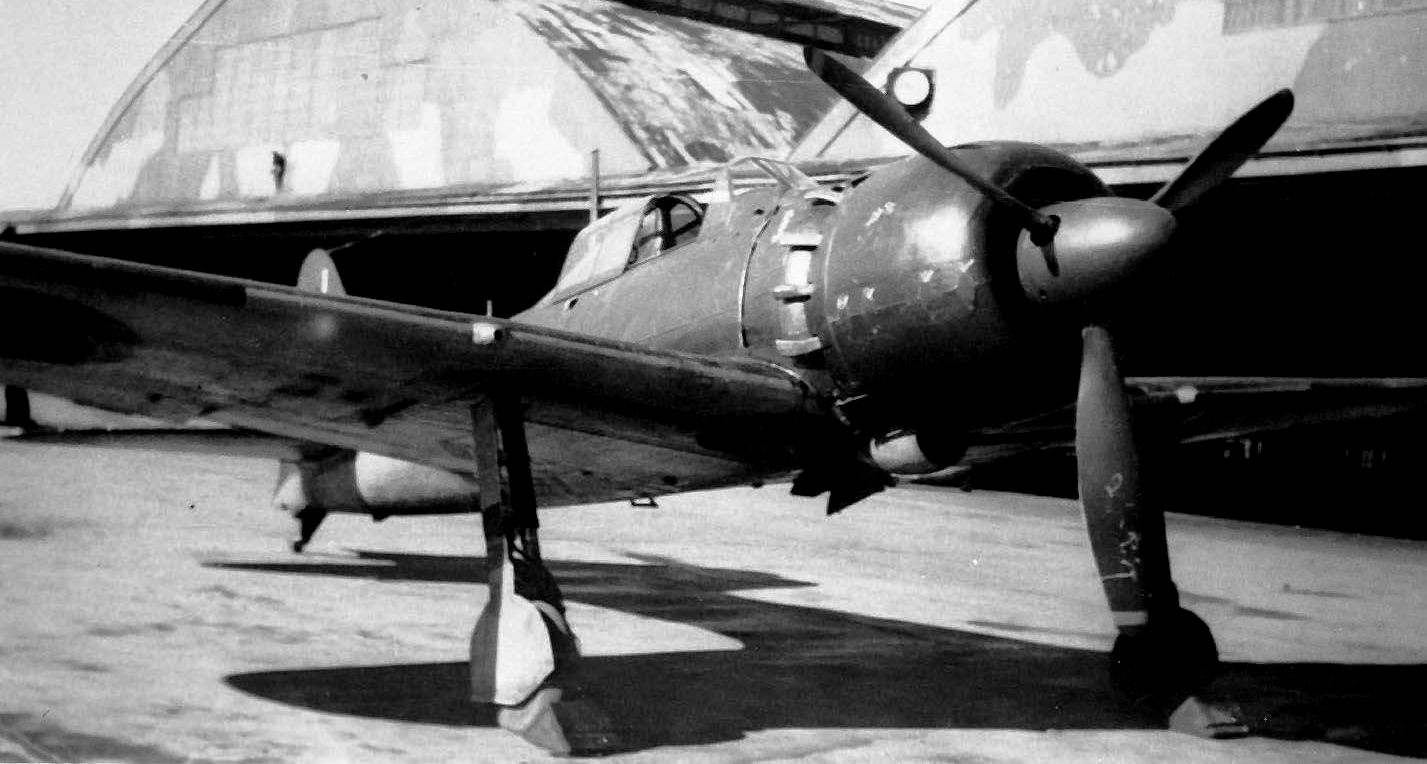
Mitsubishi A6M5 Model 52 Zero-Sen (Navy Type 0 Carrier Fighter), codename “Zeke”, captured at Atsugi Naval Air Base in Japan at the end of the war.
(Paul Richter Photo)
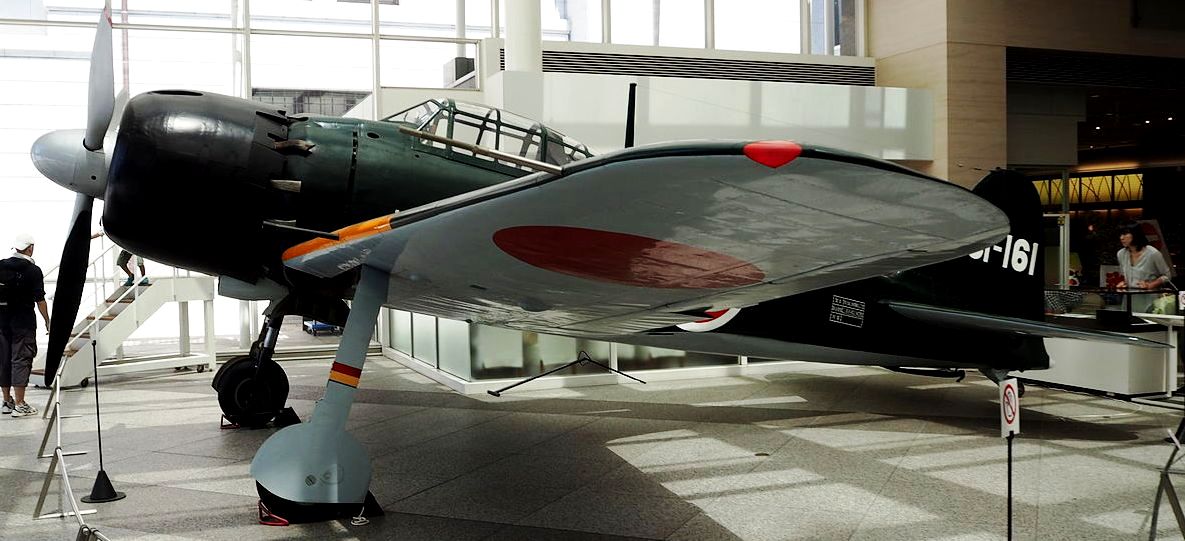
(Wason Llwolmpaisan Photo)
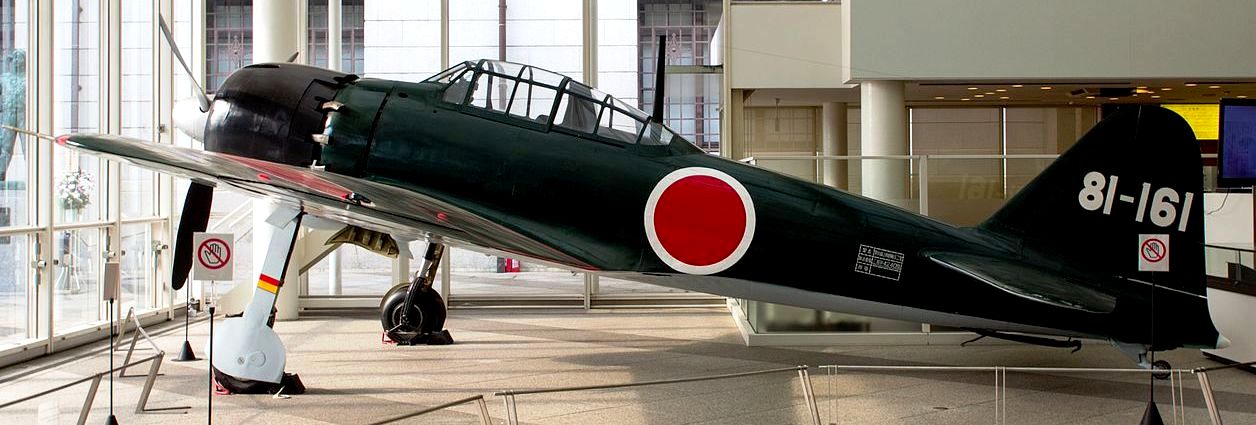
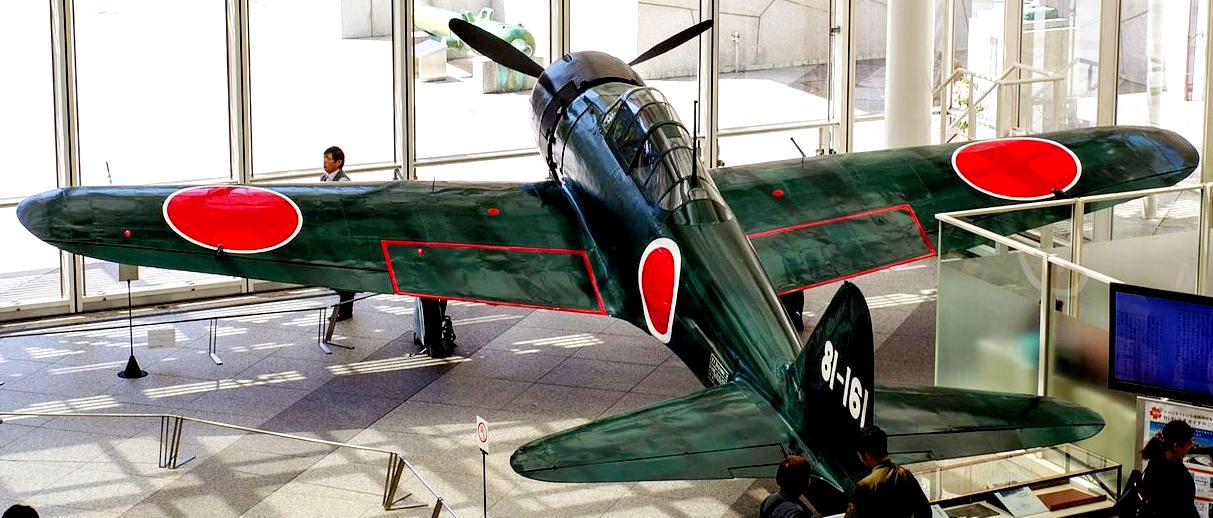
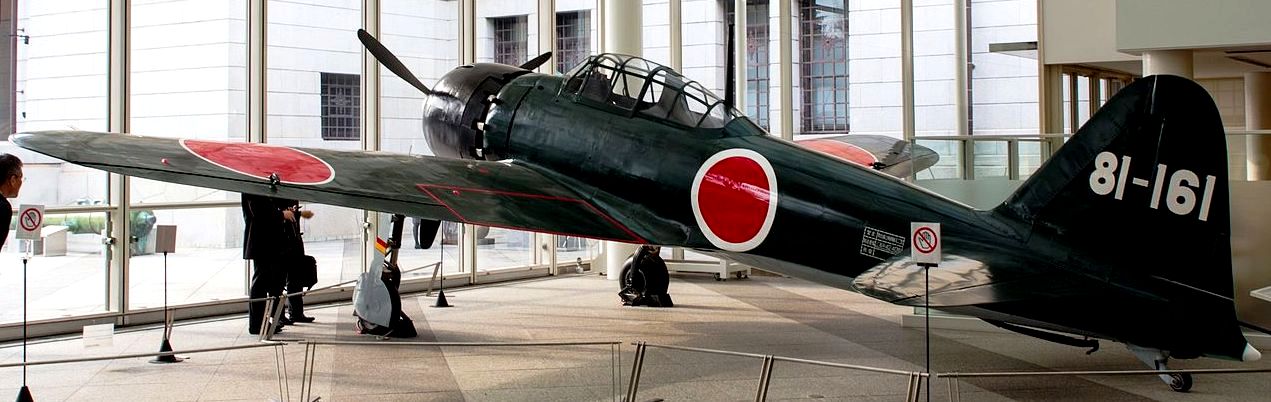
(Oren Rozen Photos)
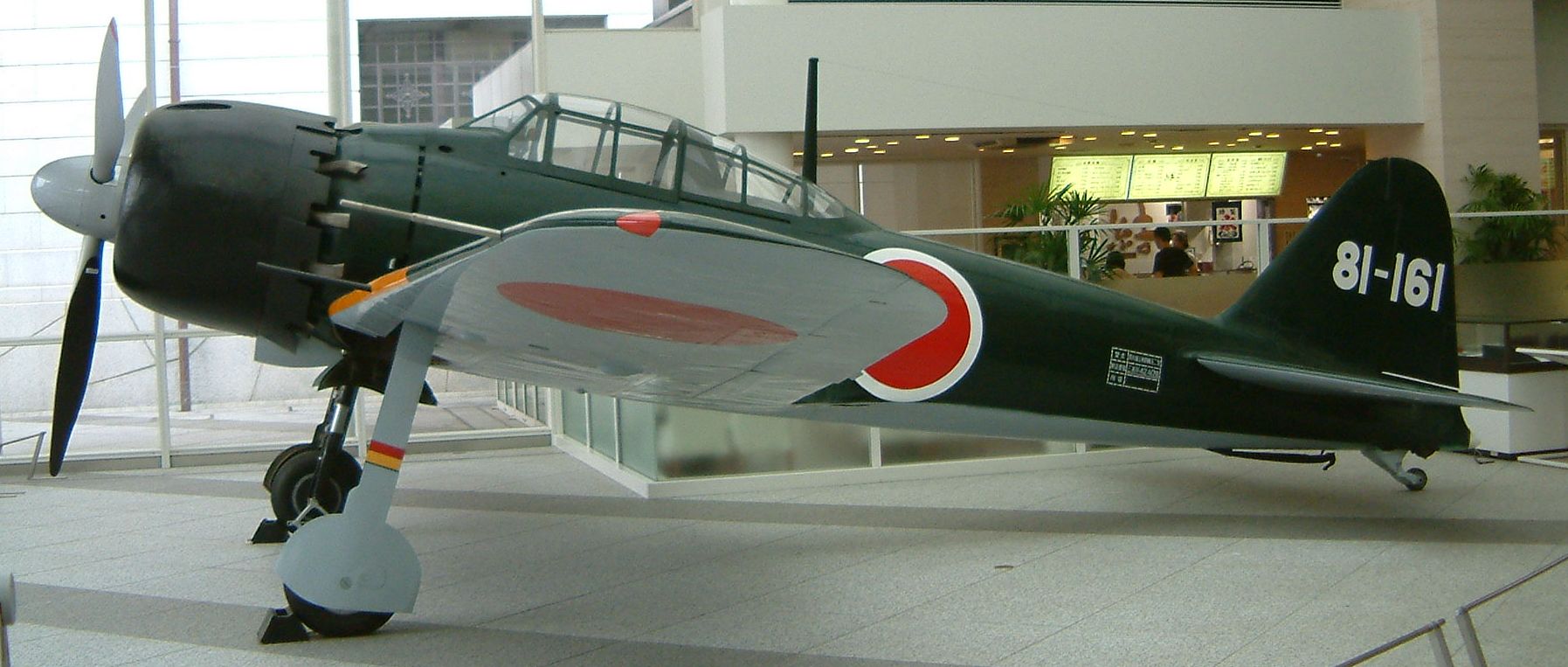
Mitsubishi A6M5 Model 52 Zero-Sen (Navy Type 0 Carrier Fighter), codename “Zeke”, composite of (Serial Nos. 4168/4240/4241), coded 81-161, on display in the Yushukan War Museum within the Yushukan Japanese military and war museum located within Yasukuni Shrine in Chiyoda, Tokyo.
(撮影:たーなー Photo)
(Alan Wilson Photo)
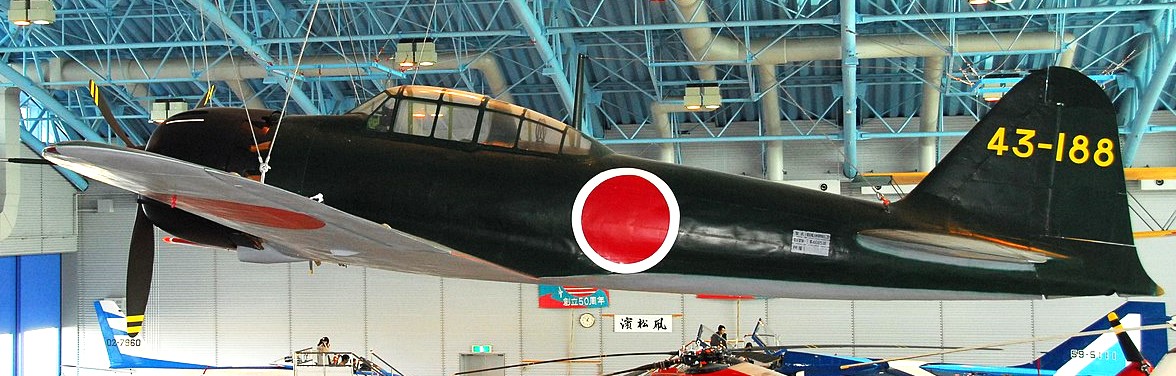
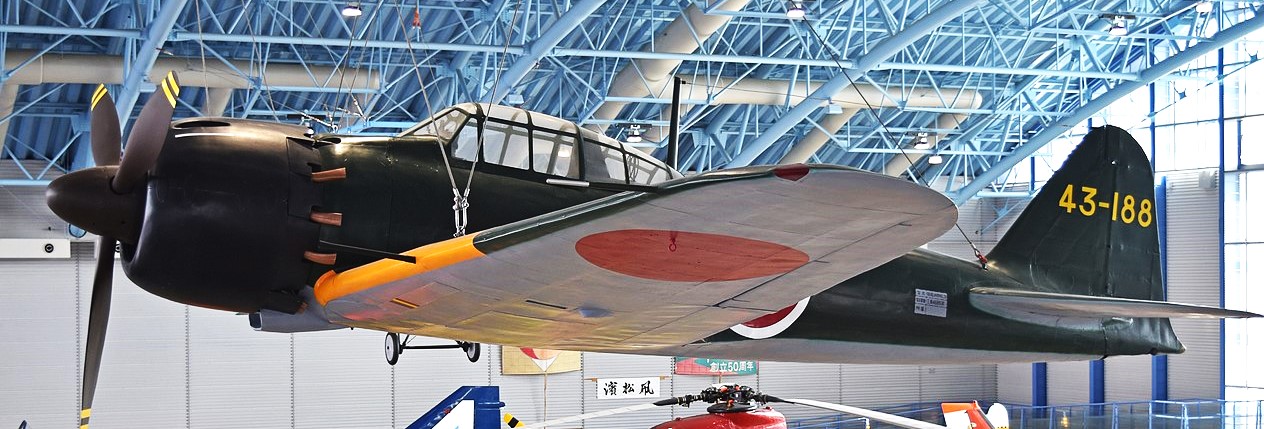
Mitsubishi A6M5 (c/n 4865). This Zero force landed near Guam on 19 June 1944. It was recovered in 1964 and returned to Japan where Mitsubishi restored it for static display. It has been part of the JASDF Museum since 1970 and is now on display in the main building at the JASDF Air Park and Museum, Hamamatsu Air Base. Shizuoka Prefecture, Japan
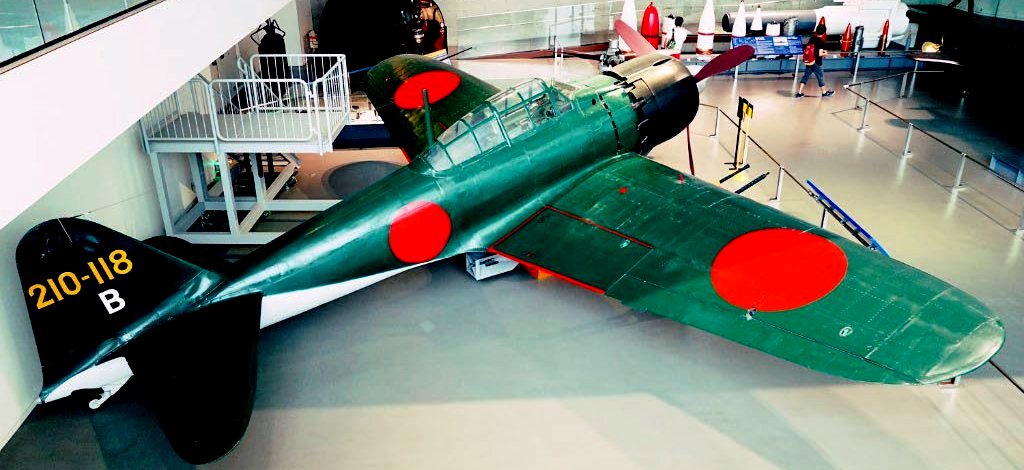
(fareastfling, King Kaptures Photos)
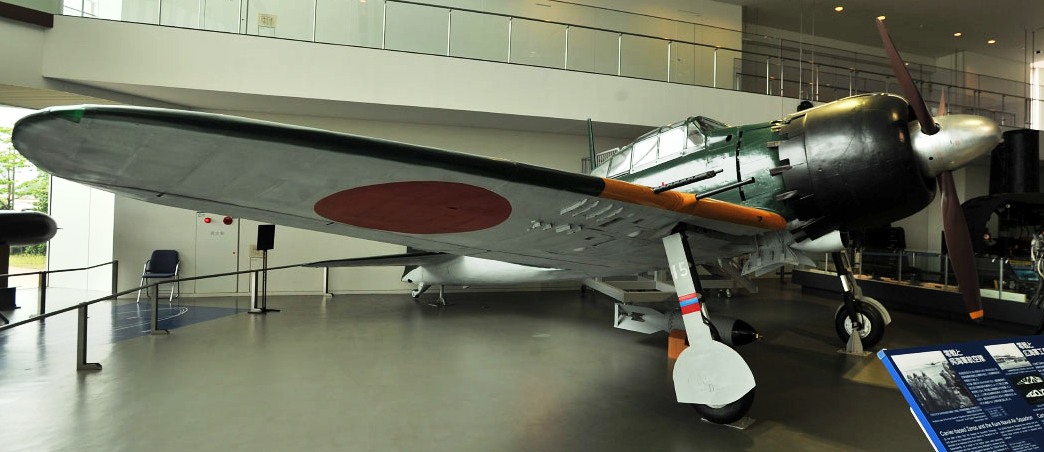
(Tokyobling’sblog Photo)
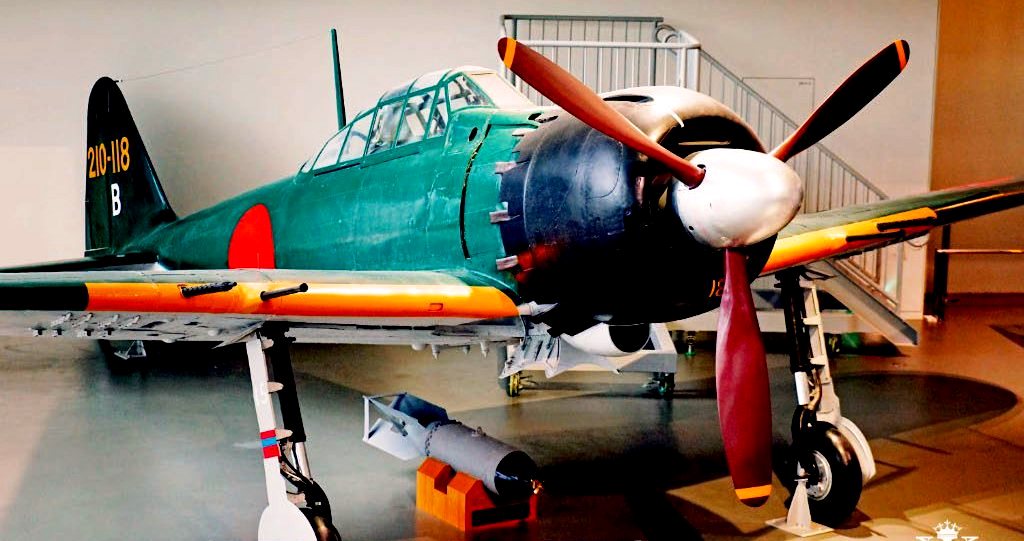
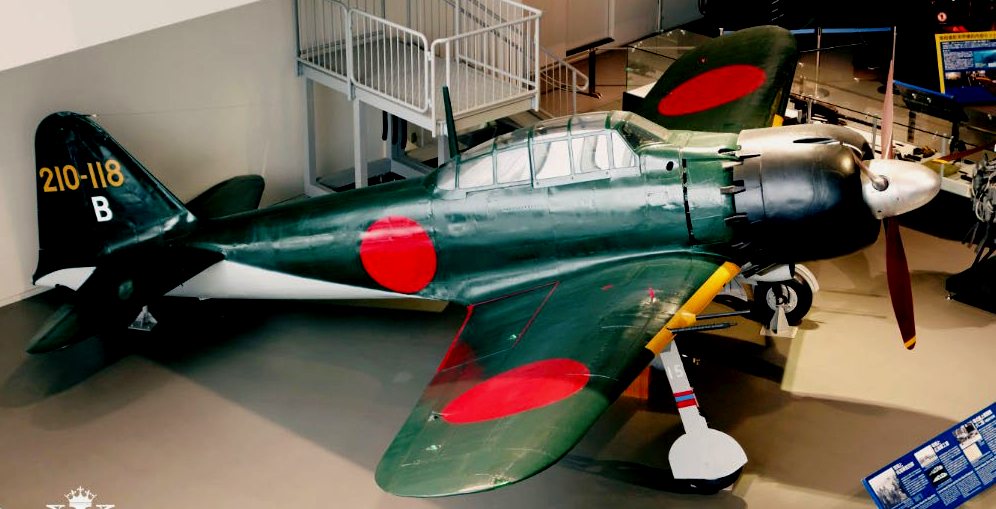
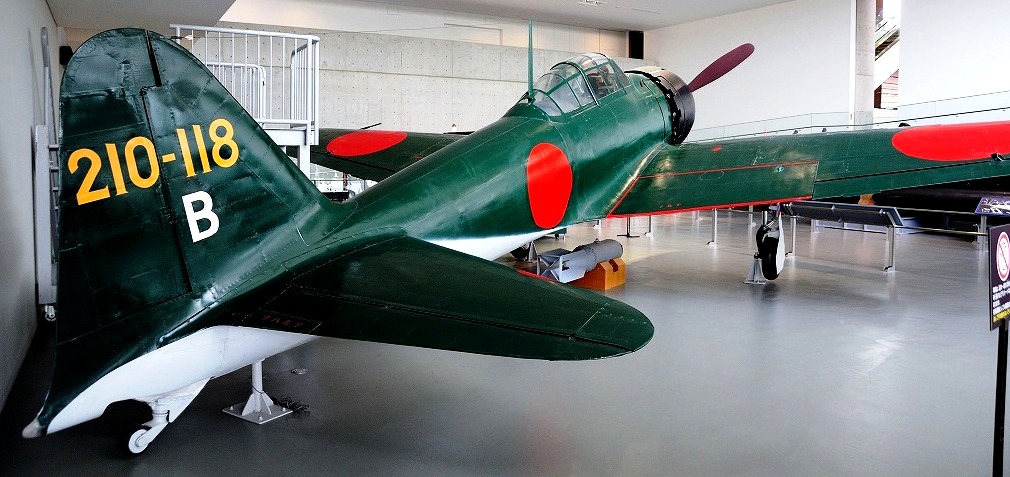
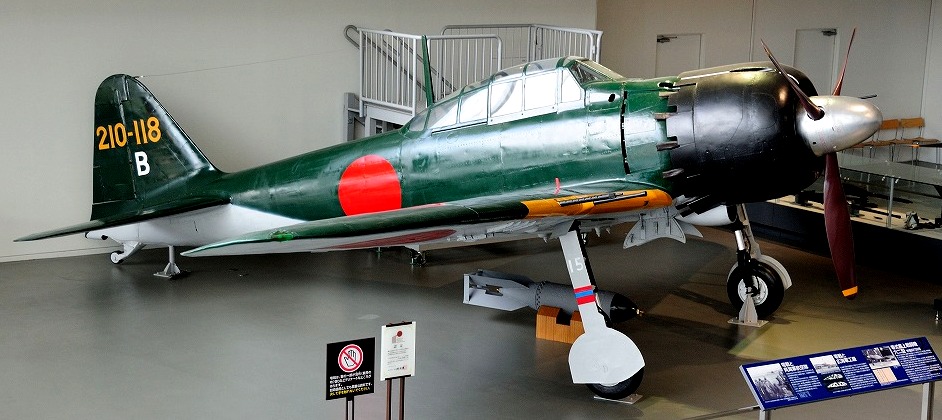
Mitsubishi A6M5a Model 52 Zero-Sen (Navy Type 0 Carrier Fighter), codename “Zeke”, (Serial No. 4685), coded 210-118, B, (also reported as (Serial No. 82729), displayed in the “Yamato Museum”, Kure Maritime Museum, Hiroshima, Japan. This aircraft rested on the bottom of Lake Biwa where it crashed due to engine failure in August 1945. The pilot survived and was on hand to help in restoration when it was recovered from the lake in 1978 almost intact.
Mitsubishi A6M5 Model 52 Zero-Sen (Navy Type 0 Carrier Fighter), codename “Zeke”, (Serial Nos. 4708), is on display at the Mitsubishi Heavy Industries Museum, Minatomiri Odori Boulevard, Nagoya, Japan.
Mitsubishi A6M5 Model 52 Zero-Sen (Navy Type 0 Carrier Fighter), codename “Zeke”, is on display at MCAS Iwakuni, Japan.
Mitsubishi A6M5 Model 52 Zero-Sen (Navy Type 0 Carrier Fighter), codename “Zeke”, is on display at Shizuoka, Japan.
Mitsubishi A6M5 Model 52 Zero-Sen (Navy Type 0 Carrier Fighter), codename “Zeke”, is on display in Beijing, China.
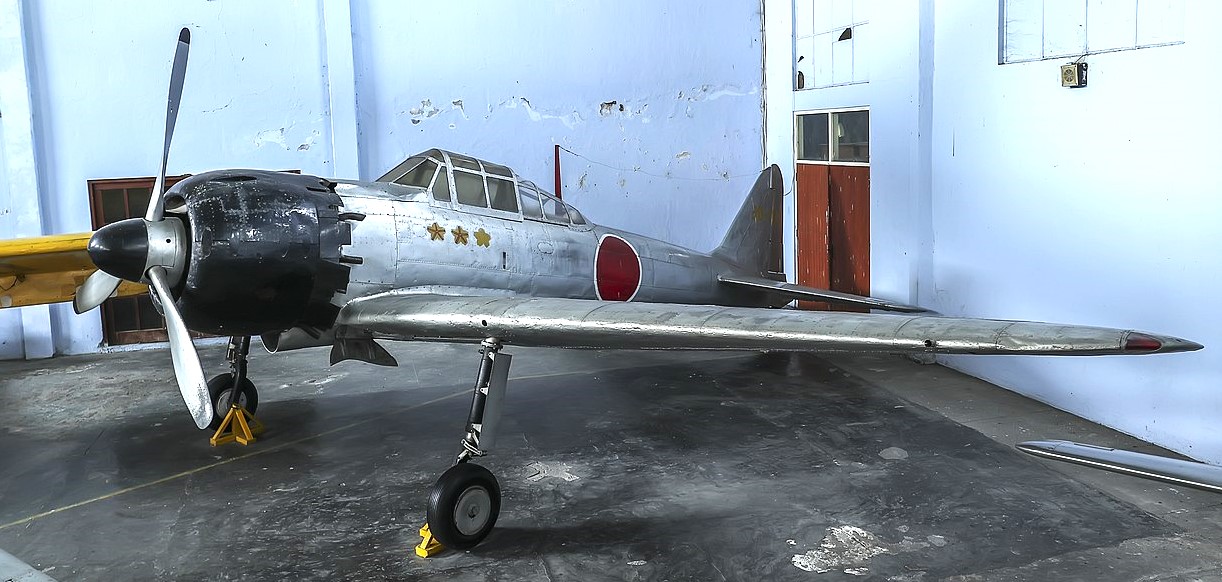
(Museum Pusat TNI AU Dirgantara Mandala Yogyakarta Photo)
Mitsubishi A6M5 Model 52 Zero-Sen (Navy Type 0 Carrier Fighter), codename “Zeke” (model TBC) is on display in the Museum Dirgantara Mandala in Yogyakarta, Indonesia.
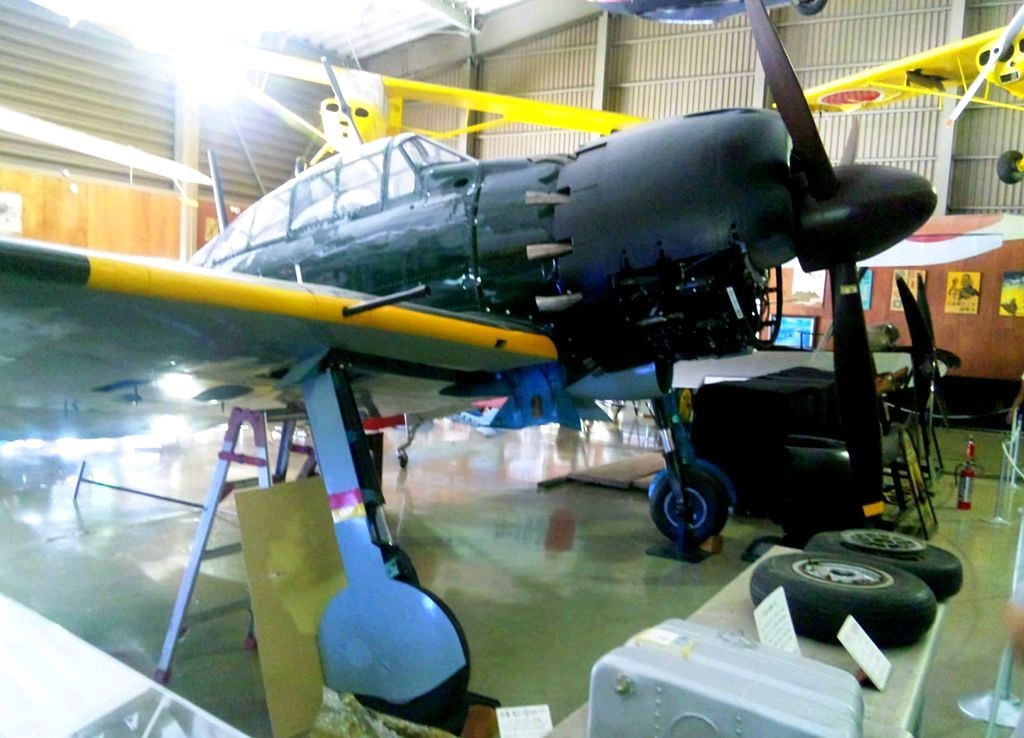
(Josephus37 Photo)
Mitsubishi A6M5 Model 52 Zero-Sen (Navy Type 0 Carrier Fighter), codename “Zeke”, (Serial No. 1493), (also reported as Serial No. 92717), on display inside the Kawaguchiko Motor Museum, Fujikawaguchiko, Yamanashi prefecture, Japan.
(State Library of Queensland, Australia Photo)
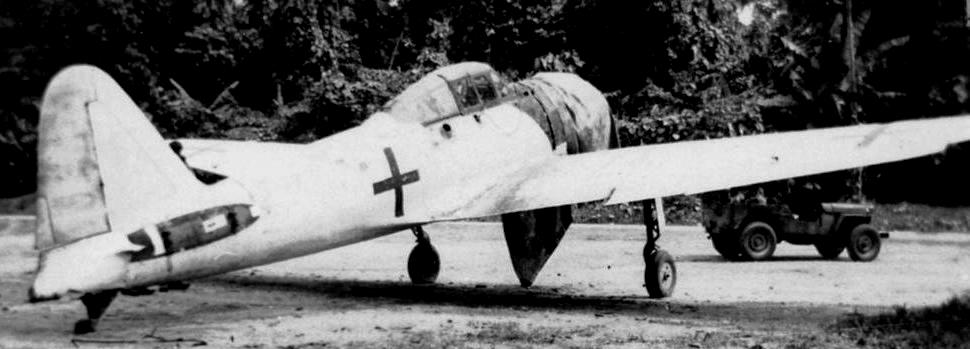
Mitsubishi A6M5 Model 52 Zero-Sen (Navy Type 0 Carrier Fighter), codename “Zeke”, (Serial No. 3844), wearing green surrender crosses at Bougainville, Solomon Islands, Sep 1945; note missing stabilizer on aircraft and jeep in background. This aircraft was restored by the Auckland Air Museum, New Zealand, where it is currently on display.
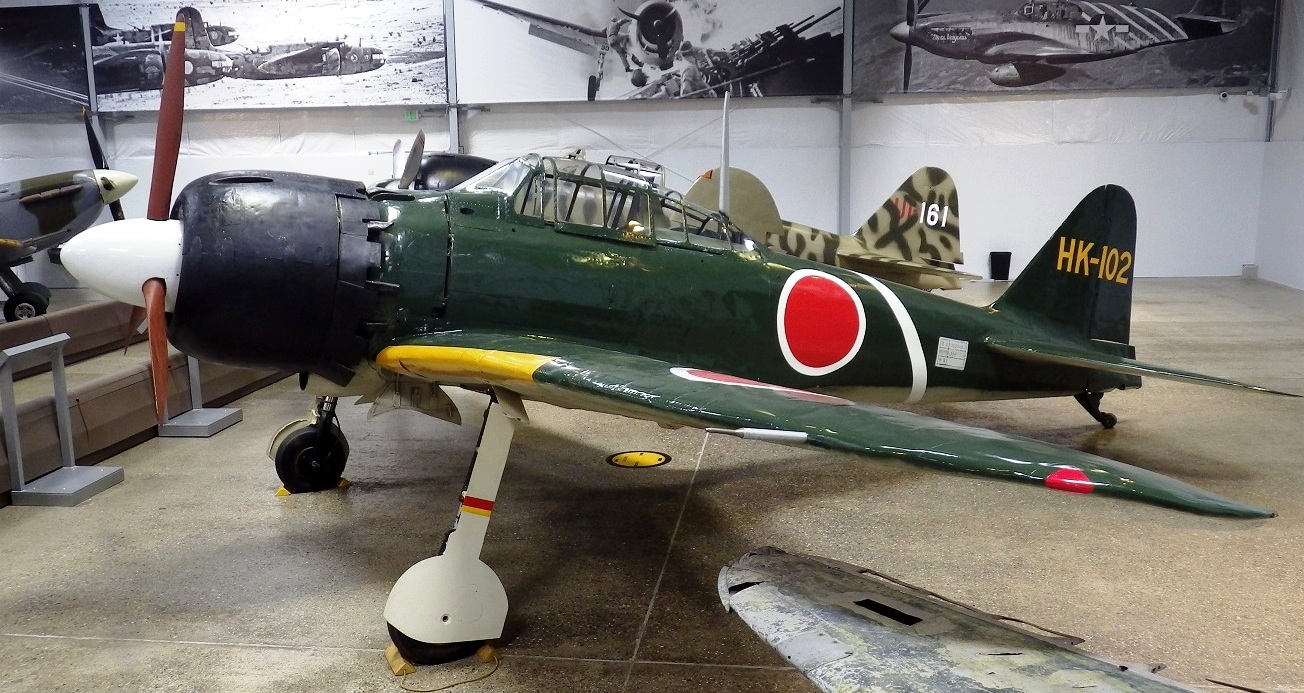
Zero fighters preserved in the United States include one in the National Air and Space Museum in Washington, D.C, one in the National Museum of the United States Air Force at Dayton, Ohio, one in the National Museum of Naval Aviation at Pensacola, Florida, one in the Pacific Aviation Museum in Honolulu, Hawaii, one in the San Diego Air and Space Museum, San Diego, California and one in the Flying Heritage Collection, Evrett, Washington.
(Goshimini Photo)
(Hakaisinn6105 Photo)
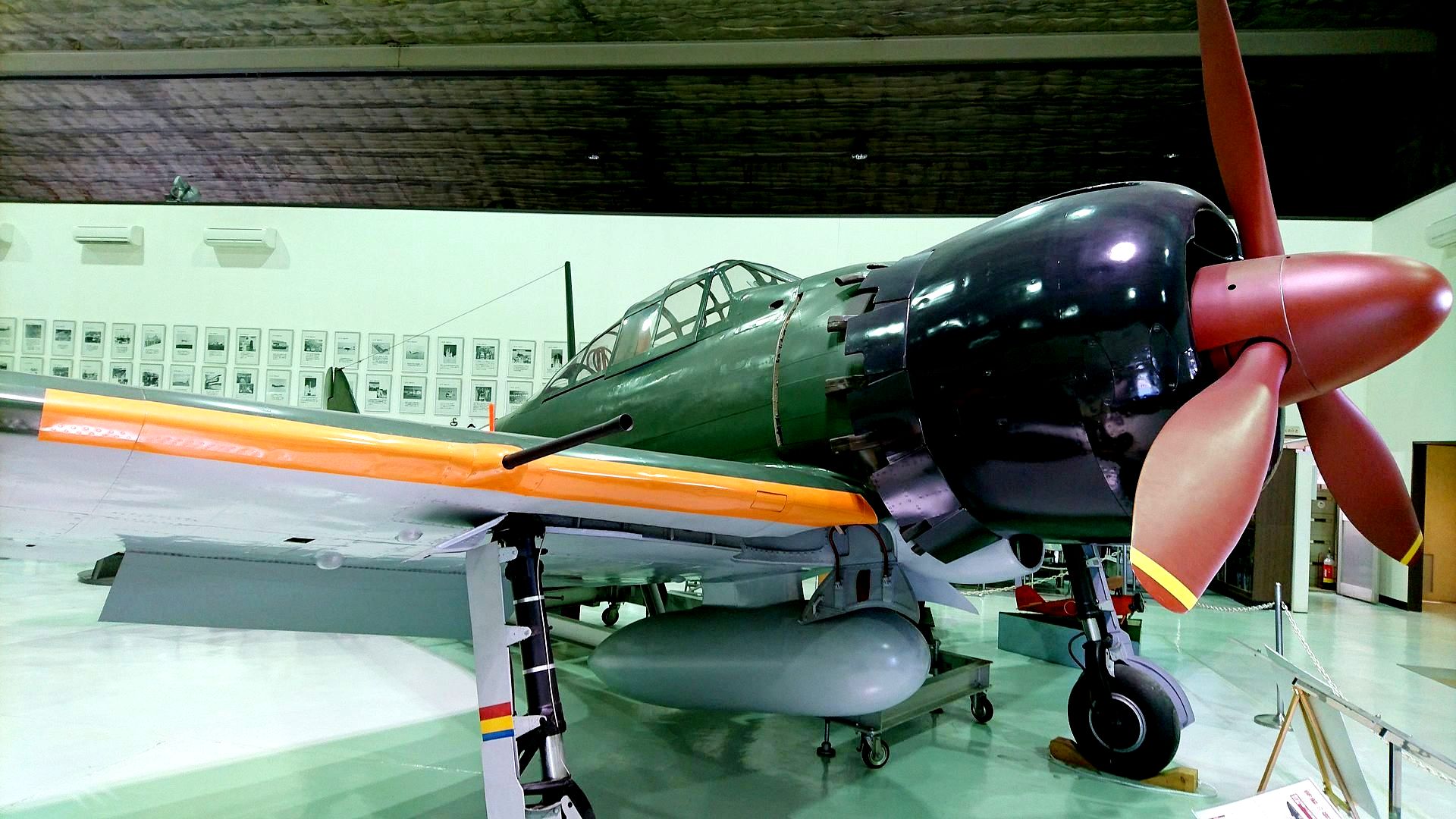
Mitsubishi A6M5 Model 52 Zero-Sen (Navy Type 0 Carrier Fighter), codename “Zeke”, Flying Heritage Collection, Evrett, Washington.
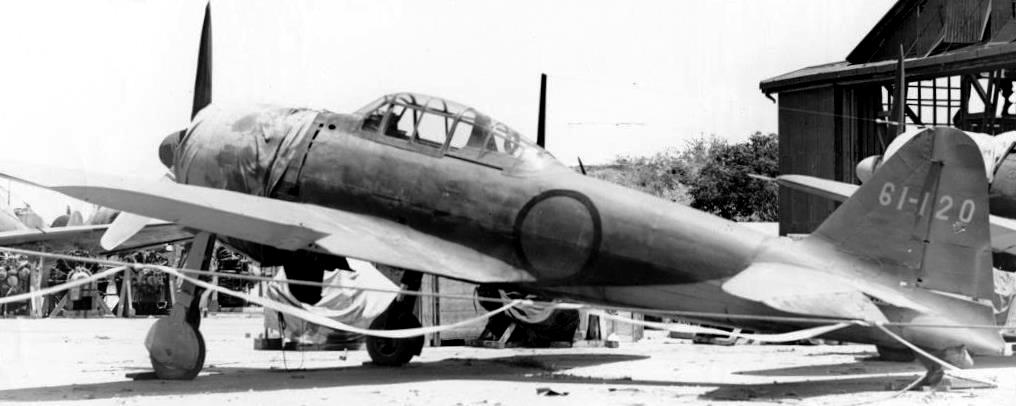
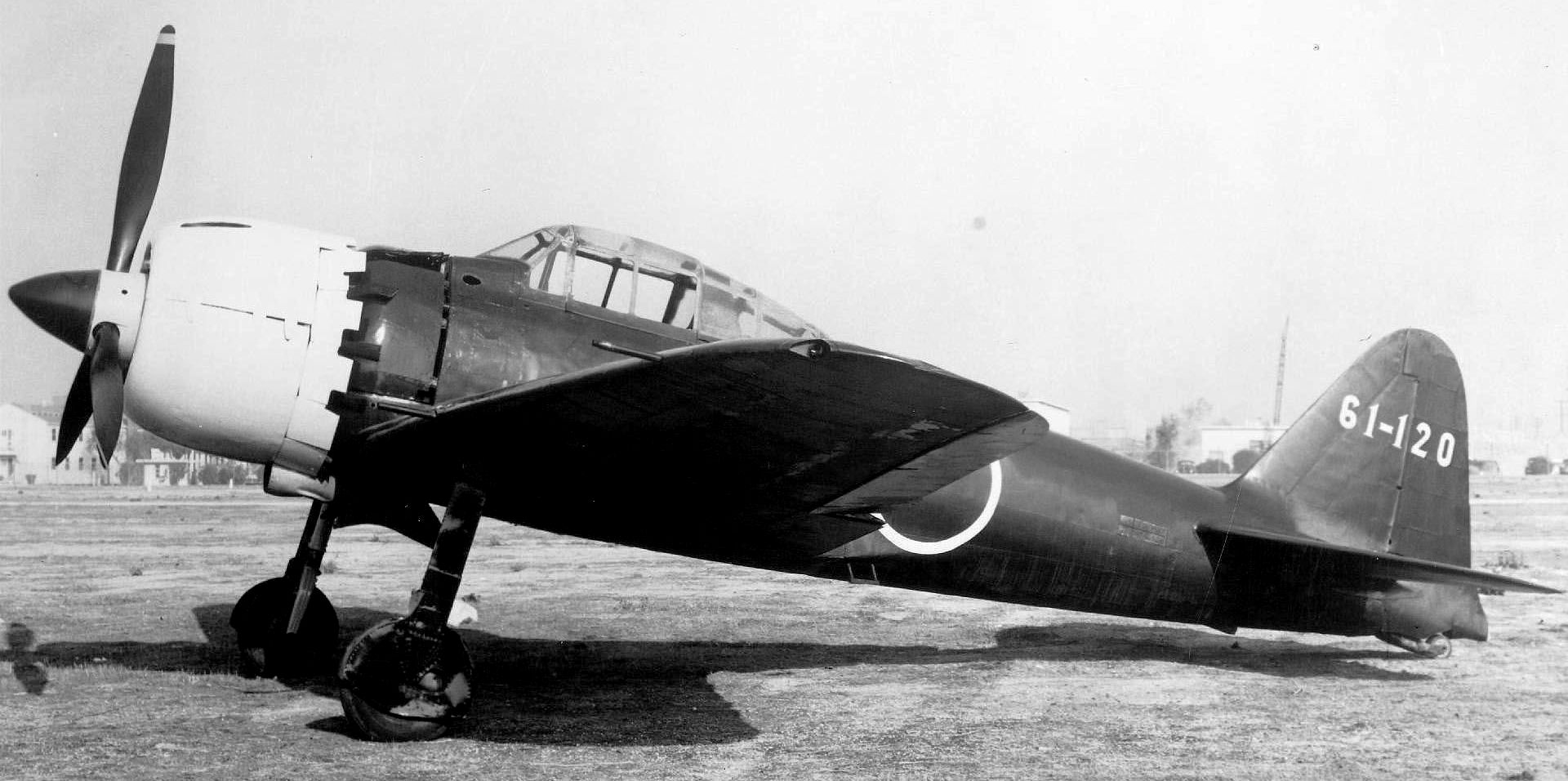
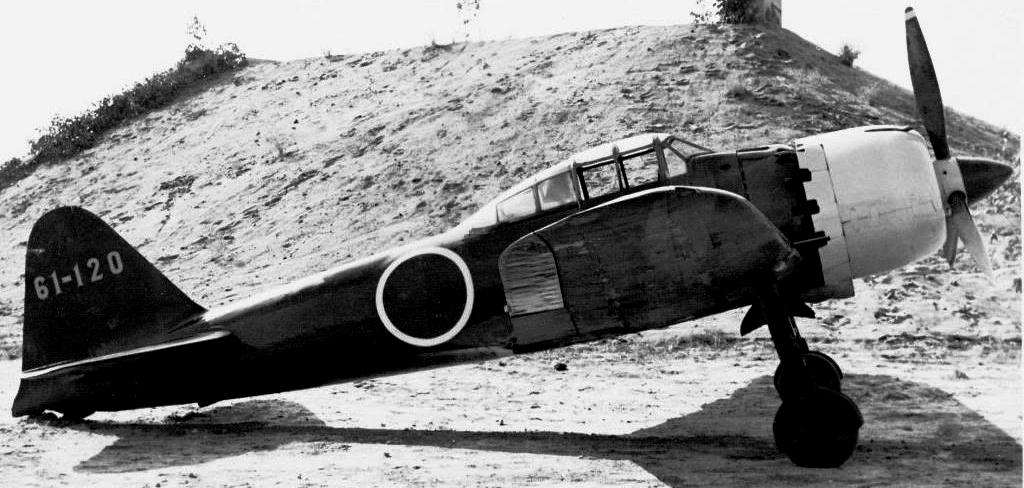
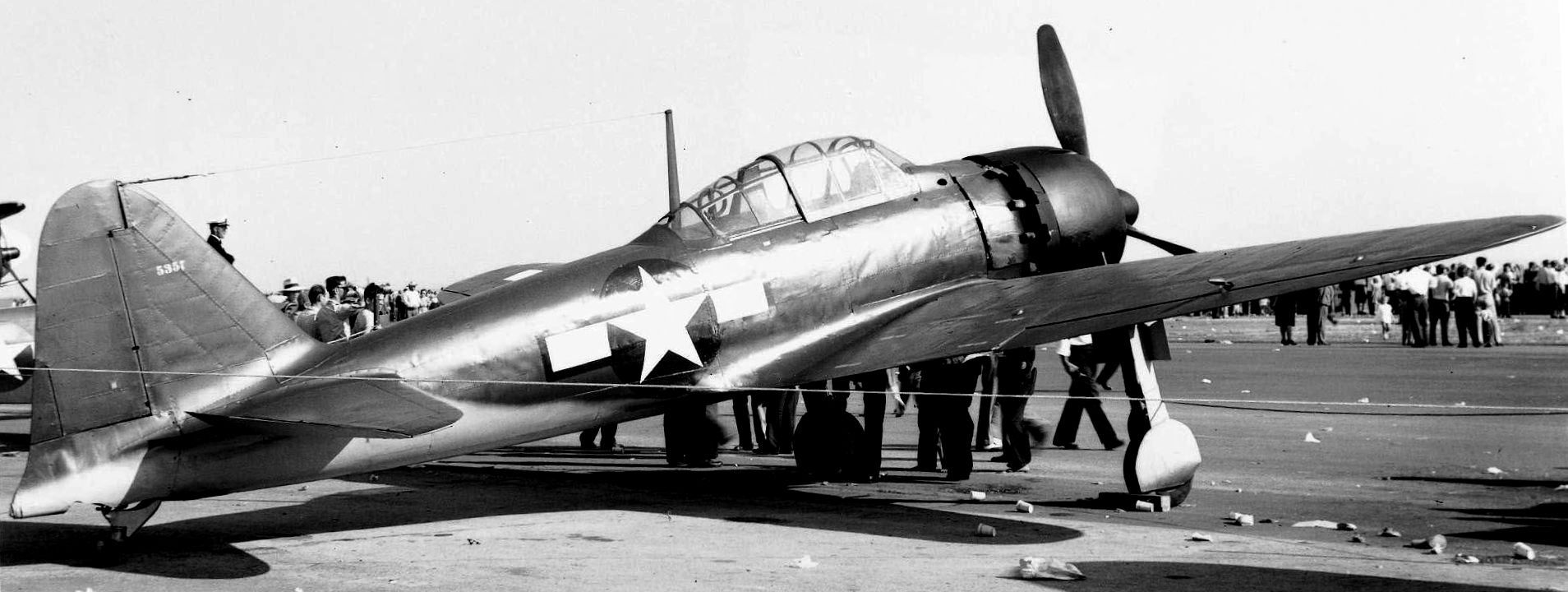
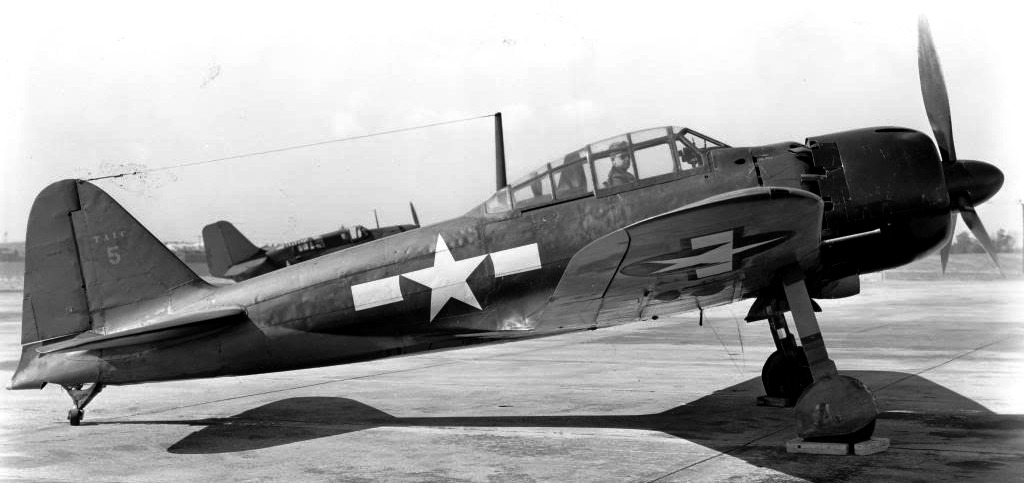
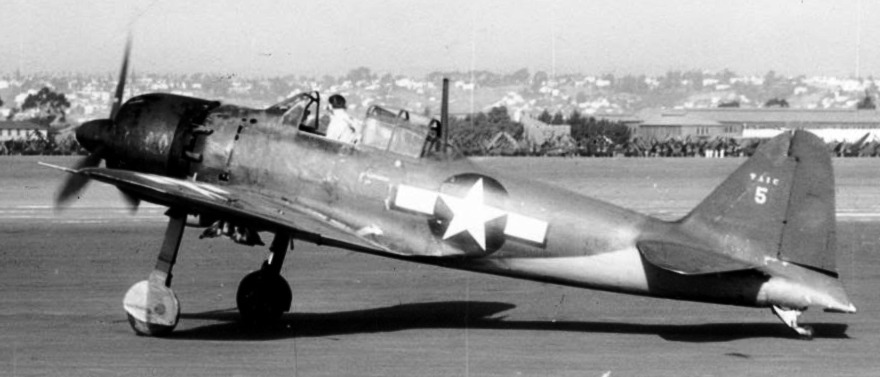
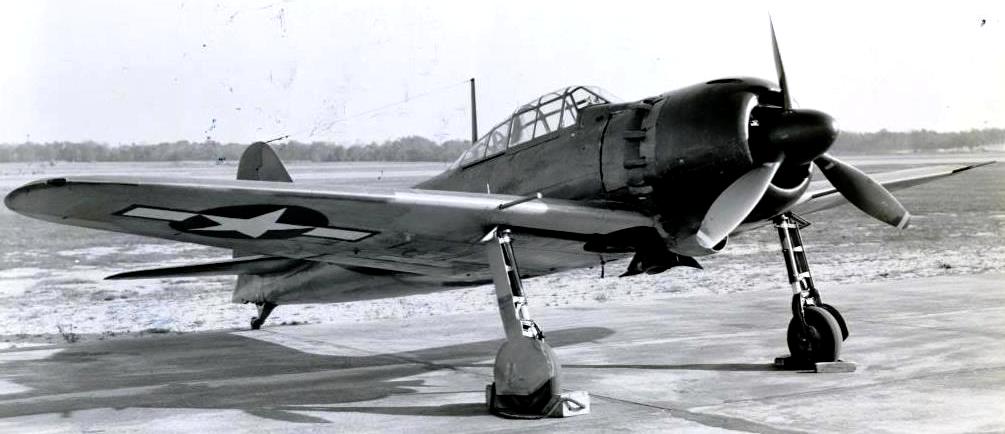
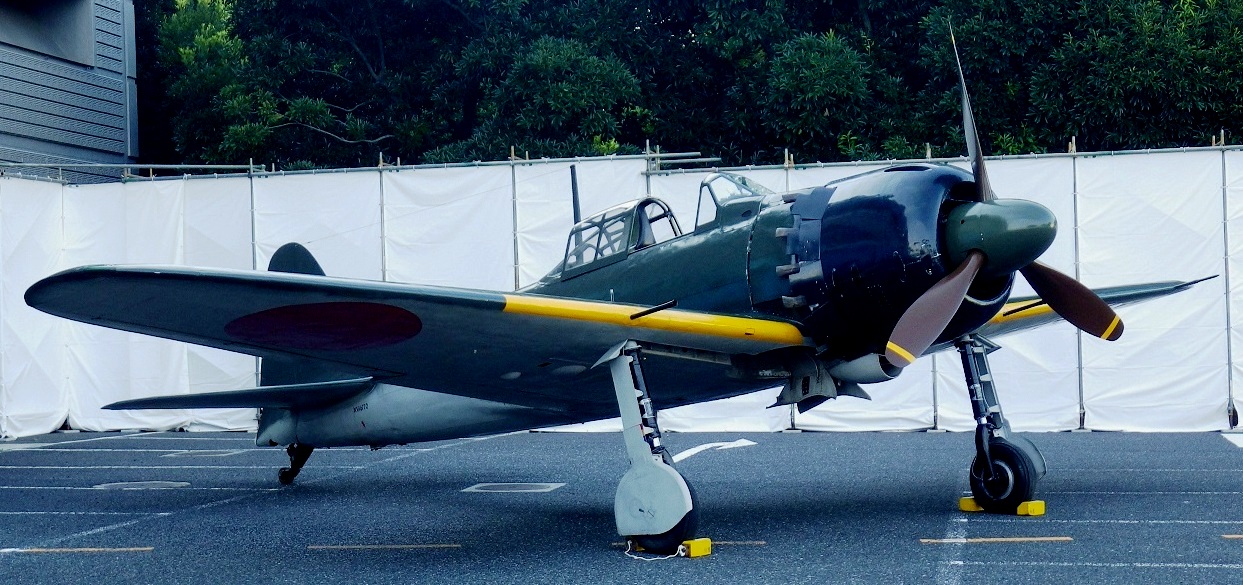
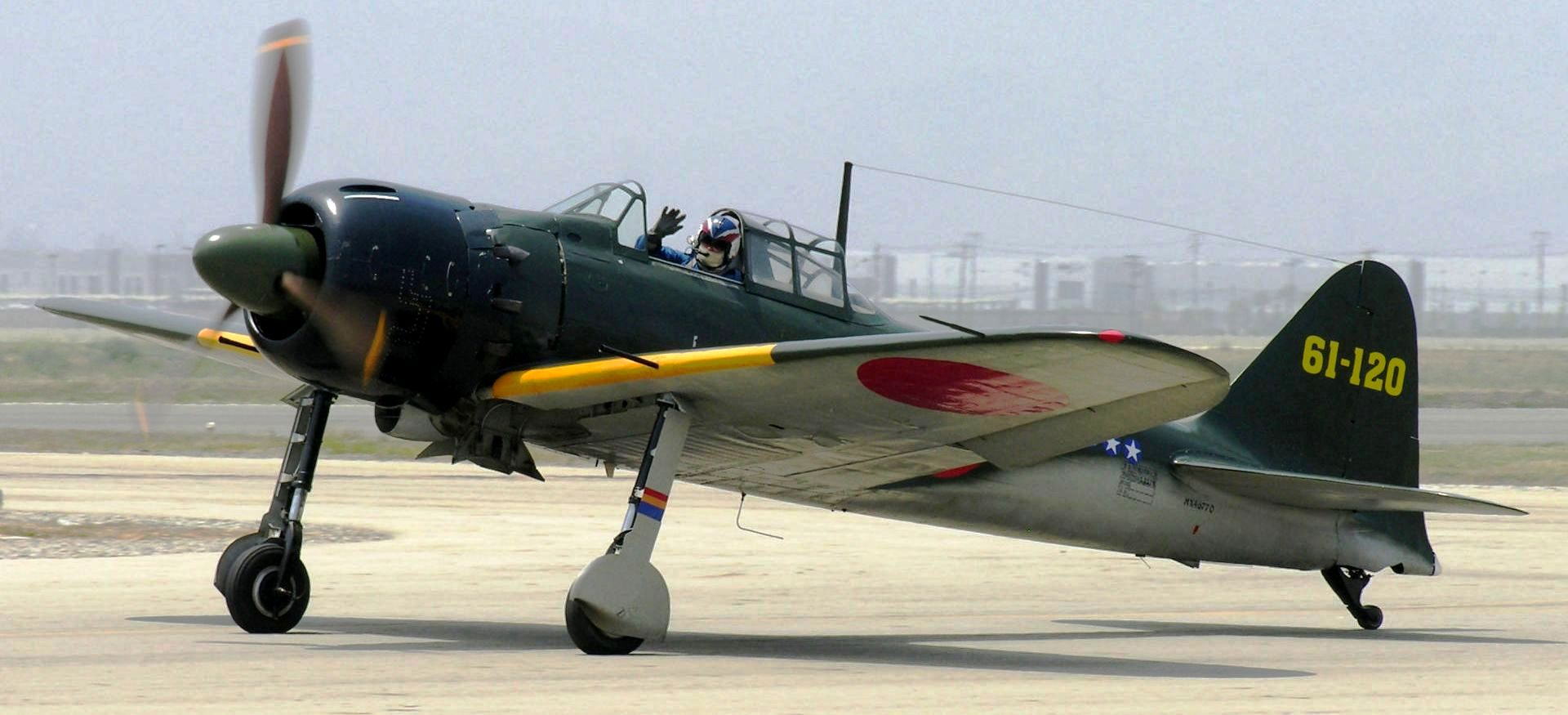
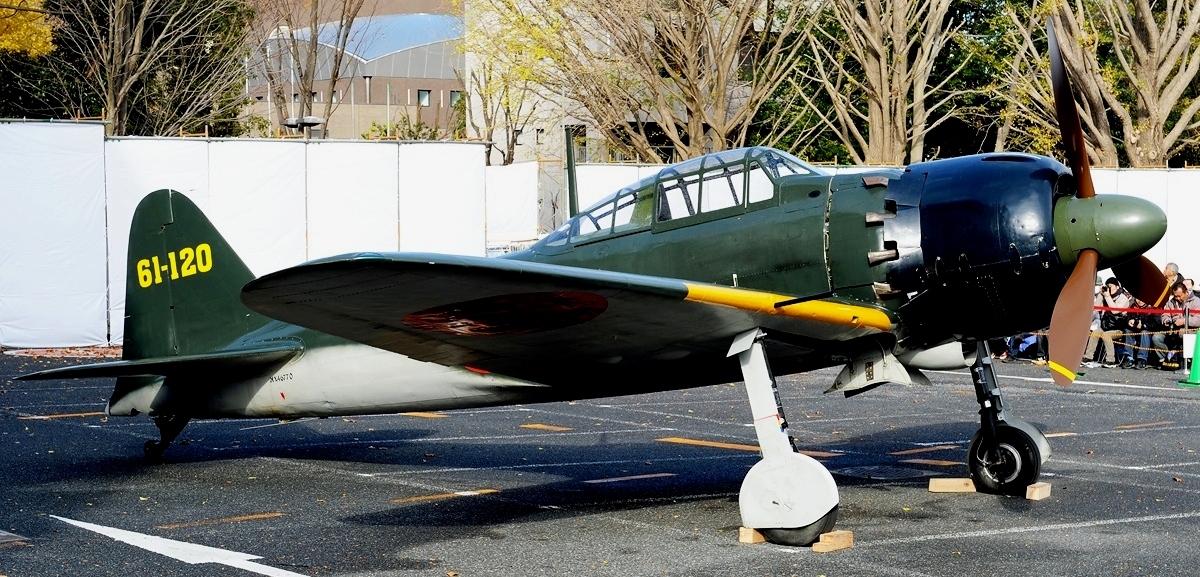
Mitsubishi A6M5 Model 52 Zero-Sen (Navy Type 0 Carrier Fighter), codename “Zeke”, (Serial No. 5357), coded 61-120, was recovered from Saipan in 1945. This aircraft still has its original Sakae engine. This aircraft was coded TAIC 5 and test flown at NAS Anacostia. It is currently flying as Reg No. NX46770, with the Planes of Fame Museum, Chino, California. (USN Photos)

(Armchair Aviator’s Photo)
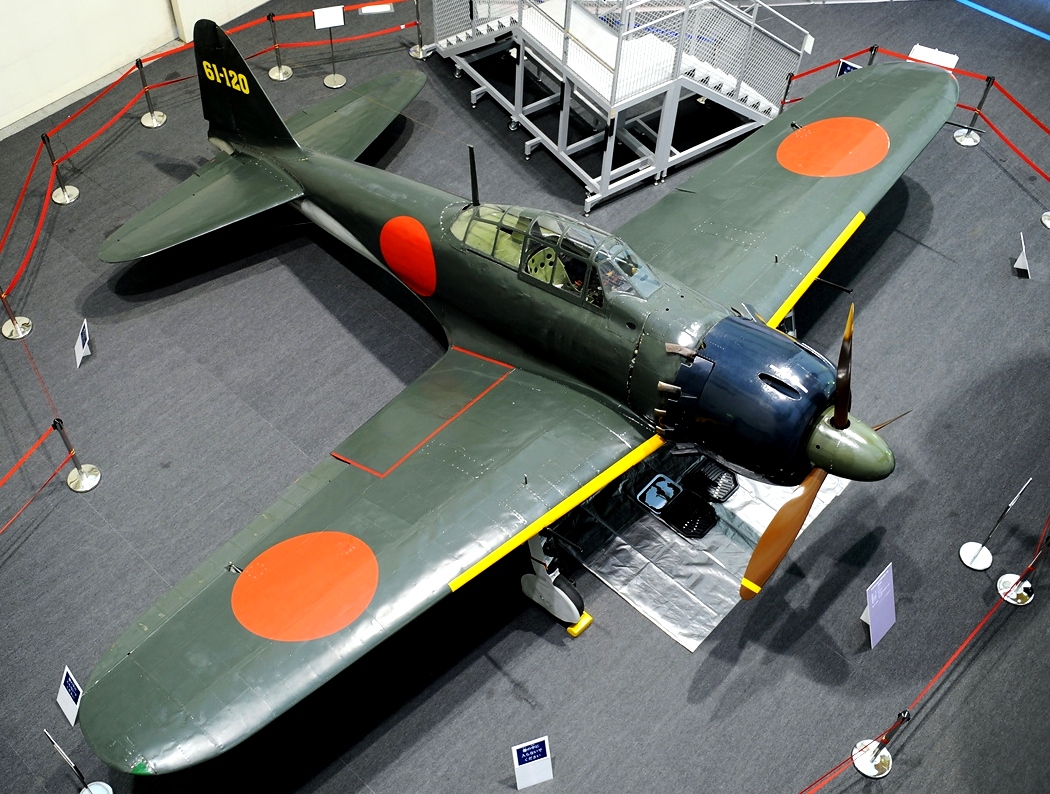
(Toshi Aoki Photo)
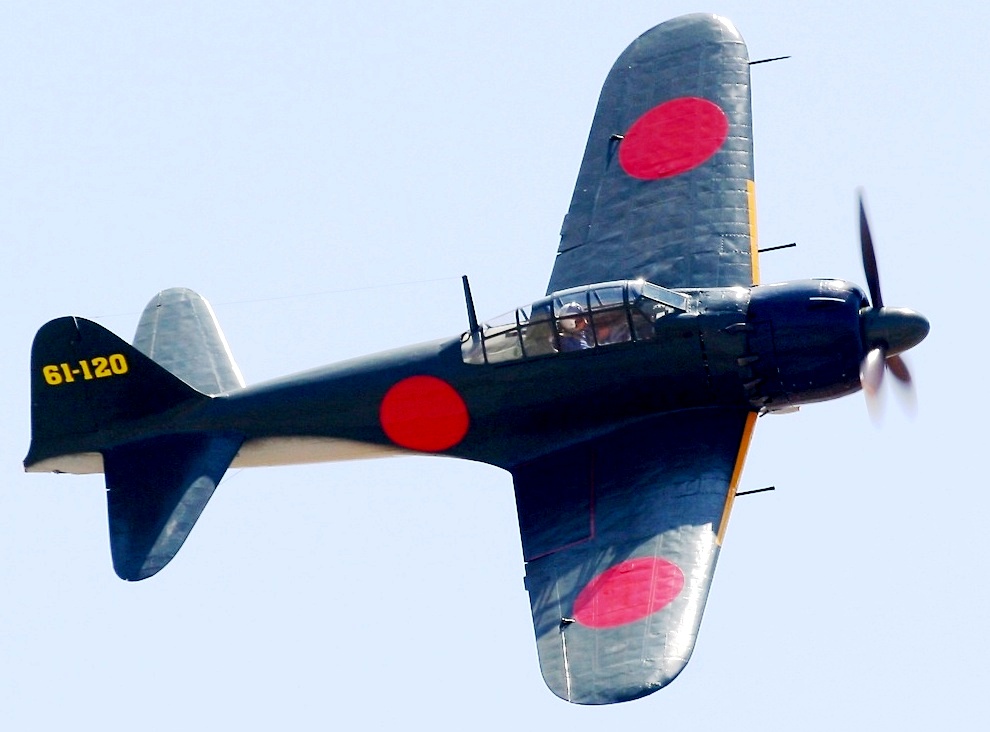
(Kogo Photo)
(Goshimini Photo)
(Greg Goebel Photo)
(Toshi Aoki Photo)
Mitsubishi A6M5 Model 52 Zero-Sen (Navy Type 0 Carrier Fighter), codename “Zeke”, (Serial No. 5357), coded 61-120, was recovered from Saipan in 1945. It was test flown as TAIC 5, Reg No. NX46770, painted as 61-120, on display at the Planes of Fame Museum, Chino, California.
A6M6 Type 0 Model 53
(Kevin Collins Photos)
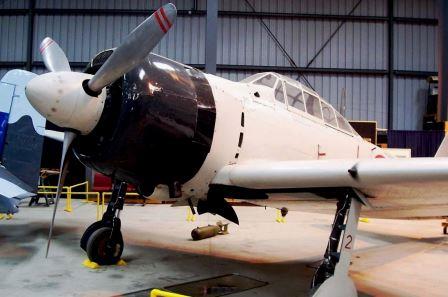
Mitsubishi A6M6c Model 53c Zero-Sen (Navy Type 0 Carrier Fighter), codename “Zeke”, coded EII, California
Only four flyable Zero airframes exist; three have had their engines replaced with similar American units; only one, the Planes of Fame Museum’s A6M5 bearing tail number 61-120 (recovered from Saipan) has the original Sakae engine.
A6M7 Type 0 Model 62/63
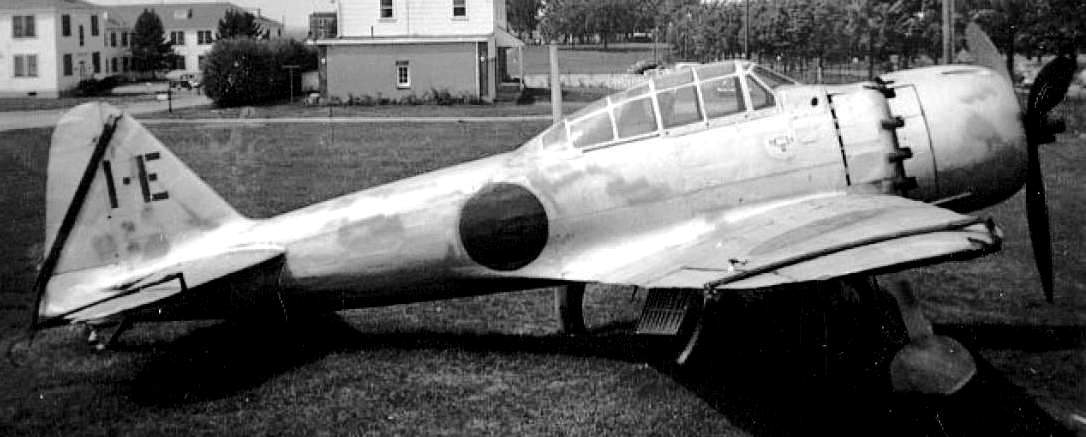
Mitsubishi A6M7 Model 62 Zero-Sen (Navy Type 0 Carrier Fighter), codename “Zeke”, (Serial No. 23186), I-E, NASM in storage. This aircraft was among about 145 captured Japanese aircraft shipped to the U. S. from the Yokosuka, Japan, area in October-November 1945. The fighter bomber was probably based at Misawa, a testing facility operated by the First Naval Air Technical Bureau (abbreviated Kugisho in Japanese, equivalent to the U. S. Navy Bureau of Aeronautics). After tests were carried out in the United States, the Navy exhibited the airplane outdoors at Naval Air Station Willow Grove, Pennsylvania, for many years. The NASM acquired the aircraft from Willow Grove on 3 Mar 1962, then lent it to the Bradley Air Museum in Windsor Locks, Connecticut, for restoration. Bradley technicians did not complete the project before the aircraft was transferred to the San Diego Aero-Space Museum where a volunteer crew spent more than 8,500 man-hours restoring the airplane. It remains on exhibit in San Diego. (USAAF Photo)
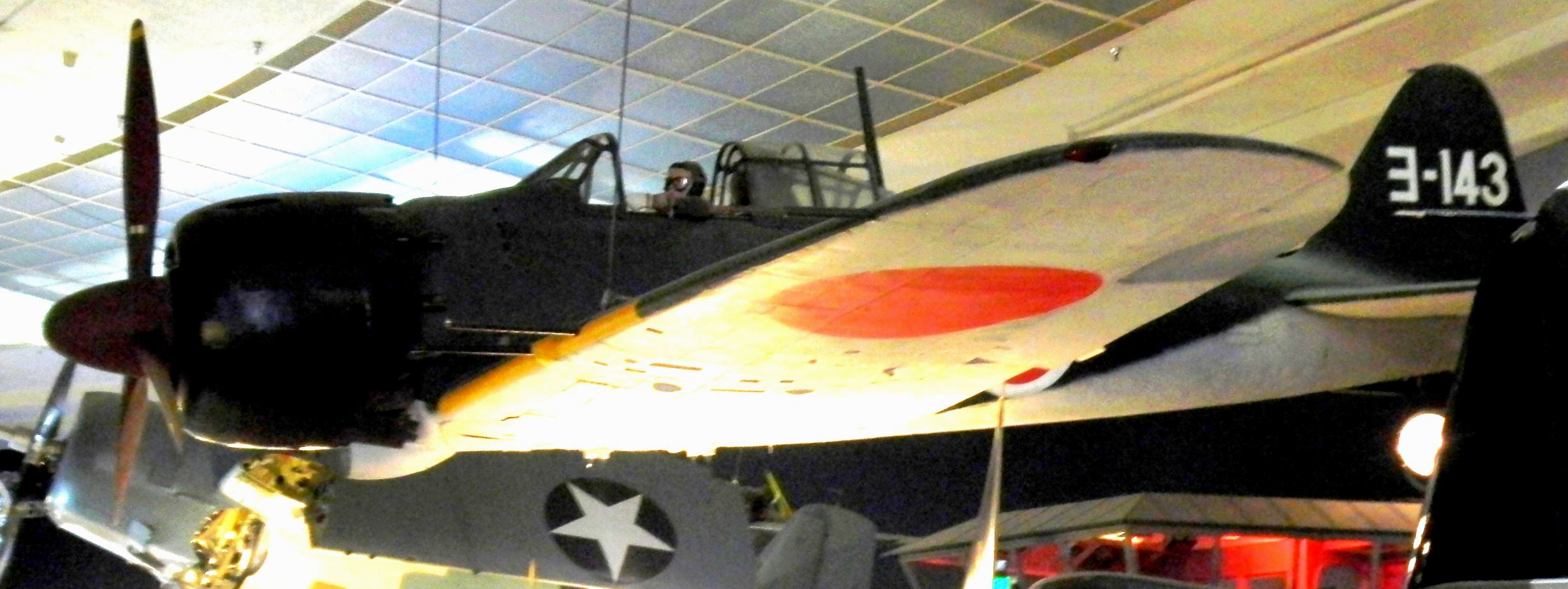
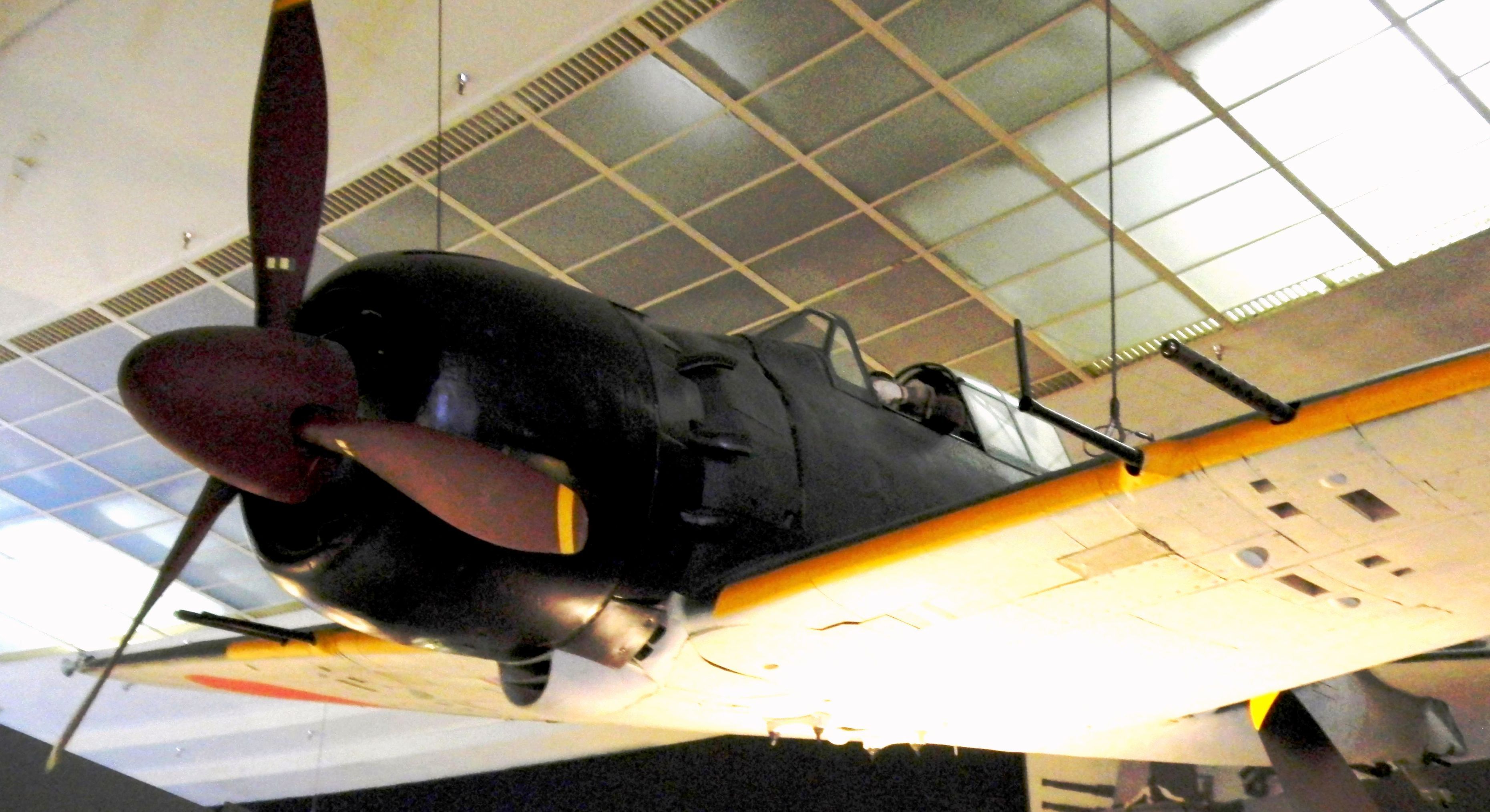
(Author Photos)
Mitsubishi A6M7 Model 62 Zero-Sen (Navy Type 0 Carrier Fighter), codename “Zeke”, (Serial No. 23186), I-E, San Diego Aero-Space Museum, California.
(USAAF Photo)
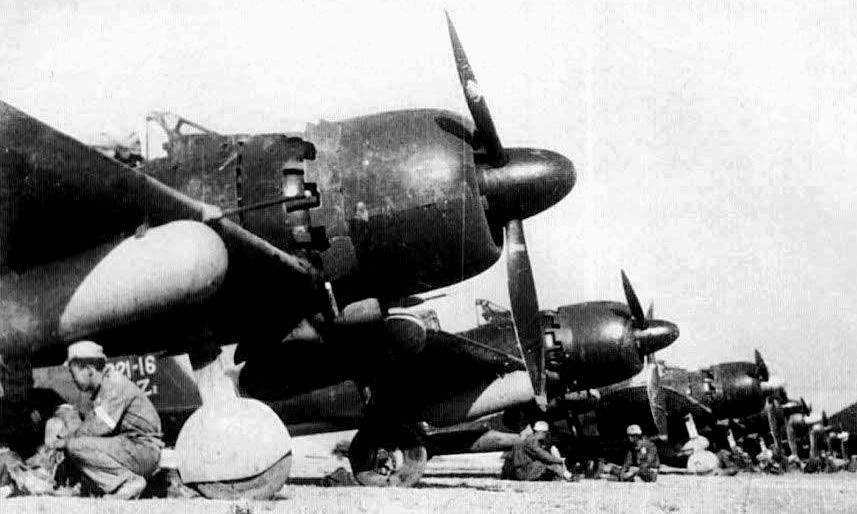
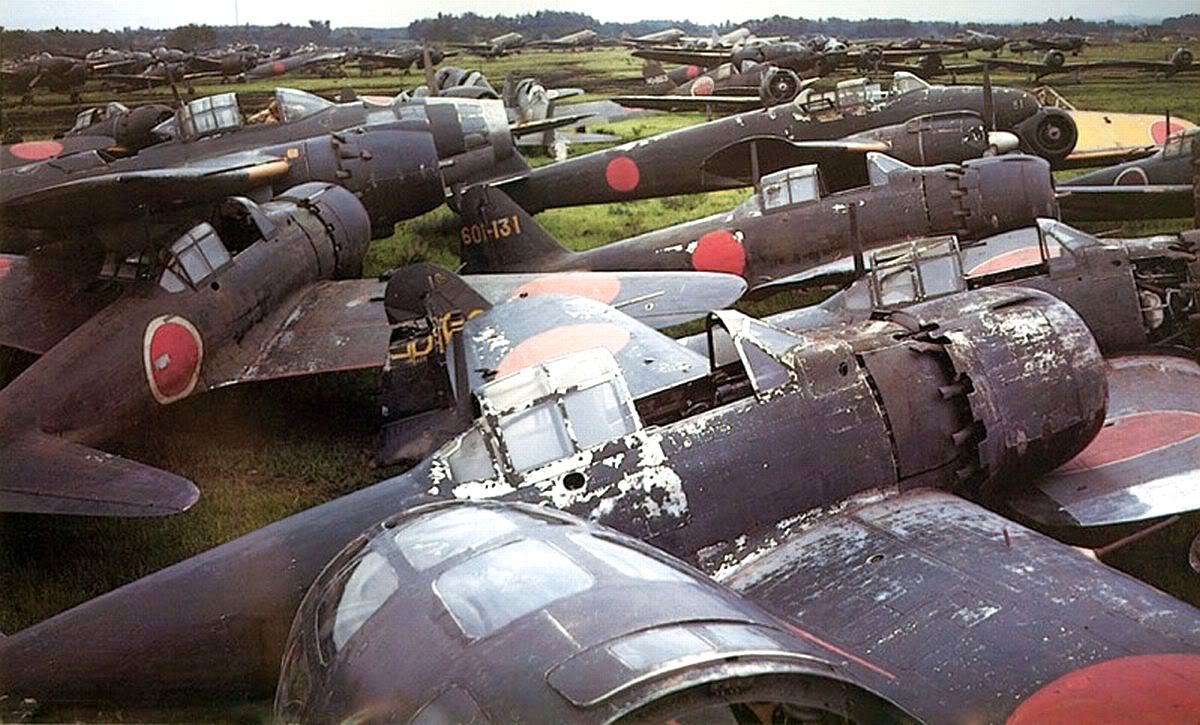
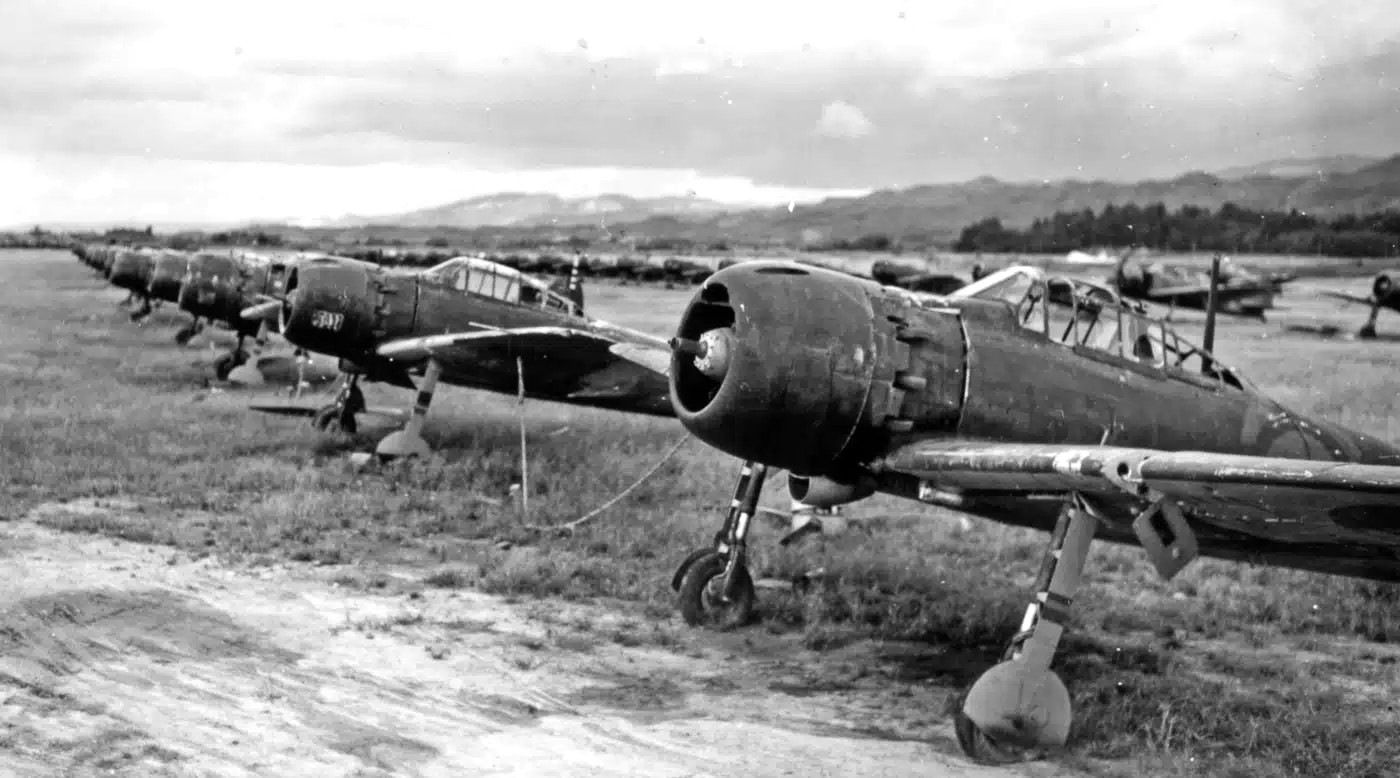
Rows of grounded Japanese Mitsubishi A6M Zeke fighters sit idle on an airfield after Japan’s surrender, their propellers removed to prevent further combat use. Following the surrender in August 1945, thousands of aircraft were deliberately disabled or destroyed under Allied supervision to ensure compliance with disarmament orders.
Mitsubishi A6M7 Model 62 Zero-Sen (Navy Type 0 Carrier Fighter), codename “Zeke”, (Serial No. 62343), on display in the Chiran Peace Museum for Kamikaze Pilots, Minamikyushu, Kagoshima, Japan.
Mitsubishi A6M7 Model 52 Zero-Sen (Navy Type 0 Carrier Fighter), codename “Zeke”, restored from two salvaged wrecks, on display in the Historical Museum of Kanoya Air Base, on the other side of Kagoshima Bay.
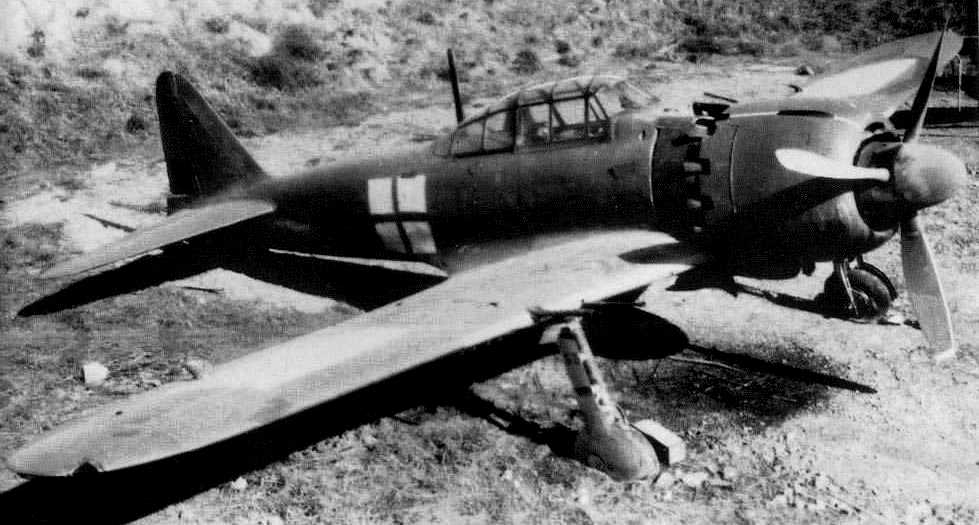
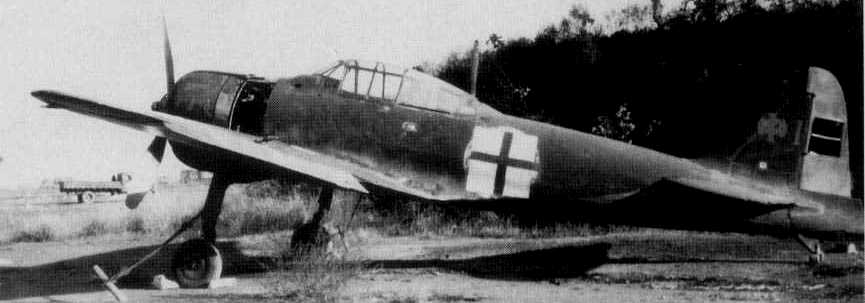
Mitsubishi A6M7 Model 62 Zero-Sen (Navy Type 0 Carrier Fighter), codename “Zeke”, with green cross surrender markings, 1945. (USAAF Photos)
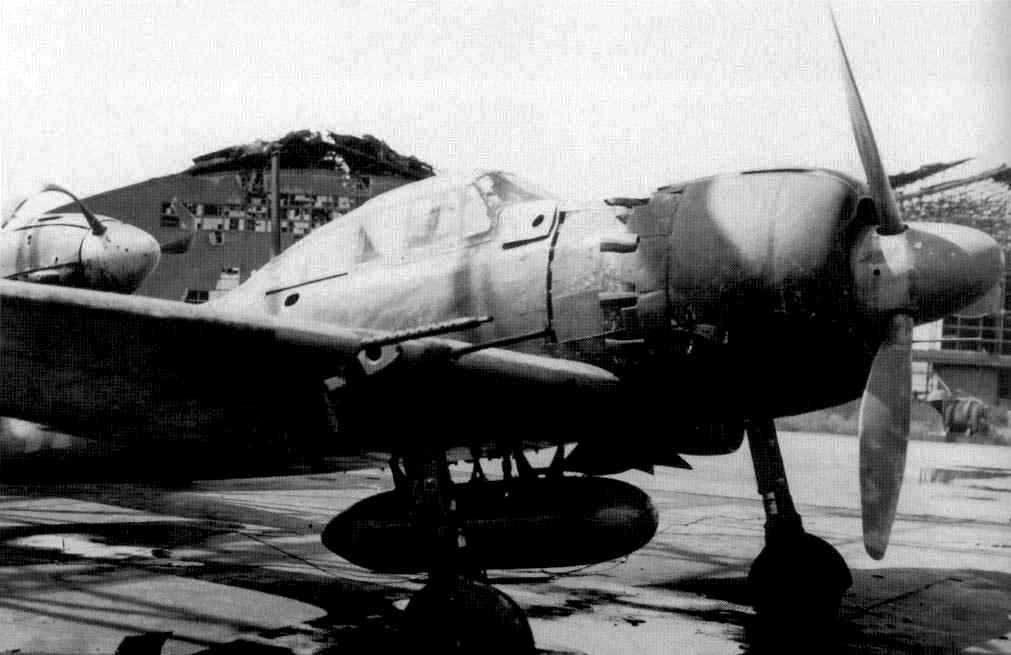
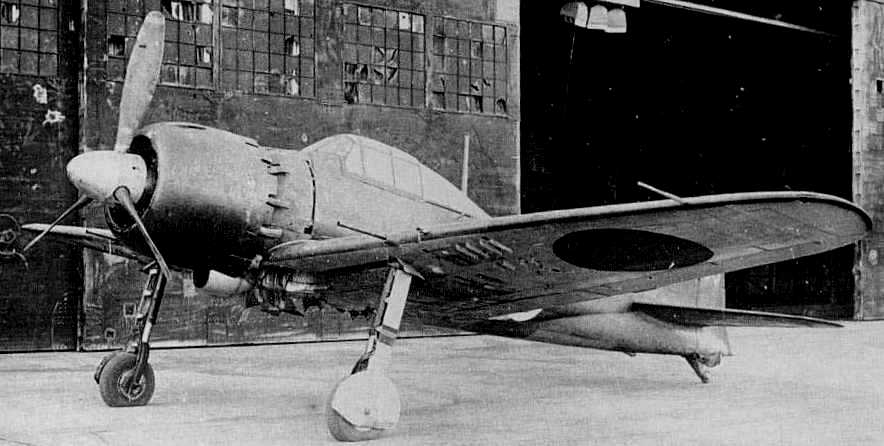
Mitsubishi A6M7 Model 52 Zero-Sen (Navy Type 0 Carrier Fighter), codename “Zeke”. One was shipped to the USA, in 1945, where it was designated USAAF FE-322, but scrapped at Park Ridge ca. 1950. (USAAF Photos)
(nattou Photos)
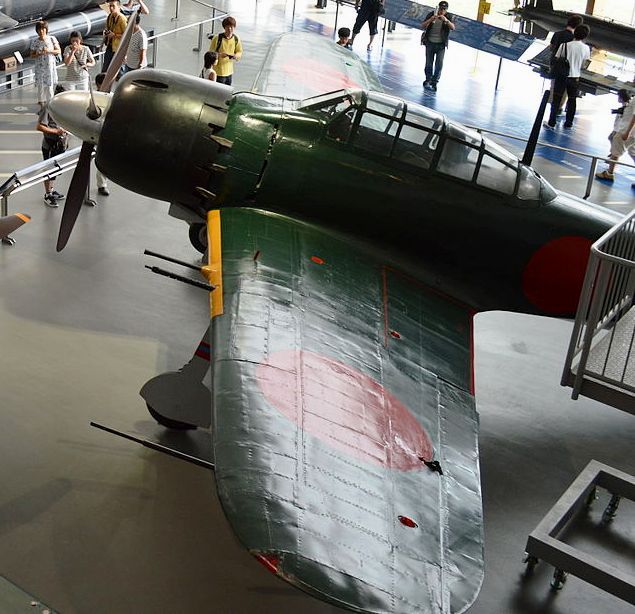
(Yamato Museum Photo)
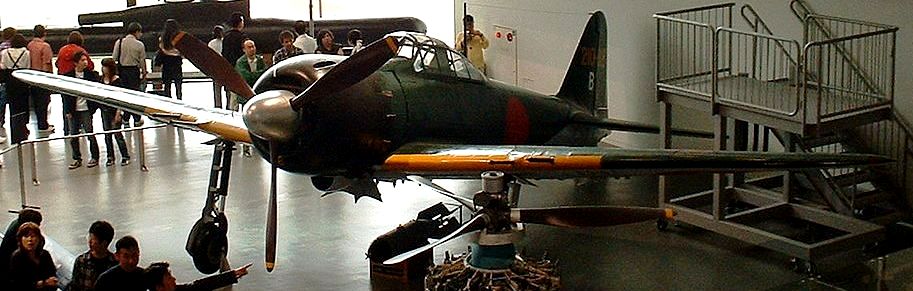
(At by At Photo)
Mitsubishi A6M7 Model 62 Zero-Sen (Navy Type 0 Carrier Fighter), codename “Zeke”, Yamato Museum, Kure Hiroshima.
A6M8 Type 0 Model 64
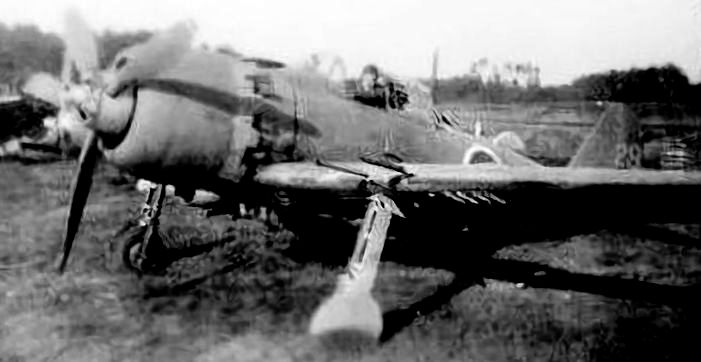
(IJAAF Photo)
Mitsubishi A6M8 Model 64 Zero-Sen (Navy Type 0 Carrier Fighter), codename “Zeke”, with a Kinsae 64 engine. One of two prototypes completed. One was shipped to the USA and designated USAAF FE-311. This aircraft was scrapped at Park Ridge ca. 1950.
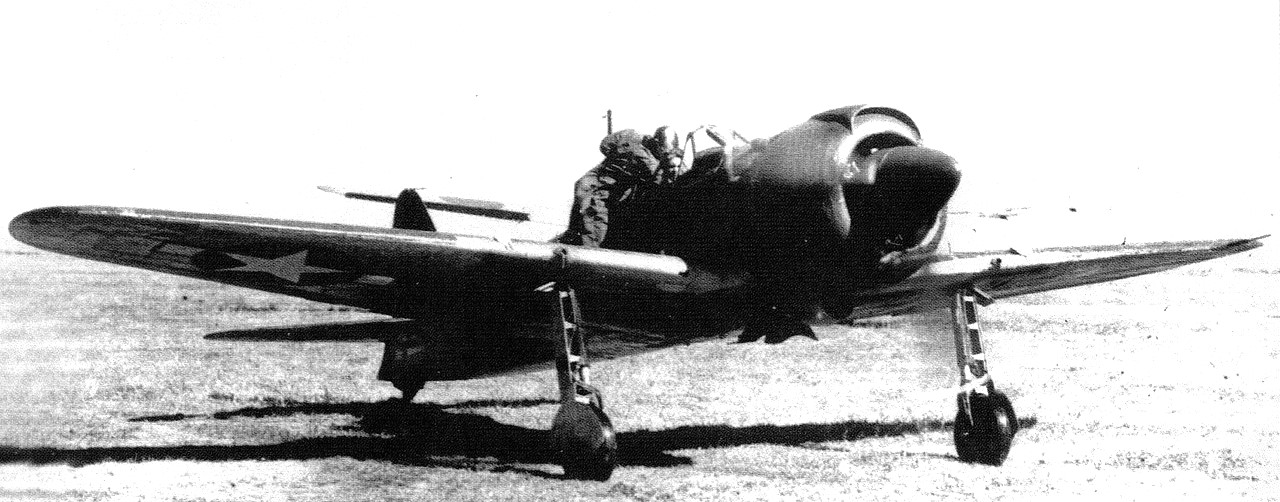
(USAAF Photo)
Mitsubishi A6M8, or Type 64 Zero. One of two complete Prototypes built being tested by US Forces at Misawa Airbase.

Axis Warplane Survivors
A guidebook to the preserved Military Aircraft of the Second World War Tripartite Pact of Germany, Italy, and Japan, joined by Hungary, Romania, Slovakia, Bulgaria, and Yugoslavia; the co-belligerent states of Thailand, Finland, San Marino and Iraq; and the occupied states of Albania, Belarus, Croatia, Vichy France, Greece, Ljubljana, Macedonia, Monaco, Montenegro, Norway, Cambodia, China, India, Laos, Manchukuo, Mengjiang, the Philippines and Vietnam.
The book may be ordered online at:
http://www.lulu.com/shop/harold-a-skaarup/axis-warplane-survivors/paperback/product-20360959.html
http://www.chapters.indigo.ca/books/search/?keywords=axis%20warplane%20survivors&pageSize=12.
All comments are subject to our Comment Policy. You must be at least 18 years old to comment.
See a comment that violates our guidelines? Report it here.