
Warplanes of the Second World War preserved in France
The aim of this website is to locate, identify and document Warplanes from the Second World War preserved in France. Many contributors have assisted in the hunt for these aircraft to provide and update the data on this website. Photos are as credited. Any errors found here are by the author, and any additions, corrections or amendments to this list of Warplane Survivors of the Second World War in France would be most welcome and may be e-mailed to the author at hskaarup@rogers.com.
Avions de guerre de la Seconde Guerre mondiale conservés en France
Le but de ce site est de localiser, identifier et documenter les avions de guerre de la Seconde Guerre mondiale conservés en France. De nombreux contributeurs ont aidé à la recherche de ces appareils pour fournir et mettre à jour les données de ce site Web. Les photos sont aussi créditées. Toutes les erreurs trouvées ici sont de l’auteur, et tout ajout, correction ou amendement à cette liste de survivants d’avions de guerre de la Seconde Guerre mondiale en France serait le bienvenu et pourrait être envoyé par courrier électronique à hskaarup@rogers.com.
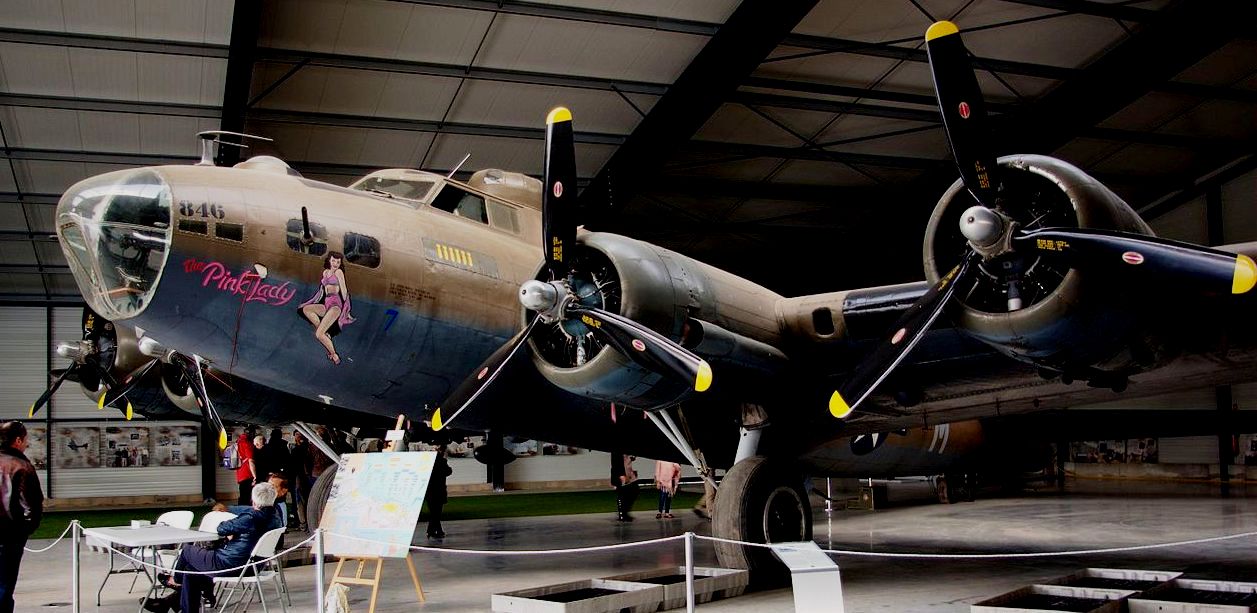
(Duch Photo)
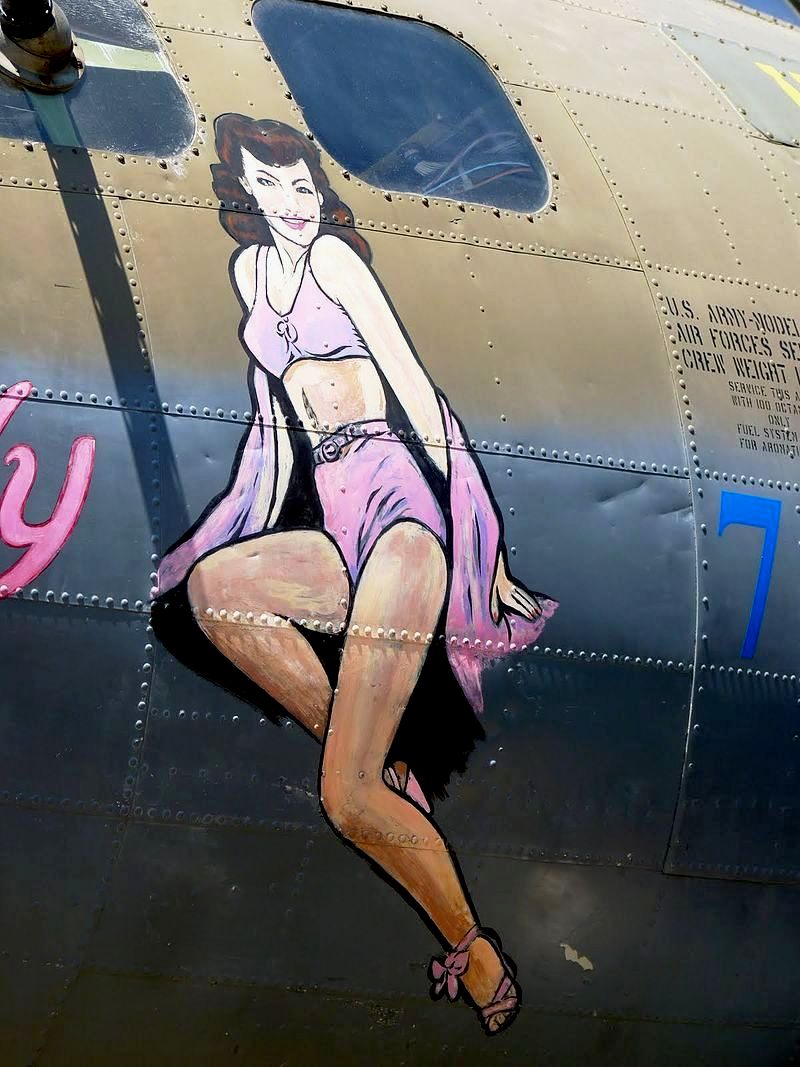
(Aurore Defferriere Photo)
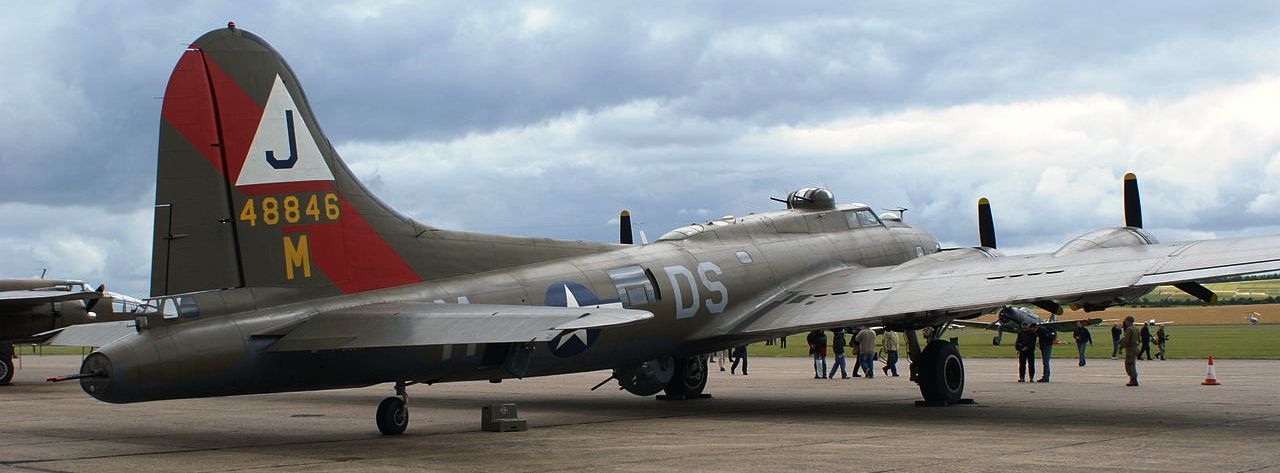
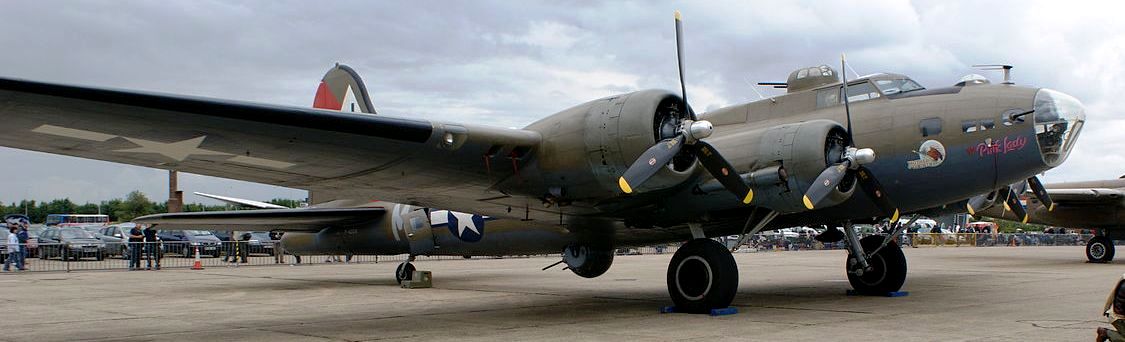
(Barconian98 Photos)
Boeing B-17G Flying Fortress (Serial No. 44-8846). Built at Vega Burbank, California. Flown to RAF Polebrook 1 March 1944 and assigned to 511th Bomb Squadron. Flew six missions. Sold in 1954 to Institut geographique national and used until 1985. Purchased by Forteresse Toujours Volante in 1988. Paint in the colours of the “Pink Lady.” Paris.
Boeing B-17G Flying Fortress (Serial No. 44-88896). Built at Vega Burbank as B-17G. Sold in 1954 to Institut geographique national, retired to the museum in 1976. In storage at the Musée de l’air et de l’espace, Le Bourget Airport.
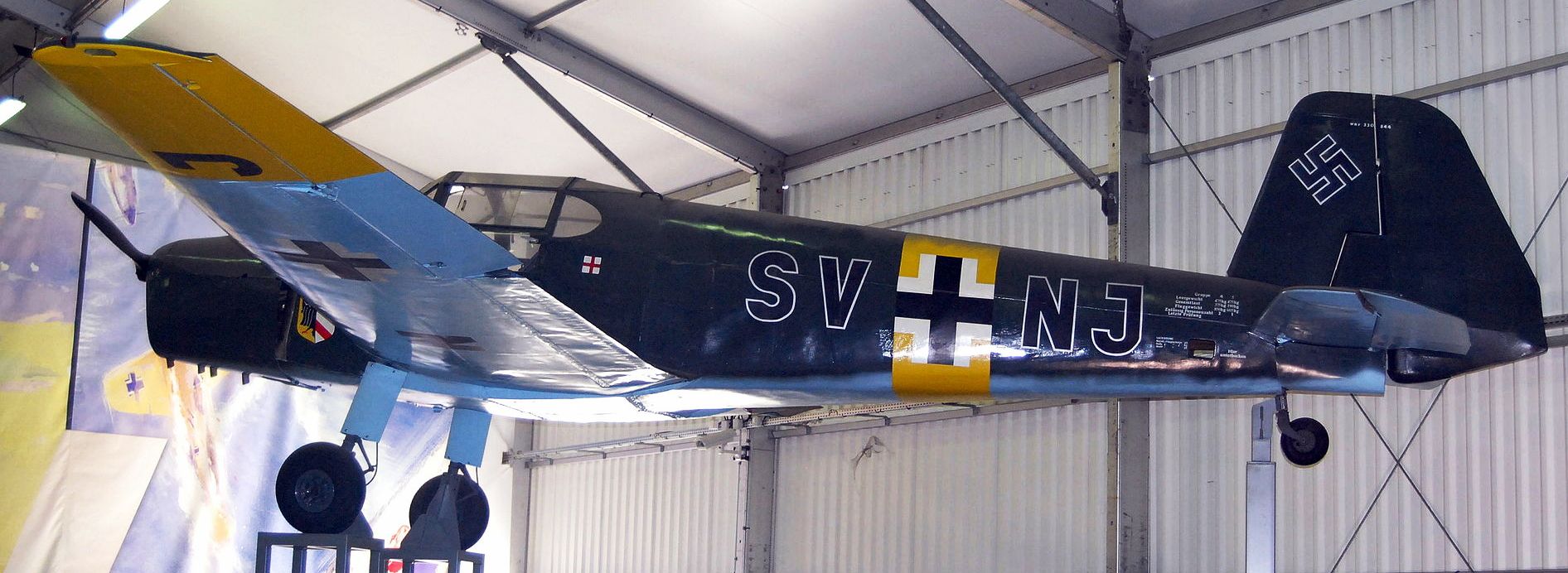
(Roland Turner Photo)
Bücker Bü 181 Bestmann, coded SV+NJ. Musée de l’air et de l’espace, Le Bourget Airport.
Dewoitine D.520 (Serial No. 603), on display at the Conservatoire de l’air et de l’espace d’Aquitaine, Bordeaux–Mérignac Airport.
Dewoitine D.520 (Serial No. 650), being restored at the Musée National de la Marine, Rochefort.
D.520s sported the usual French camouflage of dark blue-grey, khaki, and dark brown with light blue-grey undersurfaces. The camouflage pattern was not standardized. National markings were the standard light blue-white-red roundels on the wingtips, as well as on the rear fuselage, and the rudder flag.
Specific markings were applied during the Vichy era, consisting of white outlined fuselage roundels with a white fuselage stripe, and from mid-1941 on, the infamous “slave’s pajamas” with red and yellow stripes on the engine cowling and tail surfaces.
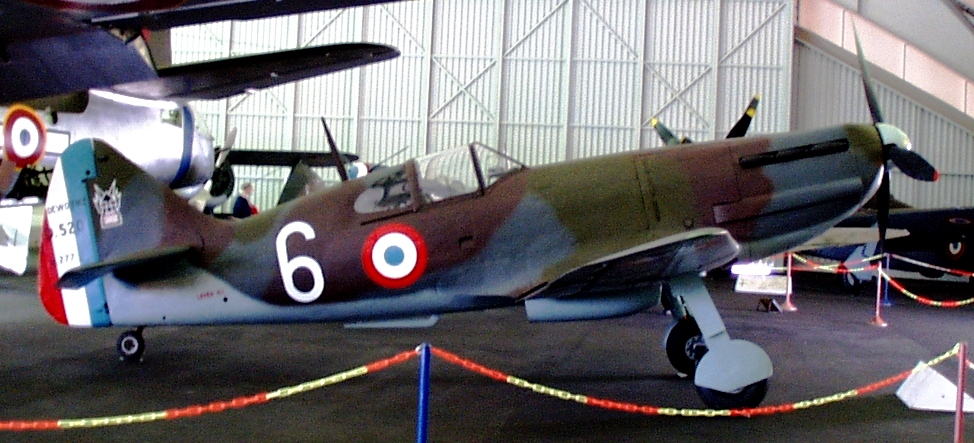
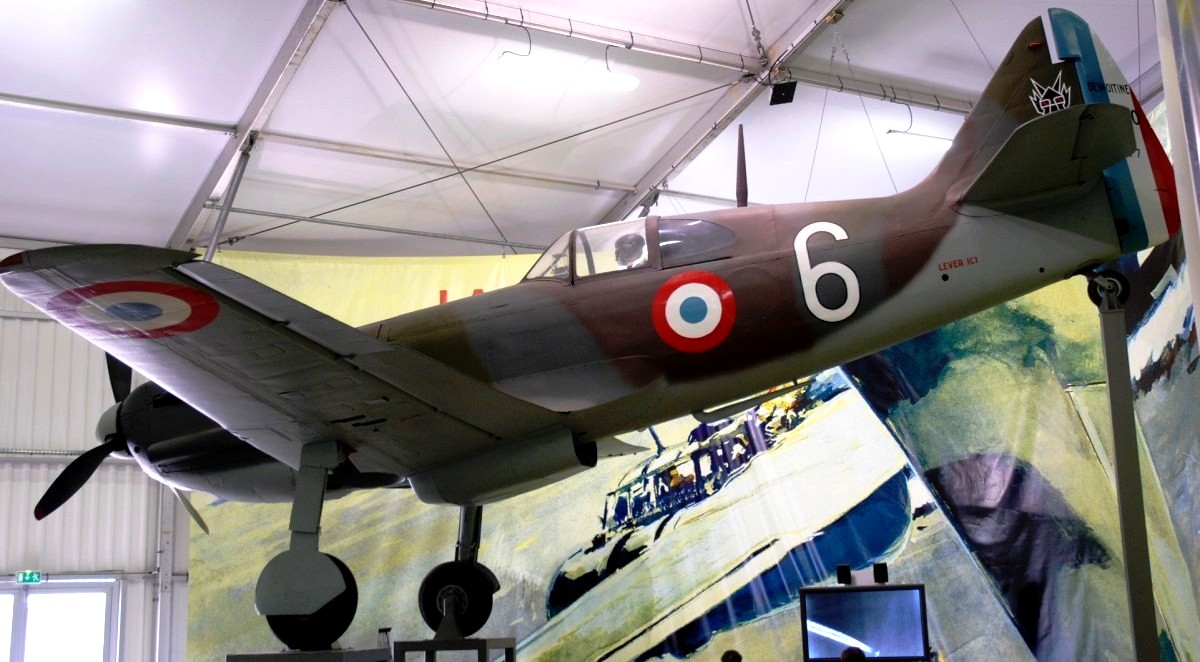
(PpPachy Photos)
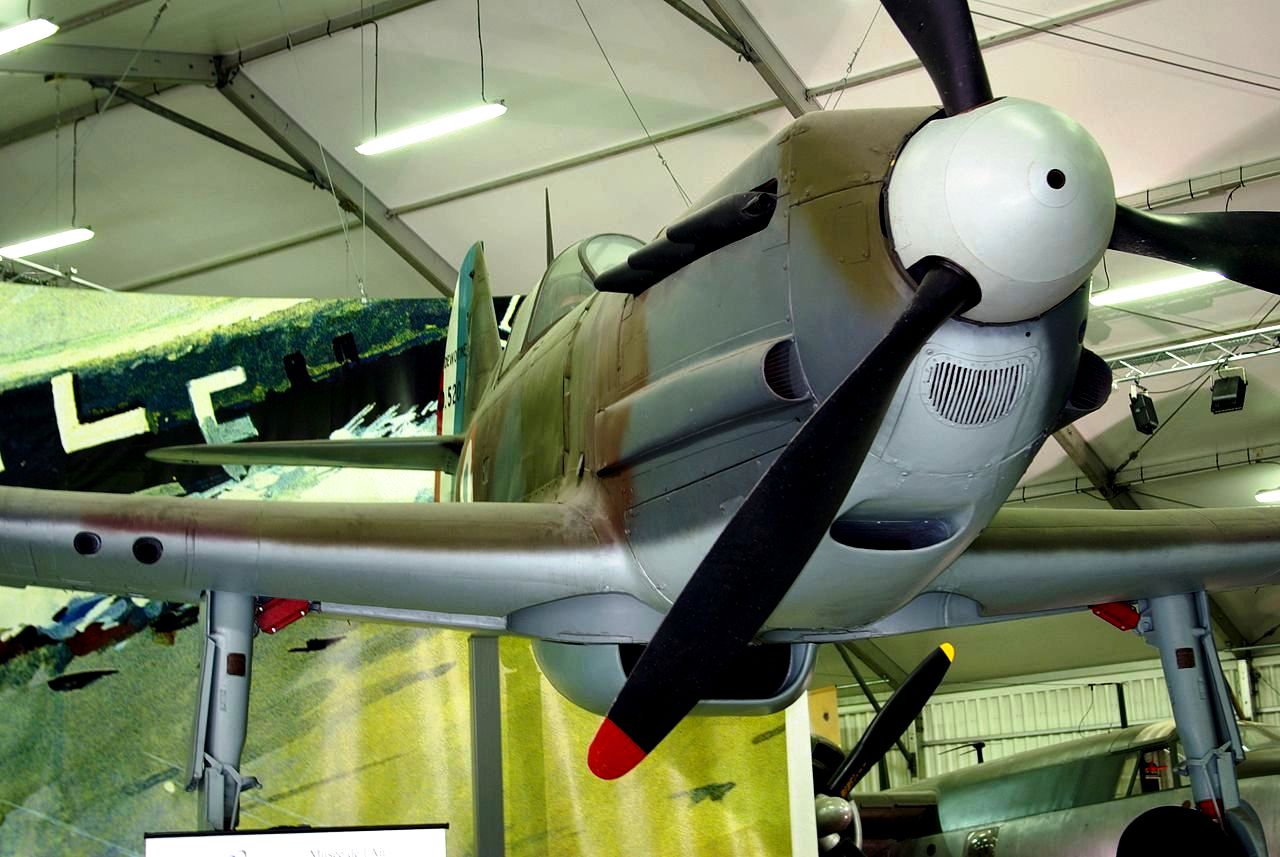
(Duch.seb Photo)
(Roland Turner Photo)
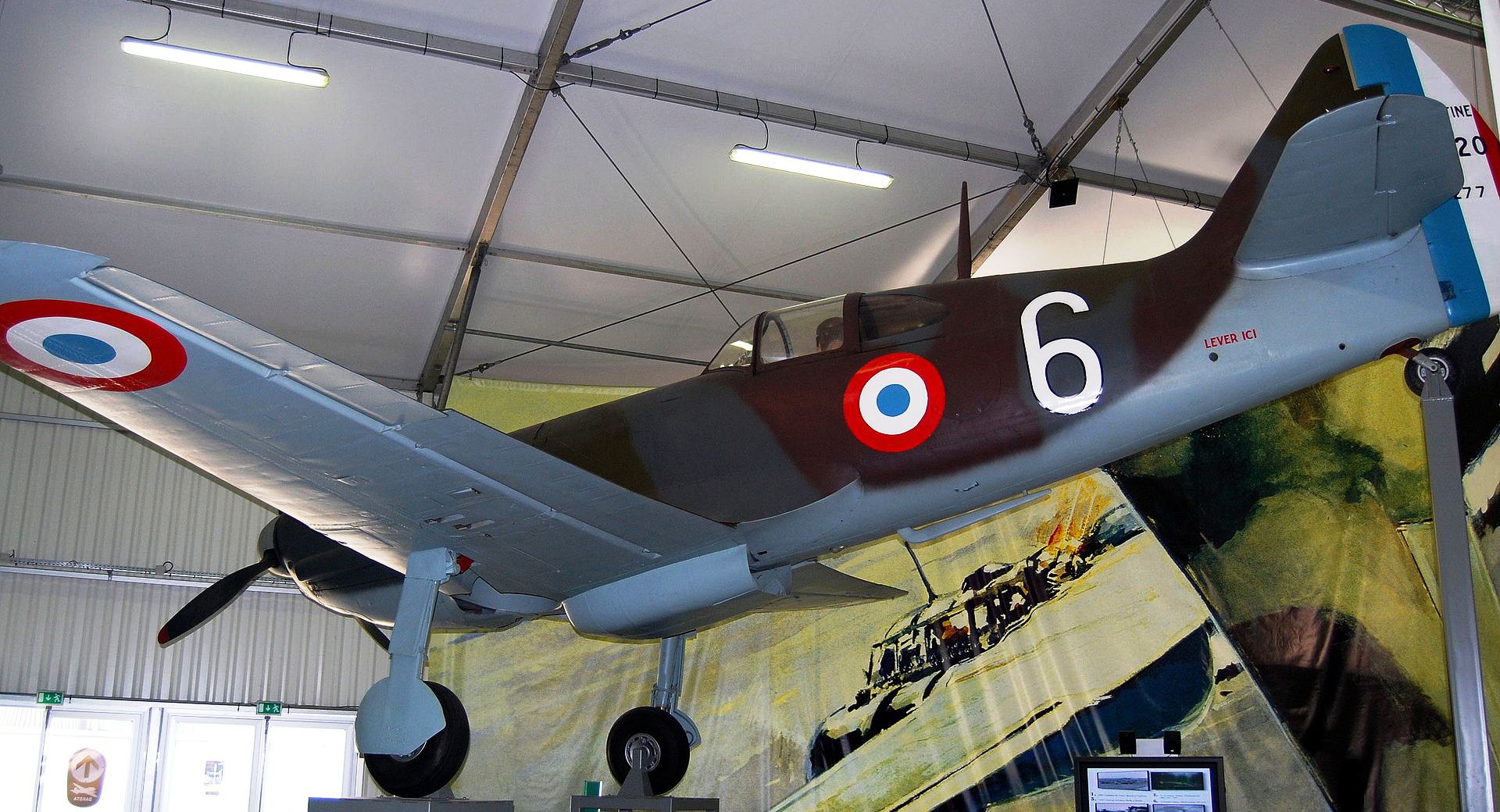
Dewoitine D.520 (Serial No. 862). Painted as (Serial No. 277), which was used by GC III/6 in June 1940, Musée de l’air et de l’espace, (Air and Space Museum), located at the south-eastern edge of Le Bourget Airport, north of Paris.
(Aurore Defferriere Photo)
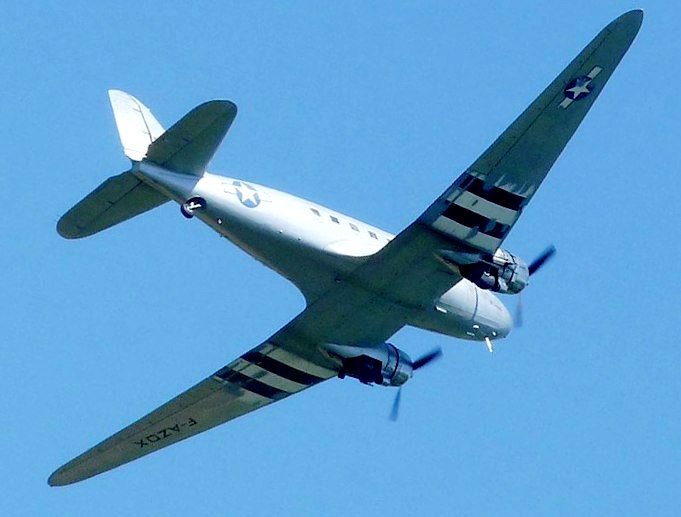
Douglas C-47B-35-DK Dakota (Serial No. 16604), c/n 33352, Reg. No. F-AZOX, built in May 1945 and delivered to the RAF, and then later to the RCAF (Serial No. 12965) in June 1945. Airworthy, this aircraft is owned by the Association Un Dakota sur la Normandie.
(Duch Photo)
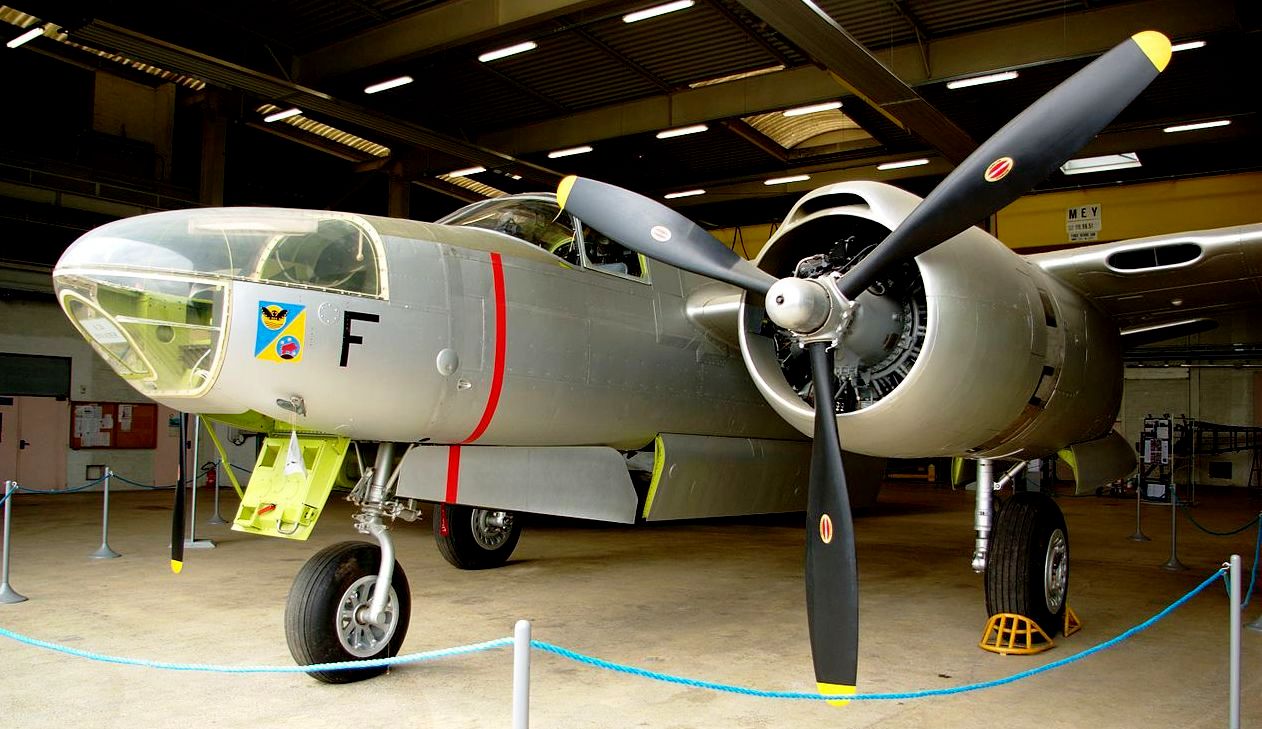
Douglas A-26 Invader. Musée de l’Air et de l’Espace, Le Bourget Airport, near Paris, France.
Douglas A-1 Skyraider. Musée de l’Air et de l’Espace, Le Bourget Airport, near Paris, France.
Douglas AD-4N Skyraider (BuNo. 127002), Reg. No. F-AZHK, Christophe Brunelière, Avignon. This Skyraider is painted to represent a 1st Air Commando Squadron aircraft tht flew with the USAF in Southeast Asia between 1965 and 1972.
(Pline Photo)
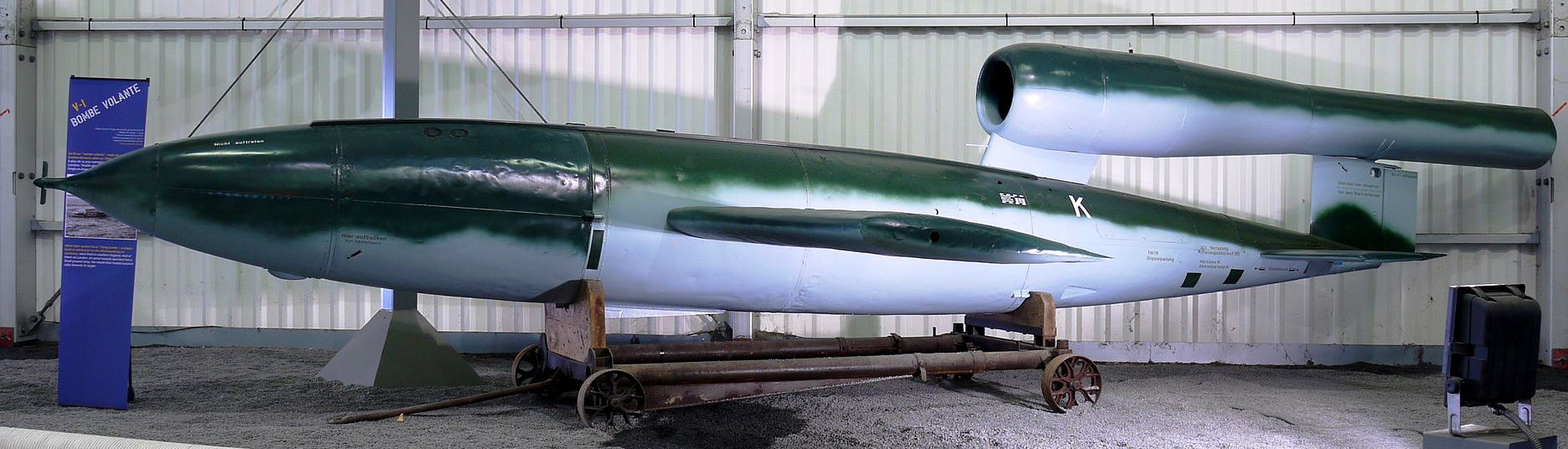
Fieseler Fi 103 V-1, FZG 76 flying bomb.
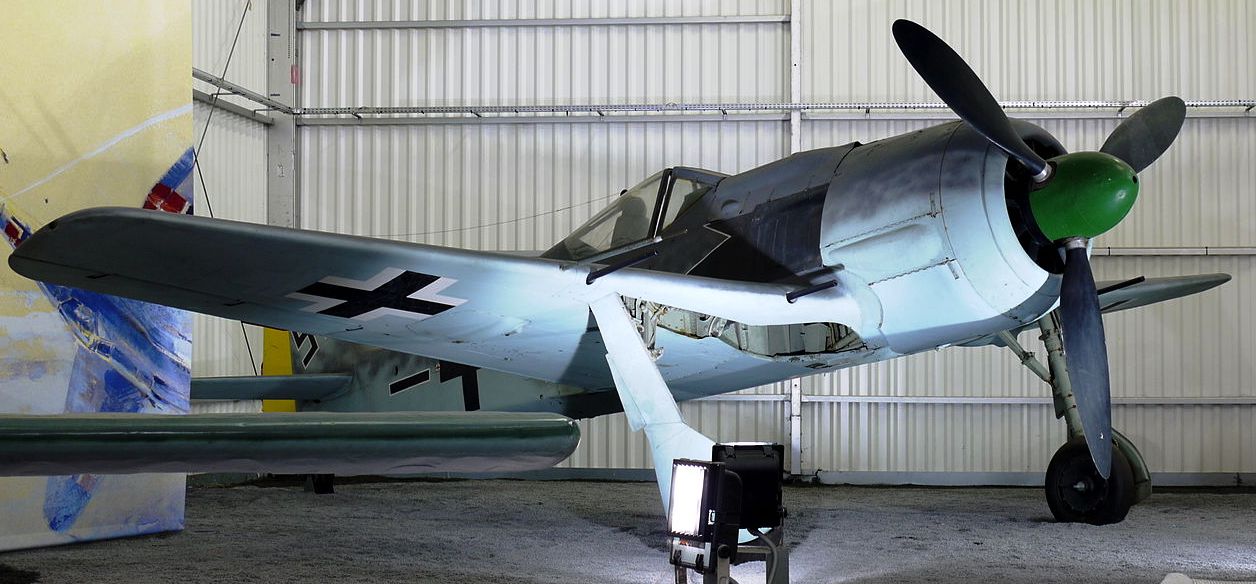
(Pline Photo)
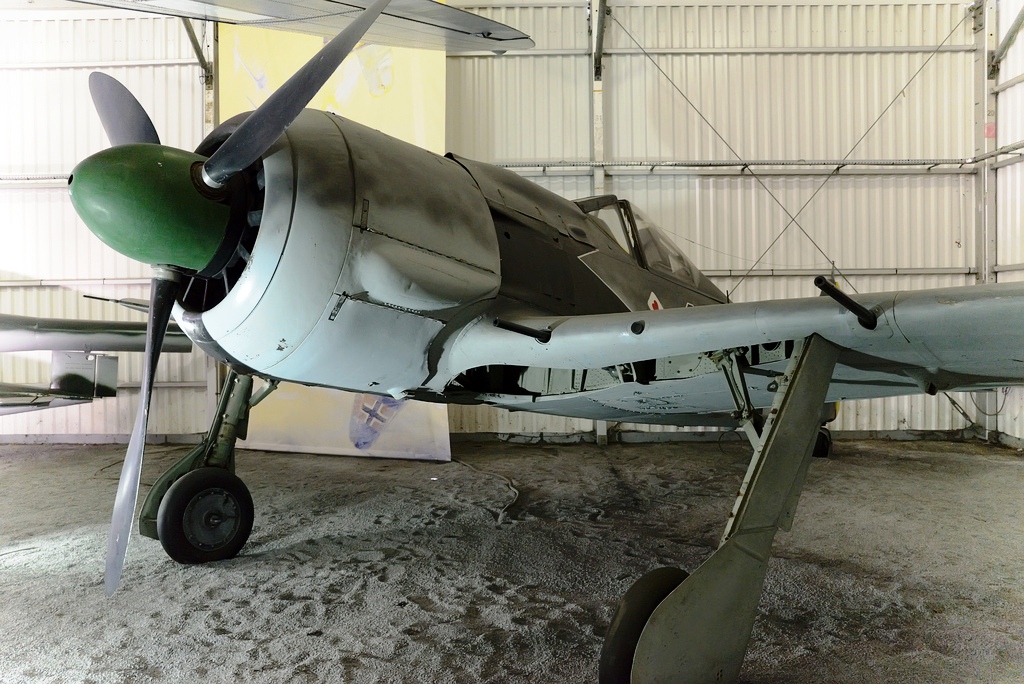
(Roland Turner Photo)
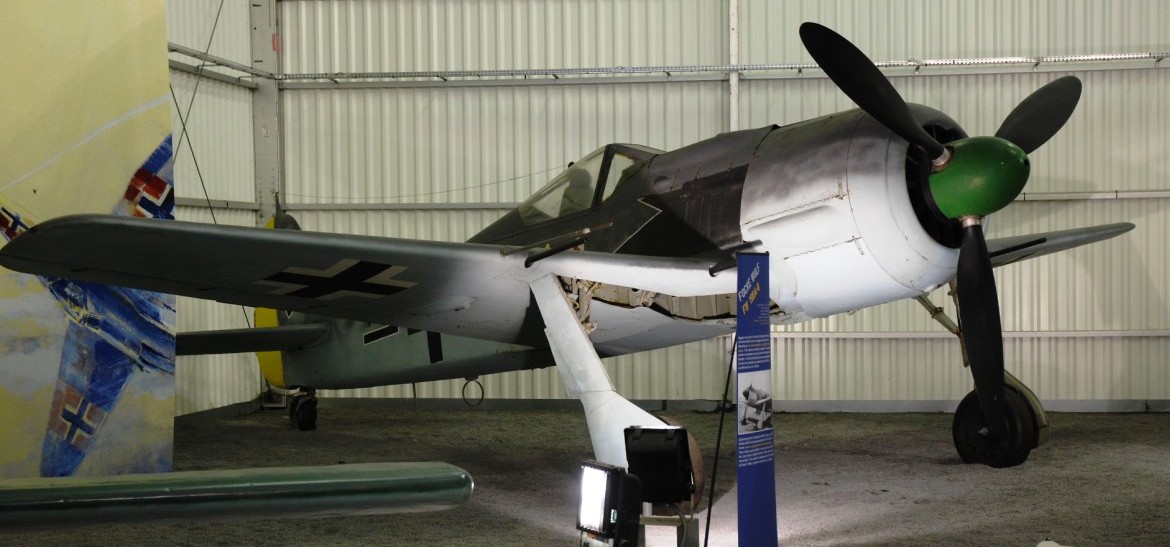
(PpPachy Photo)
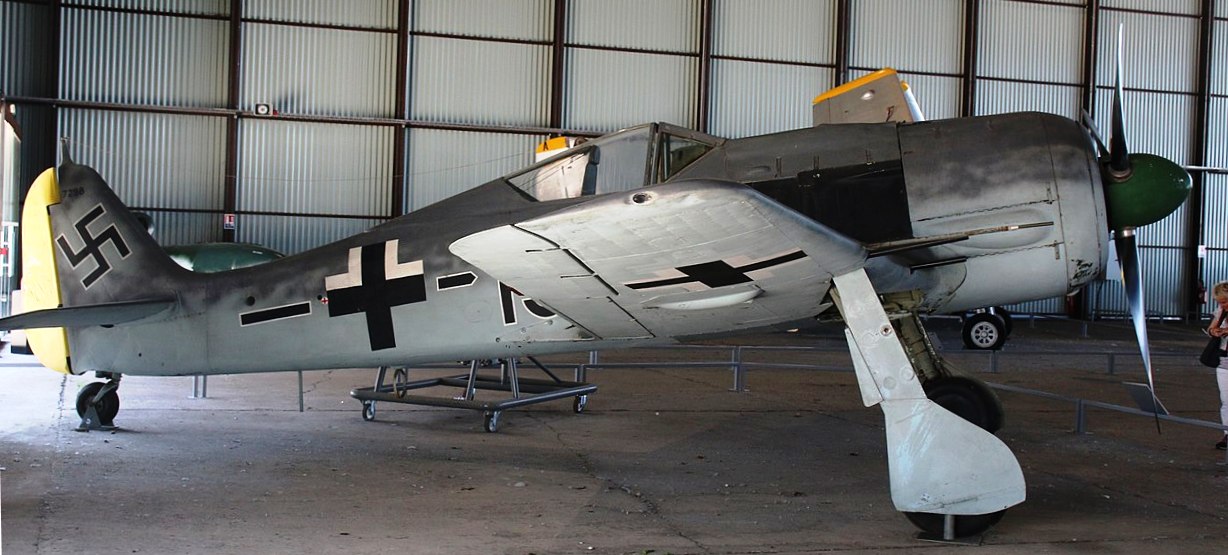
(Luc Grasset Photo)
Focke-Wulf Fw 190A-8 (Wk. Nr. 730923), a French NC.900, No. 62 modified to represent an A-7. It is painted in the colours of Oberst Josef Priller, Luftwaffe Kommodore of JG 26, who accumulted 101 victories, many of them in Fw 190s. Musée de l’Air et de l’Espace, located at the south-eastern edge of Le Bourget Airport, north of Paris.
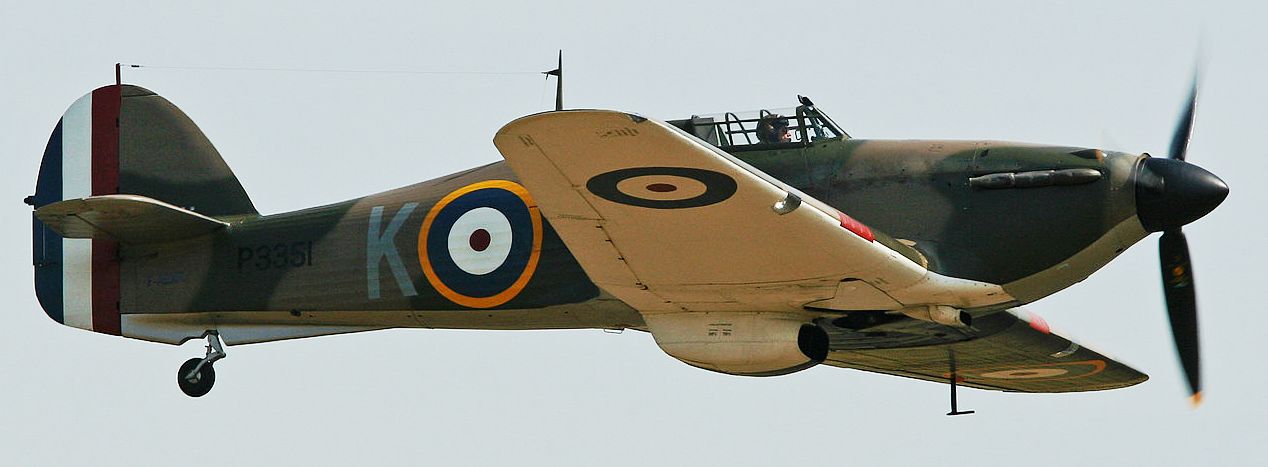
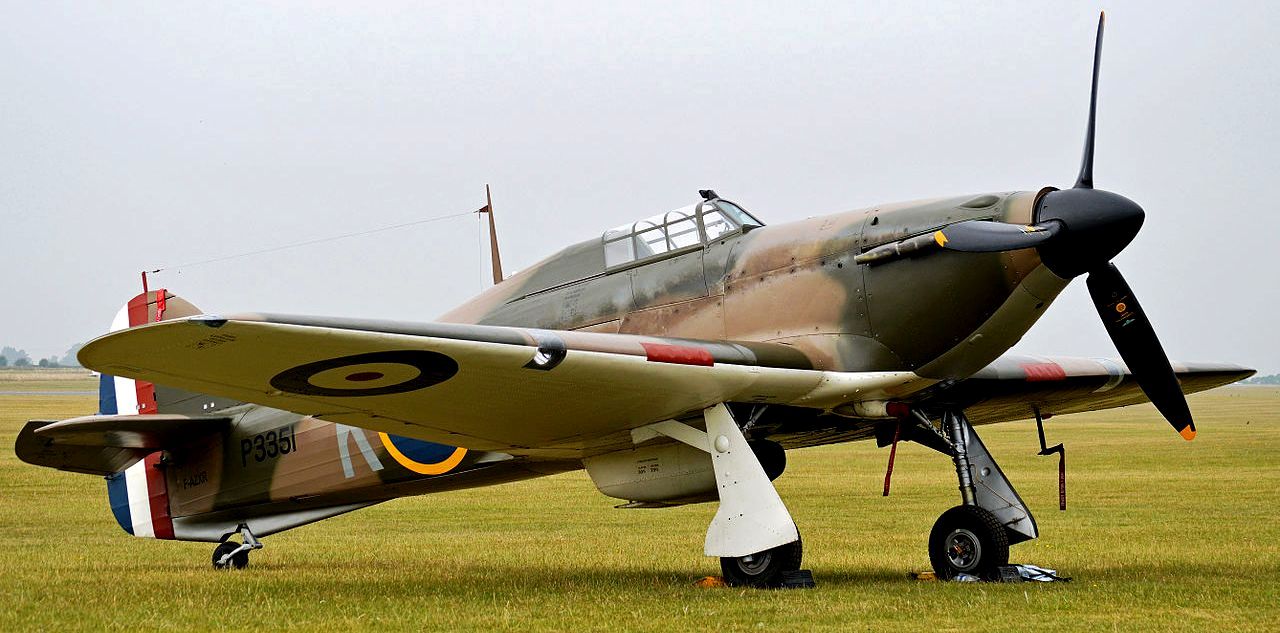
(Alan Wilson Photos)
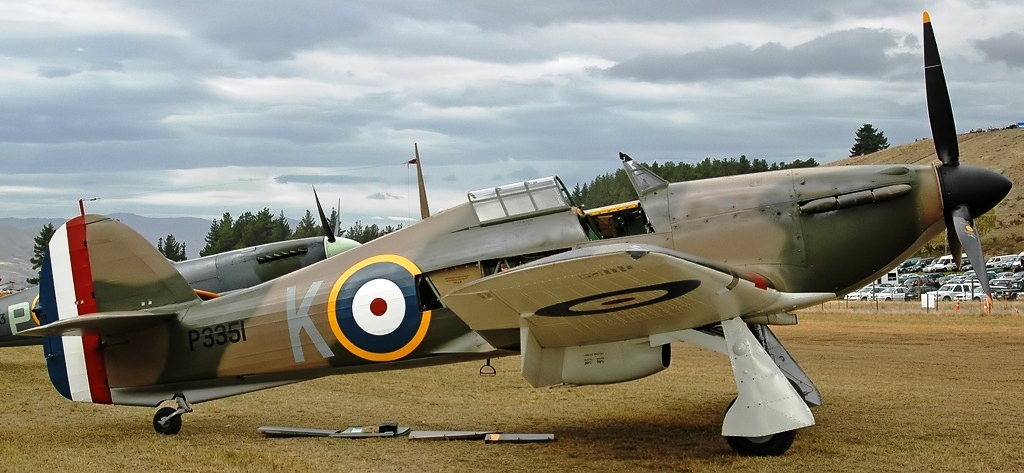
(Jeff Guilbert Photo)
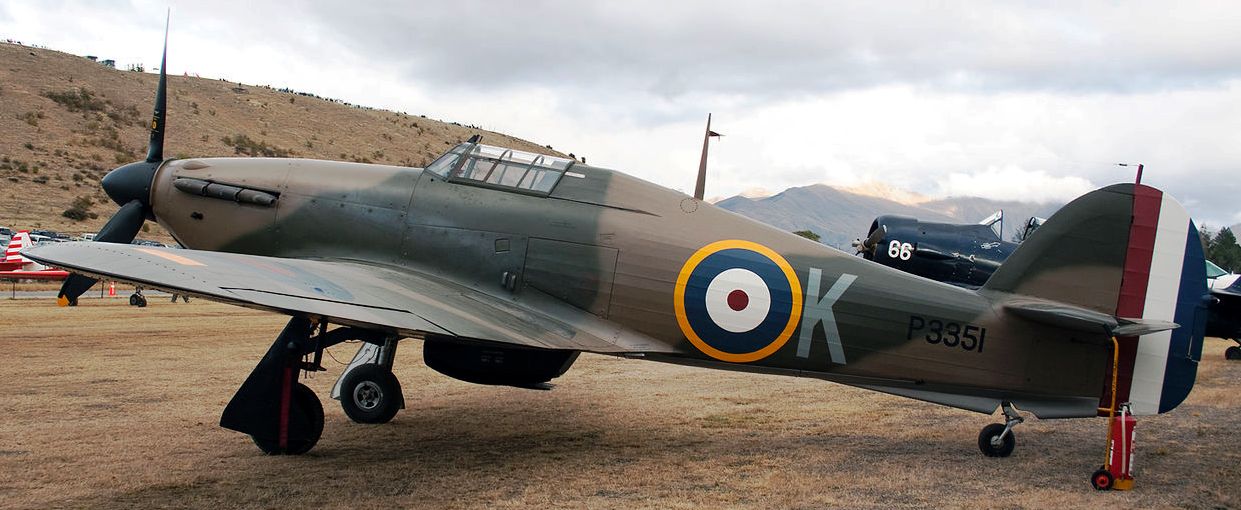
(Paul Nelhams Photo)
Hawker Hurricane Mk. IIa (Serial No. P3351). Built as a Hurricane Mk. I, this aircraft served with RAF No. 73 Sqn during the Battle of France. Relegated to a training role, she suffered an accident in September 1941 and was rebuilt as a Mk. IIa. She was re-serialed as (Serial No. DR393). She was then sent to Russia and served with the Soviet Air Force until she was shot down in the winter of 1943. The fighter was recovered in 1991, and restored by Hawker Restorations for Tim Wallis in New Zealand. Although restored as a Mk. IIa, she has been painted to represent P3351 when it flew during the Battle of France. She is now with a private owner in France, with the civil registration F-AZXR. Airworthy, Cannes-Mandelieu.
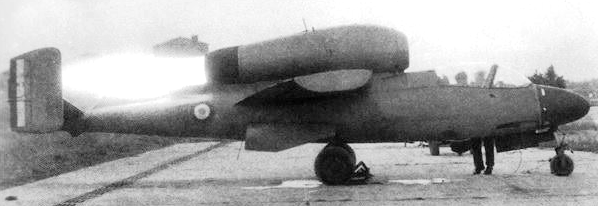
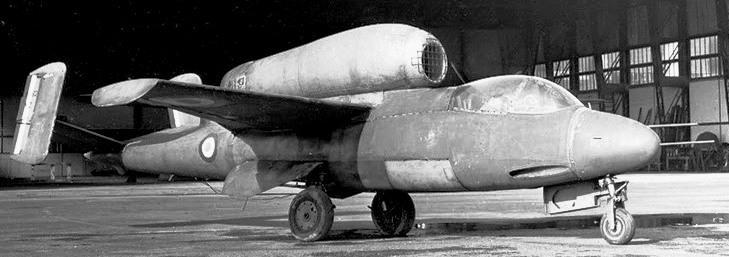
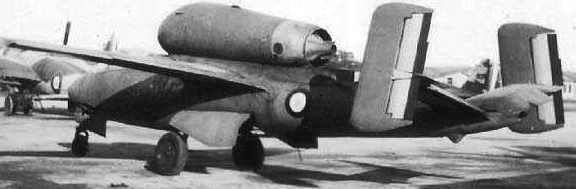
(Armée de l’Air Photos)
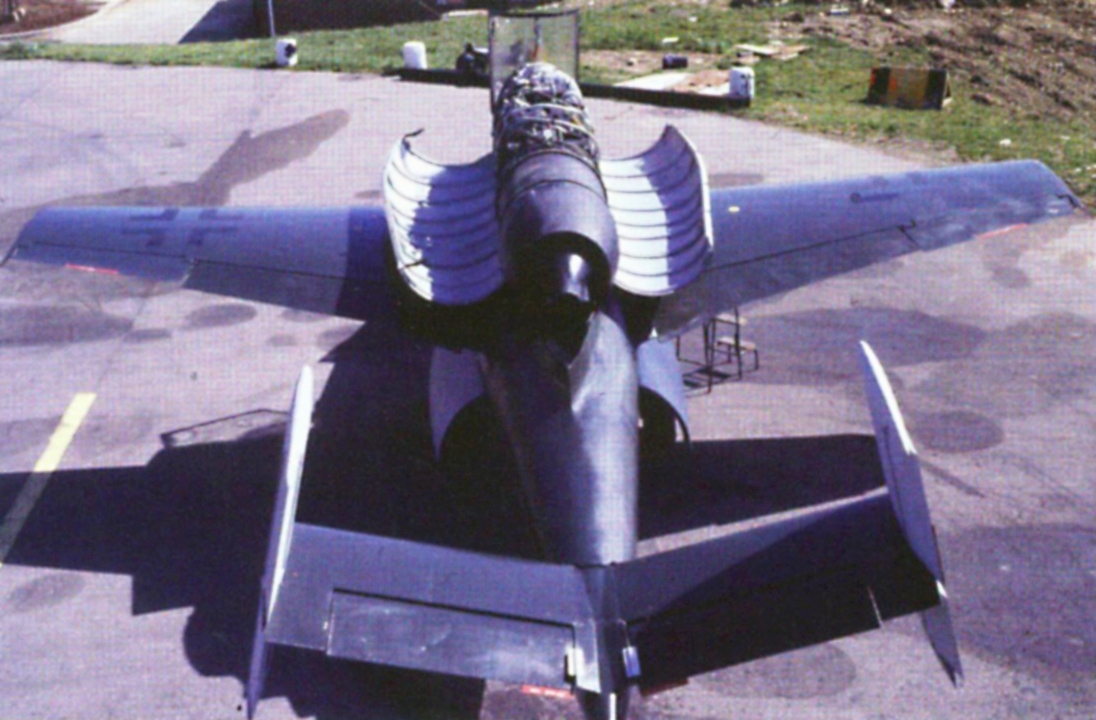
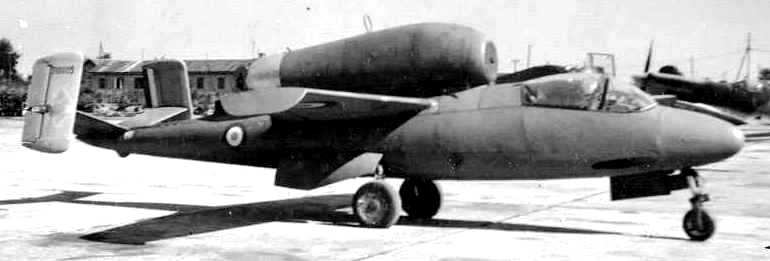
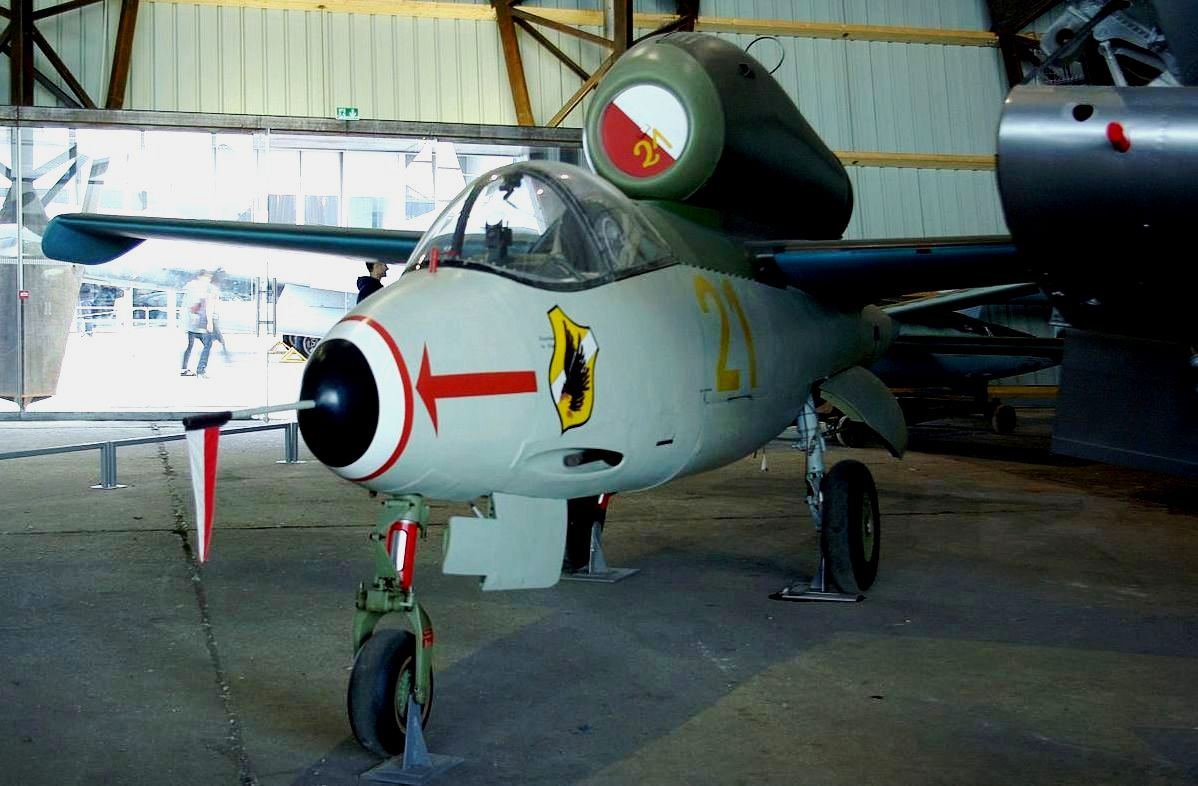
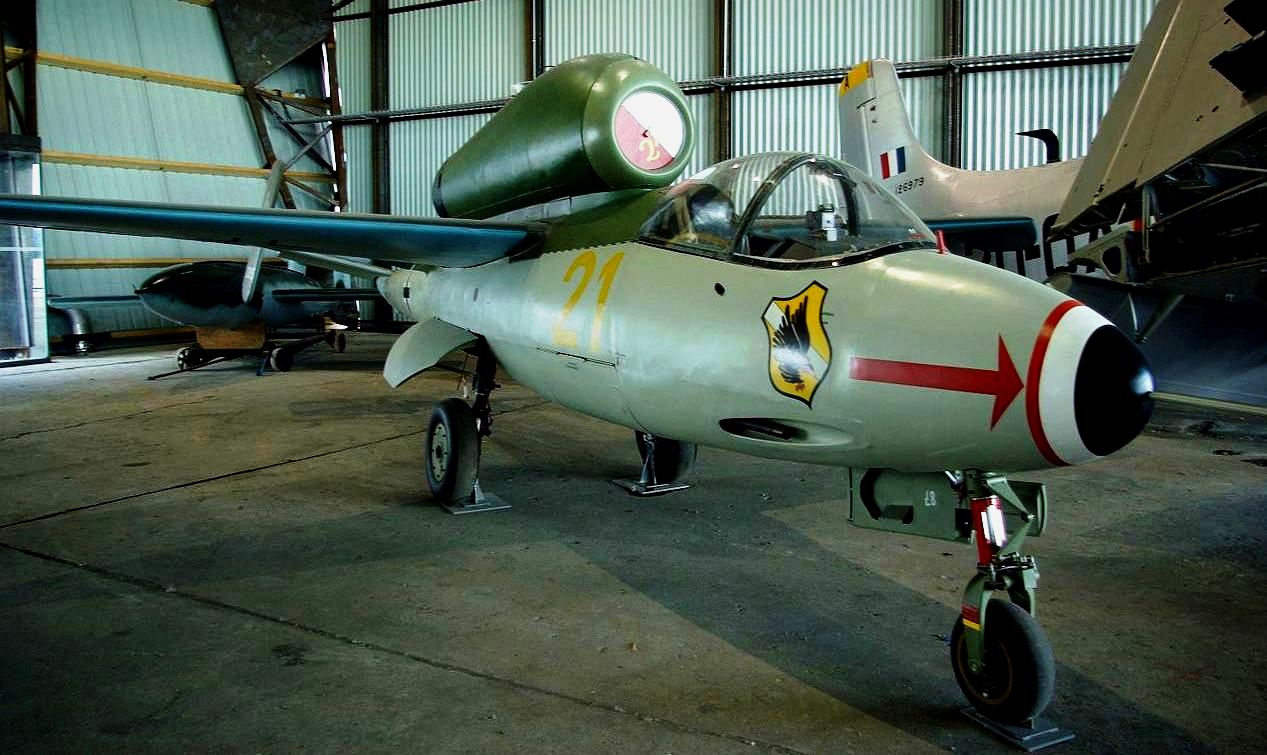
Heinkel He 162A-2, (Wk. Nr. 120015) formerly of III./JG1. This aircraft was one of 27 He 162s captured by the RAF at Leck, Nordfriesland, in Schleswig-Holstein, Germany on 15 May 1945. Five of these aircraft were turned over to the French Air Force in February 1946, and these included two He 162A-1s, (Wk. Nr. 310012) “Red 7” and (Wk. Nr. 310003) “Yellow 5”; three He 162A-2s (Wk. Nr. 120093), “White 2“, (Wk. Nr. 120223) “Yellow 1“, and (Wk. Nr. 120015). The He 162A-2s were flown by the French Air Force from April 1947 to July 1948. No. 1, (Wk. Nr. 120015) was painted in a single colour of grey/beige and bore the fuselage No. 2. It was flown for most of the tests totalling nearly 14 hours on a total amount of 18 hours of flight tests; each flight lasting approximately 20 to 30 mn ; this enabled about 30 French Air Force pilots to get a glimpse of jet flying, pending the arrival of British Vampires in 1949. Grounded after the death of Capt. Schienger on aircraft No. 1, (Wk. Nr. 120015) was sent to the Rochefort-Sur- Mer Air Force mechanics school. It was then repainted “bordeaux-red” and sent to the Musée de l’Air et de l’Espace in 1952. Its colour changed again to dark green which it wore until 1975 when it was given an approximate camouflage paint with (Wk. Nr. 120223).
(Duch Photos)
Heinkel He 162A-2, (Wk. Nr. 120015) formerly of III./JG1, painted as (Wk. Nr. 120223), “Yellow 21“, Musée de l’Air et de l’Espace, Le Bourget Airport, near Paris, France.
Messerschmitt Bf 109 G-6 (Wk. Nr. 26129), coded RV + IS, II./JG 54, “Black 3“, Aéronautique Provençale.
(PpPachy Photo)
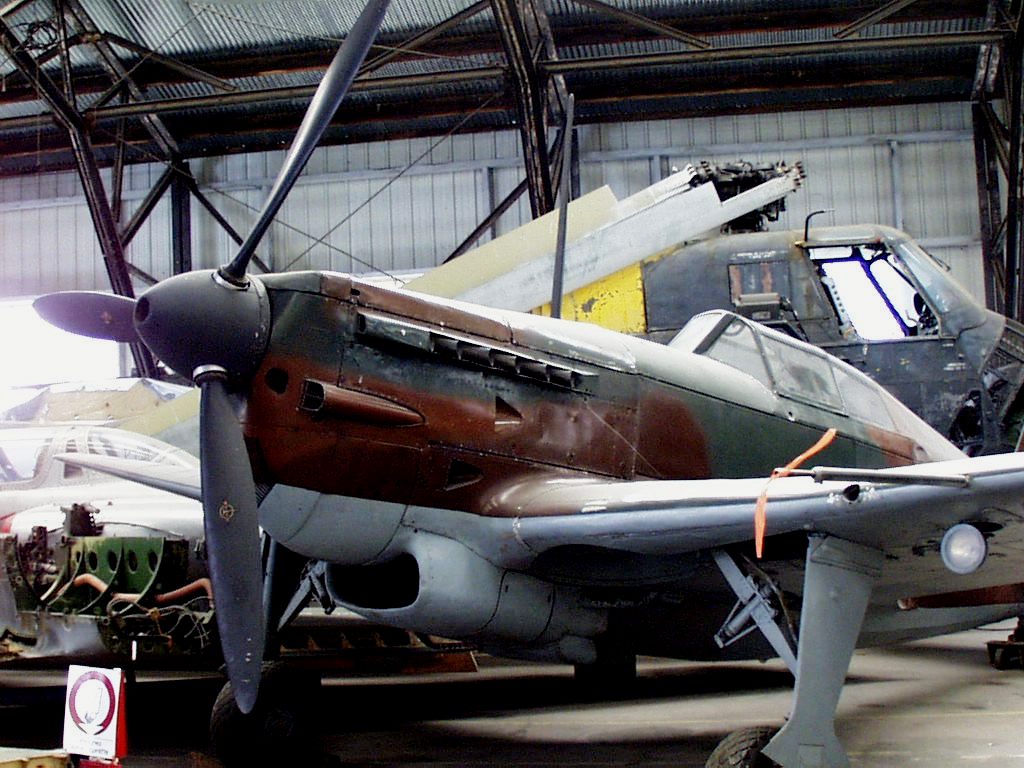
Morane-Saulnier MS.406, D-3801, Swiss-built, c/n 15, Swiss Air Force (Serial No. J-277), painted as an MS.406 C1, Musée de l’Air et de l’Espace, Le Bourget Airport, near Paris, France.
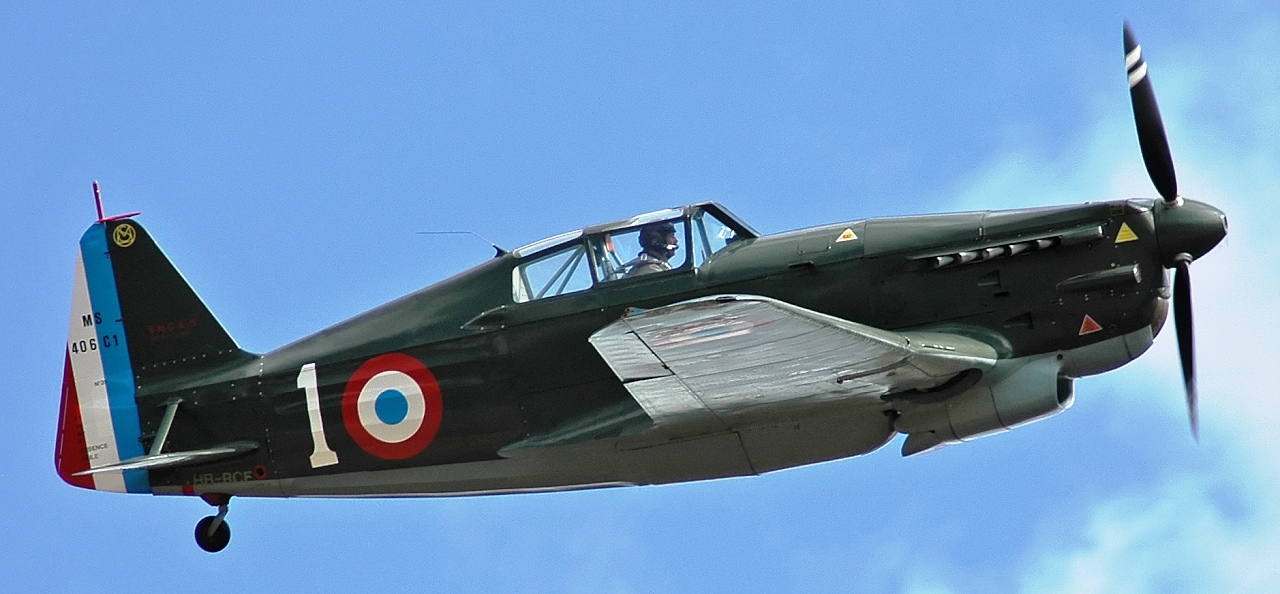
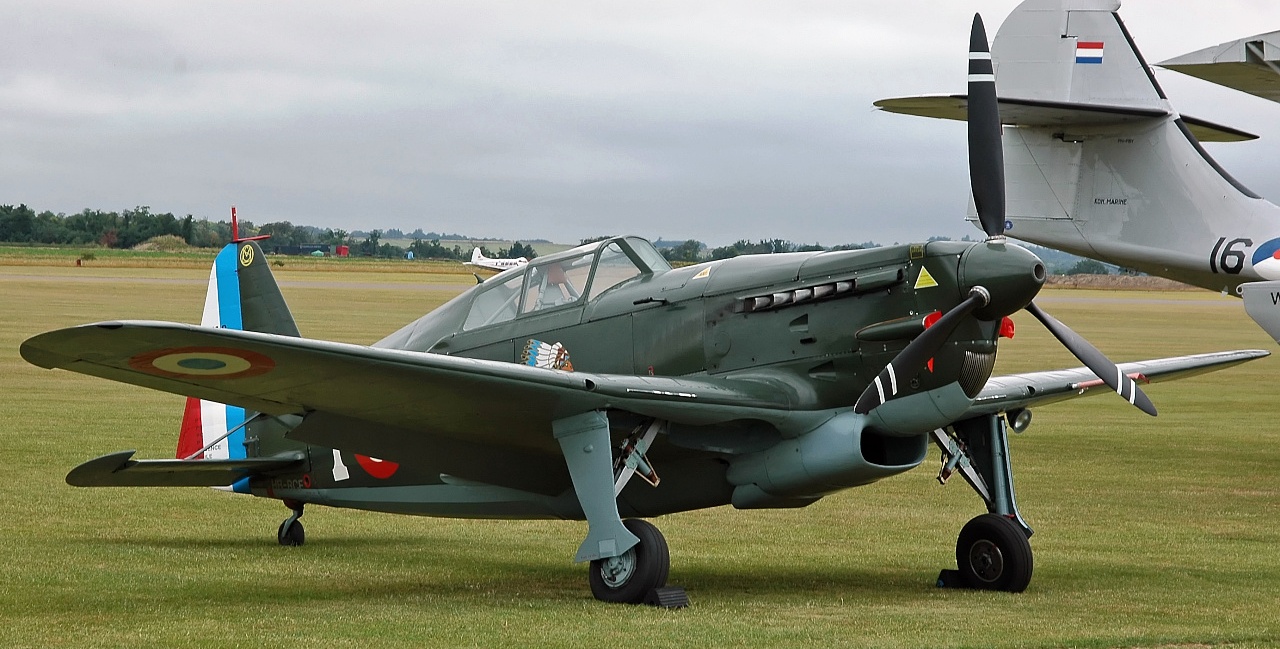
(Kogo Photos)
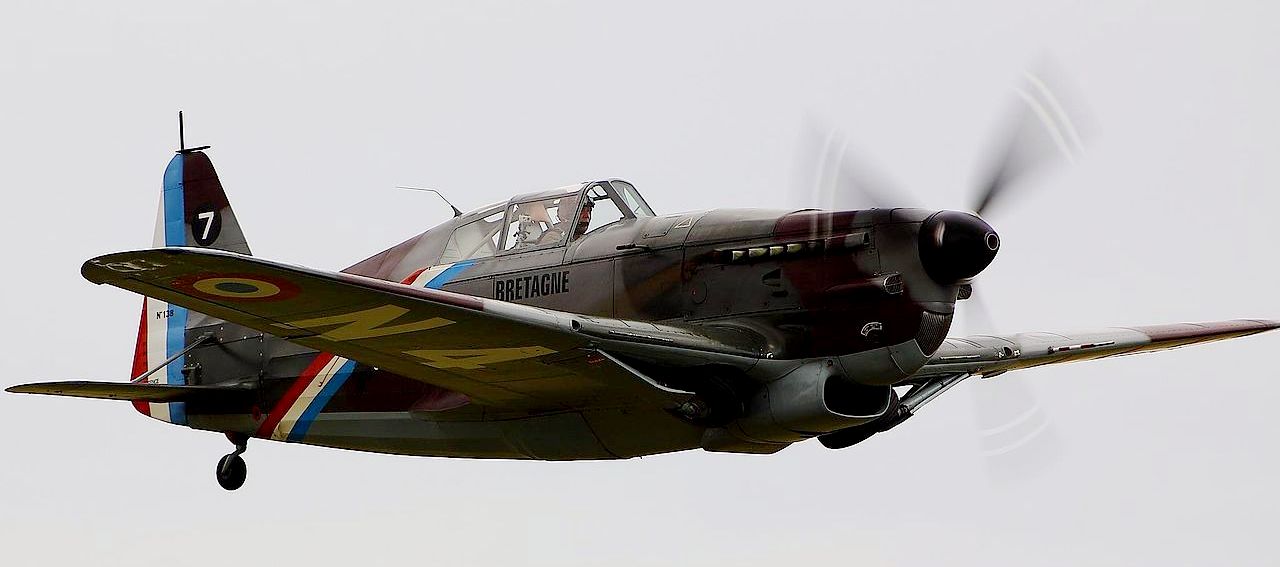
(Tim Felce Photo)
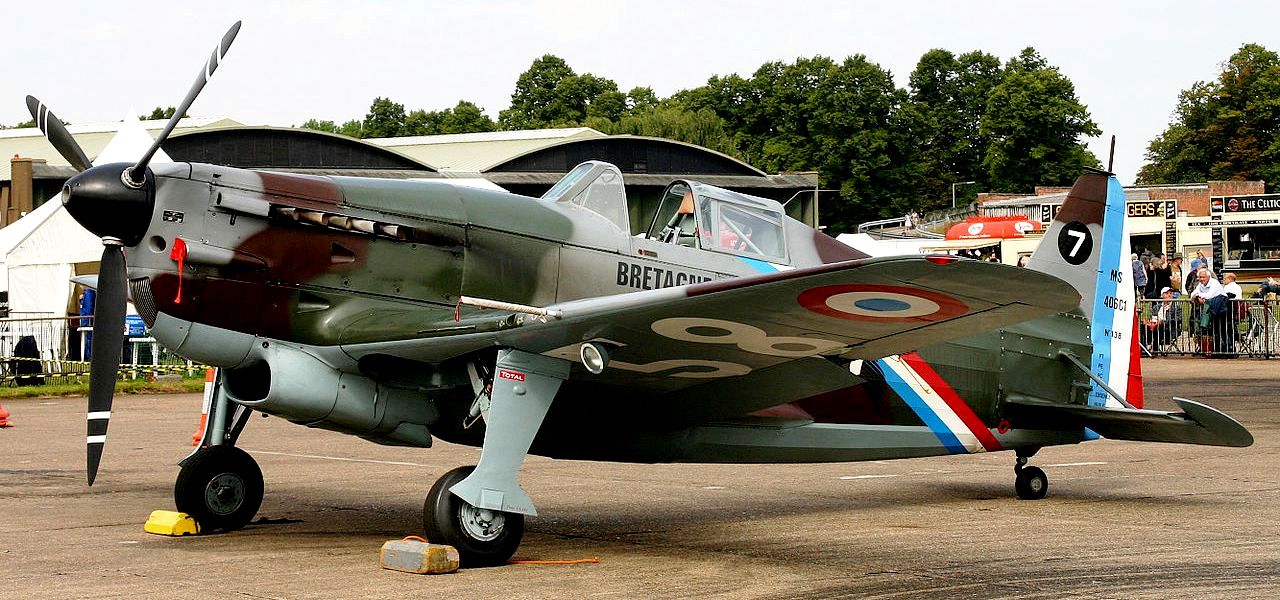
(Alan Wilson Photo)
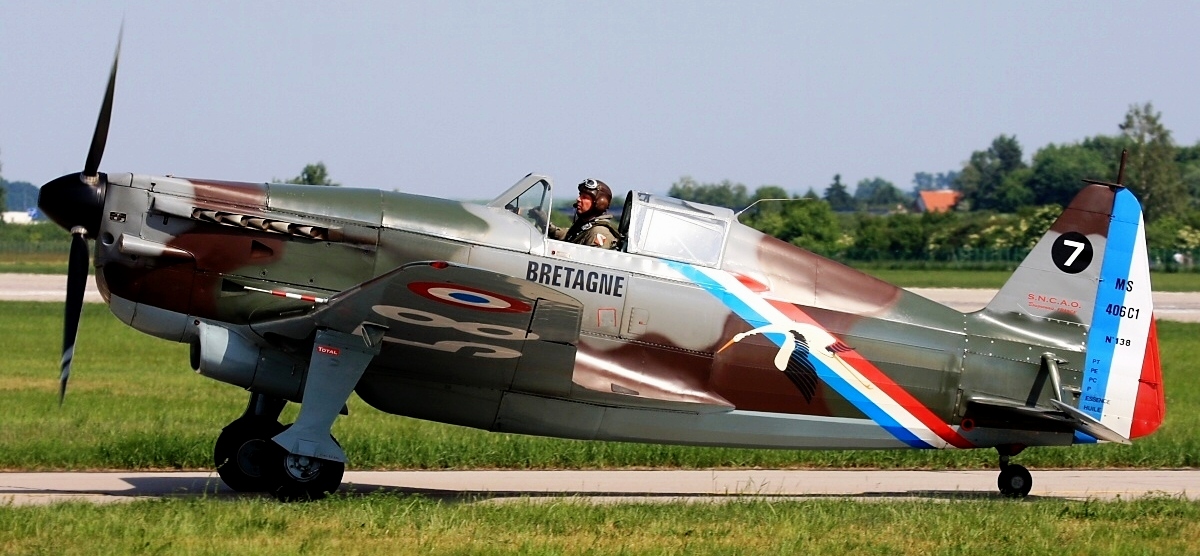
(Alan Lebeda Photo)
Morane-Saulnier MS.406, D-3801, Swiss-built, c/n 194, previously painted as a French Air Force MS.406, (Serial No.138), “Bretagne”, repainted as Swiss Air Force (Serial No. J-143). Reg. No. HB-RCF, Association Morane Charlie Fox, France.
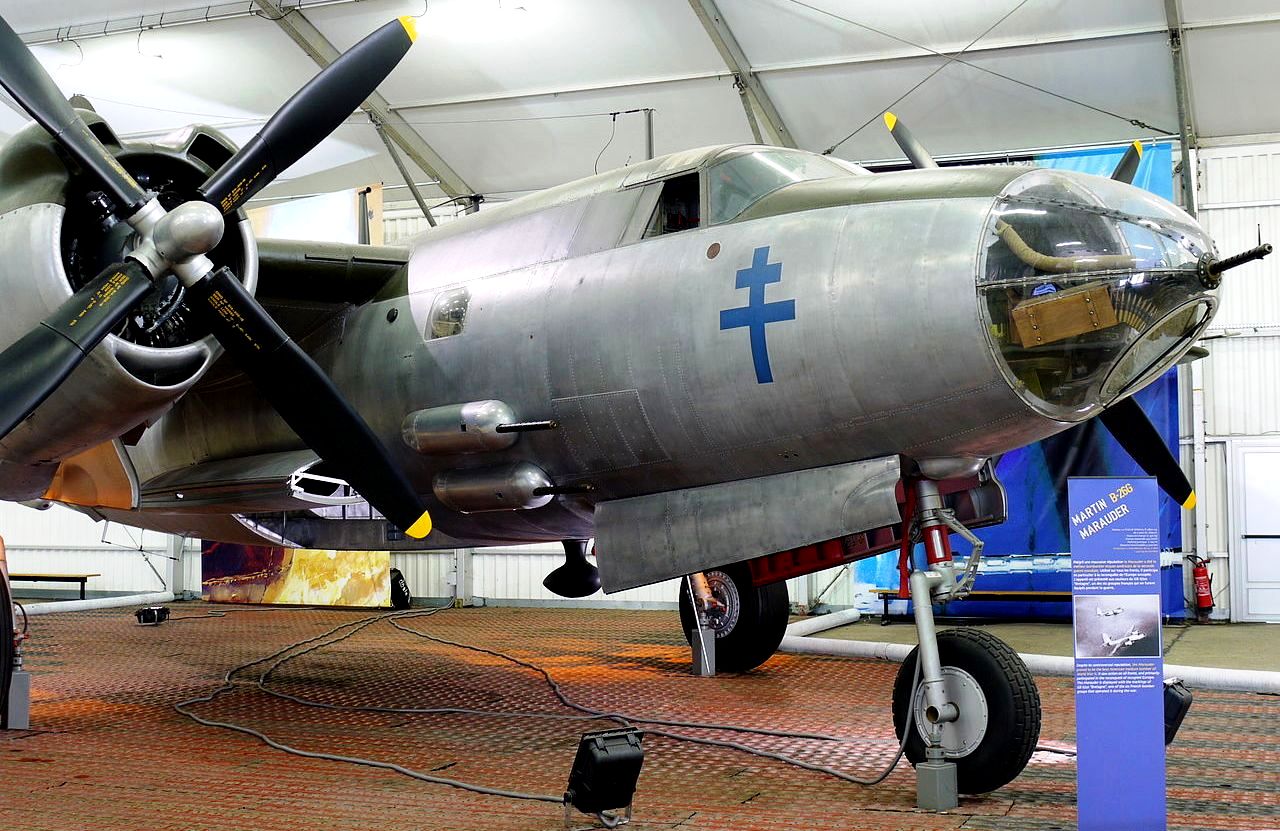
(Pline Photo)
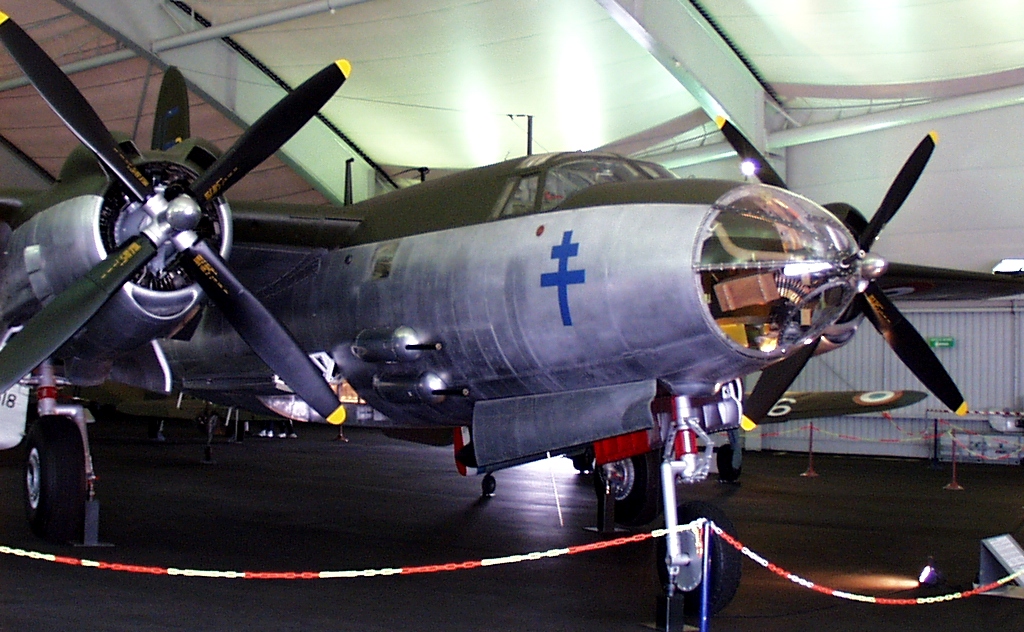
(PpPachy Photos)
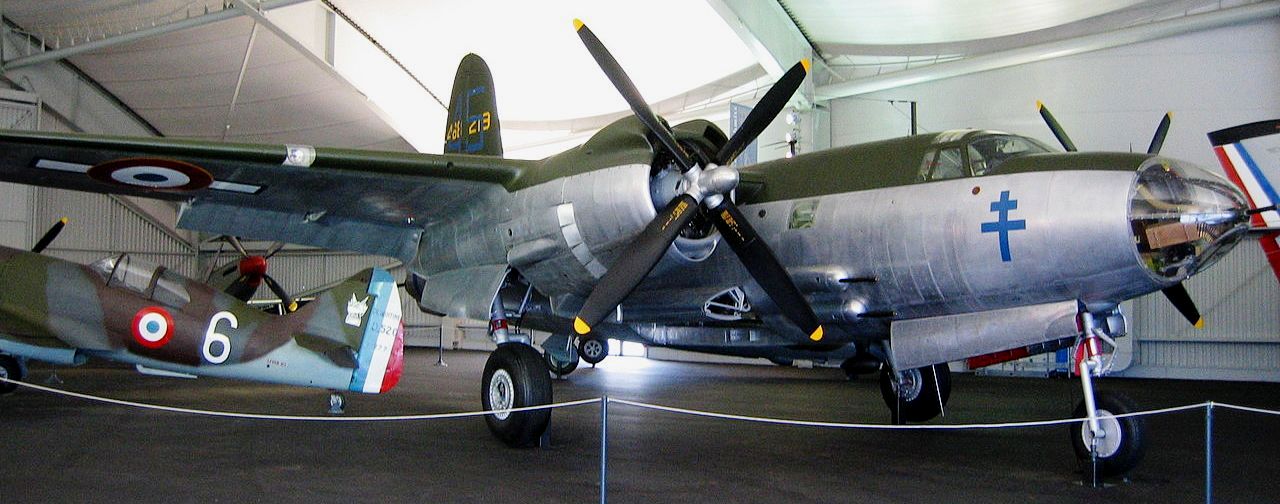
(Alexander Flühmann Photo)
Martin B-26 Marauder (Serial No. 44-68219), “Dinah Might”. Utah Beach Museum (Musée du Débarquement Utah Beach) on loan from the Musée de l’Air et de l’Espace, Le Bourget Airport, near Paris, France. It was previously recovered from the Air France training school.
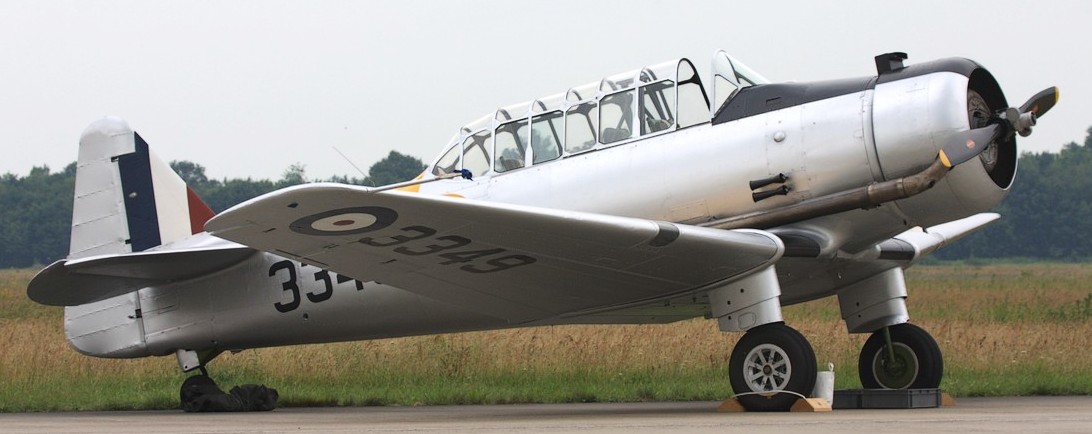
(Scramble.nl Photo)
North American Yale (Serial No. 3349)
According to their page on Facebook, the French Early Aviators society at Tours-Sorigny welcomed a new item for their collection on 28 February, a rare North American NA-64 Yale. The trainer, registered G-BYNF (c/n 64-2171) and with original serial RCAF 3349, was flown in from Duxford (UK).
After its retirement from RCAF service in 1946, Yale 3349 was bought by the famous collector Ernie Simmons who kept it in openstorage until 1970. It was then salvaged by Tom Reilly of Orlando (FL) and restored to flying status as N55904. It made its first post-restoration flight in March 1980. From 1989 to 1999, the plane was flown in the Netherlands, most of the time based in Lelystad. It was exported to the UK in March 1999 as G-BYNF and a restoration was performed by ARCO at Duxford, resulting in a first flight again on 4 October 2006.
The NA-64 was a pre-war fixed gear relative of the T-6 Texan / Harvard. France has historic ties with this trainer as the country ordered 230 examples before the Second World War. Of these 230 machines, 200 would have gone to the Armée de l’Air (Air Force) and 30 to the Aeronavale (Navy). At the moment of the French surrender only 111 had been delivered. The air force of the collaborating Vichy Government used 43 of these and the remainder was used as liaison aircraft by the German Luftwaffe.
The 119 Yales that had not reached France were taken over in the British Commonwealth Air Training Plan (BCATP) and sent to Canada where they were flown as Yale Mk.I intermediate trainers. Slightly underpowered compared with its successor, the T-6 Harvard, the Yale was mostly used for radio-operator instruction.
Currently G-BYNF is the only airworthy NA-64 in Europe, but at a certain point a second one will join it. The Musee Aeronautique Presqu’Ile Cote d’Amour (MAPICA) of La Baule in France is restoring another Yale, former RCAF 3450 (c/n 64-2214), which used to be part of the Commemorative Air Force in the USA as N4574Y. (Scramble.nl)
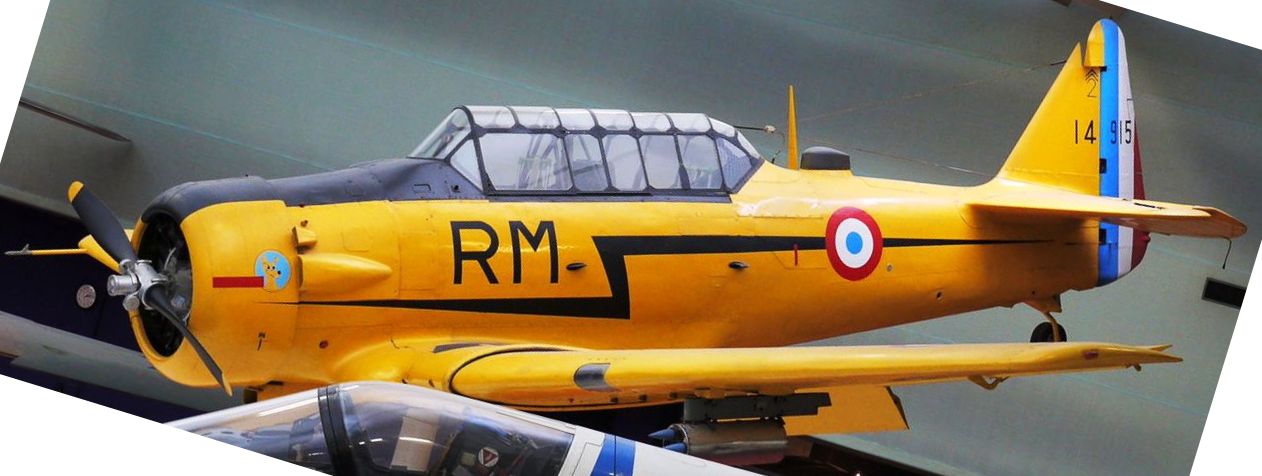
(Pline Photo)
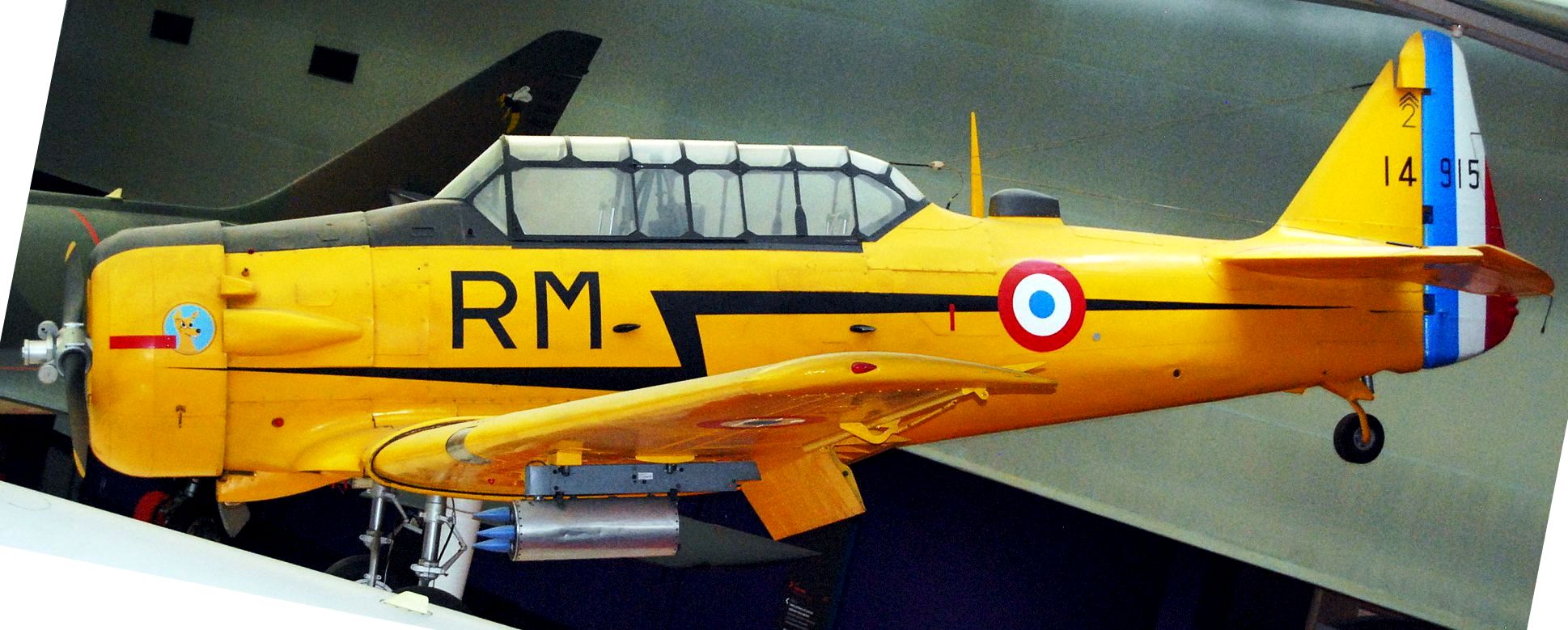
(Roland Turner Photo)
North American T-6 Texan. Musée de l’Air et de l’Espace, Le Bourget Airport, near Paris, France.
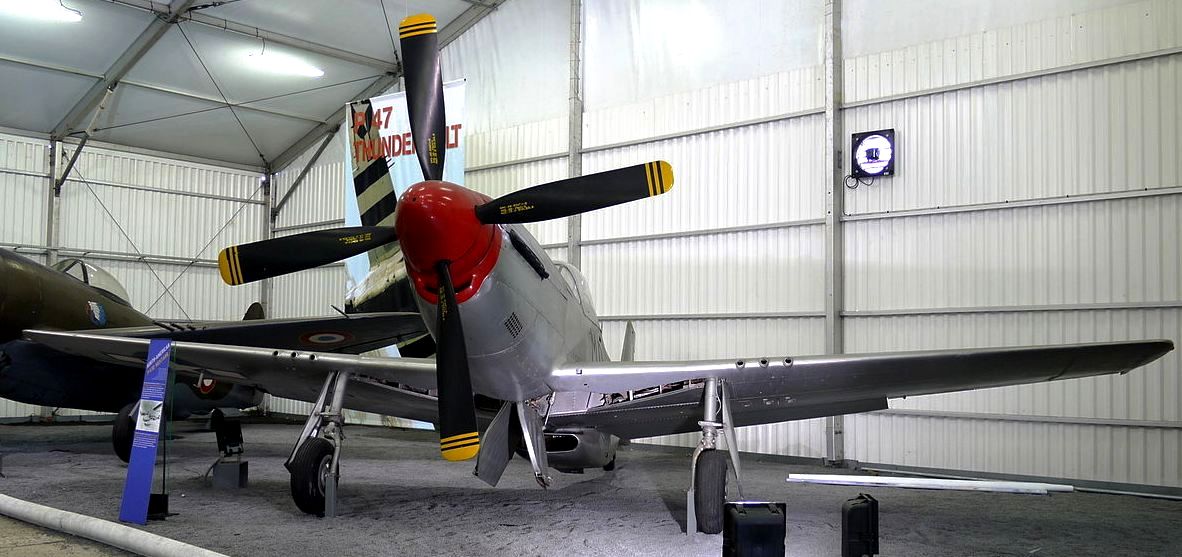
North American P-51D-20-NA Mustang (Serial No. 44-63788), Reg. No. F-AZFI, being restored.
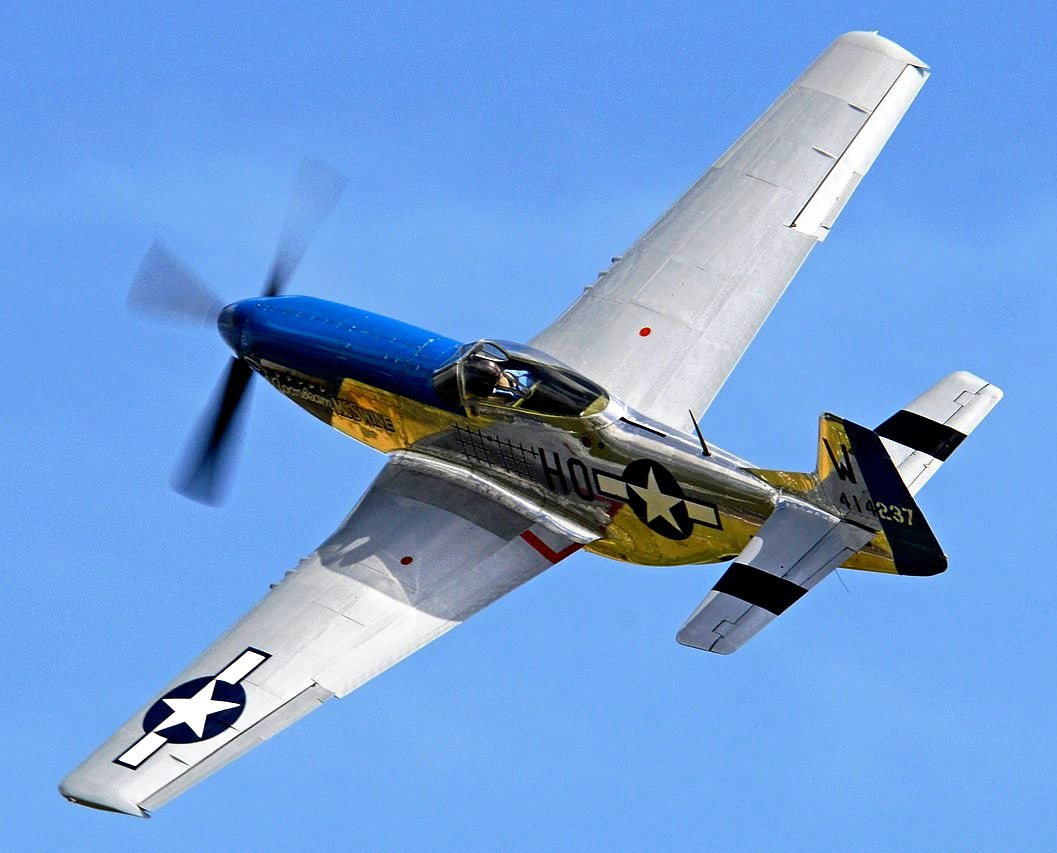
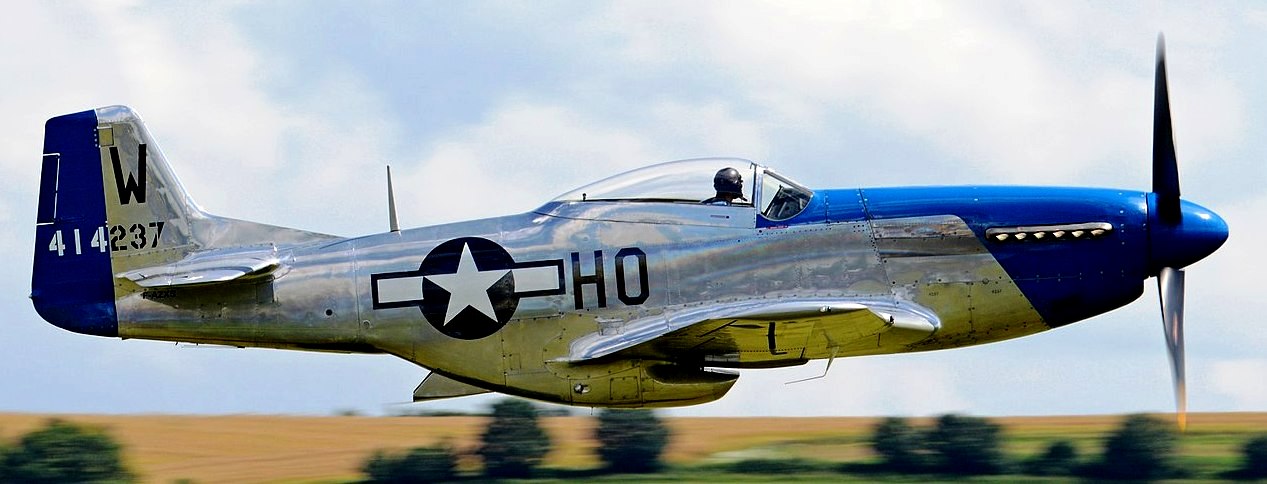
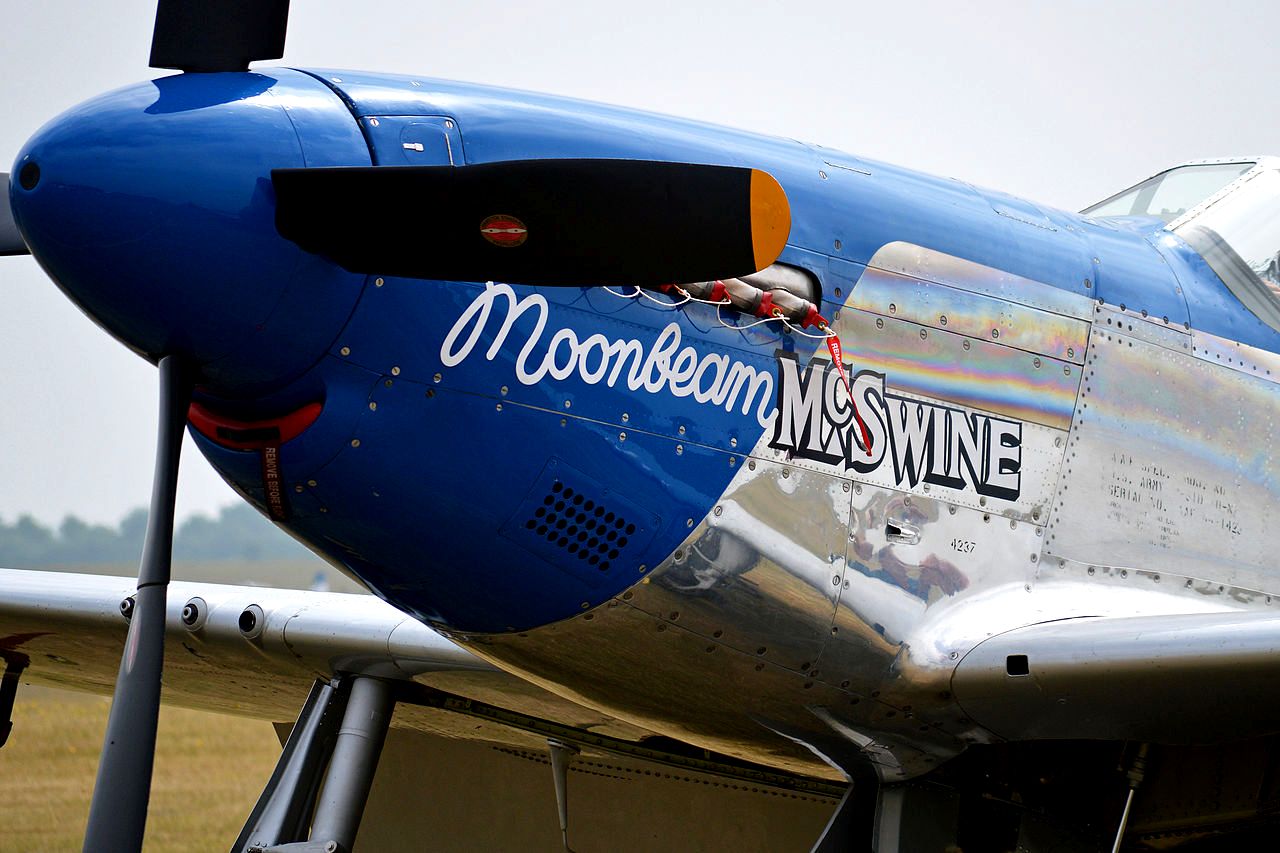
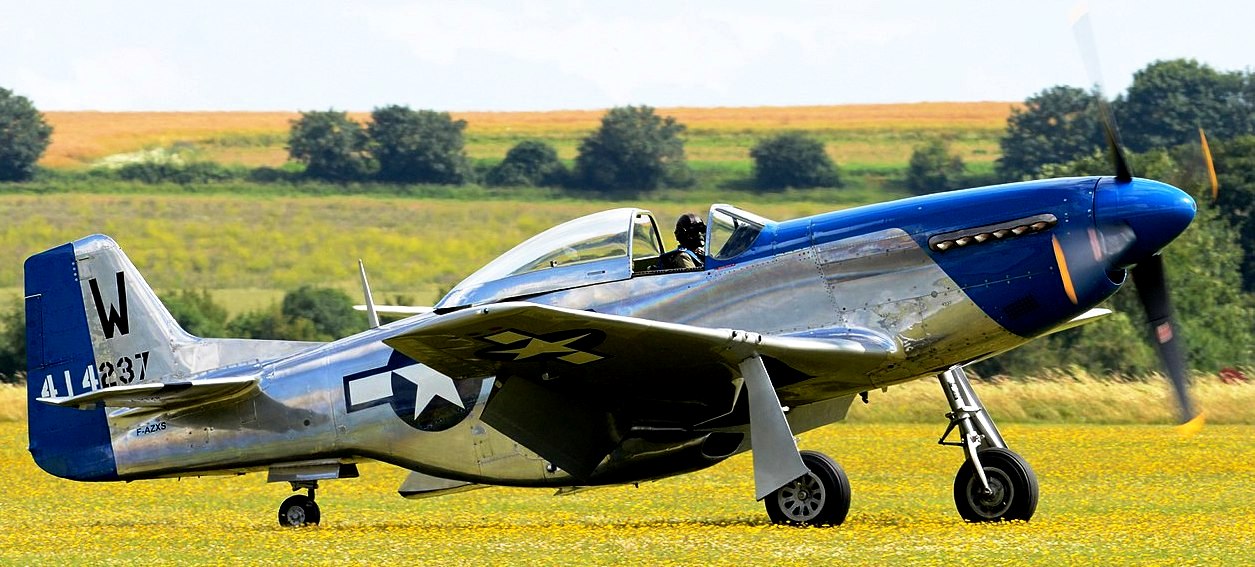
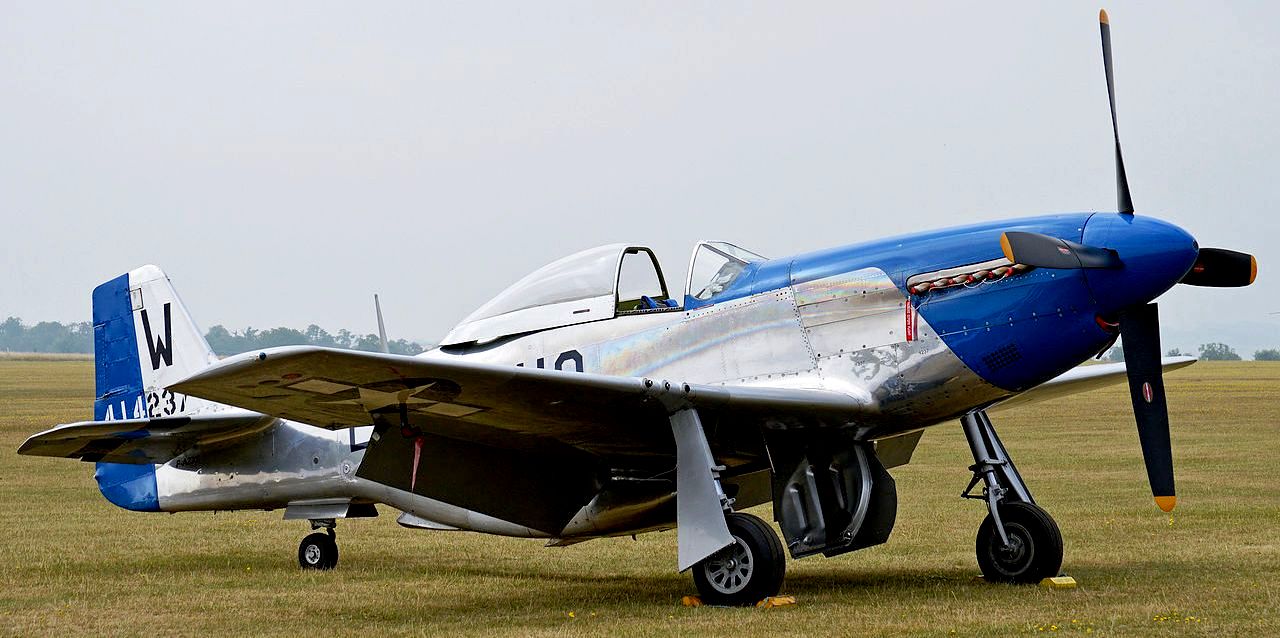
(Alan Wilson Photo)
North American P-51D Mustang (Serial No. 44-73656), c/n 122-40196, H-OW, “Moonbeam McSwine”, Reg. No., Frederic Akary. Nimes-Courbessac.
Despite being delivered to the UK in 1945, this Mustang didn’t see any active service and instead returned to the US. It remained in USAF service with various Air National Guard units until demobilized in 1958. After a period of civil operation, it was reworked by Cavalier Aircraft and in 1968 it joined the Fuerza Aerea Salvadoreña (El Salvador Air Force) who operated it (Serial No. 406), until 1974. There is a possibility that it saw combat in the 1969 soccer war and may have come up against what is now the Red Bull F4U-4 Corsair, which was in FAH service at the time. It is painted in the colours of the 352FG based at Bodney during 1944. Sold to Frederic Akary in France in early 2013 and was making it’s first appearance at Legends.
(Ricardo Maiko Entz Photo)
(Pline Photo)
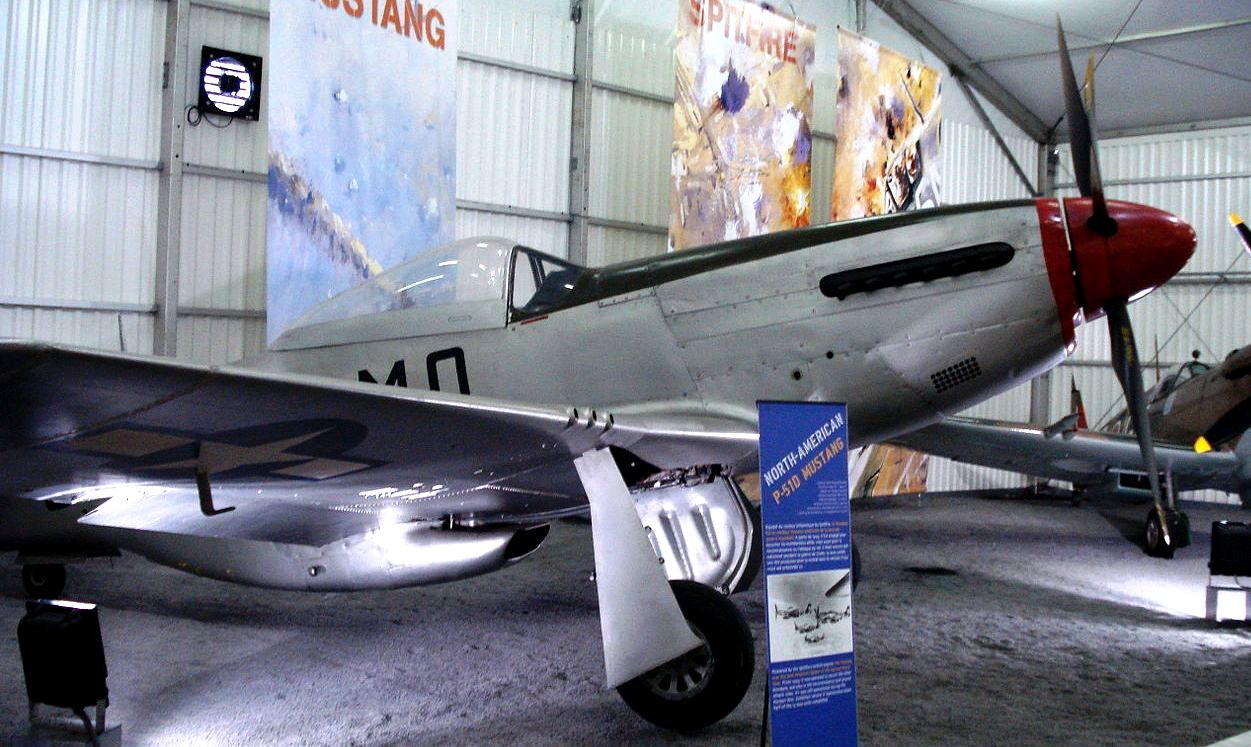
North American P-51D-20NA Mustang (Serial No. 44-63871), Reg. No. N9772F, Musée de l’Air et de l’Espace, Le Bourget Airport, near Paris, France.
(Aero Vintage Academy, Fred Debrouye Photo)
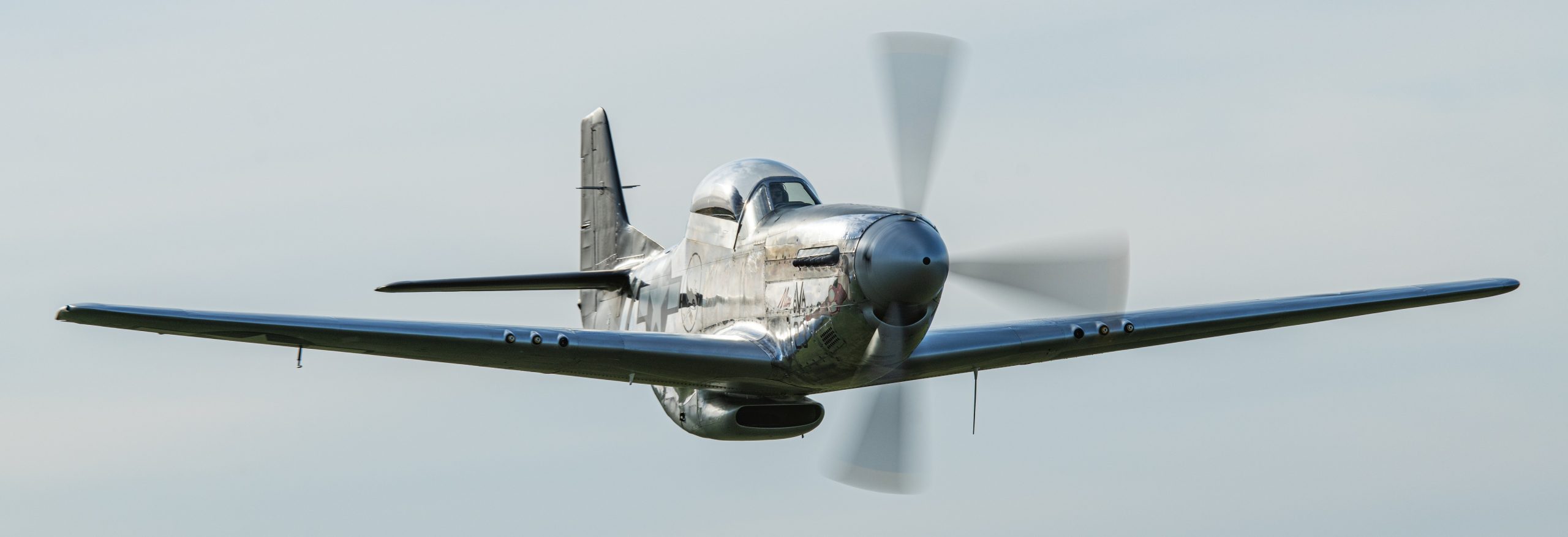
North American TF-51D Mustang (Serial No. 45-11518 ), “Miss Ava“, Reg. No. G-CLNV, Aero Vintage Academy, La Ferte Alais, France. Her bare metal finish and distinctive black tail markings are of the 23rd Fighter Group, 75th Fighter Squadron (Tiger Sharks), of the 14th Air Force based in China in 1945. The “Miss Ava” nose art is inspired by the name Aero Vintage Academy with whom she operates. However, the stenciling shows she is painted as P-51K (Serial No. 44-11533), the mount of Capt. E. McGuire, albeit now with a new name and coded “23”.
(Pline Photo)
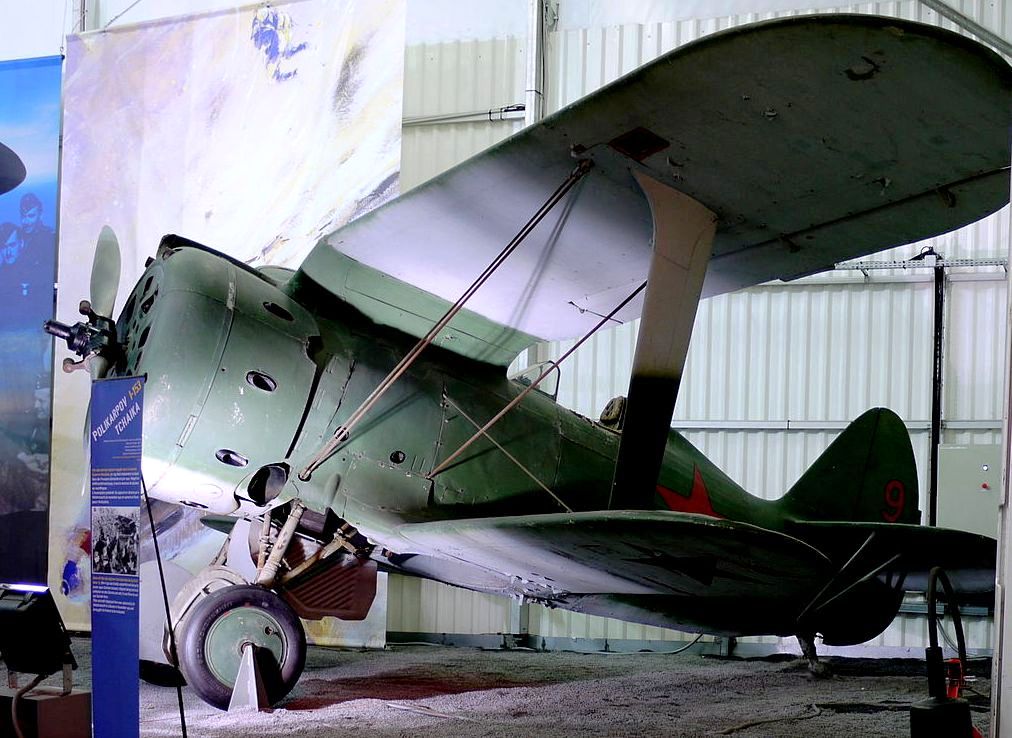
Polikarpov I-153. Musée de l’Air et de l’Espace, Le Bourget Airport, near Paris, France.
(Pline Photo)
(PpPachy Photo)
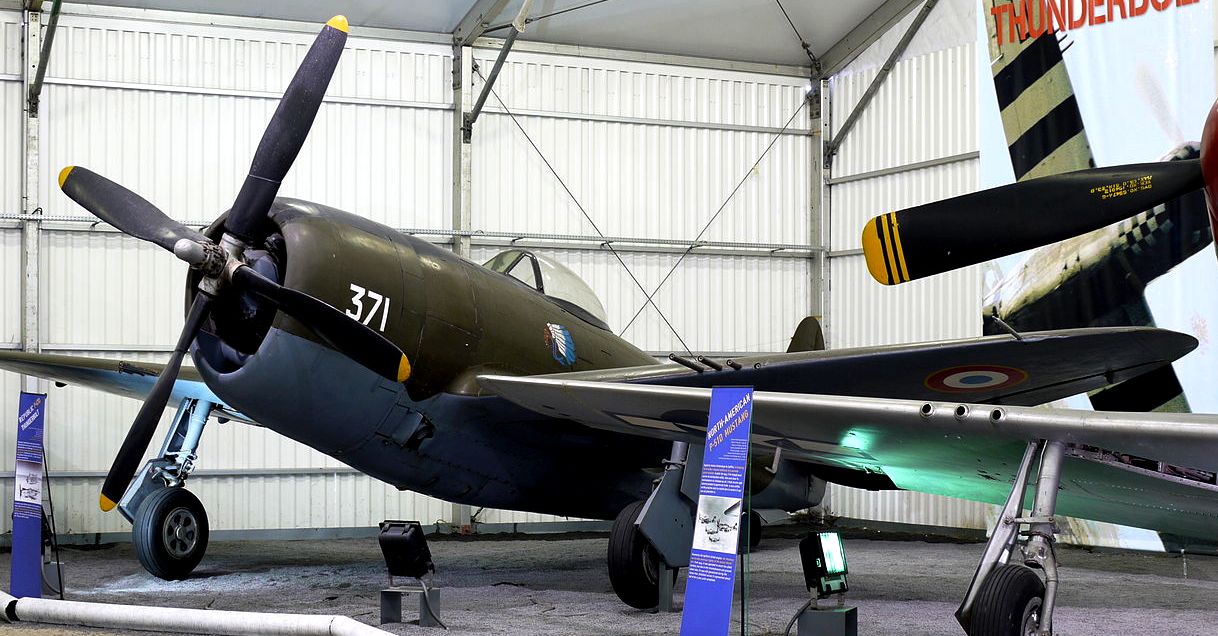
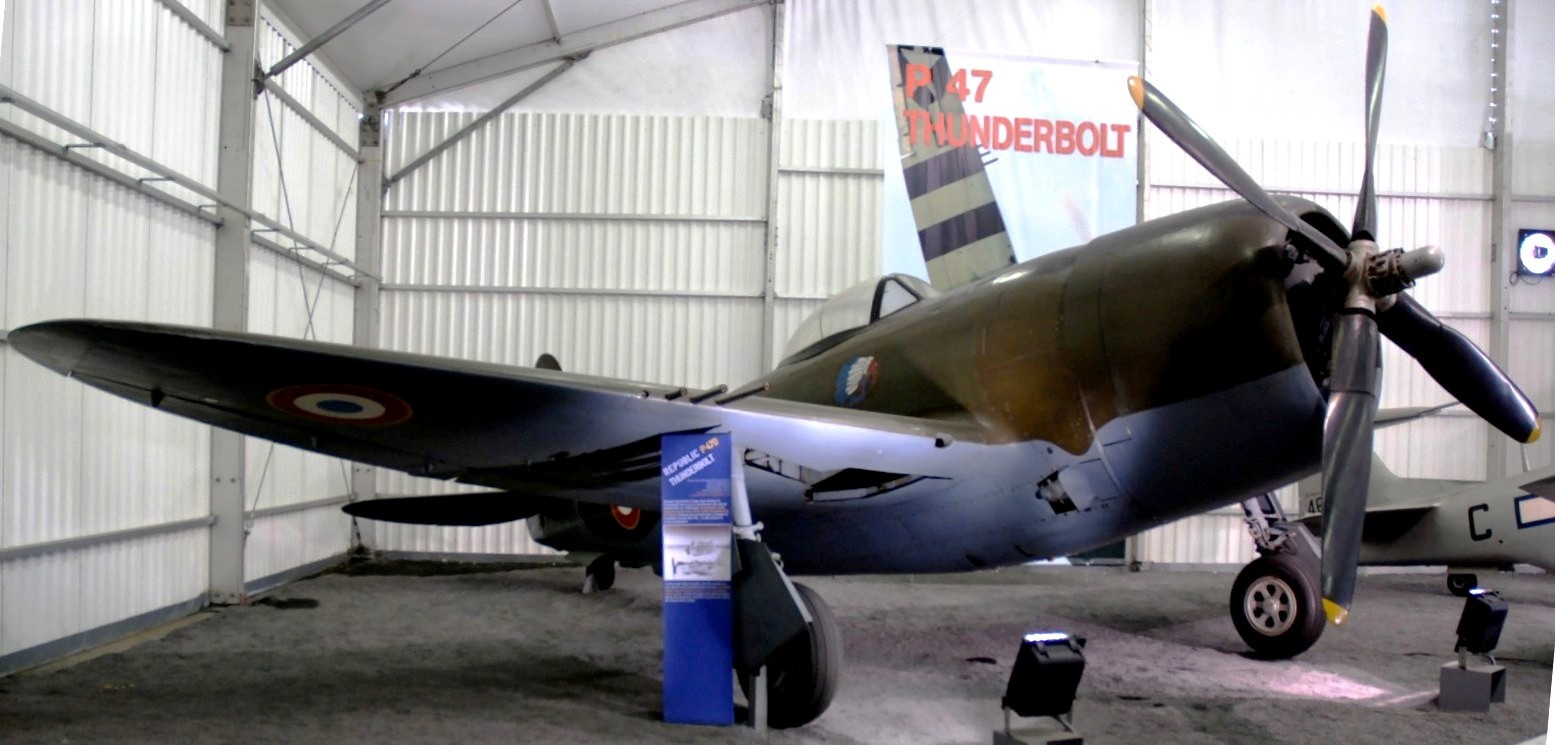
Republic P-47 Thunderbolt, 371. Musée de l’Air et de l’Espace, Le Bourget Airport, near Paris, France.
(Duch Photo)
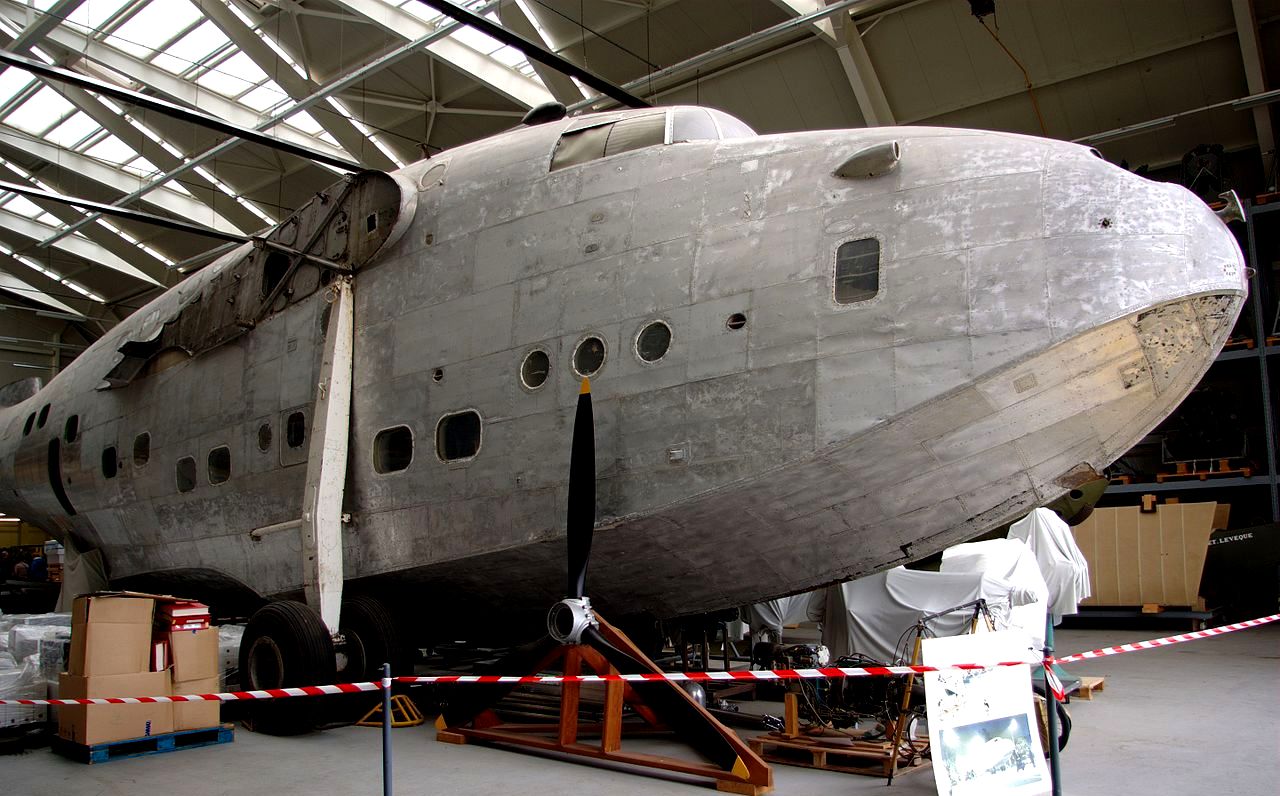
Short Sunderland Mk. V, being restored at the Musée de l’Air et de l’Espace, Le Bourget Airport, near Paris, France.
Supermarine Spitfire PR Mk. XIV (Serial No. RM927), coded X, W Air Collection, Paris, France.
(Kogo Photo)
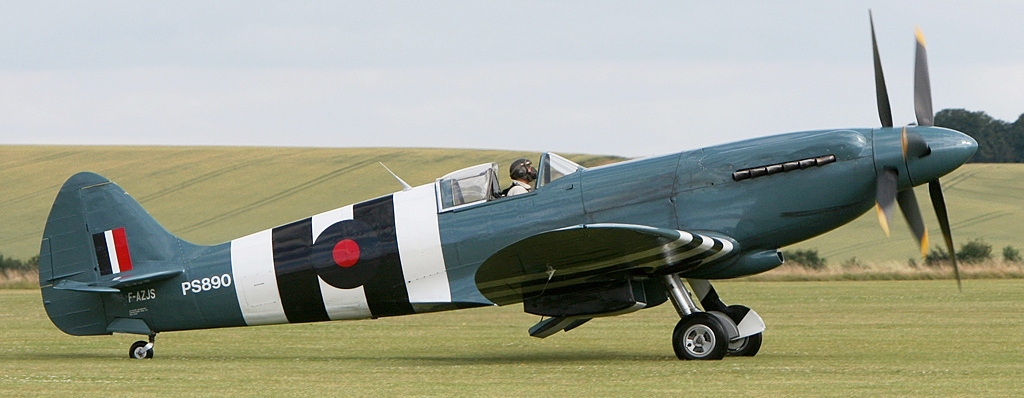
(Mike Freer – Touchdown-aviation Photo)
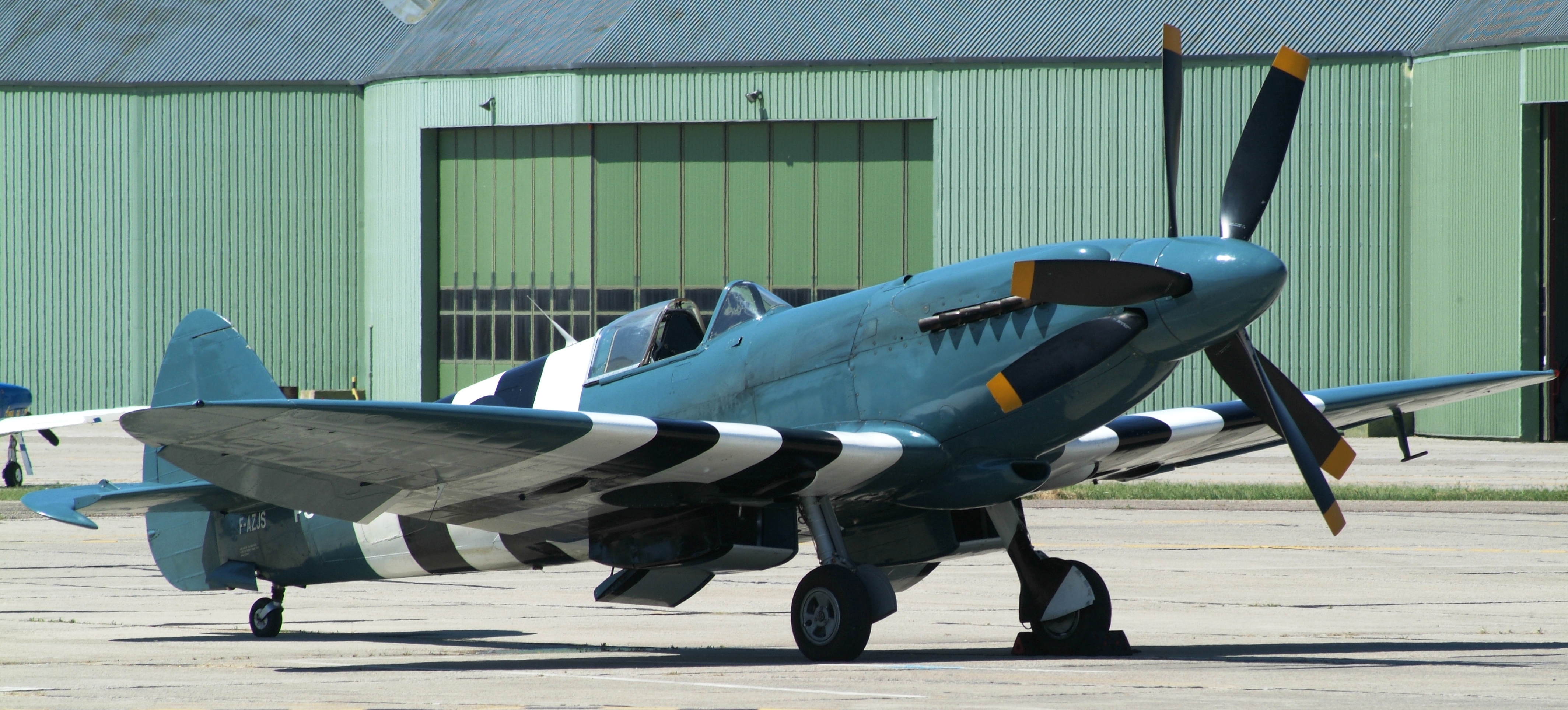
(Jerry Gunner Photo)
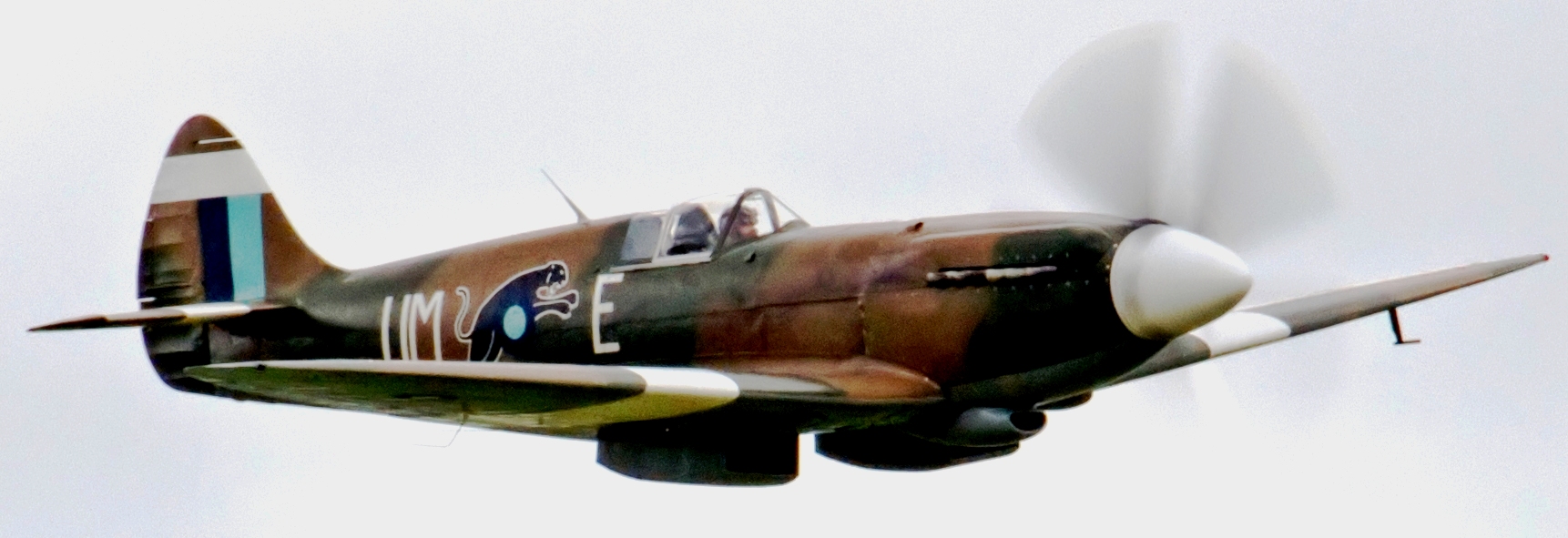
(Tony Hisgett Photo)
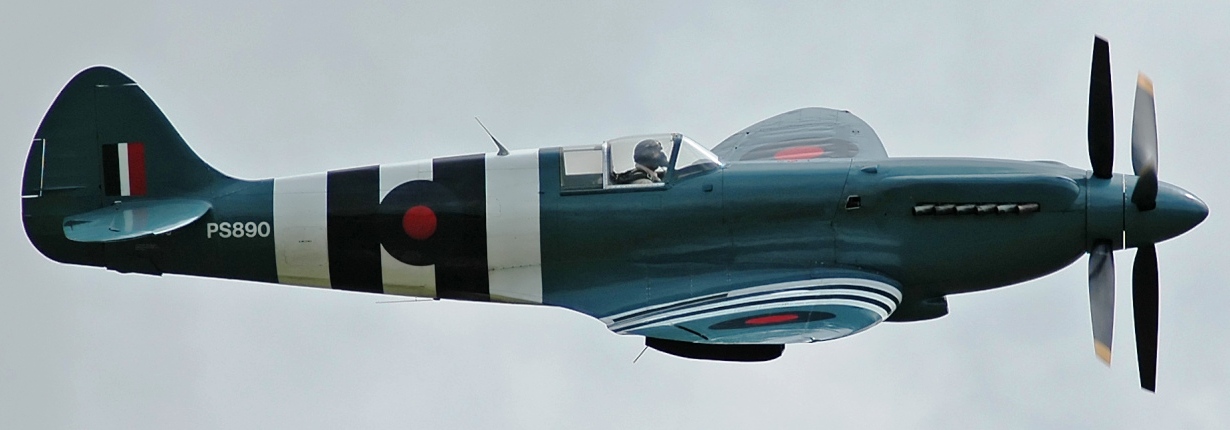
Supermarine Spitfire PR Mk. XIX (Serial No. PS890), c/n 6S/585110. This aircraft wears the markings of a Mk. XIV operated by No. 152 Sqn, SEAC. Built as a PR .XIX with a Griffon 66 engine at Supermarine Aviation(Vickers) Ltd. in 1944 and given production prototype engine mount modifications on 29 November 1944, arriving at 6 Maintenance Unit on 9 April 1945. She was moved to RAF Benson (PRU) for storage on 30 April 1945. PS890 joined 542 Squadron on 13 June 1945 followed by 81 Squadron at Seletar, Singapore on 22 January 1951. She was transferred to The Royal Thai Air Force as U14-26/97 on 3 June 1954. In 1962 she was donated by King Bhumibel of Siam to Ed Maloney of the Air Museum at Claremont, California, and put into storage. During a rebuild PS890 was fitted with a Shackleton engine and retained contra-rotating propellers flying again in May 2002 and operated by Planes of Fame, Chino. In 2005 Christophe Jacquard acquired her and based her in Dijon-Darois.
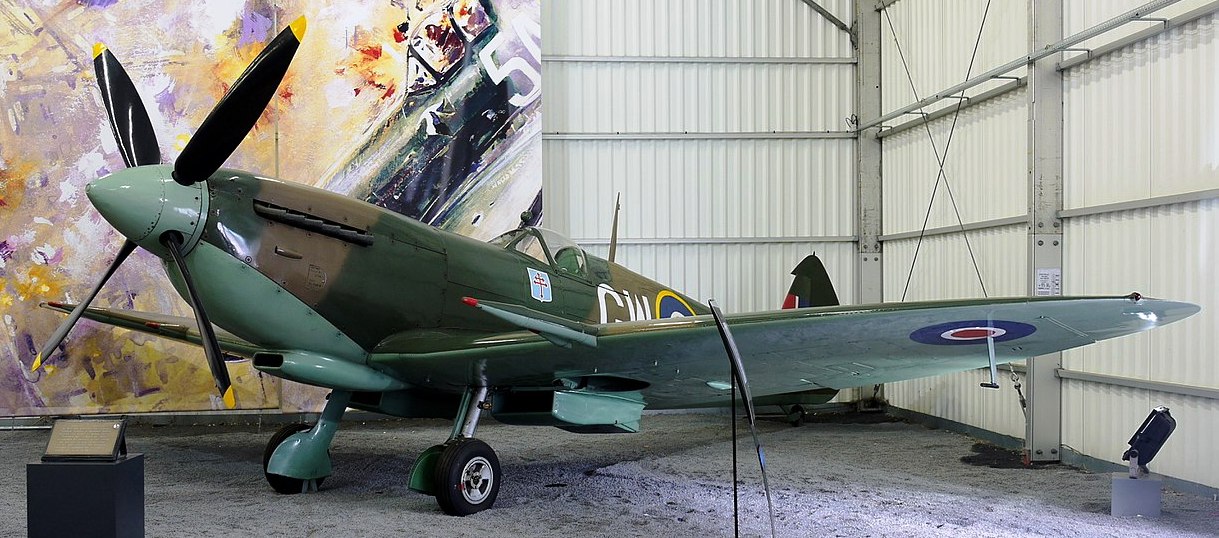
(Pline Photo)
Supermarine Spitfire LF Mk. XVIe (Serial No. RR263), c/n CBAF IX3310, built at Castle Bromwich in 1944. Painted as (Serial No. as TB597), coded B-GW. Musée de l’Air et de l’Espace, Le Bourget Airport, near Paris, France.
Vought F4U-5 Corsair (BuNo. 124541), Les Ailes de l’Aero, Cuers. Airworthy.
(Tristan Nitot Photo)
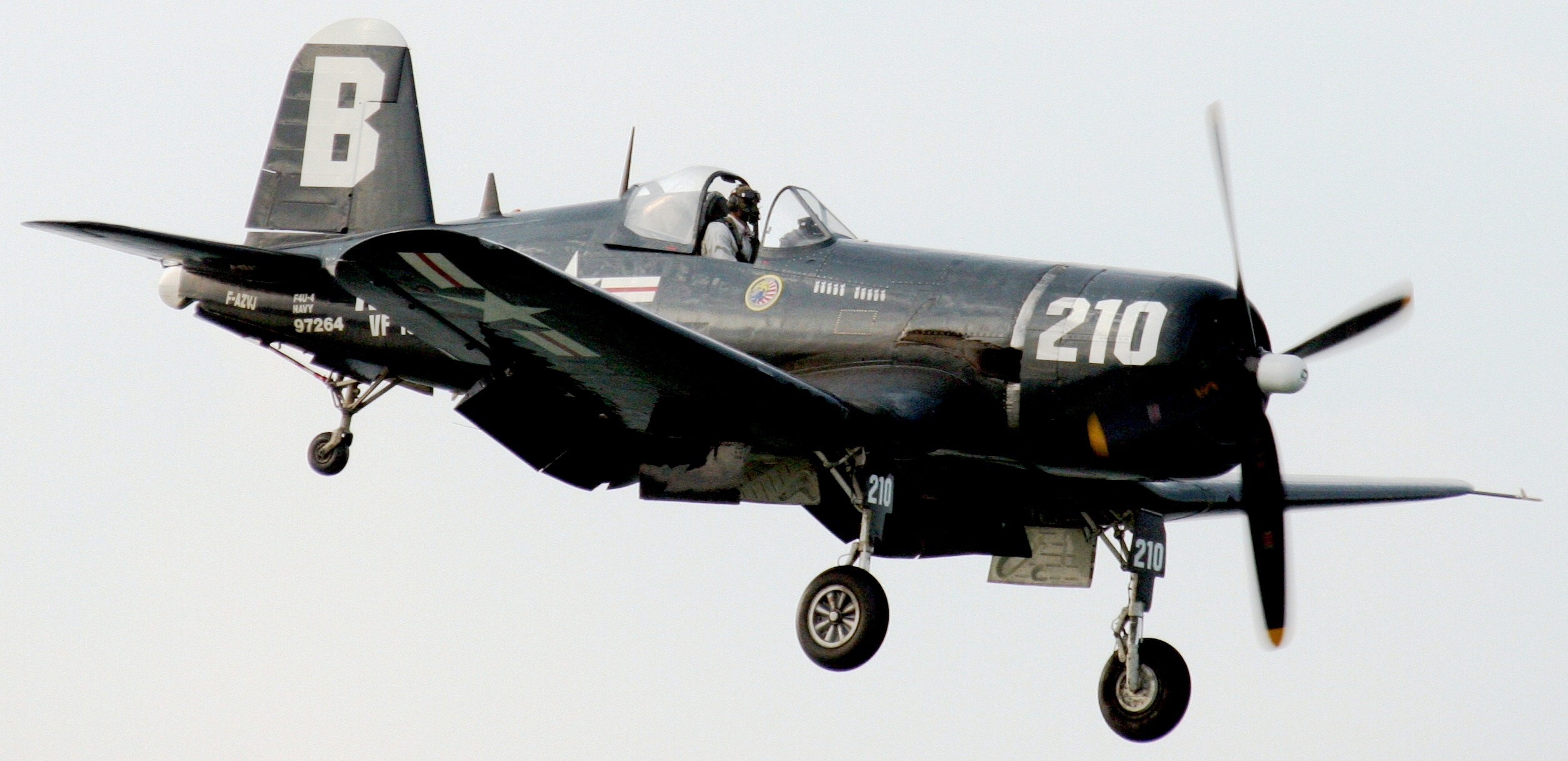
Vought F4U-4 Corsair (BuNo. 97264), c/n 9418, coded B210, Reg. No. F-AZVJ, Christophe Jacquard, Flying Legends, Corsair Warbird Ltd, Dijon-Longvic.
Vought F4U-5NL Corsair (BuNo. 124724), USN VC-3, NP-22, Salis Collection, “Les Casques de Cuir”, La Ferte-Alais.
Westland Lysander Mk. IIIA, restoration project. Melun-Villaroche Aviation Museum.
(Pline Photo)
(PpPachy Photo)
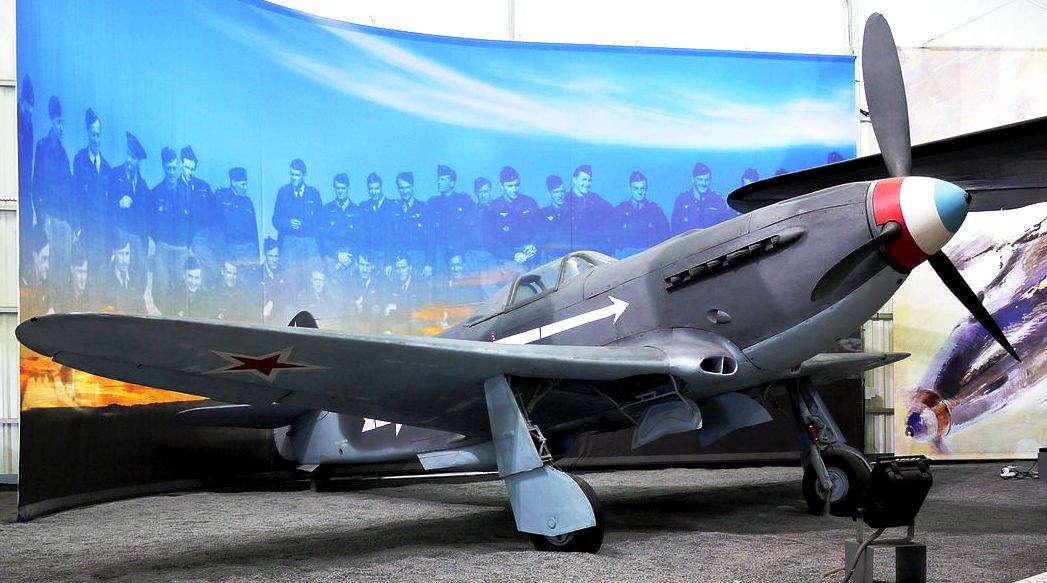
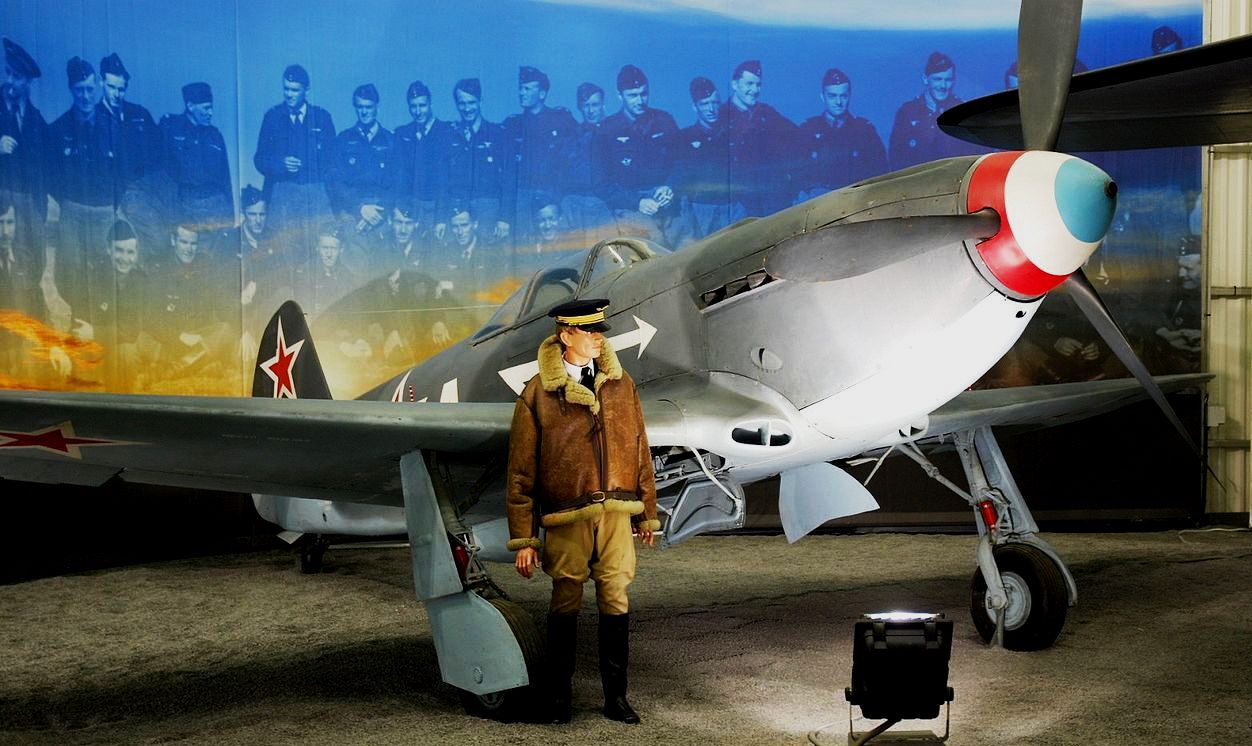
Yakovlev Yak-3.
Yakovlev Yak-3UA reproduction built with an Allison engine, first flown in 2020. Painted as White 6 as flown by French fighter ace Marcel Albert of Regiment de Chasse Normandie Niemen. Albert flew with the Free French Air Force on the Eastern Front and ended the war with 23 kills. This aircraft is based at Nelun Villaroche airfield, south-east of Paris.
All comments are subject to our Comment Policy. You must be at least 18 years old to comment.
See a comment that violates our guidelines? Report it here.