US Navy Large Cruiser USS Portland (CA-33)
The Portland class of heavy Cruisers was designed and constructed by the USN in 1930. The two ships of the class, Portland and Indianapolis, saw extensive service in the Pacific during the Second World War.
The Portland class displaced just under 10,000 long tons (10,000 t) and featured heavier armour and armament than previous cruisers. Featuring 8″/55 caliber guns and designed to function as fleet flagships, the Portland class were intended to fix problems with armament and armour that had been a weakness of preceding U.S. cruisers.
Portland served in many engagements including the Battle of the Coral Sea, the Battle of Midway, and the Guadalcanal Campaign,where she was severely damaged but nonetheless able to return to service. She later fought in the Battle of Leyte Gulf and the Battle of Okinawa. (Wikipedia)
USS Portland (CL/CA–33)
(USN Photo)
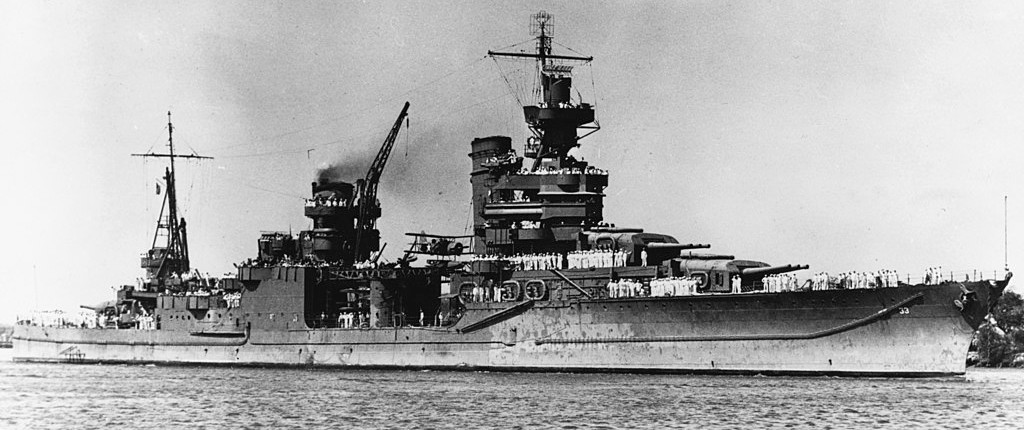
USS Portland (CA-33) at Pearl Harbor, Hawaii, 14 June 1942, with her crew paraded on deck in “Whites”. Note the external degaussing cable fitted to the hull side of this ship.
USS Portland (CL/CA–33) was the lead ship of the Portland class of cruiser and the first ship of the United States Navynamed after the city of Portland, Maine.[Launched in 1932, she completed anumber of training and goodwill cruises in the interwar period before seeingextensive service during the Second World War, beginning with the Battle of the Coral Sea in 1942, where she escorted the aircraft carrier USS Yorktown and picked upsurvivors from the sunken carrier USS Lexington. She screened for USS Yorktown again in the Battle of Midway, picking up her survivors as well. She then supported the carrier USS Enterprise during the initial phase of the Guadalcanal Campaign later that year, and was torpedoed during the Naval Battle of Guadalcanal. The torpedo inflicted heavy damage which put her out of action for six months as she was repaired in Sydney, Australia, and later San Diego, California.
Returning to combat in mid-1943, USS Portland saw action in many of the major engagements of the Pacific War, conducting shore bombardments in support of campaigns at the Aleutian Islands, Gilbert and Marshall Islands, Mariana Islands, and New Guinea. She was involved in the October 1944 Battle of Leyte Gulf, engaging Japanese ships in the decisive Battle of Surigao Strait. She then conducted shore bombardments at Lingayen Gulf and Corregidor Island, and in 1945 supported landings during the Battle of Okinawa until the end of the war.
Following the end of the Second World War, USS Portland accepted the Japanese surrender in the Caroline Islands and then undertook several Operation Magic Carpet cruises to bring U.S. troops home. She was decommissioned in 1946 and scrapped by 1962. In her extensive service she accrued 16 battle stars, making her one of the most decorated ships in the U.S. fleet. (Wikipedia)
(USN Photo)
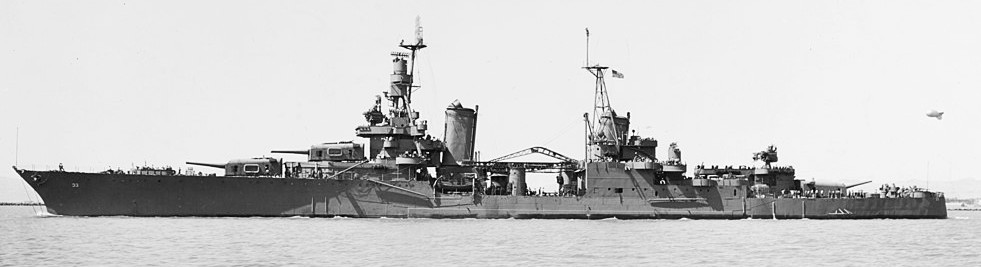
USS Portland (CA-33) off the Mare Island Navy Yard, California, 16 May 1943.
(USN Photo)
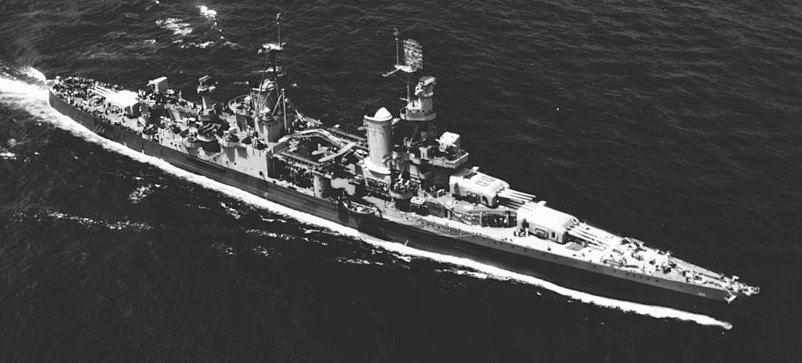
USS Portland (CA-33) underway while nearing Pearl Harbor, Territory of Hawaii, 20 September 1945, with 500 additional naval personnel aboard.
(USN Photo)
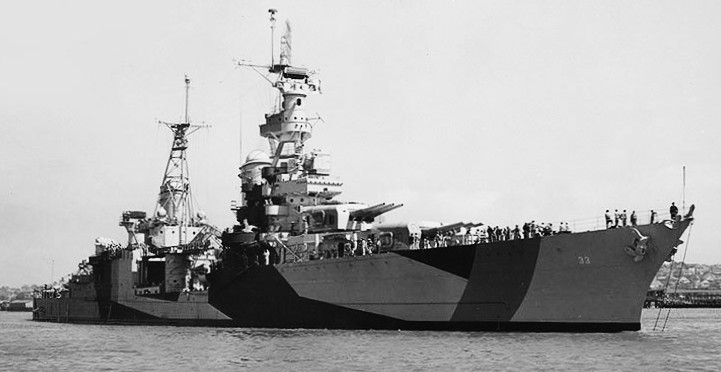
USS Portland (CA-33) off the Mare Island Naval Shipyard, California, on 30 July 1944. Her camouflage is Measure 32, Design 7d.
(USN Photo)
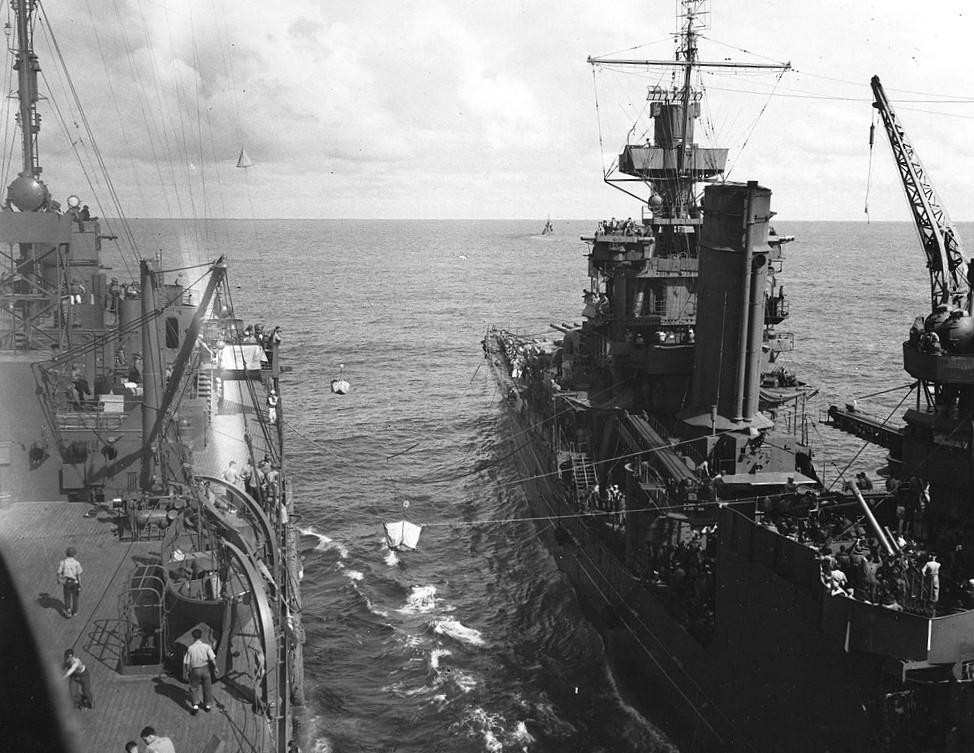
USS Portland (CA-33), right, transfers survivors of the aircraft carrier USS Yorktown (CV-5) to the submarine tender USS Fulton (AS-11), left, on 7 June 1942, following the Battle of Midway. Fulton transported the men to Pearl Harbor.
(USN Photo)
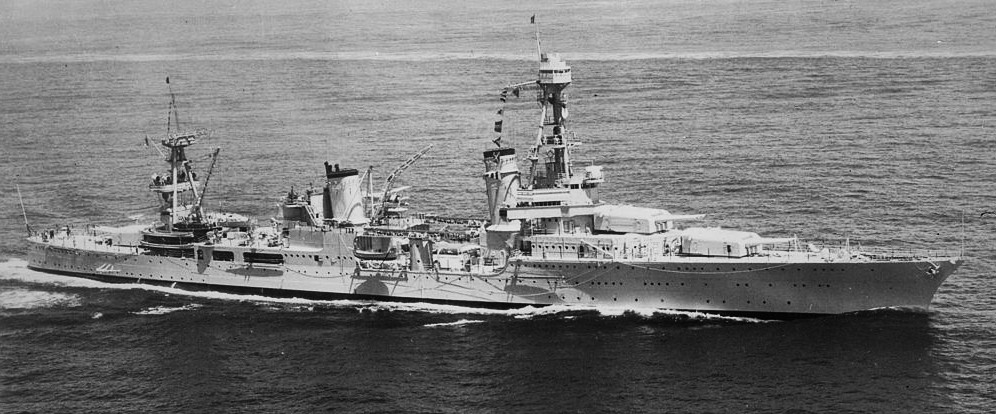
USS Portland (CA-33). Aerial, starboard how, underway, 31 May 1934.
(USN Photo)
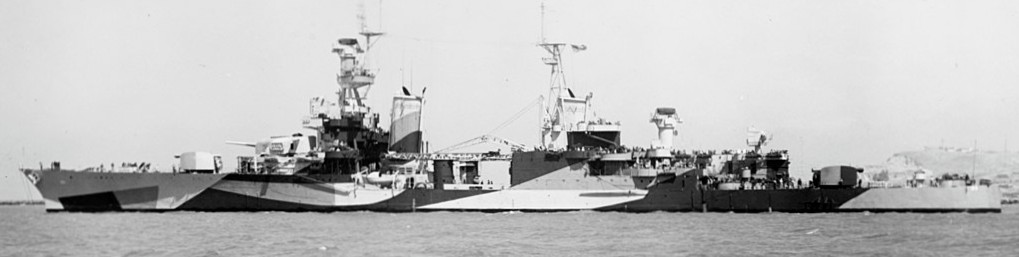
USS Portland (CA-33) off the Mare Island Navy Yard, California (USA), 30 July 1944. Her camouflage is Measure 32, Design 7d.
(USN Photo)
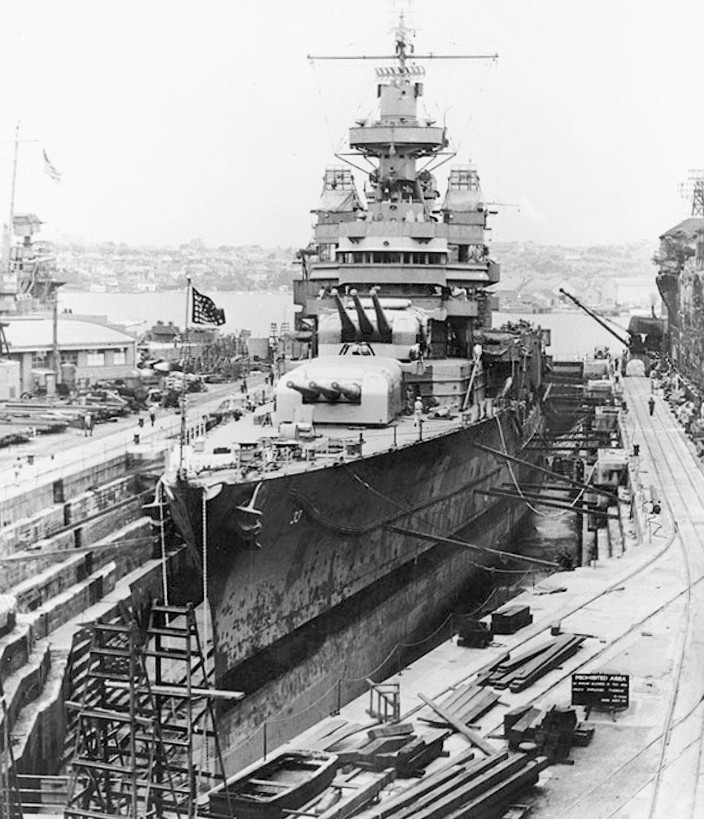
USS Portland (CA-33) in a drydock at the Cockatoo Island Dockyard, Sydney, New South Wales, Australia, circa in late December 1942, while under repair for torpedo damage received in the Naval Battle of Guadalcanal on 13 November 1942. She arrived at Sydney on 30 November but did not enter drydock until 24 December after USS Chester (CA-27) and USS New Orleans (CA-32) were repaired. Note the arrangement of gun directors on her forward superstructure: main battery director atop the foremast, with FC fire control radar; and a secondary battery director, with FD fire control radar, on each bridge wing. Also note this ship’s external degaussing cables, mounted on her hull sides.
All comments are subject to our Comment Policy. You must be at least 18 years old to comment.
See a comment that violates our guidelines? Report it here.