Merchant Aircraft Carriers (MAC-Ships)
HMS Atheling (D51), HMS Begum (D38), HMS Emperor (D98), HMS Empress (D42), HMS Khedive (D62), HMS Nabob (D77), HMS Premier (D23), HMS Queen (D19), HMS Rajah (D10), HMS Ranee (D03), HMS Ruler (D72), HMS Shah (D21), HMS Thane (D48)
Oil or grain bulk cargo carriers with superstructures removed and flight decks added. Manned by Merchant Navy crews,with Fleet Air Arm (FAA) personnel to maintain and fly the aircraft – mainly A/S Fairey Swordfish and Hawker Sea Hurricanes. The ships flew the Red Ensign, and some aircraft carried ‘Merchant Navy’ instead of ‘Royal Navy’ on their fuselage.
Hundreds of Empire ships were employed by the Government of the United Kingdom. They were acquired from a number of sources: many were built for the government; others obtained from the United States; still others were captured or seized from enemy powers. Empire ships were mostly used during the Second World War by the Ministry of War Transport(MoWT), which owned the ships but contracted out their management to various shipping lines.
HMS Atheling (D51)
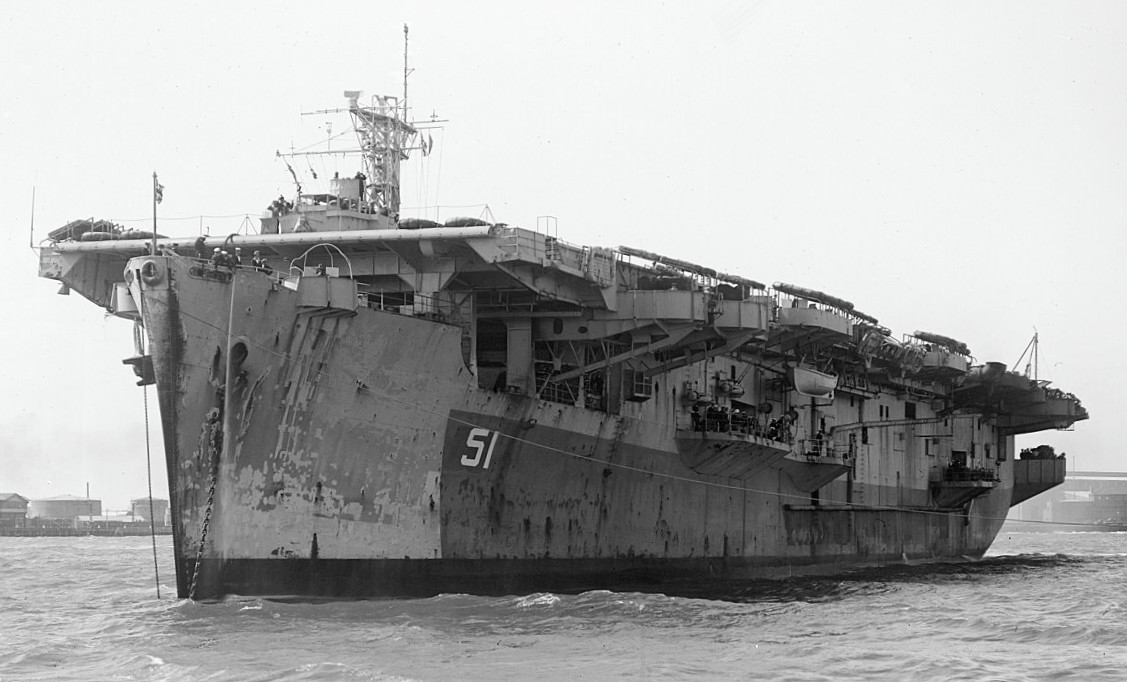
(State Library of Victoria Photo)
HMS Atheling (D51), December 1945.
HMS Atheling (D51) was a Royal Navy Ruler-class escort carrier of the Second World War. She was a US built ship provided under lend lease and returned to the US at the end of hostilities. She was built by the Seattle-Tacoma Shipbuilding Corporation (Tacoma, Washington) under Maritime Commission Contract. She was launched 7 September 1942, sponsored by Mrs. Richard P. Luker. The ship was commissioned on 12 July 1943 as USS Glacier AVG-33 (edit – ACV-33: all Bogue-class carriers changed designation on 20 August 1942) under the command of Commander Ward C. Gilbert. Her designation was changed to CVE-33 on 15 July 1943. Final work was carried out at US Navy Yard Puget Sound in July and she was transferred to the Royal Navy on 31 July 1943 at Vancouver, British Columbia.
Following formal transfer the ship was sent to the Royal Canadian Navy dockyard at Esquimalt for conversion for British use. Following the work she was commissioned as HMS Atheling (D51) on 28 October. She sailed via the Panama Canal and New York arriving at the Clyde UK in January 1944 and underwent further modification there to operate fighter aircraft. Atheling ferried RN squadrons to the Far East in April 1944: No. 822 NAS and No. 823 NAS FAA, with their Fairey Barracudas at Madras on 11 April and No. 1837 NAS and No. 1838 NAS FAA (Vought Corsair II) disembarked at Ceylon on 13 April.
At Trincomalee HMS Atheling took on No. 1383 NAS and No. 899 NAS FAA aircraft and personnel; ten Corsair and ten Supermarine Seafires respectively. From November 1944 into 1945, she was engaged in aircraft ferry duties for British and US fleets. After the war she was used as troopship before returning to the US. From October 1945 to April 1946, her commanding officer was Capt. John Inglis, who was to become director of US Naval Intelligence in July 1954. Atheling put into Norfolk, Virginia, 6 December 1946 for return to the United States. Her name was stricken from the Naval Register on 7 February 1947 and she was sold to National Bulk Carriers as the merchant ship Roma on 26 November 1947. She was scrapped in Italy in November 1967. (Wikipedia)
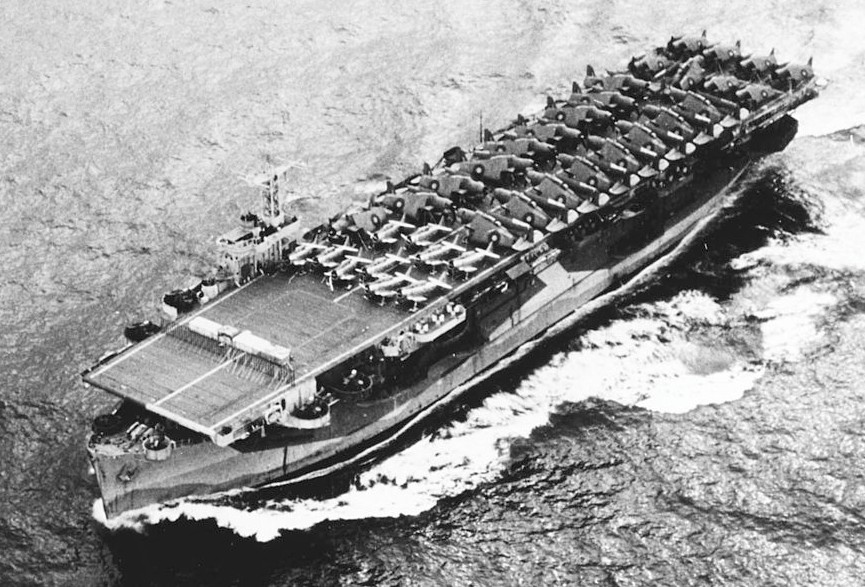
(USN Photo)
HMS Atheling (D51) (ex-USS Glacier (CVE-33)) underway on 22 December 1943. She has a deck load of U.S. Navy aircraft types in British markings, including: ten North American “Harvard” trainers (T-6 Texan), 18 Grumman Avenger torpedo bombers, and seven Grumman Hellcat fighters.
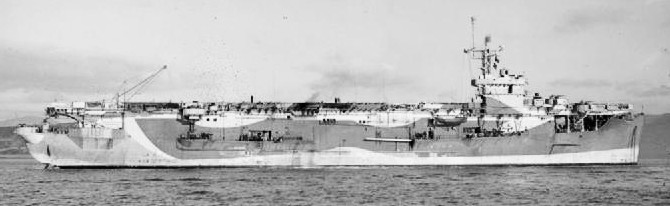
(IWM Photo, A 21918)
HMS Atheling (D51), Greenock, Scotland, 22 Feb 1944.
HMS Begum (D38)
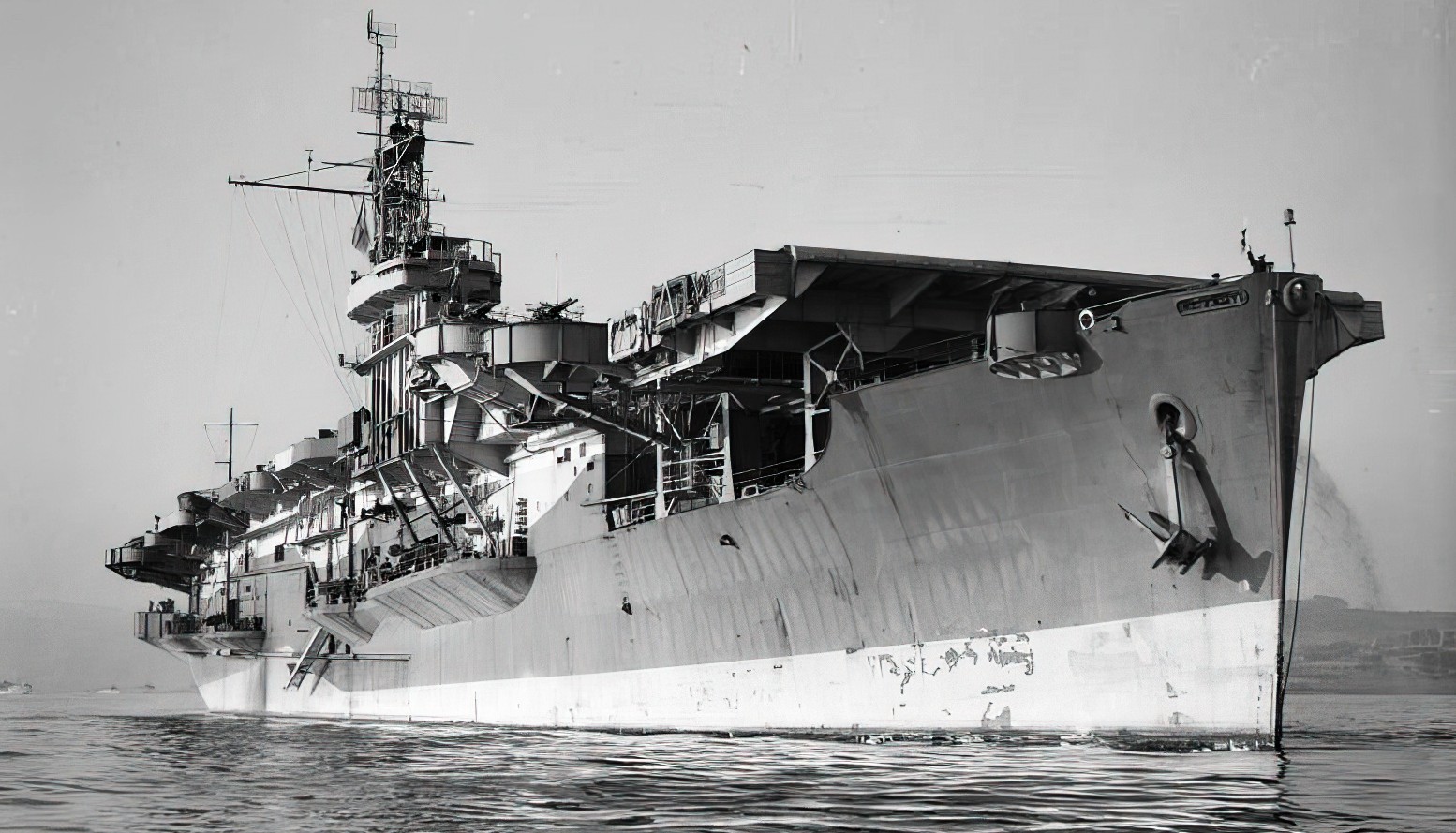
(IWM Photo, A 21736)
HMS Begum (D38) at Greenock, Scotland, 6 Feb 1944.
USS Bolinas (CVE-36) (originally AVG-36, then later ACV-36) was an escort carrier launched 11 November 1942 by Seattle-Tacoma Shipbuilding, Tacoma, Washington; sponsored by Mrs. G. B. Sherwood, wife of Commander Sherwood; and commissioned 22 July 1943, Captain H. L. Meadow in command. On 2 August 1943 after being decommissioned Bolinas was transferred to the United Kingdom under Lend-Lease and renamed HMS Begum (D38). Begum served with the Royal Navy during the Second World War, doing anti-submarine sweeps in the Indian Ocean with No. 832 Squadron FAA as her complement, participating in the sinking of the German submarine U-198. After her return she was declared surplus by the U. S. Navy. She was stricken for disposal 19 June 1946 and sold by the Navy into merchant service 16 April 1947 as Raki and later I Yung. She was scrapped in Taiwan in March 1974. (Wikipedia)
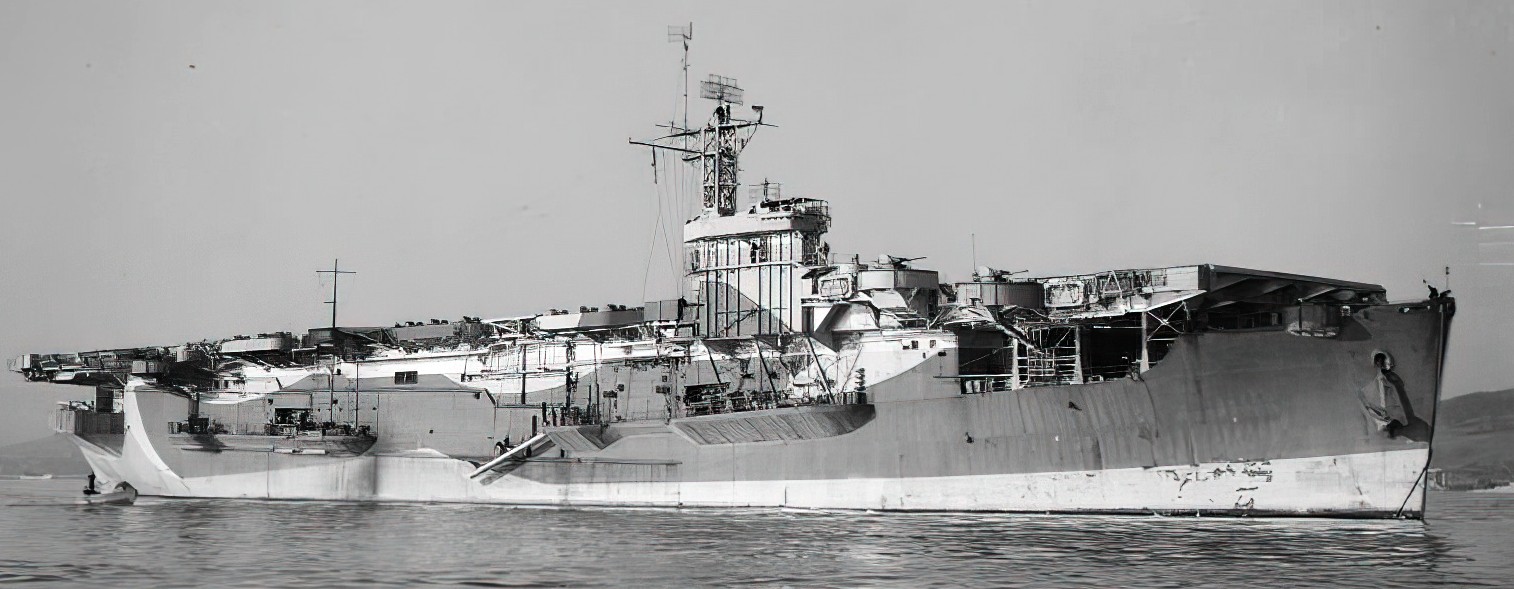
(IWM Photo, A 21737)
HMS Begum (D38) at Greenock, Scotland, 6 Feb 1944.
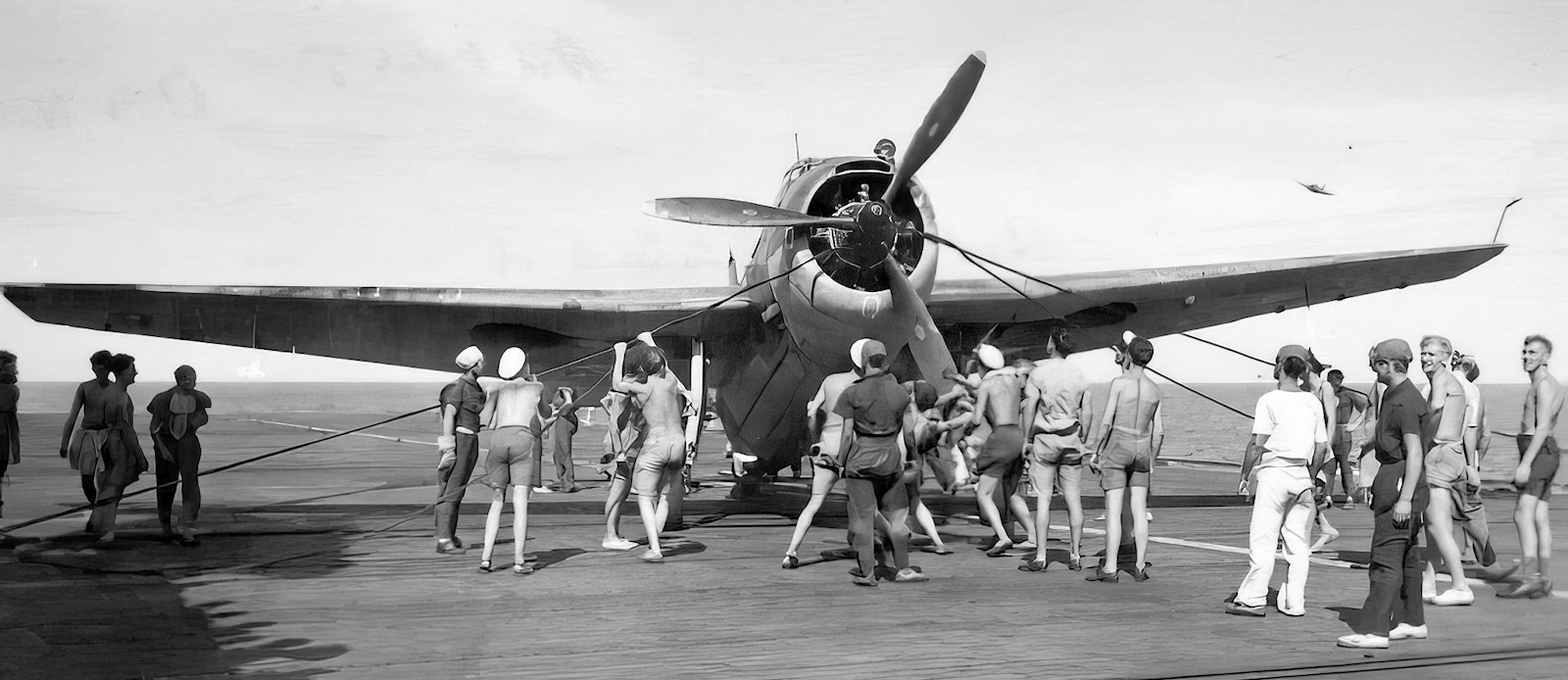
(IWM Photo)
Maintenance personnel assess the damage and prepare to recover Grumman Avenger (Serial No. JZ231), coded 4Q from No. 1 barrier on HMS Begum (D38), 1 June 1944.
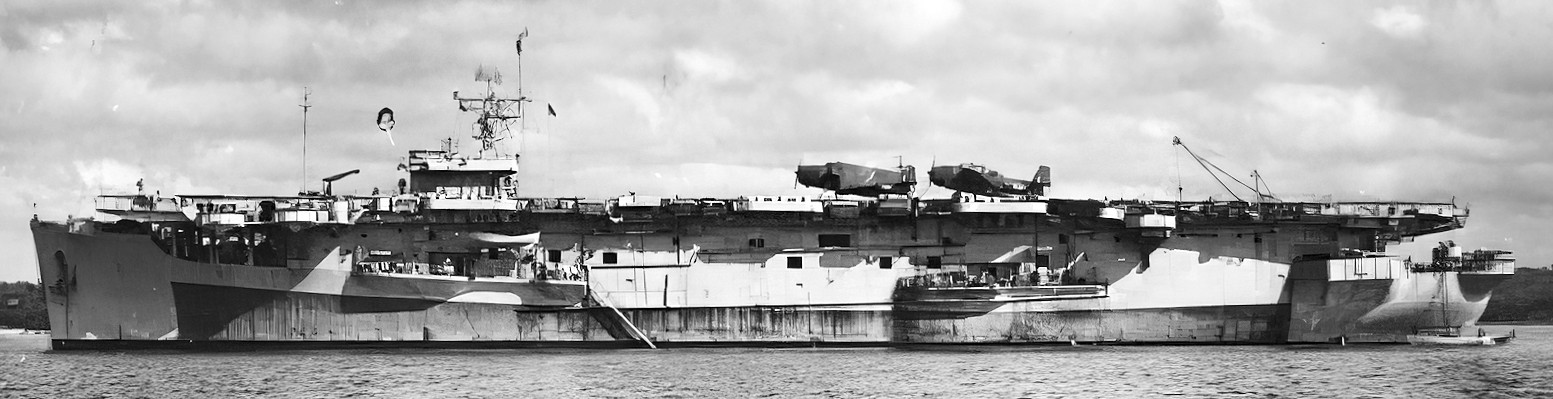
(RN Photo)
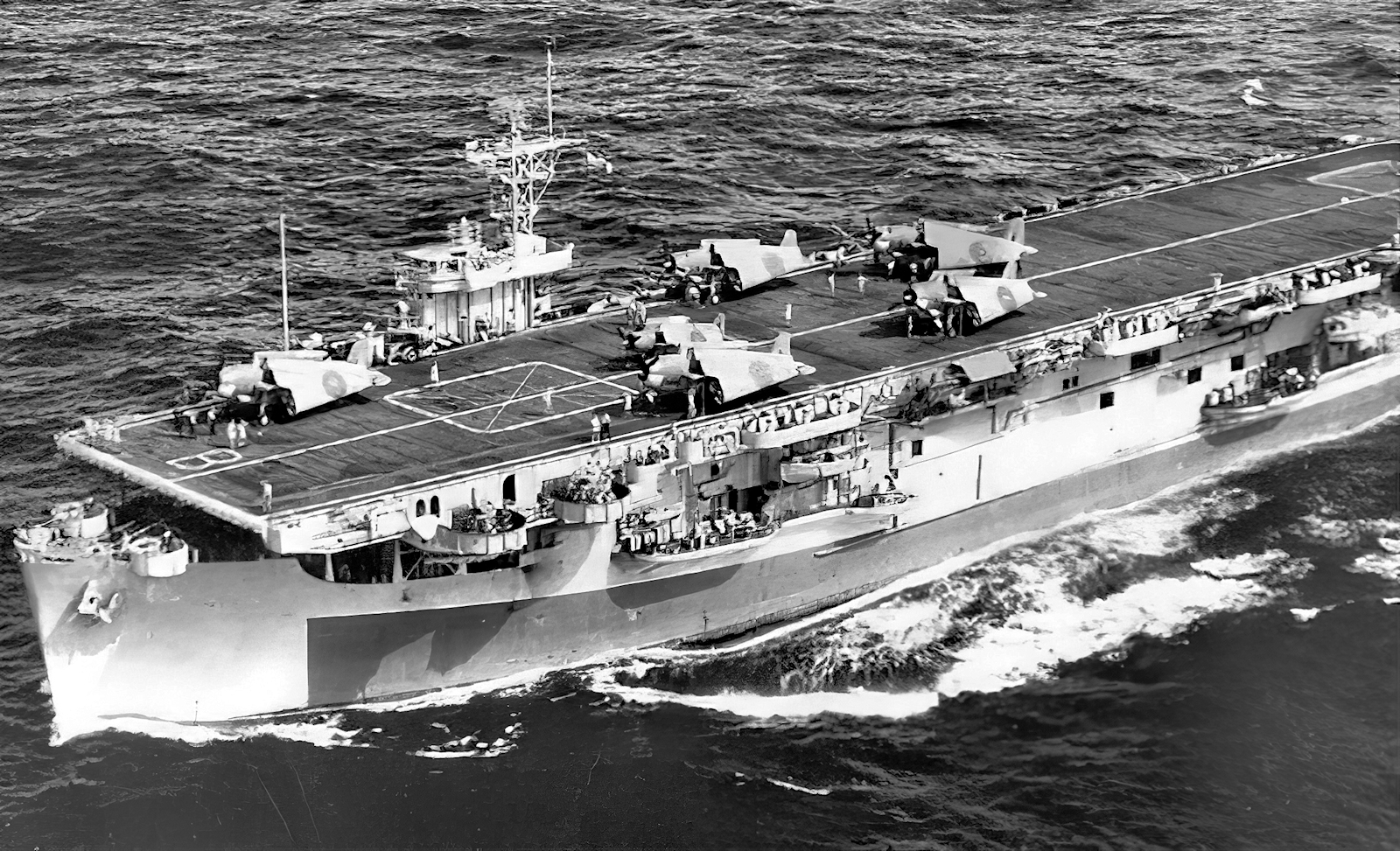
HMS Begum (D38) at Kilindini, Kenya, c1944.
(RN Photo)
HMS Begum (D38) at sea operating the Grumman Avengers of No. 832 Squadron FAA.
(RN Photo)
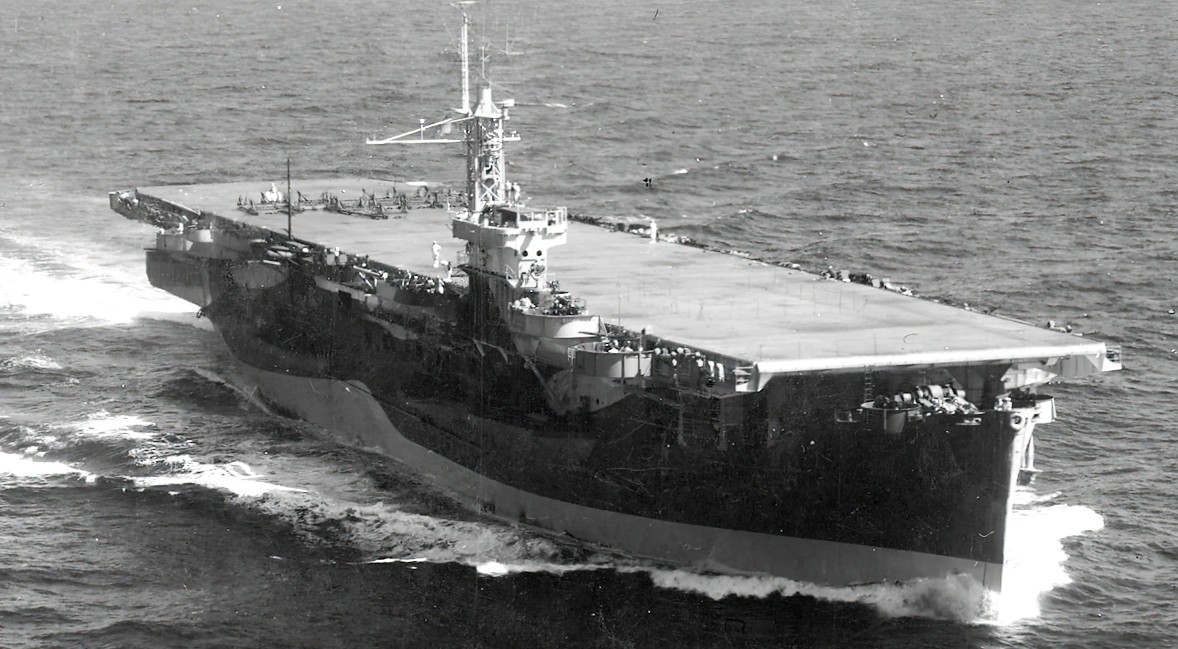
HMS Begim (D38)at sea, possibly on passage from Vancouver, British Columbia, to the Panama Canal on route to the UK, cDecember 1943.
HMS Emperor (D98)
(IWM Photo, A 21343)
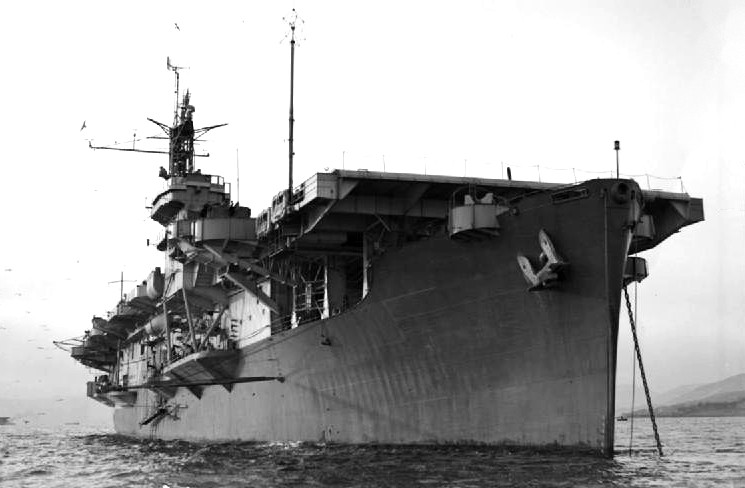
HMS Emperor (D98) at Greenock, Scotland, 10 Jan 1943.
USS Pybus (CVE-34) was initially a United States Navy Bogue-class escort carrier. The ship was transferred to the United Kingdom for service in the Royal Navy as the Ruler-class escort carrier HMS Emperor (D98) as part of the Lend-Lease program of the Second World War. Entering service in 1943, the ship took part in operations against the Tirpitz and the invasions of Normandy and southern France. She was transferred to the Indian Ocean fleet for the last stages of the war, supporting the landings in Burma and the early stages of the naval hunt for the Japanese Cruiser Haguro. After the war she was tasked with assisting the re-occupation of Malaya before returning to the UK in December 1945 carrying 800 Squadron home as passengers. She left the UK in January 1946 and was returned to the USA. The carrier was sold for scrap in 1946. (Wikipedia)
(IWM Photo, FL 11445)
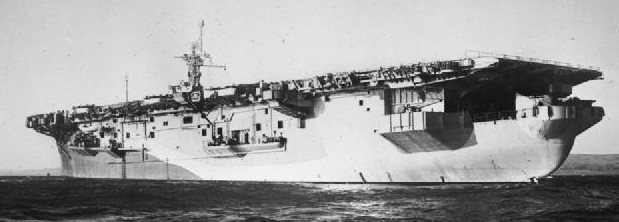
HMS Emperor (D98) at Greenock, Scotland.
HMS Empress (D42)
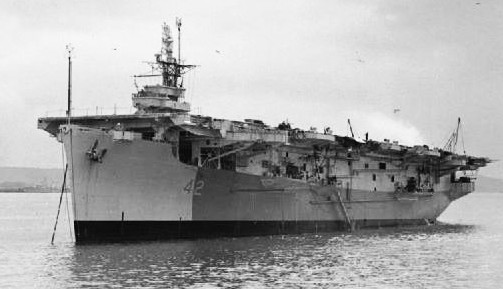
(IWM Photo, FL 5795)
HMS Empress (D42) at anchor in the Firth of Forth, 28 Aug 1944.
USS Carnegie (CVE-38) (previously AVG-38 then later ACV-38) was an escort aircraft carrier built in 1942-43 for transfer to the United Kingdom. She was reclassified ACV-38 on 20 August 1942, and CVE-38 on 15 July 1943. She was commissioned on 9 August 1943 for a period of three days prior to being turned over to the United Kingdom, under whom she served as HMS Empress (D42). (Wikipedia)
HMS Khedive (D62)
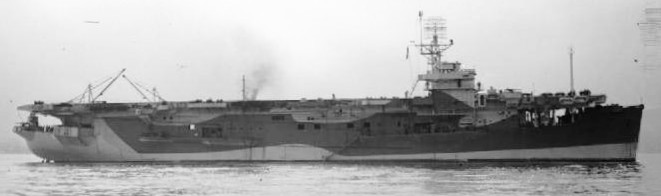
(IWM Photo, A 22956)
HMS Khedive (D62) underway at Greenock under the command of Captain H J Haynes RN.
USS Cordova (CVE-39) (originally AVG-39 then later ACV-39) was an escort carrier launched 27 December 1942 by Seattle-Tacoma Shipbuilding of Tacoma, Washington; sponsored by Mrs. A. E. Mitchell. Reclassified CVE-39 on 15 July 1943, Cordova was transferred to the Royal Navy on 25 August 1943, as HMS Khedive (D62). Khedive served as the command ship for the Allied landings in southern France, in August 1944. From April to August 1945, she was with the East Indies Fleet as part of the 21st Aircraft Carrier Squadron. Khedive was to take part in the invasion of Singapore in September 1945, codenamed Operation Tiderace. But with the Japanese surrender, she was merely deployed to the island for security. She was returned to United States custody on 26 January 1946 and sold into merchant service 23 January 1947 as Rempang (later Daphne). She was sold for scrap in Spain in 1975. (Wikipedia)
HMS Nabob (D77)
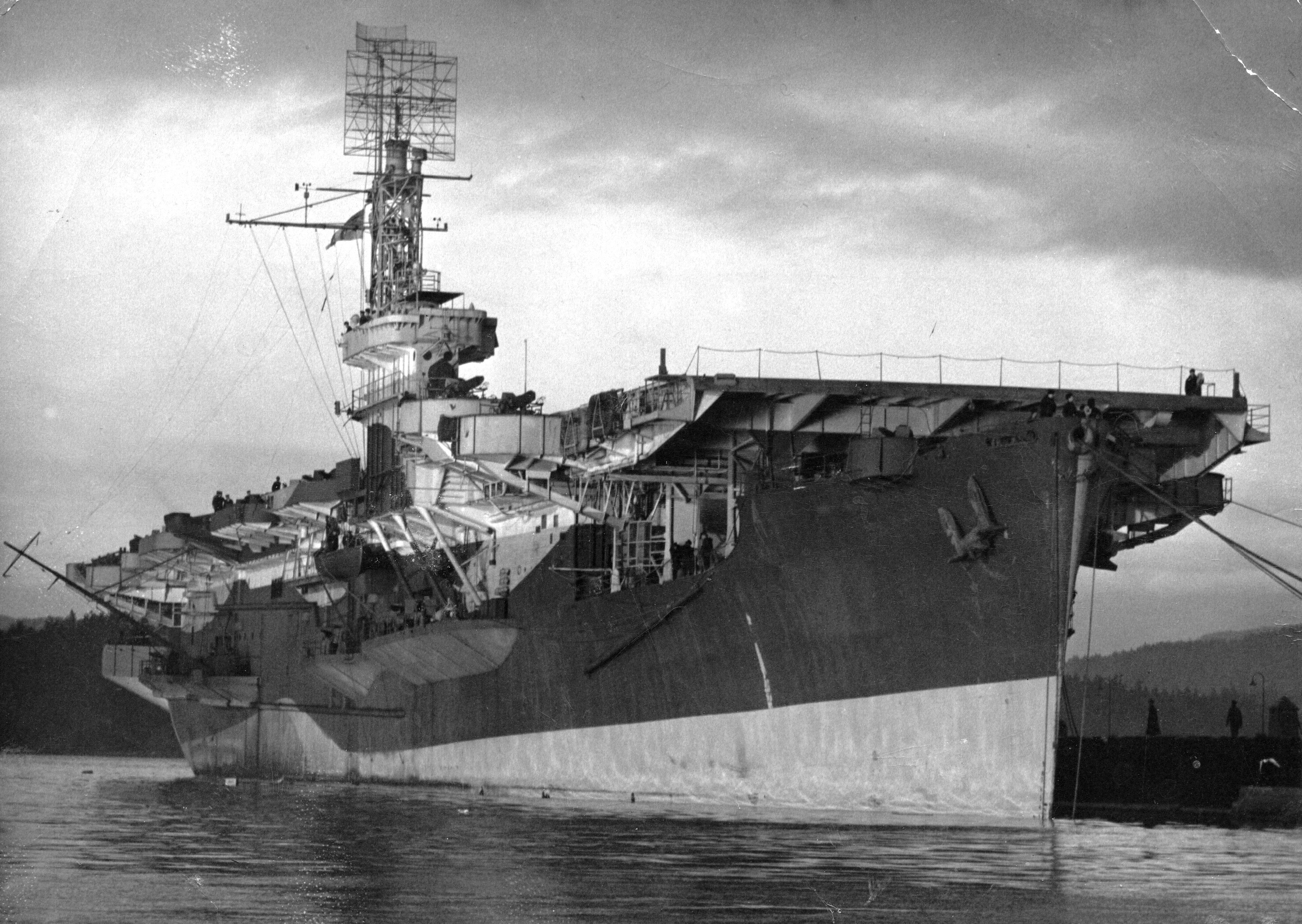
(Bruce Jones Photo)
HMS Nabob (D77), (RCN-manned) (Capt H N Lay RCN), damaged 22 August 1944, Arctic Ocean, north west of North Cape in Barents Sea (71.42N, 19.11E) – torpedoed by German ‘U.354’ (Sthamer). With Home Fleet covering Fleet Air Arm attack on the ‘Tirpitz’ in Altenfiord, Norway and also Russian convoy JW.59. Not repaired and laid up; 21 crew lost (Casualty List) (Russian Convoys).
HMS Nabob (D77) was a Ruler-class escort aircraft carrier which served in the Royal Navy during 1943 and 1944. The ship was built in the United States as USS Edisto (CVE-41) (originally AVG-41 then later ACV-41) but did not serve with the United States Navy. She was laid down on 20 October 1942, launched 22 March 1943, and transferred under Lend-Lease to the United Kingdom on 7 September 1943 prior to her commissioning as HMS Nabob (D77) into the Royal Navy. She served as an anti-submarine warfare carrier and the ship’s crew was largely drawn from personnel provided by the Royal Canadian Navy. Flight crew were Royal Navy personnel (No. 852 and No. 856 Naval Air Squadrons of the Fleet Air Arm).
After training the ship went to San Diego and took the 852 FAA-Sqdn on board, equipped with Avenger aircraft. She then proceeded with HMCS New Waterford (K321) via the Panama Canal to Norfolk, where 45 Republic P-47 Thunderbolt fighters were embarked as deck load and US Army Air Force personnel were taken on board as passengers when the ship made passage to the UK in convoy VT-10. There, it joined the Home Fleet after disembarking the fighters. In April 1944, four Grumman Martlet (Wildcat) Mk. V fighters were added to the No. 852 Squadron, FAA, while a detachment of the No. 856 Squadron, FAA, equipped with Grumman Avenger Mk. II aircraft joined the escort carrier in June. The ship then participated in Operation Offspring, a great mine lying operation off Norway.
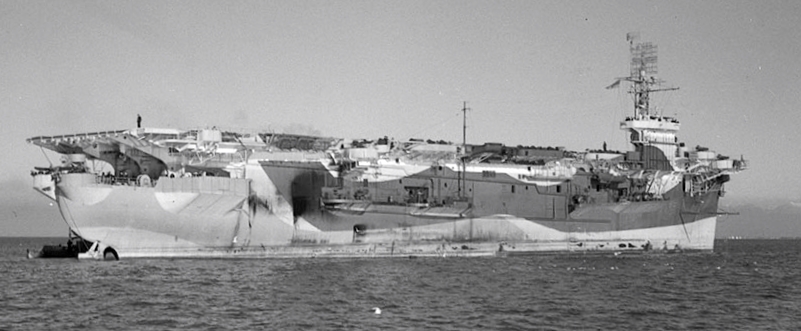
(Library and Archives Canada Photo, MIKAN No. 3198918)
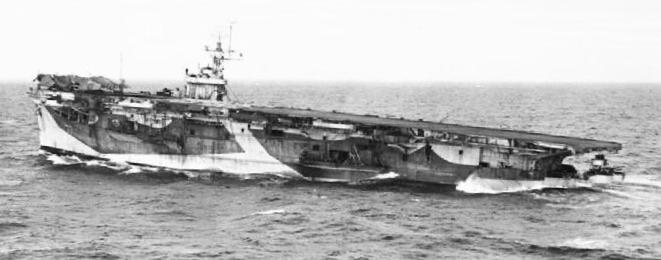
HMS Nabob (D77), starboard quarter, January 1944.
(IWM Photo, A 25368)
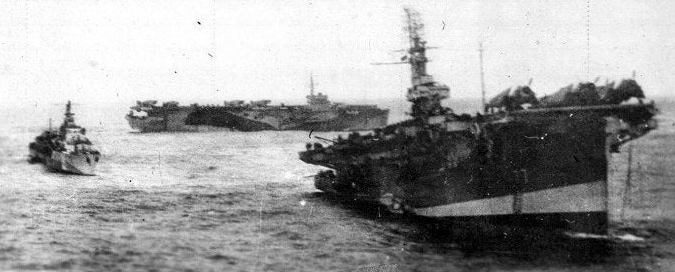
HMS Nabob (D77). On 22 August 1944, while returning from a strike against the German battleship Tirpitz (Operation Goodwood), she was torpedoed by U-354 in the Barents Sea and sustained heavy damage. The damaged carrier is shown steaming under her own power for Scapa Flow. At 01.14 hours on 22 Aug 1944 the U-boat fired a spread of FAT torpedoes and hit the HMS Nabob (D 77) with one torpedo in the starboard side aft, resulting in a hole about 32 feet square located aft of the engine room and below the waterline. At 01.22 hours, the U-boat fired a Gnat to finish off the carrier, but struck the HMS Bickerton (K466) instead, which was about to begin refuelling the escort carrier at the time of the attack. The frigate was subsequently scuttled by a torpedo from the HMS Vigilant (R93).
The stern of the HMS Nabob (D77) quickly sank 15 feet and the power went off. The fans in the engine room stopped and the main engines had to be shut down because the temperature had soared to 150 degrees. As the ship lay dead in the water, 205 men were evacuated from the ship and transferred to the Canadian destroyer HMCS Algonquin by boats and Carley floats, two weeks later they were transferred to the HMS Zest (R02) near the Faeroe Islands and finally brought to Scapa Flow. The remaining crew worked hard to get the ship under control. Emergency diesel generators were used to get power for the pumps to limit the flooding, but the engine room bulkheads bulged inward from the pressure of the sea that had rushed in through the hole. Heavy gear was ditched or brought to the bow to improve the trim, including the two 5-inch guns, which were removed with cutting torches and dropped overboard. This helped raise the stern so there was not as much pressure on the drive shaft bearings. In the early evening, the escort carrier was underway again at 10 knots.
Early the next morning, an HF/DF bearing and a surface contact indicated that a U-boat was in the area. Two Avengers managed to launch from the sloping deck and kept the U-boat under water for three and a half hours. The first returned and made a good landing, but the second crashed and damaged six other aircraft on deck. The damaged torpedo bombers were later jettisoned.
Despite her damaged condition, HMS Nabob turned homeward with a skeleton crew and reached her base after sailing 1,070 miles at a steady ten knots, proceeding homewards under her own steam, her stern low down in the water. On 27 August, the ship reached Scapa Flow under her own power. As the carrier’s galley had been destroyed the skeleton crew lived on short rations and rum for the five days it took to get the ship home.
(RN Photo)
HMS Nabob (D77), down by the stern after the torpedo strike.
HMS Nabob had lost 21 men. She was eventually judged not worth repairing, was beached and abandoned, and then cannibalized for other ships. She was decommissioned on 30 September 1944, but was retained as part of the Reserve Fleet. She was returned to USN at Rosyth and stricken for disposal 16 March 1946. She was sold for scrapping in the Netherlands in March 1947, but was resold and converted as the merchant ship Nabob of Norddeutscher Lloyd (she was later renamed Glory and registered in Panama). She was sold for scrap in Taiwan in 1977. HMS Nabob was one of three Royal Navy escort carriers built in the United States which were listed as lost in action (2 sunk and 1 heavily damaged and never repaired) during the Second World War.
These ships were all larger and had a greater aircraft capacity than all the preceding American built escort carriers. They were also all laid down as escort carriers and not converted merchant ships. All the ships had a complement of 646 men and an overall length of 492 feet 3 inches (150.0 m), a beam of 69 feet 6 inches (21.2 m) and a draught of 25 ft 6 in (7.8 m). Propulsion was provided a steam turbine, two boilers connected to one shaft giving 9,350 brake horsepower (SHP), which could propel the ship at 16.5 knots (30.6 km/h; 19.0 mph). Aircraft facilities were a small combined bridge–flight control on the starboard side, two aircraft lifts 43 feet (13.1 m) by 34 feet (10.4 m), one aircraft catapult and nine arrestor wires. Aircraft could be housed in the 260 feet (79.2 m) by 62 feet (18.9 m) hangar below the flight deck. Armament comprised: two 4 inch Dual Purpose guns in single mounts, sixteen 40-mm Bofors anti-aircraft guns in twin mounts and twenty 20-mm Oerlikon anti-aircraft cannons in single mounts. They had a maximum aircraft capacity of twenty-four aircraft which could be a mixture of Grumman Martlet, Vought F4U Corsair or Hawker Sea Hurricane fighter aircraft and Fairey Swordfish or Grumman Avenger anti-submarine aircraft.
HMS Premier (D23)
(IWM Photo, A 22526)
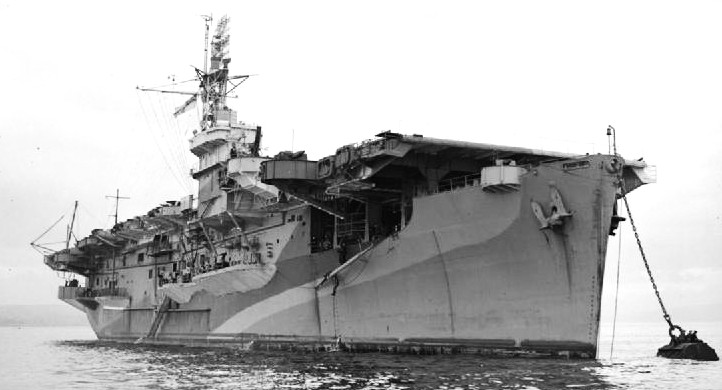
HMS Premier (D23).
The first USS Estero (CVE-42) (previously AVG-42 then later ACV-42) was an escort aircraft carrier launched 22 March 1943 by the Seattle-Tacoma Shipbuilding Corporation, Seattle, Washington, and sponsored by Mrs. C. N. Ingraham. She was reclassified CVE-42 on 15 July 1943. Completed in October 1943, she was transferred to the Royal Navy on 3 November 1943 and commissioned the same day as HMS Premier (D23). She served in the Second World War as an ASW escort carrier in European waters and additionally as a ferry carrier. She was returned to United States custody 2 April 1946, she was stricken on 21 May 1946 and was sold into merchant service as the Rhodesia Star (later renamed Hong Kong Knight) in 1947. She was scrapped in Taiwan in 1974. (Wikipedia)
HMS Queen (D19)
(IWM A 29177)
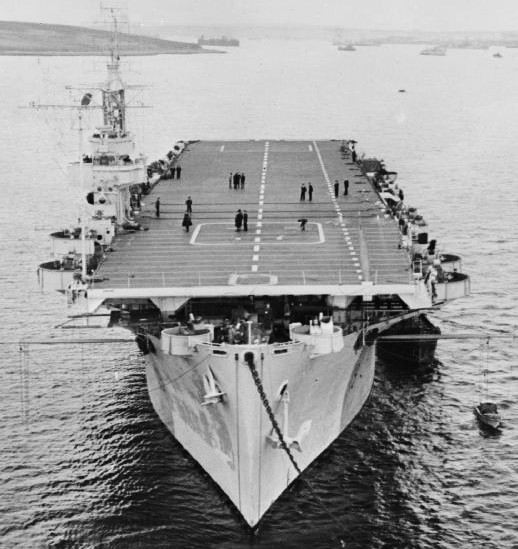
HMS Queen (D19) moored to a buoy at Scapa Flow, 1 May 1945.
The USS St. Andrews (CVE-49) (originally AVG-49, later ACV-49) was assigned to MC hull 260 on 23 August 1942, a ship to be built to modified C3-S-A1 plans. She was laid down on 12 March 1943 by the Seattle-Tacoma Shipbuilding Corporation of Tacoma, Washington; redesignated CVE-49 on 15 July; and launched on 31 July; sponsored by Mrs. Robert W. Morse; transferred to the United Kingdom under Lend-Lease on 7 December; and commissioned the same day as HMS Queen (D19) in the Royal Navy. HMS Queen served British and Allied escort forces in protecting the vital convoy supply effort across the North Atlantic in 1944, and in the Pacific campaigns in 1945. On 4 May 1945 aircraft of Queen’s 853 Squadron, Fleet Air Arm, took part in Operation Judgement, the last air-raid of the European war, at Kilbotn, Norway. After hostilities ceased, she was converted to a troop carrier and used to bring British forces back from the Far East, before being returned to the United States at Norfolk, Virginia, 31 October 1946.On arrival, Queen was decommissioned by the Royal Navy and was taken over by the U.S. Navy. In excess of Navy needs, CVE-49 was slated, in December, for disposal; struck from the Navy Register in July 1947, sold to the N.V. Stoomv, Maats, Nederland Co., Amsterdam, Netherlands and pressed into merchant service as Roebiah on 29 July 1947 (renamed President Marcos in 1967 and Lucky One in 1972). She was scrapped in Taiwan in 1972. (Wikipedia)
HMS Rajah (D10)
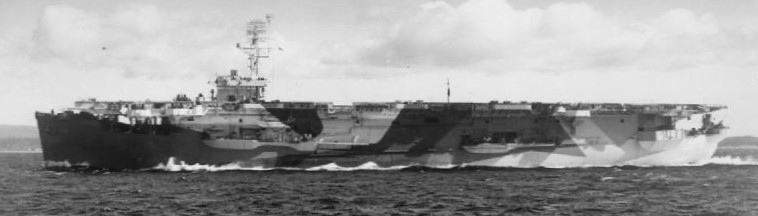
(IWM Photo, FL 7059)
HMS Rajah (D10), 1944.
USS Prince (CVE-45) (originally named McClure, designated AVG-45 then later ACV-45) was an escort carrier laid down on 17 December 1942 by the Seattle-Tacoma Shipbuilding Corporation of Tacoma, Washington. She was renamed Prince on 13 November 1942 and launched on 18 May 1943. She was sponsored by Mrs. J. L. McGuigan, reclassified CVE-45 on 15 July 1943 and transferred to the United Kingdom under Lend-Lease on 17 October 1943.Prince served the United Kingdom as HMS Rajah (D10). She was returned to the United States Navy at Norfolk, Virginia on 13 December 1946. She was struck from the Naval Vessel Registry on 7 February 1947 and delivered to her purchaser, Waterman Steamship Corporation, on 7 July. She became the merchant ship Drente (later renamed Lambros, then Ulysses) in 1948. She was scrapped in Taiwan in 1975. (Wikipedia)
HMS Ranee (D03)
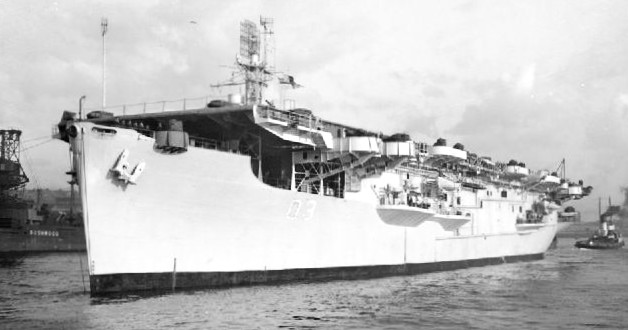
(IWM Photo, FL 18146)
HMS Ranee (D03), 8 Nov 1945.
USS Niantic (CVE-46) was a US escort carrier, that served in the Royal Navy as HMS Ranee (D03).Niantic, originally given the designation AVG-46, was redesignated as ACV-46 on 20 August 1942. The ship’s keel was laid down by the Seattle-Tacoma Shipbuilding Corporation at their yard in Tacoma, Washington on 5 January 1943. The vessel was launched on 2 June, sponsored by Mrs. Ray V. Blanco. She was redesignated again to CVE-46 on 15 July that year and transferred to the United Kingdom under Lend-Lease on 8 November, when she was commissioned into the Royal Navy.
As one of the 38 converted C3 escort carriers transferred to the United Kingdom, HMS Ranee (D03) joined the merchant aircraft carriers guarding the Atlantic convoy routes. Assigned to the Western Approaches, her aircraft helped to turn the tables on foraging U-boats in the North Atlantic and also assisted in operations to close their northern transit into the Atlantic and track them down in the Bay of Biscay. On 27 February 1945 she sailed from San Diego with USMC squadron VMO-7 embarked for Pearl Harbor. Serving with Training Squadron, Western Approaches, at the end of 1945, she was returned to US custody at Norfolk, Virginia on 21 November 1946. She was declared not essential to the defense of the US, and struck from the Navy List on 22 January 1947. She was sold into merchant service 9 June 1947 to the Waterman Steamship Corporation, in Mobile, Alabama as Friesland (later Pacific Breeze). She was sold for scrap in Taiwan in 1974. (Wikipedia)
HMS Ruler (D72)
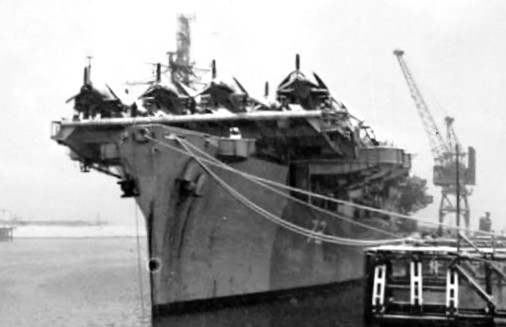
(IWM Photo, A 28796)
HMS Ruler (D72) docked with her flight deck packed with snow-covered Grumman Hellcat fighters, 1 Jan 1945.
HMS Ruler (D72) was the lead ship of her class of escort carrier of the Royal Navy during the Second World War. She was built in the United States as the Bogue-class carrier St. Joseph (AVG/CVE/ACV-50) for Lend-Lease to the United Kingdom. The name St. Joseph (making her the first United States Navy ship named for St. Joseph Bay, Florida) was assigned to MC hull 261, a converted C3-S-A1 cargo ship, on 23 August 1942. She was laid down on 25 March 1943 by the Seattle-Tacoma Shipbuilding Corporation of Tacoma, Washington. She was redesignated CVE-50 on 15 July, launched on 21 August 1943 and sponsored by Mrs. W.W. Smyth. The carrier was transferred to the United Kingdom on 22 December 1943 and commissioned into Royal Navy service the same day as HMS Ruler (D72).
After completing sea trials HMS Ruler (D72) went to Burrard Dry Dock, in Vancouver, British Columbia, Canada, for refit to Royal Navy standards, as a transport carrier. Following a work-up period HMS Ruler went to Norfolk, Virginia, via the Panama Canal. It departed on 20 April 1944 with a number of Grumman F6F Hellcat and Vought F4U Corsair, transferring them to RNAS Speke in Liverpool, England, the aircraft disembarking on 6 May 1944. HMS Ruler returned to the United States, to New York, to fetch a batch of Grumman TBF Avenger and Grumman F6F Hellcat aircraft, embarking them between the 20 and 23 May 1944 and again transferring to RNAS Speke, on 11 June. HMS Ruler later made a third trip, fetching Grumman F6F Hellcat and Vought F4U Corsair from Norfolk, Virginia, between 20 and 29 October, this time arriving at Greenock to unload on 18 November.[1]HMS Ruler served in the North Atlantic during 1944, protecting the vital flow of men and war materiel from the United States to Great Britain and to fighting fronts on the European continent. In early 1945, she transferred to the Pacific Theatre where she supported a raid on Truk and the campaign to take Okinawa.From March to August 1945 was part of the British Pacific Fleet attached to the 30th Aircraft Carrier Squadron. She entered Tokyo Bay on 31 August 1945 prior to the Surrender of Japan.[2] On 13 September, the ship brought onboard some 450 ex Prisoners of War and sailed for Sydney in Australia, arriving 27 September where she was greeted by the Governor-General of Australia, Prince Henry, Duke of Gloucester.[2]After the war ended, Ruler returned to the United States at Norfolk, Virginia, on 28 January 1946. She was decommissioned from RN service on 29 January, and was accepted by the US Navy the same day. In excess of the Navy’s needs, she was slated for disposal and struck from the Navy Register on 20 March 1946. The ship was sold on 13 May and scrapped within the year. (Wikipedia)
HMS Shah (D21)
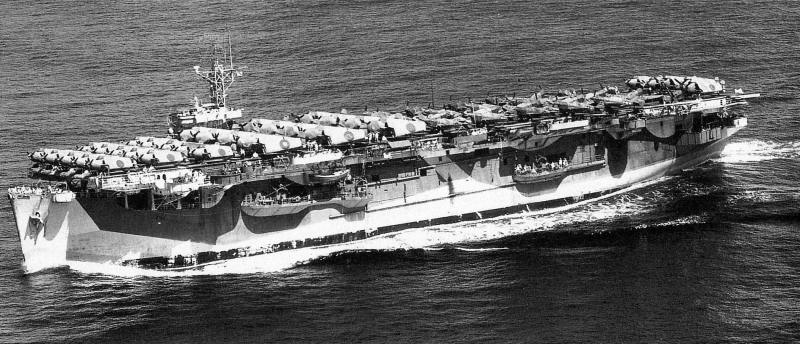
(USN Photo)
HMS Shah (D21) ferrying aircraft, possibly in January 1944, en route to Melbourne from San Francisco.
USS Jamaica (CVE-43) (originally AVG-43 then later ACV-43), was an escort carrier of World War II that served in the British Royal Navy as HMS Shah (D21). Returned to the United States at war’s end, she was converted into a merchant vessel and she was sold into civilian service in 1946 as Salta. She was ultimately scrapped in 1966. MC Hull 254 was laid down 13 November 1942 and launched as Jamaica under contract to the Maritime Commission by Seattle-Tacoma Shipbuilding[4] at Tacoma, Washington, on 21 April 1943 sponsored by Mrs. C. T. Simard. She was reclassified CVE-43 on 15 July 1943 and acquired by the United States Navy.She was transferred to the United Kingdom under lend-lease, commissioning on 27 September 1943, as one of a large group of escort carriers suitable for anti-submarine work transferred to the Royal Navy in the Pacific.
Jamaica was renamed Shah, with a RN pennant number of D21. Commanded by William John Yendell, her initial air complement was 851 Naval Air Squadron with 12 Grumman Avenger II torpedo bombers and a flight of Grumman Wildcat fighters. After sea trials, she was modified in Canada for convoy defence, this being completed at the end of the year. She sailed from Vancouver for San Francisco to take on her complement of operational aircraft, 12 Grumman Avengers and a flight of Grumman Wildcats. However, no flying was possible as her decks were also filled with Curtiss P-40 Warhawks to be ferried to Cochin. From San Francisco she sailed to Williamstown, Melbourne, Australia. After resupplying she continued in this configuration to Cochin and Colombo.Her duties were chiefly convoy defence and trade protection against German U-boats operating in the Indian Ocean with a shore base at Trincomalee. She took an active part in the war, heading the hunter-killer group which sank U-198 in the Indian Ocean on 12 August 1944. Alerted to the submarine’s presence in the area, 851’s Avengers located the U-boat and attempted to attack her, and directed the other ships in the group, HMS Begum, the River-class frigate HMS Findhorn and the Black Swan-class sloop HMIS Godavari to a point where the U-boat was depth charged resulting in it sinking.
Shah was transferred to the East Indies Fleet and then refitted in Durban before taking part in the Burma campaign in 1945. Having suffered several aircraft losses on patrol and landing accidents, her complement was augmented around this time by a flight of Grumman Hellcats. During April and May 1945 she participated in Operation Bishop, launching patrols and strikes against Nicobar preparatory to the invasion of Rangoon. Soon after, she was tasked with the search for the Japanese cruiser Haguro. Mechanical problems with the catapult resulted in most of 851’s Avengers being sent to HMS Emperor in exchange for Hellcats from 800 and 804 Squadron. A serious landing accident by one of those Hellcats effectively removed Shah from operations on 11 May. Nonetheless 851’s Avengers, flying from Emperor, were able to locate and damage Haguro, prior to her sinking by the 26th Destroyer Flotilla in Operation Dukedom.The Hellcats that survived the earlier landing accident were flown off Shah and she briefly returned to Ceylon and Bombay for refitting and training. Collecting surviving Avengers from No. 851 and No. 845 Squadrons FAA, plus Hellcats and a Walrus for support and recovery during landing operations, in August she sailed to join Operation Zipper on the Malay coast, only to be stood down en route when Japan capitulated.Disembarking her aircraft at Trincomalee on 26 August, she then sailed to the Clyde naval base via Aden and the Suez Canal where she was prepared for return to the United States. Arriving at Norfolk on 16 October, she was formally handed over to the United States on 26 November 1945.
She was sold into merchant service to Argentina on 20 June 1947 as Salta, named after the Argentinian city. The Newport News shipyard performed the conversion. In 1963 she was the first ship on scene at the rescue of passengers and crew from the Greek liner Lakonia when it caught fire in the Atlantic. At the time she was under the command of Captain José Barrere, on its way from Genoa, Italy, to Buenos Aires. Salta rescued 475 people and took aboard most of Lakonia‘s lifeboats. Salta was scrapped in Buenos Aires in 1966. (Wikipedia)
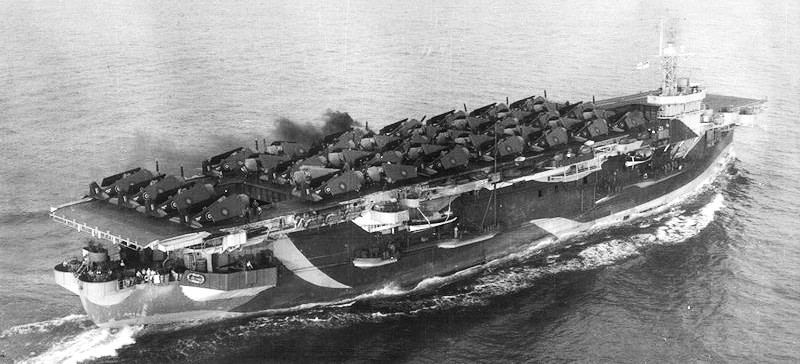
HMS Thane (D48)
(RN Photo)
HMS Thane (D48) in Chesapeake Bay, carrying a ferry load of lead-lease Grumman Hellcats from Norfolk, Virginia bound for Cape Town.
USS Sunset (CVE-48) (previously AVG-48 then ACV-48) was a Bogue-class escort carrier. Assigned on 23 August 1942 to MC hull 259, a modified C3-S-A1 laid down on 23 February 1943 by Seattle-Tacoma Shipbuilding of Tacoma, Washington; launched on 15 July and redesignated CVE-48 the same day; sponsored by Mrs. C.E. Taylor. She was transferred to the United Kingdom under Lend-Lease agreement on 19 November; and commissioned the same day as HMS Thane (D48), a Ruler-class escort carrier in the Royal Navy.HMS Thane operated in the North Atlantic protecting convoys and ferrying aircraft for use in the European Theater. On 15 January 1945, while ferrying aircraft in the Irish Sea, she was torpedoed by the German submarine U-1172 and severely damaged, losing her starboard aft 5 inch gun and its sponson, disabling propulsion, and losing 10 men. Taken to Gare Loch in the Firth of Clyde, southwest Scotland, she was examined, declared a constructive total loss and decommissioned to reserve. She was returned to United States custody while in the United Kingdom on 12 May. Determined to be of no use to the United States Navy, she was slated for disposal in October; and she was subsequently scrapped. (Wikipedia)
HMS Thane (Capt E R J Baker), damaged 15 January 1945, Western Europe, off Clyde Light Vessel in Firth of Clyde, SW Scotland(55.08N, 05.25W) – torpedoed by German ‘U.1172’ (Kuhlmann). (Originally credited to ‘U.482’ which had already been lost). Believed ferrying aircraft from Northern Ireland to Britain. Not repaired and laid up; 10 crew lost (Casualty List) (Battles of Britain – U-boat Inshore Campaign).
All comments are subject to our Comment Policy. You must be at least 18 years old to comment.
See a comment that violates our guidelines? Report it here.