
Royal Navy Cruisers: Tiger class, Hawkins class, County class, Abdiel class
HMS Tiger (C20), HMS Lion (C34), HMS Blake (C99), HMS Hawkins (D86), HMS Raleigh, HMS Frobisher (D81), HMS Effingham (D98), HMS Vindictive/HMS Cavendish
Tiger class cruisers
Two ships of the Tiger-class were rebuilt to each operate four helicopters. HMS Tiger (C20) and HMS Blake (C99) served for part of the 1970s before they were withdrawn from service.
HMS Tiger (C20)
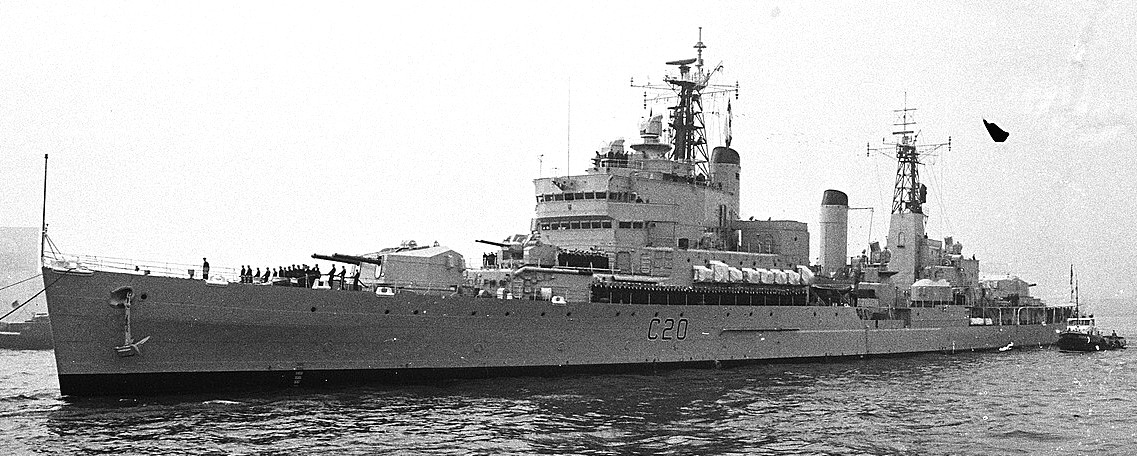
(Nationaal Archief Photo)
HMS Tiger (C20) was a conventional cruiser of the British Royal Navy, one of a three-ship class known as the Tiger class. Ordered during the Second World War, she was completed after its end. Tiger was in service by 1960 and served in the Far East and then with the Home Fleet before going into reserve at the end of 1966. From 1968 Tiger was converted to a “helicopter and command cruiser” and equipped with guided missile anti-aircraft defence before returning to service in the early 1970s. She remained in service until 1978 when she was put into reserve and marked for disposal. There were moves to return her to service during the Falklands War for her flight deck capacity, but this did not proceed. Tiger was finally sold for scrap in 1986. (Wikipedia)
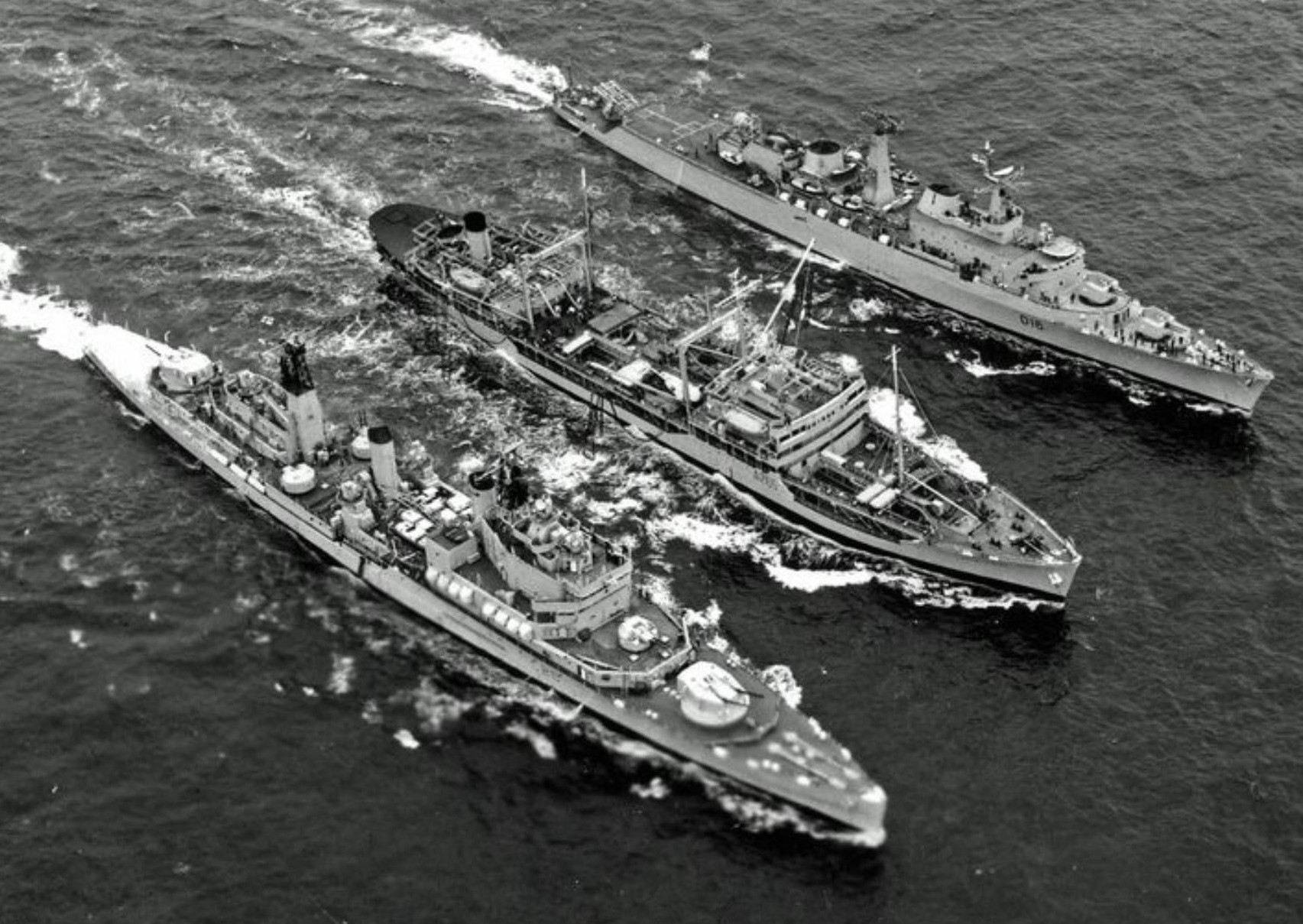
(RN Photo)
HMS Tiger (C20) and HMS London (D16), refuelling simultaneously from RFA Wave Chief A265 in 1964.
HMS Lion (C34)
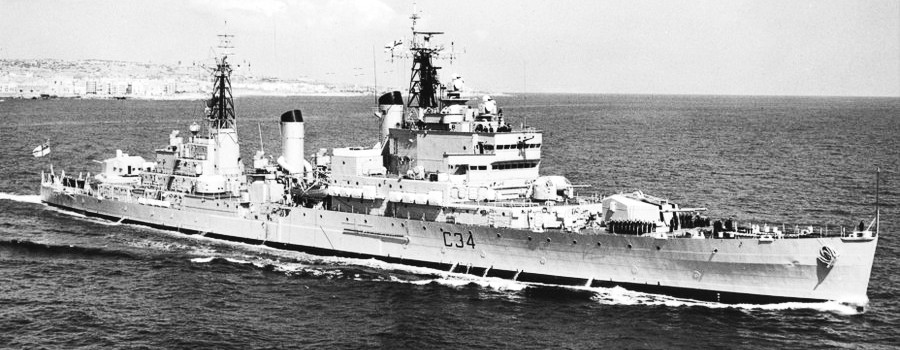
(RN Photo)
HMS Lion (C34) was a Tiger-class light cruiser of the British Royal Navy, originally ordered in 1942 as one of the Minotaur class and laid down that same year as Defence by Scotts Shipbuilding and Engineering Company at Greenock in Scotland on 6 June 1942. Work was stopped and not begun again until the mid-1950s for completion as an air-defence cruiser pending the introduction of guided missile-equipped County-class destroyers into the navy. She was commissioned in 1960. All three Tigers were to be converted into helicopter carriers but Lion was placed into reserve in 1965 and served as a supply of spares for the other two until decommissioned in 1972 followed by selling for scrap in 1975. (Wikipedia)
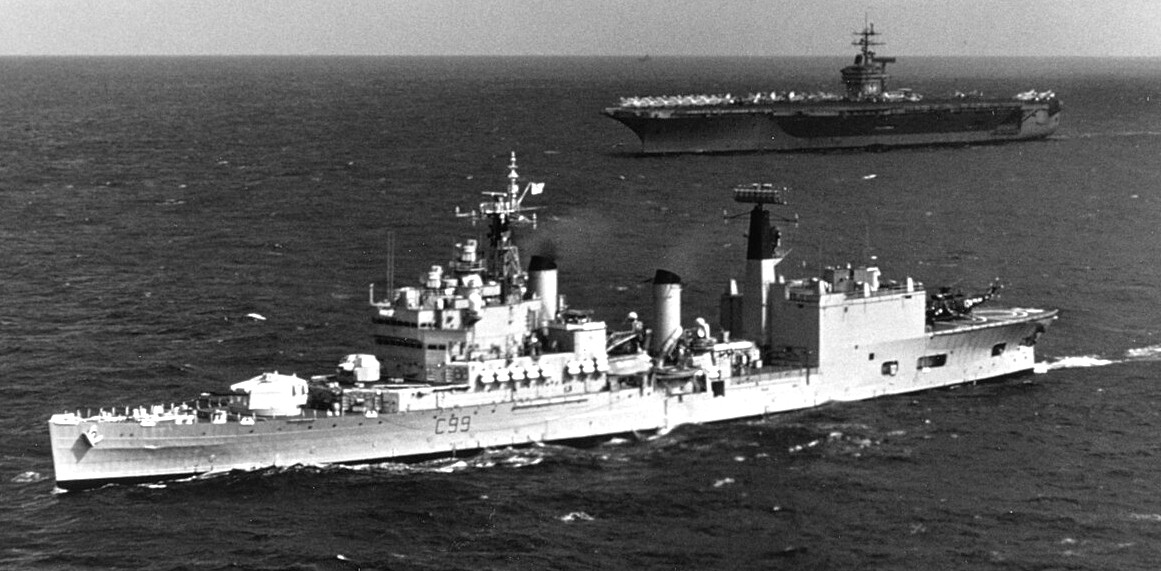
(USN Photo)
HMS Blake (C99) and the U.S. Navy aircraft carrier USS Nimitz (CVN-68) operate in the English Channel during Operation “NIMEX” on 4 October 1975.
HMS Blake (C99), (1961). She was a light cruiser of the Tiger class of the British Royal Navy, the last (traditional) Royal Navy gun-armed cruiser of the 20th century. She was named after Robert Blake, a 17th-century admiral who was the “Father of the Royal Navy”. She was ordered and laid down in 1942 as one of the Minotaur class of light cruisers. They had a low construction priority due to more pressing requirements for other ship types during World War II, particularly anti-submarine craft. In 1944, she was renamed Tiger, then back to Blake again in 1945, the year she was launched partially constructed at the Fairfield Shipbuilding and Engineering Company at Govan, by Lady Jean Blake, wife of Vice Admiral Sir Geoffrey Blake. Construction was suspended in 1946 and she was laid up at Gareloch.
In 1954, construction of Blake resumed, but to a new design. The new design was approved in 1951, but construction did not resume until 1954. She would have fully automatic 6 inch guns in twin high-angle mounts with each gun capable of shooting 20 rounds per minute, and a secondary battery of fully automatic 3 inch guns which delivered 90 rounds per minute per gun. She would have no lighter anti-aircraft armament or torpedo tubes. Air conditioning was fitted throughout the ship, and a 200-line automatic telephone exchange was installed. Each 6 inch and 3 inch mounting had its own director, linked to a dedicated radar on the director. On 10 September 1957, an on-board explosion occurred whilst she was fitting-out at Govan. Tweny people were injured. On 18 March 1961, Blake finally commissioned into the Royal Navy, to date the last (traditional) cruiser to do so. Just two years later, she was placed in reserve. (Wikipedia)
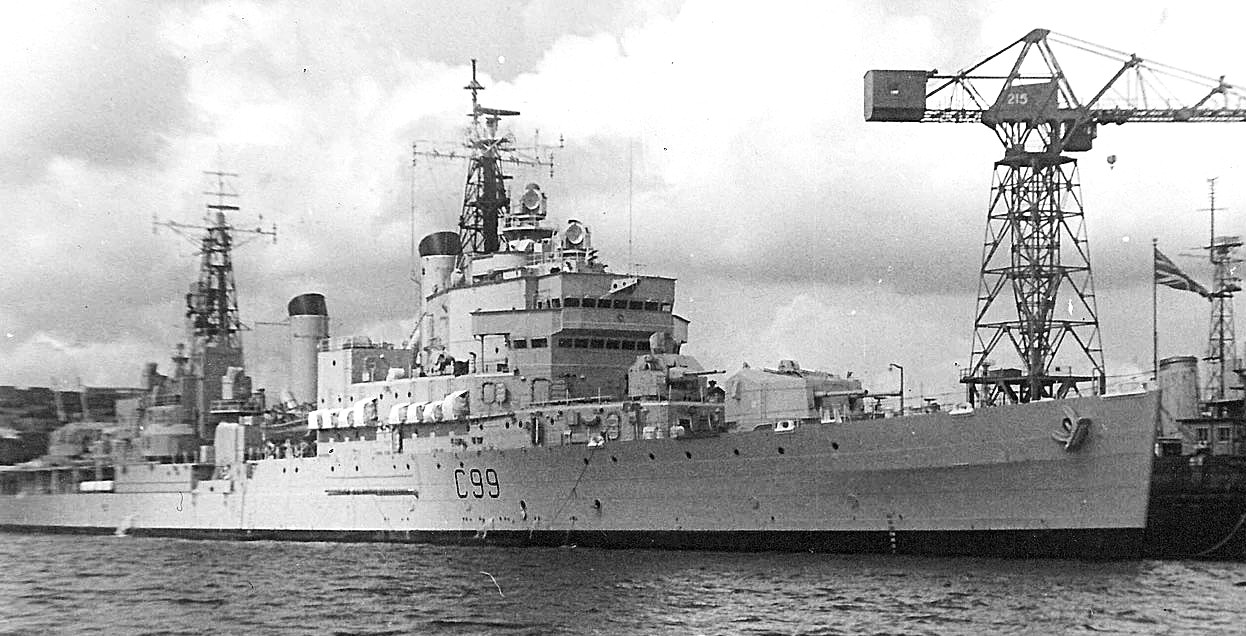
(RN Photo)
A pre 1965 picture of HMS Blake (C99) in her original configuration before she was converted into a ASW cruiser.
Through-deck cruisers
Although at times called “through-deck cruisers”, the Invincible class of the 1980s were small aircraft carriers.
Hawkins class heavy cruisers
The Hawkins class consisted of five heavy cruisers built for the Royal Navy during the First World War, although none of them saw service during the war. The first ship to be completed, HMS Vindictive, was renamed from HMS Cavendish and converted into an aircraft carrier while under construction. All ships were named after Elizabethan sea captains. The three ships remaining as cruisers in 1939 served in the Second World War, with HMS Effingham being an early war loss through wreck; HMS Raleigh had been lost in a similar shipwreck on uncharted rocks in 1922 (and HMS Vindictive was nearly lost to grounding in 1919). HMS Vindictive, though no longer a cruiser, also served throughout the War. This class formed the basis for the definition of the maximum cruiser type under the Washington Naval Treaty of 1922. (Wikipedia)
HMS Hawkins (D86)
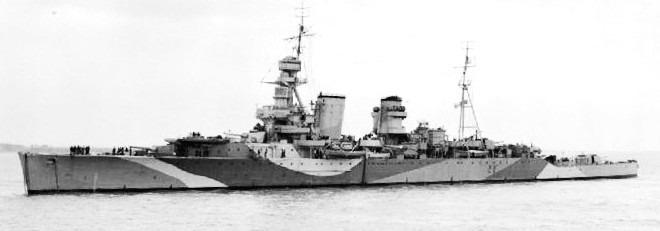
(IWM Photo, FL 10153)
HMS Hawkins (D86). She was the lead ship of her class of five heavy cruisers built for the Royal Navy during the First World War, although the ship was not completed until 1919. She was assigned to the China Station until 1928 and was briefly assigned to the Atlantic Fleet in 1929–1930, always serving as a flagship, before being placed in reserve. Hawkins was recommissioned in 1932 for service on the East Indies Station, but returned to reserve three years later. The ship was disarmed in 1937–1938 and converted into a cadet training ship in 1938.When the Second World War began in 1939, the Royal Navy decided to reconvert her back into a heavy cruiser and her original armament was reinstalled. Hawkins reentered service in early 1940 and was assigned to the South Atlantic Division where she patrolled for Axis commerce raiders and escorted convoys. The following year, she was transferred to the Indian Ocean where she played a small role in the East African campaign in early 1941. At the end of the year, the ship returned home for a lengthy refit. Upon its completion in mid-1942, Hawkins was assigned to the Eastern Fleet and resumed her former roles of patrolling and escort duty for the next two years.The ship returned to the UK in early 1944 to participate in Operation Neptune, the naval portion of the invasion of Normandy in June. She bombarded German coastal defences on 6 June, but was paid off in July. The Royal Navy decided to convert her back into a training ship while she was under repair, but that work was cancelled in 1945. Hawkins was placed back in reserve that year and was used for bombing trials in 1947. The vessel was sold for scrap later that year. (Wikipedia)
HMS Raleigh
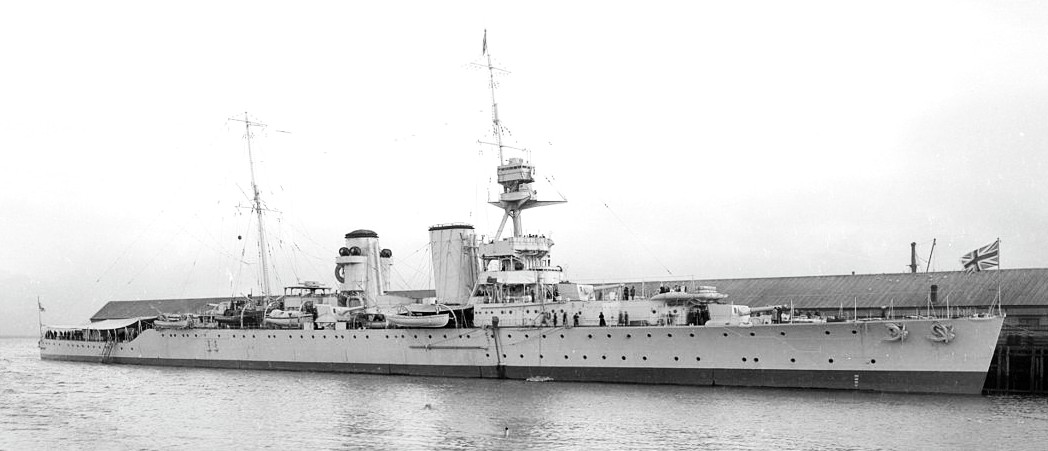
(City of Vancouver Archives Photo, taken in 1921)
HMS Raleigh was not completed until 1921. She was assigned to the North America and West Indies Station when she commissioned and often served as a flagship. After visiting ports in the Caribbean Sea, Gulf of Mexico and both coasts of the United States and Canada in 1921–1922, Raleigh ran aground off Labrador in August 1922 with the loss of a dozen crewmen. The ship was partially salvaged in place and was demolished with explosives in 1926, although she remains a diveable wreck in very shallow water.
HMS Frobisher (D81)
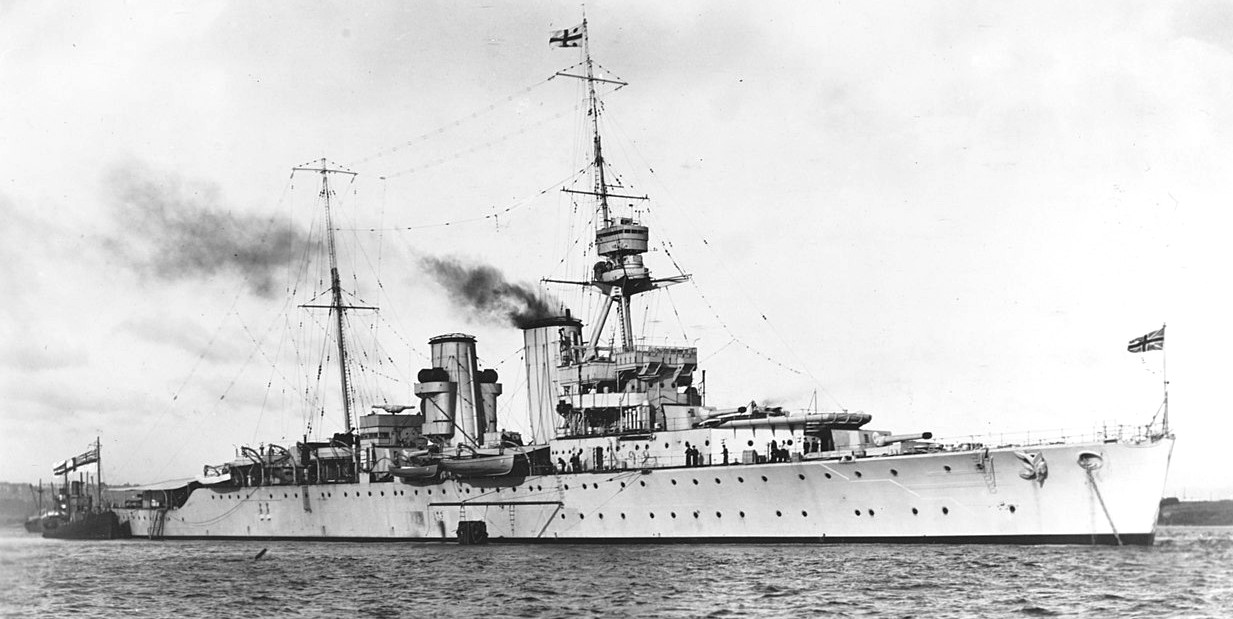
(USN Photo)
HMS Frobisher (D81). Completed in 1924, the ship was initially assigned to the Mediterranean Fleet and was transferred to the Atlantic Fleet in 1929, sometimes serving as a flagship. Placed in reserve in 1930, Frobisher was converted into a cadet training ship in 1932 before being returned to reserve in 1937. Two years later she was reactivated to again serve as a training ship.When the Second World War began in 1939, the Royal Navy decided to reconvert her back into a heavy cruiser, but the work was repeatedly delayed by higher-priority repairs for other ships and she did not reenter service until early 1942. Frobisher was transferred to the Eastern Fleet and spent most of the next two years on escort duty. She returned to the UK in early 1944 to participate in Operation Neptune, the naval portion of the invasion of Normandy in June. The ship bombarded German coastal defences on 6 June, but was damaged by a torpedo in August. The Royal Navy decided to convert her back into a training ship while she was under repair and that work was completed in 1945. Frobisher served in that role until she was replaced in 1947 and the vessel was sold for scrap in 1949. (Wikipedia)
HMS Effingham (D98)
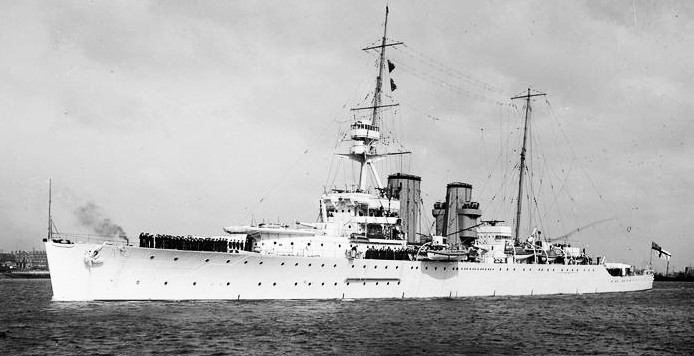
(IWM Photo, Q 65717
HMS Effingham (D98), completed in 1925, the ship was assigned to the East Indies Station, sometimes serving as a flagship. She returned home in 1932 and was assigned to the Reserve Fleet as its flagship for the next four years. Effingham was rearmed and modernized in 1937–1938 and then resumed her previous role.When the Second World War began in September 1939, Effingham was assigned to the Northern Patrol, but severe engine problems caused her to spend most of the next six months under repair. In between dockyard visits, the ship ferried a load of gold bullion to Canada and was briefly assigned to the North America and West Indies Station. After a lengthy refit at the beginning of 1940, Effingham supported Allied troops during the Norwegian Campaign, mostly bombarding German positions and providing naval gunfire support to troops ashore. While ferrying troops and supplies to Bodø on 18 May, the ship struck a shoal due to a navigational error and sank in shallow water. Her crew was evacuated without loss and the cruiser destroyed by a pair of torpedoes from an accompanying destroyer. Her wreck was salvaged after the war with only some minor wreckage remaining. (Wikipedia)
HMS Vindictive/HMS Cavendish
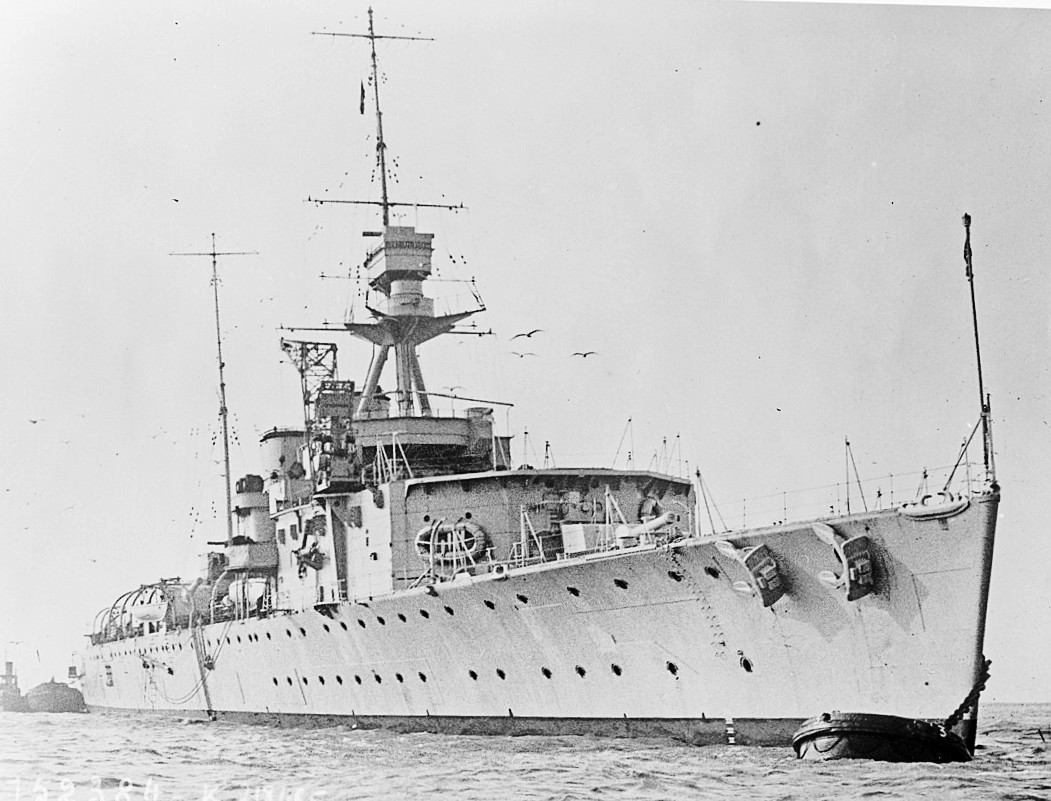
(Central News (Agence photographique))
HMS Vindictive/HMS Cavendish. She was a warship built during the First World War for the Royal Navy (RN). Originally designed as a Hawkins-class heavy cruiser and laid down under the name Cavendish, she was converted into an aircraft carrier while still being built. Renamed in 1918, she was completed a few weeks before the end of the war and saw no active service with the Grand Fleet. The following year she participated in the British campaign in the Baltic against the Bolsheviks, during which her aircraft made numerous attacks against the naval base at Kronstadt. Vindictive returned home at the end of the year and was placed in reserve for several years before her flight decks were removed and she was reconverted back into a cruiser. The ship retained her aircraft hangar and conducted trials with an aircraft catapult before she was sent to the China Station in 1926. A year after her return in 1928, she was again placed in reserve.
Vindictive was demilitarized and converted into a training ship in 1936–1937. At the beginning of the Second World War she was converted into a repair ship. Her first role after the conversion was completed in early 1940, however, was to transport troops during the Norwegian Campaign. She was then sent to the South Atlantic to support British ships serving there and, in late 1942, to the Mediterranean to support the ships there. Vindictive returned home in 1944 and was damaged by a German torpedo off the coast of Normandy after the Allies invaded France. She was reduced to reserve after the war and sold for scrap in 1946. (Wikipedia)
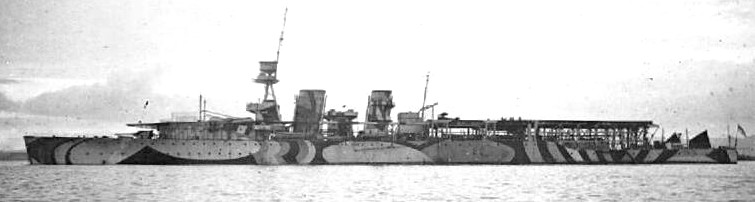
(IWM Photo, SP 669)
HMS Vindictive (1918)/HMS Cavendish in its aircraft carrier configuration.
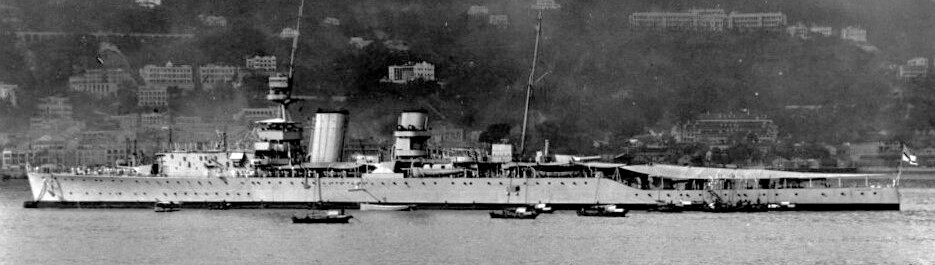
(SDASM Archives Photo)
HMS Vindictive in China after re-conversion into a cruiser, 1926.
All comments are subject to our Comment Policy. You must be at least 18 years old to comment.
See a comment that violates our guidelines? Report it here.